

Skip to content

Mura di Monteriggioni

Walls of Monteriggioni

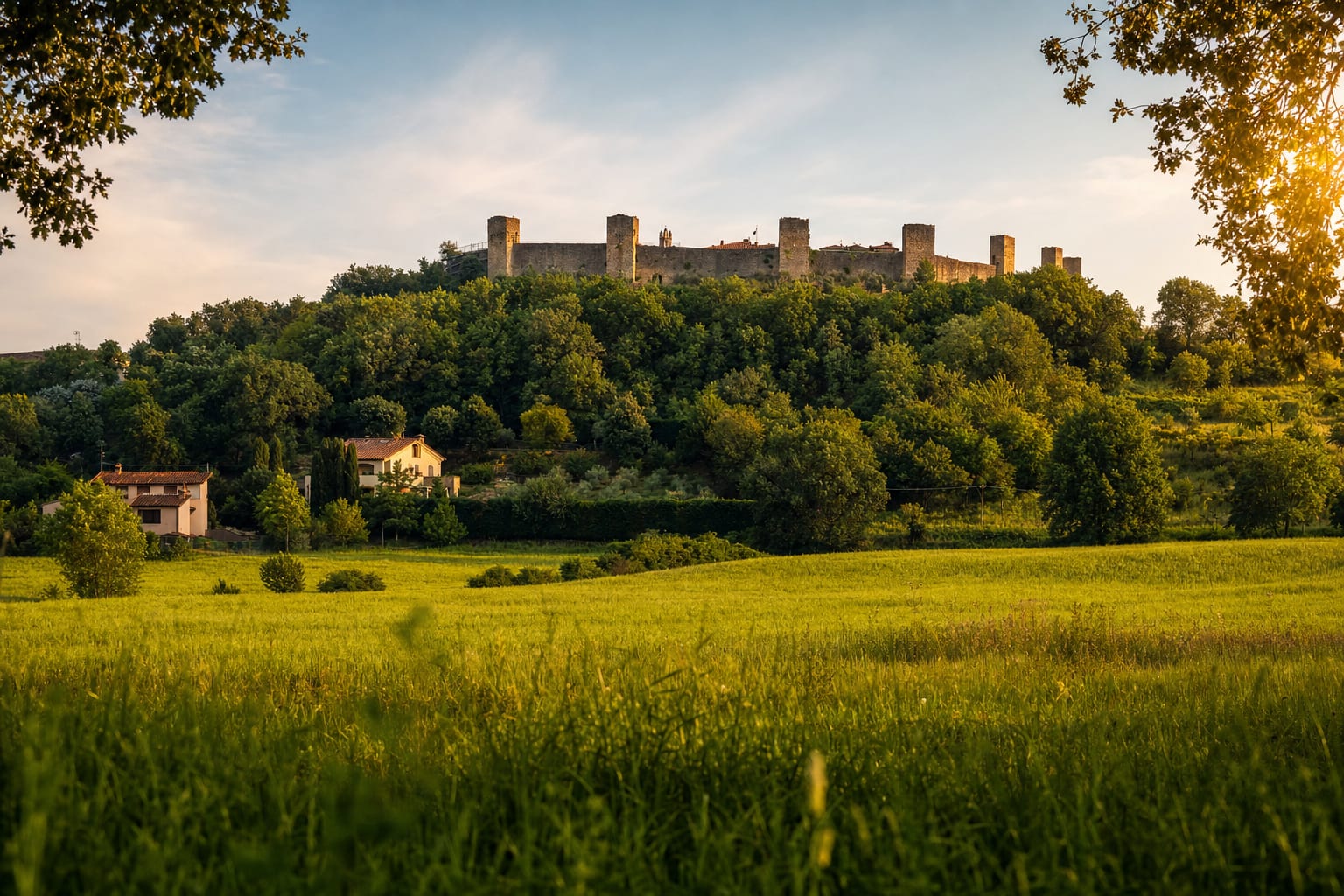
A complete medieval crown of walls and towers, still holding its hilltop silhouette above the Via Francigena.

Photograph · Mura di Monteriggioni

At a glance

Walls of Monteriggioni facts that matter

Names, makers, dates, and context before the story opens up.

Italian nameMura di Monteriggioni
What it isCastle
WhereMonteriggioni, Tuscany
Known forA complete medieval crown of walls and towers, still holding its hilltop silhouette above the Via Francigena.

The story

What you're looking at

Built by Siena from 1214 as a frontier fortification, the circuit follows the hill contour and preserves a layered history of gate defences, artillery adaptations and twentieth-century tower reconstruction. Walkway access and museum activity require a dated official check.

The fortification records Siena’s north-eastern frontier strategy toward Florence. Its apparent medieval fabric includes documented later transformations and tower reconstruction, so the circuit, gates, towers, borgo and museum route need separate source-backed relationships.

Verified details

Each statement below is linked to the record or institution that supports it.

The Walls of Monteriggioni are the fortified circuit of Castello di Monteriggioni and its enclosed borgo, rather than a separate modern monument detached from the settlement.1

The Comune di Monteriggioni dates the Sienese construction of the castle to 1214–1219. The State Archive of Siena corroborates construction from 1214 as a military outpost on Siena's north-eastern frontier towards Florence.1,2

The municipal history states that Siena built Monteriggioni anew on Monte Ala to defend and monitor the Francigena and control the Elsa and Staggia valleys towards Florence.1

The wall circuit follows the hill's natural contour and has two gates. The municipal account documents hinge marks, bar sockets and portcullises, and records traces of a former rectangular ravelin at the western gate; it also says historians disagree over whether a drawbridge existed.1

The municipality records that sections of the walls were buried between 1400 and 1500 in response to artillery, and that towers lost in earlier centuries were reconstructed during an important intervention in the 1920s and 1930s.1

Sources and citations (2)
  1. Comune di MonteriggioniStoriaCastle and circuit historyRead source
  2. SIAS, Archivio di Stato di Siena, Ministero della CulturaComunità di Monteriggioni1214 frontier outpostRead source

Plan your visit

Before you go

Booking
Walk-up friendly

Find it

Where to find Walls of Monteriggioni

Get directionsGoogle MapsApple Maps

Reading

Stories from Tuscany

Long reads from our writers on the ground.

  1. The magazineItalian Art History: From Renaissance to Modern
  2. The magazineTuscany Travel Guide