Height
The tower is Siena's civic height
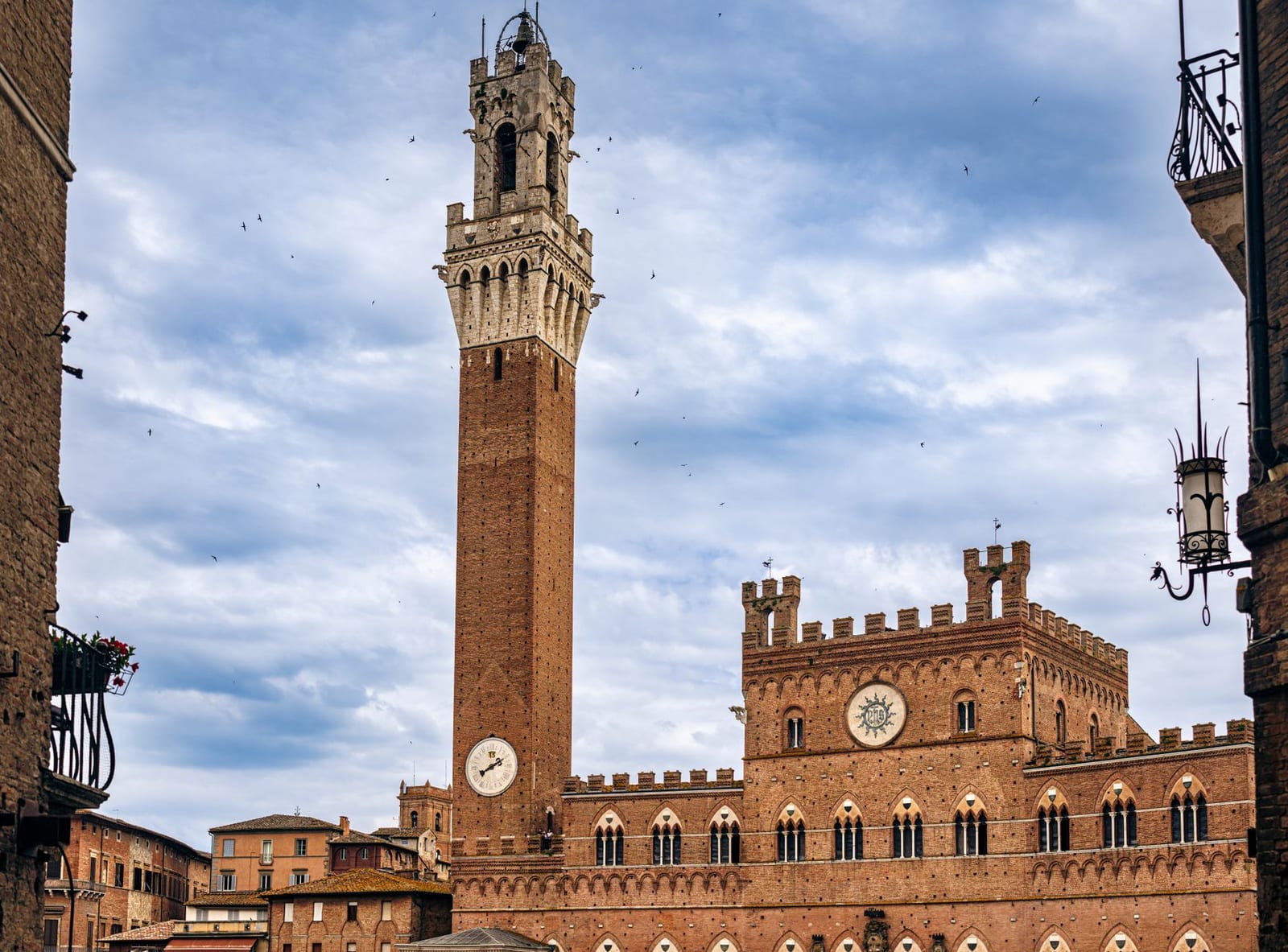
The tower's extraordinary vertical presence beside Palazzo Pubblico makes public authority visible from across the medieval city.1
Siena
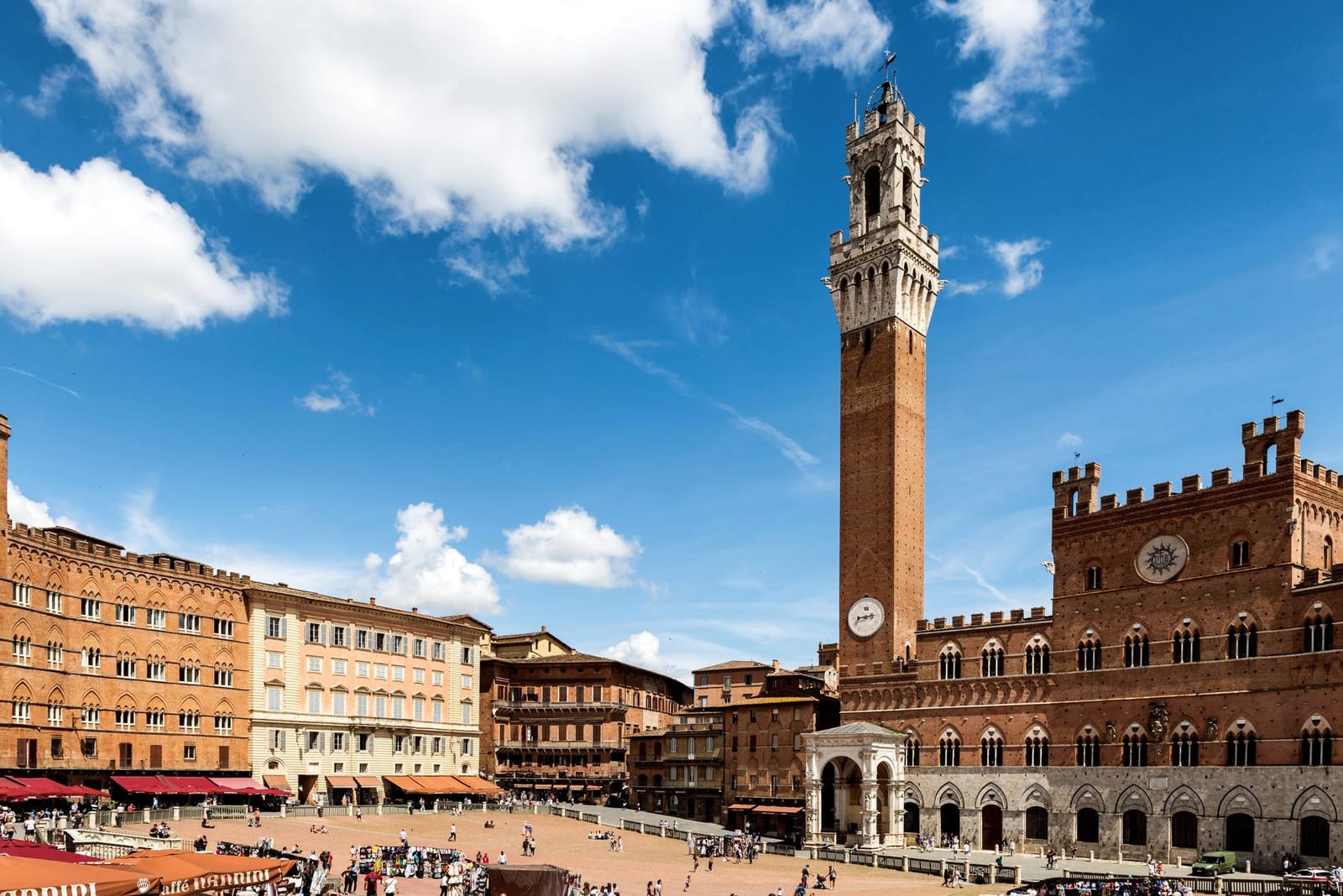
Civic tower beside Palazzo Pubblico in Piazza del Campo.
Photograph · Torre del Mangia
At a glance
Names, makers, dates, and context before the story opens up.
| What it is | Tower |
|---|---|
| Where | Siena, Tuscany |
| Known for | Civic tower beside Palazzo Pubblico in Piazza del Campo. |
The story
Torre del Mangia is Siena’s civic tower on Palazzo Pubblico in Piazza del Campo. Municipal evidence distinguishes a 1325 foundation tradition from payments documented from 1338 and work through 1349; it also records its civic functions and relationship to Cappella del Campo. Current climbing conditions require a fresh official check.
The tower records Siena’s civic building programme, including a qualified multi-technician construction sequence, later clock and bell functions, and a continuing relationship with Palazzo Pubblico and Museo Civico. It is within the Historic Centre of Siena World Heritage property, not separately inscribed.
Look closer
The details our editors pull from official records, archives, guides, and local sources.
Height
The tower's extraordinary vertical presence beside Palazzo Pubblico makes public authority visible from across the medieval city.1
Name
The nickname Mangia is tied to Giovanni di Balduccio, the tower's first bell-ringer, giving the monument a human story beneath its civic symbolism.1
Visit
Official visitor guidance warns about the stair ascent and health conditions. This is a narrow medieval tower experience, not a casual elevator viewpoint.2
Context
From below, the tower gives Piazza del Campo its vertical tension. From above, the square's shell form becomes fully legible.1
Each statement below is linked to the record or institution that supports it.
The tower's extraordinary vertical presence beside Palazzo Pubblico makes public authority visible from across the medieval city.1
Torre del Mangia is Siena's civic tower on the left side of Palazzo Pubblico in Piazza del Campo. It belongs to the Palazzo Pubblico–Museo Civico civic organism rather than being a freestanding museum.3,4
The nickname Mangia is tied to Giovanni di Balduccio, the tower's first bell-ringer, giving the monument a human story beneath its civic symbolism.1
A municipal chronicle tradition places foundations in autumn 1325, while first documentary payments date from 1338. Multiple technicians received payments from 1341 to 1345; the tower was probably complete by 18 December 1344, although works are documented through 1349. The Comune describes a nearly 87-metre tower above the Campo with a seven-metre square plan and a double crenellated summit.5,3
Official visitor guidance warns about the stair ascent and health conditions. This is a narrow medieval tower experience, not a casual elevator viewpoint.2
The Comune di Siena links the name Mangia to bell-ringer Giovanni di Balduccio, known as Mangiaguadagni or Mangia.3
Plan your visit
Book a visit
Compared by our editors, across providers.
Booking through these links may earn Italia Magnifica a commission, at no cost to you.
Nearby
Worth folding into the same day.
Reading
Long reads from our writers on the ground.