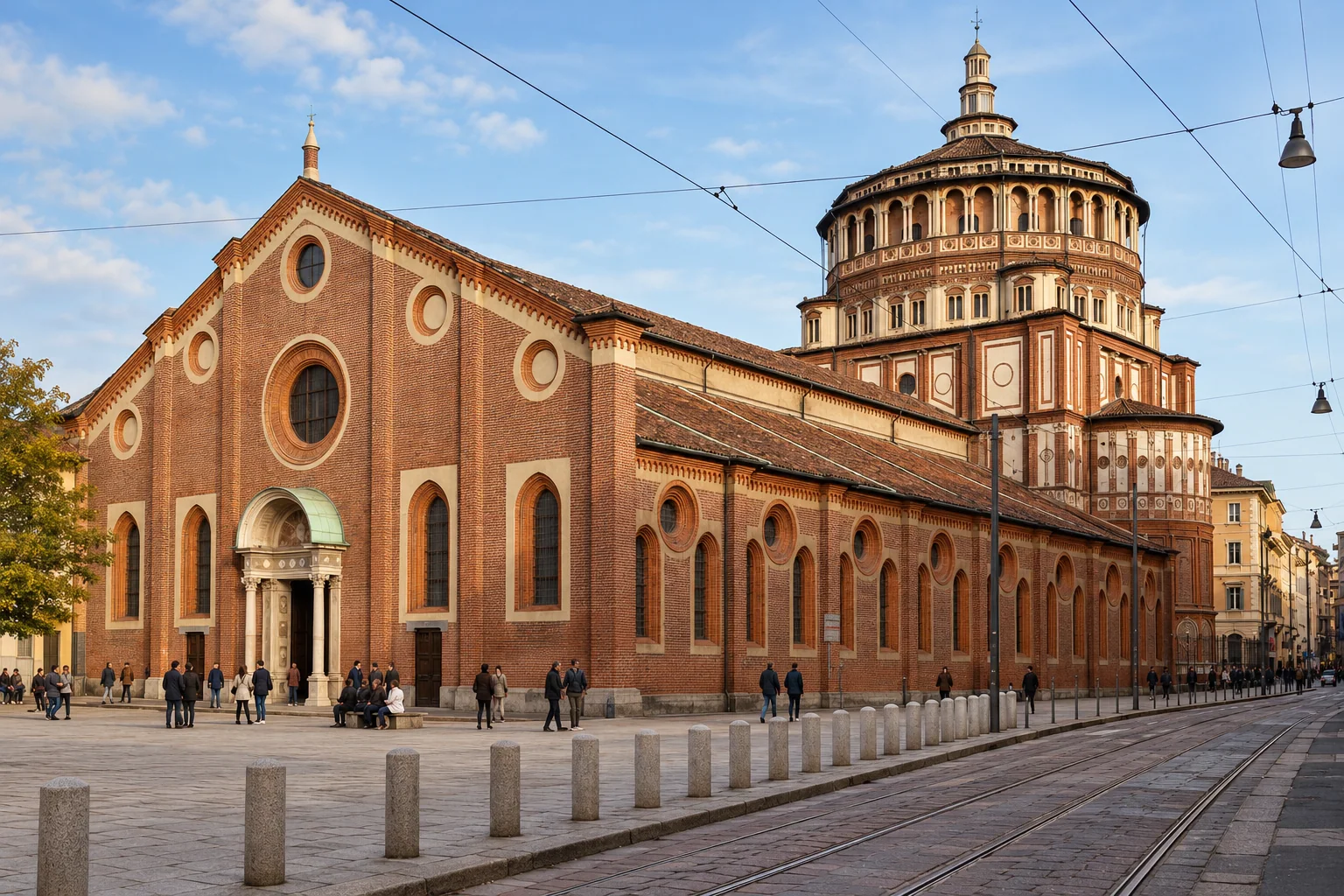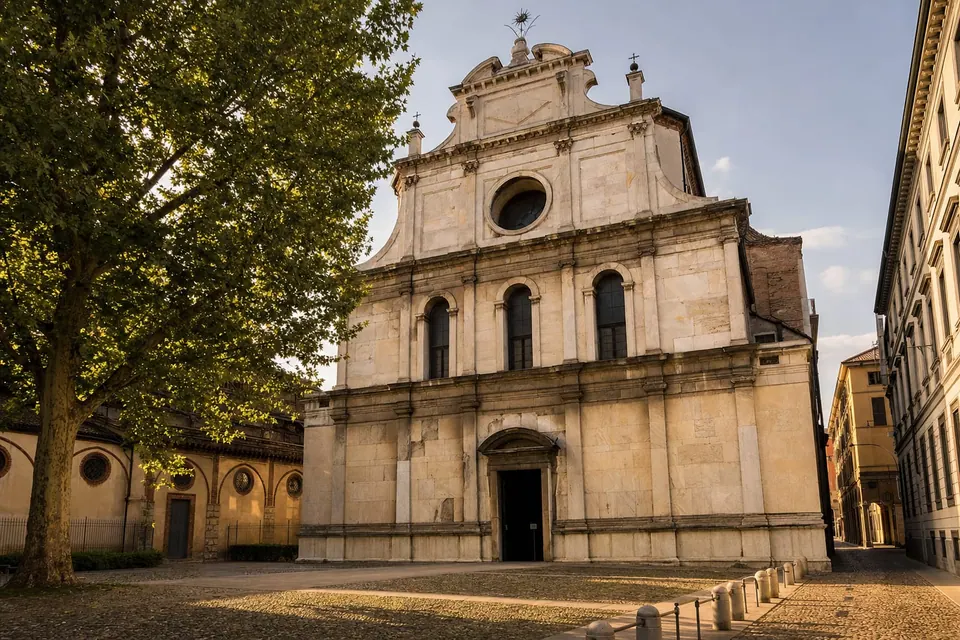
The Benedictine nuns who rebuilt this church starting in 1503, finishing it fifteen years later, wanted two rooms in one: a public hall for the neighborhood and, behind a solid dividing wall, a private choir where the cloistered sisters could hear Mass unseen.
Both halls got the same treatment, floor to ceiling frescoes, most of them by Bernardino Luini, a favorite pupil of Leonardo da Vinci, who painted the life of Saint Maurice on the dividing wall itself; his son Aurelio and other family members later filled the side chapels. The result is so dense with color and narrative that Milanese call it their Sistine Chapel. Look too for the square tower rising beside the church, built centuries earlier as part of Roman Milan's lost hippodrome before it became the bell tower. The church shares its courtyard with the Museo Archeologico, built into the surviving convent buildings.