

Skip to content
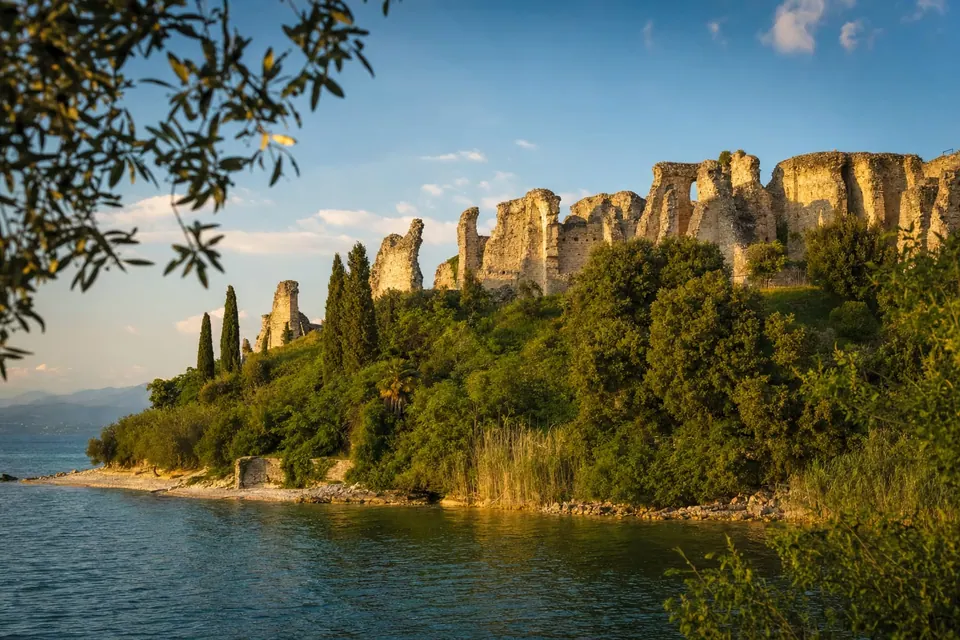
The arches of the Grotte di Catullo above Lake Garda's tip at Sirmione

Grotte di Catullo

Walk the terraces of Sirmione’s vast Roman villa and see how foundations, cisterns and a lakeside slope shaped the ruins called the Grotte di Catullo.

  • Sirmione
  • Archaeological site
Where
Sirmione
Best for
Largest Roman villa in Italy
Allow
1 hr 30 min

Follow Sirmione’s peninsula to its tip and the scale of the ruins takes time to register. What looks like a series of dark openings from below once carried rooms and terraces above the slope. The villa belongs to the Augustan age, around the turn of the first century AD. Its setting allowed an elite household to command views over the lake while creating level space on a piece of ground that had very little of its own.

Why a villa is called a grotto

The openings of the buried building helped give the ruins their name. The association with Catullus comes from his link with Sirmione. The surviving villa is later than the poet. Read the plan near the entrance and start with the museum if you want help placing fragments of decoration in the enormous structure outside. Look for the cistern and the long substructures: between them they show how the house stored water and spread over the slope.

Plan the walk along the peninsula

Allow about ninety minutes for the museum and a circuit of the archaeological area. Paths among the olive trees give you room to look back at the walls and see how much height the foundations had to make up. Carry water in warm weather. A walk back through town takes you to the Scaliger Castle. The official site and ticket page lists both single admission and a seven-day pass for the castle, villa and Roman site at Desenzano.

Pale stone arches of the western cryptoporticus at the Grotte di Catullo
Two stone arches mark the line of the western cryptoporticus at the Grotte di Catullo.

Three things worth finding

If you see nothing else, see these.

  1. Roman foundations

    Read the rows of openings as supports for the terraces above.

  2. Cistern

    Look for the structure that stored water for the villa.

  3. Museum

    Begin here to see finds and get oriented before the open-air route.

Plan your visit

Booking
Check booking requirements
Time needed
1 hr 30 min
Best time
Summer evenings in the last hours before closing, when the light over the lake is best.
Getting there
Walk through the old centre to Piazzale Orti Manara at the tip of the peninsula.
Accessibility
Gravel and steep sections make some outdoor paths demanding. Tactile and signed materials are available.

Full admission is €10. The €20 ticket also covers the Scaliger Castle and the Roman Villa at Desenzano and is valid for seven days. Buy through Musei Italiani and check the current winter hours and last entry for your date.

Start at the museum and carry water for the outdoor circuit on hot days.

Directions to Museum and archaeological site entranceGoogle MapsApple Maps

Good to know

Did Catullus own the villa?

The poet is linked to Sirmione, but the villa whose ruins are visible was built after his lifetime.

Can I combine it with the castle?

Yes. The seven-day Garda ticket covers the grottoes and museum, the Scaliger Castle and the Roman villa at Desenzano.

Is the archaeological path level?

There are designated paths, with gravel and some demanding slopes. Contact the site to plan a suitable route.

A letter from Italy, once a month.

Each month: one story, two recipes, an ingredient and a wine of the month, places worth the trip, and the month’s calendar.

One letter a month. Unsubscribe at any time. We never share your address. Choose your desks