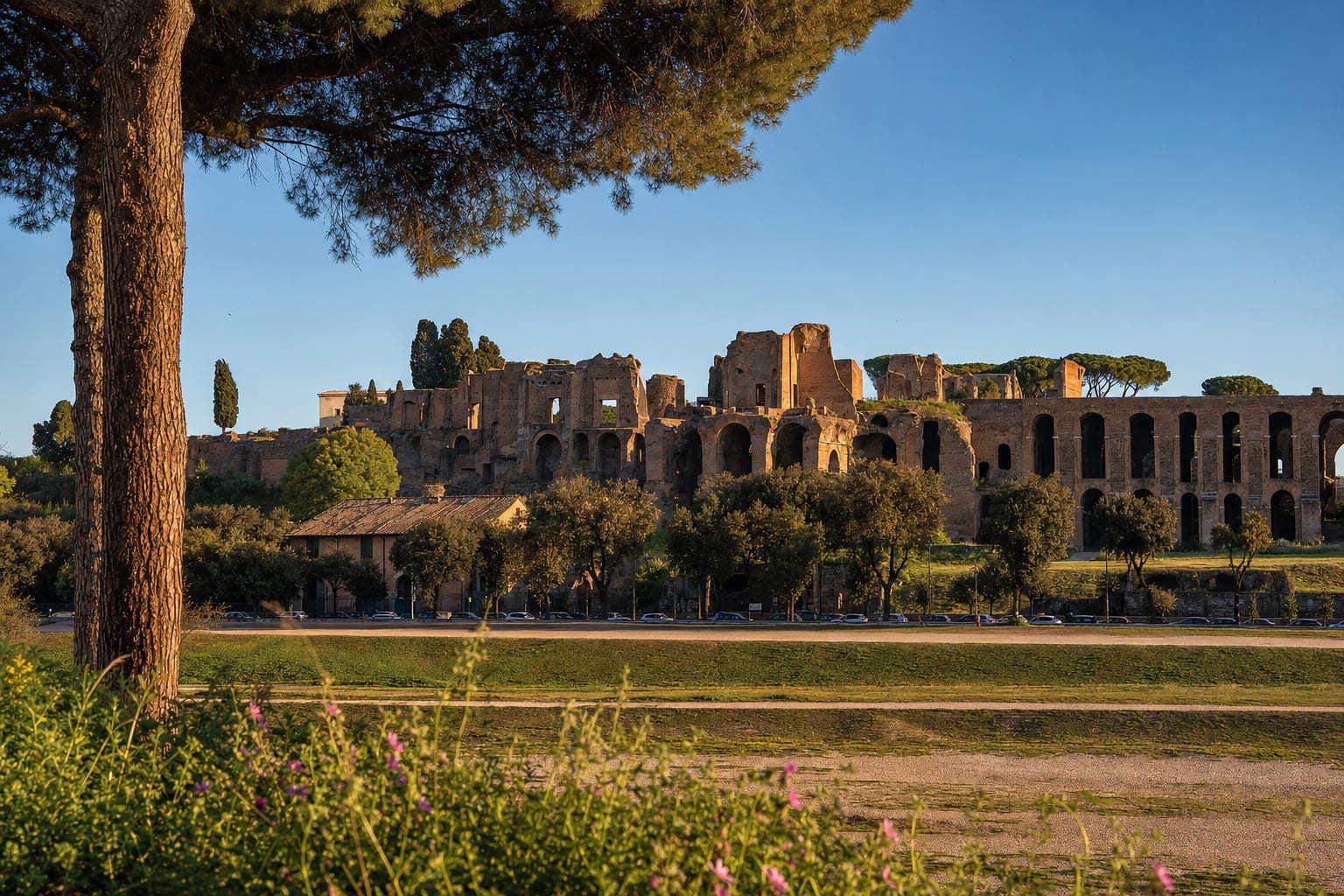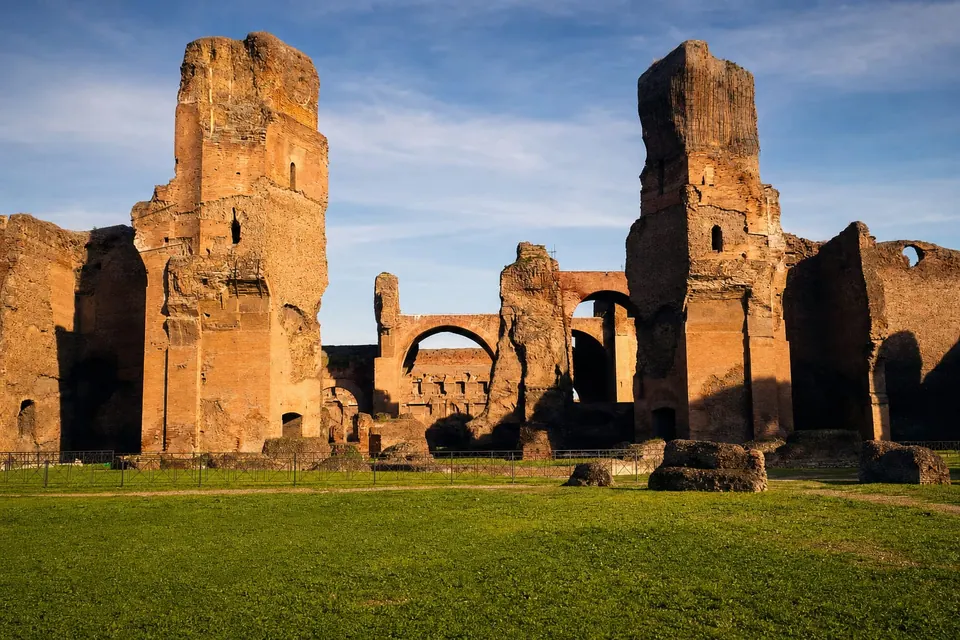
Rome's Baths of Caracalla were inaugurated in 216 CE and could take some sixteen hundred bathers at once. The surviving brick shell is still enormous: the great vaults dwarf everything around them, and beneath the floor runs a network of galleries, some two kilometers of them, where the furnaces, water channels and service tunnels that kept the complex hot are still visible.
Down there is also a Mithraeum, among the largest known. Marble, mosaics and statues once filled the rooms; the Farnese Hercules came from here. In summer the ruins become the stage for Rome's open-air opera, with arias rising into the brick skeleton, a fitting use for a building designed for crowds.