

Heritage
Santa Croce is a living archive, not just a church
The complex holds thousands of works across centuries, many still in the settings for which they were made. That is why its art feels embedded rather than displayed.1
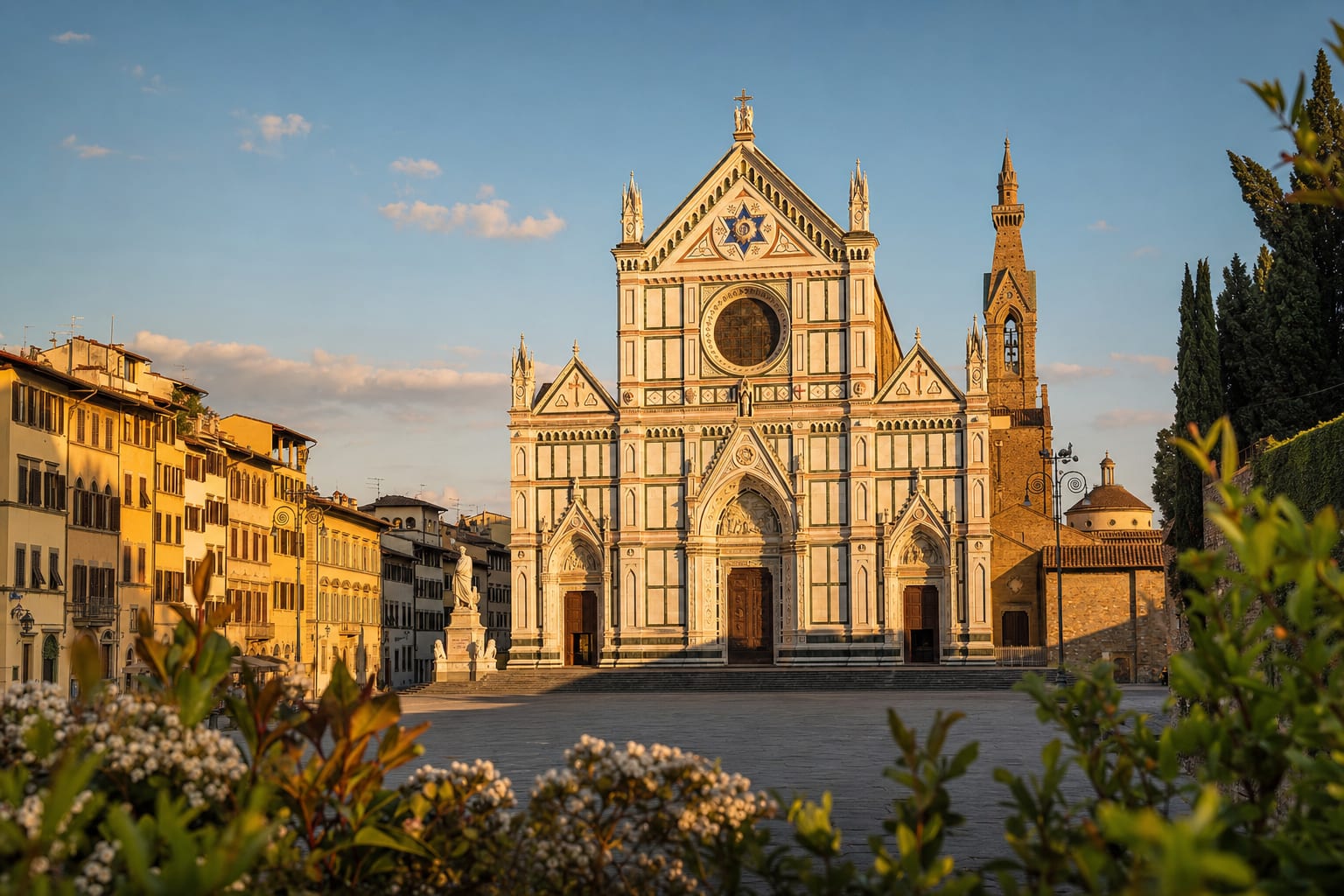
Basilica di Santa Croce
Giotto's chapels, Brunelleschi's Pazzi Chapel, Donatello works, and tombs of Michelangelo, Galileo, Machiavelli, Foscolo, and Rossini.
Photograph · Basilica di Santa Croce
At a glance
Names, makers, dates, and context before the story opens up.
| Italian name | Basilica di Santa Croce |
|---|---|
| What it is | Church |
| Where | Florence, Tuscany |
| Known for | Giotto's chapels, Brunelleschi's Pazzi Chapel, Donatello works, and tombs of Michelangelo, Galileo, Machiavelli, Foscolo, and Rossini. |
| Period | Franciscan Gothic |
The story
Santa Croce is a Franciscan basilica in Florence. The current church has a Latin-cross plan, pointed arches, wooden trusses and transept chapels; Opera di Santa Croce attributes its design, with caution, to Arnolfo di Cambio. In 1566 Giorgio Vasari removed the rood screen and its attached chapels during a Counter-Reformation renewal commissioned by Cosimo I de' Medici. The Basilica belongs to a wider Santa Croce complex and lies within, rather than independently on, the Historic Centre of Florence World Heritage property.
Santa Croce has been central to Florence's religious, artistic, and civic life for centuries. Its Franciscan origins, Giotto chapel cycles, Renaissance works, and monumental tombs form one of the city's richest cultural archives. The Opera di Santa Croce describes the complex as a living heritage with thousands of works still largely in their original settings, which is why the visit feels like entering a historical organism rather than a neutral museum.
Look closer
The details our editors pull from official records, archives, guides, and local sources.
Heritage
The complex holds thousands of works across centuries, many still in the settings for which they were made. That is why its art feels embedded rather than displayed.1
Painting
The Bardi and Peruzzi chapel cycles help visitors see 14th-century Florentine painting becoming more human, spatial, and emotionally direct.1
Memorial
Michelangelo, Galileo, Machiavelli, Foscolo, Rossini, and other memorials turn the basilica into a place where Florence and Italy negotiate cultural memory.1
Renaissance
Brunelleschi's chapel gives the complex a different rhythm: measured, serene, and architectural in a way that sharpens the contrast with the basilica's emotional nave.1
Each statement below is linked to the record or institution that supports it.
The complex holds thousands of works across centuries, many still in the settings for which they were made. That is why its art feels embedded rather than displayed.1
Santa Croce is Florence's monumental Franciscan basilica. The current church replaced earlier Franciscan churches on the site.2,3
The Bardi and Peruzzi chapel cycles help visitors see 14th-century Florentine painting becoming more human, spatial, and emotionally direct.1
The current church's foundation is dated to 1294 or 1295 in the Opera's historical account. It was complete by the end of the 14th century and consecrated in 1443.2,3
Michelangelo, Galileo, Machiavelli, Foscolo, Rossini, and other memorials turn the basilica into a place where Florence and Italy negotiate cultural memory.1
The Basilica has a Latin-cross plan, pointed arches, wooden trusses rather than rib vaults, and chapels opening from the transepts. The design is attributed by the Opera, with stated caution, to Arnolfo di Cambio.3
Plan your visit
Nearby
Worth folding into the same day.
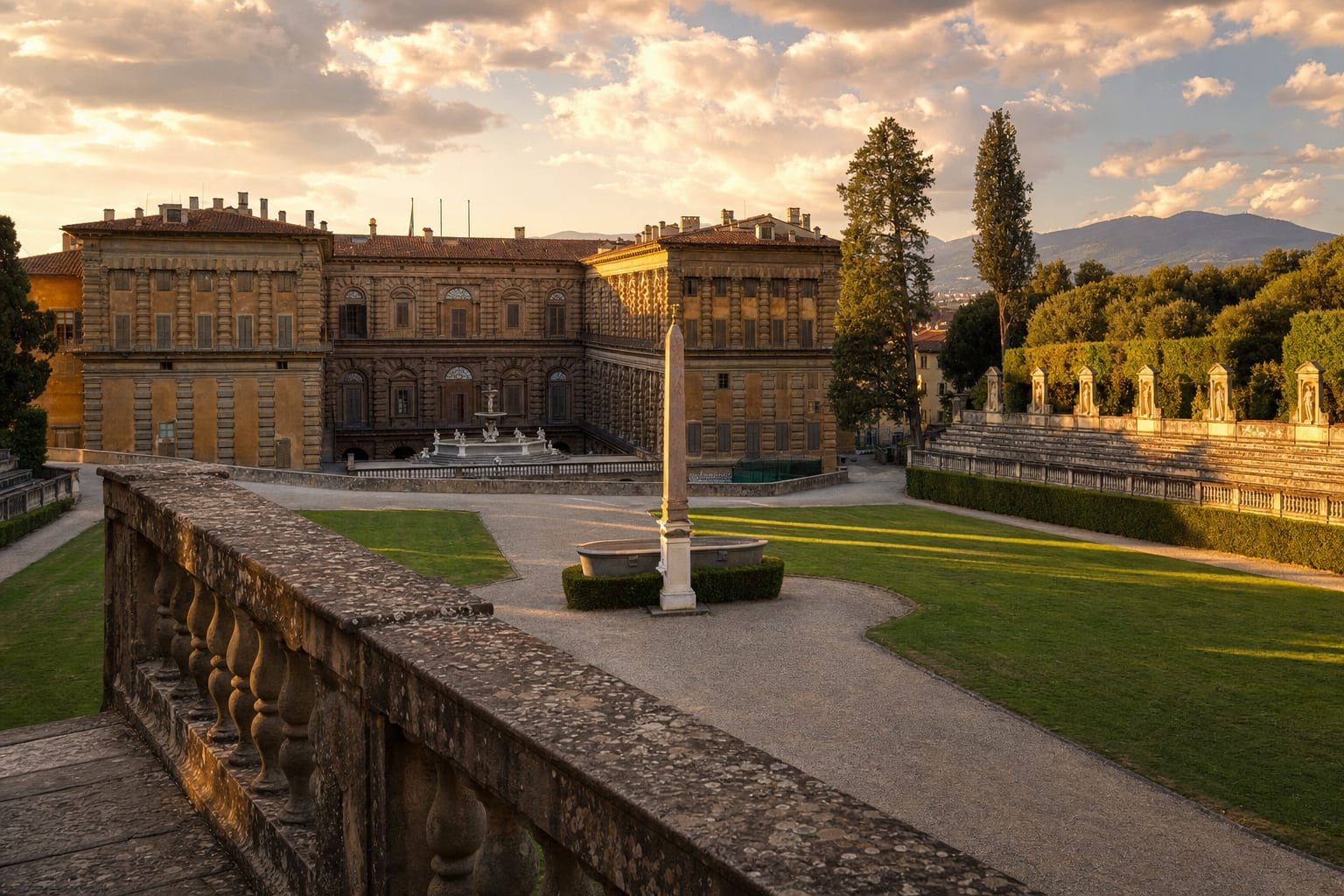 FlorenceBoboli GardensTerraces above Pitti Palace, the Amphitheatre, Buontalenti's grotto, long cypress avenues, fountains, sculpture, and city views.
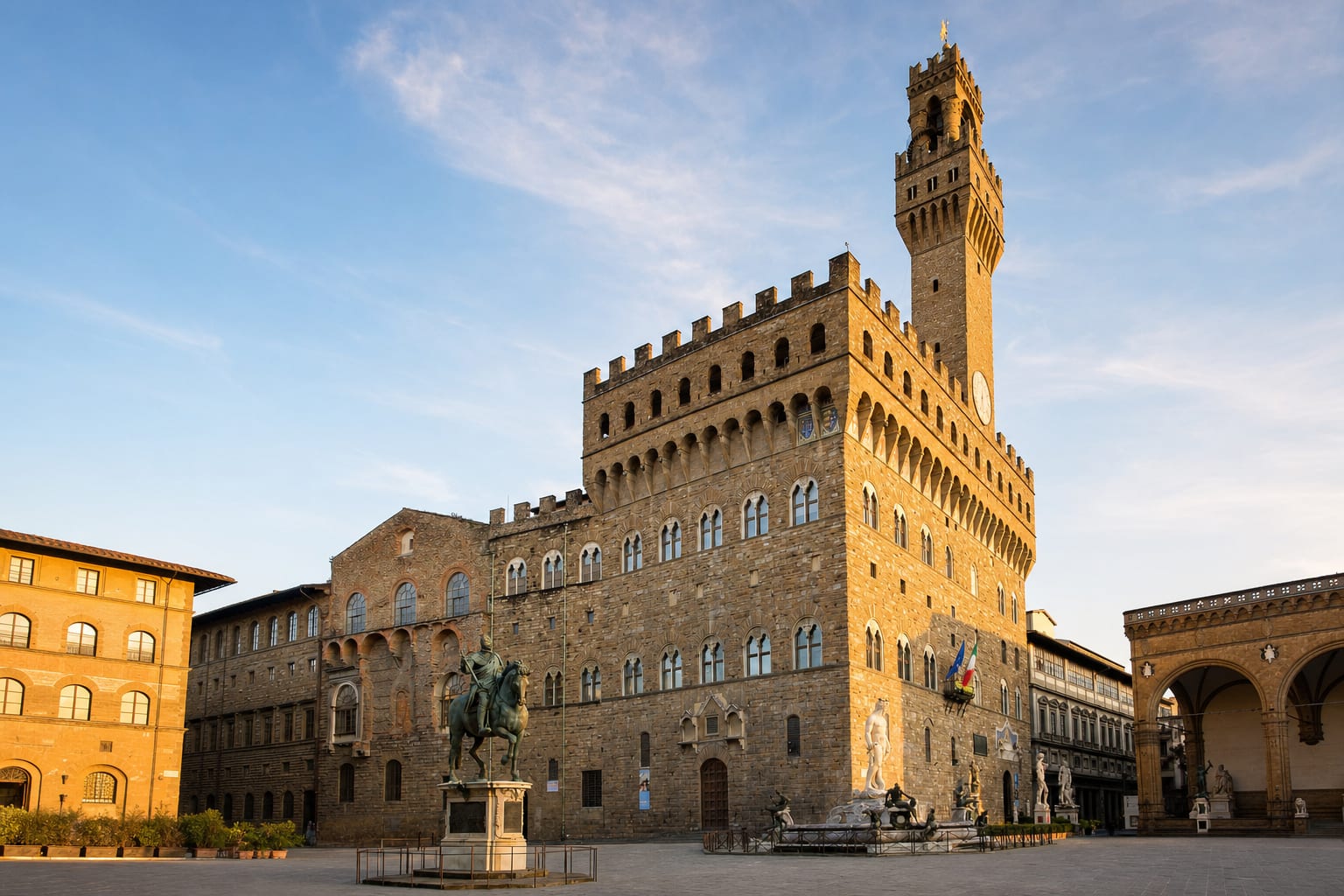 FlorencePalazzo VecchioFlorence's civic palace, Arnolfo's tower, the Salone dei Cinquecento, Medici rooms, and Piazza della Signoria.
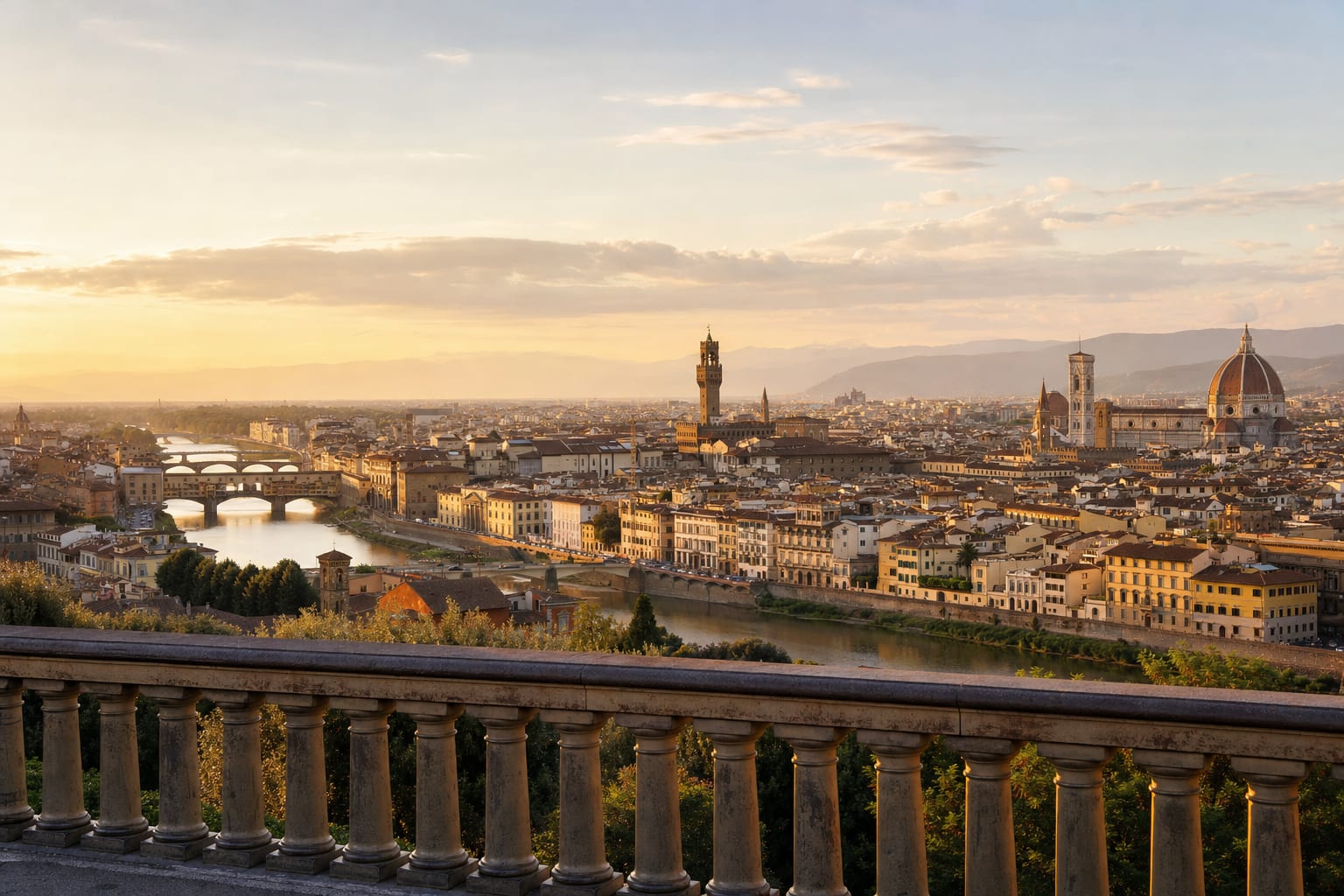 FlorencePiazzale MichelangeloGiuseppe Poggi's panoramic terrace and bronze copies of Michelangelo sculptures.
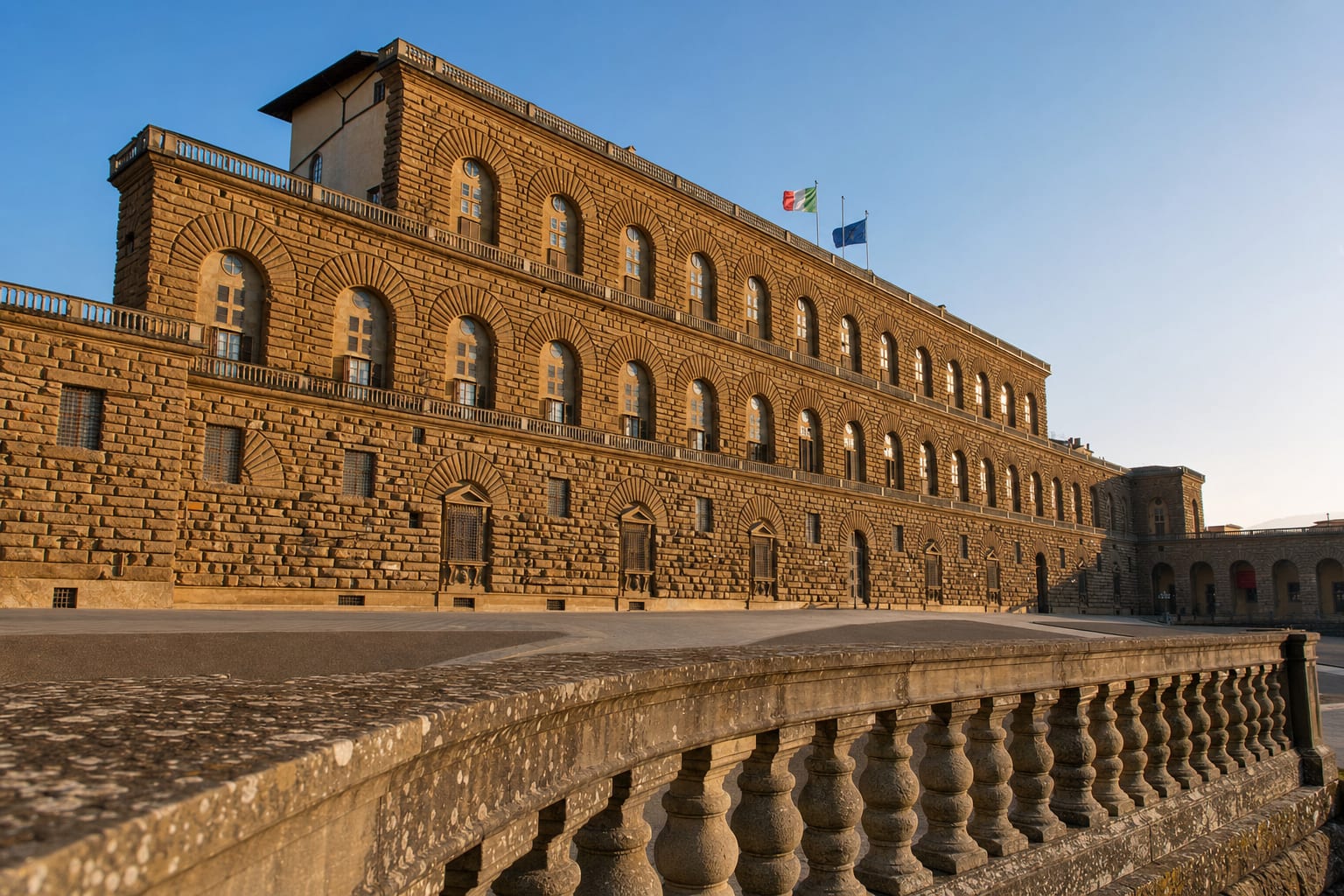 FlorencePitti PalaceThe Palatine Gallery, royal apartments, Medici power, court collections, and its direct connection to the Boboli Gardens.
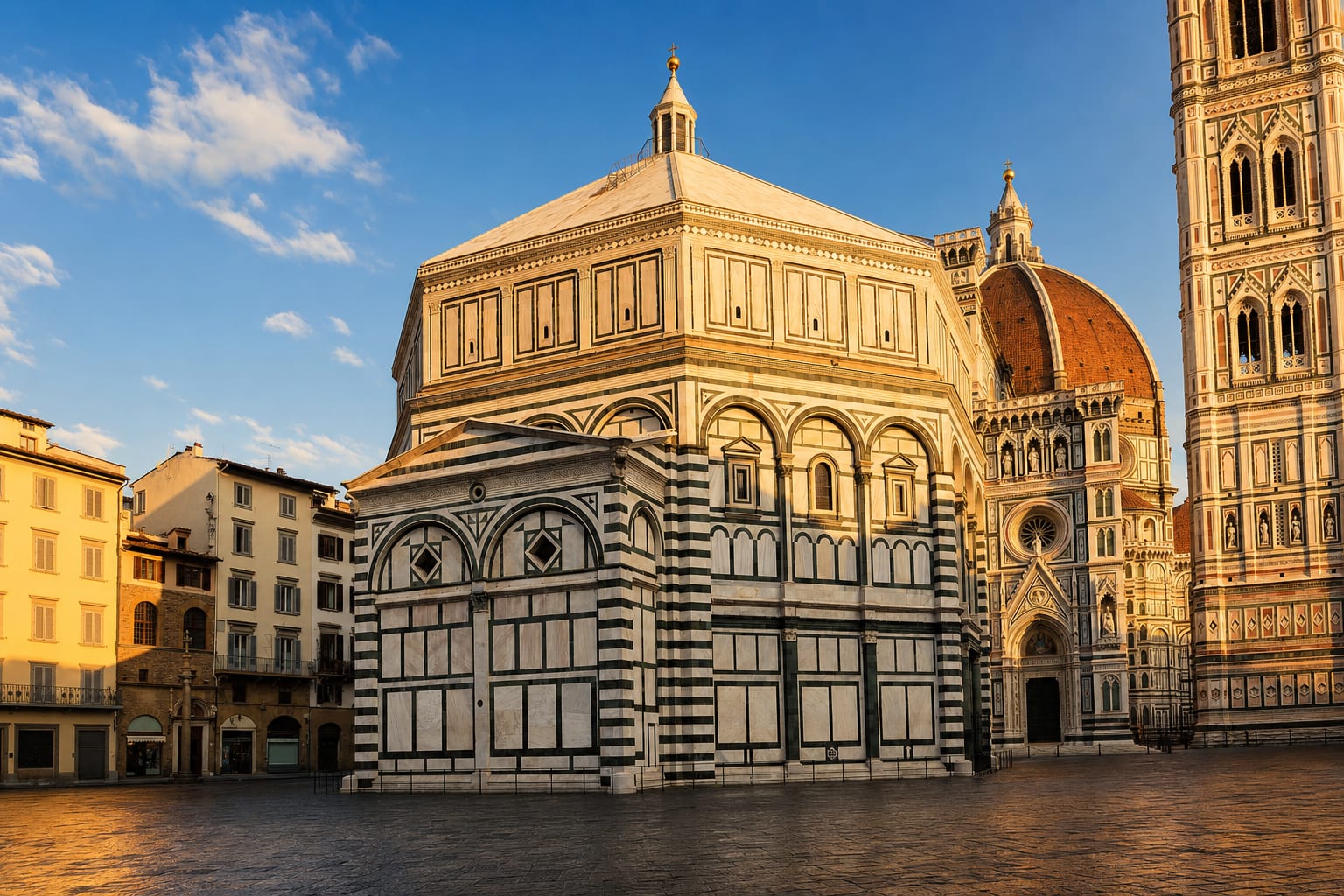 FlorenceFlorence BaptisteryThe octagonal Romanesque building, glittering vault mosaics, Andrea Pisano's doors, and Ghiberti's Gates of Paradise.
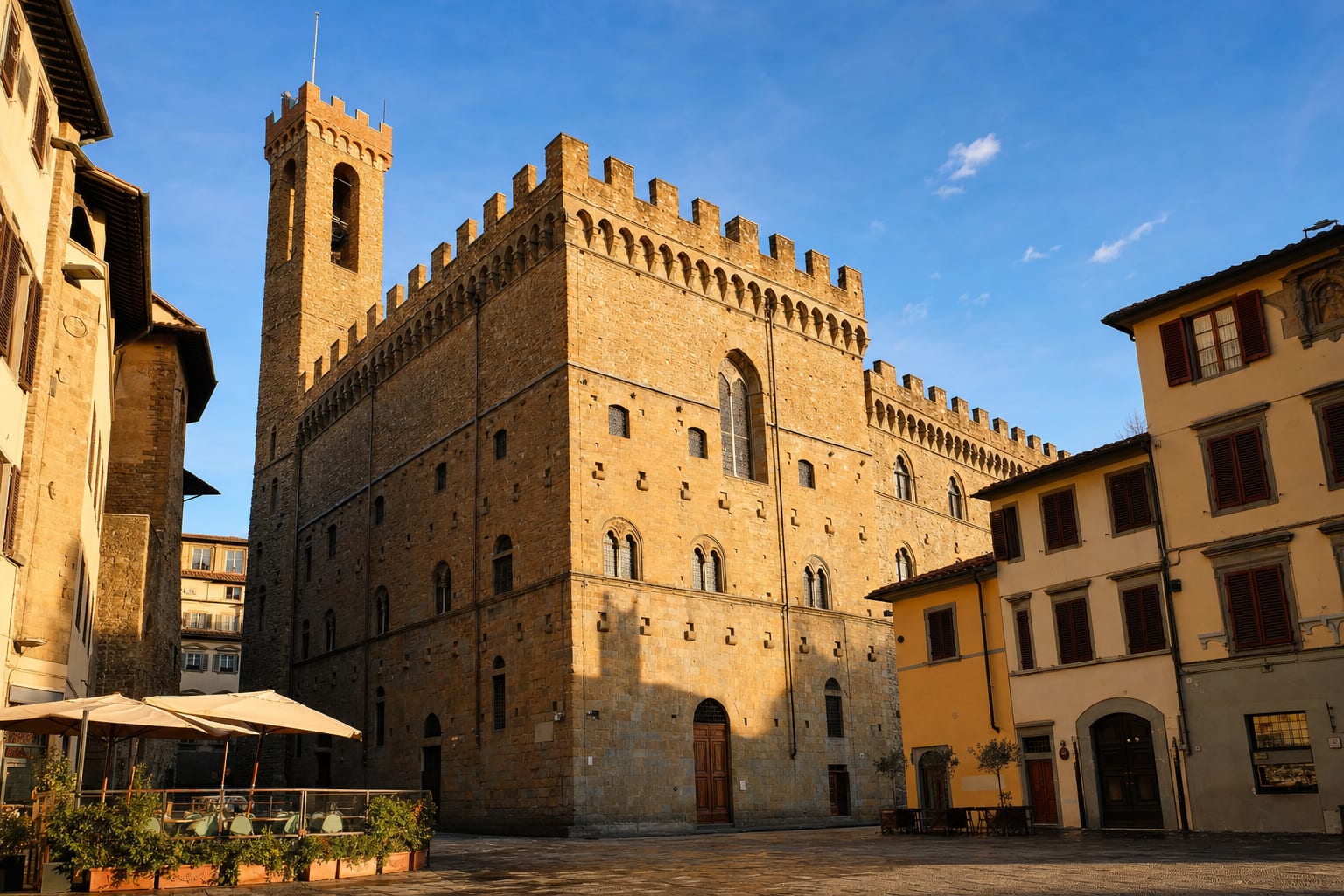 FlorenceBargello National MuseumDonatello's David and Saint George, Michelangelo's early works, Renaissance sculpture, medals, ivories, ceramics, and a severe medieval courtyard.
Reading
Long reads from our writers on the ground.