Fresco
The frescoes turn the cemetery into a painted sermon
Life, death, judgement, and salvation unfold across the walls, with the Triumph of Death still among the most unforgettable images in the complex.1
Pisa
Its medieval cemetery, Buffalmacco frescoes, late-antique sarcophagi and postwar conservation history.
Photograph · Camposanto Monumentale
At a glance
Names, makers, dates, and context before the story opens up.
| What it is | Monument |
|---|---|
| Where | Pisa, Tuscany |
| Known for | Its medieval cemetery, Buffalmacco frescoes, late-antique sarcophagi and postwar conservation history. |
| Period | 1277 |
| Maker | Giovanni di Simone; Bonamico Buffalmacco; Benozzo Gozzoli |
The story
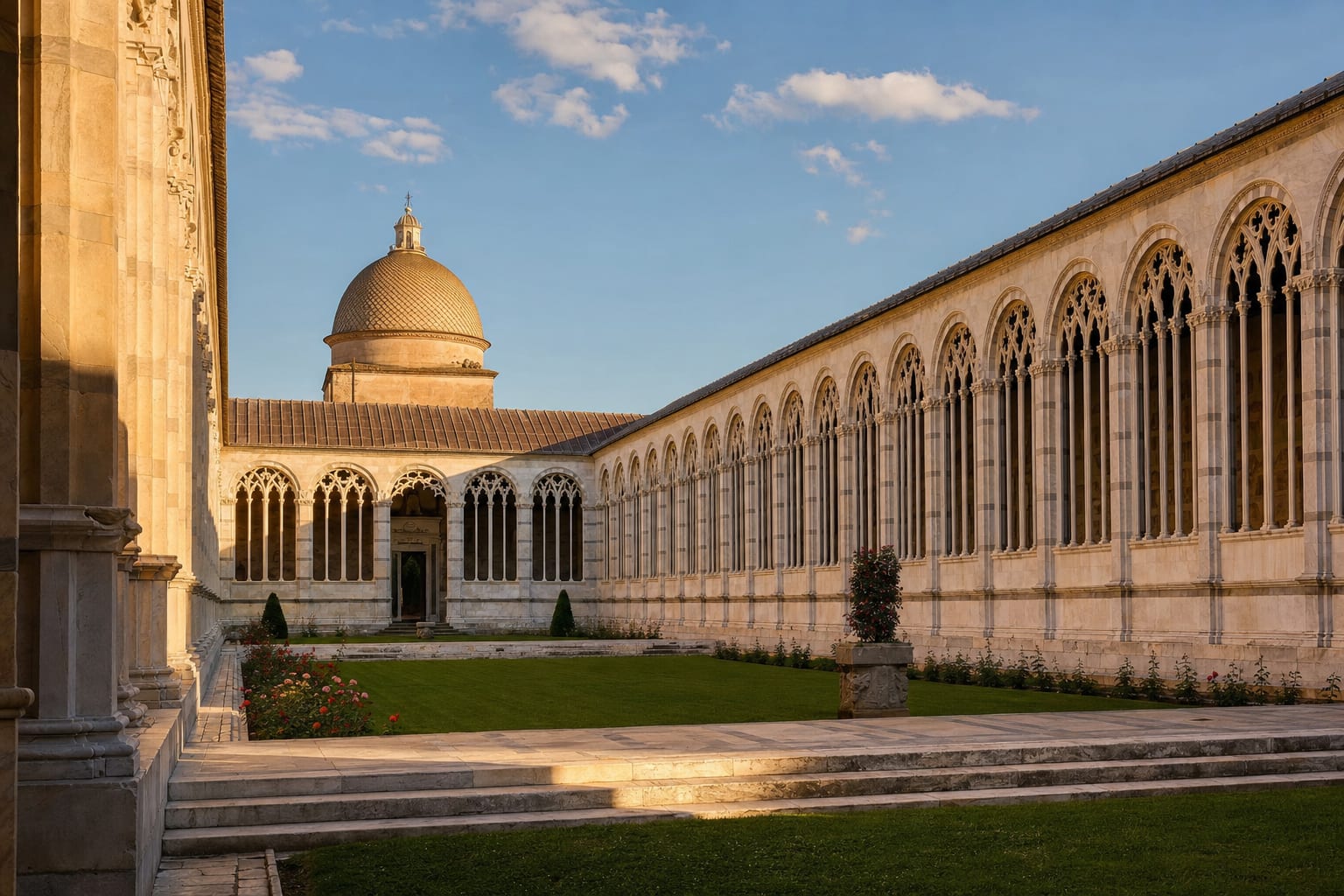
Camposanto Monumentale was founded in 1277 to accommodate graves formerly scattered around Pisa Cathedral. Designed by Giovanni di Simone, its long marble building forms the northern edge of Piazza del Duomo. Its fresco cycle includes Buffalmacco's Triumph of Death, Last Judgement and Stories of the Desert Fathers, Pisan Saints scenes and Old Testament stories completed by Benozzo Gozzoli. The 1944 air raid and fire led to the detachment of frescoes, revealing the sinopie now held in the separate Sinopie Museum. Camposanto is a component of the Piazza del Duomo World Heritage property, not a separately inscribed site.
Founded in 1277 for graves previously scattered around Pisa Cathedral, Camposanto developed a major fresco cycle. The 1944 air raid and fire began the recovery work that exposed the sinopie now held at the separate Sinopie Museum.
Look closer
The details our editors pull from official records, archives, guides, and local sources.
Fresco
Life, death, judgement, and salvation unfold across the walls, with the Triumph of Death still among the most unforgettable images in the complex.1
Memory
The cemetery's reuse and display of ancient sarcophagi links medieval Pisa's elite memory to the authority of Rome.1
Atmosphere
The cloister's long arcades and enclosed lawn give the Camposanto a different emotional tempo from the rest of the piazza.1
Context
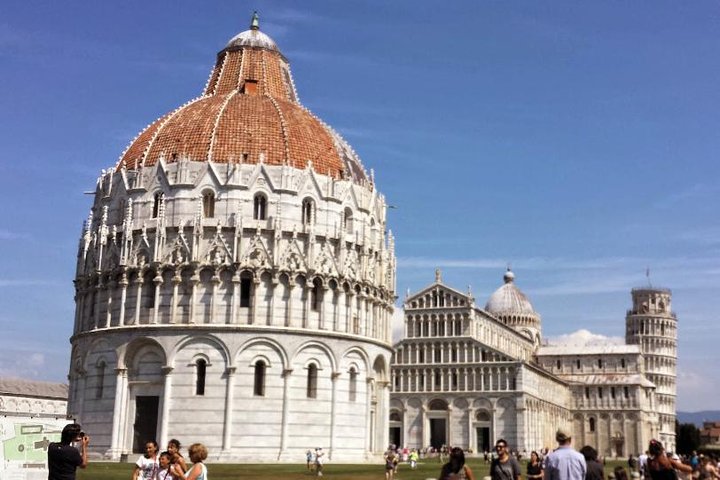
Together with the cathedral, baptistery, and campanile, the cemetery helps make Pisa's sacred ensemble one of Europe's great medieval groups.2
Each statement below is linked to the record or institution that supports it.
Life, death, judgement, and salvation unfold across the walls, with the Triumph of Death still among the most unforgettable images in the complex.1
Camposanto Monumentale was founded in 1277 to accommodate graves that had been scattered around Pisa Cathedral.1
The cemetery's reuse and display of ancient sarcophagi links medieval Pisa's elite memory to the authority of Rome.1
Camposanto's fresco cycle includes Buffalmacco's Triumph of Death, Last Judgement and Stories of the Desert Fathers; Pisan Saints scenes by Andrea Bonaiuti, Antonio Veneziano and Spinello Aretino; and Old Testament stories begun by Piero di Puccio and completed by Benozzo Gozzoli.1,3
Designed by Giovanni di Simone from 1277 and completed over the following centuries, Camposanto's long marble building forms the northern side of Piazza del Duomo.3
An air raid on 27 July 1944 caused a fire that melted Camposanto's lead roof. Rescue and restoration began in 1945, including the detachment of the frescoes that revealed their sinopie.3
Plan your visit
Book a visit
Compared by our editors, across providers.
Booking through these links may earn Italia Magnifica a commission, at no cost to you.
Reading
Long reads from our writers on the ground.