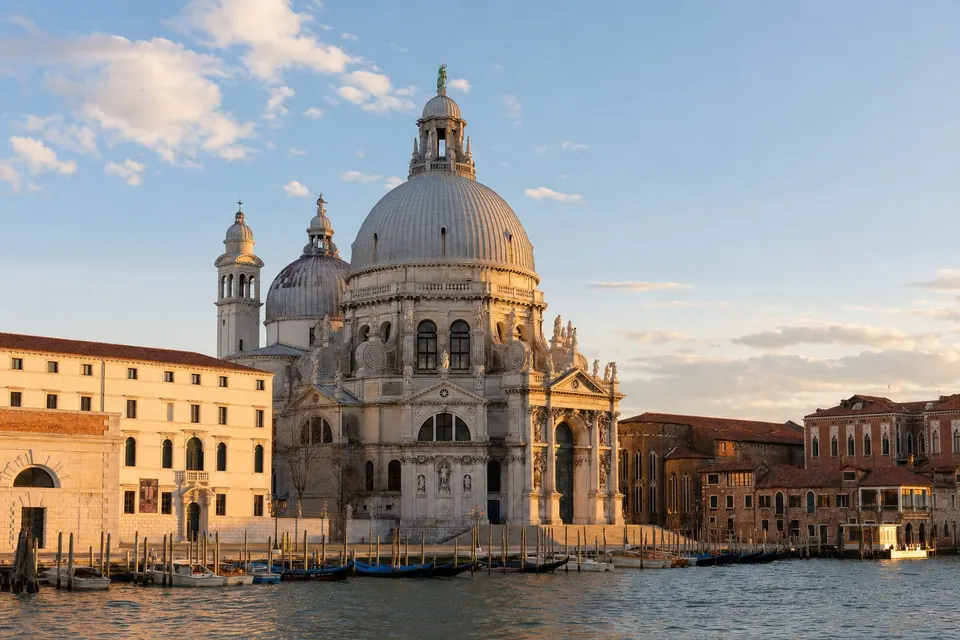
The Venetian Senate vowed to build this church in 1630, at the height of a plague outbreak that would eventually kill roughly a third of the city's population, promising the Virgin Mary a shrine in exchange for deliverance.
Baldassare Longhena, still in his twenties and a student of Vincenzo Scamozzi, won the design commission and spent the rest of his career, decades, seeing it built: a broad octagon crowned by a great dome and ringed by dramatic scrolled buttresses, or volutes, that visually anchor the whole structure to the ground. It occupies the Punta della Dogana, the narrow spit where the Grand Canal meets the Giudecca Canal, making it one of the first things visitors see arriving from the lagoon and one of the most photographed skylines in Venice. Titian paintings hang in the sacristy, and every November 21, the Festa della Salute still sends a procession across a pontoon bridge of boats to the church's door, exactly as it has since the plague first lifted.