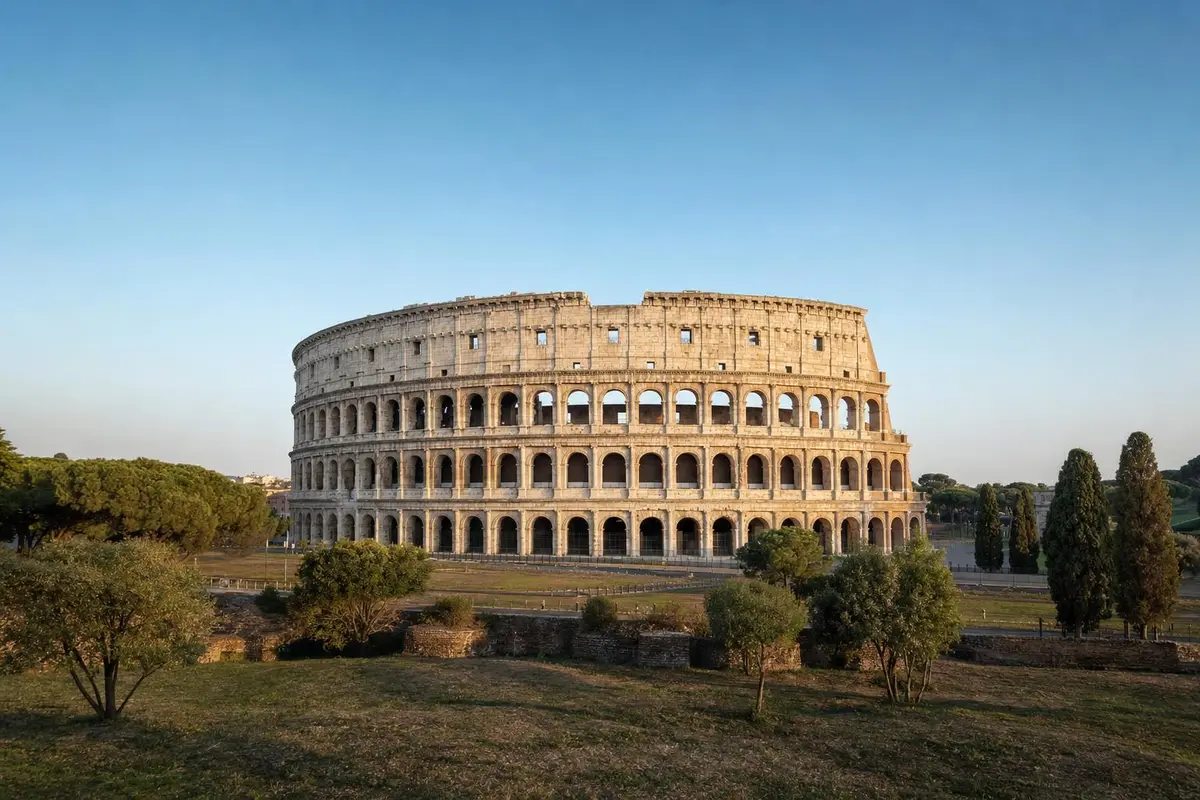
The Colosseum makes most sense as a building in motion. Spectators entered through numbered arches and found places arranged by social rank; beneath the arena, workers operated the machinery that brought people, animals and scenery into view. The surviving shell lets you read those two worlds together.
Read the building before the arena
The Flavian emperors built the amphitheatre in the first century CE. Its repeated arches were part of the organisation of a huge public audience, not simply a monumental facade. Follow the curve of the corridors and the changing levels before fixing your attention on the centre.1,2
The arena was a floor above a working service area. Wooden underground structures were replaced with masonry under Domitian, and the systems changed again over the building’s long life. The exposed corridors are therefore the remains of several phases, rather than a complete, unchanged mechanism.3,4
A monument with an afterlife
After the ancient spectacles ended, the amphitheatre became a place of homes, workshops, reuse and the removal of building stone. Later excavations and restorations helped produce the ruin visible today. The Colosseum Museum adds objects and models to that story, extending the visit beyond gladiators.1,5
Choose the spaces you want to enter
Compare the areas named in the official ticket before booking. Ordinary levels, arena, underground and attic are different visitor experiences; a Forum-only product does not include the amphitheatre. Use the official booking page for the current entry arrangements, and keep the Roman Forum and Palatine as distinct parts of your plan.6