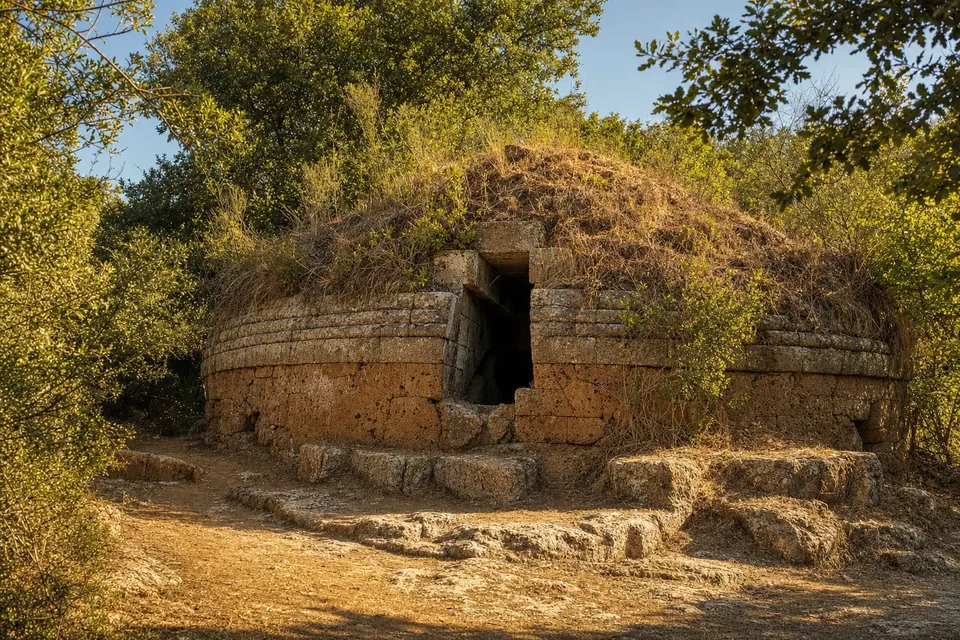
The Etruscans gave their dead a real city on this ridge above Cerveteri, with paved streets, small squares, and round tumuli the size of houses cut straight into the tufa bedrock, some dating back to the seventh century BC.
Inside, stone beds, carved pillows, and household objects in relief wait as if for sleepers who stepped out for the afternoon. The Tomb of the Reliefs, from the fourth or third century BC, takes the idea furthest: its stuccoed walls sculpt the tools, animals, and utensils of a Matuna family's daily life onto the chamber's stone pillars, visible today through a glass barrier that protects the plaster. UNESCO listed the necropolis, together with Tarquinia's, in 2004, the clearest surviving picture of how the Etruscans imagined the world their dead kept living in.