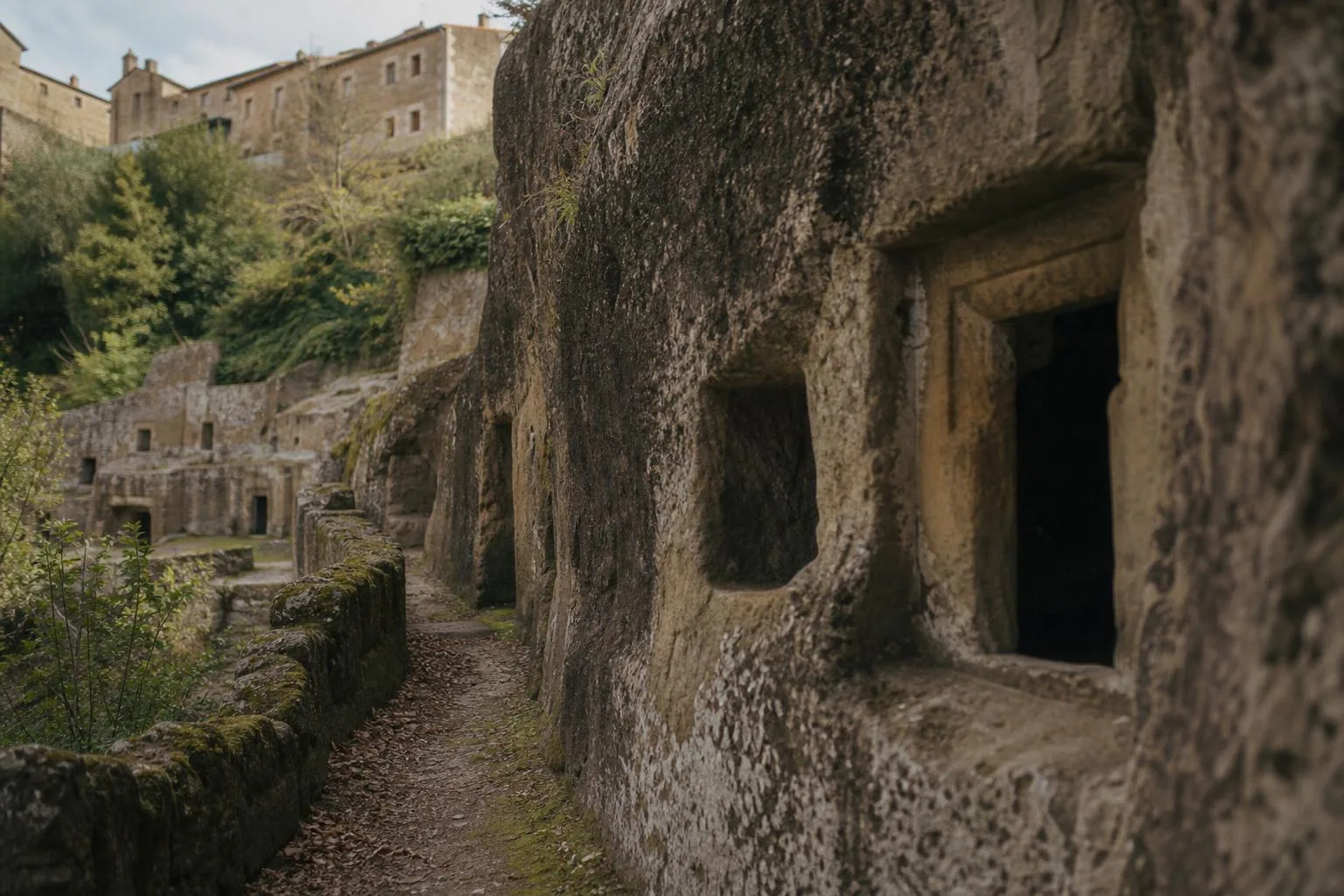
More than two hundred rectangular tuff-stone tombs line orthogonal streets below Orvieto's cliff, an Etruscan necropolis that reached its fullest extent between the mid-sixth century BC and the century that followed.
Unlike the great tumulus tombs of other Etruscan sites, these chambers are modest, roughly three by two meters, each fitted with stone benches along the walls where the dead were laid out with grave goods reflecting their status: bronze vessels and Attic pottery for the wealthy, weapons and iron tools in male burials, ornaments in female ones. Many tombs carry inscribed family names over their doorways, a rare survival that lets visitors read the necropolis almost like a directory of Orvieto's Etruscan citizens. Disorganized nineteenth-century digging scattered finds across European and American museums before scientific excavation resumed in 1961.
Sources and citations (3)
- Musei Nazionali di Perugia - Direzione regionale Musei nazionali UmbriaNecropoli etrusca del Crocifisso del TufoOfficial source-bounded contextRead source
- Direzione regionale Musei nazionali UmbriaStatuto della Necropoli del Crocifisso del TufoOfficial source-bounded contextRead source
- Istituto Centrale per l’ArcheologiaLinee guida per il trattamento dei resti umaniOfficial source-bounded contextRead source