Skip to content

Châtel-Argent

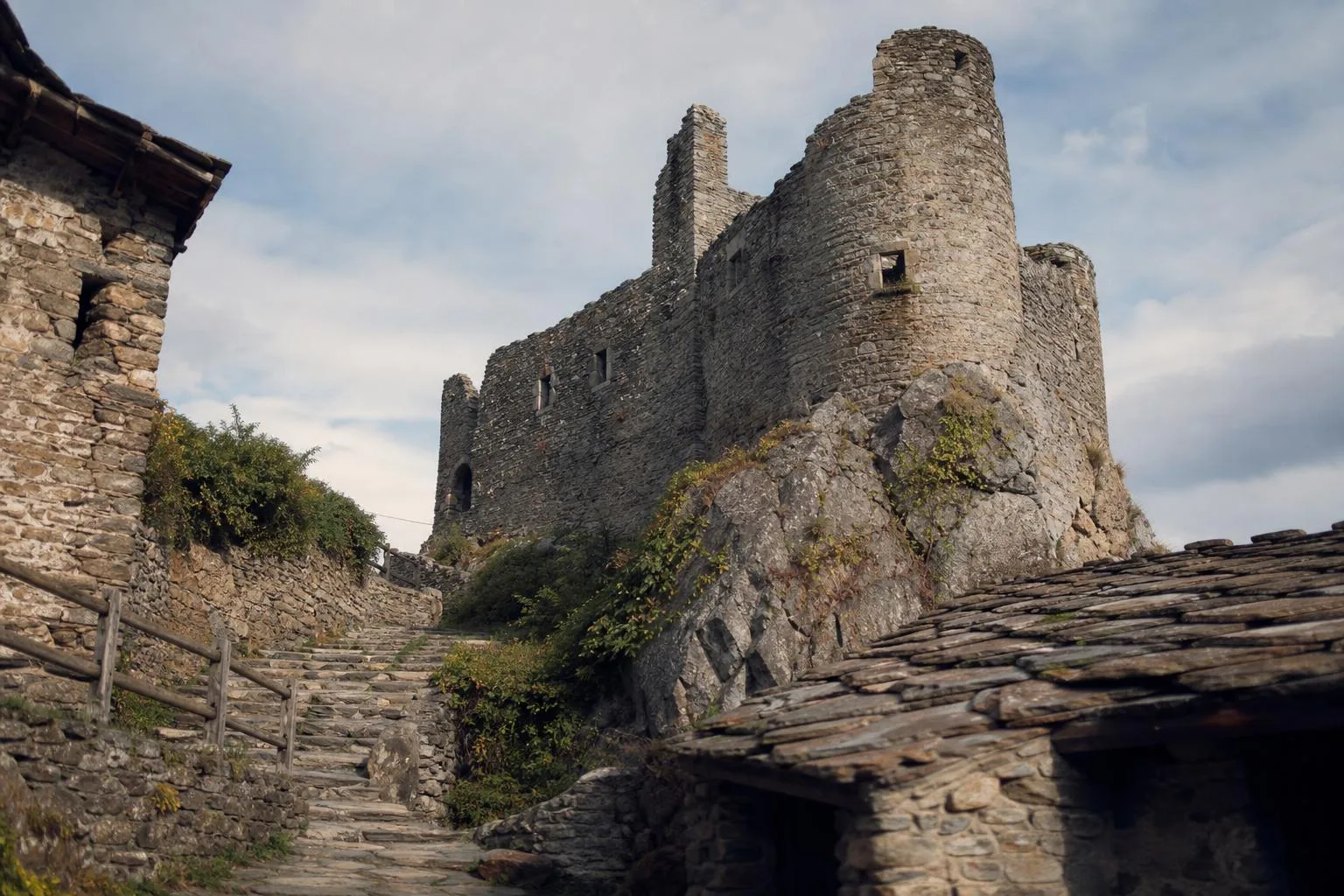
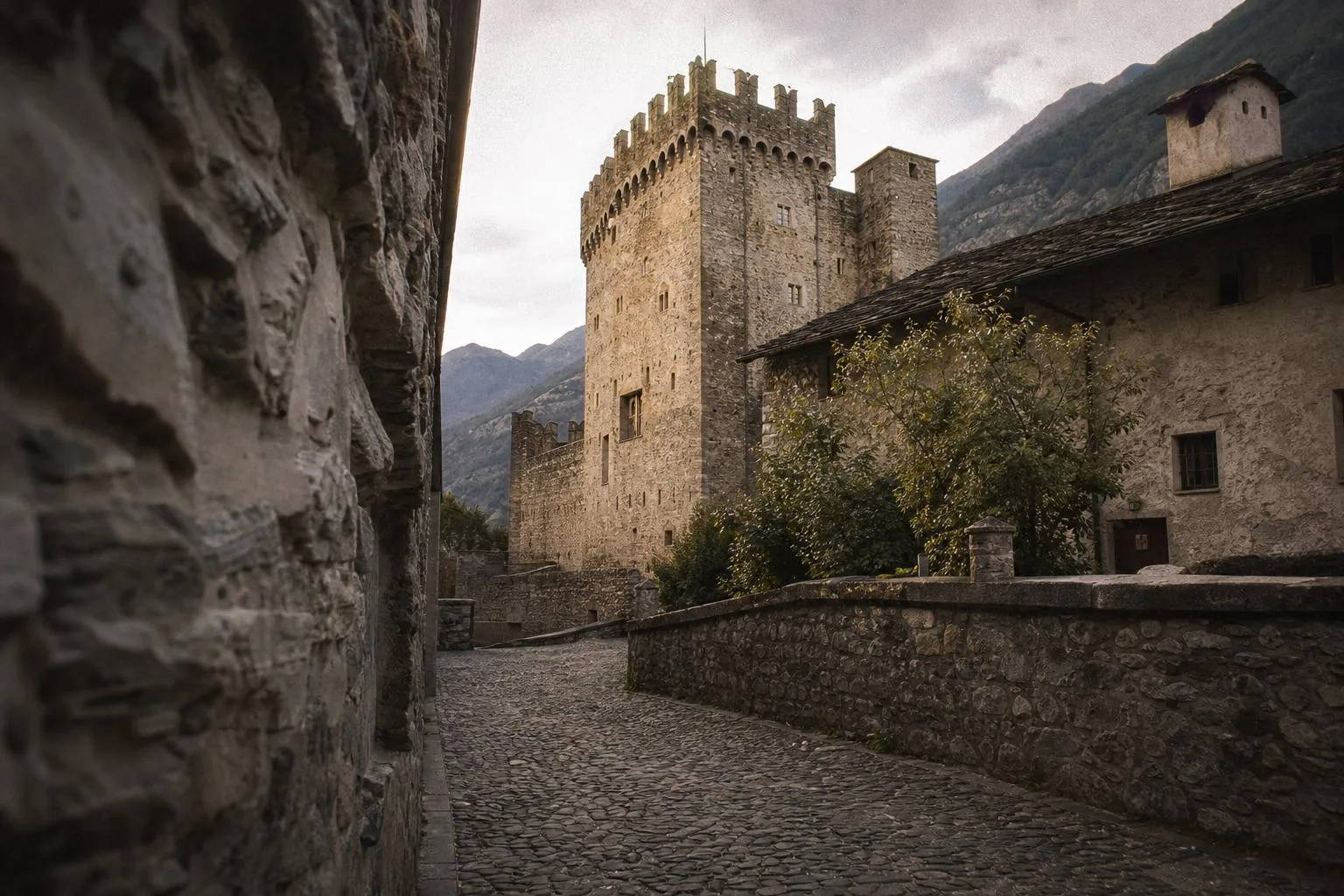
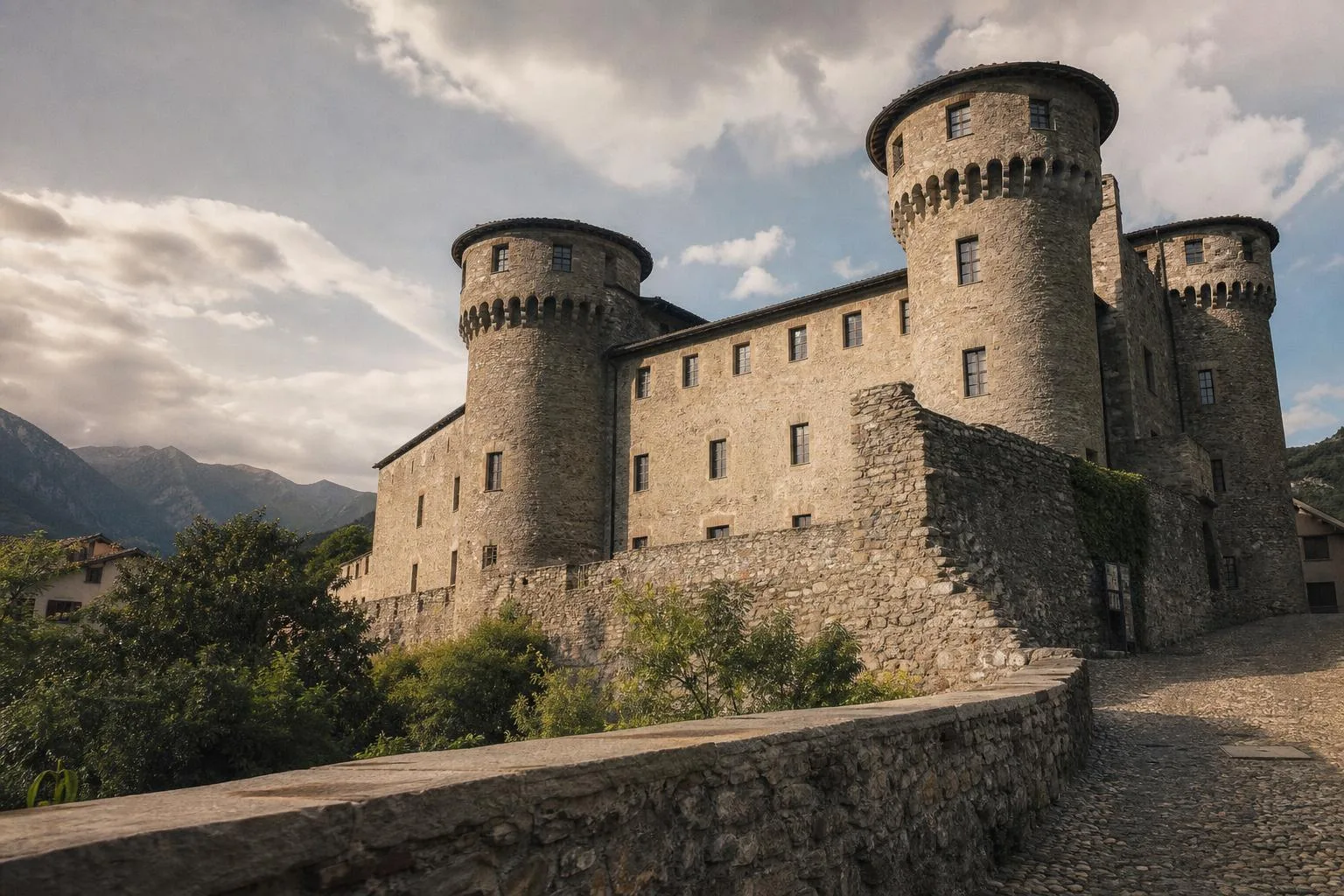
Châtel-Argent's 1275 keep on a rock spur above Villeneuve, reached by a stair carved into the cliff.

  • Villeneuve
  • Castle
Where
Villeneuve
Best for
1275 cylindrical keep
Allow
1 hr 30 min

A cylindrical keep sixteen meters high still crowns this rocky spur above the Dora Baltea, built in 1275 for Count Peter II of Savoy by the master military architect Jacques de Saint-Georges, who designed castles across Savoy and Wales alike.

Triple walls once let the fortress garrison as many as two thousand men, controlling the valley route into Aosta. People had already fortified this outcrop far earlier: Salassi tribes and then Romans held the spur before the Savoy counts arrived. Below the keep, the Chapel of Santa Colomba keeps its Romanesque decoration from around 1050 to 1070. A rock-cut staircase climbs from Villeneuve to the ruins, and the Fondation Grand-Paradis organizes the only guided visits.

Sources and citations (1)
  1. Regione Autonoma Valle d'AostaChâtel-ArgentPage heading Châtel-Argent; opening sentence identifying the castello Châtel-Argent di Villeneuve; Informazioni address 11018 VILLENEUVE AORead source
Five things worth finding

If you see nothing else, see these.

  1. The cylindrical keepJacques de Saint-Georges for Count Peter II of Savoy, 1275

    About sixteen meters high and nine and a half across, with a door set eight meters above the ground so the ladder could be pulled up.Highest point of the fortified spur

  2. The chapel of Santa ColombaRomanesque, c. 1050 to 1070

    A small, archaic castle church with a façade of stepped hanging arches and an apse decorated with pilasters in brick.East side of the fortified area

  3. The rock-cut stair19th century, probably cut in 1817

    A steep stepped ramp carved through the rock takes you up from the village, and the climb is part of the experience.From Villeneuve up to the ruins

  4. The triple curtain wallSavoyard, 13th century

    The wall circuit enclosed an area of roughly ninety by seventy meters, enough for a garrison of up to two thousand men to control the valley road to Aosta.Around the keep

  5. The old marble quarries

    Traces of Roman quarrying of bardiglio marble lie between the chapel and the keep, a reminder that the rock was valuable long before the castle.Between the chapel and the castle

Plan your visit

Everything you need before you go.

Booking
Book ahead
Time needed
1 hr 30 min
Best time
A clear morning in late spring or early autumn, for the climb and the valley view
Getting there
From Villeneuve, about 10 km southwest of Aosta, a signposted rock-cut staircase climbs steeply to the ruins; there is no vehicle access to the top.

Visits are guided-only, arranged through the Fondation Grand-Paradis; check seasonal dates before planning a trip.

Wear proper shoes for the rock-cut stair, and time the climb for morning light, when the Dora Baltea valley opens up below the keep.

Get directionsGoogle MapsApple Maps

Before you book

How long should you spend at Châtel-Argent?

Allow about an hour and a half, including the steep climb up the rock-cut stair and the guided walk around the ruins. The keep and chapel are compact, but the views over the Dora Baltea valley invite lingering.

Do you need to book Châtel-Argent?

Yes, plan to. The only way inside is a guided visit organized by the Fondation Grand-Paradis, so check the schedule and reserve ahead, especially in high season. Wear sturdy shoes, because there is no vehicle access to the top.

Is Châtel-Argent worth visiting?

Yes, if you enjoy ruins with a strong sense of place. The keep stands on a rocky spur above the valley, designed by the same architect who built castles in Savoy and Wales. Pair it with Sarriod de la Tour or Aosta’s Roman sites.

A letter from Italy, once a month.

The places, tables and makers we found worth your time. One email, no noise.

One letter a month. Unsubscribe at any time. We never share your address.

Help us get it right

What is it about?