Skip to content

Plestia

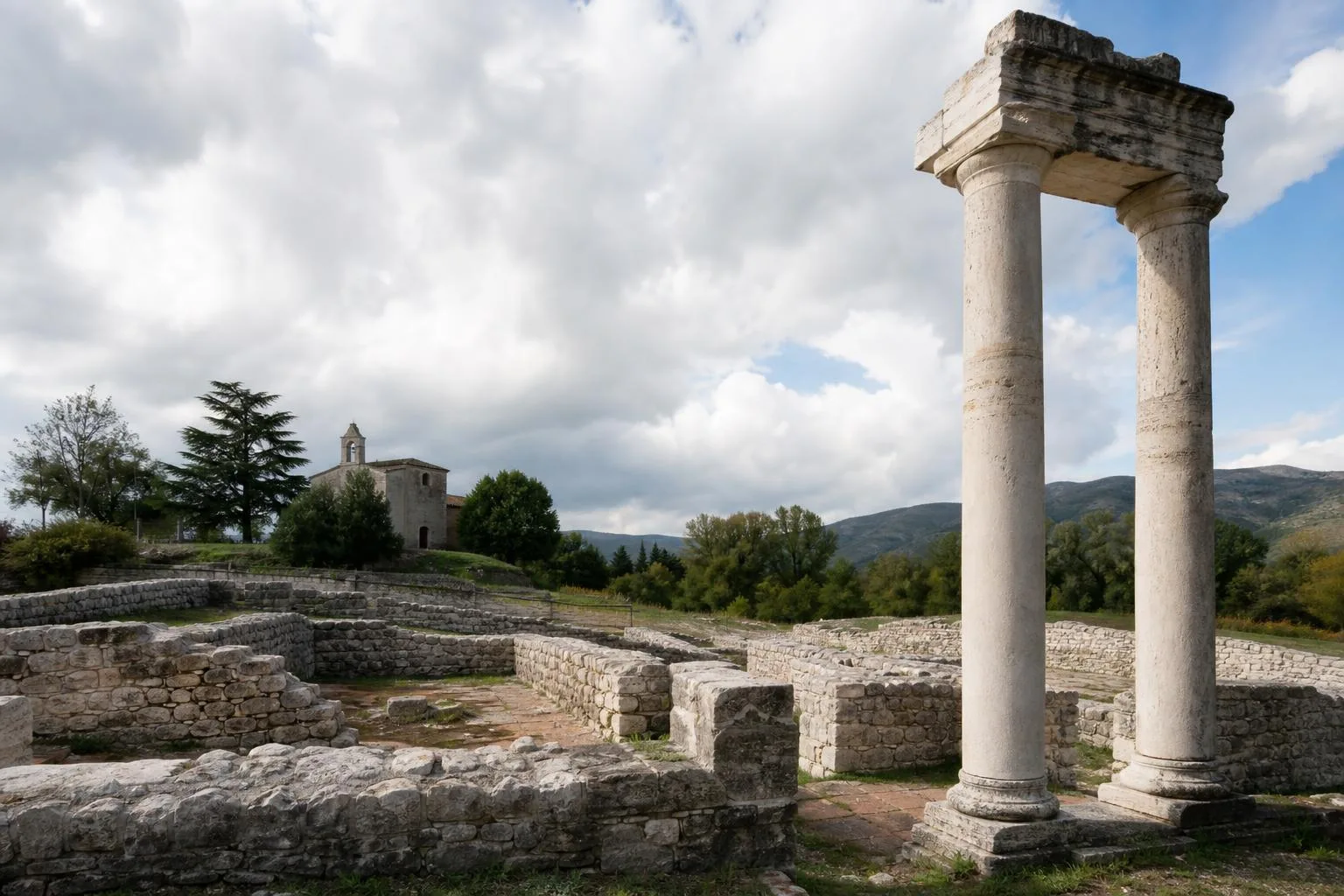
Plestia's Umbrian-Roman ruins on the Colfiorito plateau, a forgotten town and diocese reclaimed by archaeology.

  • Foligno
  • Archaeological site
Where
Foligno
Best for
Umbrian Plestini origins
Allow
45 minutes
Tickets
Free

Evidence of habitation on the Colfiorito plateau, straddling today's border between Umbria and the Marche, reaches back to the Paleolithic, but Plestia became a real town only when the Umbrian Plestini people settled it permanently around the tenth or ninth century BC.

The Social War of 90 BC brought Roman citizenship and urbanization, turning Plestia into a municipium of the Augustan sixth region, with public buildings and mosaic-floored houses that excavation has since uncovered near the church of Santa Maria di Pistia. The settlement persisted through the Lombard period as a diocese before fading entirely from the historical record after 996 AD, its site and name essentially forgotten until archaeology brought it back. Finds from the excavations, including wealthy Roman domestic mosaics, are held at the nearby Colfiorito Park museum rather than displayed on-site.

Sources and citations (5)
  1. SABAP UmbriaArcheologia ColfioritoArchaeological componentsRead source
  2. Comune di Serravalle di ChientiArea archeologica di PlestiaCross-border componentRead source
  3. Comune di FolignoMuseo Archeologico di ColfioritoMuseum componentRead source
  4. Regione UmbriaParco regionale di ColfioritoSeparate regional park identityRead source
  5. Ramsar Sites Information ServicePalude di Colfiorito, site 122Separate Palude wetland identityRead source
Four things worth finding

If you see nothing else, see these.

  1. The church of Santa Maria di PistiaMedieval church on a Roman public building

    The church stands over the colonnaded front of a Roman public building, probably the forum basilica.Center of the excavated town

  2. The Roman domusLate Republican, about 40 to 20 BC

    A rich house with an atrium and peristyle, with mosaic and cocciopesto floors in the rooms around the court.Across the road from the church

  3. The forum areaRoman, municipium period

    A paved public space with a travertine channel and traces of a colonnade.In front of the church

  4. The Colfiorito Archaeological Museum

    Hundreds of finds from the Umbrian necropolises and a section on Roman Plestia and the church of Santa Maria.Colfiorito

Plan your visit

Everything you need before you go.

Tickets
Free
Booking
No booking needed
Time needed
45 minutes
Best time
A clear morning, combined with a visit to the Colfiorito Park museum for the finds
Getting there
On the Colfiorito plateau near Foligno, close to the church of Santa Maria di Pistia; a car is the practical way in.

The excavated area itself is a freely accessible outdoor site; the finds are displayed separately at the Colfiorito Park museum, which may charge its own admission.

Visit the Colfiorito Park museum first: the mosaics and finds on display there make the bare foundations on-site much easier to picture as houses and public buildings.

Get directionsGoogle MapsApple Maps

Good to know

How long should you spend at Plestia?

About 45 minutes for the site around the church. The remains are modest, so the visit is quick. Combine it with the museum in Colfiorito to make a proper outing.

Is Plestia worth visiting?

Only if you enjoy quiet archaeological sites with some imagination. The Colfiorito plateau has a long history, and Plestia was a Roman municipium that faded after the Lombard period. Come for the setting and pair the site with the museum, because the best finds are displayed there.

Where are the finds from Plestia?

Mostly in the Colfiorito Archaeological Museum, which has a section on Roman Plestia. The site itself shows ruins, not objects, so the museum completes the picture. A car is the practical way to reach both.

A letter from Italy, once a month.

The places, tables and makers we found worth your time. One email, no noise.

One letter a month. Unsubscribe at any time. We never share your address.

Help us get it right

What is it about?