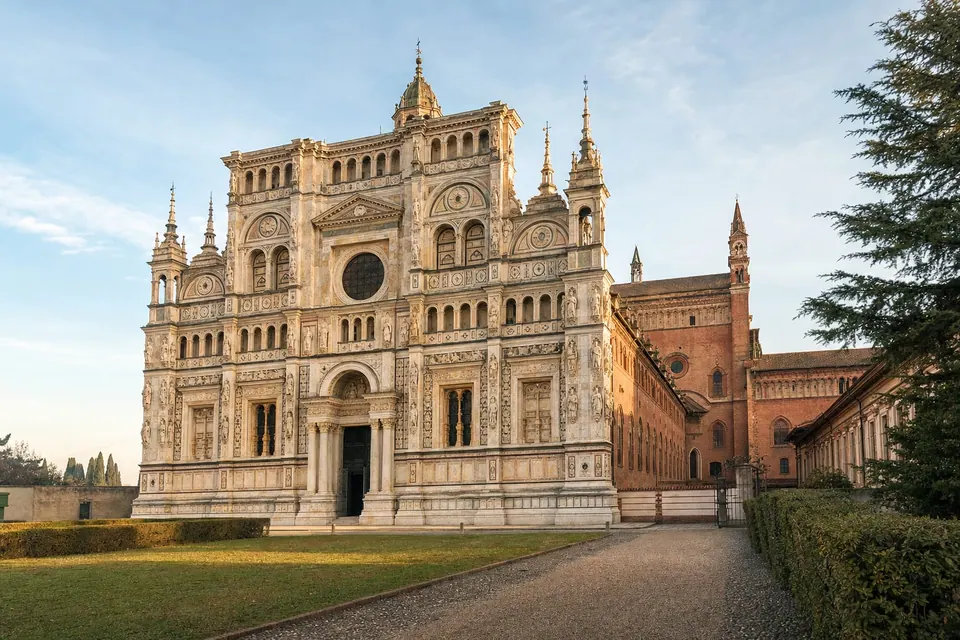
Gian Galeazzo Visconti founded this charterhouse in 1396 as a private mausoleum grand enough to rival any cathedral, and its facade, carved in polychrome marble over more than a century by masters including Giovanni Antonio Amadeo, remains one of the most extravagant in Lombardy.
Inside, the duke's own tomb sits beneath frescoed vaults, and the family's fortunes twisted enough that Ludovico il Moro is buried here too, his wife Beatrice d'Este beside him. Cistercian monks, who took over from the original Carthusians in 1968, still live and pray on the grounds; visitors reach the Grand Cloister, ringed by 24 individual monks' cells, each with its own small walled garden, only on the guided route through the complex.