

Architecture
Churches, palaces, castles and squares: Italian buildings and the people who designed them.
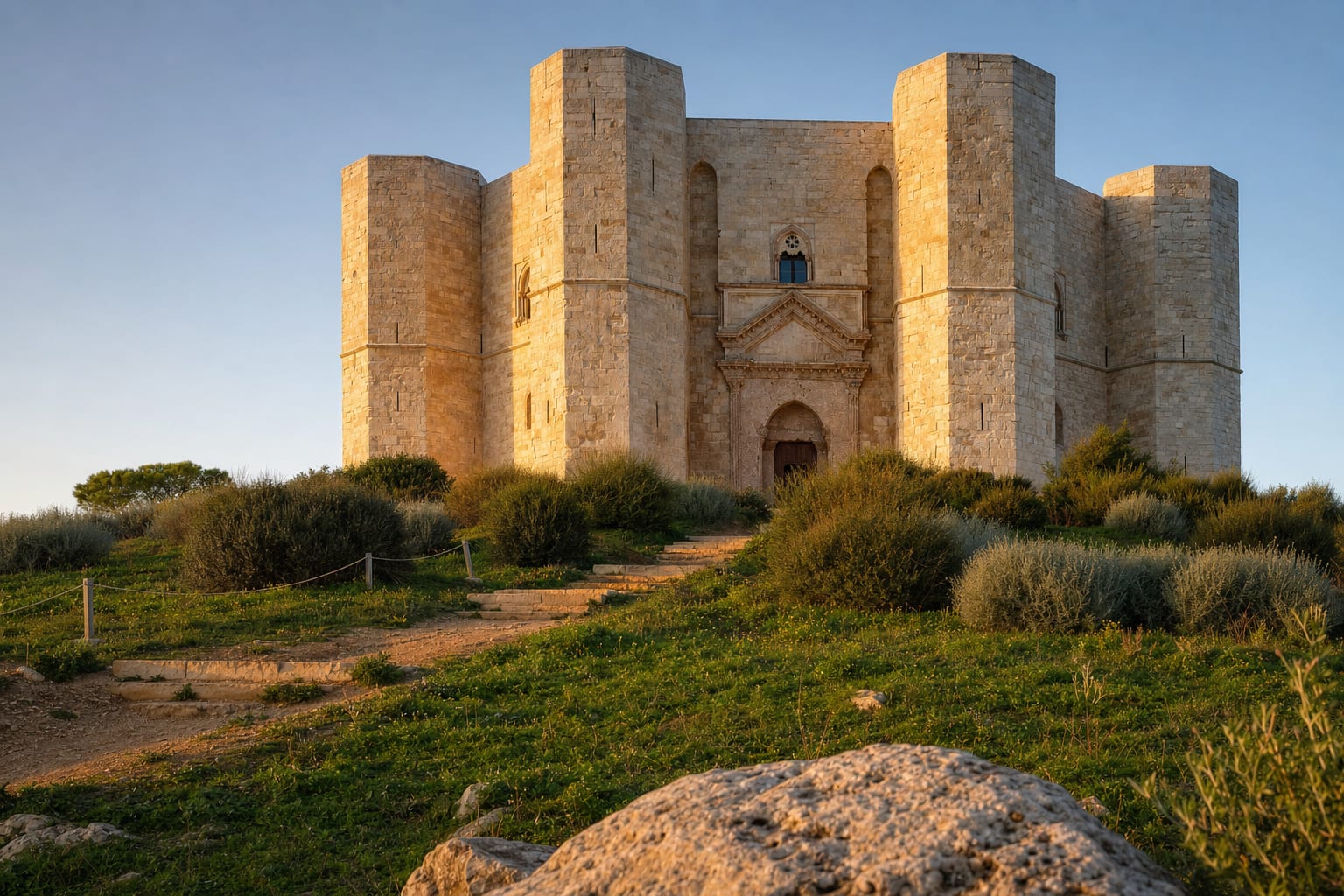
Read: Castel del MonteWorth your time
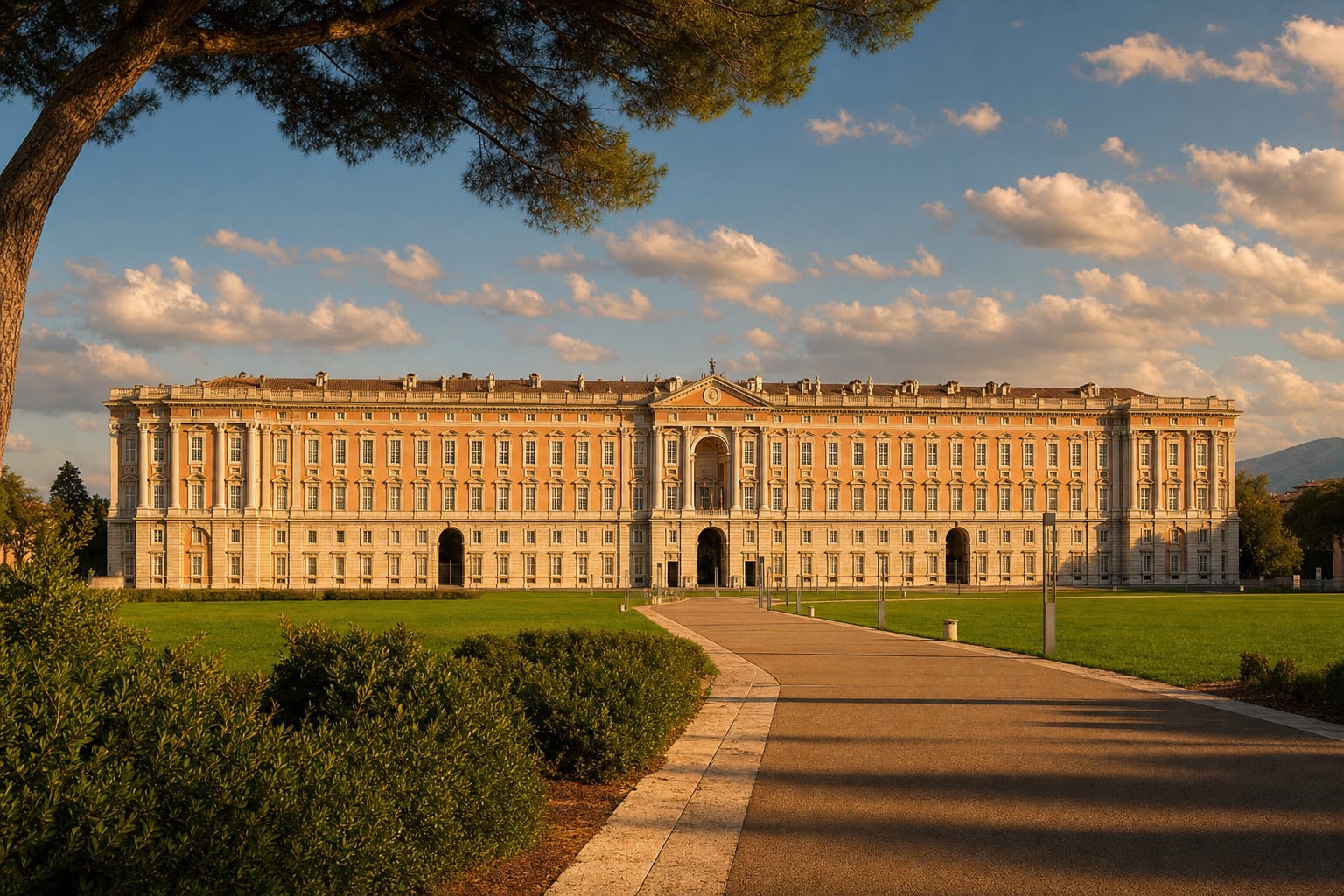
Royal Palace of Caserta
Vanvitelli's Bourbon answer to Versailles: four courtyards, a Royal Staircase and a park with a three-kilometer cascade.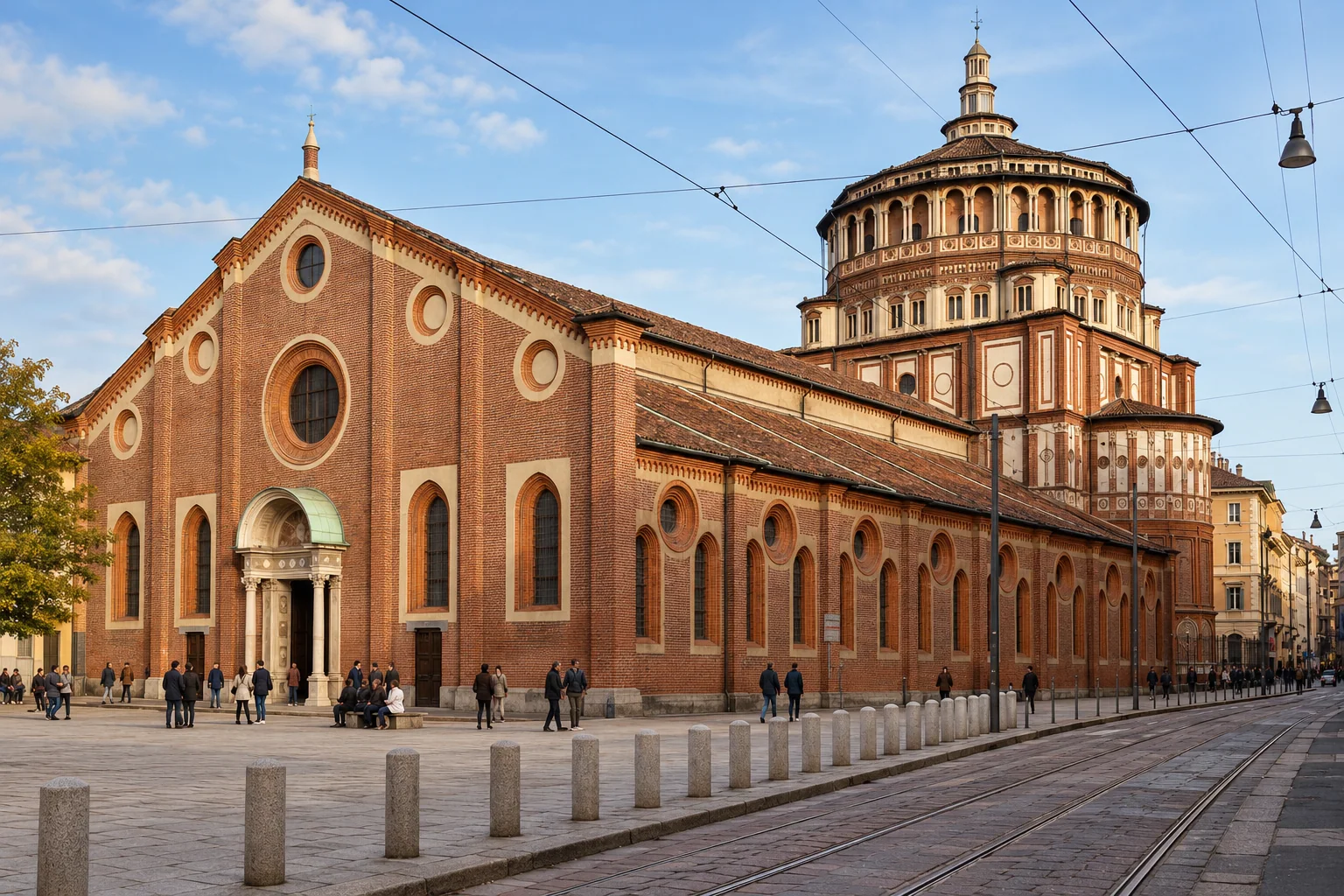
Santa Maria delle Grazie
Solari’s Lombard church and Bramante’s tribune are free to visit; Leonardo’s Last Supper occupies the separately ticketed former refectory.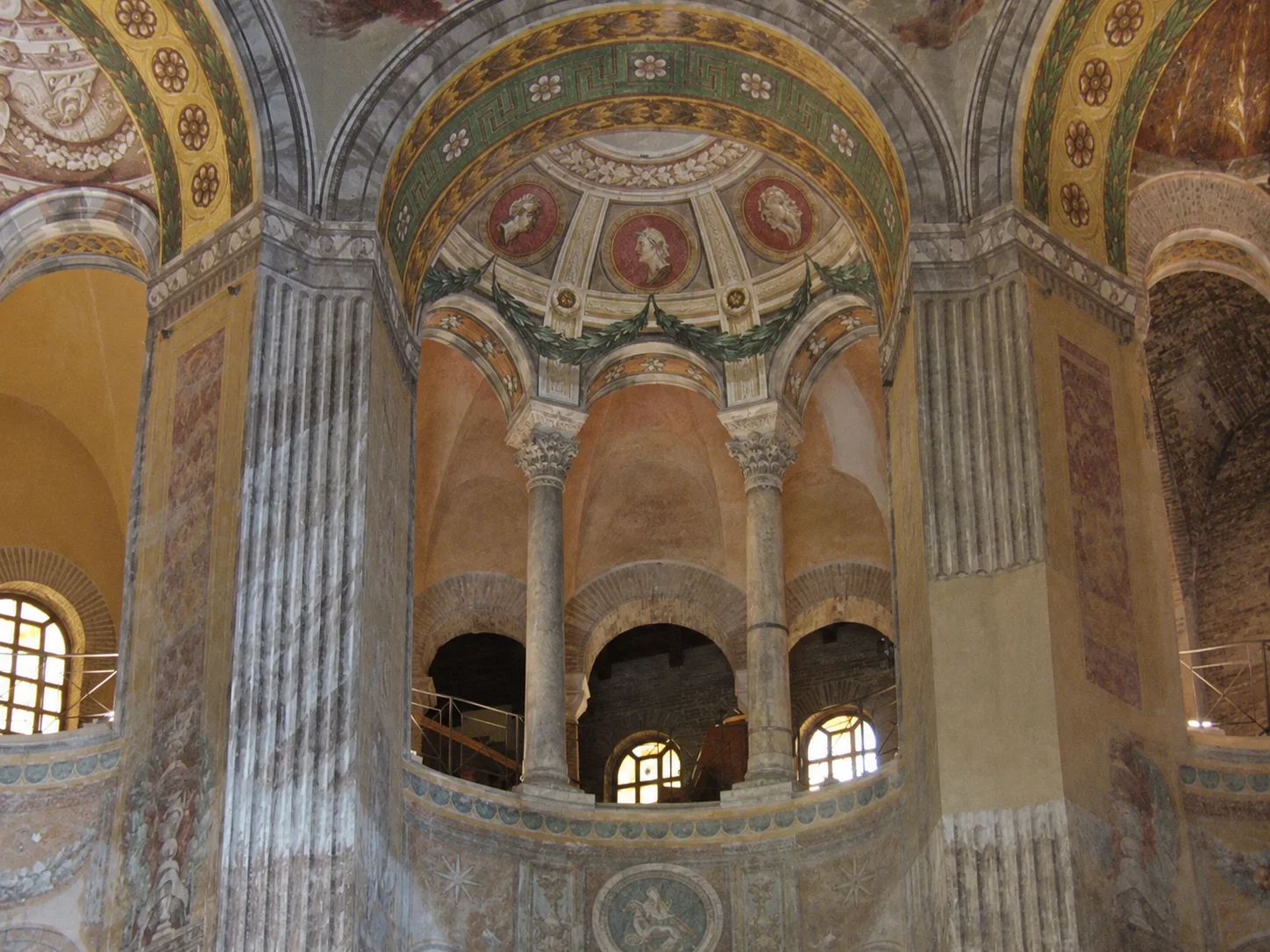
Basilica of San Vitale
A sixth-century octagonal basilica where layered galleries, imperial mosaics, marble and a later painted vault meet.
Places to see
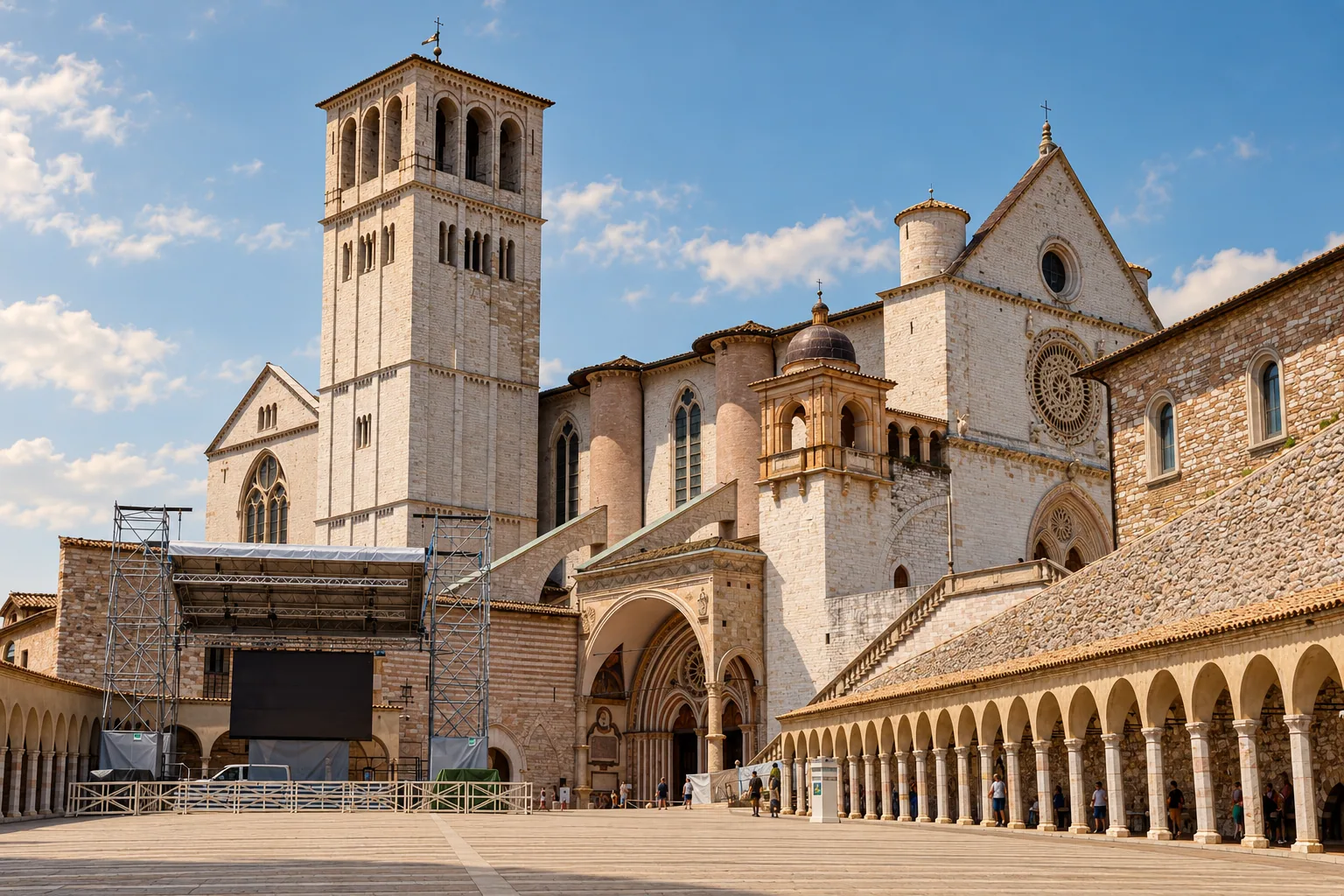
Basilica of San Francesco
The double basilica over Saint Francis's tomb, its walls covered by Giotto and Cimabue's frescoes.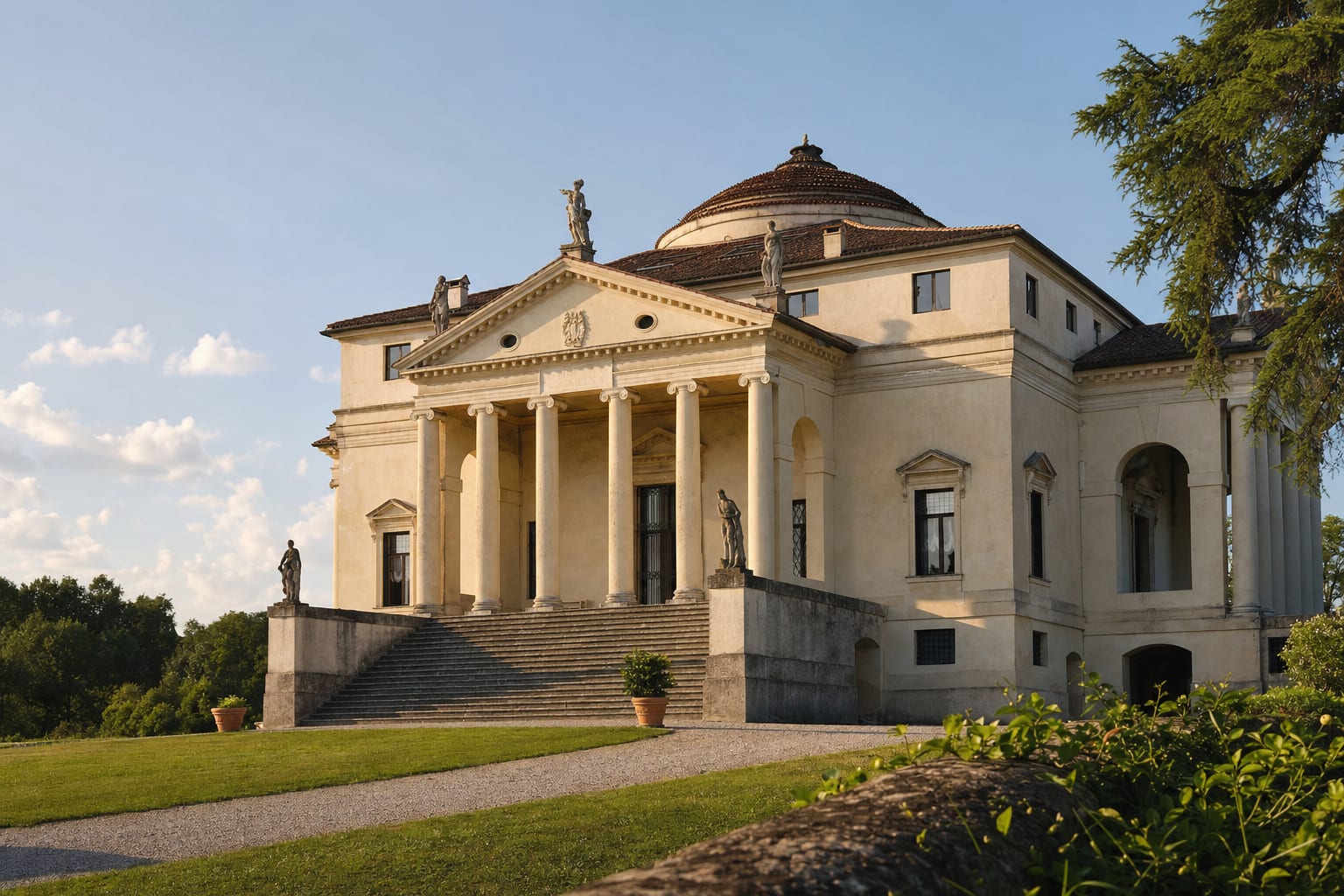
Villa La Rotonda
Palladio's four-fronted domed villa outside Vicenza, the most imitated house design in the world.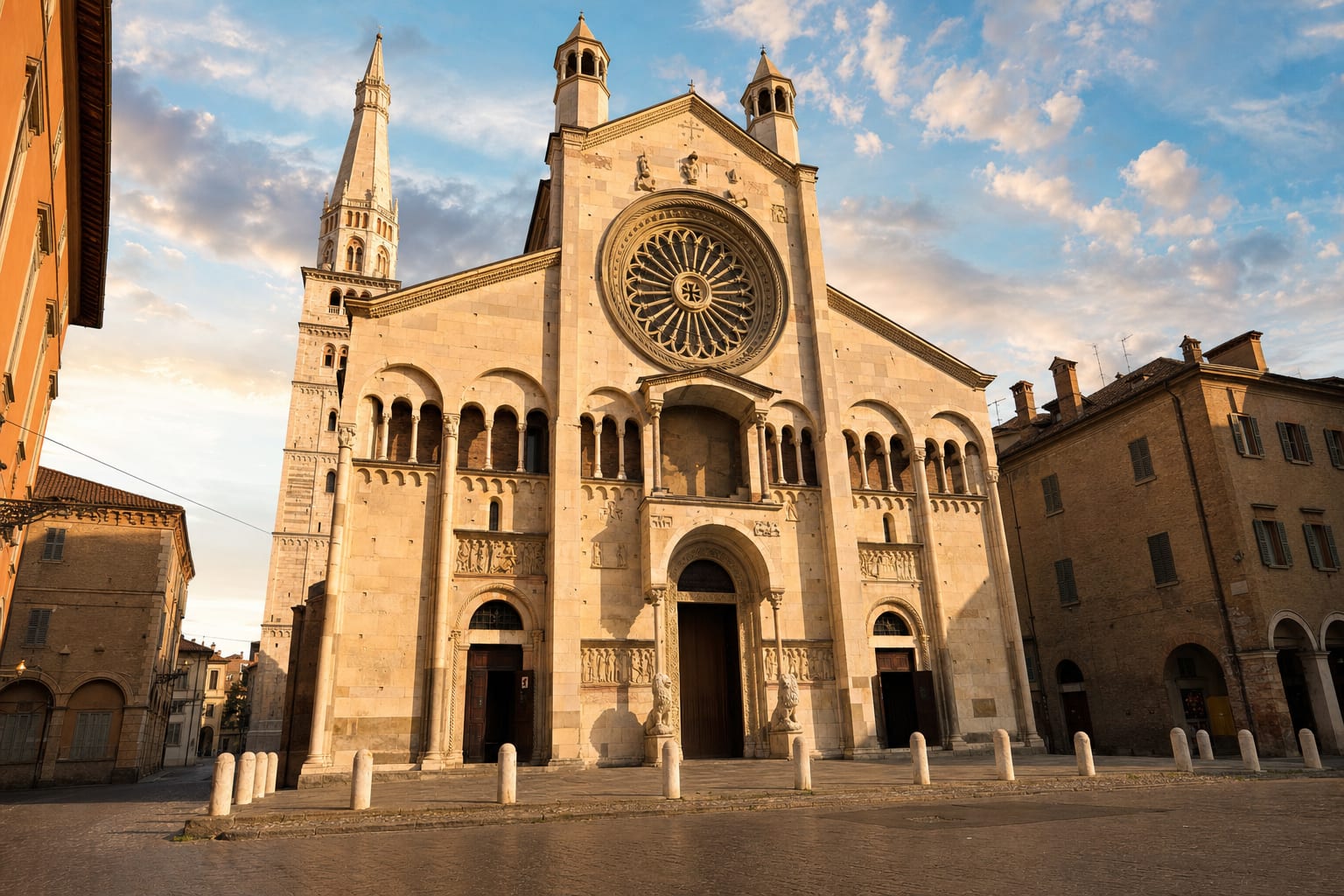
Modena Cathedral
Europe's purest Romanesque cathedral, signed by its makers in 1099, beside the leaning Ghirlandina tower.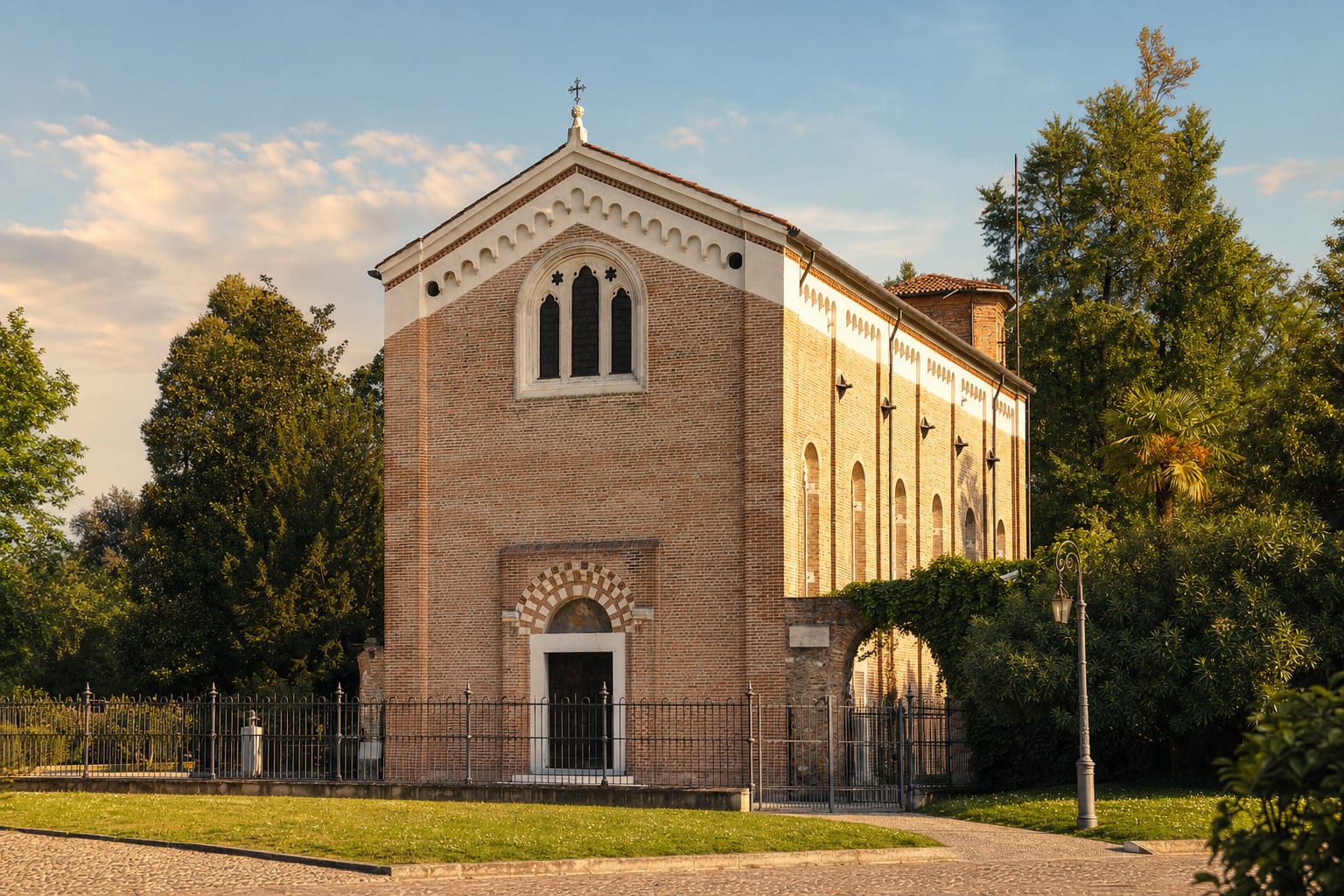
Scrovegni Chapel
Giotto's early fourteenth-century fresco cycle in Padua, the chapel where modern painting begins.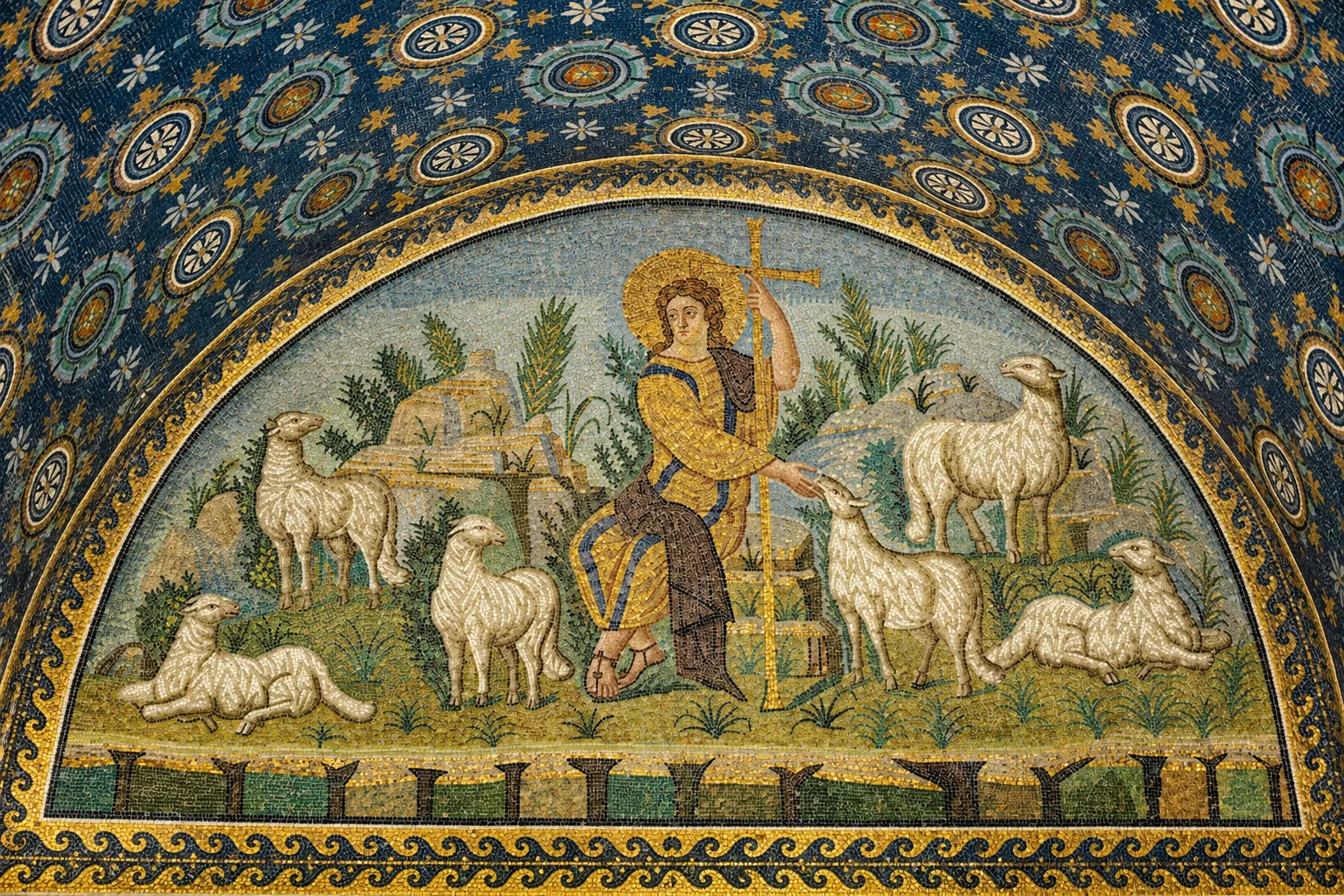
Mausoleum of Galla Placidia
A fifth-century Latin-cross mausoleum whose plain brick exterior gives way to a compact, star-filled mosaic interior.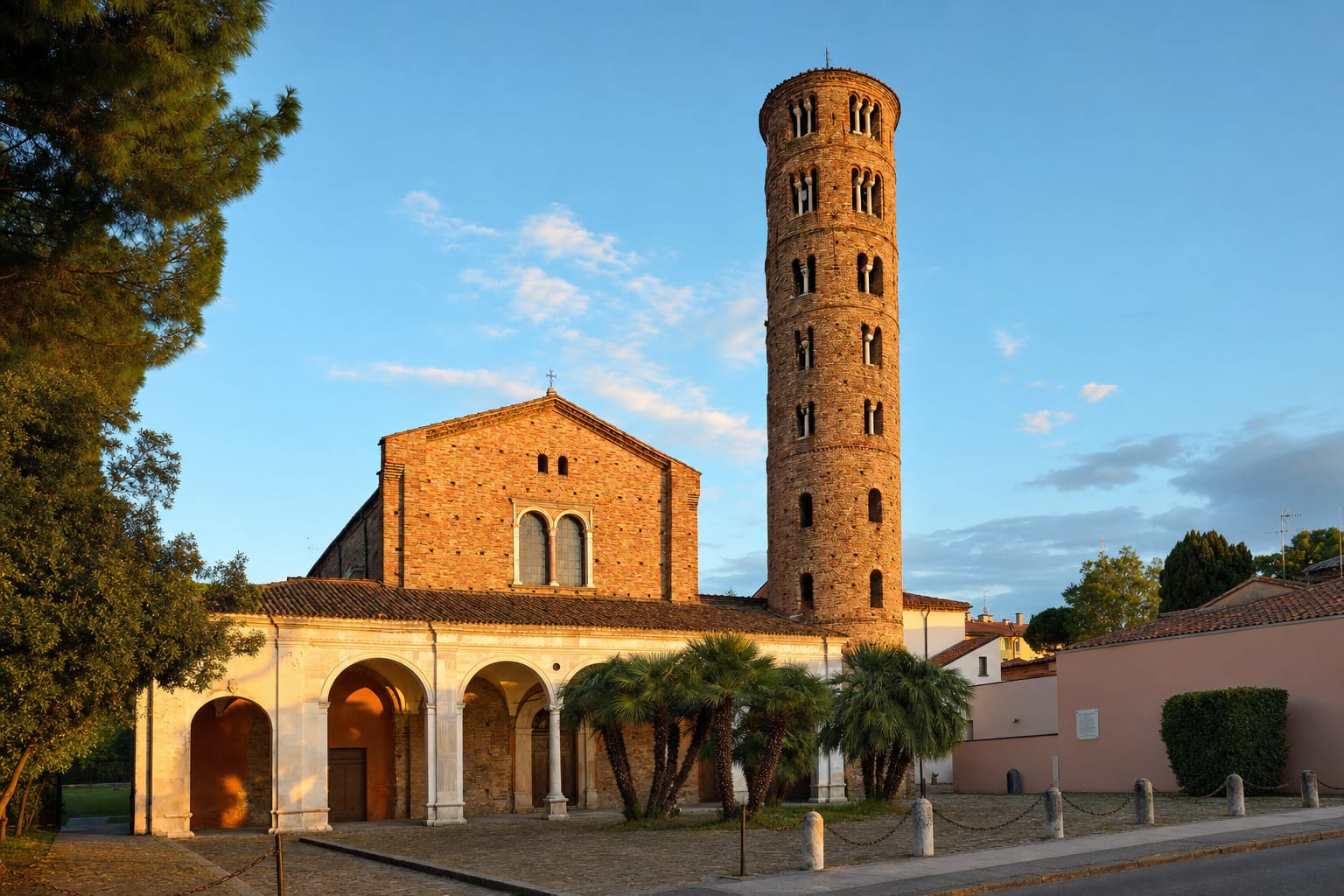
Basilica of Sant'Apollinare Nuovo
The sixth-century basilica whose mosaic processions of martyrs and virgins still walk toward Christ.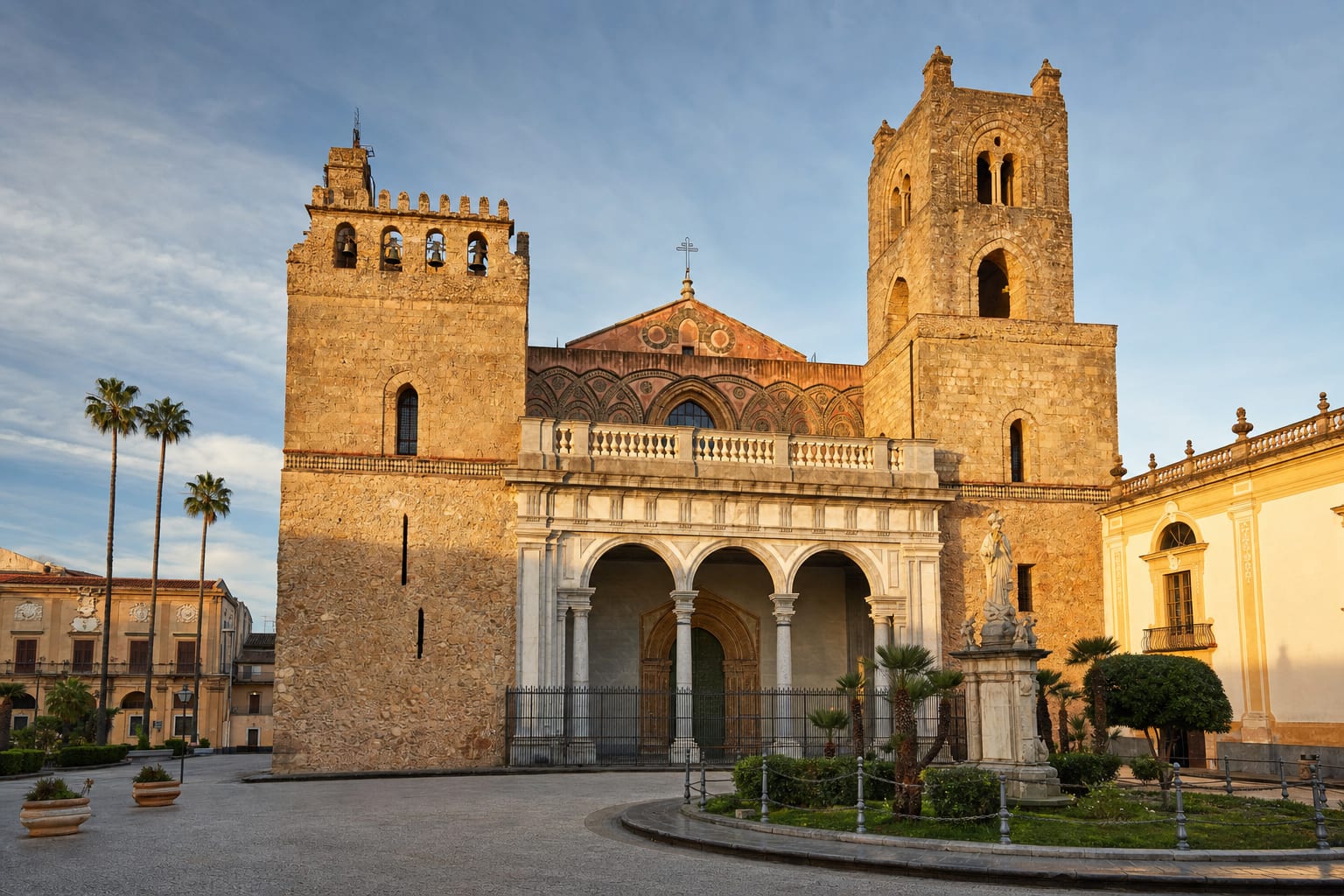
Monreale Cathedral
William II's golden mosaic cathedral above Palermo, its cloister ringed by two hundred carved twin columns.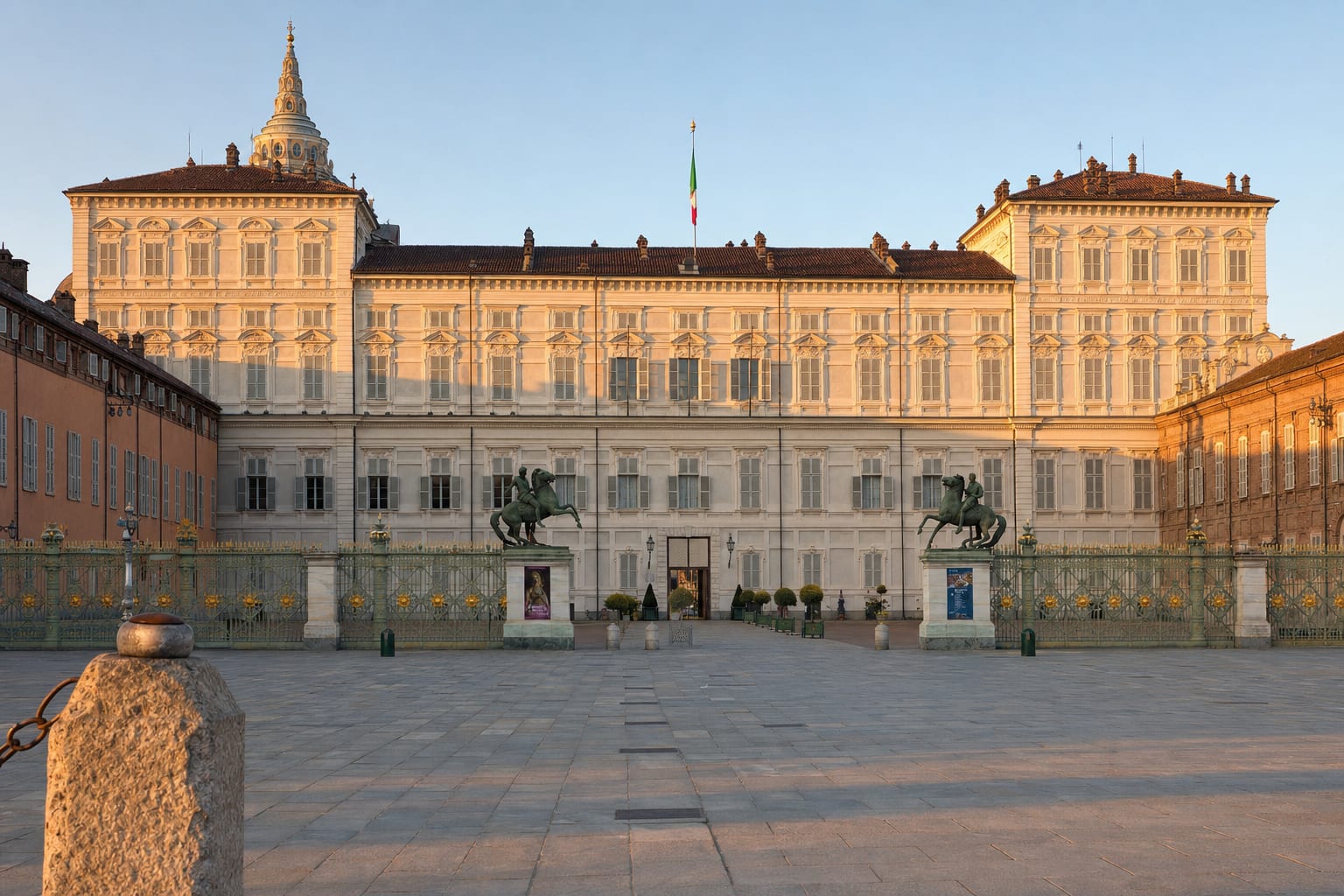
Royal Palace of Turin
The Savoy dynasty's palace, joined to Guarini's restored Chapel of the Holy Shroud and a Royal Armoury.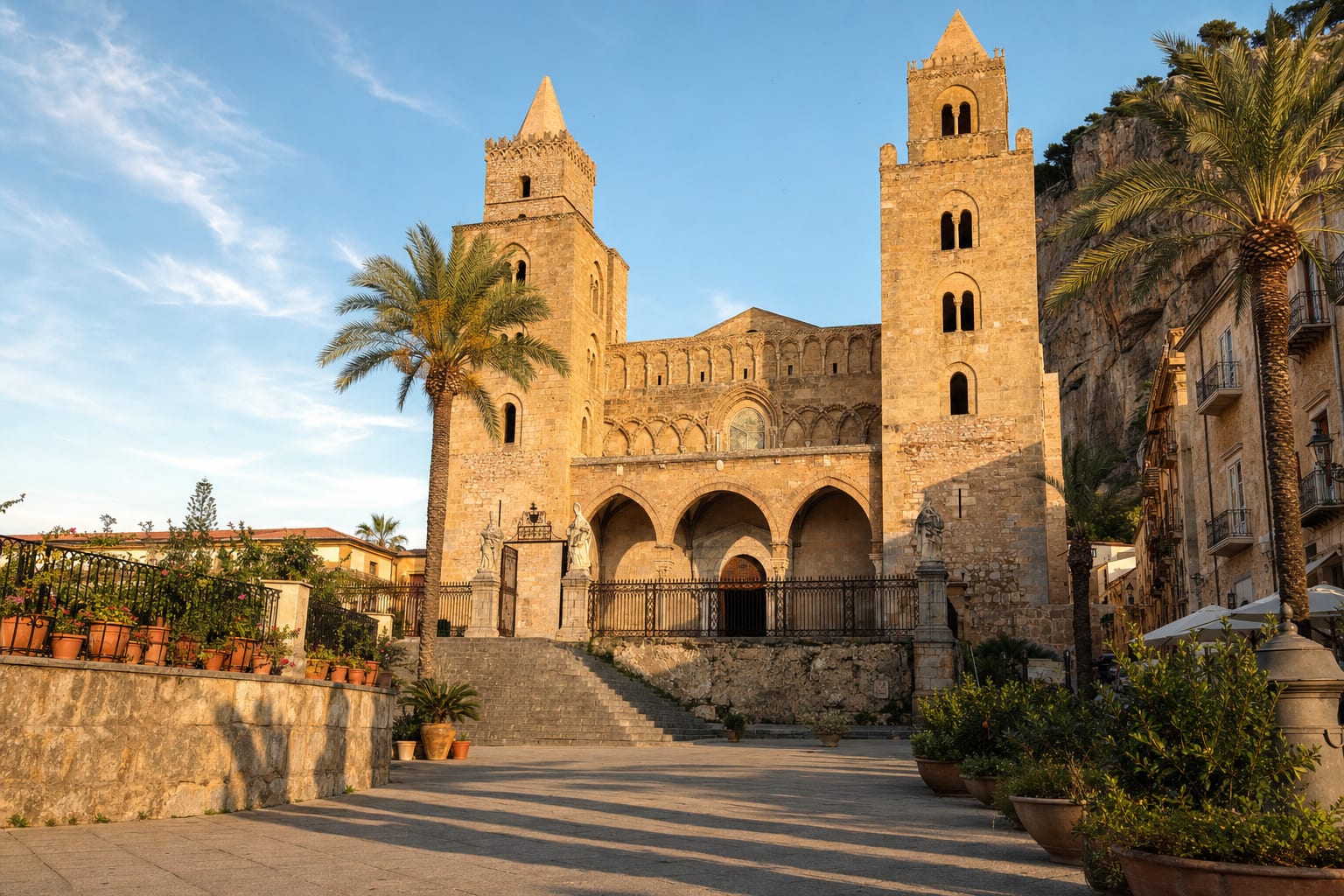
Cefalu Cathedral
Roger II's twin-towered Norman cathedral over Cefalù's beach, with one of Sicily's earliest Pantocrators.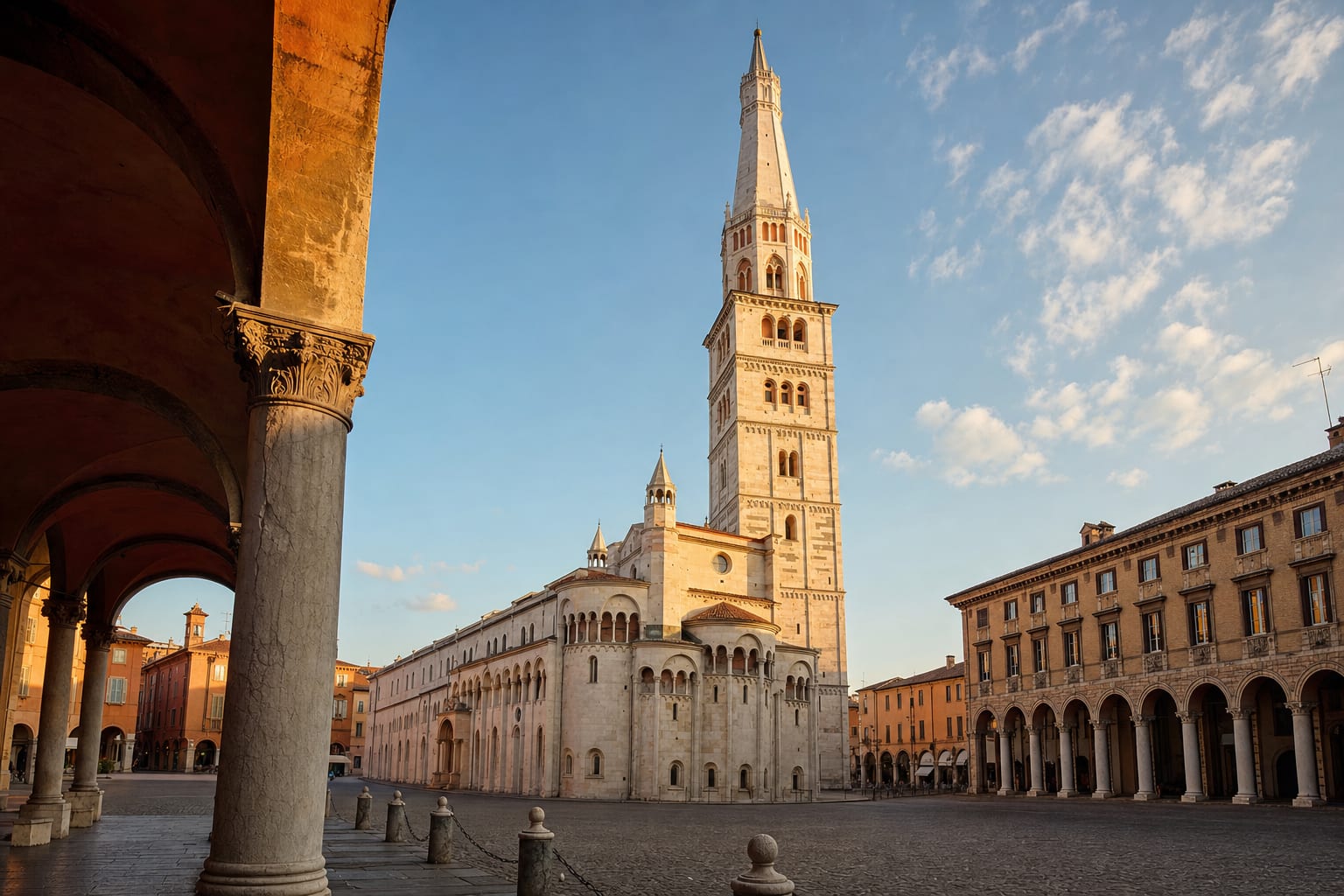
Ghirlandina Tower
Modena's 86-meter bell tower, keeper of a stolen-bucket legend.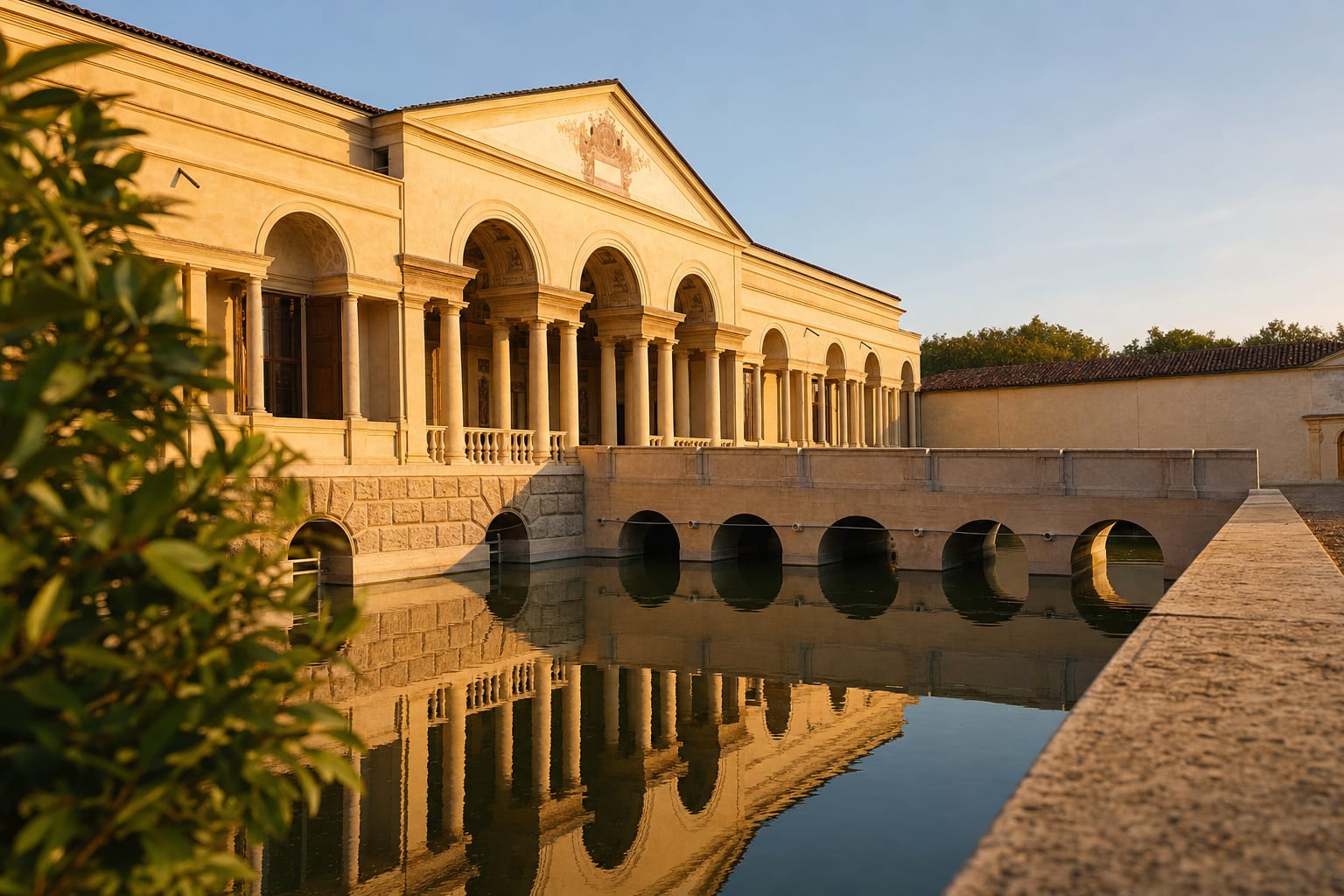
Palazzo Te
Mantua's Mannerist pleasure villa, where painted giants bring the house down.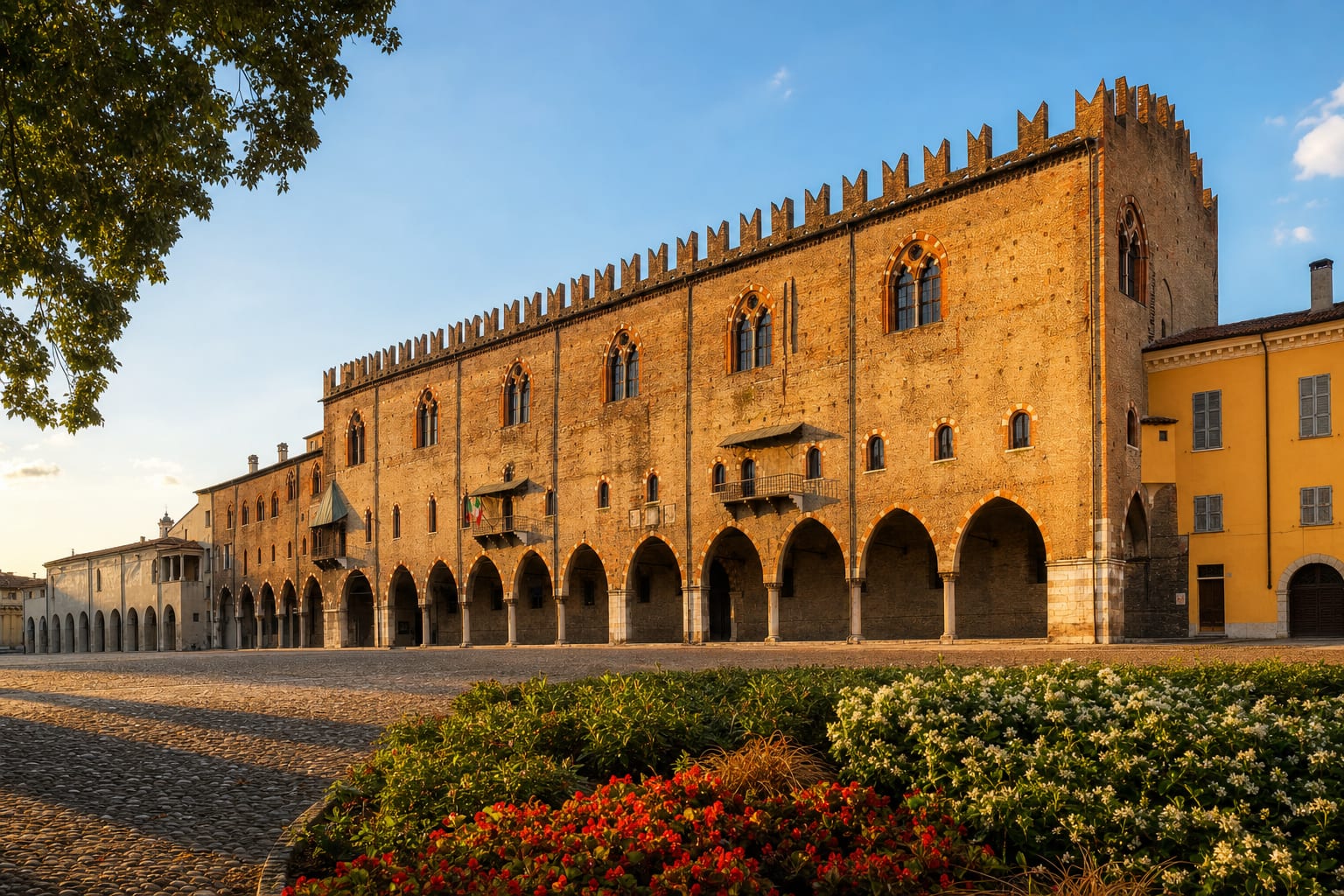
Ducal Palace of Mantua
The Gonzaga's 500-room palace city, home to Mantegna's illusionistic Camera degli Sposi.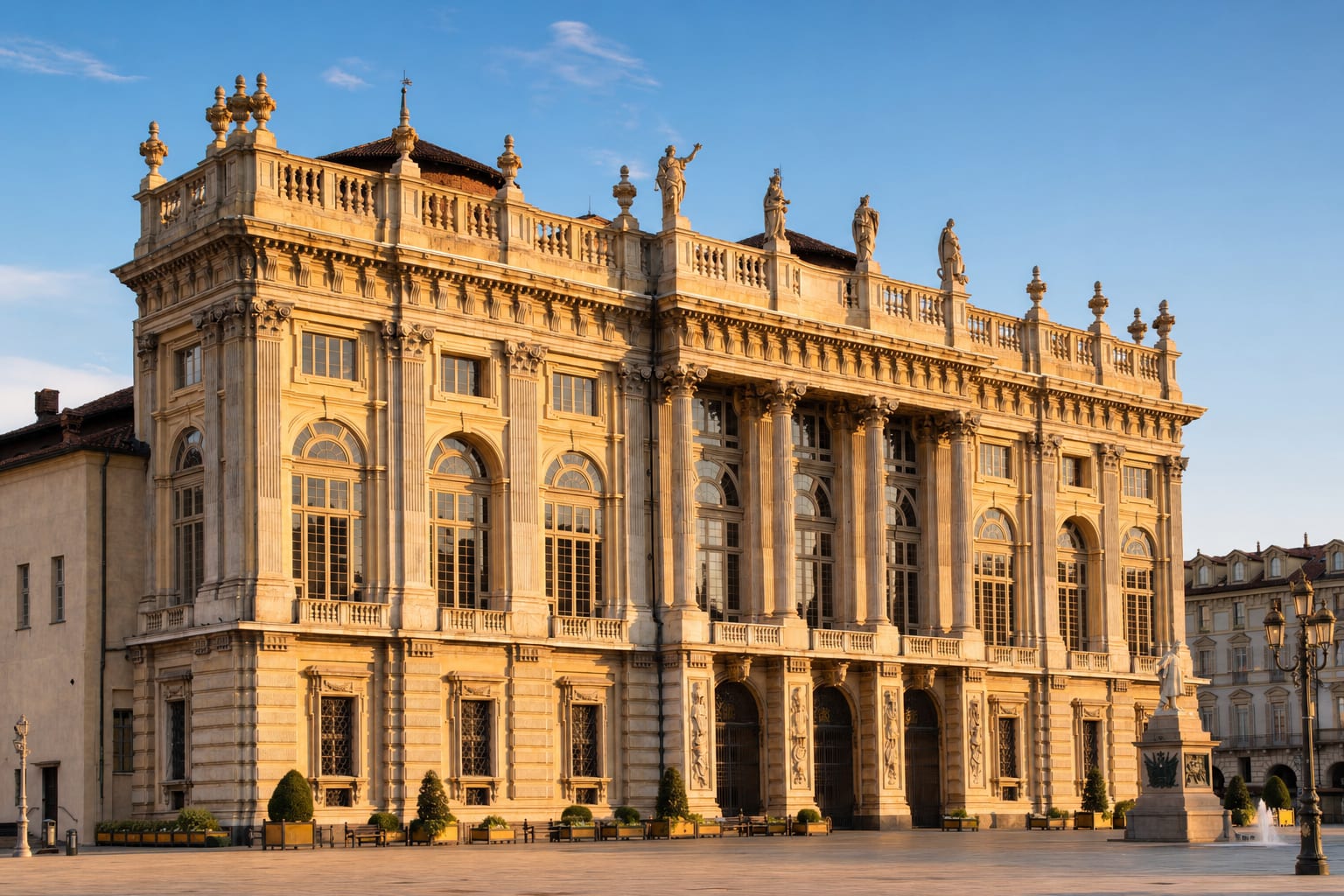
Palazzo Madama
Turin's layered palace, Roman gate and medieval castle behind Juvarra's Baroque facade.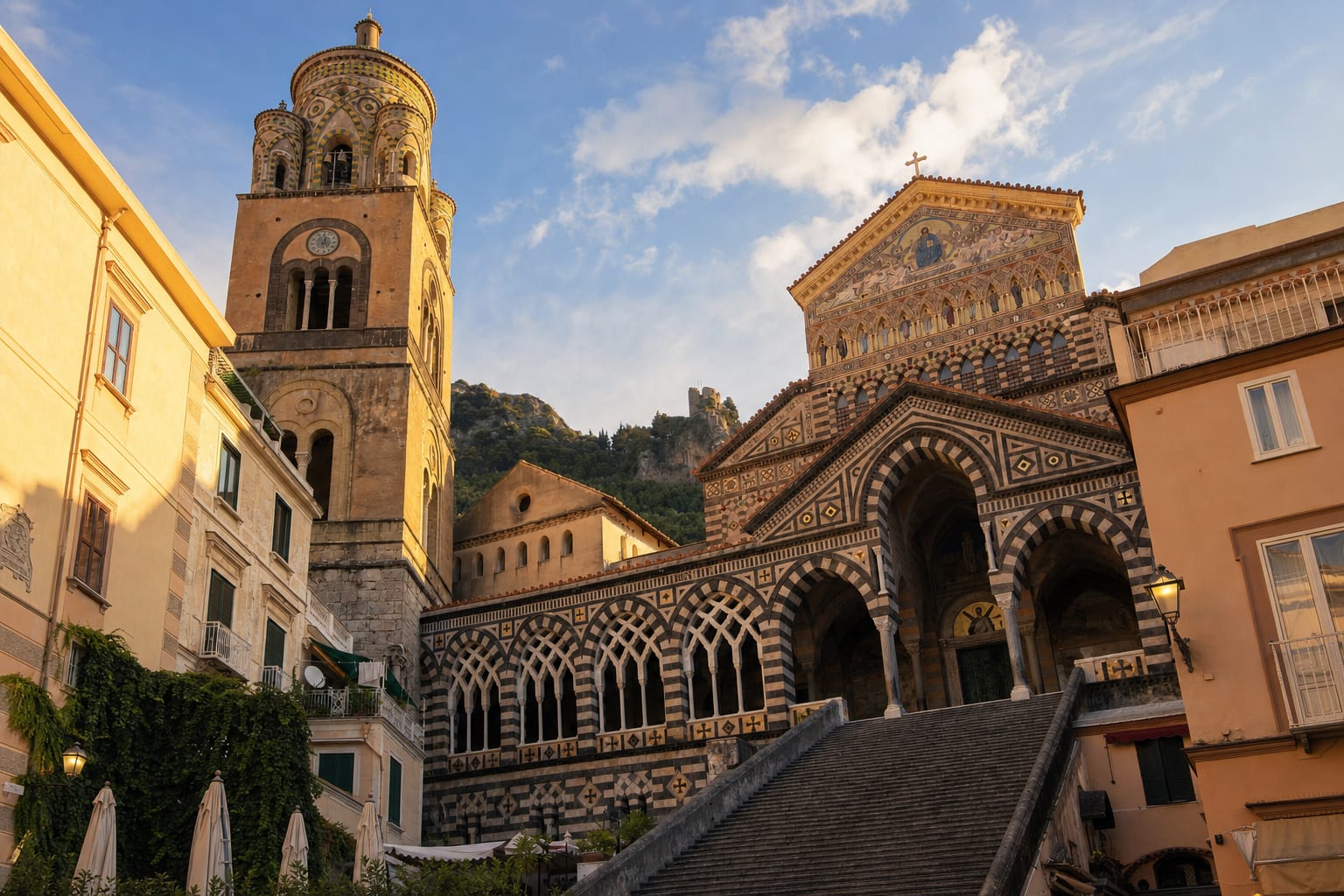
Amalfi Cathedral
Amalfi's striped cathedral and its cloister of interlacing arches, above Saint Andrew's crypt.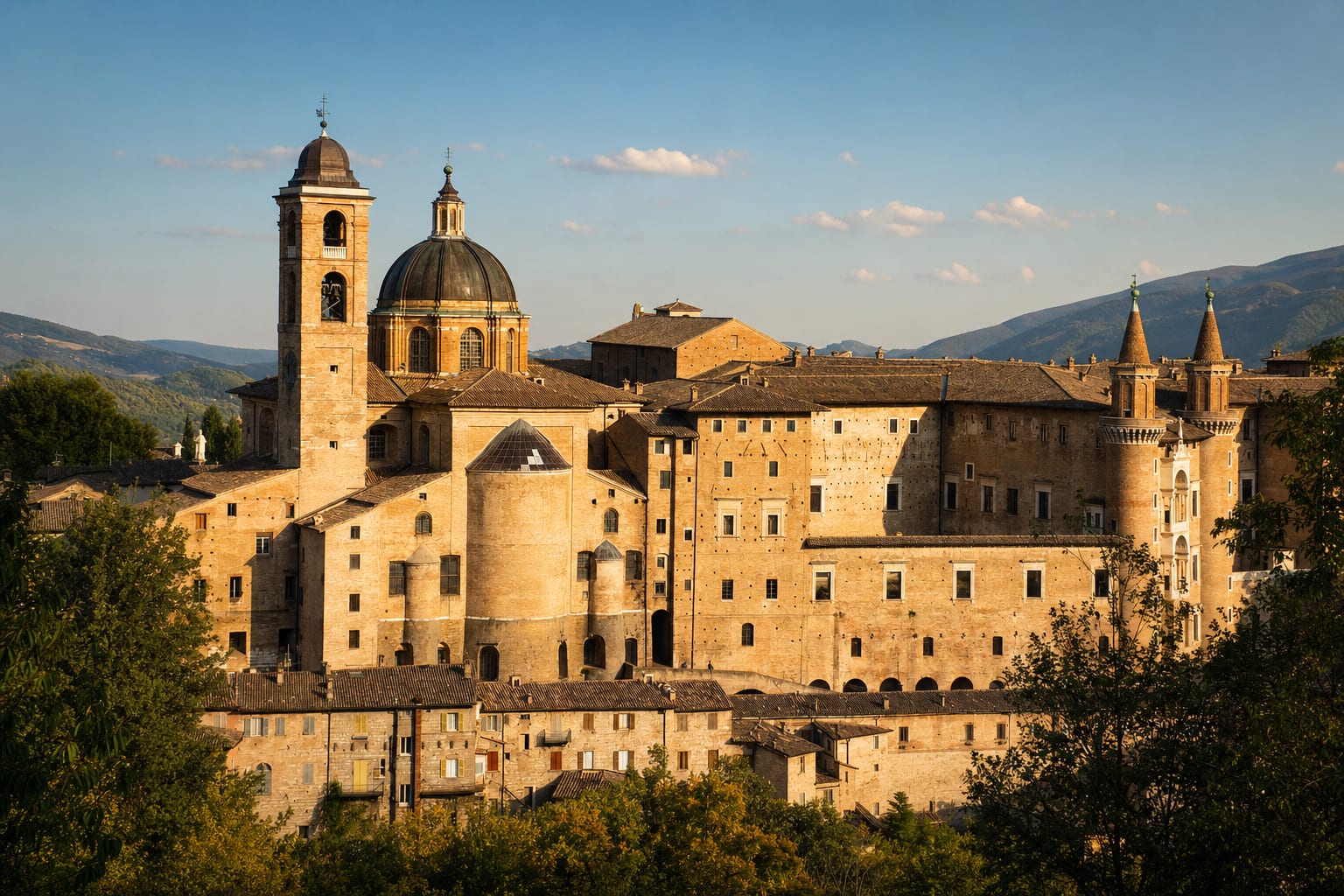
Ducal Palace of Urbino
The ideal Renaissance court of Federico da Montefeltro, home to Piero della Francesca's Flagellation.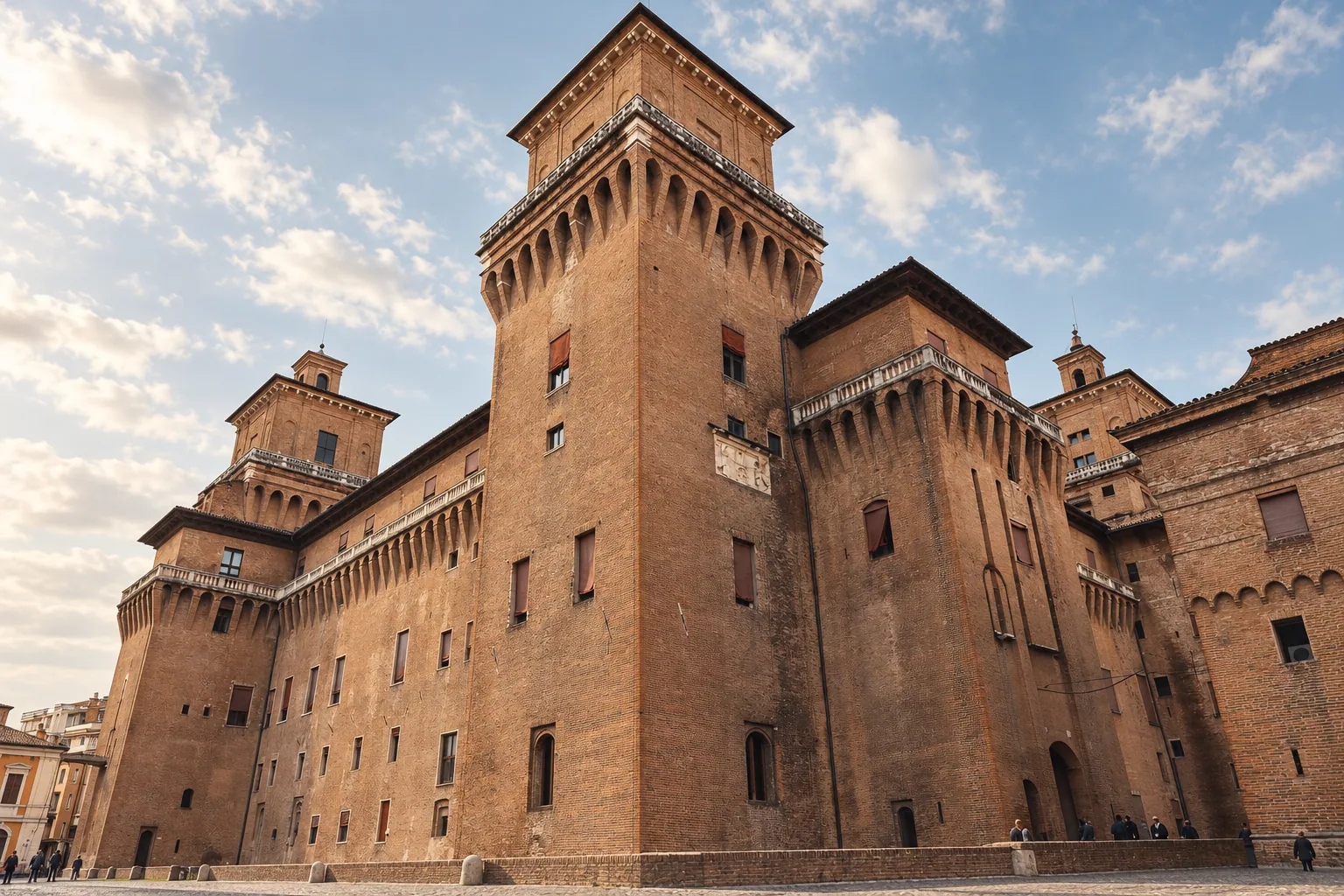
Estense Castle
Ferrara's moated fortress: Este court splendor above, the dungeon of Ugo and Parisina below.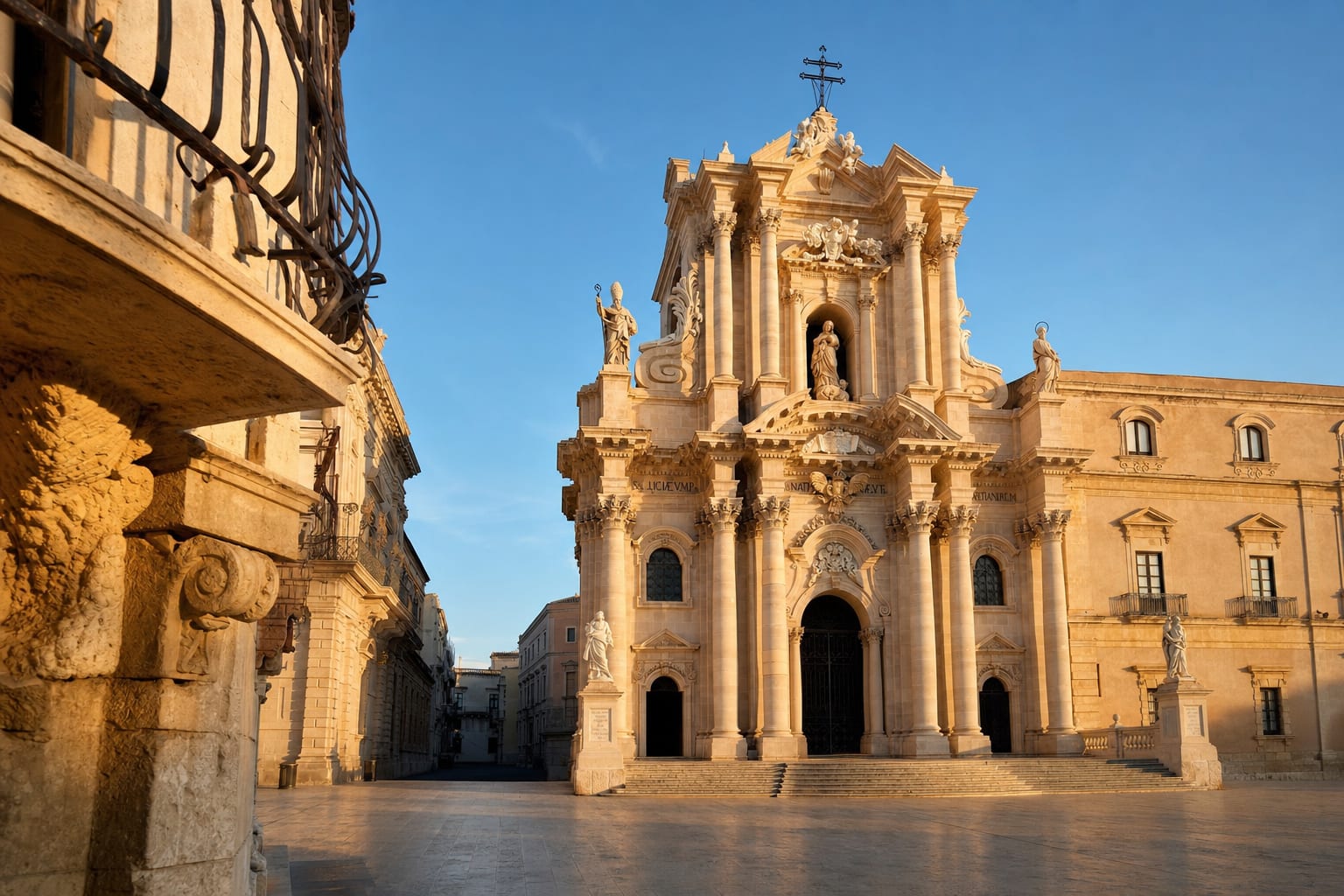
Syracuse Cathedral
The cathedral built inside a Greek temple of Athena, its Doric columns still holding up the walls.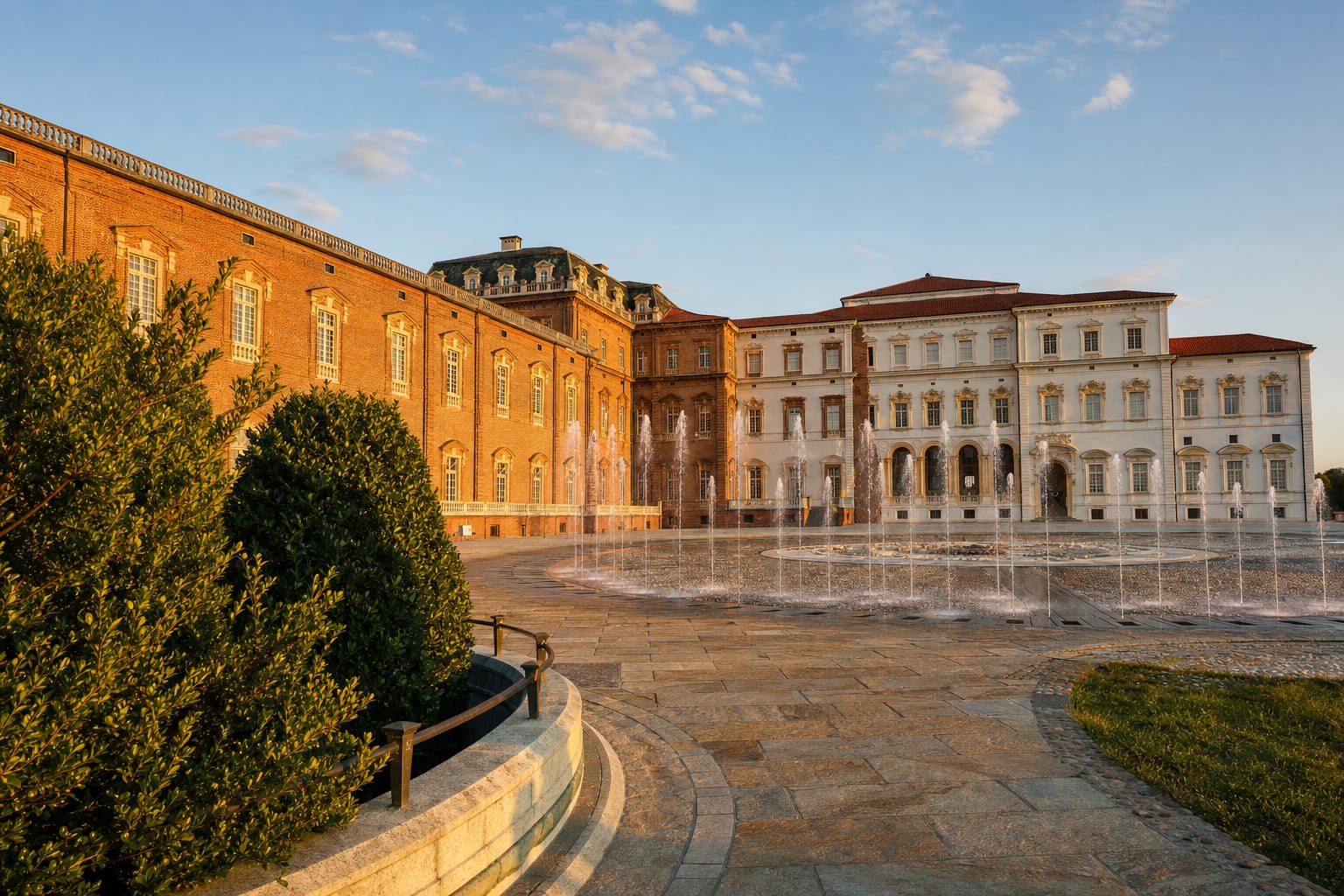
Royal Palace of Venaria
The Savoys' answer to Versailles, its Great Gallery and gardens restored outside Turin.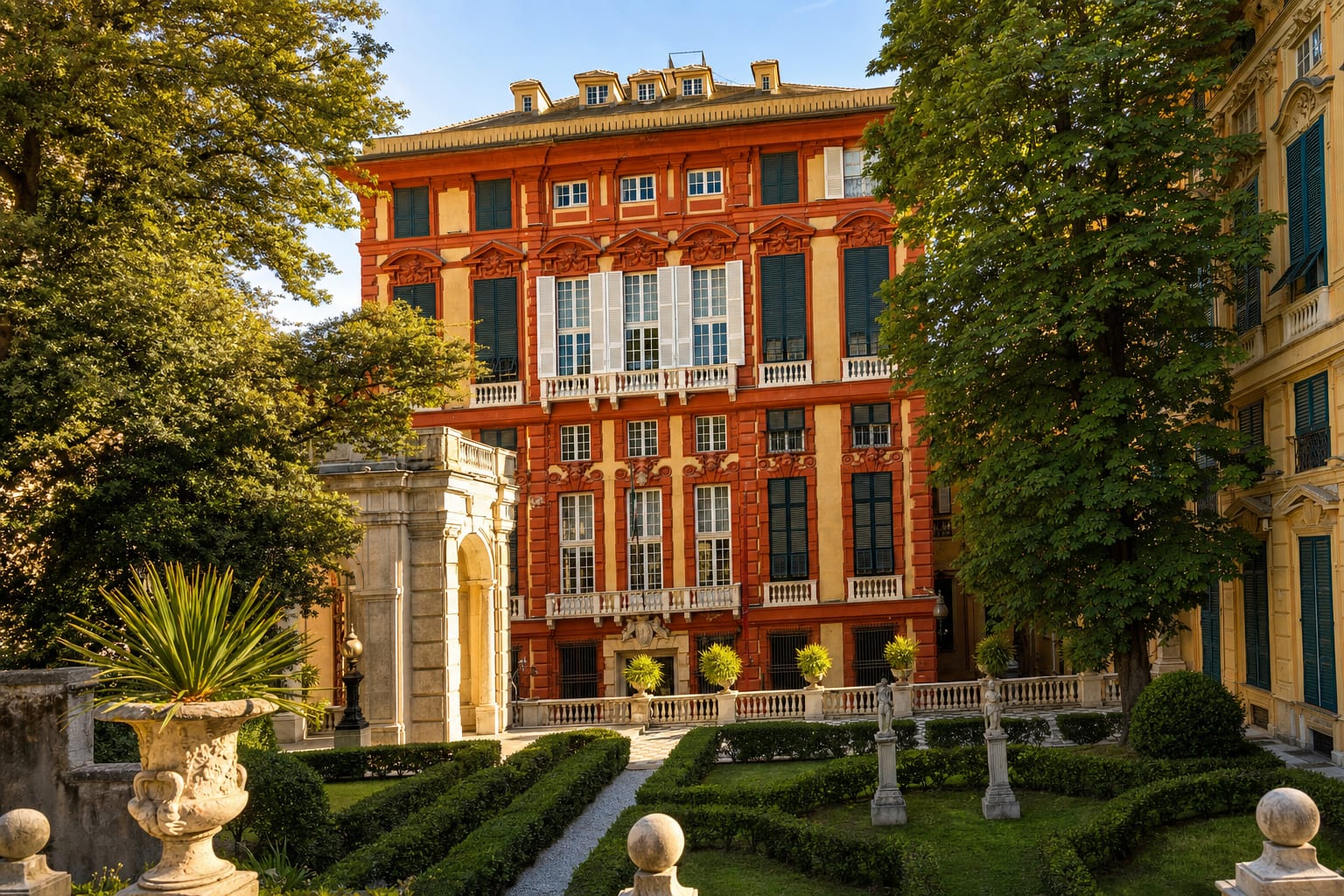
Palazzi dei Rolli
Genoa's UNESCO palace streets, once a lottery for hosting kings, now open as the Strada Nuova Museums and on Rolli Days.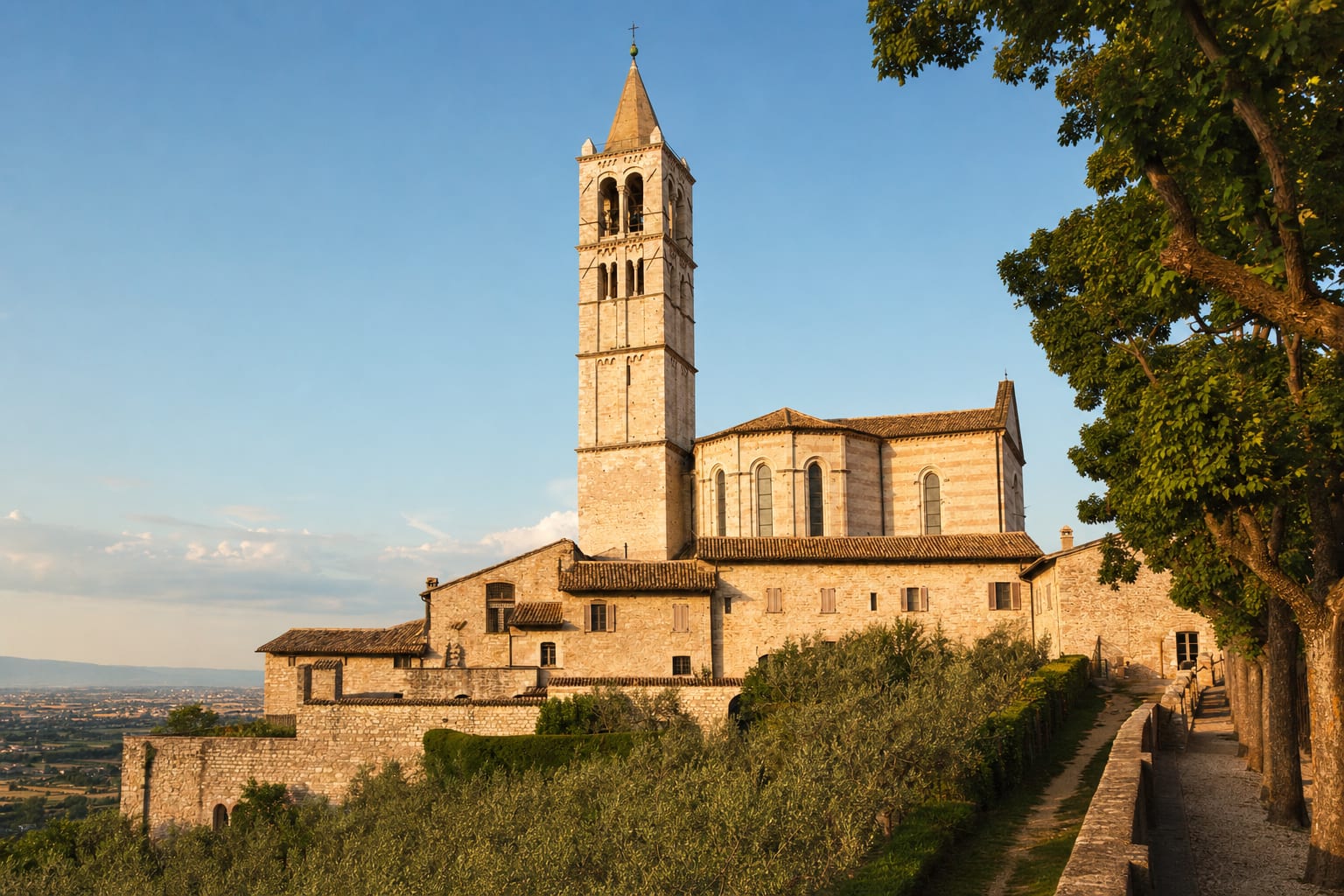
Basilica of Santa Chiara
Saint Clare's striped basilica in Assisi, home of the San Damiano crucifix.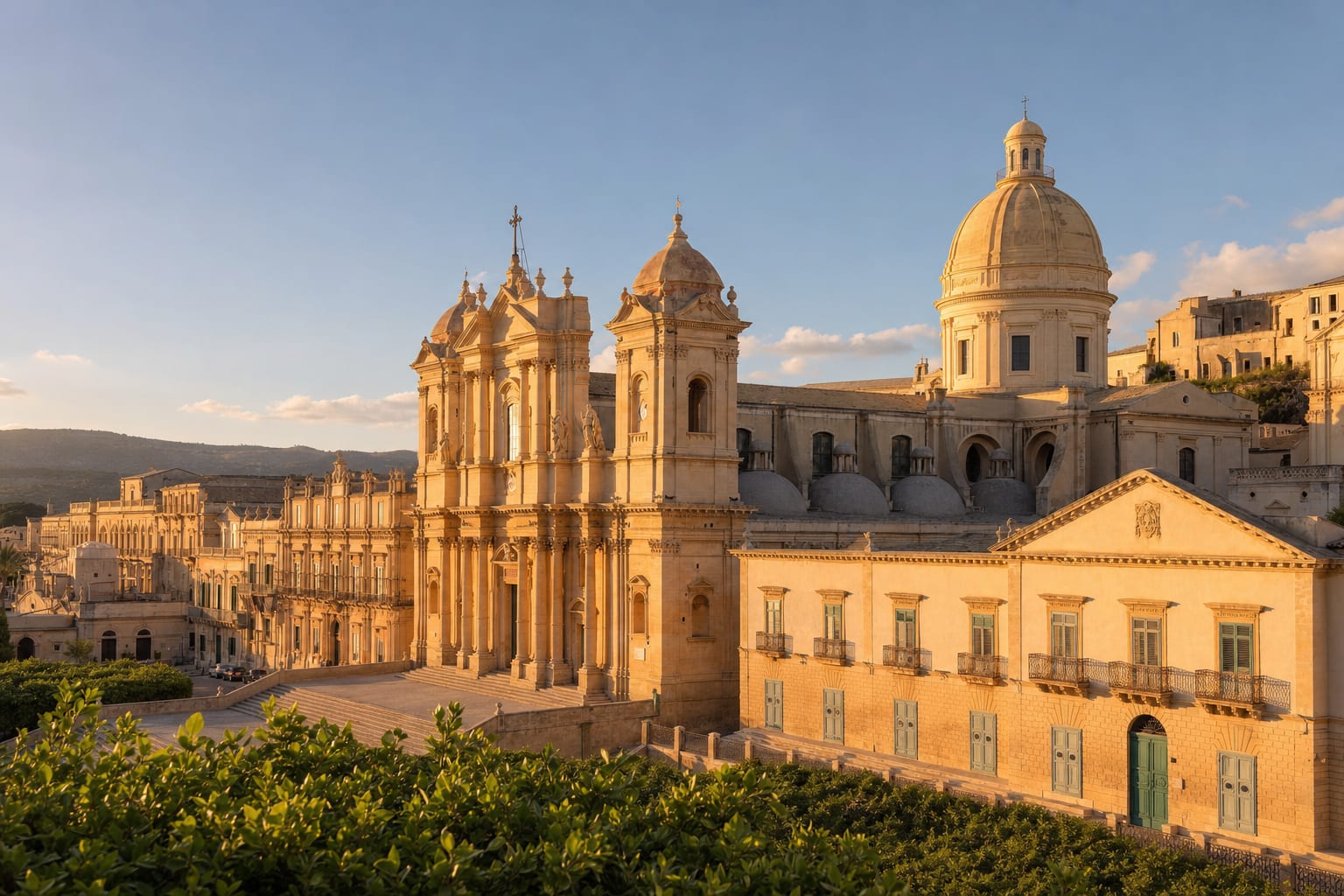
Noto Cathedral
Noto's honey-stone cathedral, rebuilt after its dome fell in 1996, crowning a grand Baroque staircase.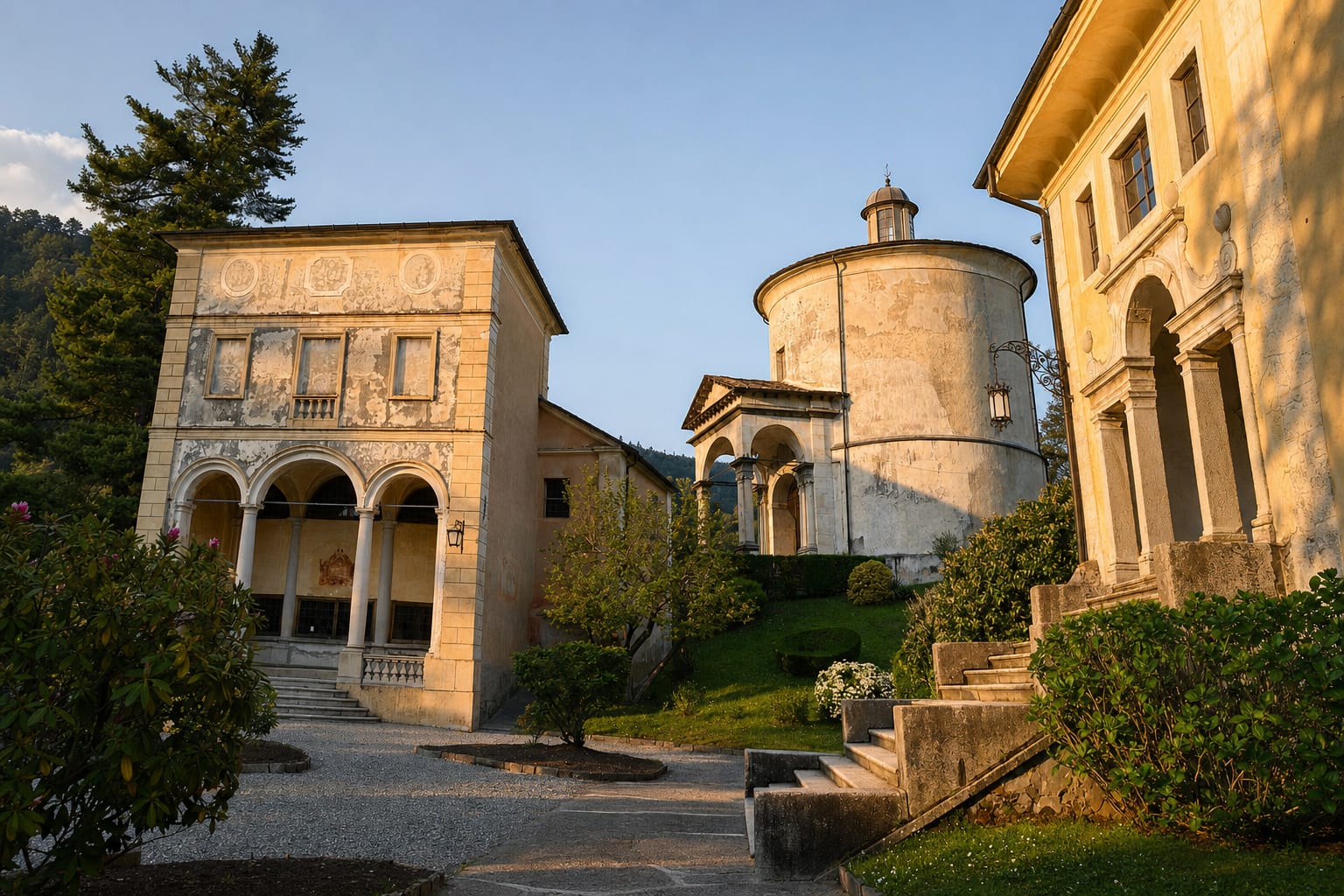
Sacro Monte di Varallo
The original sacred mountain above Varallo, forty-five chapels and eight hundred painted figures.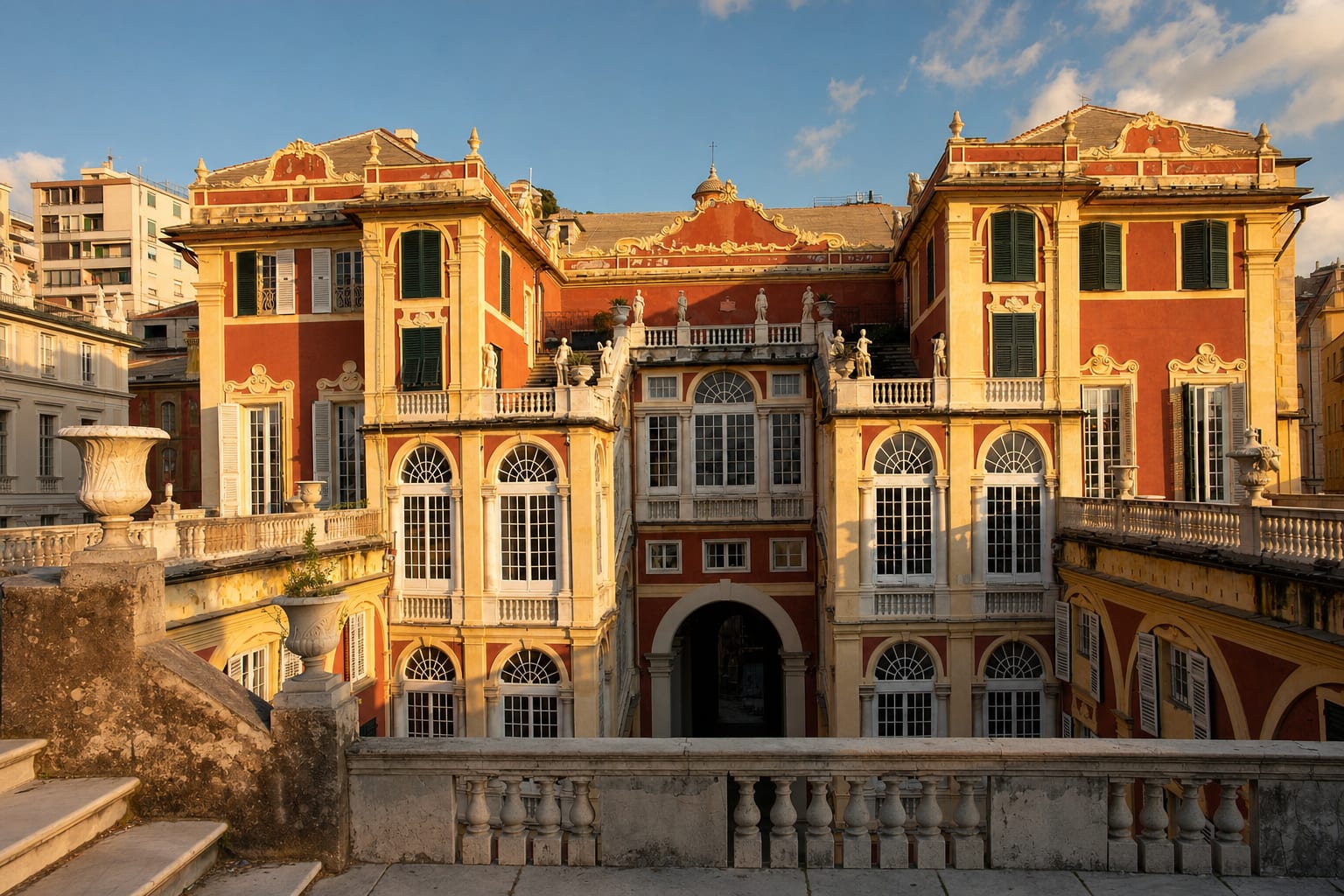
Royal Palace of Genoa
Genoa's gilded royal palace, with a Versailles-style hall of mirrors and a harbor-view terrace.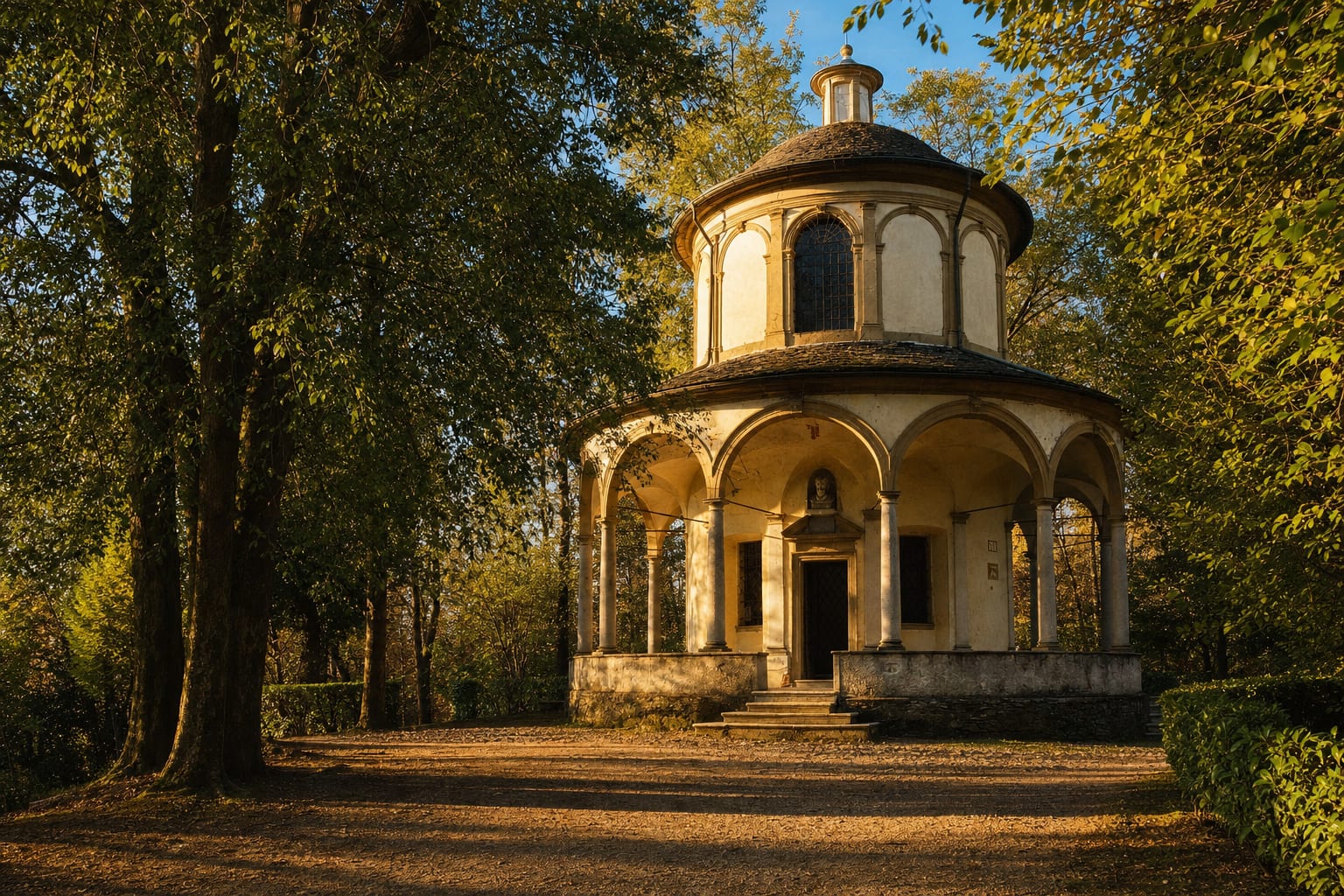
Sacro Monte di Orta
Orta's hillside sanctuary of twenty frescoed chapels retelling Saint Francis's life above the lake.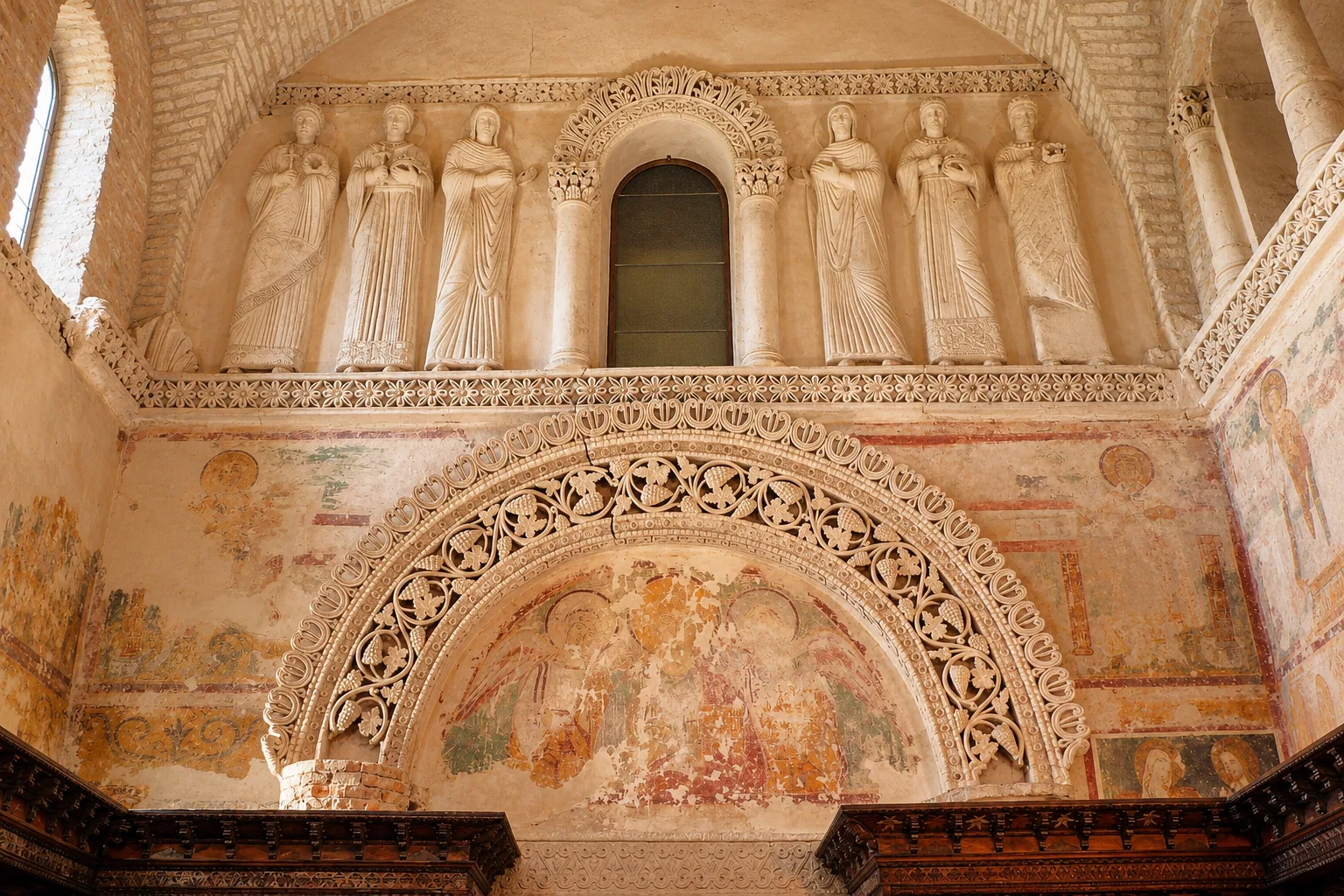
Lombard Temple
An eighth-century Lombard oratory above the Natisone gorge with six stucco saints, a UNESCO site.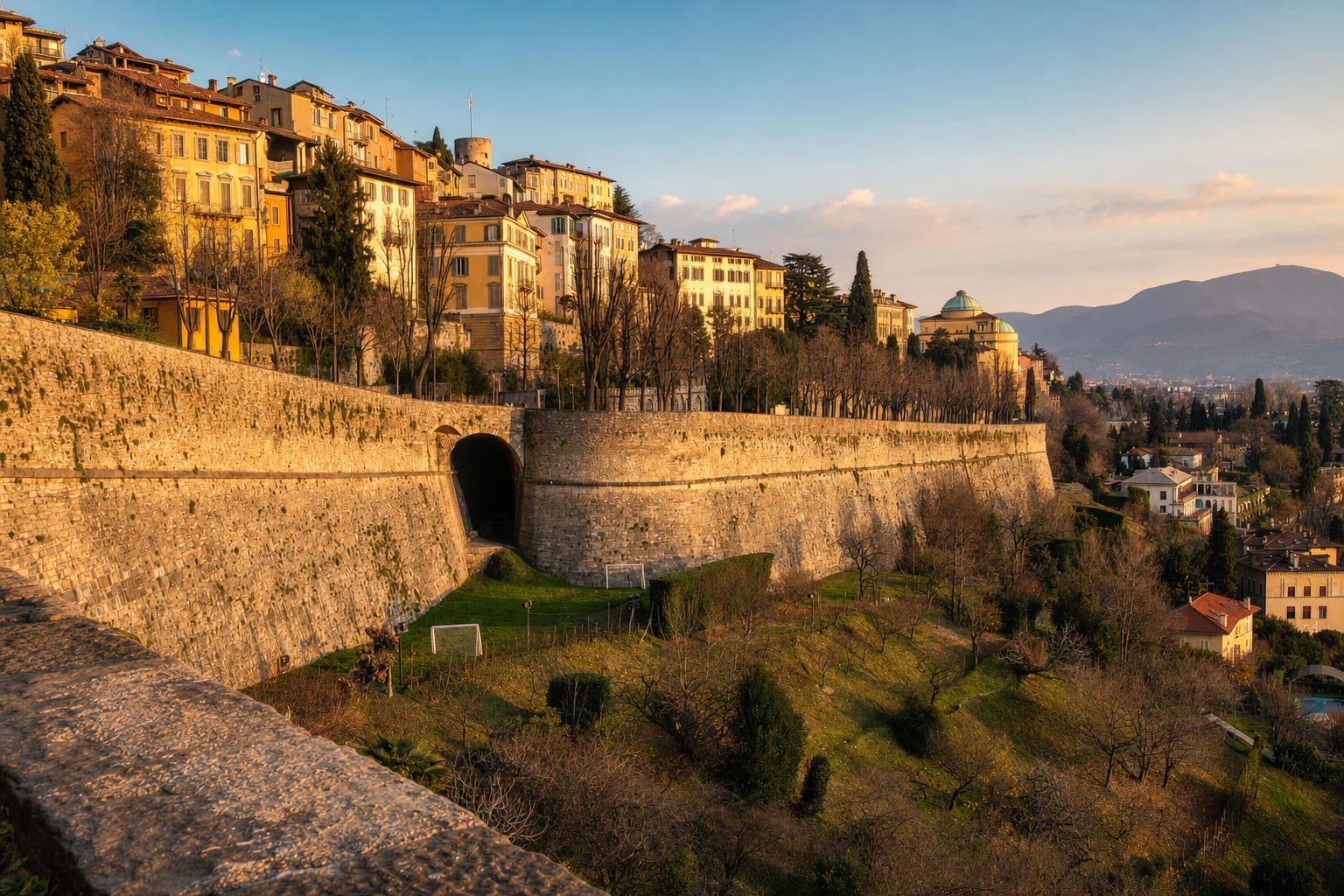
Venetian Walls of Bergamo
Bergamo's untested Venetian ramparts, now a six-kilometer sunset promenade.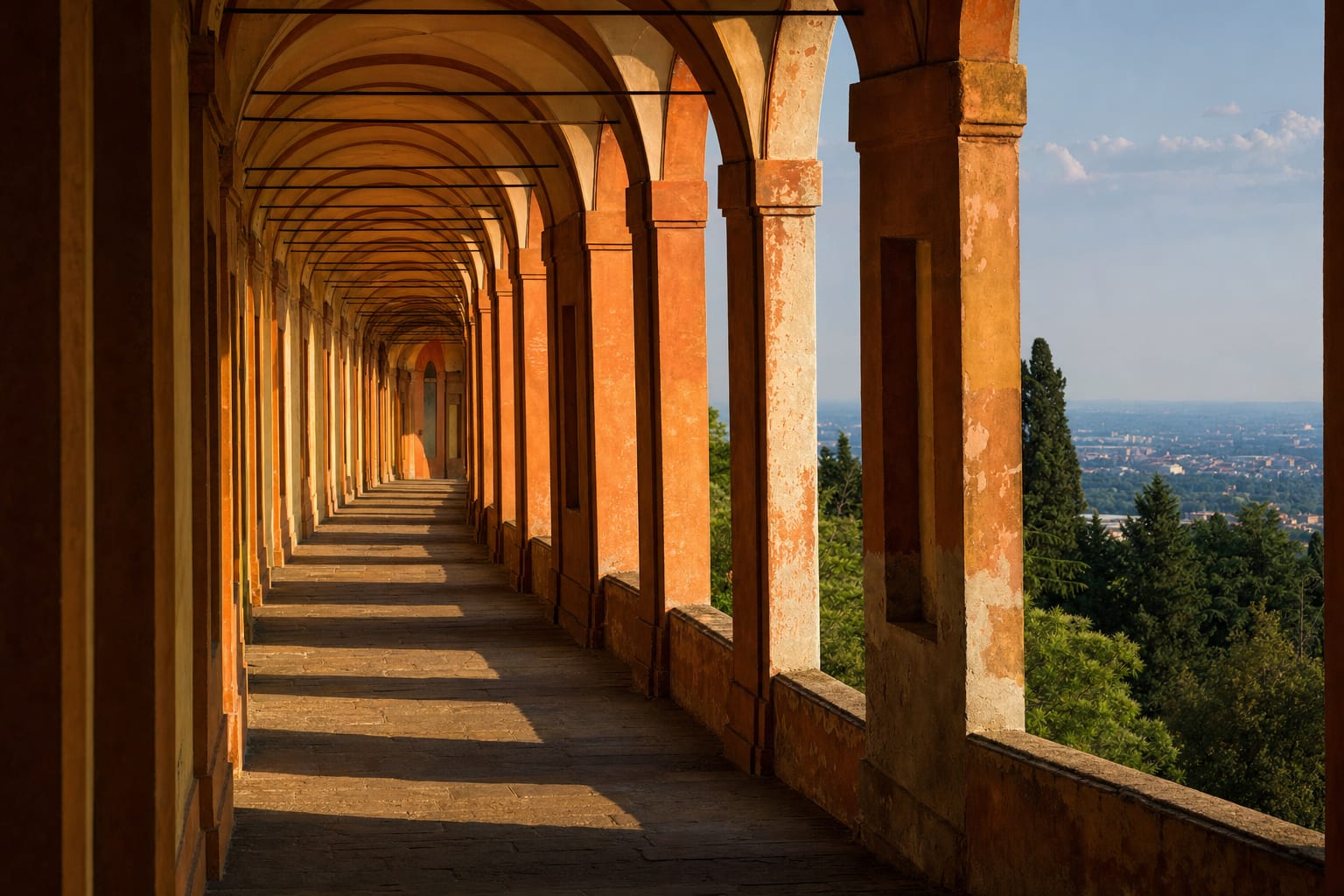
Portico of San Luca
The world's longest covered walkway, 666 arches climbing to the Sanctuary of San Luca.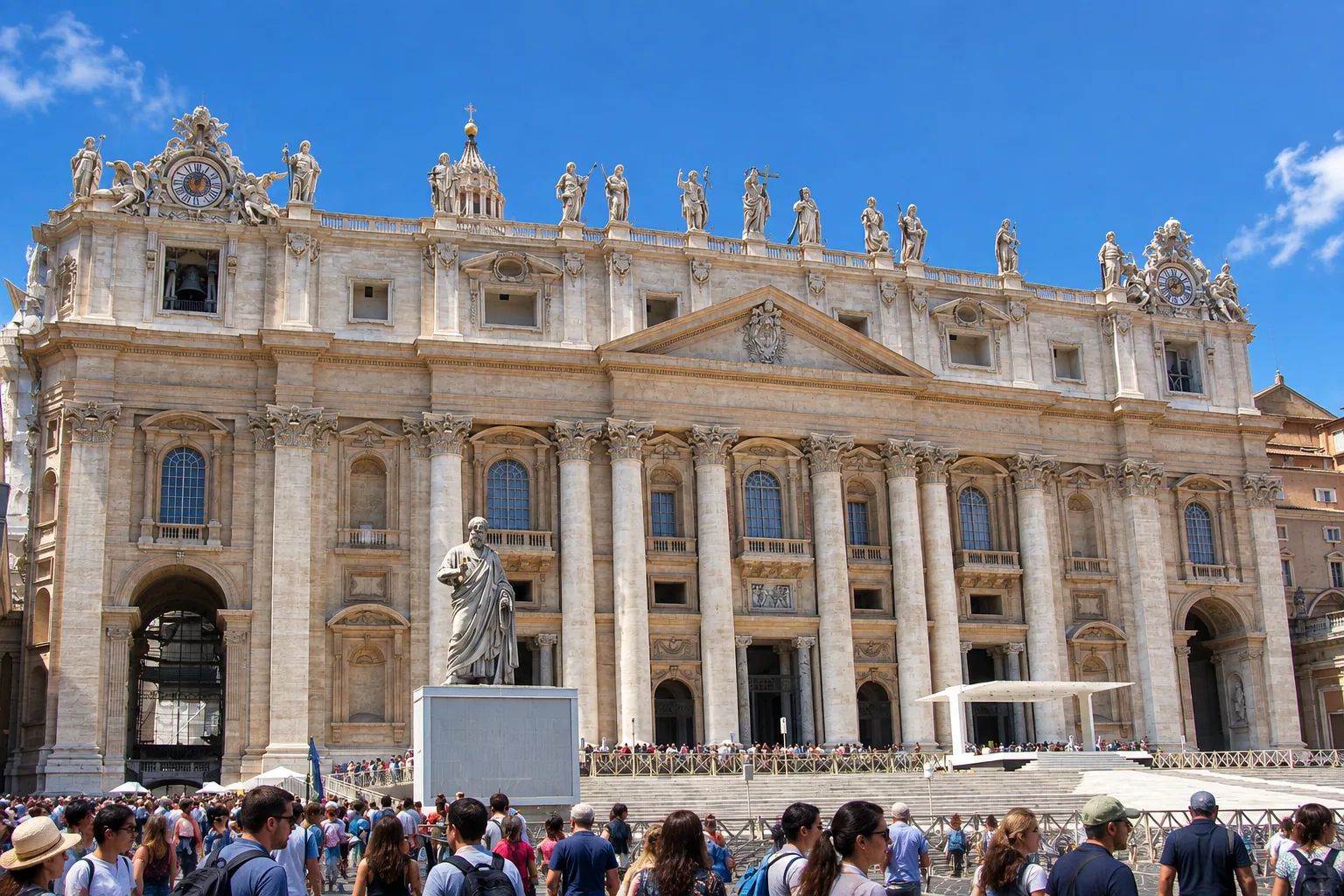
St. Peter's Basilica
The Vatican's great basilica, rebuilt from 1506 to 1626 by Bramante, Michelangelo and Maderno in turn.
Siena Cathedral
Siena's black and white marble cathedral, famous for its inlaid floor and Nicola Pisano's Gothic pulpit.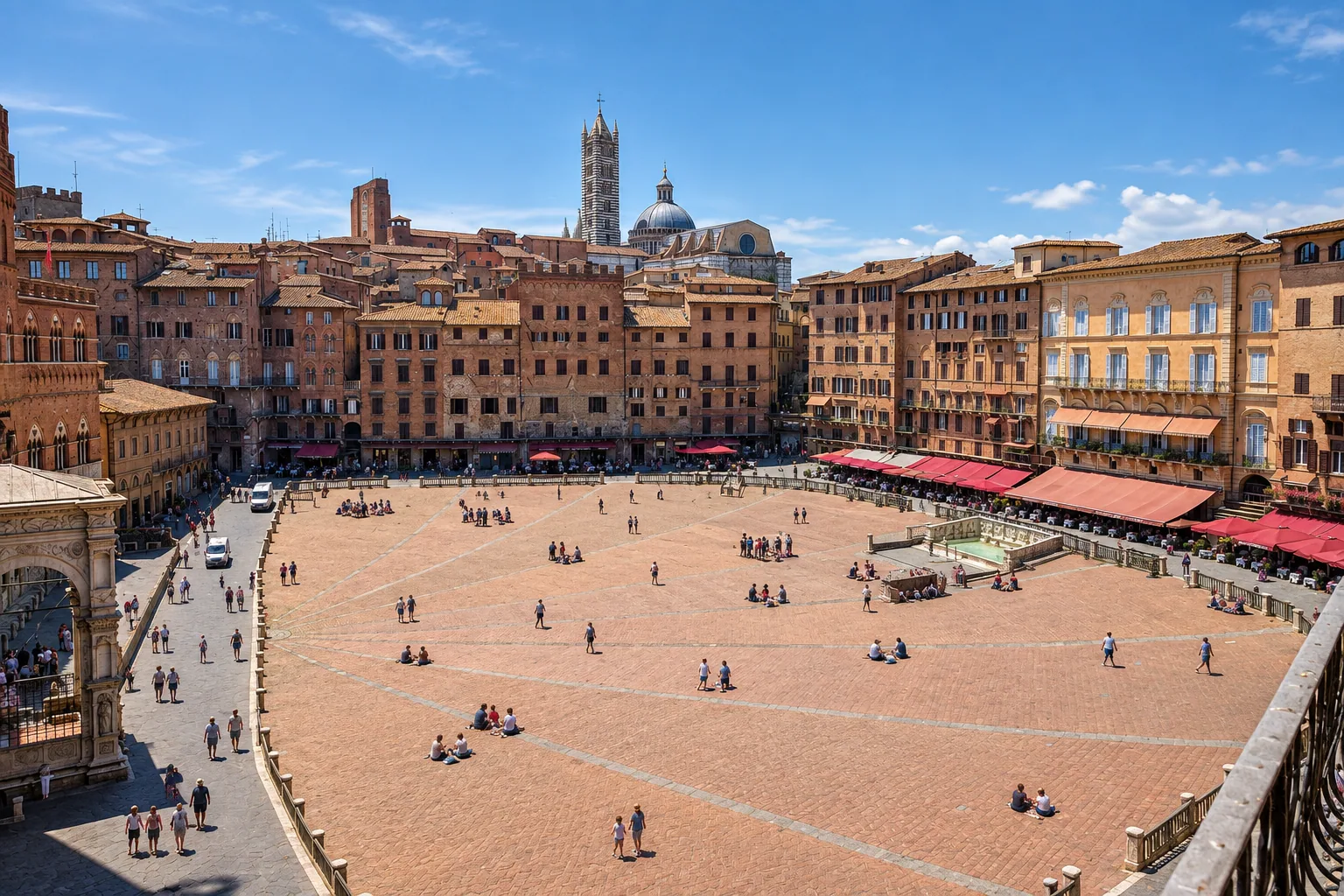
Piazza del Campo
Siena's shell shaped civic square, home to the twice-yearly Palio horse race and the city's best people watching.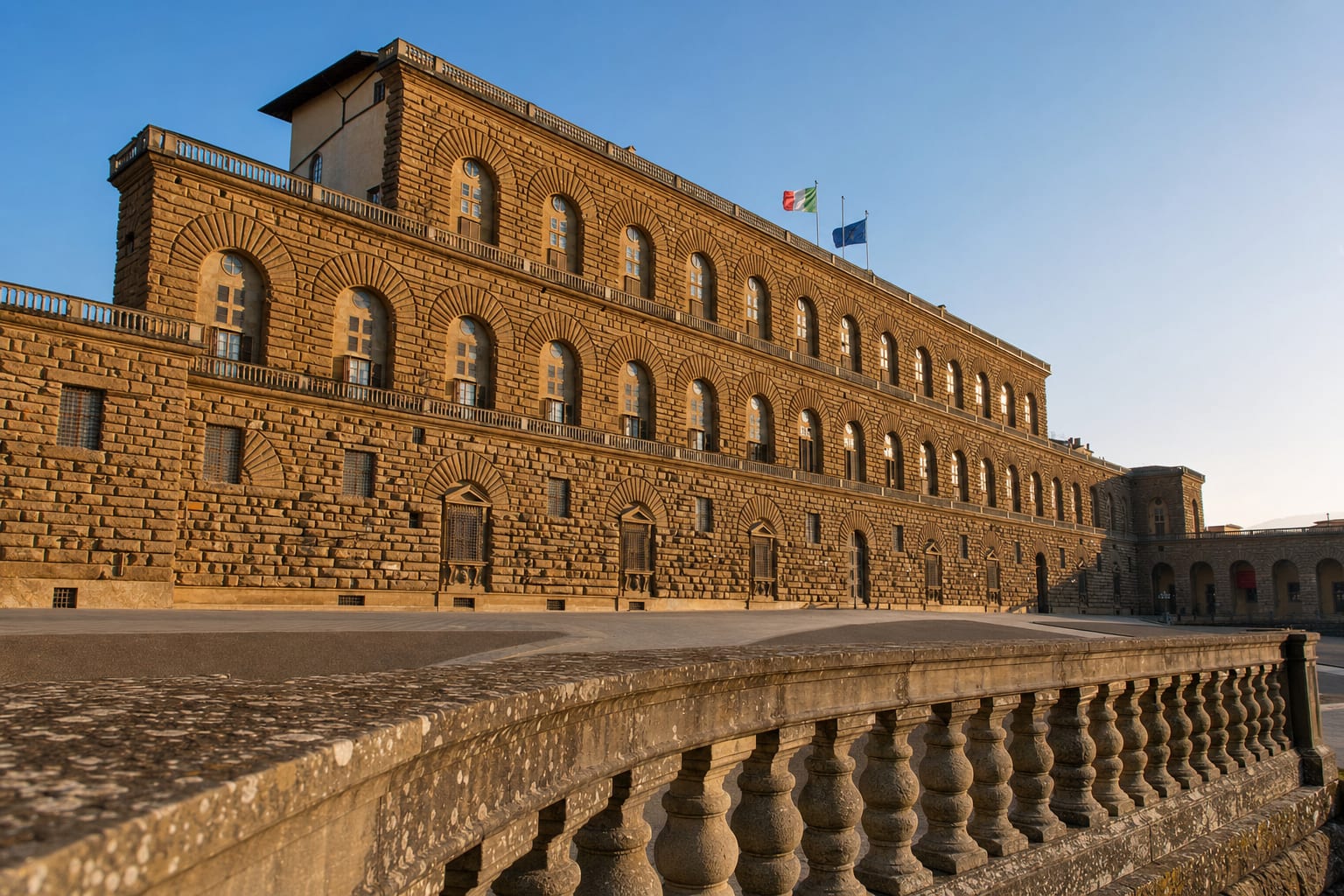
Pitti Palace
The Medici's grand-ducal palace in Florence, now a cluster of museums from the Palatine Gallery to the Royal Apartments.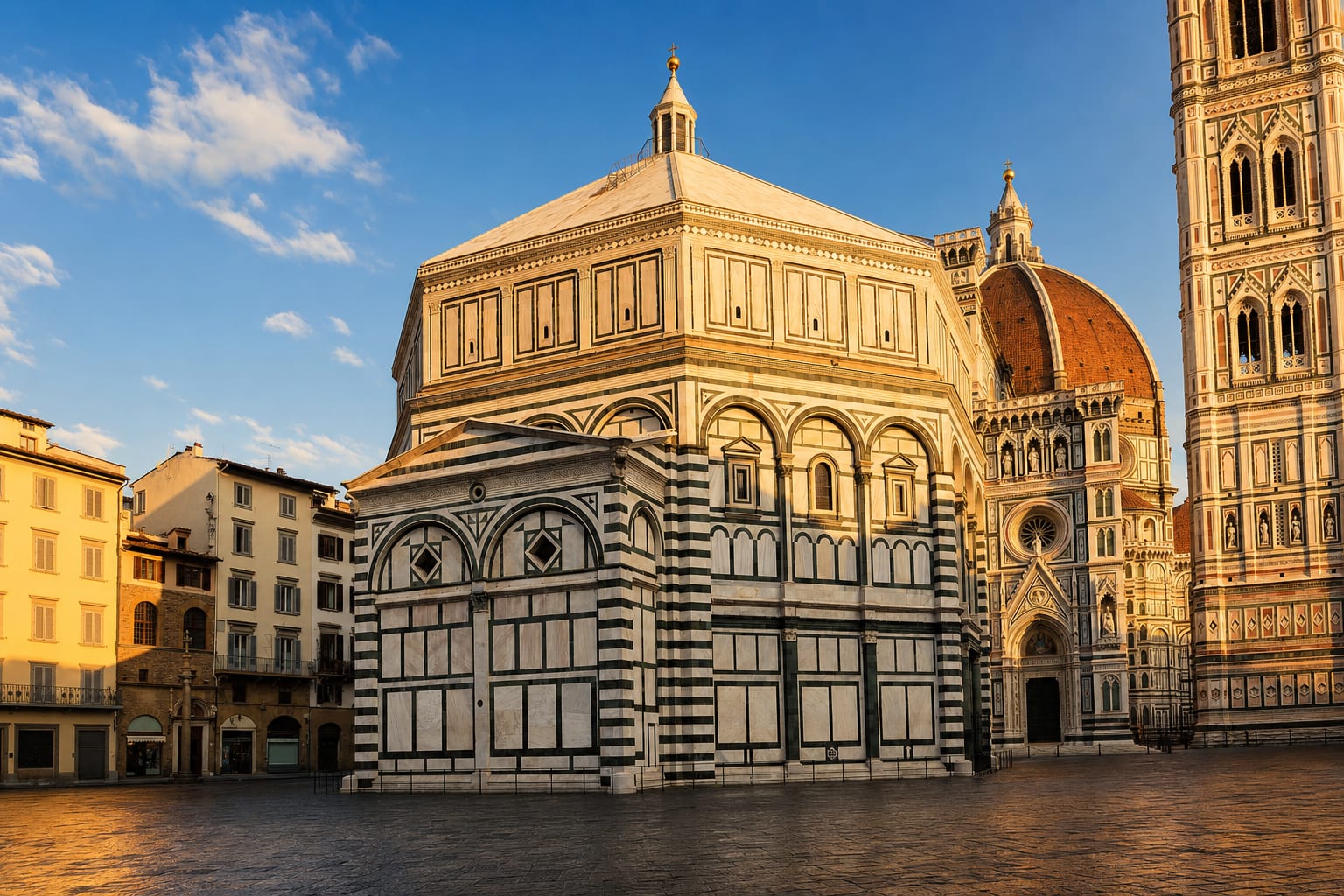
Florence Baptistery
Florence's octagonal Baptistery, famous for Ghiberti's Gates of Paradise and a gold-ground mosaic ceiling.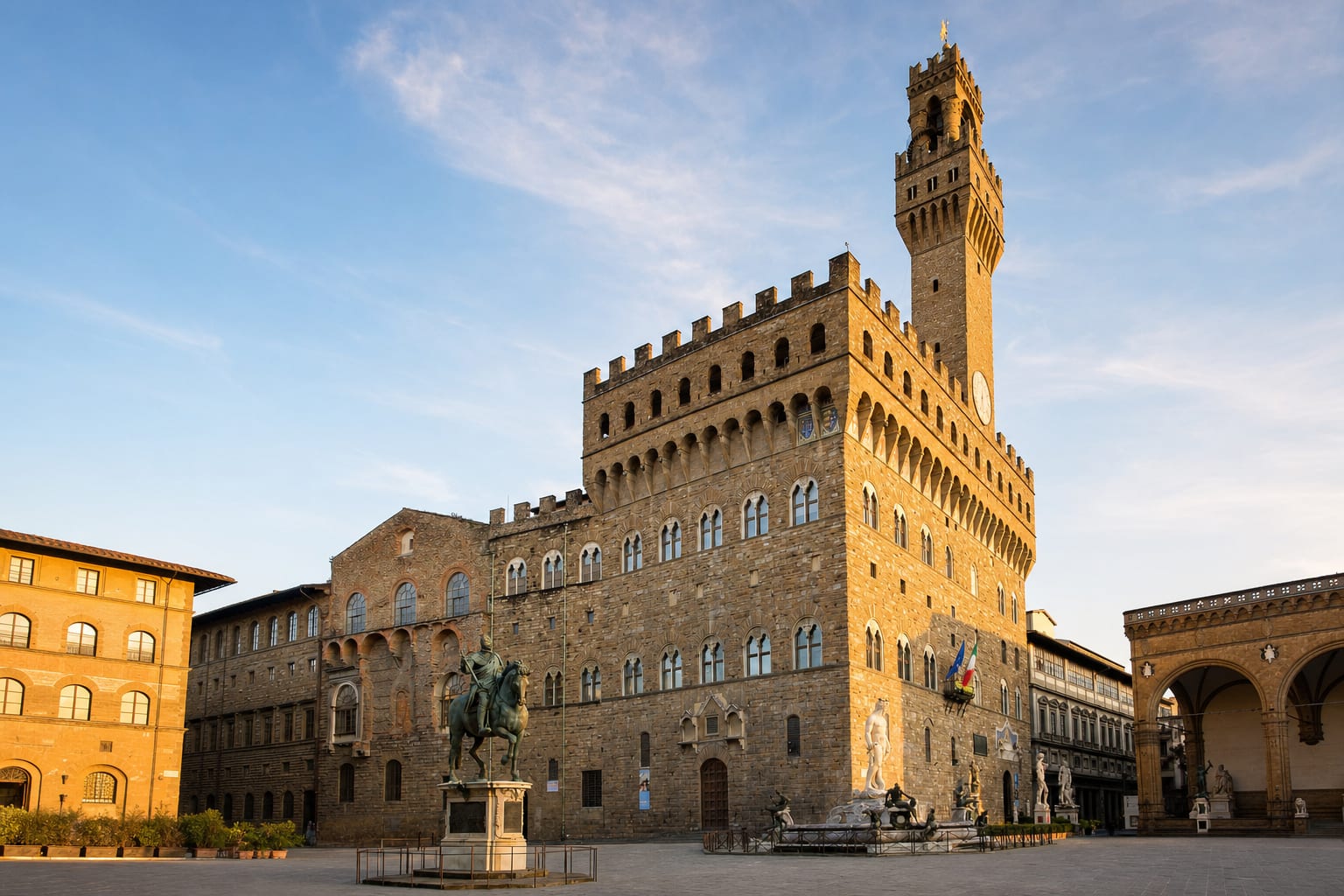
Palazzo Vecchio
Florence's medieval town hall, still in civic use, with Vasari's Salone dei Cinquecento and Roman ruins beneath.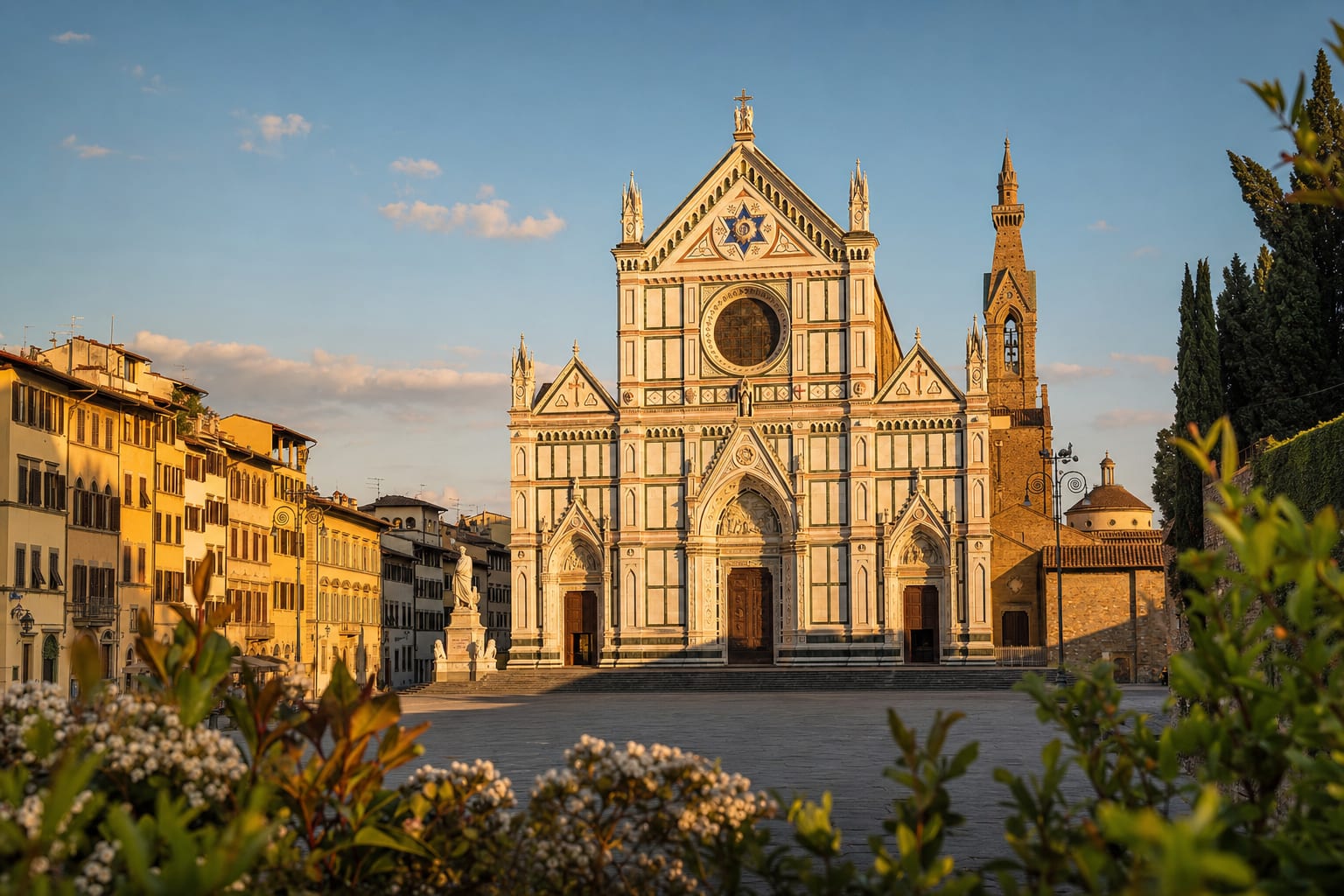
Basilica of Santa Croce
Florence's Franciscan basilica, burial place of Michelangelo and Galileo, with Giotto frescoes and Brunelleschi's Pazzi Chapel.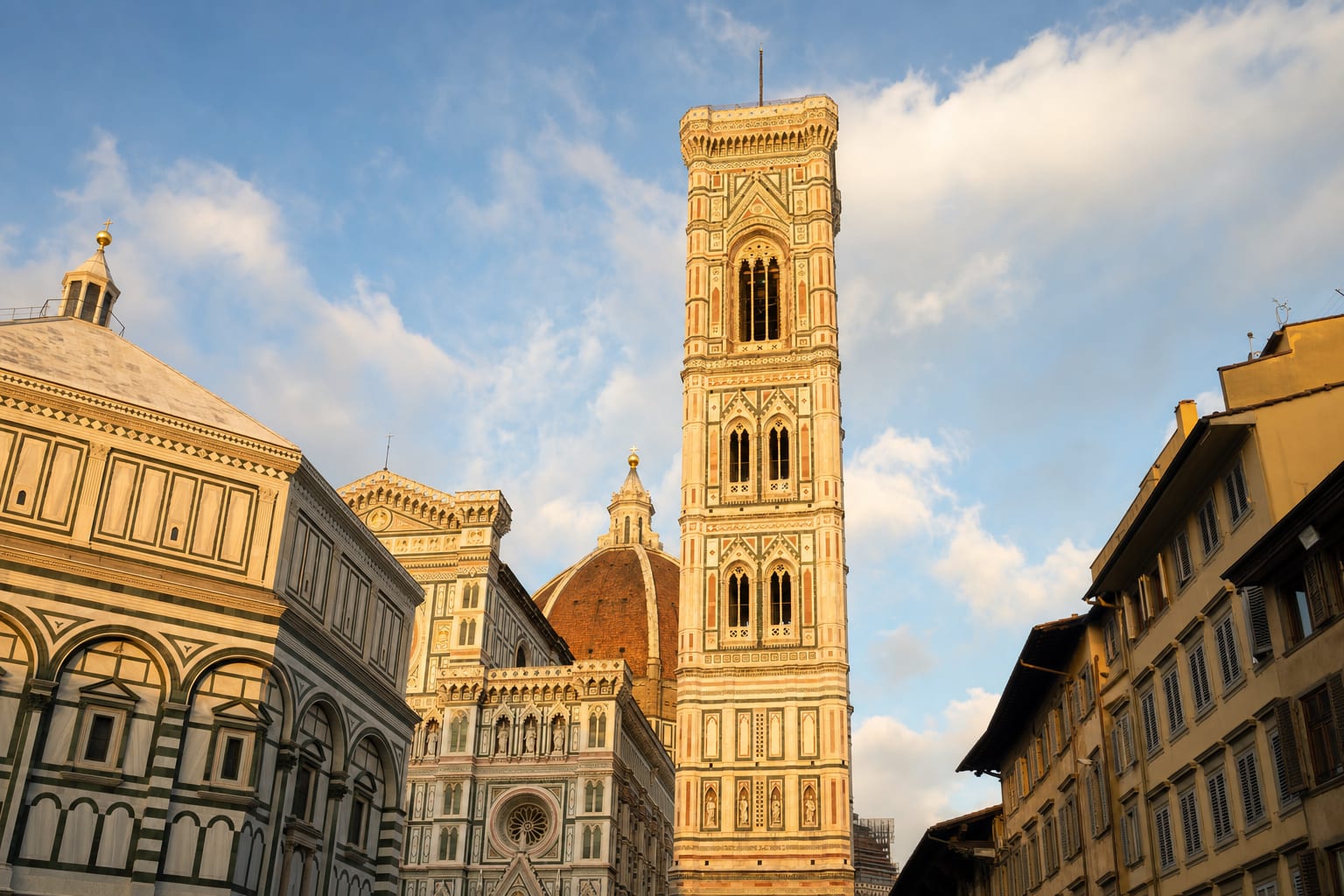
Giotto's Campanile
Giotto's 14th-century bell tower beside the Duomo, 414 steps up for one of Florence's clearest views of the dome.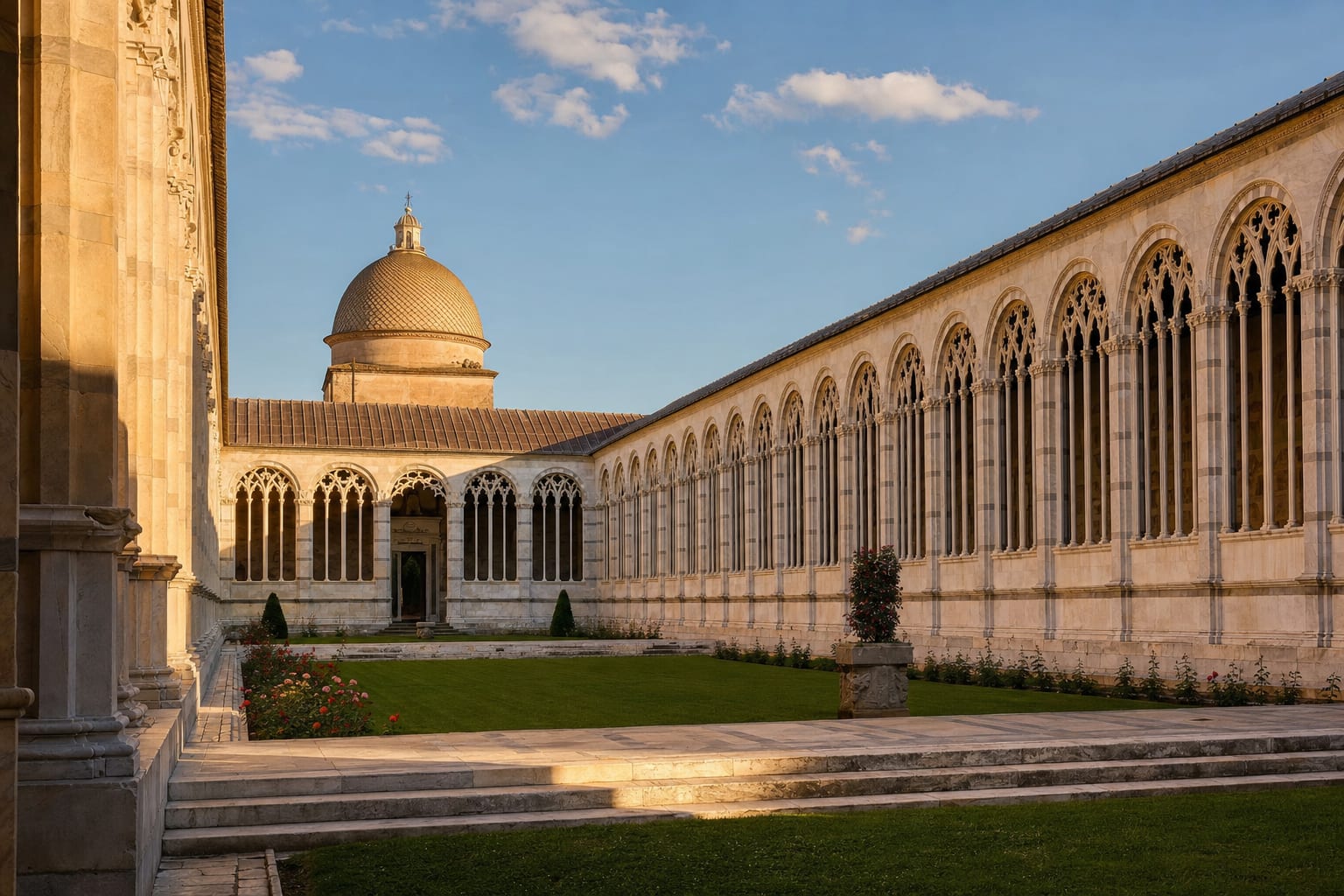
Camposanto Monumentale
Pisa's marble-walled medieval cemetery, once covered in frescoes, its 1944 fire bomb damage revealing hidden sinopie sketches.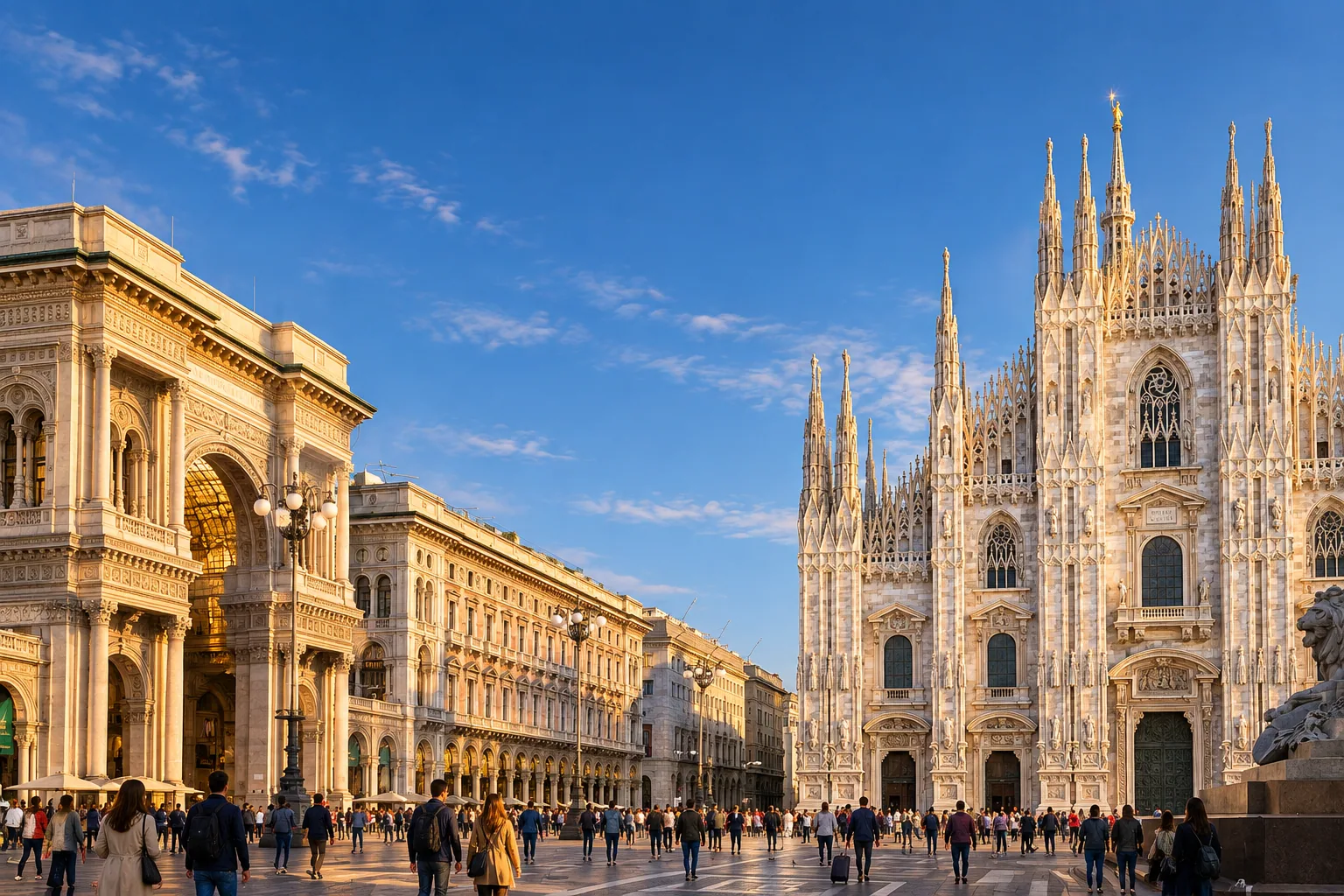
Milan Cathedral
Italy's largest cathedral, a six-century Gothic project topped by 135 spires and the golden Madonnina statue.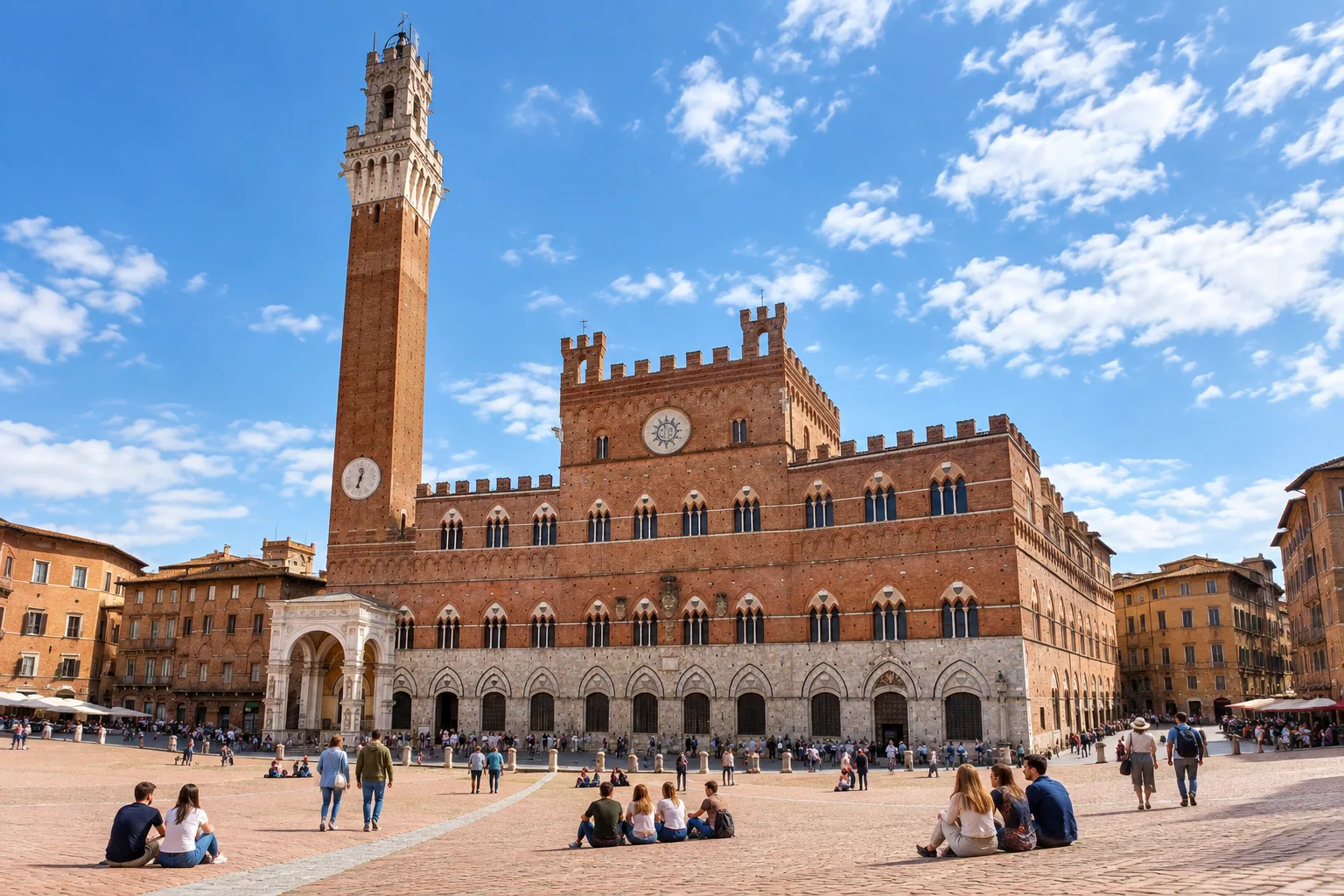
Torre del Mangia
Siena's civic tower on Piazza del Campo, 400 steps up to a view over the shell-shaped square and countryside.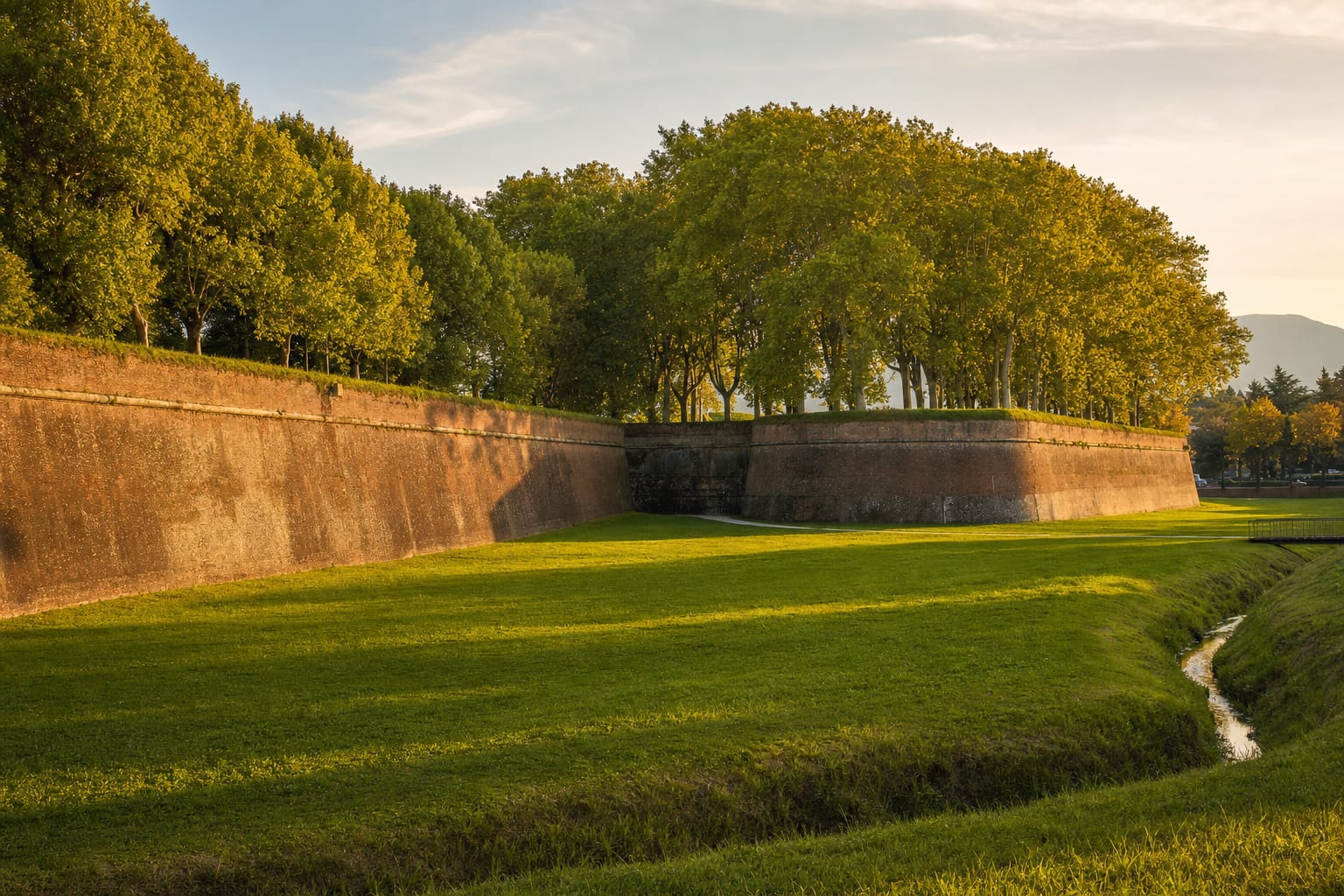
Walls of Lucca
Lucca's fully intact Renaissance walls, now a tree-lined public promenade circling the entire historic center.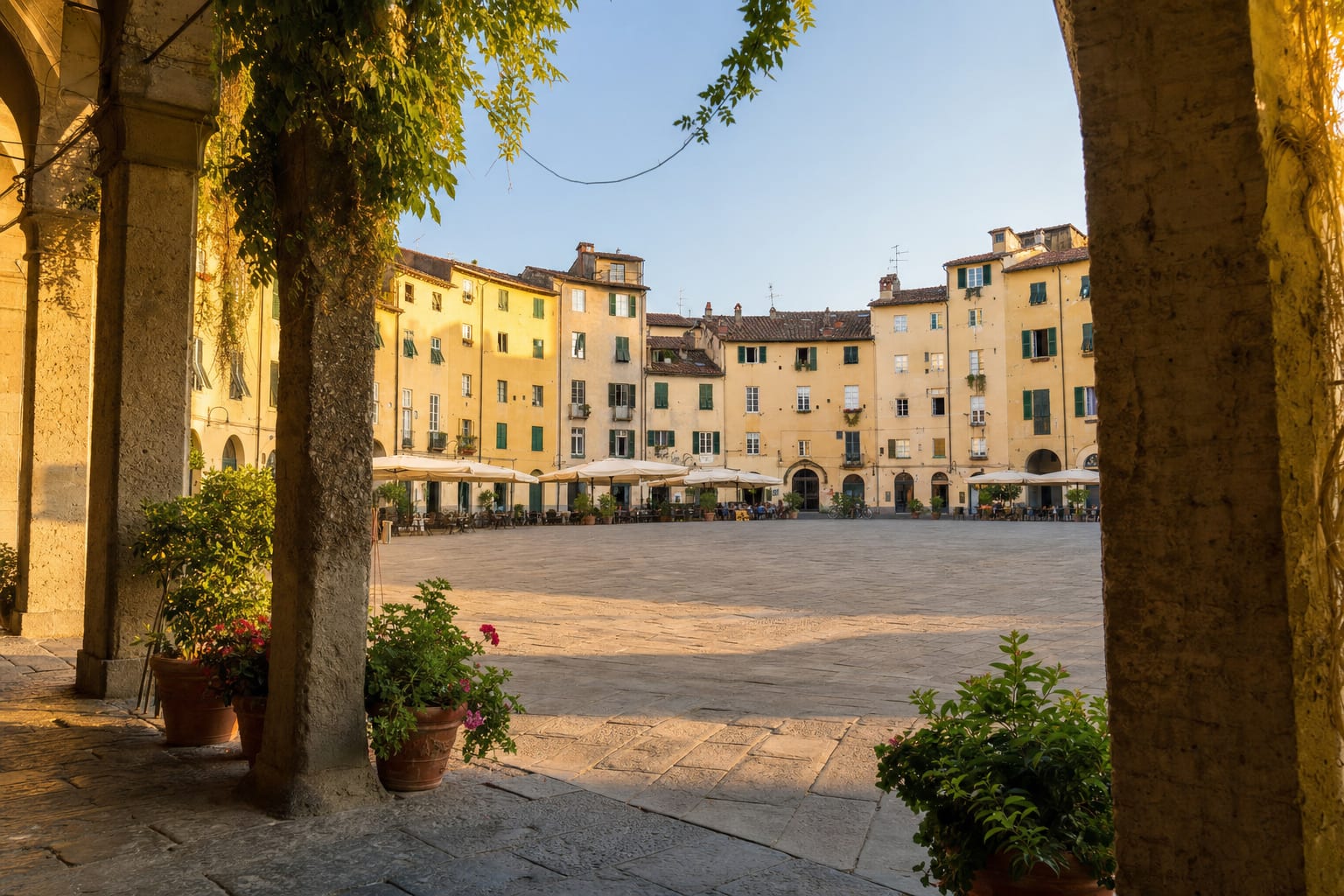
Piazza dell'Anfiteatro
Lucca's oval square, built directly over a buried Roman amphitheatre whose shape it still perfectly preserves.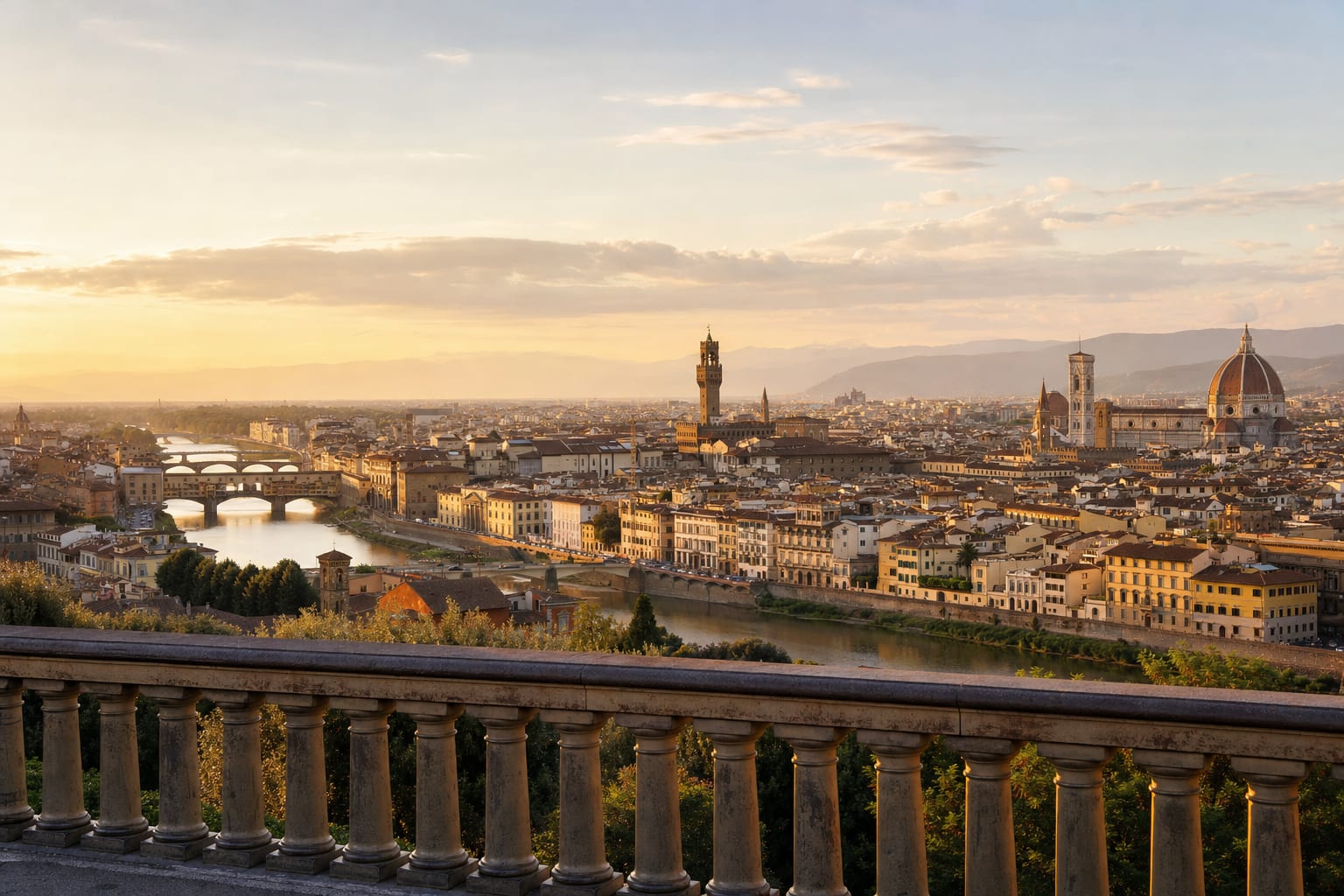
Piazzale Michelangelo
Florence's 19th-century panoramic terrace above the Arno, with a bronze David and views over the whole historic center.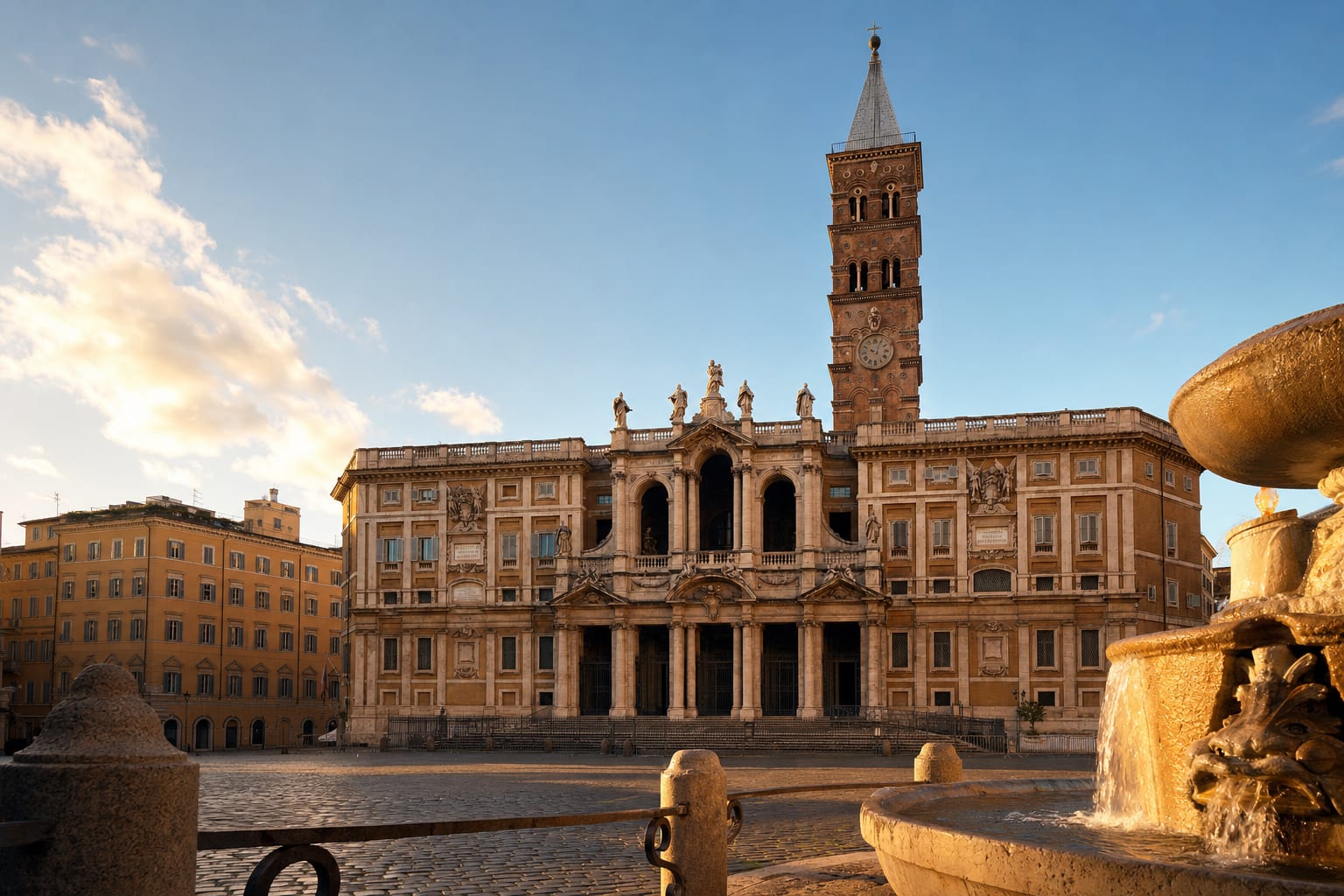
Basilica di Santa Maria Maggiore
Rome's fifth-century papal basilica, preserving early Christian mosaics beneath a gilded Renaissance ceiling.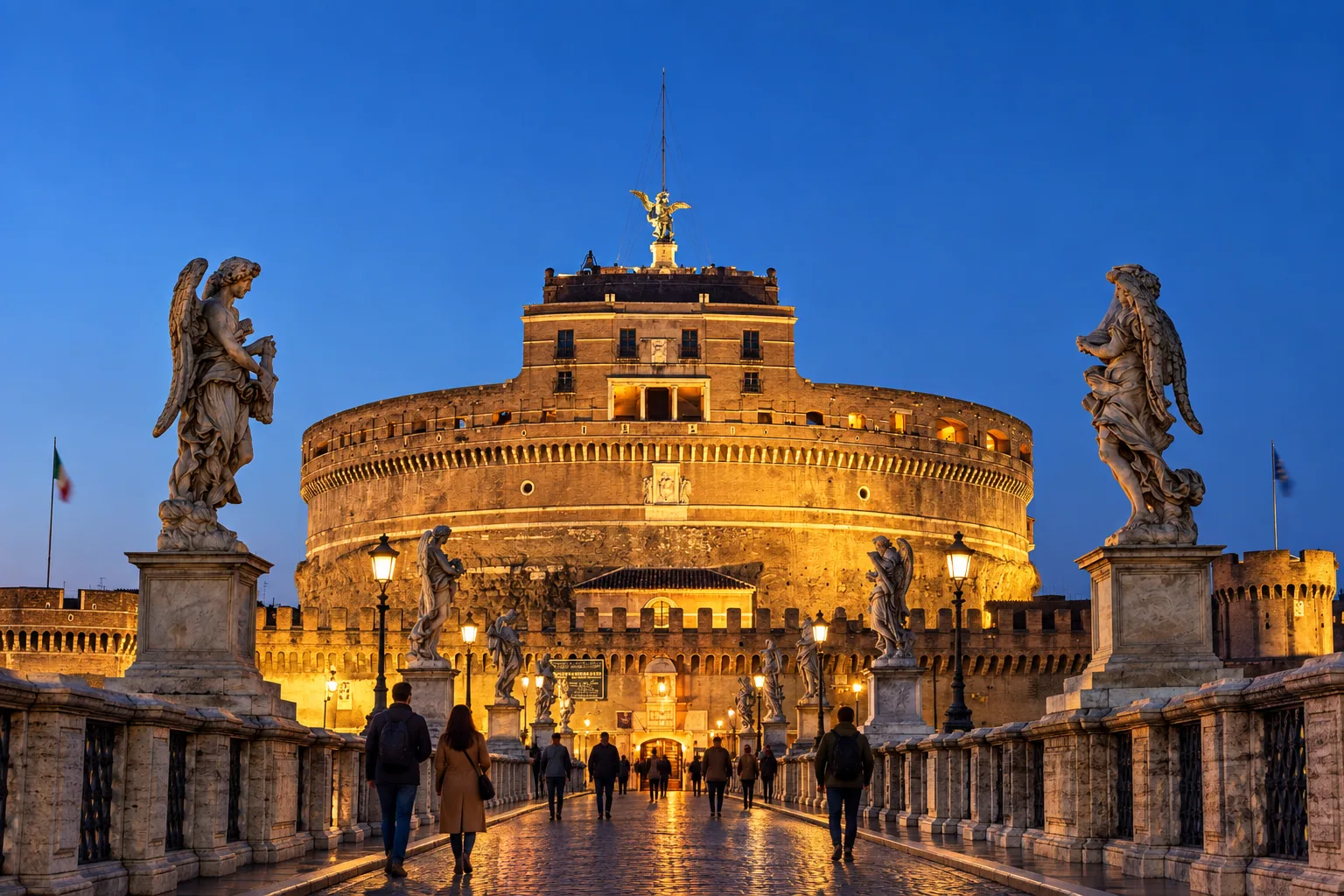
Castel Sant'Angelo
Hadrian’s mausoleum turned papal fortress and prison, crowned by a bronze angel above the Tiber.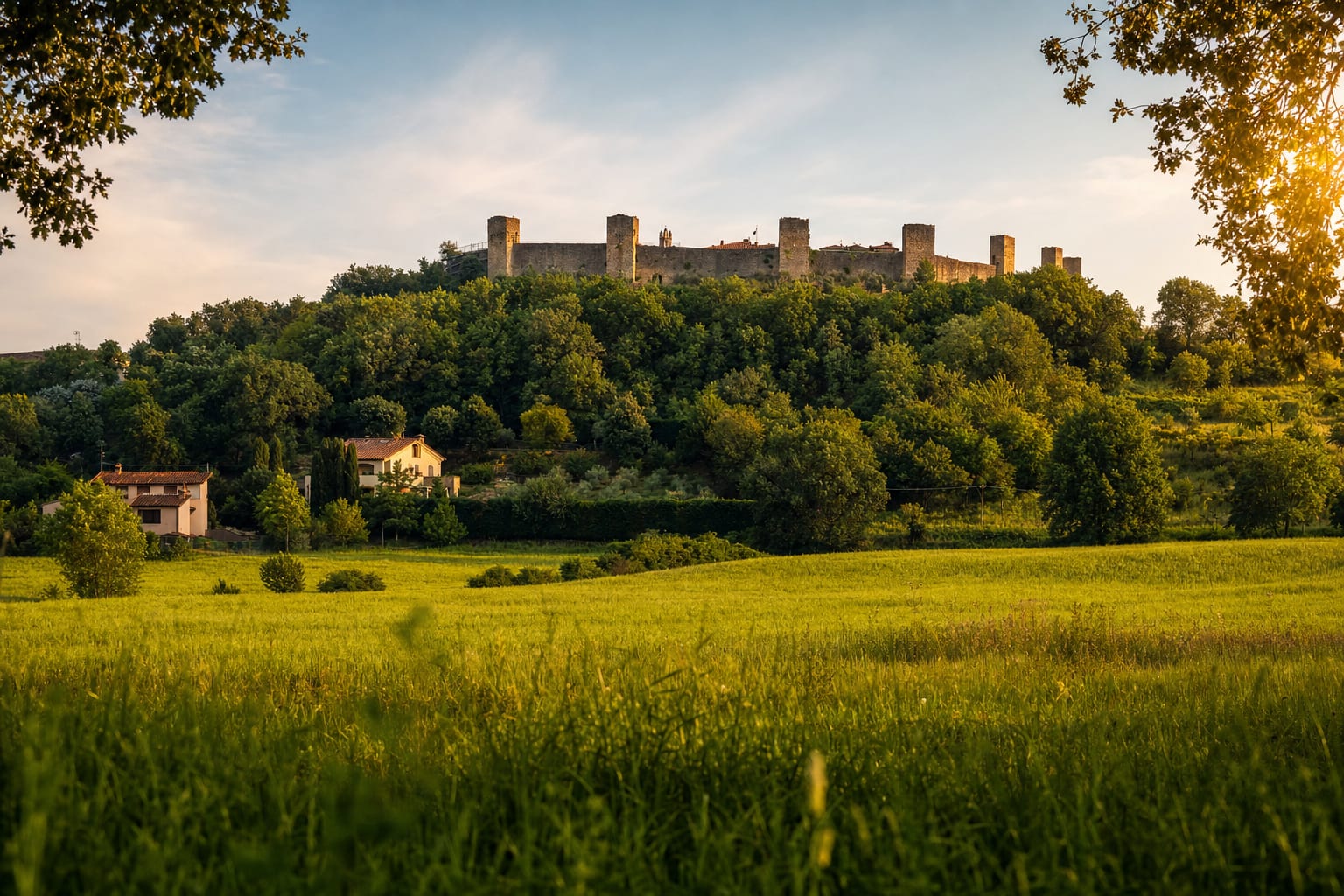
Walls of Monteriggioni
A 13th-century Sienese ring of walls with fourteen towers, praised by Dante, around a tiny hilltop village.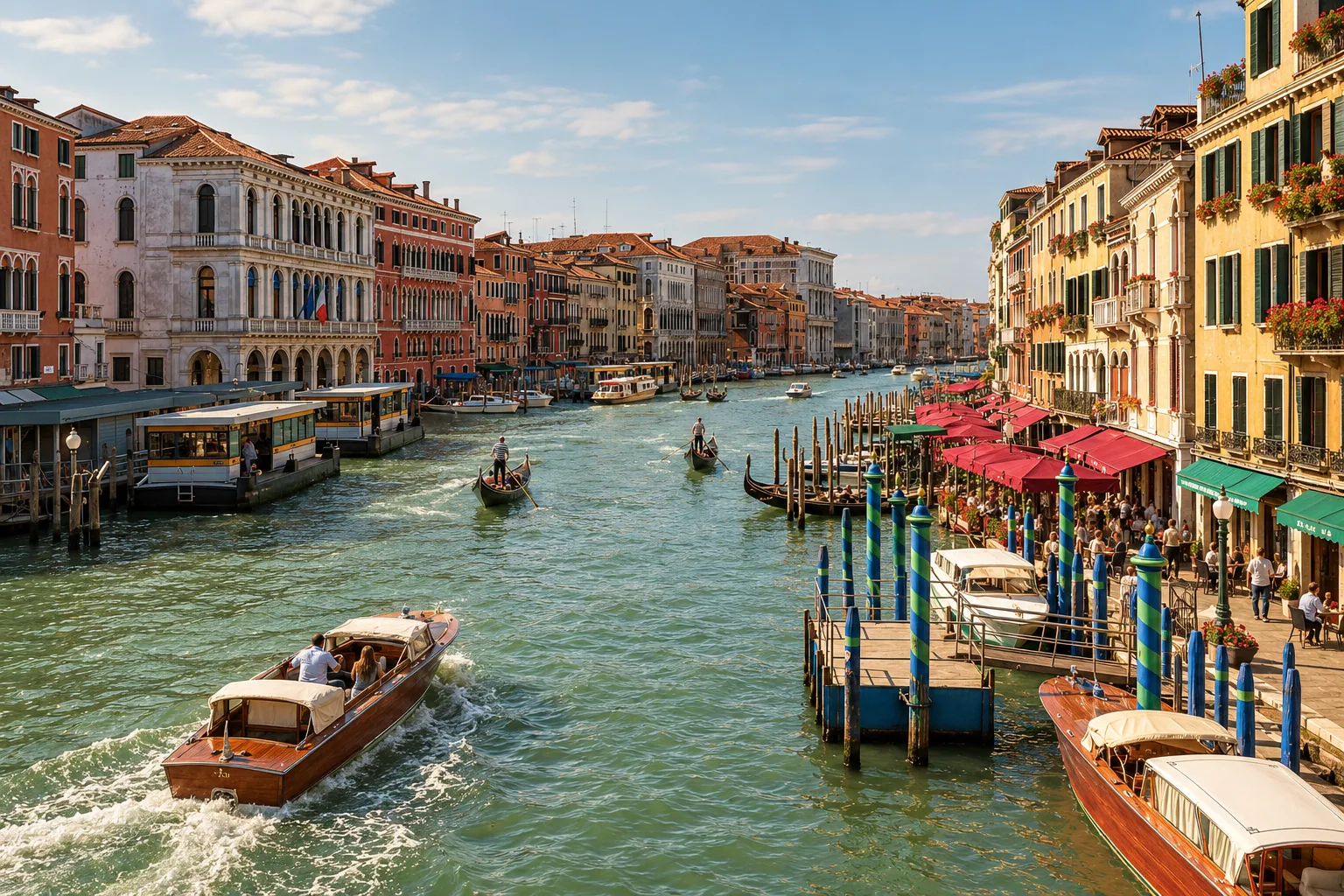
Grand Canal
Venice's principal waterway, a 3.8-kilometer curve of palazzi between the lagoon and St. Mark's Basin.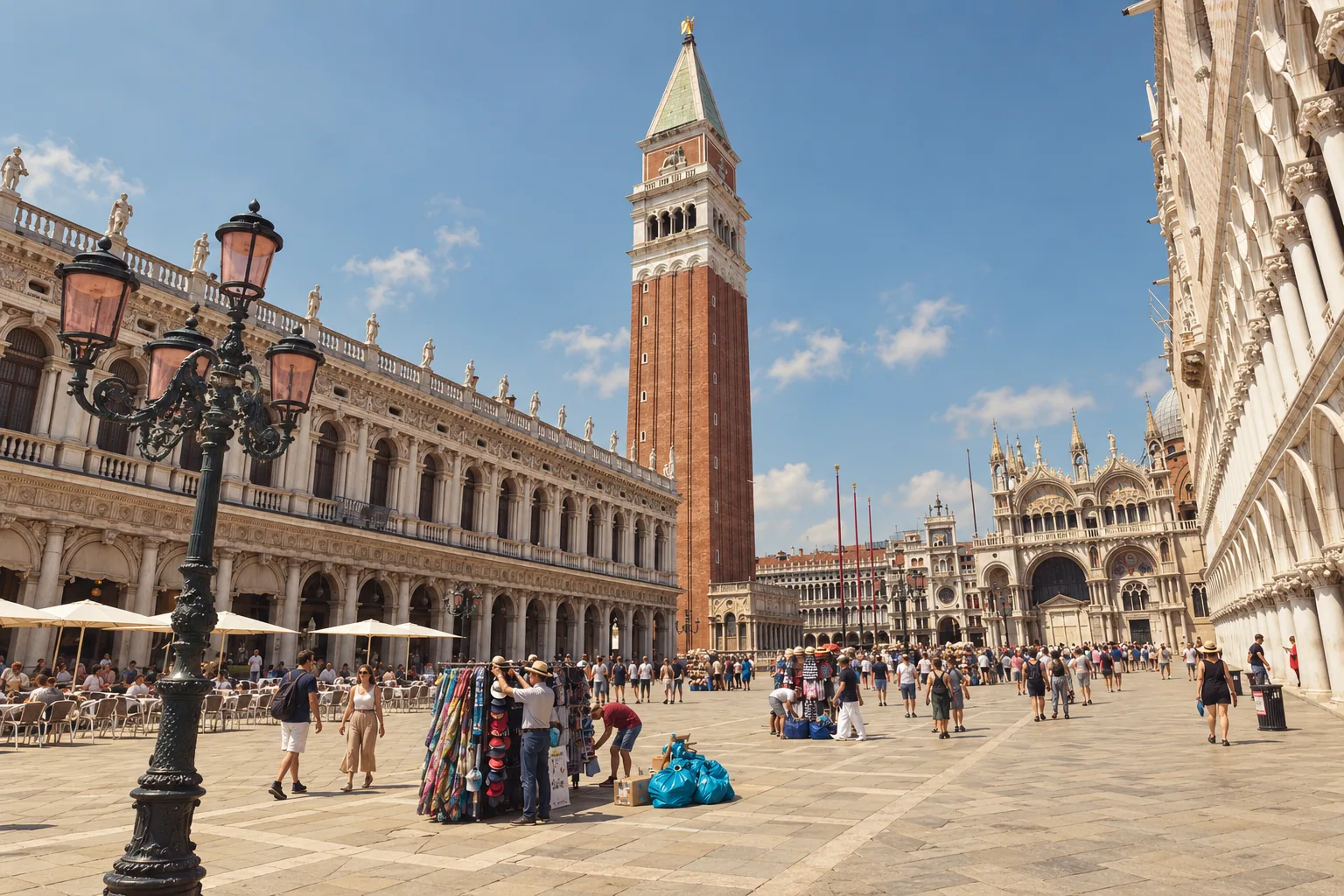
St. Mark's Square
Venice's only piazza, ringed by arcades, cafes and the basilica since the republic's height.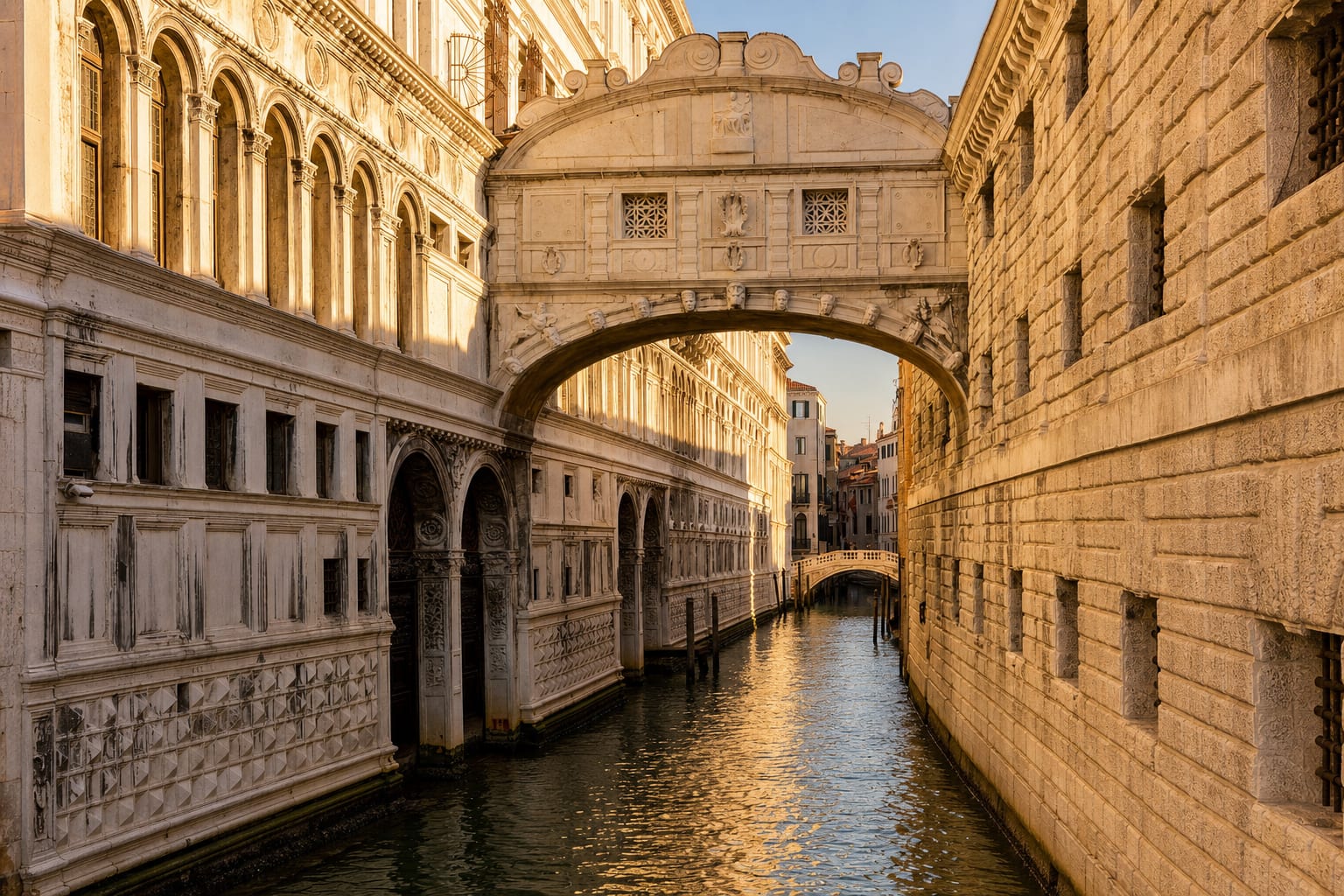
Bridge of Sighs
The enclosed limestone bridge where condemned Venetians once took a last look at the lagoon.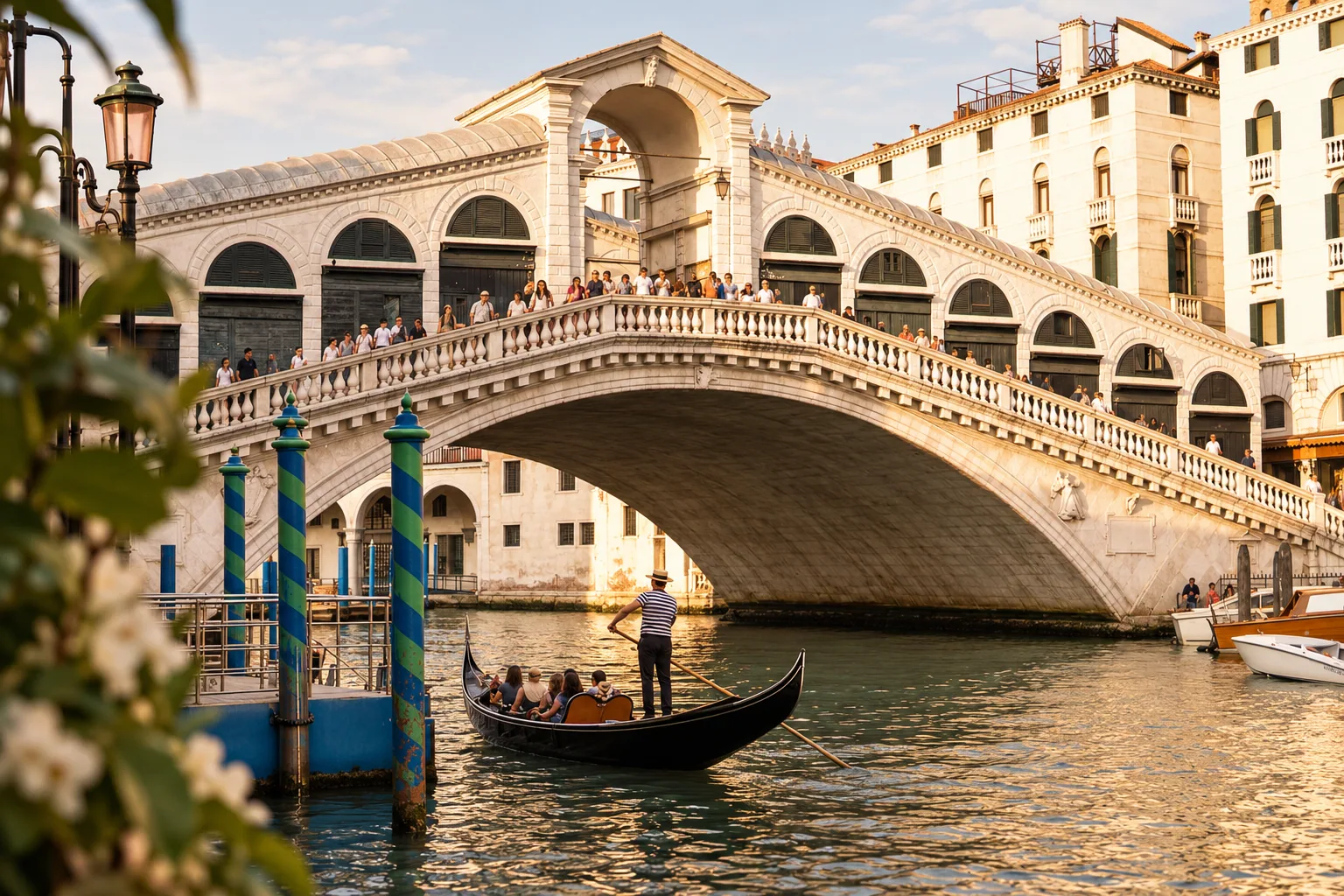
Rialto Bridge
The single stone arch over the Grand Canal, lined with shops since Antonio da Ponte built it in 1591.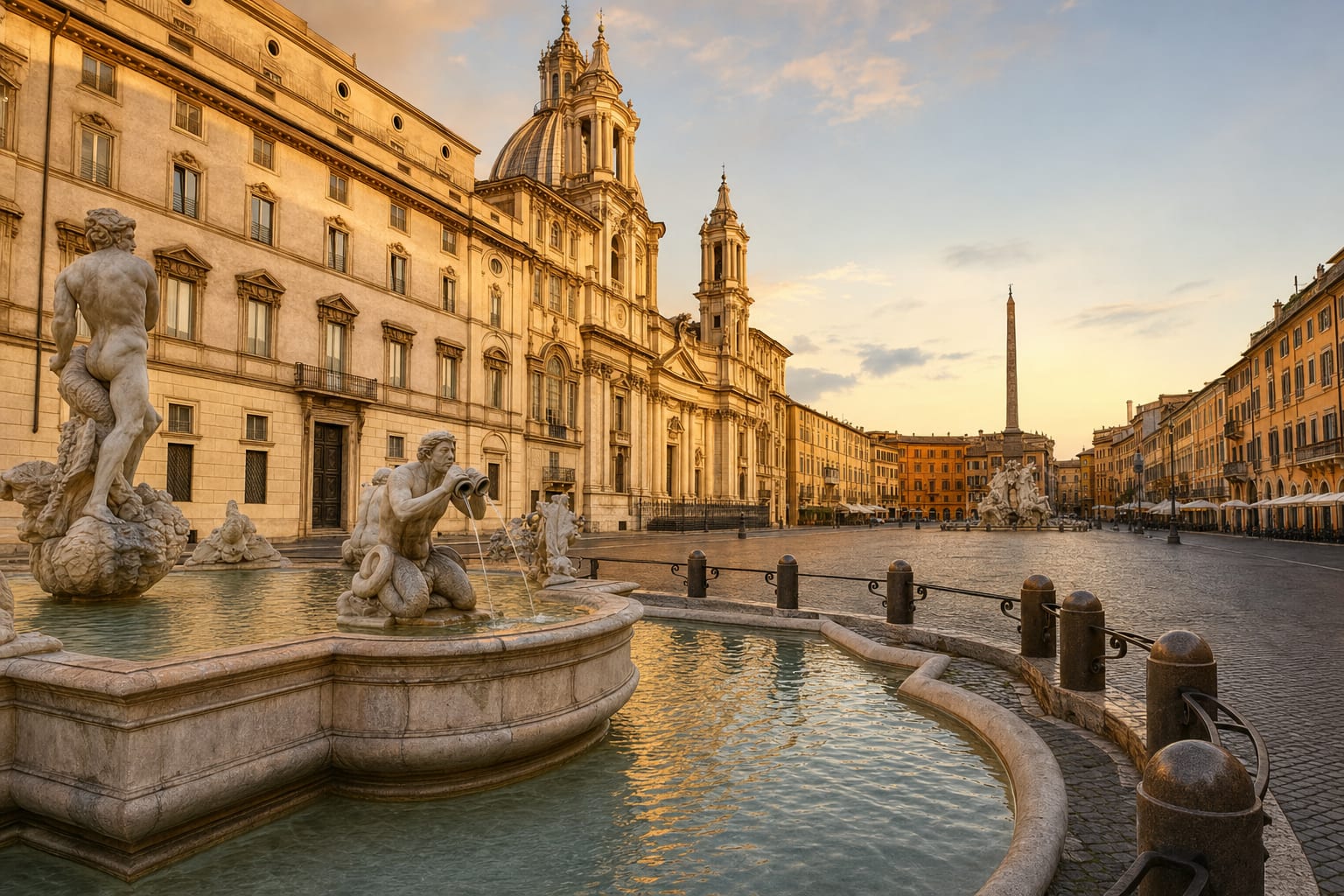
Piazza Navona
Rome's Baroque showpiece square, its oval shape tracing Domitian's ancient stadium exactly.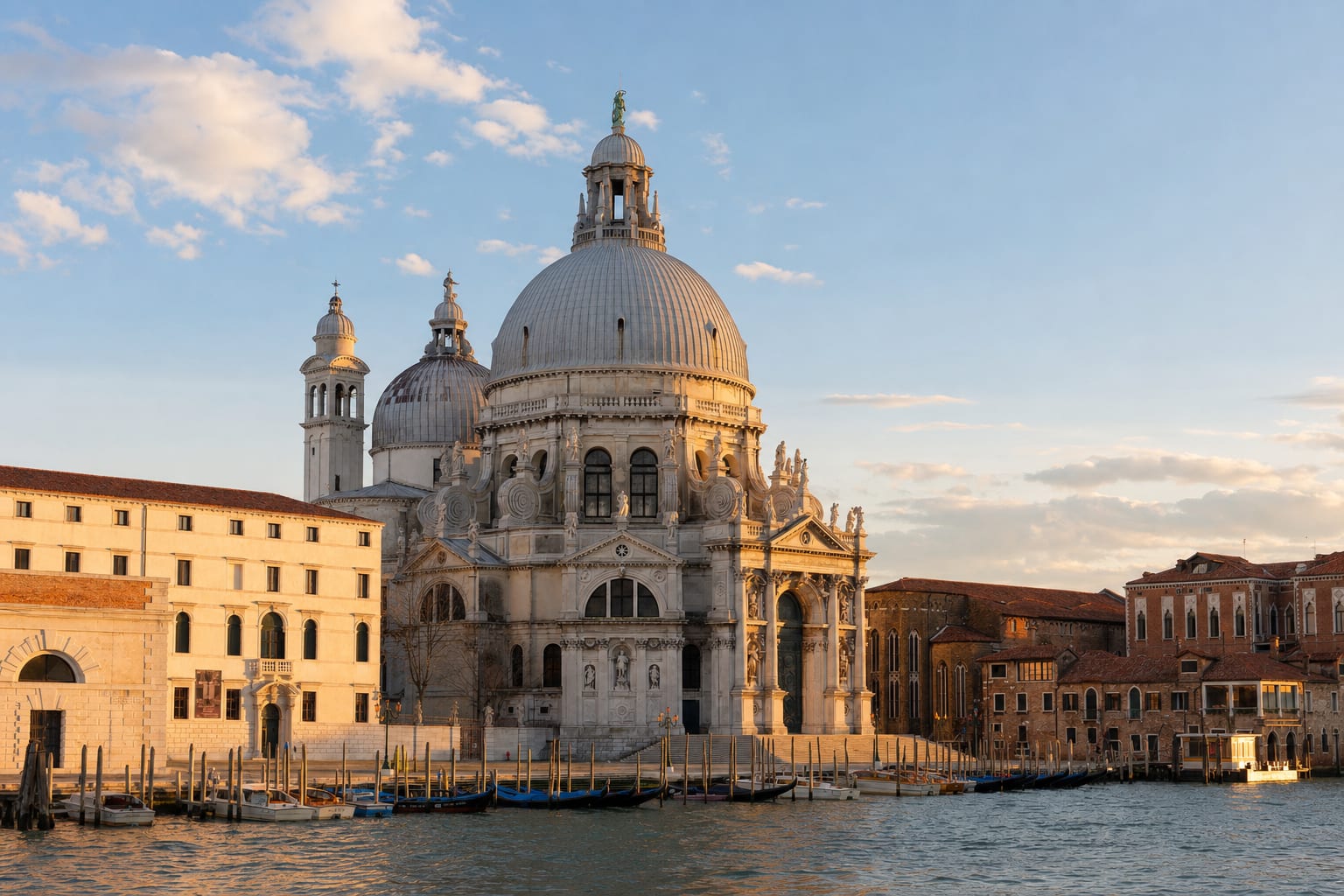
Santa Maria della Salute
The plague-vow basilica whose octagonal dome anchors the entrance to the Grand Canal.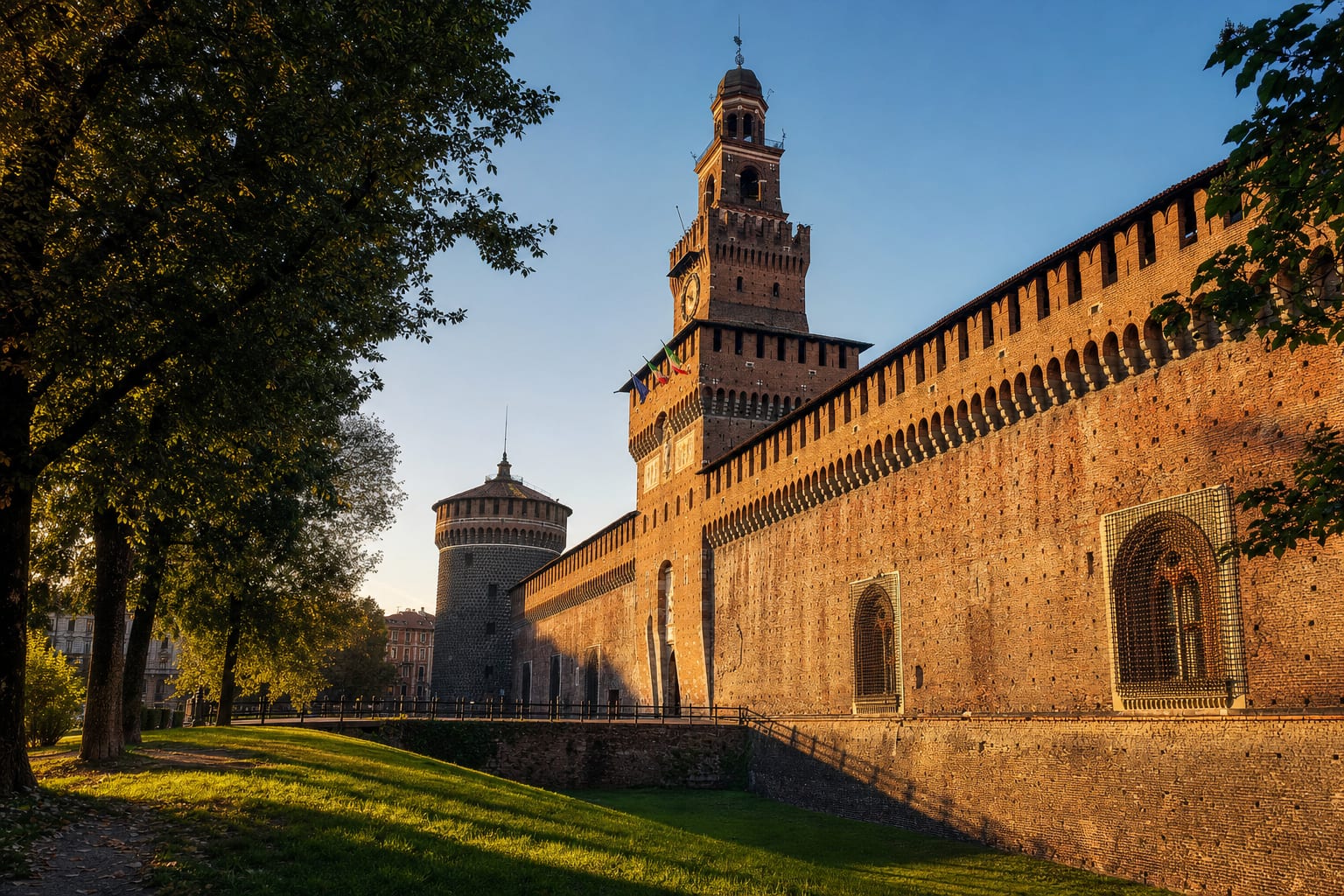
Sforza Castle
Milan's ducal brick fortress, home to Leonardo's Sala delle Asse and Michelangelo's final Pieta.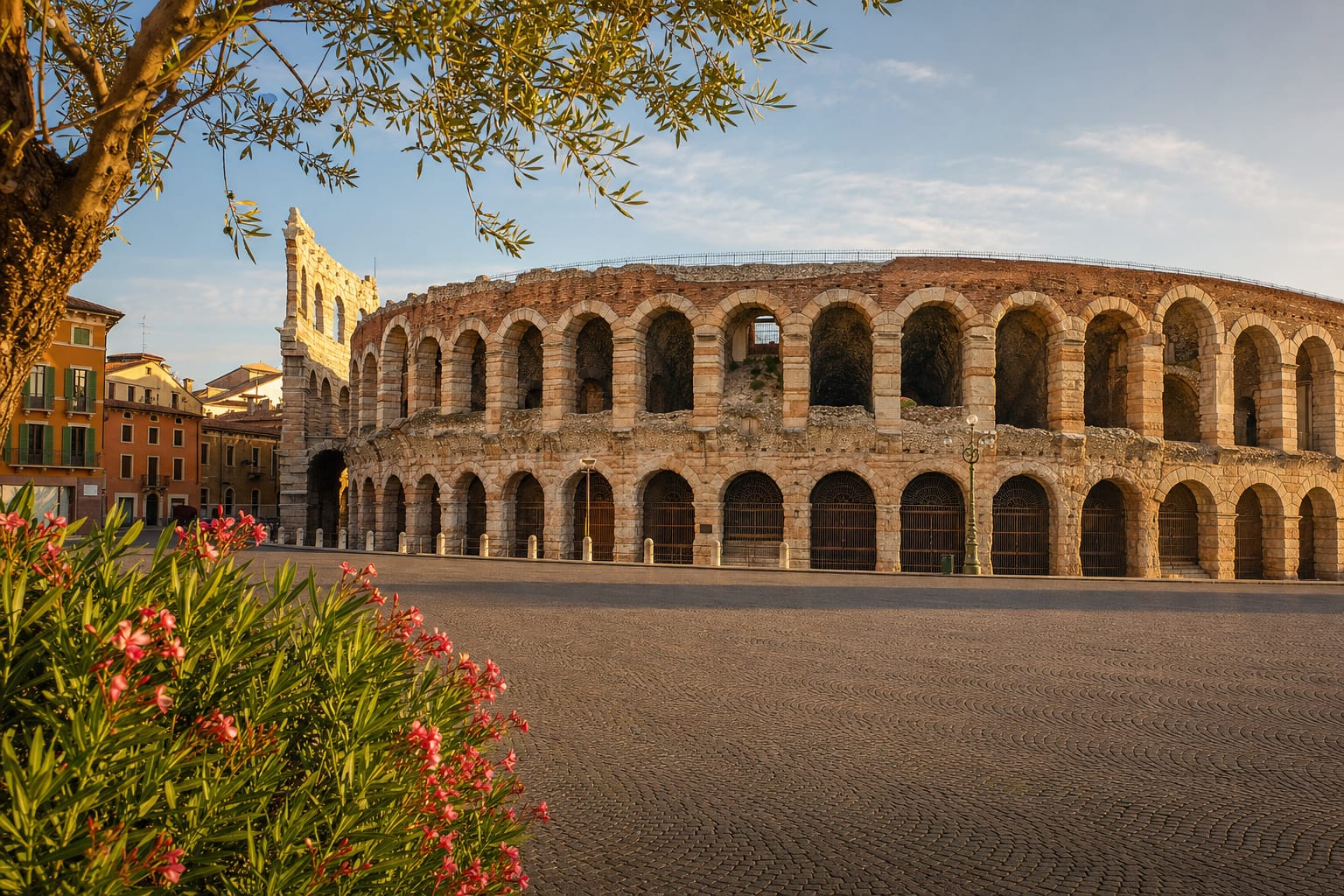
Arena di Verona
Verona's first-century Roman amphitheatre on Piazza Bra, still one of the world's great open-air opera venues.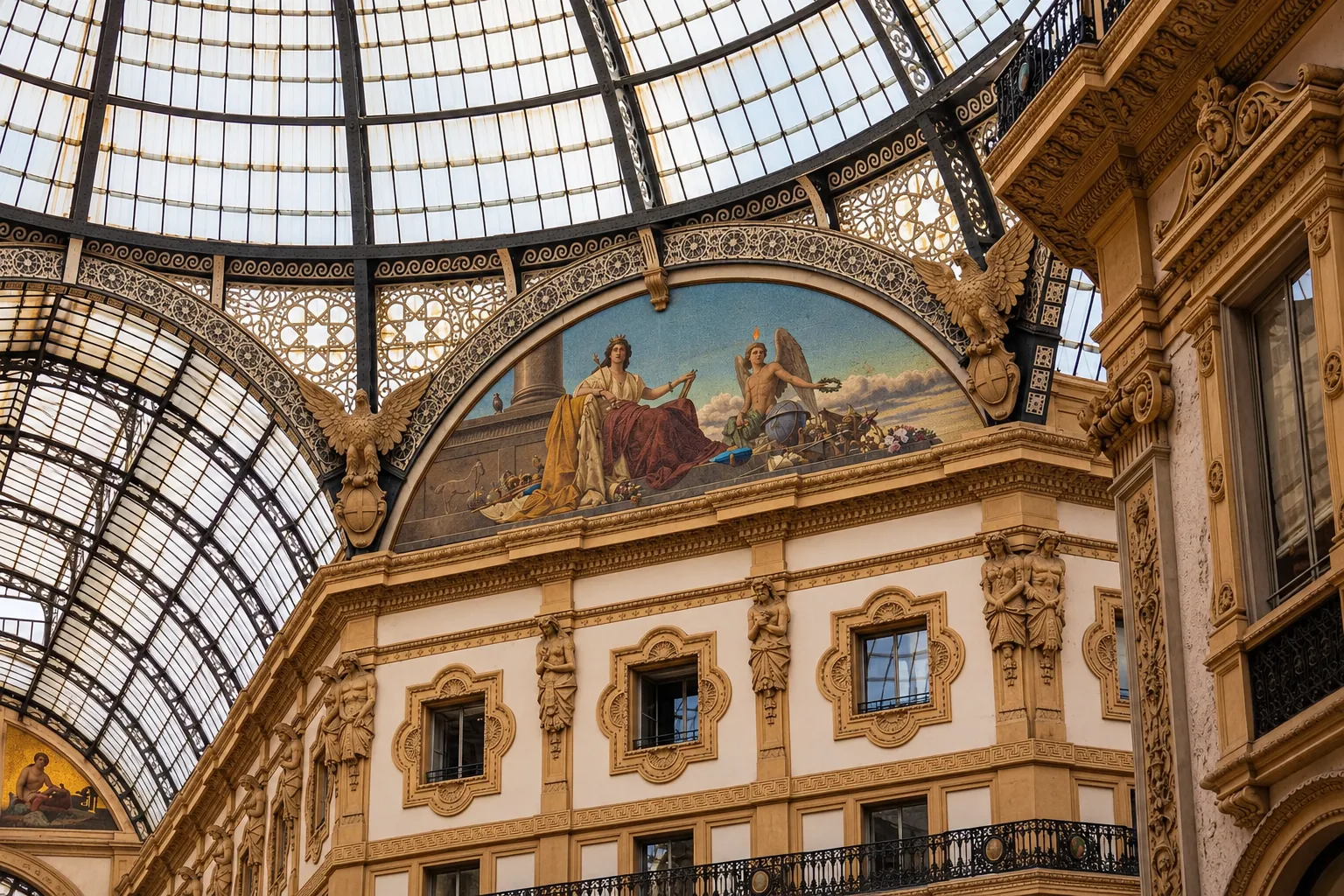
Galleria Vittorio Emanuele II
Milan's glass-domed 19th-century arcade linking the Duomo to La Scala, home of the lucky mosaic bull.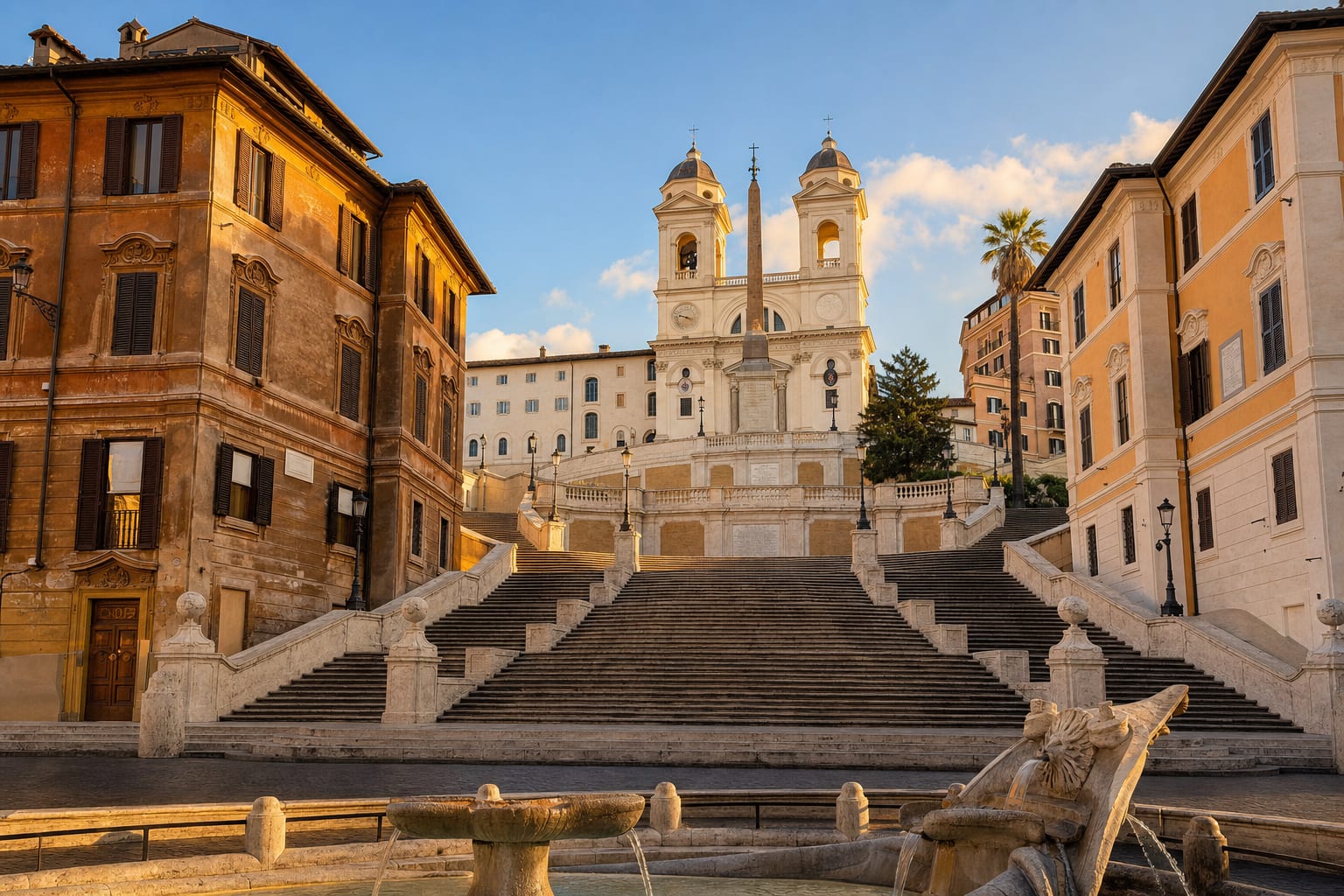
Spanish Steps
Rome's Baroque staircase of 135 steps, climbing from the Barcaccia fountain to Trinita dei Monti.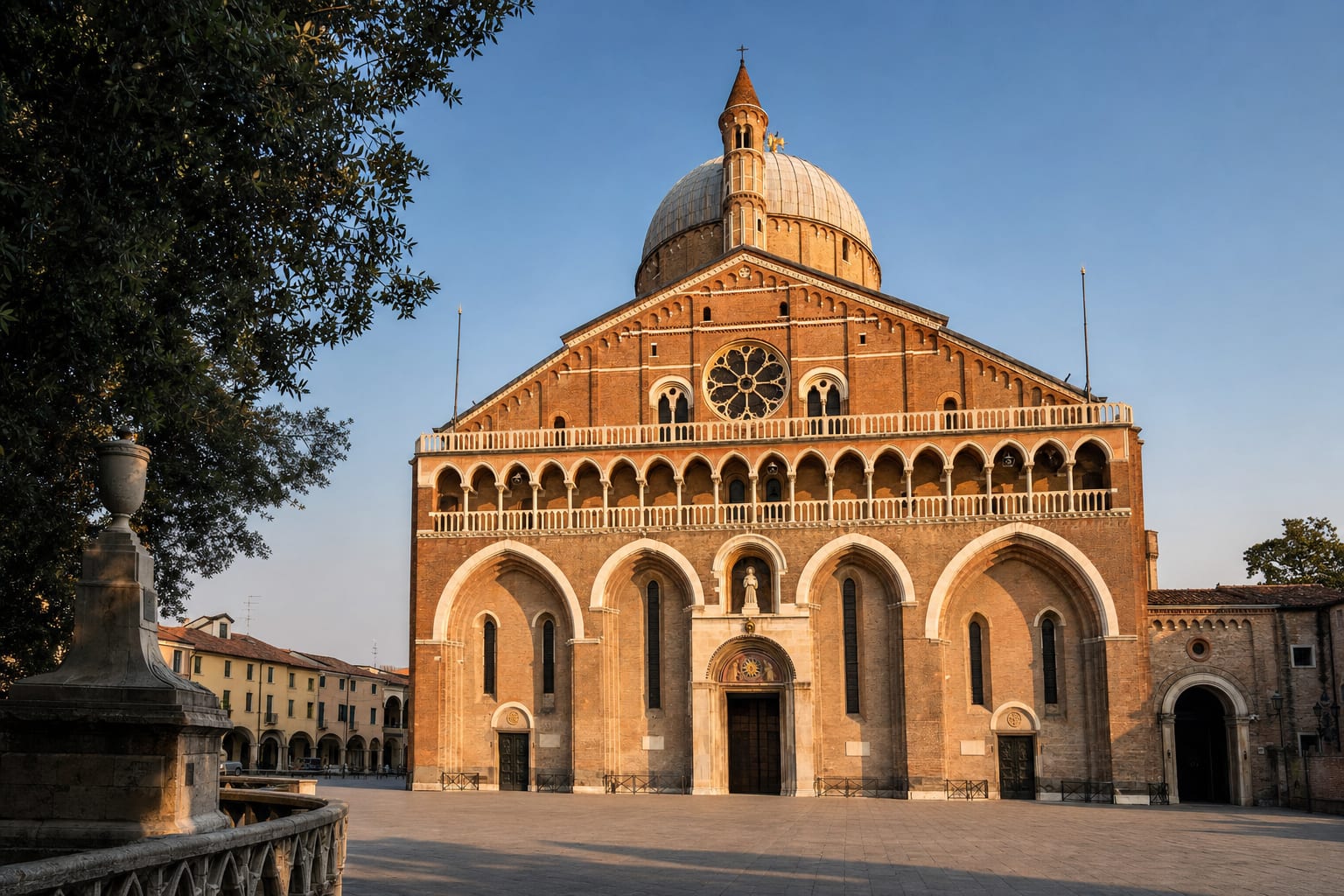
Basilica of Saint Anthony
The domed pilgrimage basilica of Saint Anthony, with Donatello's bronzes at the altar and outside it.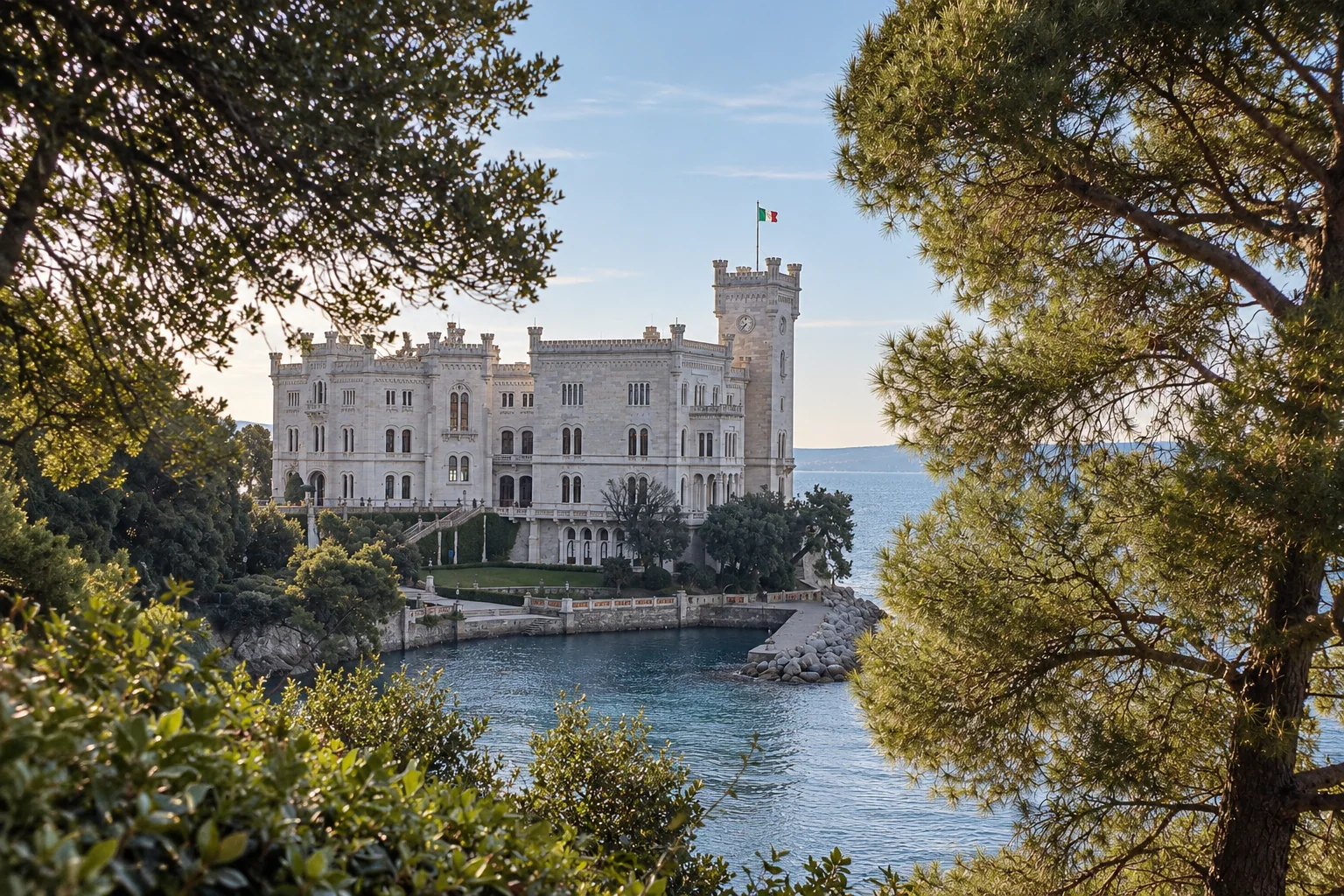
Miramare Castle
An Istrian-stone Habsburg residence on the Gulf of Trieste, set within a historic 22-hectare park.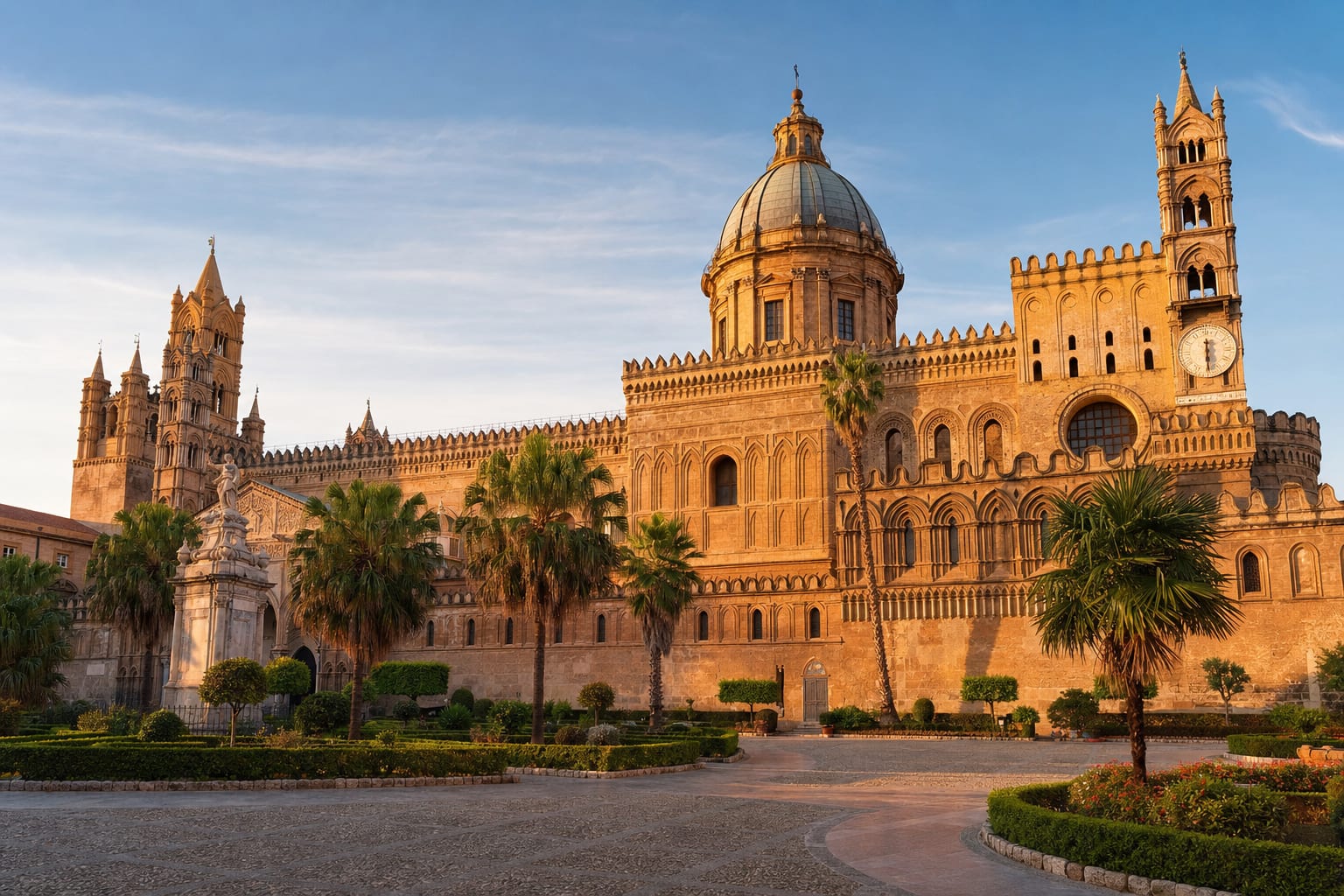
Palermo Cathedral
The Arab-Norman cathedral where Frederick II and other medieval rulers rest in porphyry tombs.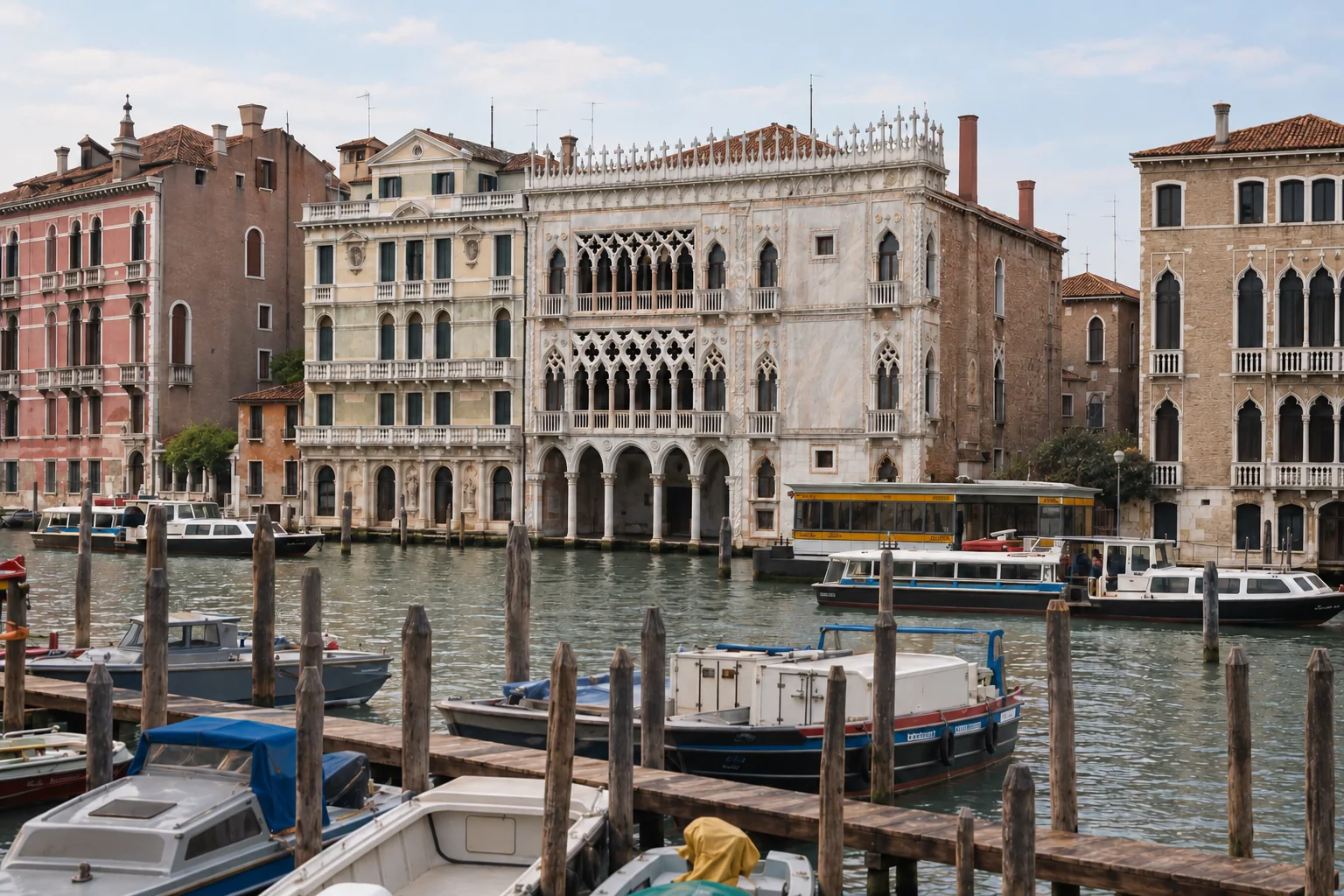
Ca' d'Oro
A Venetian Gothic palace on the Grand Canal, reshaped as Giorgio Franchetti’s museum.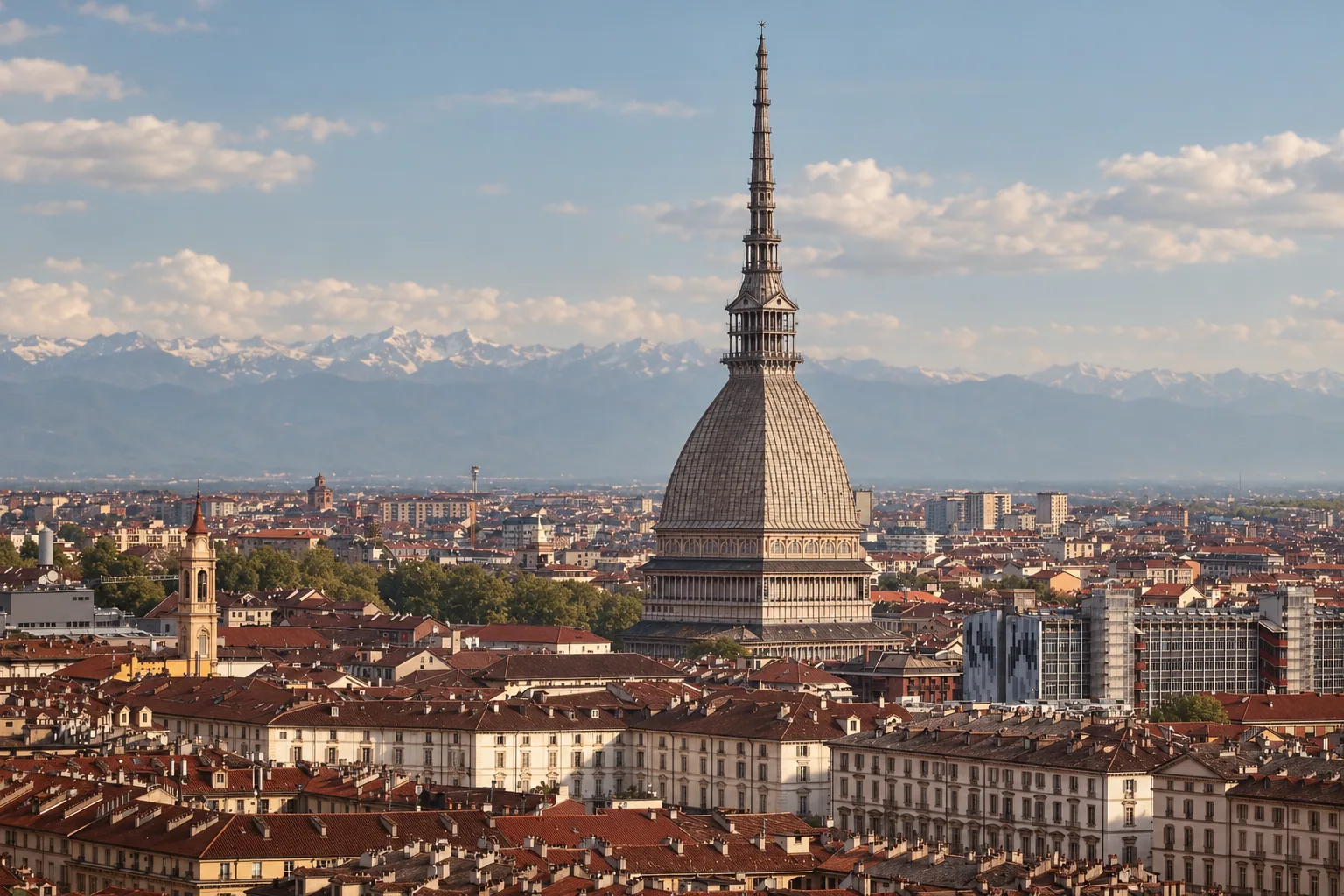
Mole Antonelliana
Turin's tall brick landmark, home to the National Museum of Cinema and a glass elevator to an Alps view.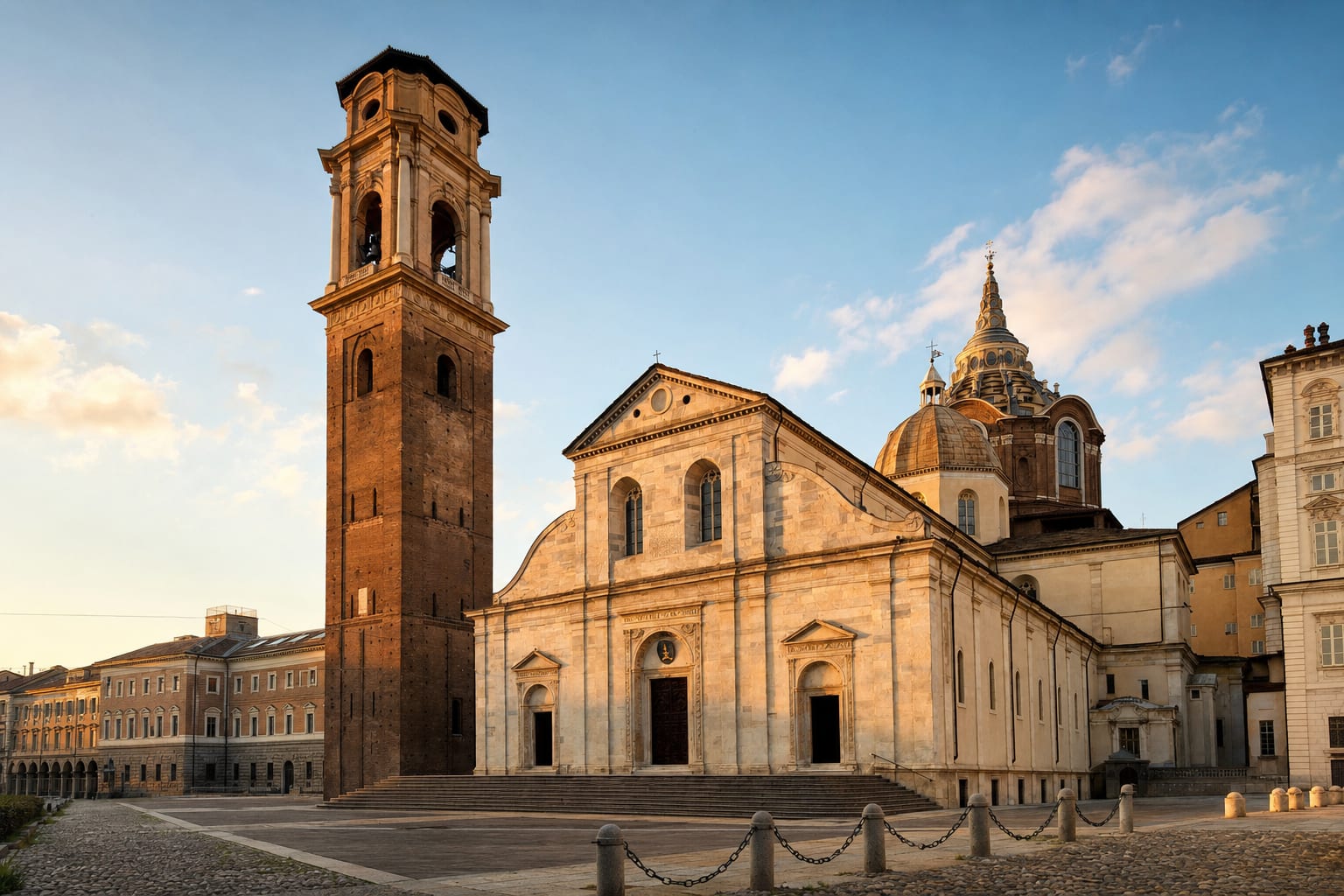
Turin Cathedral
Turin's Renaissance cathedral, home to the closely guarded Holy Shroud and Guarini's Baroque dome chapel.
Castel Nuovo
The Angevin royal fortress of Naples, rebuilt under the Aragonese and now home to the Civic Museum.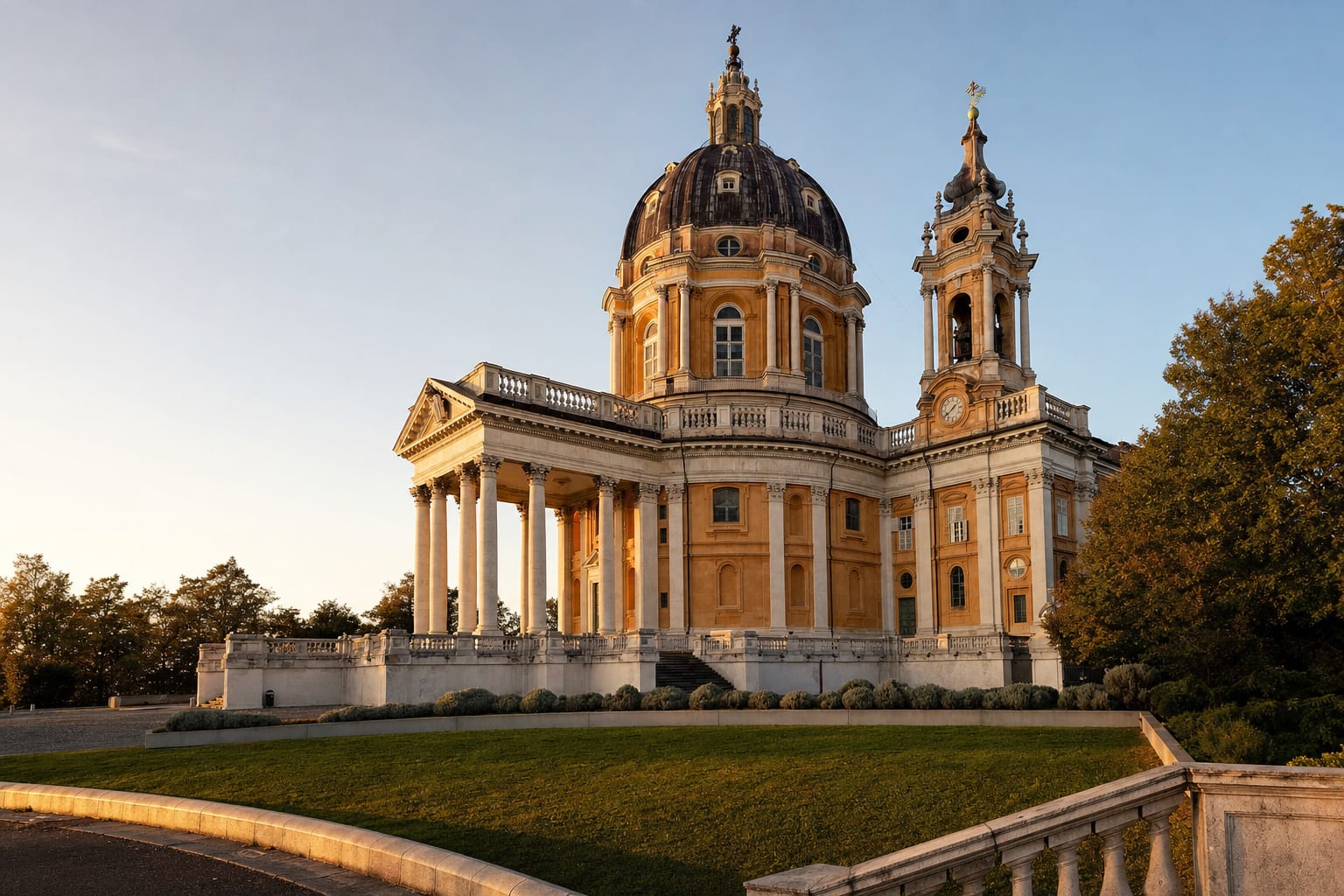
Basilica of Superga
The Savoy votive basilica crowning Turin's eastern hill, and the site of the 1949 Grande Torino disaster.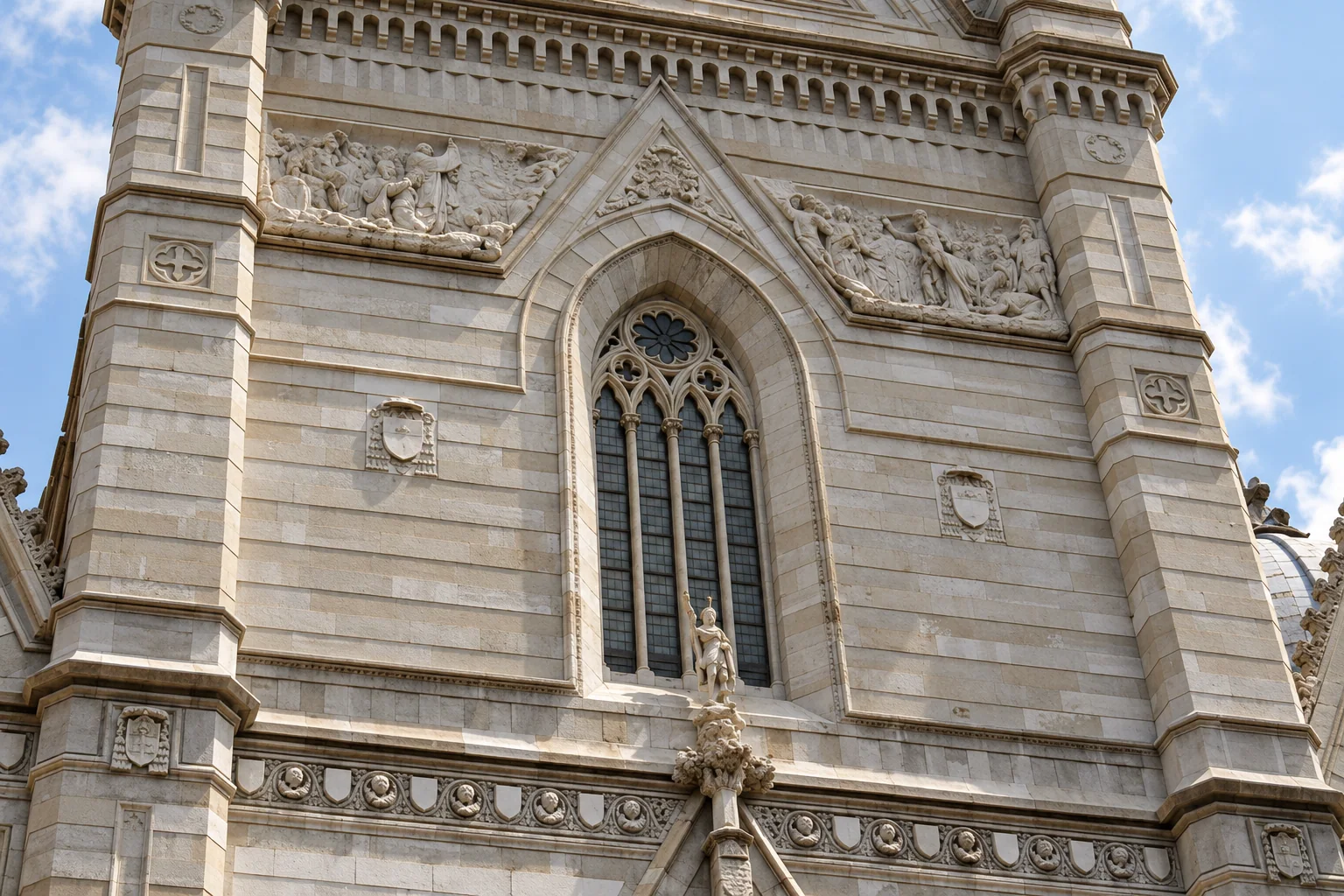
Naples Cathedral
An Angevin cathedral completed in 1313, with the older spaces of Santa Restituta and San Giovanni in Fonte and the devotional heritage of San Gennaro.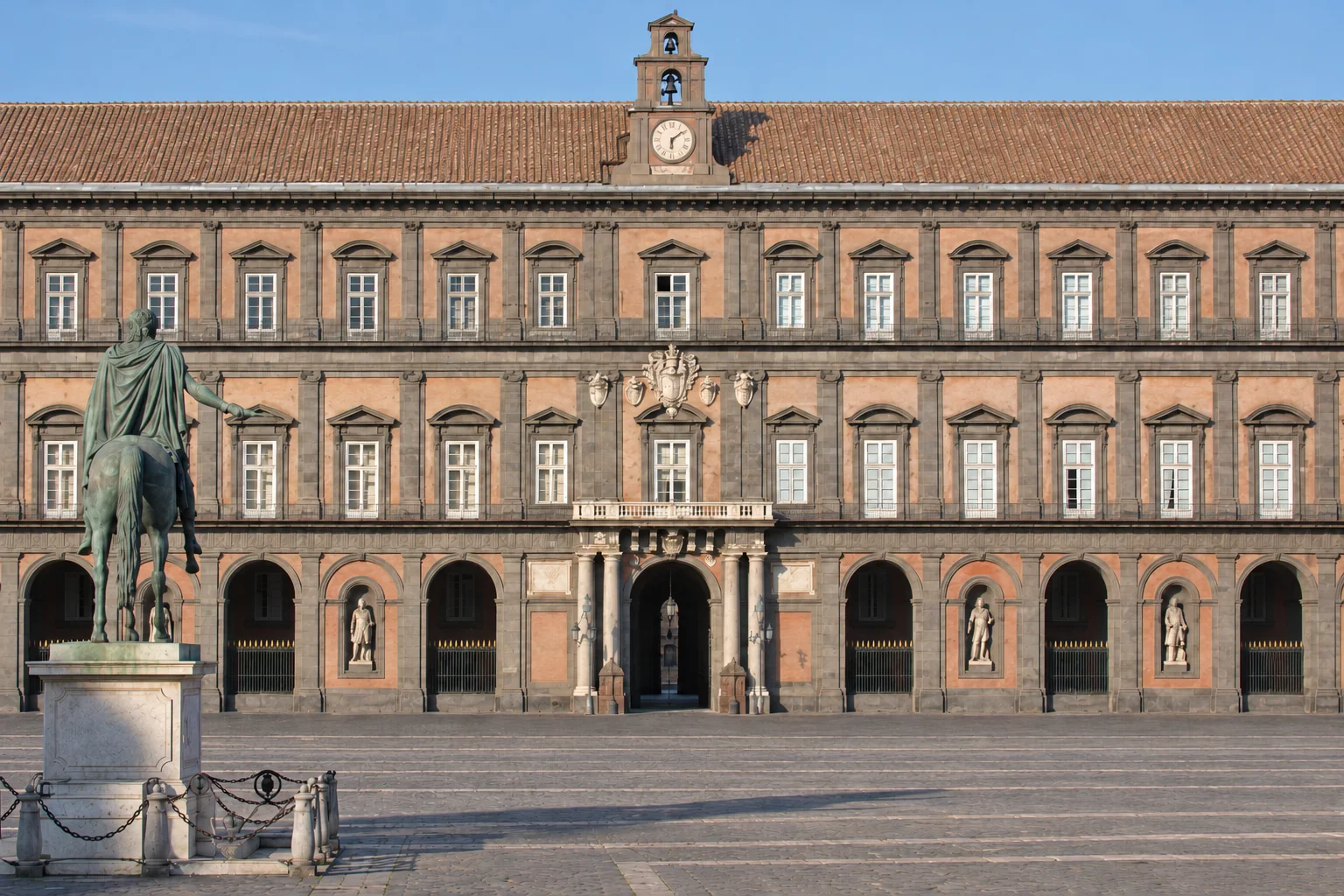
Royal Palace of Naples
Naples' 1600 royal palace on Piazza del Plebiscito, its facade lined with statues of the city's rulers.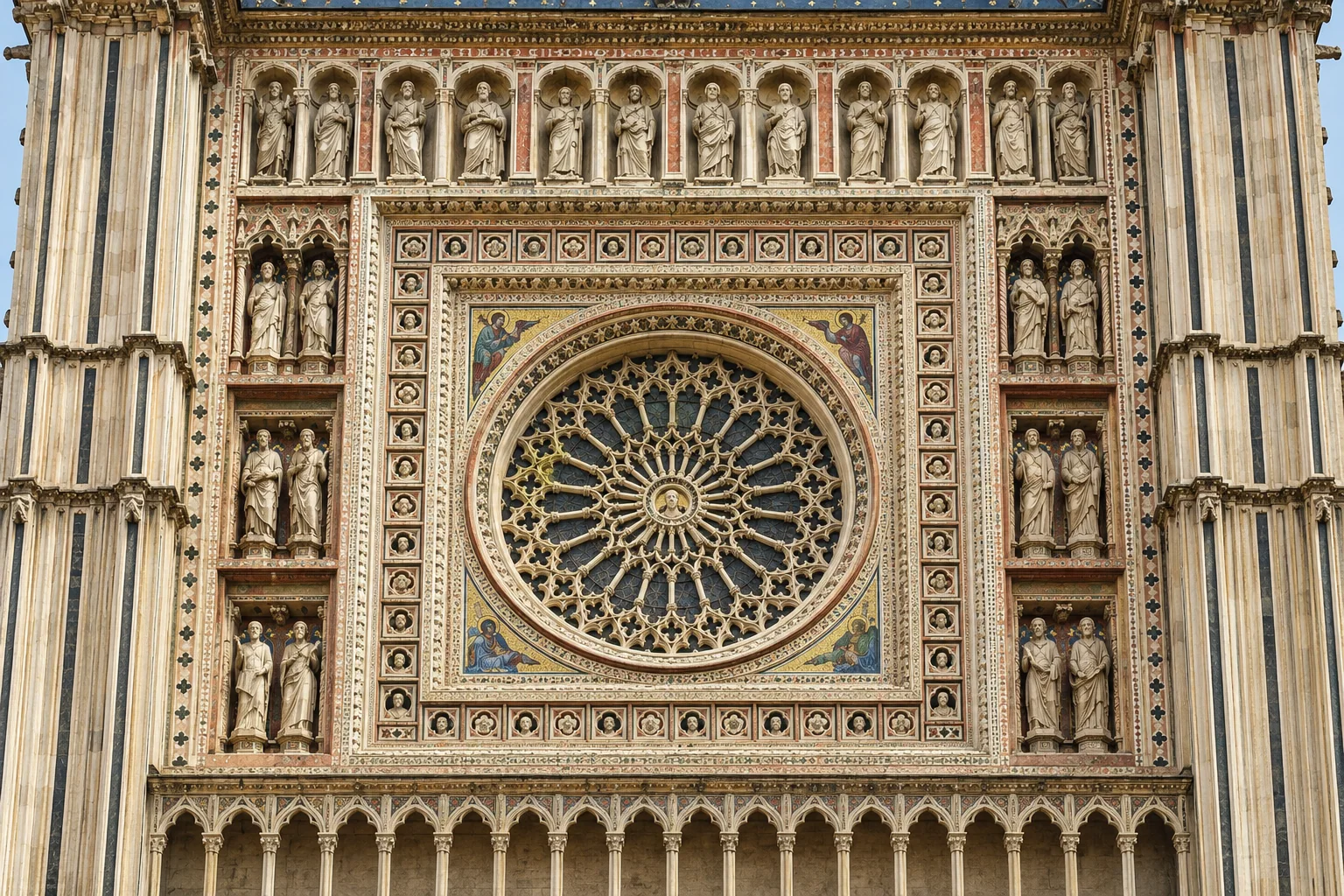
Orvieto Cathedral
A Gothic façade of mosaics and sculpture opens onto a striped nave, Signorelli’s Last Judgment and the Chapel of the Corporal.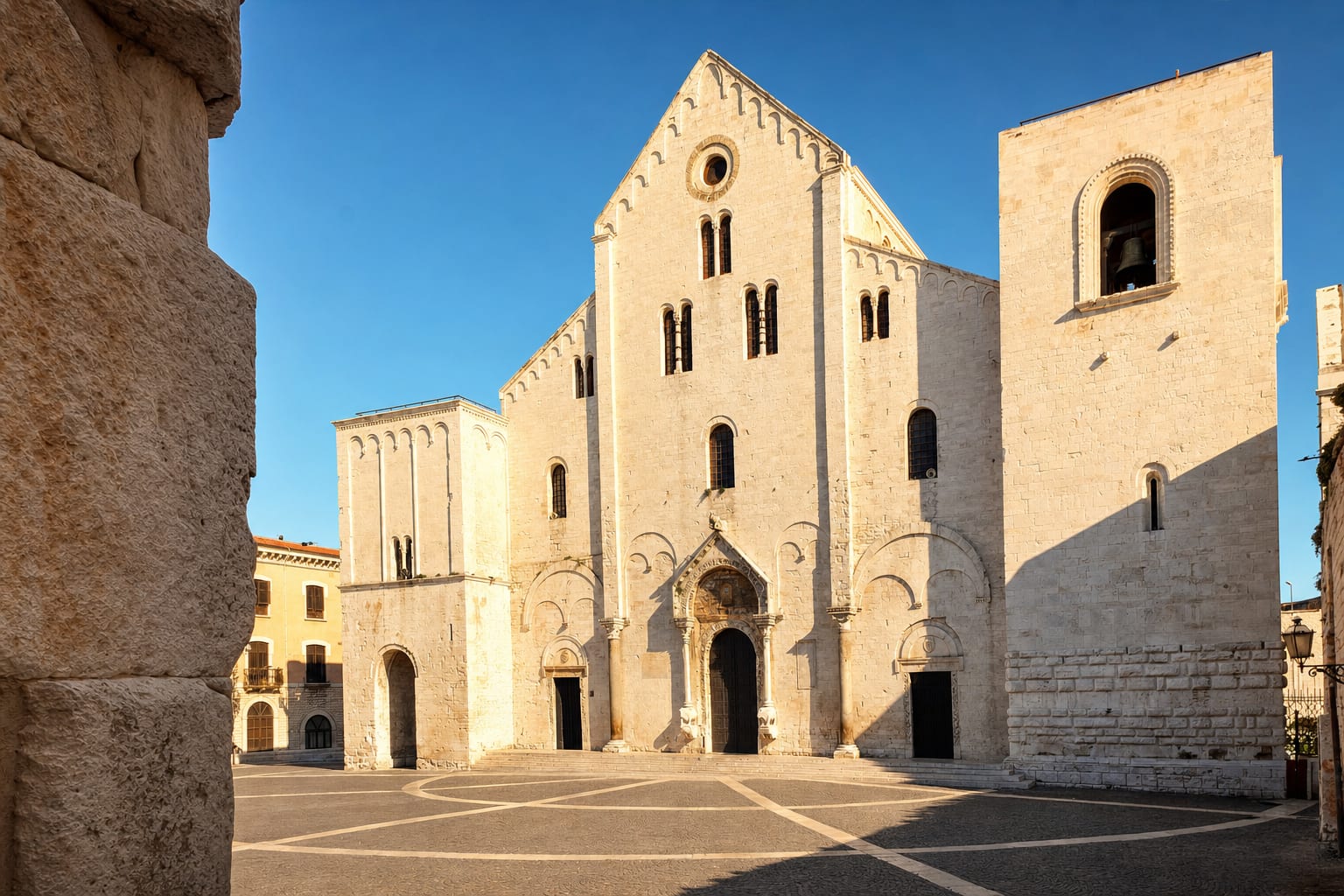
Basilica di San Nicola
The Romanesque basilica built to hold Saint Nicholas's stolen relics, shared by two churches.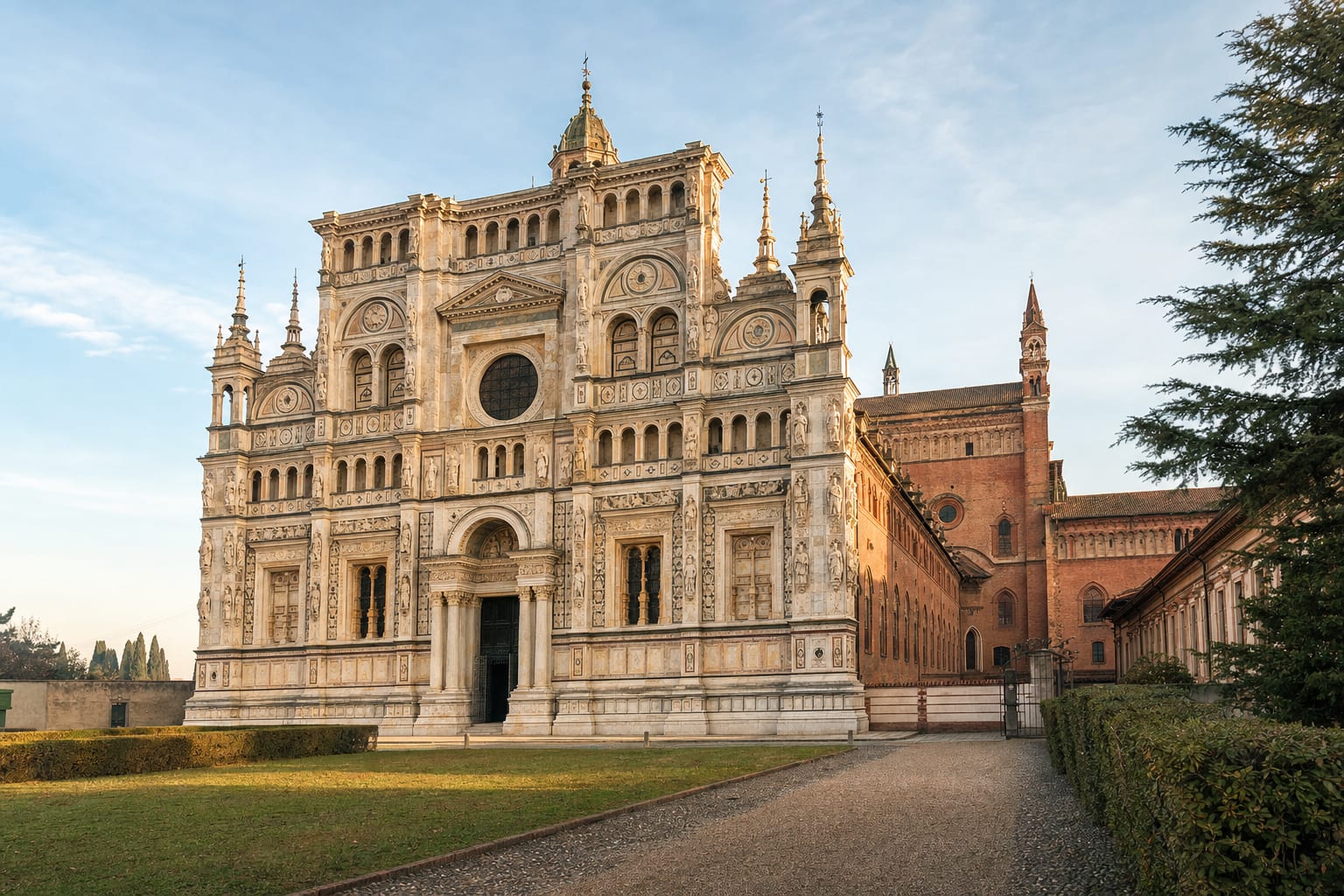
Certosa di Pavia
The Visconti's marble charterhouse mausoleum, still home to a community of Cistercian monks.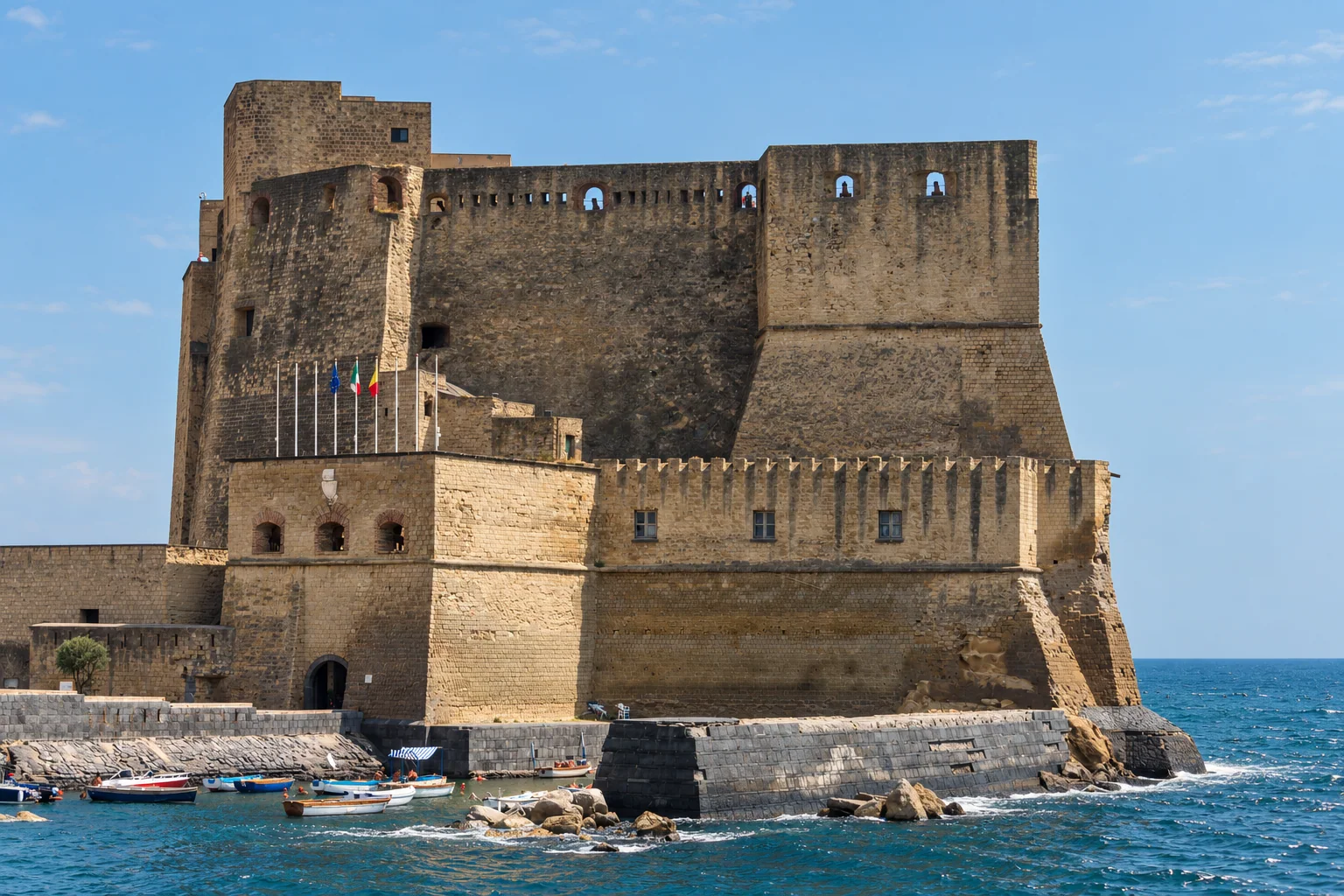
Castel dell'Ovo
Naples’ oldest castle rises from Megaride, where Greek and Roman landscapes meet the layered history of a Norman-era fortress on the bay.
Palatine Chapel
The Norman kings' private chapel, where Byzantine, Arab, and Latin art share one small room.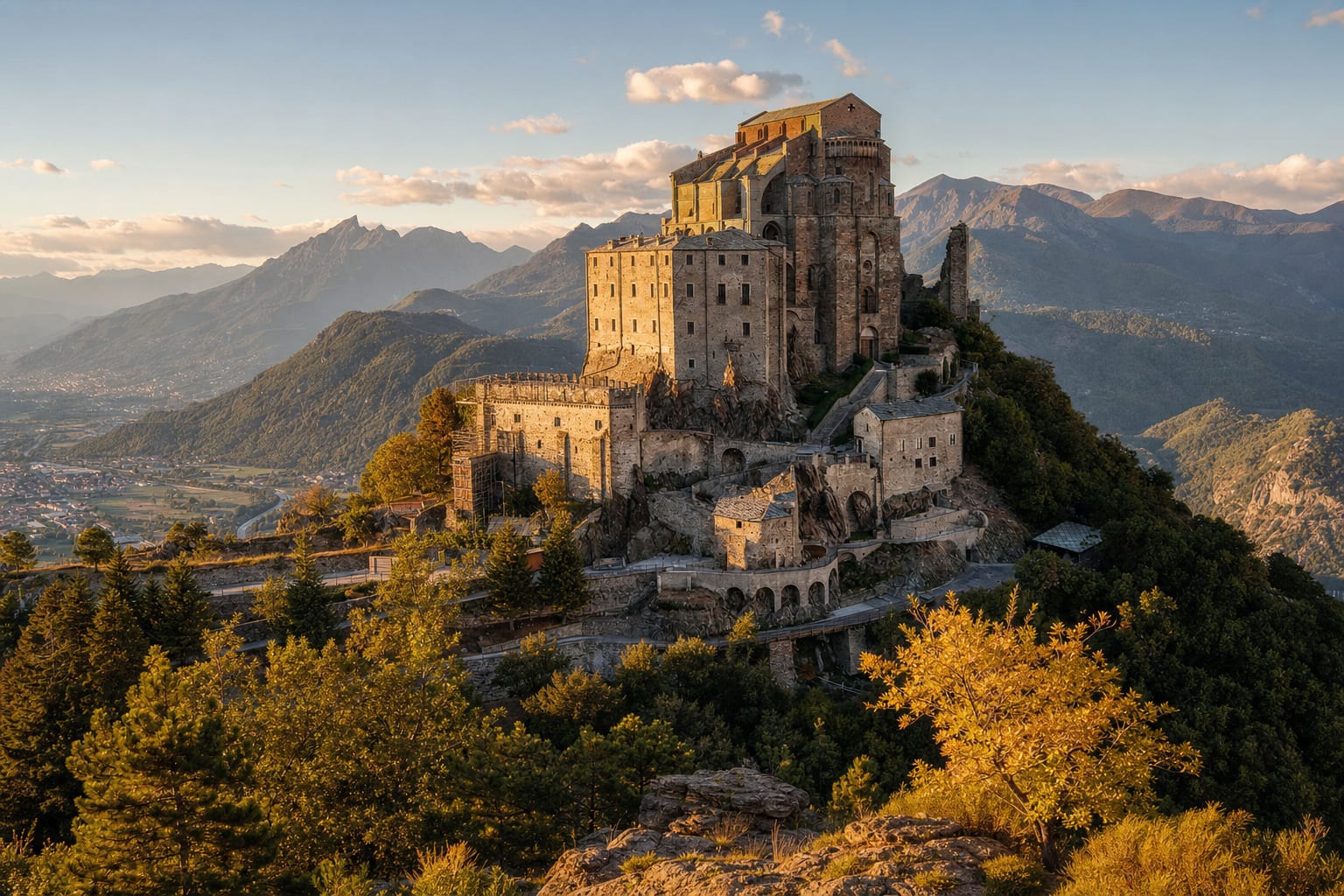
Sacra di San Michele
The thousand-year-old abbey on Mount Pirchiriano, symbol of Piedmont.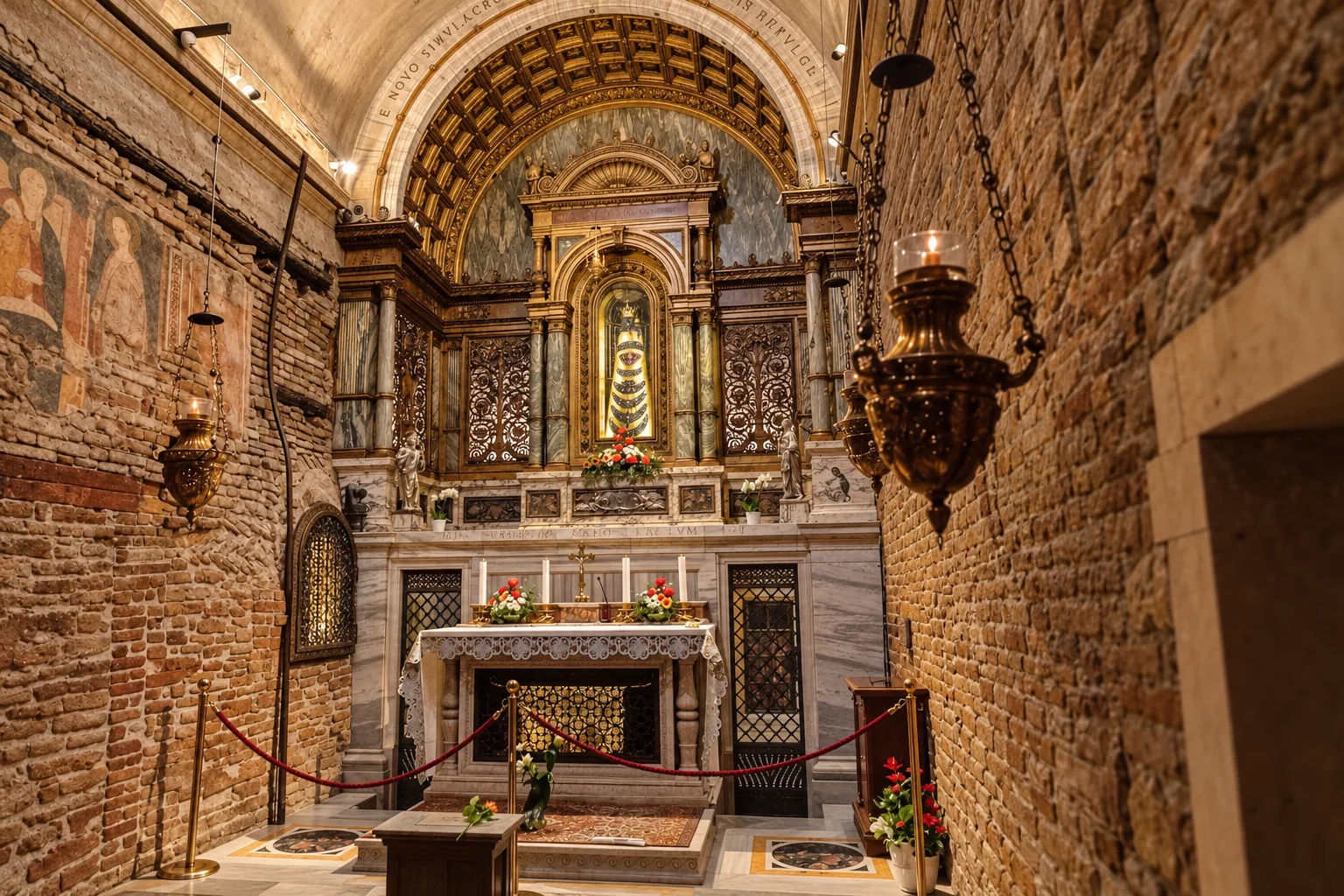
Basilica della Santa Casa
The hilltop basilica enclosing the Holy House tradition says angels carried from Nazareth.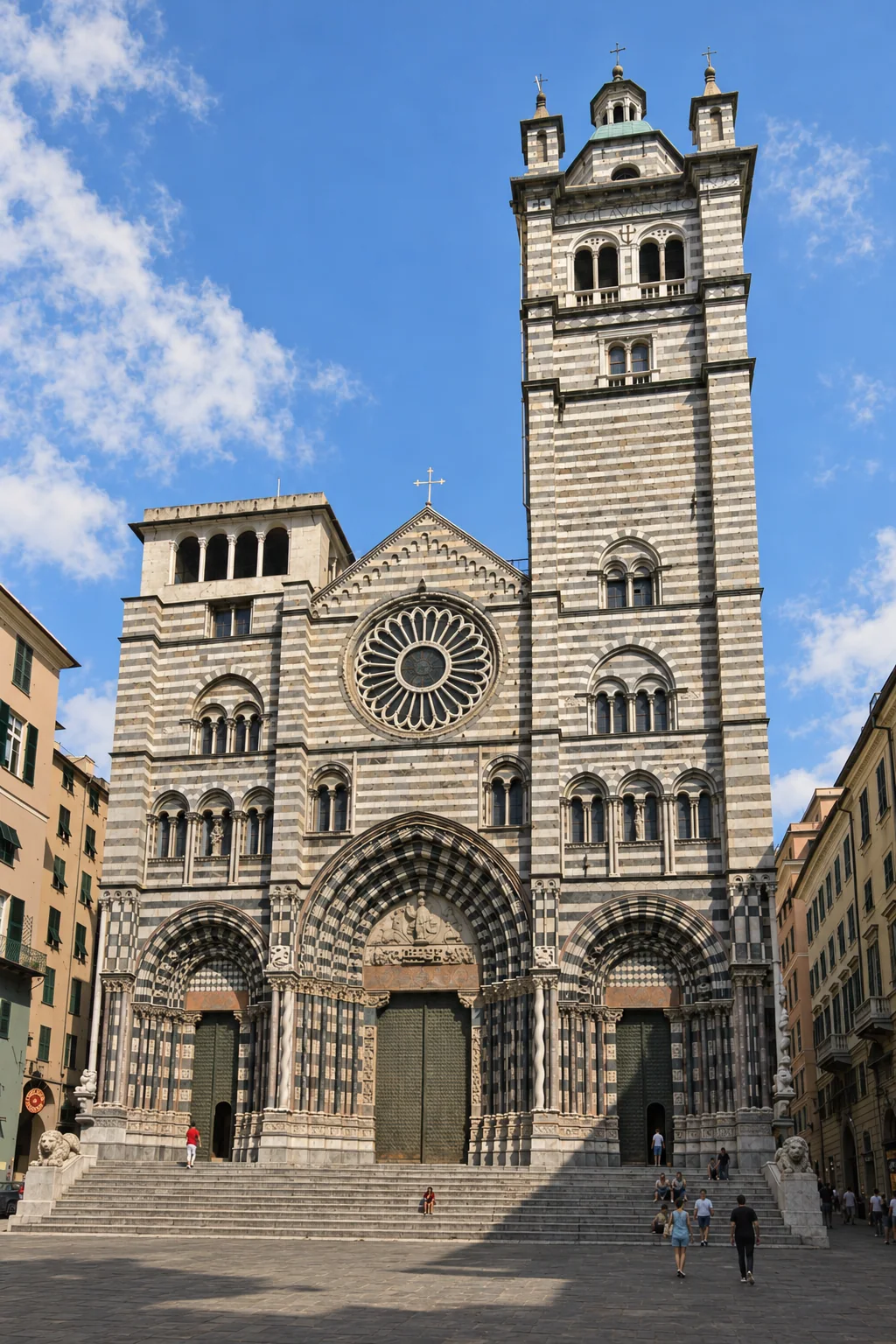
Genoa Cathedral
Consecrated in 1118, San Lorenzo layers Romanesque side portals, an unfinished Gothic façade of colored stone, and a separately ticketed Treasury Museum.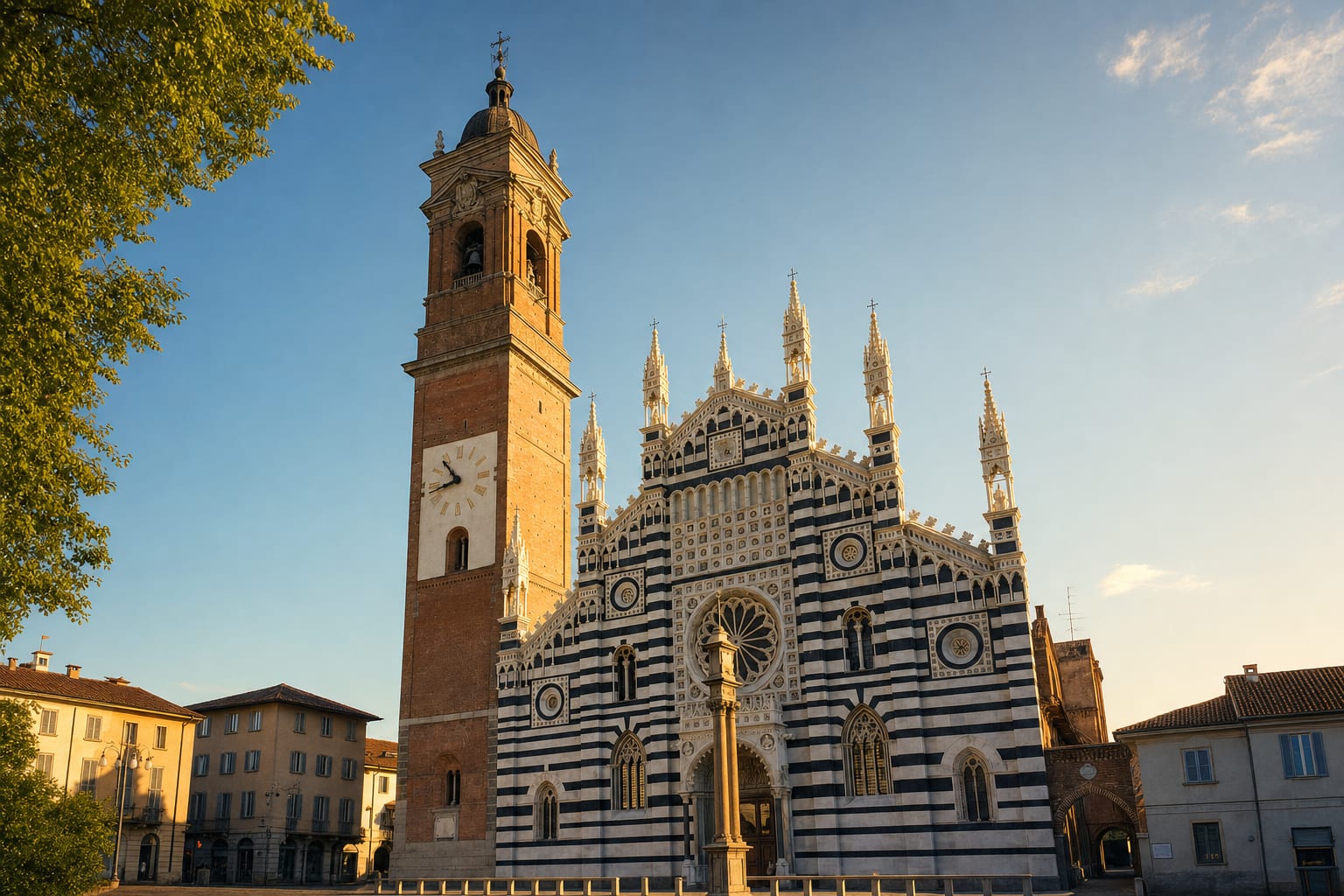
Monza Cathedral
The cathedral guarding the Iron Crown, used to crown kings from Charlemagne to Napoleon.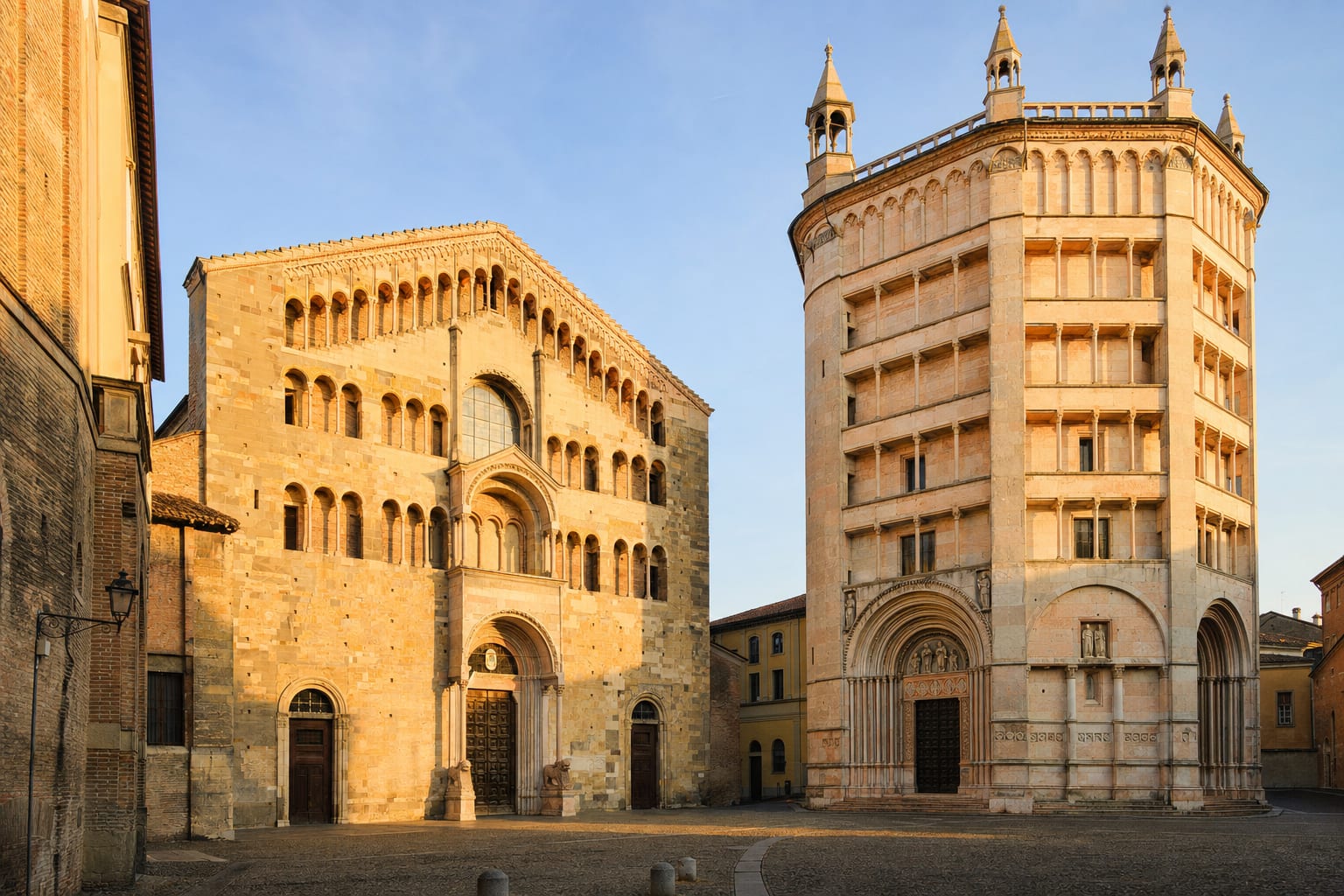
Parma Cathedral and Baptistery
Parma's Romanesque duo: Correggio's swirling dome fresco and Antelami's carved pink-marble Baptistery.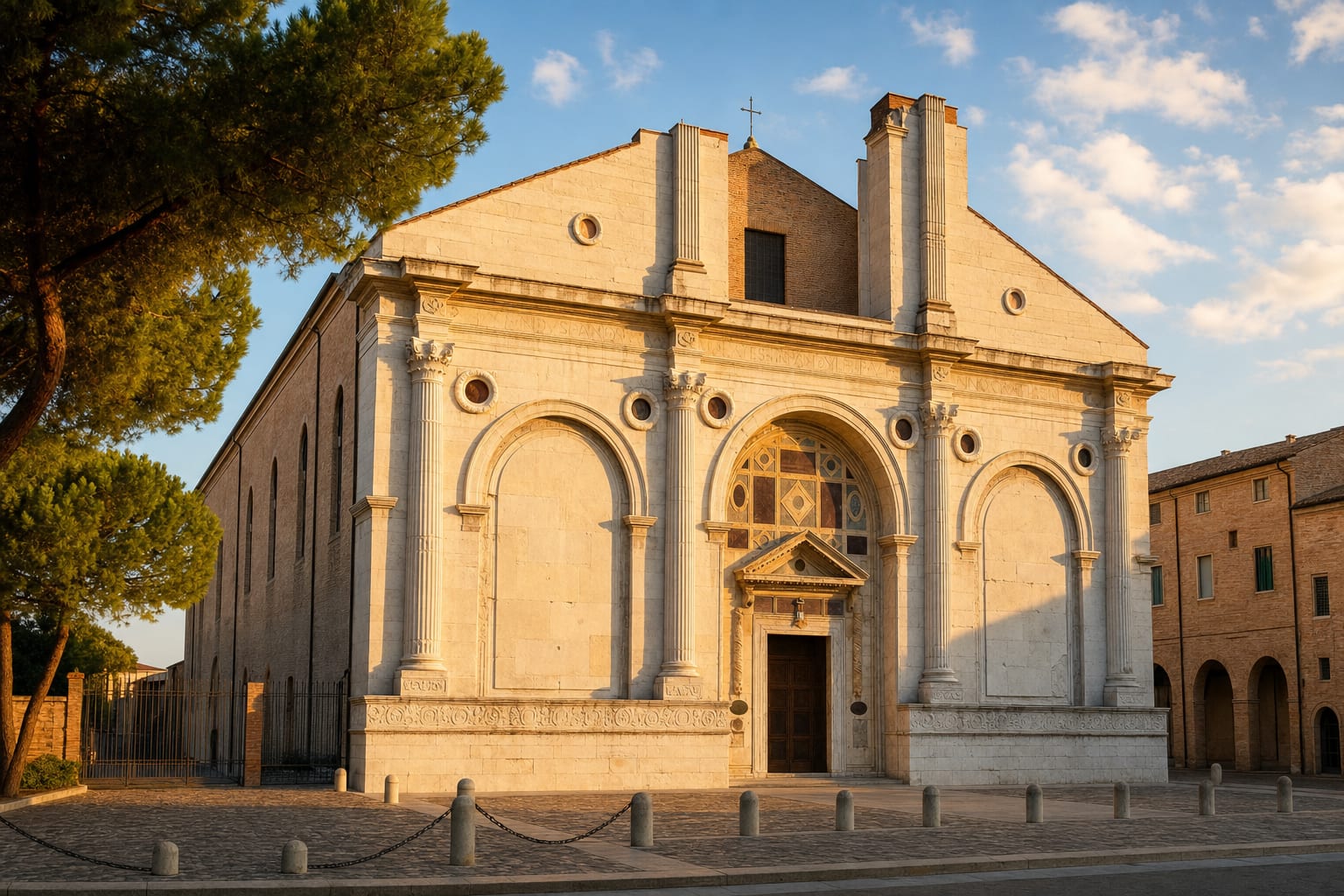
Tempio Malatestiano
Alberti's unfinished Renaissance temple for Rimini's magnificent, excommunicated tyrant Sigismondo Malatesta.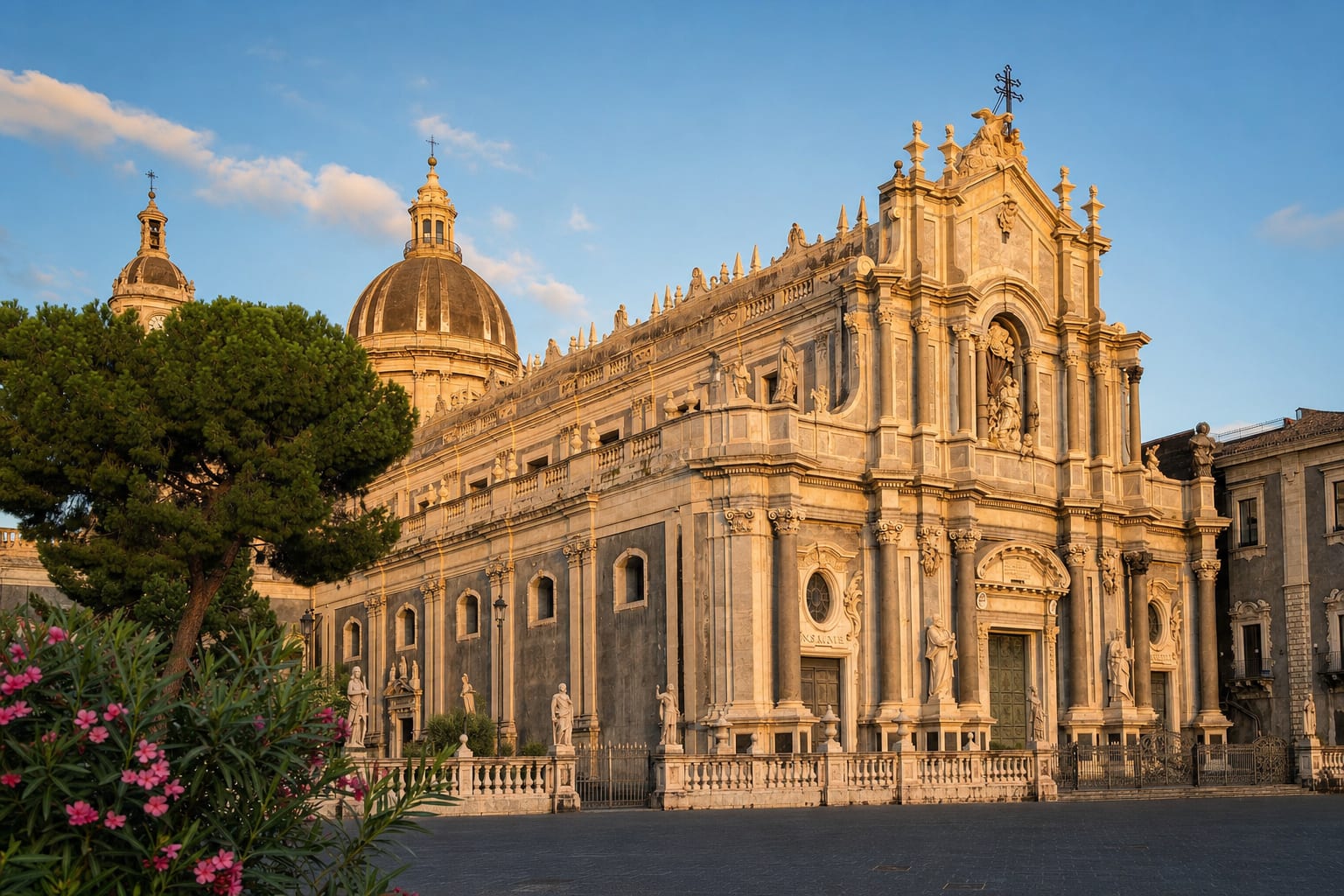
Catania Cathedral
The lava-and-limestone cathedral of Saint Agatha, rebuilt after 1693, with Bellini's tomb inside.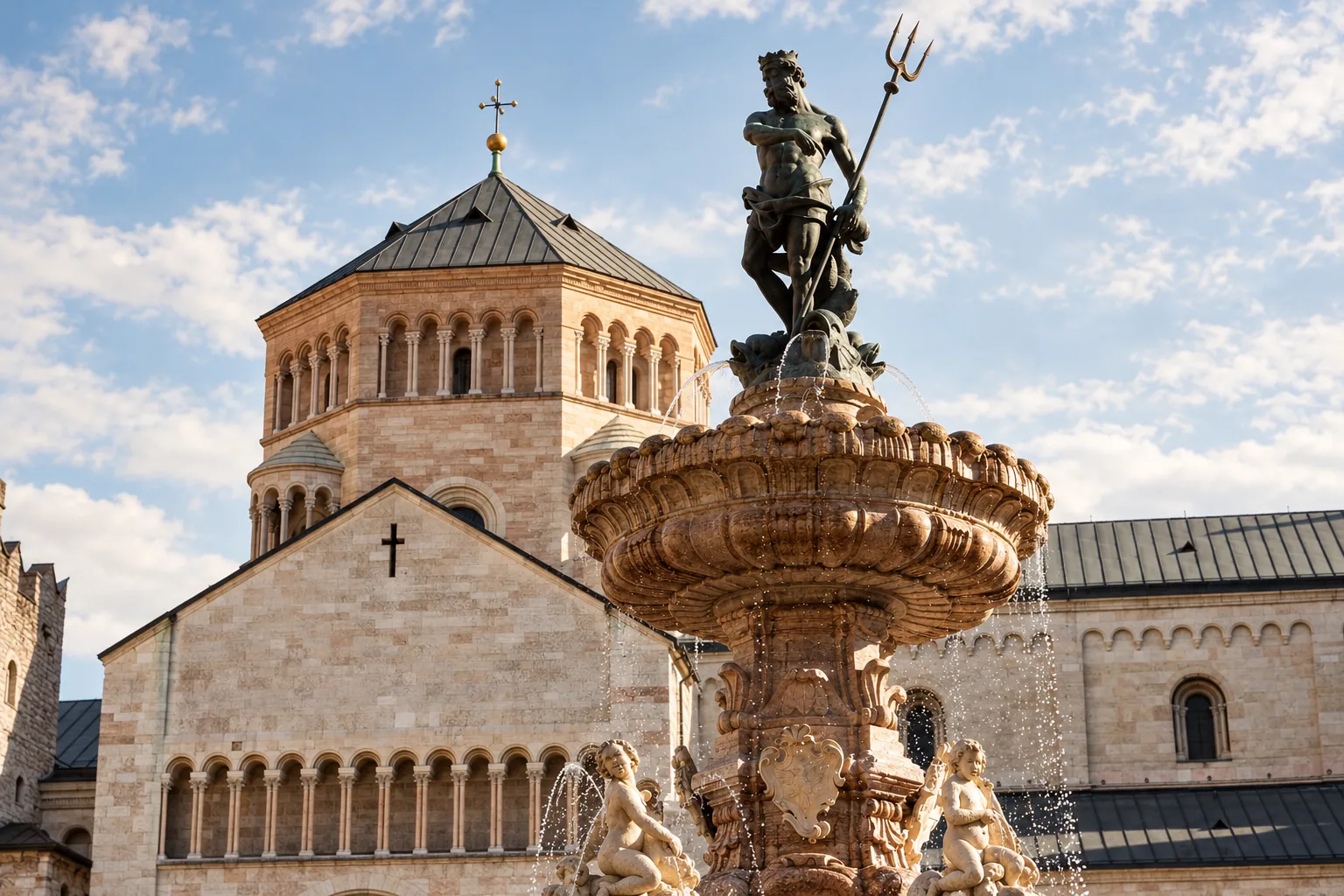
Trento Cathedral
The Romanesque-Gothic cathedral where the Council of Trent met, on Trento's frescoed Piazza Duomo.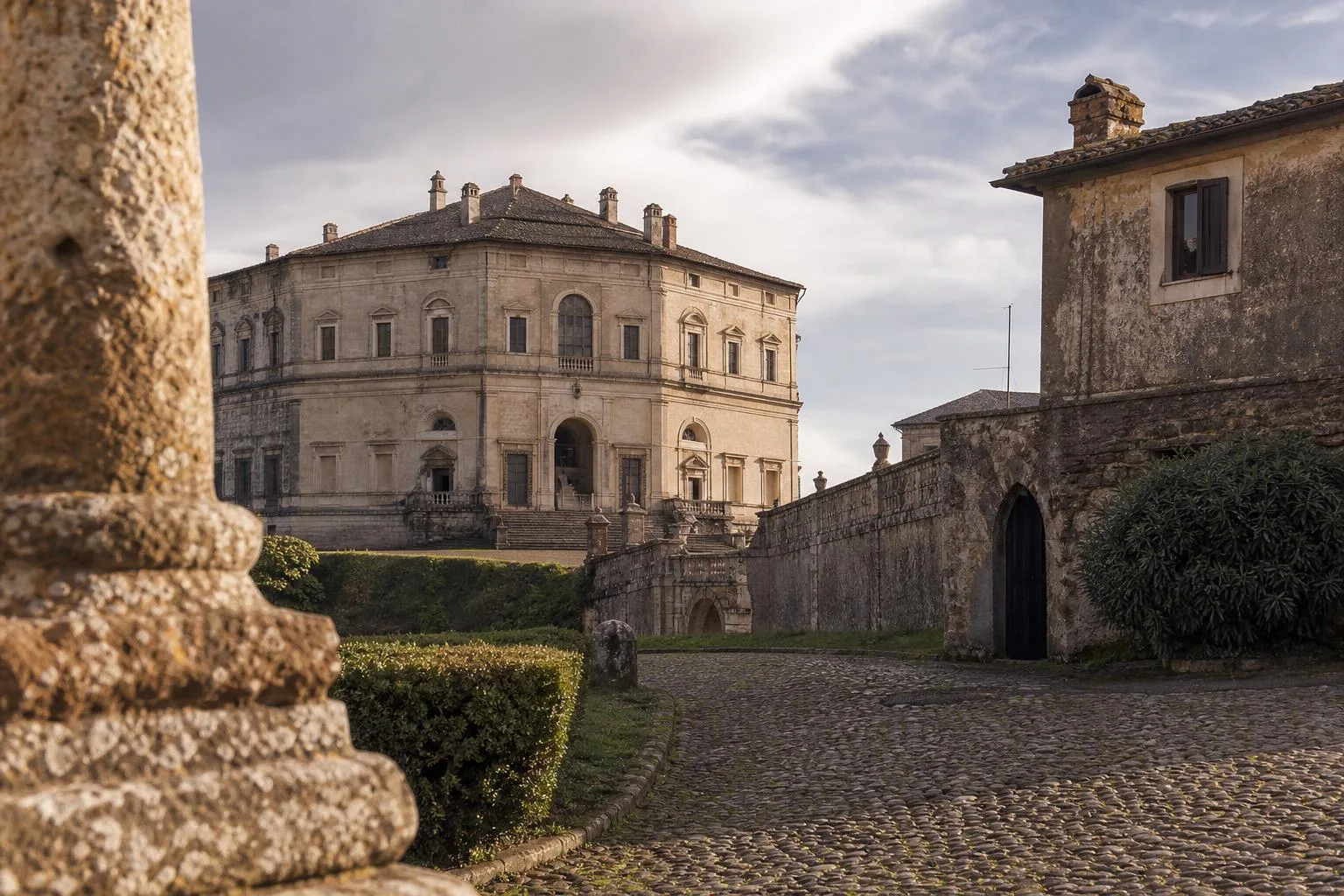
Villa Farnese
A pentagonal Renaissance-Mannerist villa by Vignola, with the spiral Scala Regia and Zuccari frescoes, owned by the state.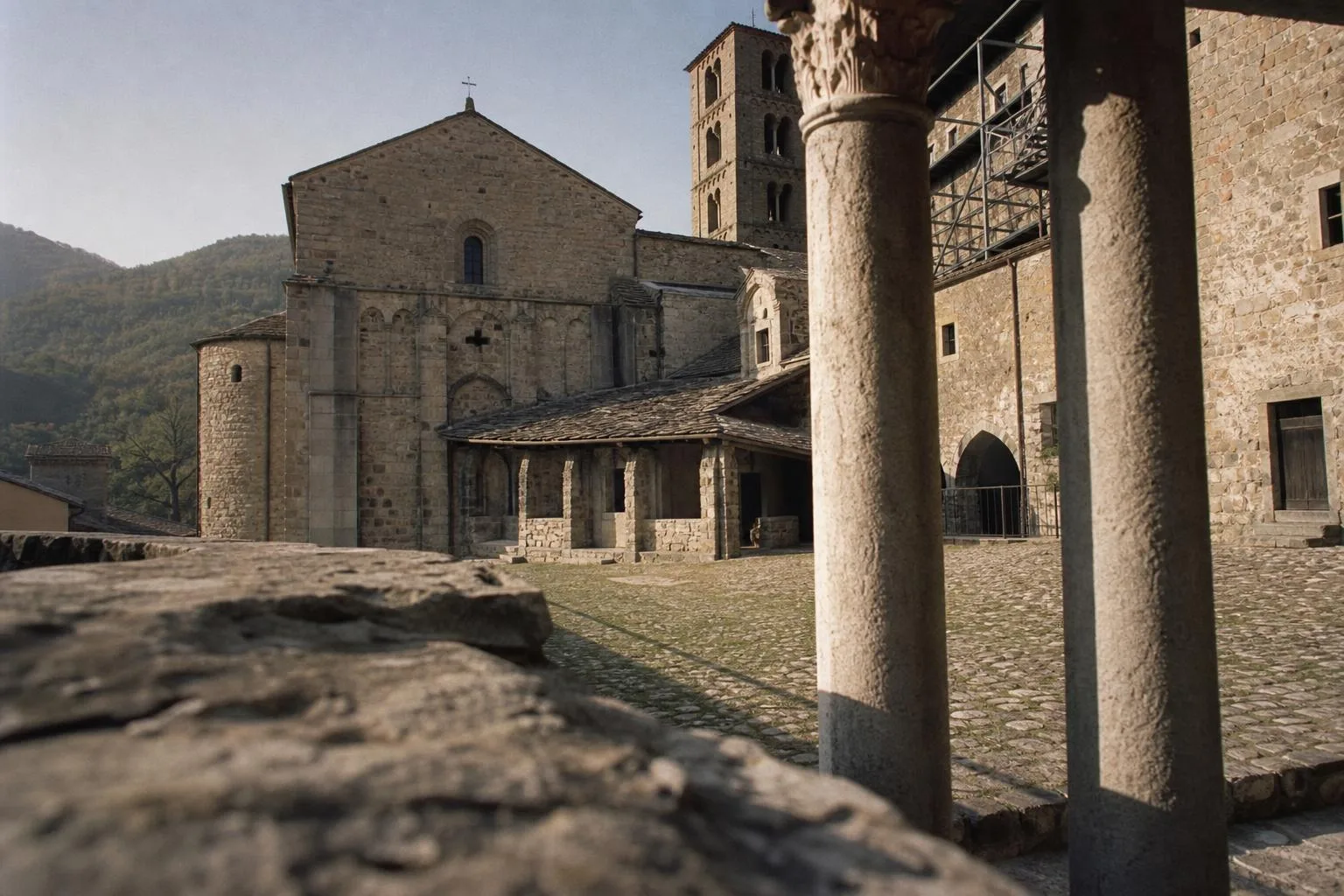
Bobbio Abbey
An Irish-founded abbey of 614 with a medieval library, a Renaissance basilica and a twelfth-century crypt mosaic.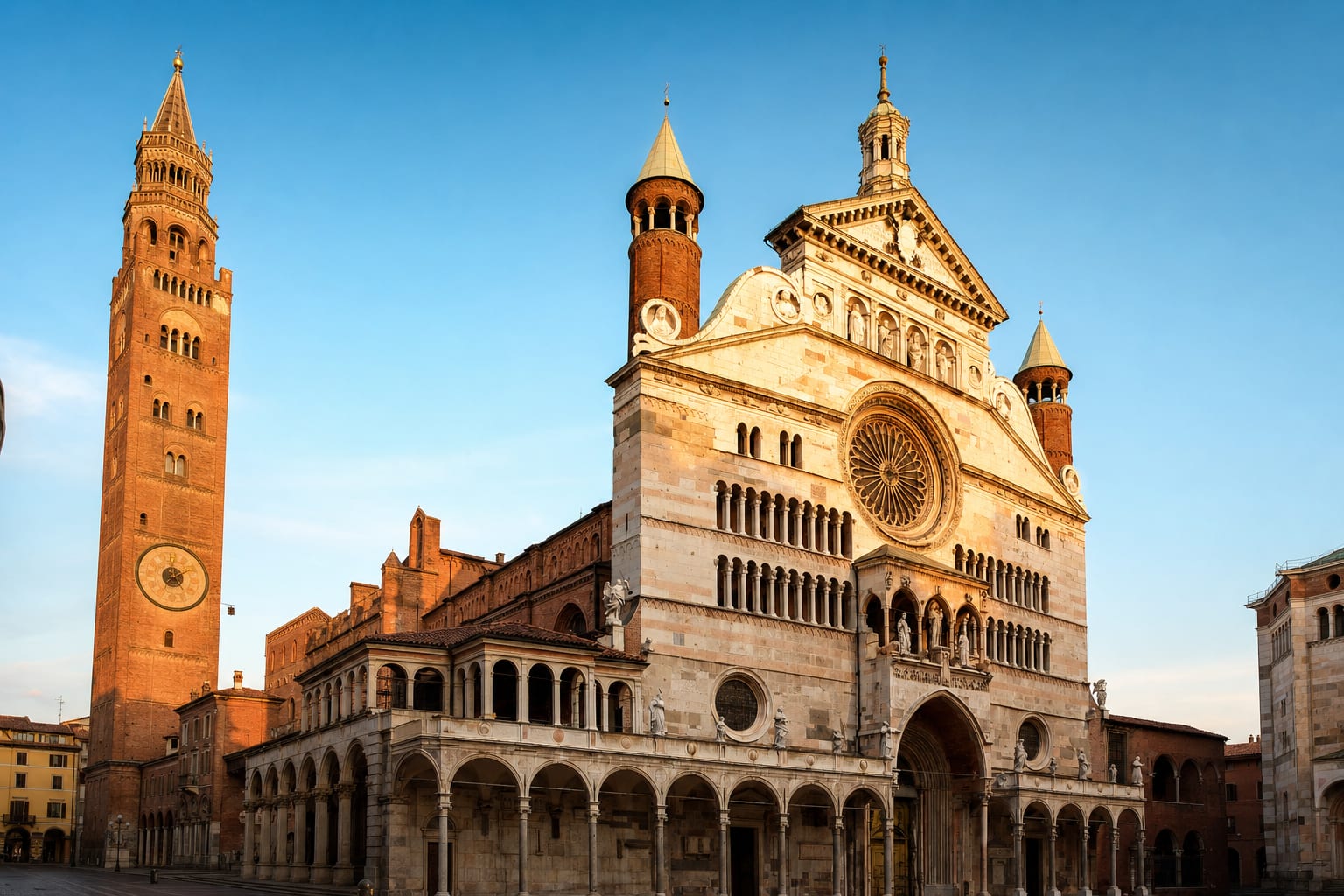
Cremona Cathedral and Torrazzo
Cremona's cathedral beside the Torrazzo, Italy's tallest historic brick tower, with its astronomical clock.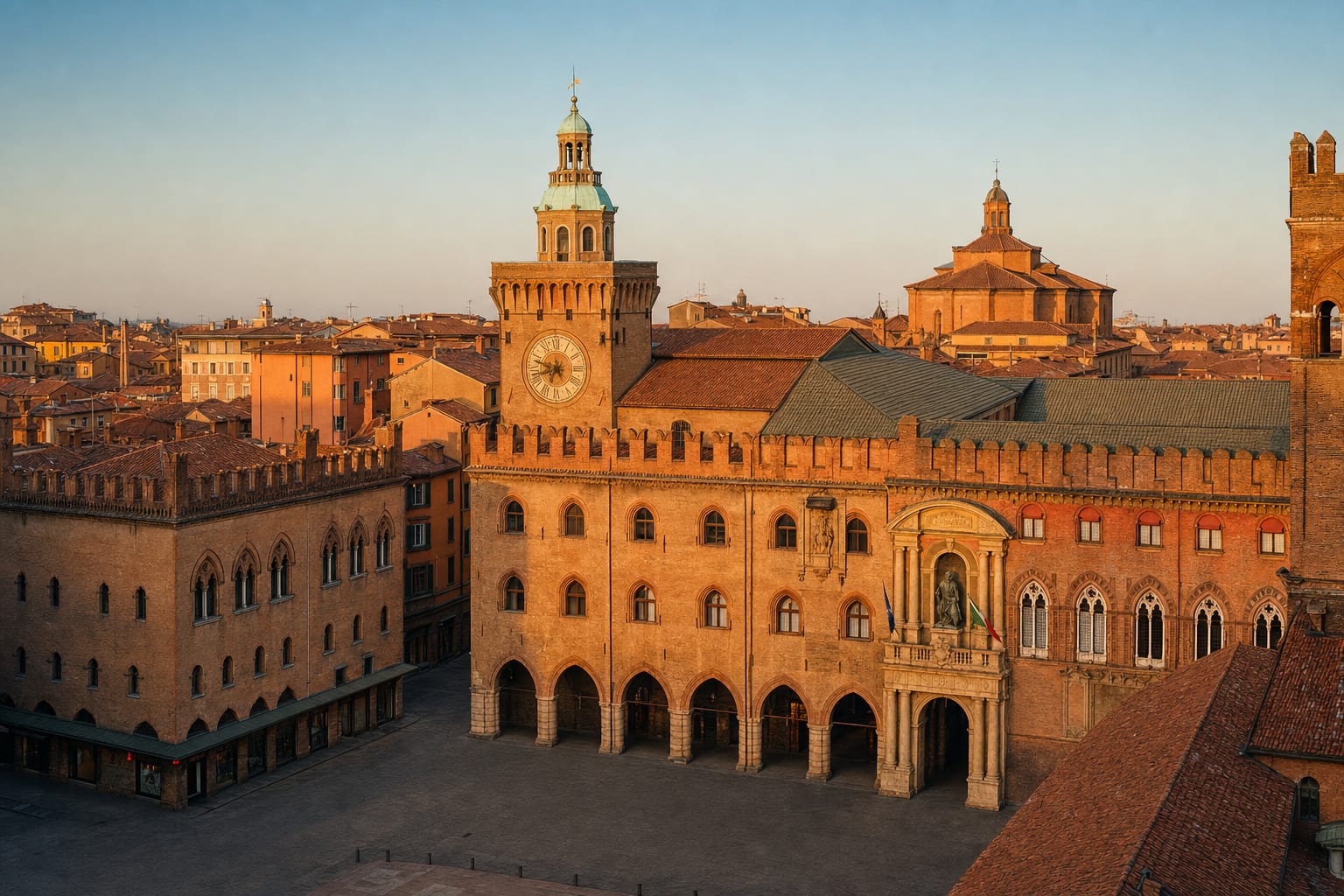
Piazza Maggiore
Bologna's civic stage beneath San Petronio's unfinished front and Giambologna's Neptune.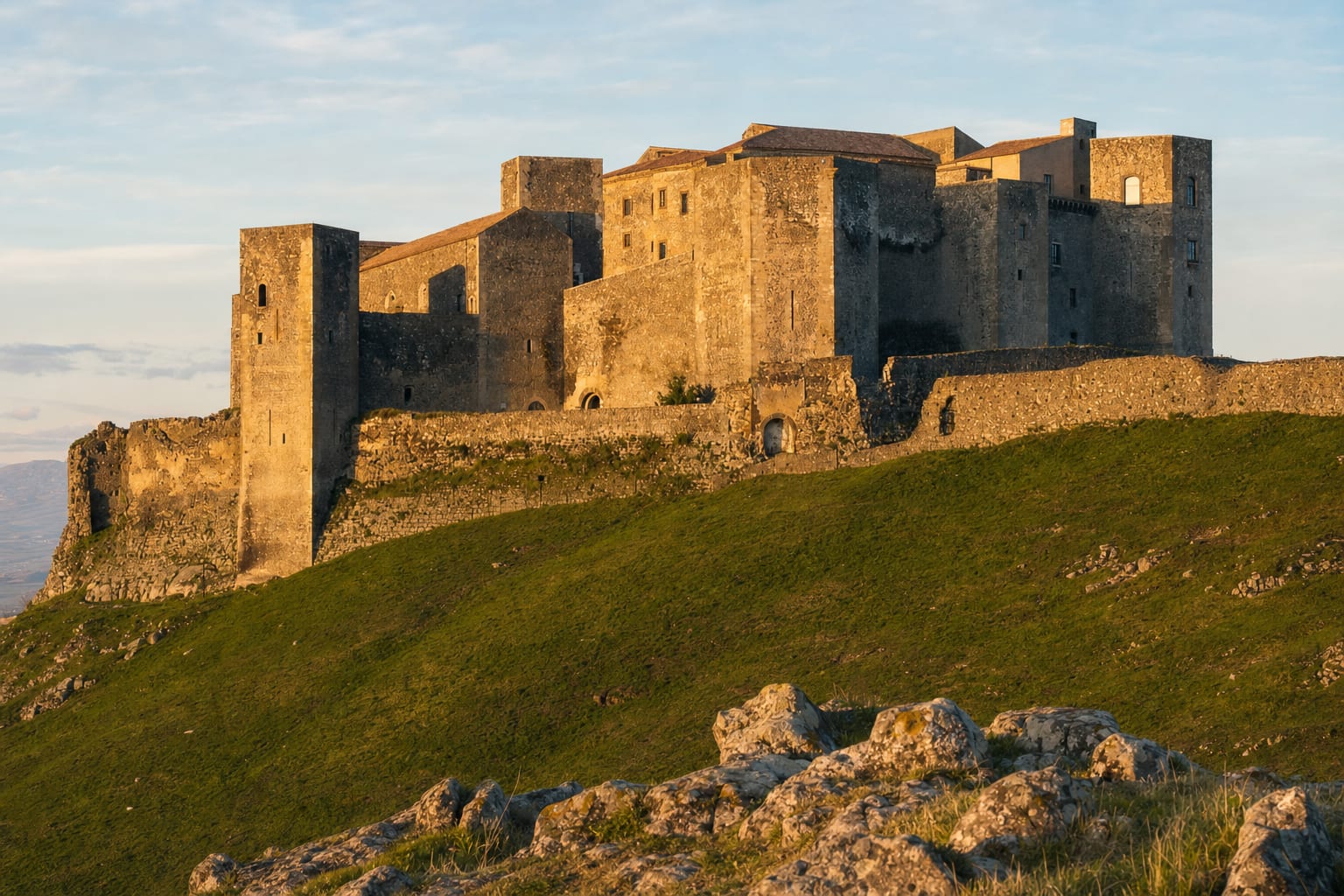
Melfi Castle
A Norman-Swabian fortress with ten towers, where Frederick II issued the Constitutions of Melfi and now a national museum.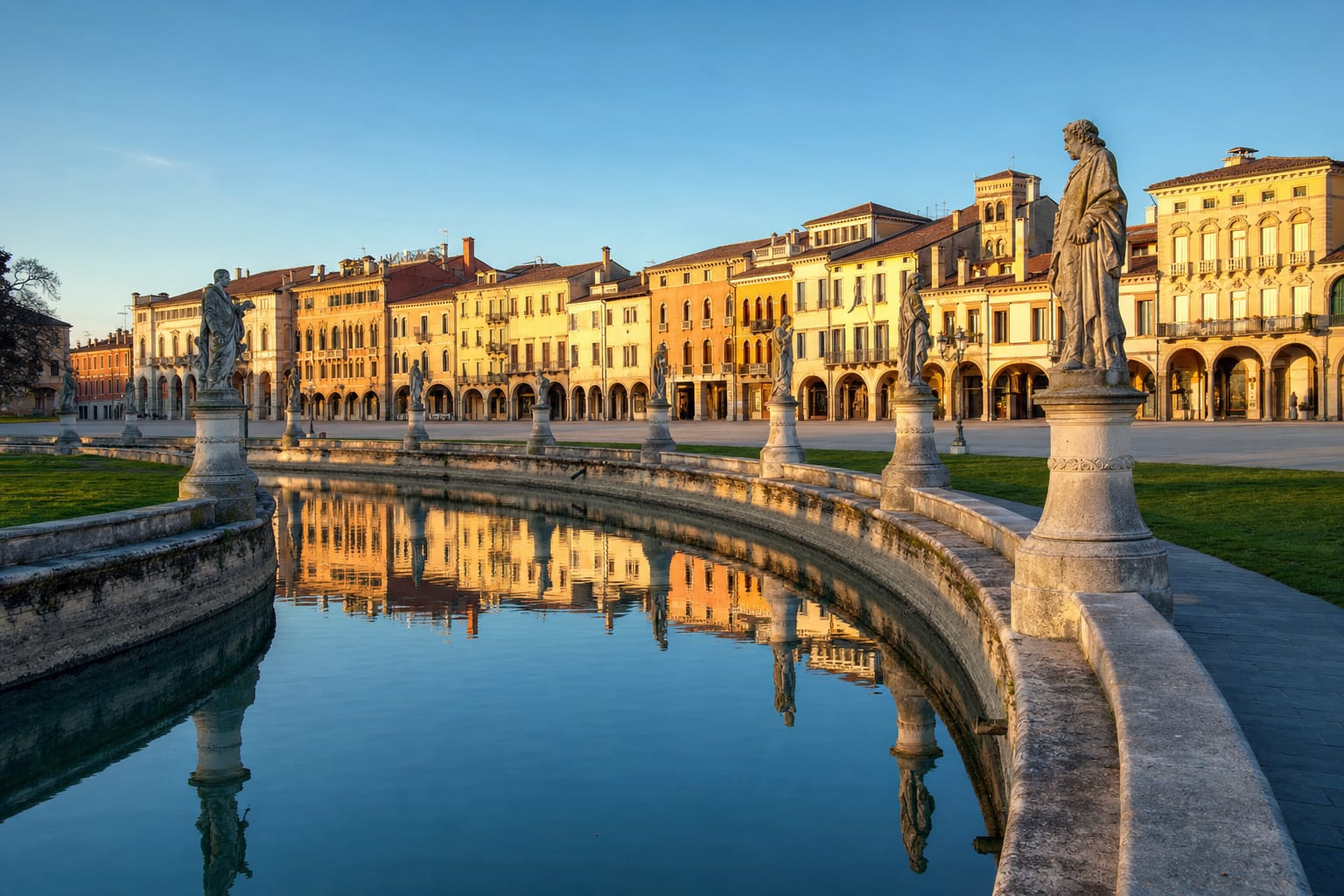
Prato della Valle
Padua's statue-ringed ellipse, among the largest squares in Italy and Europe.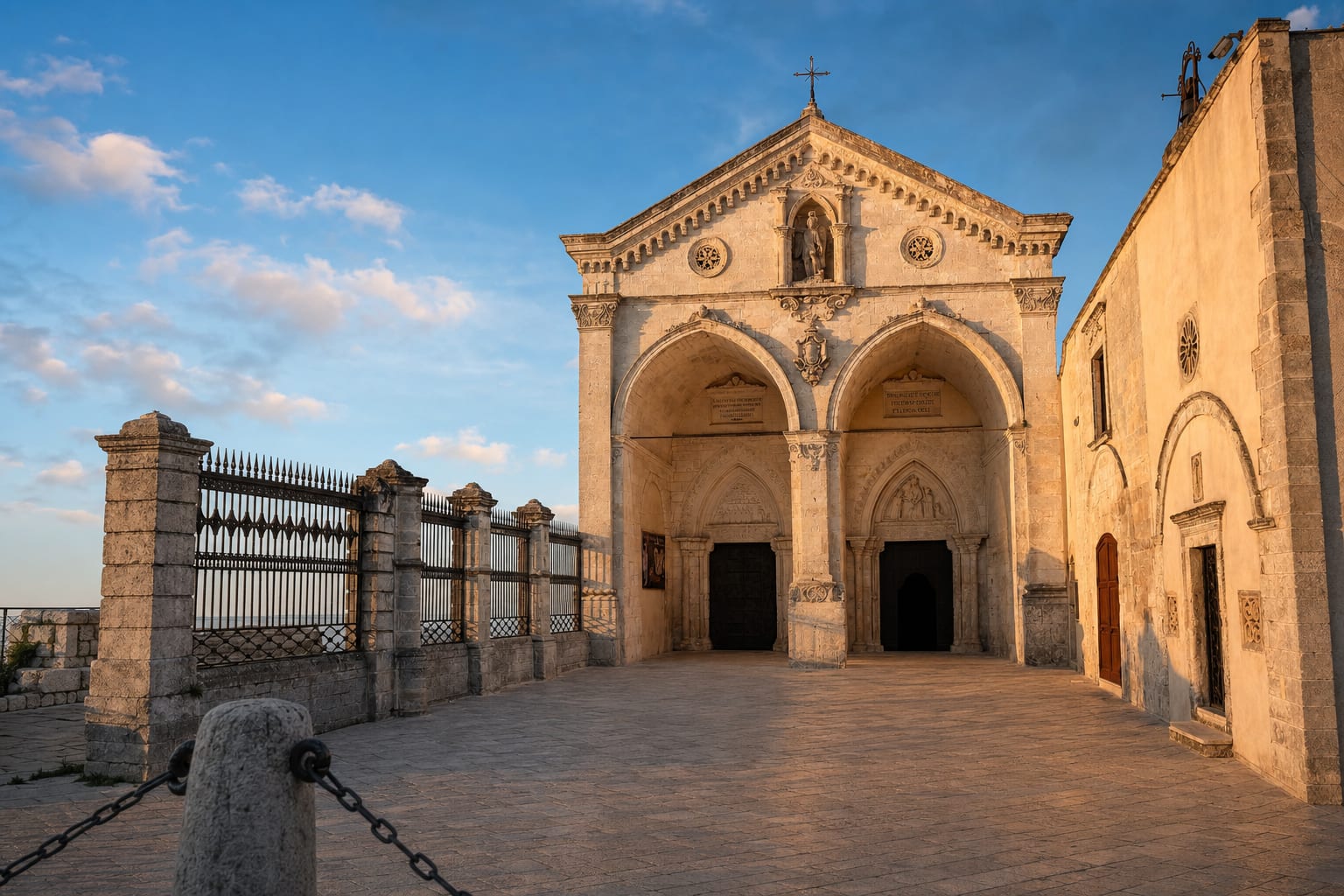
Sanctuary of Monte Sant'Angelo
The archangel's cave shrine on Monte Gargano, goal of fifteen centuries of pilgrims.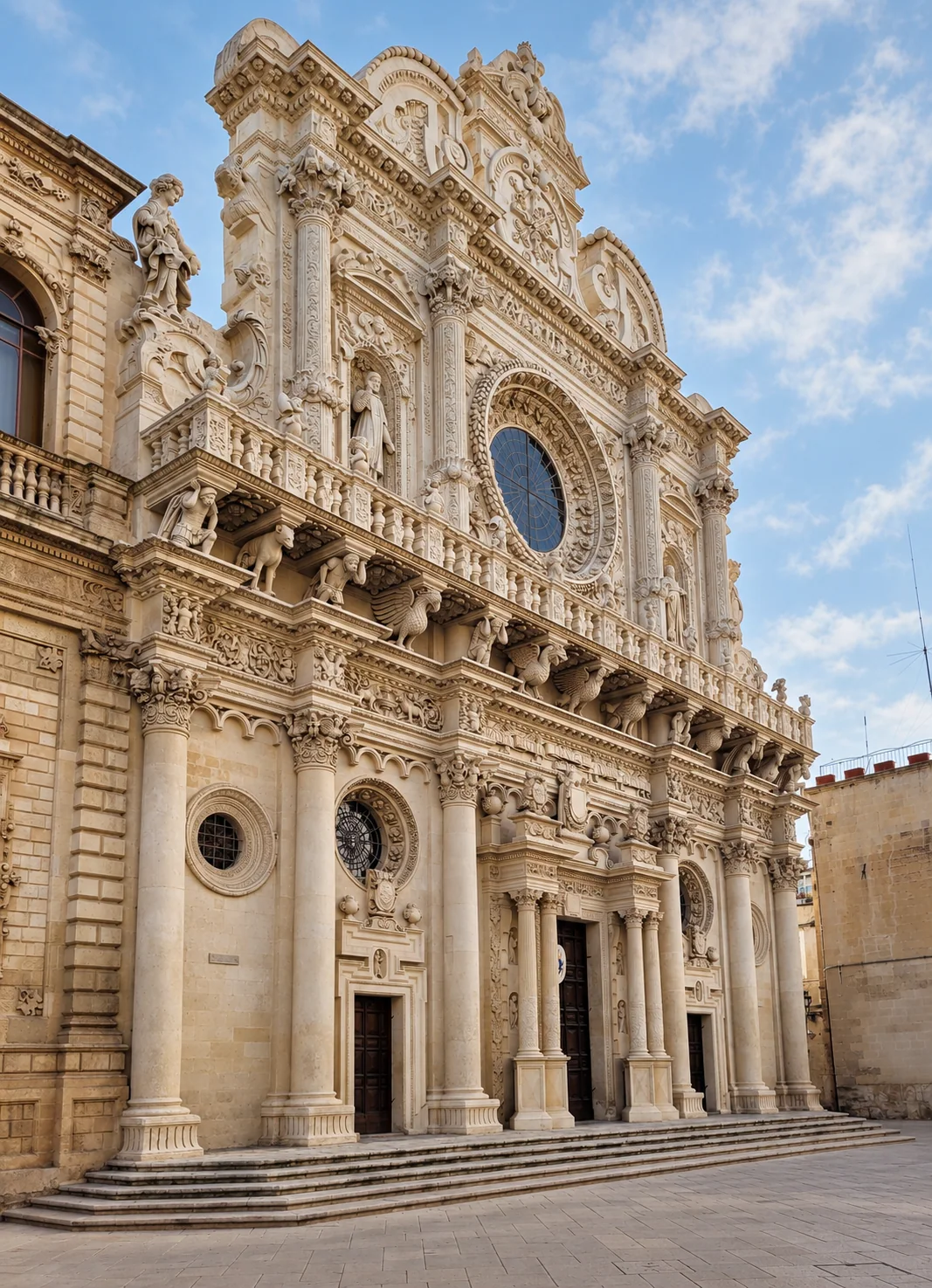
Basilica di Santa Croce
A signature Lecce Baroque façade, with three portals, a central rose window and a richly carved upper order.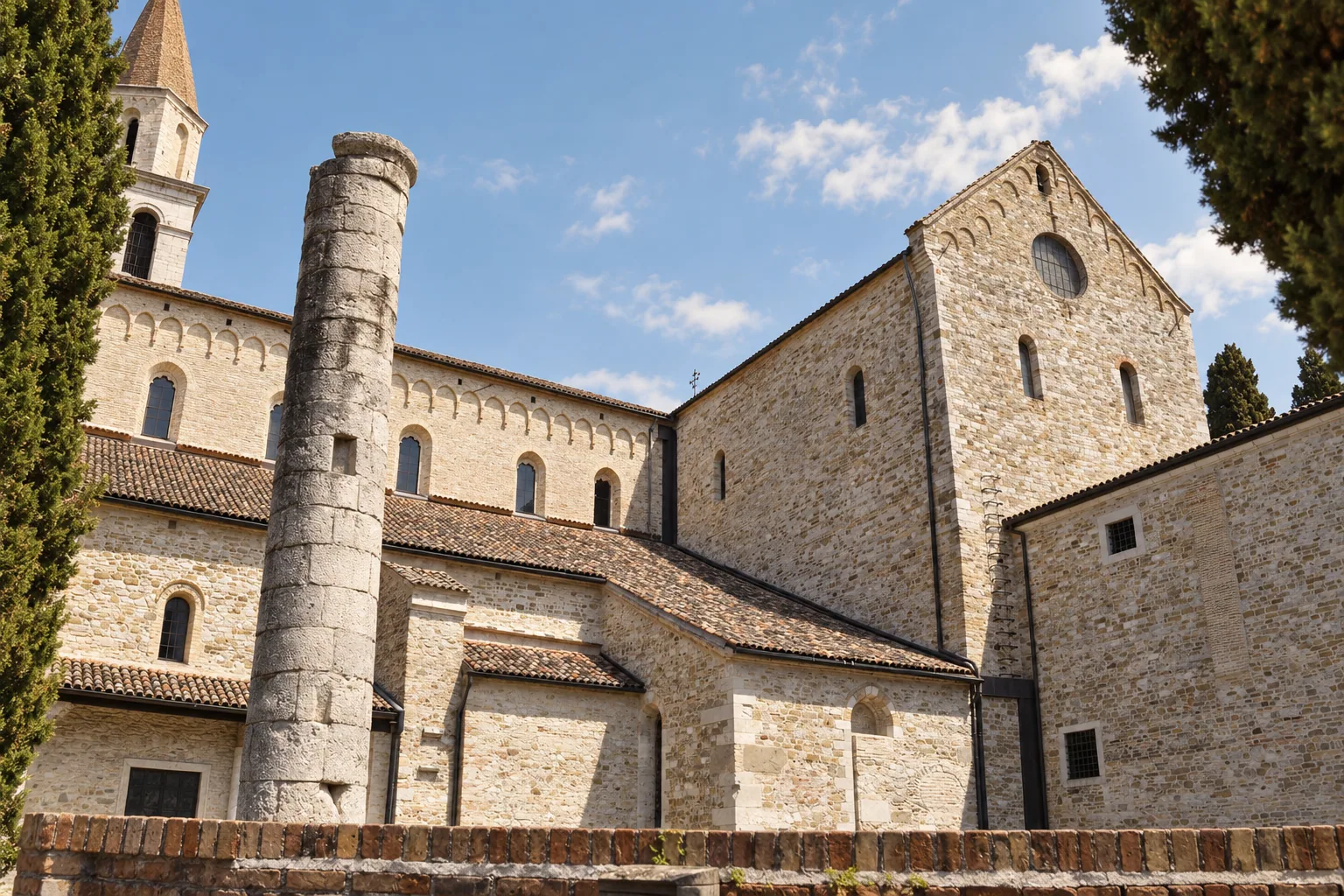
Basilica of Aquileia
Aquileia's patriarchal basilica, with the largest early Christian mosaic floor in the West and a frescoed crypt.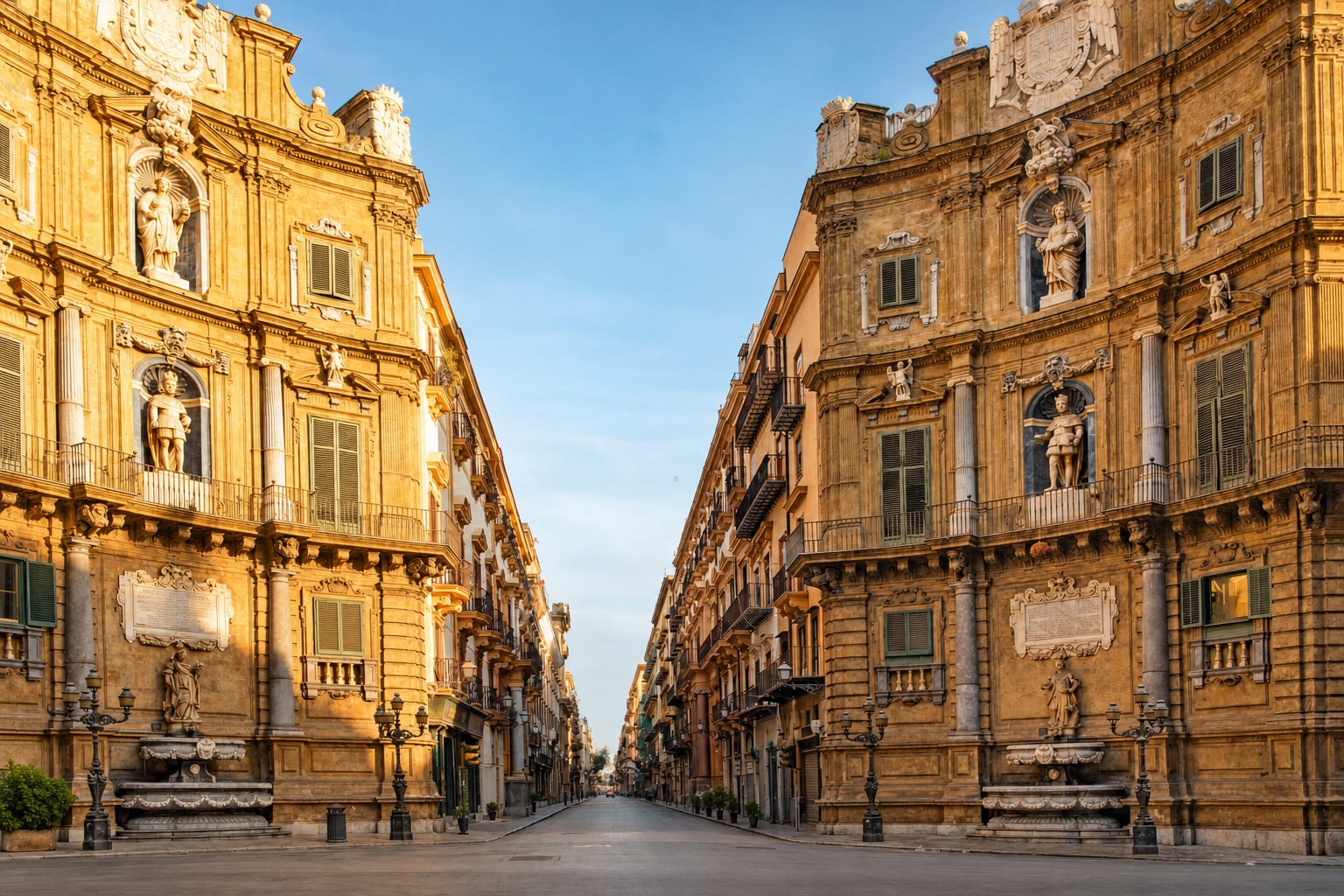
Quattro Canti
Palermo’s octagonal Baroque crossroads, four facades of fountains, Spanish kings and patron saints.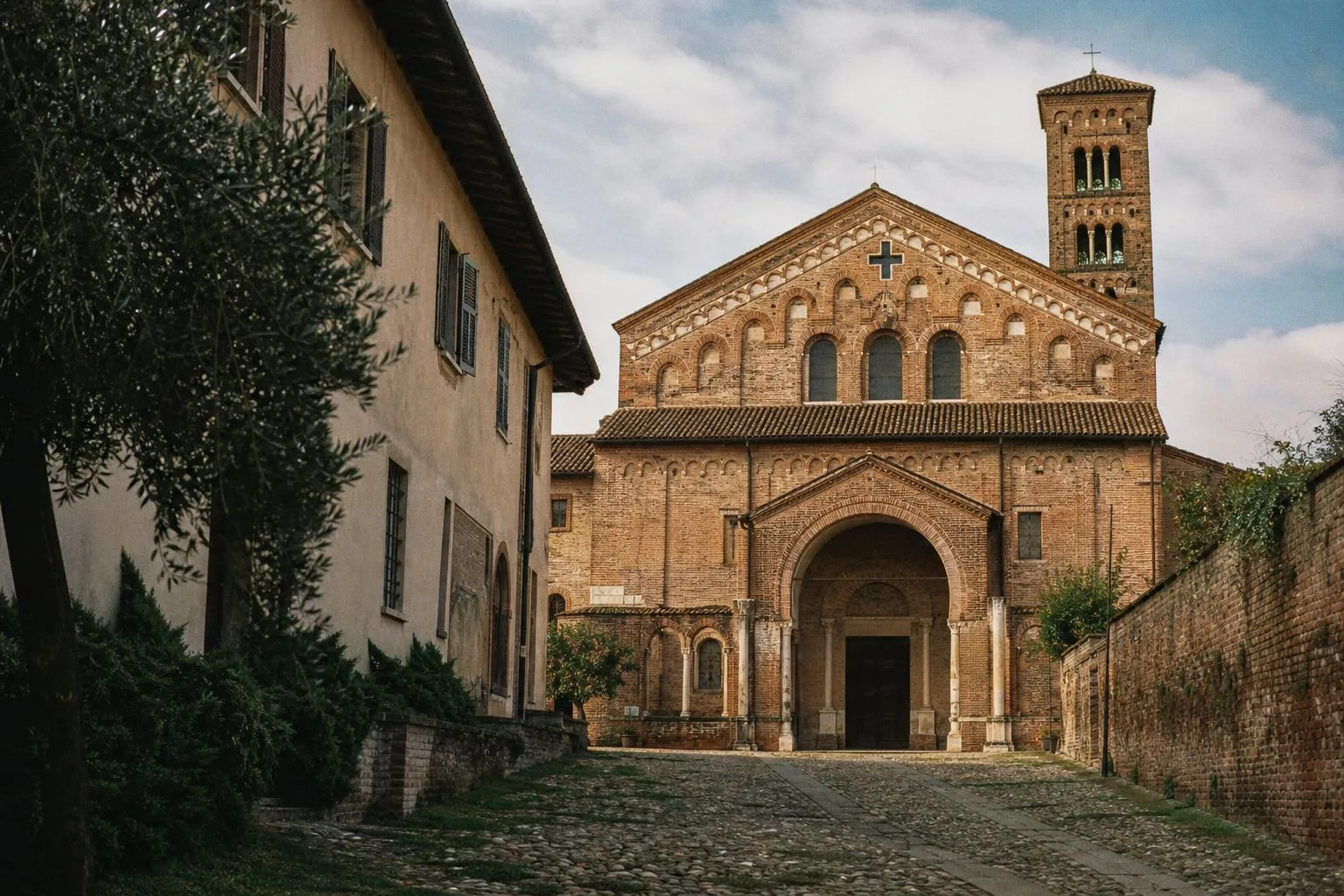
San Pietro in Ciel d'Oro
Pavia’s Romanesque basilica with the marble shrine of Saint Augustine and the crypt of Boethius.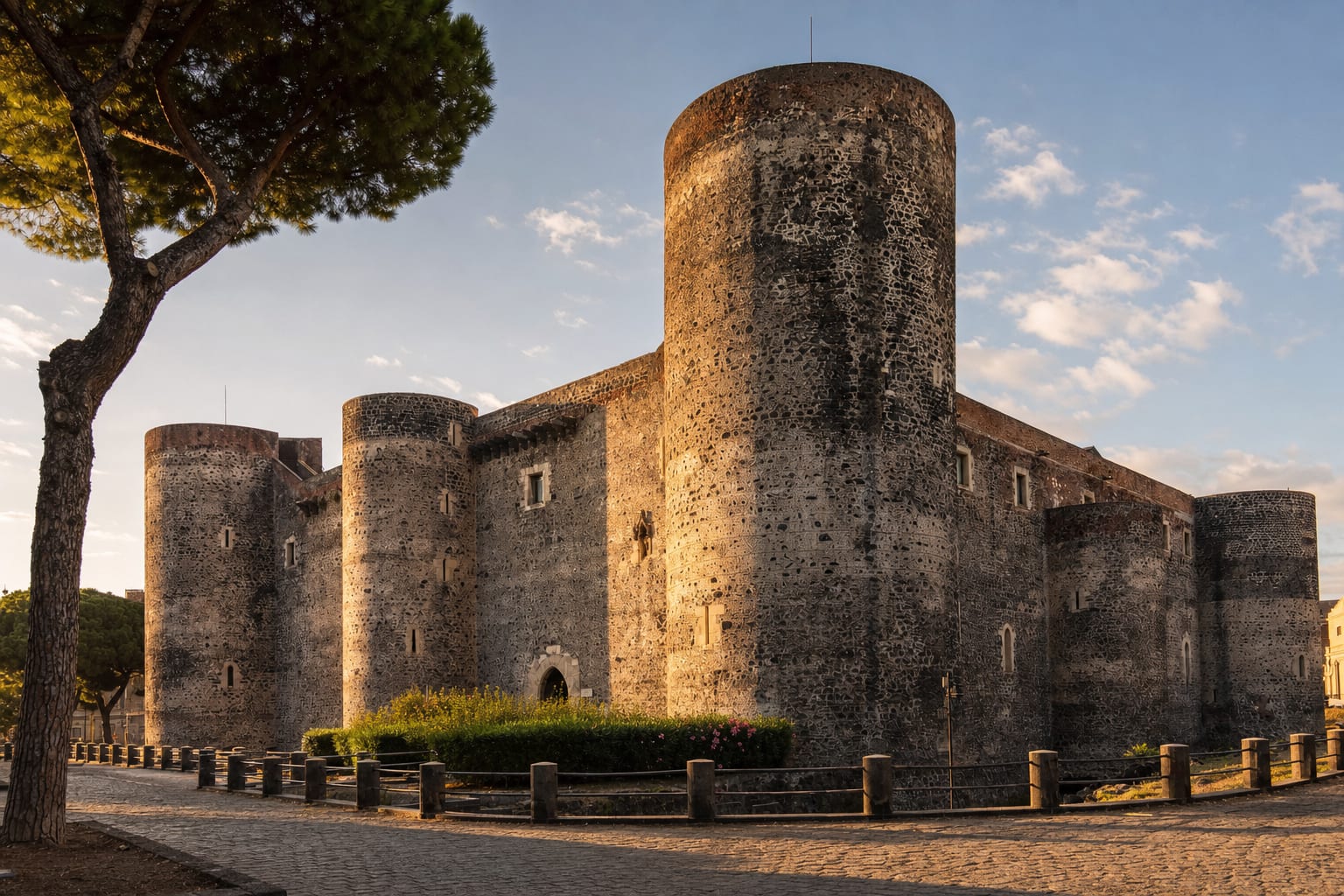
Ursino Castle
Frederick II’s lava-stone fortress in Catania, now the civic museum with the Biscari antiquities.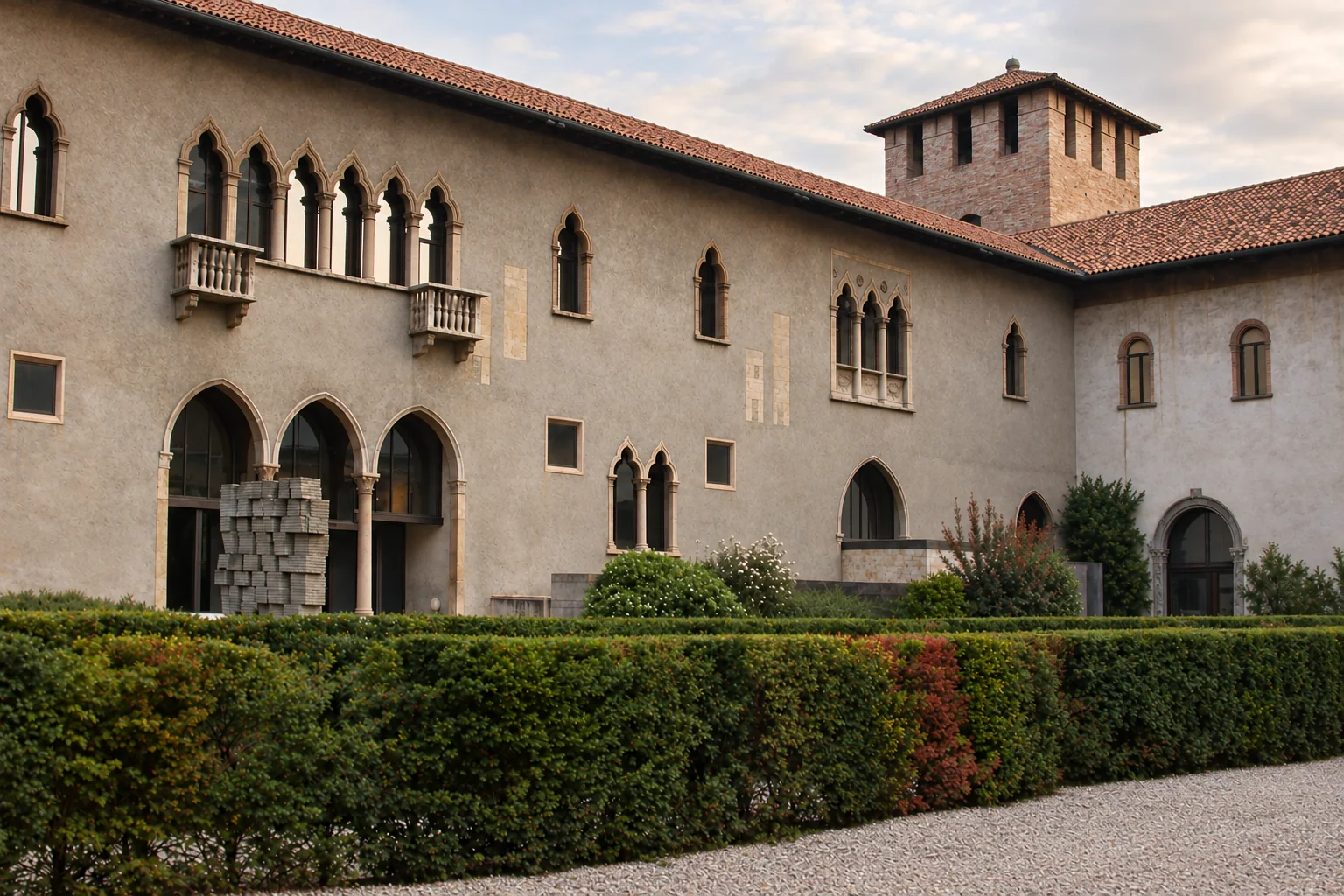
Castelvecchio
A Scaliger fortress on the Adige, where Carlo Scarpa made the castle’s layered history part of the museum route.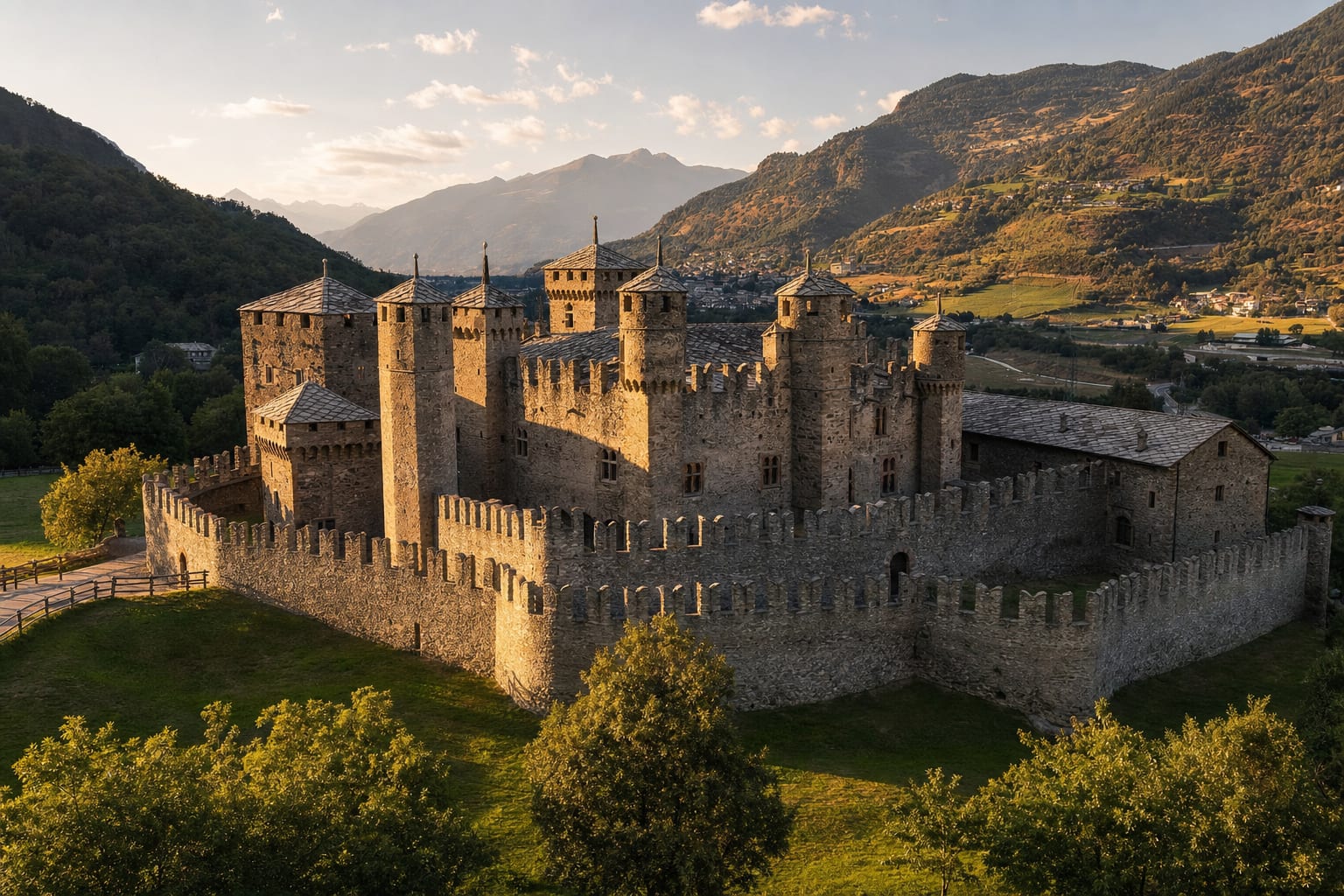
Fénis Castle
A Challant family castle of towers, double walls and Gothic frescoes, the most visited in Aosta Valley.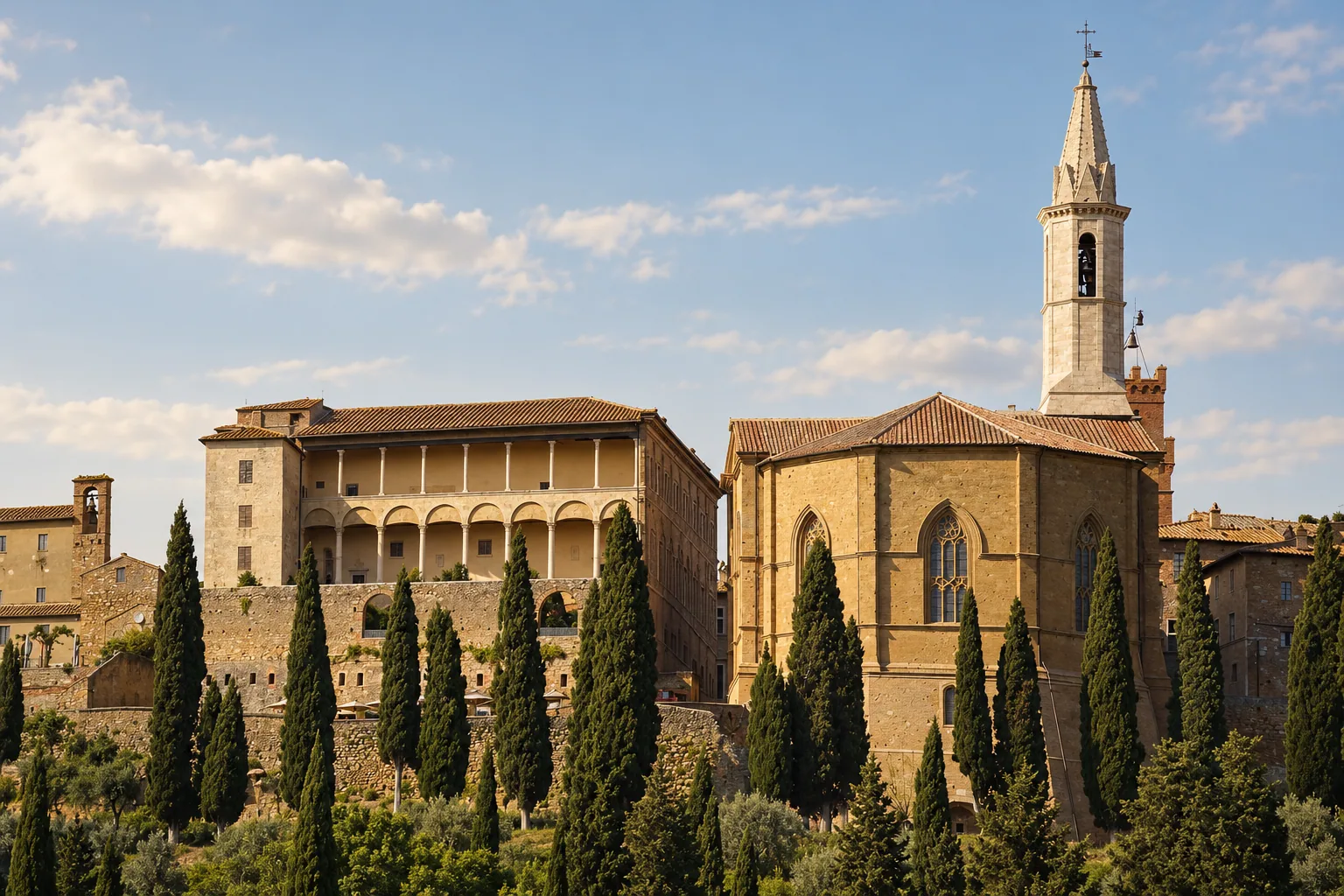
Pienza Cathedral
Pope Pius II's 1459-62 co-cathedral, a German hall church transplanted to Tuscany.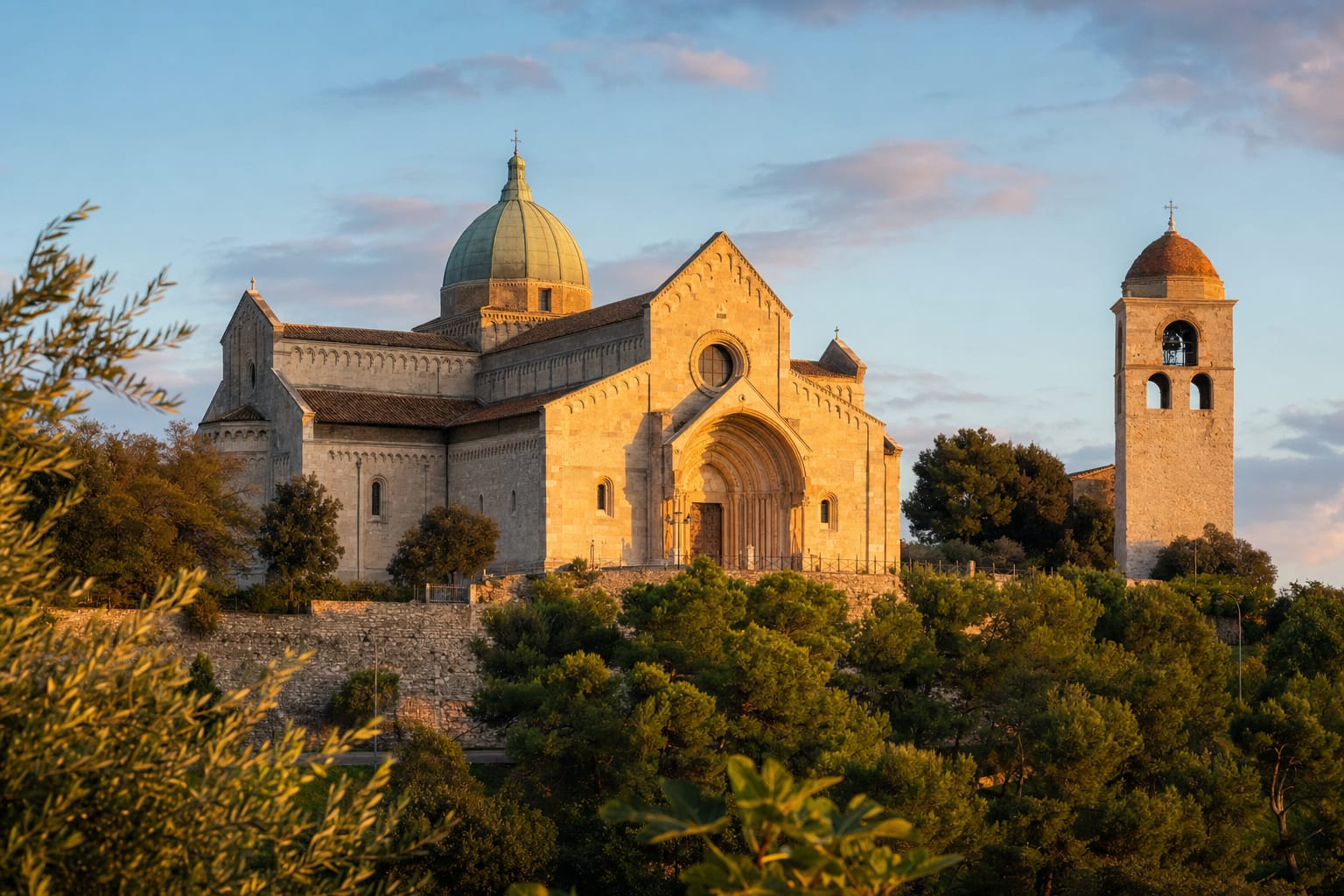
Ancona Cathedral
The Romanesque-Byzantine cathedral crowning Ancona’s harbor hill, built over a Greek temple to Aphrodite.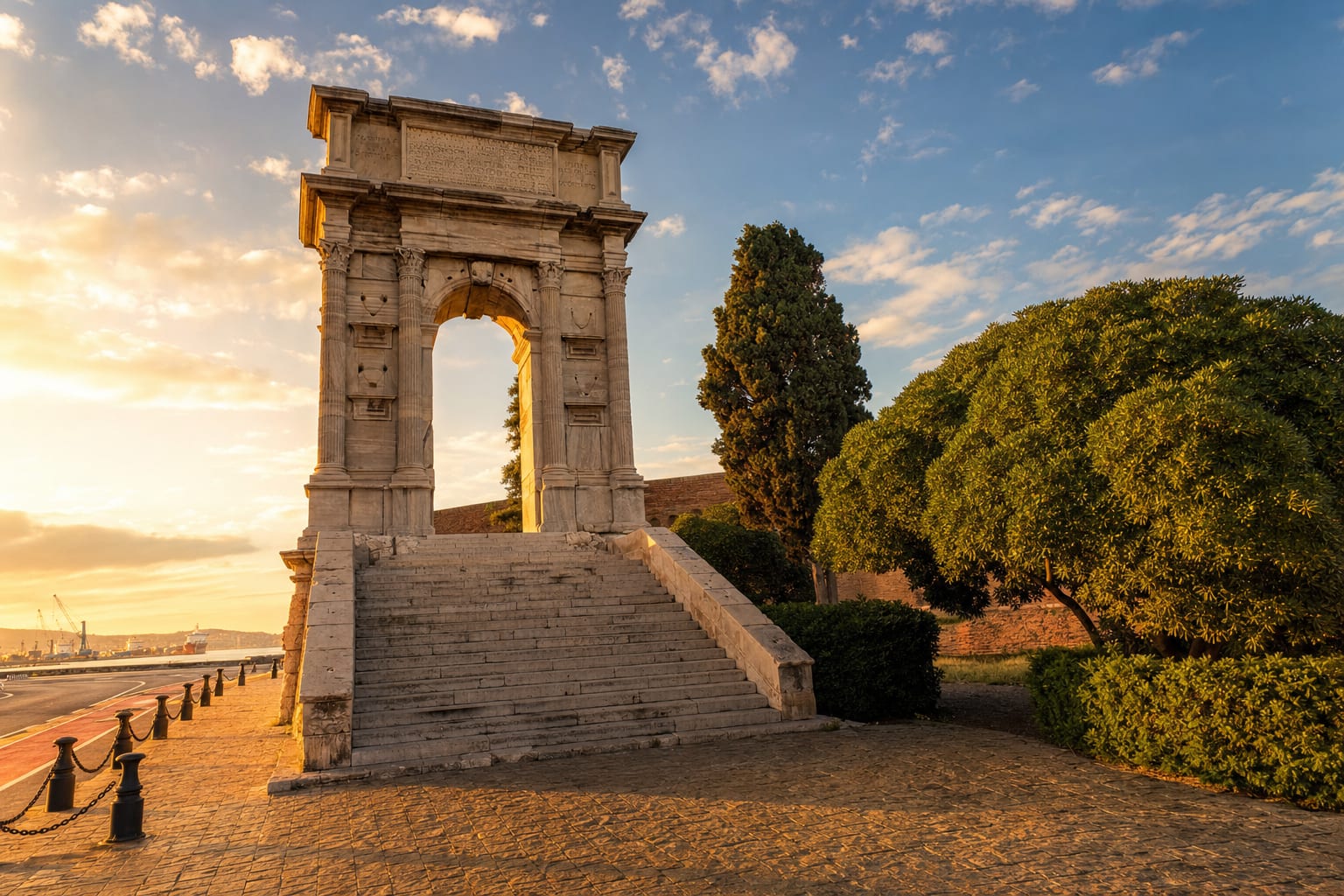
Arch of Trajan of Ancona
Trajan’s slender white-marble arch of 115 AD, standing free on Ancona’s harbor mole.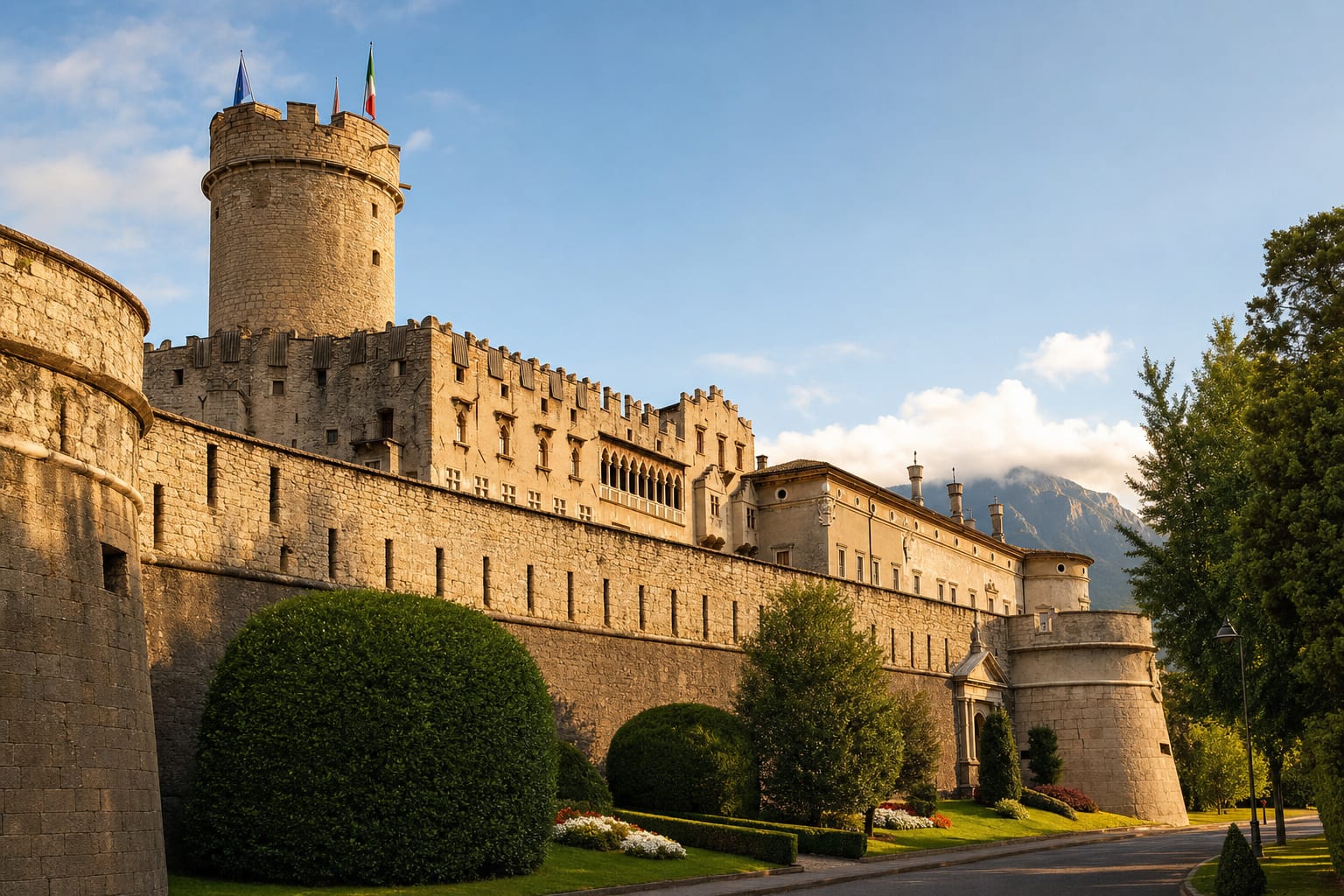
Buonconsiglio Castle
The prince-bishops’ castle in Trento, home to the medieval Cycle of the Months frescoes.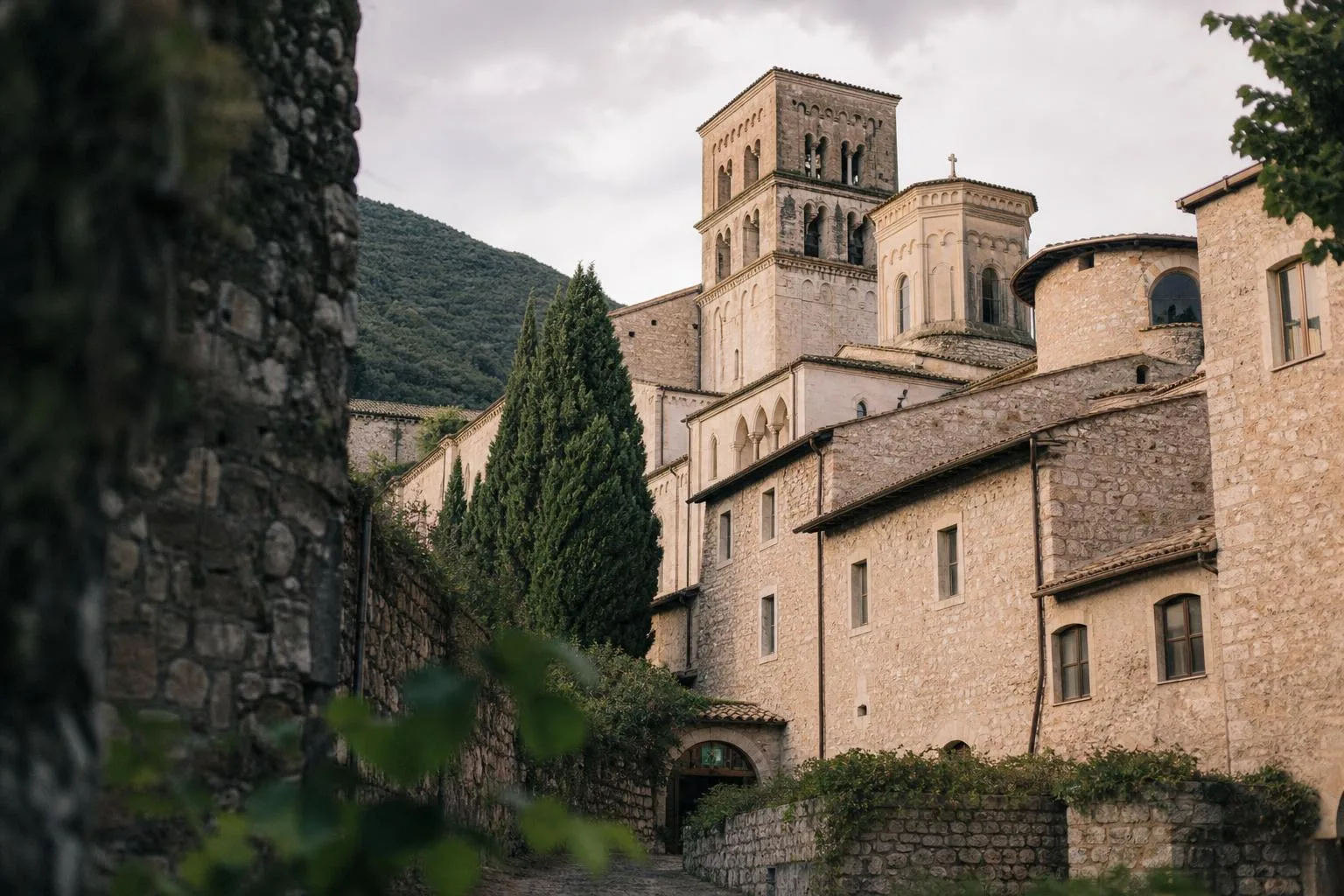
Farfa Abbey
A Benedictine abbey reborn in 1920, once one of medieval Europe’s richest monasteries.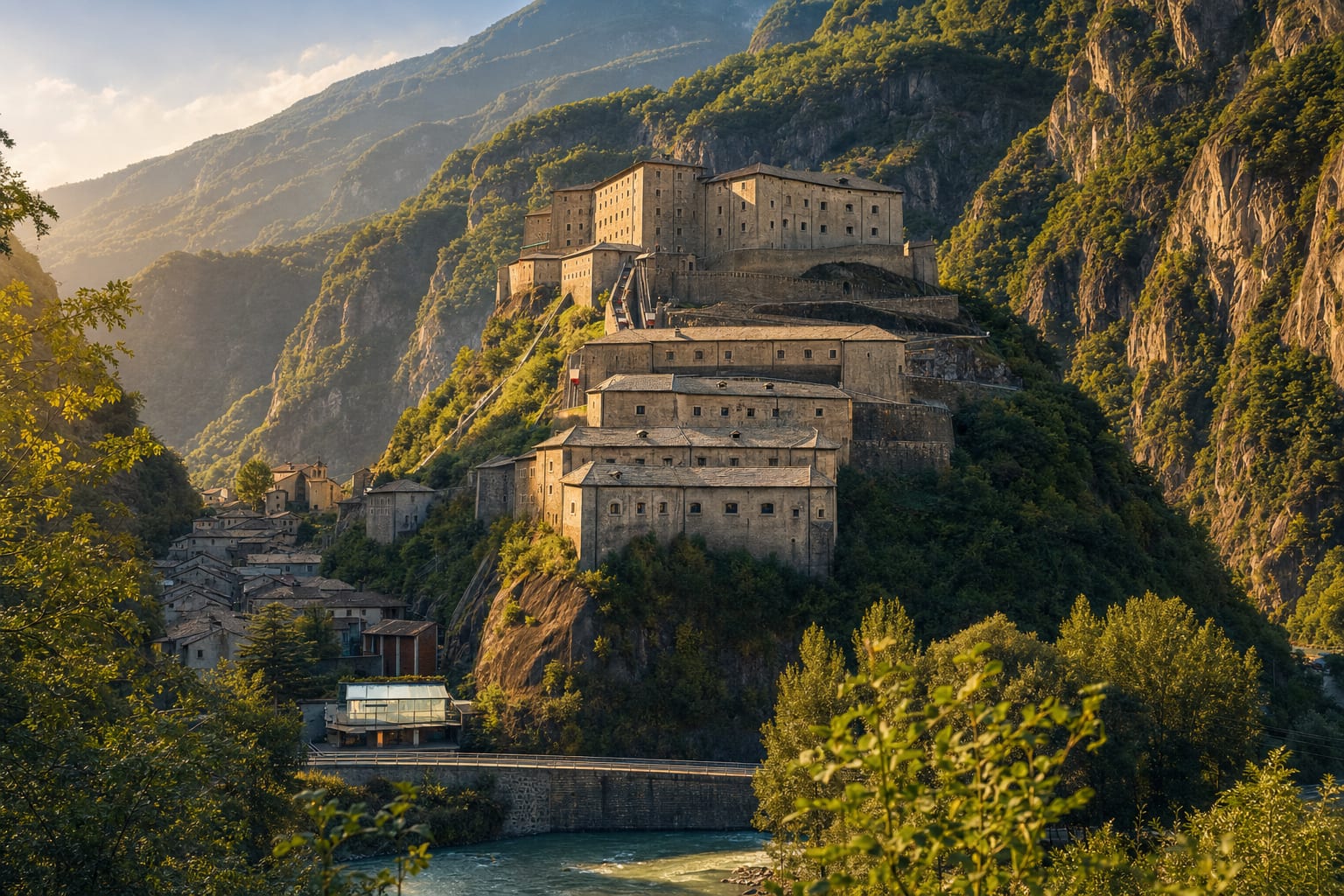
Forte di Bard
The Savoy fortress that once stopped Napoleon’s army, now home to the Museo delle Alpi.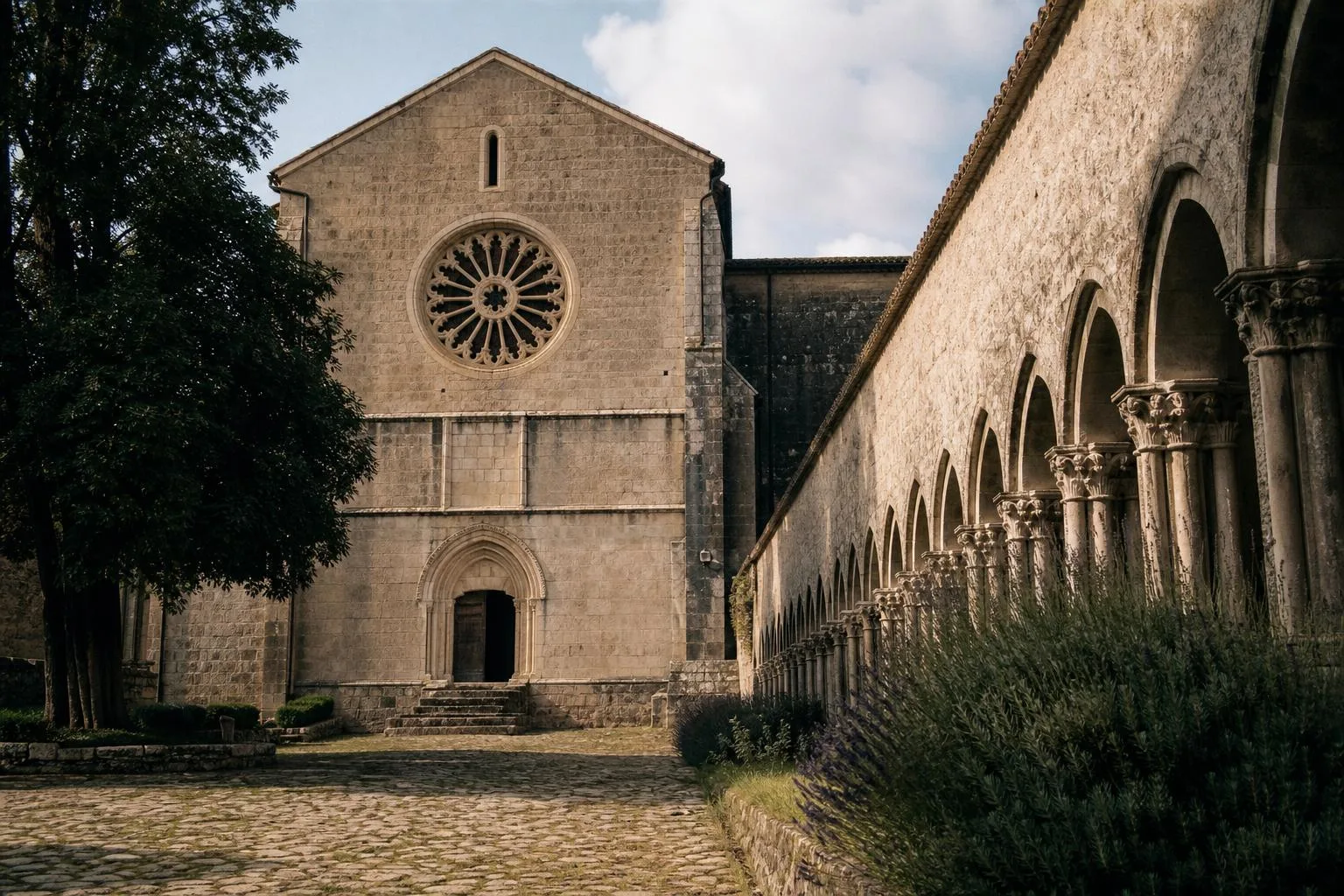
Fossanova Abbey
Italy’s first great Gothic abbey, a Cistercian church and cloister where Thomas Aquinas died in 1274.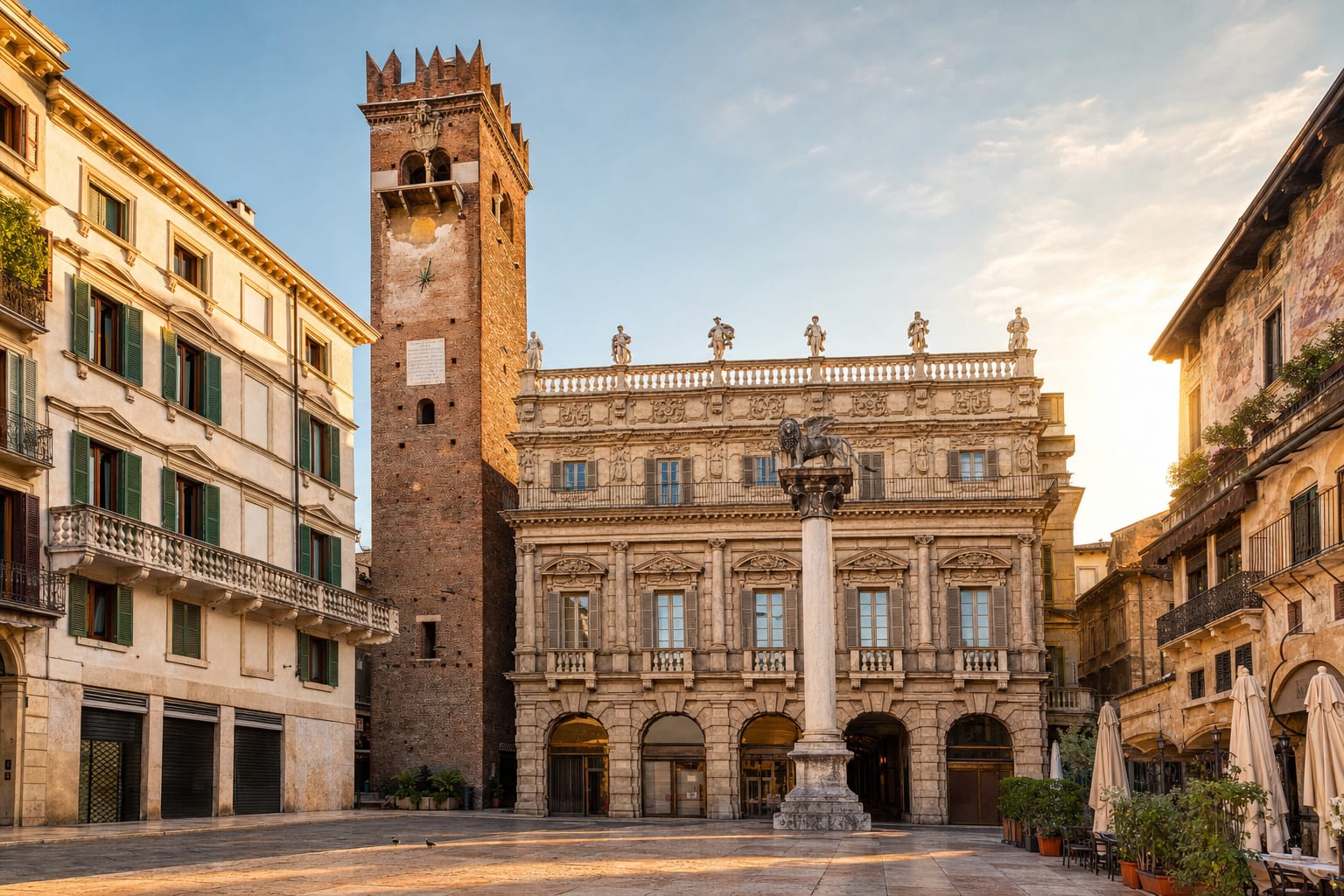
Piazza delle Erbe
Verona's market square, trading since it was the Roman forum, ringed by frescoed medieval houses.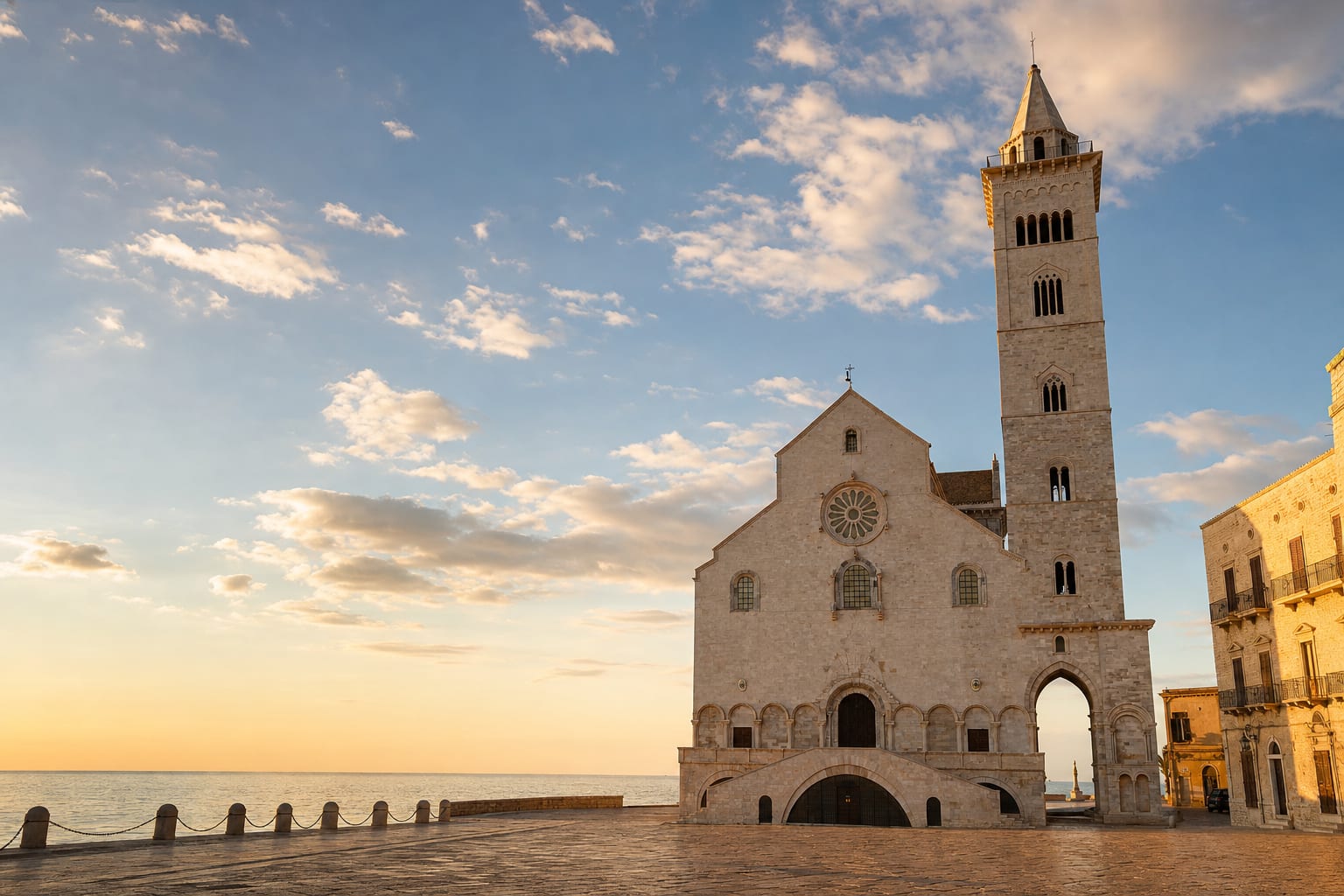
Trani Cathedral
Trani's Romanesque cathedral, rising straight from the Adriatic on its own spit of rock.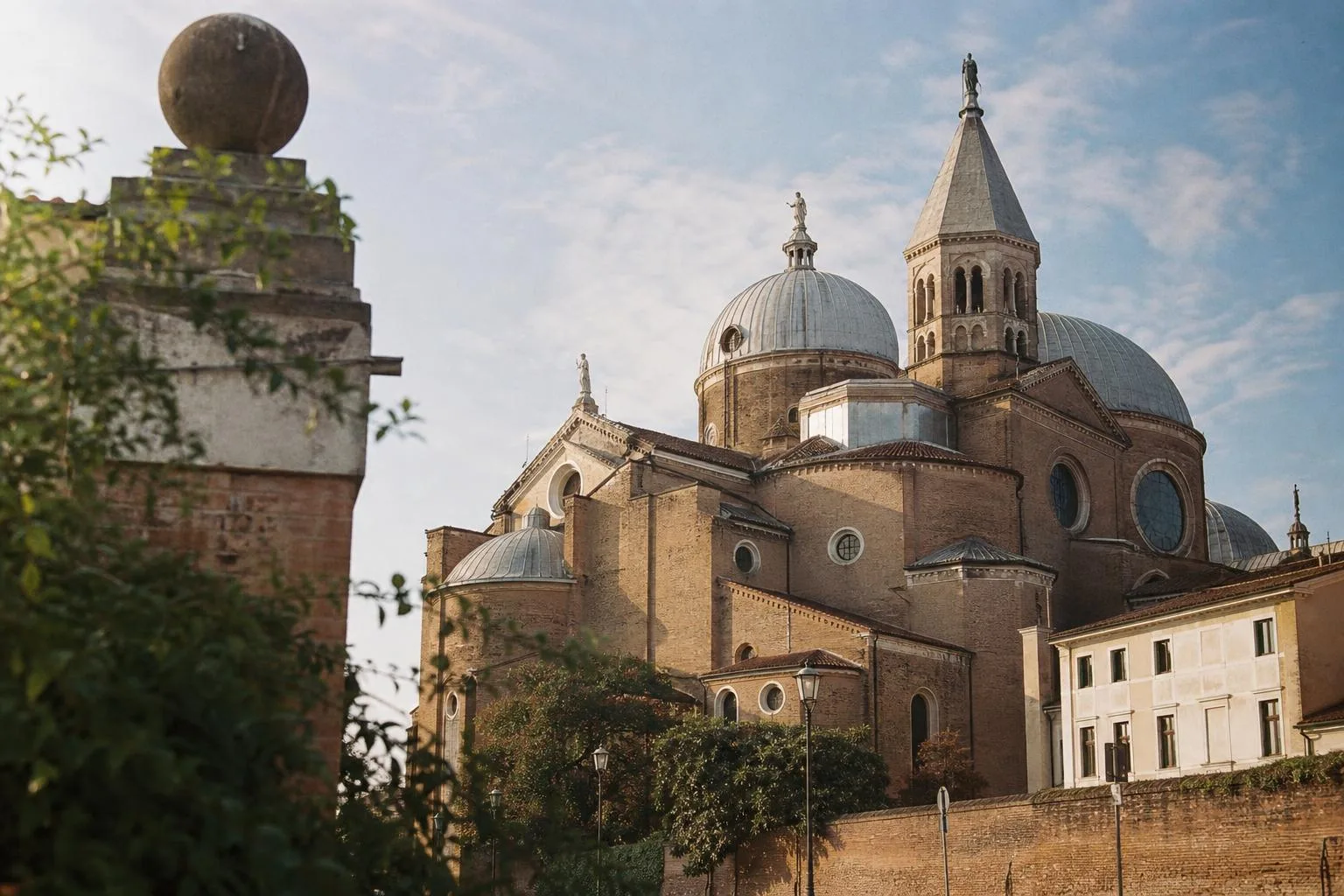
Abbey of Santa Giustina
Padua’s vast Benedictine basilica, with Veronese’s altarpiece and the relics of Saint Luke and Saint Matthias.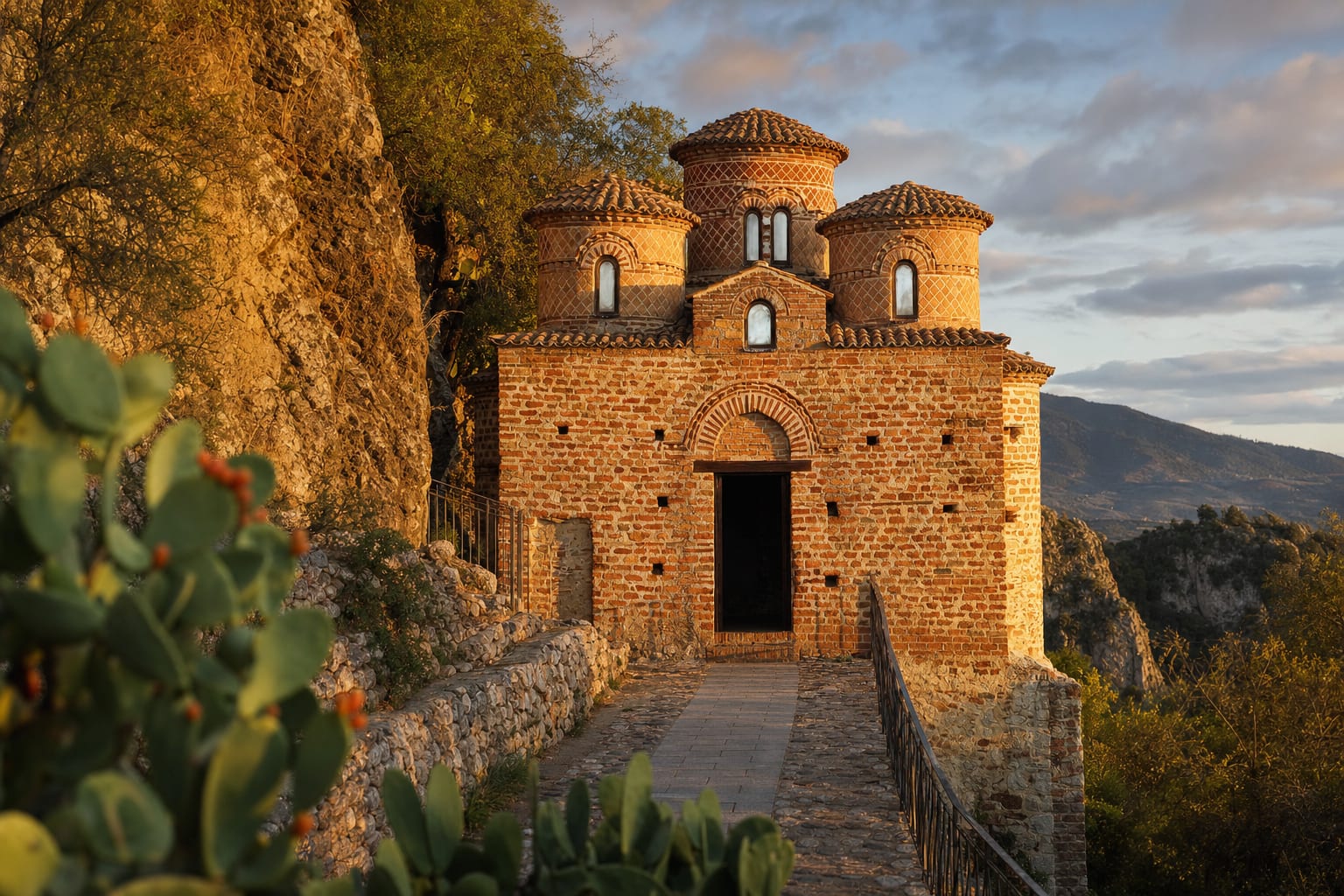
Cattolica di Stilo
A tenth-century Byzantine church of five small domes above Stilo, one of Italy’s best preserved.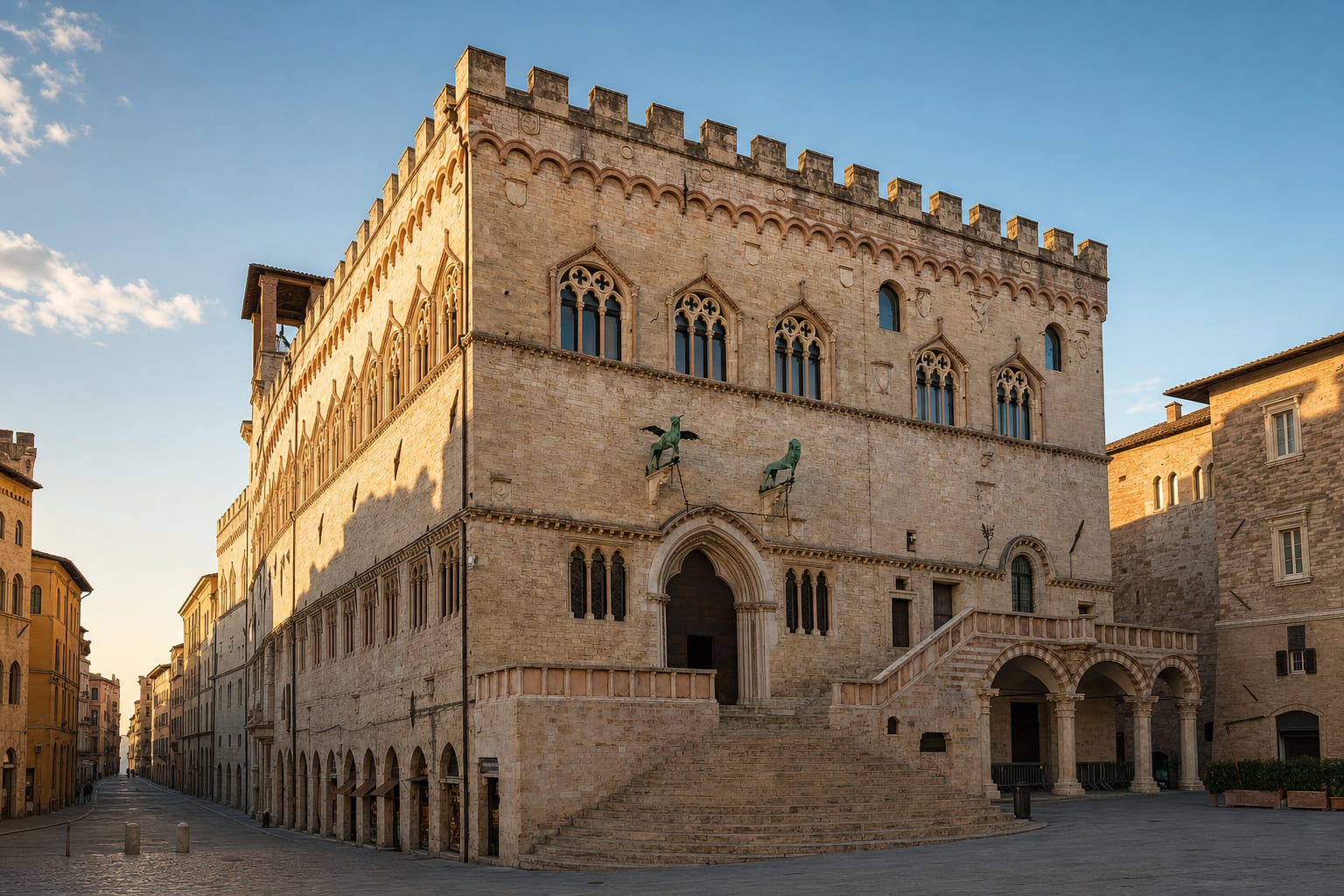
Palazzo dei Priori
Perugia’s Gothic town hall since 1297, with the National Gallery of Umbria and Perugino upstairs.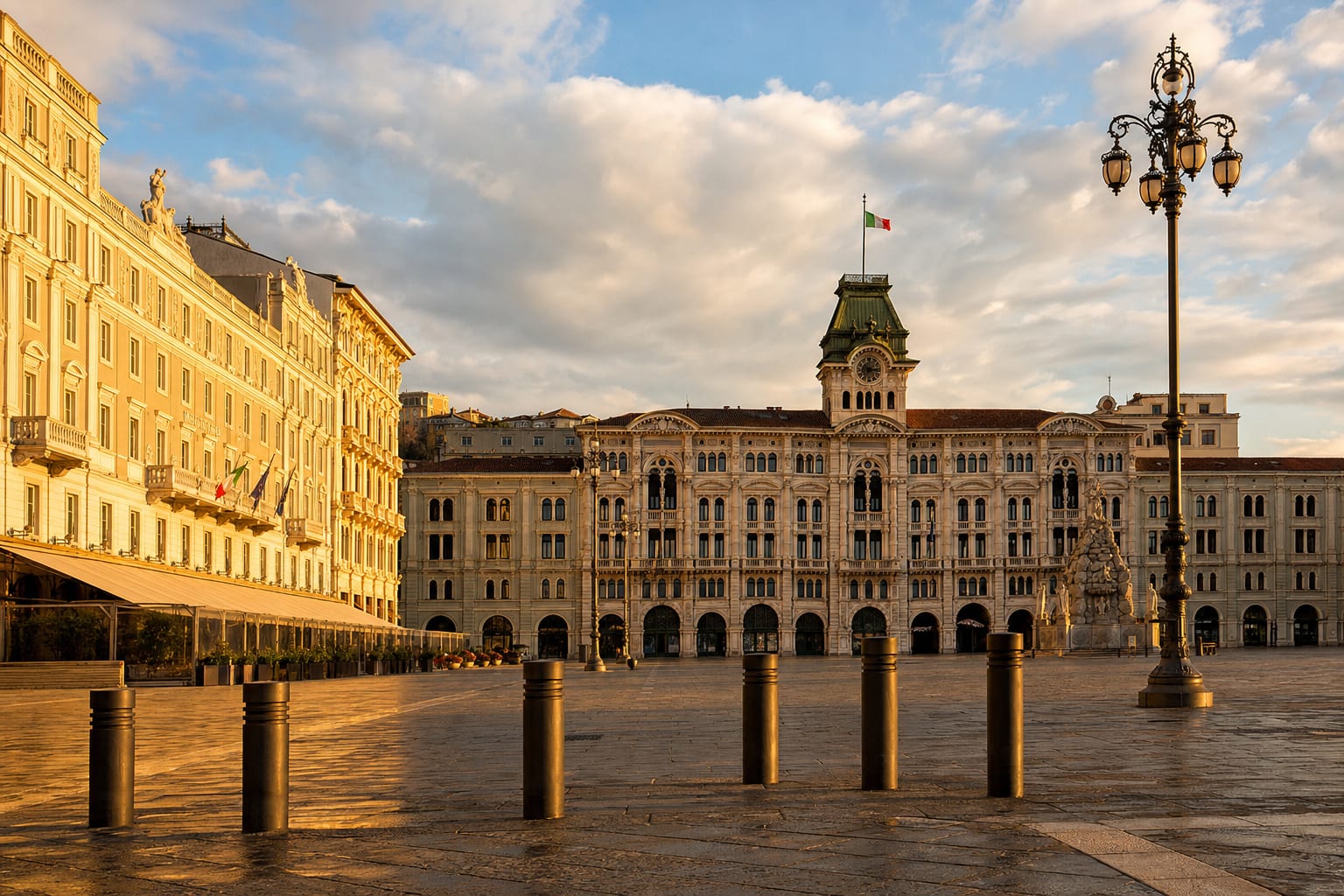
Piazza Unita d'Italia
Trieste’s grand Habsburg-era square, open on one side to the Adriatic.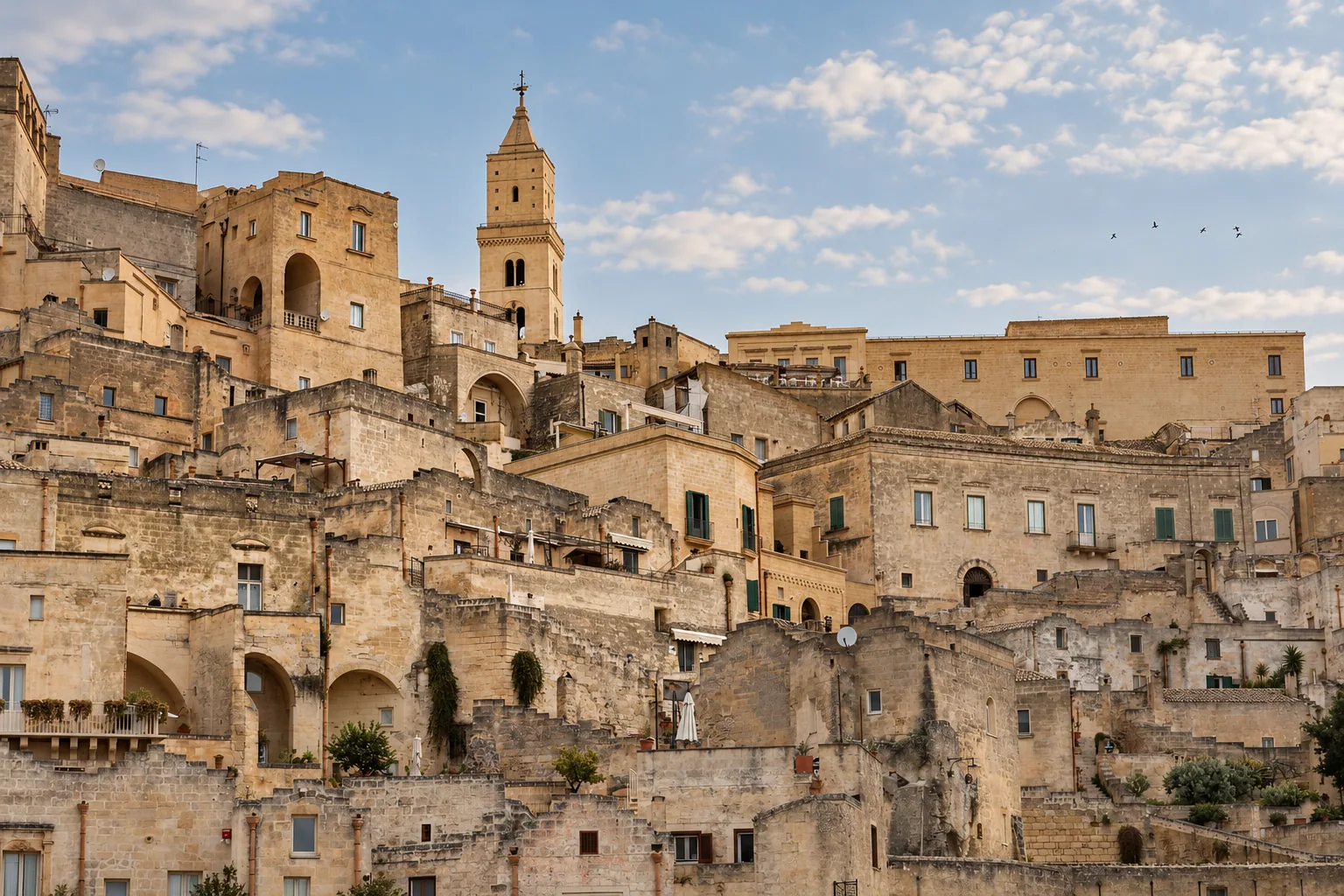
Matera Cathedral
Matera's thirteenth-century cathedral on the Civita, Romanesque outside and richly layered within.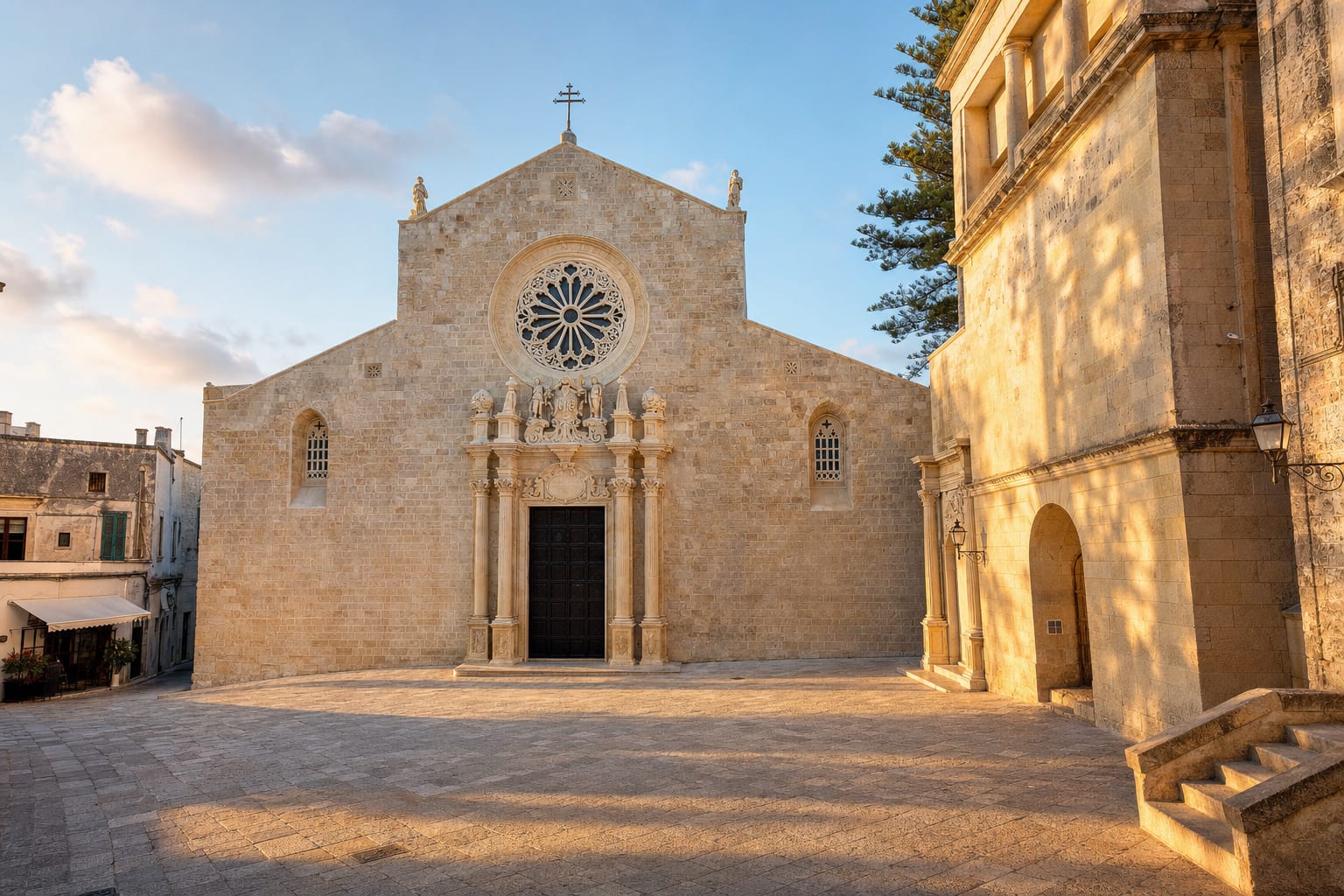
Otranto Cathedral
The cathedral floored edge to edge by a single monk's twelfth-century mosaic world.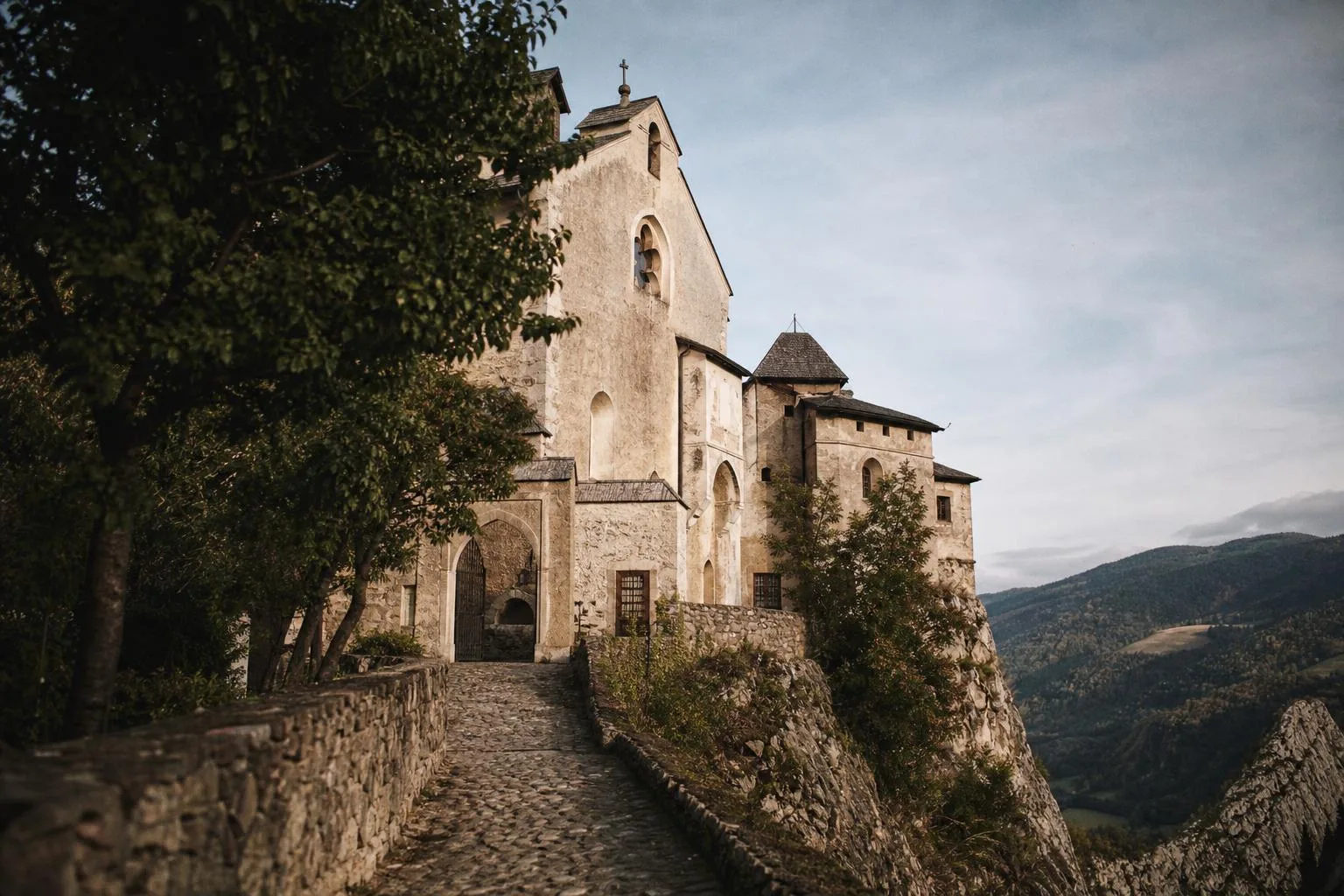
Säben Abbey
A clifftop monastery above Chiusa, former bishop's seat and now home to Cistercian monks.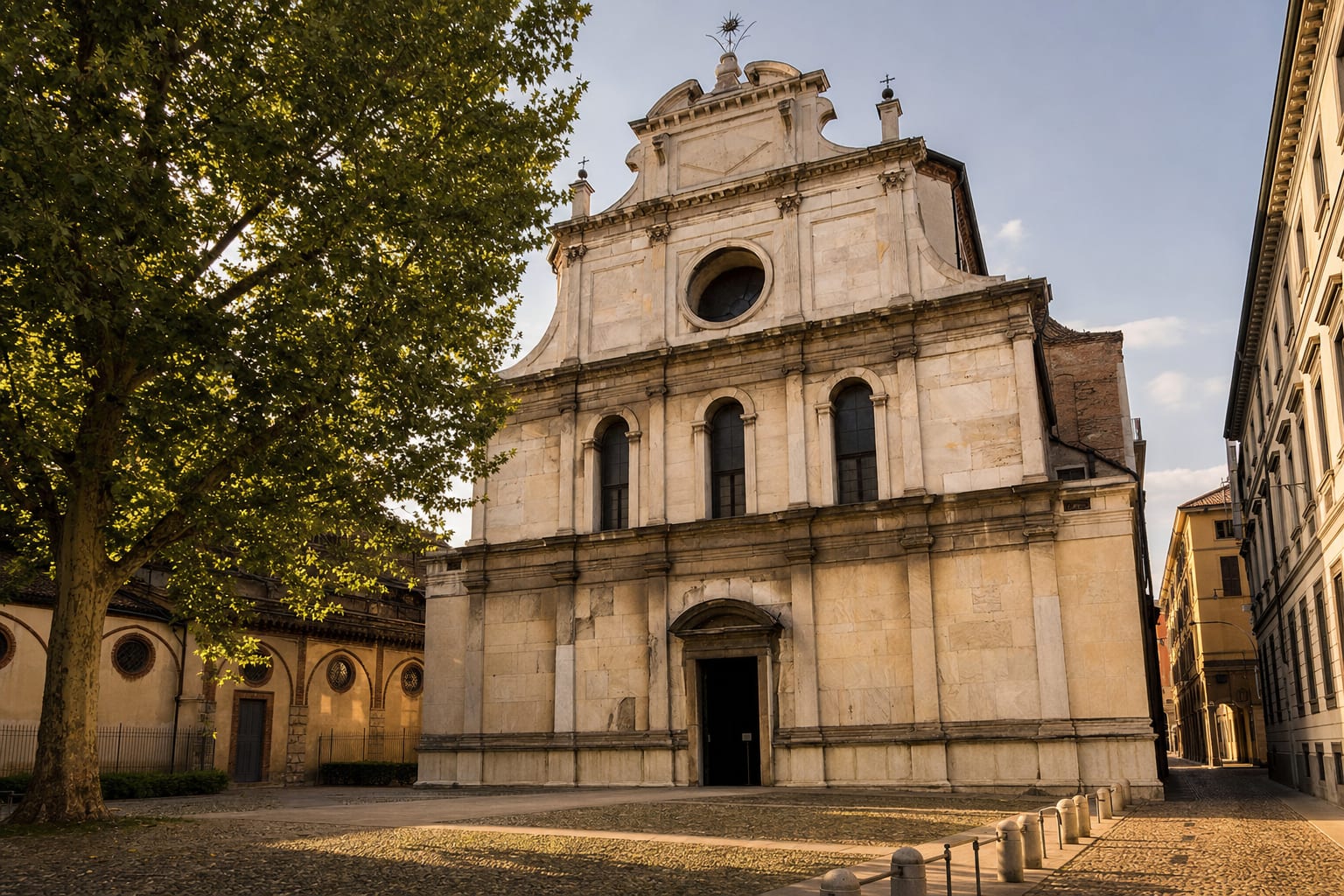
San Maurizio al Monastero Maggiore
Milan's fully frescoed convent church, split between a public hall and the nuns' hidden choir.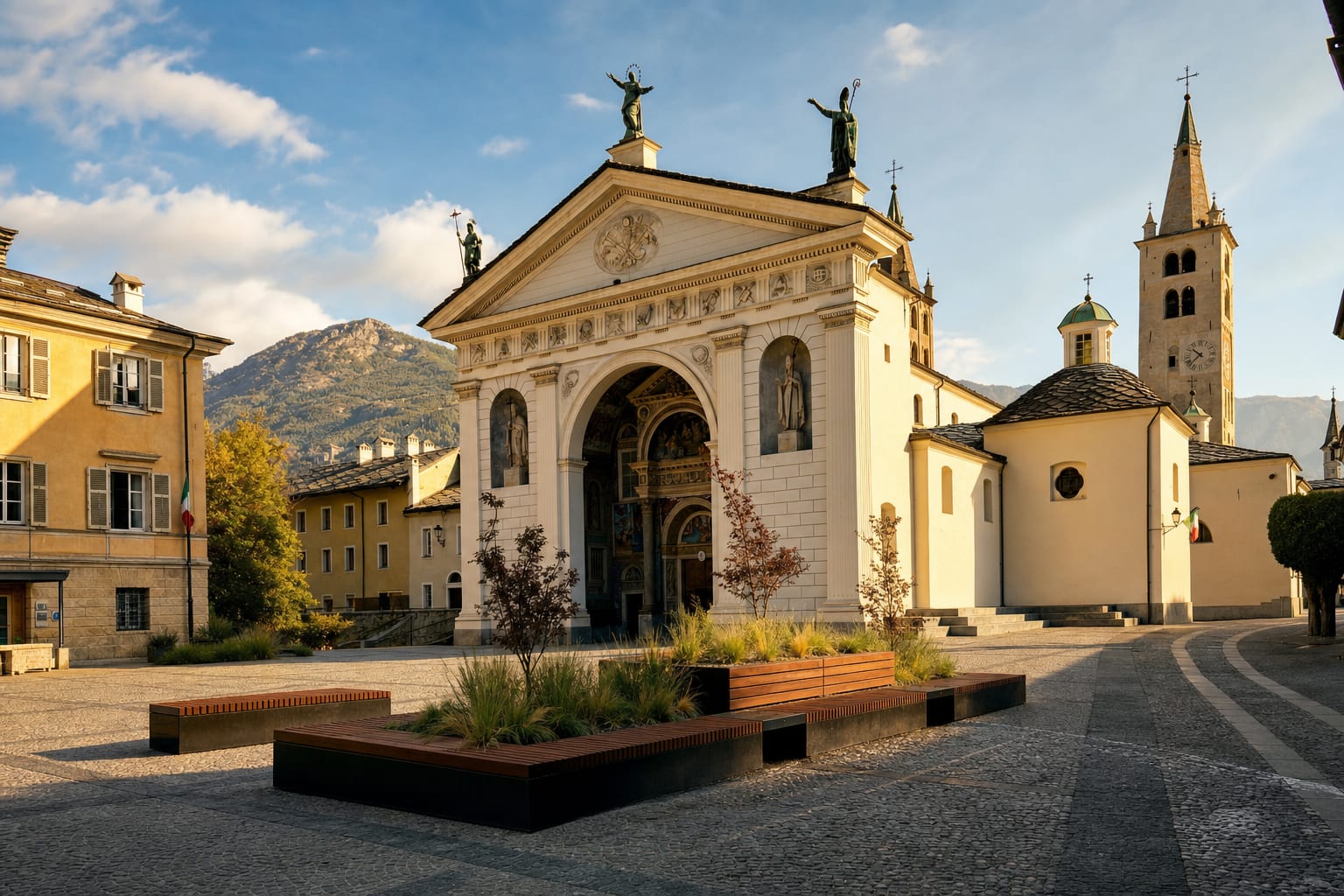
Aosta Cathedral
A plain neoclassical facade hiding eleventh-century frescoes and centuries of mosaic floors.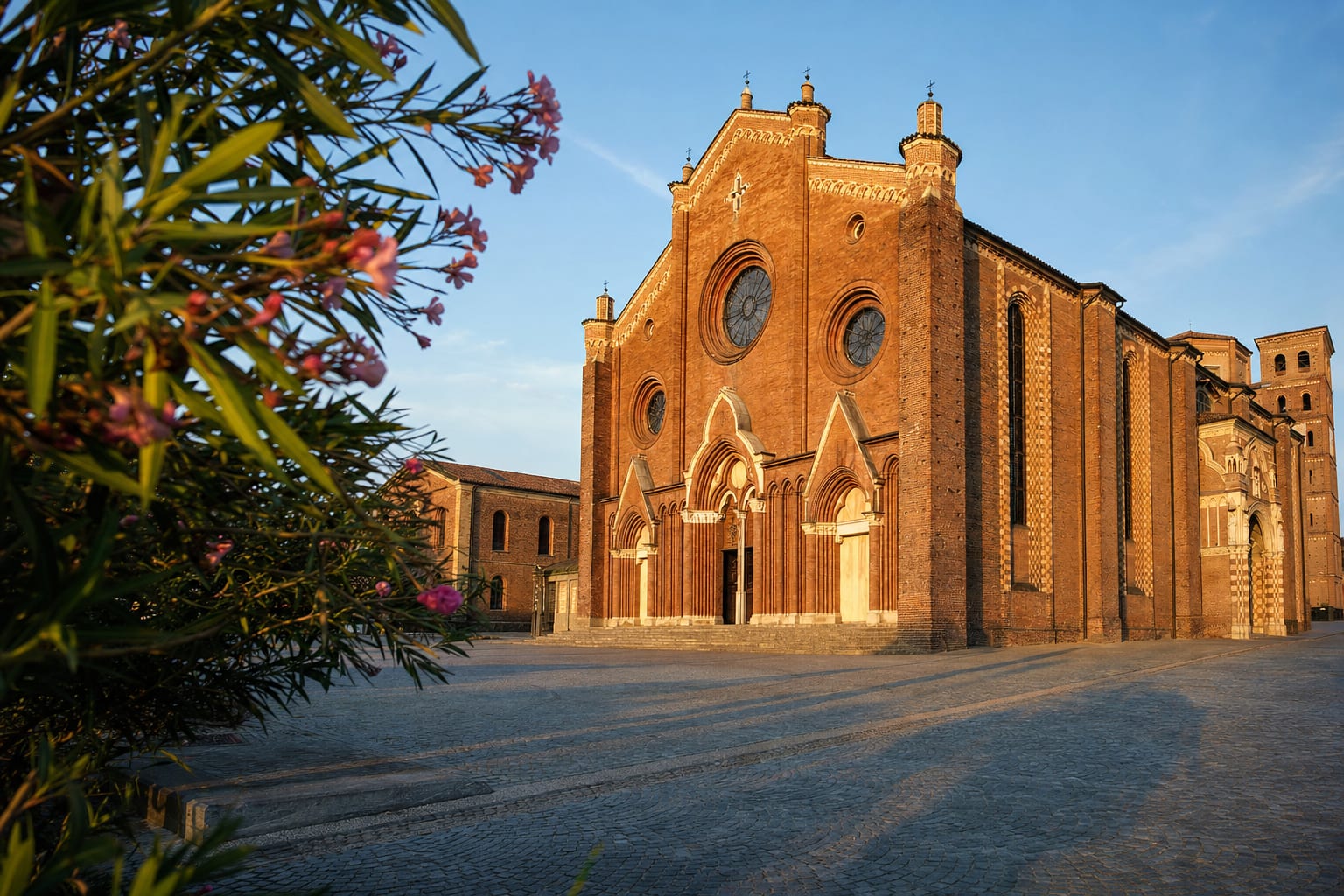
Asti Cathedral
Piedmont's largest Gothic cathedral, plain brick outside and frescoed to the last vault within.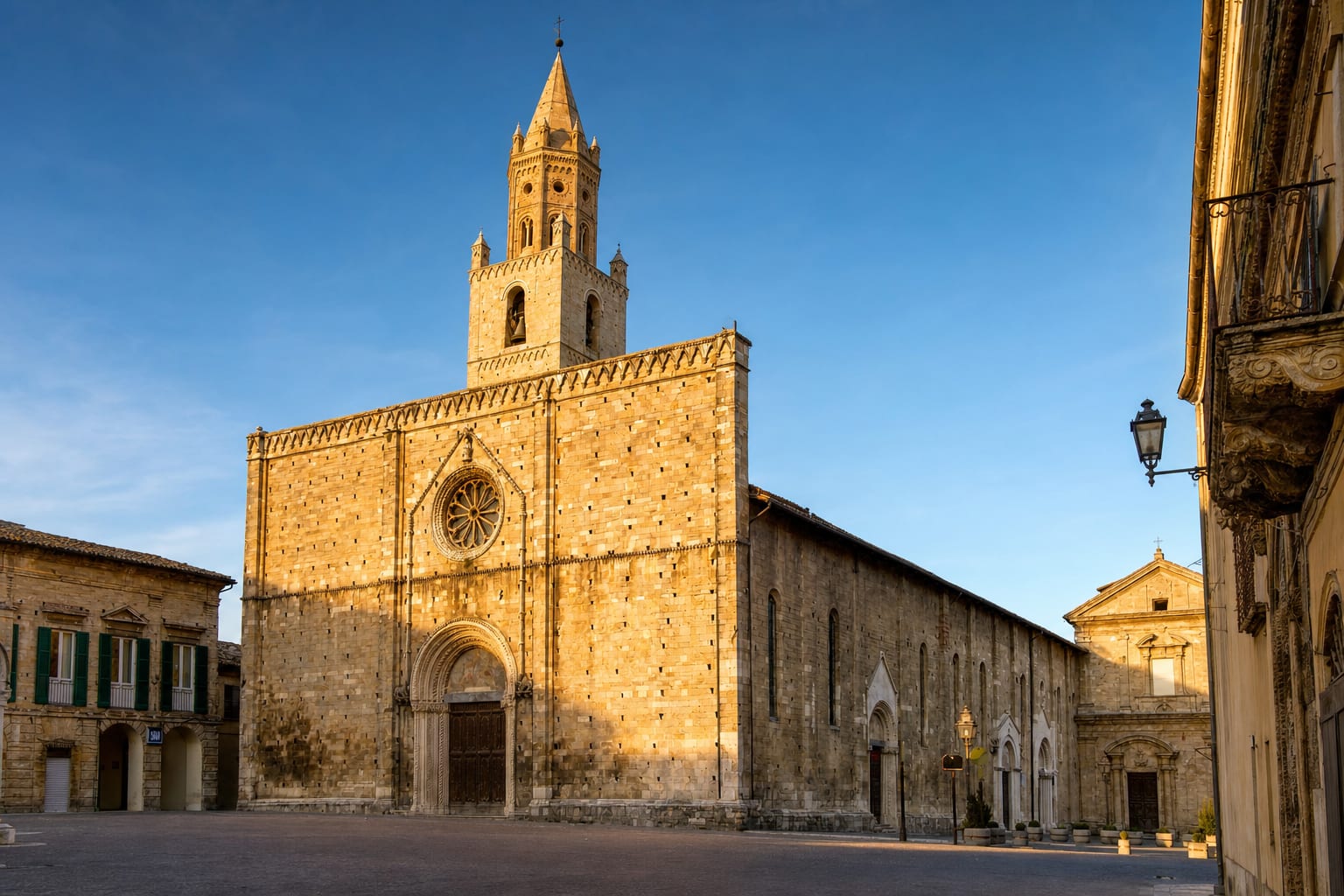
Atri Cathedral
The cathedral of De Litio's frescoes, Abruzzo's painted answer to Tuscany.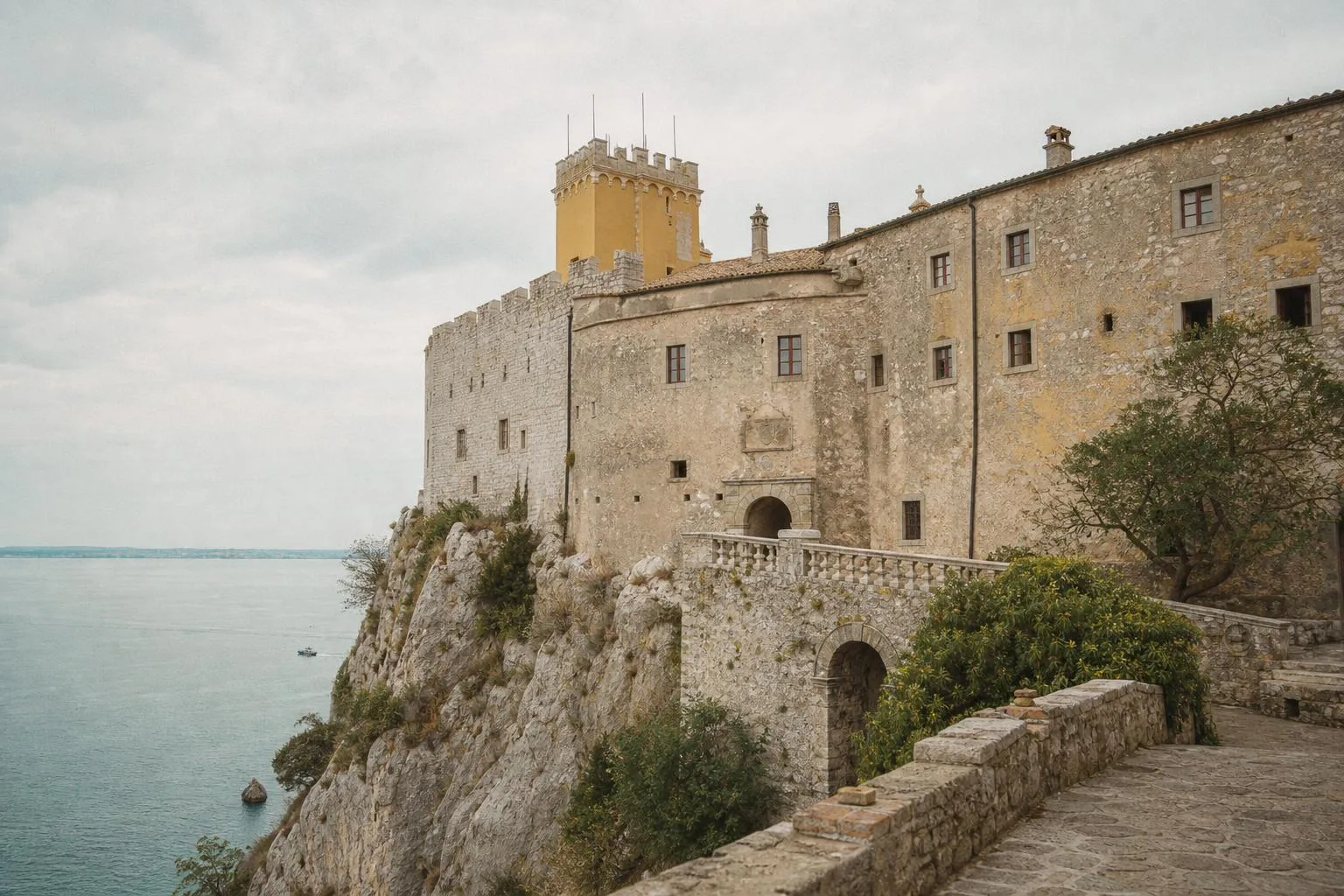
Duino Castle
A clifftop castle above Trieste where Rilke began his Duino Elegies in 1912.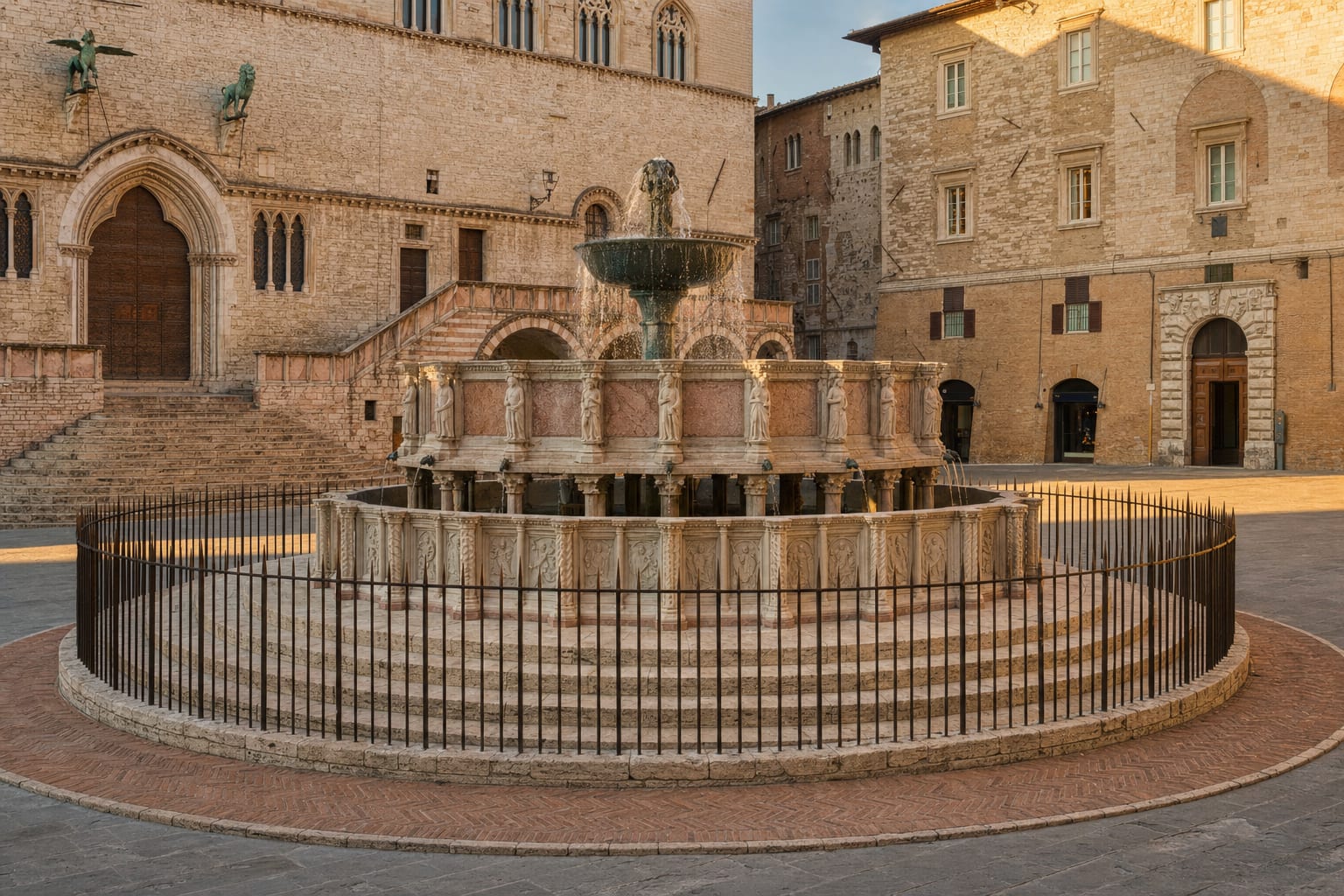
Fontana Maggiore
The Pisanos' carved fountain, medieval Perugia's marble encyclopedia.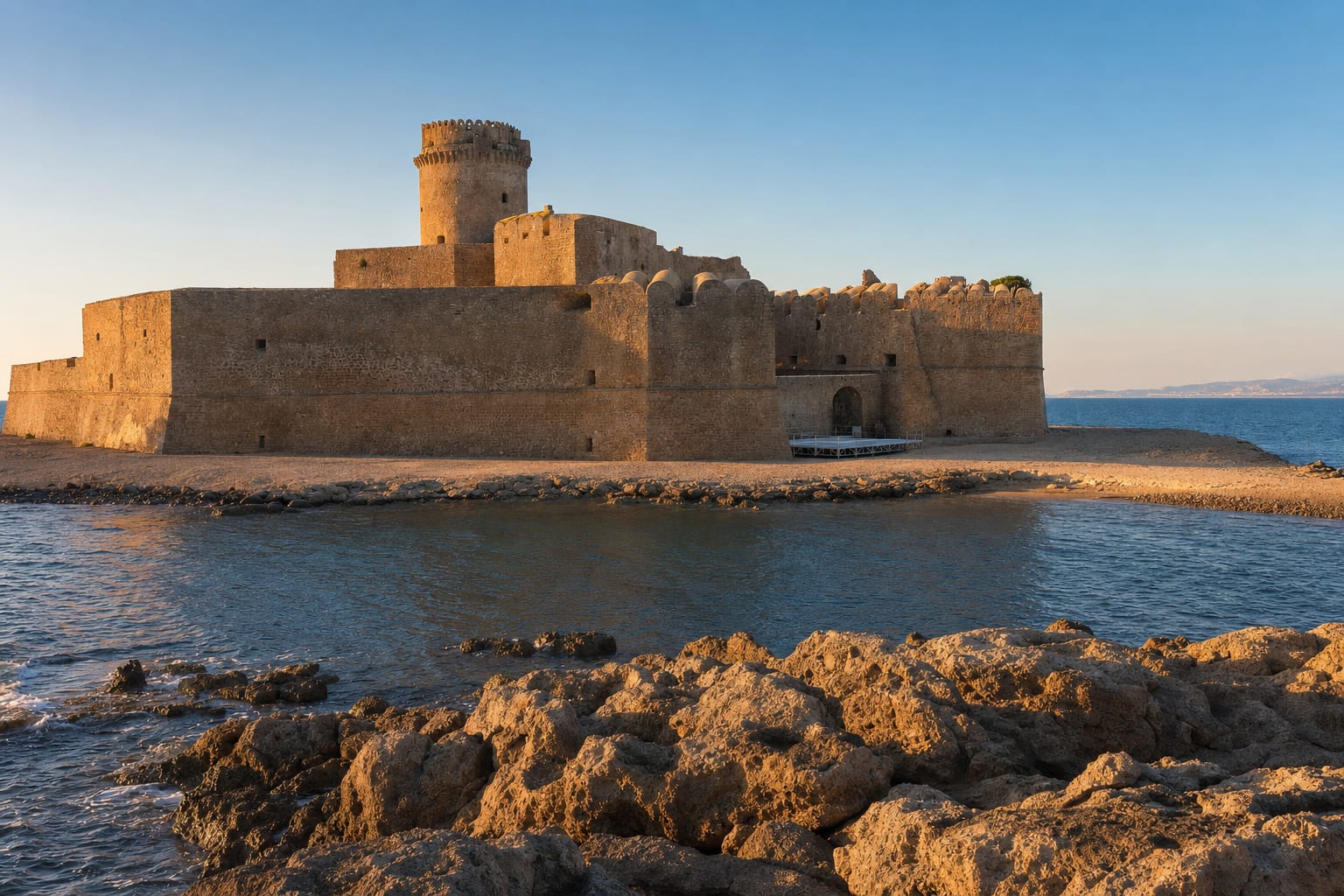
Le Castella
An Aragonese castle adrift on its own islet off Calabria's Ionian coast.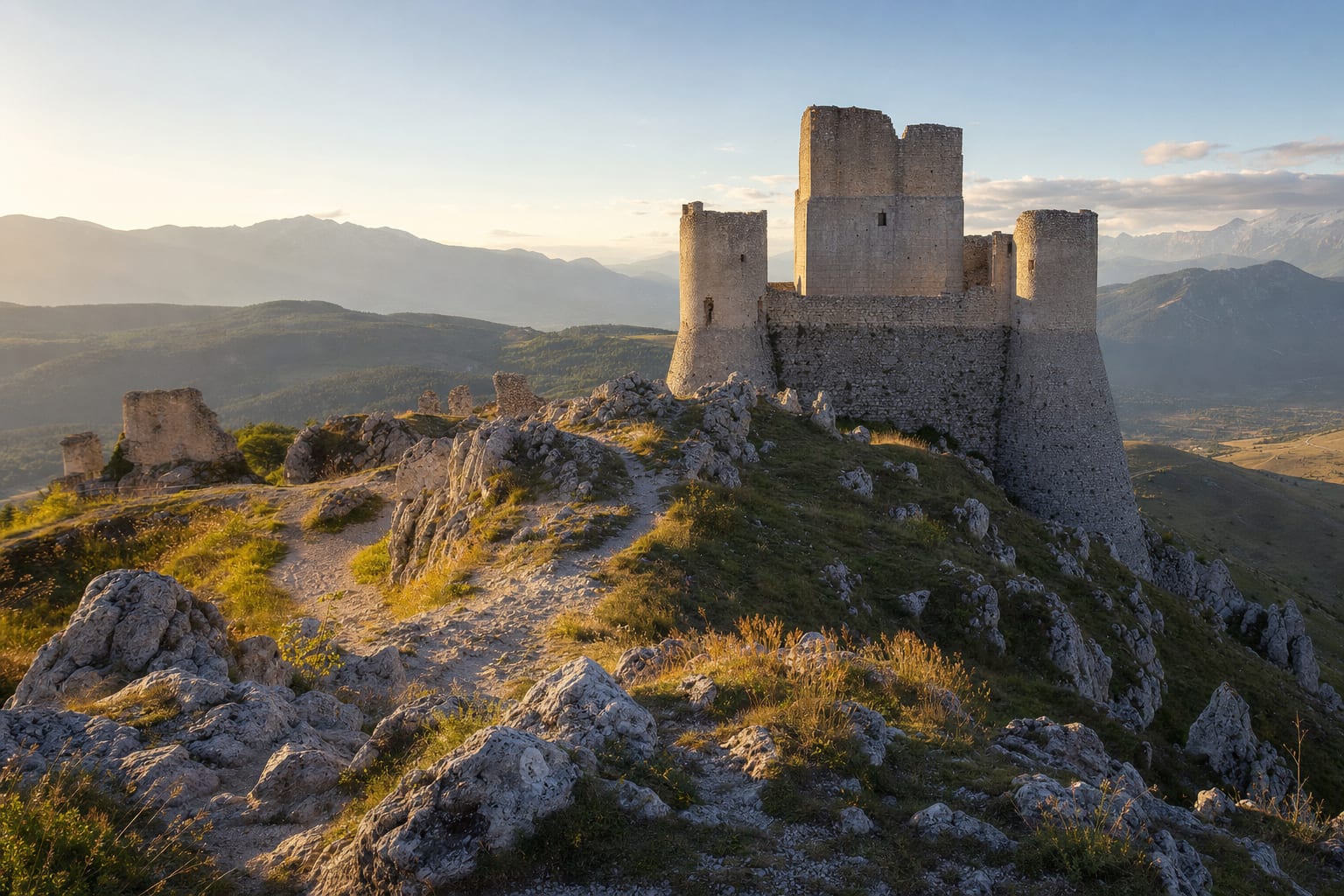
Rocca Calascio
The Apennines' highest fortress, a limestone ruin at 1,460 meters above the Navelli plain.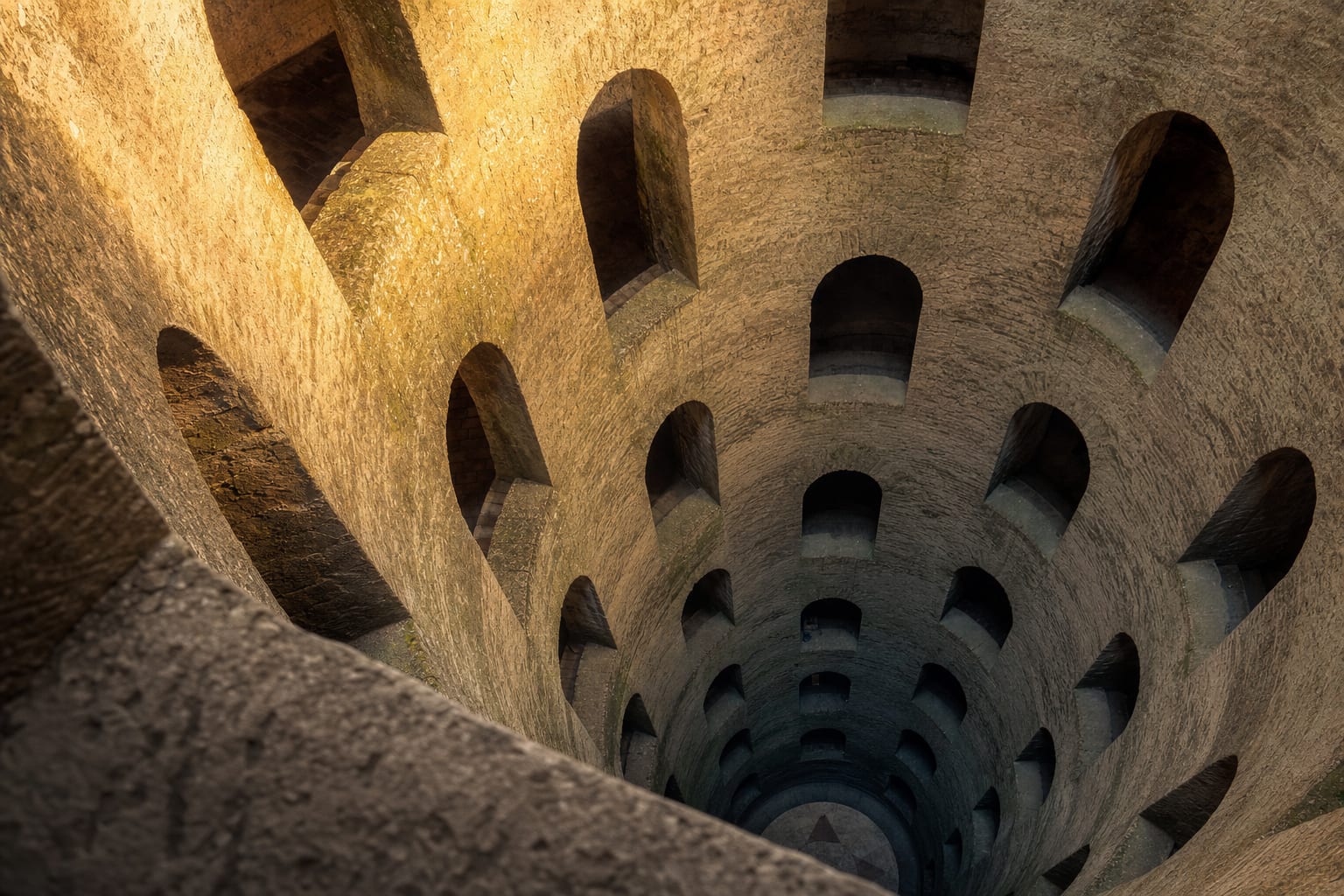
St. Patrick's Well
Antonio da Sangallo's 53-meter double-helix well, built for a pope who feared a siege.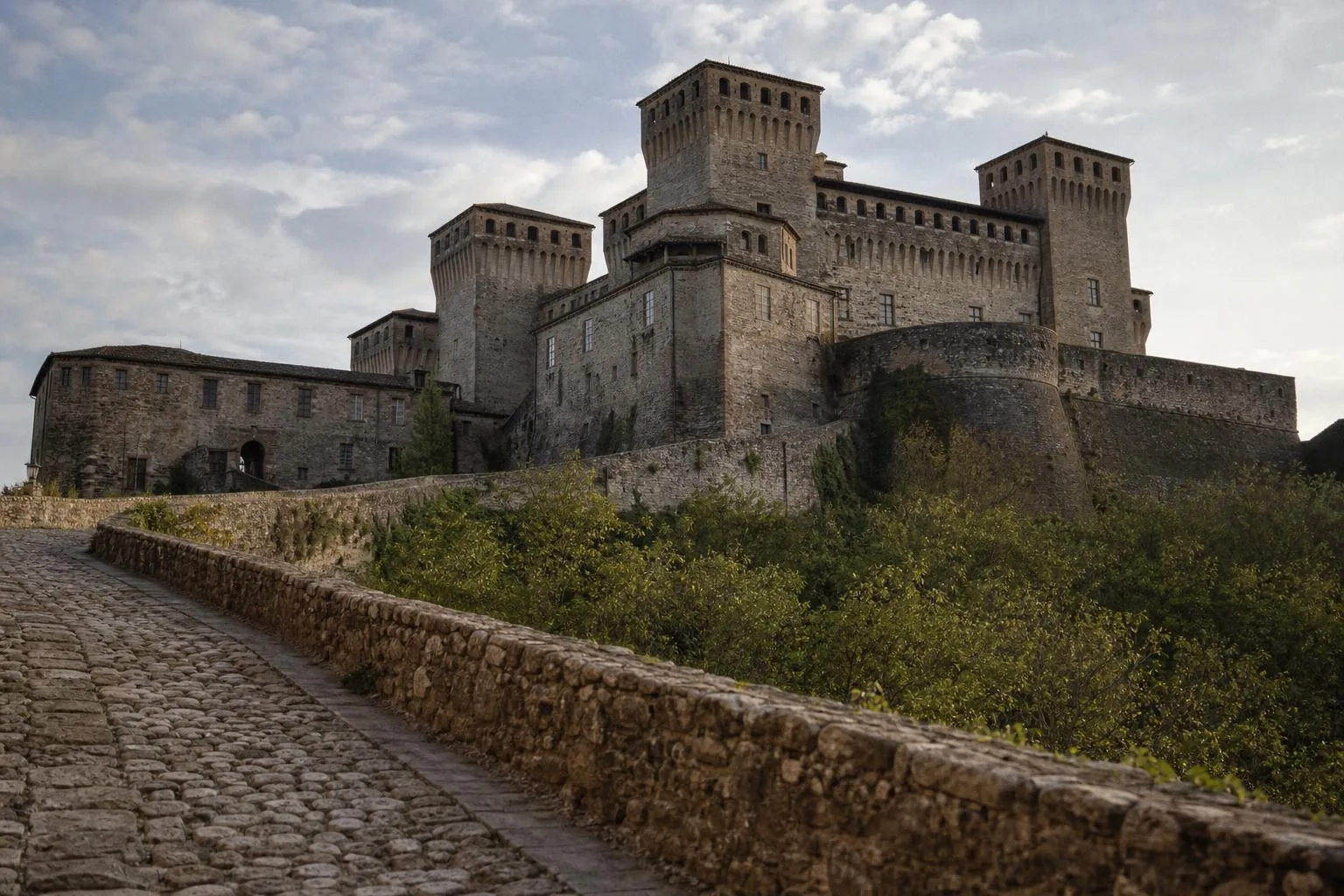
Torrechiara Castle
A 15th-century fortress built by a count for his mistress, its Camera d'Oro frescoed with their entwined initials.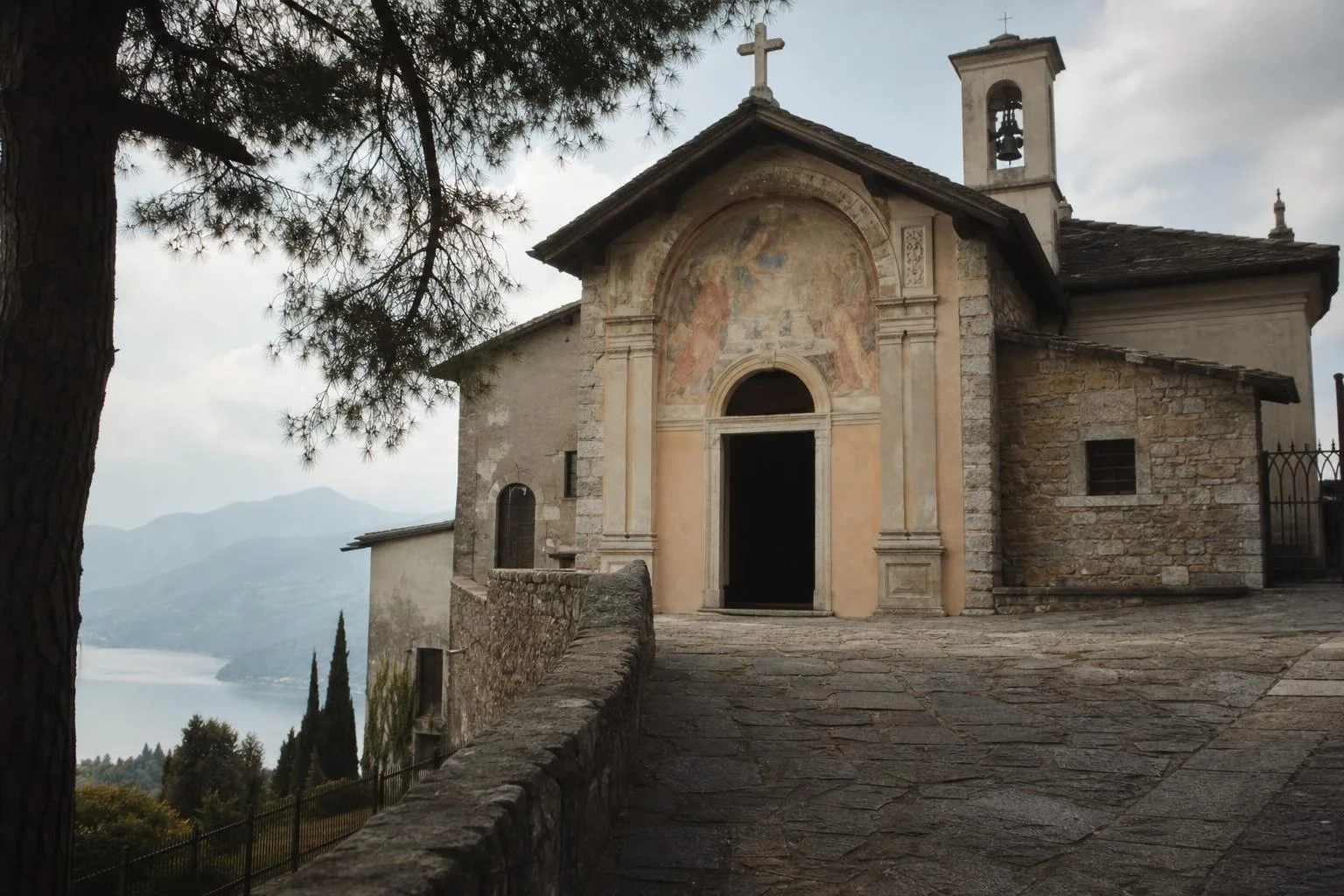
Madonna del Ghisallo
A hilltop sanctuary above Lake Como, declared patron shrine of cyclists in 1949, with a cycling museum next door.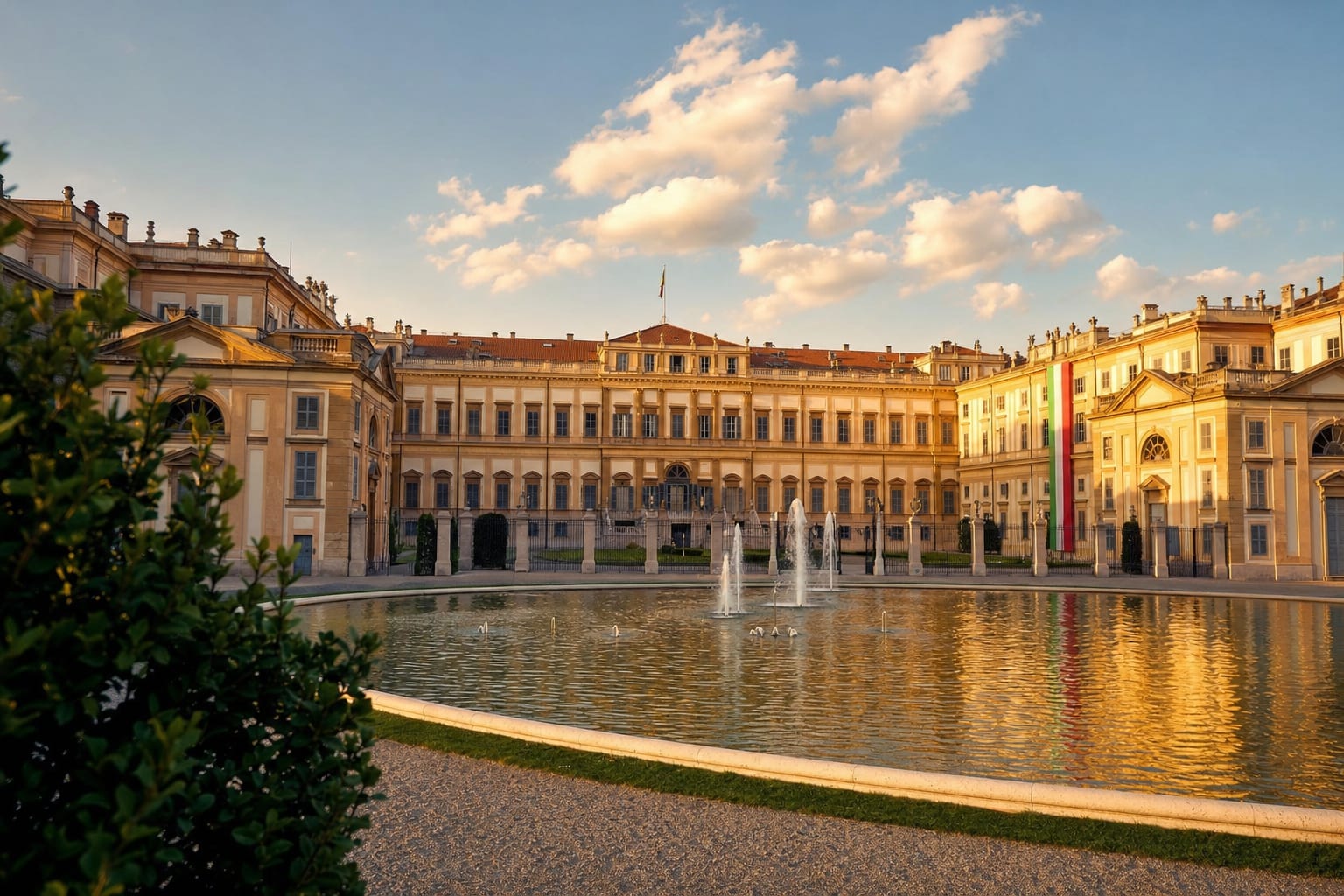
Royal Villa of Monza
A Habsburg summer palace by Piermarini, its 28 restored rooms opening onto one of Europe's largest parks.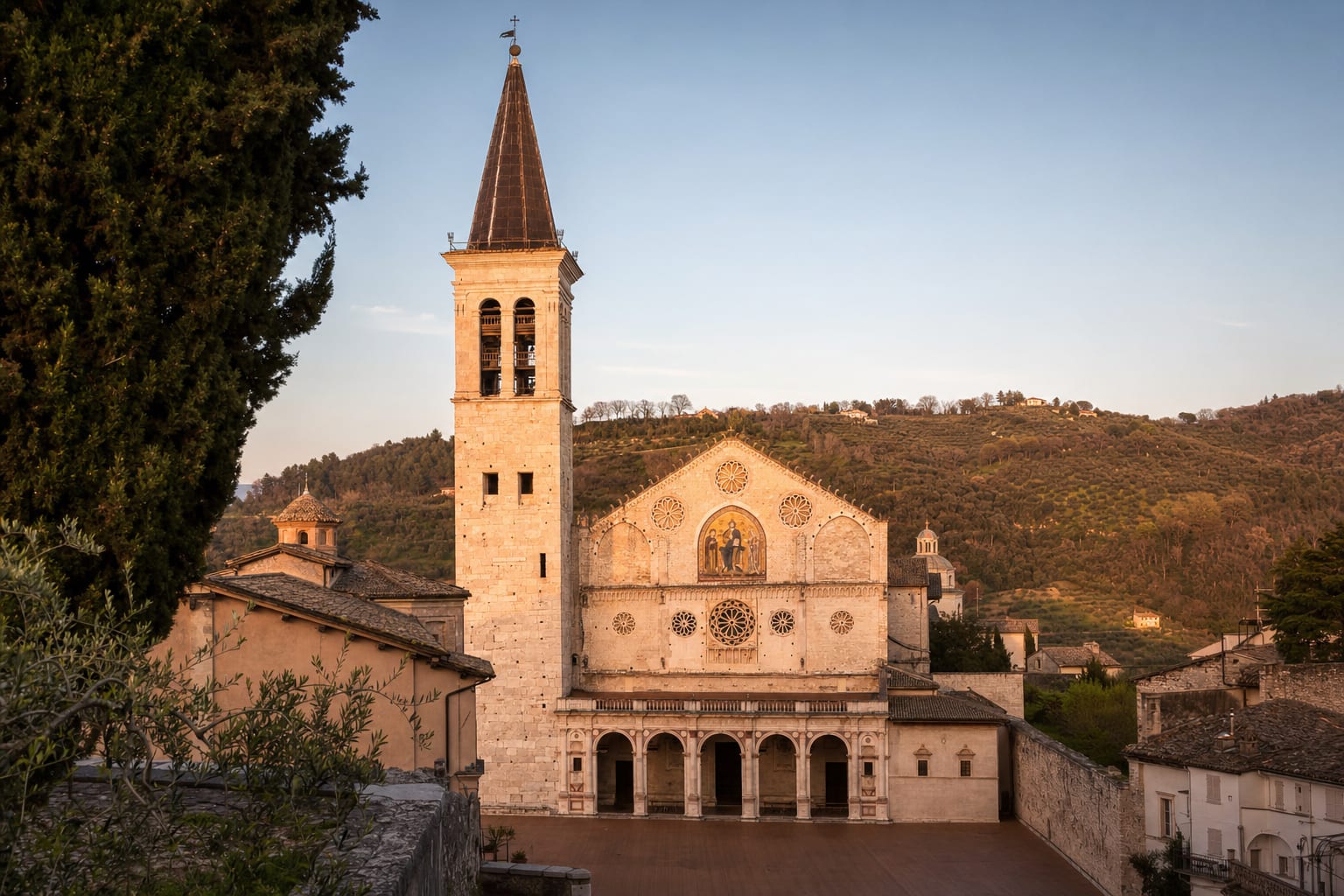
Spoleto Cathedral
The cathedral at the foot of Spoleto's sloping festival piazza, home to Filippo Lippi's last frescoes.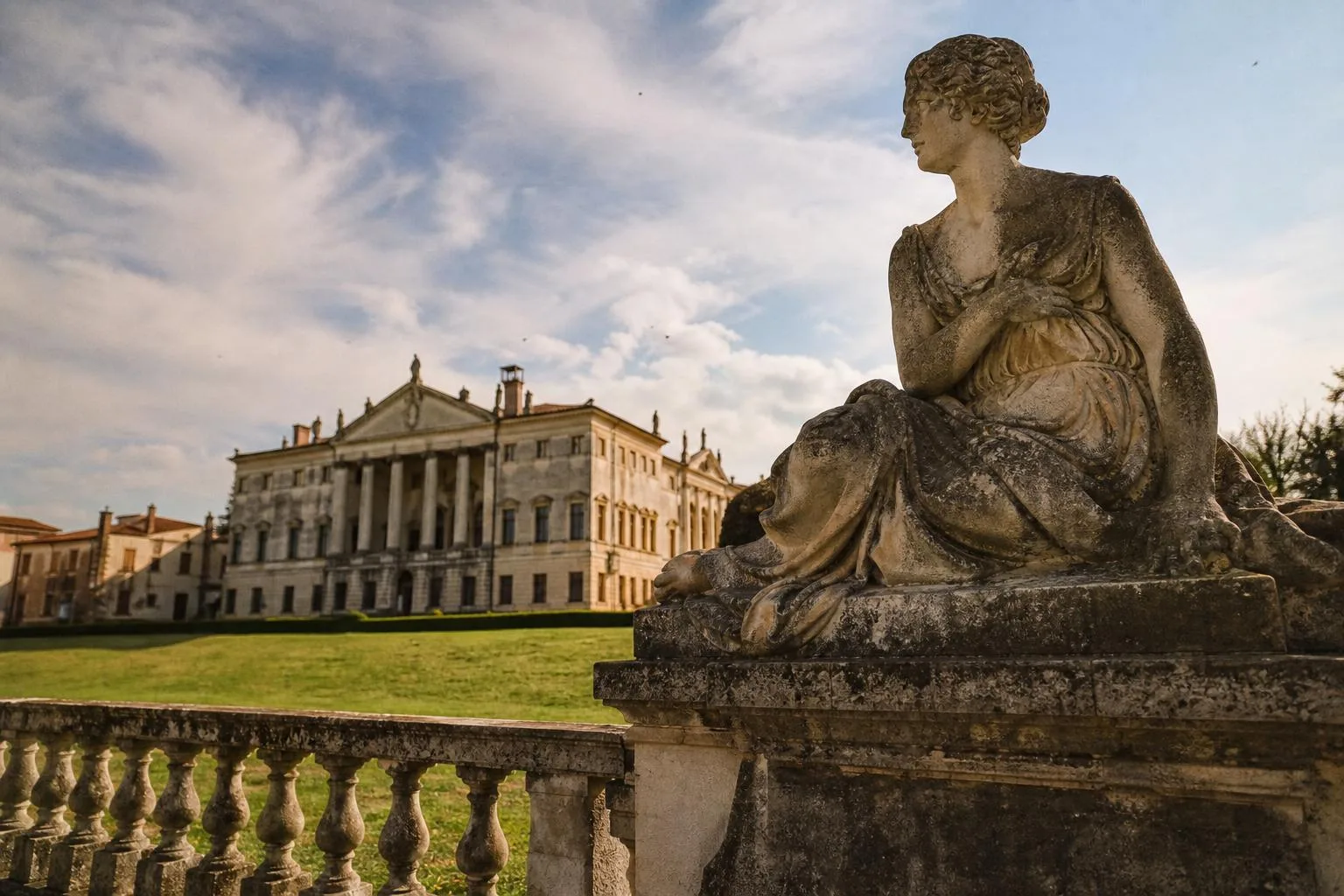
Villa Contarini
A grand Baroque villa and 40 hectares of park at Piazzola sul Brenta.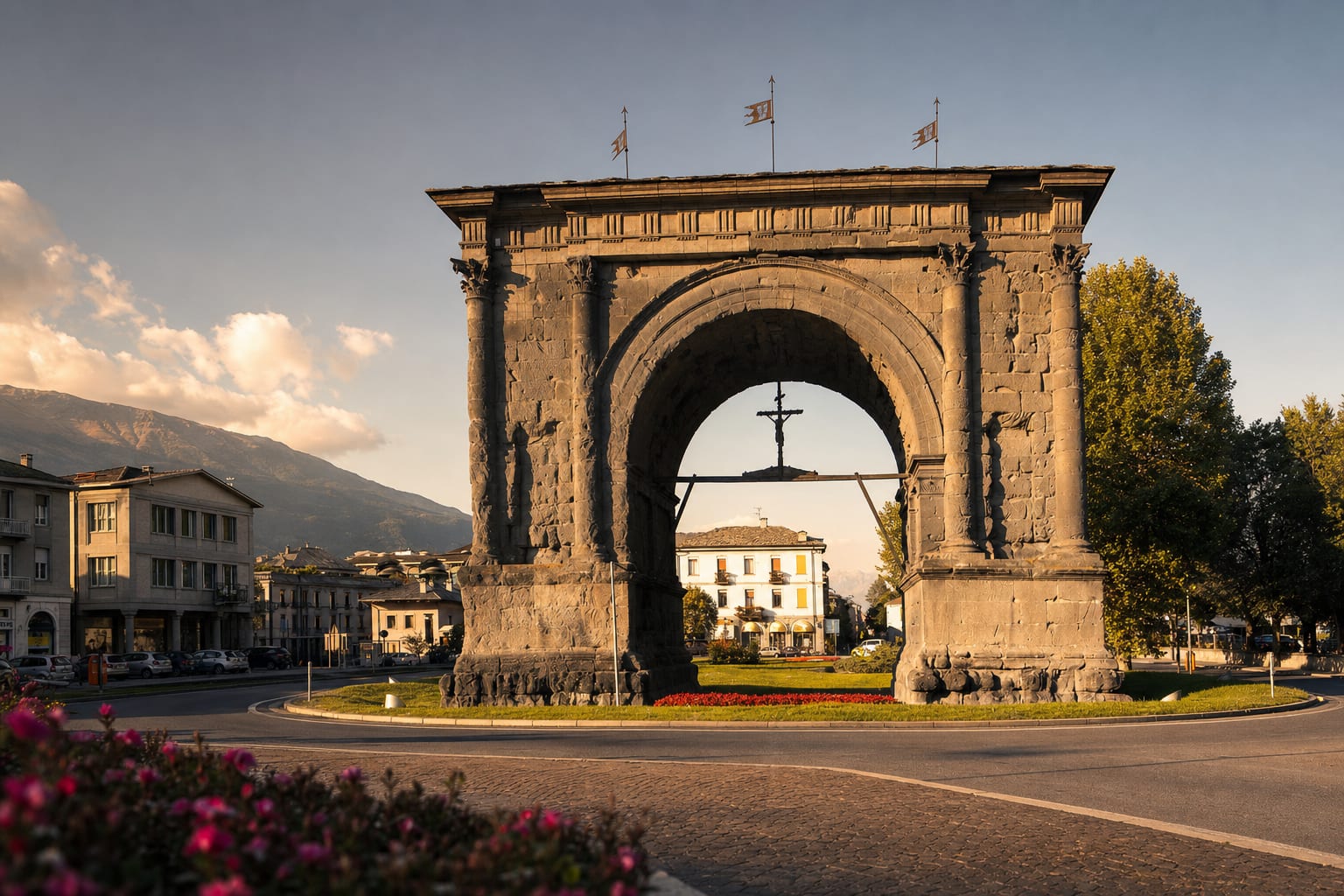
Arch of Augustus
The Roman triumphal arch that has marked Aosta's eastern entrance since 25 BC.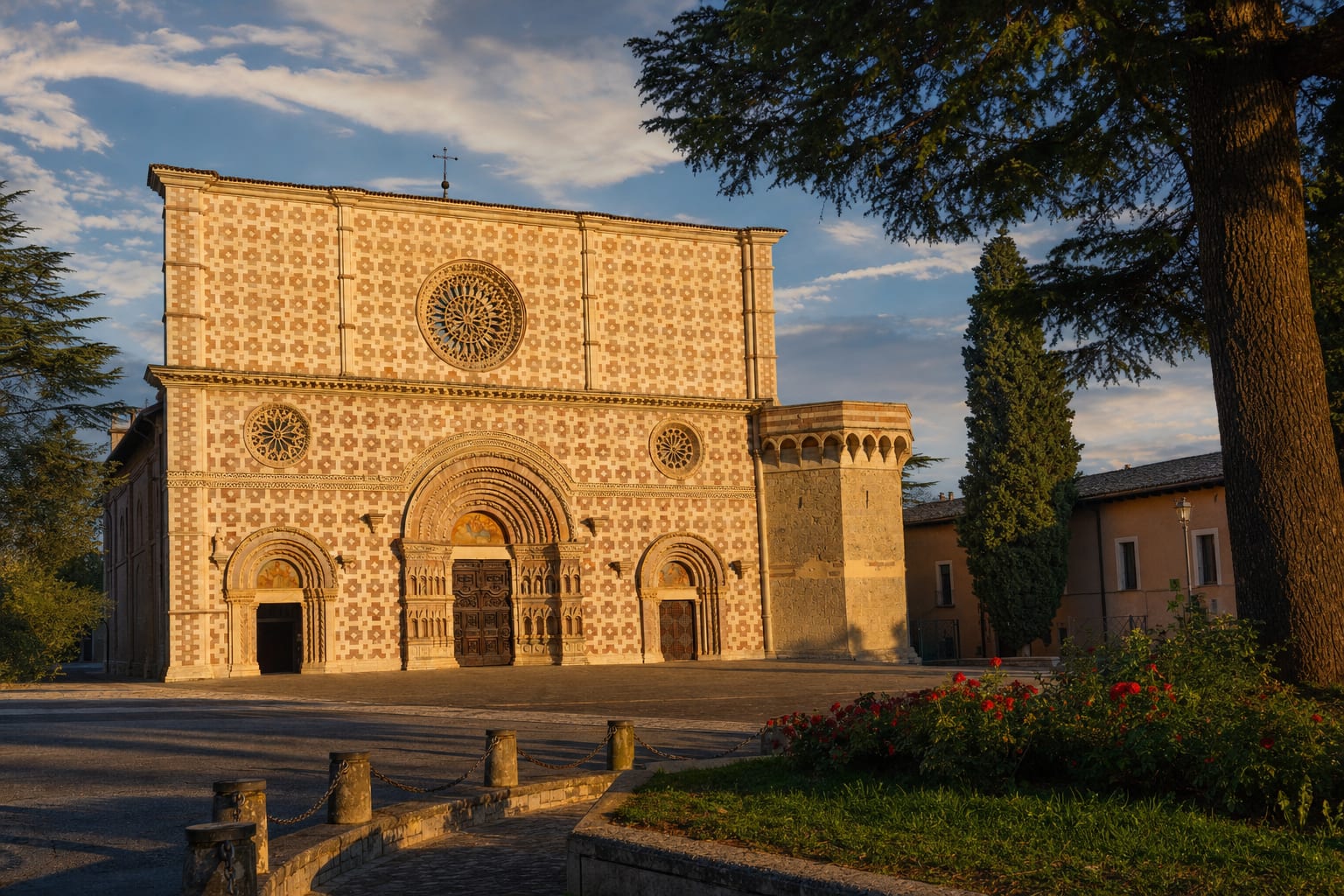
Basilica of Collemaggio
The pink-and-white checkerboard basilica of Celestine V, the pope who resigned.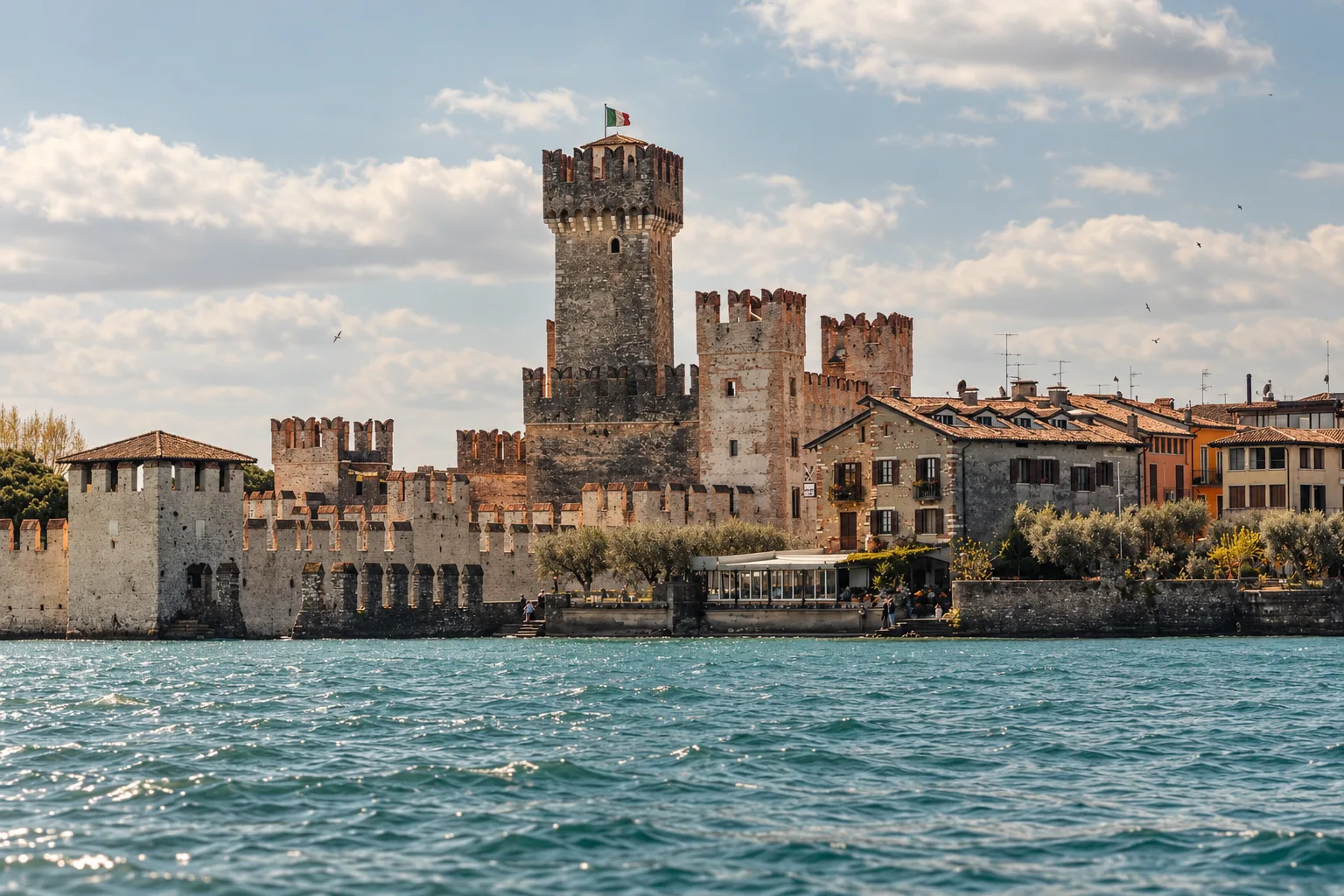
Scaliger Castle of Sirmione
The moated Scaliger fortress that guards Sirmione's only land entrance from Lake Garda.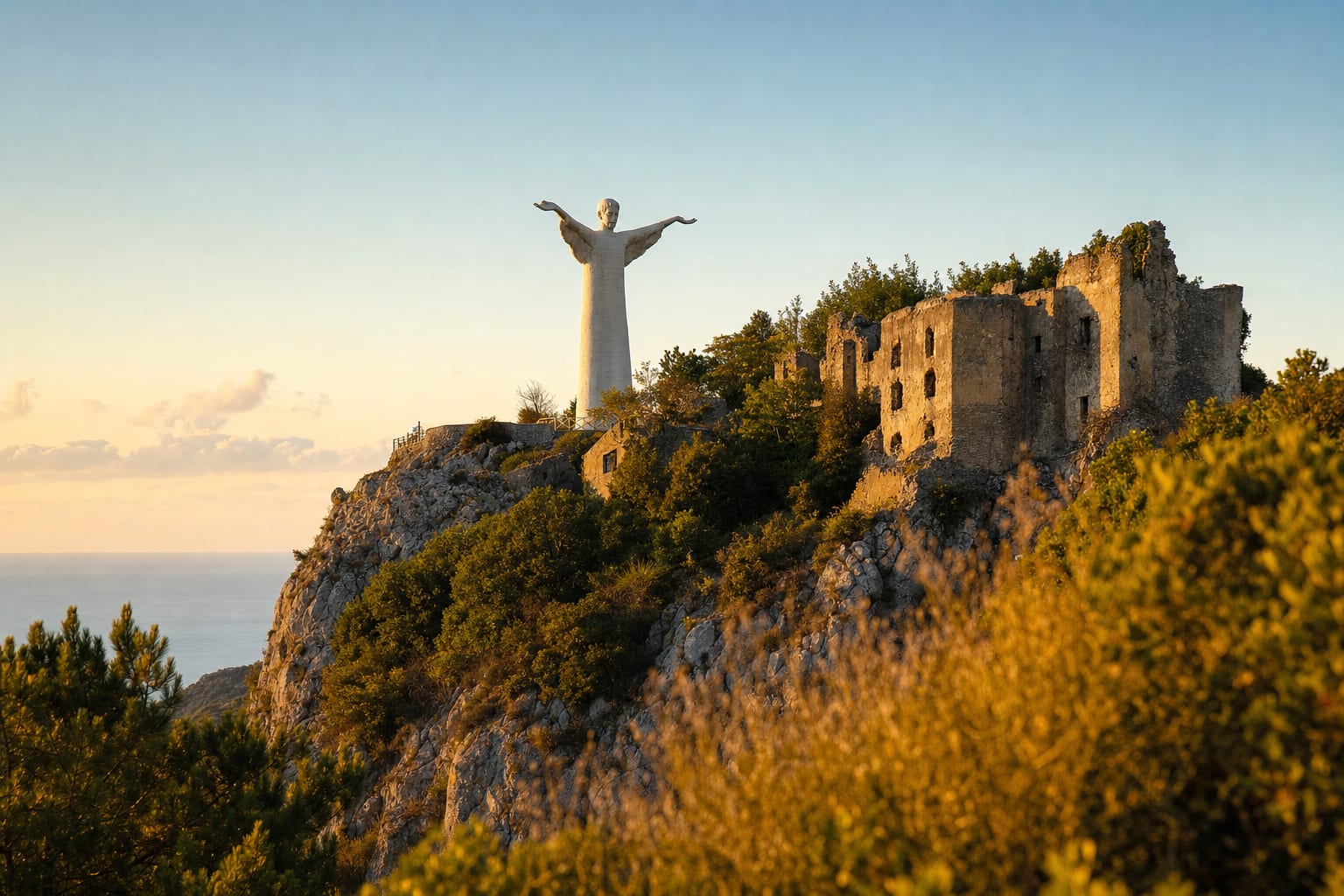
Christ of Maratea
Bruno Innocenti's 1965 Christ the Redeemer, watching inland over Maratea from the summit of Monte San Biagio.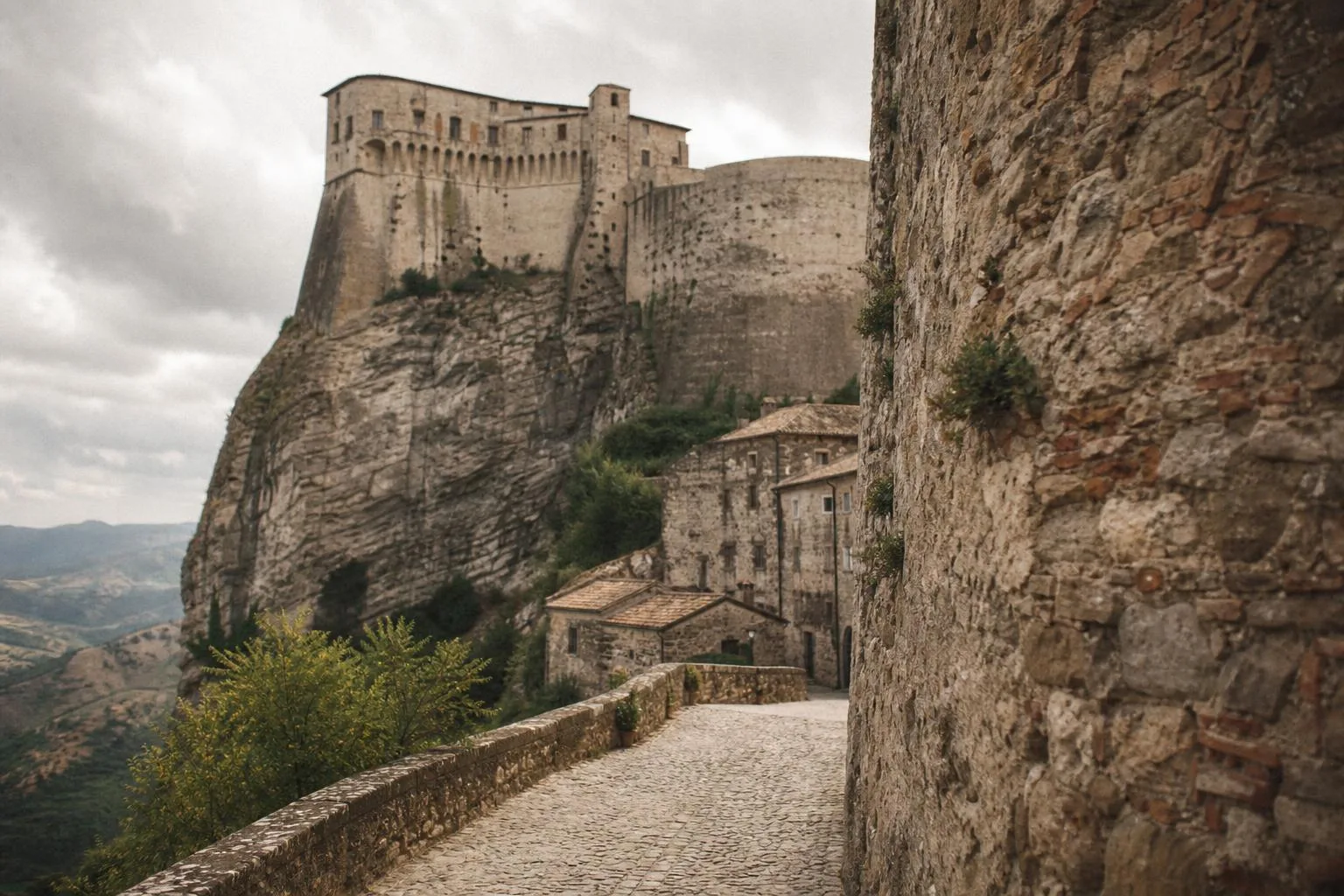
Fortress of San Leo
The Renaissance fortress above San Leo, rebuilt in 1441, where the occultist Count Cagliostro died a prisoner.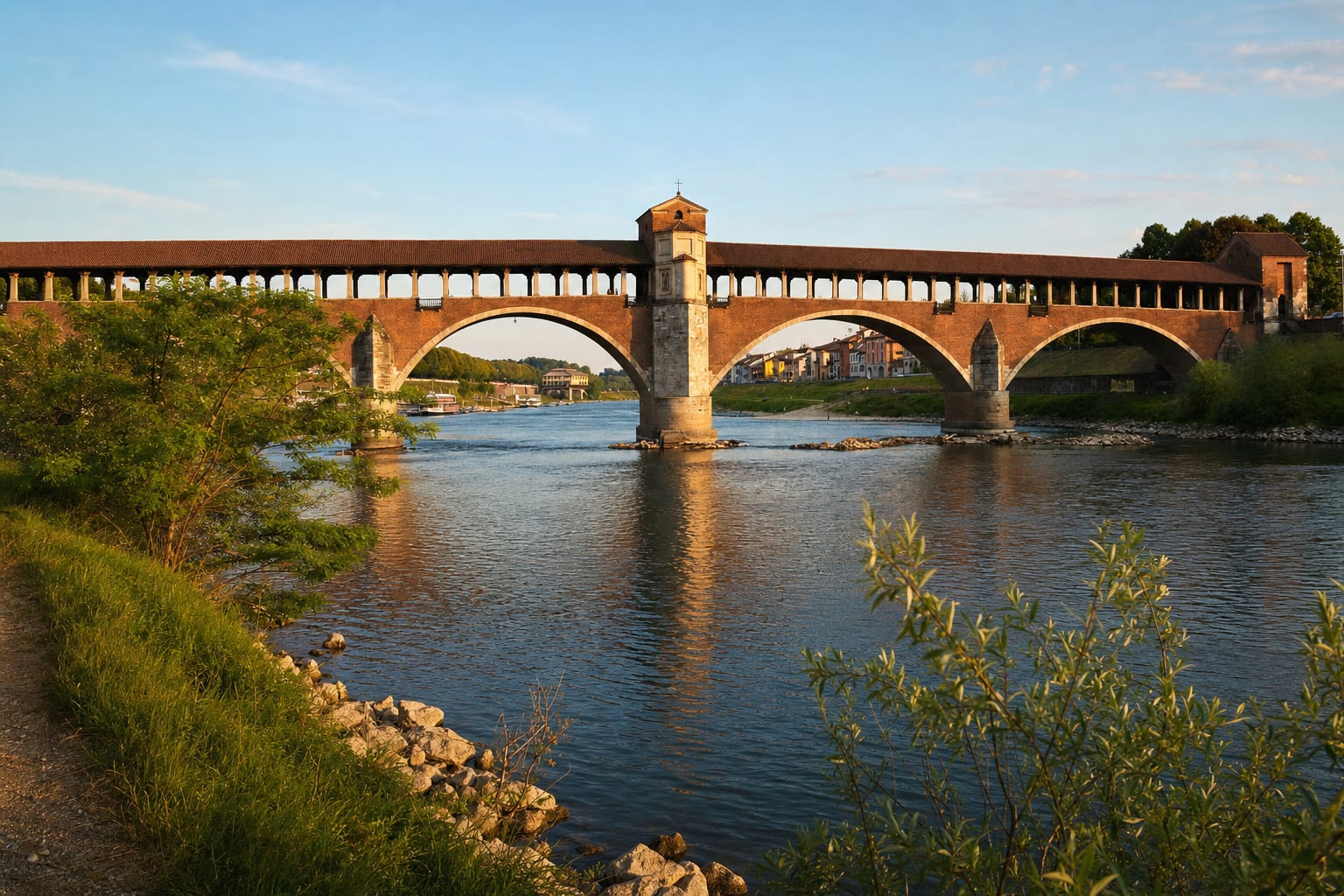
Ponte Coperto
Pavia's roofed medieval bridge over the Ticino, rebuilt in 1951 with a chapel at its center.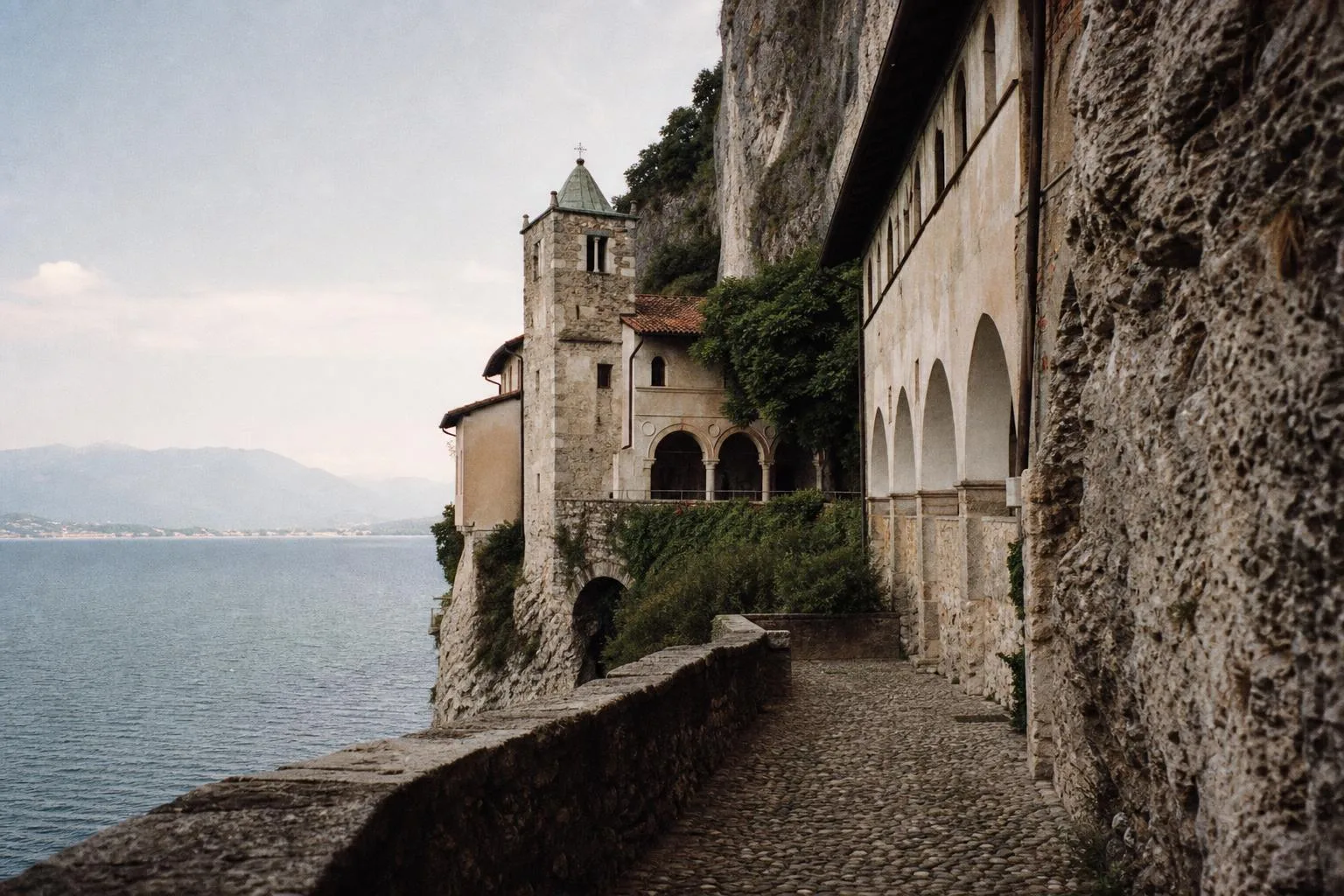
Santa Caterina del Sasso
A hermitage clinging to a Lake Maggiore cliff since around 1170, reached by ferry, elevator or stairway, with frescoes spanning five centuries.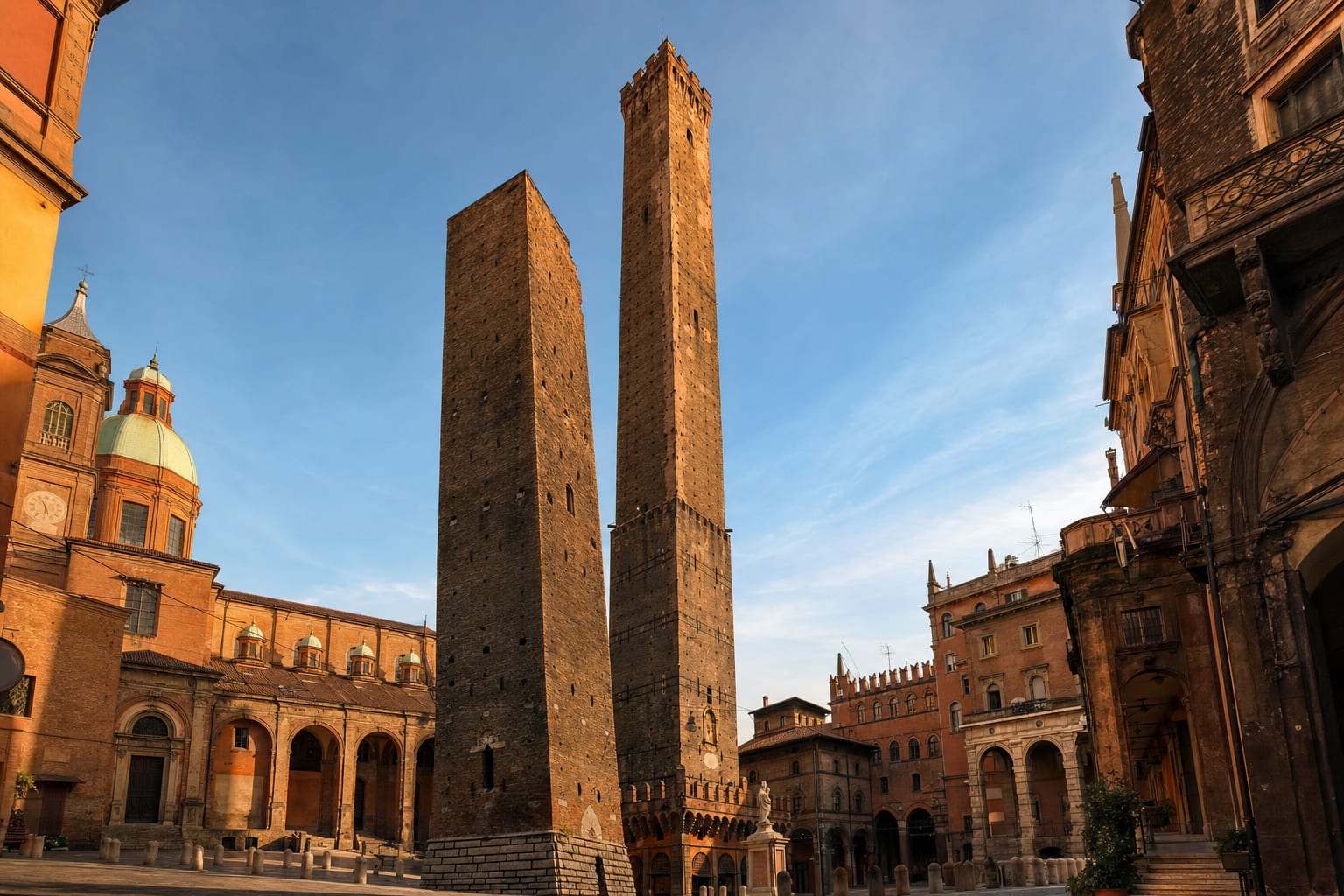
Two Towers of Bologna
Bologna's leaning medieval pair, standing together since 1119.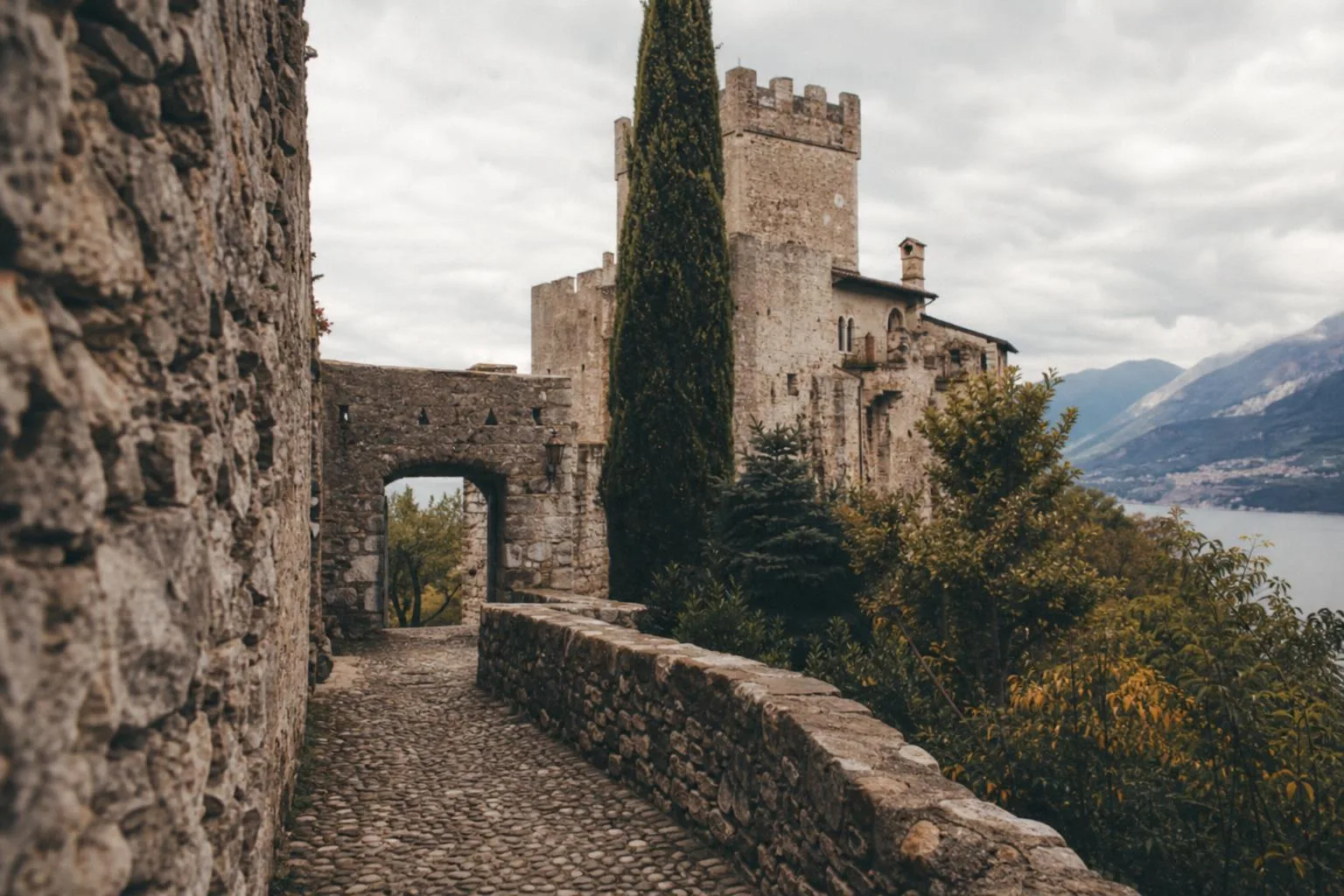
Vezio Castle
A medieval fortress above Varenna, open since 1999, with botanical gardens and sweeping views of Lake Como.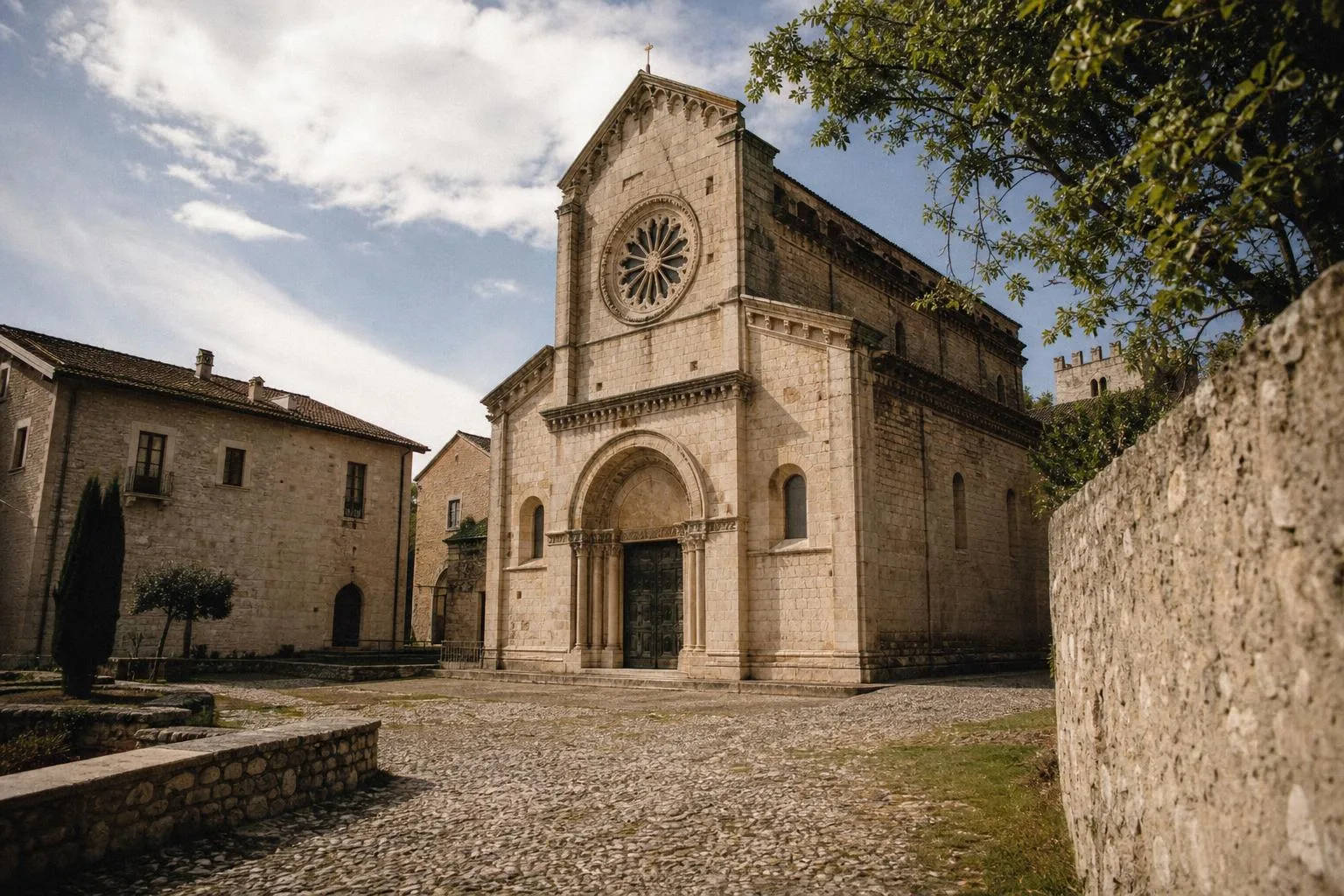
Abbey of San Clemente a Casauria
A 9th-century Benedictine abbey above the Pescara river, famous for its 1191 bronze doors.
Castello Caldora
A double-walled fortress with square and round towers above Pacentro, and a tower terrace over the Majella.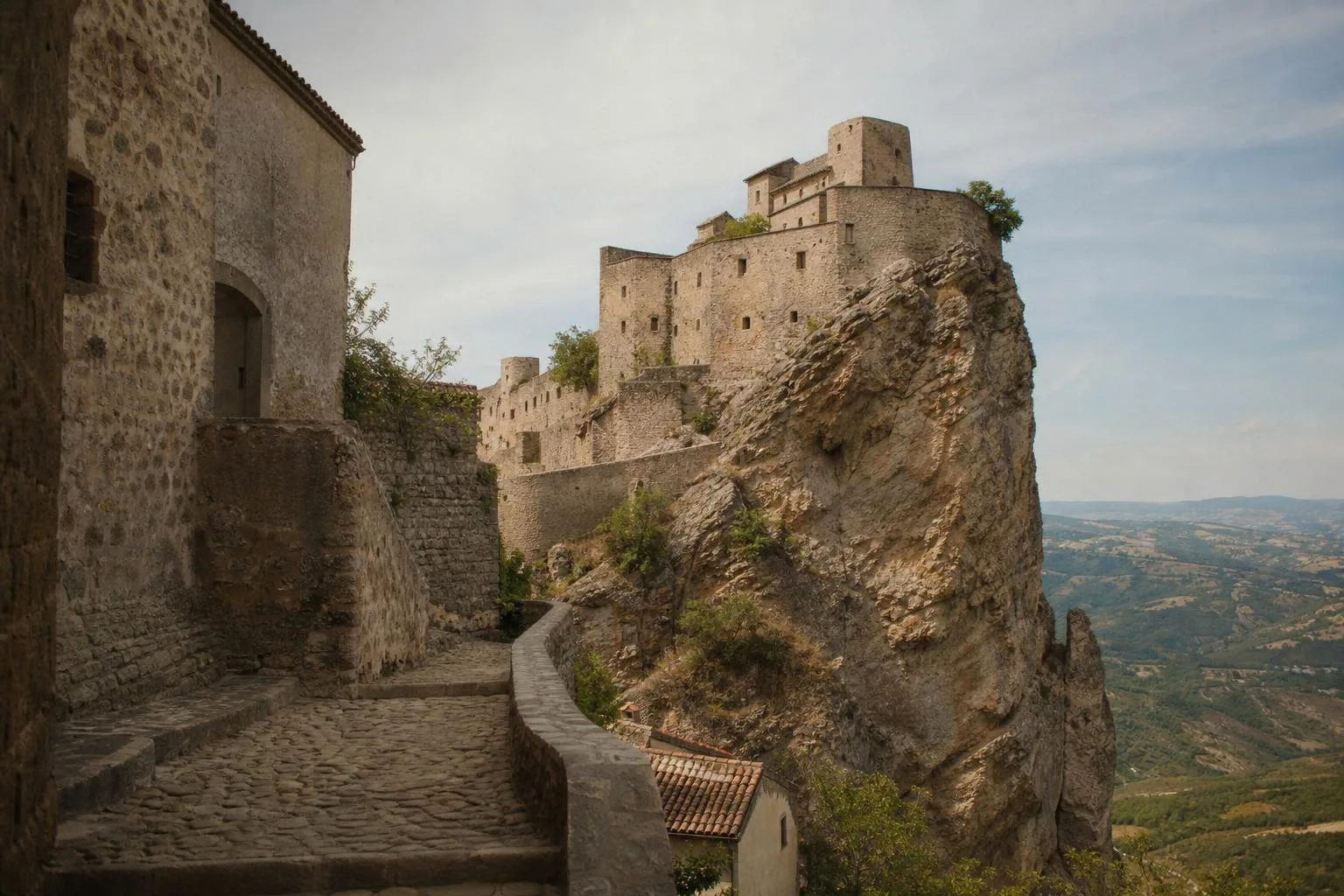
Castello di Roccascalegna
A medieval castle fused to a limestone spur above the Sangro valley, tied to a grim local legend.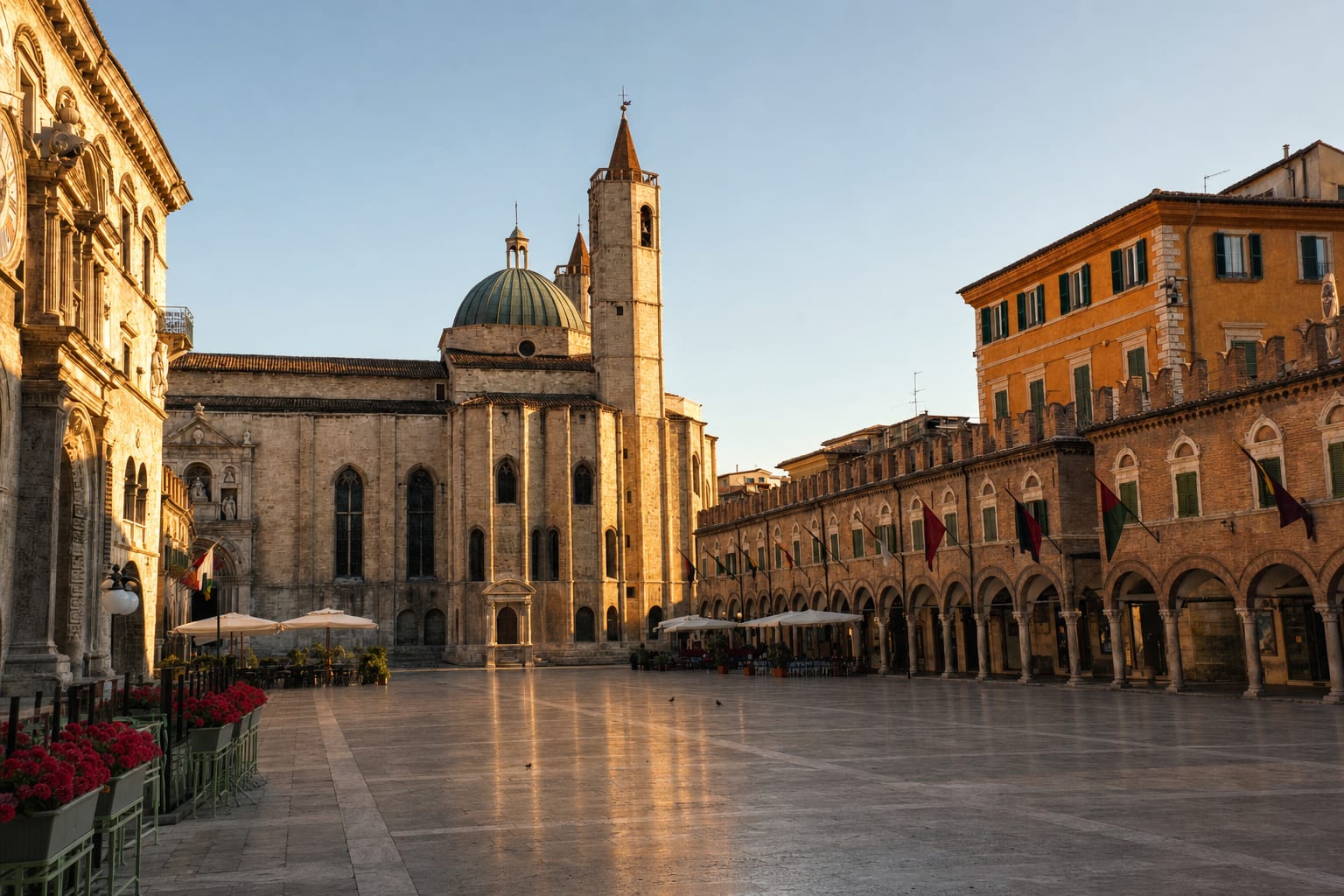
Piazza del Popolo of Ascoli
Ascoli's travertine main square, ringed by Renaissance loggias and the historic Caffe Meletti.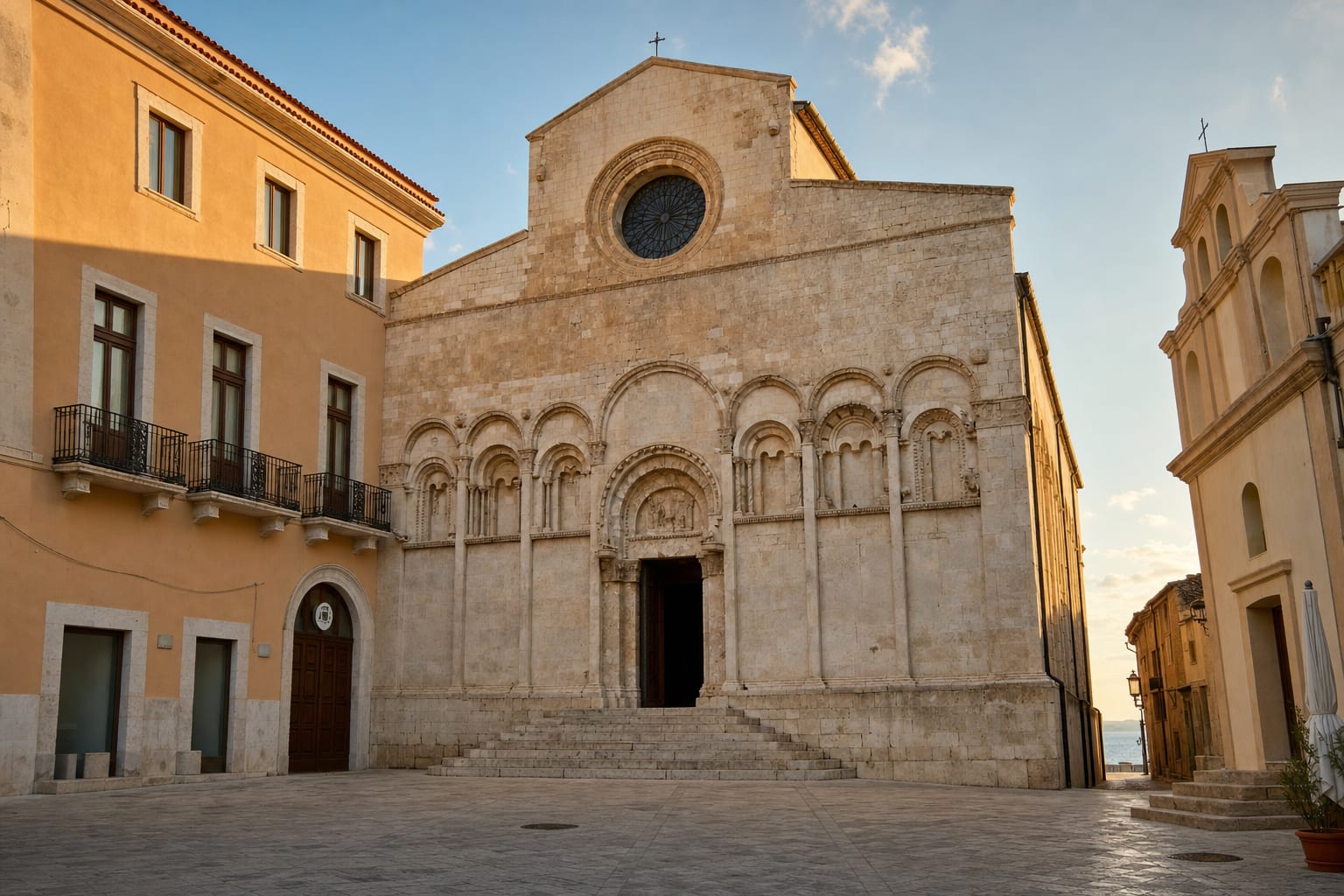
Termoli Cathedral
The Apulian Romanesque cathedral on Termoli's walled sea promontory.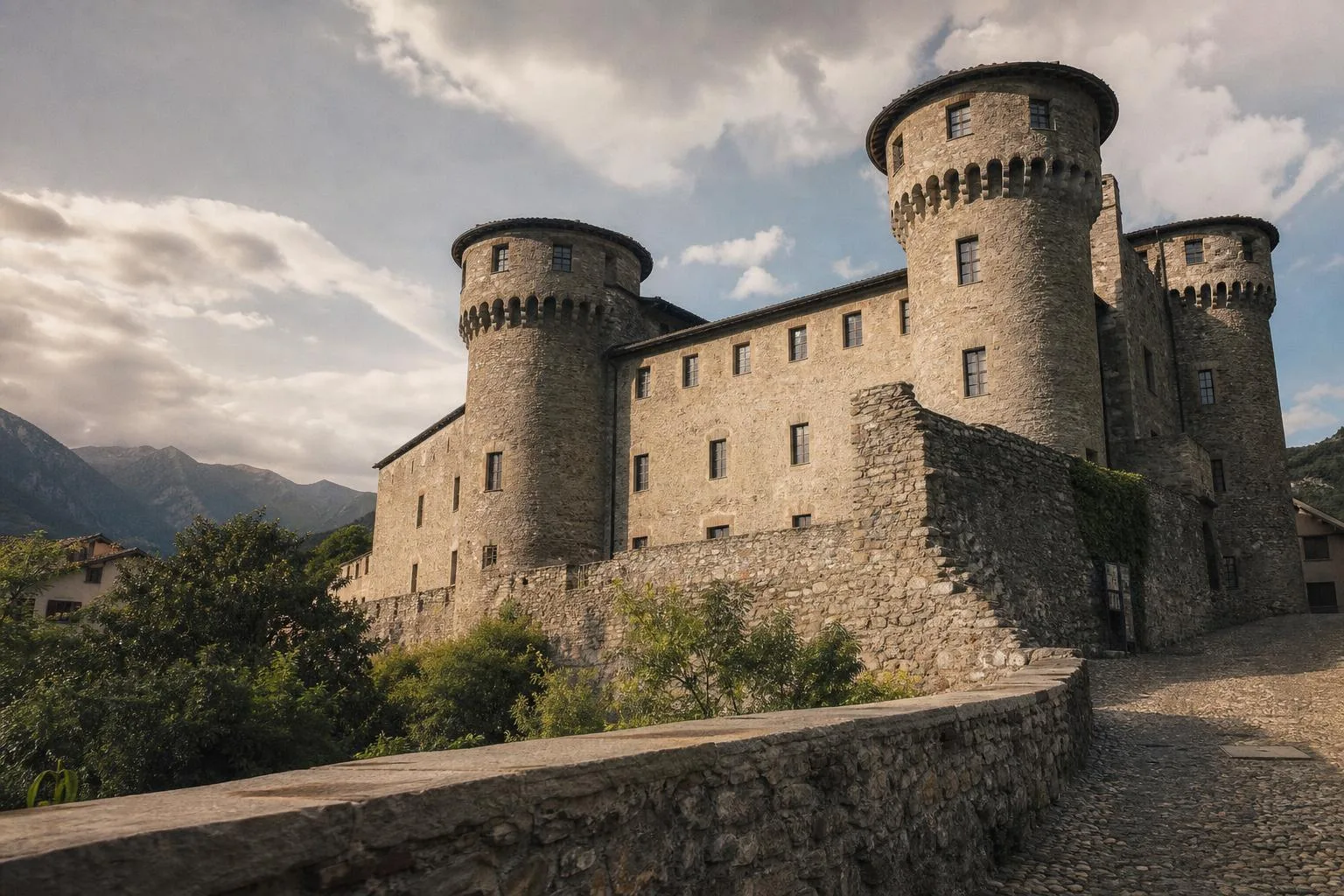
Aymavilles Castle
A castle with four round towers at the mouth of the Cogne Valley, now a museum.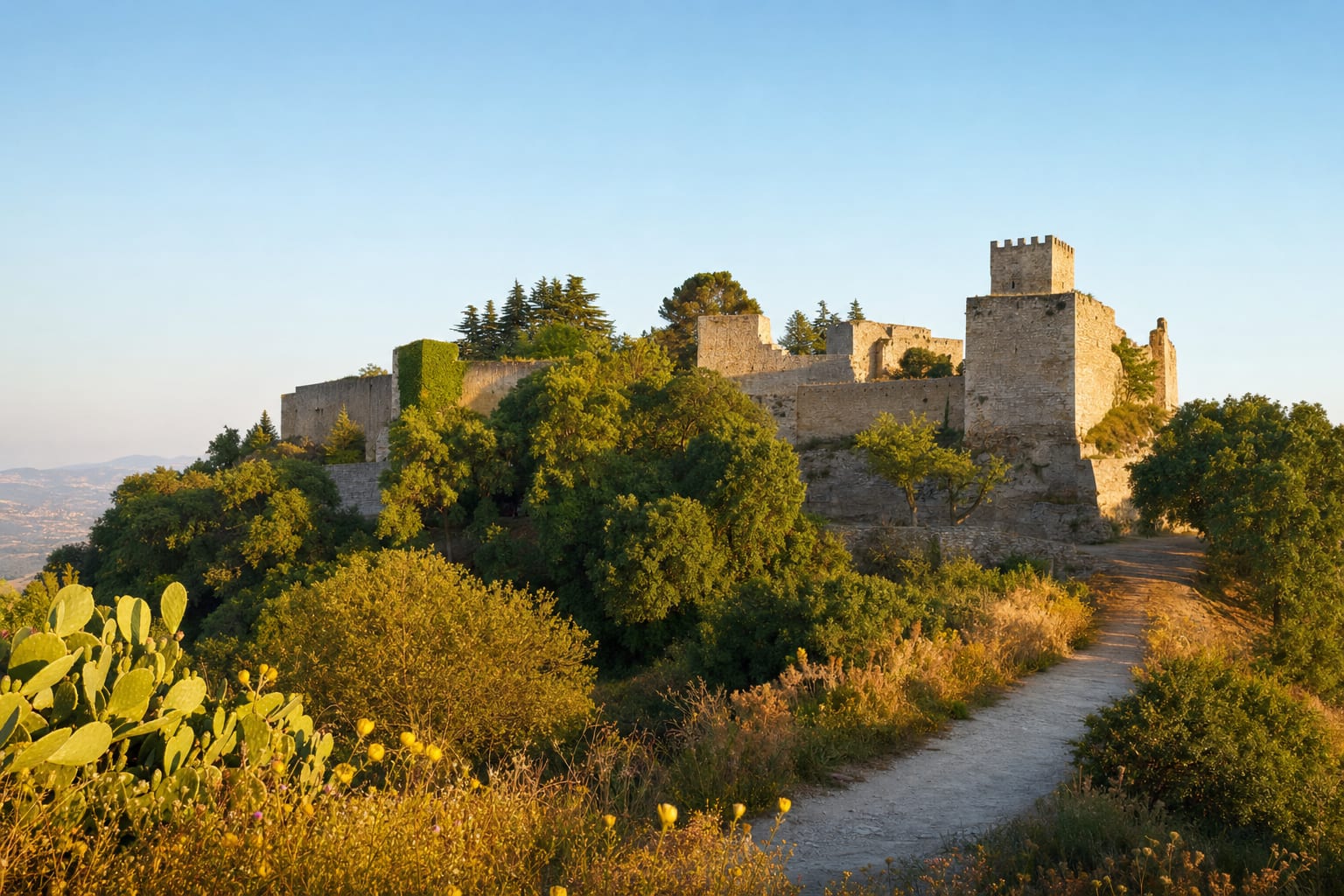
Castello di Lombardia
The hilltop fortress at Sicily's center, with Etna on its horizon.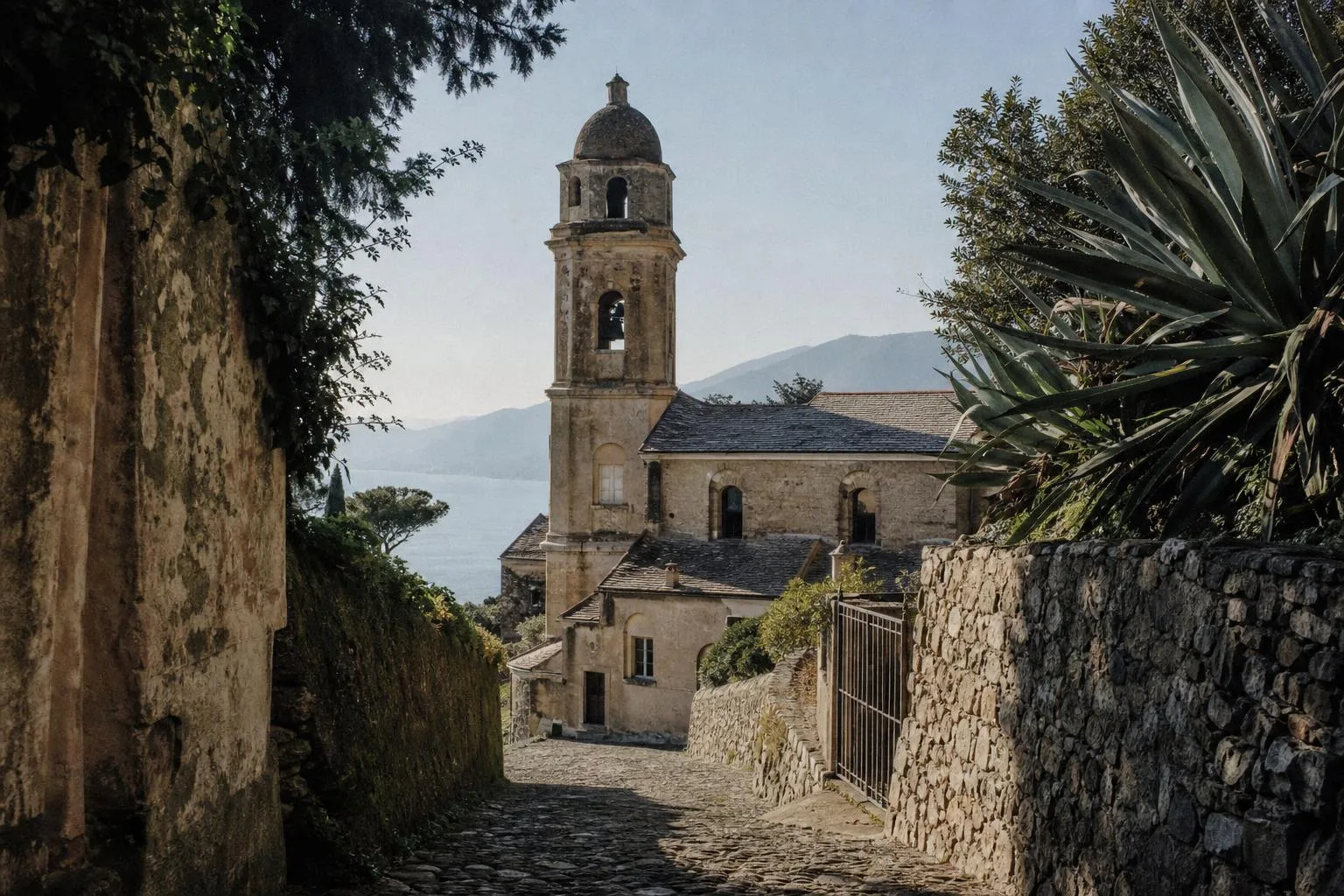
Cervara Abbey
A 1361 seaside abbey between Portofino and Santa Margherita with the Riviera’s only Renaissance garden on the water.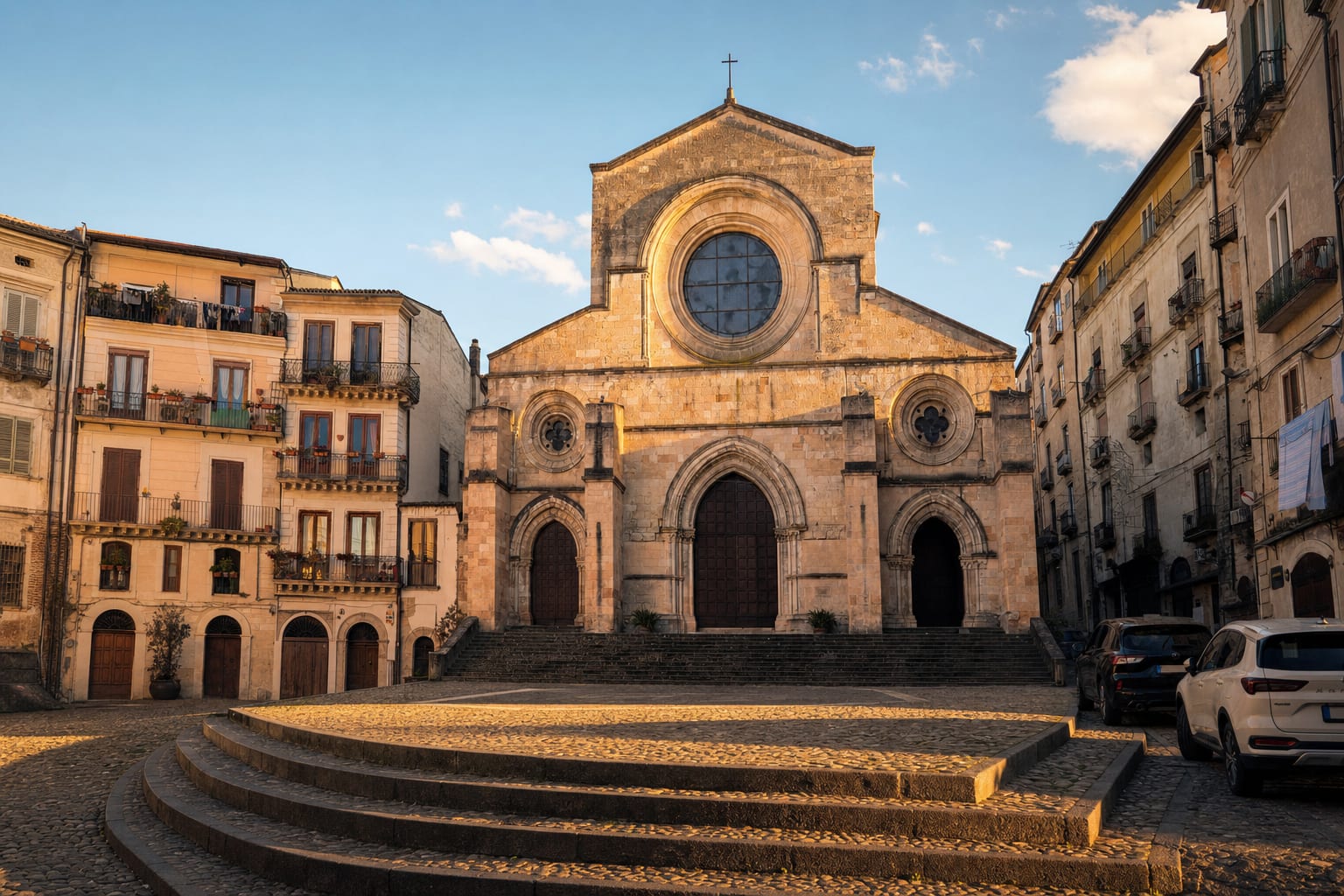
Cosenza Cathedral
The cathedral consecrated before Emperor Frederick II in 1222, home to Isabella of Aragon’s tomb.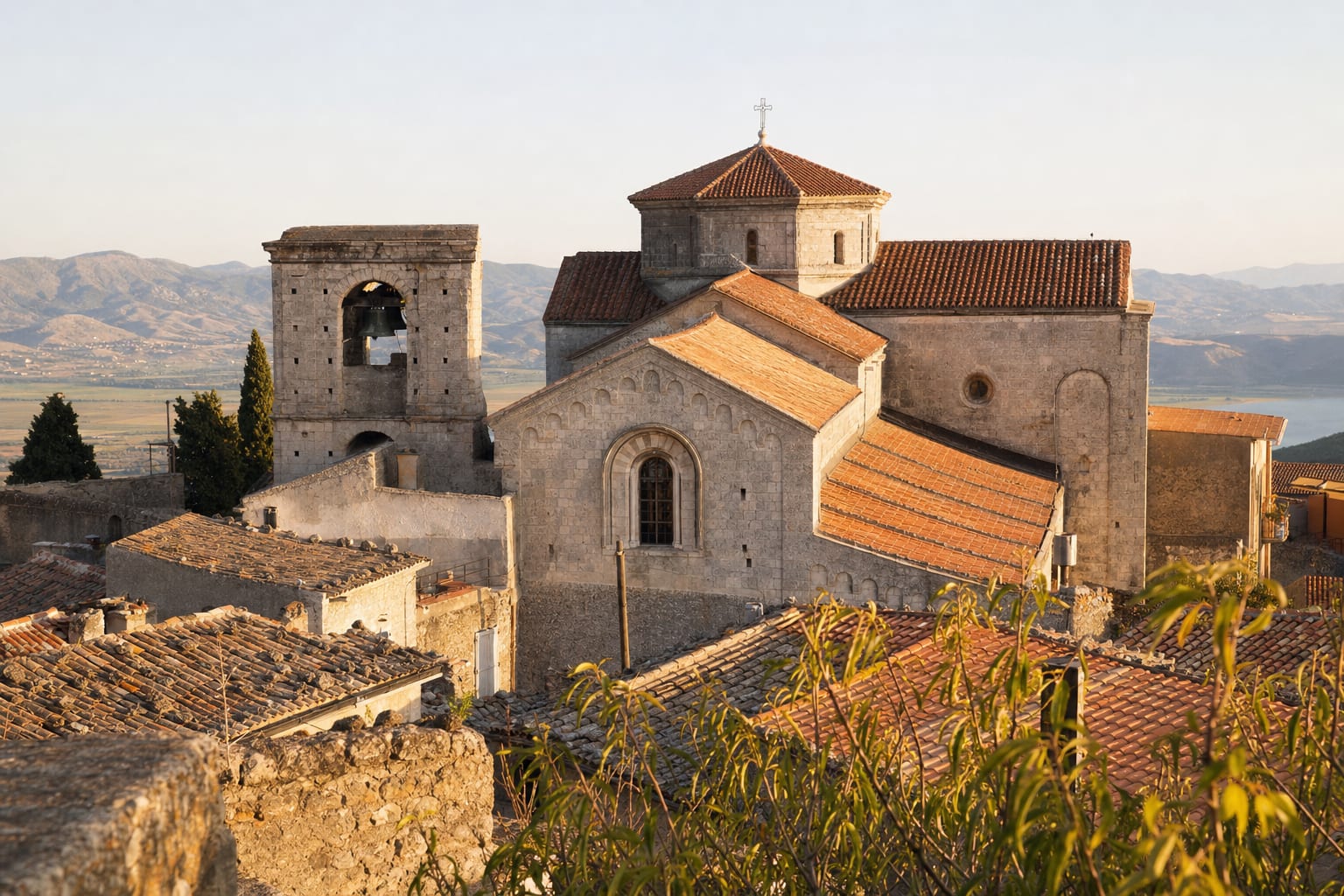
Gerace Cathedral
Calabria’s largest church, a Byzantine-Norman basilica built with columns from ancient Locri.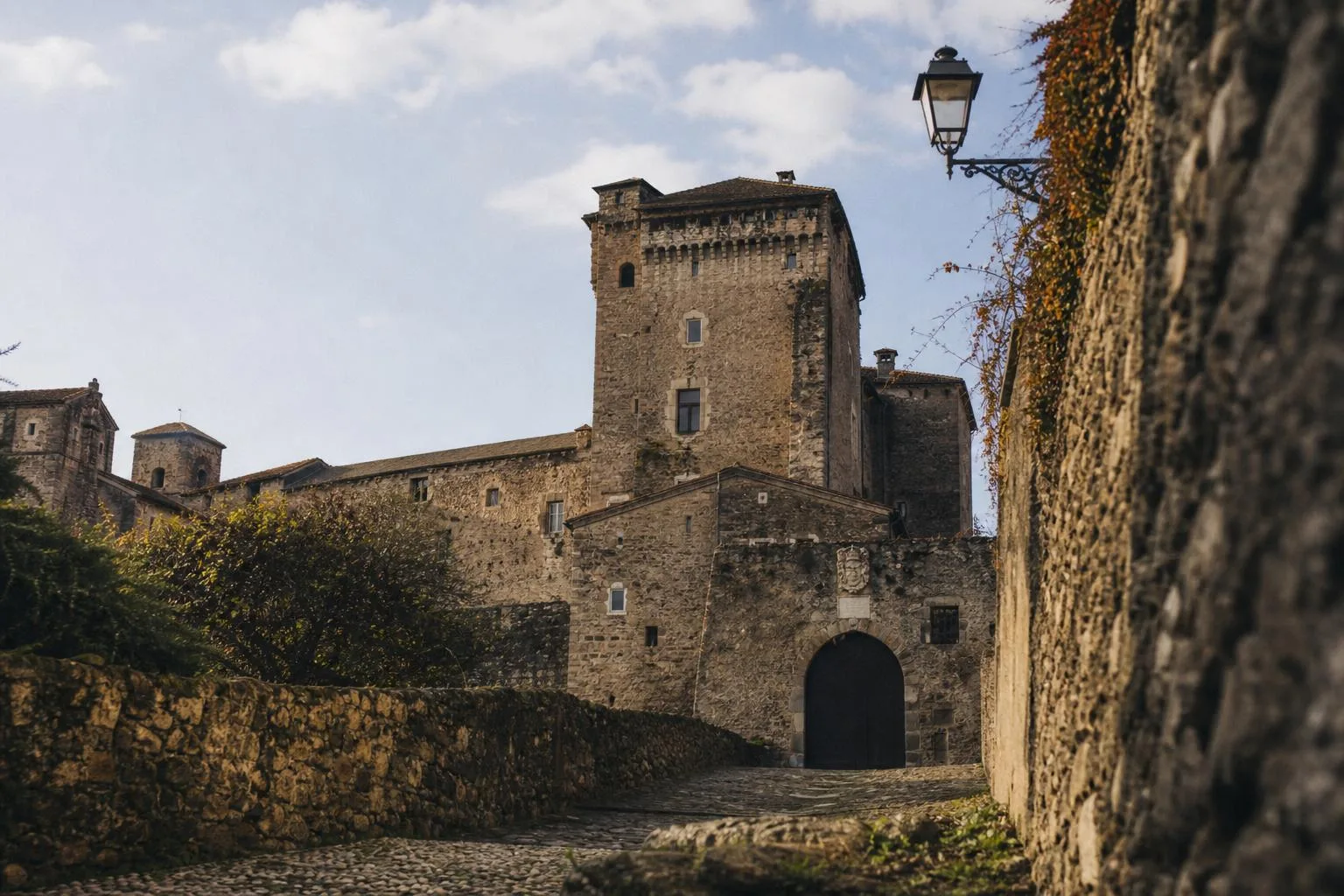
Masino Castle
A hilltop castle near Ivrea with frescoed rooms, a large park and one of Italy’s biggest hornbeam labyrinths.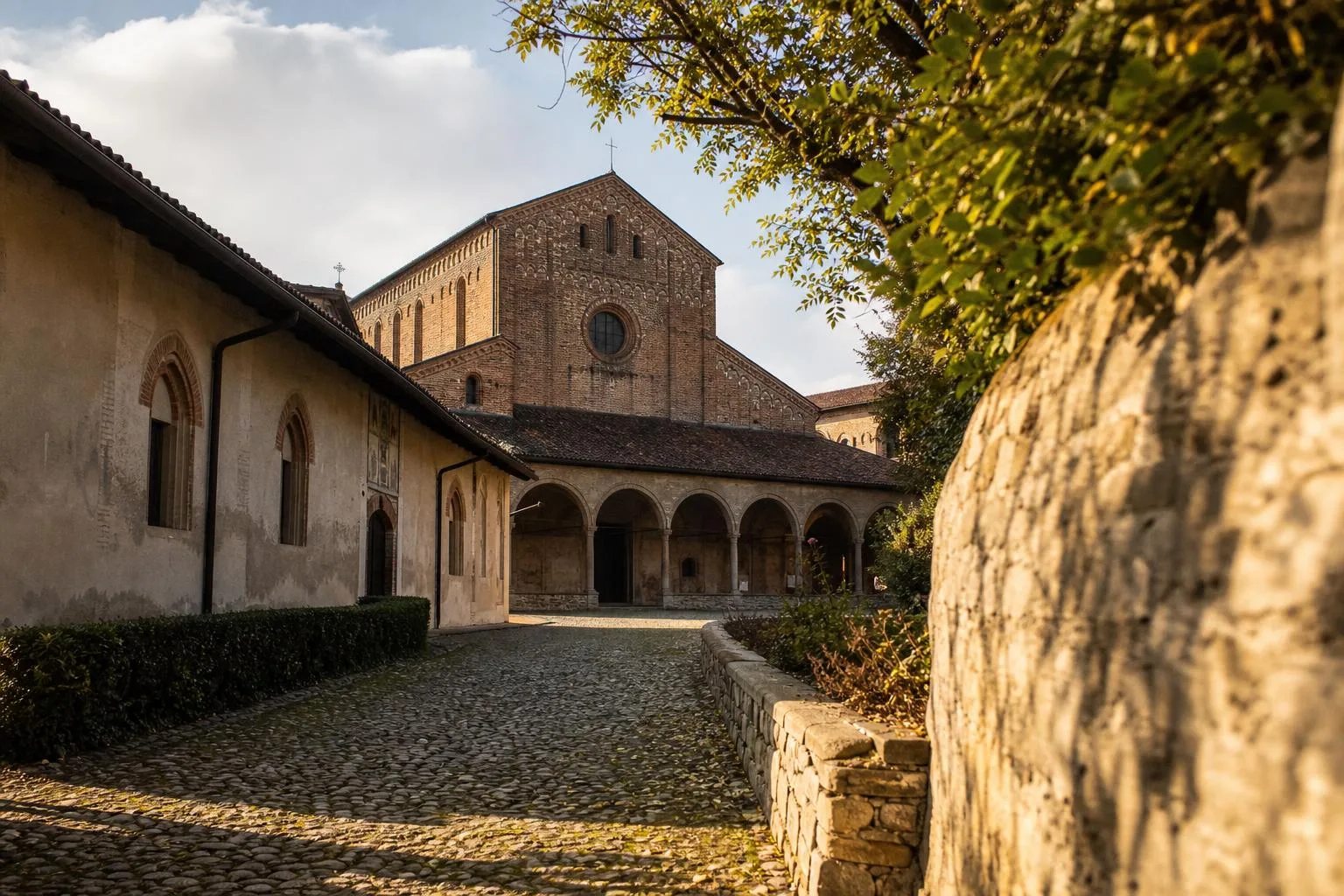
Sant'Antonio di Ranverso Abbey
A Gothic Antonite hospital-monastery on the Via Francigena, with Jaquerio frescoes and a terracotta facade.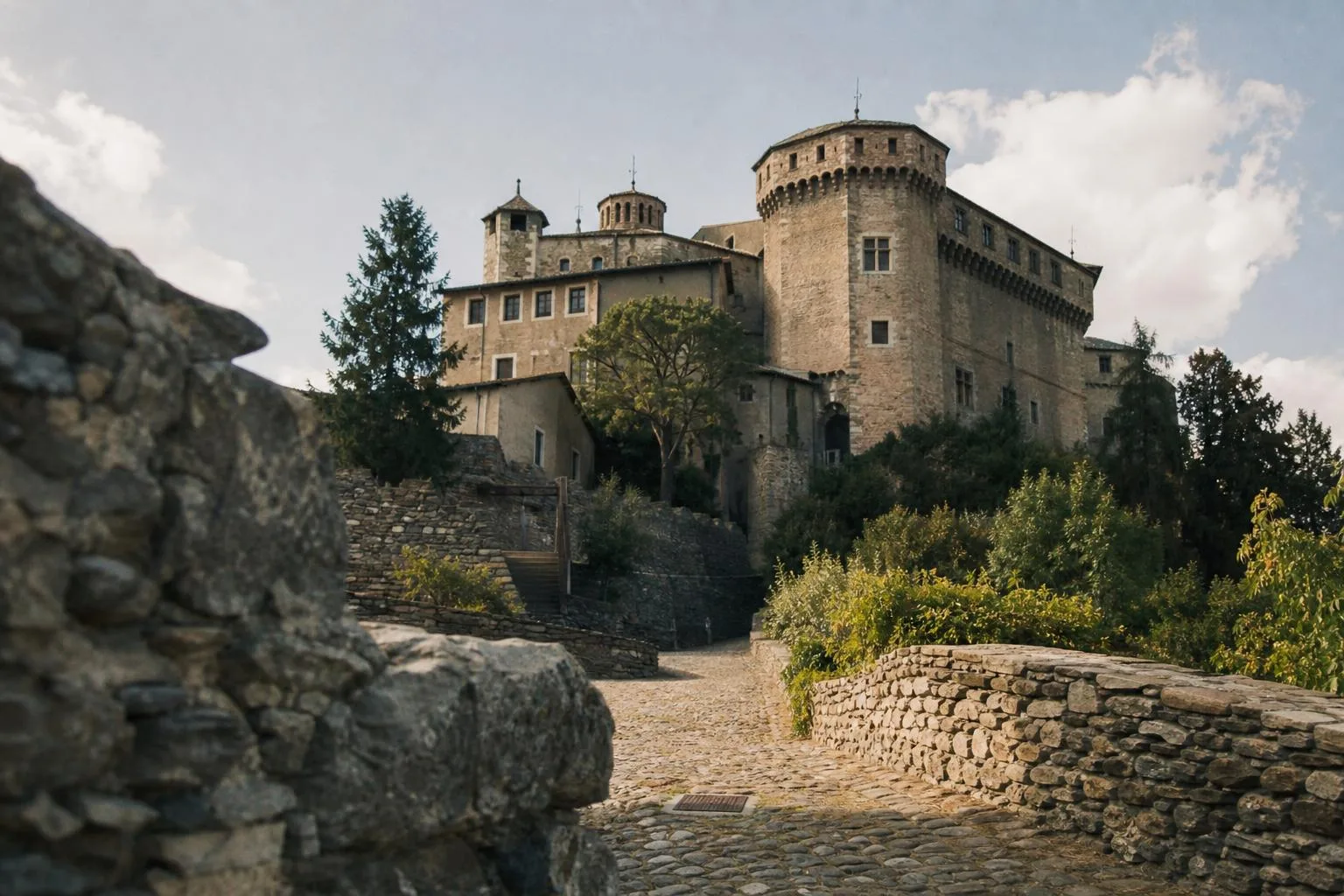
Sarre Castle
The Savoy kings’ hunting lodge near Aosta, with a hall of ibex and chamois trophies.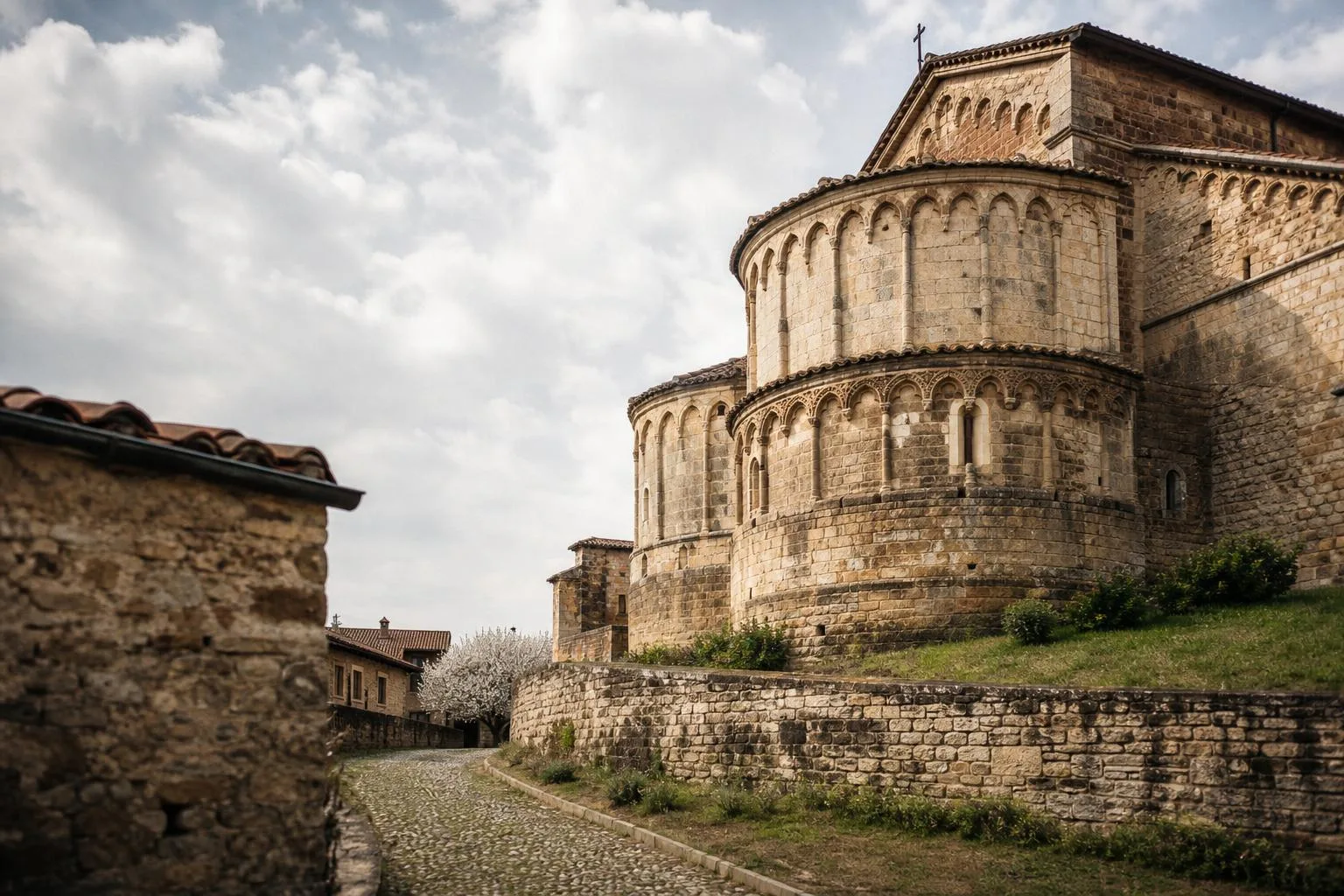
Vezzolano Abbey
Vezzolano's 1189 stone rood screen, one of Italy's most complete, still divides the abbey's Romanesque-Gothic nave.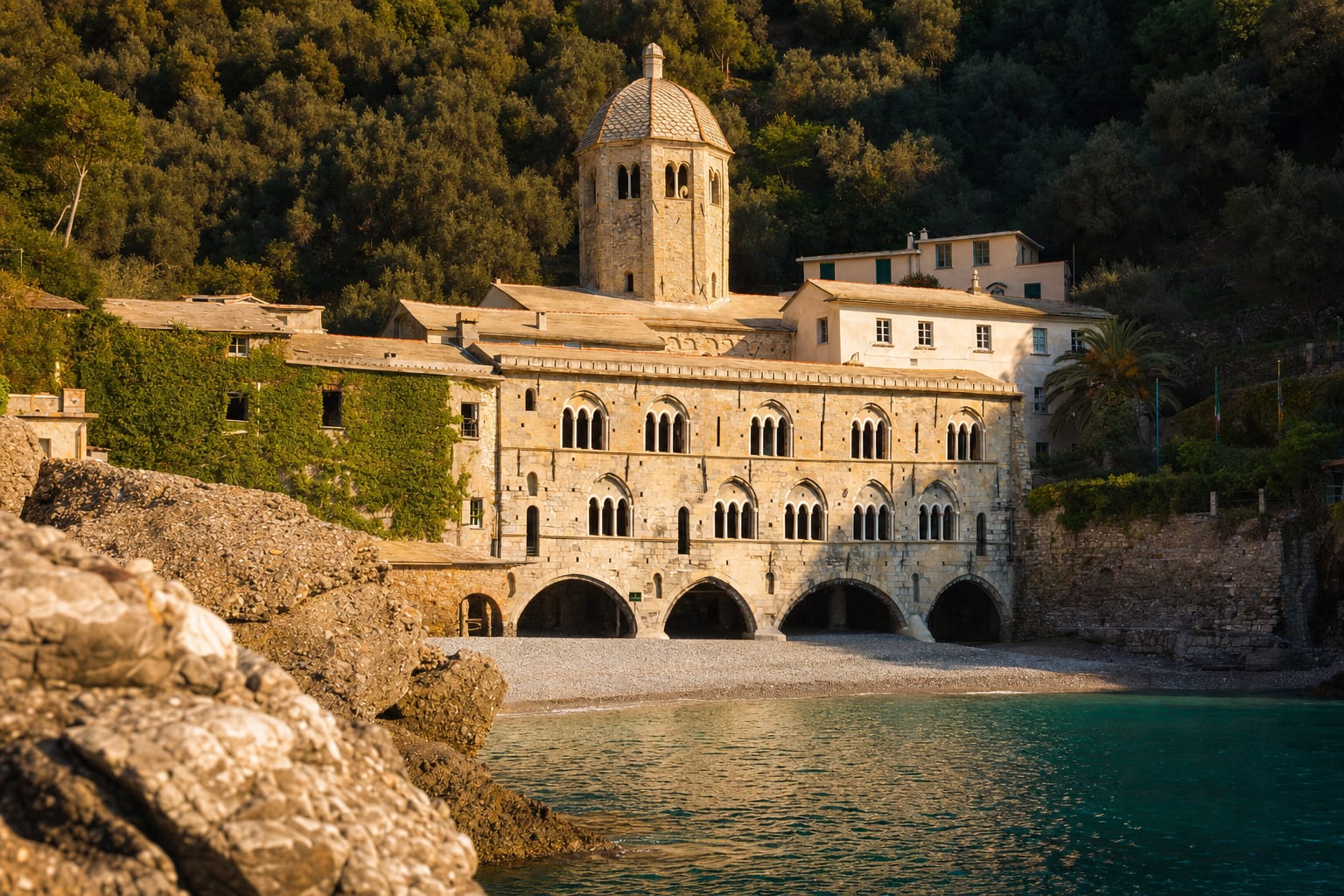
Abbey of San Fruttuoso
The boat-only abbey cove on Portofino's coast, with the bronze Christ of the Abyss sunk offshore.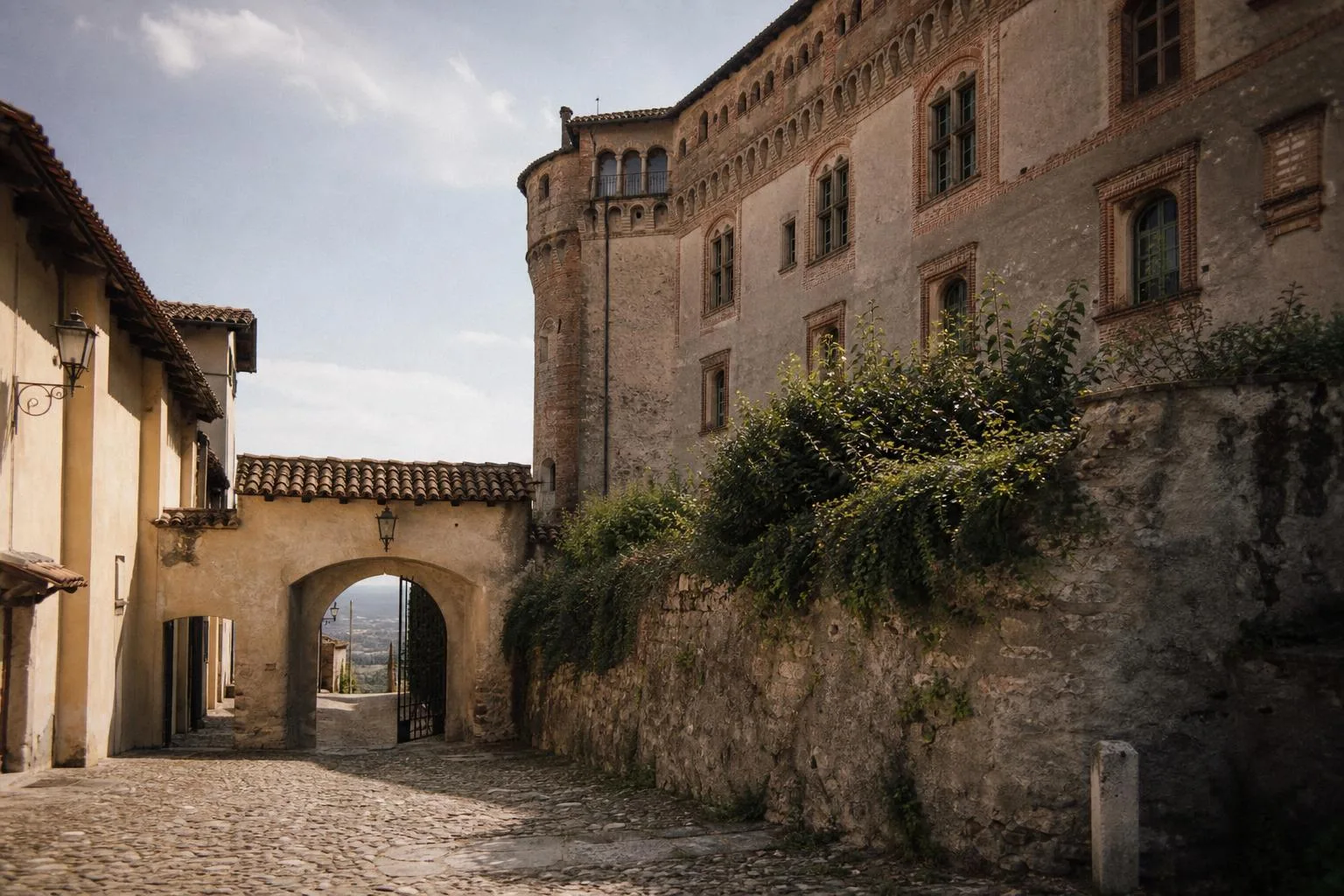
Castello della Manta
Castello della Manta's Baronial Hall, frescoed around 1420 with the Nine Worthies in Burgundian dress.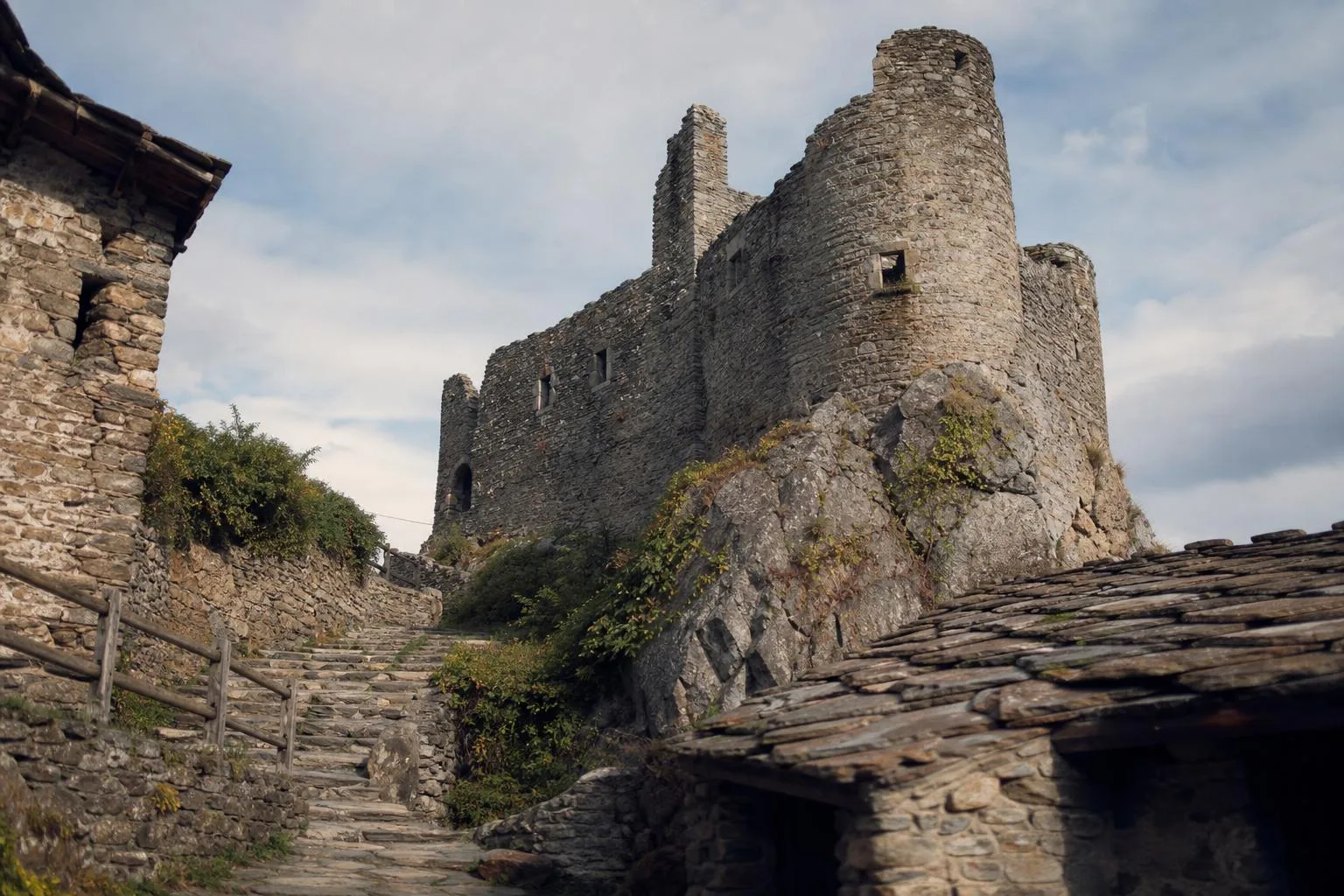
Châtel-Argent
Châtel-Argent's 1275 keep on a rock spur above Villeneuve, reached by a stair carved into the cliff.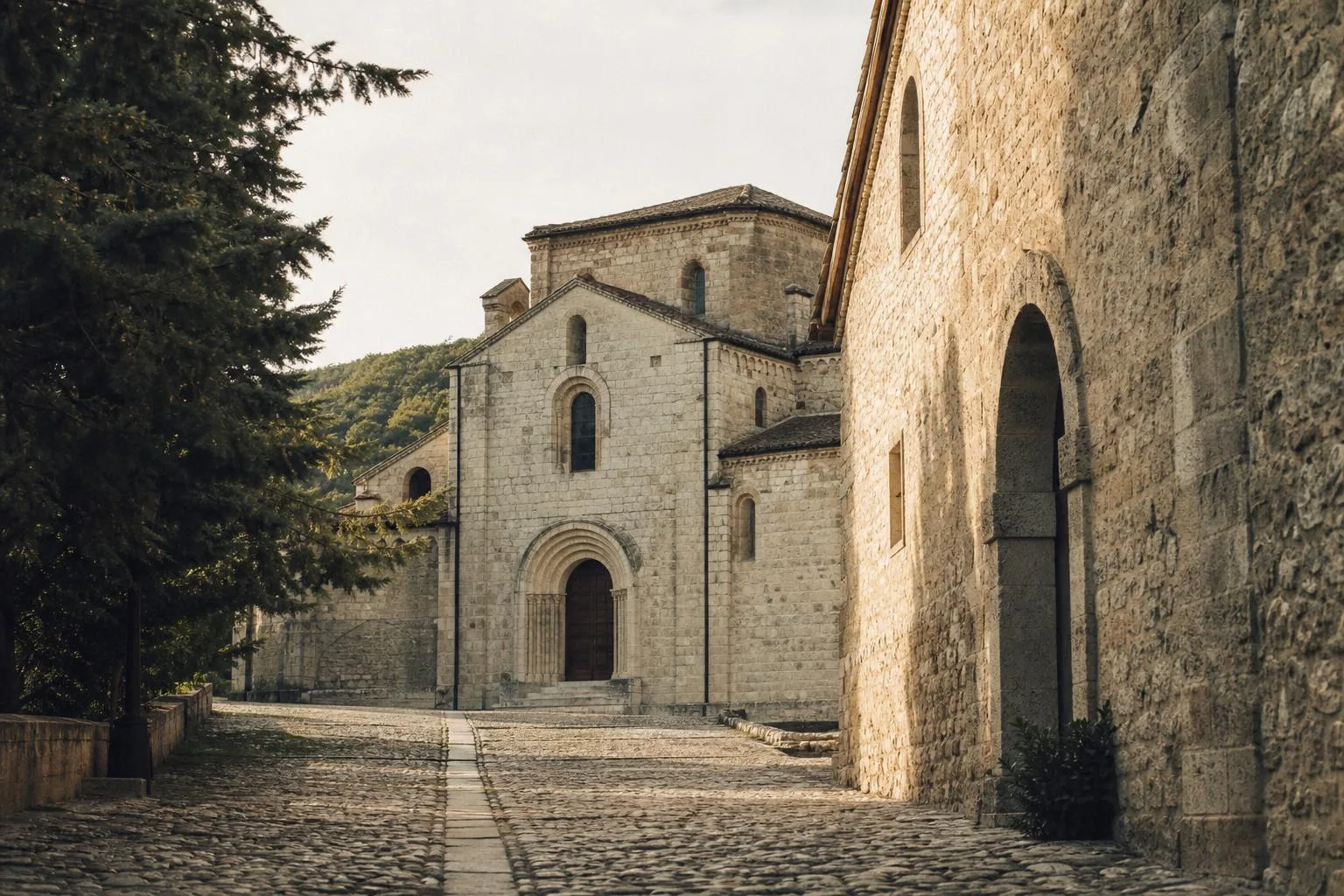
Chiaravalle Abbey, Fiastra
The Marche's most important monastery, an 1142 Cistercian abbey set inside its own nature reserve.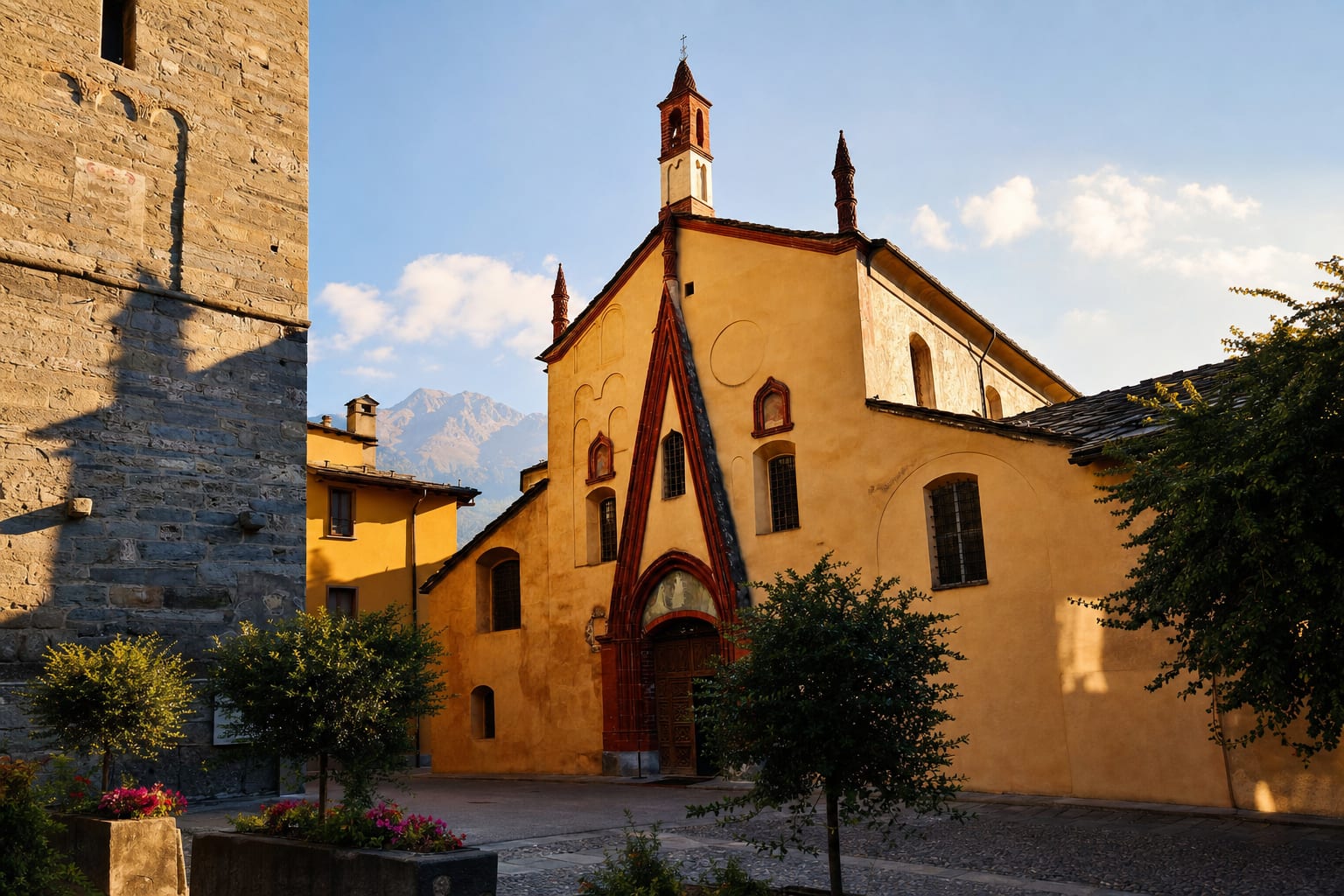
Collegiate Church of Sant'Orso
Aosta's Sant'Orso priory, famed for its Romanesque cloister capitals and hidden Ottonian frescoes.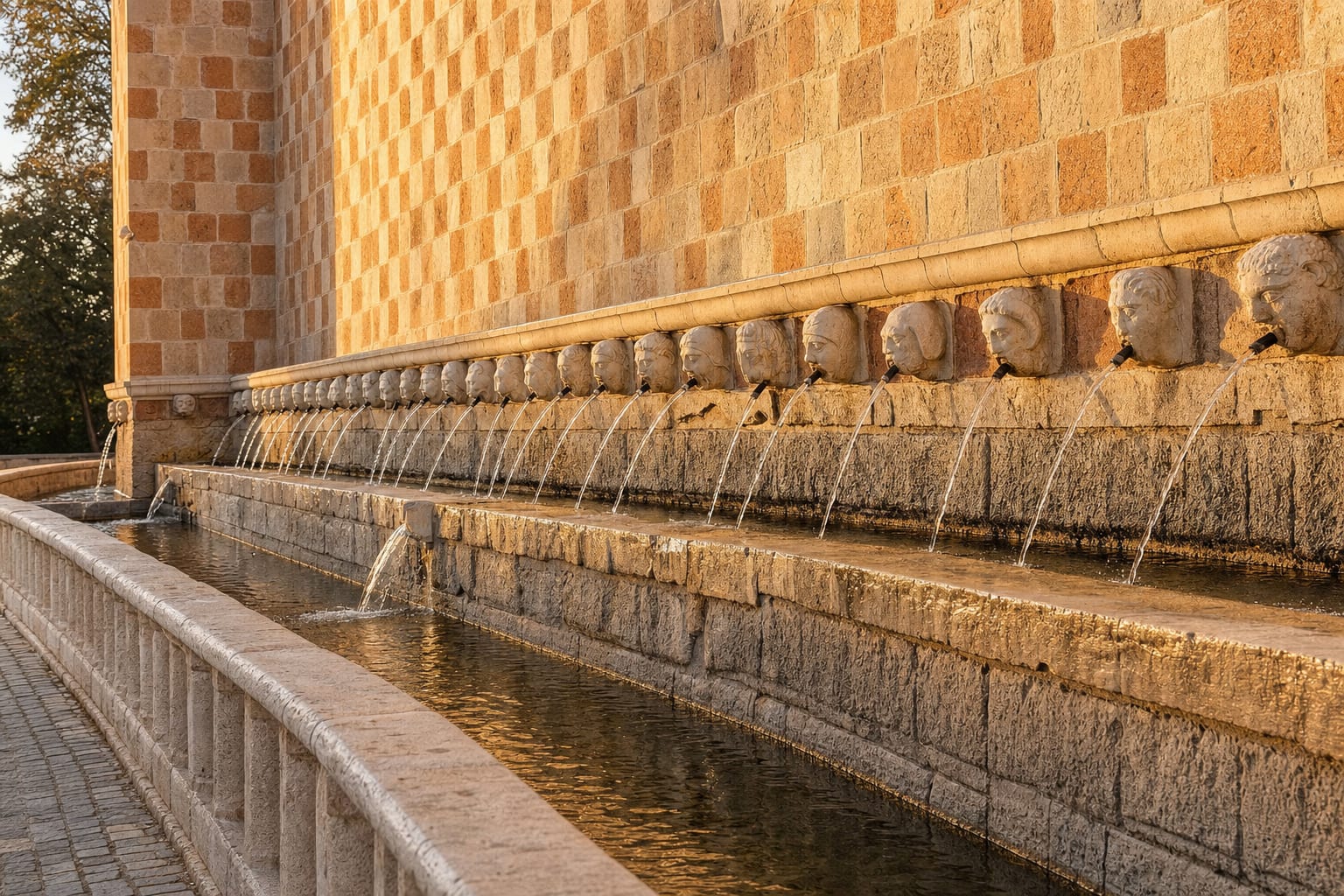
Fountain of the 99 Spouts
L'Aquila's 1272 fountain of ninety-nine masks, fed by a spring no one has ever traced.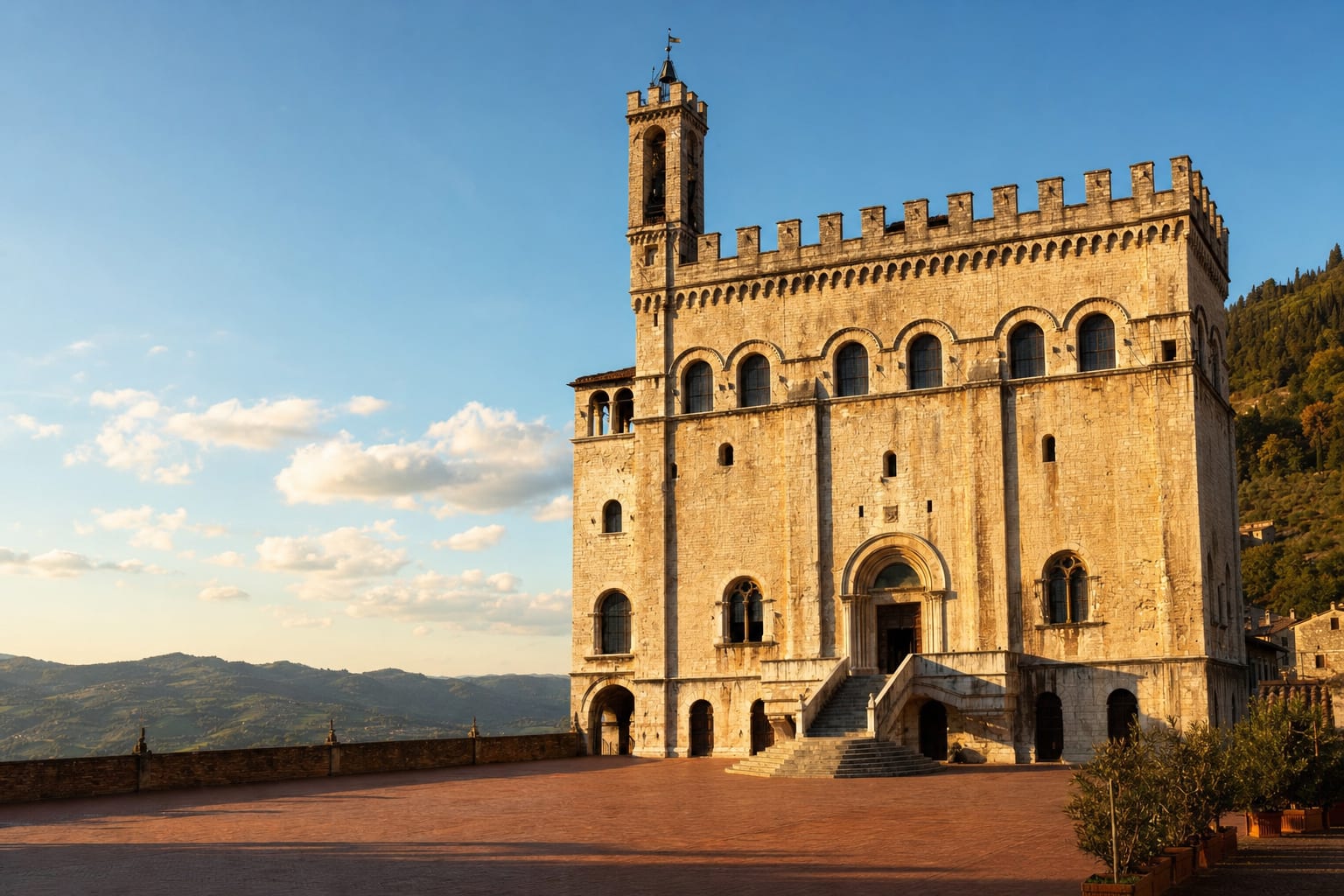
Palazzo dei Consoli
Gubbio's cliff-edge civic palace, home to the bronze Eugubine Tablets in ancient Umbrian.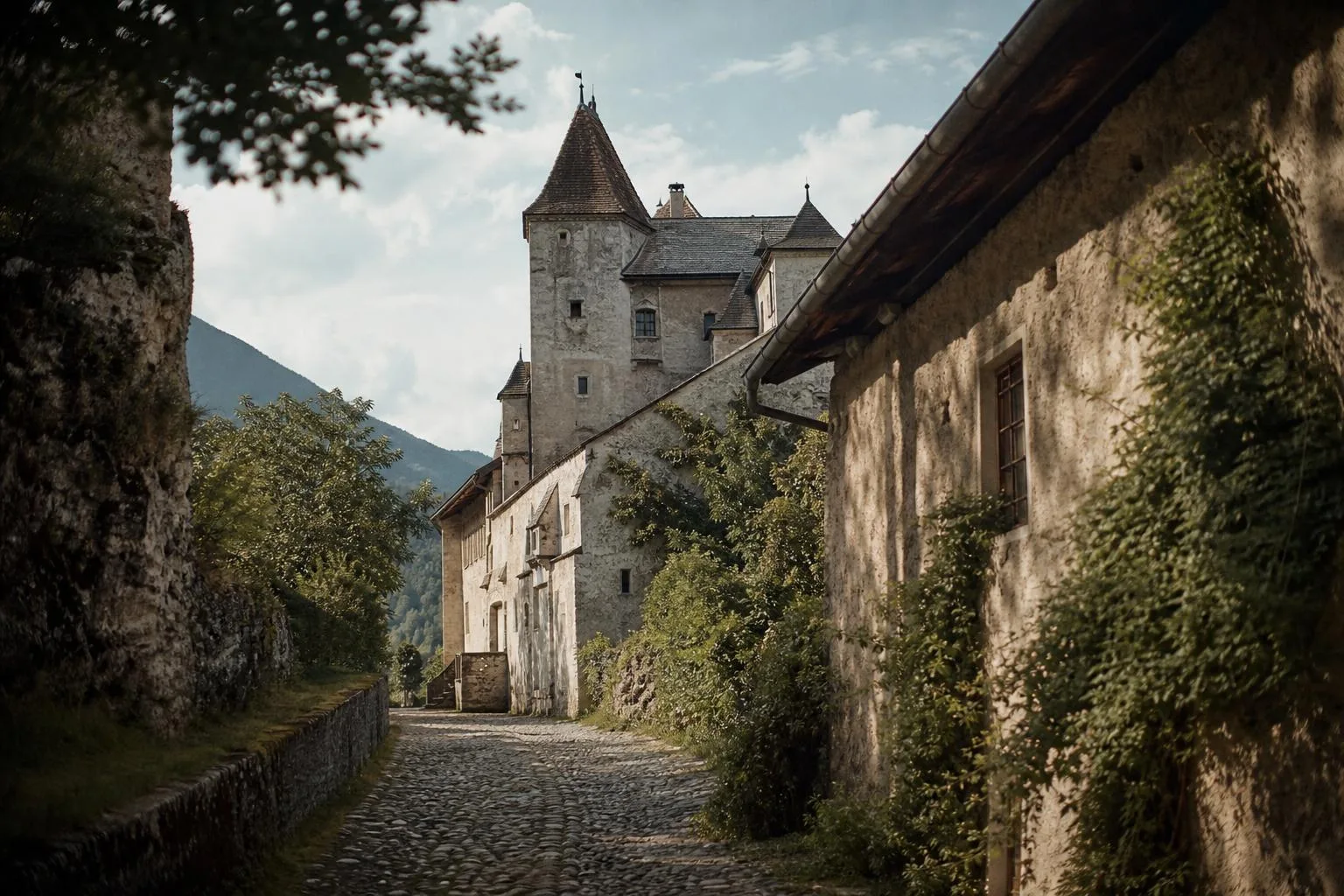
Reifenstein Castle
Castel Tasso's untouched medieval interiors, never conquered, with an original kitchen and Green Room.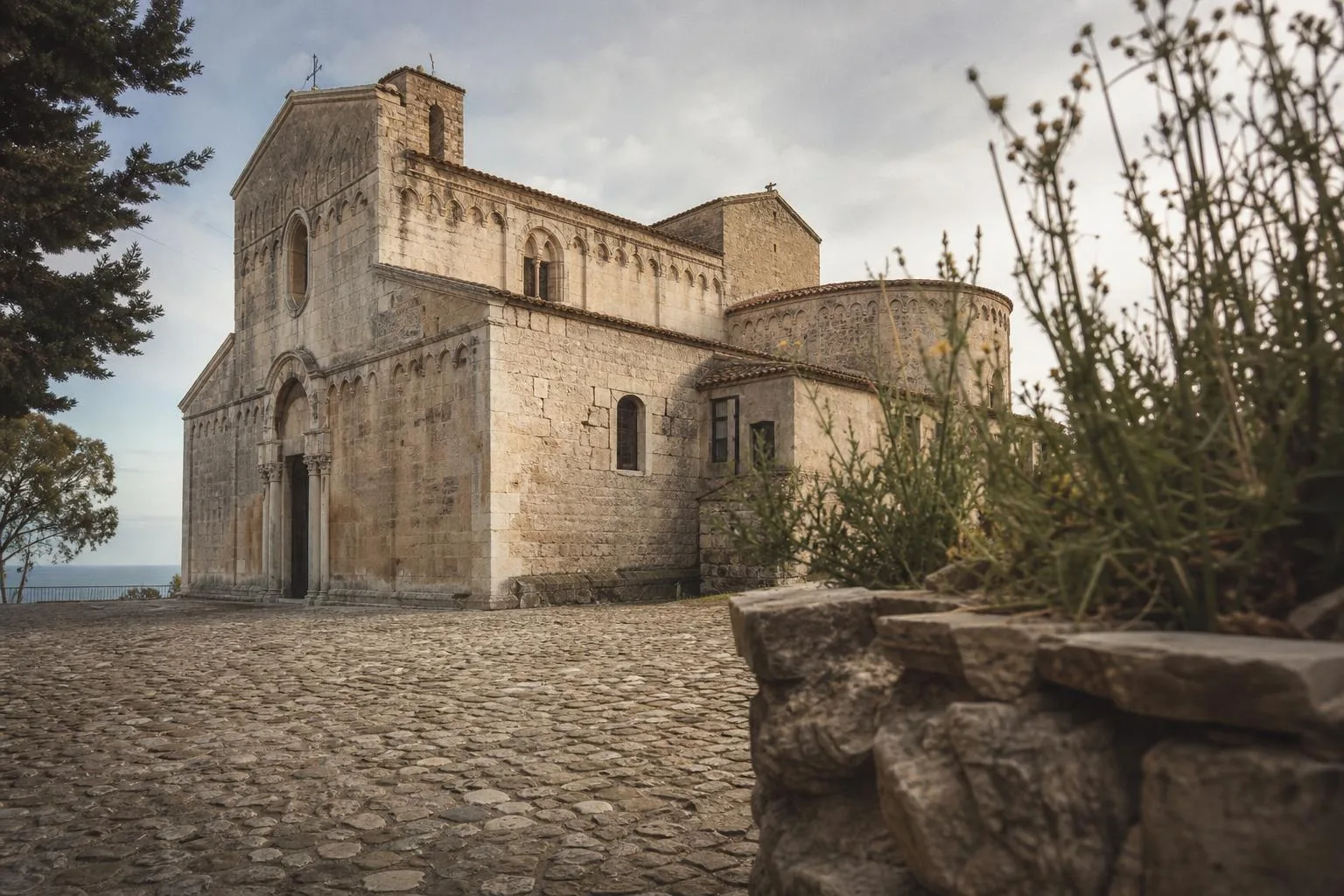
San Giovanni in Venere Abbey
A 13th-century abbey over the Adriatic, built on the site of an earlier temple to Venus.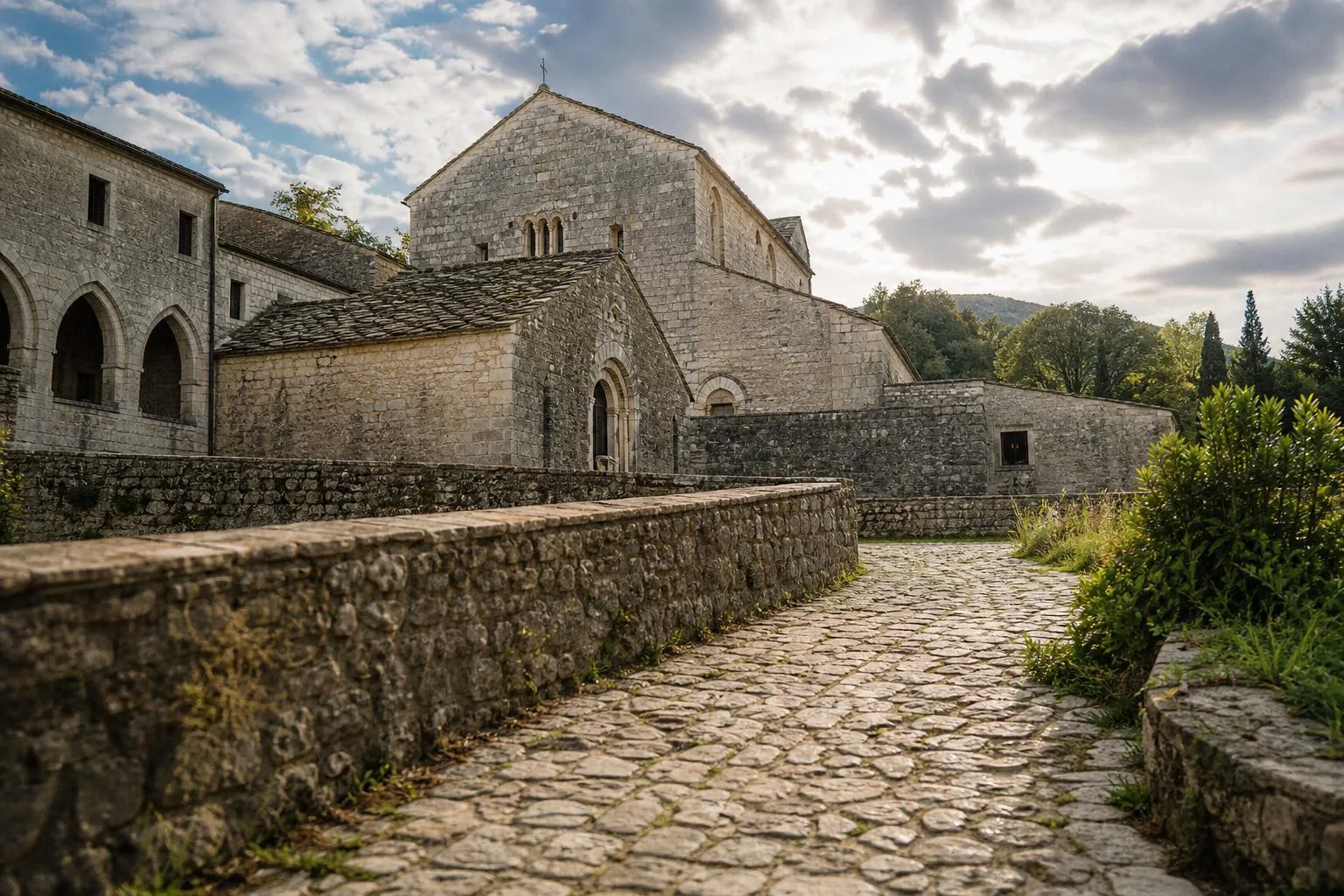
San Vincenzo al Volturno
San Vincenzo al Volturno's 9th-century frescoed crypt, a Benedictine center far quieter than Monte Cassino.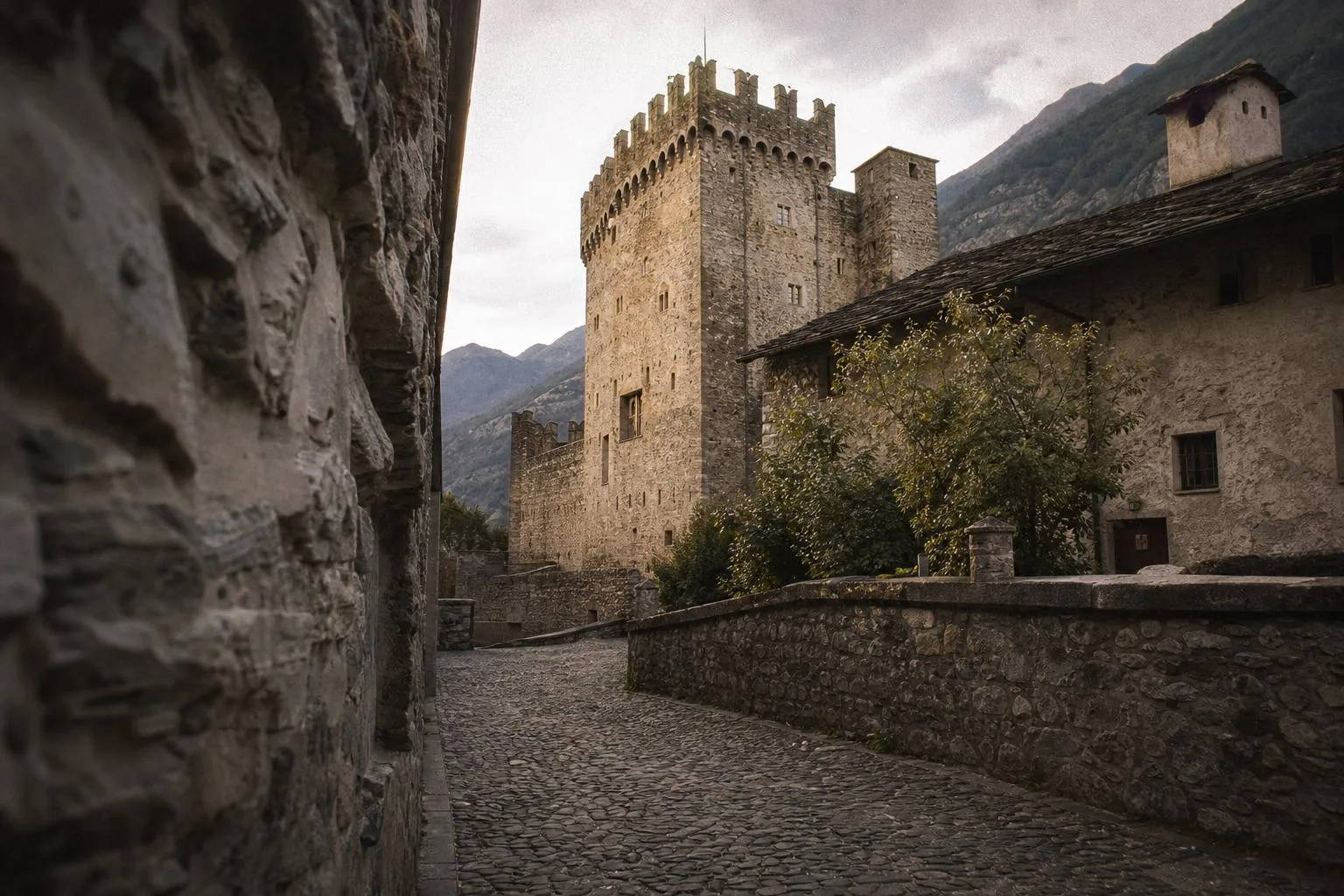
Sarriod de la Tour Castle
Sarriod de la Tour's Hall of Heads, a 1430 ceiling carved with 171 figures near Aosta.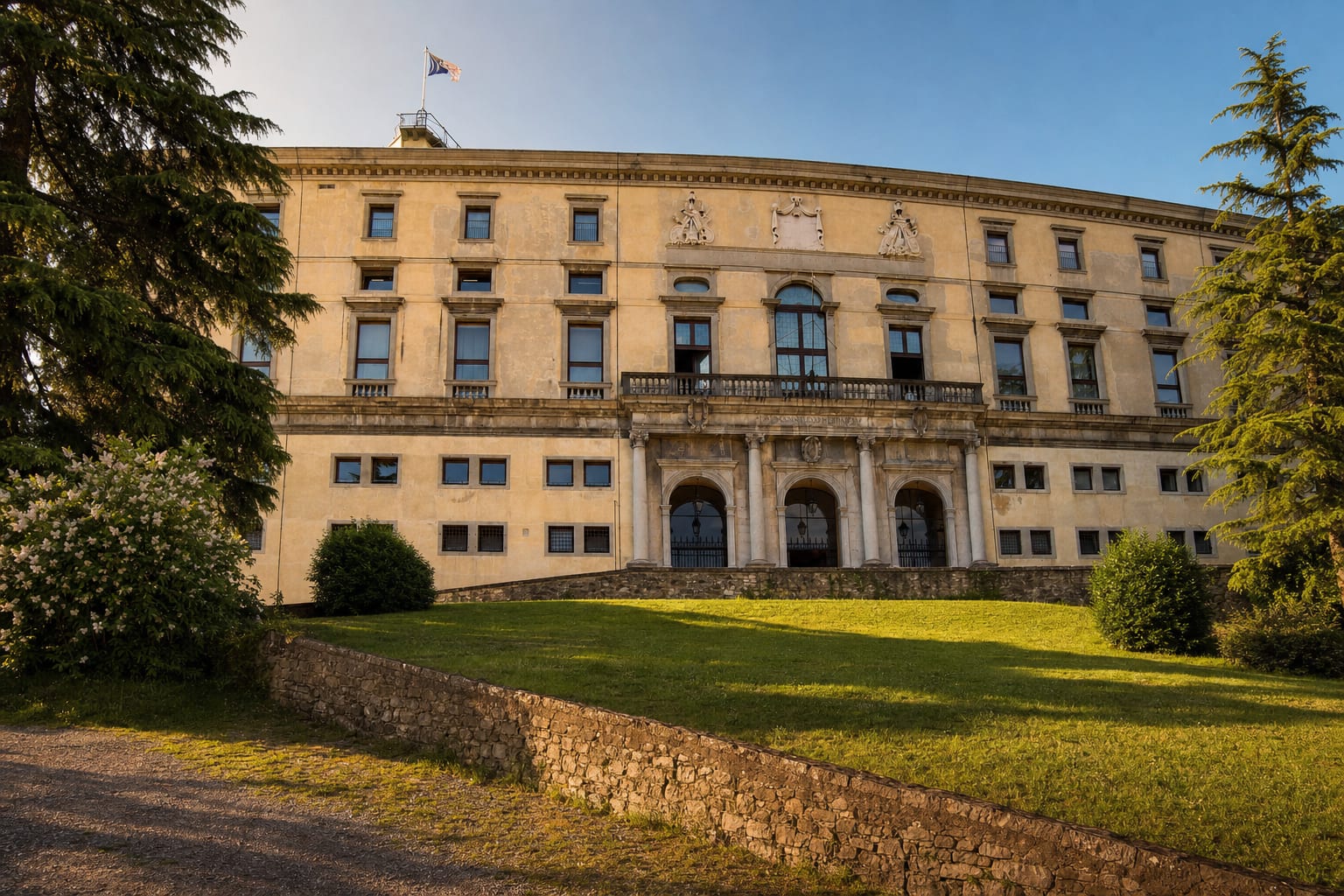
Udine Castle
Udine Castle's civic museums and Tiepolo works, on a Bronze Age hill above the city's loggias.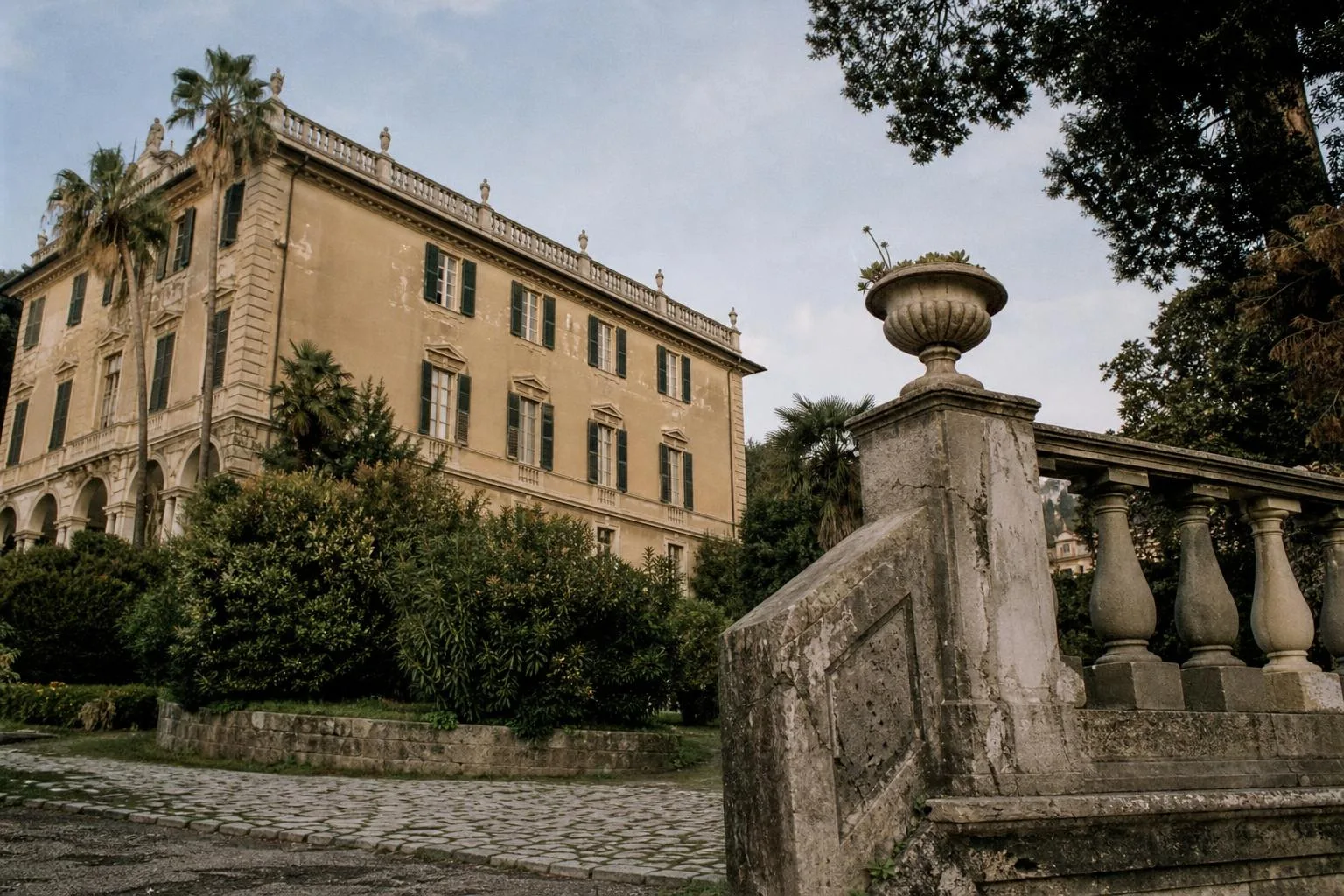
Villa Durazzo-Pallavicini
Villa Durazzo-Pallavicini's theatrical romantic park in Genoa's Pegli district, voted Italy's most beautiful garden.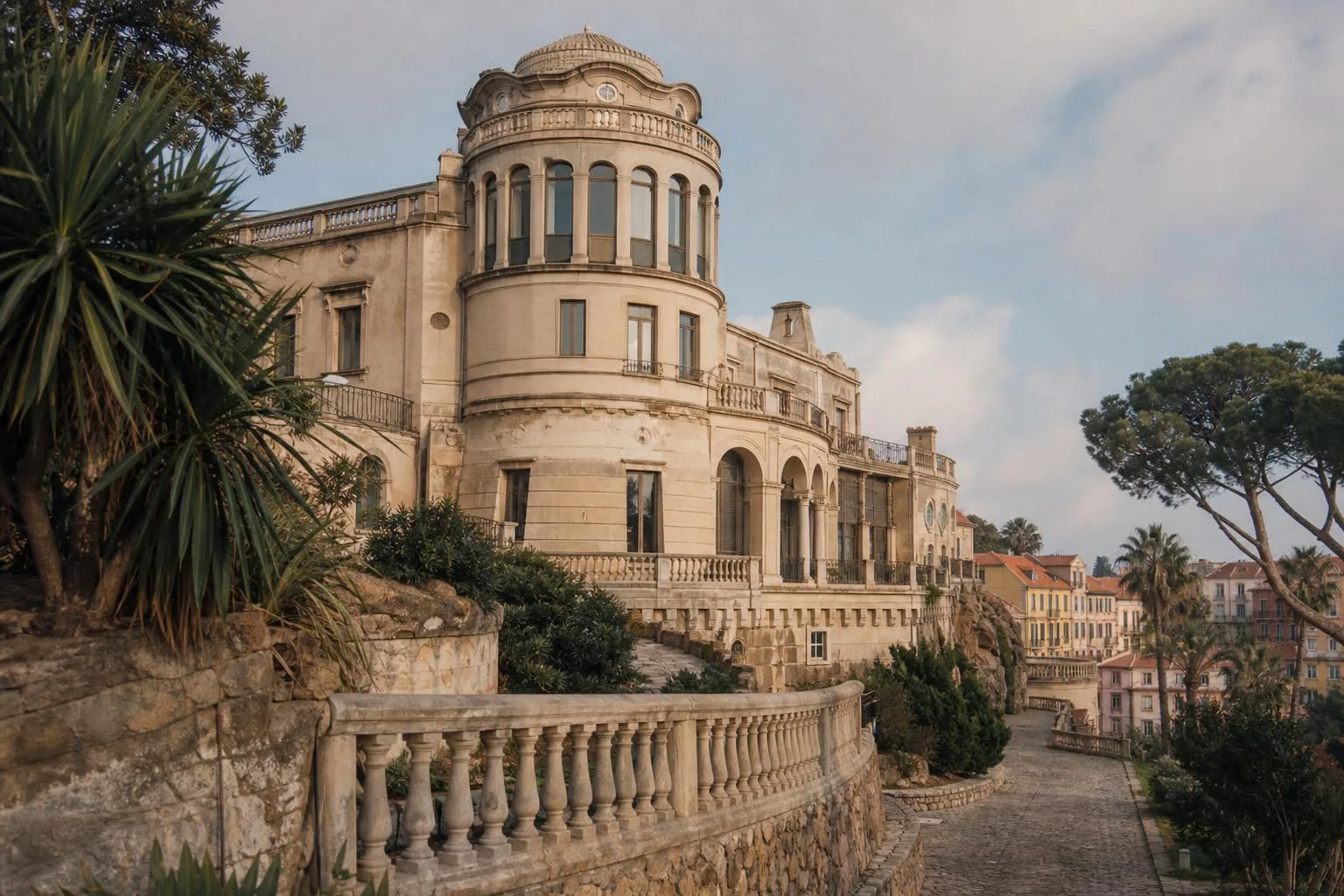
Villa Grock
The clown Grock's forty-seven-room villa above Imperia, now the eccentric Museo del Clown.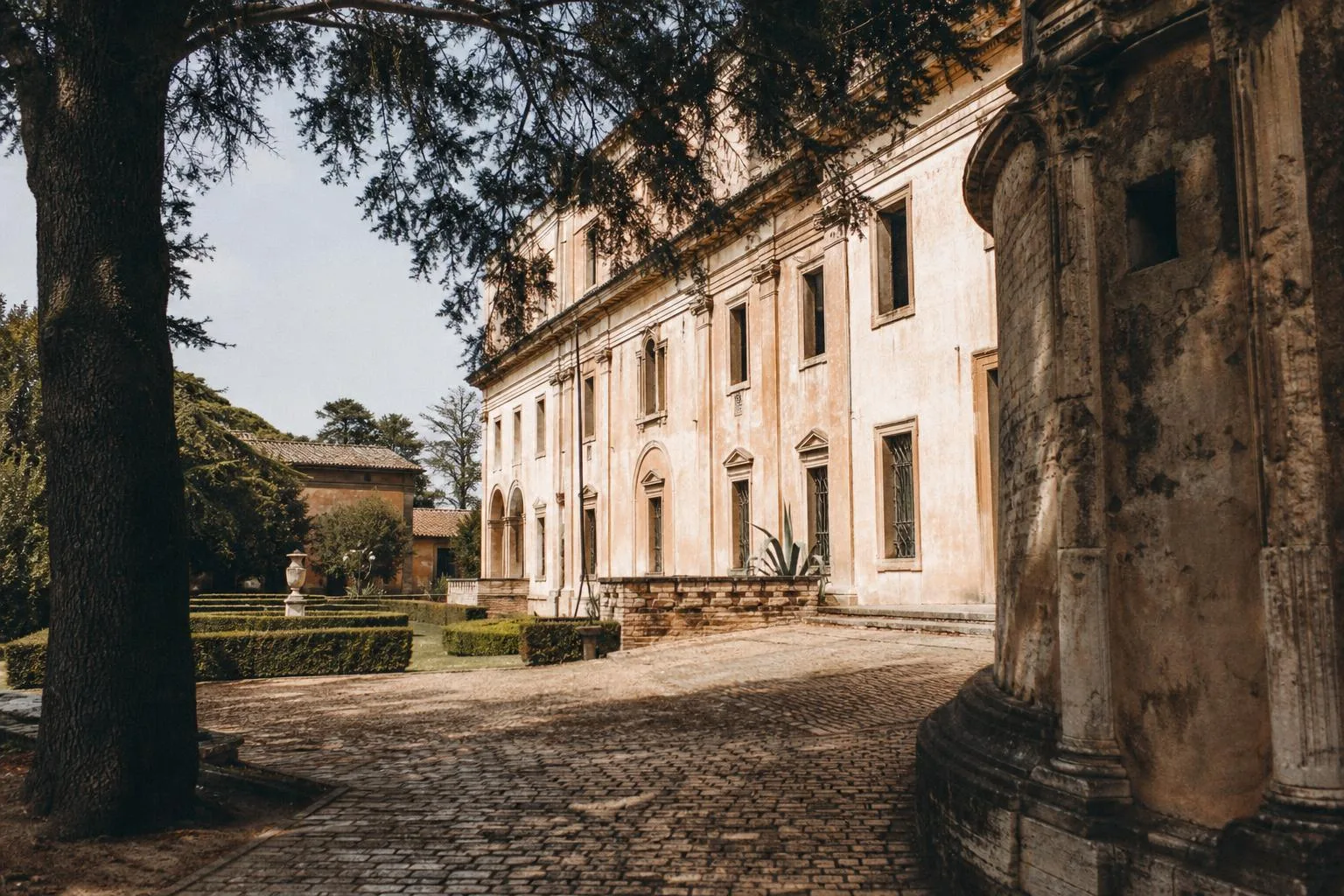
Villa Imperiale of Pesaro
Villa Imperiale's Mannerist rooms above Pesaro, frescoed by Dosso Dossi and a young Bronzino.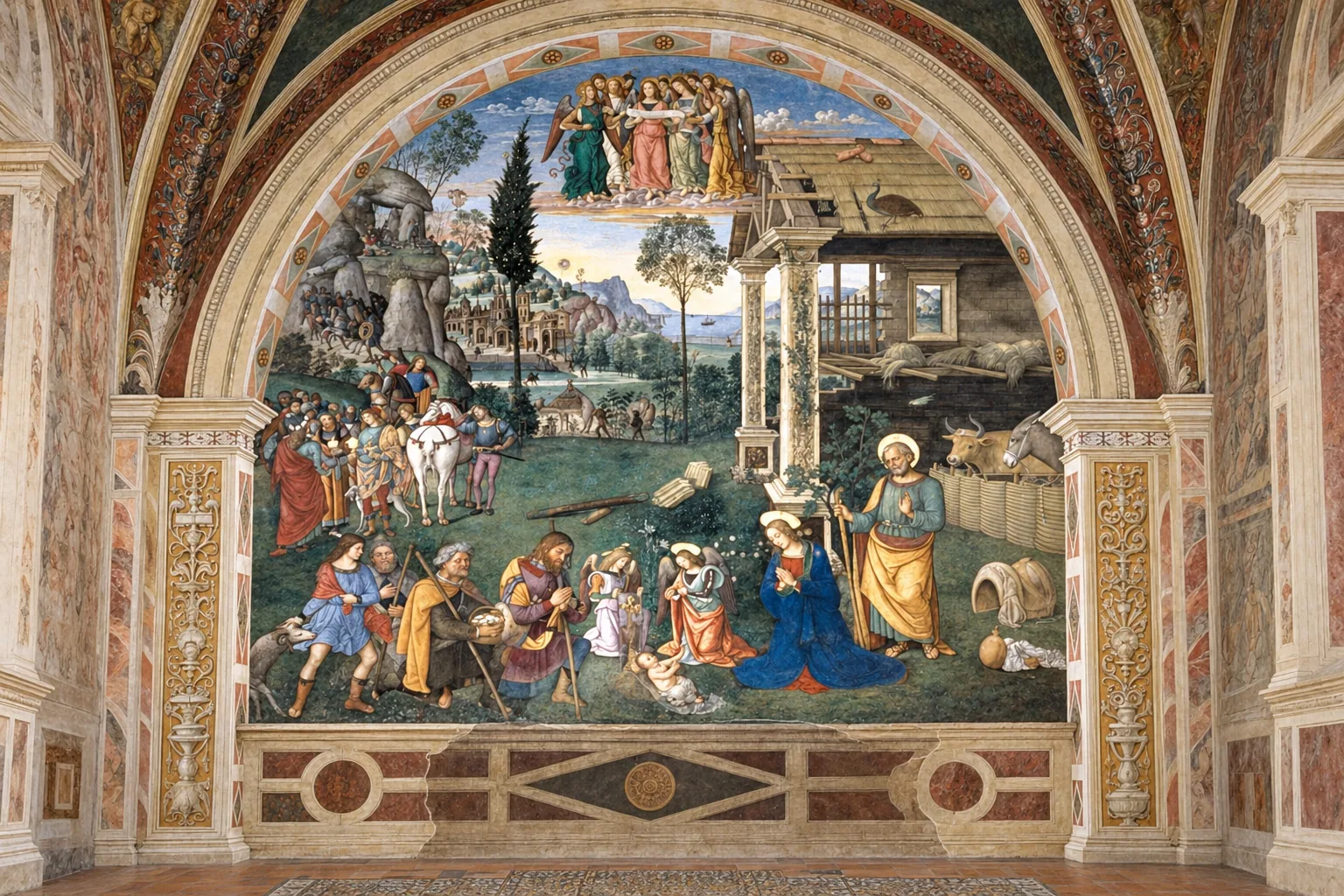
Baglioni Chapel
Pinturicchio's jewel-toned 1500-1501 frescoes in Spello's Baglioni Chapel, with a Deruta maiolica floor.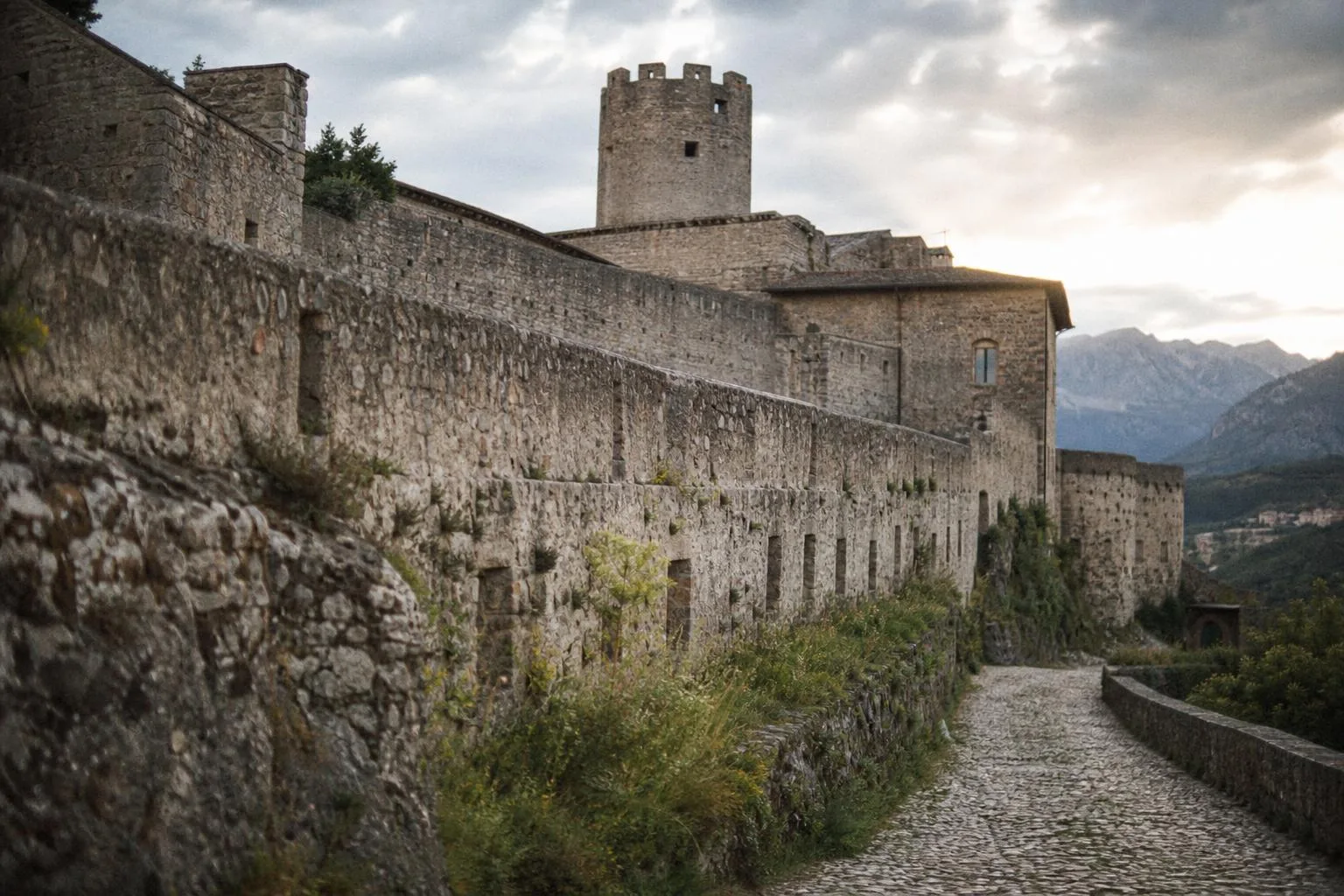
Castel Beseno
Castel Beseno's 250-meter hilltop fortress, Trentino's largest, site of the 1487 Battle of Calliano.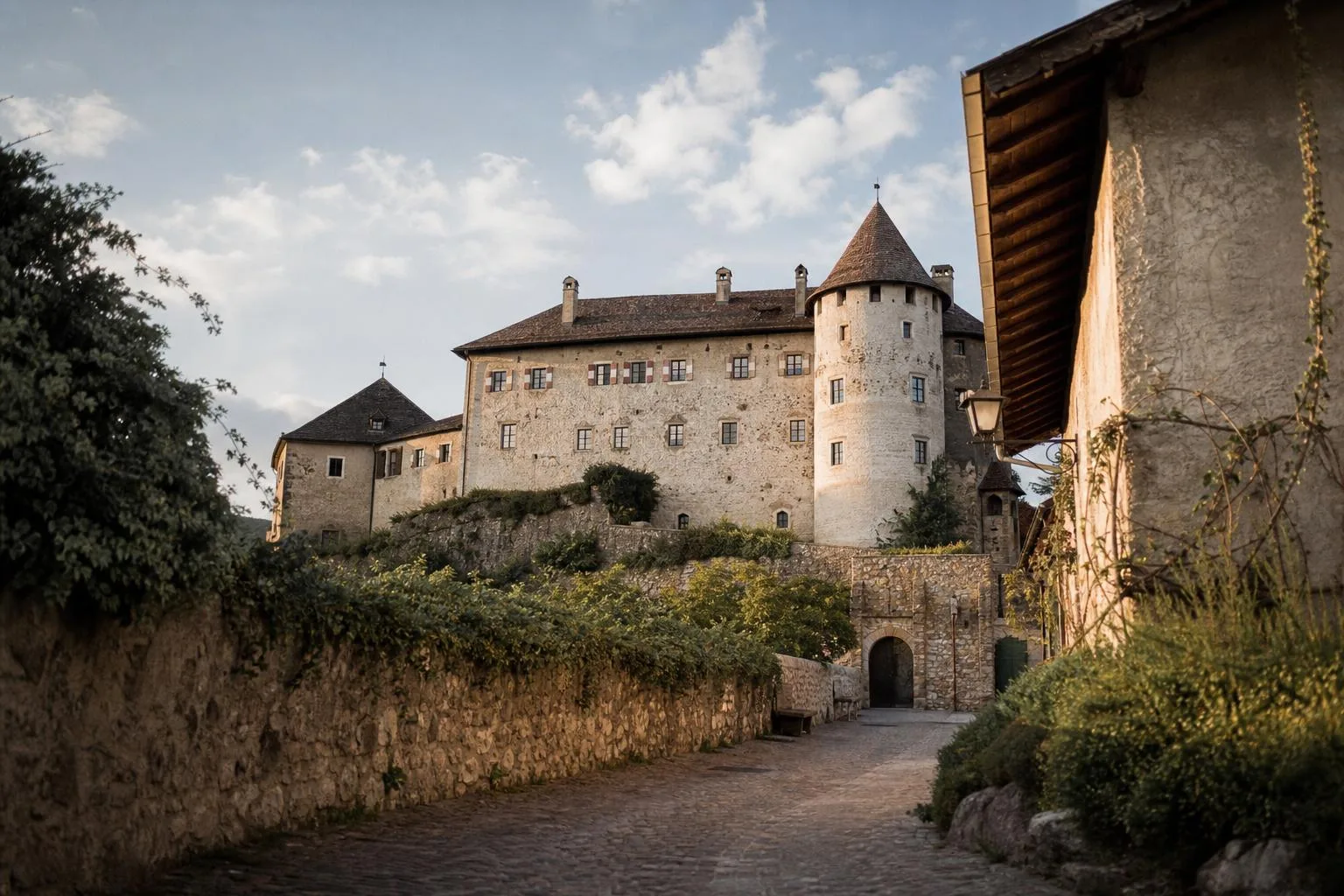
Castel Thun
Castel Thun's original furnishings, seat of the Thun-Hohenstein family for nearly seven centuries in Val di Non.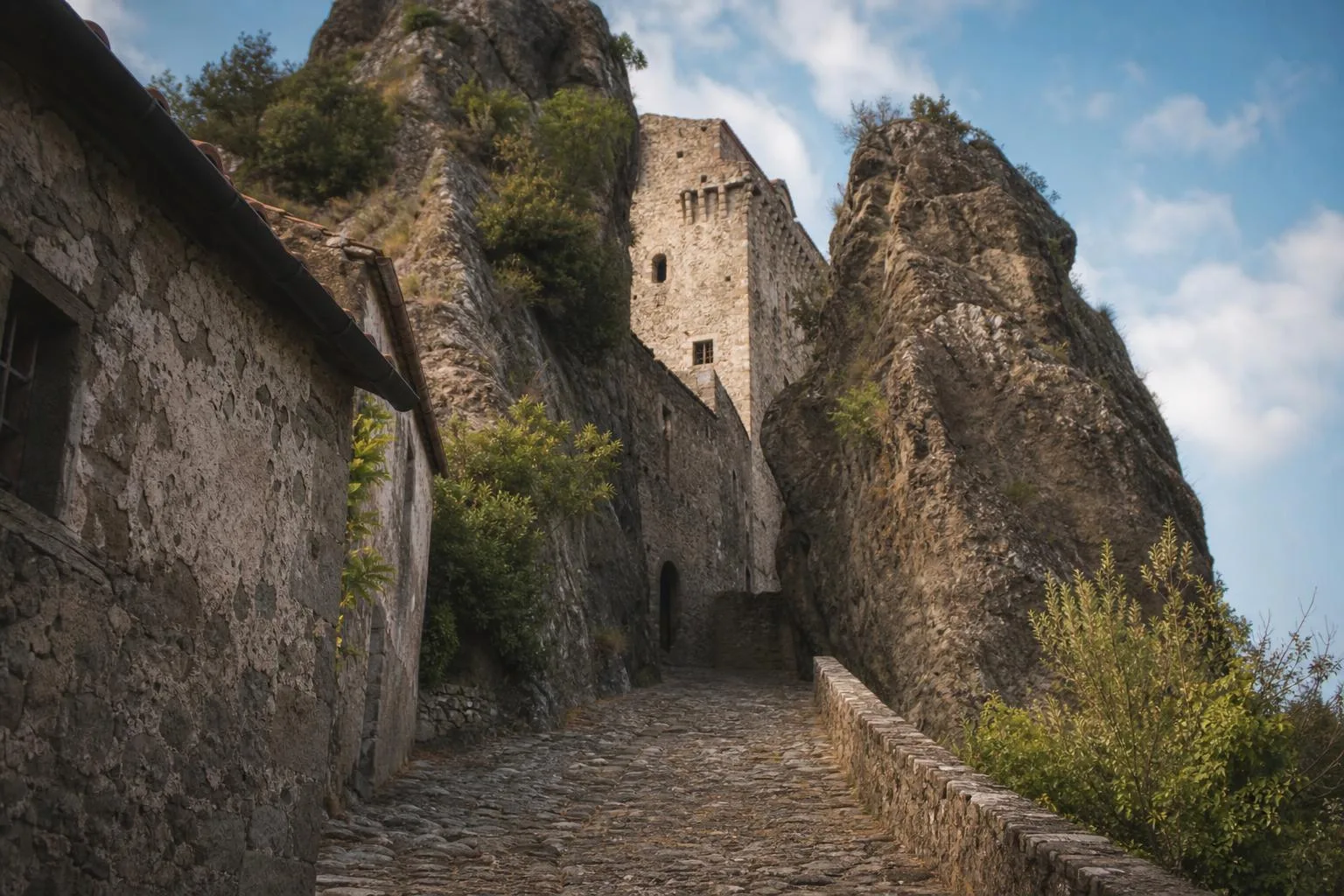
Castello della Pietra
Castello della Pietra, wedged between two rock towers above Vobbia, reachable only on foot.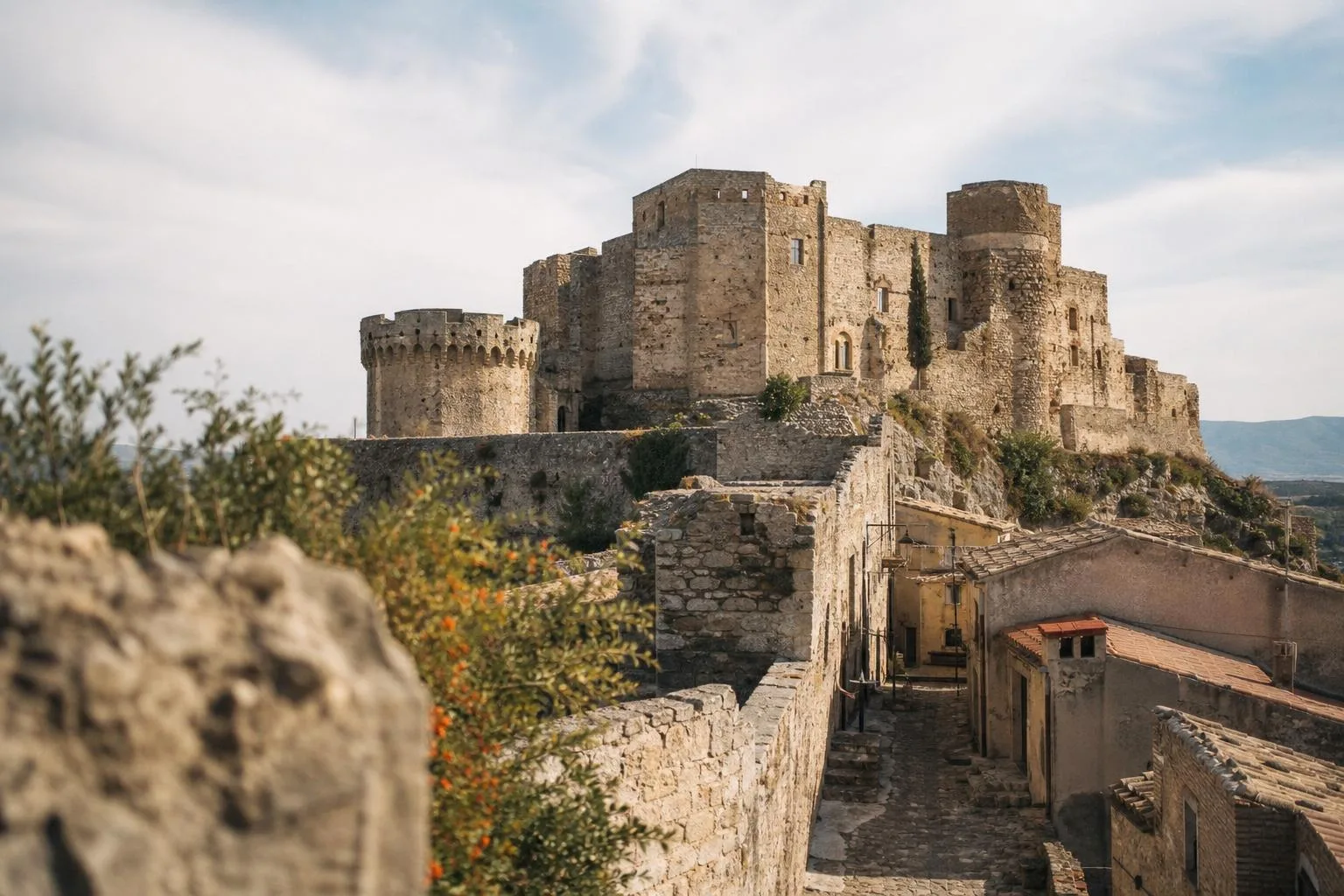
Castle of Santa Severina
Santa Severina's Norman castle over Byzantine foundations, with a museum of protohistoric bronzes.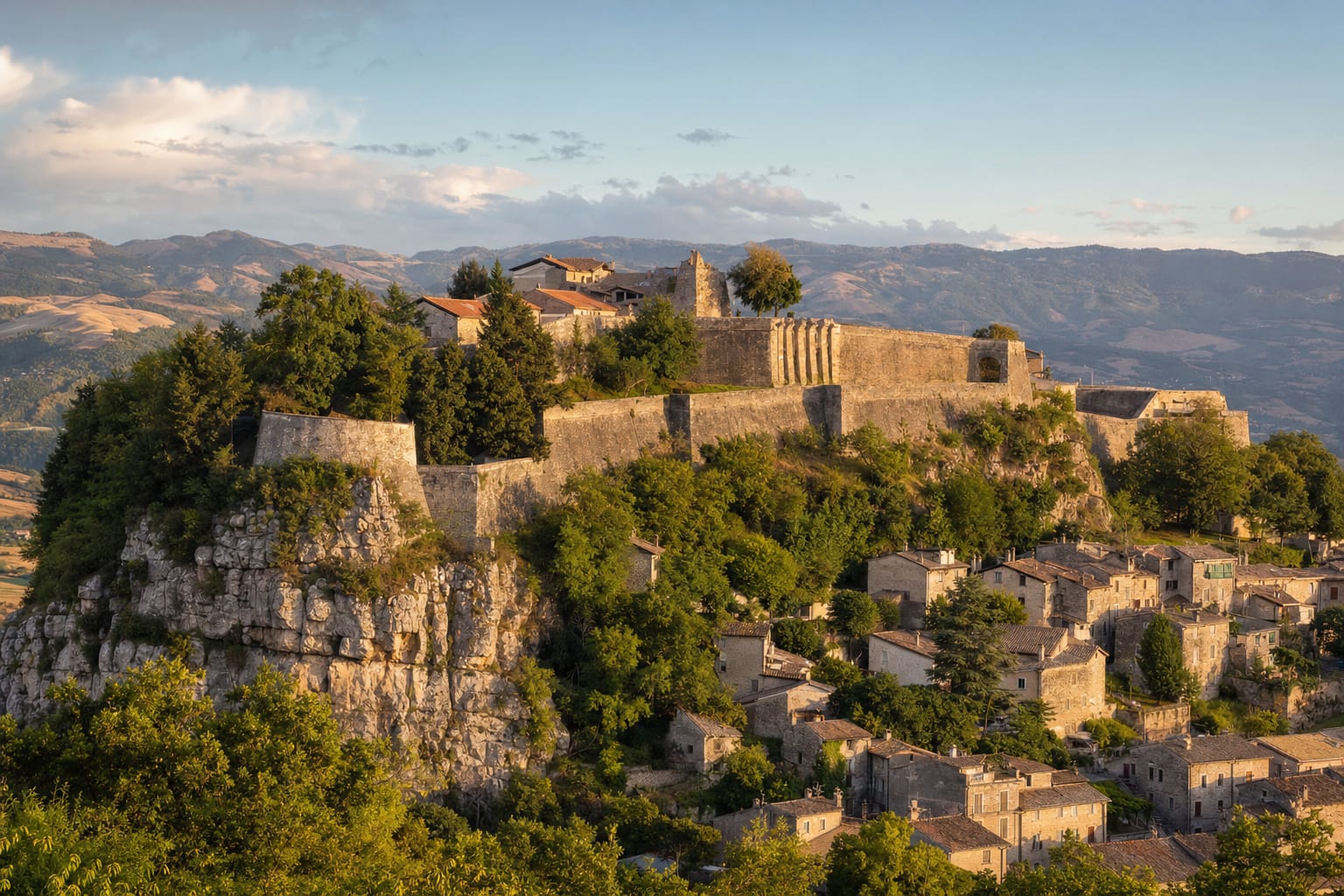
Fortress of Civitella del Tronto
Civitella del Tronto's half-kilometer fortress, the last Bourbon stronghold, holding out until 1861.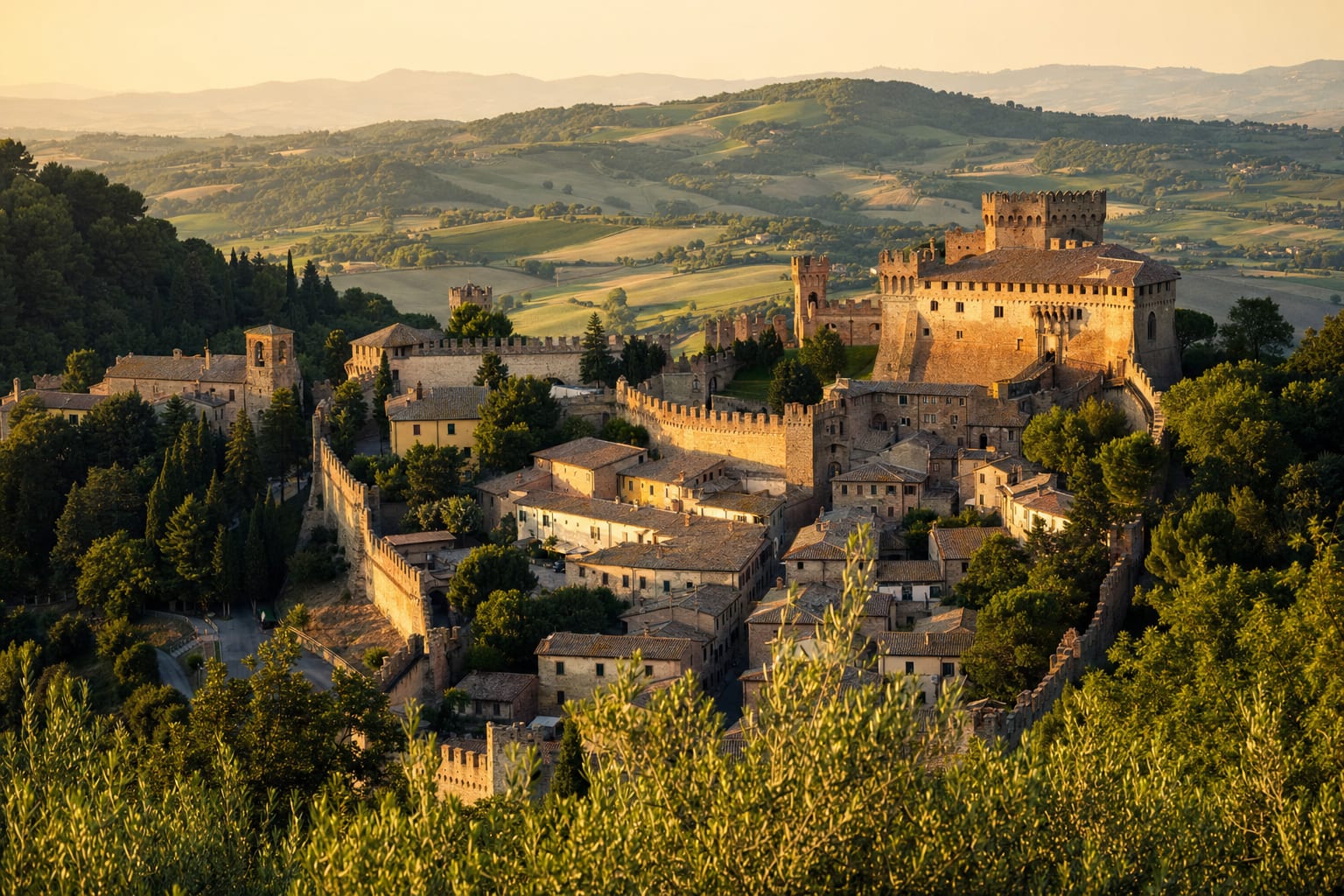
Gradara Castle
Gradara's double-walled castle, setting for Dante's Paolo and Francesca, one of the Marche's most visited sites.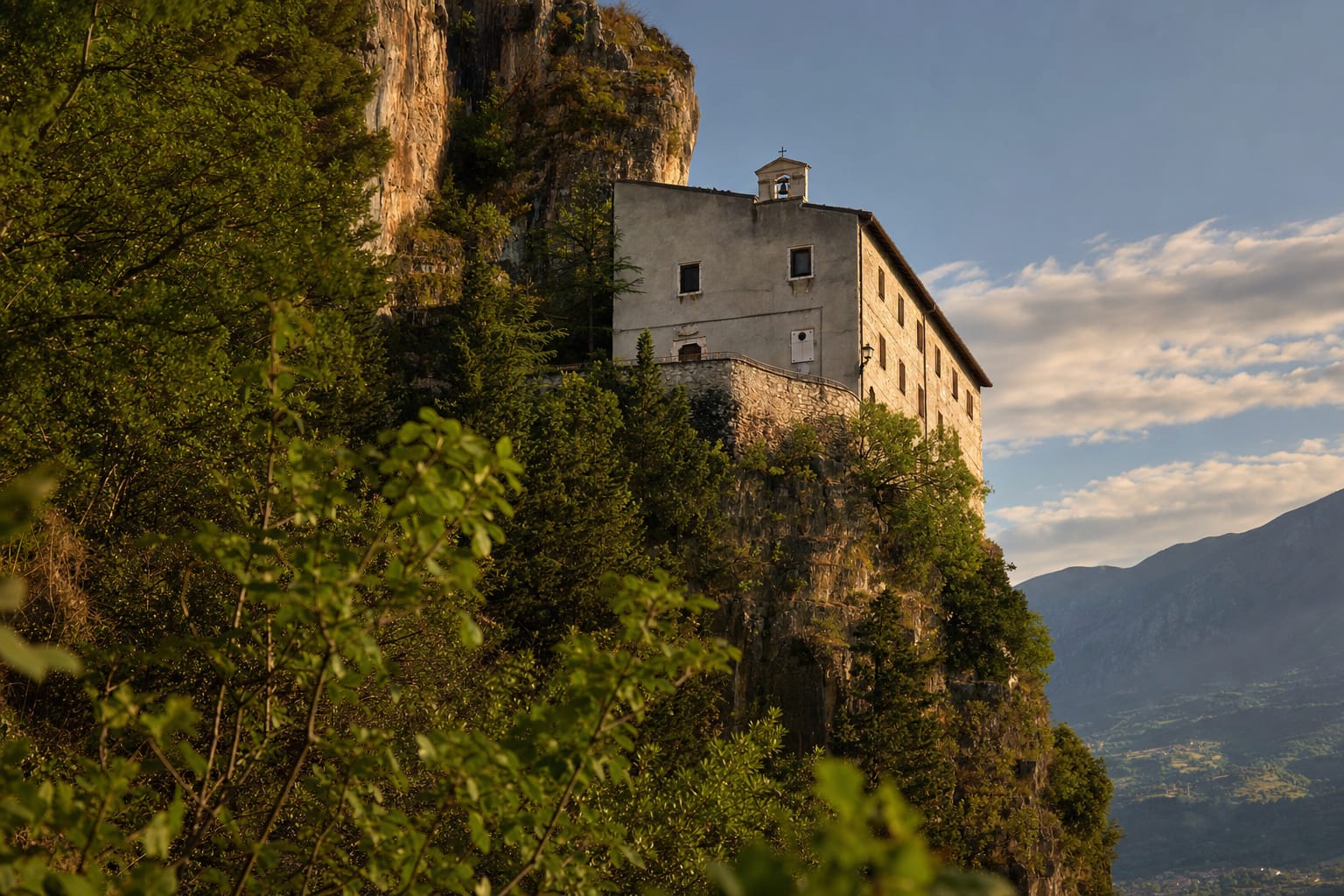
Hermitage of Sant'Onofrio al Morrone
The cliffside hermitage where Celestine V lived before becoming, and quickly abandoning, the papacy.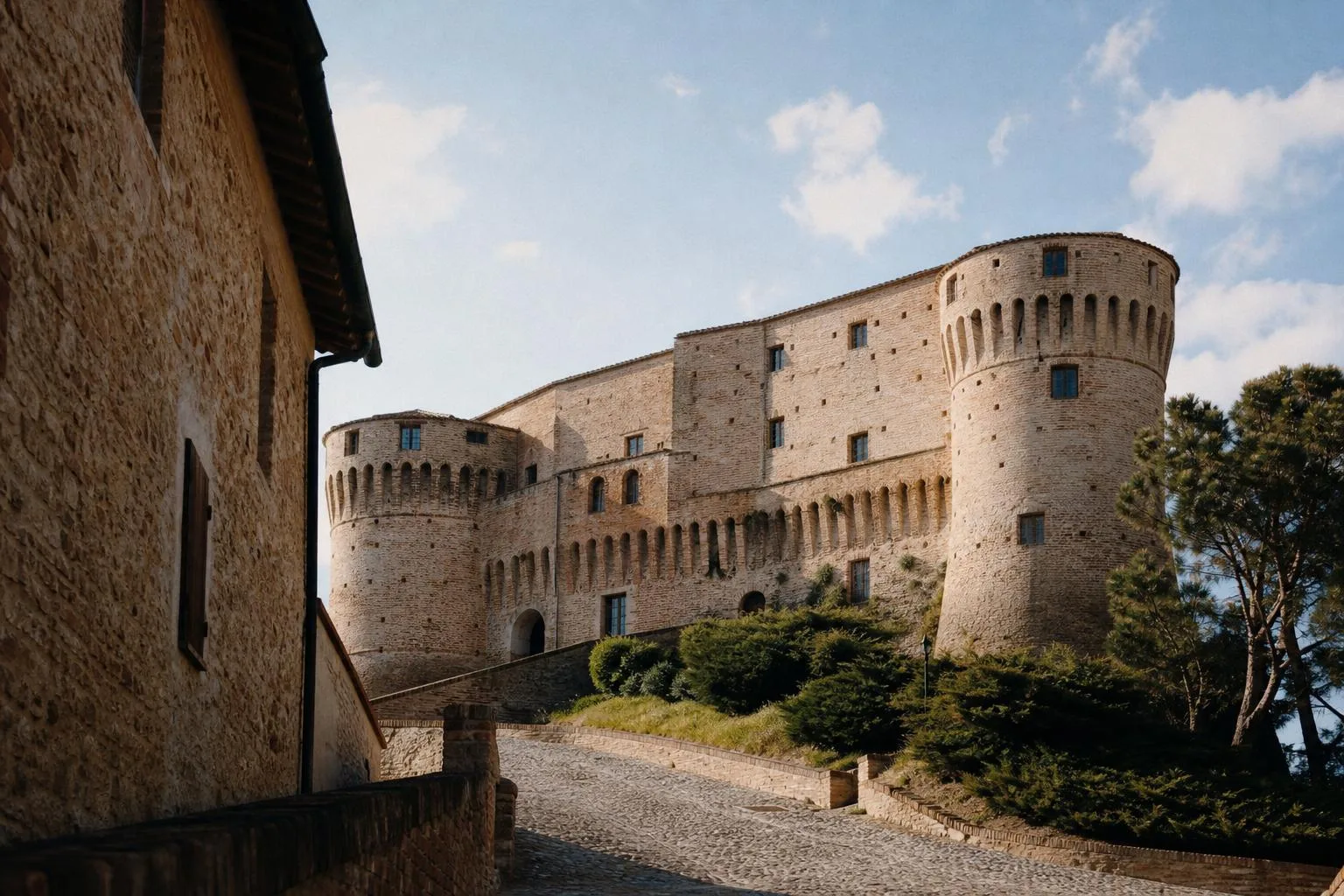
Rocca di Mondavio
A 15th-century Della Rovere fortress by Francesco di Giorgio Martini, with rounded cannon-deflecting bastions.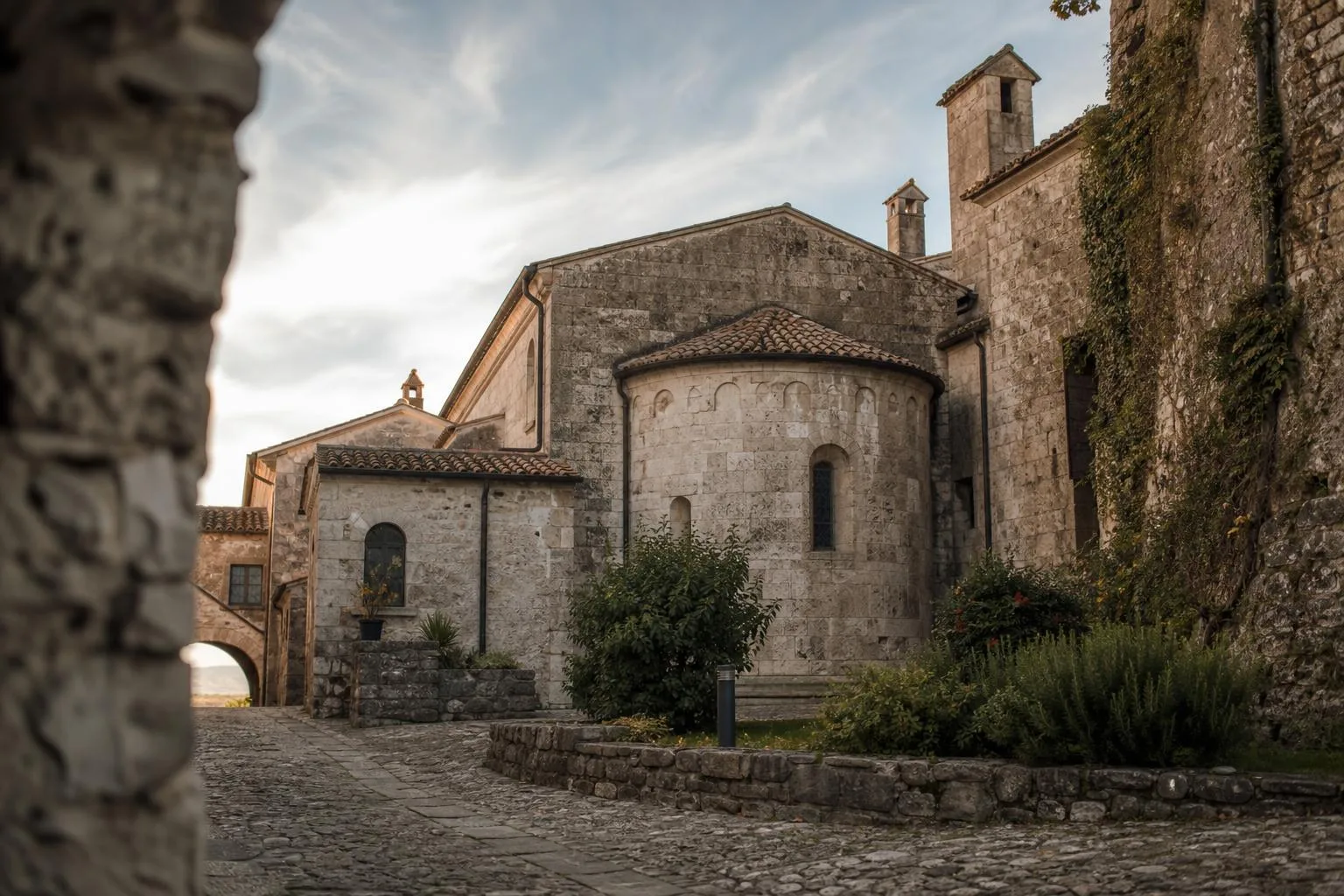
Rosazzo Abbey
A 9th-century hilltop abbey in Friuli's wine country, with 1535 frescoes and its own vineyard.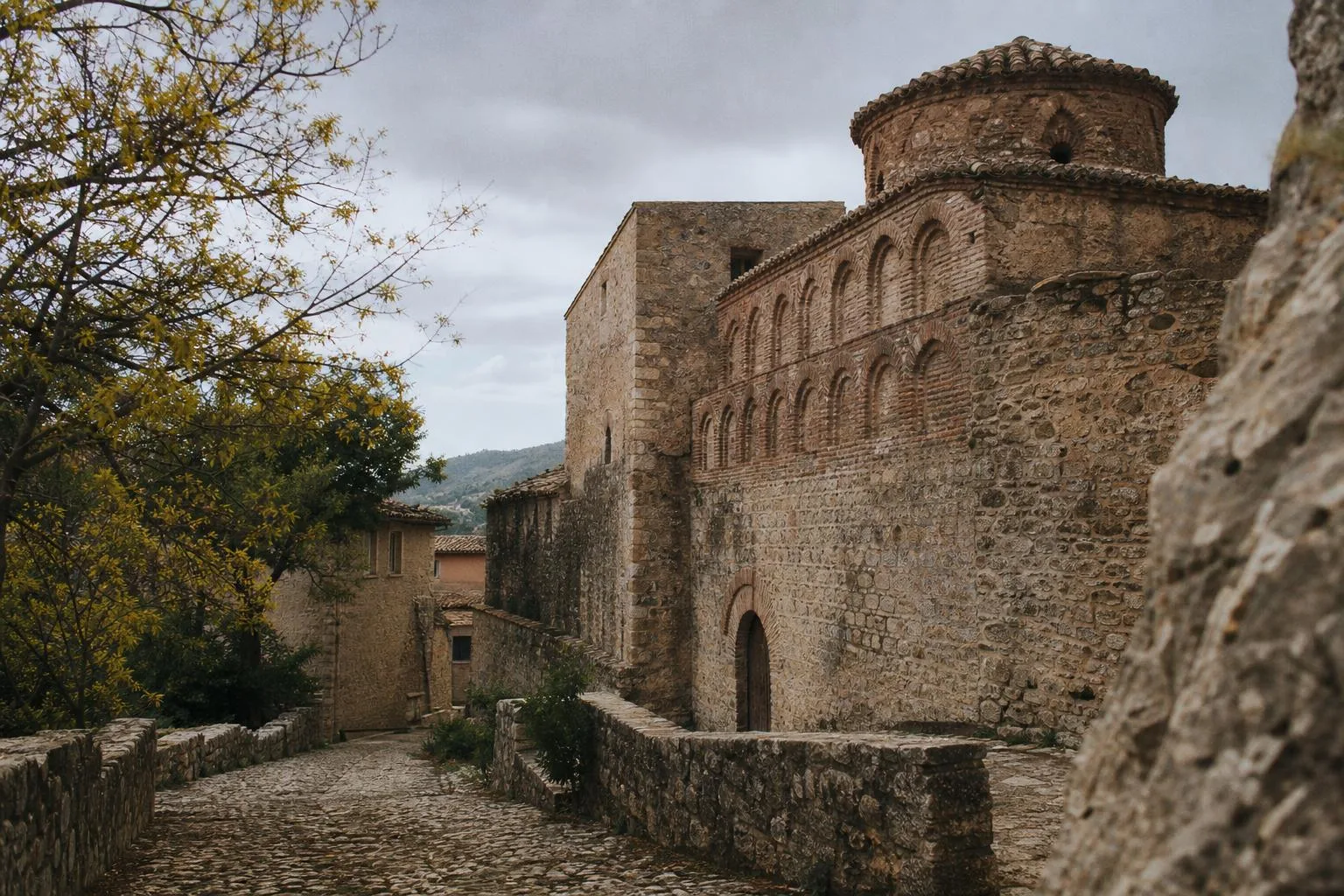
San Giovanni Theristis
A Byzantine-Norman Basilian monastery in the Stilaro valley, home again to Orthodox monks.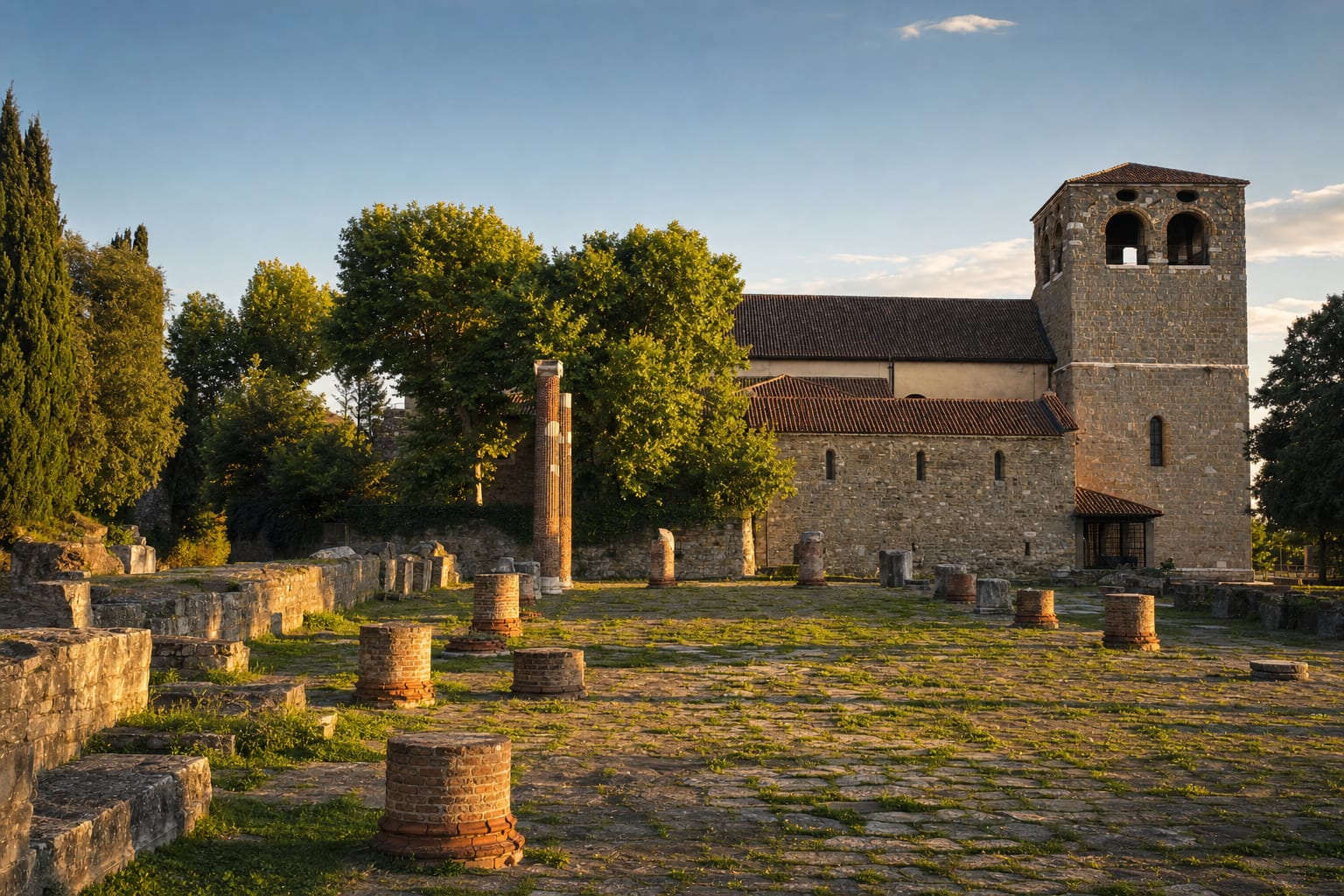
San Giusto Hill
Trieste's summit of cathedral, Venetian castle and Roman ruins above the gulf.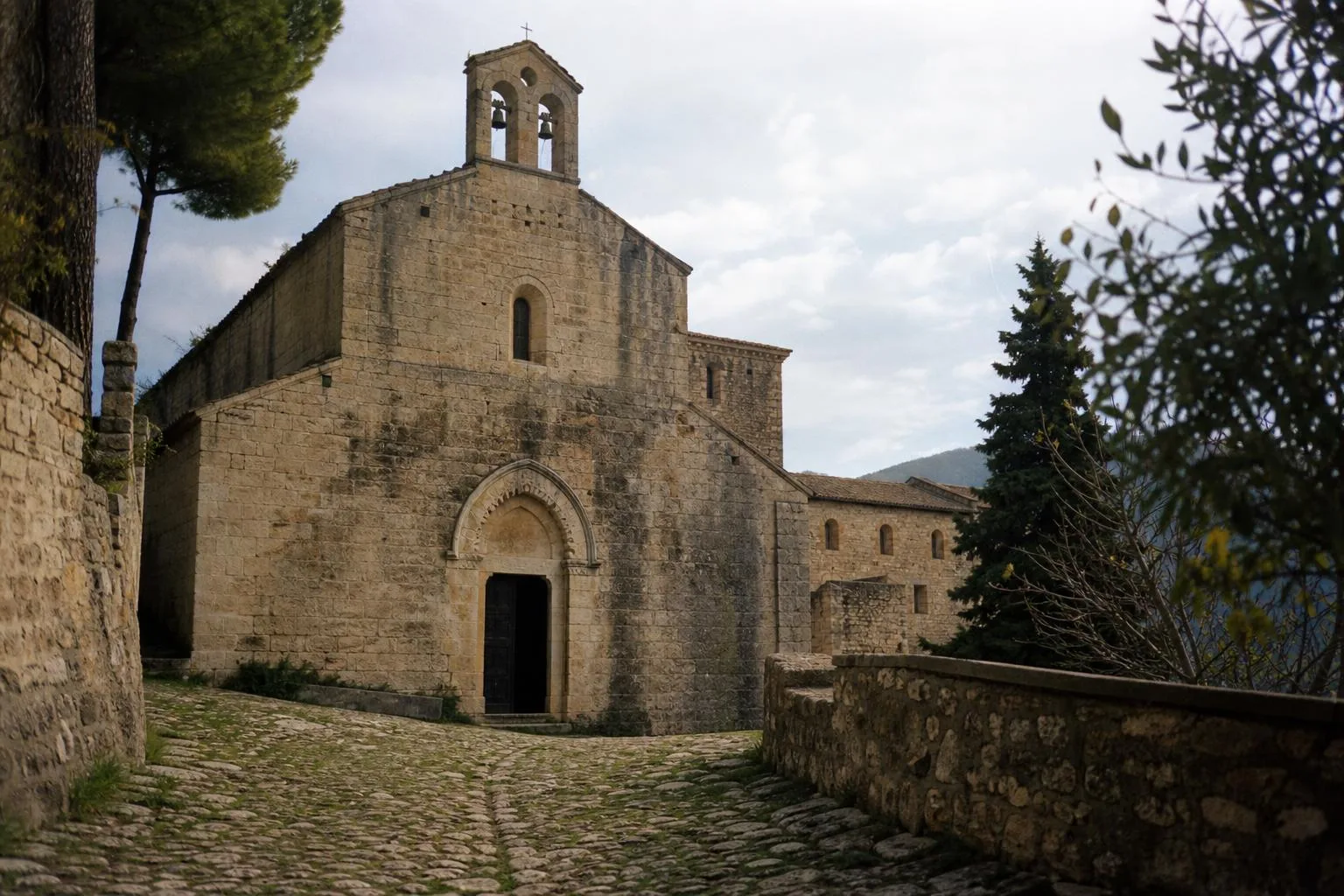
San Liberatore a Maiella
A Romanesque Benedictine abbey at the foot of the Majella, with a rare geometric floor of about 1200.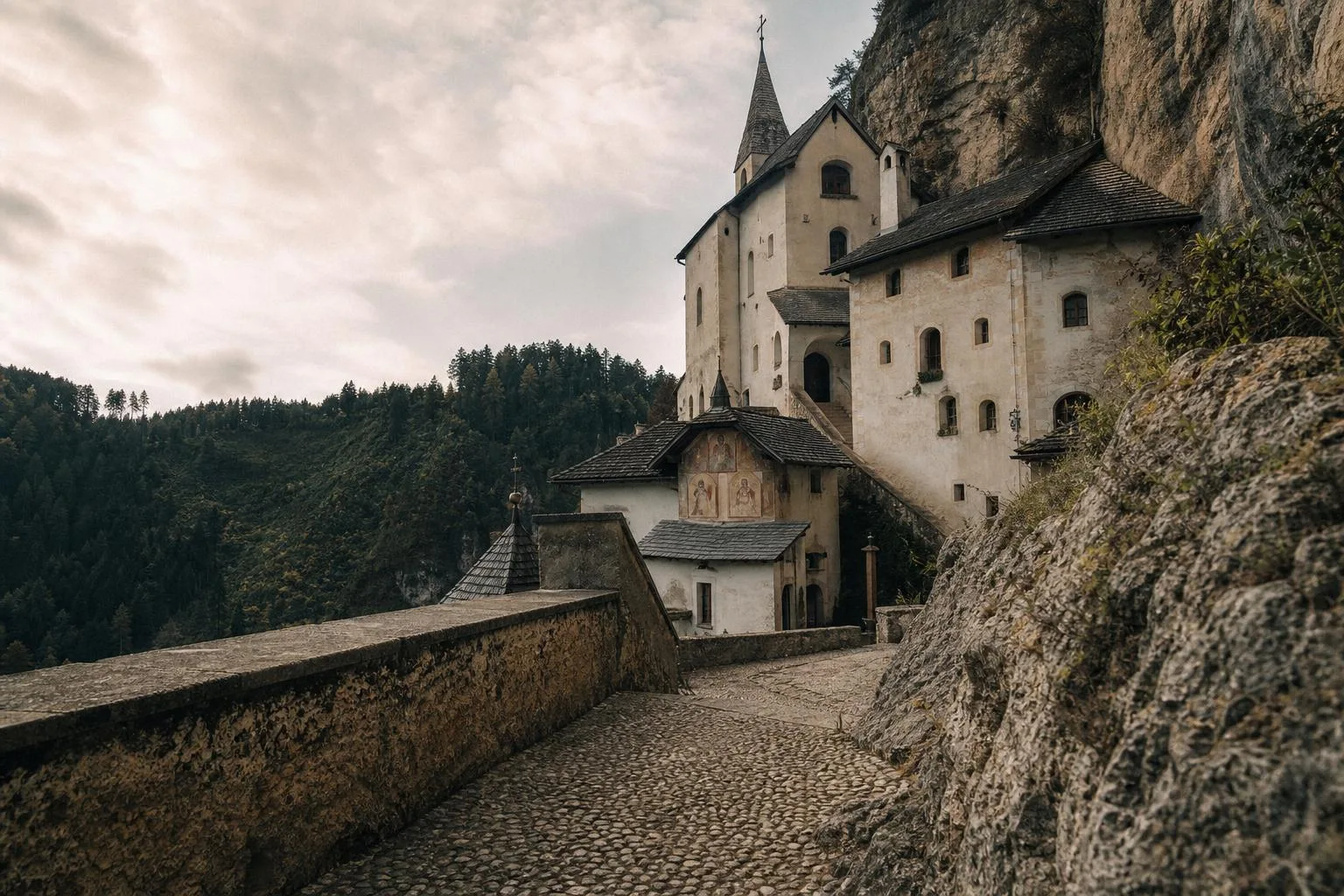
Sanctuary of San Romedio
Five churches stacked on a rock spur in the Val di Non, built across nine centuries around a hermit's tomb.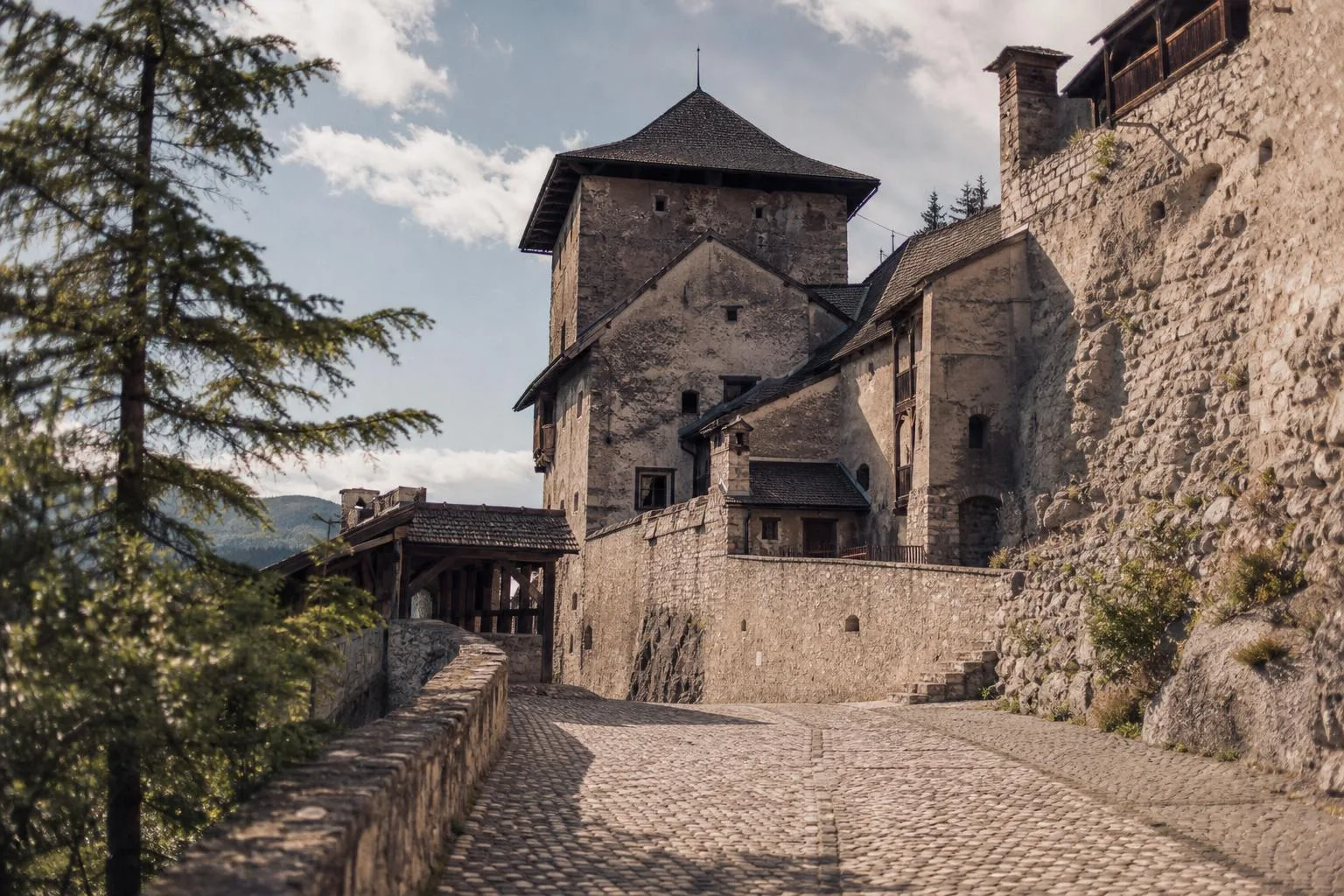
Trostburg
A 12th-century Wolkenstein castle above Ponte Gardena, visitable only by guided tour.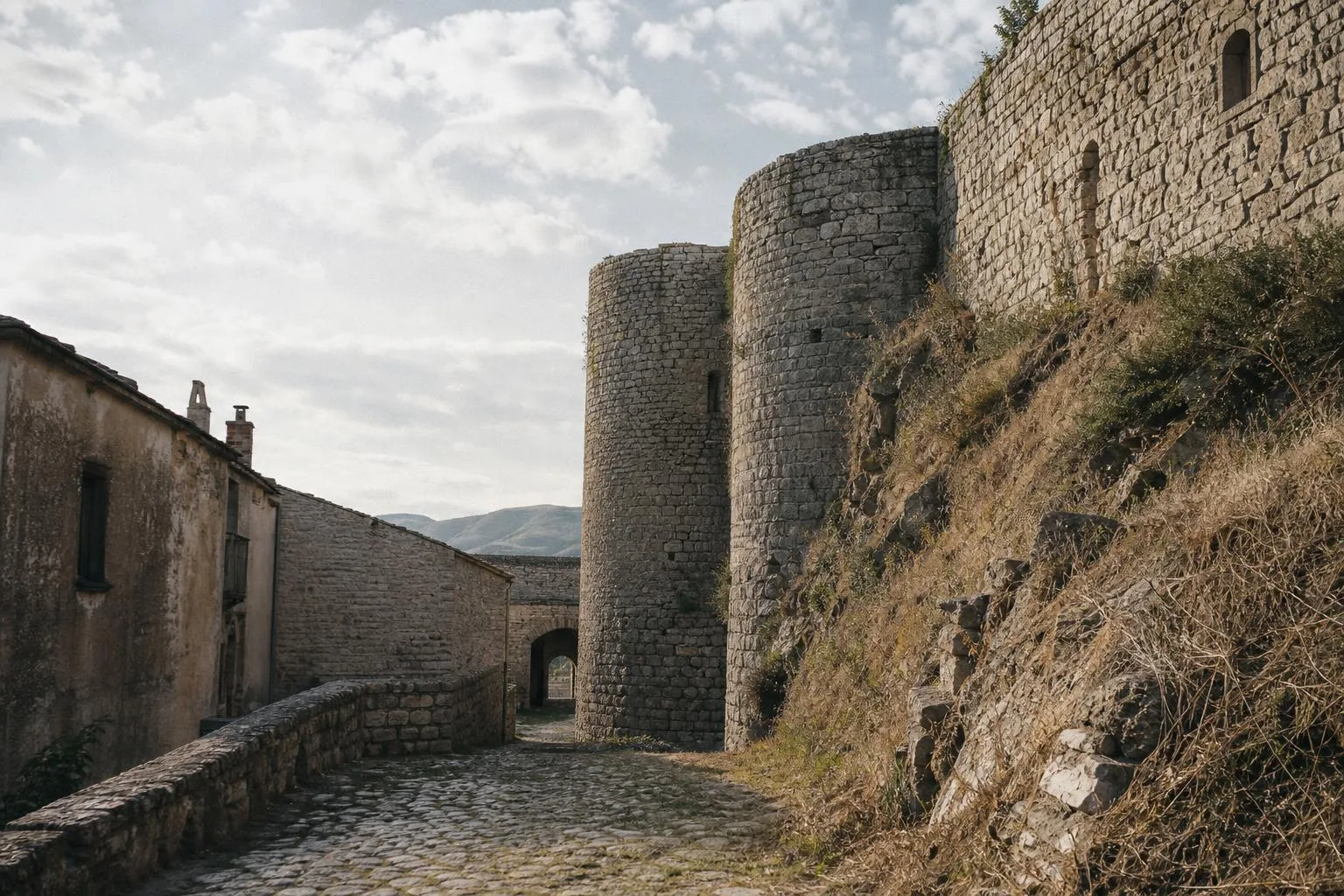
Castle of Pianisi
Medieval castle ruins above the Fortore valley, with a great round tower and a church uncovered by excavation.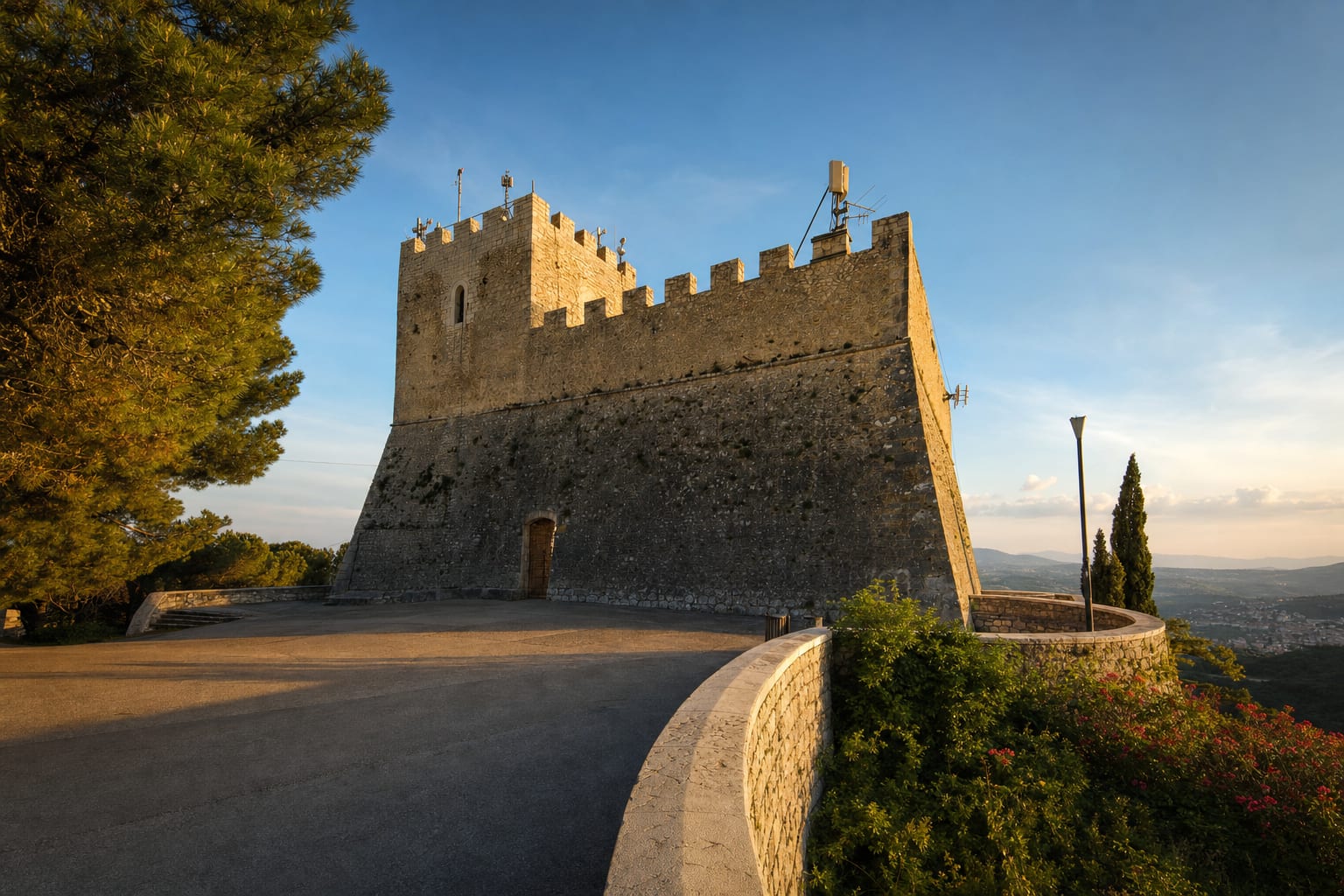
Monforte Castle
The hilltop castle over Campobasso, repaired after the 1456 earthquake, with panoramas to the Matese.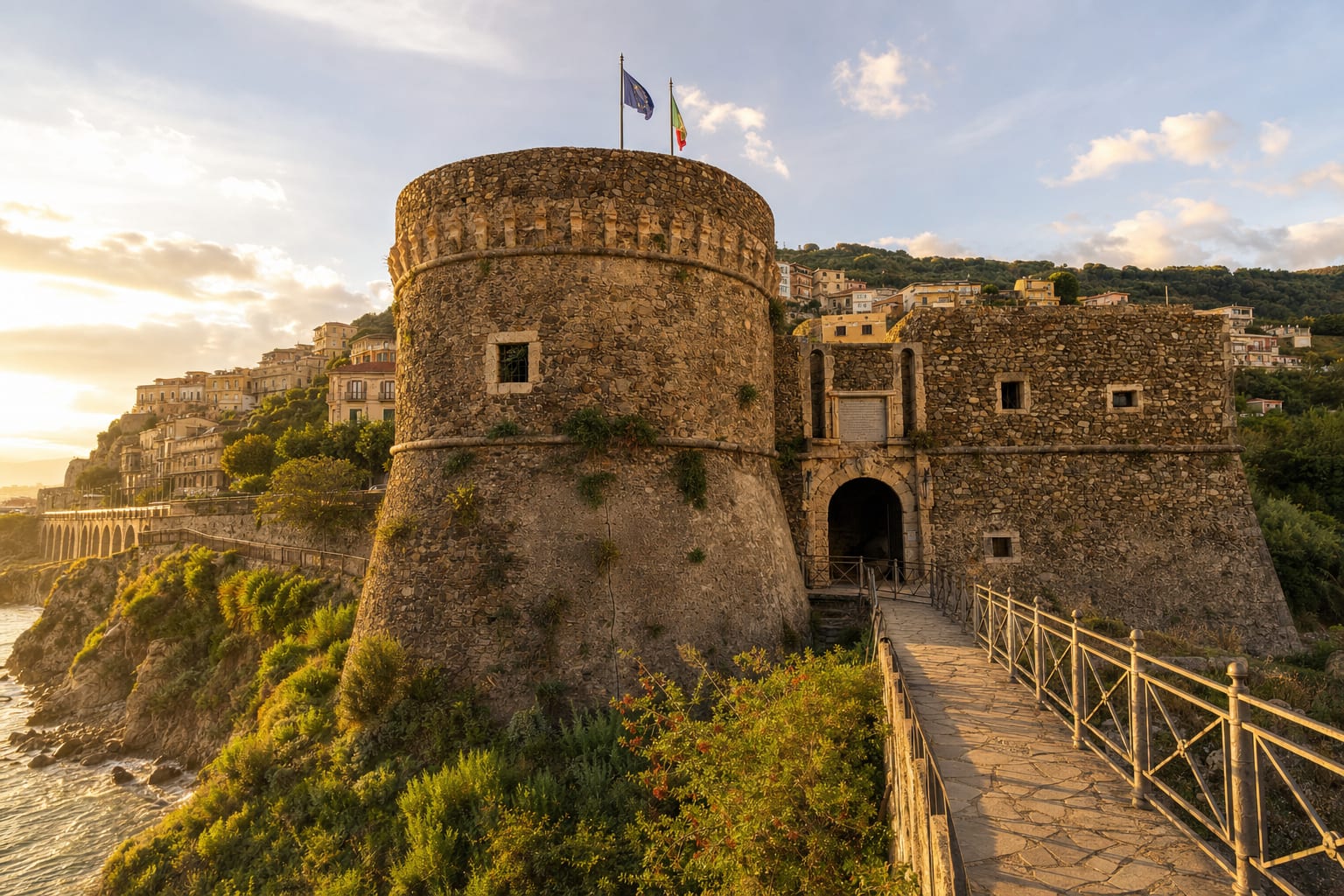
Murat Castle
The seaside keep where Murat, king of Naples, was executed by firing squad in 1815.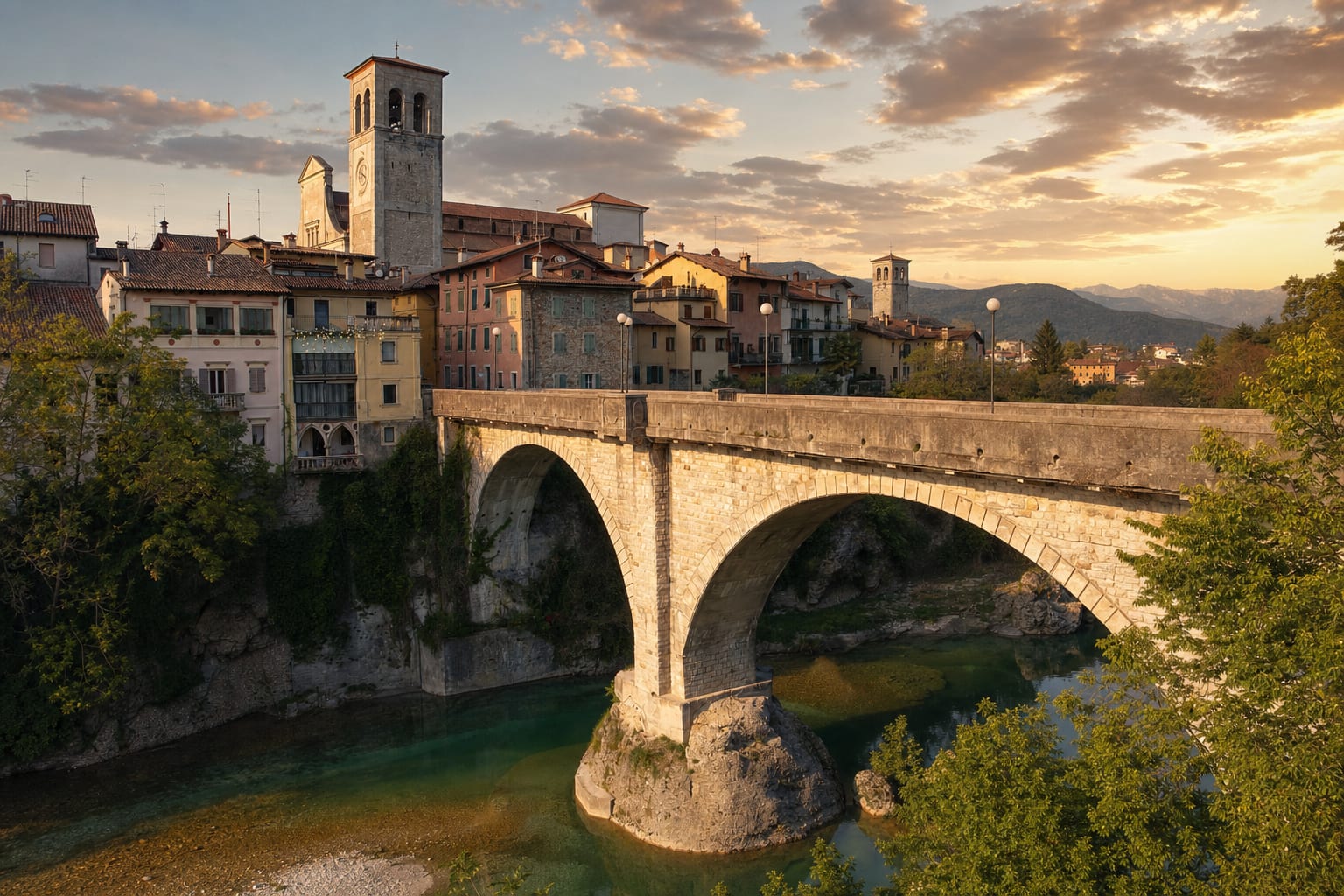
Devil's Bridge
Cividale's legend-built bridge over the Natisone, rebuilt after being blown up in 1917.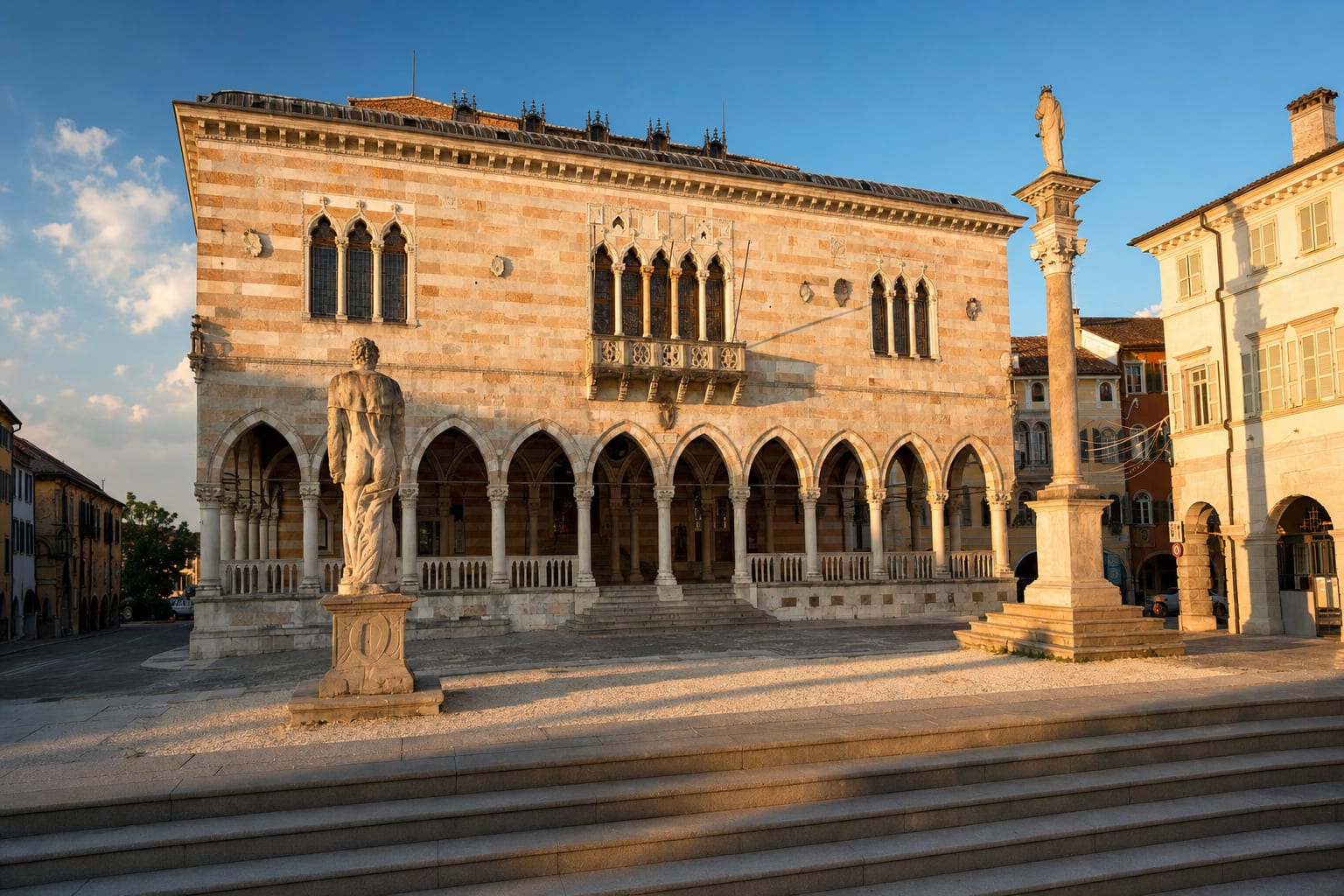
Loggia del Lionello
Udine's 1448 Venetian Gothic loggia, the pink-and-white heart of Piazza Libertà.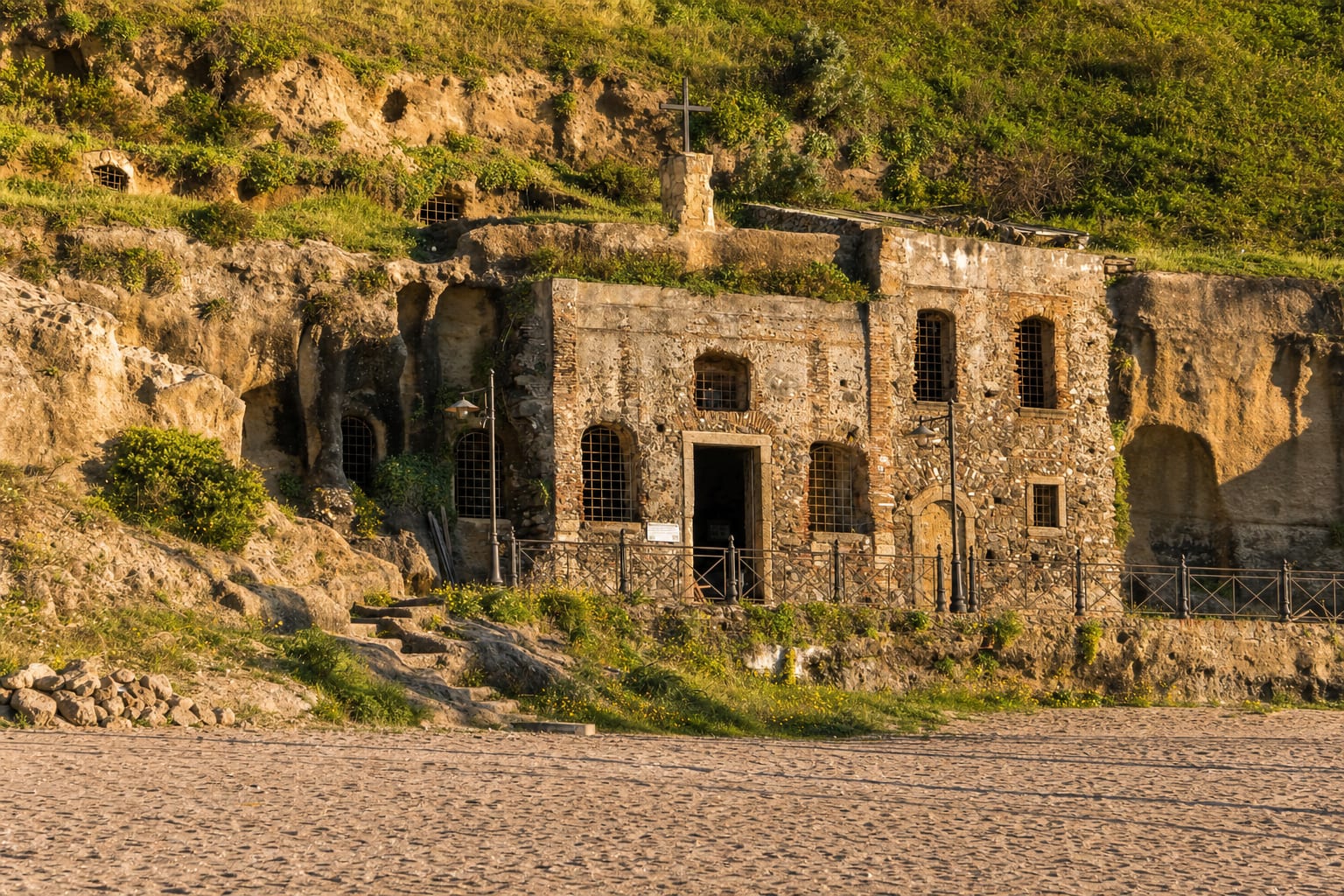
Piedigrotta Church
Pizzo's cave church, carved saint by saint into sea tuff since a 17th-century sailor's vow.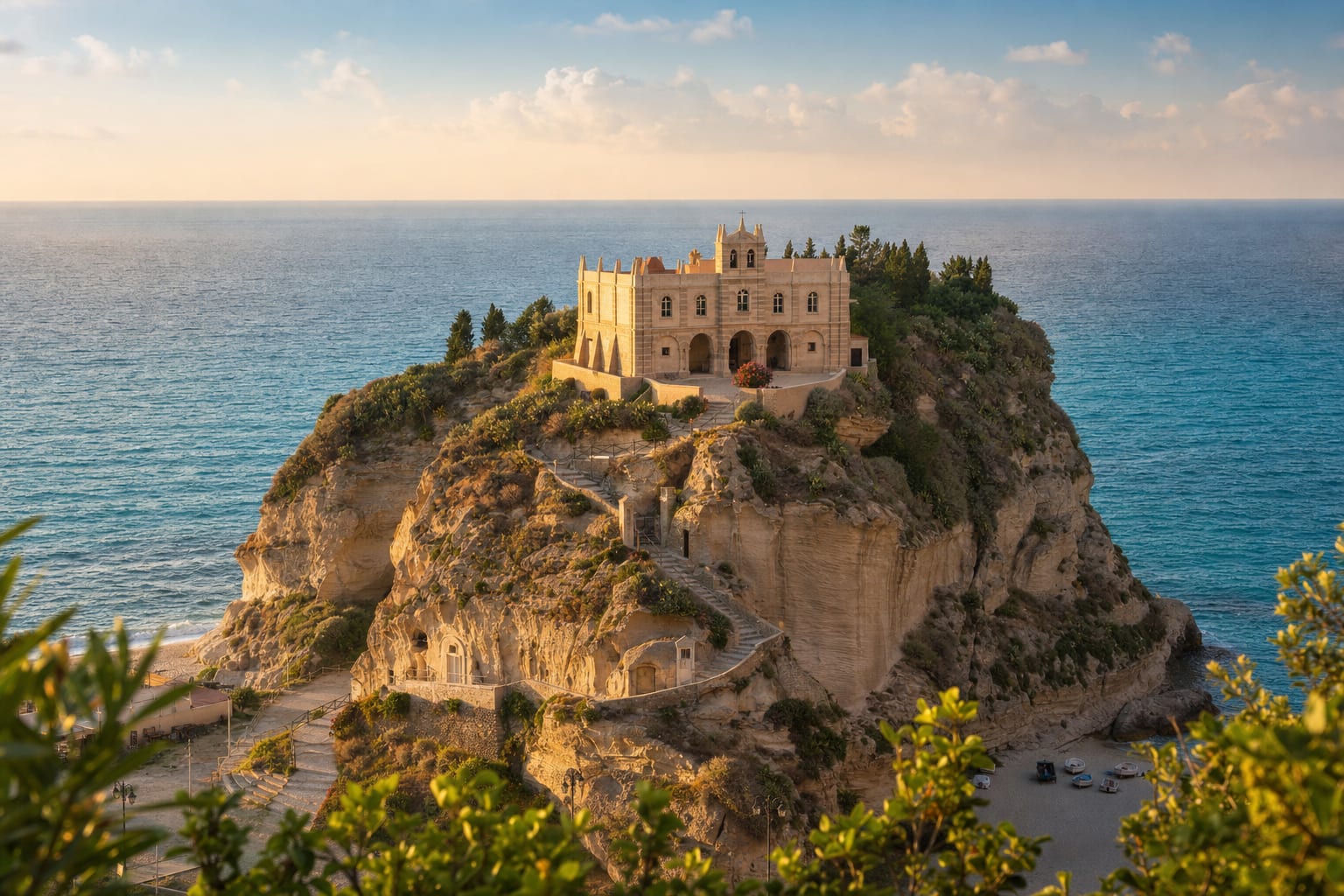
Santa Maria dell'Isola
The sanctuary on its own sea rock between Tropea's two beaches, a Byzantine-then-Benedictine site.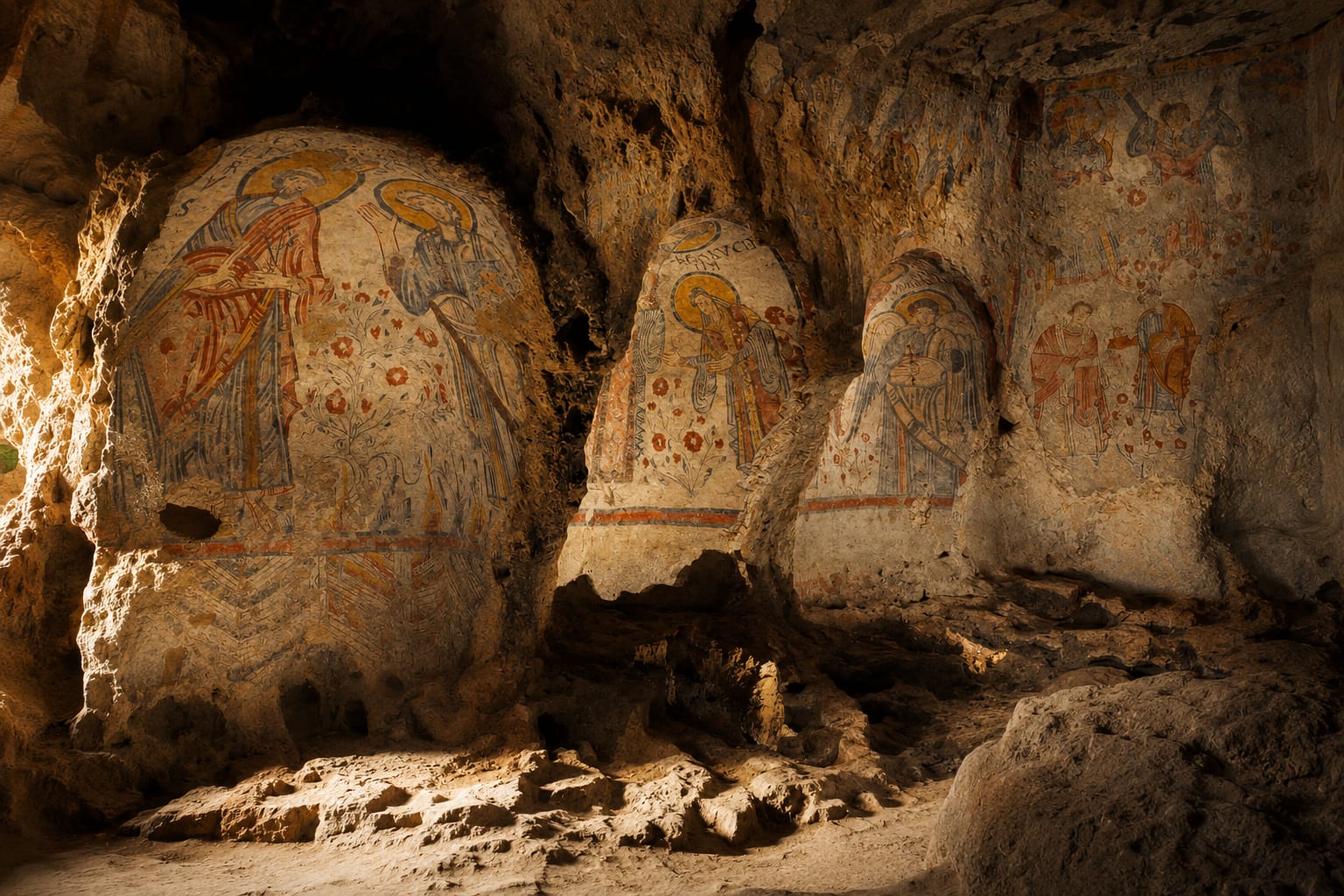
Crypt of the Original Sin
Matera's finest rock-cut fresco cycle, likely 9th-century, hidden in a ravine and strictly booked.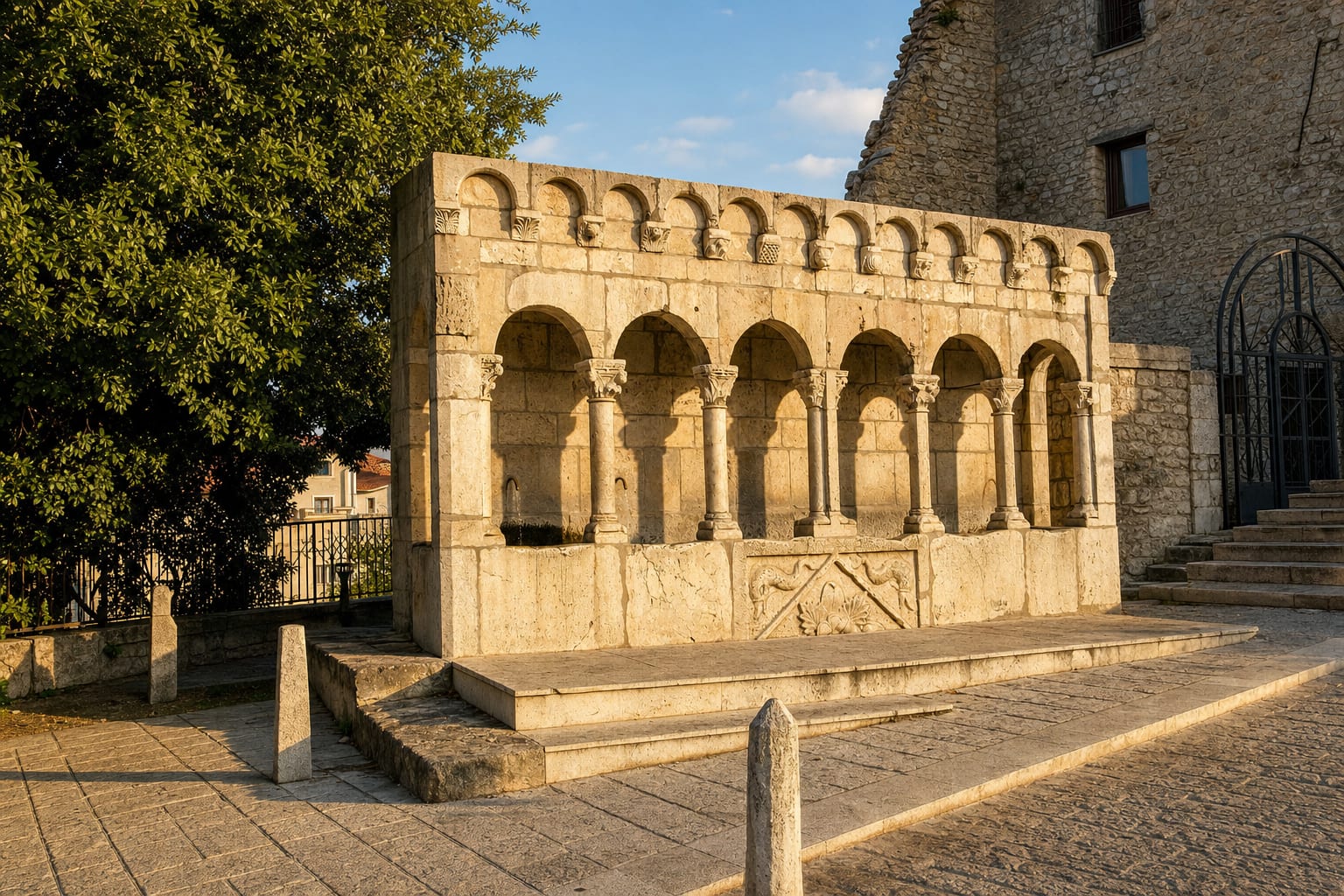
Fraterna Fountain
Isernia's arcaded public fountain, a patchwork of Roman stones rebuilt after the 1943 bombing.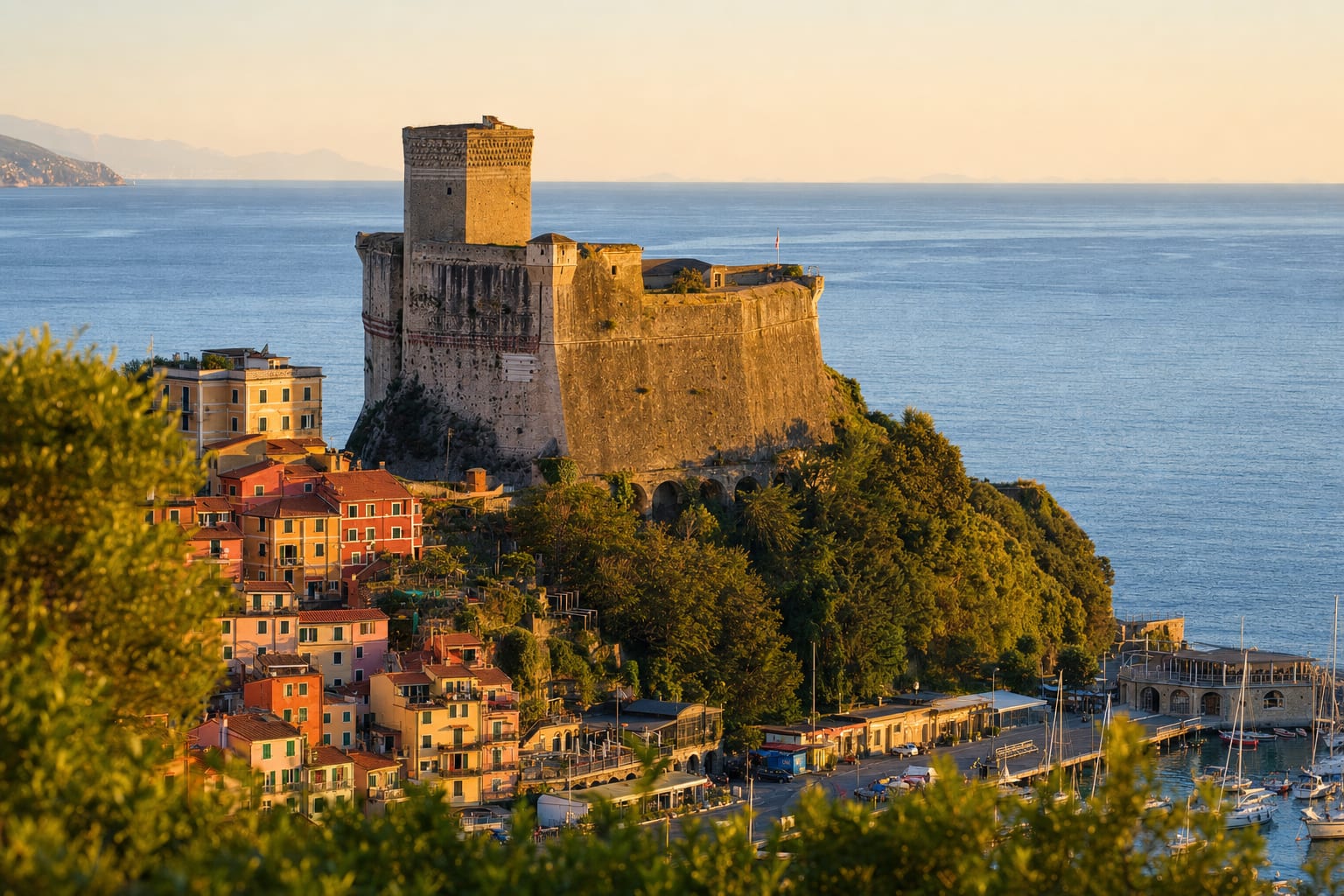
Lerici Castle
The Genoese fortress above the Gulf of Poets, with a Gothic chapel and a terrace over the bay.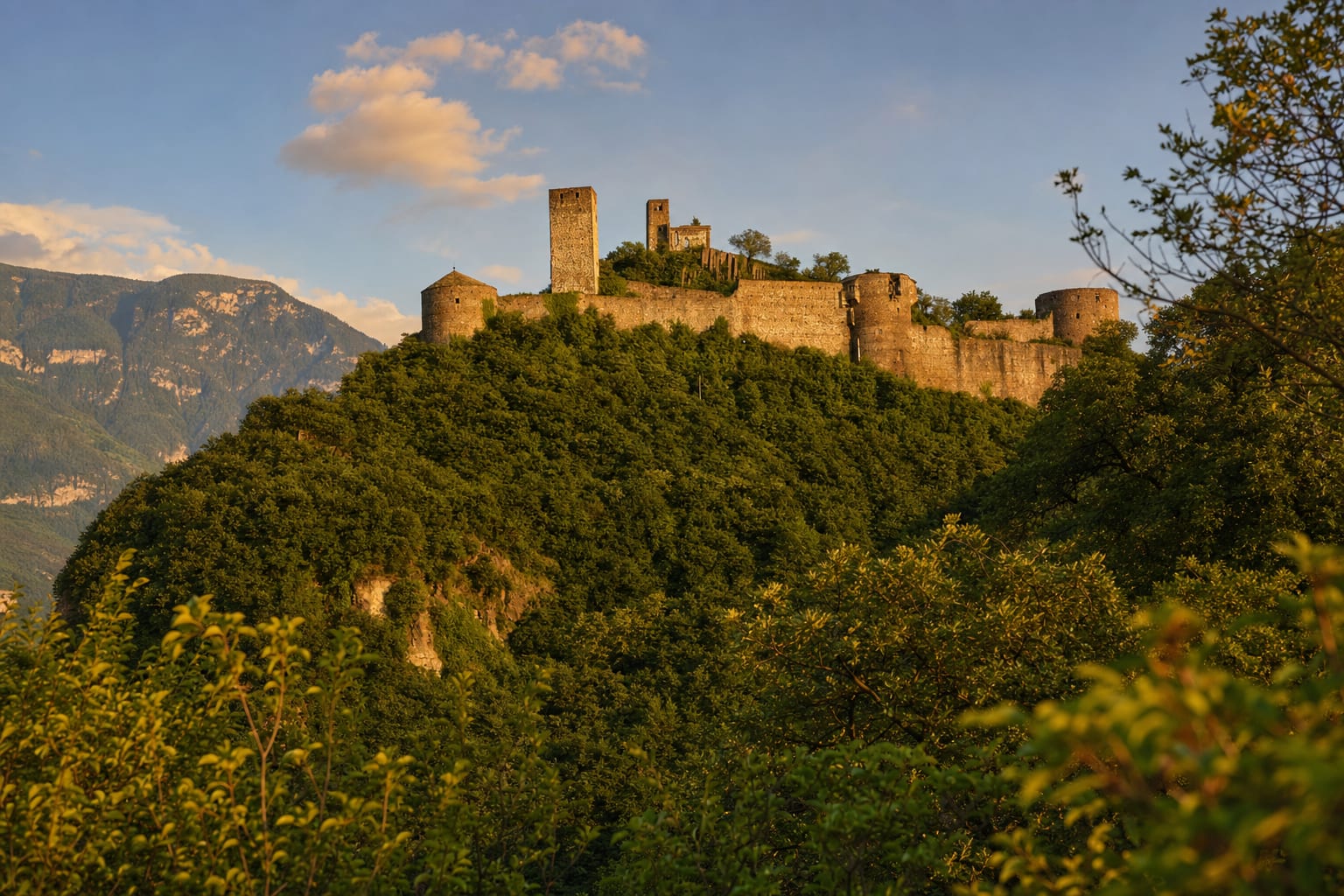
Messner Mountain Museum Firmian
Messner's flagship castle museum of mountains, in the ruins of Sigmundskron above Bolzano.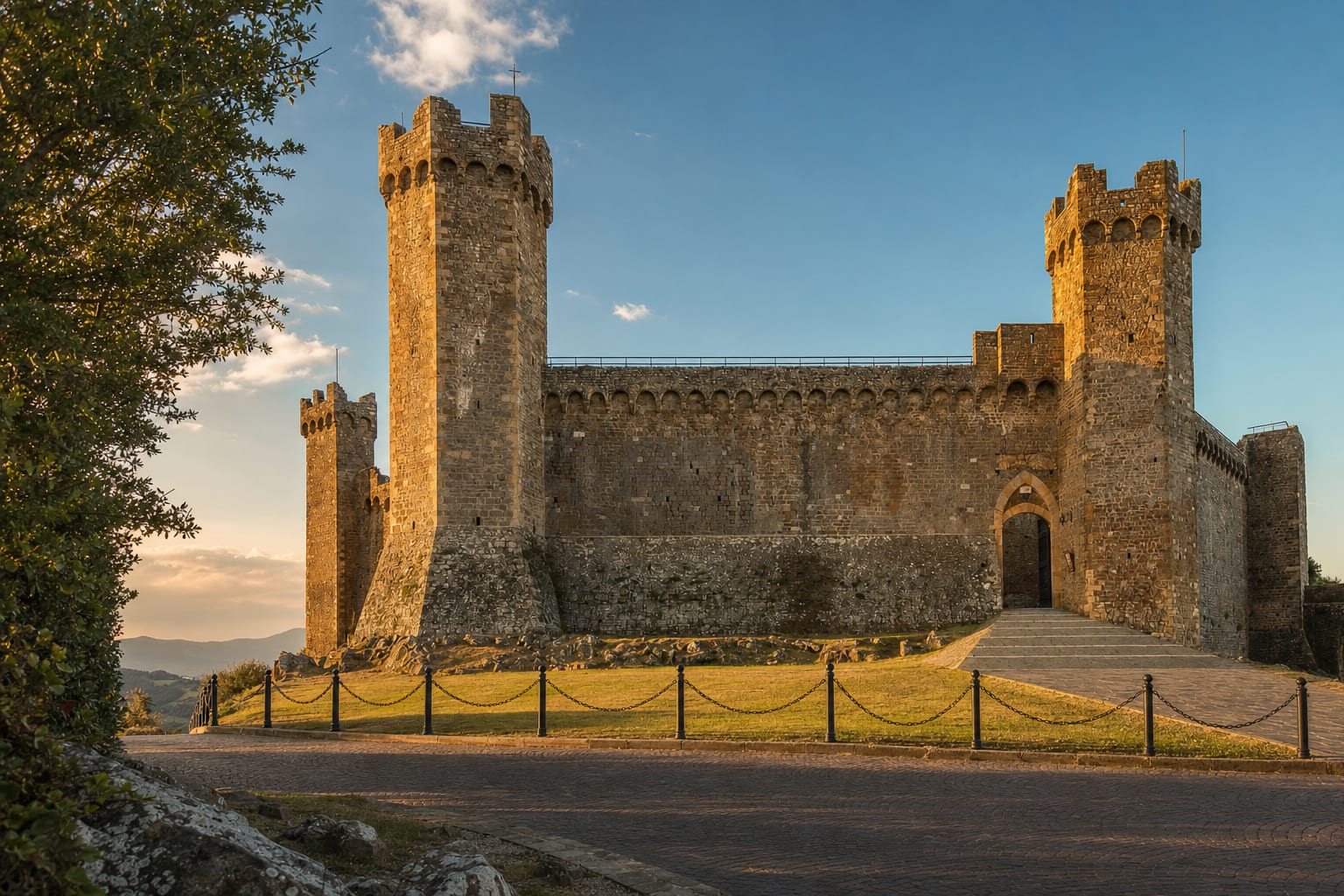
Montalcino Fortress
Siena's 1361 pentagon fortress in Montalcino, its last stronghold, now a Brunello wine bar.
A letter from Italy, once a month.
The places, tables and makers we found worth your time. One email, no noise.
One letter a month. Unsubscribe at any time. We never share your address.