Whip the eggs until thick enough to leave a ribbon on the surface, then fold in the flour gently. Glaze only cold cakes. Add lemon juice and hot water gradually: the icing should flow slowly and coat the sponge, rather than run straight off it. Let the first layer set before applying the second.
Make ahead Begin well before serving to leave time for cooling and two coats of glaze. The total includes a one-hour allowance for cooling and setting; the cakes must be cold and each coating set, even if that takes longer. Extra tray batches also extend the time. For a gift, pack only fully set cakes and identify wheat and eggs.

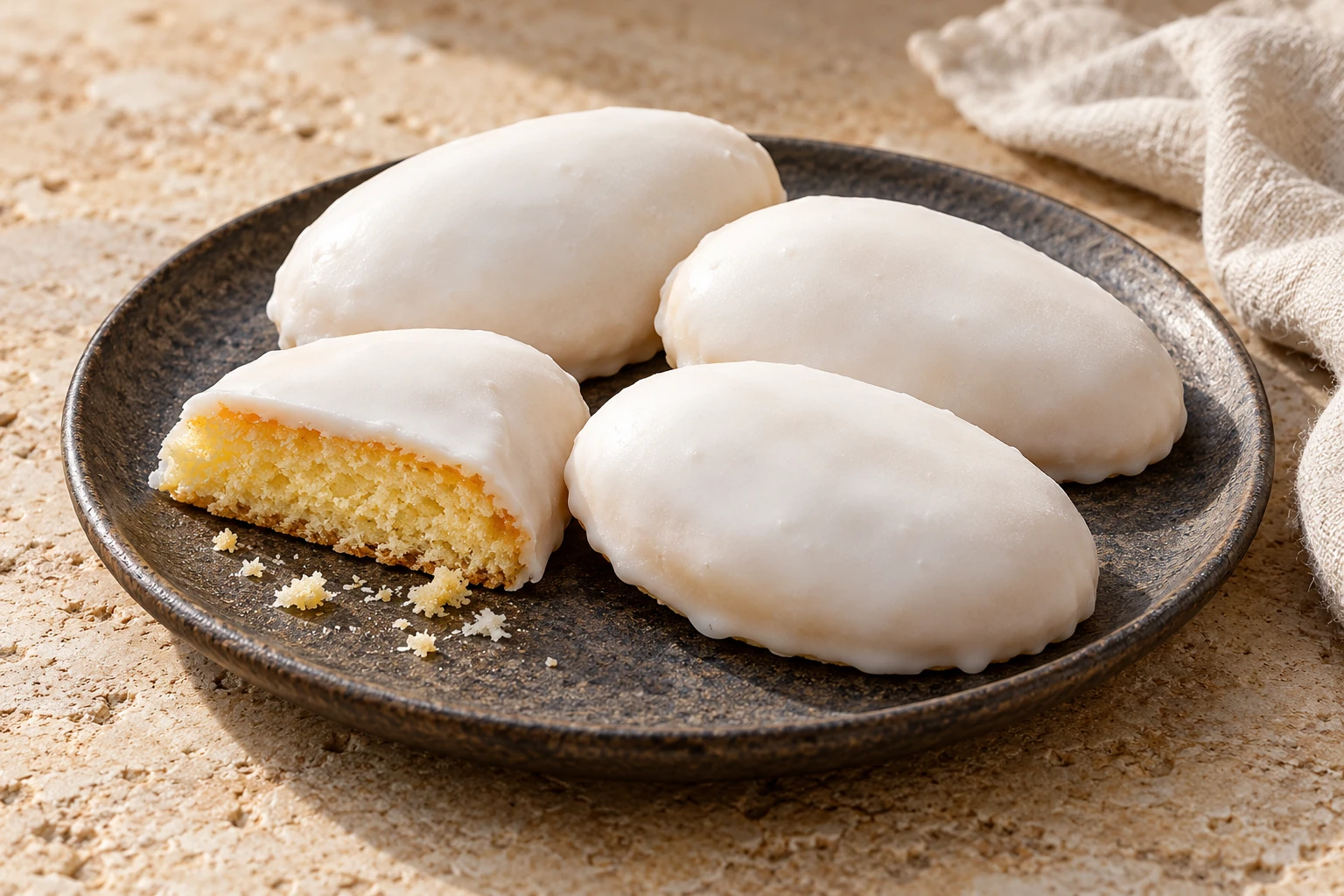
Raffioli: Neapolitan Glazed Christmas Cakes
Total 1 hr 40 min · Prep 25 min · Cook 15 min · Yield 9 cakes
Method
Heat the conventional oven to 180°C and line a baking tray with paper. Beat the eggs with the vanilla seeds, adding the sugar gradually, until pale, thick and airy; a trail from the whisk should remain briefly on the surface.Heat the conventional oven to 350°F and line a baking tray with paper. Beat the eggs with the vanilla seeds, adding the sugar gradually, until pale, thick and airy; a trail from the whisk should remain briefly on the surface.
Sift the flour with the pinch of salt. Fold it into the eggs with a spatula, working gently from the bottom upwards to retain the air.
Transfer to a piping bag and pipe separate low ovals, following the selected yield and leaving room for them to spread. Bake at 180°C conventional for about 15 minutes, until puffed and lightly golden. Bake extra trays separately if necessary.Transfer to a piping bag and pipe separate low ovals, following the selected yield and leaving room for them to spread. Bake at 350°F conventional for about 15 minutes, until puffed and lightly golden. Bake extra trays separately if necessary.
Let the cakes cool completely on a rack before coating. Brush the upper surfaces with a thin layer of smooth, sieved apricot jam.
Put the sifted icing sugar in a bowl. Mix in strained lemon juice little by little, then only as much hot water as needed, a few drops at a time. Stop when the glaze is smooth, thick and slowly flowing.
Set the rack over a tray. Coat the cakes with glaze and let the first layer dry completely before brushing on a second coating. If the remaining icing has thickened, loosen it carefully with a few drops of hot water.
Leave until the final coating is fully set. Lift gently from the rack and arrange on a serving plate; wait for a dry shell before packing them.
Equipment
- Electric whisk
- Mixing bowls
- Fine sieve
- Spatula
- Piping bag
- Baking tray and baking paper
- Cooling rack and pastry brush
- Kitchen scale
Tap anywhere to turn the alarm sound back on.