Weigh the ricotta after draining and keep the wheat mixture free of loose milk.
Make ahead Begin the ricotta draining the day before baking, then chill the baked tart overnight. Keep it covered in the refrigerator at 4°C or below and eat within 3 days. Bring only the portions being served out shortly before eating. If the room is above 32°C, refrigerate within 1 hour.
Pastiera napoletana
Prep 1 hr 20 min · Cook 1 hr 25 min · Rest 26 hr 15 min · Yield 1 whole pastiera (about 12 slices each) · Difficulty Medium
Method
Set the ricotta in a fine sieve over a bowl, cover and drain in the refrigerator for 12 hours. Weigh 350 g after draining, then pass it through the sieve. Keep it refrigerated until mixing the filling.Set the ricotta in a fine sieve over a bowl, cover and drain in the refrigerator for 12 hours. Weigh 12½ oz after draining, then pass it through the sieve. Keep it refrigerated until mixing the filling.
Rub 150 g of cold butter into 250 g of the flour. Add 120 g of the sugar, 36 g of the yolks, the lemon and orange zest and 1 g of the salt. Bring together with minimal handling. Flatten, wrap and chill for 30 minutes. Keep the remaining flour for rolling.Rub 5½ oz of cold butter into 9 oz of the flour. Add 4 oz of the sugar, 1¼ oz of the yolks, the lemon and orange zest and 1 g of the salt. Bring together with minimal handling. Flatten, wrap and chill for 30 minutes. Keep the remaining flour for rolling.
Put the cooked wheat, milk, 250 g of sugar and 20 g of butter in a saucepan. Bring to a gentle simmer and stir for about 15 minutes, until creamy with no loose milk. Transfer to a shallow dish, cool over ice water and refrigerate until cold, allowing about 45 minutes.Put the cooked wheat, milk, 9 oz of sugar and ¾ oz of butter in a saucepan. Bring to a gentle simmer and stir for about 15 minutes, until creamy with no loose milk. Transfer to a shallow dish, cool over ice water and refrigerate until cold, allowing about 45 minutes.
Heat the conventional oven to 170°C. Grease the tart pan with the remaining 5 g of butter and line its base with baking parchment. Reserve about one-quarter of the pastry for the lattice. Roll the rest 3–4 mm thick into a round about 32 cm wide and line the base and sides, trimming the excess. Roll the reserved pastry about 2 mm thick and cut strips 1–2 cm wide. Refrigerate any spare trimmings.Heat the conventional oven to 350°F. Grease the tart pan with the remaining 5 g of butter and line its base with baking parchment. Reserve about one-quarter of the pastry for the lattice. Roll the rest 3 mm–¼ in thick into a round about 12½ in wide and line the base and sides, trimming the excess. Roll the reserved pastry about 2 mm thick and cut strips ½–¾ in wide. Refrigerate any spare trimmings.
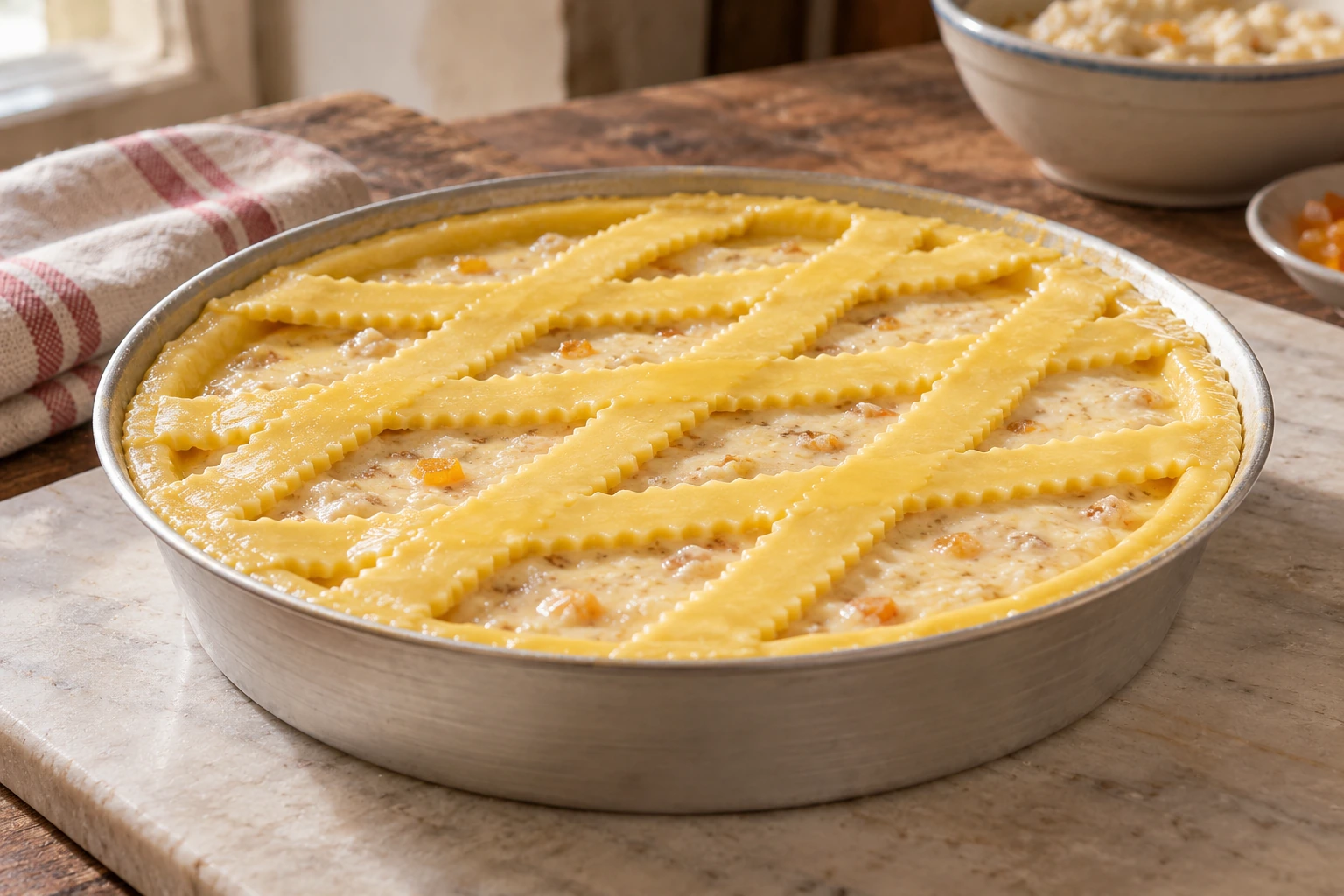
Mix the cold wheat cream with the drained ricotta, 100 g of beaten whole eggs, the remaining 36 g of yolks, vanilla seeds, orange-blossom water, candied citron, candied orange and the remaining 1 g of salt. Stir without whipping. Fill the lined pan, leaving at least 0.5 cm below the rim; keep any surplus filling refrigerated. Lay the pastry strips across the surface in a diamond lattice. Beat the remaining 50 g of whole egg with the cream and lightly brush the strips and rim.Mix the cold wheat cream with the drained ricotta, 3½ oz of beaten whole eggs, the remaining 1¼ oz of yolks, vanilla seeds, orange-blossom water, candied citron, candied orange and the remaining 1 g of salt. Stir without whipping. Fill the lined pan, leaving at least ¼ in below the rim; keep any surplus filling refrigerated. Lay the pastry strips across the surface in a diamond lattice. Beat the remaining 1¾ oz of whole egg with the cream and lightly brush the strips and rim.
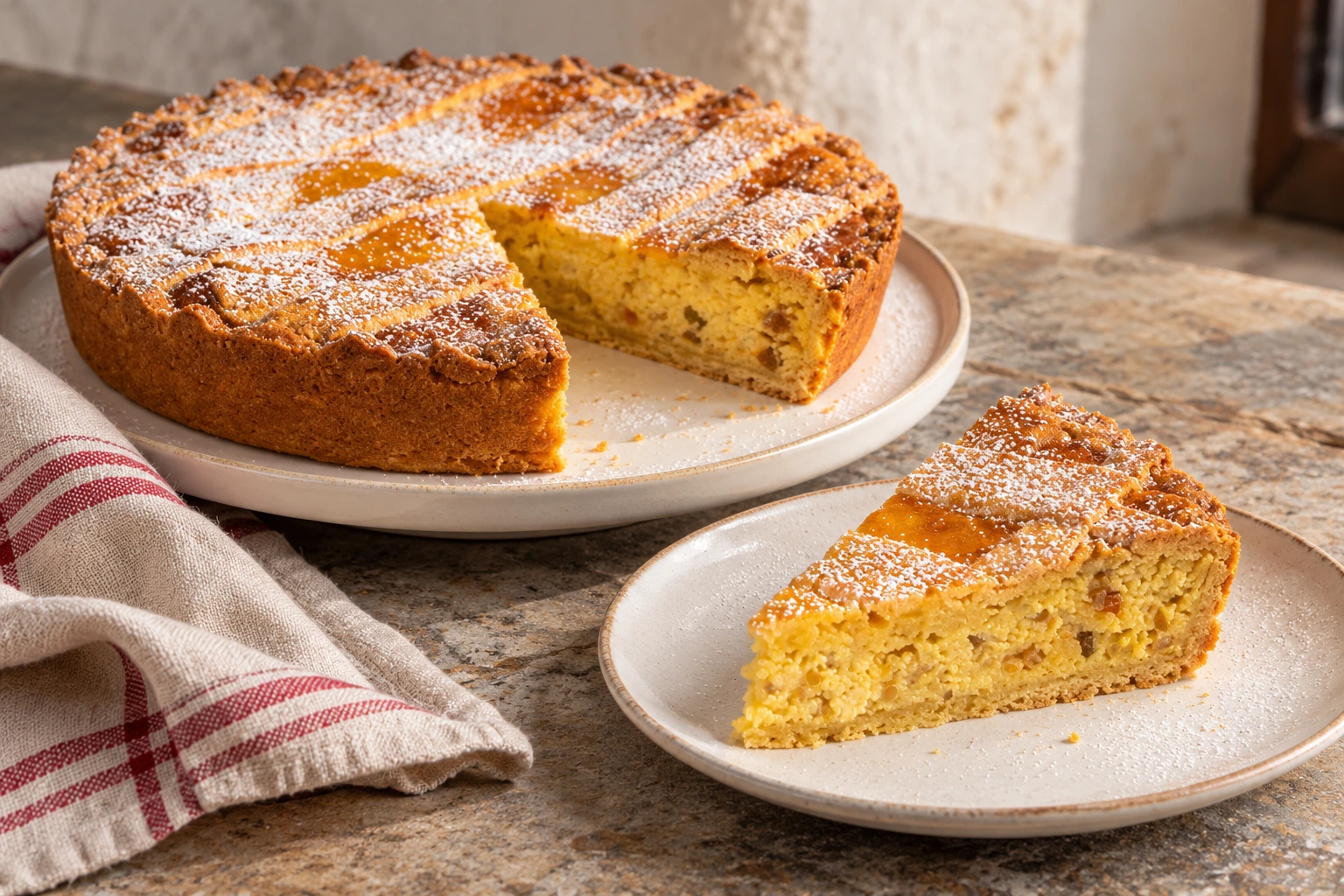
Bake on the lower-middle rack for 60–70 minutes. The crust should be golden, the edges set and the center only slightly trembling; a thermometer in the center should read about 82–85°C. Shield the top loosely with foil if it browns early. Cool in the pan on a rack for about 1 hour, then refrigerate, still in the pan, before 2 hours have elapsed. Chill for at least 12 hours before slicing. Dust with the powdered sugar just before serving.Bake on the lower-middle rack for 60–70 minutes. The crust should be golden, the edges set and the center only slightly trembling; a thermometer in the center should read about 179.6–185°F. Shield the top loosely with foil if it browns early. Cool in the pan on a rack for about 1 hour, then refrigerate, still in the pan, before 2 hours have elapsed. Chill for at least 12 hours before slicing. Dust with the powdered sugar just before serving.