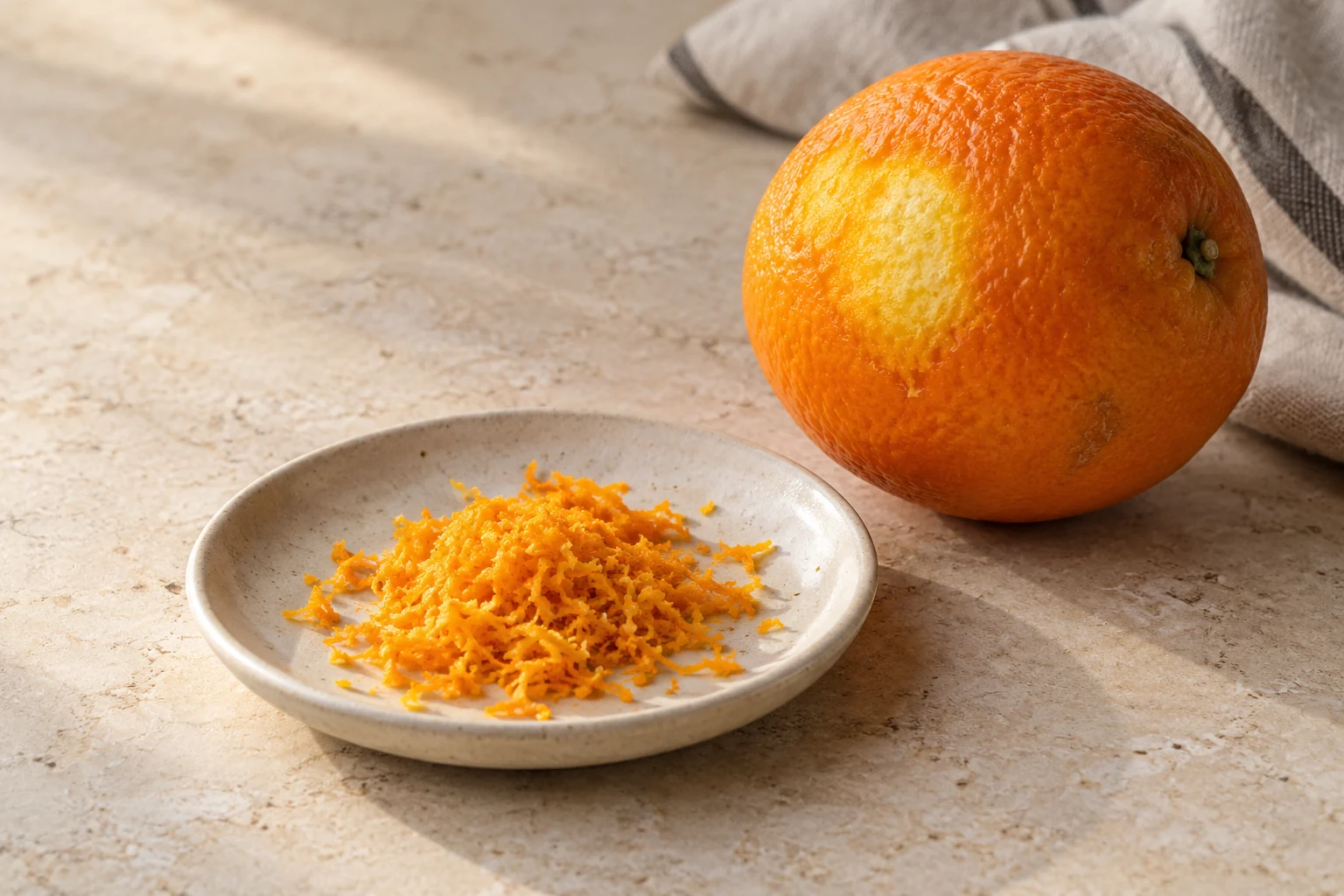
Finely grated zest
- Preparation
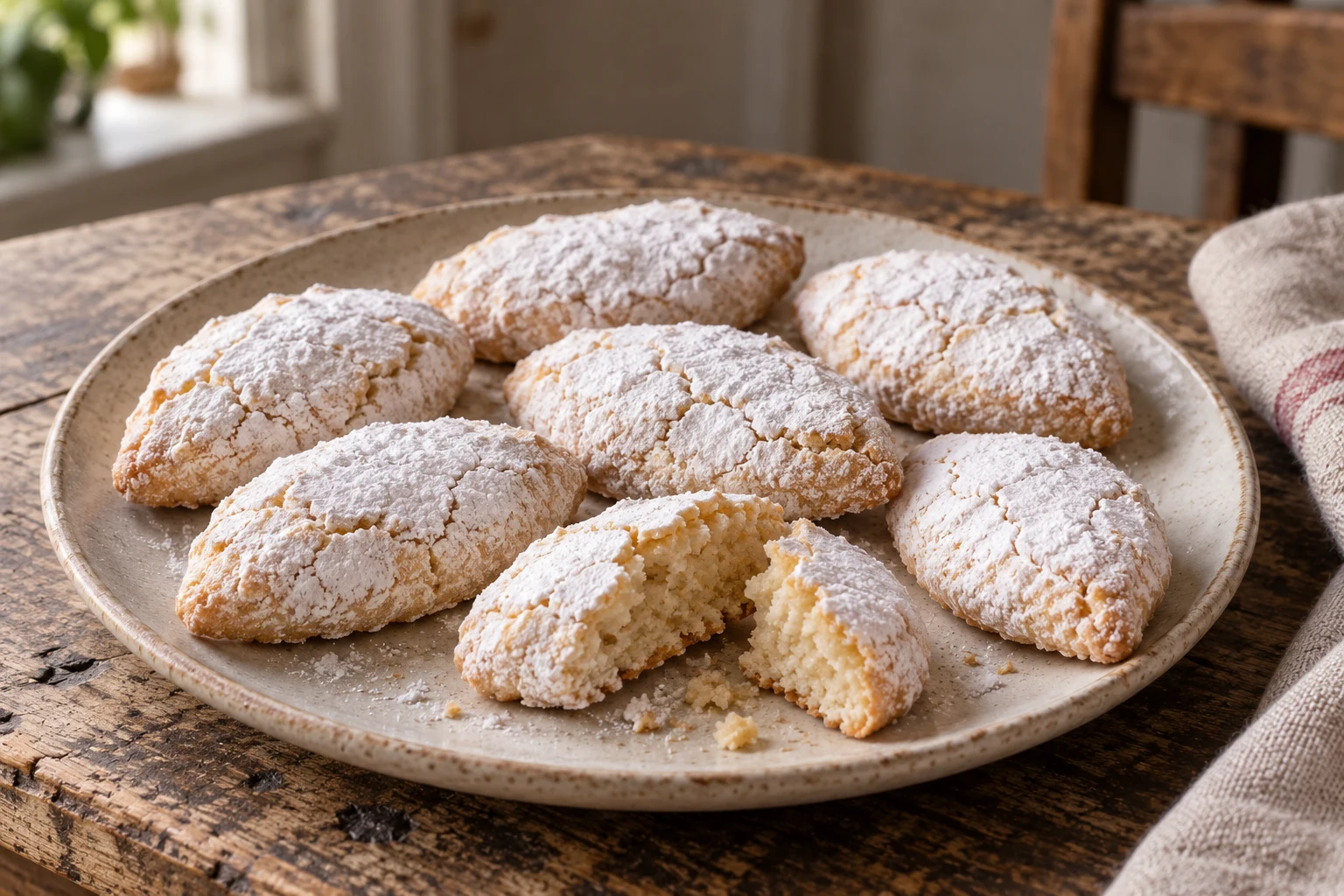
- Visit Tuscany calls for the grated zest of one orange in its ricciarelli mixture.
Finely grated orange zest carries the colored peel into ricciarelli dough and orange-scented cakes.
Orange zest · Italia Magnifica
Visit Tuscany’s ricciarelli recipe puts grated orange zest alongside almond flour, vanilla and bitter almond extract.
Cucchiaio d’Argento’s Torta Camilla gives another baking example: zest is beaten with eggs, powdered sugar and vanilla seeds, while the orange juice goes into the carrot mixture. The same fruit contributes two distinct ingredients.
Cucchiaio d’Argento directs cooks to wash and dry the oranges, then grate only the orange surface. Avoid the white layer underneath, which would add bitterness. Its Torta Camilla calls for an orange with edible peel.
In Juls’ Kitchen’s ricciarelli, grated zest is mixed into the dough before its overnight refrigerator rest. In Torta Camilla it joins the eggs and sugar before the almond flour and carrot mixture. Use the form and stage of addition requested by your recipe.
Check that the peel is edible when buying an orange for grating. Cucchiaio’s Torta Camilla specifies an organic orange with edible peel. Follow the peel selection requested by your recipe.
Our suggestion: wash and dry the orange, then grate the amount needed as you prepare the dough. If using a packaged zest product, follow its own preparation and storage label.
The colored orange surface. Cucchiaio d’Argento advises leaving the white layer underneath, which can make the preparation bitter.
They are separate ingredients in Torta Camilla: the juice is blended with carrots, while grated zest is beaten with eggs and sugar. Follow a recipe that gives the form you intend to use.
They are different forms. Our suggestion: use a fine grater for the zest that goes into ricciarelli dough, or a peeler when your recipe calls for a strip. Follow the form requested rather than exchanging measures.
The places, tables and makers we found worth your time. One email, no noise.
One letter a month. Unsubscribe at any time. We never share your address.