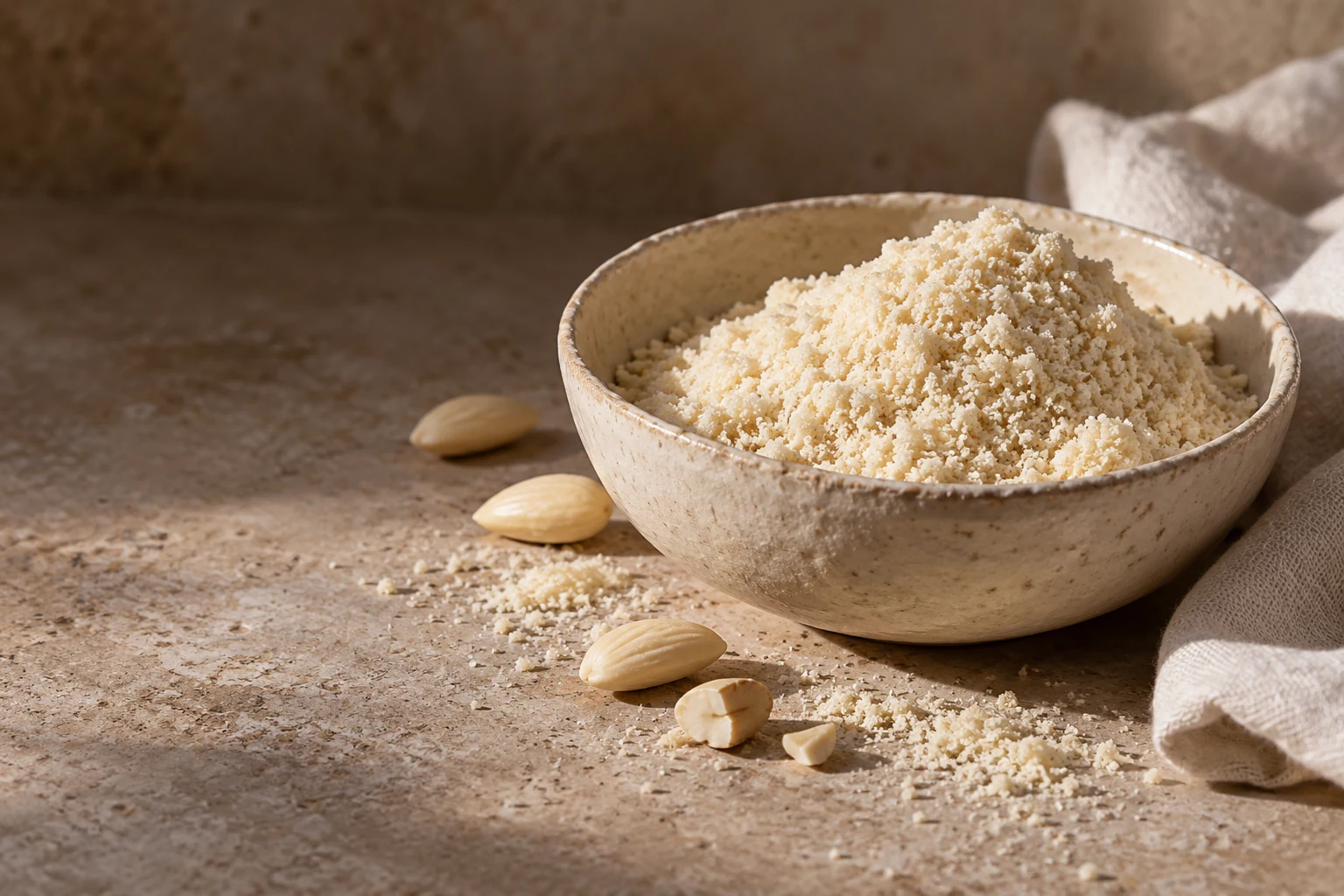
Blanched almond flour
- Almonds
- Skins removed before milling
- Processing
- Blanched, dried, cooled, ground and sifted
Almond flour is finely ground almonds, used in Italian cookies, cakes and almond-paste sweets.
Almond flour · Italia Magnifica
Producers mill both blanched almonds and natural shelled almonds into flour. Choose the form and grind your recipe calls for.
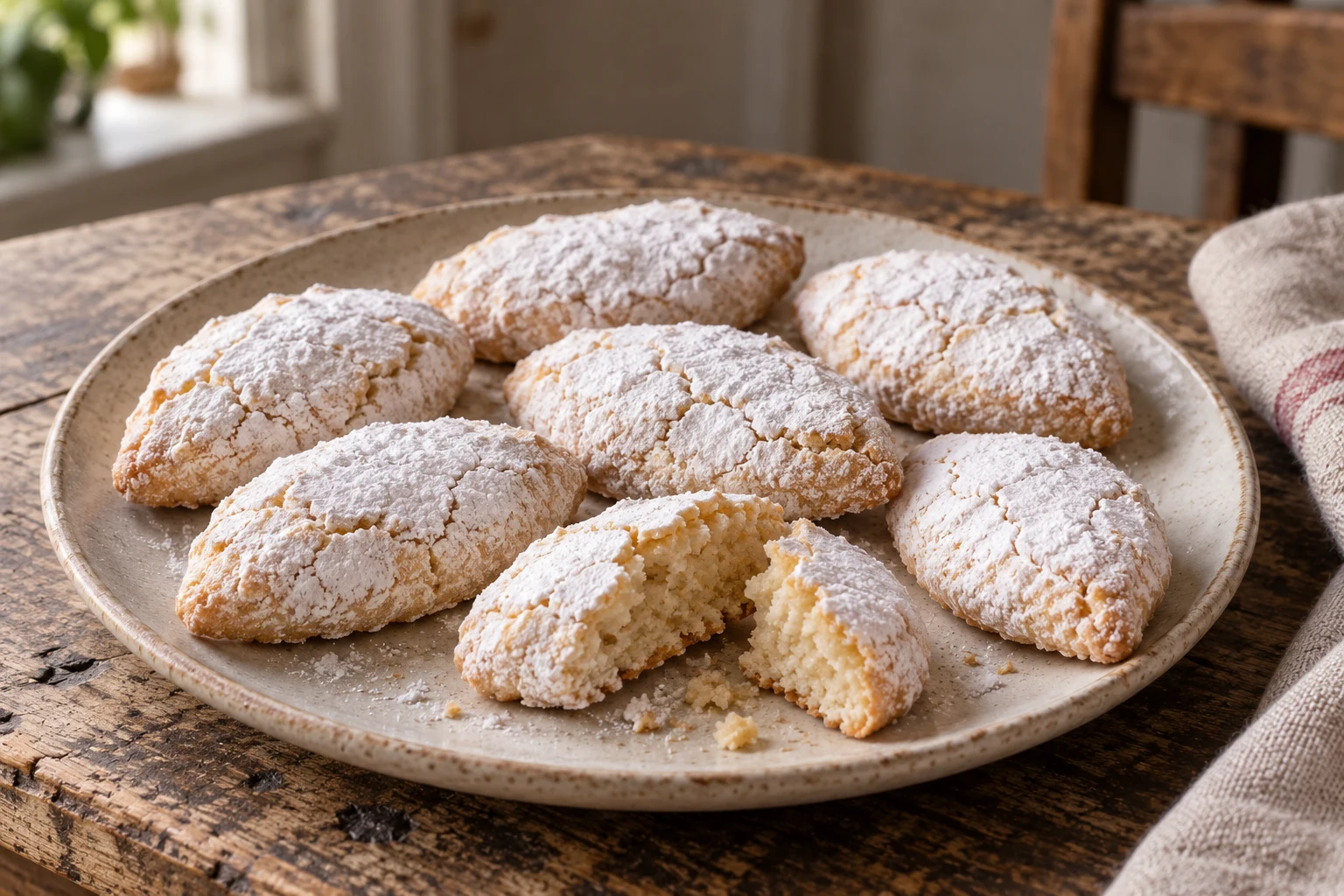
Almond flour appears in two quite different Italian sweets: Siena’s Ricciarelli and the cornmeal cake Amorpolenta, associated with Varese in Lombardy.
Ricciarelli put almonds at the center of the cookie. Juls’ Kitchen’s version combines almond flour with egg whites and powdered sugar, then adds orange zest, vanilla and bitter-almond extract.
Amorpolenta gives almonds a different setting. In Marchesi 1824’s version, almond flour joins cornmeal, butter, sugar and eggs, with nutmeg and lemon. Corn gives the cake its golden color and grainy texture; the almonds share the batter rather than forming its sole flour base.
For blanched flour, the almond skin is loosened in boiling water and removed before the kernels are dried and cooled. Milling and sifting then produce the required particle size. Natural almond flour starts with shelled almonds and goes through milling and sifting without that skin-removal stage.
The grind is a buying choice, too. Italian processors offer fine and extra-fine grades; match the texture to the recipe rather than assuming every packet is identical.
In the Ricciarelli recipe by Juls’ Kitchen on Visit Tuscany, 200 g of almond flour is folded with egg whites and powdered sugar. Bitter-almond extract, vanilla and orange zest perfume the dough, which rests overnight in the refrigerator before shaping and baking.
Use almond flour in coatings for frying or to thicken sauces. Explore these savory uses with a recipe written for almond flour, rather than treating it as an automatic replacement for wheat flour.
Look at the ingredient list: plain almond flour can contain only almonds. Check whether the almonds are blanched and whether a grind is specified.
An Italian processor’s address does not establish where the almonds were grown. Suppliers distinguish almond origin from the country of processing, so read both when provenance matters to you. Check the packet’s allergen and cross-contact information as well.
Follow the producer’s storage instructions and best-before date. Keep almond flour in a cool, dry place, away from prolonged direct sunlight and strong odors. Use the instructions on your own pack when choosing where to store it after opening.
Plain almond flour is made from almonds, not wheat. Check the specific packet for added ingredients and possible cross-contact: a producer’s gluten-free claim applies to that product, not to every almond flour.
The Ricciarelli di Siena IGP specification requires almonds with the skins removed and finely ground. That rule belongs to the protected cookie. The Juls’ Kitchen recipe names almond flour without specifying a commercial fine or extra-fine grade.
No. Almond origin and processing location are separate details: an Italian processor can mill almonds grown elsewhere. Check the stated origin if you want flour made from Italian-grown almonds.
The places, tables and makers we found worth your time. One email, no noise.
One letter a month. Unsubscribe at any time. We never share your address.