

All the monuments, city by city
The landmarks and masterpieces worth planning a day around.
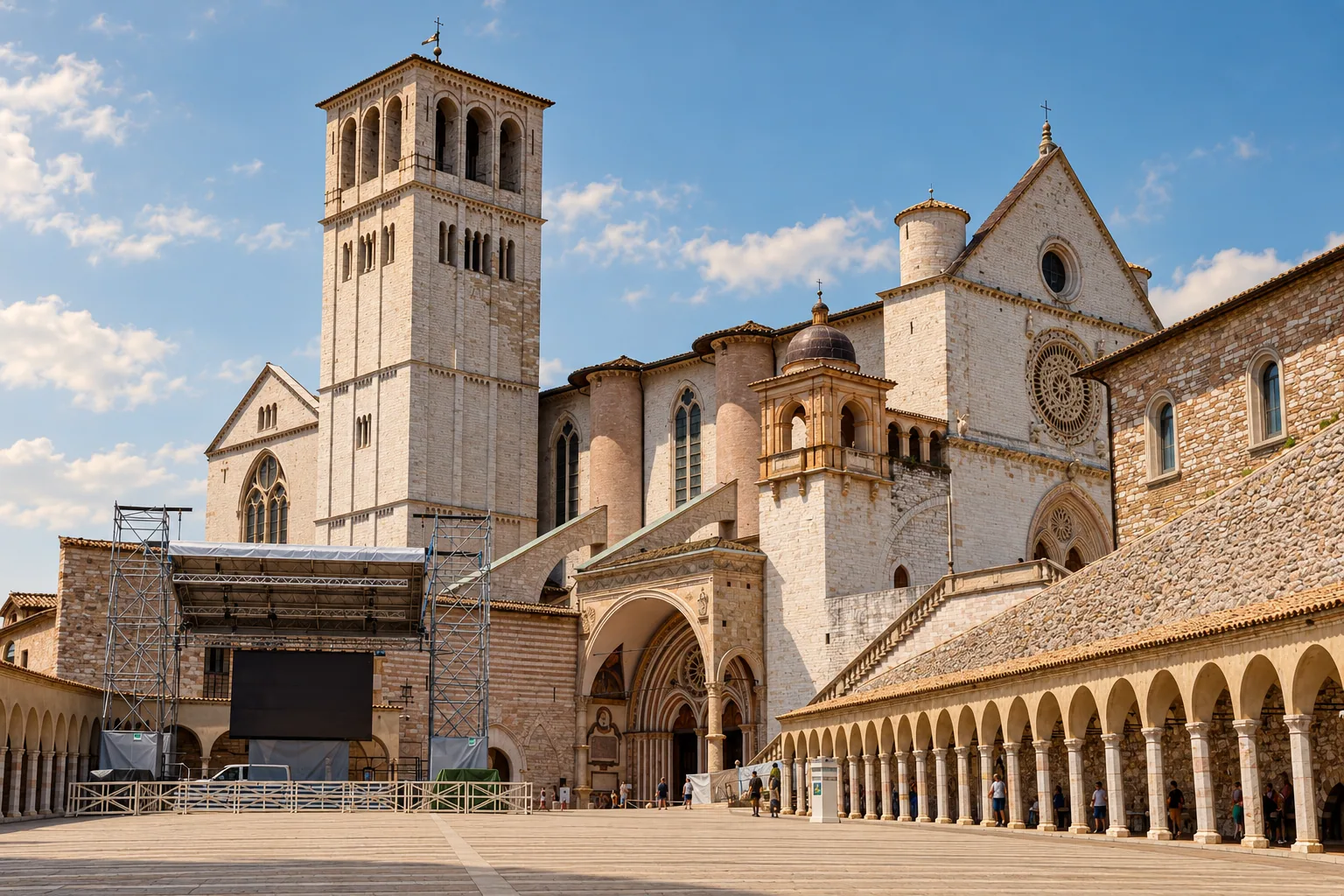 AssisiUNESCOBasilica of San FrancescoGiotto's Life of Saint Francis, two churches stacked, the saint's tomb, Cimabue frescoesWork began on this double church in 1228, just two years after Francis of Assisi's death, built directly into the hillside so that a Lower and an Upper Church stack one above the other over his tomb in the crypt below. The Lower Church, dim and Romanesque, holds the saint's remains and an early cycle attributed to Cimabue; the Upper Church, brighter and among the first Gothic interiors in Italy, carries the famous 28-scene Life of Saint Francis cycle, long credited to Giotto and pivotal in teaching Italian painting how to tell a story across a wall rather than present isolated icons. Simone Martini and the Lorenzetti brothers added further chapels and scenes as the decoration continued through the fourteenth century, filling nearly every surface until, as the saying goes, the walls ran out. A powerful 1997 earthquake collapsed sections of the Upper Church's vault, destroying some frescoes outright, though a major restoration since has returned the basilica to public view.Plan the visit
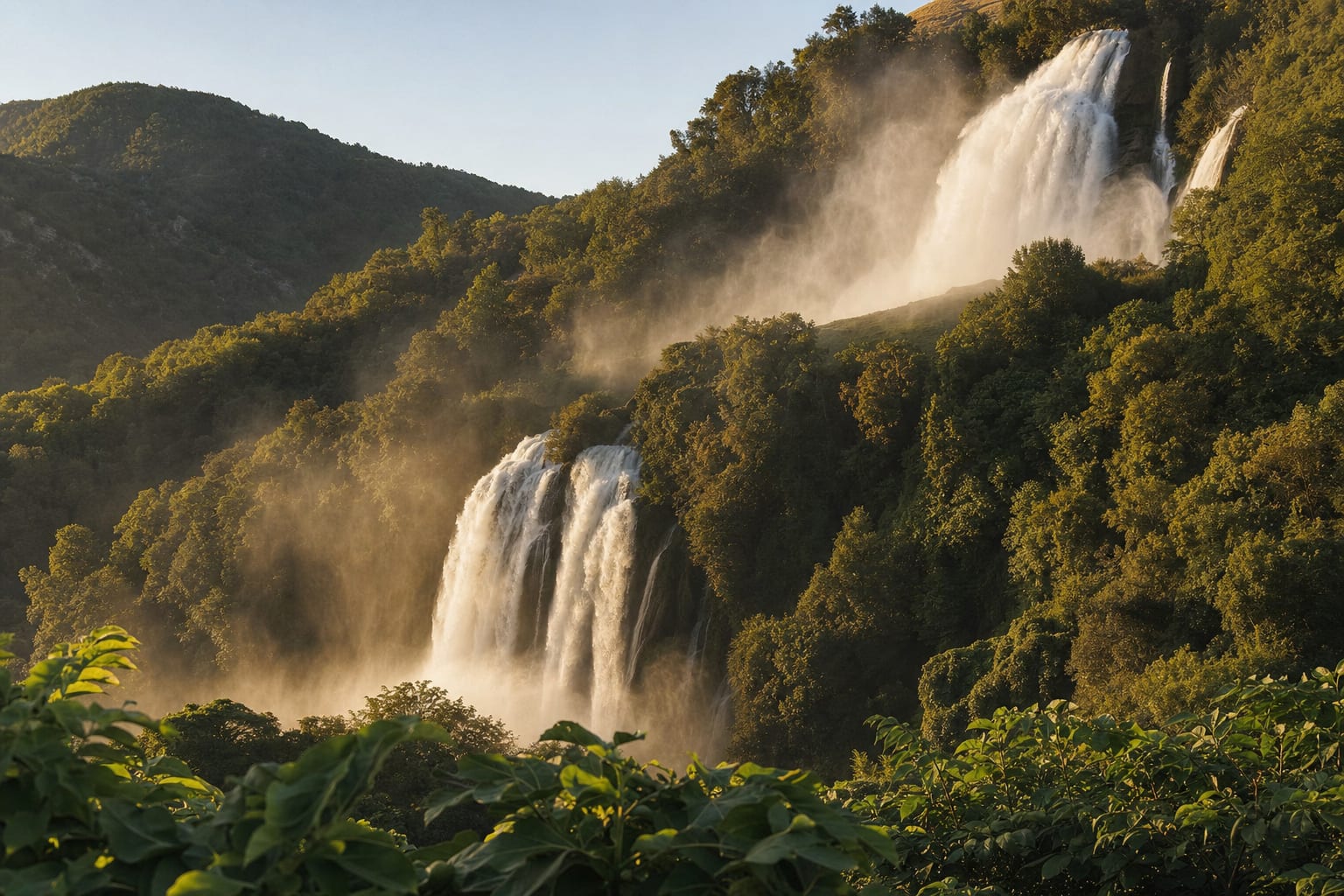 TerniMarmore Falls271 BC Roman origin, 165-meter triple drop, scheduled water releases, Byron's verses, six hiking trailsRoman engineer Manius Curius Dentatus ordered the Velino river diverted over this cliff in 271 BC, cutting a channel to drain the malarial Rieti plain into the Nera below; the result is still billed as Europe's tallest human-made waterfall, a 165-meter triple drop. Because the same water also feeds a hydroelectric plant, the cascade runs only at scheduled hours, several release windows a day depending on the season, so its full roar (and the rainbow that forms in the spray on sunny afternoons) is a timed event rather than a constant. Lord Byron gave it several stanzas in Childe Harold's Pilgrimage, calling it a "matchless cataract." Six marked trails wind through the park; the short Sentiero 1, the Antico Passaggio, crosses just behind the water at the lower belvedere, about as close a soaking as most visitors get.
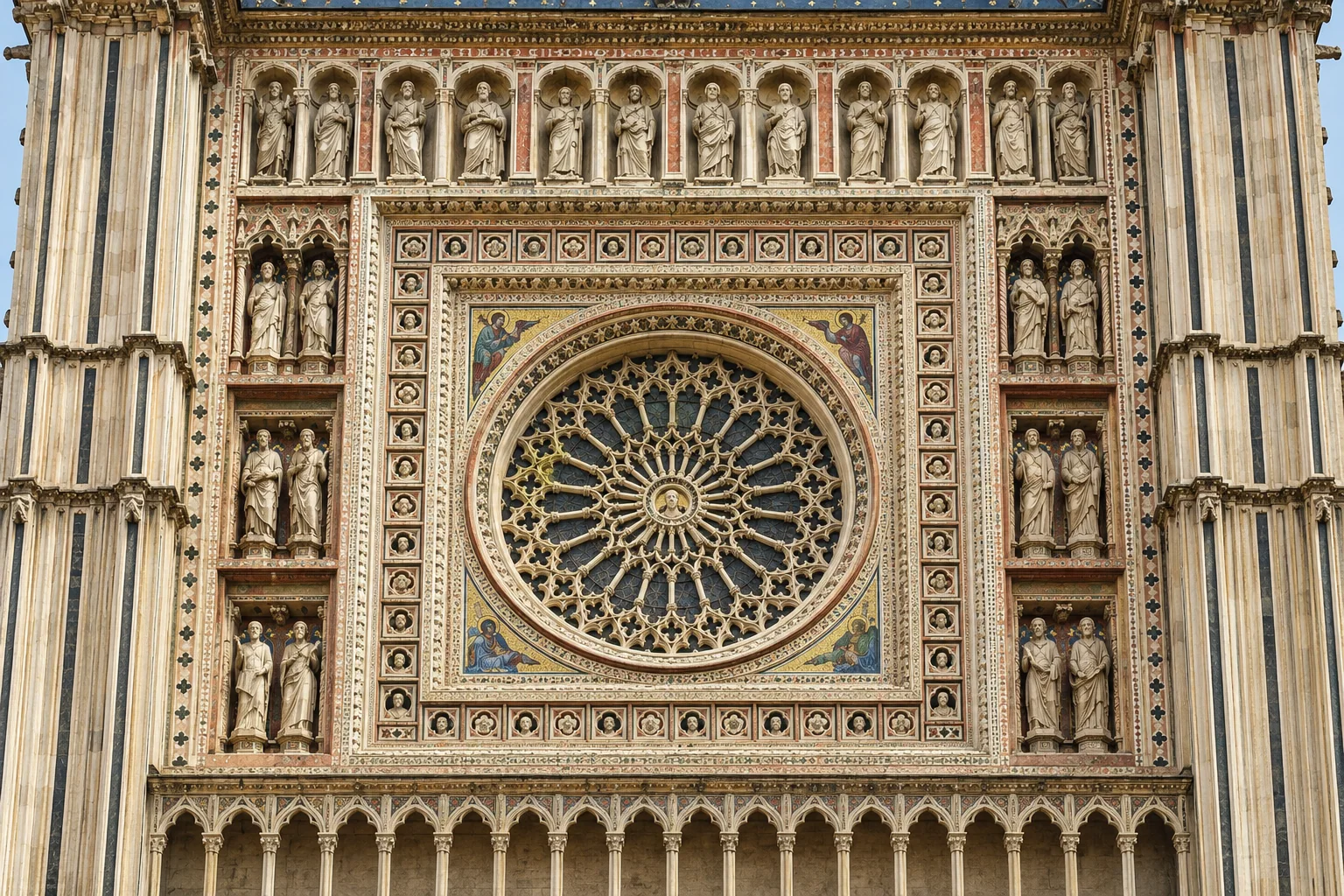 OrvietoOrvieto CathedralGold-ground façade mosaics and marble reliefs; Signorelli’s San Brizio frescoes; the Chapel of the Corporal; basalt-and-travertine bands.On 13 November 1290, Pope Nicholas IV laid the first stone of a new cathedral at Orvieto, then a frequent home of the papal court. The Opera del Duomo connects the project to a larger reordering of the city and the need for a grand church for papal ceremonies. The cathedral’s other great story is devotional: Catholic tradition recounts that a priest in Bolsena saw the consecrated host bleed onto the altar linen in 1263; Pope Urban IV brought the Corporal to Orvieto and established the feast of Corpus Christi the next year. The linen is preserved in the Chapel of the Corporal, while its 1338 reliquary is displayed in the Opera’s museum collection.
The west façade grew from about 1310 to its architectural completion in 1532, layering gold-ground mosaics and four carved marble piers around a central rose window. Look carefully at the three bronze doors: only Emilio Greco’s central door is sculpted, with reliefs of the Works of Mercy. Inside, columns divide the church into three naves and bands of basalt and travertine pull the eye toward the choir. Then turn into San Brizio. Fra Angelico began its vault in 1447; Luca Signorelli continued the cycle from 1499, filling the walls with the Antichrist, the end of the world and the Last Judgment before completing the work in 1504. The Opera says Signorelli’s cycle inspired Michelangelo’s Sistine Chapel.
Start outside, where the façade’s stories unfold in separate registers, then give the interior and San Brizio time of their own. If seeing the Corporal matters to you, note that the linen is displayed only at designated religious seasons and feast days; its chapel also has a separate free entrance for prayer. For context beyond the piazza, continue with our <a href="/en/regions/umbria/orvieto">Orvieto city guide</a>.
OrvietoOrvieto CathedralGold-ground façade mosaics and marble reliefs; Signorelli’s San Brizio frescoes; the Chapel of the Corporal; basalt-and-travertine bands.On 13 November 1290, Pope Nicholas IV laid the first stone of a new cathedral at Orvieto, then a frequent home of the papal court. The Opera del Duomo connects the project to a larger reordering of the city and the need for a grand church for papal ceremonies. The cathedral’s other great story is devotional: Catholic tradition recounts that a priest in Bolsena saw the consecrated host bleed onto the altar linen in 1263; Pope Urban IV brought the Corporal to Orvieto and established the feast of Corpus Christi the next year. The linen is preserved in the Chapel of the Corporal, while its 1338 reliquary is displayed in the Opera’s museum collection.
The west façade grew from about 1310 to its architectural completion in 1532, layering gold-ground mosaics and four carved marble piers around a central rose window. Look carefully at the three bronze doors: only Emilio Greco’s central door is sculpted, with reliefs of the Works of Mercy. Inside, columns divide the church into three naves and bands of basalt and travertine pull the eye toward the choir. Then turn into San Brizio. Fra Angelico began its vault in 1447; Luca Signorelli continued the cycle from 1499, filling the walls with the Antichrist, the end of the world and the Last Judgment before completing the work in 1504. The Opera says Signorelli’s cycle inspired Michelangelo’s Sistine Chapel.
Start outside, where the façade’s stories unfold in separate registers, then give the interior and San Brizio time of their own. If seeing the Corporal matters to you, note that the linen is displayed only at designated religious seasons and feast days; its chapel also has a separate free entrance for prayer. For context beyond the piazza, continue with our <a href="/en/regions/umbria/orvieto">Orvieto city guide</a>.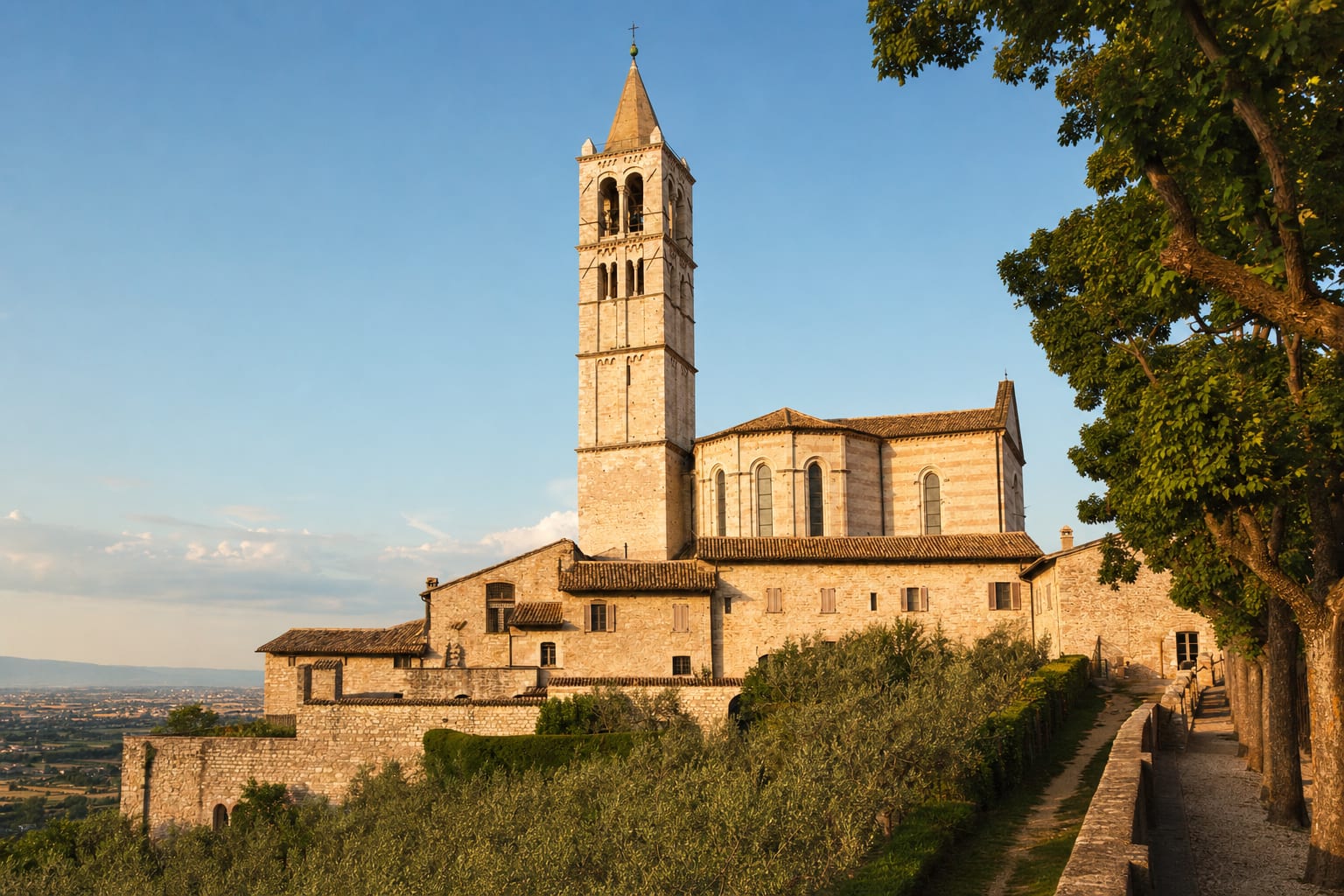 AssisiUNESCOBasilica of Santa ChiaraSaint Clare's tomb, San Damiano crucifix, pink-striped Gothic facade, flying buttress profilePink and white stripes and great flying buttresses mark Clare's basilica across town from Francis's, built in the years after her death and consecrated in 1260, when her remains were carried inside to rest beneath the high altar. Her body lay hidden for six centuries, discovered intact in 1850 and moved into a visible shrine in the crypt in 1872, where pilgrims file past it today. The San Damiano crucifix hangs in a side chapel, the Byzantine-style icon that, according to Franciscan tradition, spoke to Francis in 1205 and told him to rebuild God's church, kept here by the order Clare founded after his death. The building's severe Gothic lines outside give way inside to a single luminous nave, closer in spirit to Clare's own austerity than to the frescoed grandeur of the basilica across the valley.
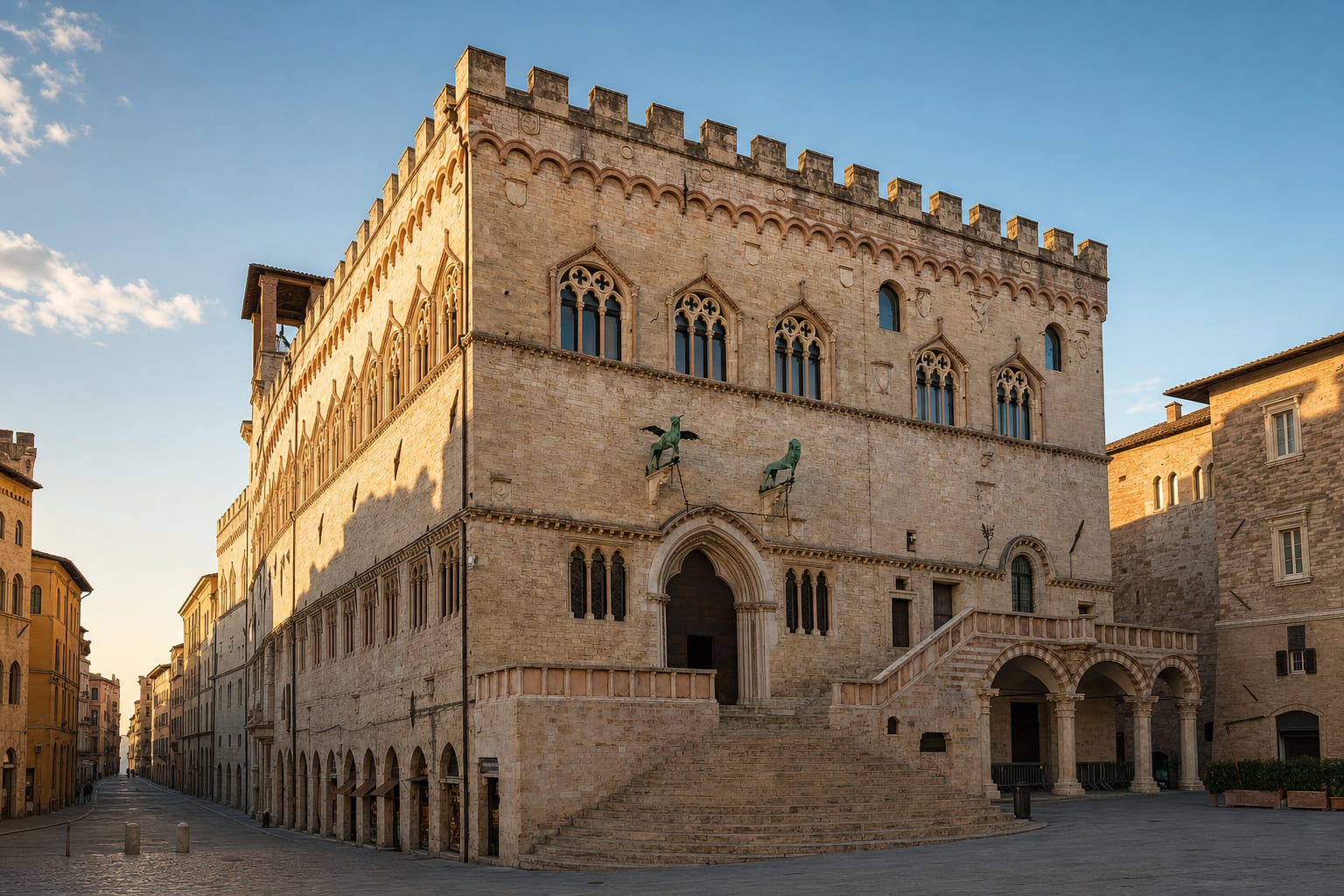 PerugiaPalazzo dei PrioriNational Gallery of Umbria, Perugino and Piero della Francesca, Sala dei Notari, Gothic civic facadePerugia’s town hall has run city business from the same crenellated palace since 1297, its Gothic facade fanning out along Corso Vannucci with a griffin and a lion cast in bronze guarding the entrance stairs, copies of medieval originals kept safe inside. Climb past the Sala dei Notari, the vaulted hall where notaries once met under painted arches and civic coats of arms, to reach the National Gallery of Umbria on the upper floors. Its rooms trace Umbrian painting from Duccio to the 18th century, but the real subject is Pietro Perugino, whose calm, spacious landscapes taught a teenage Raphael everything he would later refine in Rome. Piero della Francesca’s polyptych for Sant’Antonio hangs nearby, worth the climb on its own.
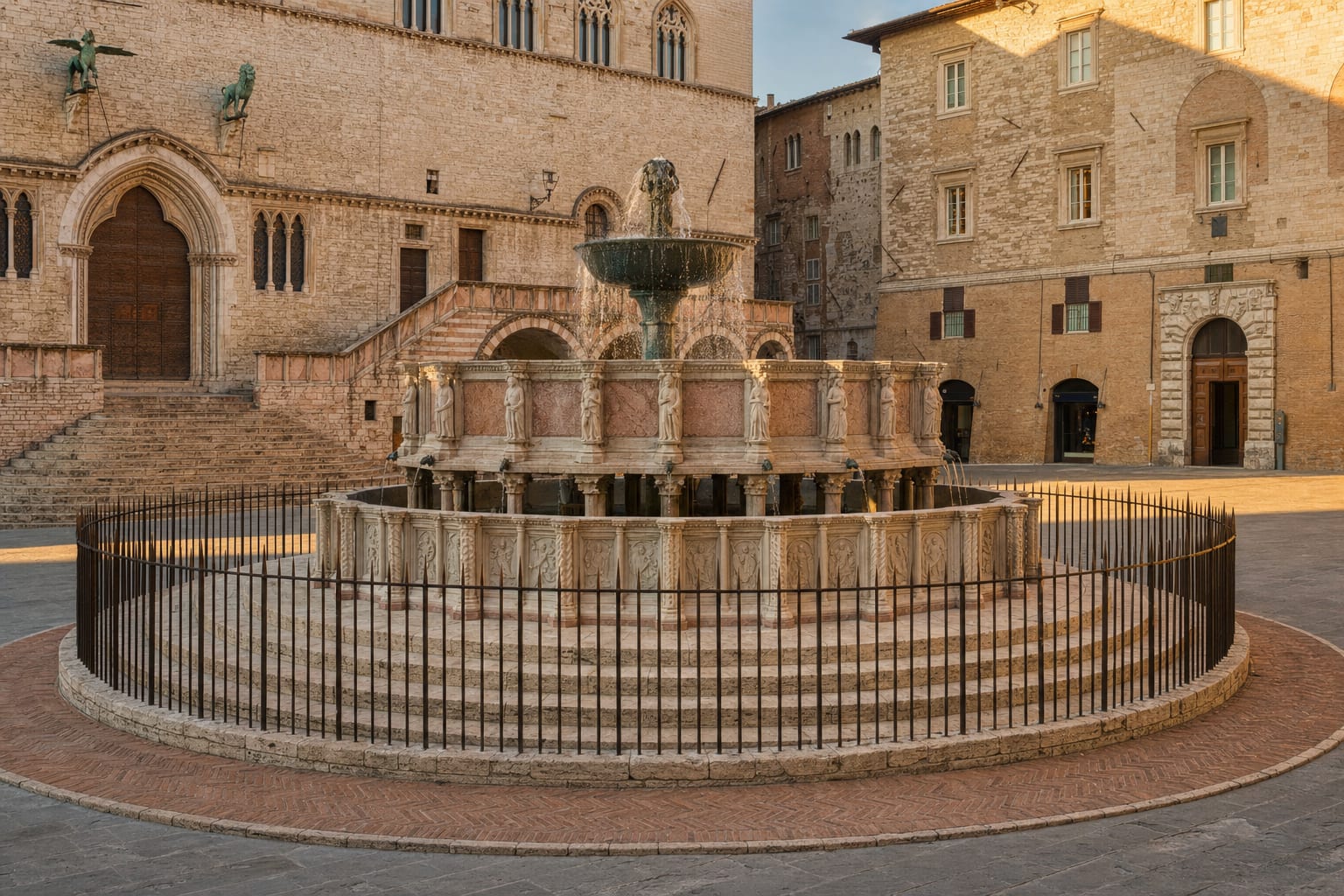 PerugiaFontana MaggiorePisano father and son reliefs, medieval encyclopedia in marble, aqueduct endpoint, pink and white basinsNicola and Giovanni Pisano carved the marble panels of this two-basin fountain between 1278 and 1280, working from a design by the Perugian friar Bevignate da Cingoli, while the engineer Boninsegna Veneziano solved the harder problem: lifting water to the top of the hill without a single pump. The lower basin's fifty reliefs run through the months, the zodiac, the liberal arts and scenes from Genesis and Roman history, a stone almanac for a city that could not yet print one. Above, twenty-four bronze and marble figures include personifications of Perugia and Rome standing alongside the city's own patron saints. An earthquake cracked the fountain in 1348, and restorers have returned to it twice since, most recently in the 1990s. It still marks the endpoint of the medieval aqueduct that climbs through Perugia's lanes to reach it.
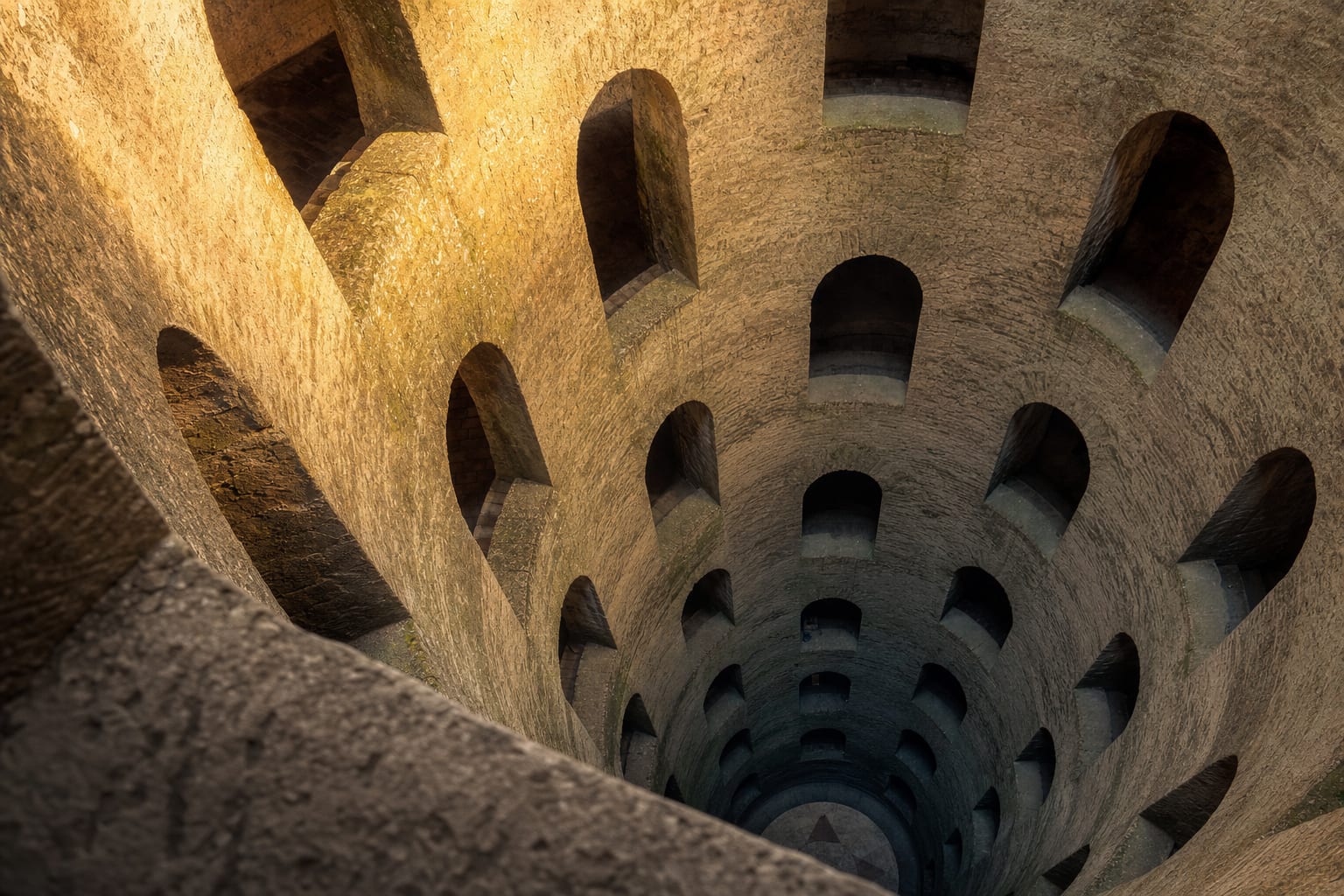 OrvietoSt. Patrick's WellDouble-helix staircases, 53-meter depth, Sangallo design, 1527-1537 construction, siege-proof water supplyIn 1527, imperial troops sacked Rome and Pope Clement VII fled to Orvieto, worried the city's water supply couldn't survive a siege of its own. He put Antonio da Sangallo the Younger on the problem, and between 1527 and 1537 Sangallo sank a well 53 meters straight into the tufa, wrapping it in two spiral ramps that never cross. Mules loaded with empty jugs went down one ramp while others, full, came up the other, and the two trains never had to pass each other on the 248 steps. Seventy small windows light the shaft as you descend. The well takes its name, Pozzo di San Patrizio, from an Irish legend about a cave so deep it could only be purgatory.
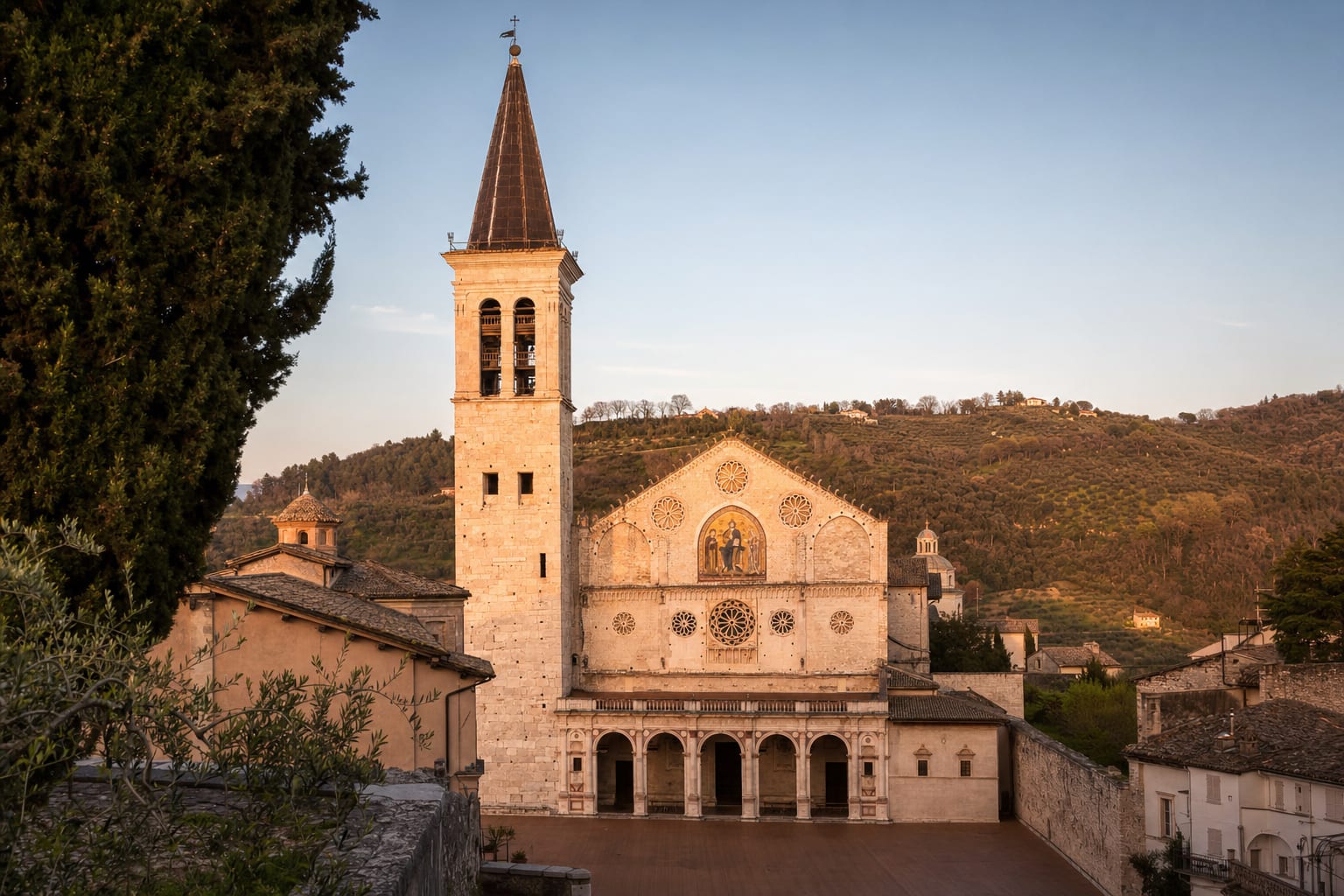 SpoletoSpoleto CathedralLippi's last frescoes, sloping piazza, Romanesque façade with mosaic, Festival dei Due Mondi stageSpoleto's Duomo sits at the foot of a broad, sloping piazza, a stage set that the Festival dei Due Mondi has used for decades as its closing venue. The Romanesque façade, begun in the twelfth century, wears a Renaissance porch and a great rose window, and above it a Byzantine-style mosaic of a blessing Christ signed by Solsternus in 1207. Inside, the apse is the reason to come: Filippo Lippi painted its frescoes of the Virgin's life from 1467 and died in Spoleto before he finished them, and his tomb lies in the south transept. Pinturicchio frescoed the Eroli Chapel. A ticketed circuit adds the bell tower, the diocesan museum and Sant'Eufemia.
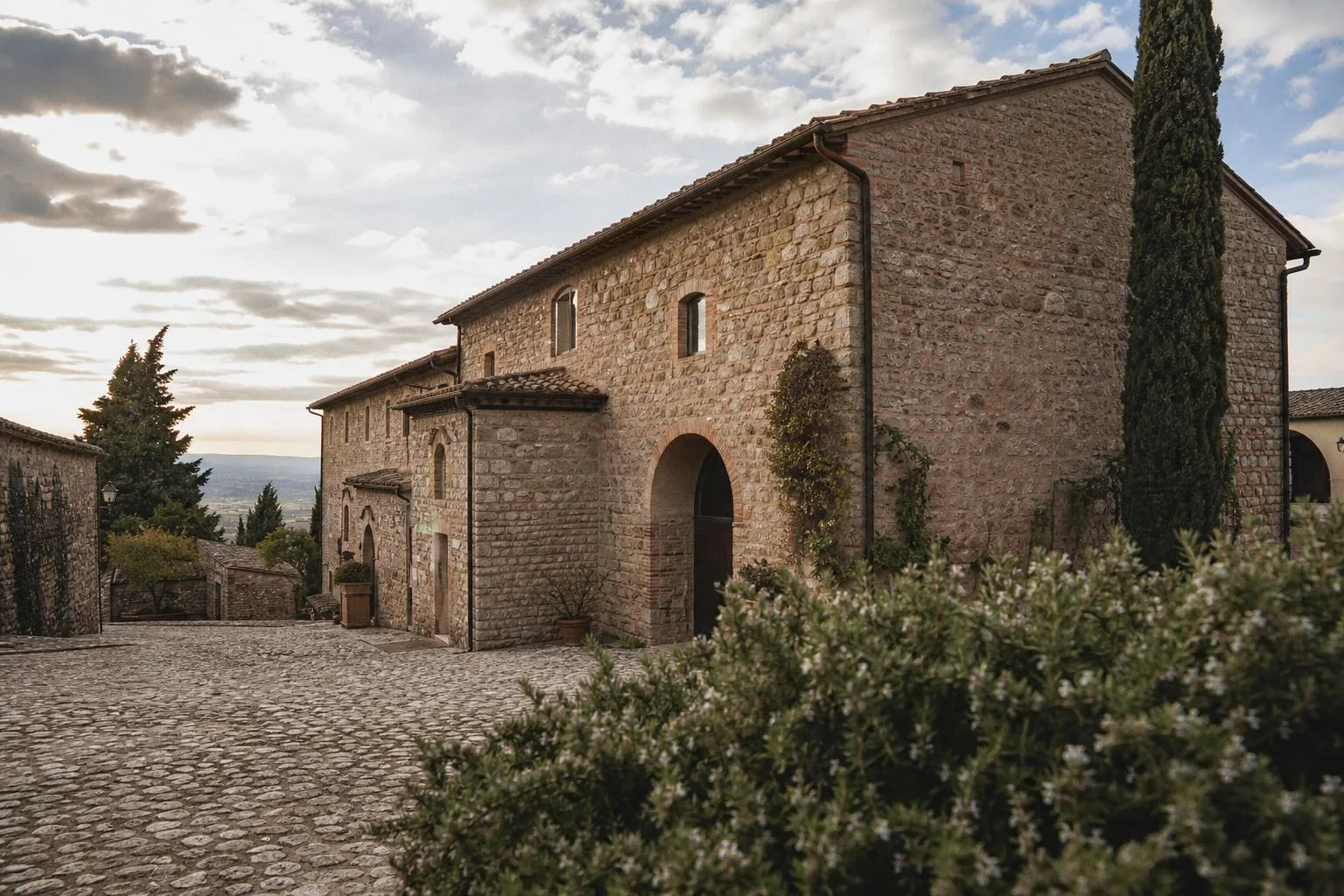 TorgianoHidden GemWine Museum of TorgianoCulture-of-wine museum, Etruscan and Roman vessels, engravings, Lungarotti tasting glassThe Wine Museum of Torgiano, called MUVIT, was founded in 1974 by the winemaker Giorgio Lungarotti and his wife Maria Grazia in the seventeenth-century Palazzo Graziani-Baglioni. It is a private museum, one of the finest wine museums in Italy, about wine as culture rather than as a product. Around twenty rooms show Greek, Etruscan and Roman vessels, medieval to modern ceramics with wine as food, medicine and myth, winemaking tools and presses, and a large collection of engravings that reaches from Mantegna to Picasso and Guttuso. Your ticket includes a glass of Lungarotti wine for adults, served at the museum's osteria or the winery's enoteca, and the olive and oil museum, MOO, is a short walk away.
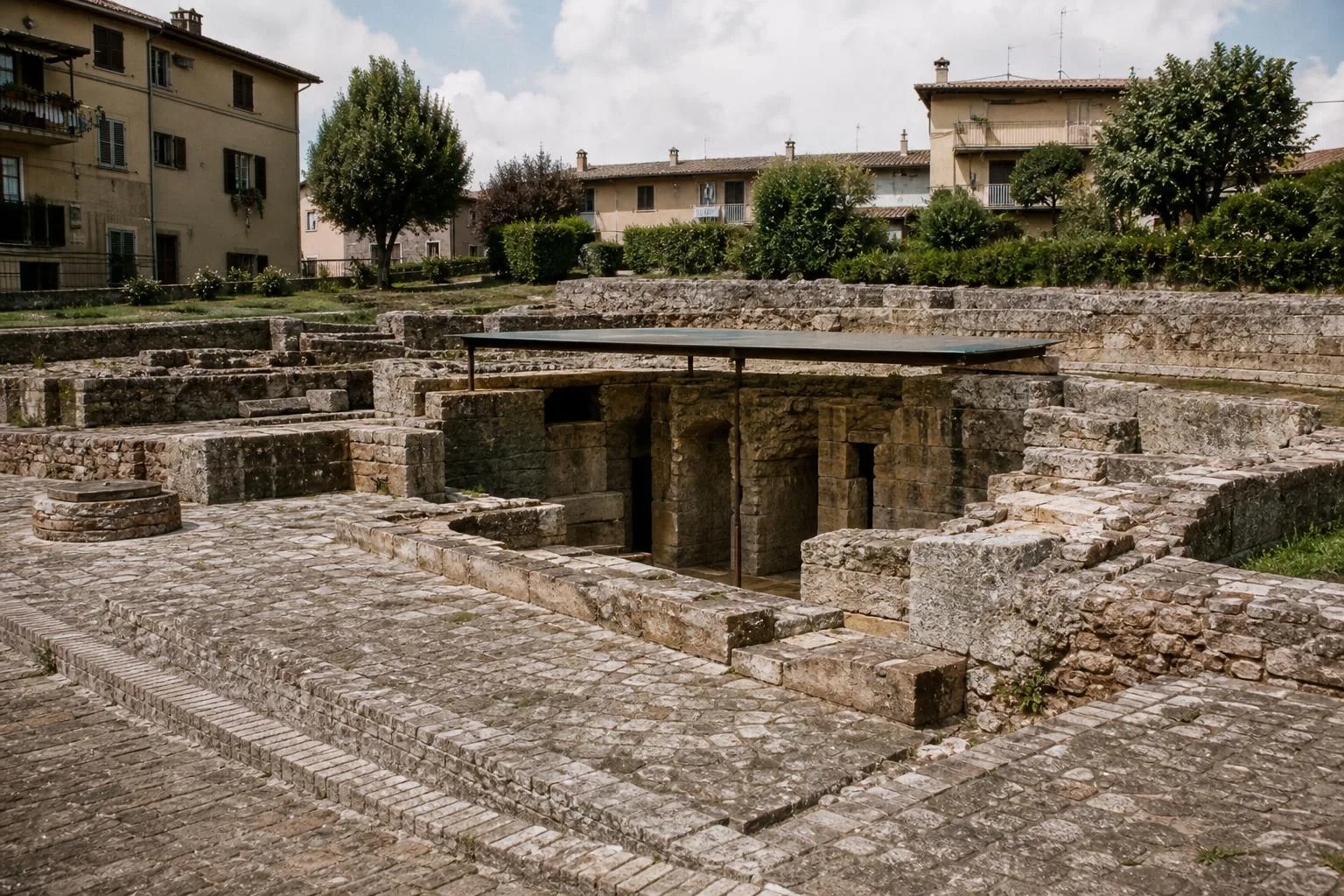 PerugiaHidden GemHypogeum of the VolumniiEtruscan family tomb, Arnth Velimna’s banqueting urn, Palazzone necropolisBeneath a quiet suburb of Perugia lies one of the best-preserved Etruscan family tombs in Italy. A staircase leads down into a chamber cut from the rock and shaped to echo a Roman house, with an atrium and side rooms, where the Velimna family, Volumni in Latin, placed their dead in travertine and terracotta urns. The urn of Arnth Velimna Aules shows him reclining as if at a banquet, a Roman fashion adopted by the Etruscan elite. The tomb dates to the third or second century BC and was rediscovered in 1840. It belongs to the larger Palazzone necropolis of nearly 200 tombs at Ponte San Giovanni, with an antiquarium beside it.
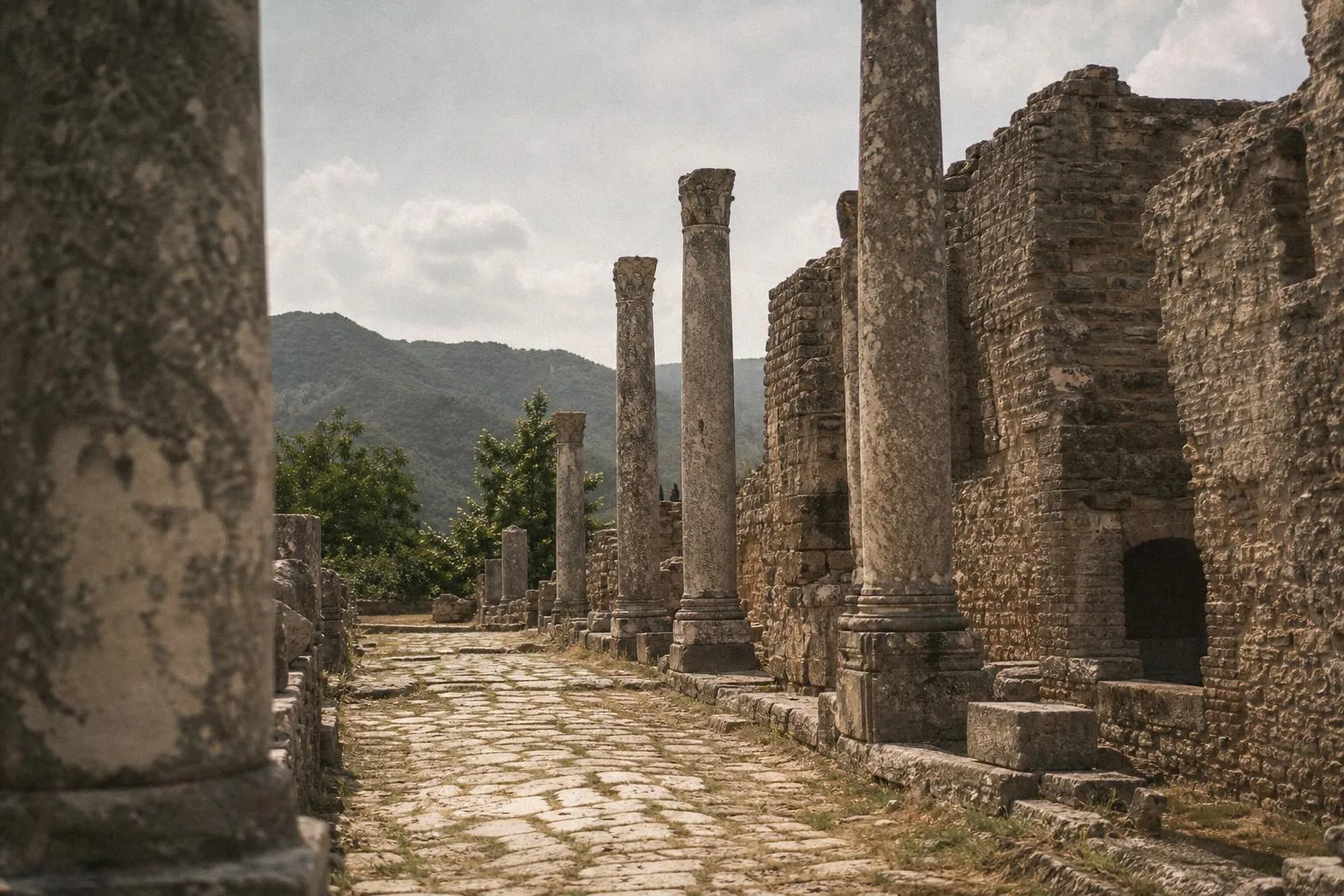 TerniHidden GemCarsulaeTwin forum temples, Via Flaminia paving, Arco di San Damiano, mysteriously abandoned Roman townRome founded Carsulae around 220 BC along the Via Flaminia, and Augustus later gave it the temples, forum and baths of a proper municipium, yet by the sixth century the town had emptied out, abandoned for reasons historians still argue over rather than destroyed by war or disaster. What remains is unusually intact: twin temples face the forum, a theater and amphitheater sit close enough to have shared audiences, and the Arco di San Damiano still marks where the Via Flaminia entered town, its paving grooved by cart wheels. A small medieval church, built from salvaged Roman stone, stands incongruously among the ruins. Systematic excavation began in 1951 and resumed in 2006, focused now on the baths and forum, and a visitor center with accessible paths and a café sits at the entrance.
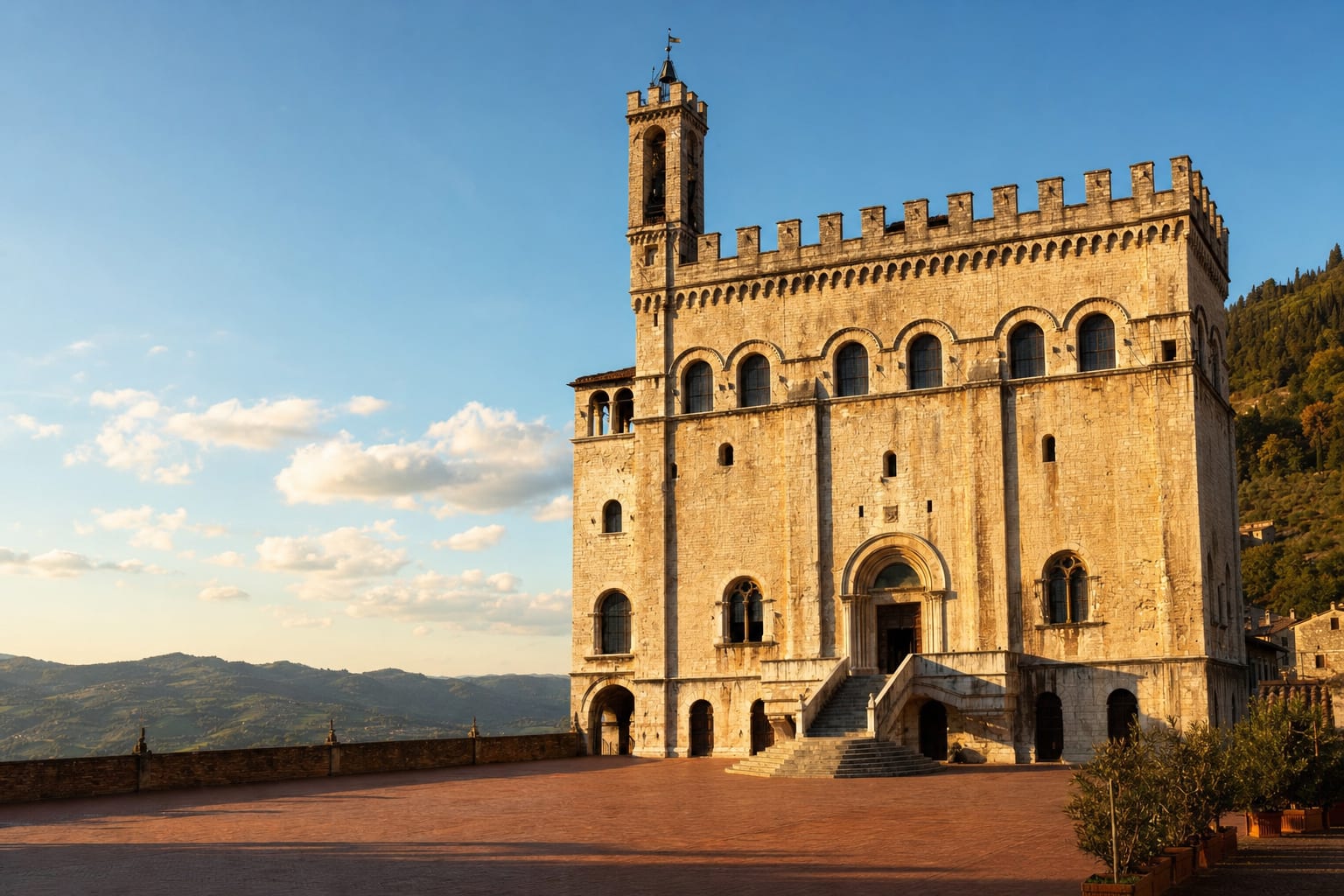 GubbioPalazzo dei ConsoliEugubine Tablets, Gothic civic palace, 1332 construction, valley-to-Apennines viewGubbio's civic palace rises nearly one hundred meters from street to bell tower, built between 1332 and 1349 by the architect Angelo da Orvieto on a vast artificial platform that lets it stand level against the hillside. Inside, the former chapel houses the Eugubine Tablets, seven bronze plates inscribed in the Umbrian language, a tongue that predates Latin and survives nowhere else in such detail; scholars still mine them for what they reveal about pre-Roman ritual and law. The palace has served as Gubbio's civic museum since 1909, adding Roman antiquities, medieval paintings, ceramics and an iron cage once used to publicly shame convicted criminals. From the loggia facing the valley, the view runs south across the rooftops to the Apennines beyond.
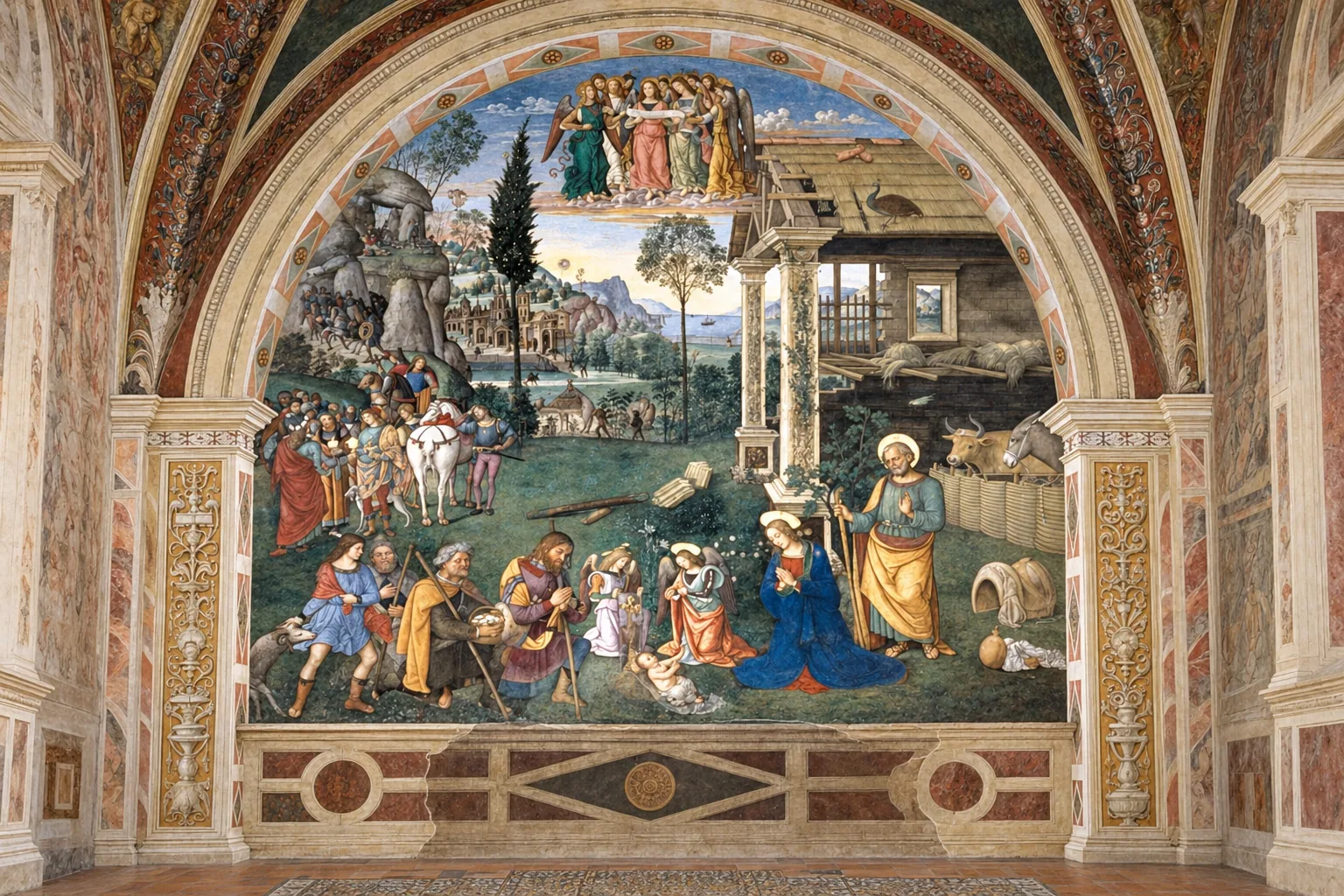 SpelloBaglioni ChapelPinturicchio's frescoed chapel, Annunciation self-portrait, Deruta maiolica floor, Renaissance colorPinturicchio spent 1500 and 1501 frescoing this small chapel inside Spello's Santa Maria Maggiore, his last major Umbrian commission before he moved on to Rome and Siena, and he used the assignment to paint some of his richest color of any surviving cycle. Three scenes from the childhoods of Mary and Jesus, the Annunciation, the Adoration of the Shepherds, and the Dispute with the Doctors, cover the walls in the crowded, jewel-toned detail that made Pinturicchio a favorite of Renaissance patrons, and he is thought to have inserted his own portrait among the onlookers in the Annunciation. Later in the sixteenth century, the chapel floor was paved in maiolica tile from nearby Deruta, completing what many consider Umbria's single most concentrated room of Renaissance beauty.
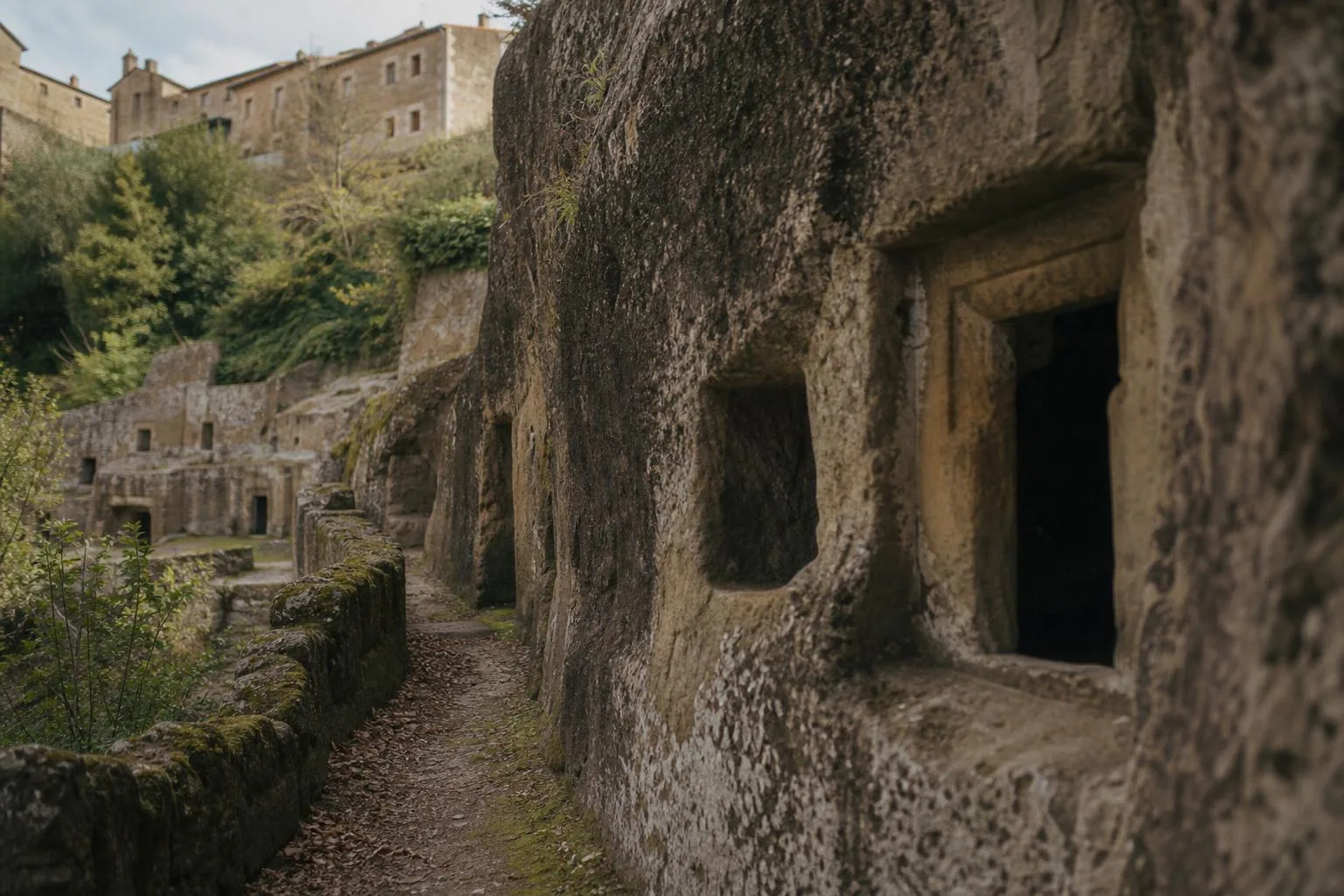 OrvietoHidden GemCrocifisso del Tufo Necropolis200 inscribed tuff-stone tombs, Etruscan family names, orthogonal street layout, 6th-century BC originsMore than two hundred rectangular tuff-stone tombs line orthogonal streets below Orvieto's cliff, an Etruscan necropolis that reached its fullest extent between the mid-sixth century BC and the century that followed. Unlike the great tumulus tombs of other Etruscan sites, these chambers are modest, roughly three by two meters, each fitted with stone benches along the walls where the dead were laid out with grave goods reflecting their status: bronze vessels and Attic pottery for the wealthy, weapons and iron tools in male burials, ornaments in female ones. Many tombs carry inscribed family names over their doorways, a rare survival that lets visitors read the necropolis almost like a directory of Orvieto's Etruscan citizens. Disorganized nineteenth-century digging scattered finds across European and American museums before scientific excavation resumed in 1961.
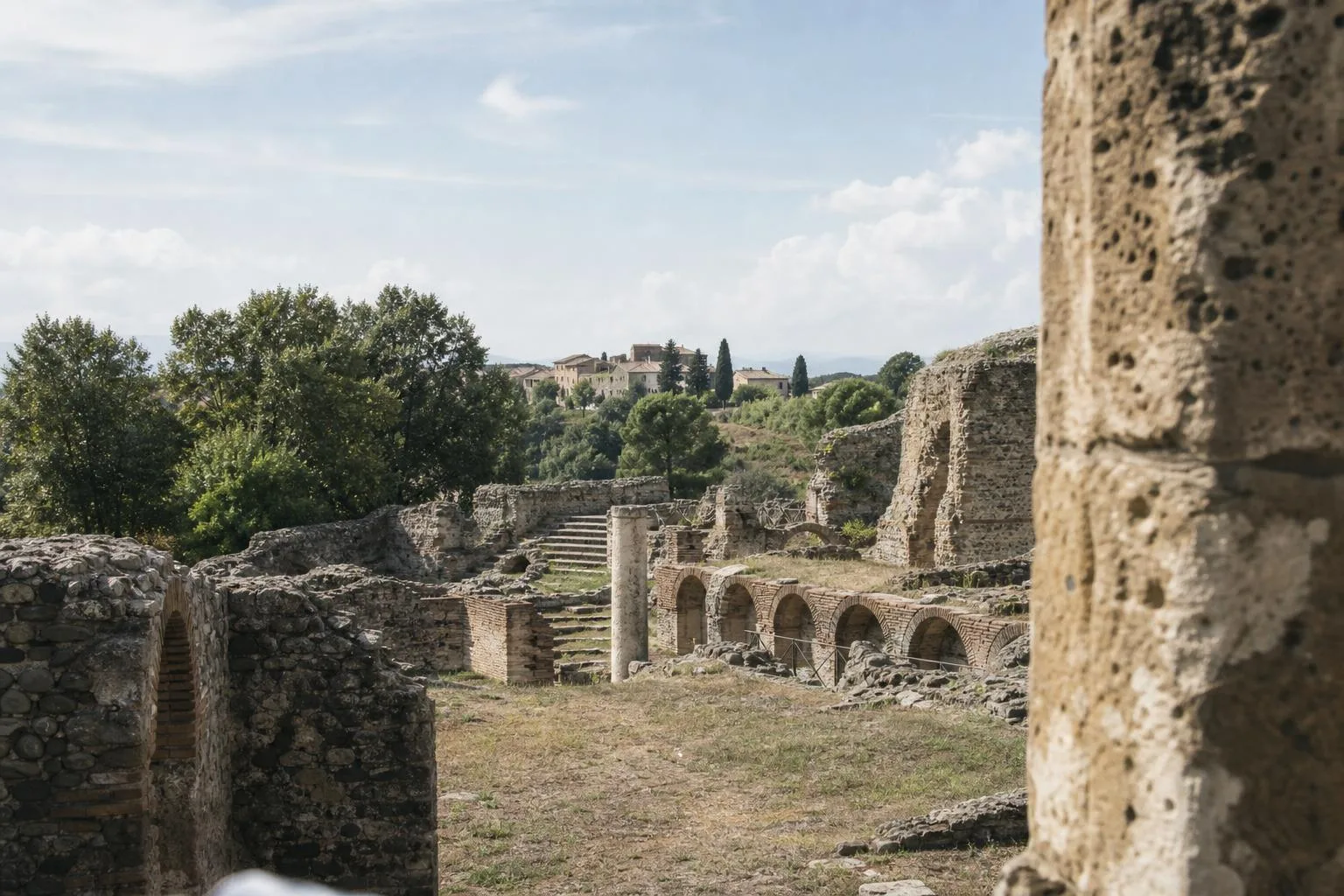 OtricoliHidden GemOcriculumRoman theater and amphitheater, Via Flaminia paving, octagonal bath mosaic, archaic necropolis antiquariumThe Via Flaminia's construction in 220 BC turned this Tiber-side settlement into Ocriculum, a Roman municipium that grew wealthy on agriculture, river trade and pottery production across a site covering roughly thirty-six hectares near modern Otricoli. A first-century theater, carved partly into the natural terrain in opus reticulatum brickwork, stands alongside a similarly dated amphitheater and a second-century-BC bath complex whose octagonal room still shows its mosaic floor. Funerary monuments in tower, niche and drum forms line the approach, and stretches of the Via Flaminia itself survive with stone paving still grooved by ancient cart wheels. Lombard invasions emptied the town between 569 and 605 AD, and it was never resettled, leaving the ruins to the Soprintendenza Archeologia, Belle Arti e Paesaggio dell'Umbria, which now manages the park alongside an antiquarium displaying finds from the site's archaic necropolis.
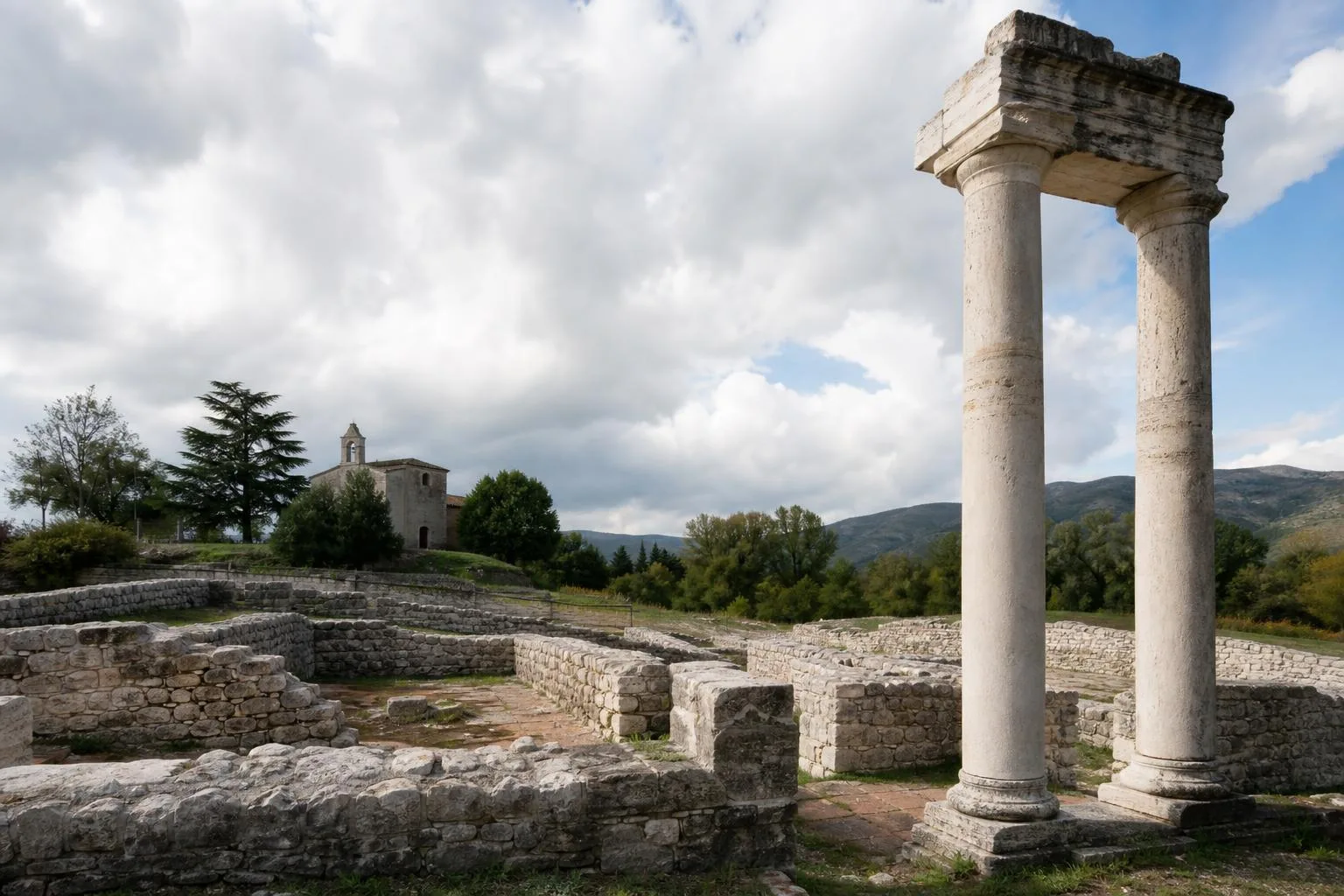 FolignoHidden GemPlestiaUmbrian Plestini origins, Roman municipium status, mosaic-floored houses, Colfiorito Park museum findsEvidence of habitation on the Colfiorito plateau, straddling today's border between Umbria and the Marche, reaches back to the Paleolithic, but Plestia became a real town only when the Umbrian Plestini people settled it permanently around the tenth or ninth century BC. The Social War of 90 BC brought Roman citizenship and urbanization, turning Plestia into a municipium of the Augustan sixth region, with public buildings and mosaic-floored houses that excavation has since uncovered near the church of Santa Maria di Pistia. The settlement persisted through the Lombard period as a diocese before fading entirely from the historical record after 996 AD, its site and name essentially forgotten until archaeology brought it back. Finds from the excavations, including wealthy Roman domestic mosaics, are held at the nearby Colfiorito Park museum rather than displayed on-site.
Tours worth booking in Umbria
Compared by our editors, across providers.
Booking through these links may earn Italia Magnifica a commission, at no cost to you.
- Viator
- 2h
- 3.0★ · 2 reviews
from €165Book this tour- Viator
- 2h 30m
- 5.0★ · 1 reviews
from €150Book this tour- Viator
- 2h
- 5.0★ · 13 reviews
from €119Book this tour- Viator
- 2h 30m
- 5.0★ · 9 reviews
from €250Book this tour- Viator
- 2h
- 4.8★ · 17 reviews
from €160Book this tour- Viator
- 1h
- 5.0★ · 2 reviews
from €60Book this tour


City by city
Where the monuments cluster in Umbria.