

What to see first
Torgiano is a municipality, not one compact village
The complete 12-row extract is retained in source order. Its statistical class labels are not converted into a legal frazione hierarchy.
A fortified centre made of distinct places
The municipal centre route starts in Piazza Matteotti and follows Corso Vittorio Emanuele II, formerly Via di Mezzo. It distinguishes the Porta del Forno area, Oratorio della Misericordia, San Bartolomeo, civic and noble palaces, medieval wall sections, Torre della Jaccera and the former Porta di Sotto. This is a useful walking framework, but it does not turn the centre into one monument. Each church, tower, palace, wall segment and public work needs its own identity, custodian and access record.
Torre Baglioni stands outside the old circuit near Viale della Rimembranza. The Comune presents it as Torgiano's civic emblem, dates its construction to the thirteenth century and says the restored interior can be visited by reservation through the tourist office. The PPR also records the tower as a protected property. No source proves a universal weekly schedule, step-free route or roof access, so those experiences cannot yet be promised.
Palace, museum, collection and artifact are different entities
Palazzo Graziani-Baglioni is a late seventeenth-century agricultural-gentry residence incorporating earlier fabric. The former agricultural rooms contain MUVIT; the piano nobile retains a frescoed gallery, library and furnished rooms; municipal exhibition rooms occupy another part of the building. A museum ticket cannot be assumed to include the residence or temporary galleries. The protected-property sheet also records the palace and a 494-piece Baglioni collection, which requires a separate inventory and custody review.
Rivers, landscape and risk belong in the guide
Planning layers classify Torgiano in seismic class 2 and return 73 type-10 microzonation lines plus 83 microzonation areas across seven source types. Hydraulic layers return 70 main-network bands, seven secondary-network bands for Cagnola and Maccara and 44 current P2-P3 hydraulic elements. Landslide planning returns 86 elements, while the current hazard layer returns 24 active P3 elements and no P4; the current risk layer returns no R3-R4 element. Hazard and risk are different systems, and feature counts are not flooded or unstable area. Torgiano is in civil-protection alert zone A, but only the live alert service can describe today's conditions.
Wine, oil and protected food require product-level proof
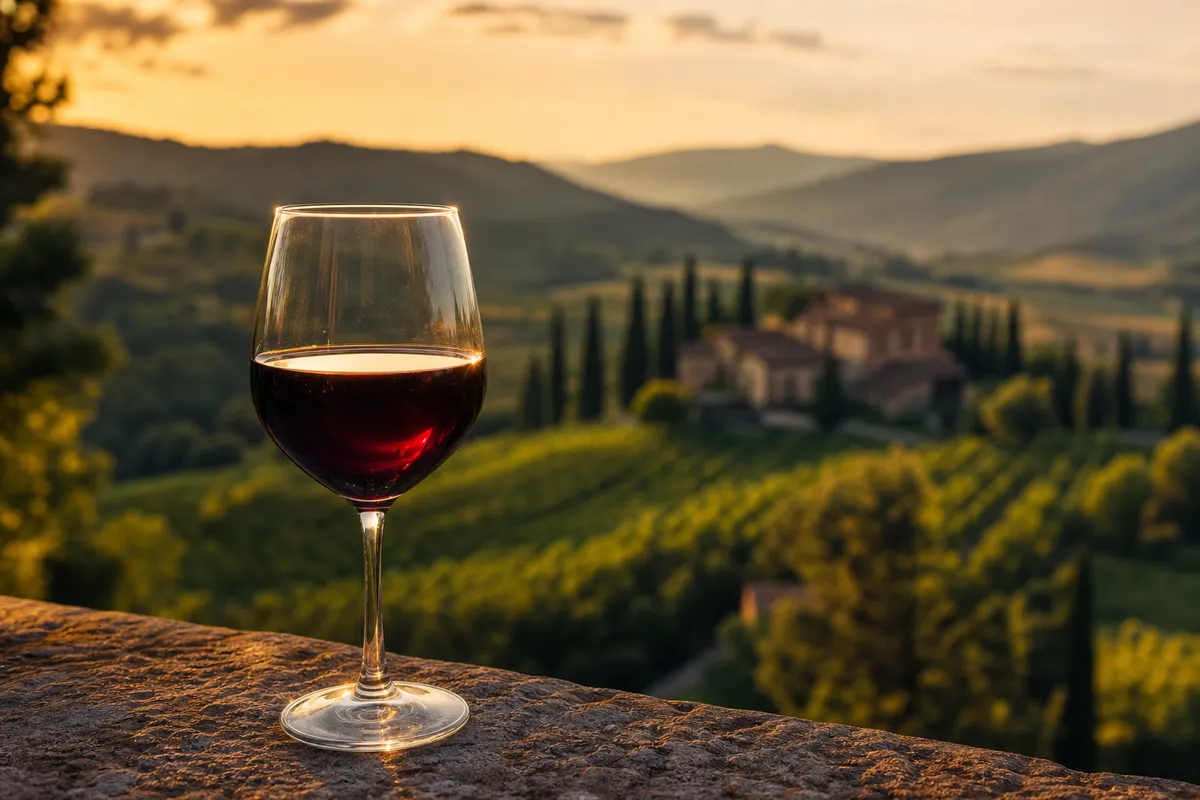
The national specifications protect Torgiano DOC and Torgiano Rosso Riserva DOCG. The DOCG requires 70 to 100 percent Sangiovese and excludes specified wet alluvial and valley-floor land. The oil specification includes Torgiano in the Umbria DOP Colli Martani subarea. These are production geographies, not automatic certification of every bottle, grove, oil, restaurant or tasting room.
The current Torgiano wine-consortium homepage names five producer leads: Lungarotti Societa Agricola arl, Terre Margaritelli Societa Agricola arl, Fattoria Mani di Luna, Tenute Baldo and Daniele Rossi. Membership alone does not prove a specific certified bottle, visit, opening time or accessible tasting. No current certified Torgiano oil operator was verified in this pass, and MOO is not a certification body.
Wine culture beyond the label
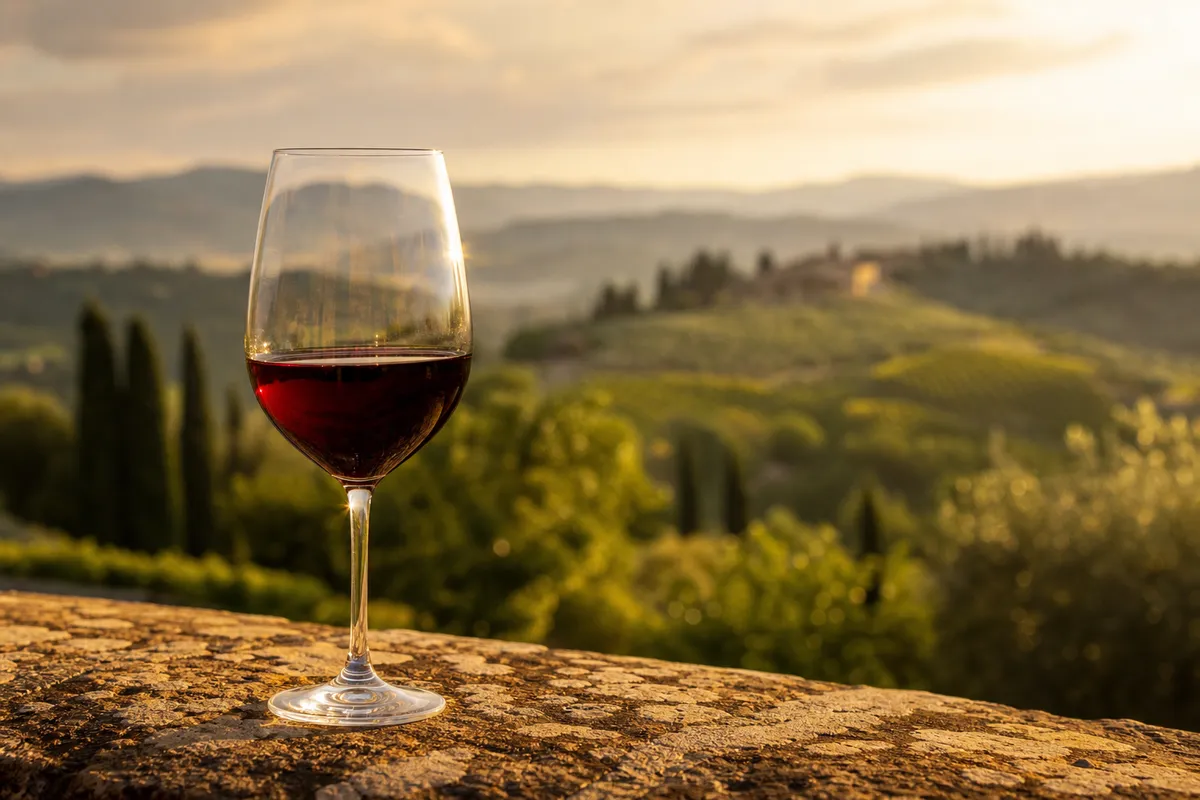
Torgiano's wine identity begins in the landscape between the Tiber and Chiascio and becomes legible in the fortified centre. The DOC and Torgiano Rosso Riserva DOCG define exact rules rather than a general reputation; the latter requires 70 to 100 per cent Sangiovese and excludes certain humid alluvial valley soils. Those boundaries explain why slope, exposure and ground matter. A certified bottle can express this geography, but the designation does not automatically apply to every vineyard, cellar or wine poured within the municipality.
MUVIT deepens that story by treating wine as material culture. Founded in 1974, it presents more than 3,000 objects across 20 rooms in the agricultural spaces of Palazzo Graziani-Baglioni. Vessels, tools, images and texts place drinking, storage and cultivation within a much longer Mediterranean history. The noble rooms, frescoed gallery and Baglioni collection belong to the palace rather than automatically to the museum visit, so the building rewards attention to thresholds as well as collections.
The MOO offers a parallel history of olive oil in an old mill setting, following the substance through cultivation, light, religion, medicine, food, sport and cosmetics. Together, the two museums turn everyday agricultural products into lenses on ritual, technology and taste. Umbria DOP Colli Martani gives local olive growing a regulated geography, while the museum explains why oil has carried meanings far beyond the kitchen.
Brufa, sculpture and the open landscape
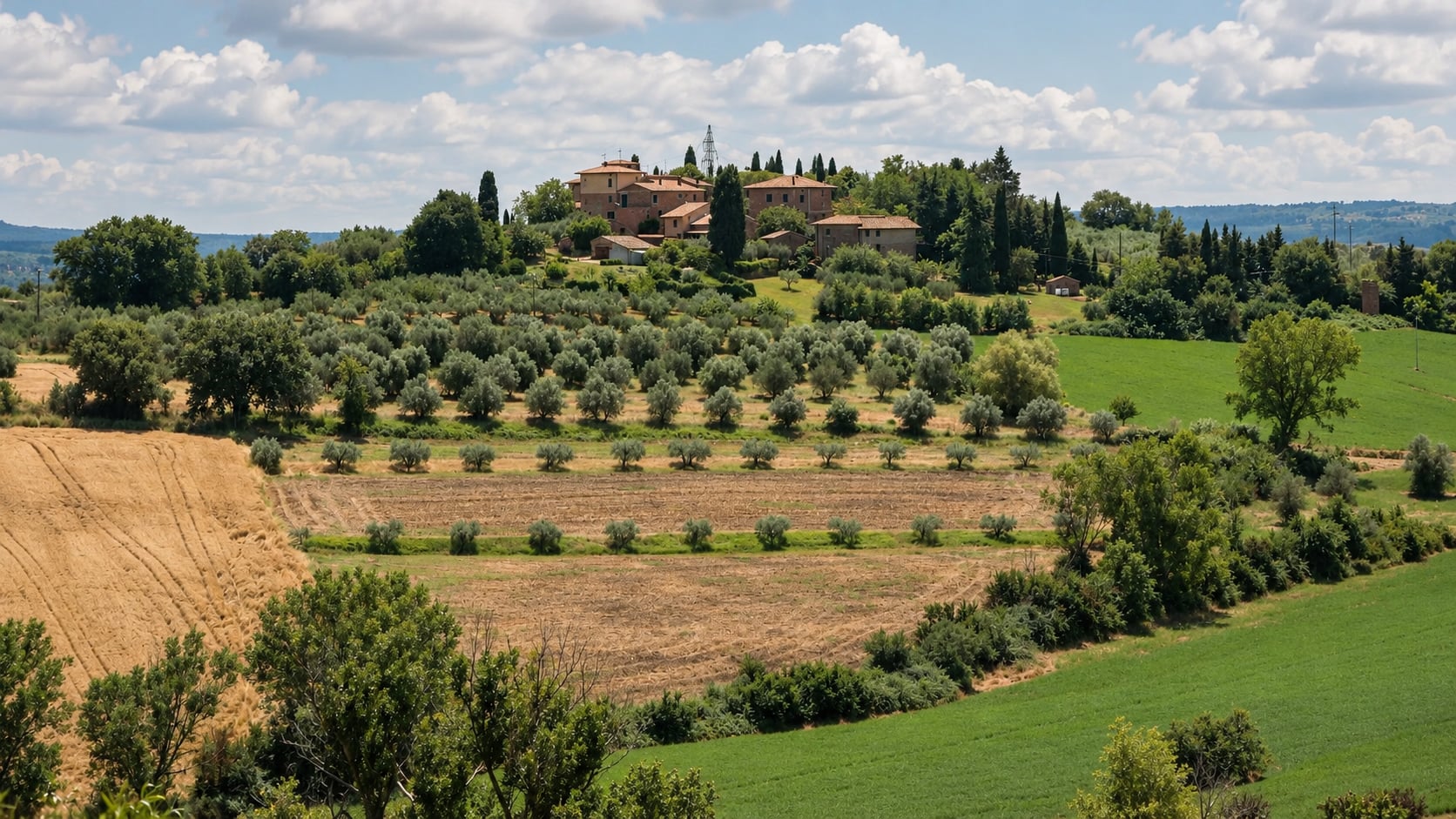
Brufa occupies a ridge of vines and olive trees above the Tiber plain. Its medieval identity as Castel Grifone and the church of Sant'Ermete provide the historical frame, but contemporary sculpture has given the village another voice. Since 1987, Scultori a Brufa has placed more than 30 permanent works in the landscape. Pieces by Beverly Pepper, Nino Caruso, Umberto Mastroianni, Mauro Staccioli and other artists turn roads, slopes and views into part of the encounter.
The collection changes over time. New commissions, restorations and the separate Roca-Rey donation in the former schools require current information, but the principle remains compelling: art is encountered in relation to weather, vegetation and distance rather than within a single gallery. A walk through Brufa should leave space for those relationships, not simply count sculptures. The view toward the plain is part of the composition, as are the cultivated fields that continue around the works.
A fortified centre with several cultural doors
In Torgiano, Piazza Matteotti and Corso Vittorio Emanuele II lead through gates, walls, towers, churches and palaces that retain separate identities. Torre Baglioni stands outside the old enclosure and can be visited by arrangement, but no assumption should be made about step-free access or a climb to the top. San Bartolomeo introduces parish life and a work by Felice Pellegrini; the Oratorio della Misericordia and other civic buildings add confraternal and municipal histories.
The cultural route extends beyond wine. MACC at Palazzo Malizia interprets contemporary ceramics, including the Nino Caruso donation and the Vaselle d'Autore project. The permanent Vinarelli collection has its own history, separate from the annual event. These places make Torgiano unusually dense for its size: medieval fabric, agricultural museums, modern ceramics and outdoor sculpture can be read in one municipality, provided each is given enough time and its own practical check.
That concentration rewards a full day rather than a brief tasting stop, with time for streets, collections and the river landscape.
Stays, events, archive and practical movement
All 28 matching rows are retained in literal CSV order. A blank FRAZIONE field remains blank.
Official municipal pages date I Vinarelli e Agosto Torgianese to 1-31 August 2026 and Guerra del Sale to 7-8 November 2026, but do not supply a complete venue and day-by-day operating plan. Brufa's 2026 art event is separately dated. All require same-week confirmation. The permanent Vinarelli display is not the August event.
More of Umbria

A letter from Italy, once a month.
The places, tables and makers we found worth your time. One email, no noise.
One letter a month. Unsubscribe at any time. We never share your address.