Start with prepared sweet shortcrust pastry. Chill the pastry while the filling cools and rests, then keep both pastry layers thin and seal the edge well. Check the oven from 35 minutes and take the cake out when golden. For more servings, use a suitable larger tin or extra tins while preserving the pastry thickness and filling depth.
Make ahead The timing starts with prepared pastry. It allows two hours for the filling in the refrigerator and roughly an hour for the finished cake to cool, with the pastry chilling in parallel. Initial filling cooling, longer final cooling and extra oven batches can extend the total. Keep the cooled cake covered and dust with icing sugar shortly before serving.

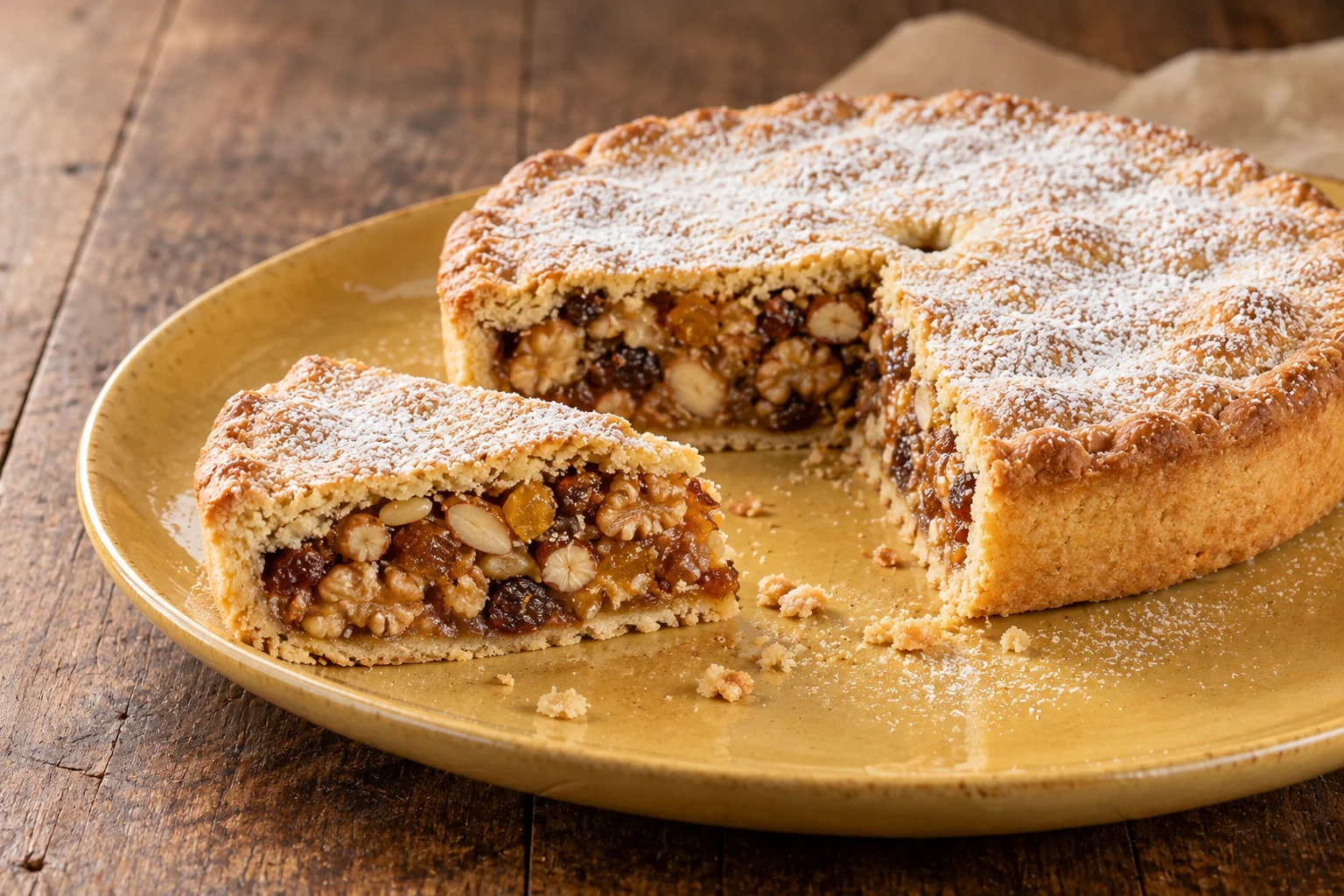
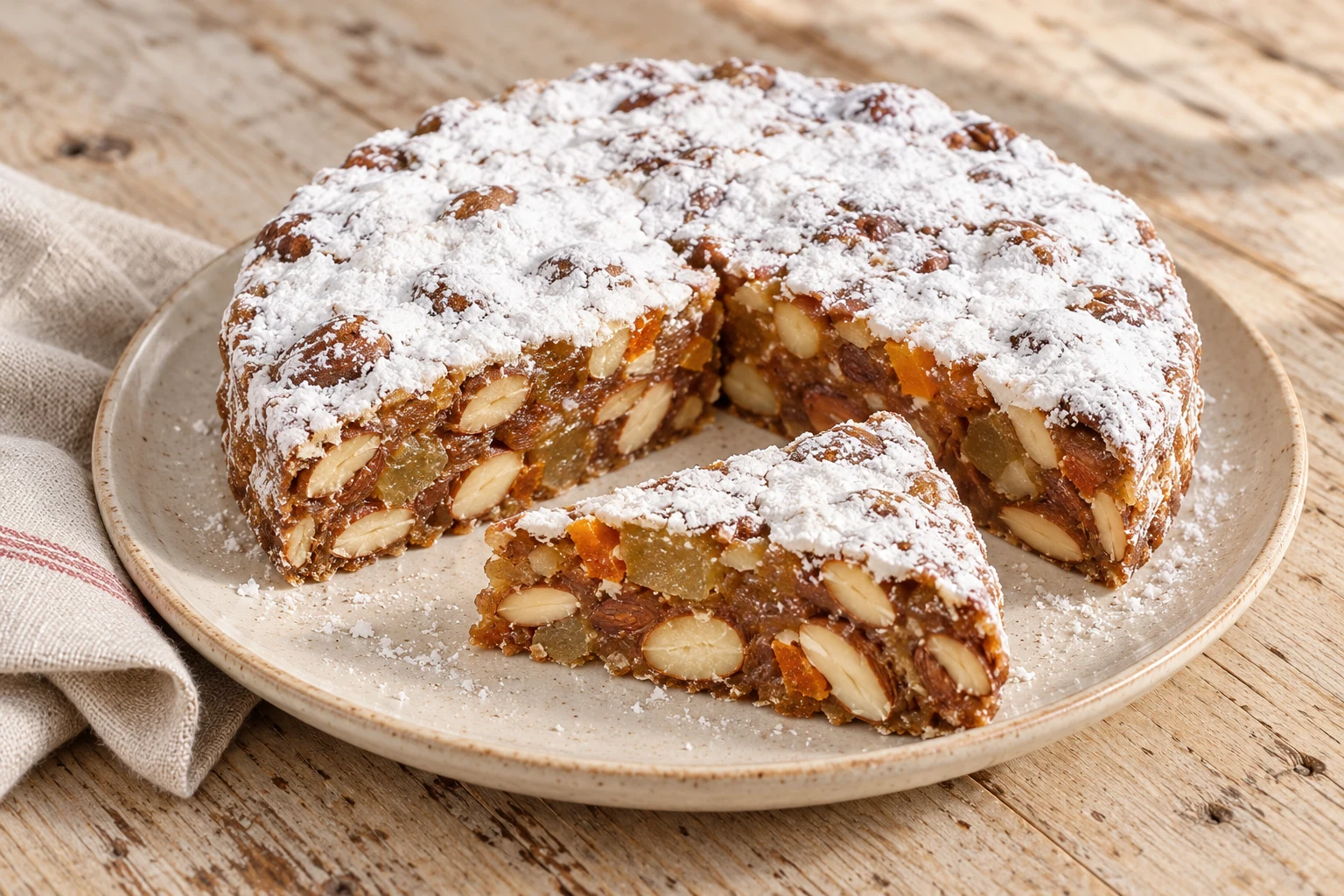
Spongata: Honey, Nuts and Candied Citrus in Golden Pastry
Total 4 hr 20 min · Prep 20 min · Cook 1 hr · Serves 8
Method
Keep the prepared sweet shortcrust pastry refrigerated for about an hour while preparing the filling. Soak the raisins in lukewarm water until softened, then drain and squeeze well. Break the walnuts into coarse pieces and put them with the almonds, hazelnuts and pine nuts in a large bowl.
Heat the sugar, weighed white wine and honey in a saucepan. Bring to the boil, stirring until the sugar has dissolved, then remove from the heat. Mix in the nuts, drained raisins and diced candied orange and citron. Add the finely crushed biscuits, cinnamon and nutmeg and stir thoroughly.
Let the filling cool, then refrigerate for at least 2 hours. The pastry chills alongside it; do not add its chilling time to the filling’s. Assemble only when the filling is cold and the pastry is firm enough to roll.
Heat the conventional oven to 180°C. Butter and flour a round tin, 21 cm across and 4 cm deep for the base quantity. Divide the pastry into two pieces, one slightly larger. Roll the larger piece about 3 mm thick and cut a disc about 27 cm across to line the base and sides. For a larger batch use a suitable larger tin or extra tins, keeping the pastry thin and the filling at a similar depth.Heat the conventional oven to 350°F. Butter and flour a round tin, 8¼ in across and 1½ in deep for the base quantity. Divide the pastry into two pieces, one slightly larger. Roll the larger piece about 3 mm thick and cut a disc about 10¾ in across to line the base and sides. For a larger batch use a suitable larger tin or extra tins, keeping the pastry thin and the filling at a similar depth.
Spoon in the cold filling and level it. Roll the remaining pastry to a similar thickness and cover the filling. Cut a small central vent about 2 cm wide, fold the outer pastry edge over the lid and pinch to seal.Spoon in the cold filling and level it. Roll the remaining pastry to a similar thickness and cover the filling. Cut a small central vent about ¾ in wide, fold the outer pastry edge over the lid and pinch to seal.
Bake at 180°C conventional, checking from 35 minutes and continuing until the pastry is golden; allow up to about an hour. Watch the colour rather than waiting for the full allowance if it is already done. Extra tins may need separate baking.Bake at 350°F conventional, checking from 35 minutes and continuing until the pastry is golden; allow up to about an hour. Watch the colour rather than waiting for the full allowance if it is already done. Extra tins may need separate baking.
Let the spongata cool completely in its tin before unmoulding. Allow roughly an hour for the final cooling, with more time if needed. Dust lightly with icing sugar shortly before serving and cut small slices with a sharp knife.
Equipment
- Round tin, 21 cm across and 4 cm deep at base quantity
- Large bowl and saucepan
- Food processor or bag and rolling pin for biscuits
- Rolling pin
- Knife for cutting pastry and a small vent
- Kitchen scale
- Cooling rack
Tap anywhere to turn the alarm sound back on.