

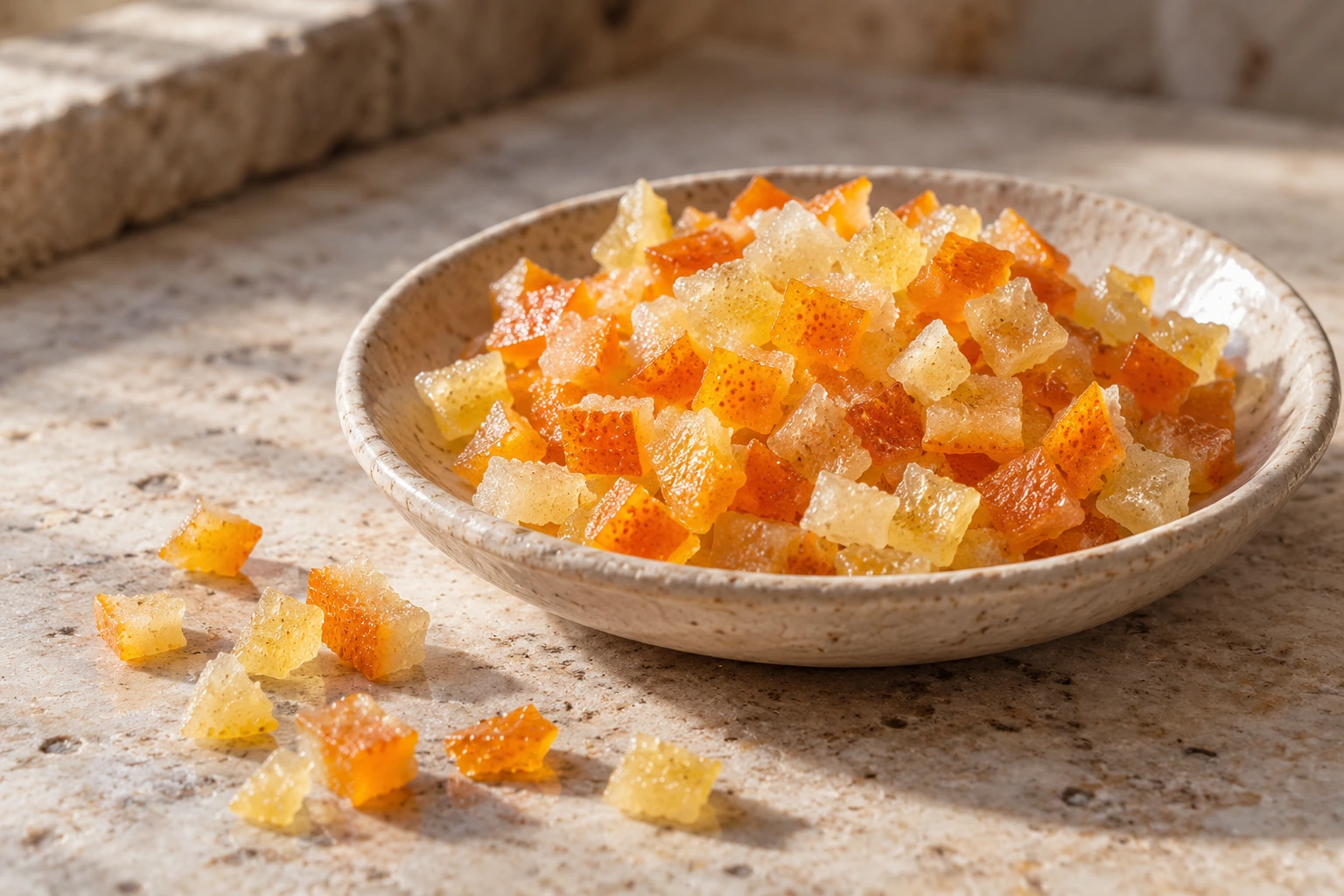
Mixed candied citrus peel
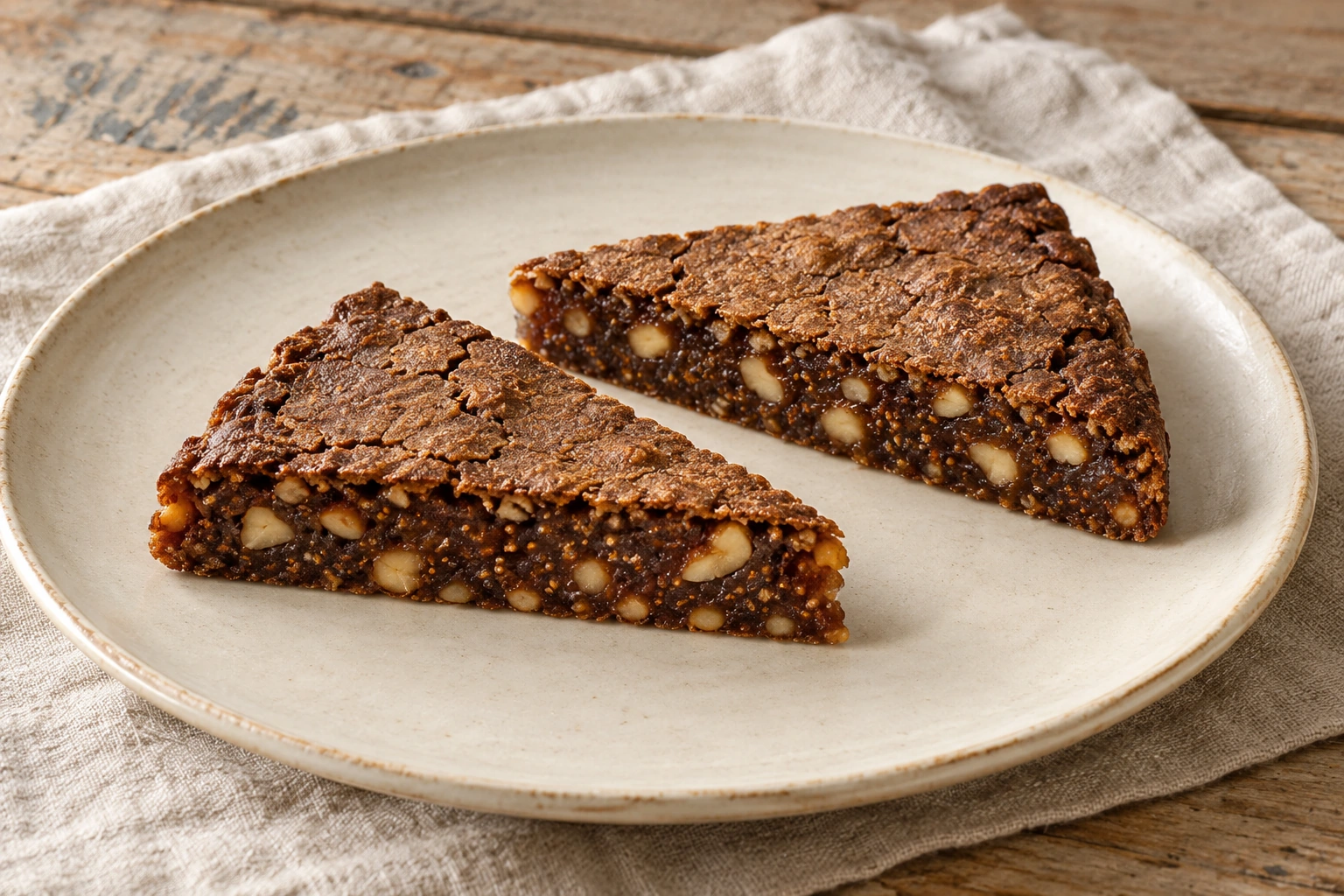
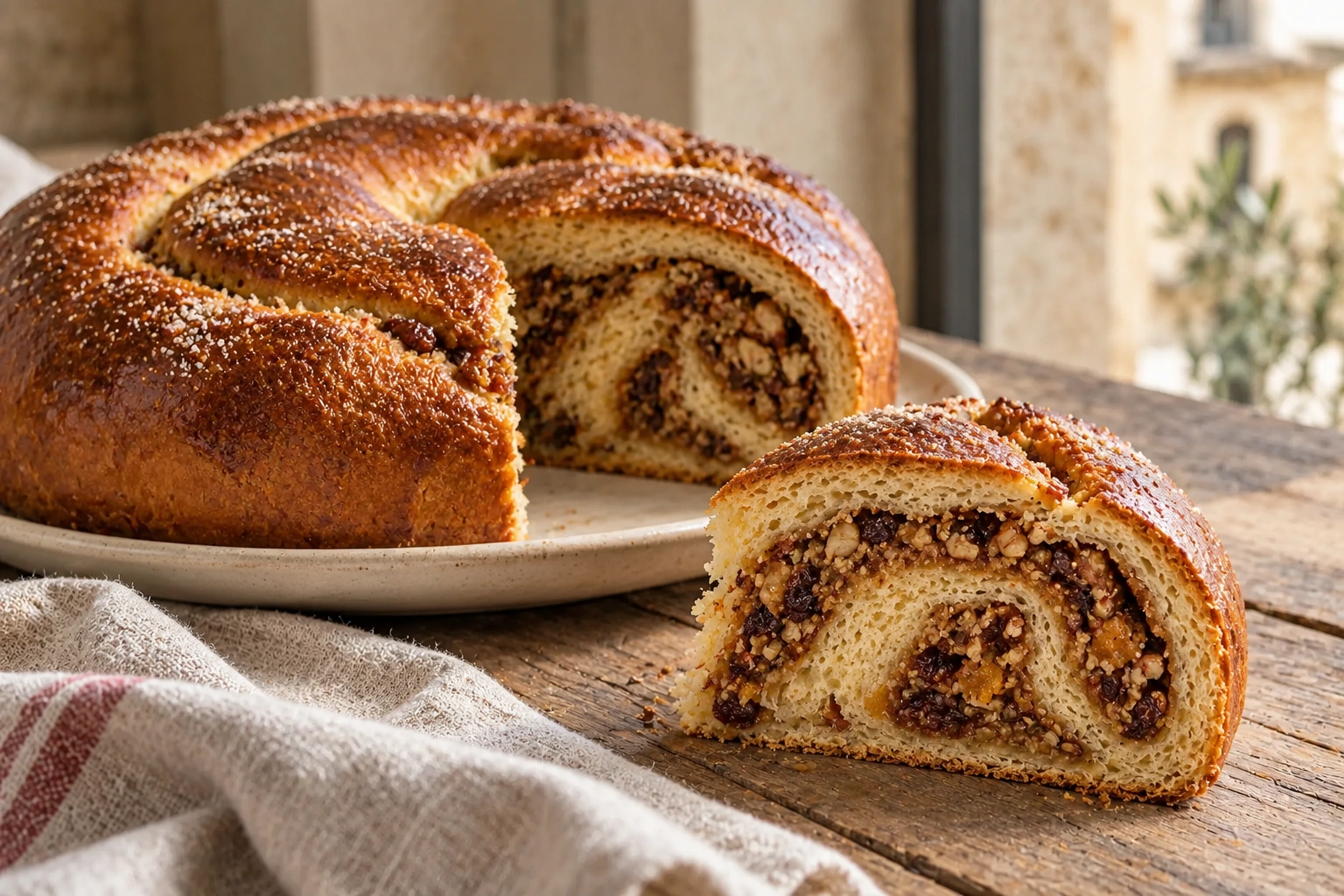
Mixed candied citrus peel brings sweet, aromatic pieces of rind to frustingo and gubana. Choose a mixture of citrus peels and chop it to the size needed for the dough or filling.
- Form
- Candied peel from more than one citrus fruit.
- Choice
- Check which citrus fruits are in the mixture.
- Use
- Small pieces distributed through baked sweets.
Peel and sugar syrup
Candied peel is prepared with sugar syrup. The finished rind keeps a distinct bite and citrus aroma. Packs can contain drained pieces or peel in syrup; read the form on the label before measuring it for a recipe.
Citrus peel in Italian baking
Orange, lemon and citron peels are candied for pastry-making. They are sold separately and in mixtures, in pieces ranging from strips to small cubes. Blends vary, so check the ingredient list for the citrus fruits in the pack.
Chop for an even filling
For frustingo and gubana, use the recipe’s measured quantity of mixed peel. Cut any large strips or cubes into smaller pieces before mixing, so a slice contains scattered citrus rather than a single large piece. Keep the mixture as peel; candied cherries, pumpkin and mixed whole fruits have a different composition.

Read the ingredient list
Look for a clearly identified mixture of candied citrus peels. A single-fruit pack of citron or orange is a different ingredient choice. Check whether added syrup is included and follow the recipe’s preparation; avoid adding unmeasured syrup to the dough.
Close the pack after measuring
Follow the pack’s storage directions and instructions after opening. Use a clean utensil to take out the amount needed and close the container promptly. Keep the remaining peels separate from flour and crumbs.
