This Natisone-style cake uses yeast dough. Allow the dough to rise visibly at each stage; the clock alone does not establish readiness.
Make ahead Bake the day before serving and cut only when completely cool.
Gubana delle Valli del Natisone
Prep 55 min · Cook 1 hr · Rest 8 hr · Serves 12 · Difficulty Hard
Method
Dissolve the yeast and 20 g of the dough sugar in the lukewarm milk. Add 200 g type 00 flour, the strong flour, the remaining 110 g dough sugar, whole egg, 18 g yolk, citrus zests, vanilla and salt. Knead until combined, then work in 60 g softened butter a little at a time until elastic and smooth.Dissolve the yeast and ¾ oz of the dough sugar in the lukewarm milk. Add 7 oz type 00 flour, the strong flour, the remaining 4 oz dough sugar, whole egg, ¾ oz yolk, citrus zests, vanilla and salt. Knead until combined, then work in 2 oz softened butter a little at a time until elastic and smooth.
Cover in a bowl and let rise at 22–24°C for about 4 hours, until almost doubled. Use the dough’s growth as the guide and allow longer if the room is cool.Cover in a bowl and let rise at 70–75°F for about 4 hours, until almost doubled. Use the dough’s growth as the guide and allow longer if the room is cool.
During the rise, soak the raisins in the water and rum for 30 minutes, then drain and squeeze gently. Chop the raisins, nuts, amaretti and candied peel. Mix with the jam, 50 g softened butter, 50 g sugar and cinnamon to make a spreadable, cohesive filling.During the rise, soak the raisins in the water and rum for 30 minutes, then drain and squeeze gently. Chop the raisins, nuts, amaretti and candied peel. Mix with the jam, 1¾ oz softened butter, 1¾ oz sugar and cinnamon to make a spreadable, cohesive filling.
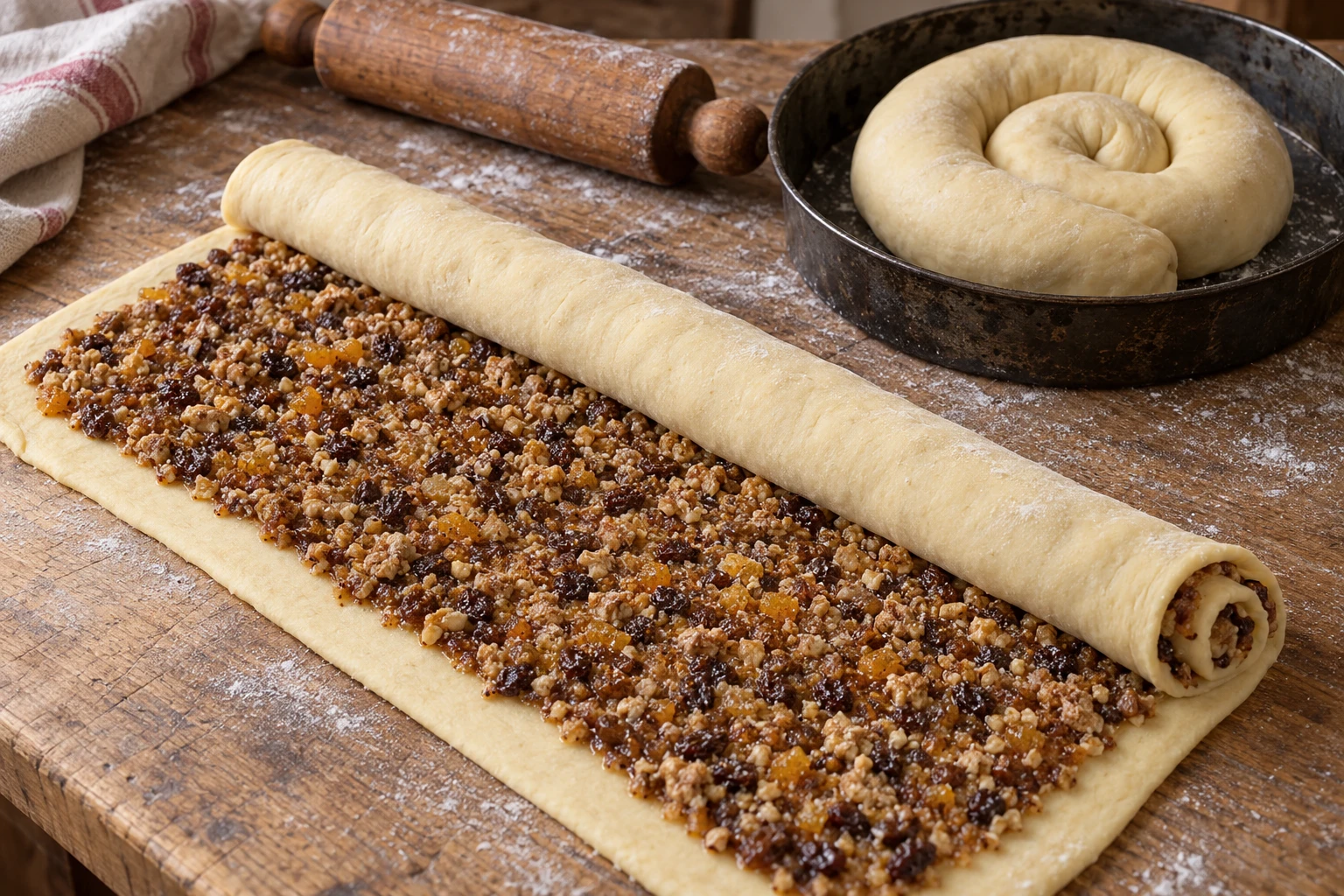
Grease the pan with the reserved 10 g butter. Dust the board lightly with the reserved flour and roll the dough into a rectangle about 5 mm thick; a 30 × 45 cm sheet suits the 26 cm pan. For a larger batch, divide the dough and filling into several cakes before rolling, keeping the same sheet thickness. Spread the filling evenly, leaving a 2 cm border. Roll up from a long edge into a filled log, then pinch the seam and ends closed.Grease the pan with the reserved ¼ oz butter. Dust the board lightly with the reserved flour and roll the dough into a rectangle about ¼ in thick; a 11¾ × 17¾ in sheet suits the 10¼ in pan. For a larger batch, divide the dough and filling into several cakes before rolling, keeping the same sheet thickness. Spread the filling evenly, leaving a ¾ in border. Roll up from a long edge into a filled log, then pinch the seam and ends closed.
With the seam underneath, curl each filled log loosely into a snail shape and set it in its pan. Tuck the outside end underneath. Cover and let rise about 2 hours, until the coil looks swollen and the gaps have narrowed.With the seam underneath, curl each filled log loosely into a snail shape and set it in its pan. Tuck the outside end underneath. Cover and let rise about 2 hours, until the coil looks swollen and the gaps have narrowed.
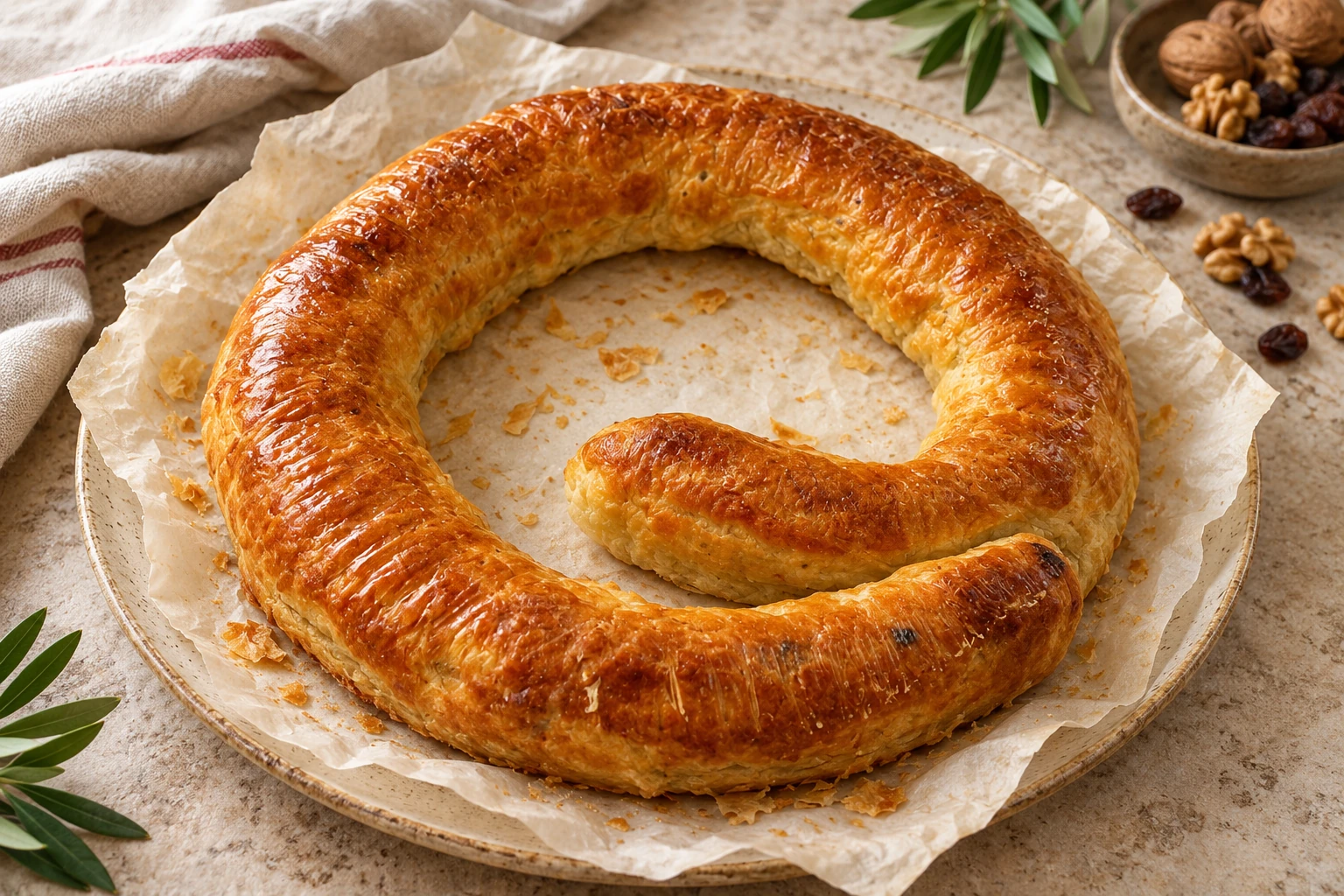
Heat the conventional oven to 180°C. Brush the surface with the remaining 18 g yolk and sprinkle with 15 g sugar. Bake for about 60 minutes, covering loosely with foil if it browns too quickly. The center should feel set, with no wet dough on a skewer inserted into a bread section.Heat the conventional oven to 350°F. Brush the surface with the remaining ¾ oz yolk and sprinkle with ½ oz sugar. Bake for about 60 minutes, covering loosely with foil if it browns too quickly. The center should feel set, with no wet dough on a skewer inserted into a bread section.
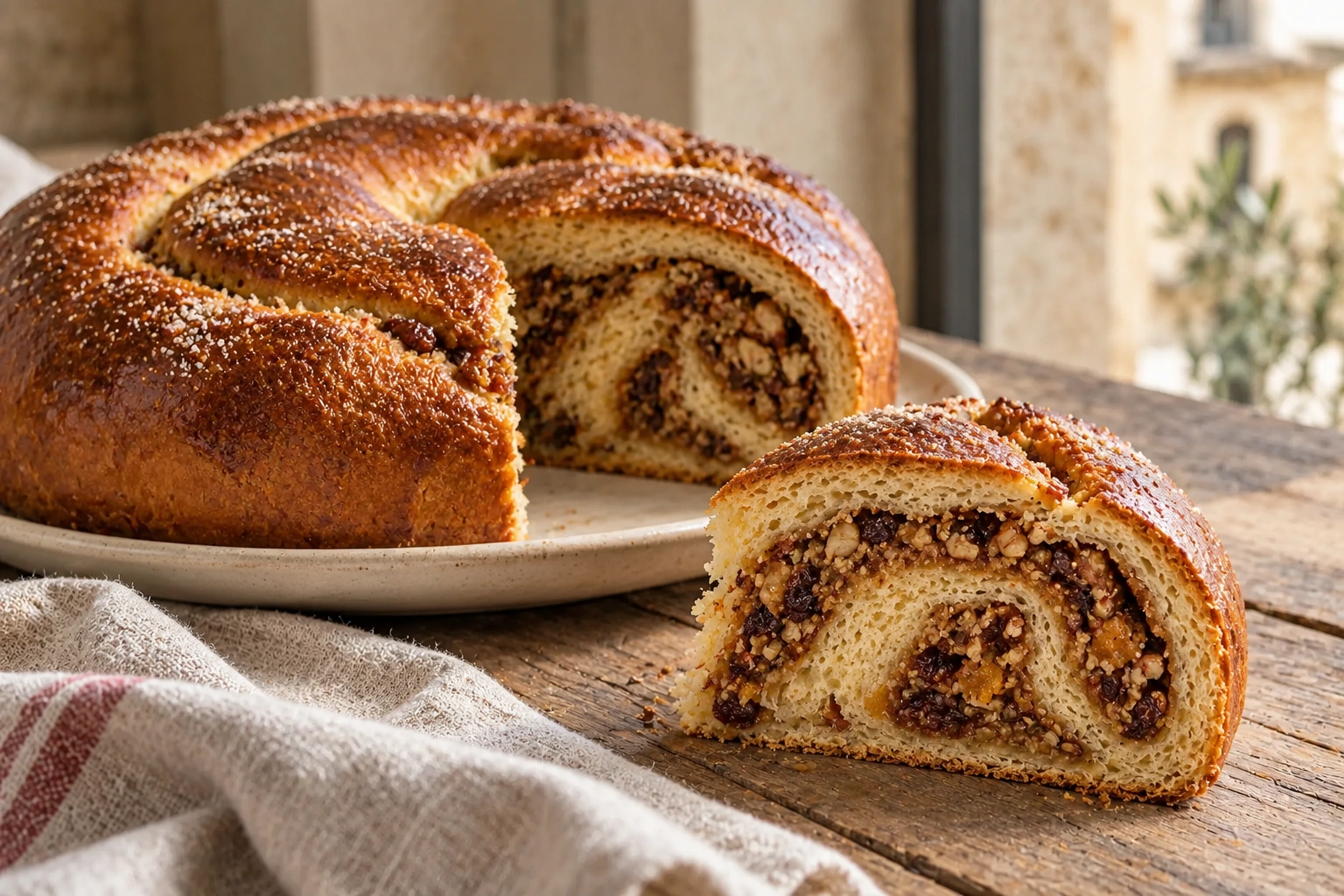
Rest in the tin for 15 minutes, then lift carefully onto a rack. Cool completely, about 2 hours overall, before cutting into slices.Rest in the tin for 15 minutes, then lift carefully onto a rack. Cool completely, about 2 hours overall, before cutting into slices.