


I monumenti
Tutti i monumenti, città per città
I luoghi e i capolavori attorno a cui vale la pena costruire una giornata.
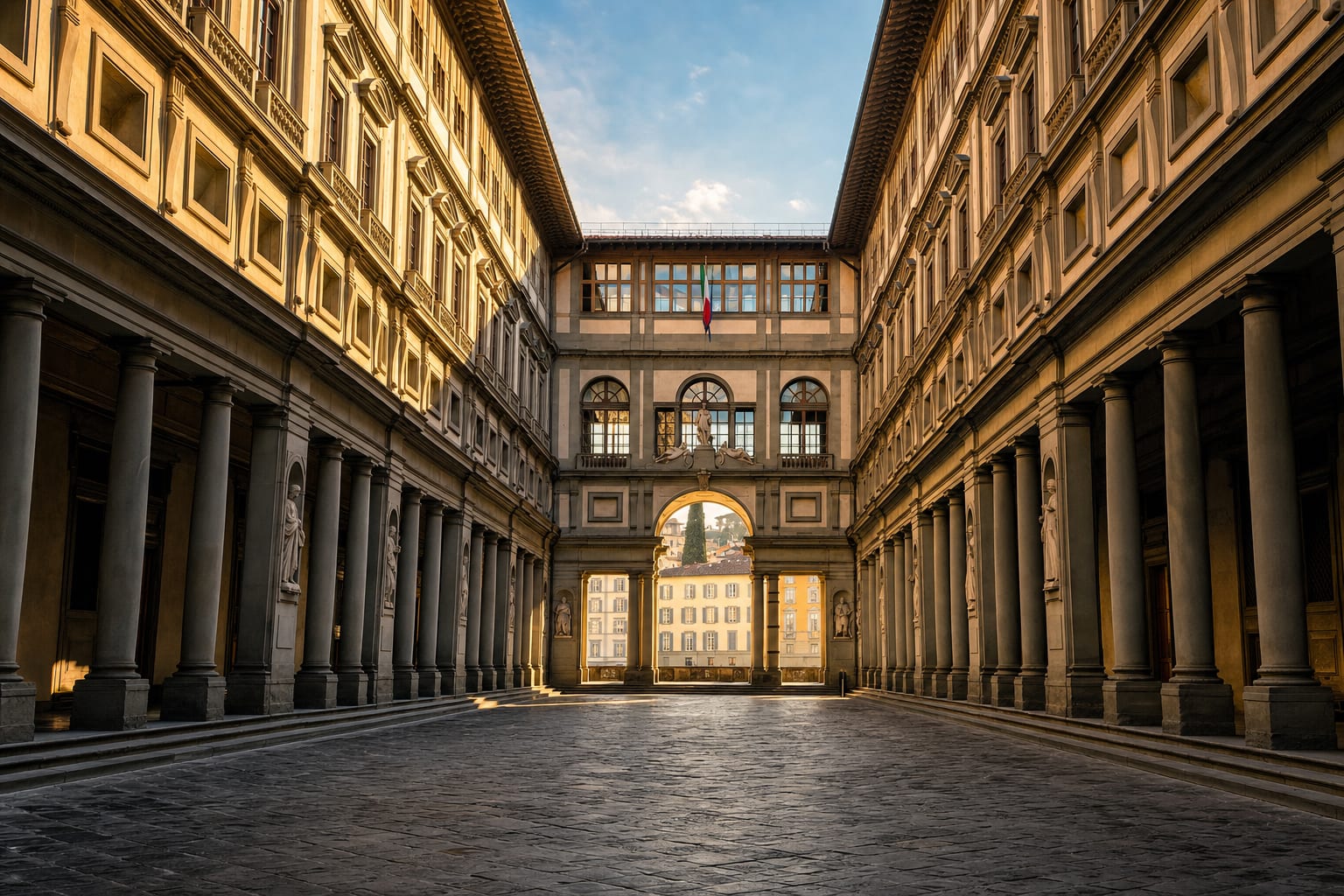 FirenzeGalleria degli UffiziThe Medici collection at full force: Botticelli, Leonardo, Caravaggio and rooms that read like a history of looking.<p>The Uffizi is not simply a museum with famous paintings. It is Florence's old machinery of power turned into a museum, a long Vasari building made for Medici administration and later filled with the art that helped define the city's idea of itself. Its corridors still feel ceremonial, lined with ancient sculpture from the Medici collection, while the rooms open into one of the world's densest sequences of medieval and Renaissance painting.</p><p>Most visitors come for Botticelli, and rightly so. But the Uffizi is more powerful when read as a progression: gold-ground altarpieces giving way to bodies with weight, perspective opening space, portraits sharpening into psychology, sacred scenes becoming human drama. Giotto, Piero della Francesca, Filippo Lippi, Botticelli, Leonardo, Raphael, Michelangelo and Caravaggio are not isolated trophies here. They form an argument about how Western art learned to see.</p><p>The practical challenge is emotional as much as logistical. This is a museum that can exhaust you by abundance. Book ahead, choose your priorities, and let a few rooms matter deeply instead of trying to conquer the whole collection. If you are pairing it with the Accademia or the Duomo, put the Uffizi first thing in the day, while your eyes are still fresh.</p>Pianifica la visita
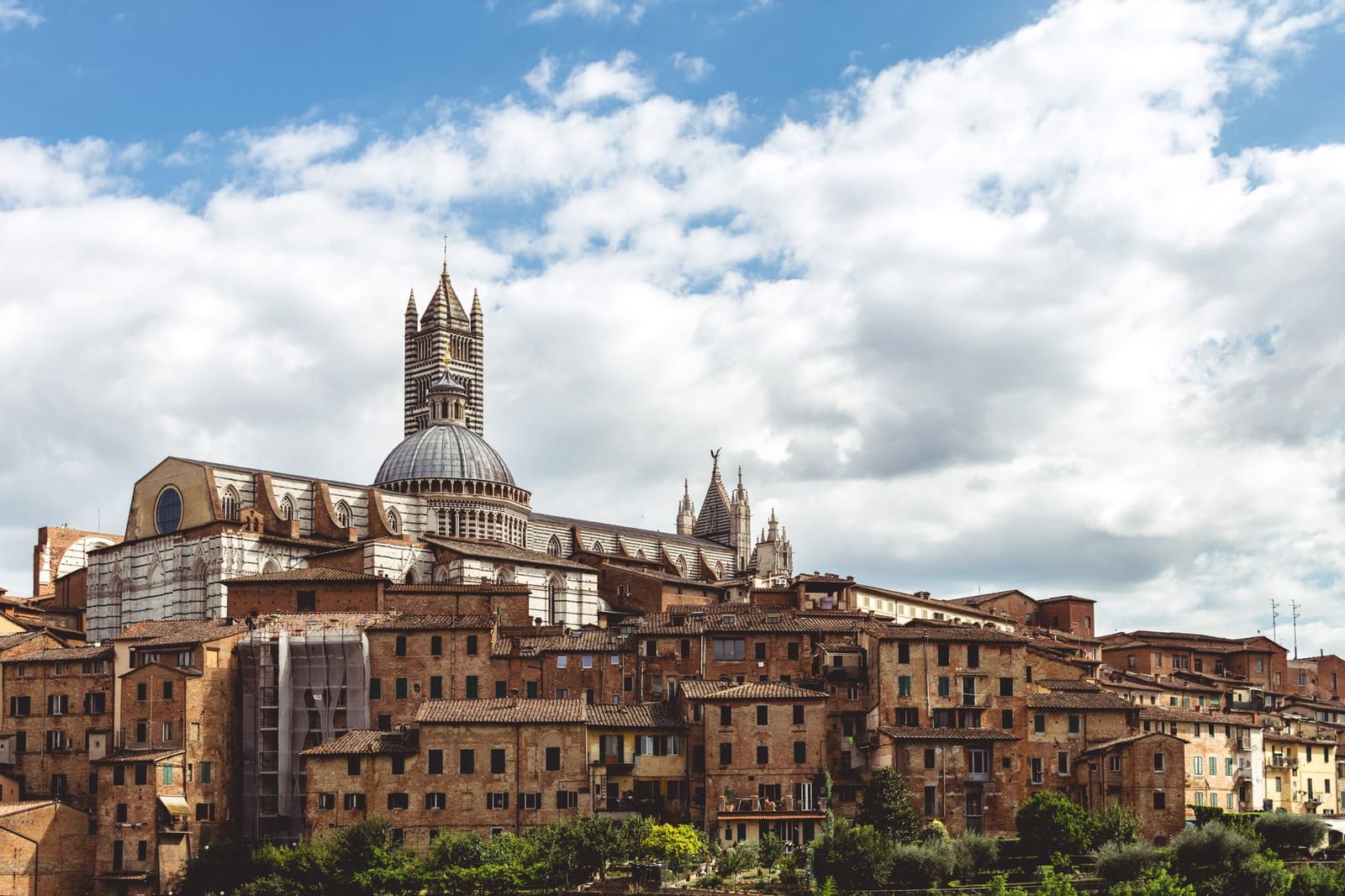 SienaDuomo di SienaCathedral of Santa Maria Assunta, marble-inlay floor, and Nicola Pisano pulpit.Siena Cathedral is the Cathedral of Santa Maria Assunta. Its marble-inlay and graffito floor, its Nicola Pisano pulpit, and its wider Cathedral-complex relationships require distinct reading. The Cathedral is within the UNESCO Historic Centre of Siena property, rather than a separately inscribed World Heritage site.
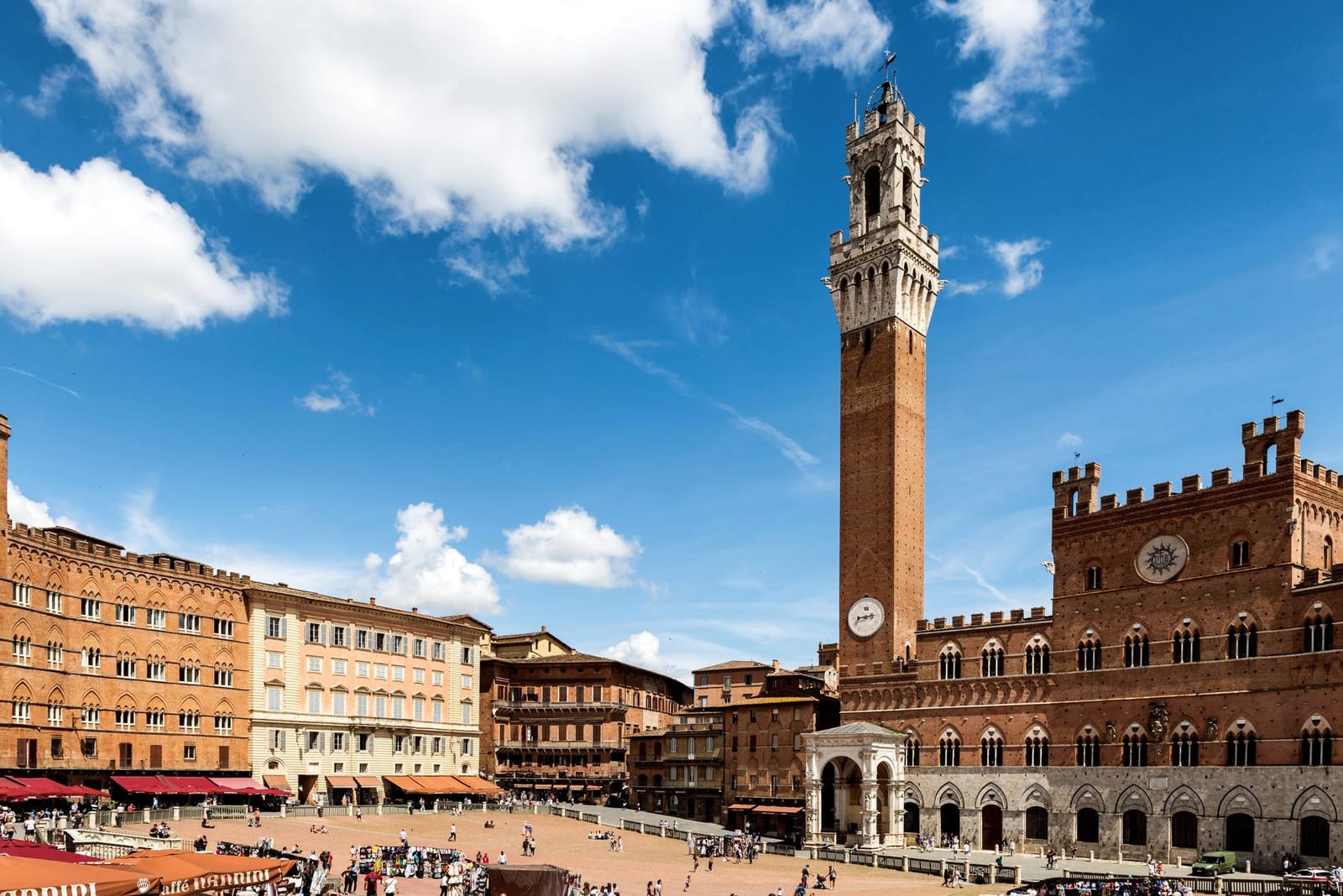 SienaPiazza del CampoIts civic role in Siena and its relationship with the Palio.Piazza del Campo is a distinct civic square within Siena's historic urban fabric. UNESCO records the city's development around the Campo and its meeting of three hills and principal streets; a UNESCO evaluation documents the late-12th-century union of two market sectors into one semicircular public space. Municipal cultural records describe the square as a setting for civic and religious events, festivities, games, and carriere, including the Palio. The square is within the Historic Centre of Siena World Heritage property, not a separately inscribed UNESCO site. Current Palio arrangements and practical access require an official, date-specific check.
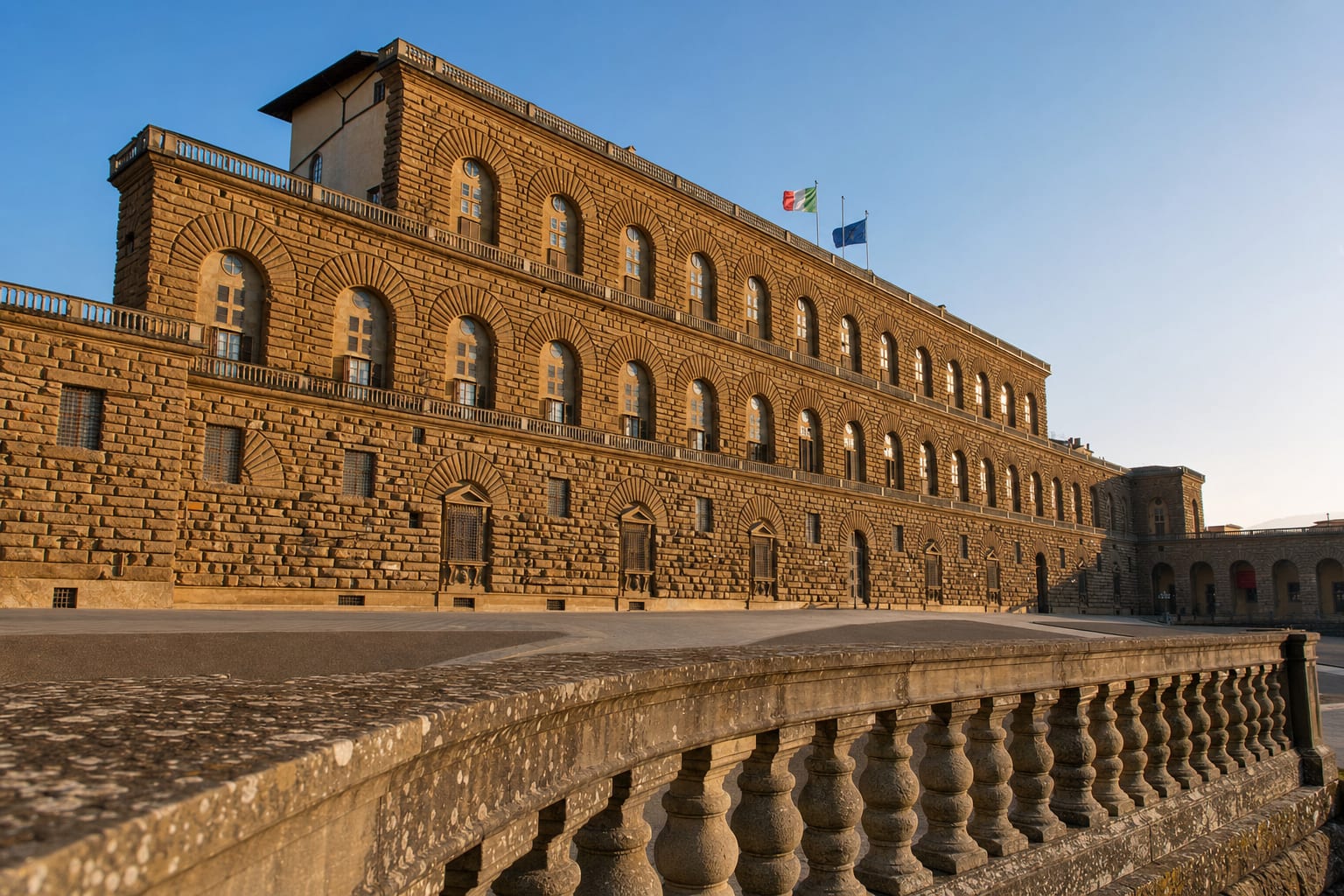 FirenzePalazzo PittiThe Palatine Gallery, royal apartments, Medici power, court collections, and its direct connection to the Boboli Gardens.Begun as a mid-fifteenth-century private residence for Luca Pitti, the palace became the Medici grand-ducal court residence in the mid-sixteenth century and developed with Boboli across later dynasties. Its rooms and current museum access require a dated official check.
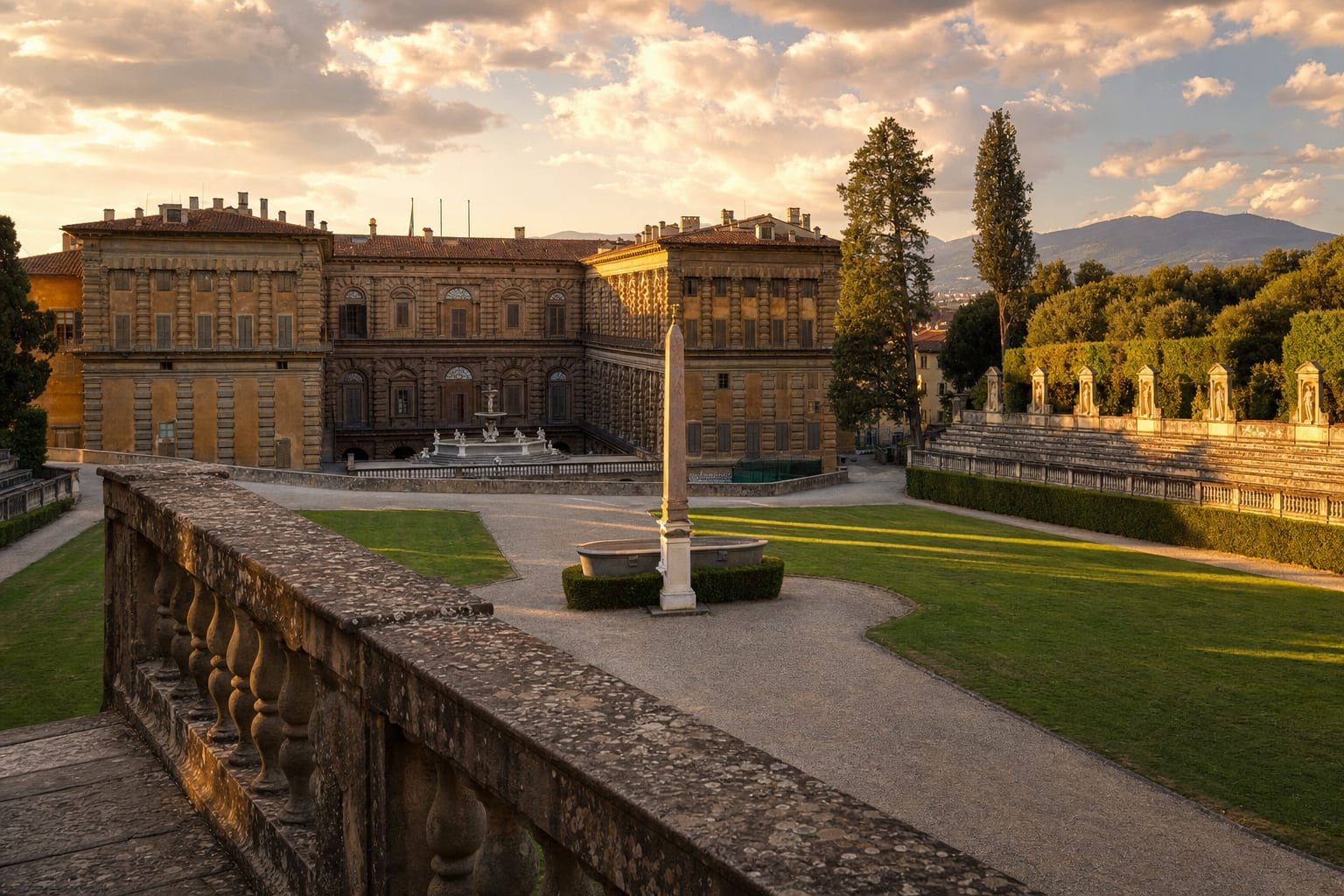 FirenzeGiardino di BoboliTerraces above Pitti Palace, the Amphitheatre, Buontalenti's grotto, long cypress avenues, fountains, sculpture, and city views.Work began in 1549 for Eleonora di Toledo under Tribolo and continued through Medici and Lorraine phases. Boboli is integral to the Palazzo Pitti complex; individual features, current access and operational conditions require separate verification.
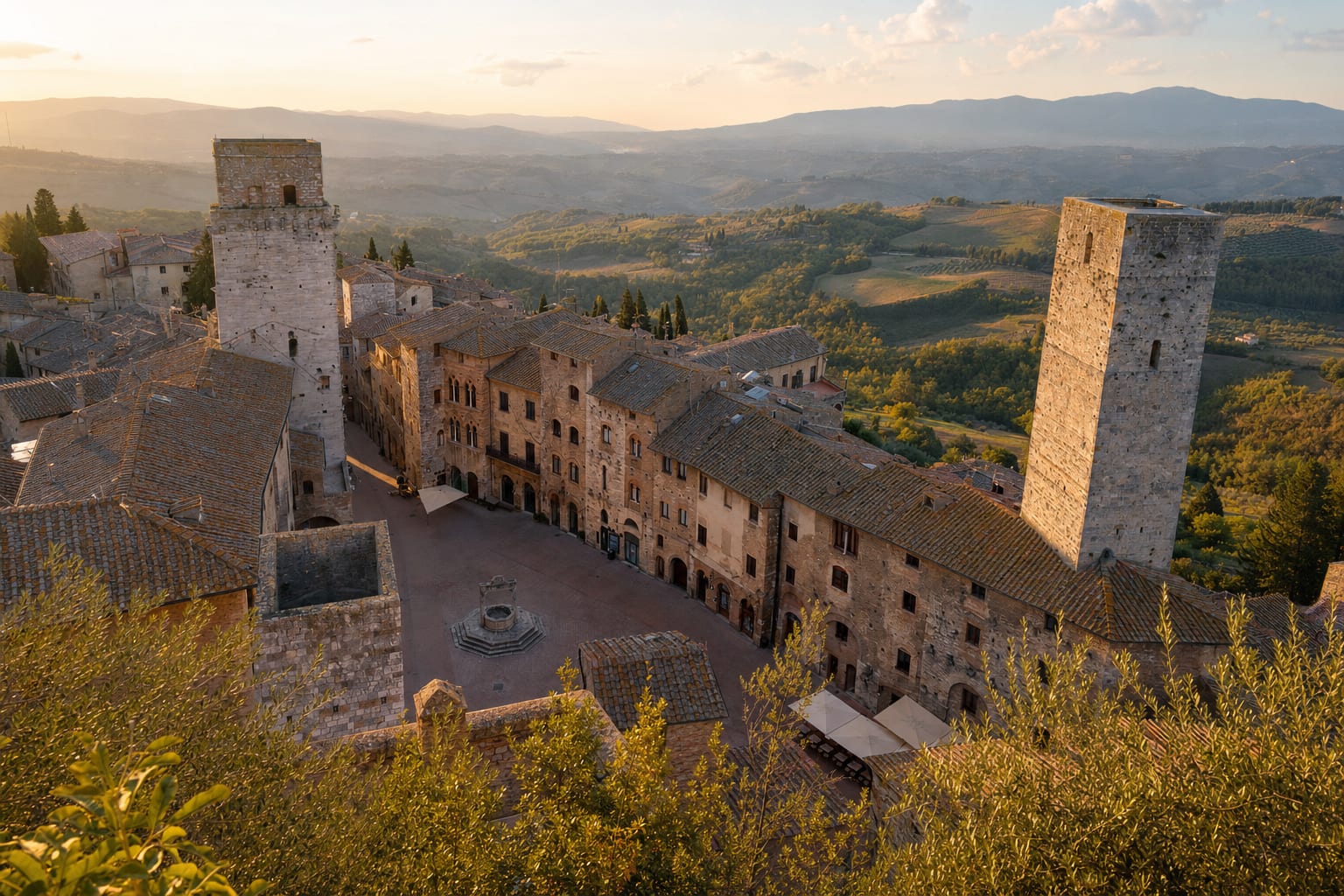 San GimignanoUNESCOCentro storico di San GimignanoMedieval towers, Piazza della Cisterna, Piazza del Duomo, Torre Grossa, frescoed churches, and the skyline of rival families.San Gimignano is famous for its towers, but the towers are only the first sentence. The historic center is a preserved medieval argument about visibility, wealth, family rivalry, pilgrimage, and trade. Enter through the gates and the town narrows into stone lanes that climb toward Piazza della Cisterna and Piazza del Duomo, where civic and sacred power face each other across a compact public stage. Torre Grossa still gives the skyline its vertical punctuation, while the frescoed interiors remind you that this was not a picturesque backdrop but a working commune with money, ambition, and devotional intensity. The best visit slows down after the first photograph. Look at how the town uses height, shadow, gateways, and sudden squares to make medieval urban life feel close.
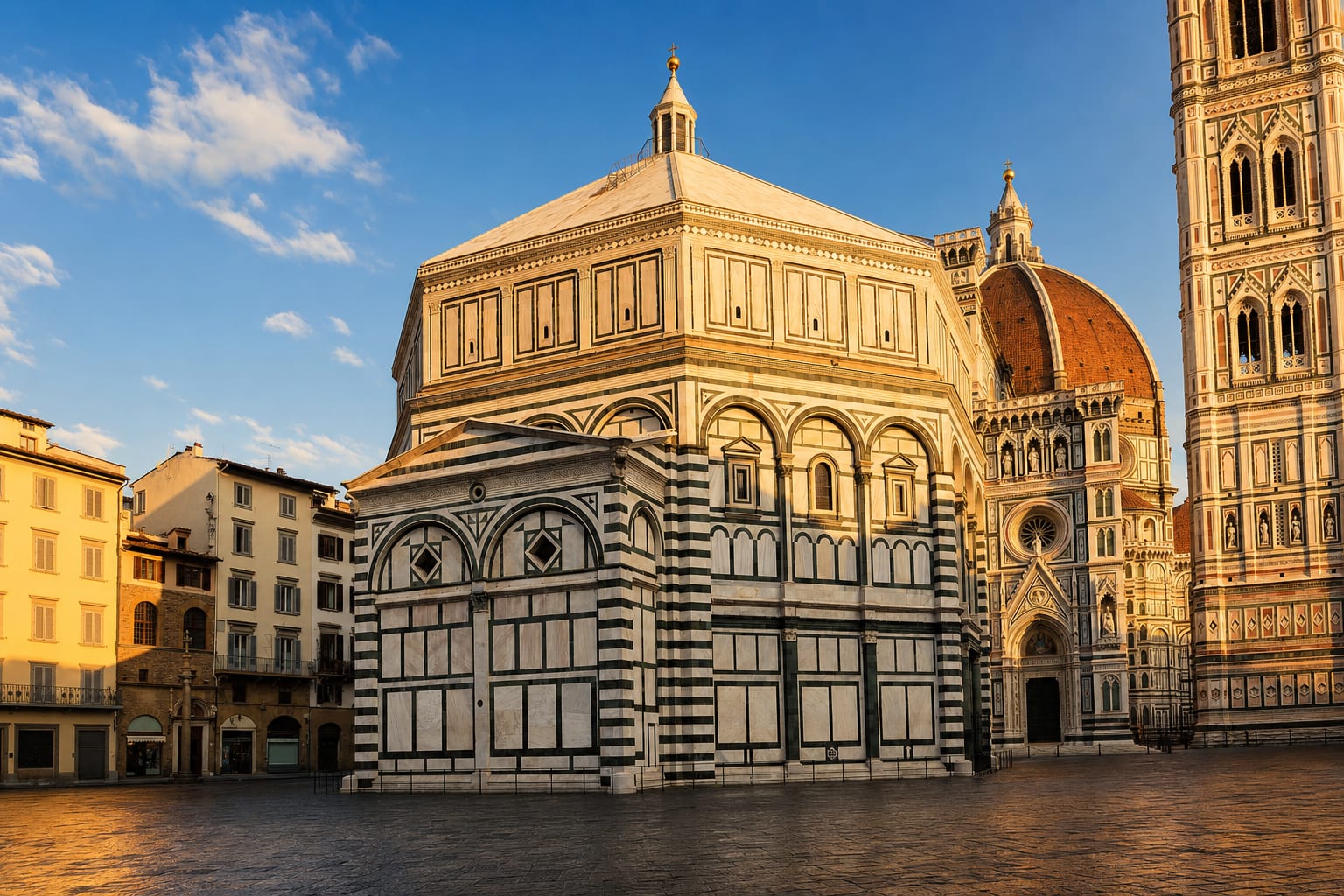 FirenzeBattistero di San GiovanniThe octagonal Romanesque building, glittering vault mosaics, Andrea Pisano's doors, and Ghiberti's Gates of Paradise.The Baptistery of San Giovanni and the Cathedral of Santa Maria del Fiore form Florence's religious centre. Lorenzo Ghiberti won the 1401 competition for the present north door and completed the east doors in 1452; the original bronze panels are replaced by copies and displayed in the Historical Museum. Ghiberti's Gate of Paradise, made for the east portal between 1425 and 1452, is now in the Opera del Duomo Museum's Sala del Paradiso. The Baptistery lies within, rather than independently on, the Historic Centre of Florence World Heritage property.
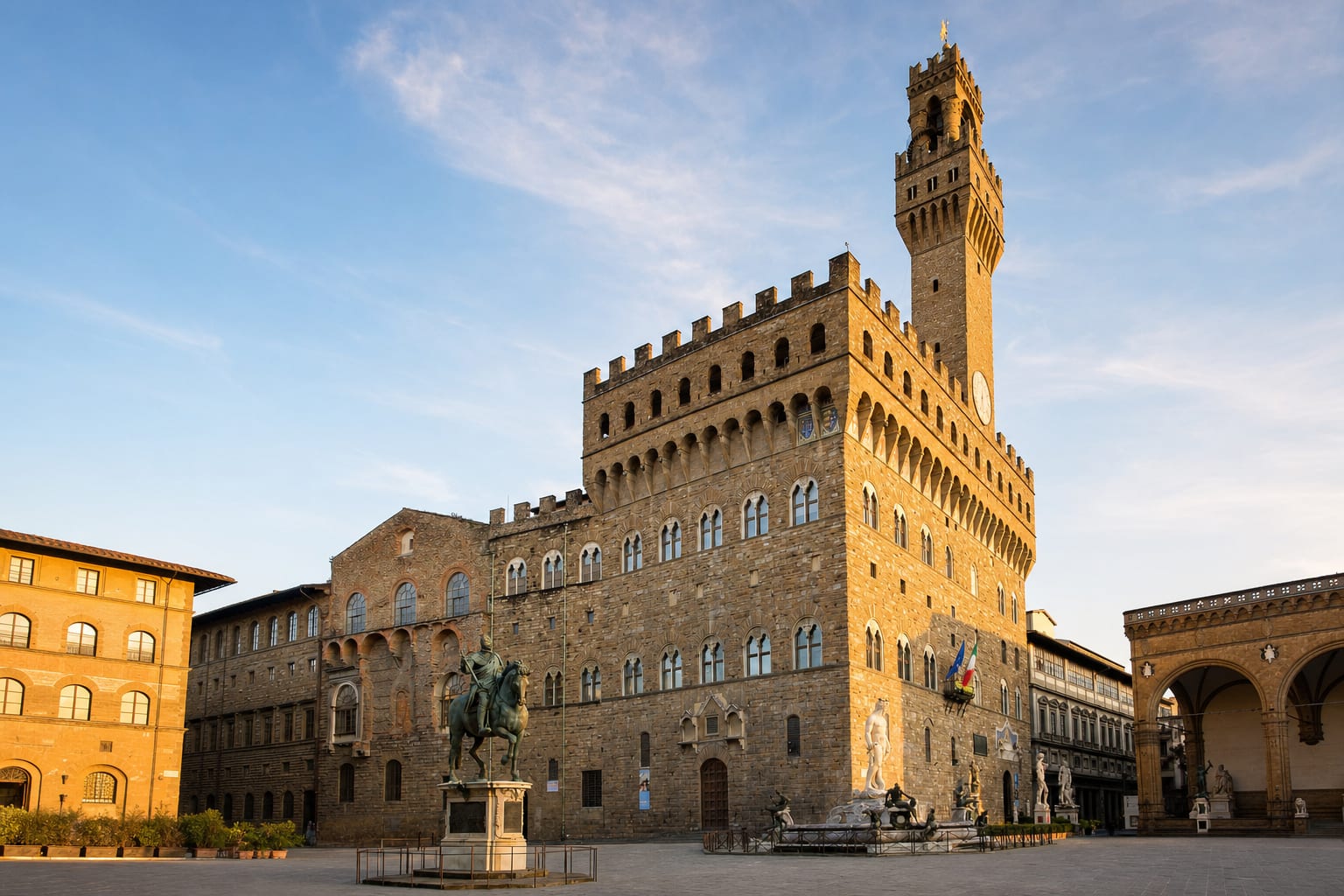 FirenzePalazzo VecchioFlorence's civic palace, Arnolfo's tower, the Salone dei Cinquecento, Medici rooms, and Piazza della Signoria.Built as the seat of Florence’s republican offices from 1299, the palace remains a municipal institution and houses the Museo di Palazzo Vecchio. Its medieval core, Roman-theatre substrate, Medici apartments, rooms and collections require separate source-backed relationships; current access requires a municipal check.
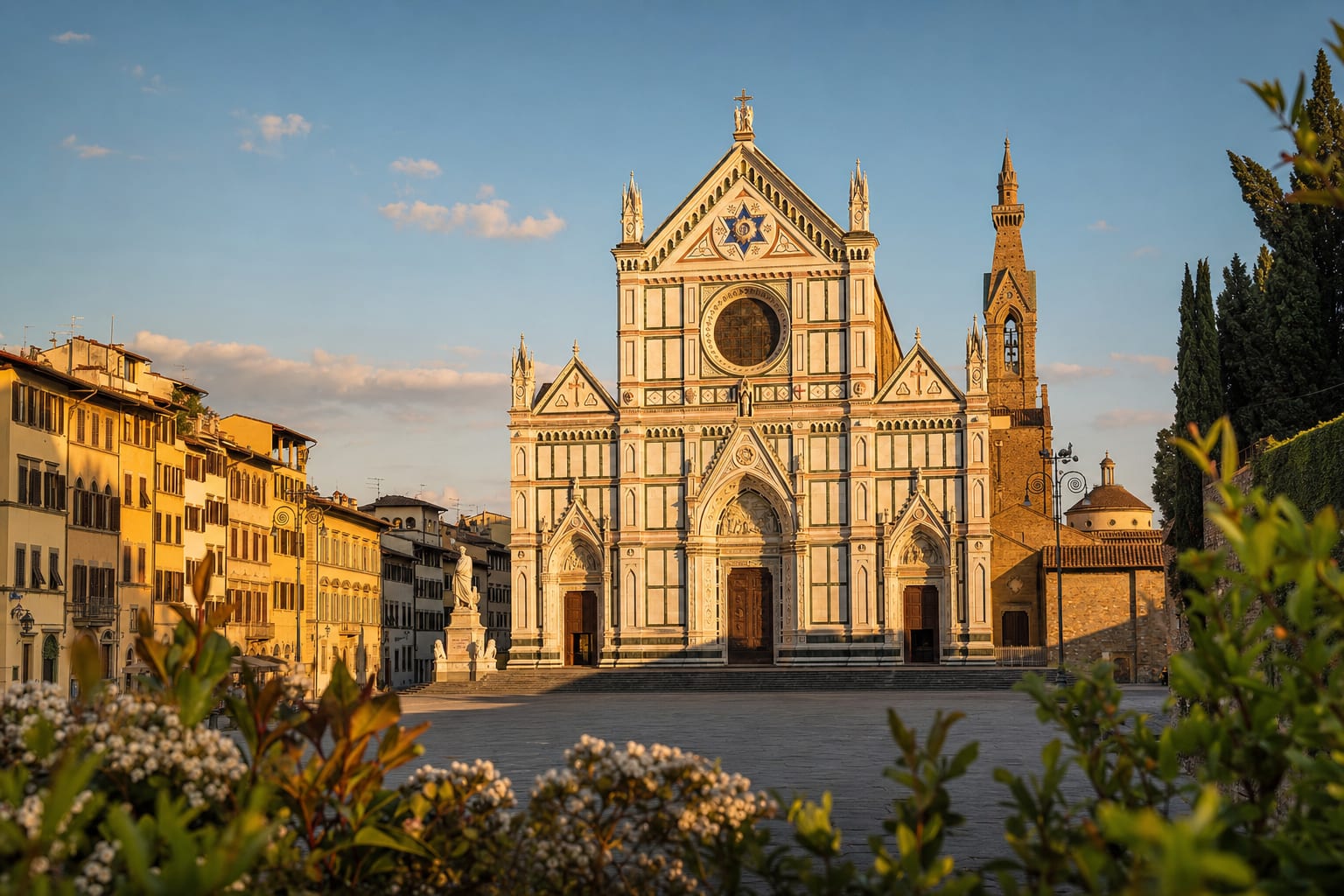 FirenzeBasilica di Santa CroceGiotto's chapels, Brunelleschi's Pazzi Chapel, Donatello works, and tombs of Michelangelo, Galileo, Machiavelli, Foscolo, and Rossini.Santa Croce is a Franciscan basilica in Florence. The current church has a Latin-cross plan, pointed arches, wooden trusses and transept chapels; Opera di Santa Croce attributes its design, with caution, to Arnolfo di Cambio. In 1566 Giorgio Vasari removed the rood screen and its attached chapels during a Counter-Reformation renewal commissioned by Cosimo I de' Medici. The Basilica belongs to a wider Santa Croce complex and lies within, rather than independently on, the Historic Centre of Florence World Heritage property.
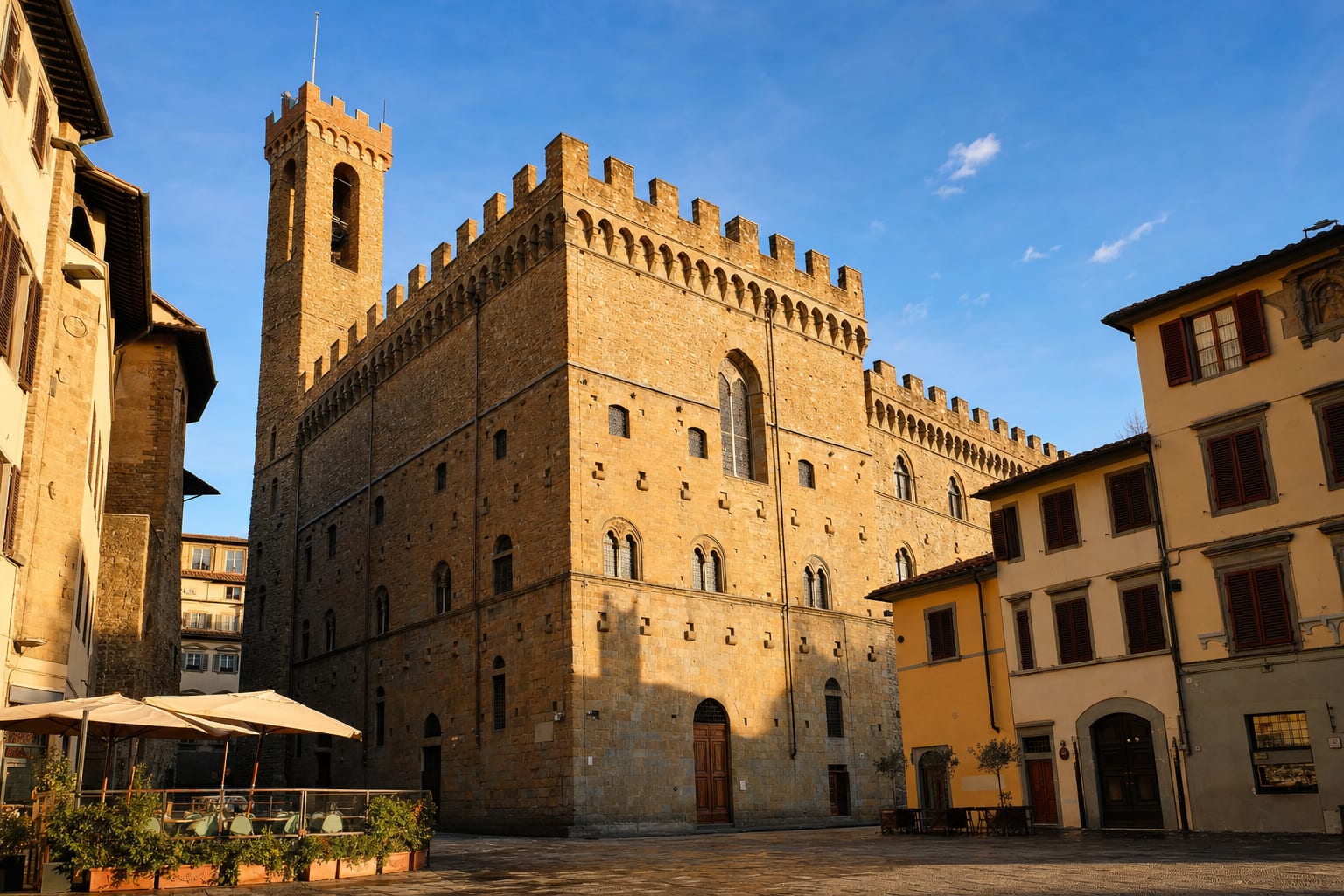 FirenzeMuseo Nazionale del BargelloDonatello's David and Saint George, Michelangelo's early works, Renaissance sculpture, medals, ivories, ceramics, and a severe medieval courtyard.The Bargello National Museum occupies Florence's former Palazzo del Podestà. In 1865 it was inaugurated as Italy's first national museum dedicated to the arts of the Middle Ages and Renaissance. Its documented collections include sculpture and decorative arts; current displays and visitor conditions require a separate dated check.
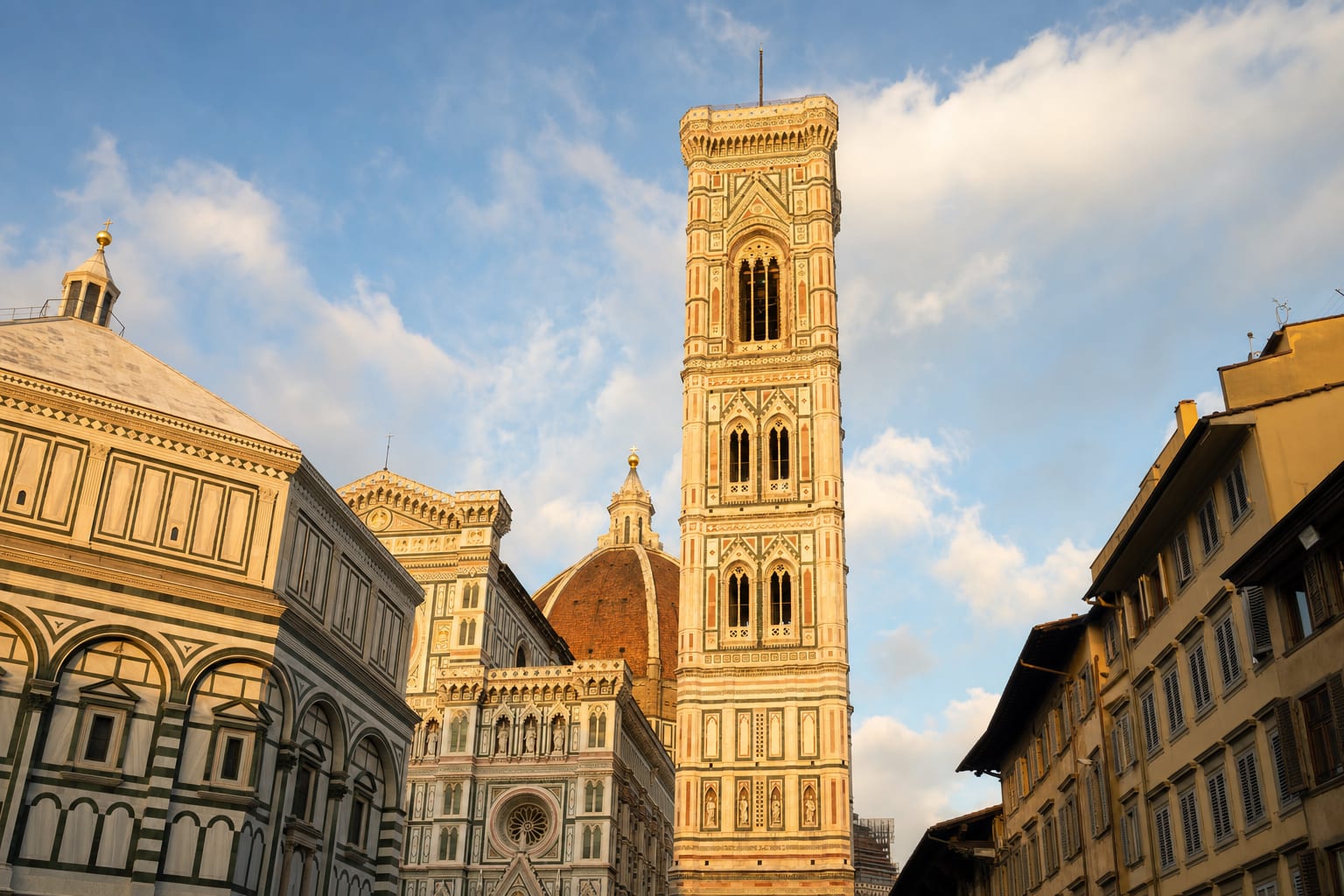 FirenzeCampanile di GiottoFlorence's freestanding bell tower, Giotto's design, colored marble, sculptural panels, and panoramic views from the Duomo complex.Giotto's Campanile is the bell tower of the Cathedral of Santa Maria del Fiore and a monument of the Santa Maria del Fiore complex in Piazza del Duomo. Giotto was entrusted with the work in 1334; Andrea Pisano continued it after Giotto's death, and Francesco Talenti completed the building in 1359. The Italian Gothic tower has an approximately 15-metre-square base and a projecting crown at 84.7 metres. Original sculptures from its lower levels are displayed in the Museo dell'Opera del Duomo. The Campanile lies within, rather than independently on, the Historic Centre of Florence World Heritage property.
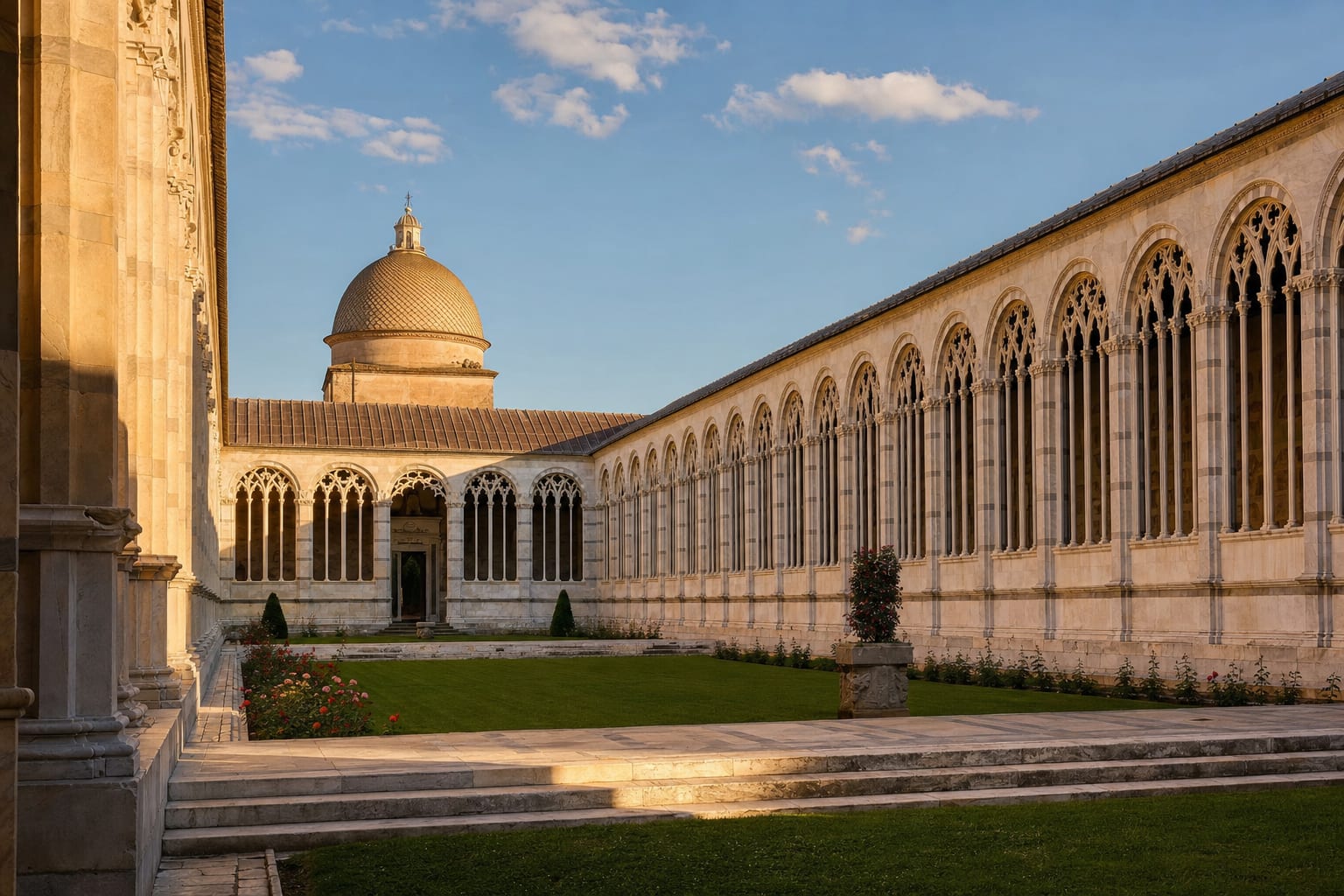 PisaCamposanto MonumentaleIts medieval cemetery, Buffalmacco frescoes, late-antique sarcophagi and postwar conservation history.Camposanto Monumentale was founded in 1277 to accommodate graves formerly scattered around Pisa Cathedral. Designed by Giovanni di Simone, its long marble building forms the northern edge of Piazza del Duomo. Its fresco cycle includes Buffalmacco's Triumph of Death, Last Judgement and Stories of the Desert Fathers, Pisan Saints scenes and Old Testament stories completed by Benozzo Gozzoli. The 1944 air raid and fire led to the detachment of frescoes, revealing the sinopie now held in the separate Sinopie Museum. Camposanto is a component of the Piazza del Duomo World Heritage property, not a separately inscribed site.
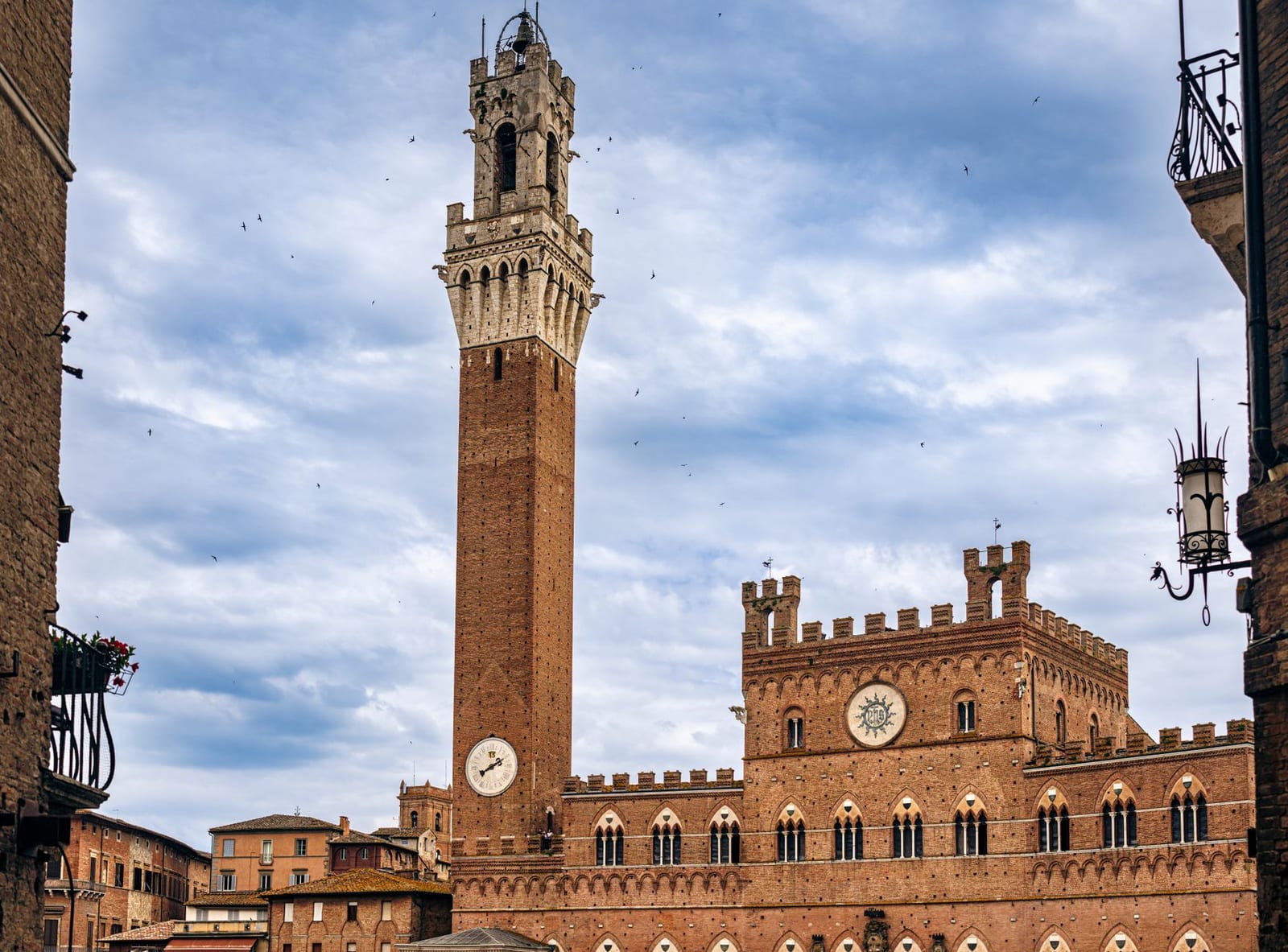 SienaTorre del MangiaCivic tower beside Palazzo Pubblico in Piazza del Campo.Torre del Mangia is Siena’s civic tower on Palazzo Pubblico in Piazza del Campo. Municipal evidence distinguishes a 1325 foundation tradition from payments documented from 1338 and work through 1349; it also records its civic functions and relationship to Cappella del Campo. Current climbing conditions require a fresh official check.
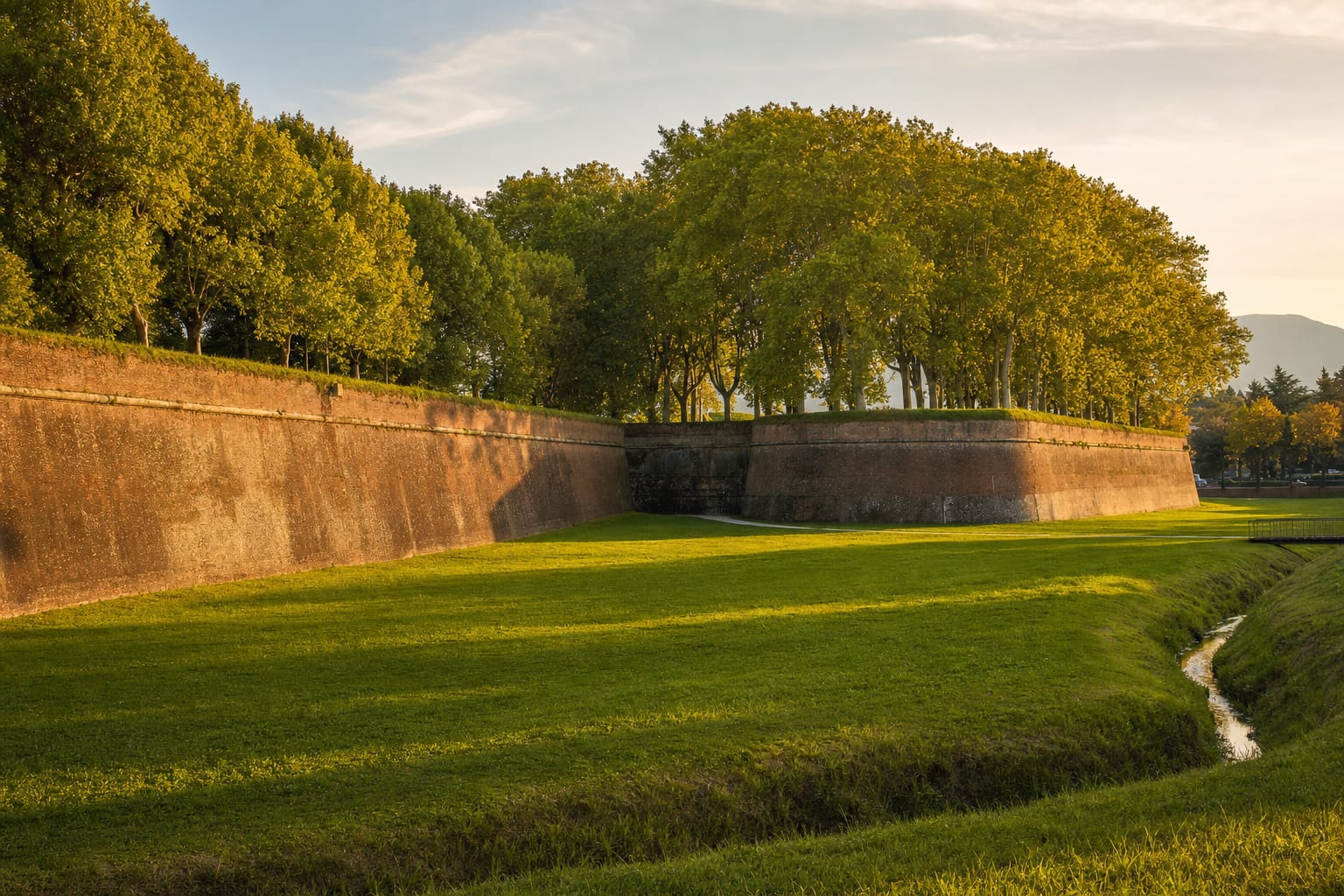 LuccaMura di LuccaA complete Renaissance wall circuit, tree-lined promenade, bastions, city views, cycling, and Lucca's green ring.Built in a long sixteenth- to seventeenth-century campaign for an artillery age, Lucca’s walls combine earth-filled and brick-faced fortification with adapted medieval fabric in a northern stretch. They were converted to civic use in the early nineteenth century; current route conditions require an official check.
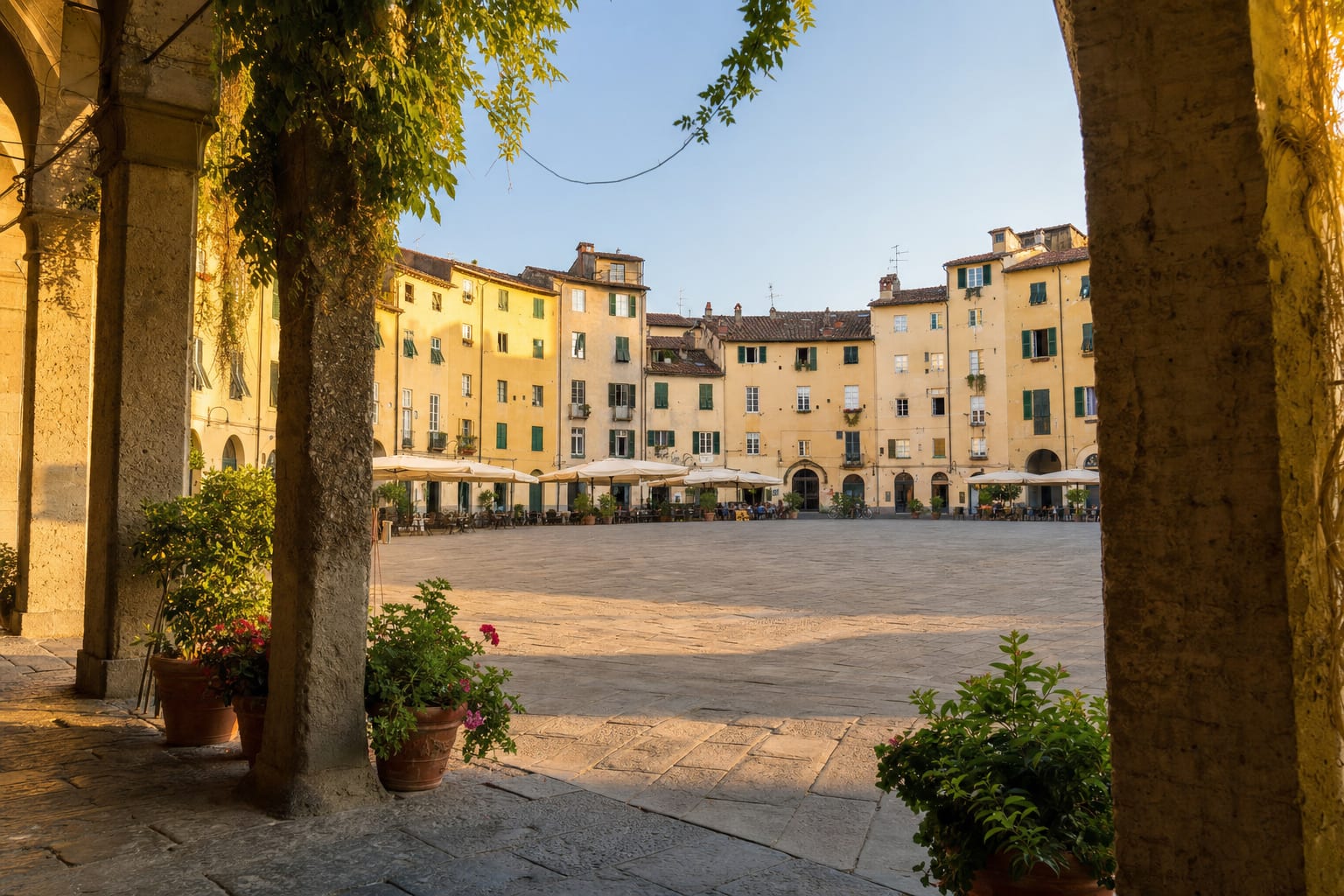 LuccaPiazza dell'AnfiteatroAn oval piazza built over Lucca's Roman amphitheatre, curved house fronts, four entrances, cafes, and a perfect lesson in urban reuse.The Roman amphitheatre was built outside Lucca’s walls in the first or second century CE, later fell into ruin and was absorbed into later buildings. The present square was reshaped through Lorenzo Nottolini’s intervention from 1830; current access requires verification.
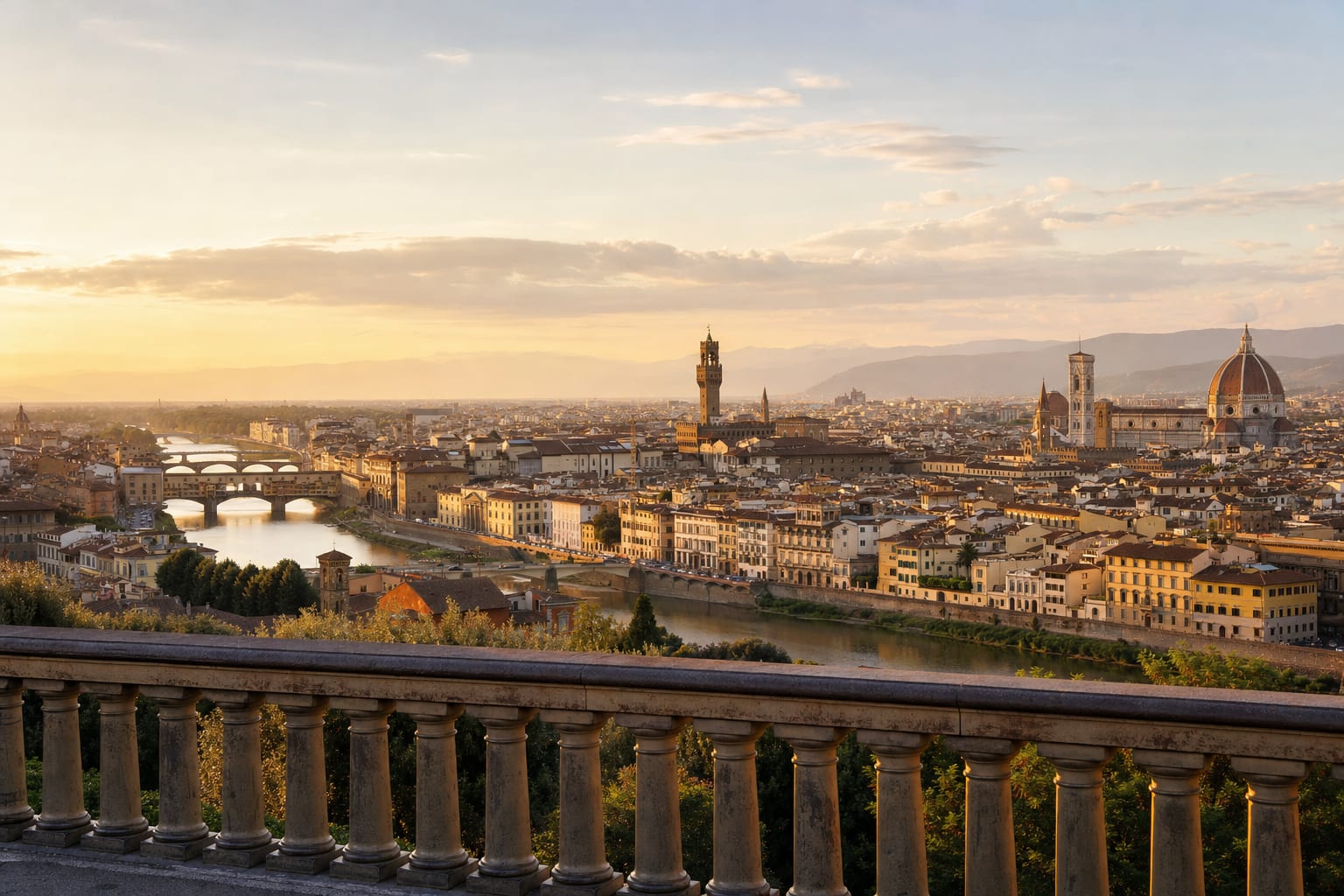 FirenzePiazzale MichelangeloGiuseppe Poggi's panoramic terrace and bronze copies of Michelangelo sculptures.Piazzale Michelangelo is a monumental panoramic terrace on the San Miniato hill, designed by Giuseppe Poggi during Florence's period as capital of Italy. Its centre holds a bronze copy of Michelangelo's David, accompanied by copies of the four Medici Chapel allegories. The piazzale lies within the UNESCO World Heritage property Historic Centre of Florence after the approved 2021 minor boundary modification; it is not separately inscribed.
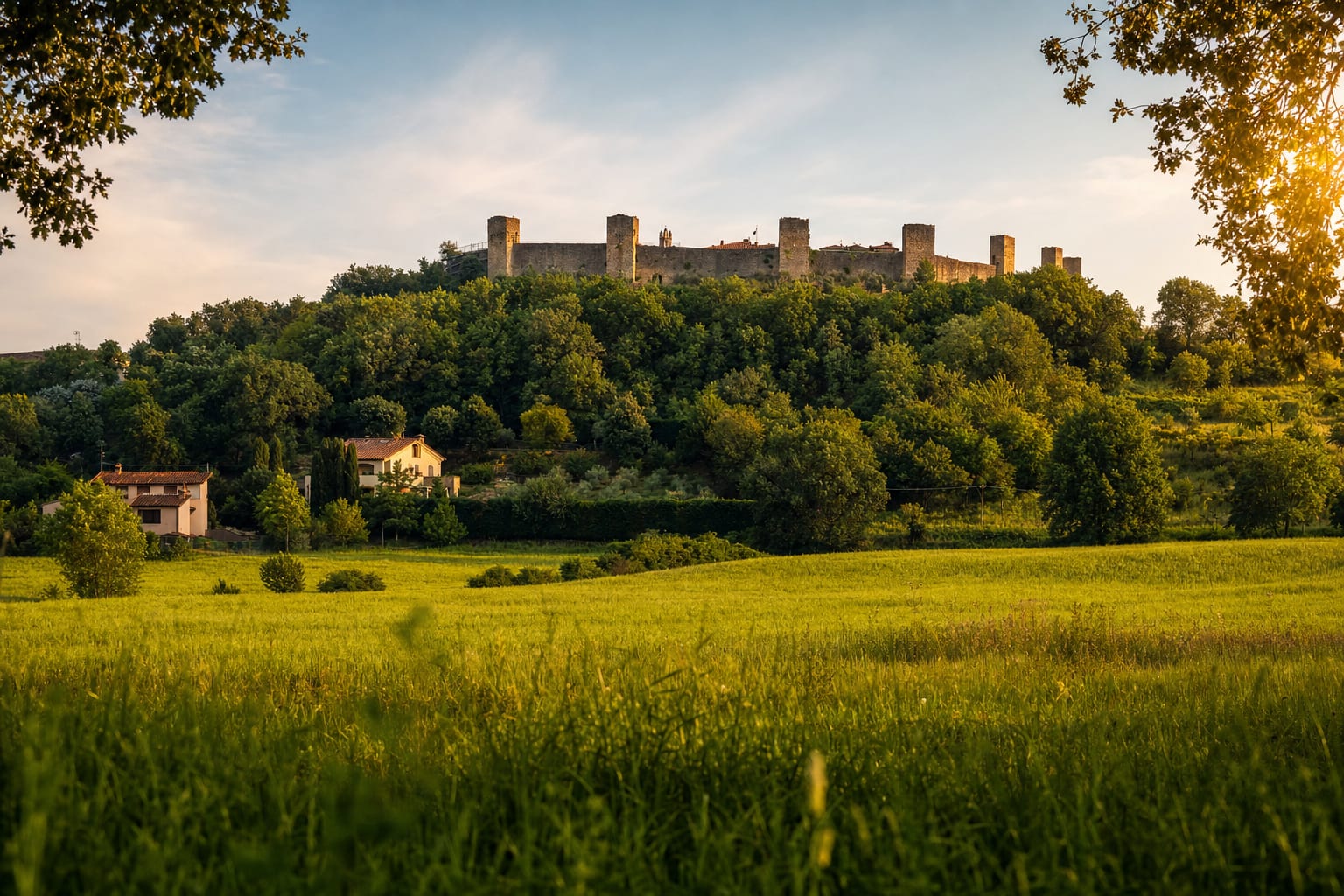 MonteriggioniMura di MonteriggioniA complete medieval crown of walls and towers, still holding its hilltop silhouette above the Via Francigena.Built by Siena from 1214 as a frontier fortification, the circuit follows the hill contour and preserves a layered history of gate defences, artillery adaptations and twentieth-century tower reconstruction. Walkway access and museum activity require a dated official check.
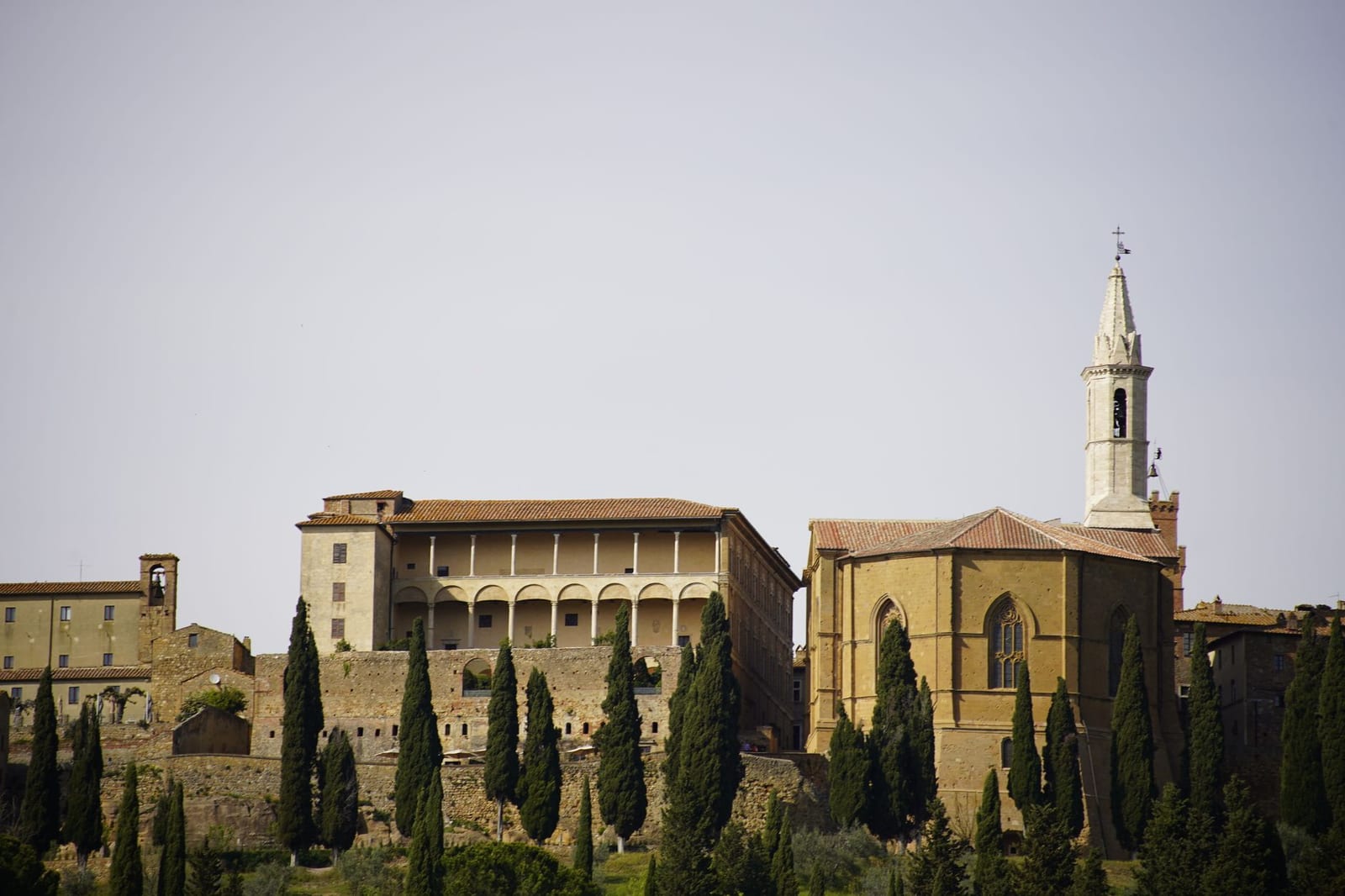 PienzaConcattedrale di Santa Maria Assunta (Duomo di Pienza)Pope Pius II's commission, Bernardo Rossellino's design, a travertine facade and a hall-church interior.Pienza Cathedral is the Co-cathedral of Santa Maria Assunta, commonly called the Duomo di Pienza. It stands on Piazza Pio II as part of Pope Pius II's Renaissance transformation of the town. Commissioned by Pius II and designed by Bernardo Rossellino, it was built in 1459–62 and consecrated on 29 August 1462. The cathedral is within the UNESCO World Heritage property Historic Centre of the City of Pienza, not the separate Val d'Orcia property and not a separately inscribed site.
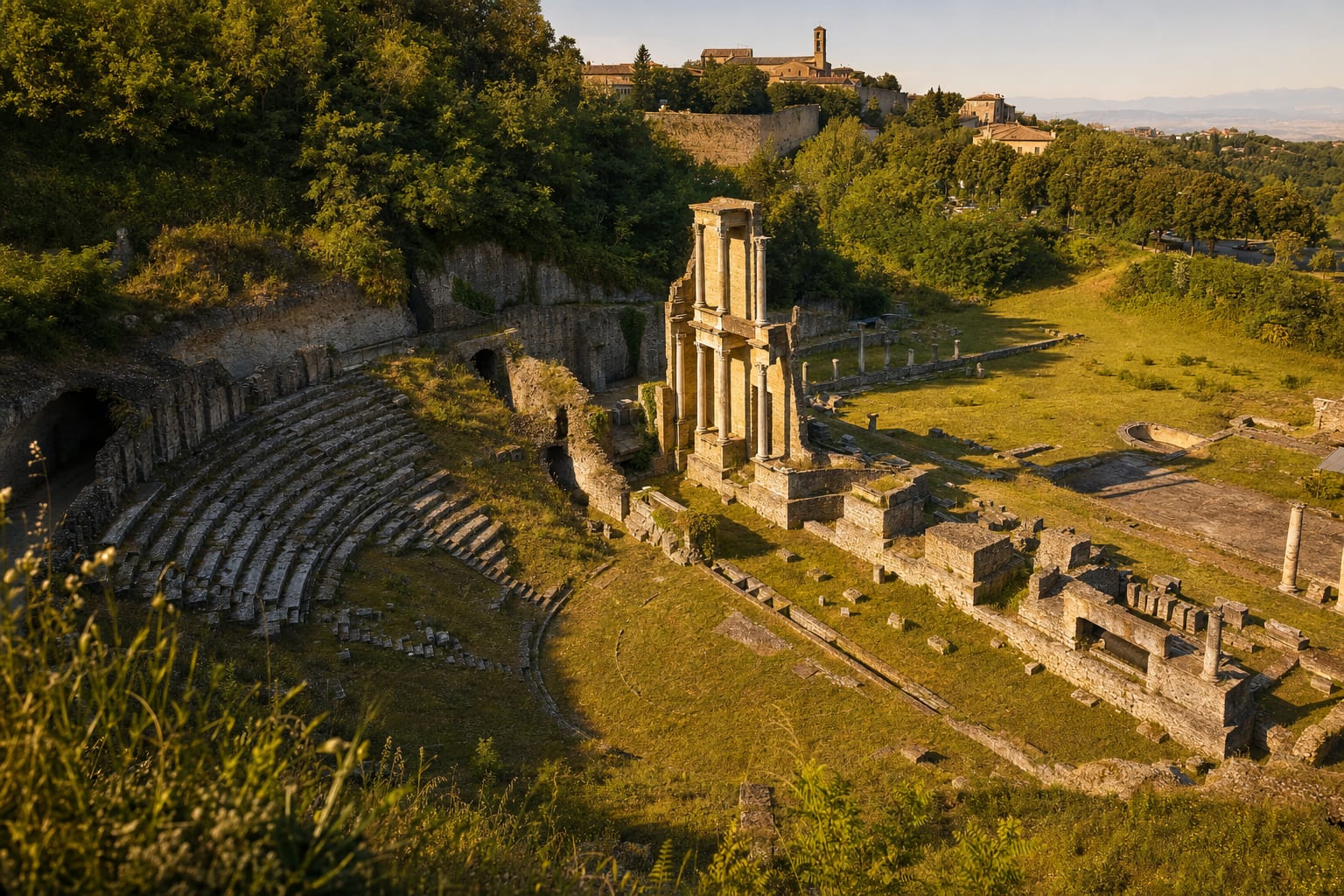 VolterraTeatro Romano di VolterraFirst-century BC theatre, Vallebuona excavations, Etruscan hill town setting, restored colonnadeThe theatre forms part of Volterra's Vallebuona archaeological area, which also includes remains of a fourth-century bath building. The Enrico Fiumi acropolis park is a separate archaeological entity. Current access and conservation conditions require a dated official check.
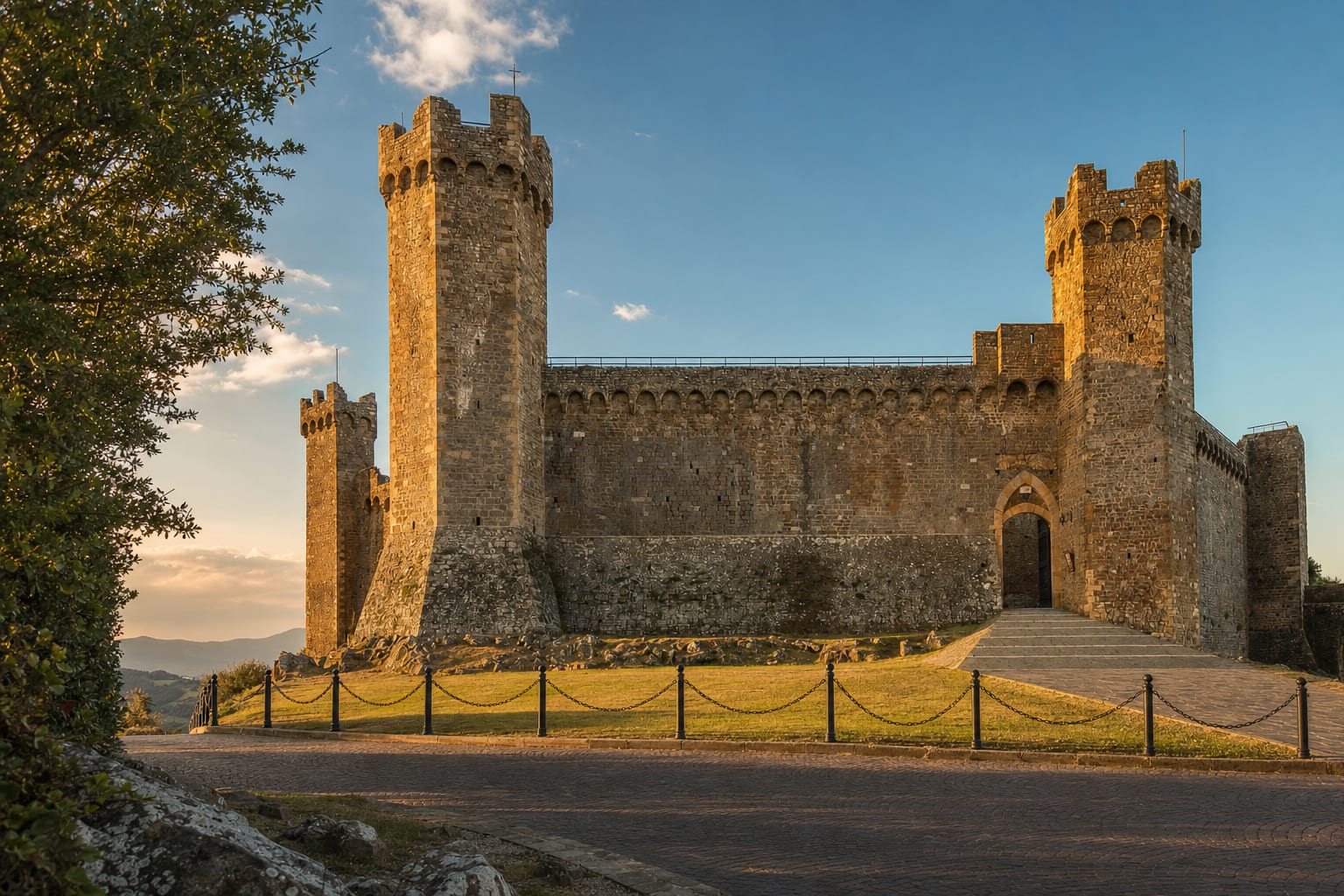 MontalcinoFortezza di MontalcinoFourteenth-century pentagon, last Sienese stronghold, rampart walks, Brunello country viewsConstruction ordered by Siena began in 1361. The fortress forms part of Montalcino’s defensive history, but it is distinct from the town, its wine denomination and the wider Val d’Orcia landscape. Current access and visitor arrangements require a dated official check.
- PiombinoParco Archeologico di Baratti e PopuloniaPopulonia, Etruscan iron production, necropoleis, acropolisThe Archaeological Park of Baratti and Populonia spans the slopes of the Piombino promontory and the Gulf of Baratti. It preserves the Etruscan and Roman city of Populonia through distinct lower necropolis and industrial areas, and an upper acropolis with sacred, domestic and Roman urban remains. It is an archaeological landscape, not a single excavation or a beach attraction.
Prenota una visita
Tour da prenotare in Toscana
Confrontati dai nostri editor, tra i vari operatori.
Prenotando da questi link Italia Magnifica può ricevere una commissione, senza costi per te.
GetYourGuide
Uffizi and Accademia Combined Tour
Best when you want the Uffizi and David treated as one Renaissance argument, not two disconnected ticket slots.
- 6 h
da 119 €Prenota questo tourGetYourGuide
Uffizi Gallery Priority Entrance Ticket
The straightforward way in: timed entry, skip the ticket line, wander at your own pace. Book the first morning slot and you will have the Botticelli rooms nearly to yourself.
da 32 €Prenota questo tourTheTourGuy
Uffizi Gallery Semi-Private Tour
Capped at six guests, which changes everything about how long you can stand in front of the Primavera. The premium pick for a first visit.
- 2 h 30 min
da 129 €Prenota questo tourGetYourGuide
Uffizi Small-Group Guided Tour
Two hours with an art historian who knows which fifteen of the two thousand works deserve your attention, and why the Tribuna still stops people mid-sentence.
- 2 h
da 99 €Prenota questo tourViator
Pisa/Lucca from Livorno
- 9 h
- 5,0★ · 4 recensioni
da 730 €Prenota questo tour- 3 h
- 5,0★ · 6 recensioni
da 250 €Prenota questo tour



Città
Città per città
Dove si concentrano i monumenti in Toscana.