

All the monuments, city by city
The landmarks and masterpieces worth planning a day around.
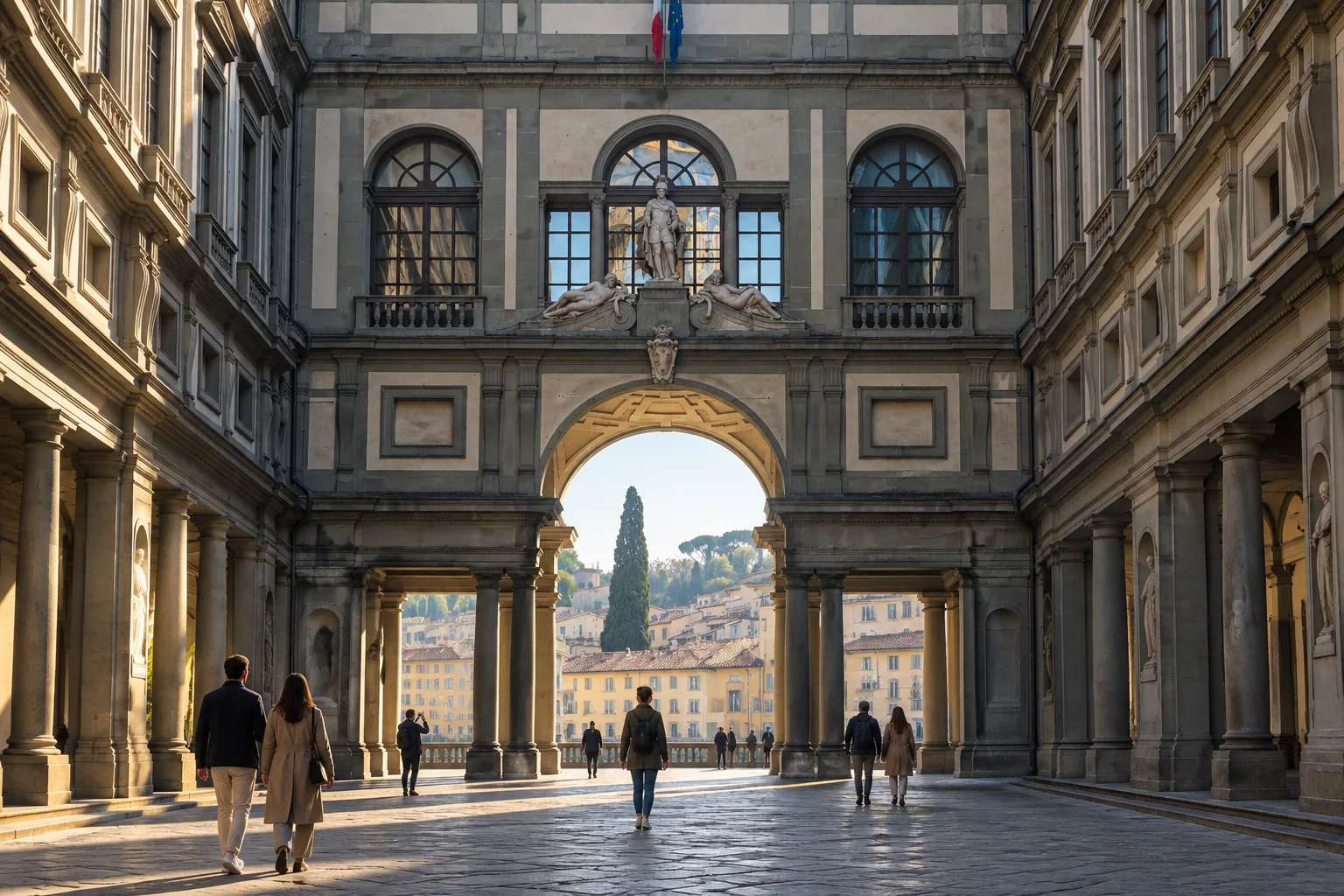
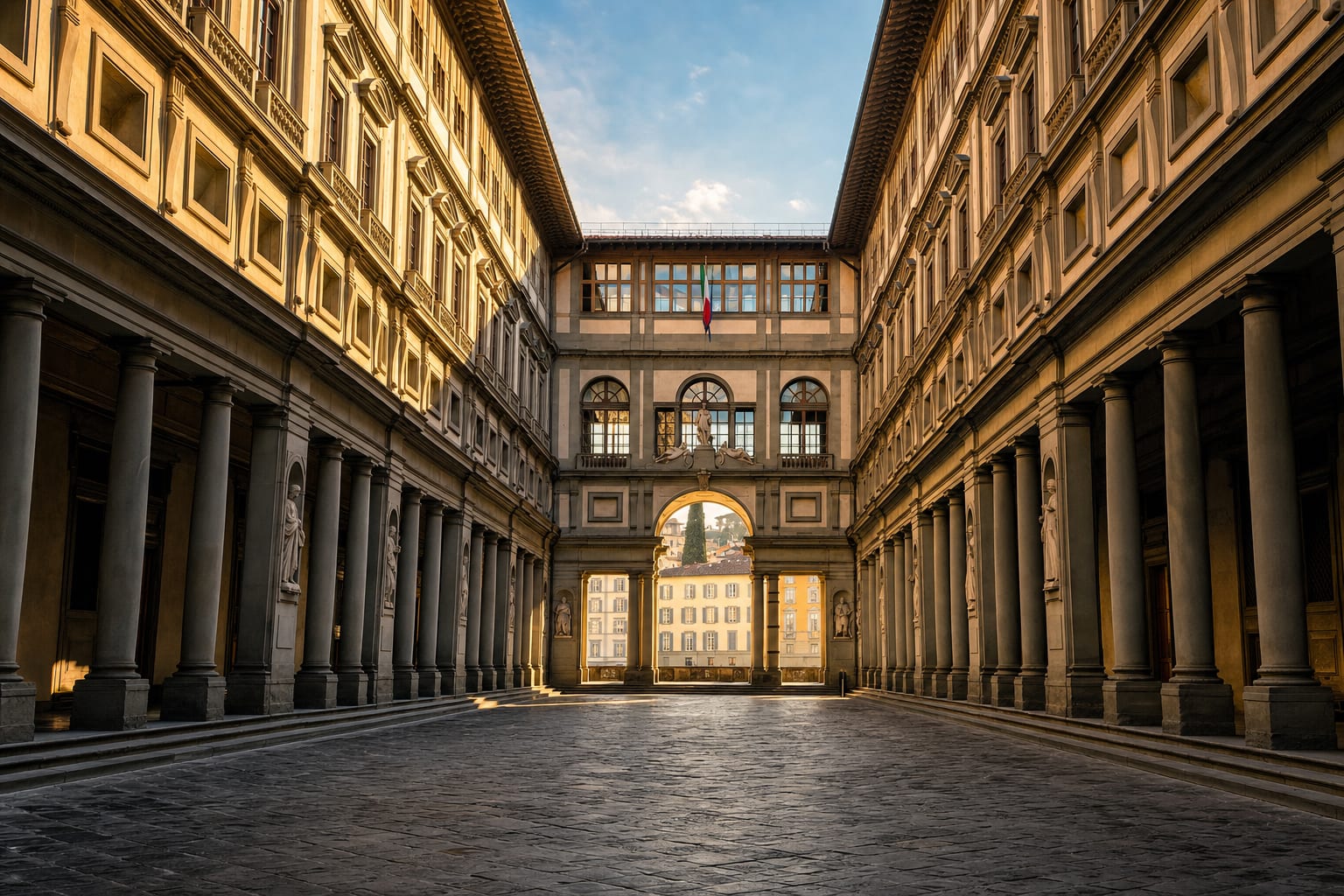 FlorenceUffizi GalleryBotticelli's Birth of Venus and Primavera, Leonardo, Caravaggio, the Vasari Corridor building<p>The Uffizi is not simply a museum with famous paintings. It is Florence's old machinery of power turned into a museum, a long Vasari building made for Medici administration and later filled with the art that helped define the city's idea of itself. Its corridors still feel ceremonial, lined with ancient sculpture from the Medici collection, while the rooms open into one of the world's densest sequences of medieval and Renaissance painting.</p><p>Most visitors come for Botticelli, and rightly so. But the Uffizi is more powerful when read as a progression: gold ground altarpieces giving way to bodies with weight, perspective opening space, portraits sharpening into psychology, sacred scenes becoming human drama. Giotto, Piero della Francesca, Filippo Lippi, Botticelli, Leonardo, Raphael, Michelangelo and Caravaggio are not isolated trophies here. They form an argument about how Western art learned to see.</p><p>The practical challenge is emotional as much as logistical. This is a museum that can exhaust you by abundance. Book ahead, choose your priorities, and let a few rooms matter deeply instead of trying to conquer the whole collection. If you are pairing it with the Accademia or the Duomo, put the Uffizi first thing in the day, while your eyes are still fresh.</p>Plan the visit
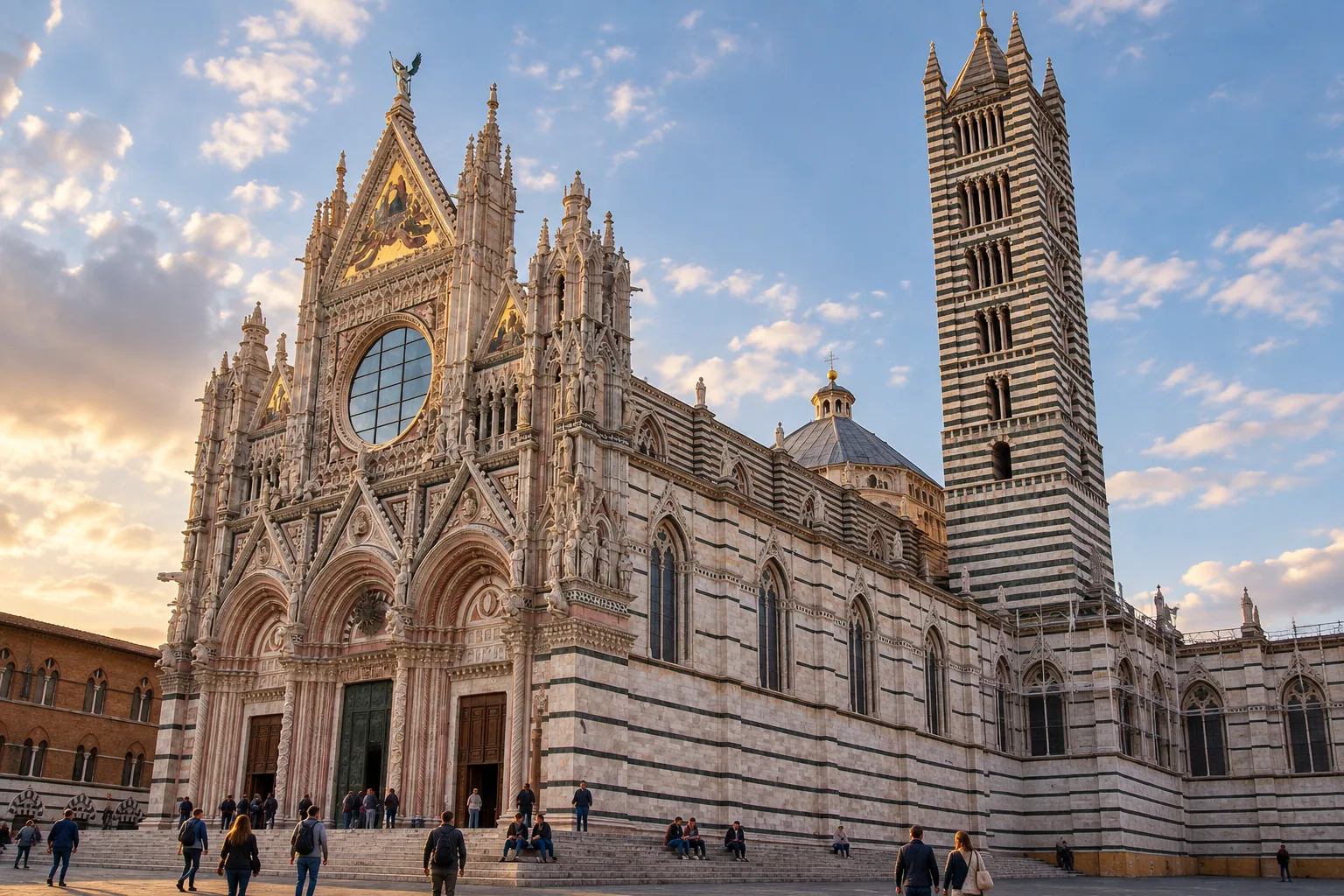 SienaSiena CathedralThe inlaid marble floor, Nicola Pisano's pulpit, the unfinished Nuovo Duomo wall, Duccio's MaestàSiena Cathedral, dedicated to Santa Maria Assunta, was built mostly between the 1220s and the 1380s in banded black and white marble that repeats across the whole complex. Its floor is the real astonishment: 56 inlaid and engraved marble panels made between the 14th and 19th centuries, most kept covered and uncovered only for a few weeks each summer to protect them from footsteps. Nicola Pisano carved the pulpit between 1265 and 1268 with crowded, dramatic New Testament scenes, one of the first great works of Gothic sculpture in Italy. Ambitious plans in the 1330s to triple the building's size into a new nave were abandoned after the Black Death of 1348 devastated Siena; the unfinished wall of that Nuovo Duomo still stands beside the cathedral as a visible monument to the plan that never happened.
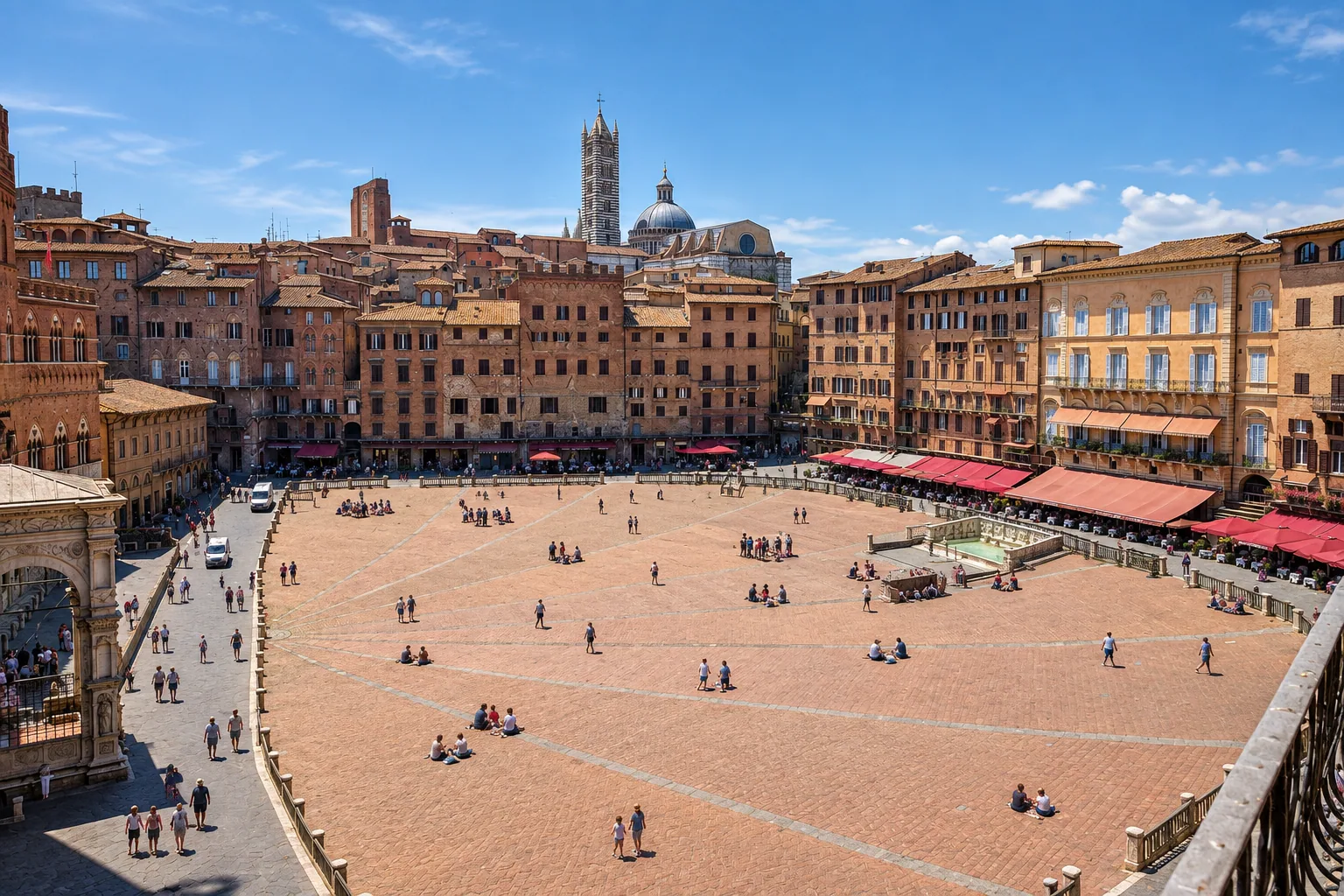 SienaPiazza del CampoIts shell shape, the Palio di Siena horse race, Fonte Gaia, Palazzo Pubblico and the Torre del MangiaPiazza del Campo is the shell shaped square where Siena has staged its civic life since the late 12th century, when the comune fused two market areas into one sloping, fan shaped public space. Nine sections of paving radiate from the Fonte Gaia at the top, said to represent the nine-member government that ruled medieval Siena, the Governo dei Nove. Twice a year, on 2 July and 16 August, the square becomes a dirt racetrack for the Palio di Siena, a 90 second bareback horse race between the city's contrade that draws crowds packed shoulder to shoulder against the buildings. On any ordinary day it works simply as the best place in the city to sit, eat gelato, and watch Palazzo Pubblico's Torre del Mangia change color with the light.
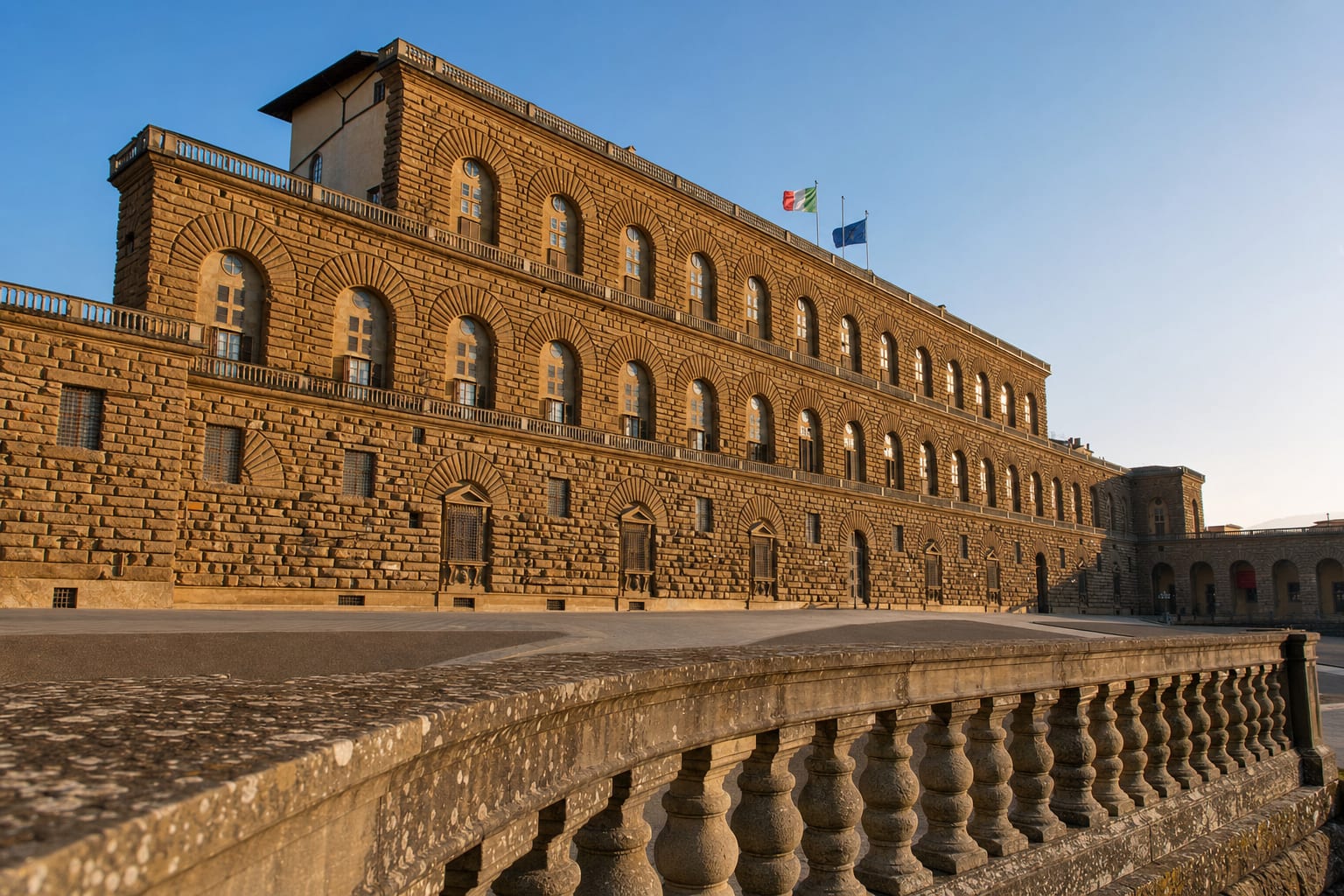 FlorencePitti PalaceThe Palatine Gallery's Raphaels, the Royal Apartments, the Silver Museum, its scale and Boboli Gardens behind itPitti Palace began around 1458 as the private residence of the banker Luca Pitti, a display of wealth so large that Florentines joked its windows alone could swallow the facade of a rival family's house. The Medici bought it in 1549 and expanded it into the seat of the grand-ducal court, later passed through Habsburg-Lorraine and Savoy hands before becoming a museum complex under state ownership. Today its facade of rusticated stone contains several distinct collections run by the Uffizi Galleries: the Palatine Gallery's Raphaels and Titians hung salon style in gilded rooms, the Royal Apartments furnished as the Savoy kings left them, and separate museums of silver, costume, porcelain and modern art. The scale is deliberately overwhelming; the palace was built to make visitors feel small; the trick still works.
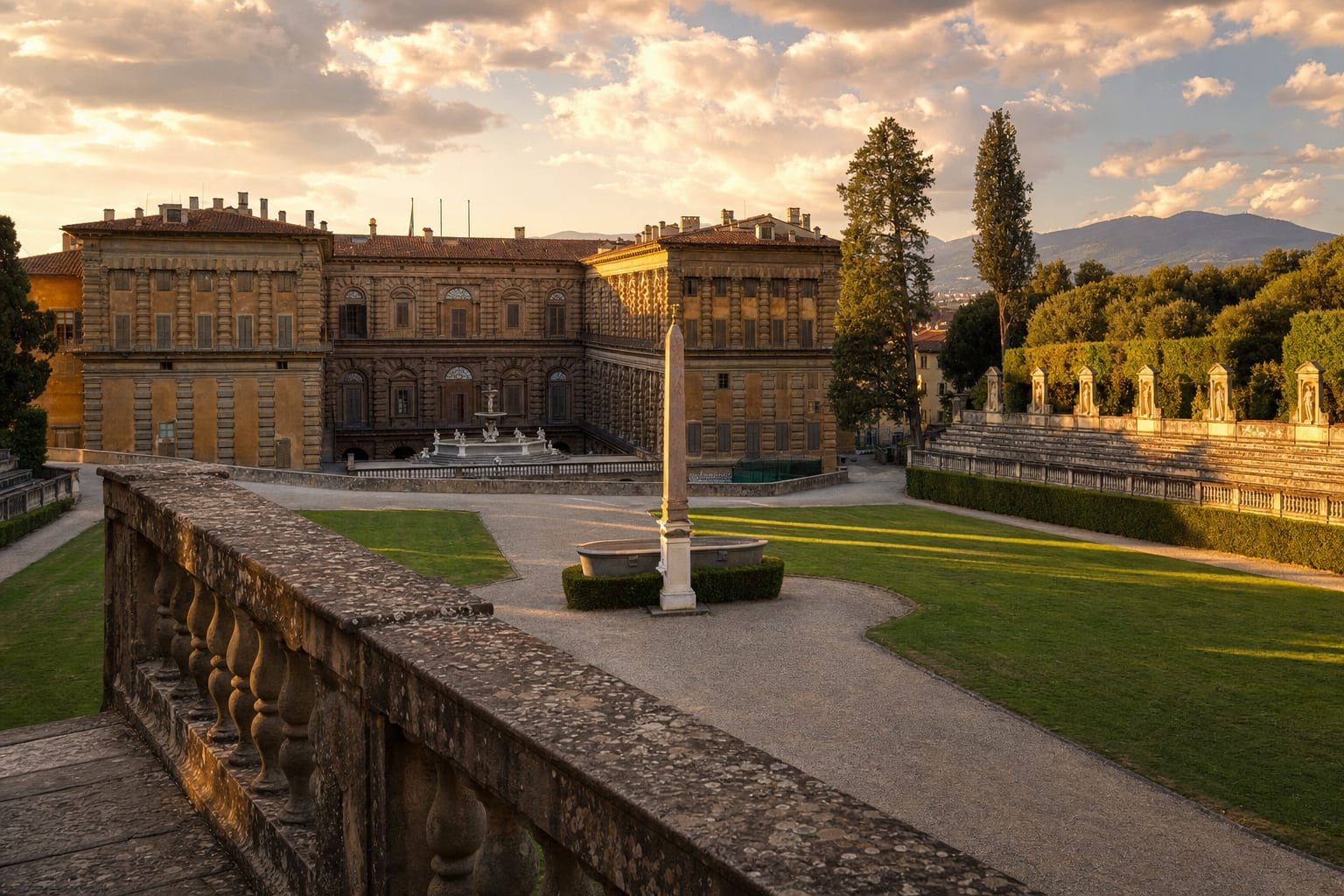 FlorenceBoboli GardensThe Amphitheatre, Buontalenti's Grotta Grande, cypress avenues, fountains, sculpture, city viewsBoboli Gardens began in 1549 when Eleonora di Toledo, Cosimo I's wife, hired the sculptor and landscape designer Niccolò Tribolo to lay out formal grounds behind the newly purchased Pitti Palace. What grew over the following two centuries under successive Medici and Lorraine rulers is one of Italy's founding examples of the Italian garden style, later copied across European courts: long cypress avenues aligned on artificial perspectives, an amphitheatre carved into the hillside for court spectacles, and the Grotta Grande, where Buontalenti hid unfinished Michelangelo sculptures among artificial stalactites. Climbing the terraces rewards you with the closest thing Florence has to an aerial view without a queue, looking back over the Pitti Palace roofline to the Duomo's dome in the distance.
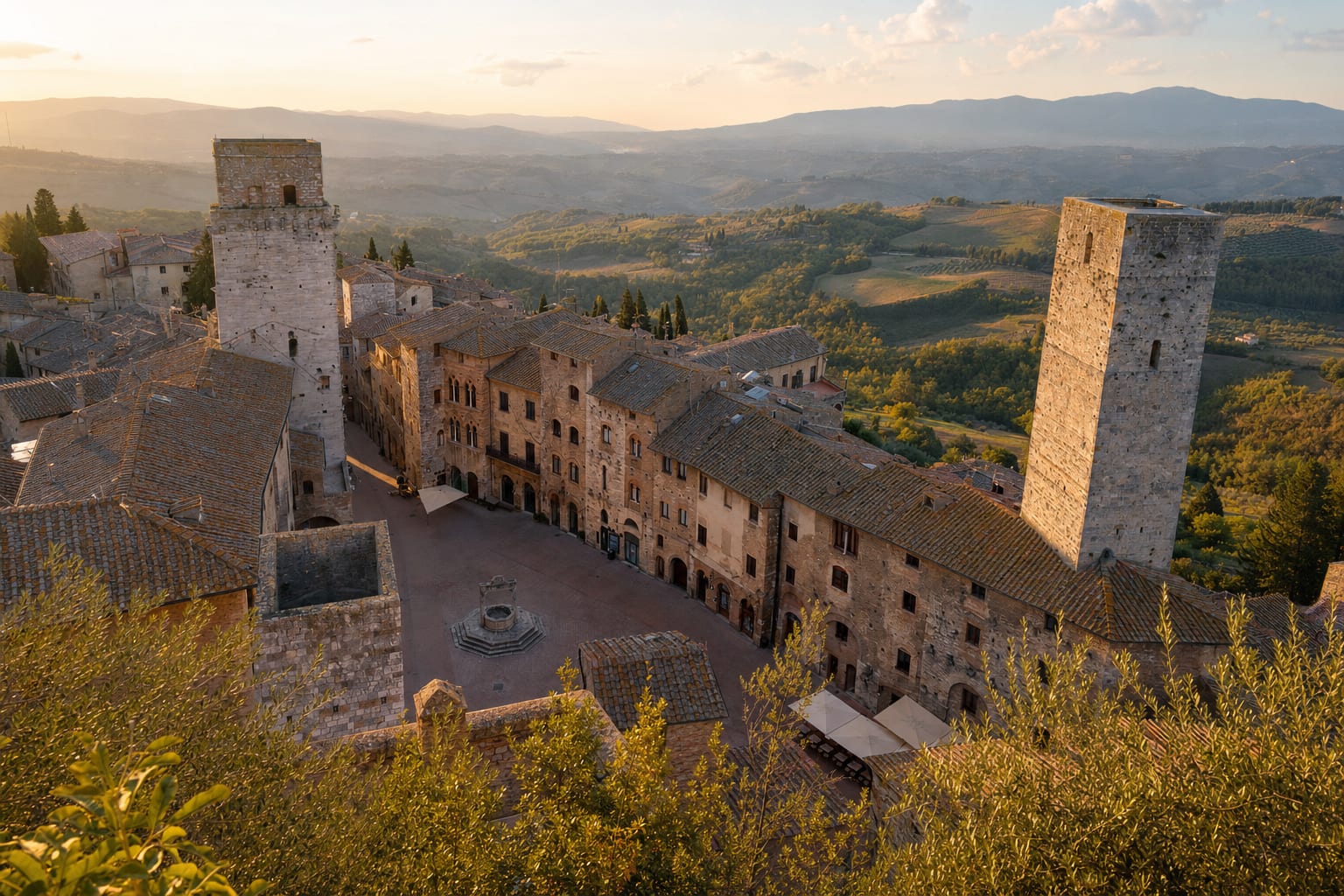 San GimignanoUNESCOHistoric Centre of San GimignanoMedieval towers, Piazza della Cisterna, Torre Grossa, the Collegiata's frescoes, Vernaccia wineSan Gimignano is famous for its towers, but the towers are only the first sentence. Medieval Sangimignanese families raced to build them taller than their neighbors, both to show off and to survive urban warfare; of an estimated 72 built between the 12th and 13th centuries, 14 still stand today. Walk in through the gates and the town narrows into stone lanes climbing toward Piazza della Cisterna and Piazza del Duomo, where civic and sacred power face off across a compact public stage. Torre Grossa, the tallest survivor at 54 meters, still punctuates the skyline, and inside the Collegiata's frescoed interior reminds you this was a working commune with money and devotional intensity, not a backdrop. UNESCO protects the town for the rare completeness of that medieval skyline, prosperous first on Via Francigena pilgrim traffic and then on its own saffron and wine trade.
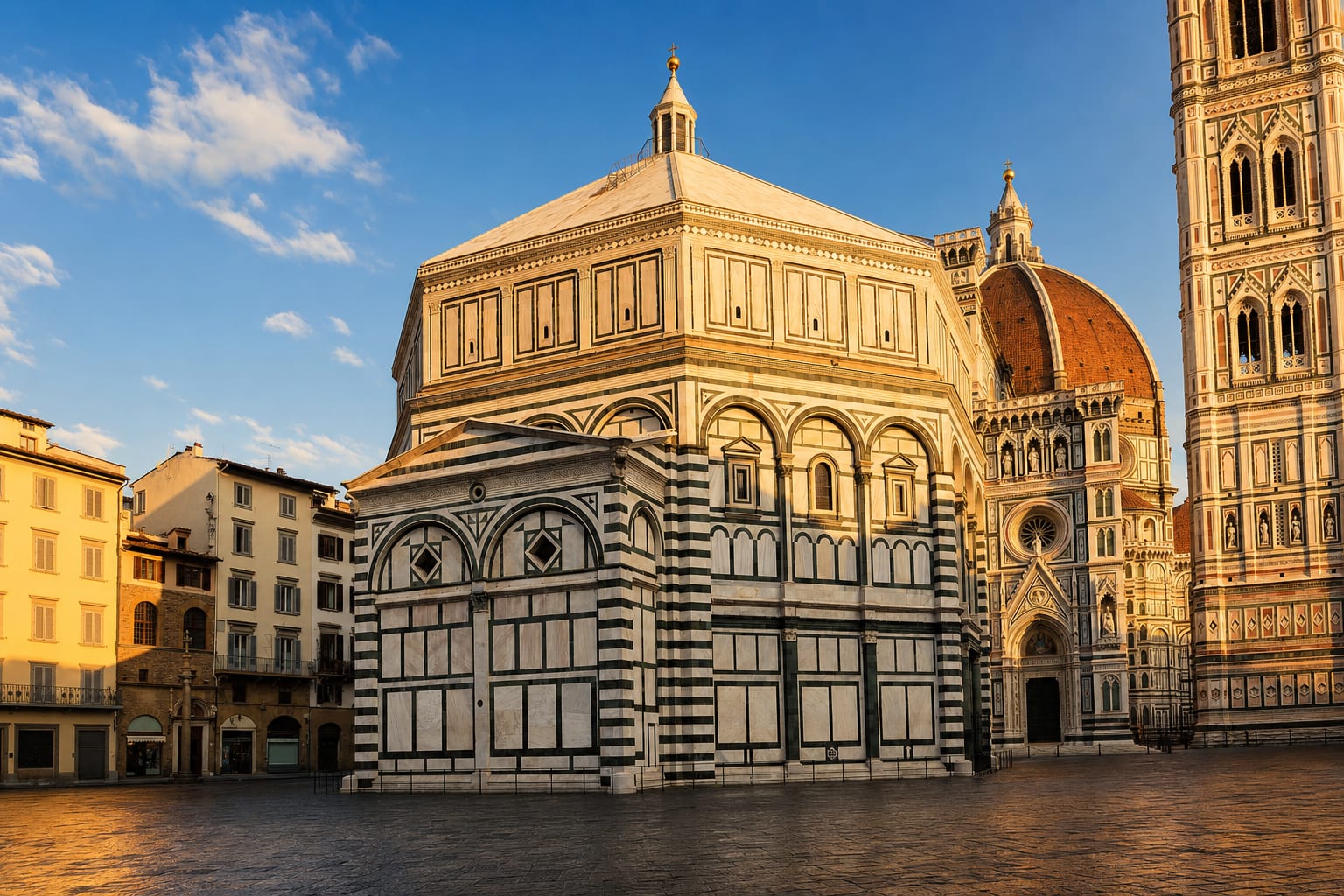 FlorenceFlorence BaptisteryGhiberti's Gates of Paradise, Andrea Pisano's doors, the Last Judgment mosaic ceiling, Dante's baptismThe octagonal Baptistery of San Giovanni faces Florence's cathedral across Piazza del Duomo and predates it by centuries; Dante was baptized here and wrote about it in the Divine Comedy. Its greatest fame rests on three sets of bronze doors: Andrea Pisano cast the south doors in 1330, Lorenzo Ghiberti won a famous 1401 competition against Brunelleschi for the north doors, and his east doors, made between 1425 and 1452, so impressed Michelangelo that he reportedly called them the Gate of Paradise, the name they still carry. What visitors see today on the east side are copies; Ghiberti's originals, cleaned after the catastrophic 1966 flood, now live protected in the Opera del Duomo Museum. Inside, a 13th century gold ground mosaic ceiling depicts the Last Judgment over the octagonal font where the city's children were christened for centuries.
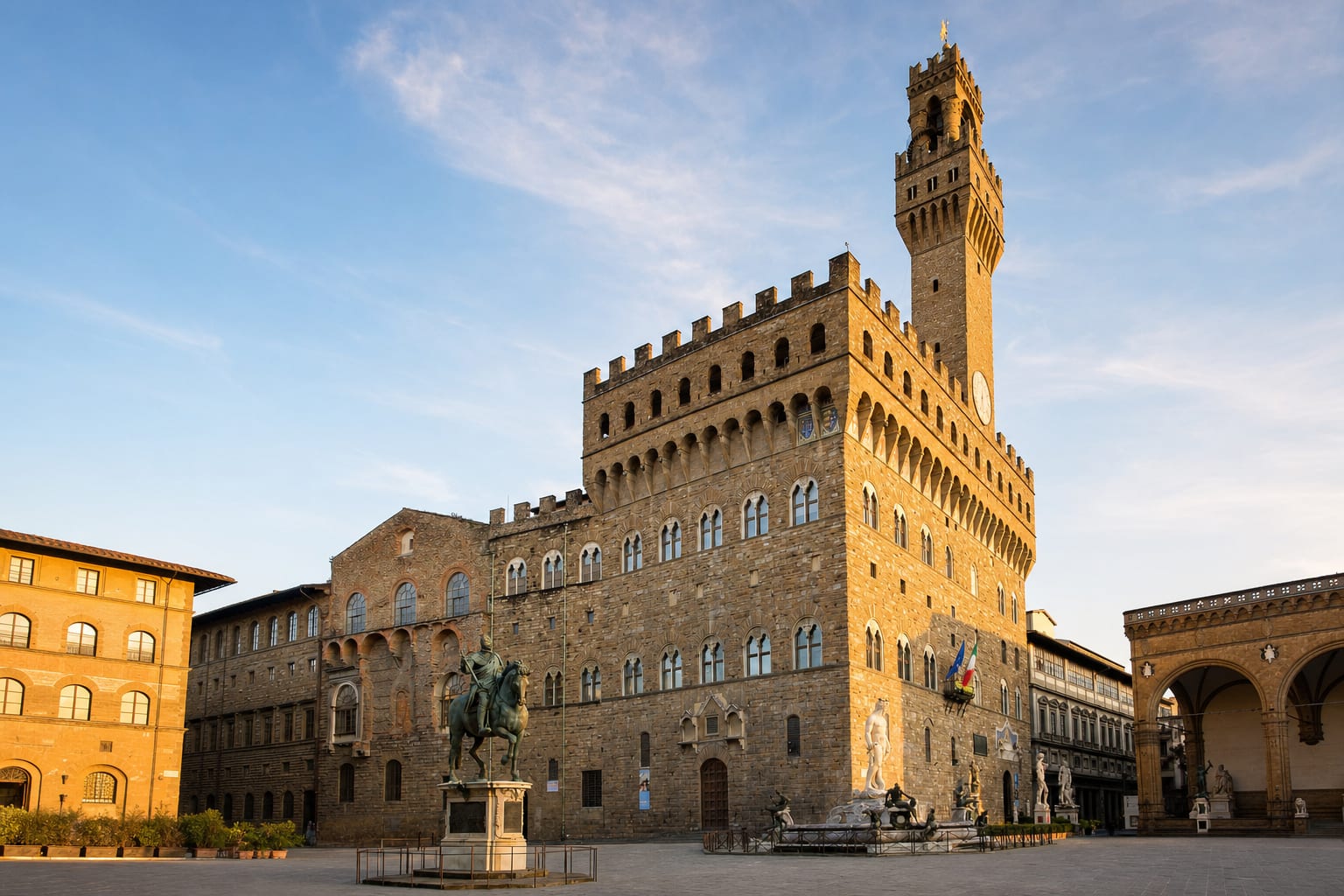 FlorencePalazzo VecchioArnolfo's off-center tower, the Salone dei Cinquecento, Medici apartments, Roman theatre remains belowPalazzo Vecchio has served as the seat of Florence's government since 1299, making it one of the longest continuously used town halls in Europe; the mayor's office still operates from part of the building today. Arnolfo di Cambio designed the fortress-like original, its 94 meter asymmetric tower placed off-center because it incorporates an earlier Ghibelline family tower the builders refused to demolish. Cosimo I de' Medici moved in during the 1540s and had Giorgio Vasari transform the interior into the Salone dei Cinquecento, a vast hall built for Florence's short-lived republican council and later covered in Vasari's own propagandistic ceiling paintings glorifying Medici rule. Beneath the palace, excavated Roman theatre remains connect the building to the city's ancient foundations, a layered history visitors can walk through on themed tours.
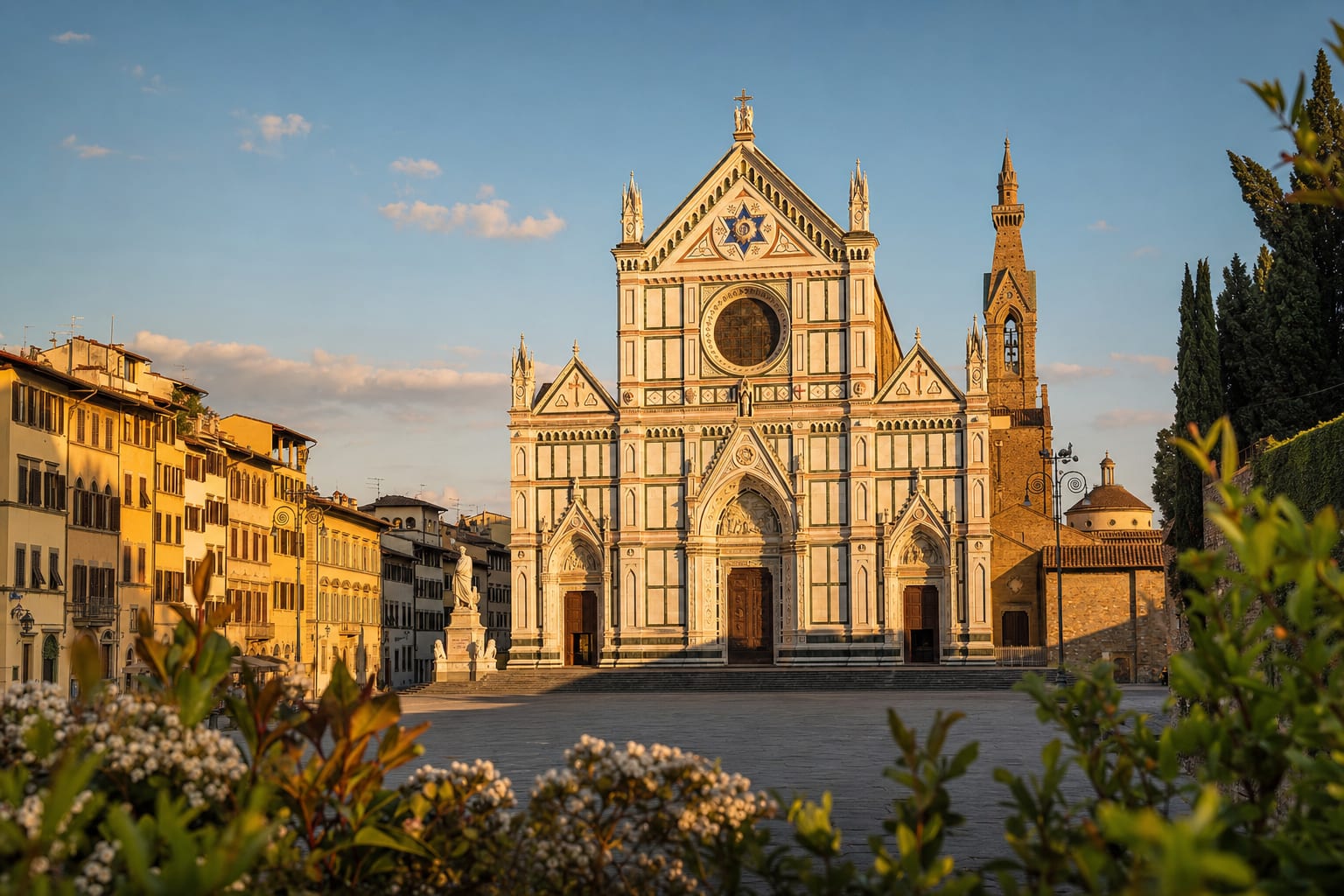 FlorenceBasilica of Santa CroceTombs of Michelangelo, Galileo and Machiavelli, Giotto's chapels, Brunelleschi's Pazzi ChapelSanta Croce is Florence's Franciscan basilica, founded around 1294 or 1295 and traditionally, if cautiously, attributed to Arnolfo di Cambio; the current building was consecrated only in 1443. Its Latin-cross interior holds the largest concentration of funerary monuments in Italy, earning it the nickname Temple of the Italian Glories: Michelangelo, Galileo, Machiavelli and the composer Rossini are all buried here, alongside a cenotaph for Dante, who never returned from exile to be buried in his home city. Giotto and his workshop frescoed the Bardi and Peruzzi chapels with scenes from the lives of Saint Francis and Saint John, while Brunelleschi's Pazzi Chapel in the adjoining cloister is considered an early masterpiece of Renaissance architectural clarity. In 1566, Vasari tore out the church's original rood screen during a Counter-Reformation renovation, permanently changing how the nave reads today.
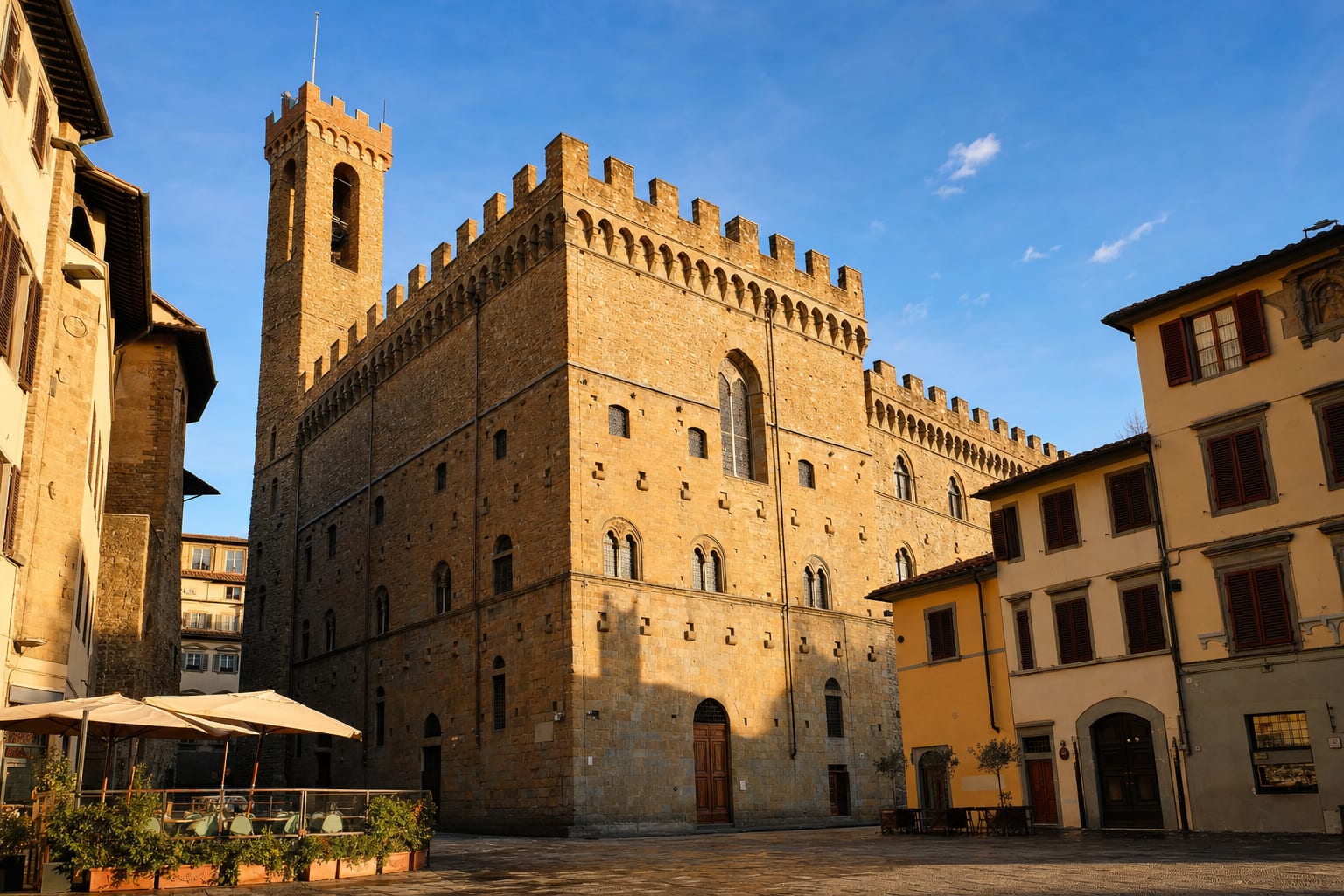 FlorenceBargello National MuseumDonatello's David and Saint George, early Michelangelo sculpture, Renaissance medals and ivoriesThe Bargello occupies Florence's oldest surviving public palace, built from 1255 as the seat of the Capitano del Popolo and later used as the residence of the city's chief of police, the Bargello, whose name it still carries; prisoners were once executed in its severe stone courtyard. In 1865, the newly unified Italy converted it into the country's first national museum devoted to sculpture, and its collection still reads as a rebuttal to anyone who thinks Florentine art is only about painting. Donatello's bronze David, the first freestanding nude since antiquity, stands here, along with his marble Saint George; two young Michelangelo works, a drunken Bacchus and a tondo of the Madonna, show the sculptor before Rome made him famous. Add Renaissance medals, ivories, ceramics and enamels, and the Bargello becomes the best place in the city to see sculpture without the crowds pressing in.
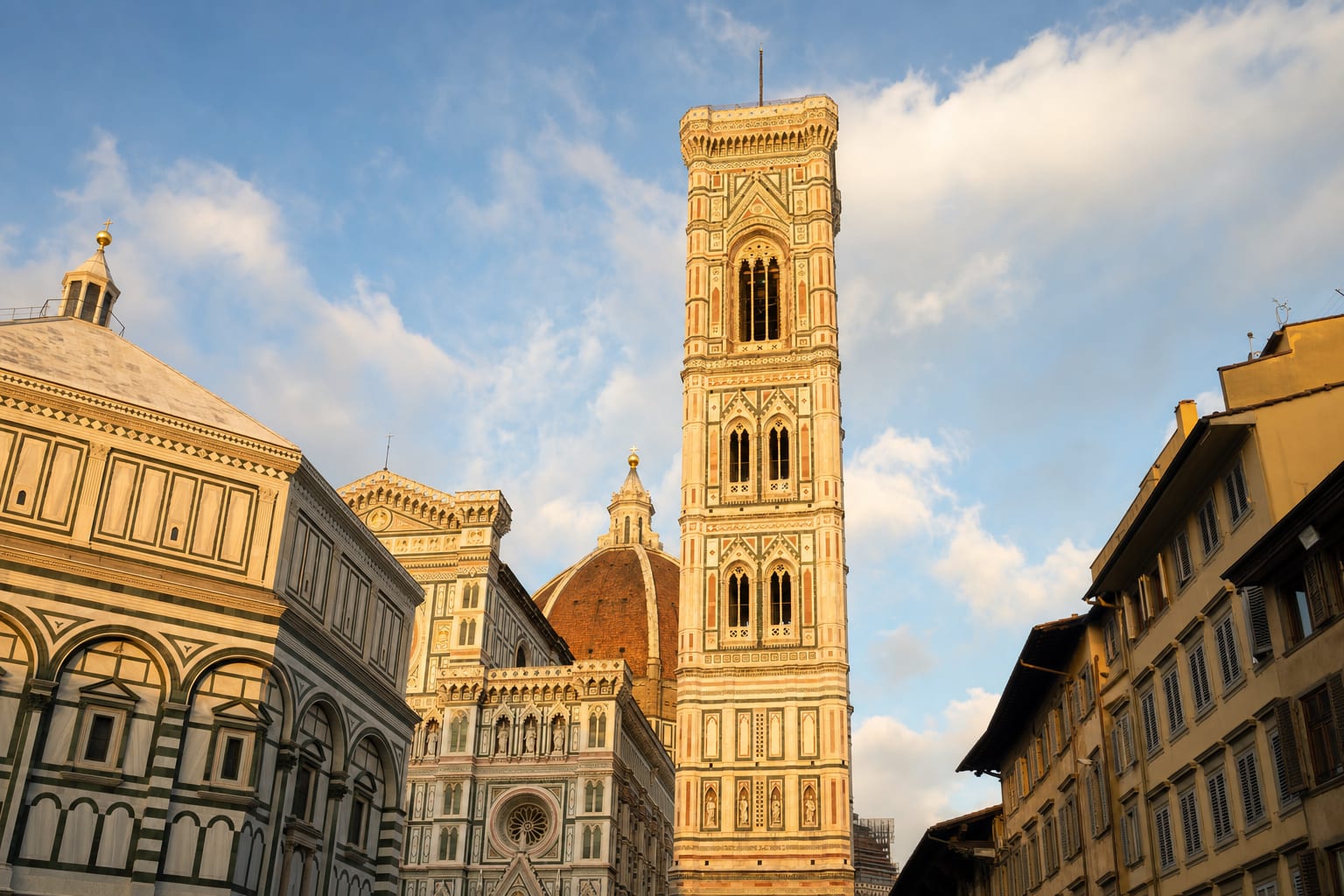 FlorenceGiotto's Campanile84.7-meter Gothic bell tower, colored marble facing, relief panels, close-up views of the domeGiotto's Campanile is the freestanding bell tower of Florence's cathedral, begun in 1334 when the painter, already in his late 60s and famous as the man who taught Western art to paint real emotion, was appointed chief architect of the whole cathedral works, a largely honorary title he held for barely three years before his death. Andrea Pisano and then Francesco Talenti carried the tower on through changed designs, finishing it in 1359 at 84.7 meters on a base only about 15 meters square, faced in the same white, green and pink marble as the cathedral and Baptistery. Hexagonal and lozenge relief panels near the base, depicting the arts, planets and virtues, are now copies; Andrea Pisano's originals live in the Opera del Duomo Museum. Climbing its 414 steps, with no lift and no crowds thinned by timed dome entry, gives one of the clearest views in Florence straight onto Brunelleschi's dome itself.
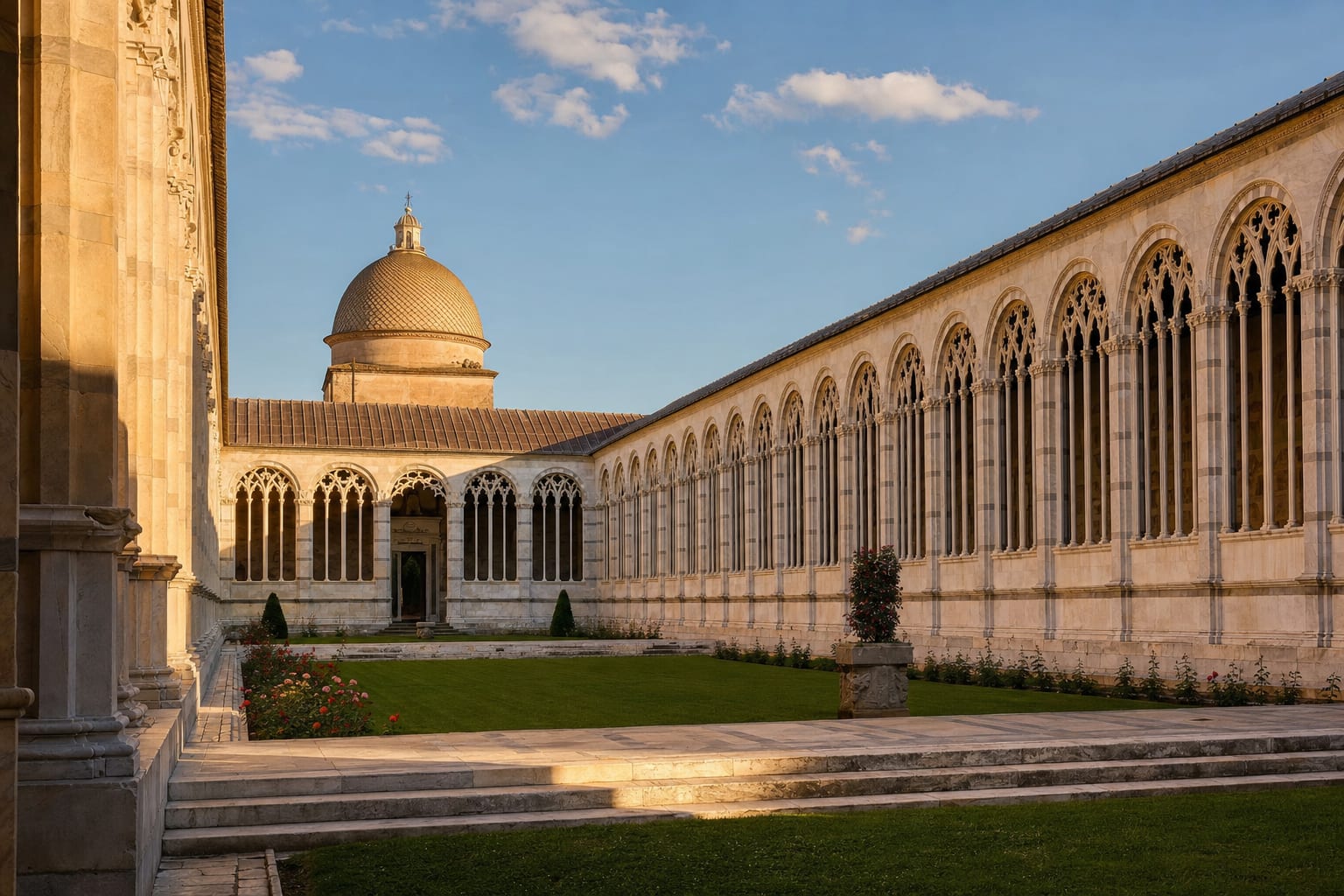 PisaCamposanto MonumentaleBuffalmacco's Triumph of Death frescoes, its 1944 wartime fire, the sinopie preparatory drawingsCamposanto Monumentale is the long, marble-walled cemetery that closes the north side of Pisa's Piazza dei Miracoli, built from 1277 by Giovanni di Simone to gather graves that had previously been scattered loose around the cathedral. Legend holds its inner earth was shipped from Golgotha during the Crusades, which made burial here especially prized among medieval Pisans. Its cloistered galleries once held one of Italy's great fresco cycles, including Buonamico Buffalmacco's harrowing Triumph of Death and Last Judgment, painted after the Black Death of 1348. A bombing raid in 1944 set the roof on fire, melting lead and badly damaging the frescoes; the disaster inadvertently revealed the underdrawings, called sinopie, preserved beneath and now displayed in a dedicated museum next door, a rare case where wartime destruction uncovered a whole new layer of art history.
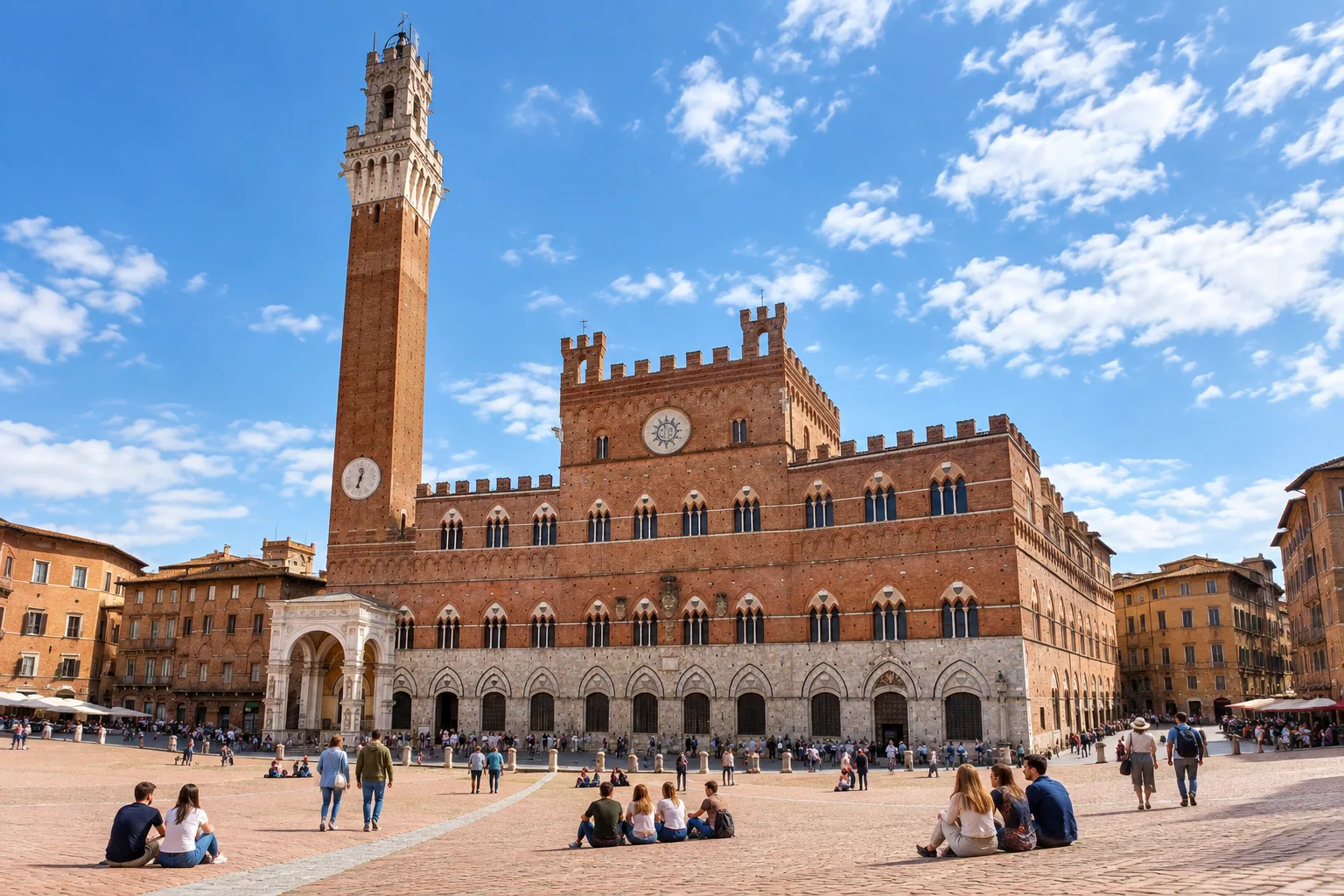 SienaTorre del MangiaIts 87-meter height matching the cathedral tower, the view over Piazza del Campo, its Mangiaguadagni legendTorre del Mangia rises from Palazzo Pubblico on Piazza del Campo as Siena's answer to the towers of rival Tuscan hill towns, deliberately built, according to municipal tradition, to exactly match the height of Siena Cathedral's bell tower so that neither religious nor civic power could claim to stand taller. Payments recorded from 1338 through 1349 document its construction under a team of builders, giving it a slender brick shaft topped by a white stone crown designed in part by Lippo Memmi. Its name supposedly commemorates a lazy first bell ringer nicknamed Mangiaguadagni, or eat-the-profits, whose statue still stands nearby. Four hundred narrow steps lead to the top, and the reward at 87 meters is a view that lays out the whole shell shaped Campo below, along with the greater Sienese countryside stretching toward the hills of the Chianti and Crete Senesi.
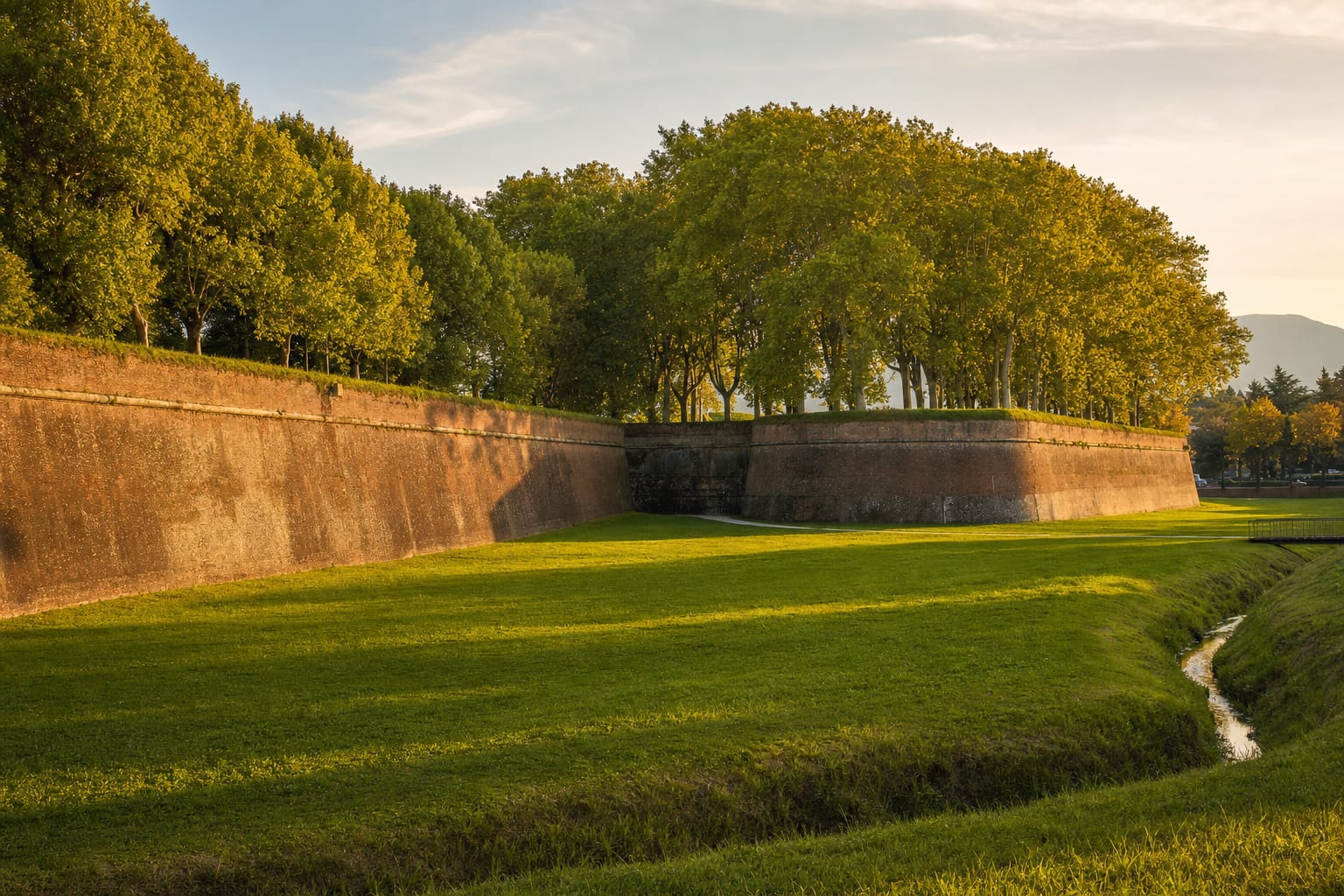 LuccaWalls of LuccaA complete Renaissance wall circuit, eleven bastions, cycling and walking the tree-lined rampartsLucca is one of the very few Italian cities to keep its defensive walls fully intact, a four kilometer ring built between the 16th and 17th centuries to withstand cannon fire, with earth packed between brick facings thick enough to absorb artillery that would have shattered thinner medieval fortifications. Eleven bastions punctuate the circuit, along with gates that once controlled every approach to the city. The walls never faced a real siege, and by the early 19th century, under Elisa Baciocchi, Napoleon's sister and ruler of the Duchy of Lucca, they were replanted with plane trees and converted into the tree-lined public promenade that crowns them today. Walking or cycling the full loop takes roughly an hour and gives a continuous, elevated view into both the historic center and the surrounding countryside at once, a rare double perspective no other Tuscan city offers so easily.
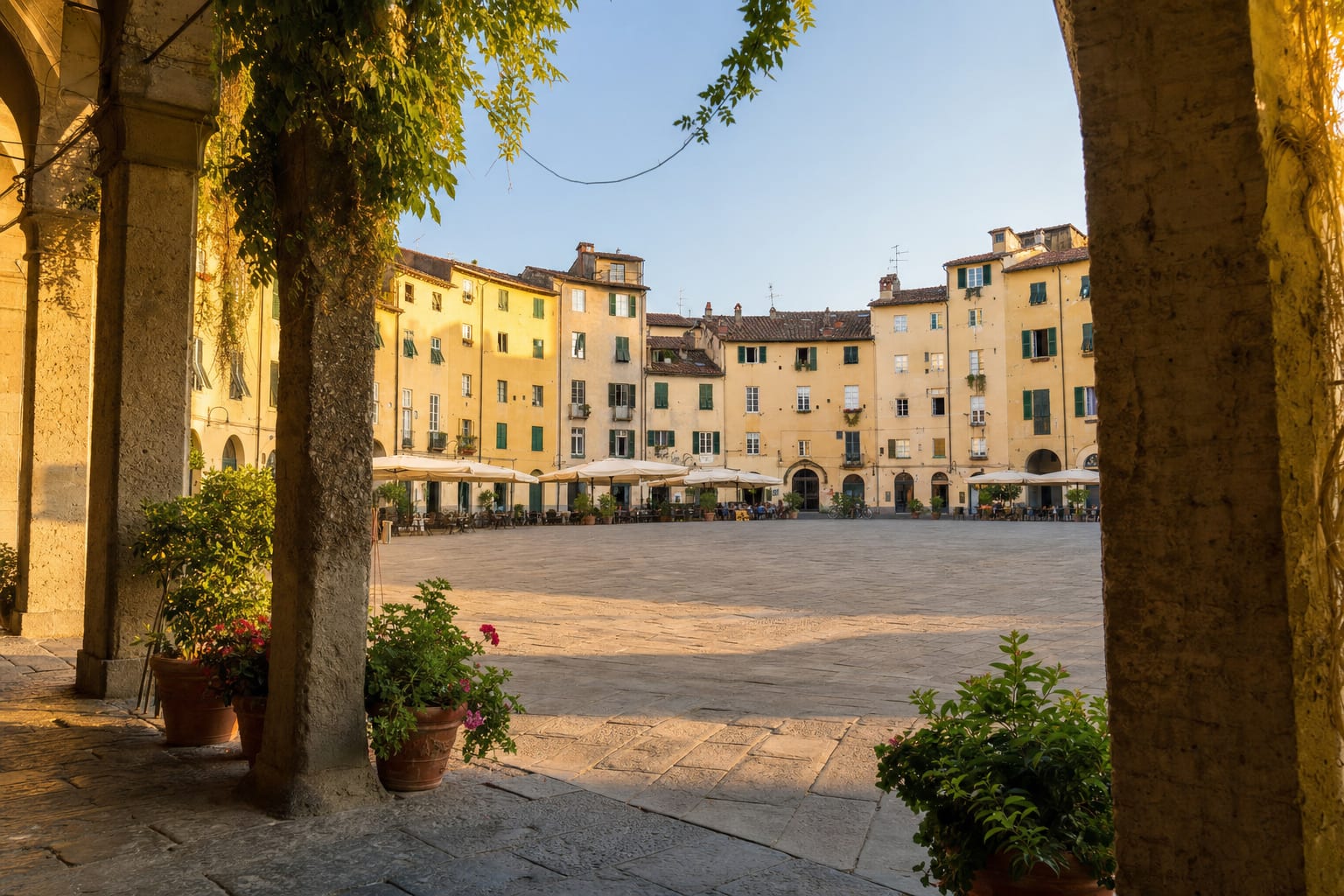 LuccaPiazza dell'AnfiteatroAn oval piazza tracing a buried Roman amphitheatre, curved house fronts, four ancient entrance passagesPiazza dell'Anfiteatro is an oval square that only exists because a Roman amphitheatre once stood on the spot, built outside Lucca's original walls in the first or second century CE to seat crowds for games. As the empire declined the amphitheatre fell into ruin and disuse, and over centuries houses were built directly into and over its arched foundations, preserving its oval footprint even as the structure itself vanished from view. In 1830, the architect Lorenzo Nottolini cleared the buildings that had filled the interior, exposing the oval as an open public square while leaving the curved houses standing around its rim, their ground floors still following the rhythm of the old Roman arches. Four narrow passages, once the amphitheatre's entrances, lead in from the surrounding streets, making the square a small, accidental lesson in how a city can erase a monument and still remember its exact shape.
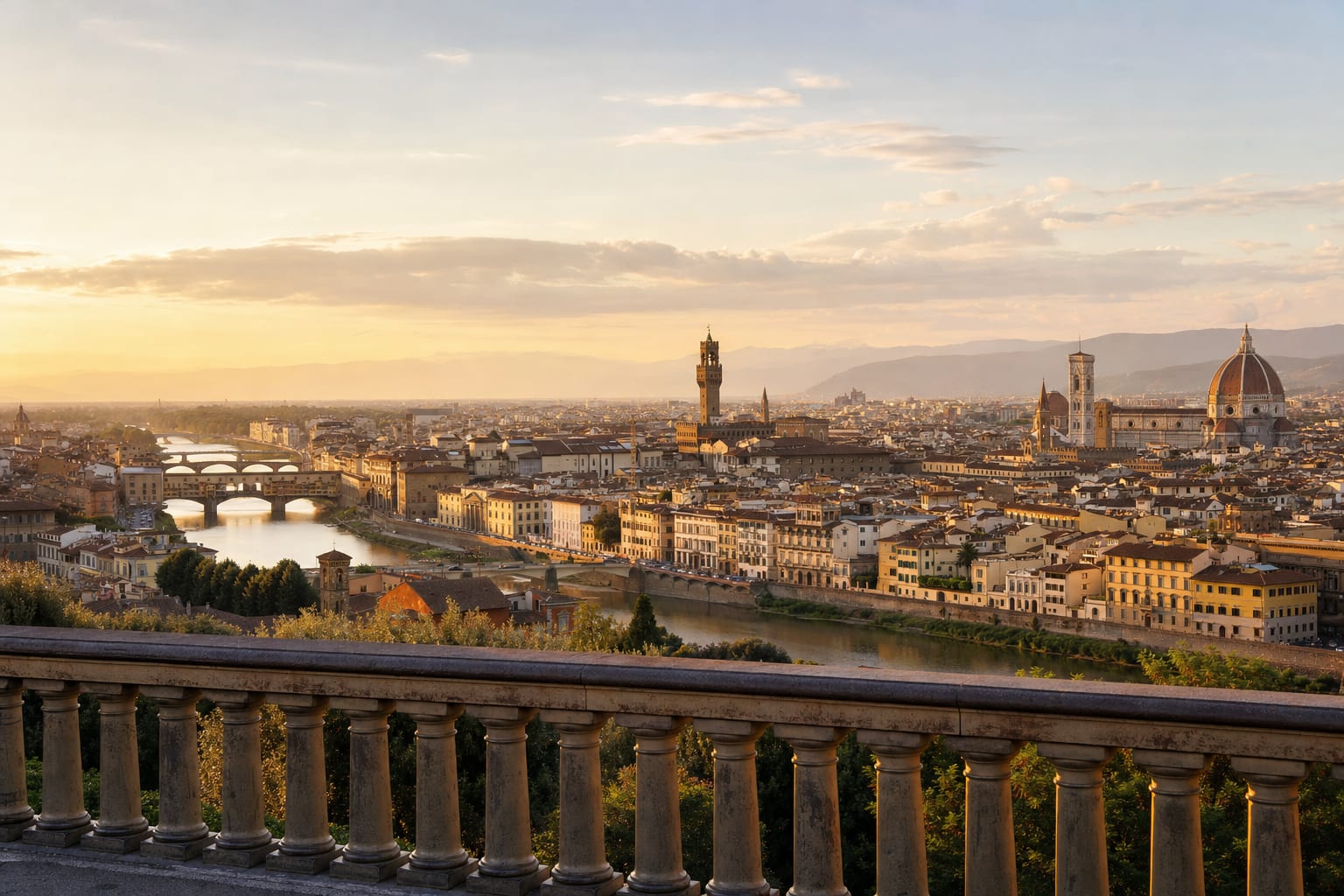 FlorencePiazzale MichelangeloGiuseppe Poggi's panoramic terrace, the bronze copy of Michelangelo's David, sunset views over FlorencePiazzale Michelangelo is a monumental terrace on the San Miniato hillside, designed by Giuseppe Poggi during the brief period, from 1865 to 1871, when Florence served as capital of the newly unified Kingdom of Italy. Poggi's brief was to modernize the city for its new political status, and this belvedere, part of a wider ring of boulevards replacing the old walls, was meant to give Florence a grand civic viewpoint worthy of a capital, even after the government moved on to Rome a few years later. At its center stands a bronze copy of Michelangelo's David, accompanied by bronze copies of the four allegorical figures from the Medici Chapel, Dawn, Dusk, Day and Night; the originals stay safely in their intended locations across the river. In 2021, UNESCO formally extended the boundary of the Historic Centre of Florence World Heritage property to include the piazzale, recognizing the terrace itself, not just the view from it, as part of the city's designed heritage.
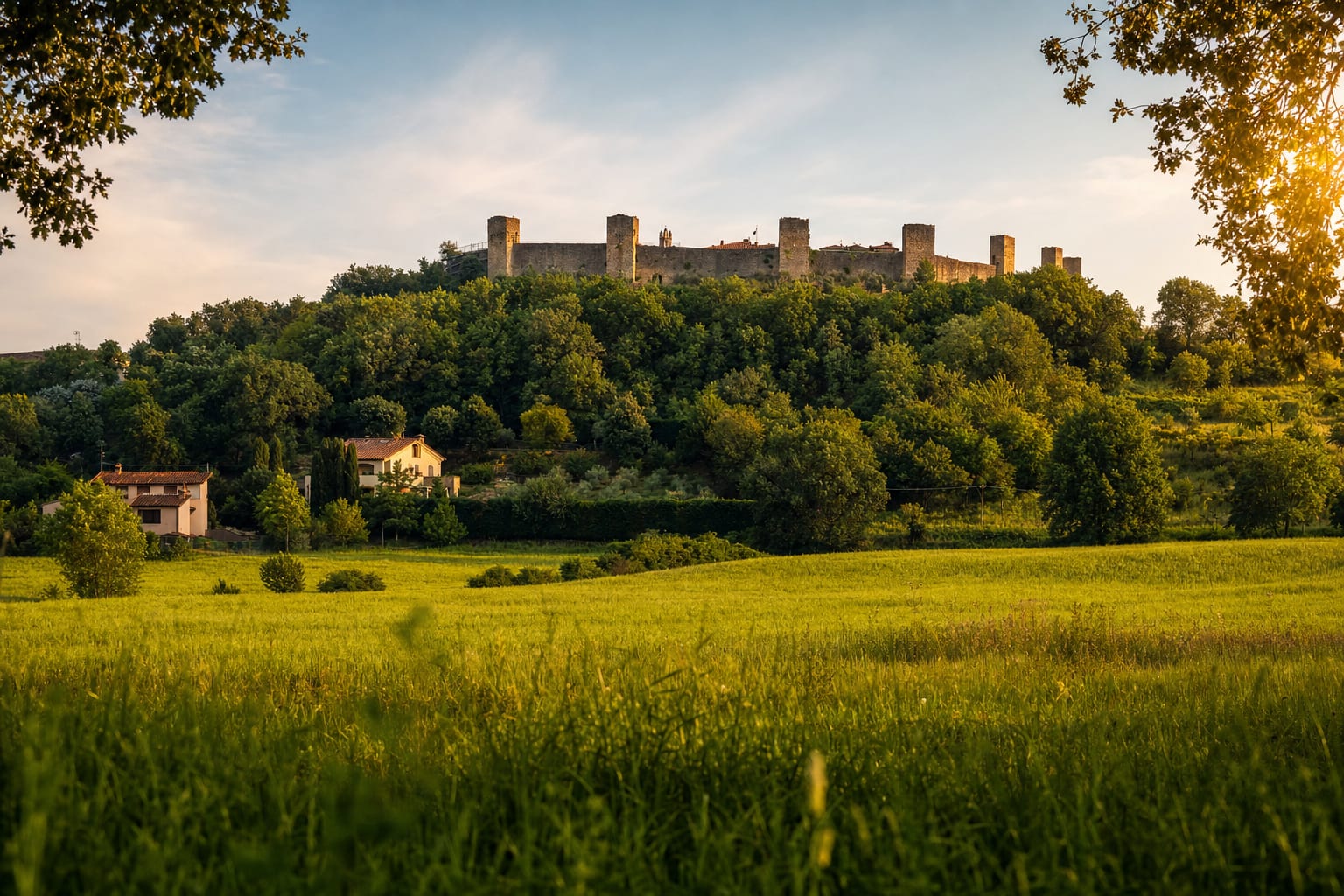 MonteriggioniWalls of MonteriggioniFourteen towers, Dante’s giants, Sienese frontier walls, rampart walkwaySiena raised this ring of walls between 1213 and 1219 to guard its northern frontier against Florence, and the circuit of about 570 meters still runs almost unbroken around the hilltop. Dante compared its towers to the giants standing in the pit of the Inferno. Fourteen square towers stud the perimeter, and two gates, Porta Fiorentina and Porta Romana, still admit visitors into the tiny borgo inside. The south walkway along the ramparts lets you look over the rooftops toward the Chianti hills and the Via Francigena, and on clear days to the towers of San Gimignano. The village is small enough to see in an hour.
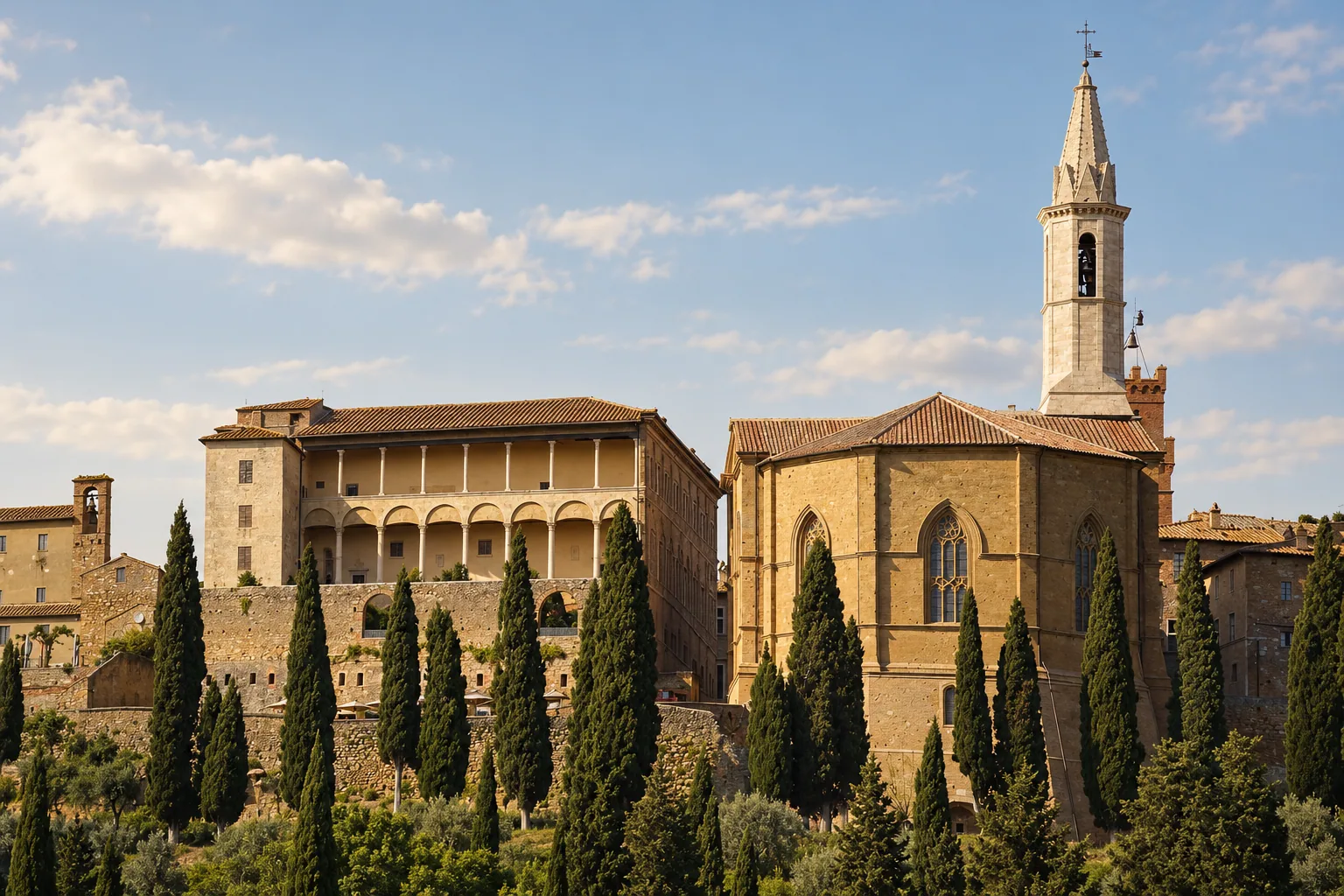 PienzaPienza CathedralPope Pius II's commission, Bernardo Rossellino's design, travertine facade, German-style hall interiorPope Pius II, born Enea Silvio Piccolomini in the village then called Corsignano, decided in 1459 to remake his birthplace into an ideal Renaissance town and renamed it Pienza after himself; the co-cathedral of Santa Maria Assunta, designed by Bernardo Rossellino, anchors the plan and was raised and consecrated within three years, on August 29, 1462. Pius, who had traveled widely in Germany as a papal legate, asked for a hall church interior with three naves of equal height, a northern Gothic form almost unheard of in Tuscany, lit by tall windows that flood the nave with rare light. The travertine facade, carrying the Piccolomini coat of arms, looks out over Piazza Pio II, part of the same unified design. The ground beneath the apse proved unstable almost immediately, and cracks that appeared within Pius's own lifetime still require monitoring today.
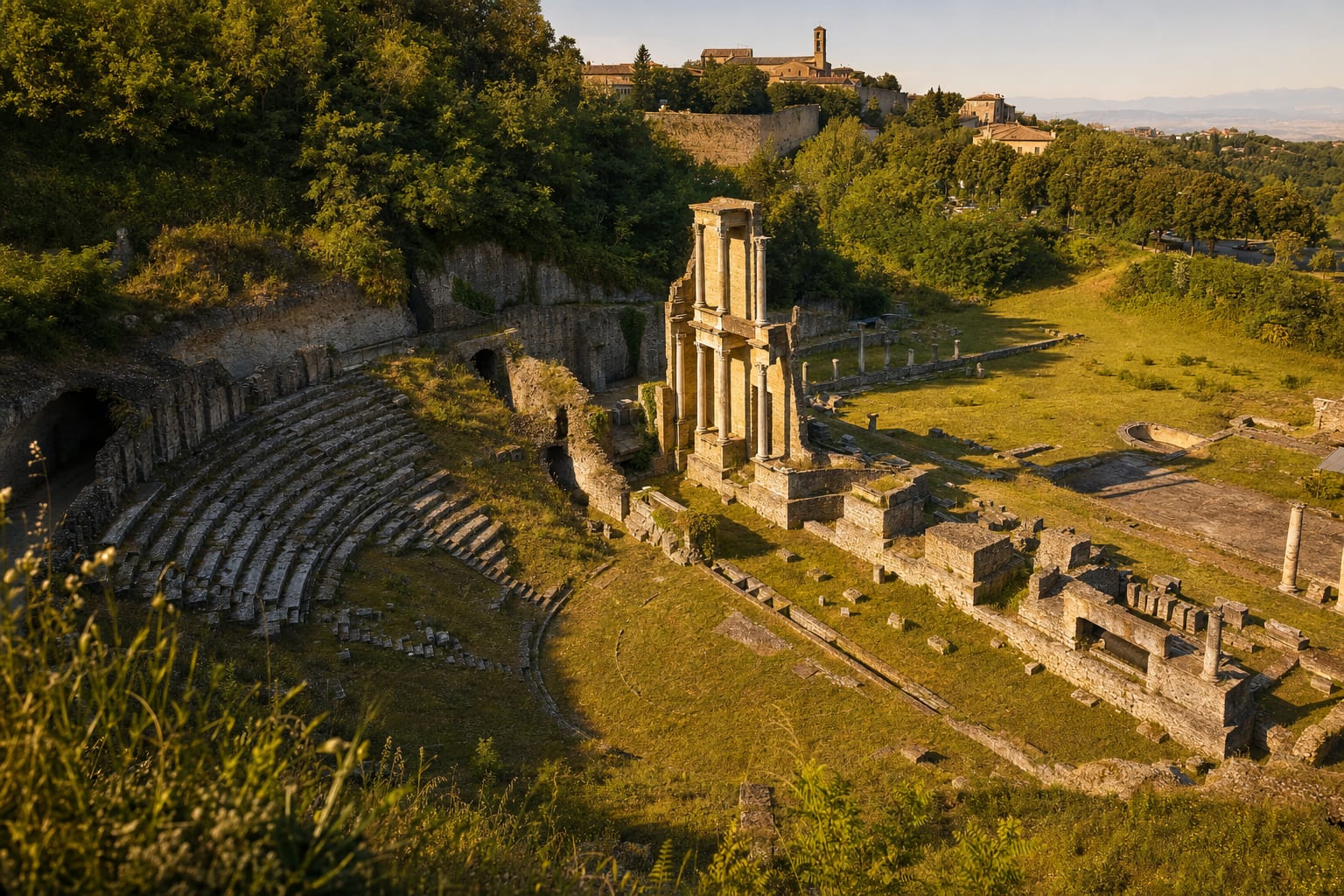 VolterraRoman Theatre of VolterraAugustan-period theatre, 1950s excavation, adjoining 4th-century baths, panoramic viewing walkwayVolterra's Roman theatre was built in the late first century BC, under Augustus, and then simply vanished from view: by the Middle Ages it had been buried under centuries of the town's refuse, and it stayed that way until archaeologists uncovered it in the 1950s. What emerged was a near-complete cavea with three tiers, still legible enough to make out where actors, then honored citizens, then everyone else sat. Alongside the theatre are the remains of a fourth-century bath complex, added when the theatre itself had gone out of use, a reminder that Roman towns recycled their monuments as readily as they built new ones. The Enrico Fiumi acropolis park nearby is a separate site, with its own Etruscan and Roman temple remains, so the two are easy to confuse when planning a visit. Today the theatre is viewed from a raised walkway above the excavation rather than walked through.
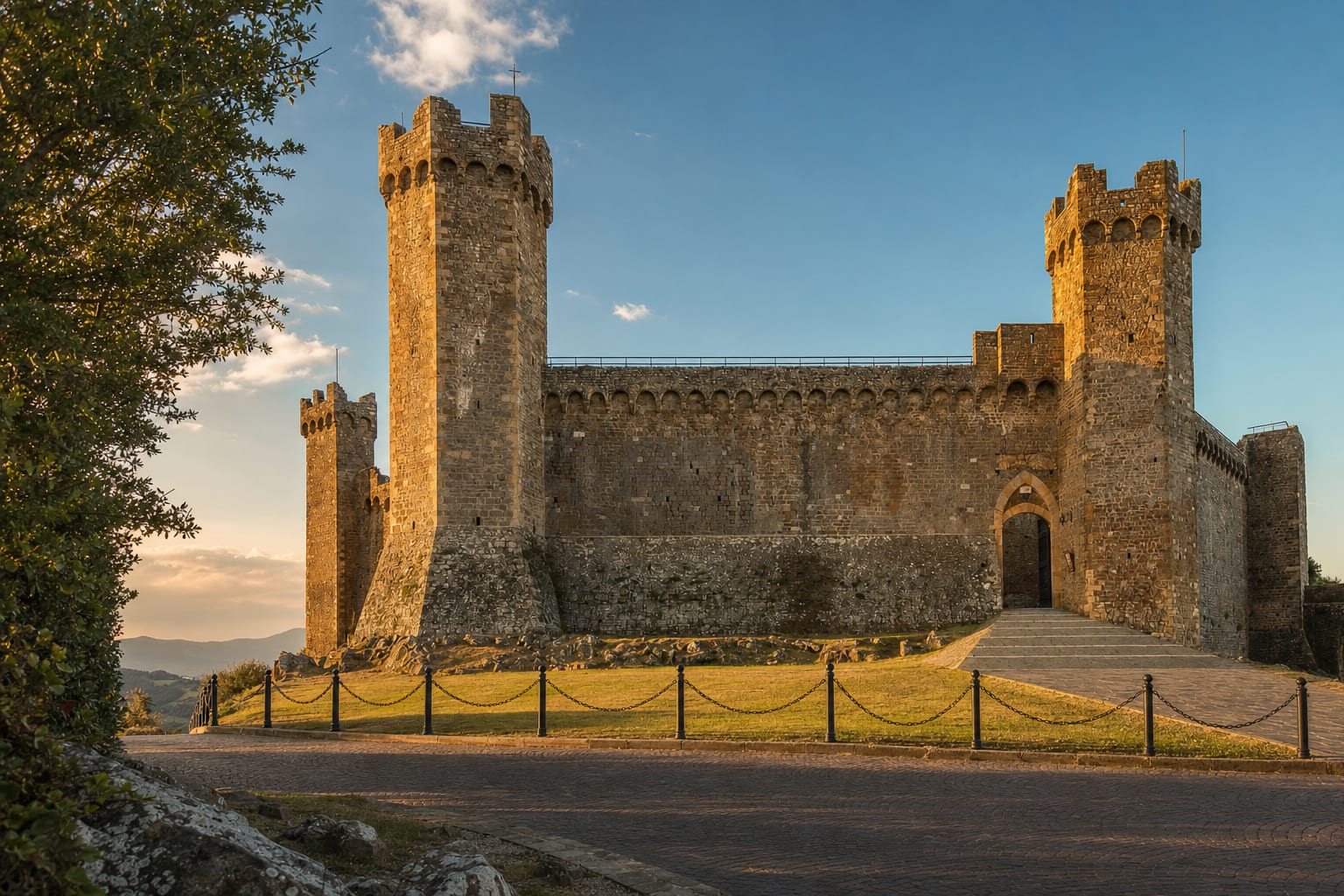 MontalcinoMontalcino FortressFourteenth-century pentagon plan, last Sienese stronghold (to 1559), rampart walks, Brunello wine barSiena ordered this pentagon-shaped fortress built in 1361, absorbing an older tower into its walls, as it tightened its grip on Montalcino during the long contest with Florence for control of southern Tuscany. It became the very last stronghold of the Sienese republic: after Florence finally crushed Siena in 1555, a group of exiled Sienese held out inside these walls for four more years before surrendering. Today the ramparts are open for walking, the views stretch over the vine rows that produce Brunello, and a wine bar run by the local Consorzio inside the fortress pours the region's reds by the glass in the shadow of the walls that once held out against an empire.
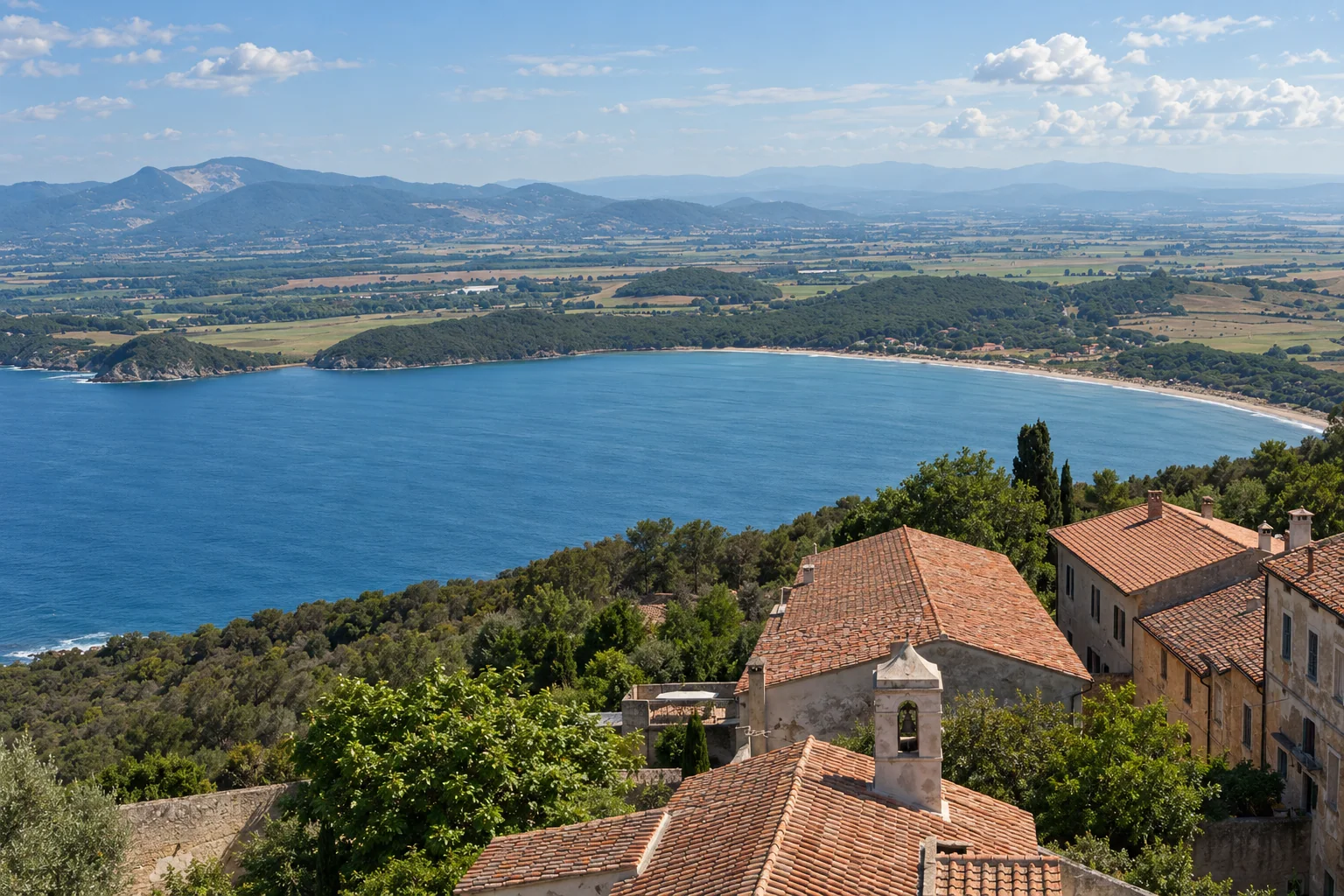 PiombinoArchaeological Park of Baratti and PopuloniaEtruscan coastal city, monumental tombs, ironworking and the Roman Acropolis<p>Populonia’s ancient city spreads across the wooded promontory of <a href="/en/regions/tuscany/piombino">Piombino</a>, above the Gulf of Baratti.</p><p>At Baratti, the visit moves between two parts of an ancient city shaped by different uses of the promontory. On the low ground beside the gulf, San Cerbone’s tumuli and aedicula tombs share the landscape with quarries and industrial quarters where hematite from Elba was worked into iron. Higher on the wooded slopes, the Via delle Cave leads to chamber tombs cut into the rock. Across the headland, Populonia’s Acropolis layers traces of an early Etruscan settlement with Roman temples, a paved sacred road, a mosaic-floored domus and the terrace of the Logge. The gulf is more than a view behind the ruins: sea routes, ore and local stone help explain why burial, industry and settlement met here. Read together, the separate areas make an ancient city visible across its terrain.</p>
Tours worth booking in Tuscany
Compared by our editors, across providers.
Booking through these links may earn Italia Magnifica a commission, at no cost to you.
Uffizi and Accademia Combined Tour
Best when you want the Uffizi and David treated as one Renaissance argument, not two disconnected ticket slots.
- GetYourGuide
- 6h
from €119Book this tourUffizi Gallery Priority Entrance Ticket
The straightforward way in: timed entry, skip the ticket line, wander at your own pace. Book the first morning slot and you will have the Botticelli rooms nearly to yourself.
- GetYourGuide
from €32Book this tourUffizi Gallery Semi-Private Tour
Capped at six guests, which changes everything about how long you can stand in front of the Primavera. The premium pick for a first visit.
- TheTourGuy
- 2h 30m
from €129Book this tourUffizi Small-Group Guided Tour
Two hours with an art historian who knows which fifteen of the two thousand works deserve your attention, and why the Tribuna still stops people mid-sentence.
- GetYourGuide
- 2h
from €99Book this tour- Viator
- 9h
- 5.0★ · 4 reviews
from €730Book this tour- Viator
- 3h
- 5.0★ · 6 reviews
from €250Book this tour

City by city
Where the monuments cluster in Tuscany.