

All the monuments, city by city
The landmarks and masterpieces worth planning a day around.
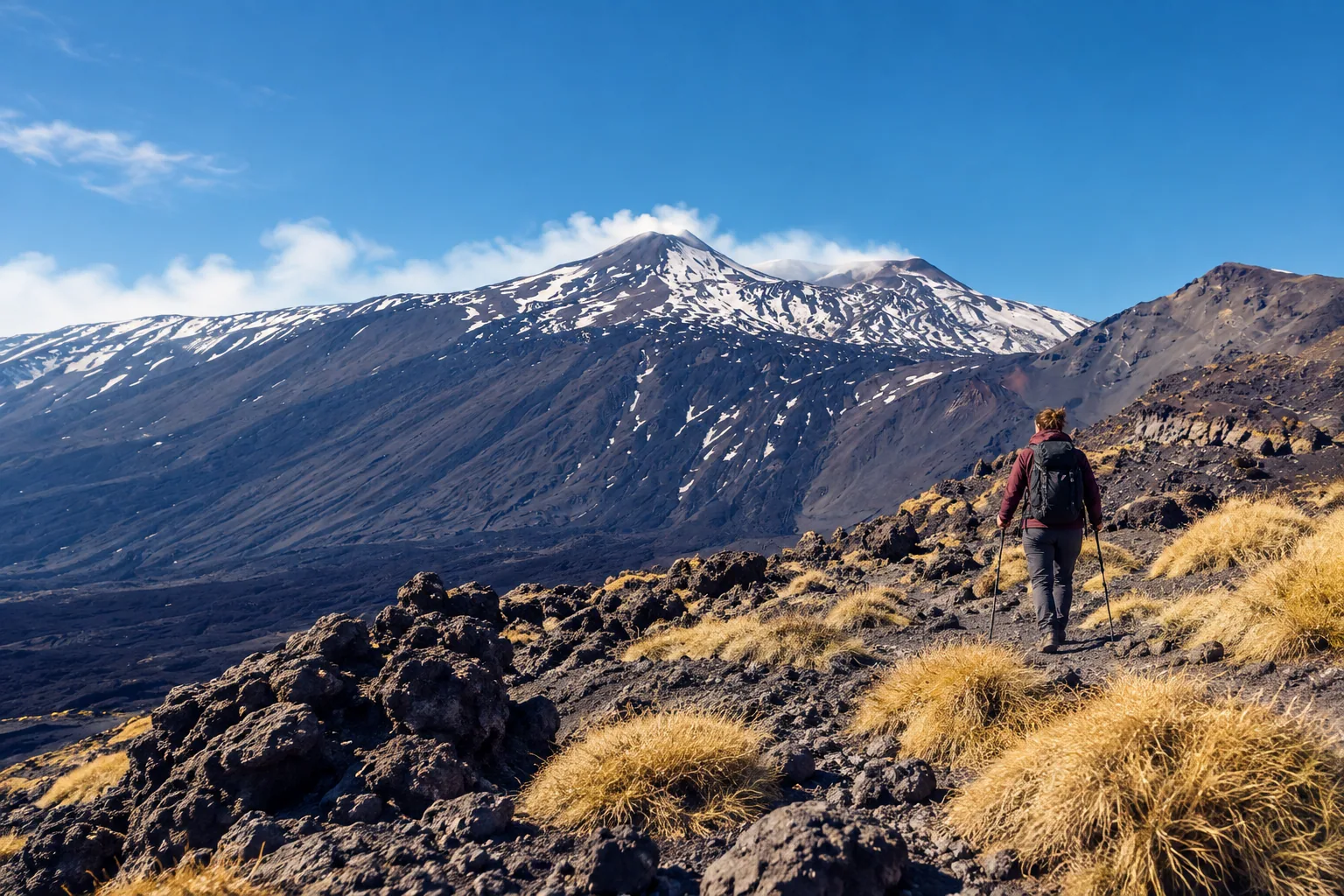 CataniaUNESCOMount EtnaEurope's tallest active volcano, summit craters, the Etna cable car, lava slopes, Etna wine countryEtna rises more than 3,300 meters over eastern Sicily and rarely rests through a full season; UNESCO lists it for the sheer diversity and continuity of volcanic activity documented for at least half a million years. Most visits begin at Rifugio Sapienza on the south side, where the Funivia dell'Etna cable car climbs through fields of black lava to about 2,500 meters. From there, guides lead groups on foot or in modified four wheel drive Unimogs toward the still smoking Barbagallo craters formed in 2002. Lower down, the same volcanic soil that occasionally threatens villages feeds some of Sicily's most distinctive vineyards, where Nerello Mascalese roots dig into mineral rich ash. Craters, trails and access all shift with the mountain's mood, so it is worth checking conditions the morning you go.Plan the visit
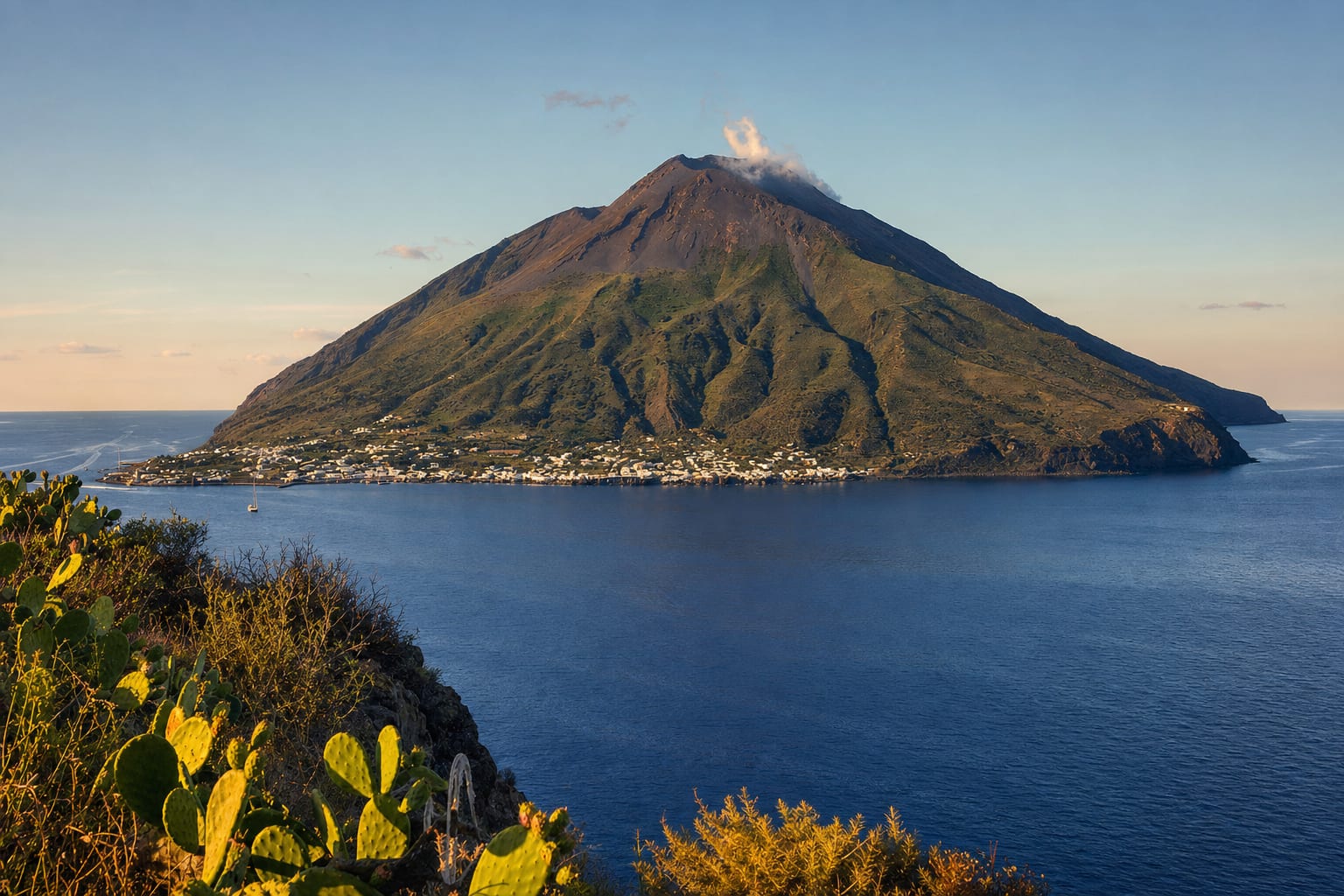 StromboliUNESCOStromboliContinuous eruptions, the Sciara del Fuoco lava scar, night boat tours, licensed volcano guidesStromboli has erupted almost continuously for at least 2,000 years, a rhythm so reliable that sailors nicknamed it the Lighthouse of the Mediterranean long before real lighthouses existed. Small bursts of incandescent rock, called strombolian eruptions after this very island, throw glowing debris every few minutes from vents near the summit at 924 meters; the Sciara del Fuoco, a scarred slope of loose rock on the northwest flank, channels larger flows straight into the sea. Access above 290 meters has been restricted to licensed volcanological guides since a series of dangerous eruptions in the early 2000s, and the summit itself closes entirely when activity spikes. Most visitors instead join an evening boat that idles offshore below the Sciara del Fuoco after dark, watching the mountain glow and occasionally roar without setting foot on the crater rim.
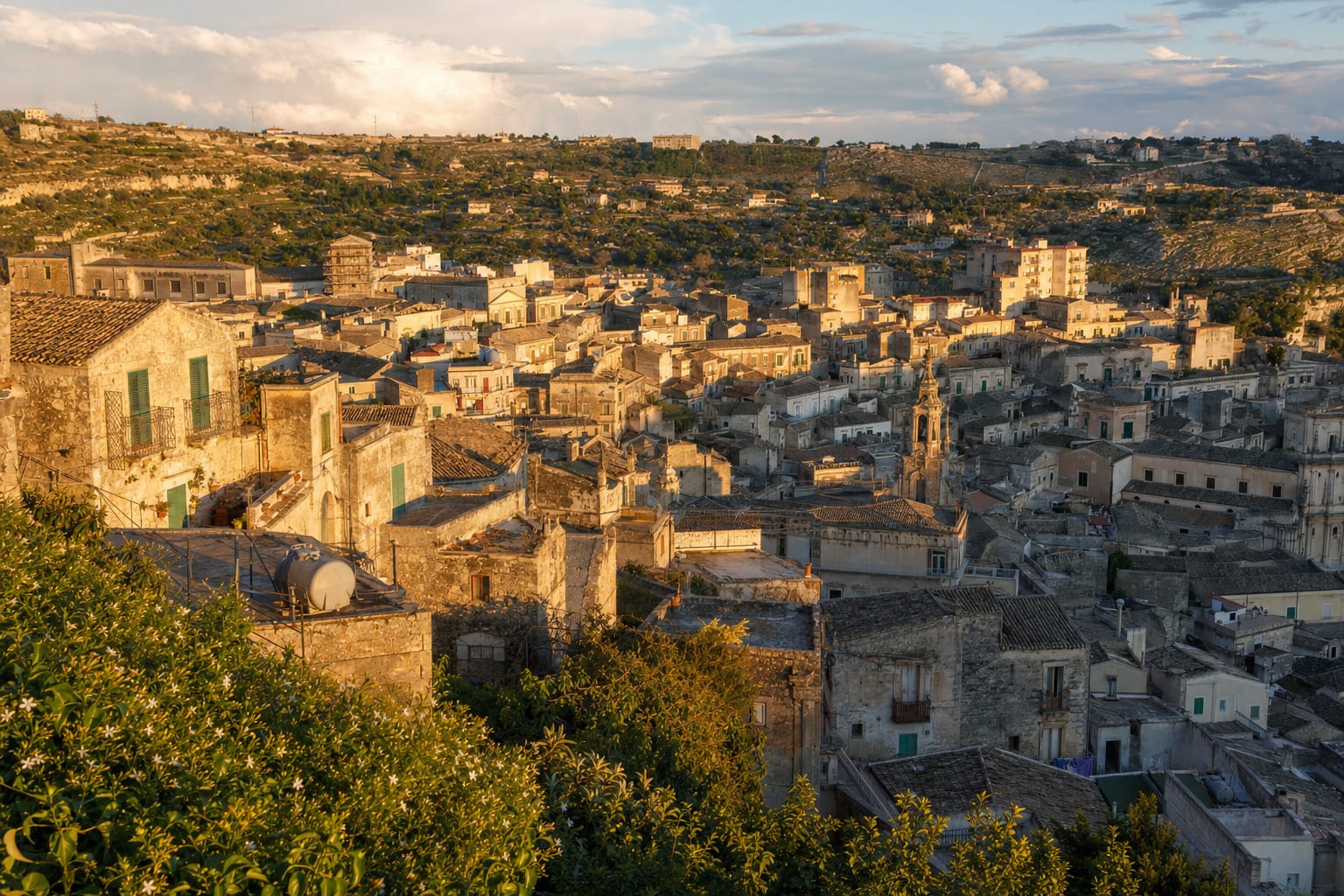 ModicaModicaTwo-level Baroque town, Duomo di San Giorgio's staircase, cold-worked Aztec-style chocolateModica stacks two Sicilian Baroque towns up opposite sides of a deep gorge that a buried river once cut, its houses climbing so steeply that a rooftop in the upper town can sit level with a doorway in the lower one. The 1693 earthquake that flattened much of southeastern Sicily gave local architects a blank slate, and they rebuilt in an exuberant late-Baroque style now protected as part of the UNESCO Val di Noto group; the Duomo di San Giorgio, reached by a theatrical staircase of around 250 steps, is the town's signature view. Modica's other claim runs deeper than architecture: its chocolate, made by grinding roasted cacao with sugar at low temperature rather than melting it, follows a method the Spanish brought from Aztec Mexico via their Sicilian viceroyalty, and it still tastes grainy and intensely bitter by design, not by accident.
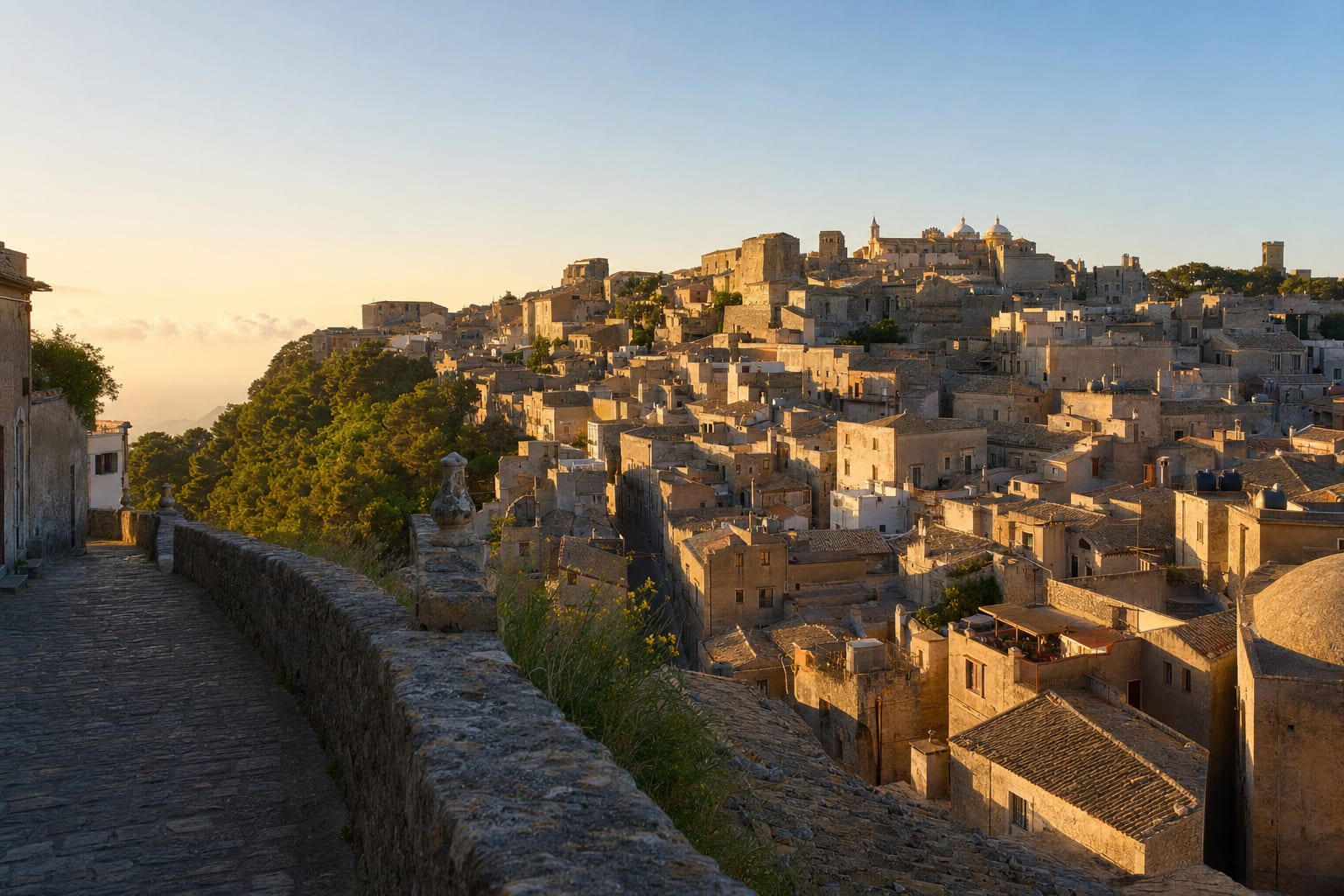 EriceEriceThe Norman Venus Castle, cloud-wrapped medieval lanes, the cable car from Trapani, almond pastriesErice keeps a near-perfect medieval street plan on a triangular mountaintop 750 meters above Trapani, so often wrapped in cloud that the town seems to drift in and out of visibility from the coast below. Long before the medieval walls, this summit held a sanctuary to Venus Erycina, an ancient fertility cult so renowned that Roman sources describe pilgrims and even ships' crews stopping to pay respects on their way past Sicily; the Norman castle that now crowns the peak was built directly over its foundations in the 12th century. Erice's other institution is entirely edible: the pastry shop of Maria Grammatico, who trained as a girl in a strict convent famous for almond sweets and later turned those closely guarded recipes into a shop that draws its own pilgrims. A cable car from Trapani covers the climb, replacing what used to be a serious drive up switchbacks through the clouds.
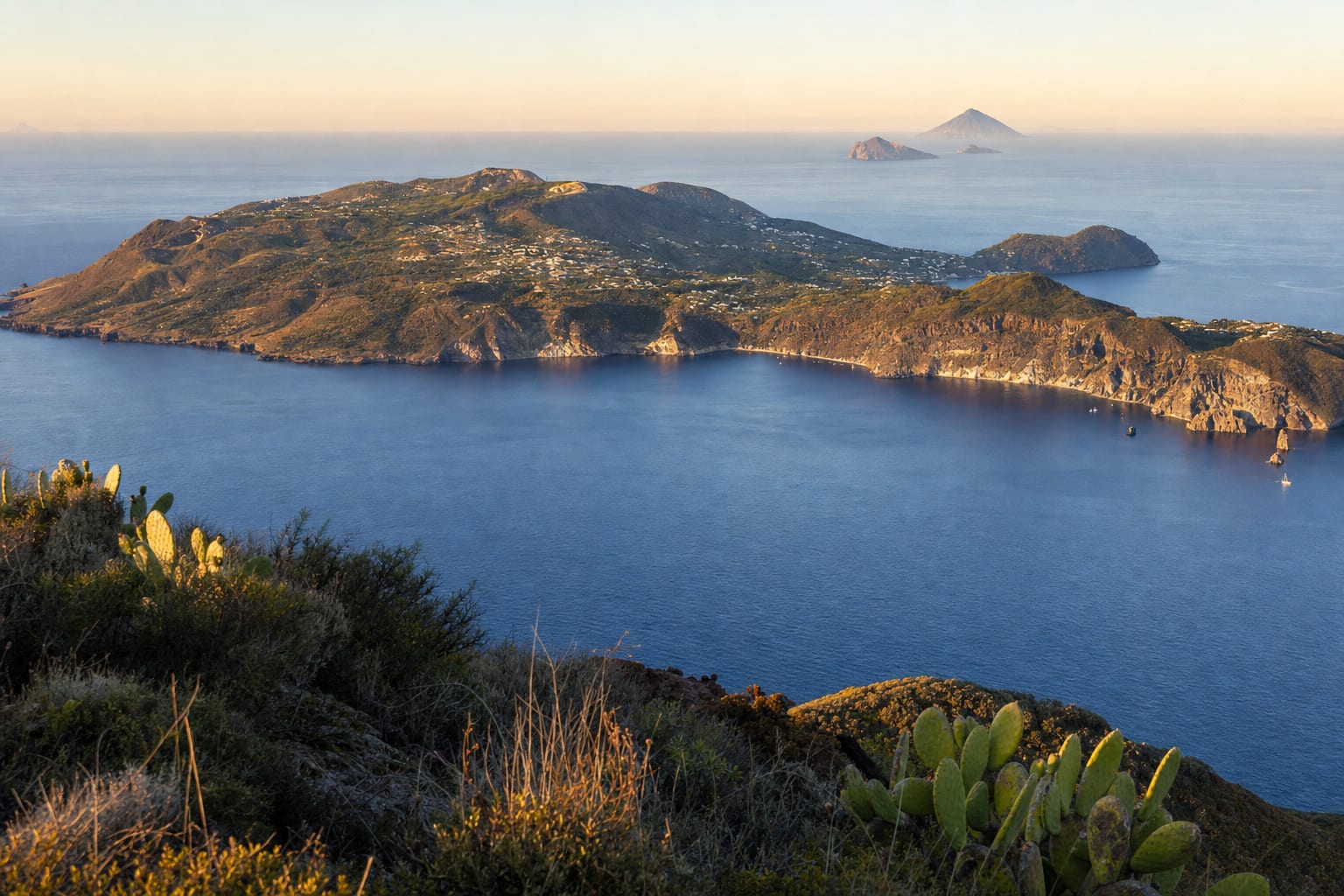 LipariLipariThe walled acropolis, the Aeolian Archaeological Museum, white pumice beaches, black obsidian flowsLipari is the largest and most populated of the Aeolian Islands, and its walled acropolis, rebuilt in the 16th and 17th centuries over foundations reaching back to Greek and Roman times, still gathers a cathedral and one of the Mediterranean's most respected small archaeology museums inside a single fortified enclosure above the harbor. The Museo Archeologico Regionale Eoliano lays out finds from layer upon layer of settlement stretching back some six thousand years, evidence of how early this obsidian rich island attracted trade long before recorded history. That volcanic geology is still visible everywhere around the coast: white pumice quarries and beaches on one side of the island contrast sharply with black obsidian flows on the other, a stark two tone geology that also once made Lipari's obsidian a prized Neolithic trade good, sharp enough to cut and valuable enough to travel across the whole Mediterranean basin.
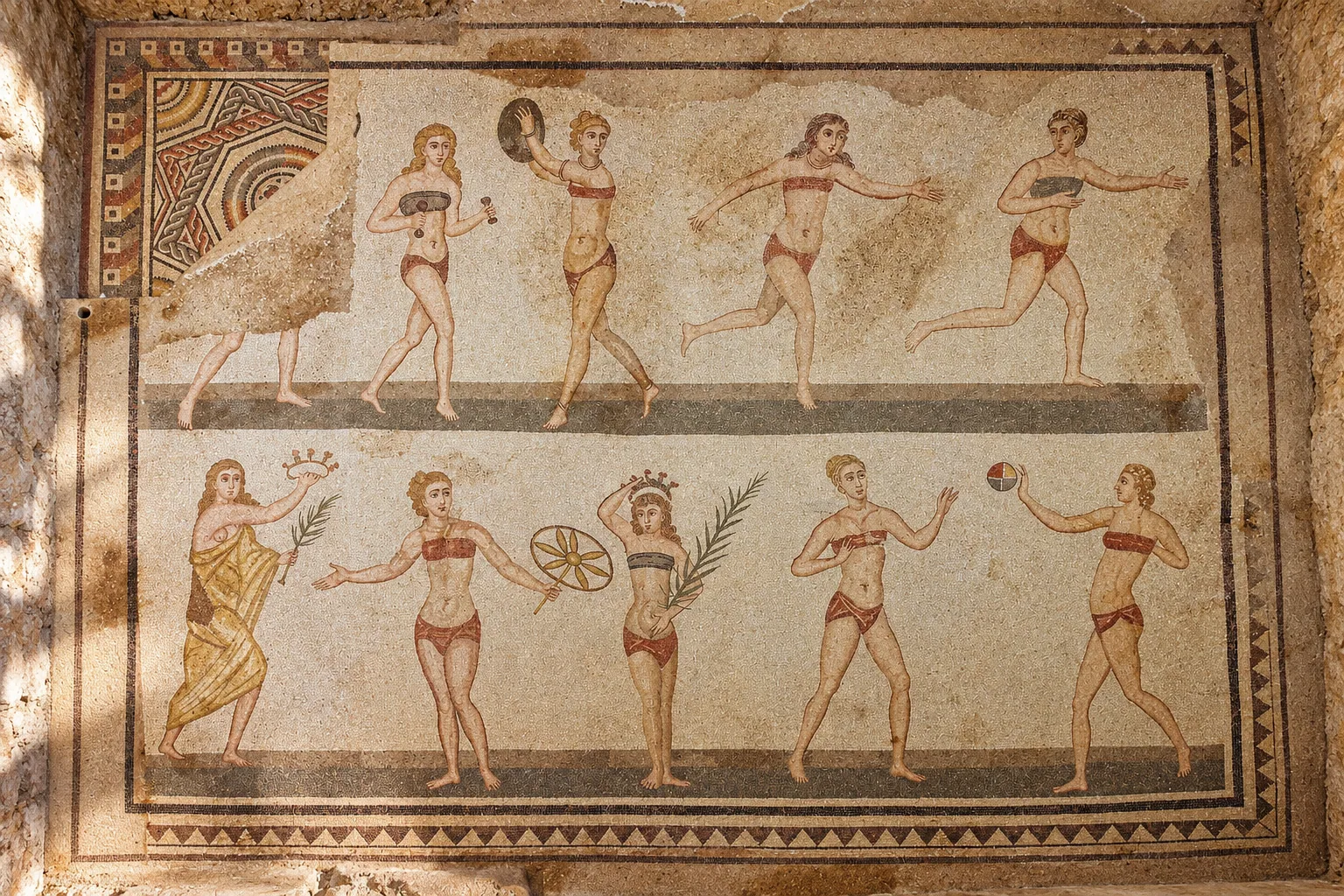 Piazza ArmerinaUNESCOVilla Romana del Casale3,500 square meters of Roman mosaic, the "bikini girls" room, the Great Hunt corridor, mudslide preservationBuilt in the early fourth century CE on the foundations of an older farmhouse, this was likely the country residence of a wealthy Roman patron overseeing a large agricultural estate, possibly connected to the nearby settlement of Philosophiana along the Catania-Agrigento road. A medieval landslide, followed by centuries of flooding, buried the villa in mud and protected rather than destroyed it, which is why its mosaic and opus sectile floors, covering some 3,500 square meters, survive as the richest, largest and most varied collection of their kind anywhere. The Great Hunt corridor alone runs about 60 meters, a procession of hunters, exotic beasts and ships capturing animals for the Roman arena, while a smaller, much-photographed room shows ten young women exercising in what look startlingly like modern bikinis. Frescoes once covered interior and even some exterior walls too, an extraordinary decorative scheme that is easy to overlook next to the famous floors underfoot.
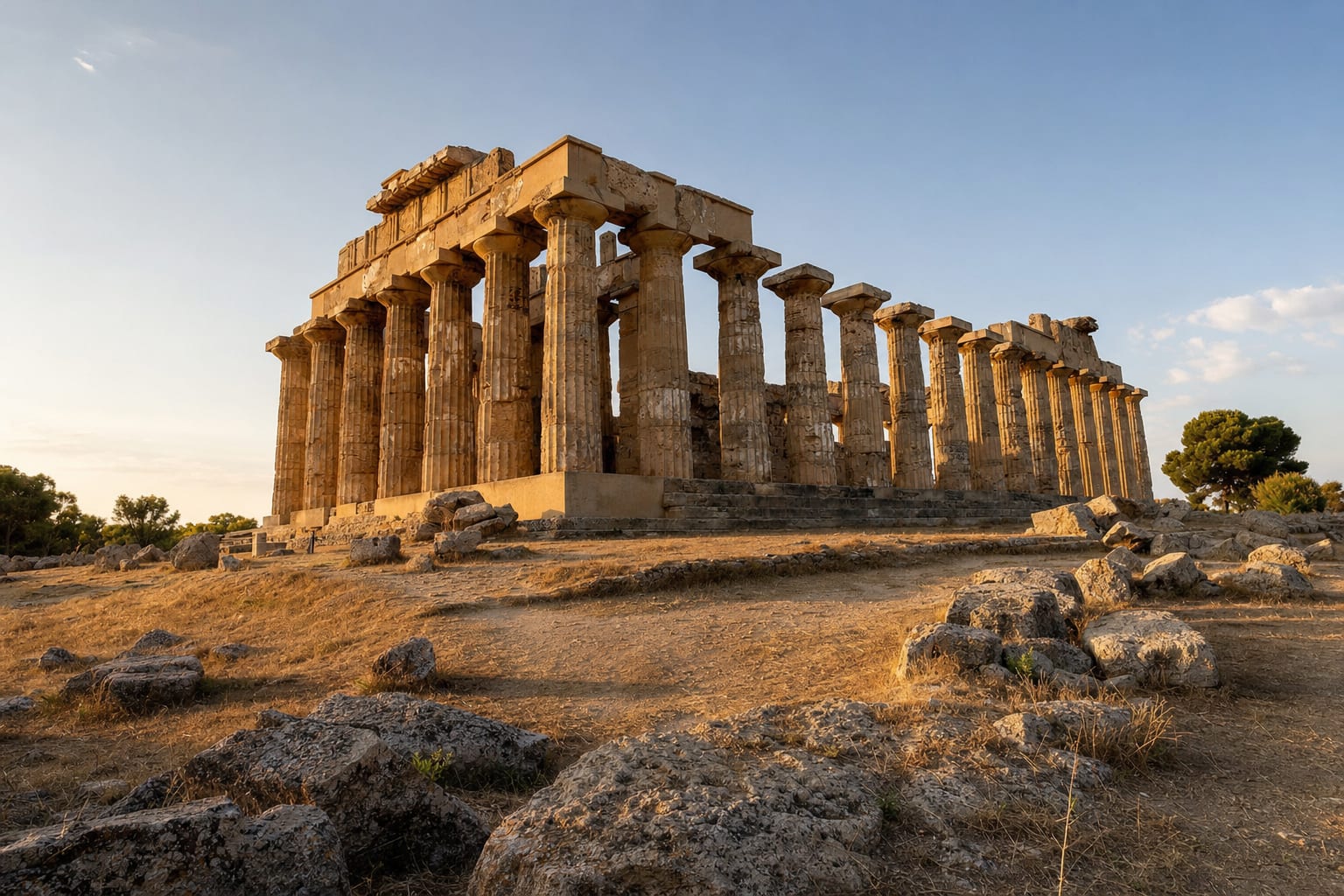 CastelvetranoSelinunteTemple E and Temple G, acropolis over the dunes, Malophoros sanctuary, one of Europe's largest archaeological parksSelinus was founded around 628 BCE by Greek colonists from Megara Hyblaea and grew rich enough to build temples on a scale rare even in Magna Graecia, until Carthage sacked it in 409 BCE and the city was never rebuilt. The result is a ruined landscape above the Mediterranean: on the eastern hill, Temple E, dedicated to Hera, was re-erected in the 1950s and now stands against the sea wind; nearby lie the toppled giants of Temple G, among the largest in the Greek world. Across the valley the acropolis sits over the dunes, and farther west is the sanctuary of Demeter Malophoros. It is one of the largest archaeological parks in Europe, so plan a full morning.
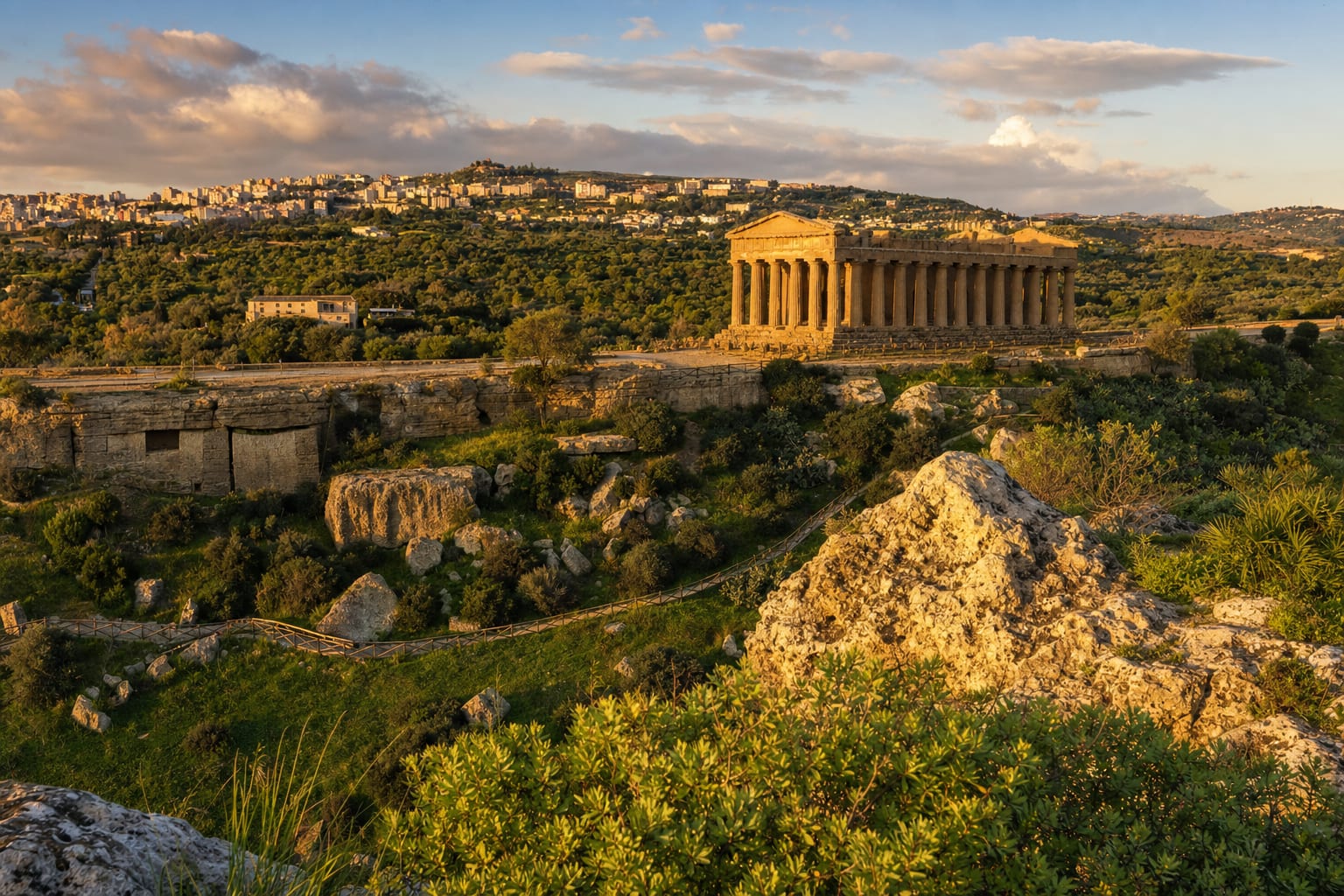 AgrigentoValley of the TemplesTemple of Concordia, ridge of Doric temples, Temple of Olympian Zeus telamon, almond blossom seasonGreek colonists founded Akragas in 582 BC and lined a limestone ridge above the sea with temples to advertise their new city's wealth. The Temple of Concordia, raised around 430 BC, is the best-preserved Doric temple anywhere outside Greece, saved by an odd stroke of luck: sixth-century Christians converted it into a church, which kept it standing instead of being quarried for stone like its neighbors. Farther along the ridge, the fallen giant that was the Temple of Olympian Zeus once carried stone telamons, bearded giants some 25 feet tall, one of which now lies reassembled on the ground. Come in February and the almond trees between the ruins are in bloom, timed with the Sagra del Mandorlo in Fiore folk festival. UNESCO listed the whole valley in 1997.
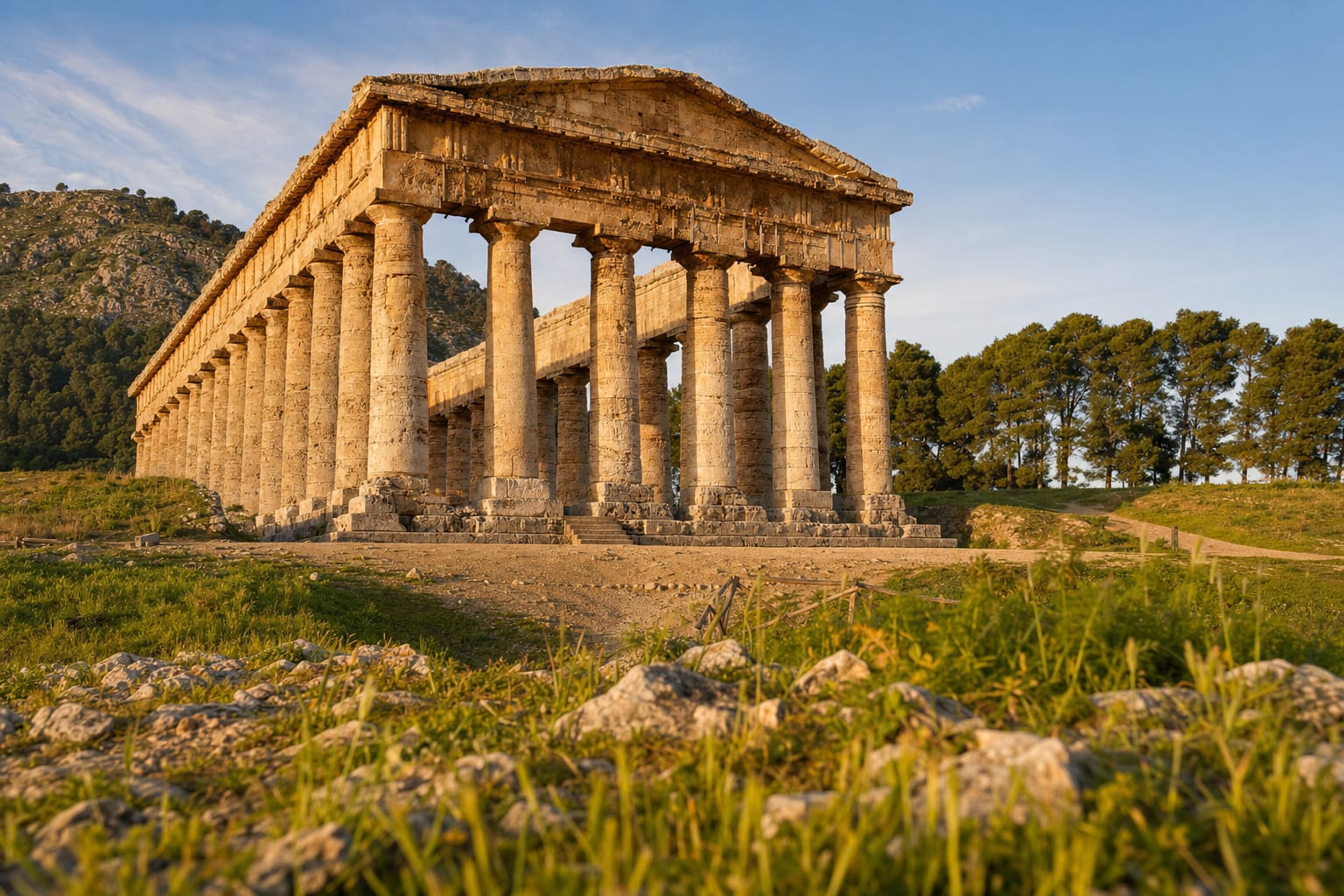 Calatafimi-SegestaSegestaUnfinished Doric temple, hilltop theatre with gulf views, Elymian city, unfluted columnsThe Elymians, Sicily's indigenous people, raised this Doric temple around 420 BC and then left it unfinished: the columns were never fluted, stone lifting bosses still stud the base blocks, and no cella, roof, or altar was ever built, probably because war broke out with the rival city of Selinunte. It stands alone on its hill, and that incompleteness is part of what makes it striking: there is nothing here but thirty-six columns and the hills behind them. A steep road climbs Monte Barbaro to a Hellenistic theatre carved into the hillside around the third century BC, its curved rows of seats framing a view straight down to the Gulf of Castellammare. The Elymians themselves were not Greek, though the city hellenized early. Segesta stayed inhabited into the Norman period before being abandoned by the thirteenth century.
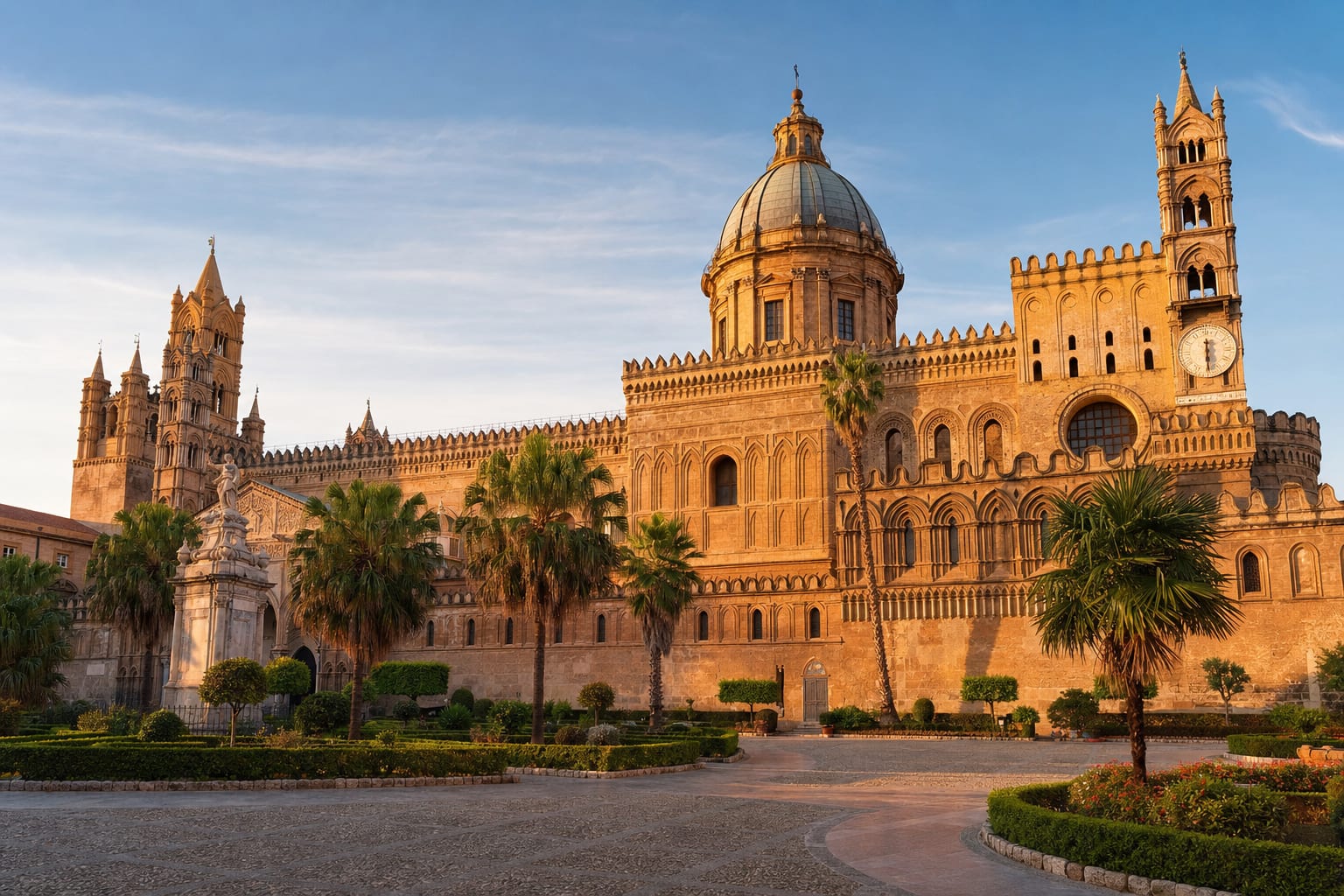 PalermoPalermo CathedralArab-Norman architecture, royal porphyry tombs, rooftop walkways, Catalan Gothic porchPalermo's cathedral compresses eight centuries of Sicilian rule into one building. Archbishop Walter of the Mill began it in 1185 on the site of a mosque, and later builders added a Catalan Gothic porch and columns recycled from the mosque, still carved with Arabic inscriptions, before Ferdinando Fuga capped it with a Neoclassical dome in the 1780s that never quite matches the rest. Four royal sarcophagi in red porphyry hold Roger II, Henry VI, Constance of Aragon, and Frederick II, the Holy Roman Emperor who called Palermo home. Climb the rooftop walkway among the domes and you cross eight centuries of masonry at eye level, with the city's rooftops spread out below and Monte Pellegrino on the horizon.
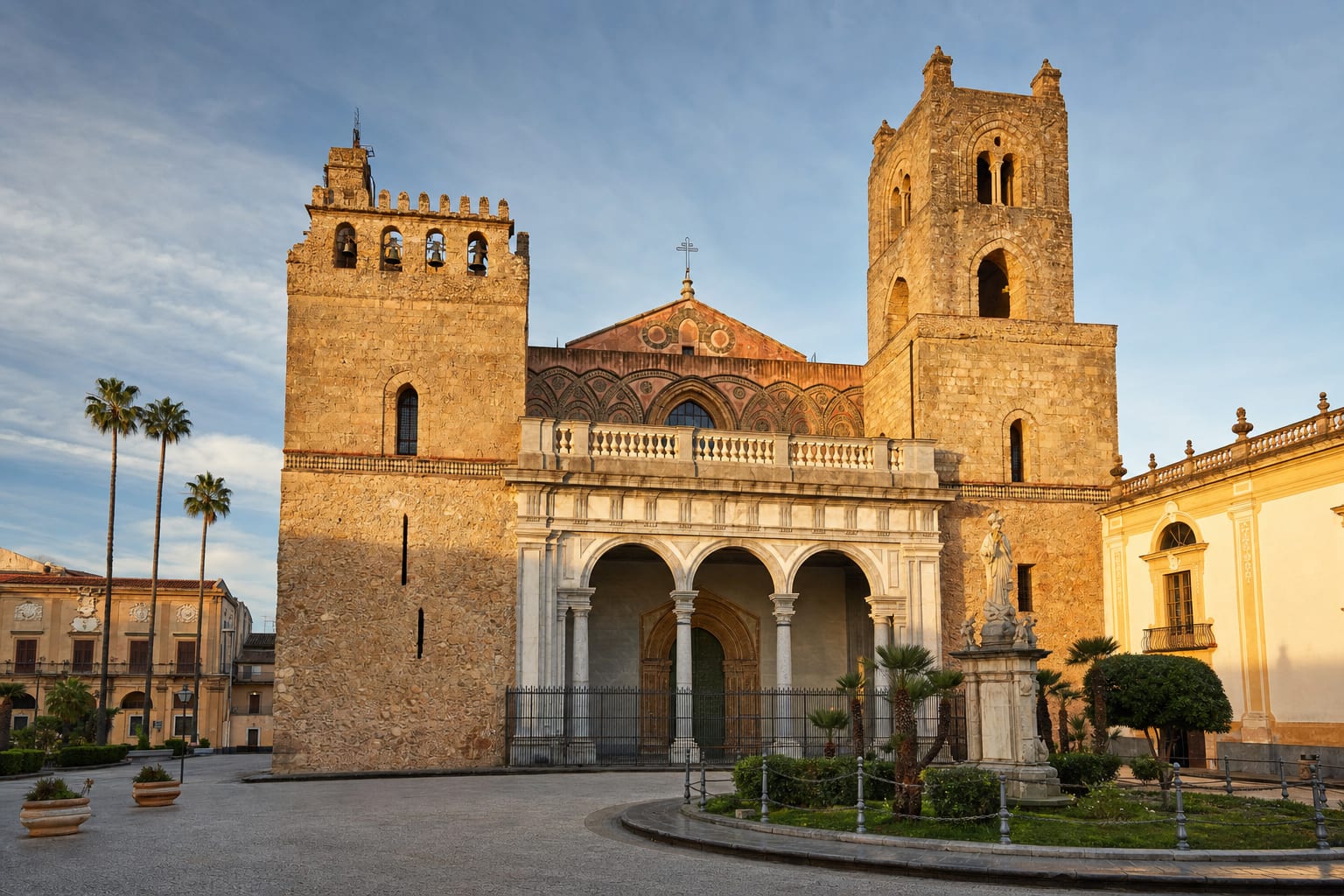 MonrealeUNESCOMonreale Cathedral6,400 sqm of gold mosaic, the Pantocrator apse, the Benedictine cloister, William II's rivalry with PalermoWilliam II began this cathedral in 1174, determined to outdo the church his grandfather Roger II had built in Palermo, and the result buried Norman Sicily's rivalry in gold: more than 6,400 square meters of Byzantine-style mosaic covering every wall. The apse holds Sicily's most commanding Christ Pantocrator, his right hand raised in blessing over the whole nave. Step into the adjoining cloister and the story continues in stone: two hundred twin columns, no two alike, carved with mosaic inlay, animals, and foliage, framing a quiet garden that Benedictine monks once tended. Monreale, together with Palermo and Cefalù, forms the UNESCO listing for Arab-Norman Sicily, proof that Norman kings, Byzantine craftsmen, and Arab builders made something together that none could have made alone.
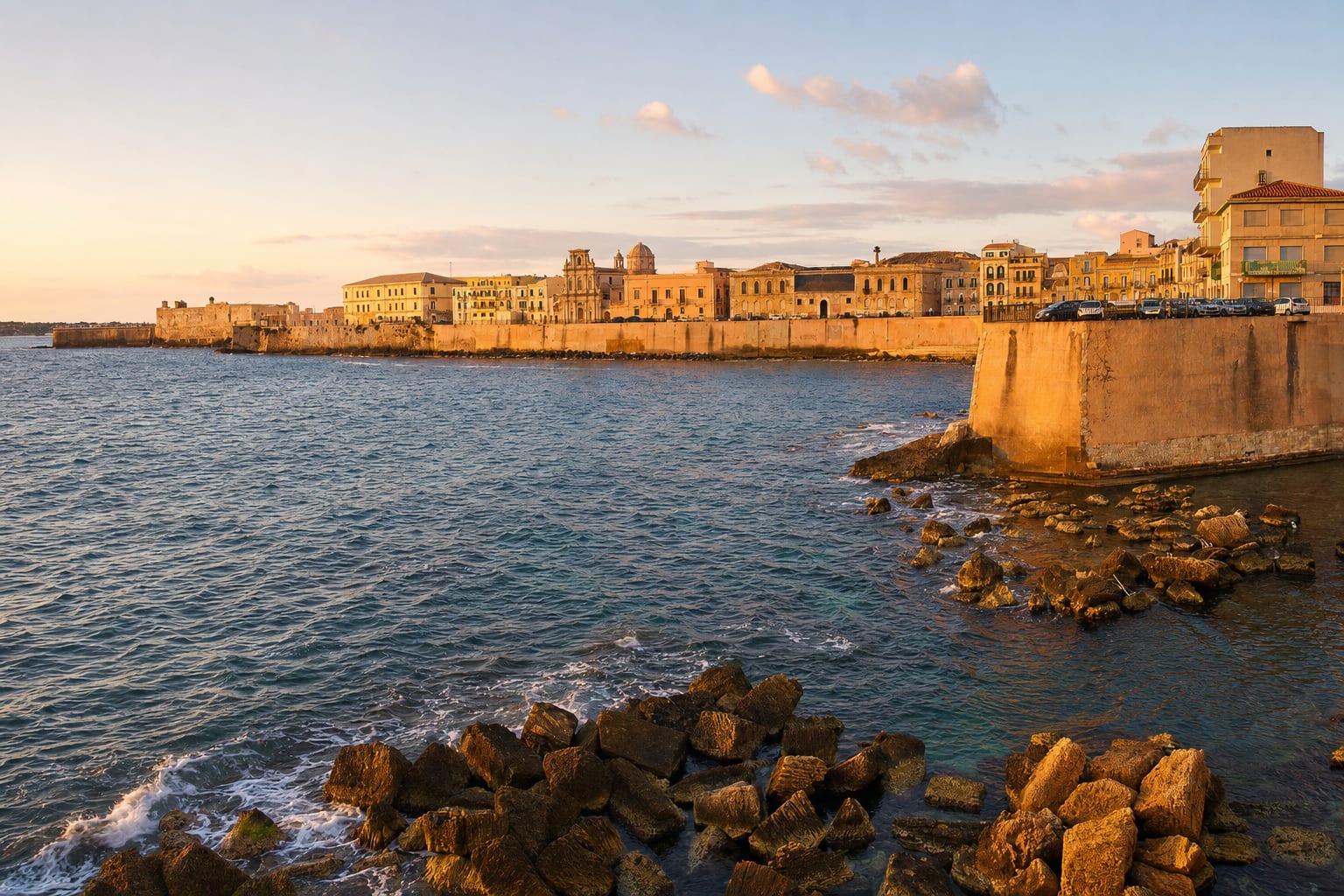 OrtigiaUNESCOOrtigiaFonte Aretusa, Temple of Apollo, Piazza Duomo's Baroque cathedral, UNESCO-listed ancient coreGreek settlers from Corinth founded Syracuse on this small island around 734 BC, drawn by the Fonte Aretusa, a freshwater spring that still bubbles up within yards of the sea exactly as the myth of the nymph Arethusa demanded. Twenty-seven centuries of building sit on top of each other in barely a kilometer of streets: the stubby Doric columns of the sixth-century BC Temple of Apollo, Sicily's oldest, rise beside the fish market, while the Baroque cathedral on Piazza Duomo hides fifth-century BC Athena temple columns inside its own walls. Ortigia and the rest of ancient Syracuse together form a UNESCO World Heritage Site listed in 2005. In the evening, when day-trippers leave for the mainland, the lungomare and the old Jewish quarter, the Giudecca, belong almost entirely to residents again.
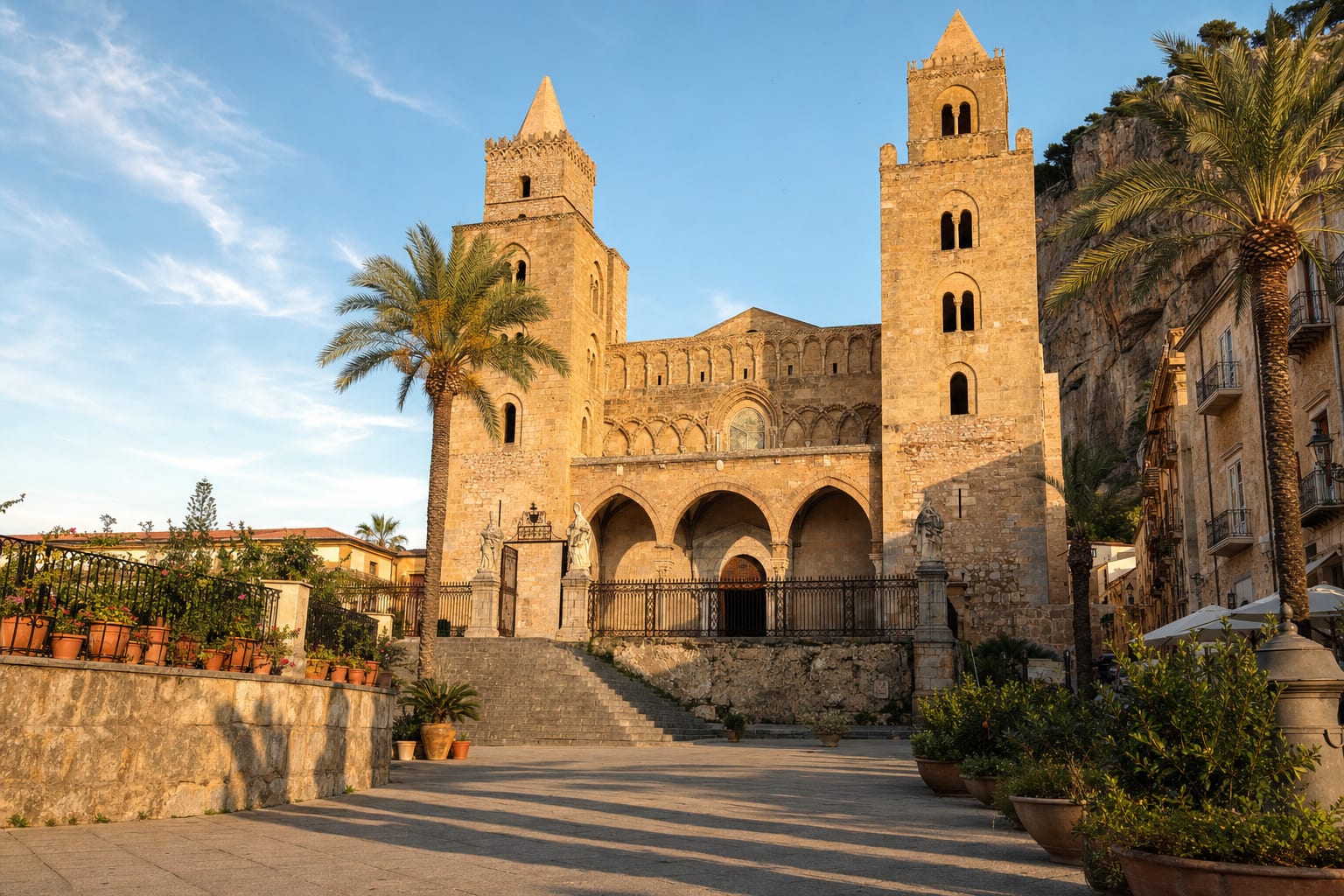 CefalùUNESCOCefalu CathedralTwin Norman towers, early Christ Pantocrator apse, Roger II's 1130 storm vow, UNESCO Arab-Norman listingRoger II vowed to build a cathedral if he survived a violent storm at sea in 1130, and Cefalù's twin-towered church, begun the following year, was his thank-you. It rises directly above the beach, a fortress as much as a place of worship, its facade framed by two mismatched Norman towers finished only in the fourteenth century. Inside, the apse holds one of Sicily's earliest and, by most accounts, most tender depictions of Christ Pantocrator, his long fingers raised in blessing over a nave he seems to watch rather than command. The cathedral forms part of the same 2015 UNESCO listing that covers Palermo and Monreale, evidence of how thoroughly Norman kings, Byzantine mosaicists, and Arab craftsmen reshaped medieval Sicily together.
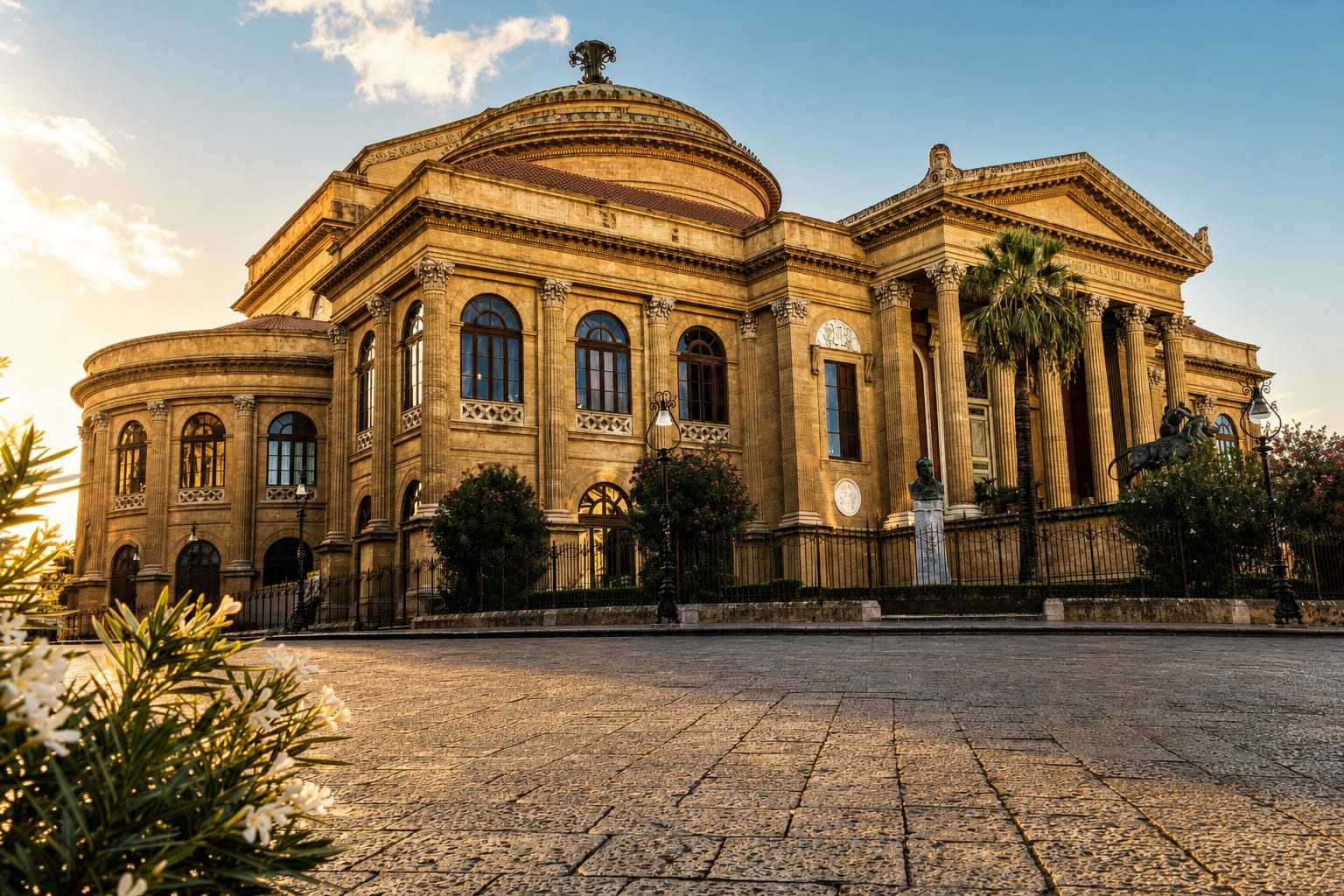 PalermoTeatro MassimoItaly's largest opera house, celebrated acoustics, Godfather Part III staircase, 1897 belle epoque designGiovan Battista Basile designed what's often called Europe's third-largest opera house, after Paris and Vienna, to crown Palermo's belle epoque ambitions, and construction dragged on for 22 years before it opened in 1897, a saga so contentious that Basile died midway and his son Ernesto finished the job. The auditorium's ring of tiered boxes seats nearly 1,400 and was engineered for an acoustic clarity still praised by visiting singers and conductors today. Its grand staircase, framed by two bronze lion fountains, became instantly recognizable worldwide after Francis Ford Coppola filmed the closing opera-house scene of The Godfather Part III on its steps. The theater then closed for 23 years of restoration starting in 1974 and didn't reopen until 1997, a delay Sicilians still joke about.
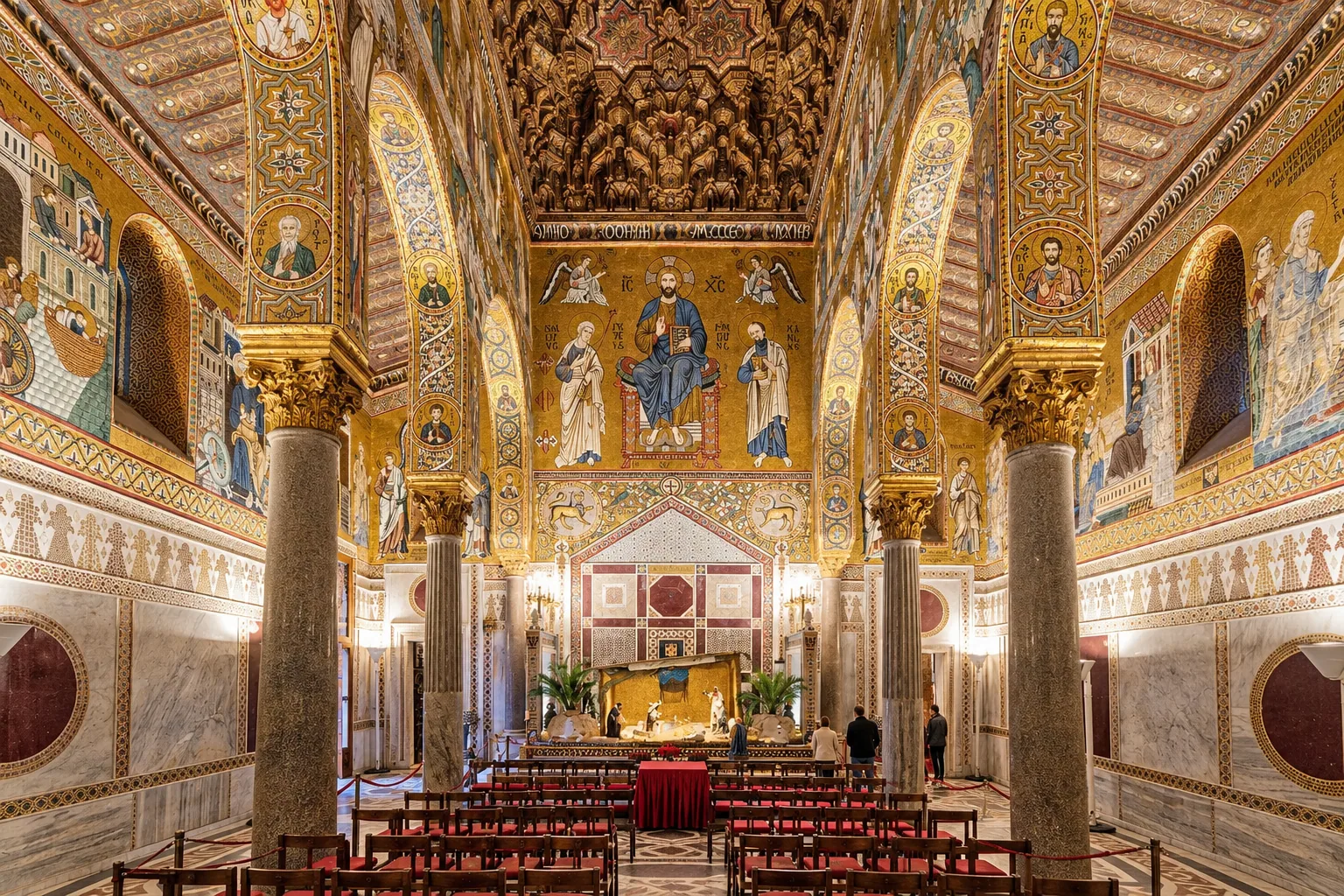 PalermoPalatine ChapelByzantine gold mosaics, Arab muqarnas ceiling, Christ Pantocrator apse, Norman royal chapelRoger II, the Norman king who unified Sicily, commissioned this private chapel in 1132 as a statement of the multicultural kingdom he'd built: Byzantine mosaicists laid gold-ground scenes of Christ and the saints, Arab craftsmen carved and painted the wooden muqarnas ceiling with scenes of courtly life and mythical beasts (the only Fatimid-style ceiling of its kind to survive largely intact), and the floor plan itself follows Latin basilica tradition. Nowhere else in the medieval world did these three traditions share one room so completely, or so harmoniously. The mosaic program, added over decades, climaxes in the apse, where a severe, staring Christ Pantocrator looks down the length of the nave. Bring small binoculars if you have them: the ceiling's painted details, thirty feet up, are otherwise hard to make out.
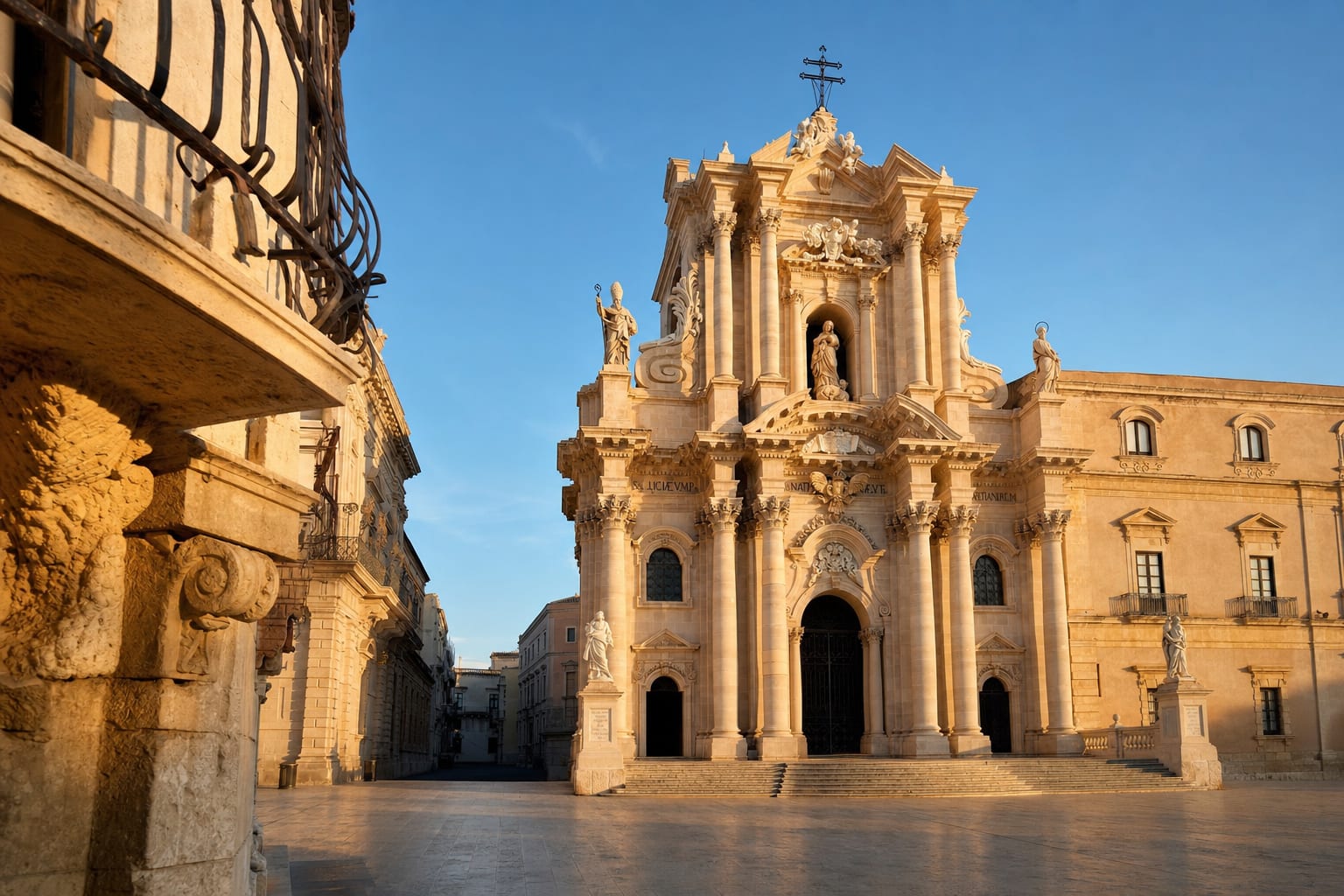 OrtigiaUNESCOSyracuse CathedralDoric columns in the walls, temple of Athena, Baroque facade, Madonna of the Snow, Saint LucyThe Doric columns of Athena's temple, built in the fifth century BCE, still stand inside and along the walls of Syracuse Cathedral, doing structural work after some twenty-five centuries. When the temple was turned into a church in the seventh century, the spaces between the columns were walled up and side aisles cut through; Arab, Norman and Renaissance layers followed, and the earthquake of 1693 brought the front down. The swaggering Baroque facade, with its statues, was raised afterward and is the newest layer of Sicily's longest-running sanctuary. Inside, look for Antonello Gagini's Madonna of the Snow, the silver statue of Saint Lucy, patron of Syracuse, and Vanvitelli's tabernacle chapel.
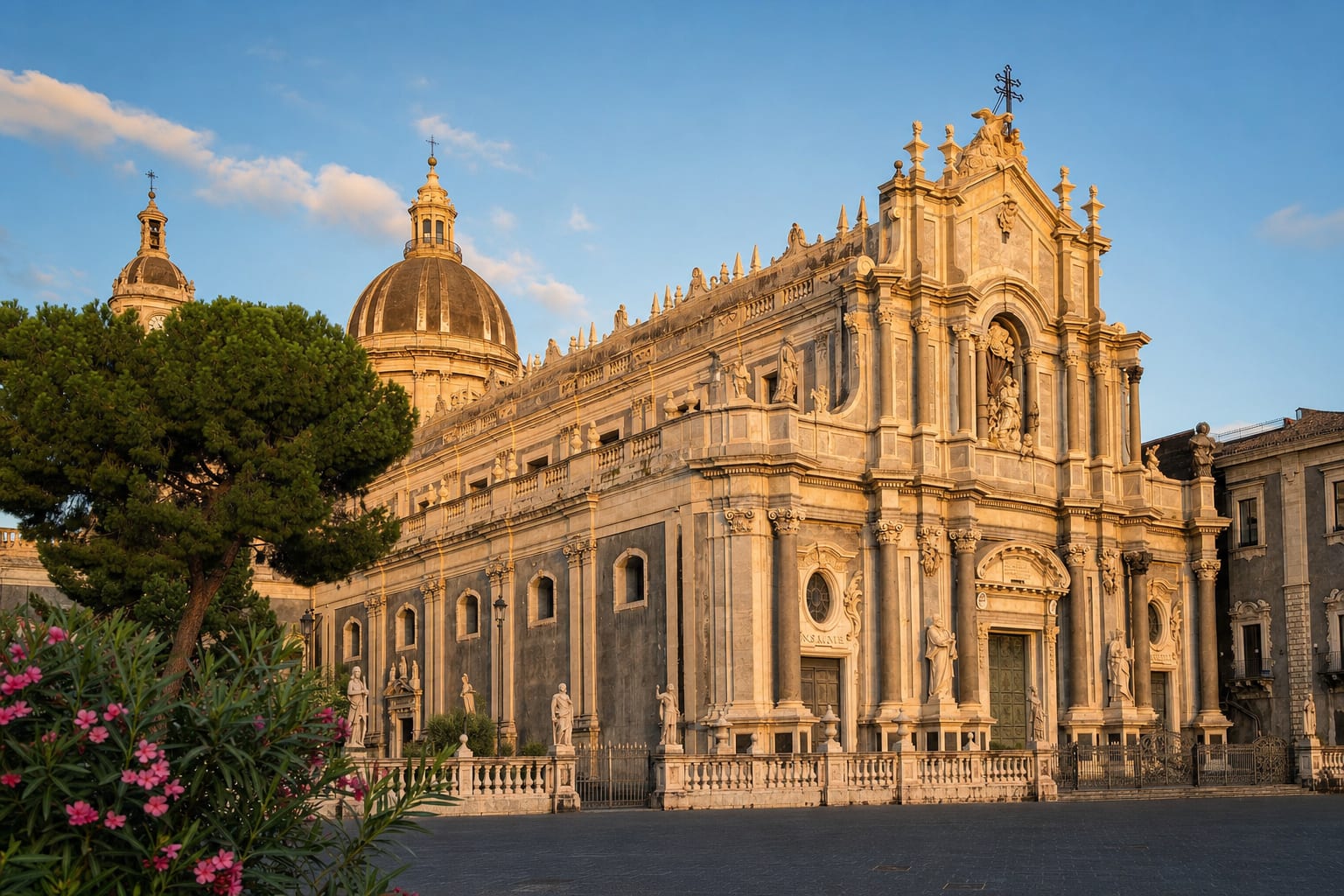 CataniaCatania CathedralSaint Agatha's shrine, lava-and-limestone Baroque, Norman apses surviving quakes, Bellini's tombRoger I, the Norman count who took Sicily from its Muslim rulers, founded Catania's cathedral in 1078 over the ruins of a Roman bath complex, dedicating it to Saint Agatha, the city's third-century martyr and patron. An earthquake and fire gutted it in 1169, leaving only the apses and a strip of the transept, and the catastrophic 1693 quake that leveled much of eastern Sicily forced a near-total rebuild. What stands today is Gian Battista Vaccarini's 1711 Baroque facade in black lava and white limestone, the same volcanic stone Etna has supplied the city for centuries, fronting Norman apses that somehow survived it all. Composer Vincenzo Bellini is buried inside, and each February the cathedral becomes the epicenter of the Festa di Sant'Agata, one of the world's largest religious festivals.
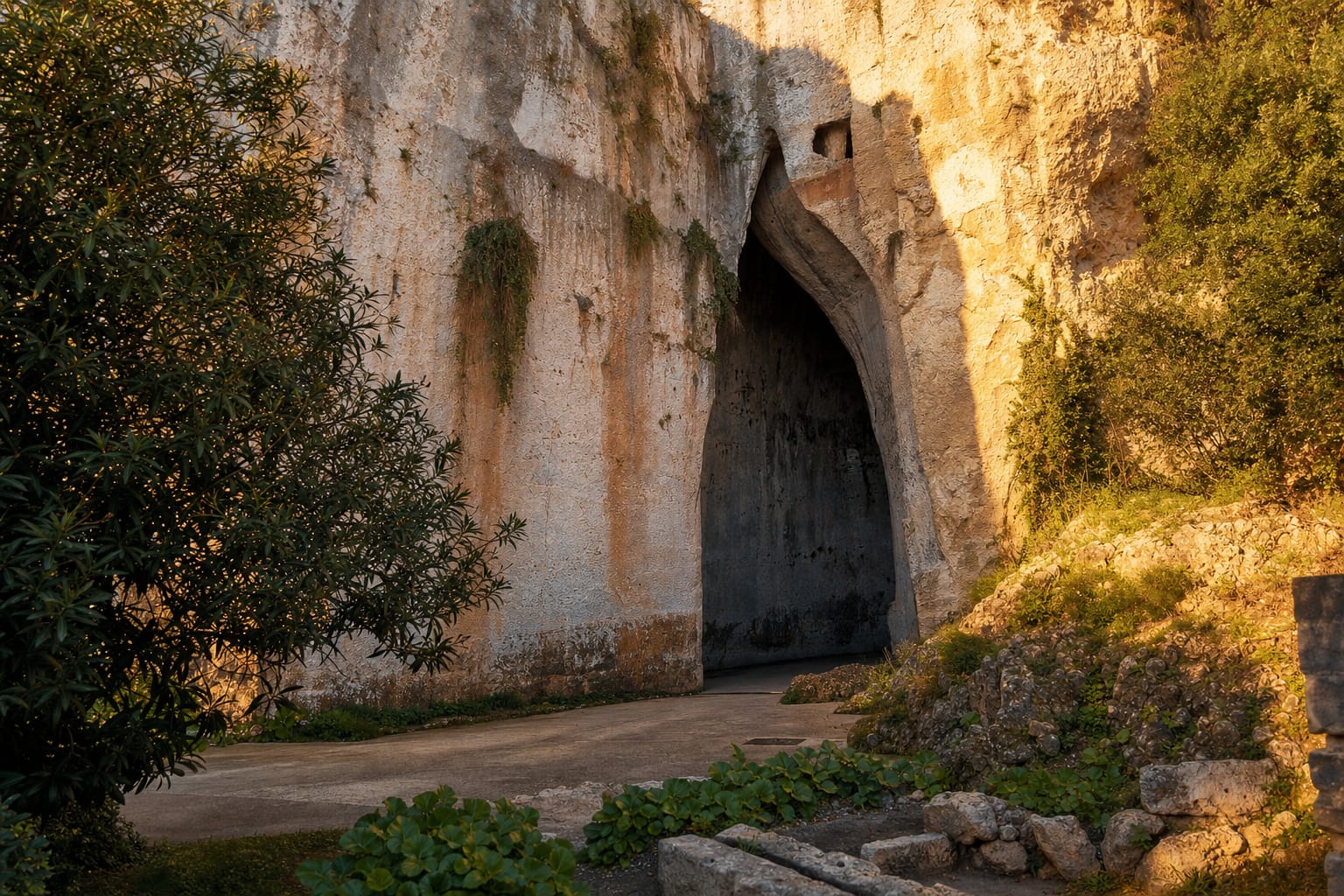 SyracuseEar of DionysiusS-shaped limestone cave, uncanny acoustics, Caravaggio's naming, Latomia del ParadisoThe Ear of Dionysius is a cave in Syracuse's Neapolis park, 23 meters high and about 65 meters deep, cut in an S shape into the limestone of an old quarry. The painter Caravaggio gave it its name in 1608, when he visited Syracuse with the local scholar Vincenzo Mirabella; the legend he repeated is that Dionysius, the tyrant of Syracuse, used it as a prison and listened to his captives through its echo. The shape is real, and the acoustics are still uncanny: a whisper or a clap near the mouth comes back amplified and stretched. The cave lies inside the Latomia del Paradiso, a lush quarry garden full of citrus trees and cave openings.
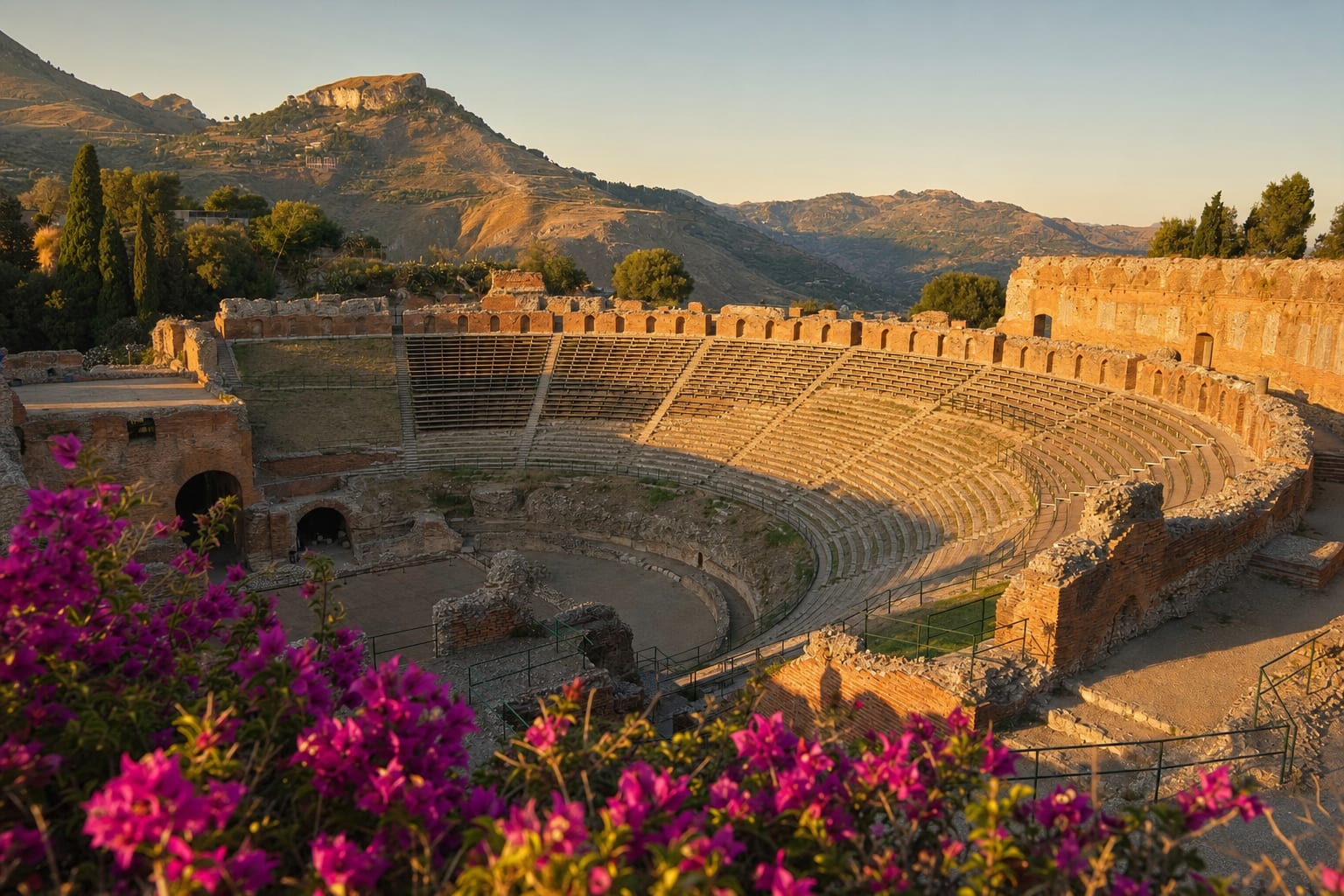 TaorminaAncient Theatre of TaorminaEtna and sea framed by the stage, brick Roman scaena, 10,000-seat cavea, summer concerts and film festivalThe Greeks placed this theatre on a clifftop so that the stage frames Mount Etna and the sea, and no stage set since has matched the view through the ruins of the scaena. It was built in the third century BCE and reshaped in Roman times, probably under Hadrian or Trajan, when the brick structure that still stands took over; it is one of the largest ancient theatres in Sicily, about 107 meters across, with room for some ten thousand spectators. In the third century CE the Romans turned the orchestra into an arena for spectacles. Today the cavea still hosts concerts and the Taormina Film Festival in summer, which is a fine use for a place made for an audience.
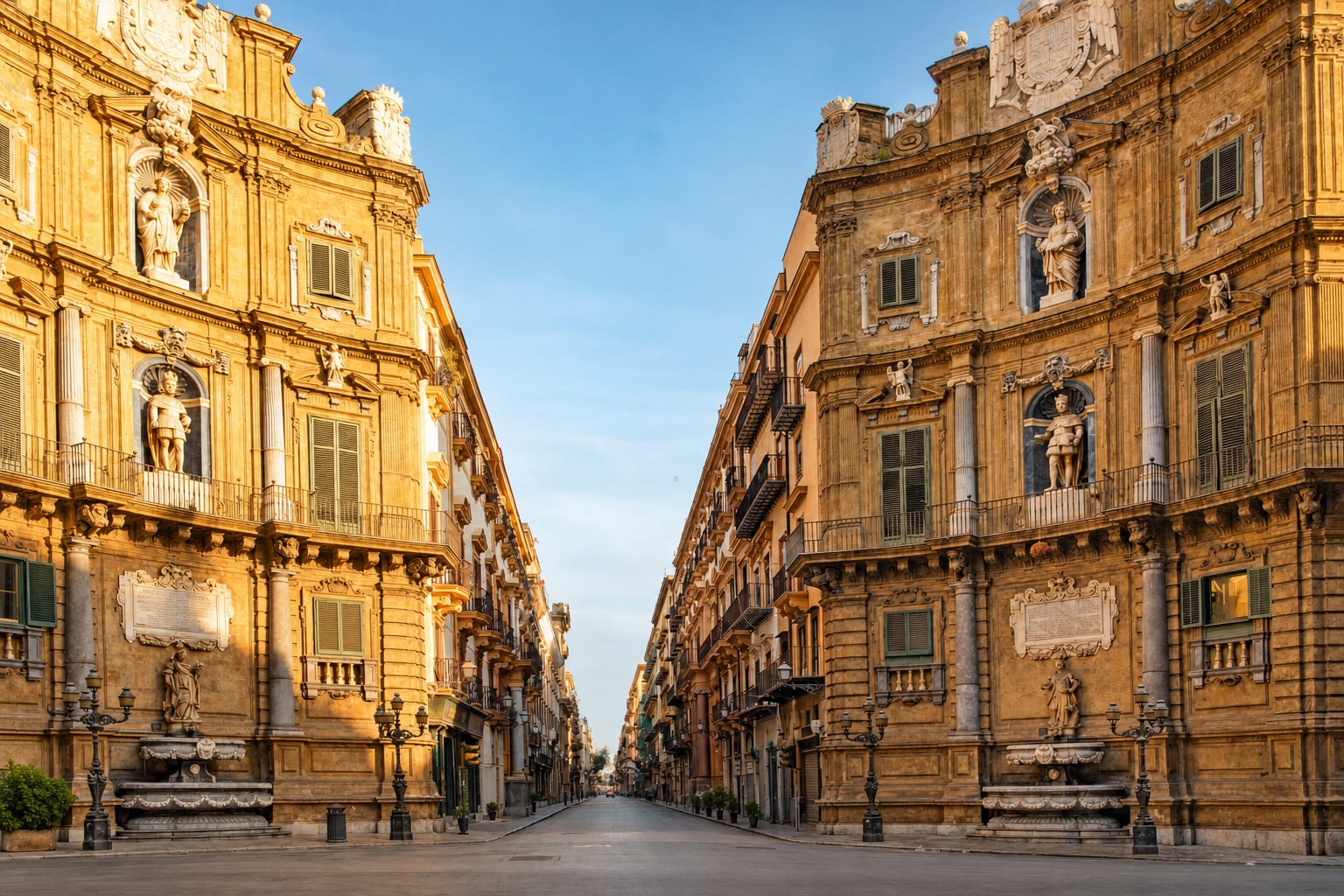 PalermoQuattro CantiBaroque octagonal crossroads, seasonal fountains, Spanish kings, Teatro del SolePiazza Vigliena, better known as the Quattro Canti, is the crossroads where Palermo’s two main streets, Via Maqueda and Corso Vittorio Emanuele, meet. It was laid out between 1608 and 1620 under the Spanish viceroys, to a design by Giulio Lasso and Mariano Smiriglio, and it splits the old city into its four quarters. Four concave Baroque facades face each other across an octagon, each with three tiers: a fountain of one of the seasons at street level, a Spanish king of Sicily above (Charles V, Philip II, III and IV) and, at the top, a patron saint of the city: Christina, Ninfa, Olivia or Agata. Palermitans call it the Teatro del Sole, because at any hour one facade catches the sun.
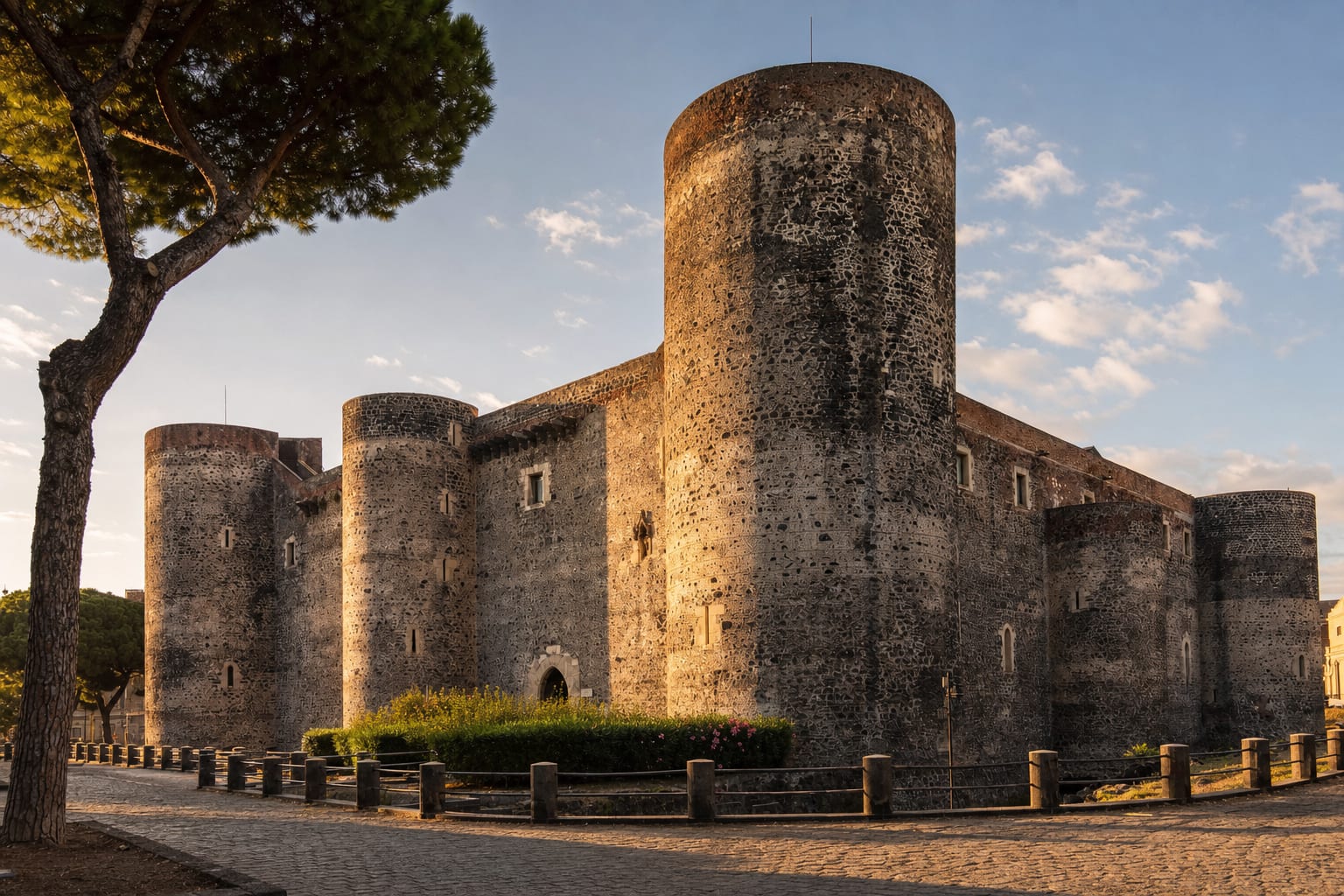 CataniaUrsino CastleFrederick II castle, lava-stone walls, Biscari collection, civic museumEmperor Frederick II raised Castello Ursino in Catania between 1239 and 1250 as a royal stronghold on a sea cliff. In 1669 Etna’s lava filled the moat and pushed the coastline out, and the castle now stands well inland, in a square of its own. It survived the earthquake of 1693 that flattened most of Catania. Its square towers and thick walls of dark lava stone are austere, but inside the Museo Civico opened in 1934 holds the city’s inheritance: the Biscari collection of antiquities, Greek pottery, Roman marbles and coins, and paintings from the fifteenth to the nineteenth century. Come for the building as much as for the rooms, and for the courtyard.
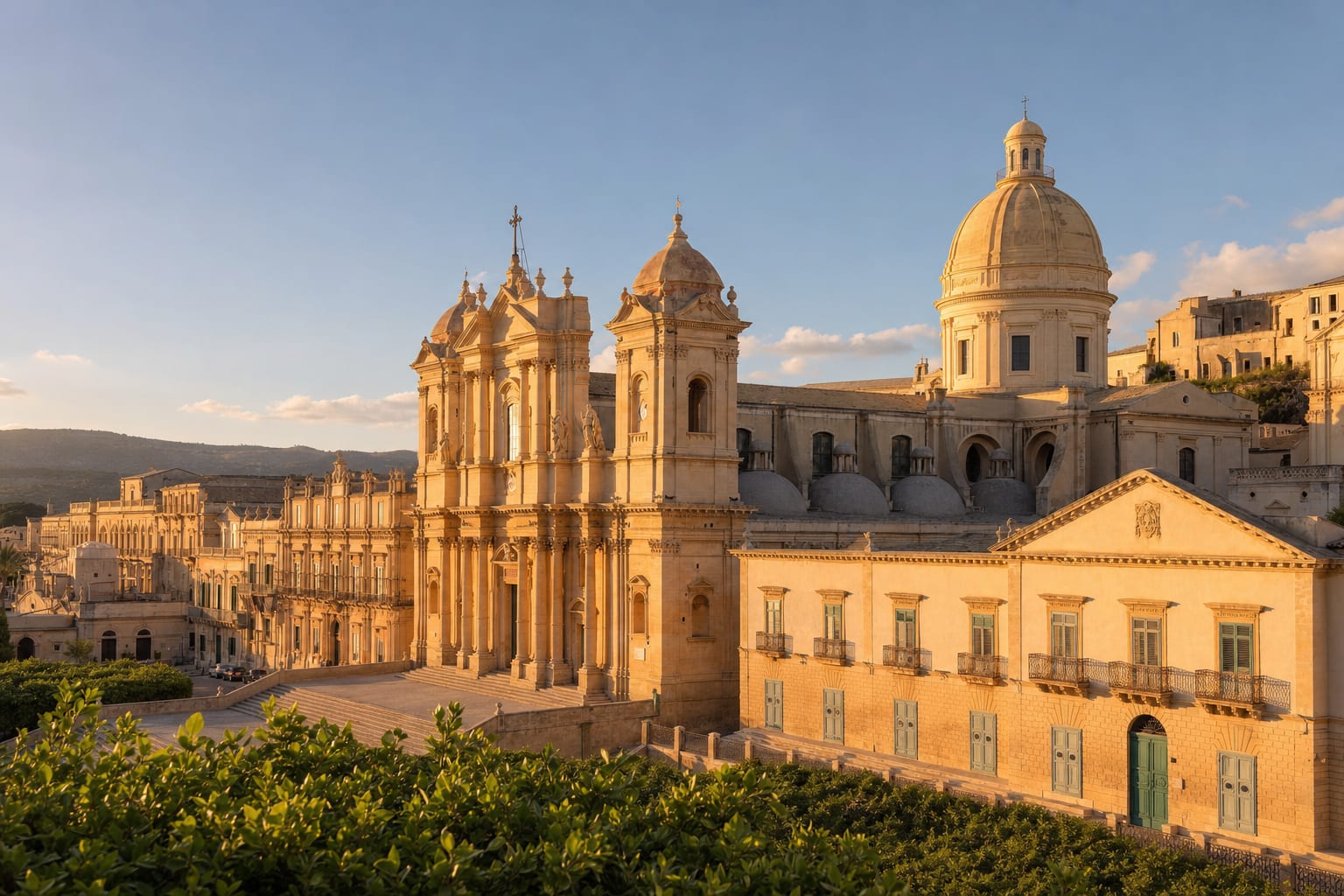 NotoUNESCONoto CathedralHoney-limestone Baroque facade, grand staircase, 1996 dome collapse and rebuild, San Corrado relicsNoto rebuilt itself from nothing after the earthquake of 1693 flattened the old hill town, and this cathedral, dedicated to San Nicolò, crowns the new grid in the same honey-colored limestone as everything around it, reached by a broad staircase that turns the whole piazza into a stage. The building looks Baroque and solid but has failed once: heavy rain and shoddy nineteenth-century repairs brought the dome down in March 1996, destroying the nave beneath it. Restorers spent over a decade putting it back stone by stone, reopening in 2007 with the silver reliquary of San Corrado, Noto's patron saint, returned to the high altar. Pope Benedict XVI made it a minor basilica in 2012. At sunset the facade turns the color of the quarry it came from.
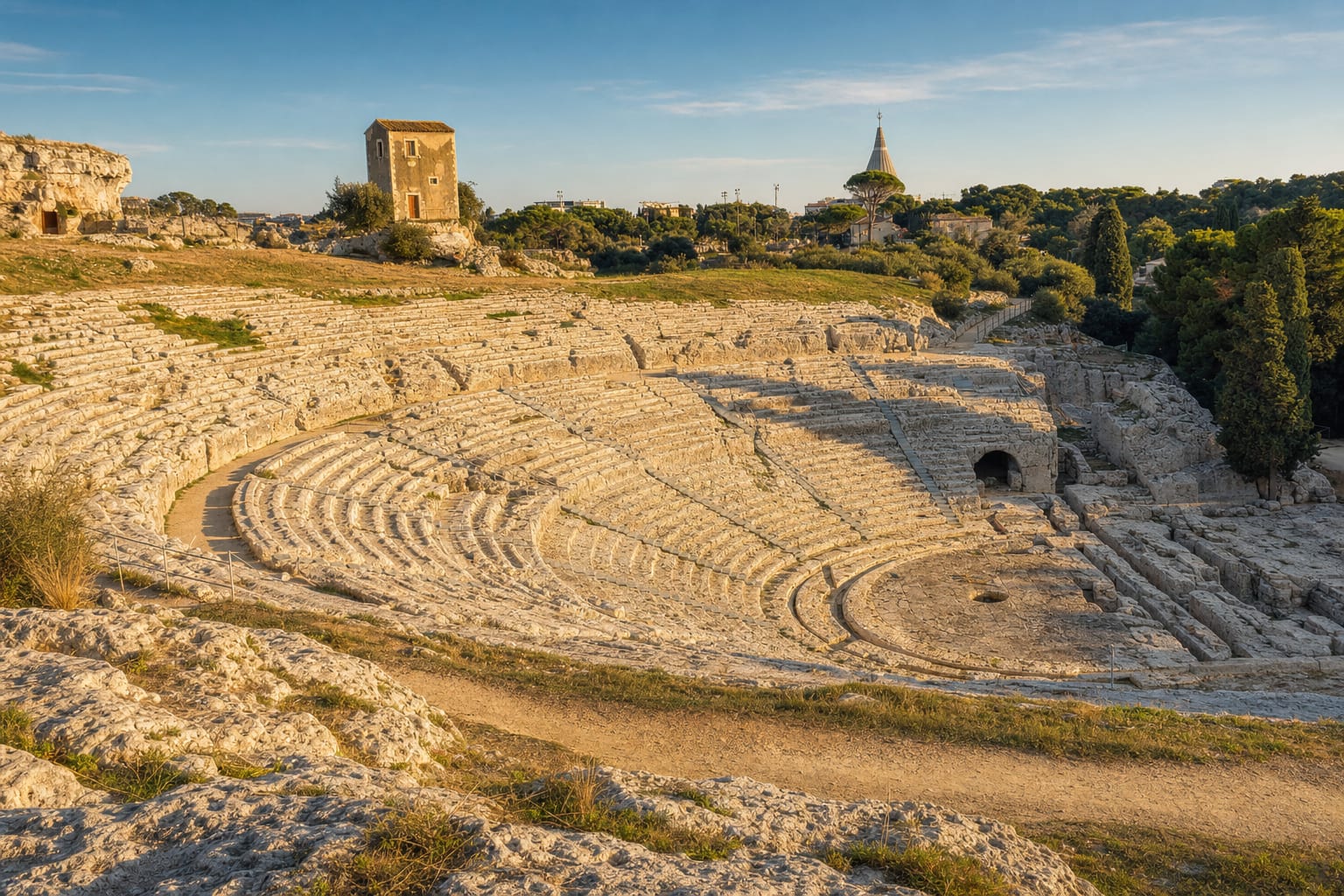 SyracuseGreek Theatre of SyracuseAeschylus premieres, rock-cut cavea for 15,000, INDA classical drama festival, Latomie quarries nearbySyracuse cut its theatre straight into the limestone of the Temenite hill in the fifth century BC, then enlarged it under Hiero II two centuries later to seat some fifteen thousand people. Aeschylus gave the world premiere of his Women of Etna here in 470 BC, honoring the new city of Etna, and came back to restage The Persians, first performed in Athens two years earlier. The rock-cut cavea still does what its builders intended: sit high in the upper rows and a voice from the stage carries without help. Every May and June the INDA Foundation revives that acoustic trick with a season of Greek tragedy performed on the same stone terraces, actors working the same sightlines Syracusans chose twenty-five centuries ago. The nearby Latomie quarries, cut for building stone, later held thousands of Athenian prisoners after the failed siege of 413 BC.
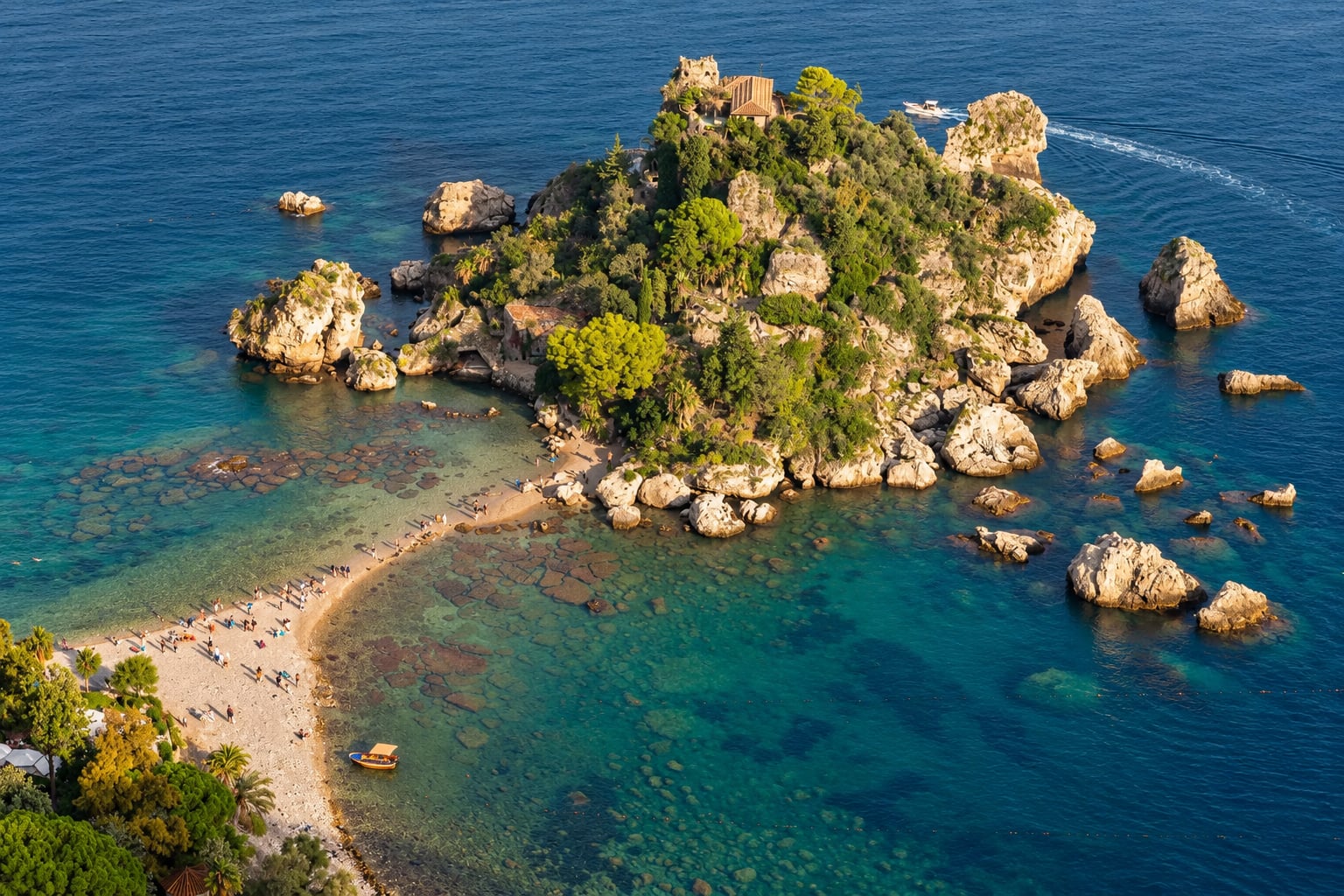
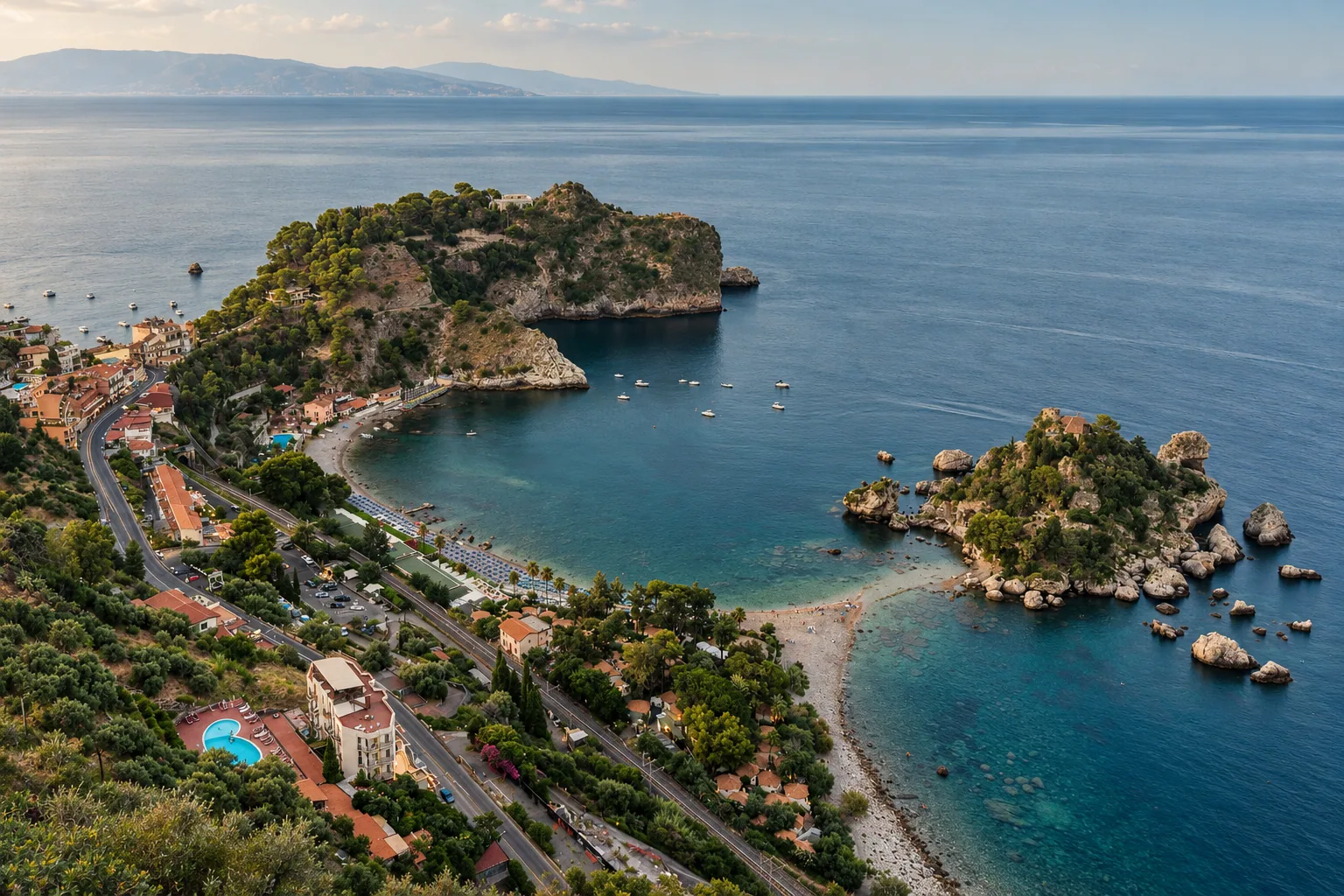 TaorminaIsola BellaPebble tombolo causeway, Florence Trevelyan's garden, protected nature reserve since 1998, clear-water coveA pebble causeway, a tombolo, links Taormina's beach to this small wooded island, but only when the tide allows; wait long enough and the sea reclaims it. In 1890 the English botanist Florence Trevelyan bought the island, built a small house, and filled the grounds with exotic plants that still grow, now wild, among the pines. The Sicilian region protected the roughly ten hectares as a nature reserve in 1998, home to peregrine falcons, Audouin's gulls and a lizard subspecies found nowhere else. The water around the rocks stays some of the clearest on this stretch of coast, which is why visitors keep coming even now that the formal garden has given way to something closer to wilderness.
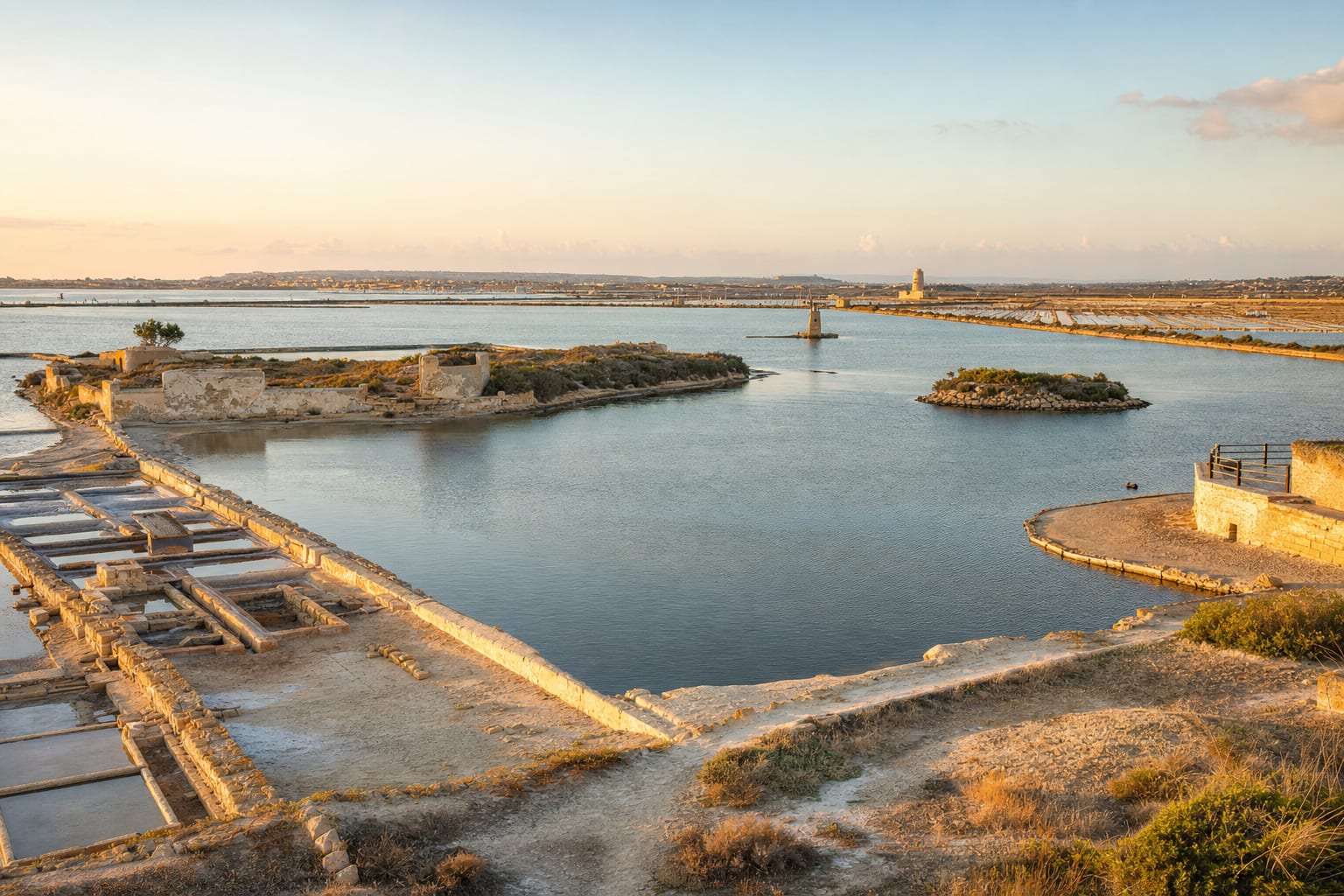 MarsalaStagnone Salt PansPhoenician salt pans, windmills, pink evaporation pools at sunset, boats to Mozia islandSalt has been worked from these shallow lagoons between Trapani and Marsala since Phoenician times, when the traders who built the port city of Mozia on the island in the lagoon's center needed it to preserve fish and hides for shipping. The saltworks still standing today, mostly around the Ettore e Infersa pans, use the same basic method: seawater channeled into progressively shallower pools until only crystals remain, ground once by windmill and now mostly by pump. Microscopic algae tint the last pools pink and orange as the water concentrates, especially at low water in late summer, and old sailing windmills with their fabric sails still stand over the white salt pyramids. A nature reserve protects the lagoon's four islands and its salt-loving plants, including a wild marigold found nowhere else on earth. Small boats cross from the shore to Mozia in minutes, timed for visitors chasing the evening light.
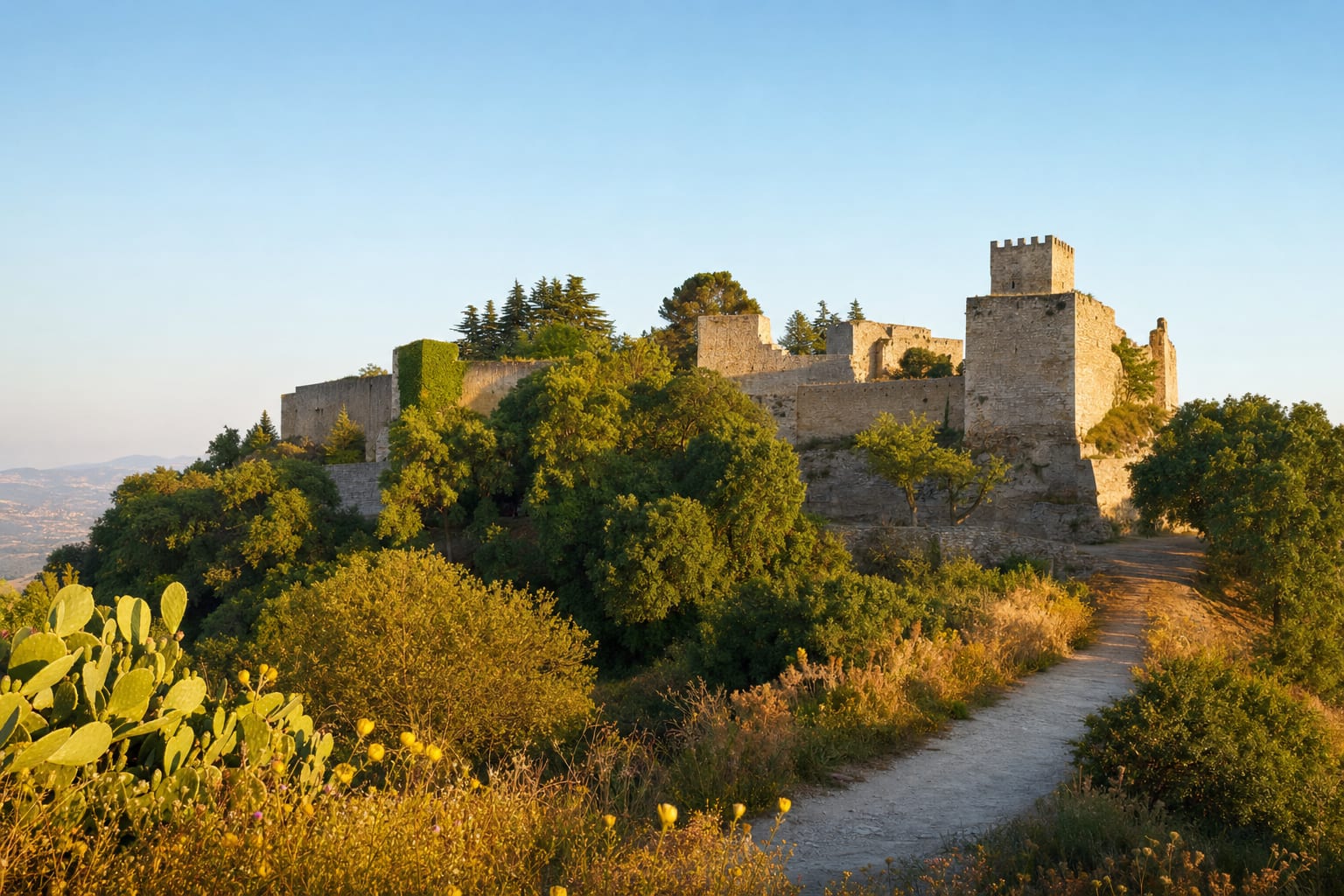 EnnaCastello di LombardiaSicily's largest medieval castle, Pisan Tower panorama, navel of Sicily, six surviving towersAt the geographic center of Sicily, Enna's Castello di Lombardia is the largest medieval castle on the island, covering some 23,000 square meters. Behind long walls once stood twenty towers, of which six survive, around three courtyards and the remains of Byzantine defences. The reward is the Pisan Tower, the highest and best preserved, from whose terrace the view runs across half of Sicily to Etna. This is the panorama that earned Enna its reputation as the belvedere of the island, and the reason it was known since antiquity as the navel of Sicily. In the grounds a statue honors Eunus, the Syrian slave who led a revolt here in the second century BC.
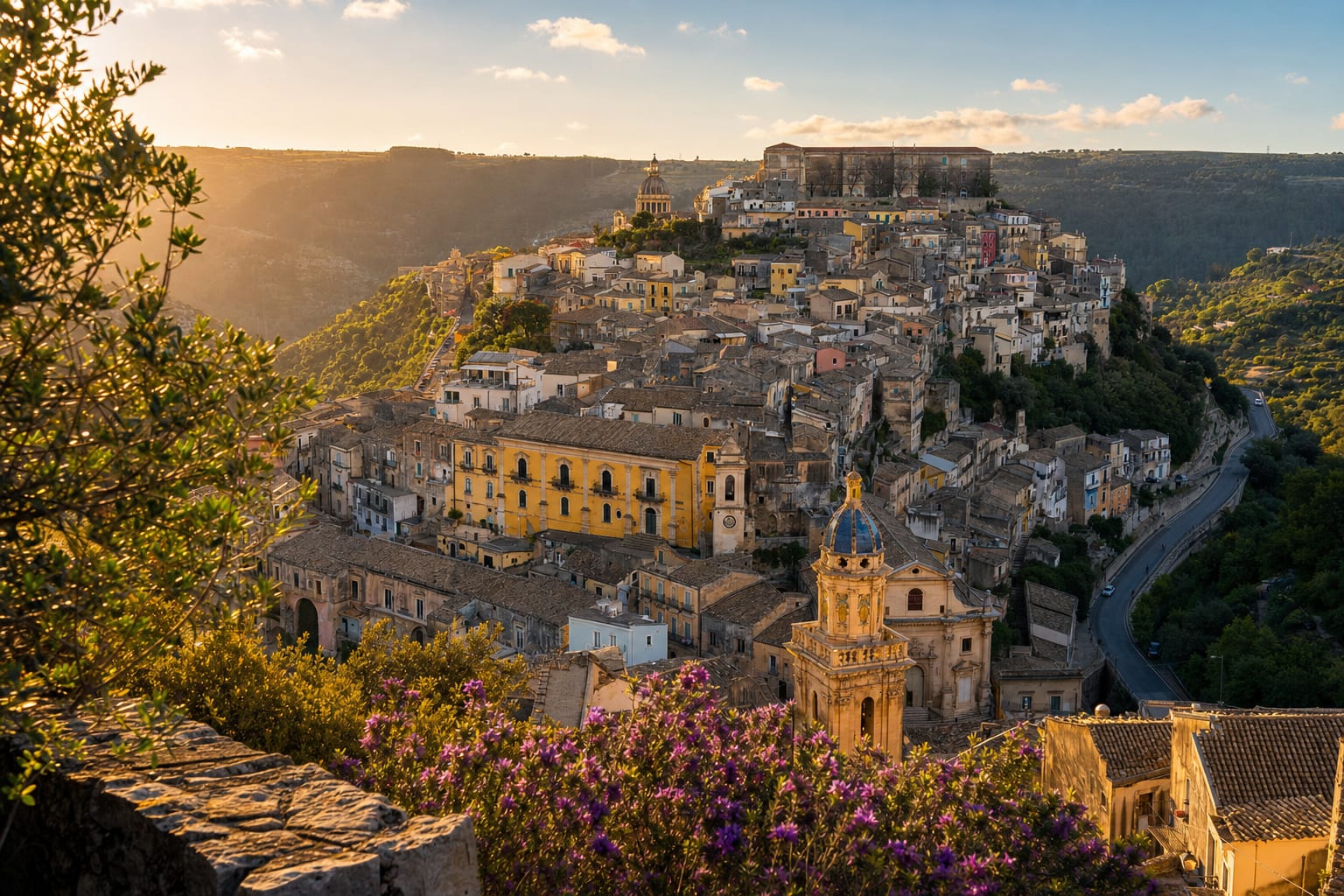 RagusaUNESCORagusa IblaBlue-domed San Giorgio, tangled medieval plan rebuilt Baroque, Giardino Ibleo, Montalbano filming lanesAfter the earthquake of 1693 leveled the old city, Ragusa rebuilt itself in place rather than moving downhill like its twin, so the medieval street plan survived wrapped in a new Baroque skin. Palaces and staircases climb the ridge toward the Cathedral of San Giorgio, Rosario Gagliardi's masterpiece, its blue-grey dome floating above a theatrical flight of steps. Wander past the majolica dome of Santa Maria dell'Itria and down to the Giardino Ibleo, a shaded nineteenth-century garden at the tip of the spur with views over the Irminio valley. Television crews love these lanes too: much of the Montalbano series was filmed here.
Tours worth booking in Sicily
Compared by our editors, across providers.
Booking through these links may earn Italia Magnifica a commission, at no cost to you.
- Viator
- 10h
- 4.0★ · 4 reviews
from €300Book this tour- Viator
- 5h
- 5.0★ · 2 reviews
from €196Book this tour- Viator
- 3h
- 5.0★ · 2 reviews
from €380Book this tour- Viator
- 7h
- 5.0★ · 1 reviews
from €190Book this tour- Viator
- 3h
- 4.9★ · 394 reviews
from €50Book this tour- Viator
- 3h 30m
- 5.0★ · 43 reviews
from €35Book this tour


City by city
Where the monuments cluster in Sicily.
- 4 monumentsPalermo
- 4 monumentsSyracuse
- 3 monumentsCatania
- 2 monumentsLipari
- 2 monumentsTaormina
- 1 monumentAgrigento
- 1 monumentCalatafimi-Segesta
- 1 monumentCastelvetrano
- 1 monumentCefalù
- 1 monumentEnna
- 1 monumentErice
- 1 monumentMarsala
- 1 monumentModica
- 1 monumentMonreale
- 1 monumentNoto
- 1 monumentPiazza Armerina
- 1 monumentRagusa