

Skip to content

Modica

Modica

Two-level Baroque town, San Giorgio's staircase, Aztec-method chocolate, gorge-side stacking.

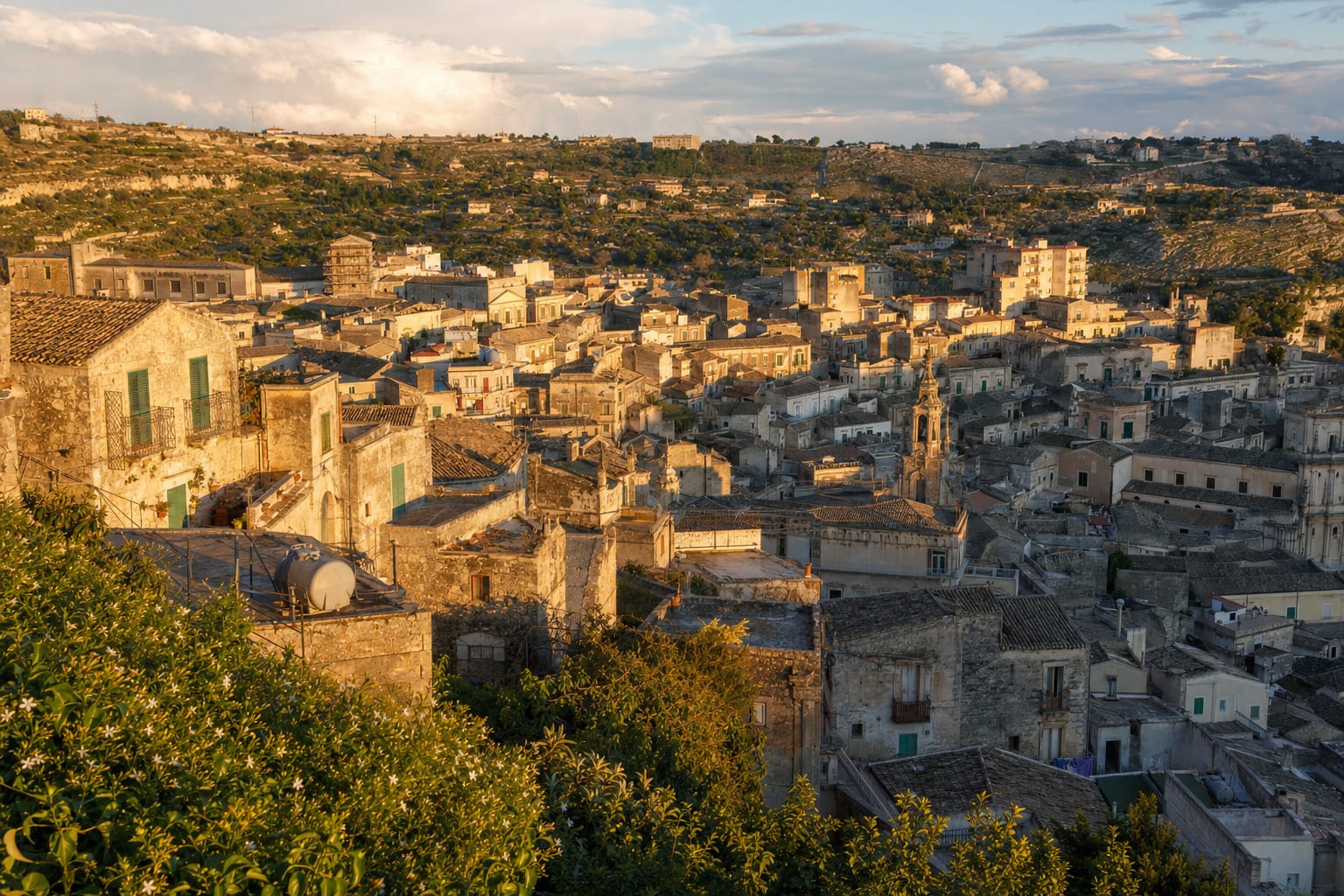
Photograph · Modica

At a glance

Modica facts that matter

Names, makers, dates, and context before the story opens up.

What it isDistrict
WhereModica, Sicily
Known forTwo-level Baroque town, San Giorgio's staircase, Aztec-method chocolate, gorge-side stacking

The story

What you're looking at

Modica stacks two Baroque towns up the sides of a gorge, with San Giorgio's church riding the upper one like a wedding cake on 250 steps. Its other claim is chocolate, still ground cold the way the Spanish brought from the Aztecs.

Verified details

Each statement below is linked to the record or institution that supports it.

Modica is a historic town in south-eastern Sicily. In the UNESCO World Heritage property Late Baroque Towns of the Val di Noto, Modica is represented by isolated monuments in its historic town centre, not by a separately inscribed Modica Old Town or an individually inscribed attraction.1

The regional landscape plan presents Modica's origins as probable rather than certain: it associates the area with Castelluccio-culture evidence from the second millennium BCE and says the town was probably founded by Sicels around 1250 BCE. This is broad settlement context, not a date for the present urban fabric.2

The regional plan records Byzantine fortifications falling to Saracen conquest in the ninth century, followed by Norman rule in the eleventh century and the establishment of the county. It identifies the Chiaramonte, Cabrera and Henriquez-Cabrera as later dynastic phases. These are town-scale historical layers, not evidence for dating every surviving building to one of them.2

UNESCO identifies Modica as one of eight south-eastern Sicilian towns rebuilt after the 1693 earthquake. Its account specifies that Modica and Scicli were moved and rebuilt in adjoining areas already partially urbanized, while the regional plan notes that surviving earlier material was incorporated into later construction. This is a reconstruction history, not evidence that all present buildings date from one campaign.1,2

The regional plan describes Modica's lower corso as having once followed a river and notes that the 1902 flood changed this condition through tunnels that joined the two sides. This is useful urban-history context and must not be repurposed as current hydrological, accessibility or route guidance.2

These sources establish the broad urban-history and property-level heritage context. They do not establish the precise UNESCO monument list or boundary, individual church and palace chronologies, current opening hours, walking routes, parking, hospitality, events, accessibility, safety, flood conditions, transport or media rights.1,2

Sources and citations (2)
  1. UNESCO World Heritage CentreLate Baroque Towns of the Val di Noto (South-Eastern Sicily)Outstanding Universal Value, component scopeRead source
  2. Regione SicilianaPiano Paesaggistico: Schede dei centri e nuclei storici, ModicaModica, Brevi cenni storiciRead source

Plan your visit

Before you go

Booking
Walk-up friendly

Find it

Where to find Modica

Get directionsGoogle MapsApple Maps