Skip to content

Orecchio di Dionisio

Ear of Dionysius

S-curved limestone cavern, uncanny acoustics, Caravaggio's name, tyrant's listening legend.

Photograph · Orecchio di Dionisio

At a glance

Ear of Dionysius facts that matter

Names, makers, dates, and context before the story opens up.

Italian nameOrecchio di Dionisio
What it isNature
WhereSyracuse, Sicily
Known forS-curved limestone cavern, uncanny acoustics, Caravaggio's name, tyrant's listening legend

The story

What you're looking at

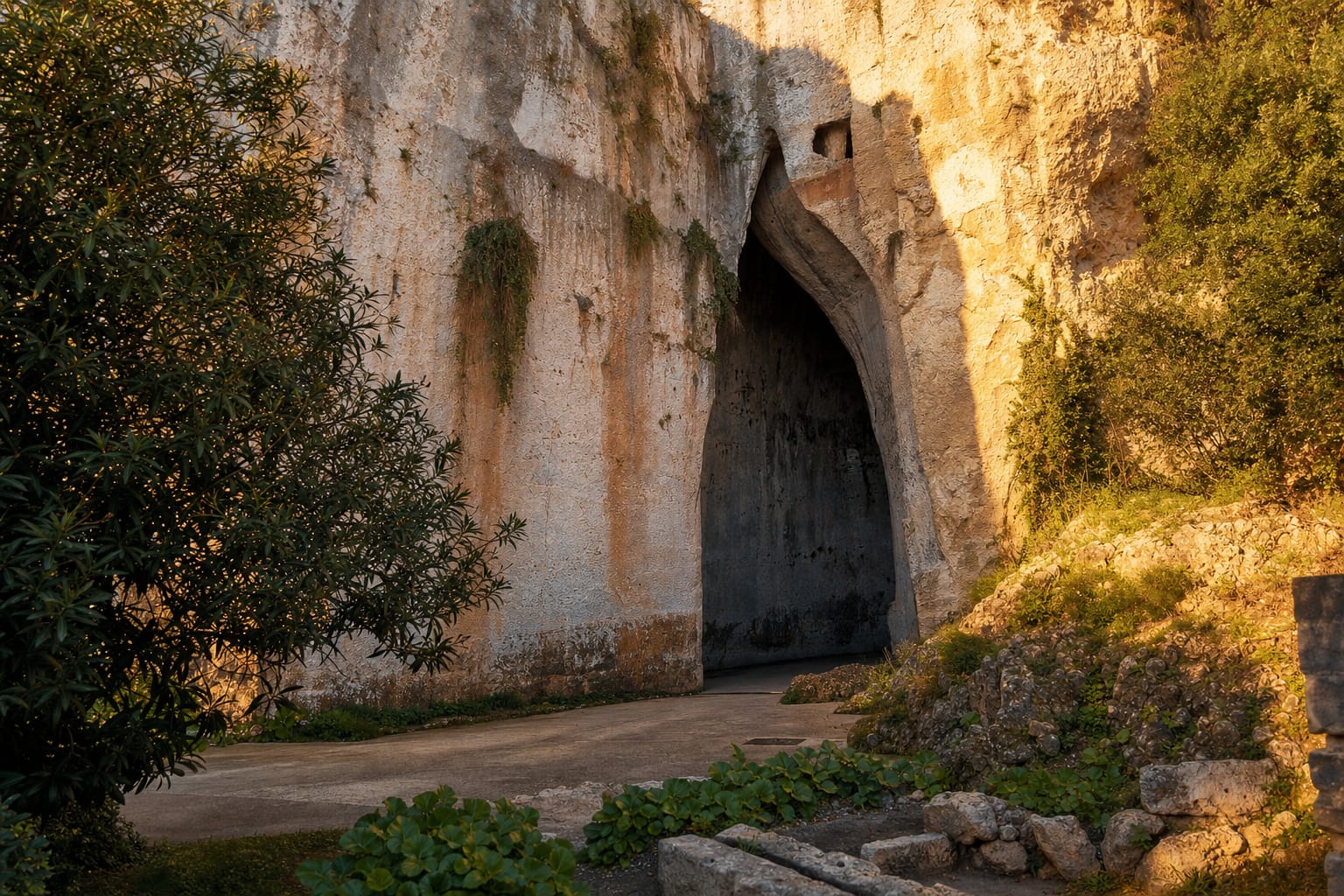
Caravaggio named this ear-shaped quarry cave after the tyrant said to have eavesdropped on prisoners through its echo. A whisper at the back really does return amplified from twenty-three meters of curved limestone.

Verified details

Each statement below is linked to the record or institution that supports it.

The Ear of Dionysius, or Orecchio di Dionisio, is an artificial limestone cave in the Latomia del Paradiso at the Neapolis archaeological area of Syracuse. It is a quarry-cave feature within a larger archaeological landscape, not an independent ancient building.1,2

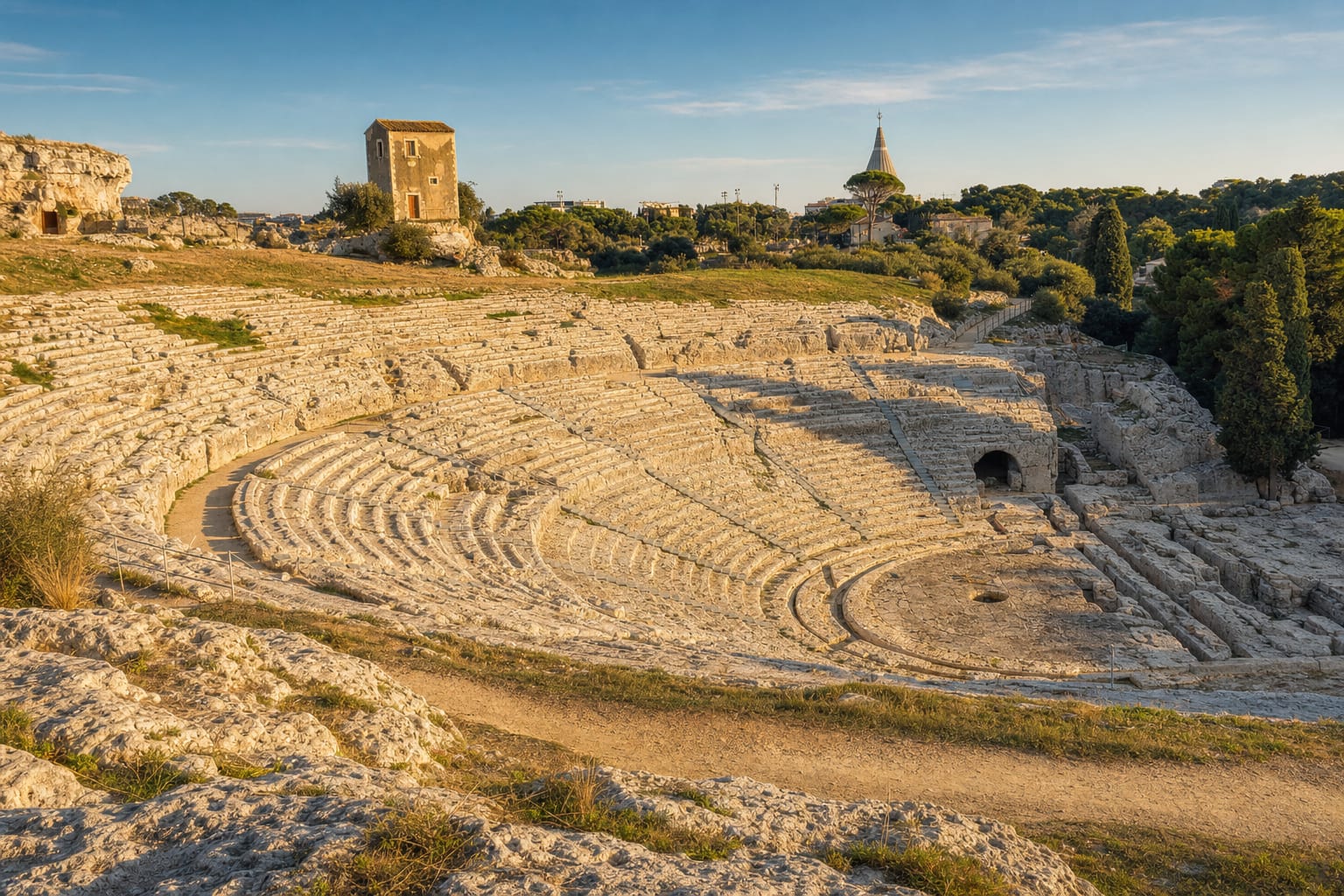
The Sicily Region identifies the Ear among the extensive caves in the Latomie del Paradiso and Santa Venera, ancient stone quarries that still bear extraction marks. The same Neapolis area includes the Greek Theatre, Roman Amphitheatre, Altar of Hieron II, and Via dei Sepolcri as distinct monuments or spaces.1

Italia.it describes the Ear as approximately 23 metres high, 8 to 11 metres wide, and about 65 metres deep. These are dimensional descriptors of an artificial cave, not evidence for a visitor route, voice test, or acoustic performance claim.2

Italia.it and University of Catania research connect the modern name to Caravaggio's 1608 visit, when the cave's form and acoustic characteristics prompted the comparison with an ear. The name is therefore early-modern reception history, not an ancient original designation.2,3

The story that Dionysius I eavesdropped on prisoners through the cave's acoustics is a legend, not a proven account of how the cave was made or used. University research explicitly frames it as legend, while the regional record establishes the broader quarry context rather than a documented prison installation for this individual cave.3,1

The Ear of Dionysius is within the UNESCO World Heritage property Syracuse and the Rocky Necropolis of Pantalica, inscribed in 2005. UNESCO identifies the Neapolis archaeological area and expressly names the cave among the well-preserved structures in the archaeological area; the cave is not separately inscribed.4

Sources and citations (4)
  1. Parco archeologico di SiracusaArea archeologica della NeapolisLatomie del Paradiso and cavesRead source
  2. Italia.itOrecchio di DionisioArtificial limestone cave identityRead source
  3. University of Catania IRISL'Orecchio di Dionisio: dal rilievo la conferma di una leggendaResearch abstract on Caravaggio-name traditionRead source
  4. UNESCO World Heritage CentreSyracuse and the Rocky Necropolis of PantalicaBrief synthesis, integrity, inscription dataRead source

Plan your visit

Before you go

Booking
Walk-up friendly

Find it

Where to find Ear of Dionysius

Get directionsGoogle MapsApple Maps

Book a visit

Tours that include Ear of Dionysius

Compared by our editors, across providers.

Booking through these links may earn Italia Magnifica a commission, at no cost to you.

    • 5h
    • 4.6★ · 89 reviews
    • 4h