

Skip to content

Ragusa

Ragusa Ibla

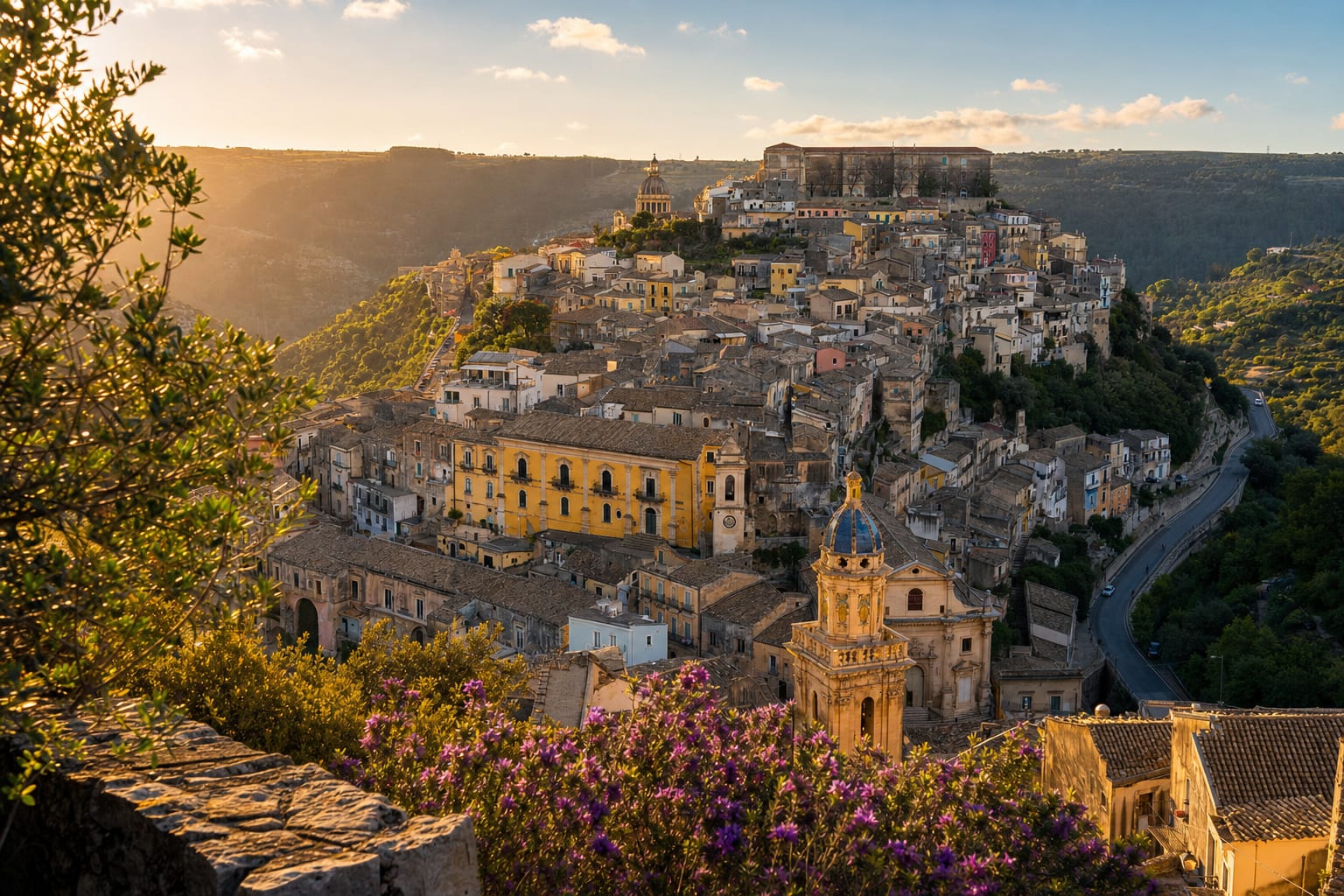
Blue-domed San Giorgio, tangled medieval plan rebuilt Baroque, Giardino Ibleo, film-set lanes.

Photograph · Ragusa Ibla

At a glance

Ragusa Ibla facts that matter

Names, makers, dates, and context before the story opens up.

What it isDistrict
WhereRagusa, Sicily
Known forBlue-domed San Giorgio, tangled medieval plan rebuilt Baroque, Giardino Ibleo, film-set lanes
UNESCOWorld Heritage setting

The story

What you're looking at

After the great earthquake, old Ragusa rebuilt itself in place, Baroque palaces threaded along its medieval tangle. The blue dome of San Giorgio floats over lanes that end in the palm-lined Giardino Ibleo above the valley.

Verified details

Each statement below is linked to the record or institution that supports it.

Ragusa Ibla is the historic old-town district of Ragusa, not a single monument. It forms part of the Ragusa component within the UNESCO World Heritage property Late Baroque Towns of the Val di Noto, inscribed in 2002; it is not separately inscribed.1,2

The hill of Ibla was inhabited by Sicels from the 14th century BCE according to the municipal account, with Sicel necropolises around Ragusa. A Greek necropolis on the Rito hill dates to the 6th century BCE, and Roman conquest ended local independence in the 3rd century BCE.1

The municipality records Byzantine fortification, Arab conquest in 848, Norman conquest in 1091, and Ragusa's place as a county under Goffredo. These are successive political and urban layers, not an evidence basis for assigning every surviving building a Byzantine, Arab or Norman date.1

The 1693 earthquake devastated Ragusa. The municipal account explains the city’s subsequent two-part development: nobles associated with San Giorgio rebuilt on the earlier site, while massari and the bourgeoisie associated with San Giovanni built on the nearby Patro hill. This split is central to explaining Ragusa Ibla and Ragusa Superiore, not a claim that either district was newly founded in 1693.1,2

UNESCO inscribed the serial property Late Baroque Towns of the Val di Noto in 2002 under criteria (i), (ii), (iv) and (v). Ragusa is one of the property’s town components, while UNESCO notes detailed recovery planning for the old town of Ragusa Ibla. This is property-level status, not a substitute for individual-building history or current access information.2

These sources establish district identity, broad settlement and reconstruction history, and the property-level UNESCO relationship. They do not establish current walking routes, transport, parking, shop or restaurant quality, opening hours, festival dates, accessibility, street conditions, safety, accommodation, or media rights.1,2

Sources and citations (2)
  1. Comune di RagusaCenni storiciRagusa historical overviewRead source
  2. UNESCO World Heritage CentreLate Baroque Towns of the Val di Noto (South-Eastern Sicily)Property description and inscription dataRead source

Plan your visit

Before you go

Booking
Walk-up friendly

Find it

Where to find Ragusa Ibla

Get directionsGoogle MapsApple Maps