


I monumenti
Tutti i monumenti, città per città
I luoghi e i capolavori attorno a cui vale la pena costruire una giornata.
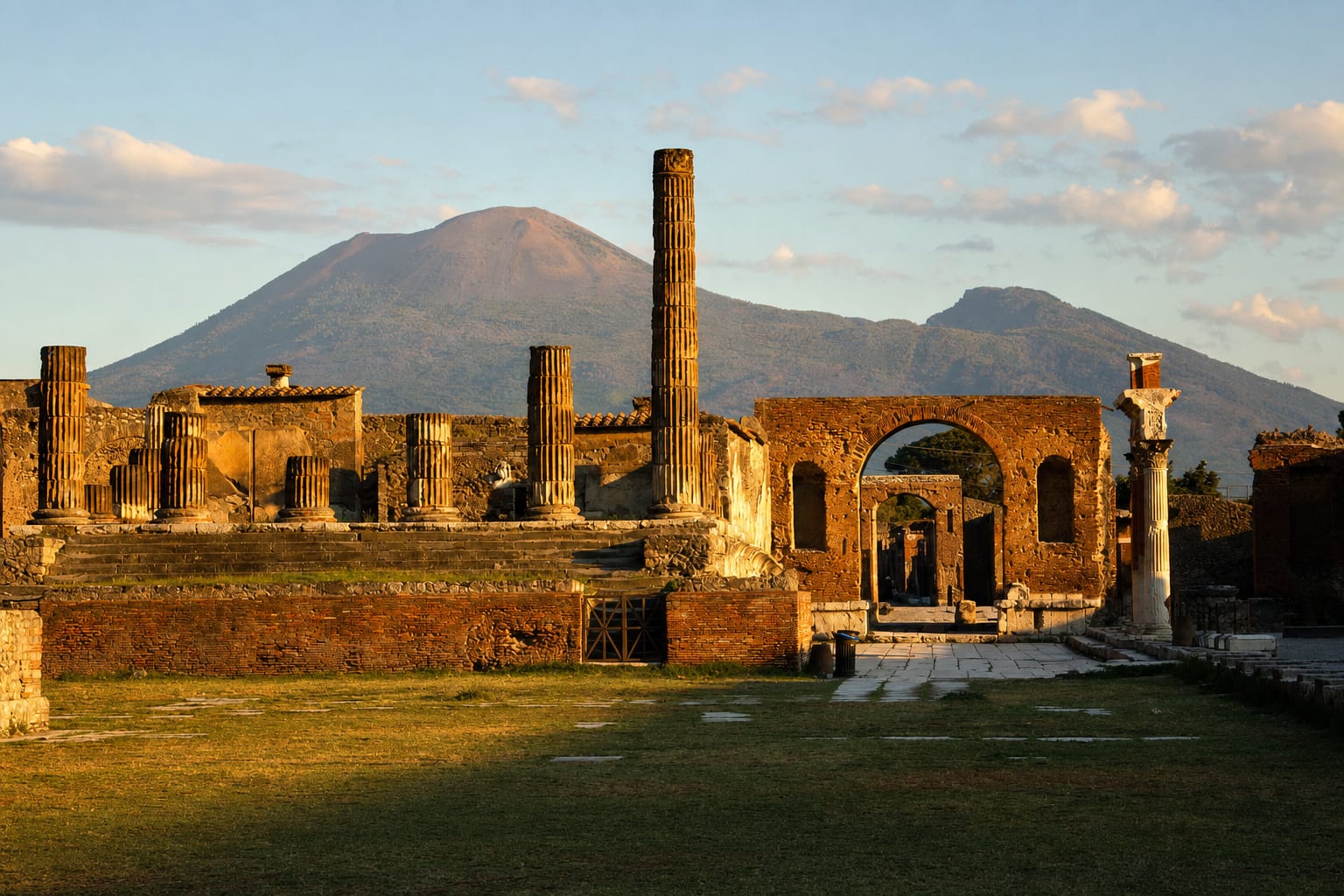 PompeiUNESCOScavi di Pompei79 CE eruption; Roman streets and houses; Forum; theatres; amphitheatre; exceptional urban preservationPompeii is the archaeological area of the Roman city buried in Vesuvius’s 79 CE eruption. Ash and lapilli contributed to the exceptional preservation of a dense urban fabric: streets, houses, shops, the Forum, sacred precincts, baths, theatres and an amphitheatre. The Ministry of Culture describes a 66-hectare archaeological area with about 50 hectares excavated when suburban areas are included; UNESCO’s 44-hectare excavated measure has a different scope and should not be conflated with it.Pianifica la visita
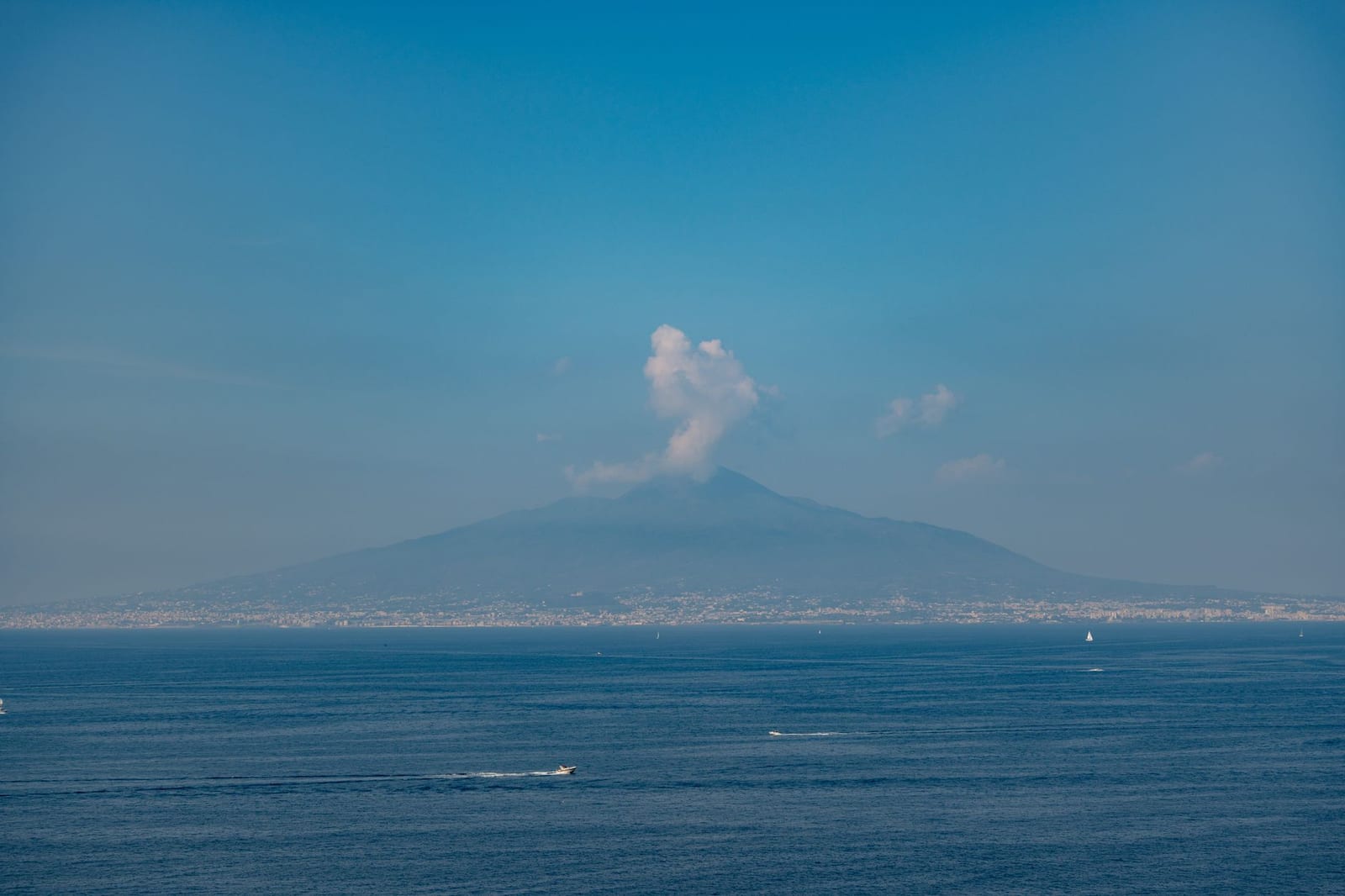 Torre del GrecoVesuvioIts 1944 last eruption, INGV monitoring, Gran Cono Trail 5 and the Vesuvius National Park.Vesuvius is the volcanic complex above the Bay of Naples. Following its 1944 eruption, INGV describes it as being in a closed-conduit quiescent phase with low seismicity and fumarolic activity. The Vesuvius National Park manages the Gran Cono visit route; its operational conditions and access must be checked directly with the Park.
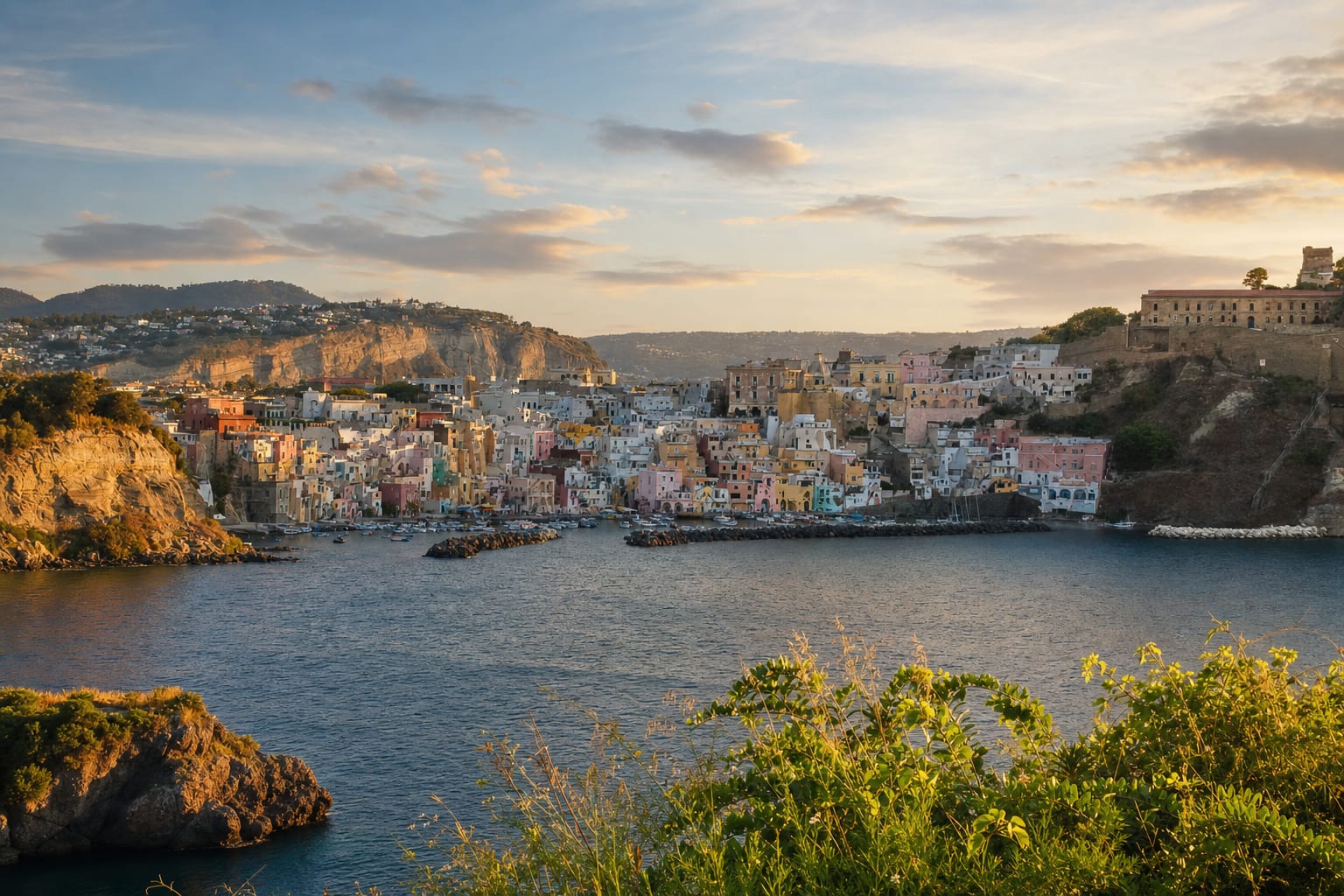 ProcidaProcidaTerra Murata; Corricella; Phlegraean island landscape; Il Postino; Italian Capital of Culture 2022Procida is a volcanic island in the Gulf of Naples and part of the Phlegraean Islands. Its historic coastal landscape combines tuffaceous ground, high shores, inlets and small beaches. Nine historic contrade include Terra Murata, Corricella, Marina Grande Sent'cò and Chiaiolella. The island was Italy's Capital of Culture in 2022, and Il Postino, Massimo Troisi's final film, is set here. Procida is not a UNESCO World Heritage property.
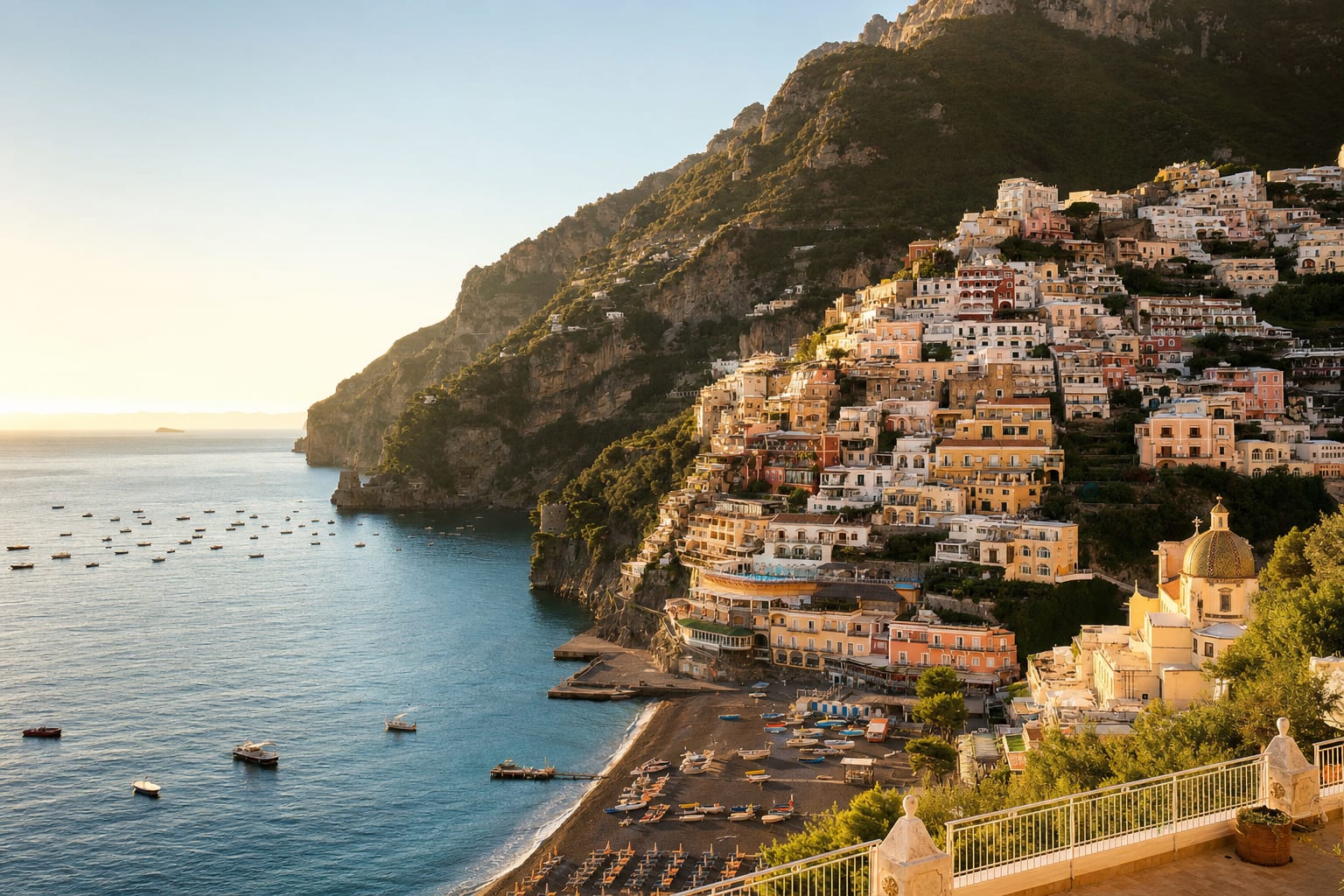 PositanoUNESCOPositanoCostiera Amalfitana cultural landscape; La Porta prehistoric evidence; Roman villa of otium; sixteenth-century watchtowers; 1668 città regiaPositano is a historic settlement and landscape within the UNESCO World Heritage property Costiera Amalfitana. UNESCO records Palaeolithic and Mesolithic remains at the local La Porta cave, while the bay of modern Positano contains evidence of a Roman terraced villa of otium developed from the late first century BCE into the first century CE. Municipal history also records sixteenth-century watchtowers at Fornillo, Trasita and Sponda, and Positano's redemption from feudal control as a città regia in 1668.
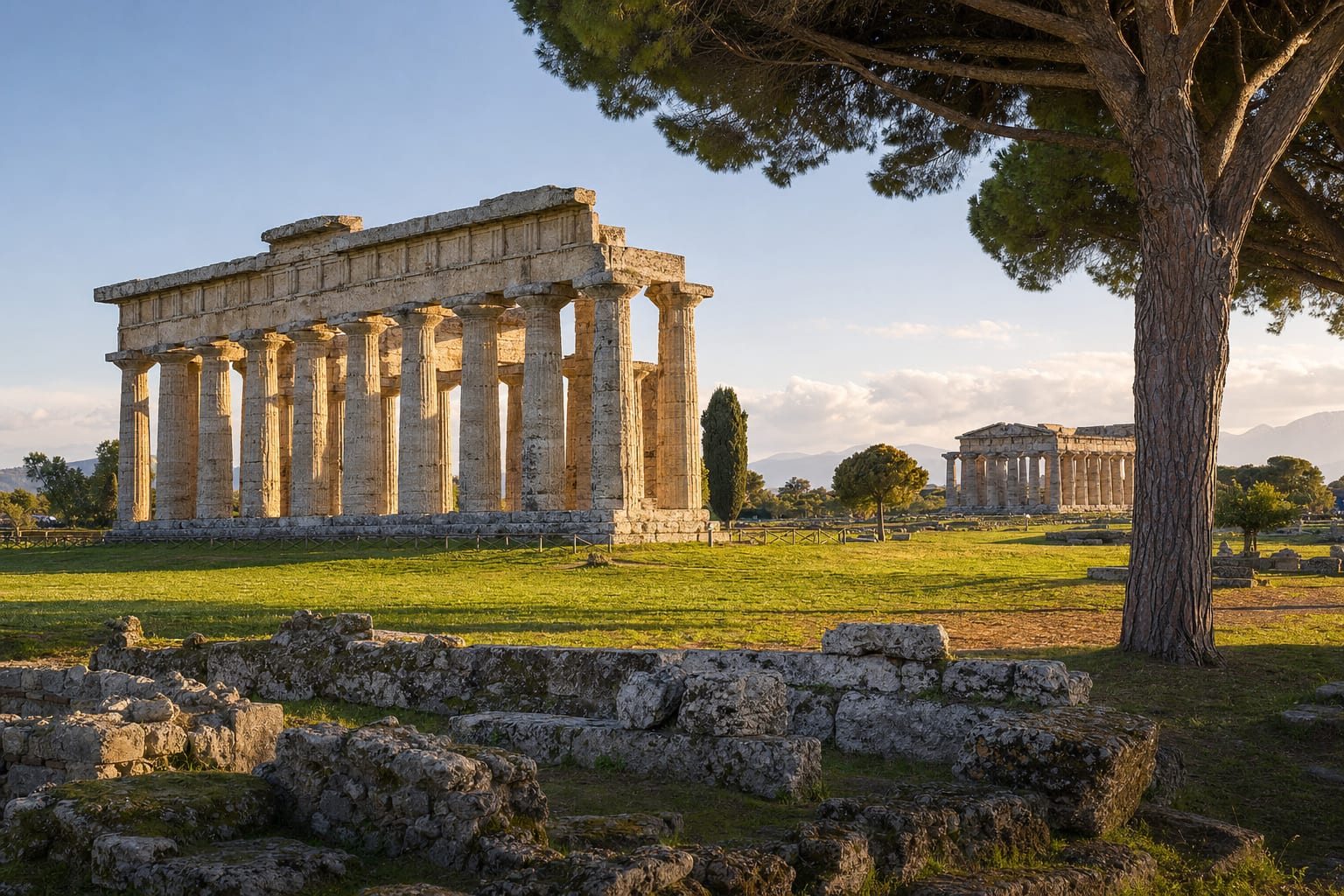 PaestumUNESCOTempli di PaestumIts three Doric temples, the archaeological city of Poseidonia–Paestum and the Tomb of the Diver.Paestum preserves the archaeological city of Poseidonia–Paestum across sanctuaries, public spaces and residential remains. Its three Doric temples date from the sixth and fifth centuries BCE, while the on-site museum provides essential context, including the Tomb of the Diver.
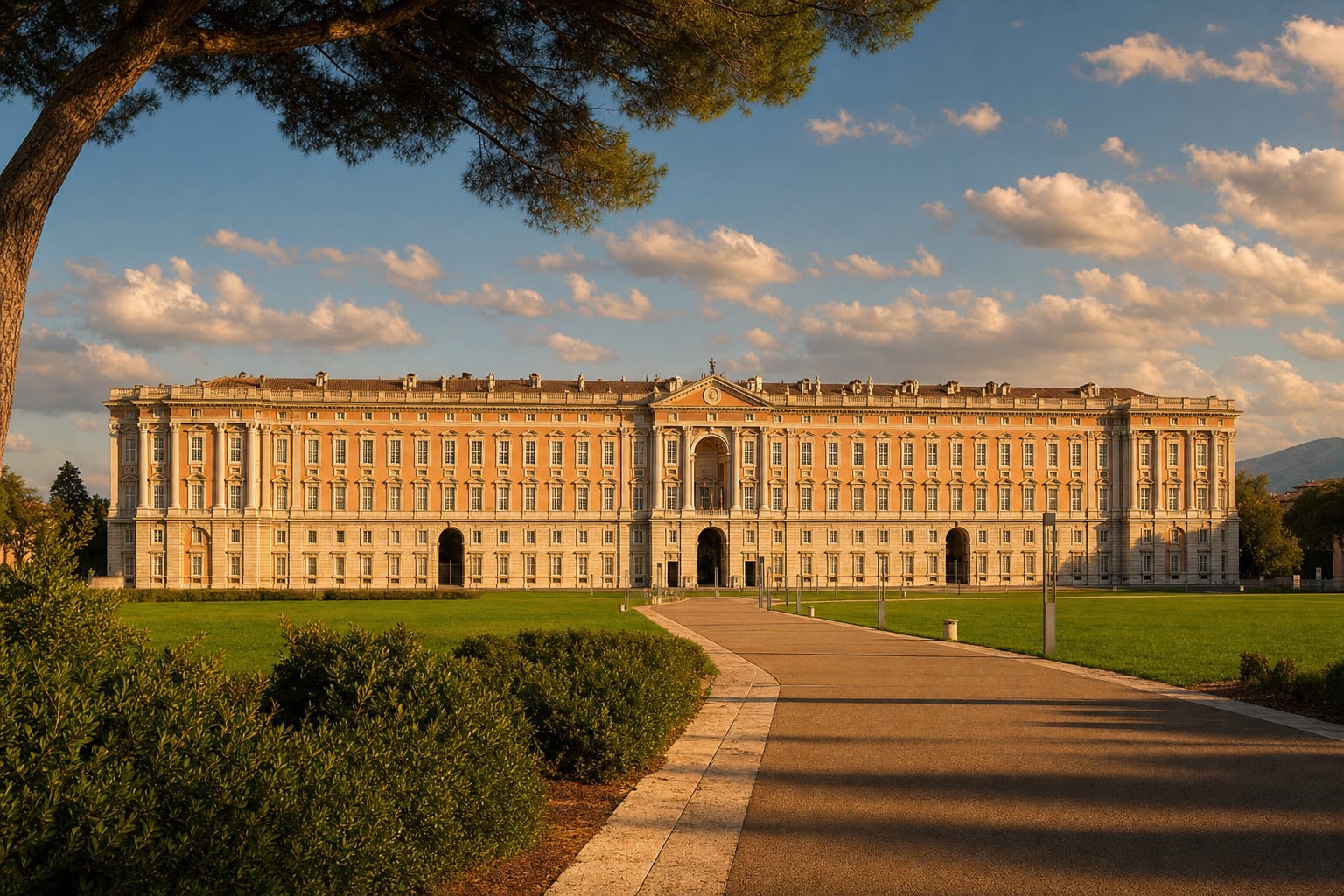 CasertaUNESCOReggia di CasertaLuigi Vanvitelli; Bourbon royal residence; four-courtyard plan; Royal Staircase; Court Theatre; Royal Apartments; Royal ParkThe Royal Palace of Caserta was commissioned by Charles of Bourbon and designed by Luigi Vanvitelli as a royal residence for the Bourbon kingdom. Construction began in 1752; the palace was structurally complete by Vanvitelli’s death in 1773, while its apartments continued to be decorated and furnished under Carlo Vanvitelli and other architects into the nineteenth century. The rectangular building is organised around four large internal courtyards and forms part of a larger territorial project with the Royal Park, Aqueduct of Vanvitelli and San Leucio Complex.
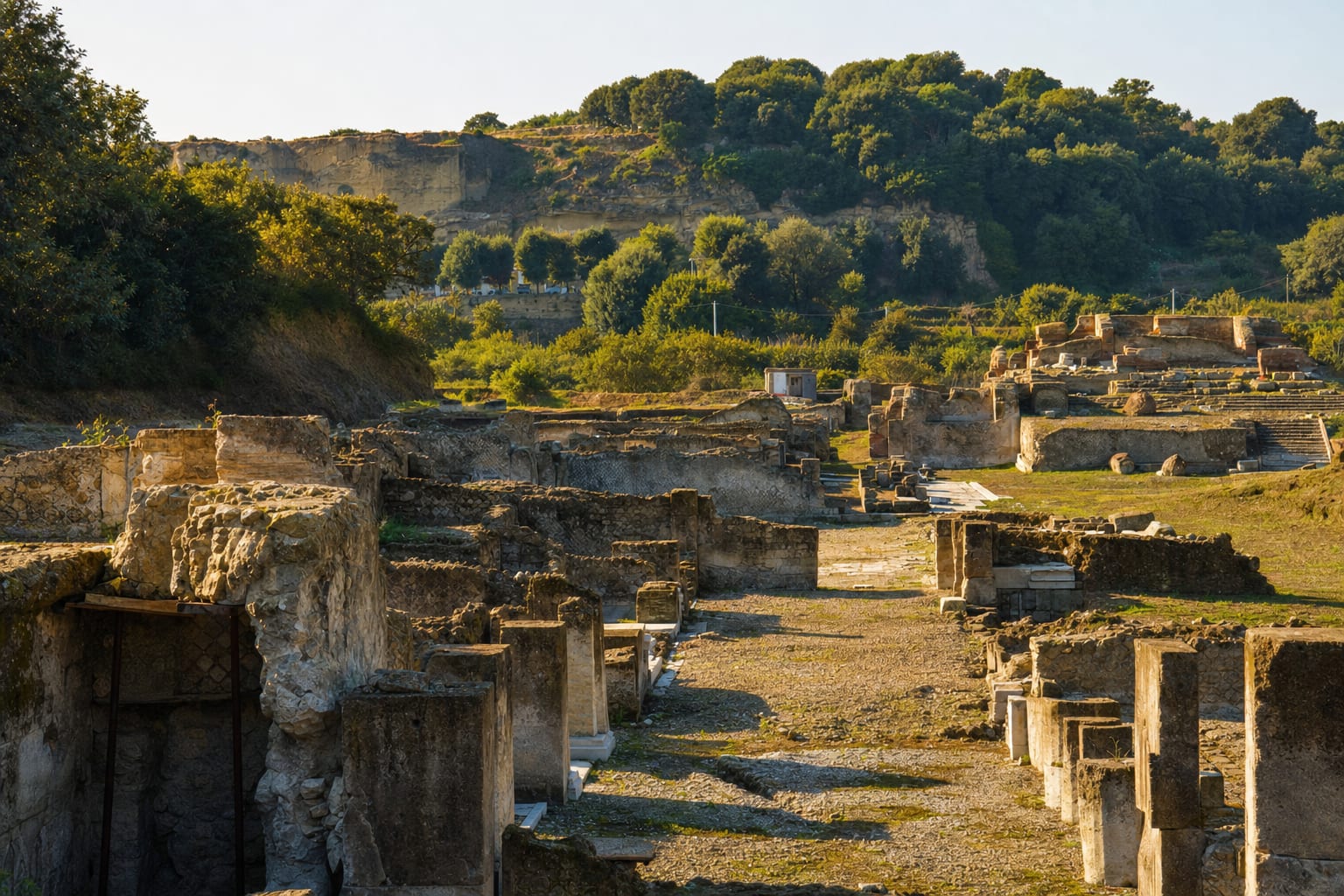 CumaParco Archeologico di CumaIts Greek-colonial Acropolis, sanctuaries and the gallery conventionally called the Cave of the Sibyl.Cuma was founded by Euboean-Chalcidian settlers in the second half of the eighth century BCE and developed across the Acropolis of Monte di Cuma and the lower city. Its famous tuff gallery, conventionally called the Cave of the Sibyl, is interpreted by the Park as a Samnite military work, not securely the oracle of literary tradition.
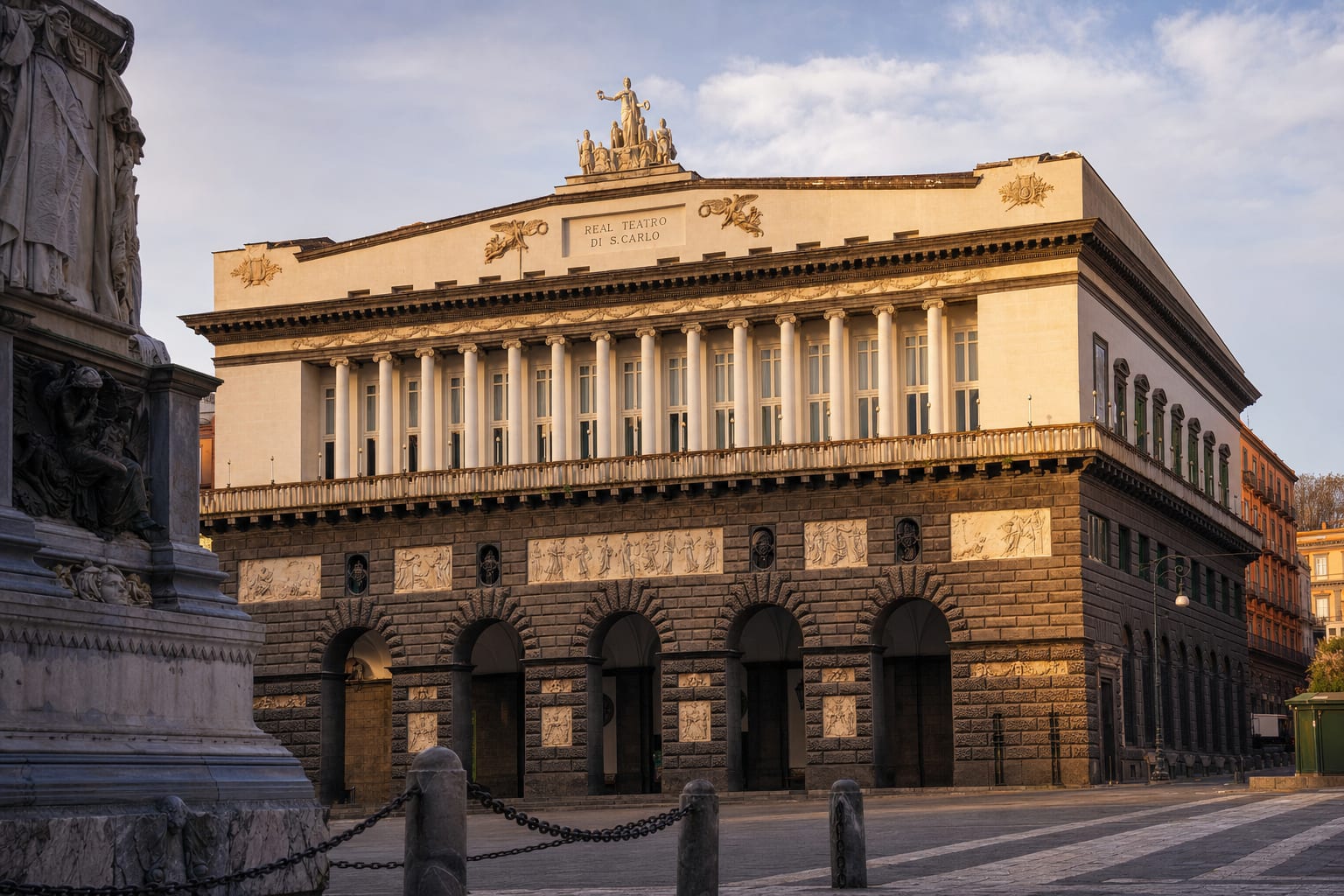 NapoliTeatro di San CarloIts 1737 Bourbon foundation and landmark horseshoe-plan auditorium.Teatro di San Carlo was commissioned by Charles III of Bourbon and opened in 1737. Its original horseshoe plan was designed by Giovanni Antonio Medrano and Angelo Carasale. After the 1816 fire destroyed the auditorium, Antonio Niccolini’s rebuilding retained the horseshoe layout and proscenium configuration.
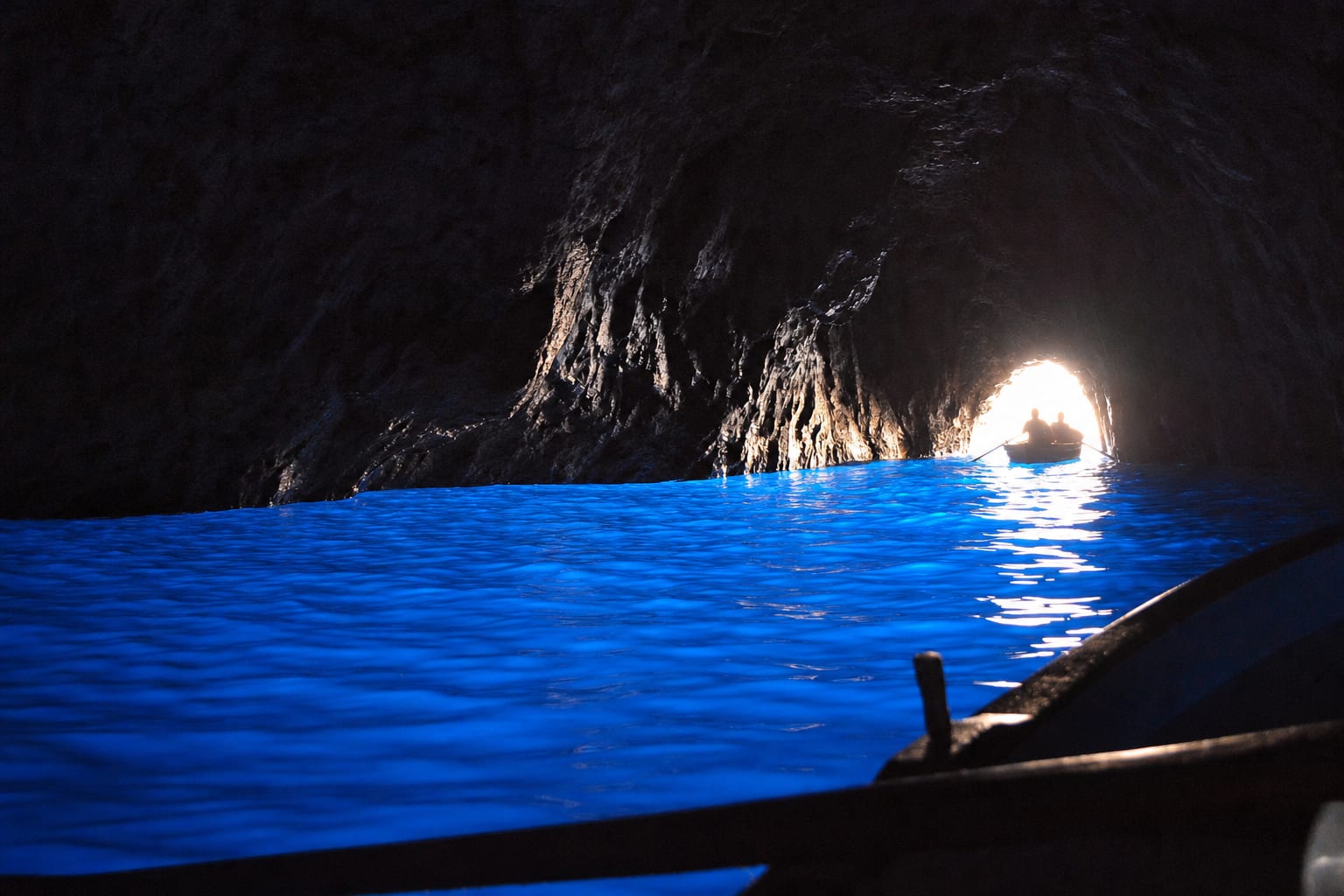 AnacapriGrotta Azzurraunderwater-reflected blue light; Roman maritime nymphaeum; niches for statues of Neptune and Tritons; relationship with Villa di GradolaThe Blue Grotto is a partly sea-submerged cave in Anacapri. Its blue light is produced when sunlight passes through an underwater opening and is reflected by the sandy floor. Underwater Roman concrete niches, once holding statues of Neptune and Tritons, show that the cave functioned as a maritime nymphaeum linked to the nearby Villa di Gradola. Interior access is by a small rowboat and depends on sea conditions and the natural entrance.
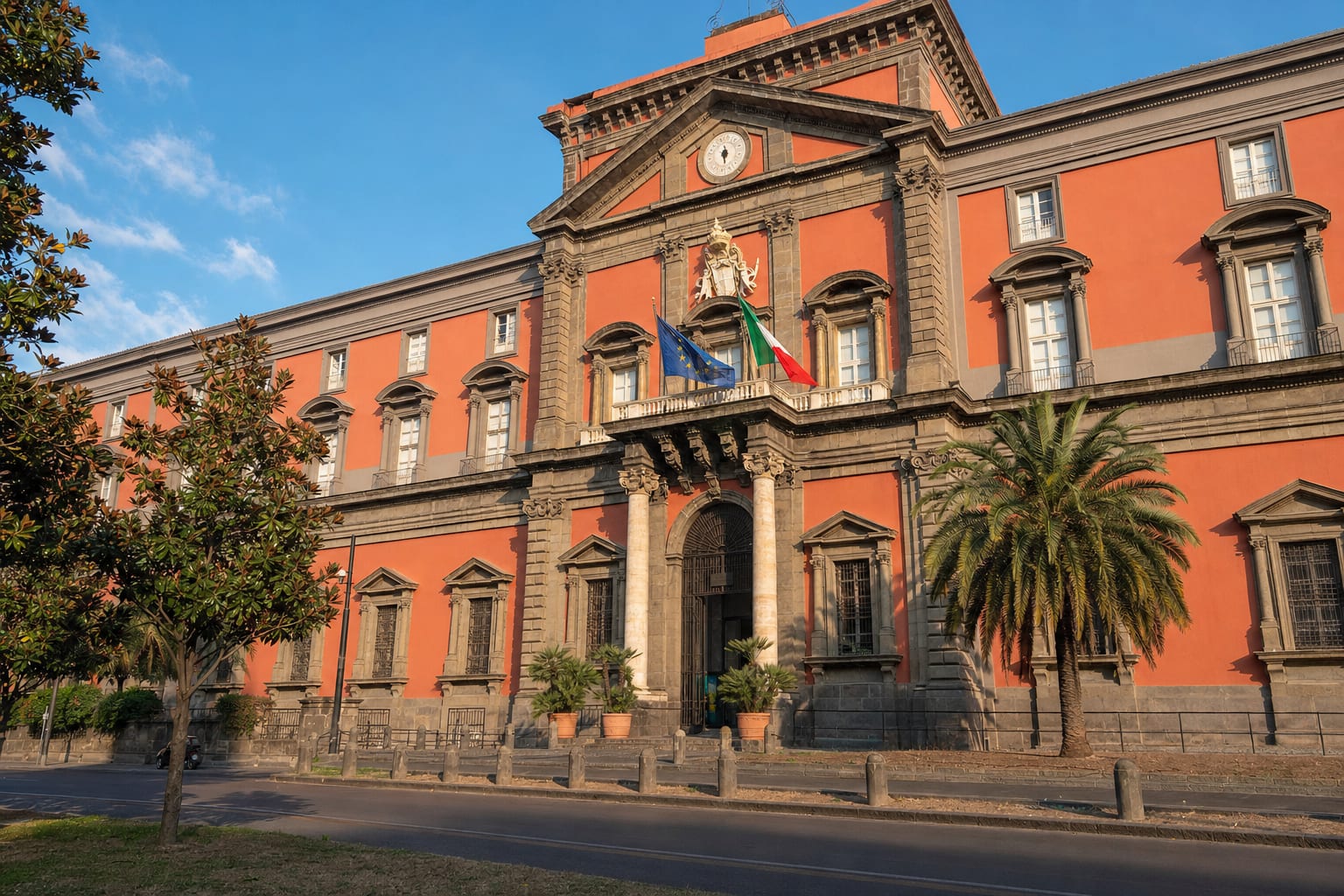 NapoliMuseo Archeologico Nazionale di NapoliThe Farnese collection and archaeological material from the Vesuvian towns.The National Archaeological Museum of Naples brings together the Farnese collection with relics from the Vesuvian towns excavated after Vesuvius’s eruption of 79 CE. Its present building was first royal cavalry barracks and then the University of Naples before opening as the Real Museo Borbonico in 1816.
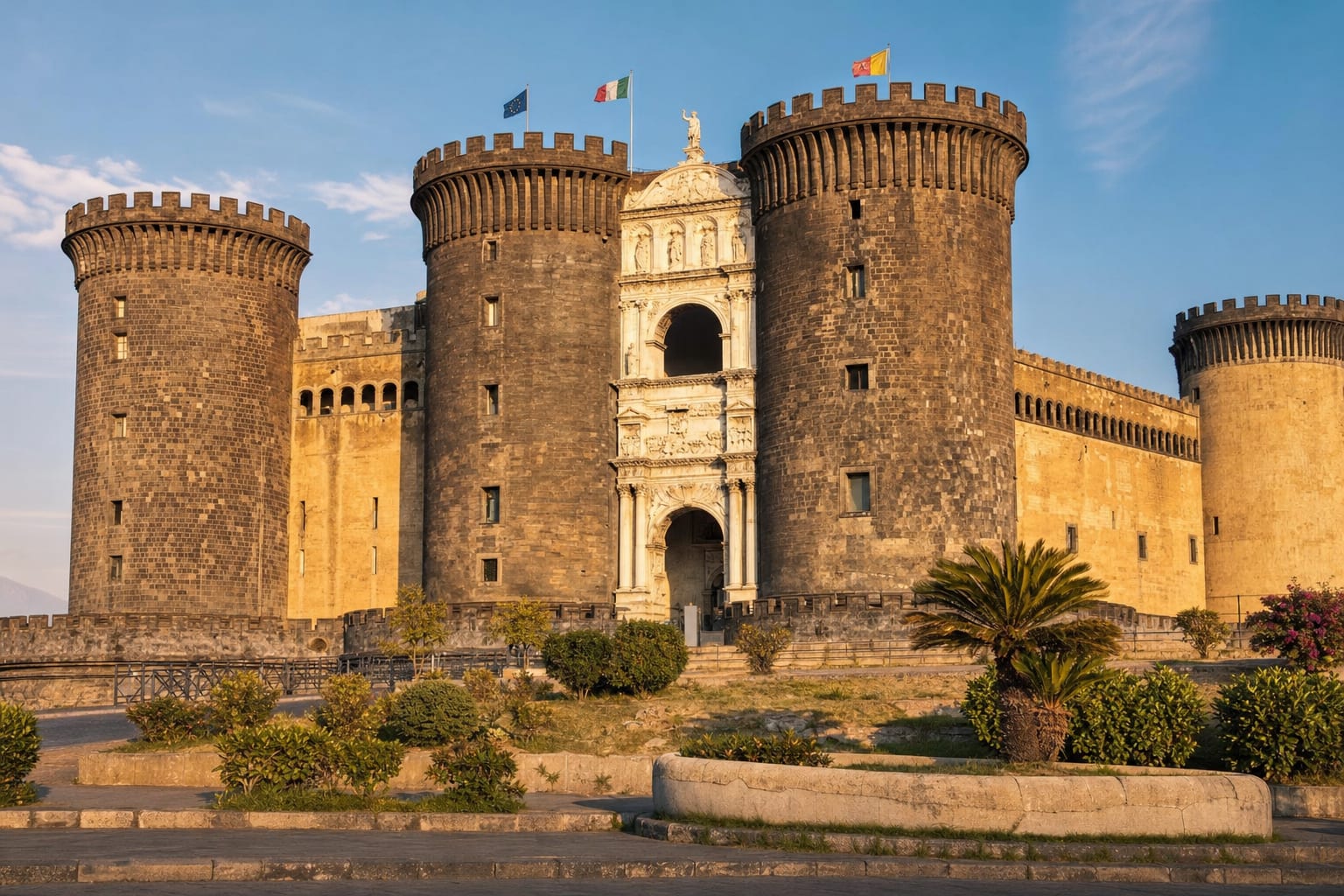 NapoliCastel NuovoIts Angevin foundation, Aragonese reconstruction, the Palatine Chapel, Sala dei Baroni and Civic Museum.Castel Nuovo, also known as Maschio Angioino, was begun for Charles I of Anjou in 1279. After Alfonso of Aragon's 1442 conquest, it was gradually reconstructed for the defensive requirements of the mid-fifteenth century, with Guillem Sagrera named by the Ministry of Culture. Since 1990, the complex has housed Naples' Civic Museum.
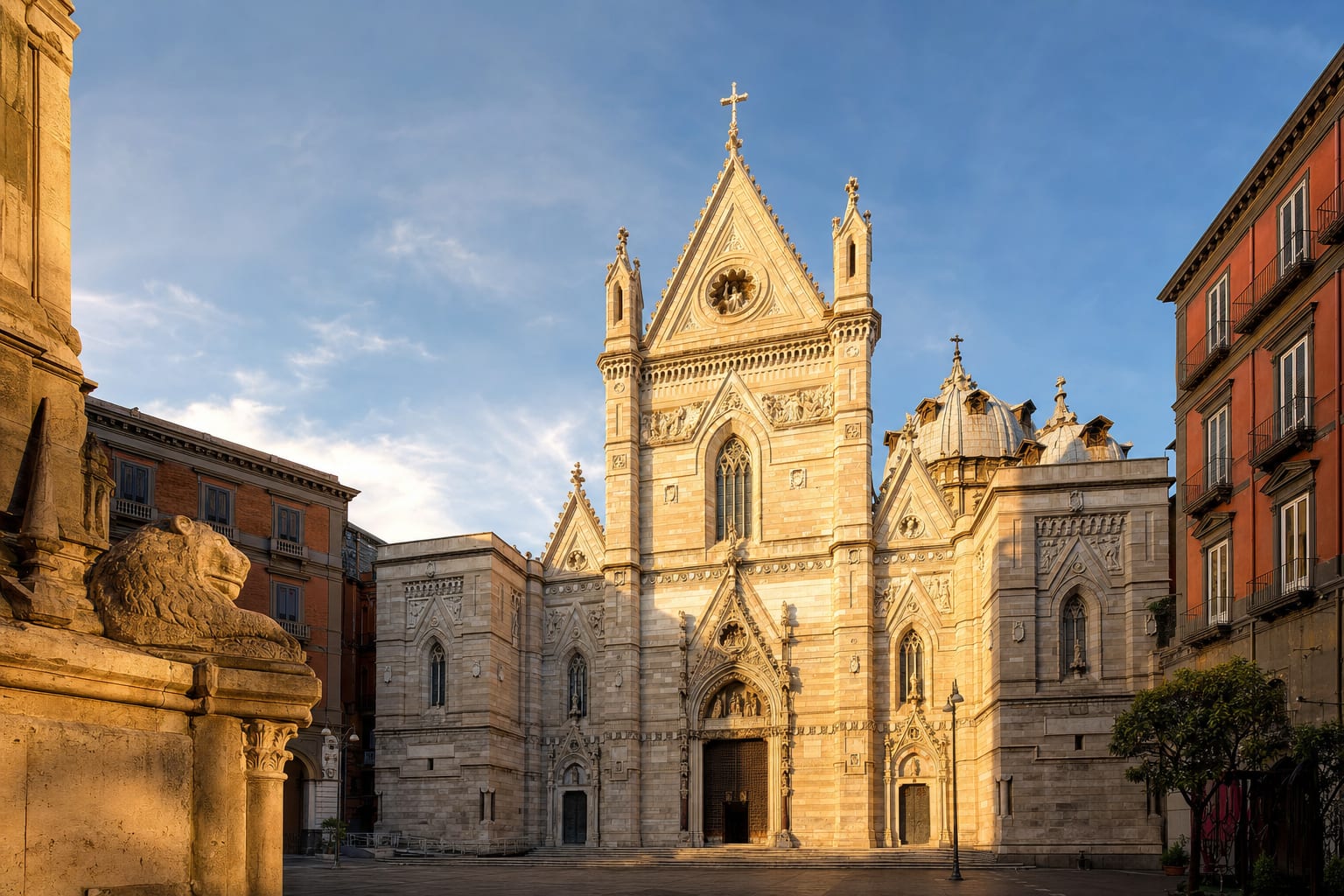 NapoliDuomo di NapoliIts Angevin Gothic fabric, Santa Restituta, the Baptistery of San Giovanni in Fonte and the Chapel of the Treasure of San Gennaro.Naples Cathedral, formally Santa Maria Assunta, was begun for Charles I of Anjou in 1272, completed under Robert of Anjou in 1313 and dedicated in 1314. Its Latin-cross, three-naved Gothic framework has been modified across later centuries. The larger complex includes the related but distinct Santa Restituta, the Baptistery of San Giovanni in Fonte and the Chapel of the Treasure of San Gennaro, built from 1608 to 1637 in fulfilment of a civic vow made during the 1527 plague.
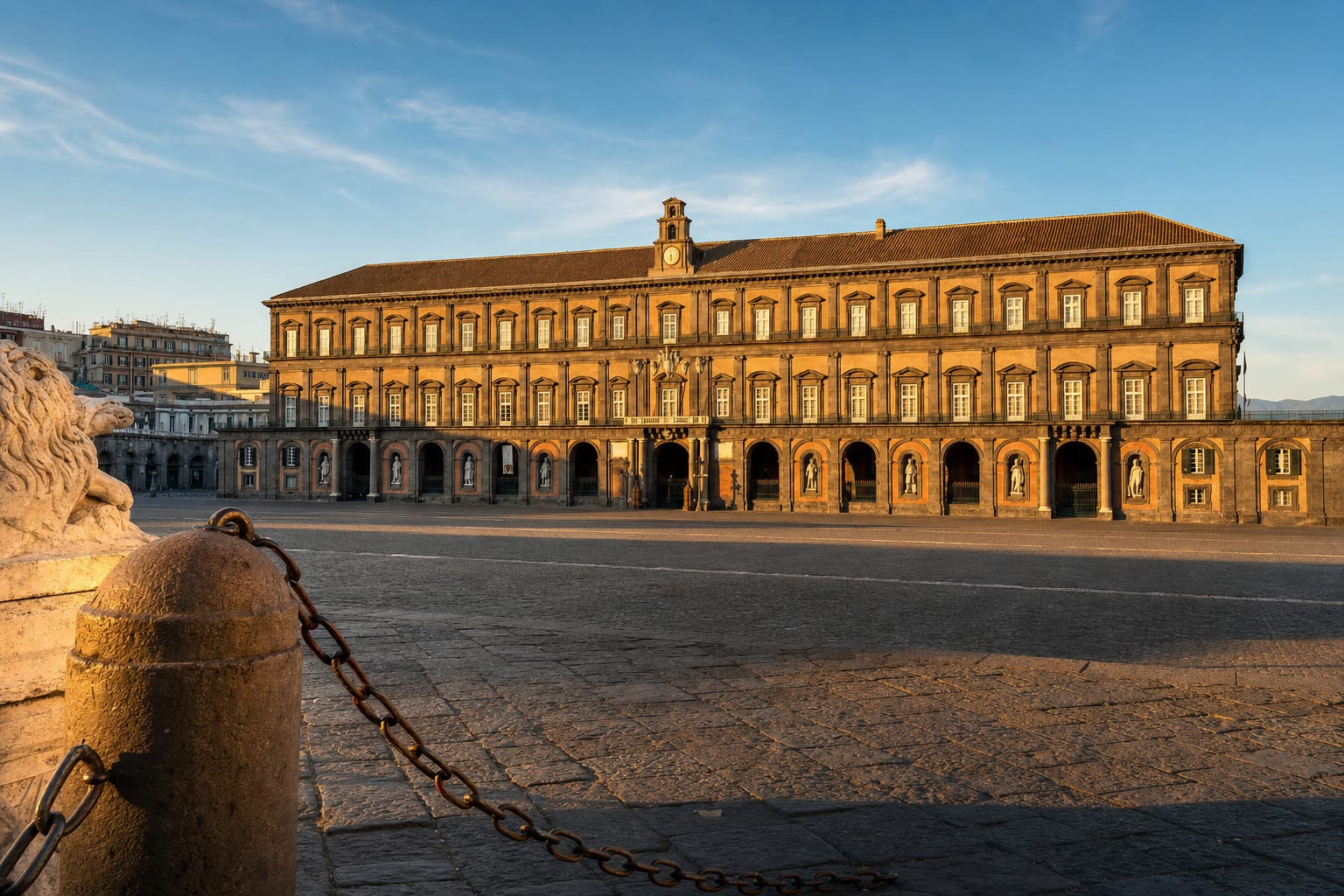 NapoliPalazzo Reale di NapoliFontana’s façade, the Scalone d’Onore, the Appartamento di Etichetta and Teatro di Corte.Founded in 1600 for Philip III of Habsburg and designed by Domenico Fontana, the Royal Palace was enlarged under the Bourbons and restored in the nineteenth century. Its historic rooms are now presented through the Appartamento di Etichetta museum.
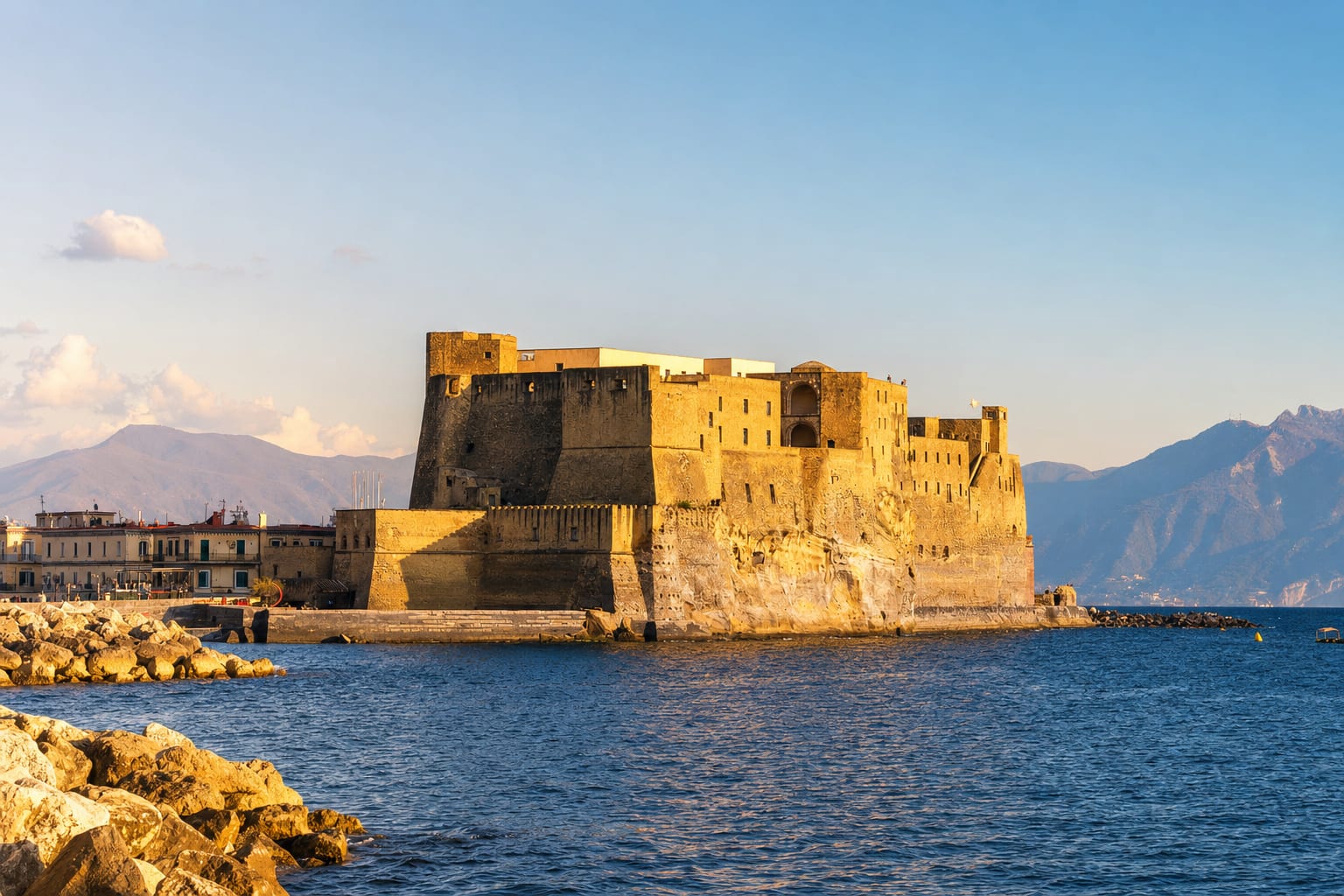 NapoliCastel dell'OvoIts Megaride-islet setting, Norman-period survival and the Virgil-and-egg legend.Castel dell'Ovo, or castrum Ovi, stands on the Megaride islet and is described by the Ministry of Culture as Naples’ oldest castle. UNESCO identifies it as a substantial survival of the Norman period, subsequently remodelled several times. The Virgil-and-egg story is local legend rather than the documented origin of the monument.
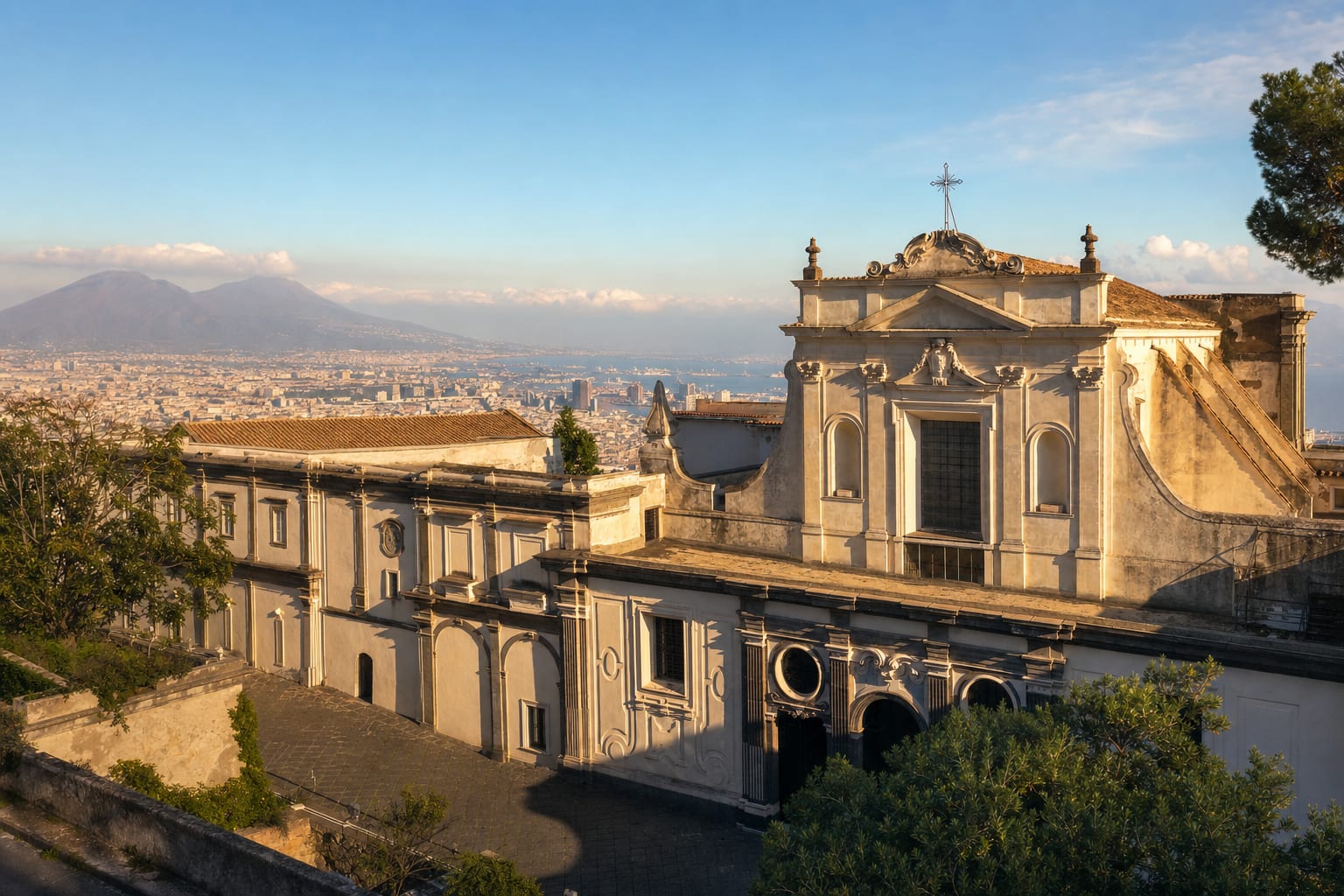 NapoliCertosa di San MartinoIts Carthusian complex, church and cloisters, Neapolitan presepe collection and city-history collections.Founded in 1325 as a Carthusian monastery and transformed over centuries, the Certosa di San Martino is a major complex of Neapolitan Renaissance, Baroque and Rococo art. Since 1867 it has housed the Museo di San Martino, with collections on the art and history of Naples.
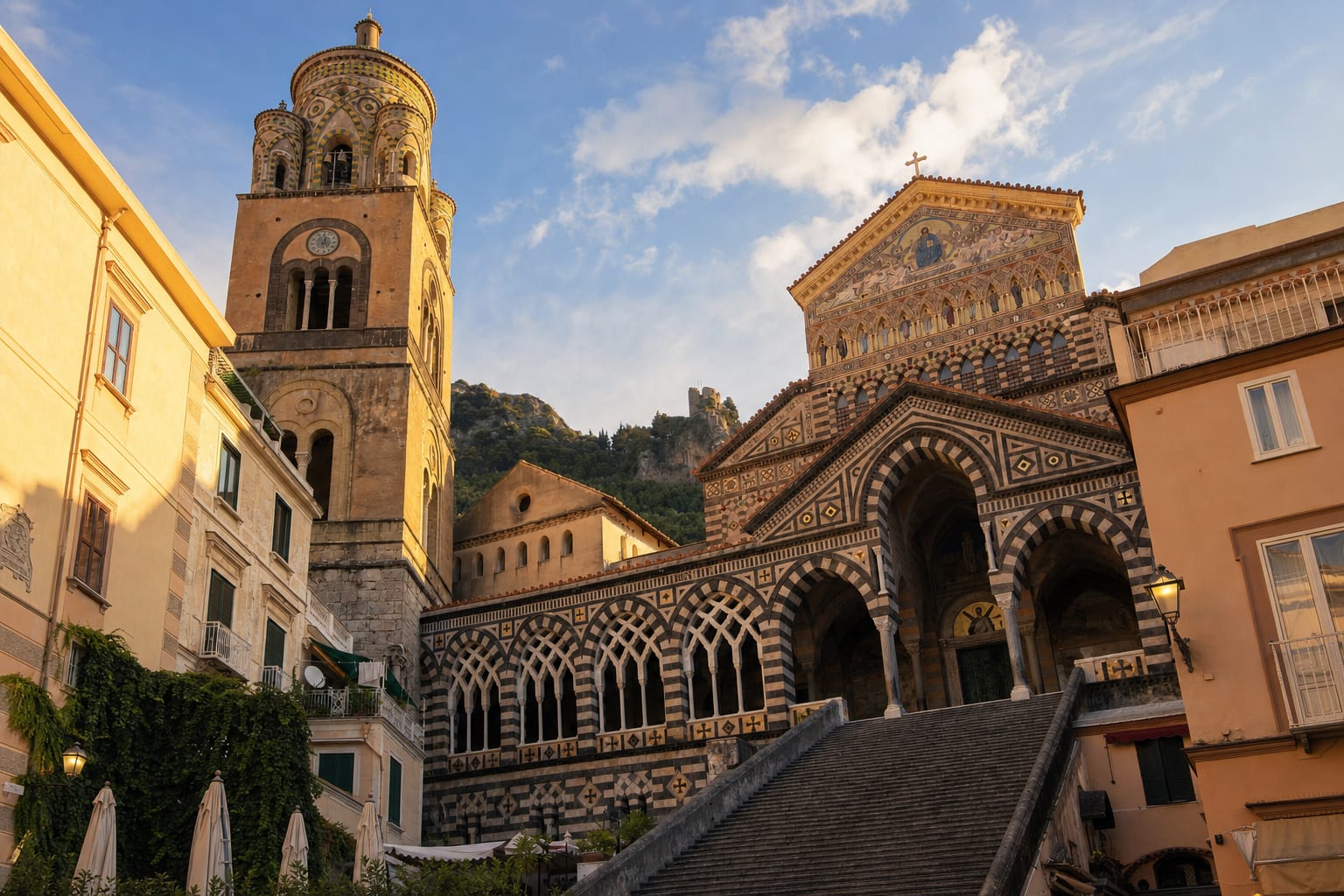 AmalfiUNESCODuomo di AmalfiThe Cathedral of Sant’Andrea, Paradise Cloister, crypt and Diocesan Museum complex.Amalfi’s Cathedral of Sant’Andrea forms part of a monumental complex that includes the Paradise Cloister, the crypt and the Diocesan Museum in the Basilica del Crocifisso. The municipal office dates its foundation to 987 and records a major early-thirteenth-century enlargement associated with Cardinal Pietro Capuano.
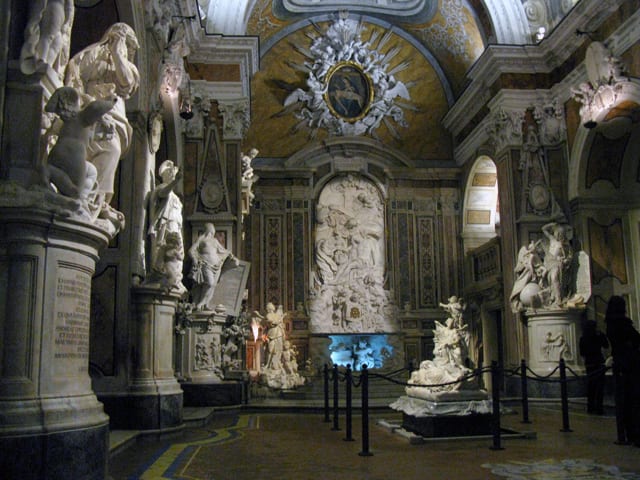 NapoliCappella SanseveroThe Veiled Christ by Sanmartino, Pudicizia by Corradini, Disinganno by Queirolo and Giuseppe Salerno’s Anatomical Machines.Sansevero Chapel is the di Sangro family’s burial chapel, transformed in the 1740s under Raimondo di Sangro into a tightly conceived artistic programme. It contains Giuseppe Sanmartino’s 1753 Veiled Christ, together with works by Antonio Corradini, Francesco Queirolo and others; its underground Cavea displays Giuseppe Salerno’s Anatomical Machines.
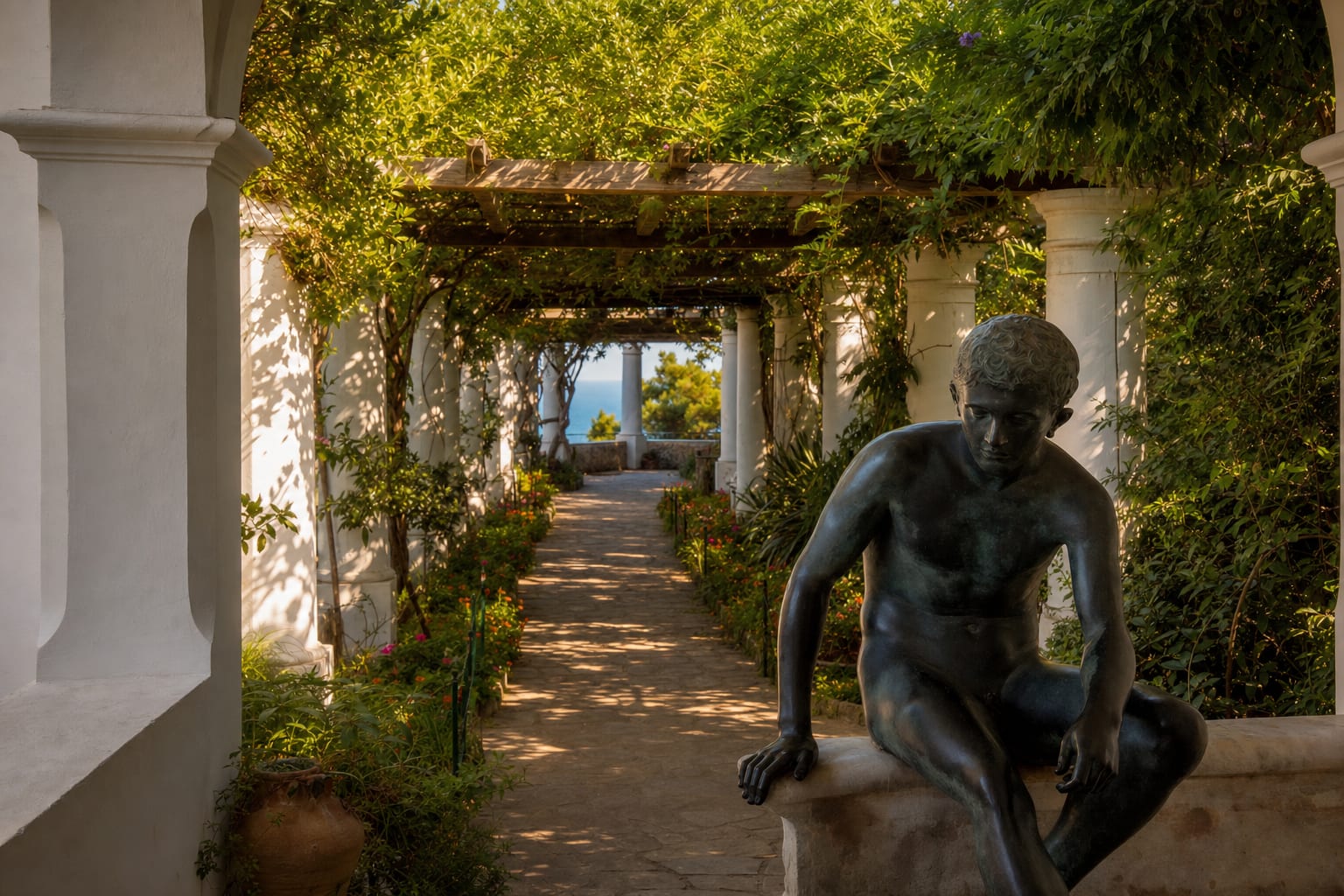 AnacapriVilla San MicheleAxel Munthe; early-twentieth-century house museum; Roman, Etruscan and Egyptian collection; granite sphinx; Barbarossa bird-protection historyVilla San Michele is the early-twentieth-century life work of Swedish physician and author Axel Munthe, now a house museum and garden in Anacapri. Its collection is largely Roman, Etruscan and Egyptian in origin and includes sculptures selected by Munthe; the museum identifies its granite sphinx as about 3,200 years old. Munthe also acquired the mountainside above the villa to stop bird trapping, and Castello Barbarossa is now used in spring for ornithological study of migratory birds.
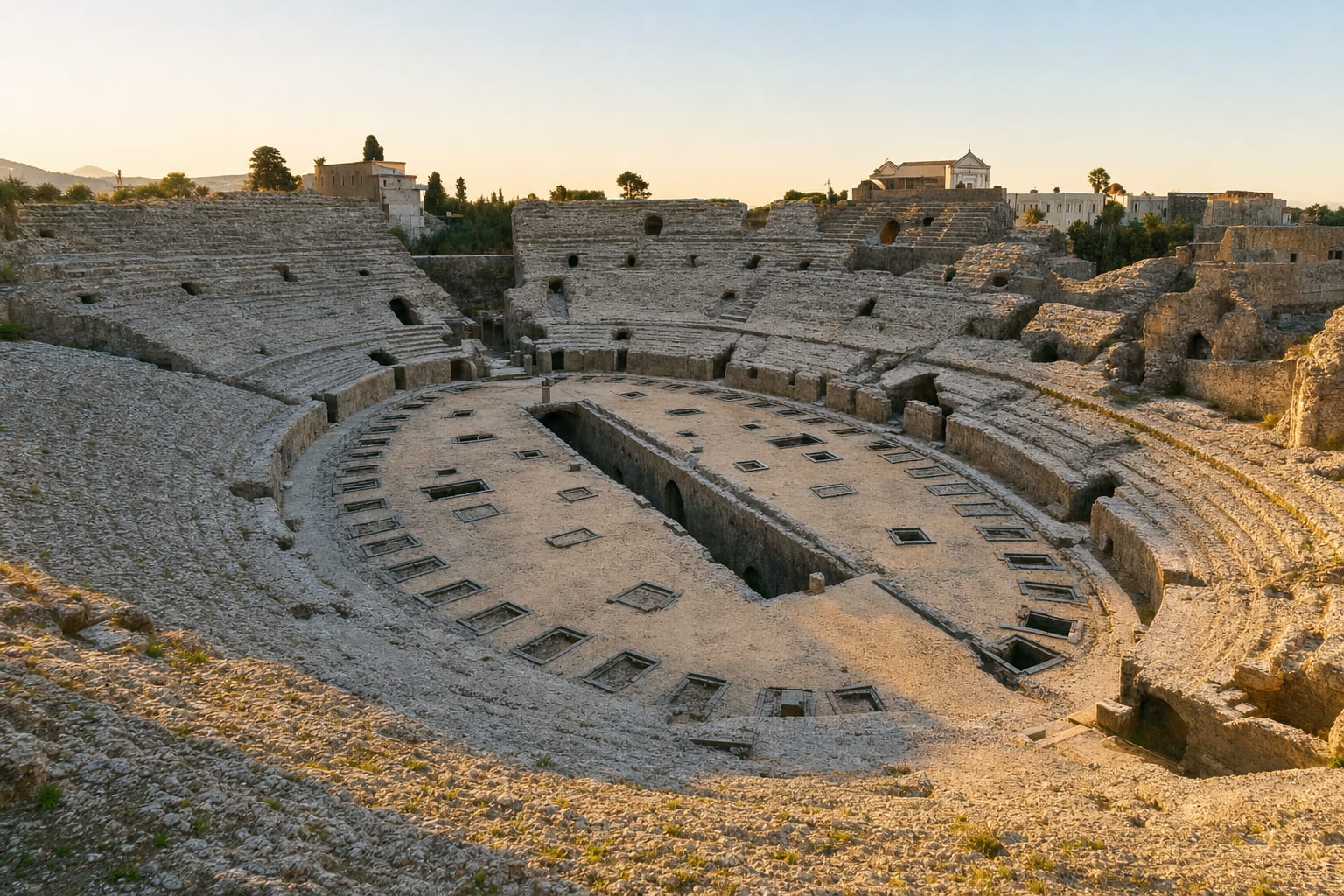 PozzuoliAnfiteatro Flavio di PozzuoliIts 149×116 m arena, underground animal-lift system and Roman Puteoli context.Pozzuoli’s Flavian Amphitheatre was probably begun between the late Neronian and early Flavian periods. One of Italy’s largest Roman arenas, it preserves an underground service system where cages with animals were raised through openings in the arena floor.
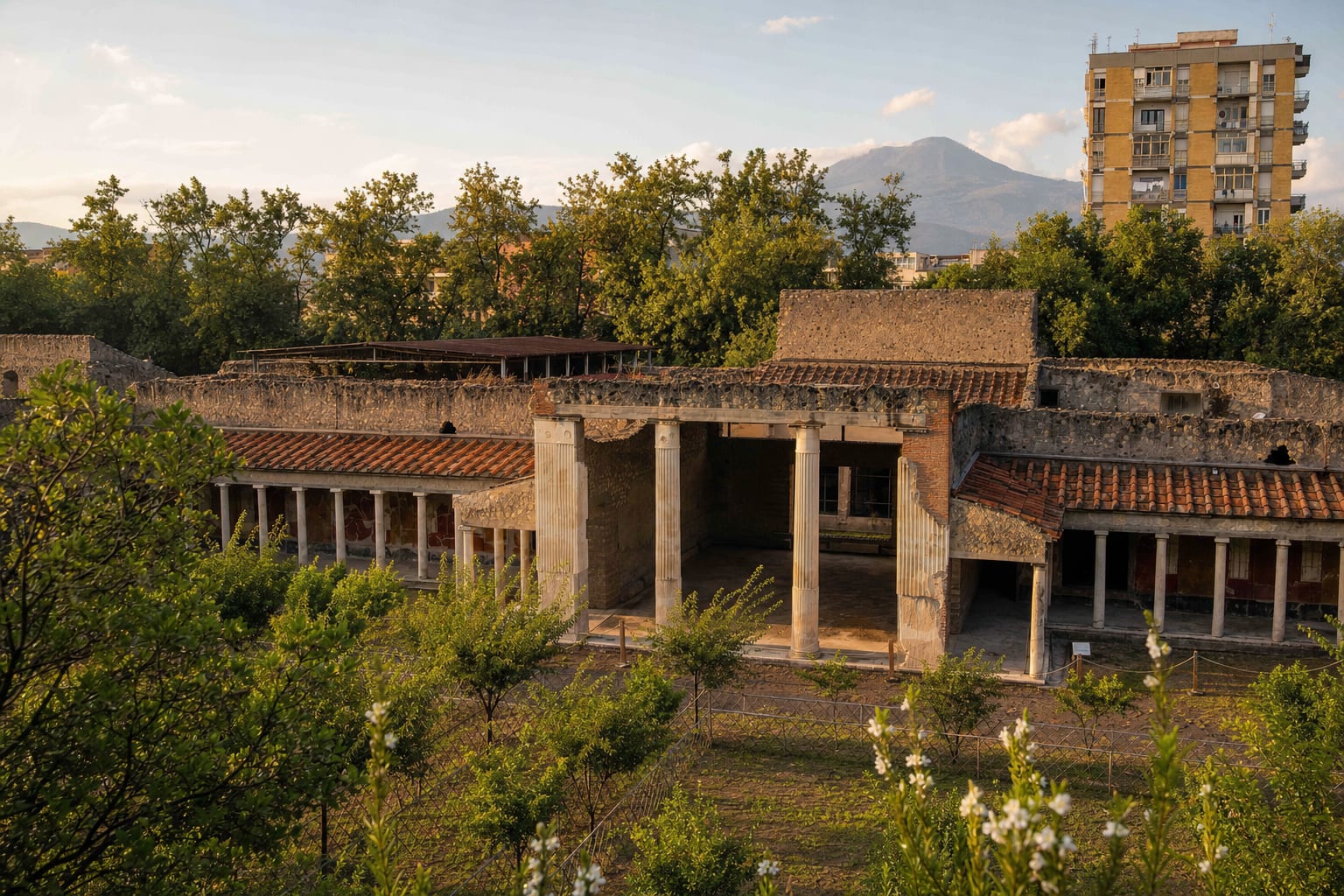 Torre AnnunziataUNESCOVilla di Poppea a OplontisVilla of Poppaea attribution; Roman wall painting; 61-by-17-metre pool; perspective-led gardens; OplontisVilla A, conventionally known as the Villa of Poppaea, is a Roman residential villa at ancient Oplontis in modern Torre Annunziata. Its earliest part dates to about the middle of the first century BCE; it was expanded in the first century CE, when a 61-by-17-metre pool was added. Perspective-led gardens, sculpture, fountains and Second-, Third- and Fourth-Style wall painting shape the complex. The Poppaea association is qualified: the Park says the villa may have belonged to her family’s Campanian property, rather than treating her ownership as settled fact.
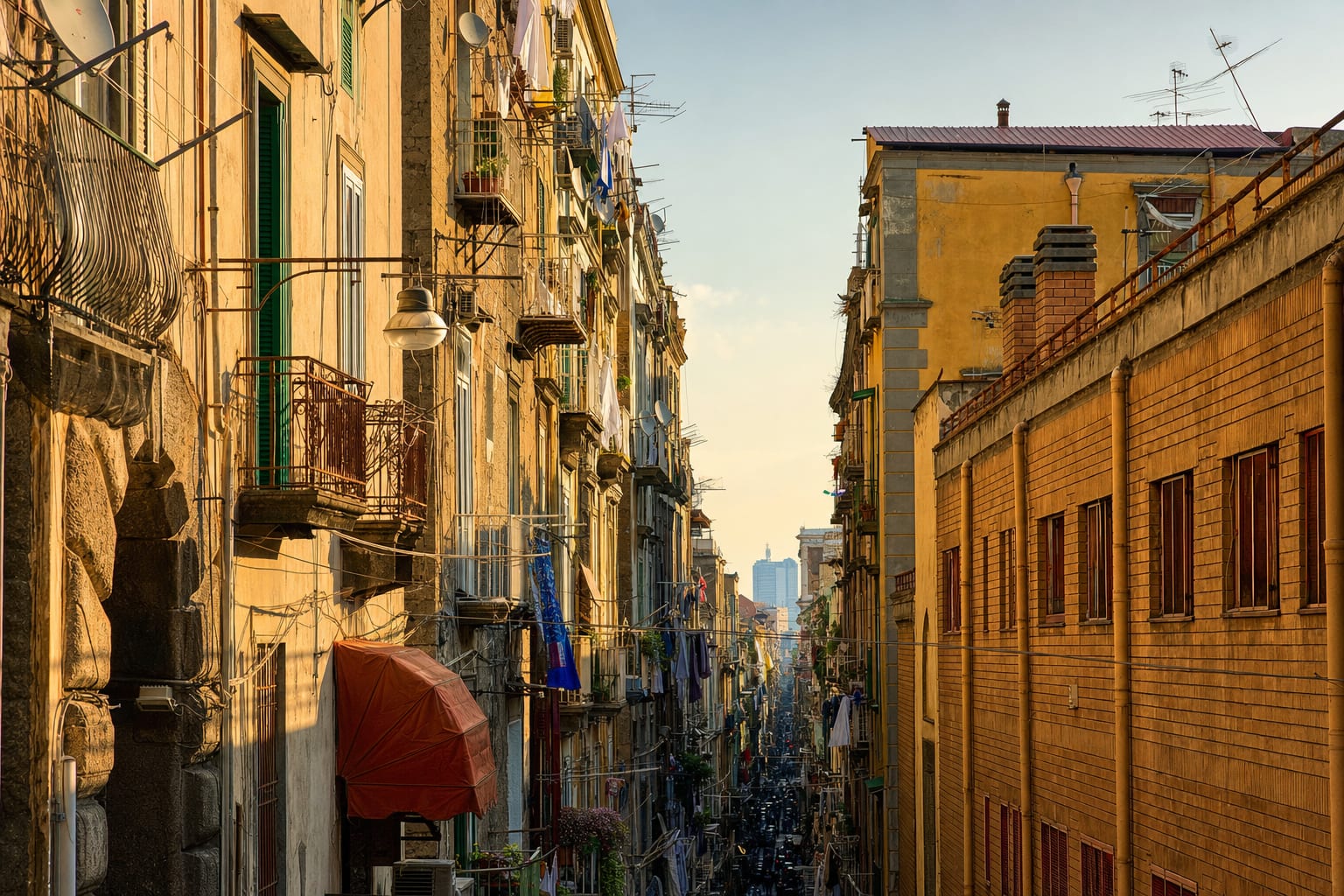 NapoliSpaccanapolilower decumanus; Greek Neapolis urban grid; Via San Biagio dei Librai; Palazzo Diomede Carafa; historic-centre routeSpaccanapoli is the popular name for the lower decumanus of Naples’ historic centre, a long east-west urban axis rather than a separate ancient monument. UNESCO identifies the rectangular grid of Greek Neapolis as still discernible in the present urban fabric, but the route should not be described as unchanged from antiquity. Via San Biagio dei Librai, identified by the Ministry of Culture as Spaccanapoli, includes Palazzo Diomede Carafa, whose fabric documents the transition from Gothic forms to Renaissance taste.
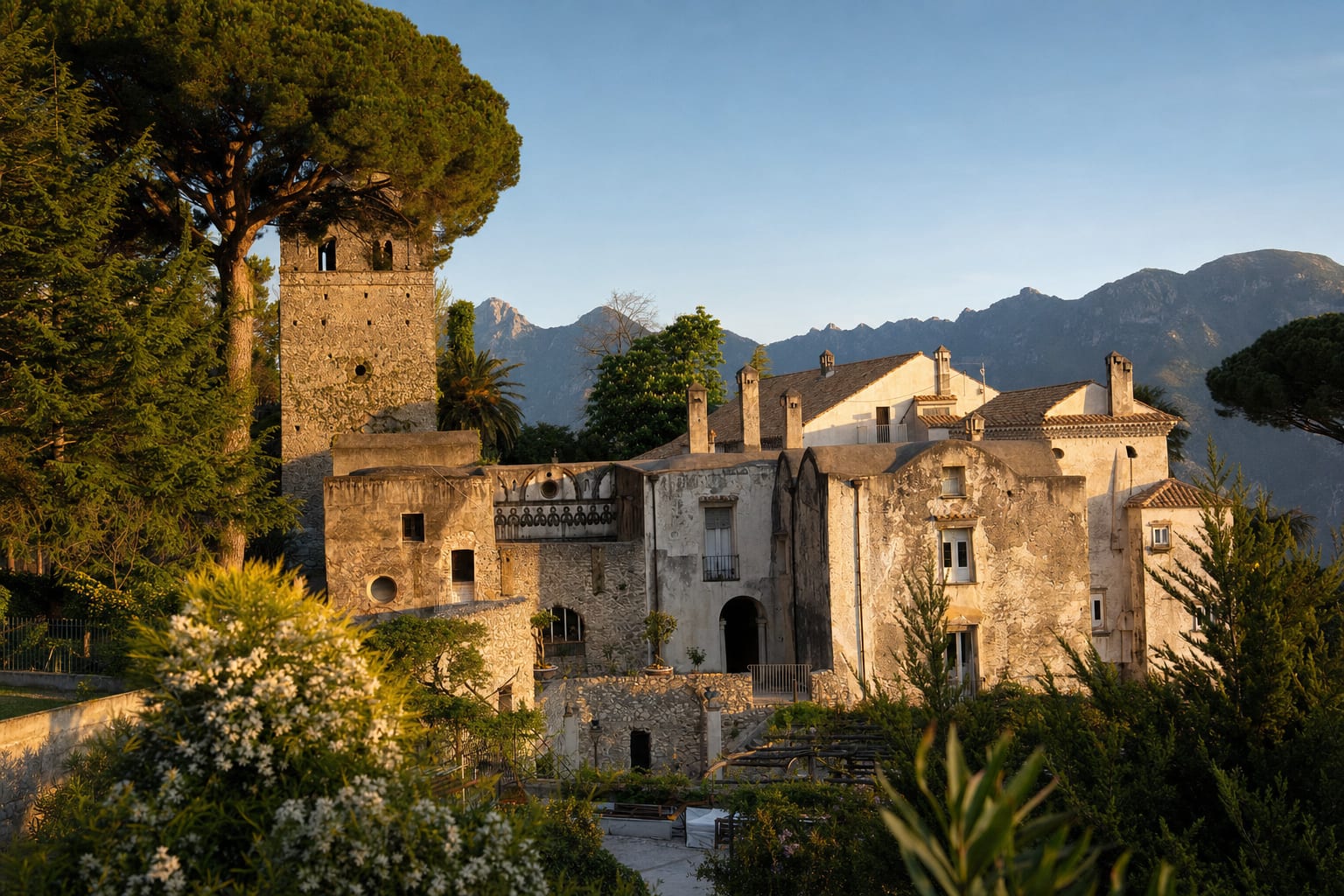 RavelloVilla RufoloRufolo merchant family complex; medieval architectural synthesis; terraced gardens renewed by Francis Nevile Reid; Wagner and Parsifal association; Ravello Festival originsVilla Rufolo is a thirteenth-century Ravello complex associated with the Rufolo merchant family. Its medieval core combines Arab, Byzantine and local architectural and decorative traditions with later changes. Francis Nevile Reid restored the site and remade its terraced gardens in the nineteenth century. Richard Wagner’s visit in May 1880 became central to the cultural association with Parsifal, and the first Ravello Festival concerts were held here in 1953.
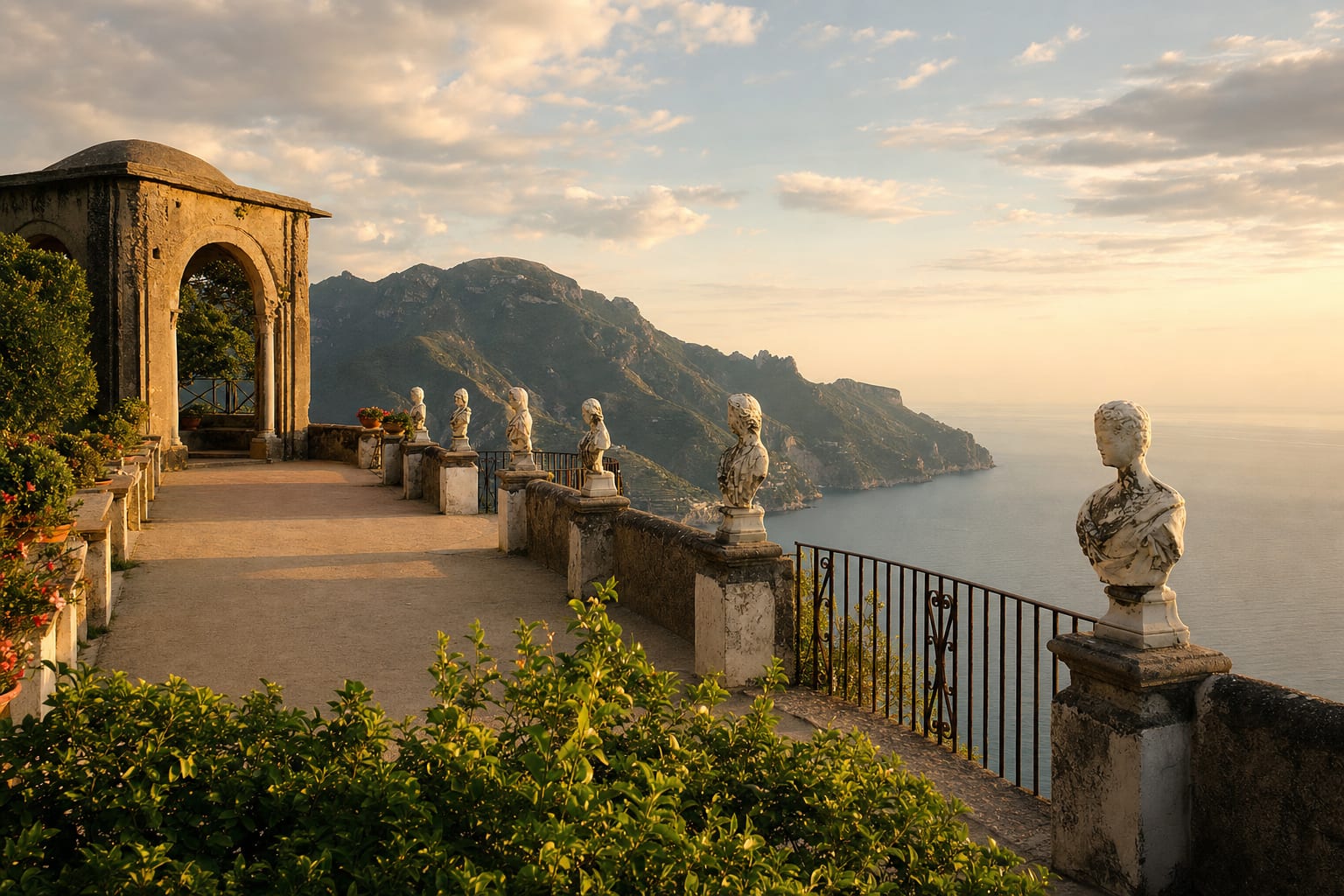 RavelloVilla CimbroneTerrace of Infinity, marble busts over the void, Bloomsbury connections, rose gardensVilla Cimbrone is a layered Ravello estate documented from the eleventh century. Its garden was substantially shaped between the late nineteenth and early twentieth centuries as a Romantic landscape of terraces, planted spaces and architectural ornaments. It lies within the UNESCO World Heritage property Costiera Amalfitana, rather than being separately inscribed.
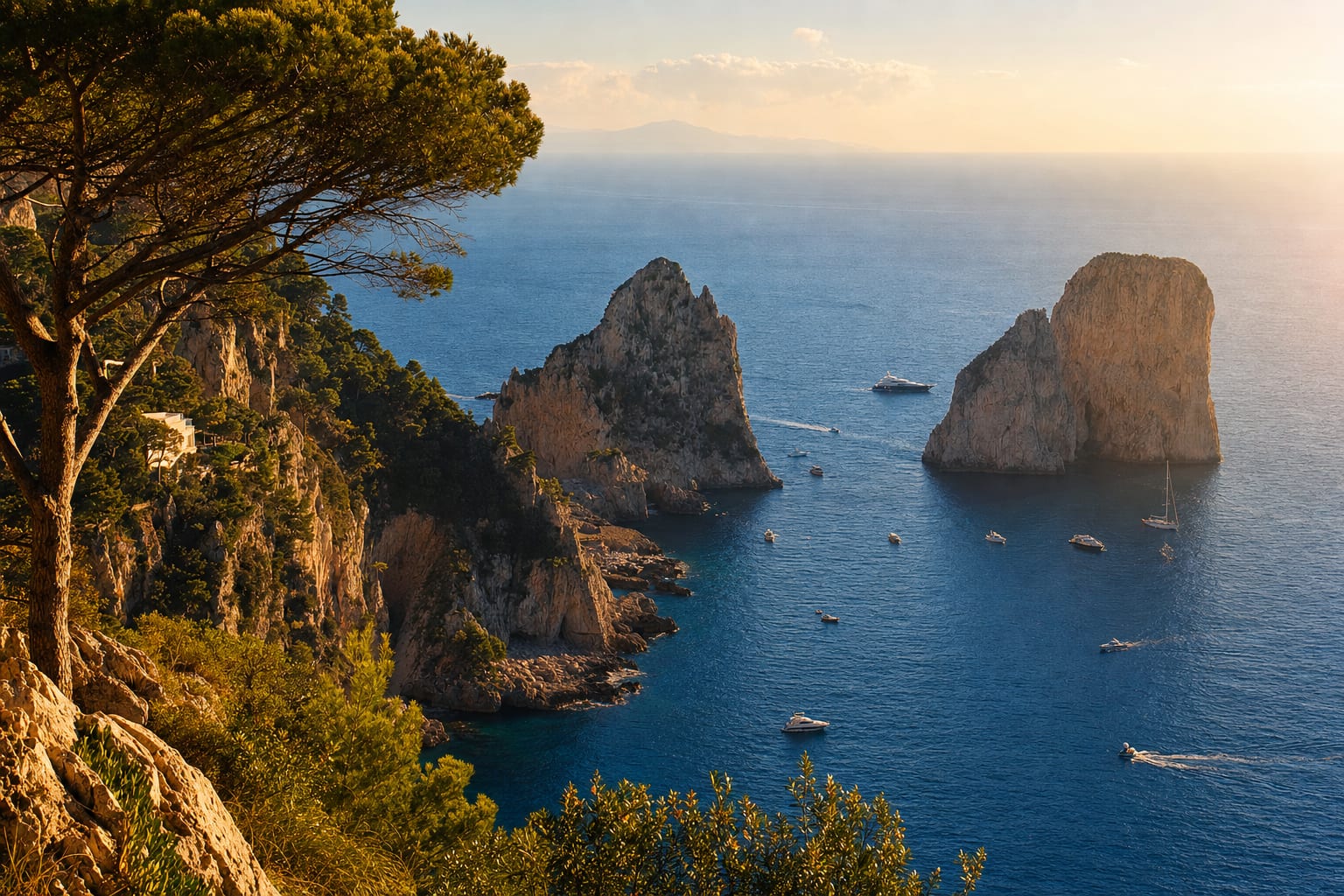 CapriFaraglioni di CapriThree sea stacks, boat passage through the arch, blue lizard endemic, Punta Tragara viewpointThe Faraglioni are the three sea stacks off Capri's south-eastern coast: Stella, Mezzo and Fuori, also known as Scopolo. Mezzo has a natural arch, while the smaller Monacone stack lies behind the main group. The formation also supports documented populations of the Capri wall lizard.
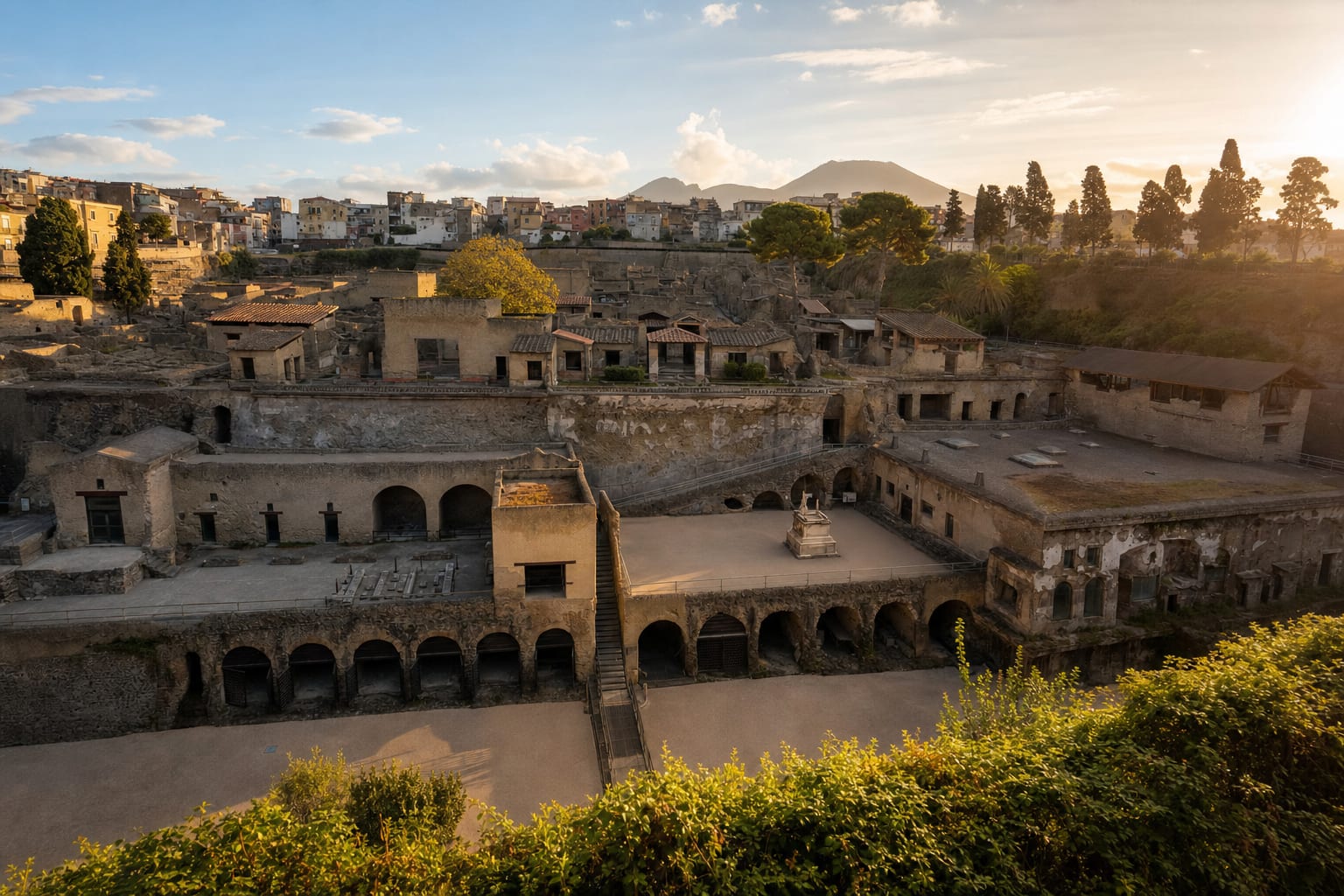 ErcolanoUNESCOParco Archeologico di Ercolano79 CE eruption; carbonised organic finds; ancient shoreline arcades; streets, houses and public buildings of Roman HerculaneumHerculaneum Archaeological Park preserves part of the Roman town engulfed by Vesuvius in 79 CE. The Park describes fiery clouds followed by mudflows that covered the town beneath about 20 metres of volcanic material. High temperatures carbonised organic material, leaving wooden furnishings and architectural elements alongside food remains, textiles and cordage. The visible park is an unusually legible fragment of the ancient town, but extensive areas remain beneath modern Ercolano.
Prenota una visita
Tour da prenotare in Campania
Confrontati dai nostri editor, tra i vari operatori.
Prenotando da questi link Italia Magnifica può ricevere una commissione, senza costi per te.
- 2 h 30 min
- 5,0★ · 17 recensioni
da 25 €Prenota questo tour- 2 h
- 5,0★ · 11 recensioni
da 170 €Prenota questo tour- 8 h
- 5,0★ · 1 recensioni
da 3100 €Prenota questo tour- 8 h
- 5,0★ · 1 recensioni
da 2700 €Prenota questo tour- 1 h 15 min
- 5,0★ · 8 recensioni
da 30 €Prenota questo tour- 8 h
- 5,0★ · 78 recensioni
da 950 €Prenota questo tour


Città
Città per città
Dove si concentrano i monumenti in Campania.