

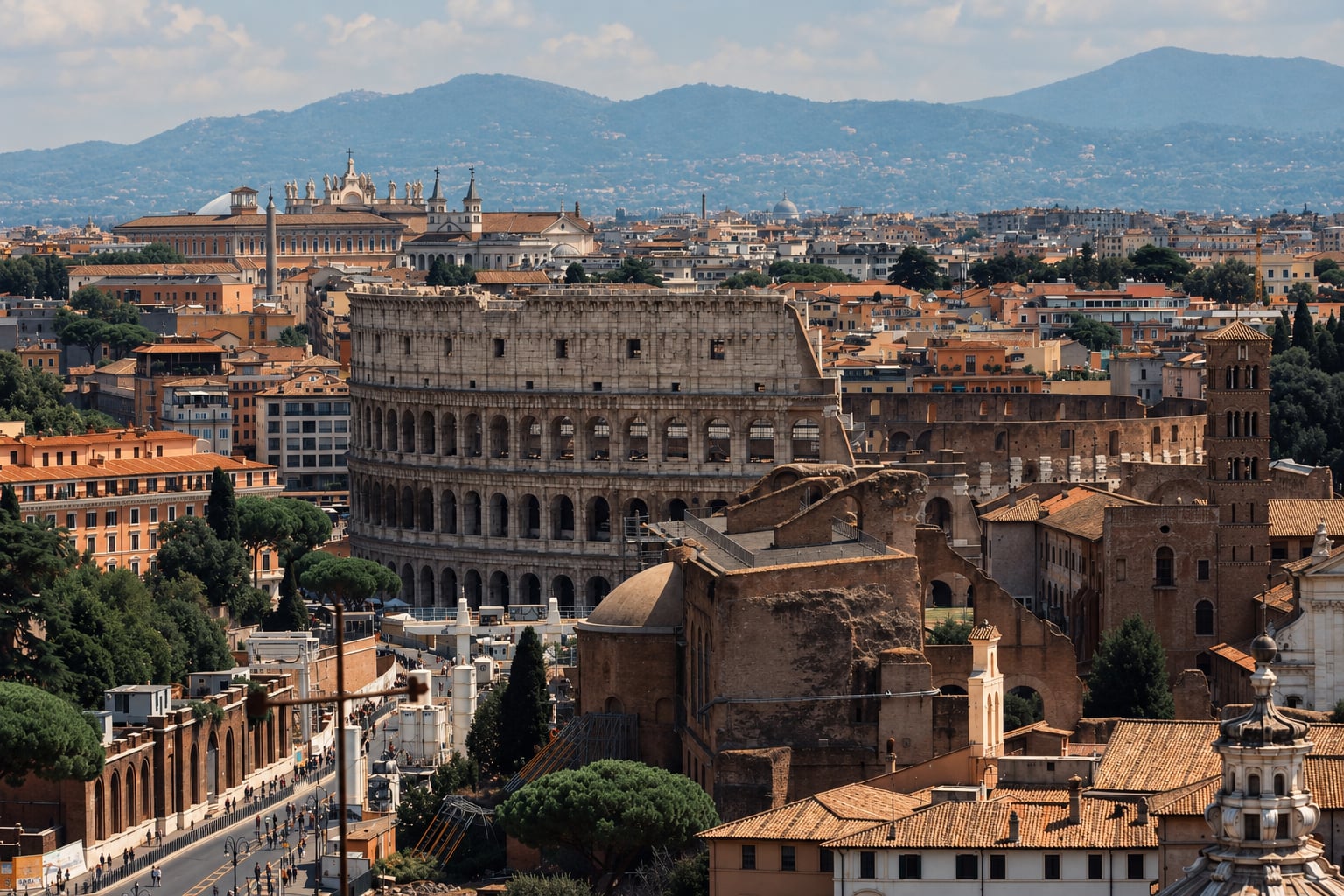
All the monuments, city by city
The landmarks and masterpieces worth planning a day around.
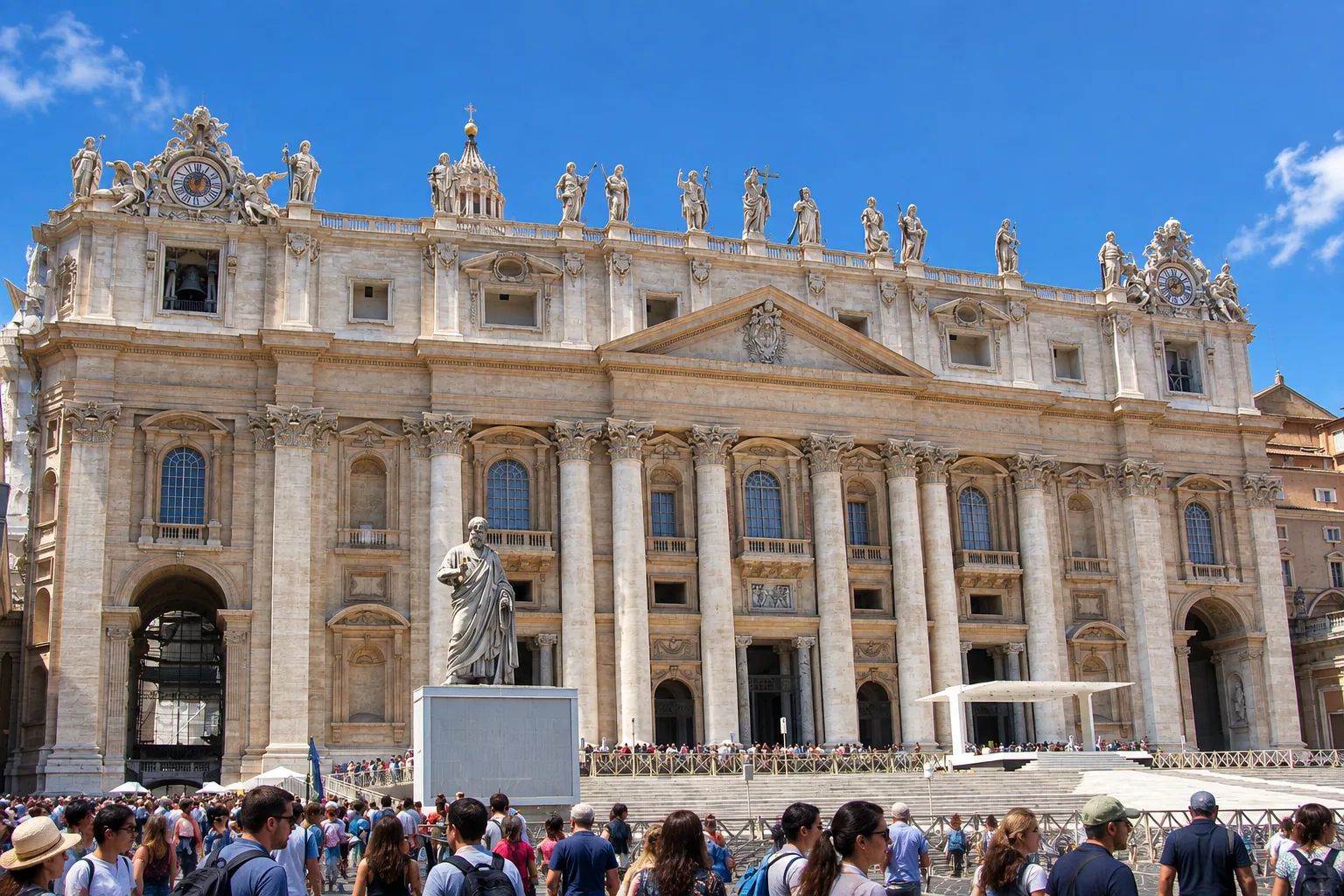 RomeSt. Peter's BasilicaMichelangelo's dome and Pietà, Bernini's baldacchino, Saint Peter's Square, the papal tombsThe current St. Peter's Basilica replaced Constantine's fourth century church and took from 1506 to 1626 to build, passing through the hands of Bramante, Raphael, Michelangelo, Giacomo della Porta and Carlo Maderno. Michelangelo designed the dome, completed after his death, and refused payment for the work as an act of devotion; Maderno added the long nave and facade that give the building its current, slightly controversial proportions. Inside, Michelangelo's Pietà stands behind glass to the right of the entrance, Bernini's bronze baldacchino rises 29 meters over the papal altar, and the crypt below holds the tombs of popes back to antiquity. The basilica remains a working church run by the Fabbrica di San Pietro, with Mass said daily even as tour groups move through.Plan the visit
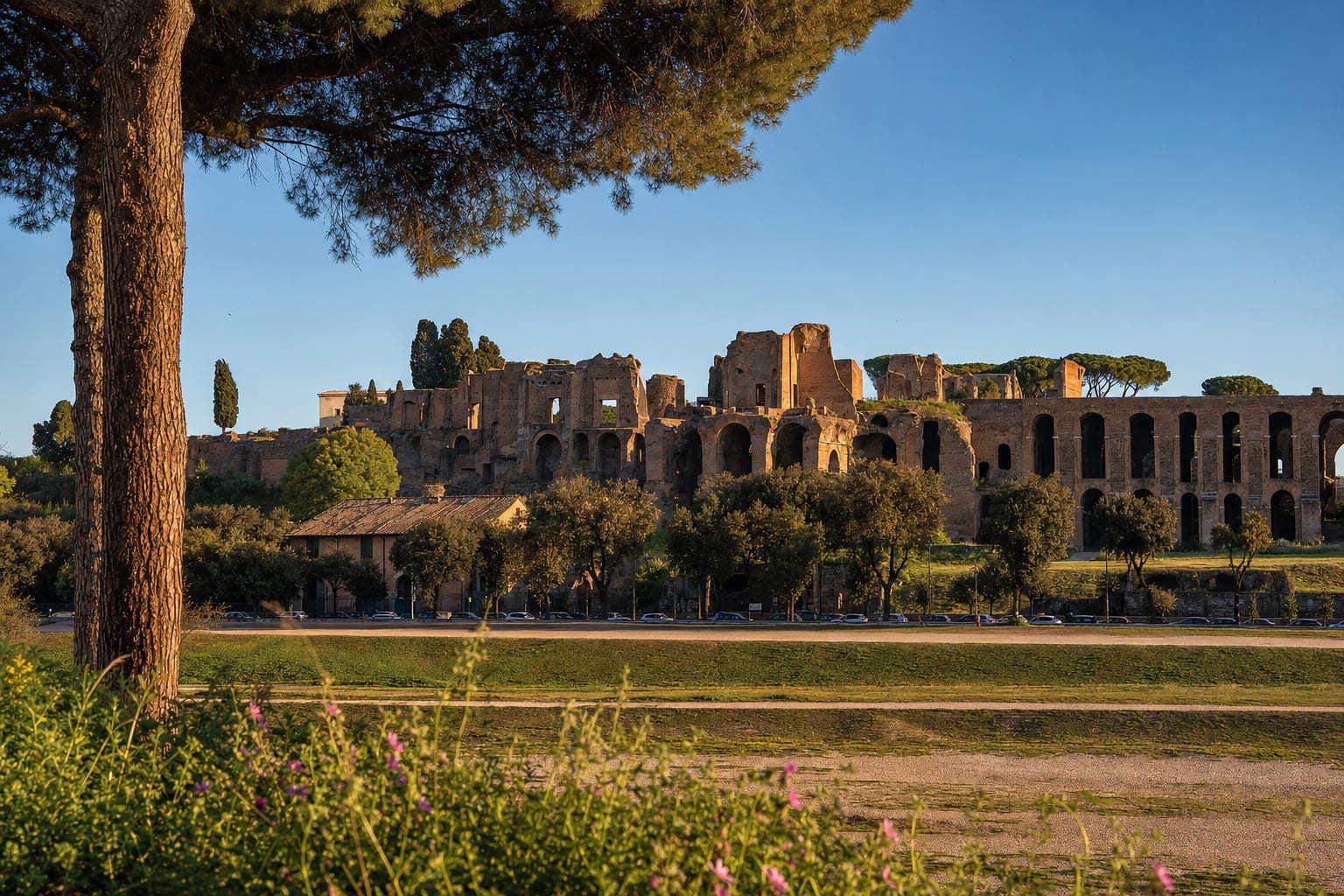 RomePalatine HillRome's mythical founding site, Augustus's house, the Domus Flavia, the Farnese Gardens, views over the ForumThe Palatine Hill is where Rome's own foundation myth and its archaeology come closest to agreeing: excavations have found Iron Age huts dated to roughly the 8th century BCE, the same period tradition assigns to Romulus, on the very hill where he was said to have founded the city. By the second and first centuries BCE it had become the address of choice for the Roman elite, and Augustus deliberately built his own relatively modest house here to align himself with that founding legend. His successors were less restrained: the Domus Tiberiana, Domus Transitoria, the enormous Domus Flavia and Nero's Domus Aurea layered increasingly extravagant palace complexes over the hill across the first century CE, some incorporating earlier structures rather than replacing them outright. The Farnese Gardens, planted in the 16th century over Tiberius's ruined palace, now shade one of the best views in Rome, looking directly down onto the Forum below.
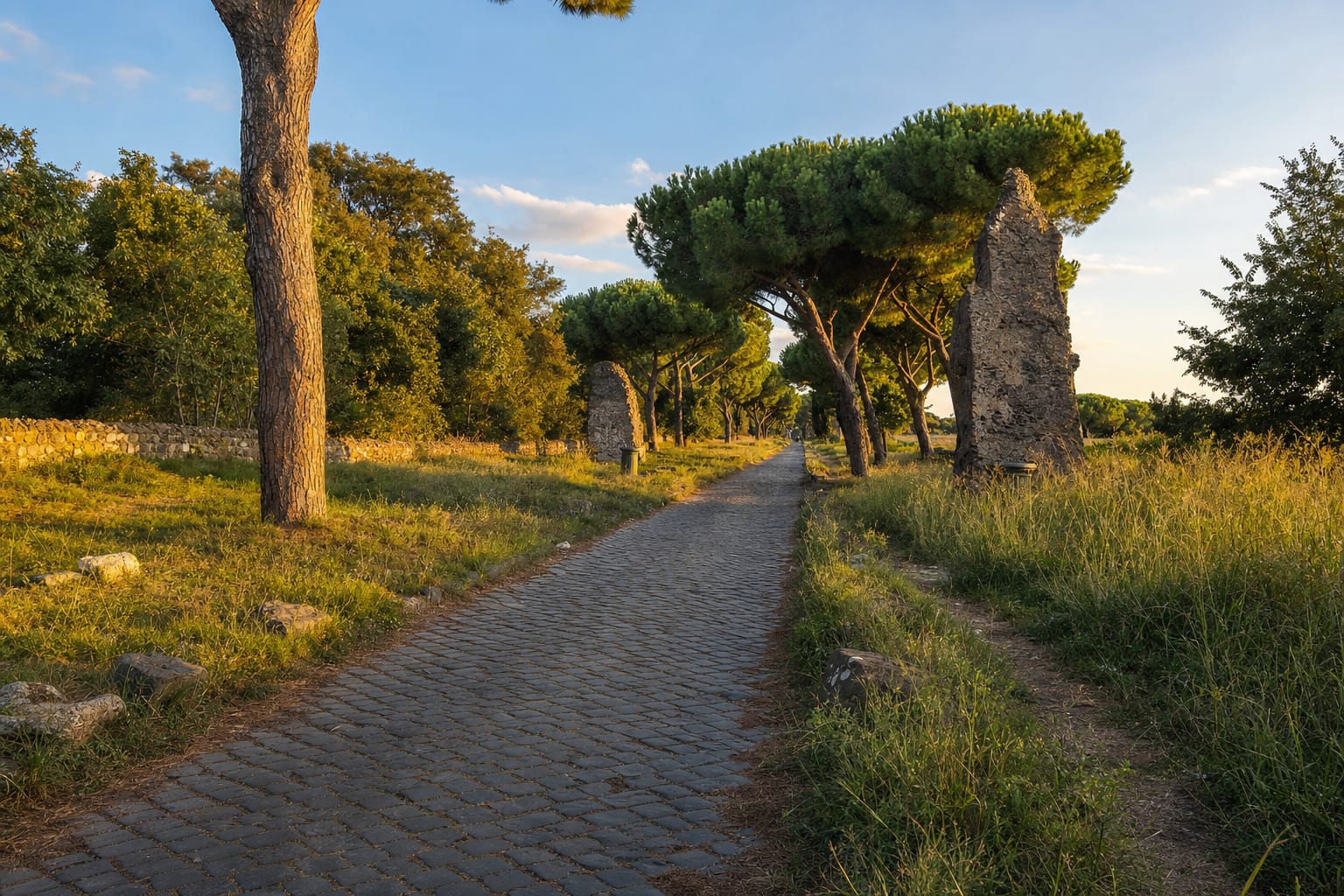 RomeUNESCOAppian WayOriginal Roman basalt paving, the catacombs of San Callisto and Domitilla, umbrella pines, Roman tombsThe Appian Way began in 312 BCE under the censor Appius Claudius Caecus, who also built Rome's first aqueduct in the same year, and it originally ran straight from Rome to Capua before later extensions pushed it all the way to the port of Brindisi on the Adriatic, earning it the nickname Regina Viarum, Queen of Roads. Long stretches near Rome still carry their original basalt paving stones, worn into ruts by two thousand years of cart wheels, and run past umbrella pines, ruined aqueduct arches and the entrances to Christian catacombs including San Callisto and Domitilla, where early Romans buried their dead outside the sacred city boundary. Because the road survives as a serial UNESCO property rather than one continuous open-air museum, sections differ enormously in condition and access: some stretches near the Appia Antica Regional Park are closed to cars and ideal for cycling, while others remain ordinary, traffic-heavy roads, so any visit has to be planned section by section rather than as a single continuous walk.
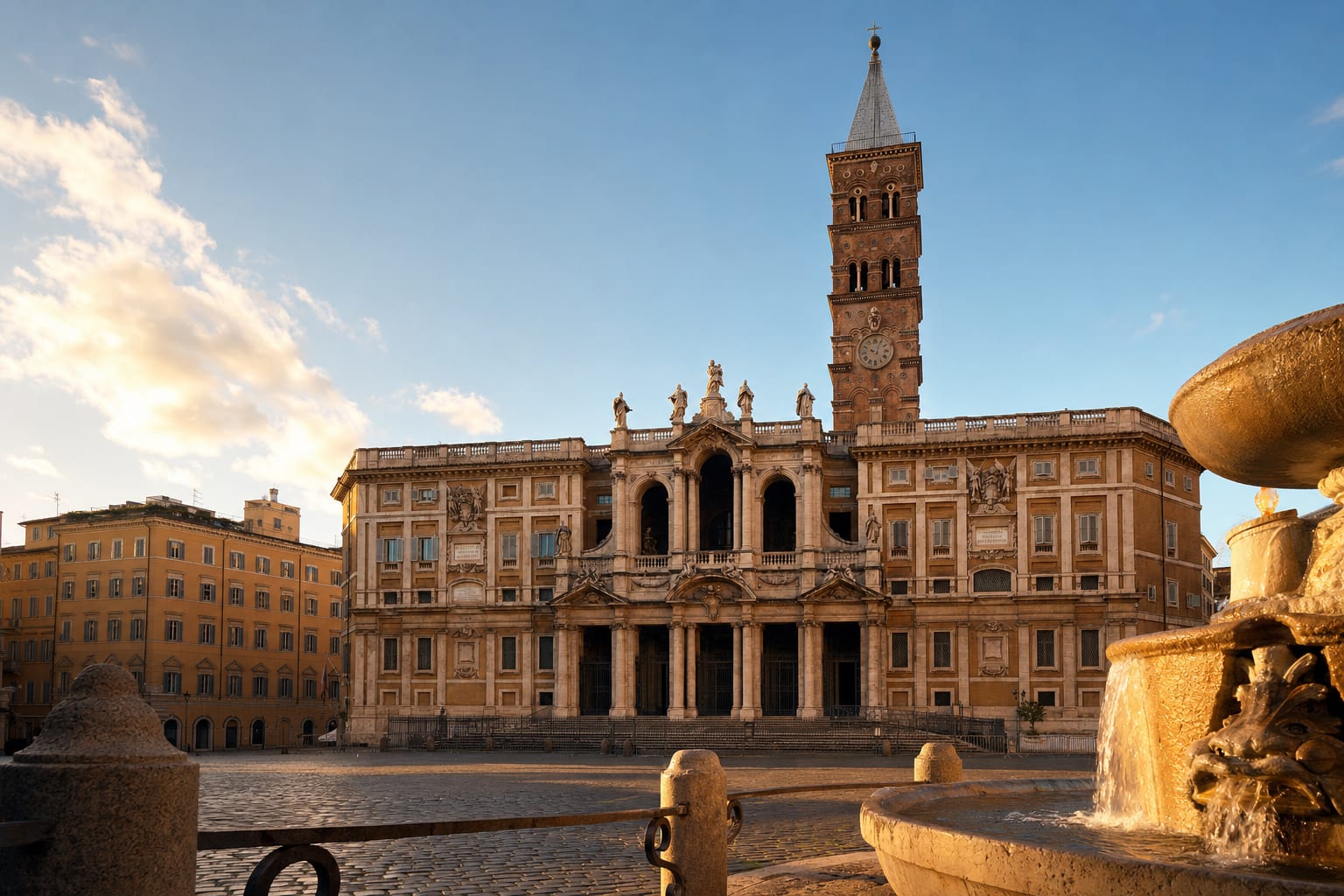 RomeBasilica di Santa Maria MaggioreFifth-century mosaics, Torriti's apse mosaic, the legend of the August snow, its gilded ceilingSanta Maria Maggiore is one of Rome's four papal basilicas, and its core dates to the fifth century, built in the wake of the Council of Ephesus in 431 CE, which formally affirmed Mary as Theotokos, mother of God, and touched off a wave of Marian church building across the Christian world. Its nave and triumphal arch still carry mosaics from that original fifth century campaign, among the oldest surviving in any Roman church, while later centuries layered on Jacopo Torriti's shimmering apse mosaic, a Cosmatesque inlaid marble floor, Arnolfo di Cambio's sculpted Nativity scene, and a coffered wooden ceiling gilded, according to tradition, with some of the first gold brought back from the Americas. Devotional legend holds that the Virgin herself directed the church's location by causing snow to fall on the Esquiline Hill in the middle of an August night, a story the basilica still commemorates every year rather than something that appears in its construction records.
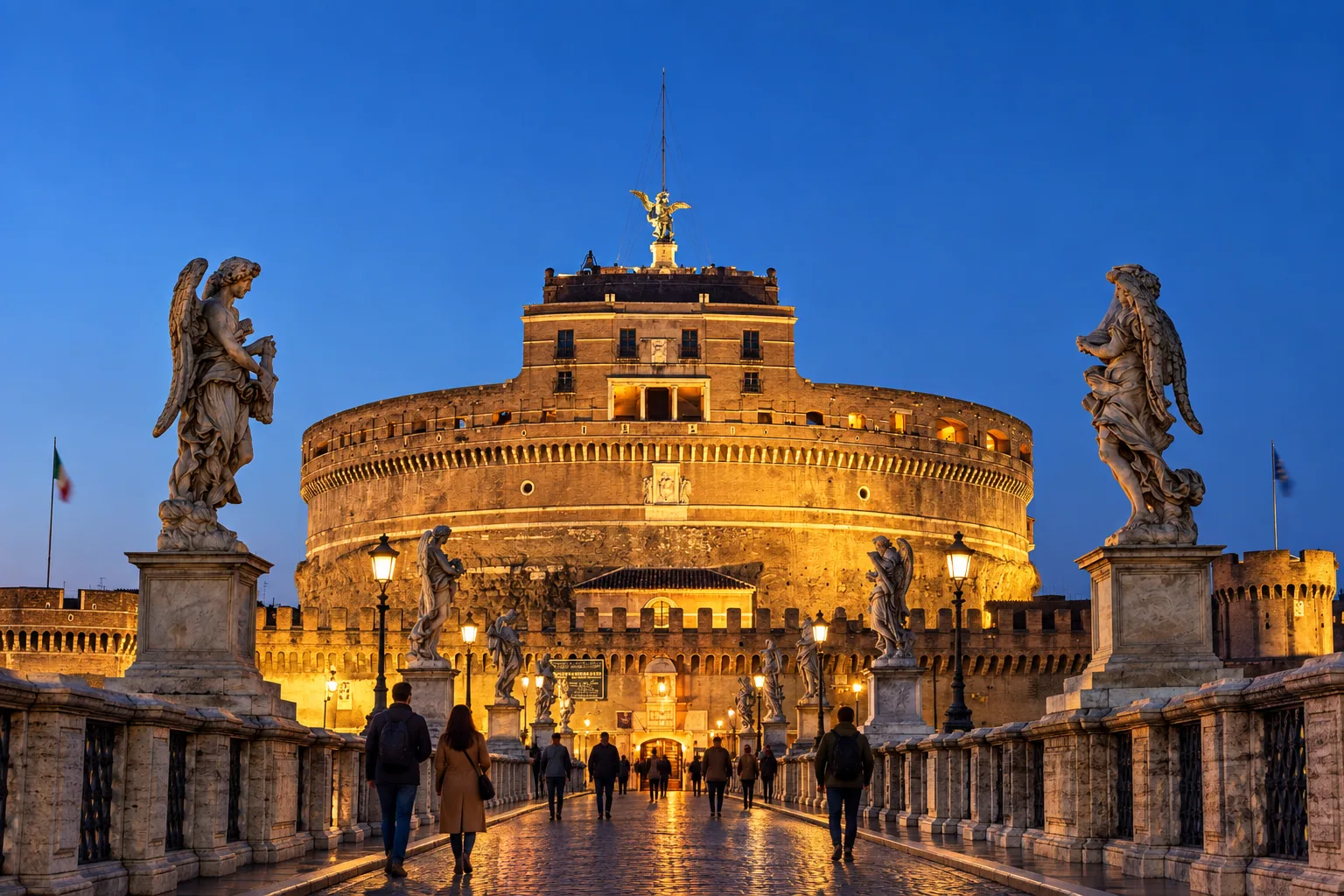 RomeCastel Sant'AngeloHadrian’s mausoleum, Passetto di Borgo, bronze angel, papal apartments, terrace viewsHadrian built this drum-shaped mausoleum for himself and his family, laying the first stone in about 135 and seeing it finished, after his death, under his successor Antoninus Pius in 139. Rome’s popes later folded it into the city’s defenses and linked it to the Vatican by the Passetto di Borgo, a raised corridor Pope Clement VII used to escape the Sack of Rome in 1527. Its name comes from a medieval legend of Pope Gregory the Great seeing the Archangel Michael sheathe his sword above the ramparts to mark the end of a plague, which explains the bronze angel on the terrace. The castle was also a papal prison, holding Benvenuto Cellini and Giordano Bruno, and is now a national museum.
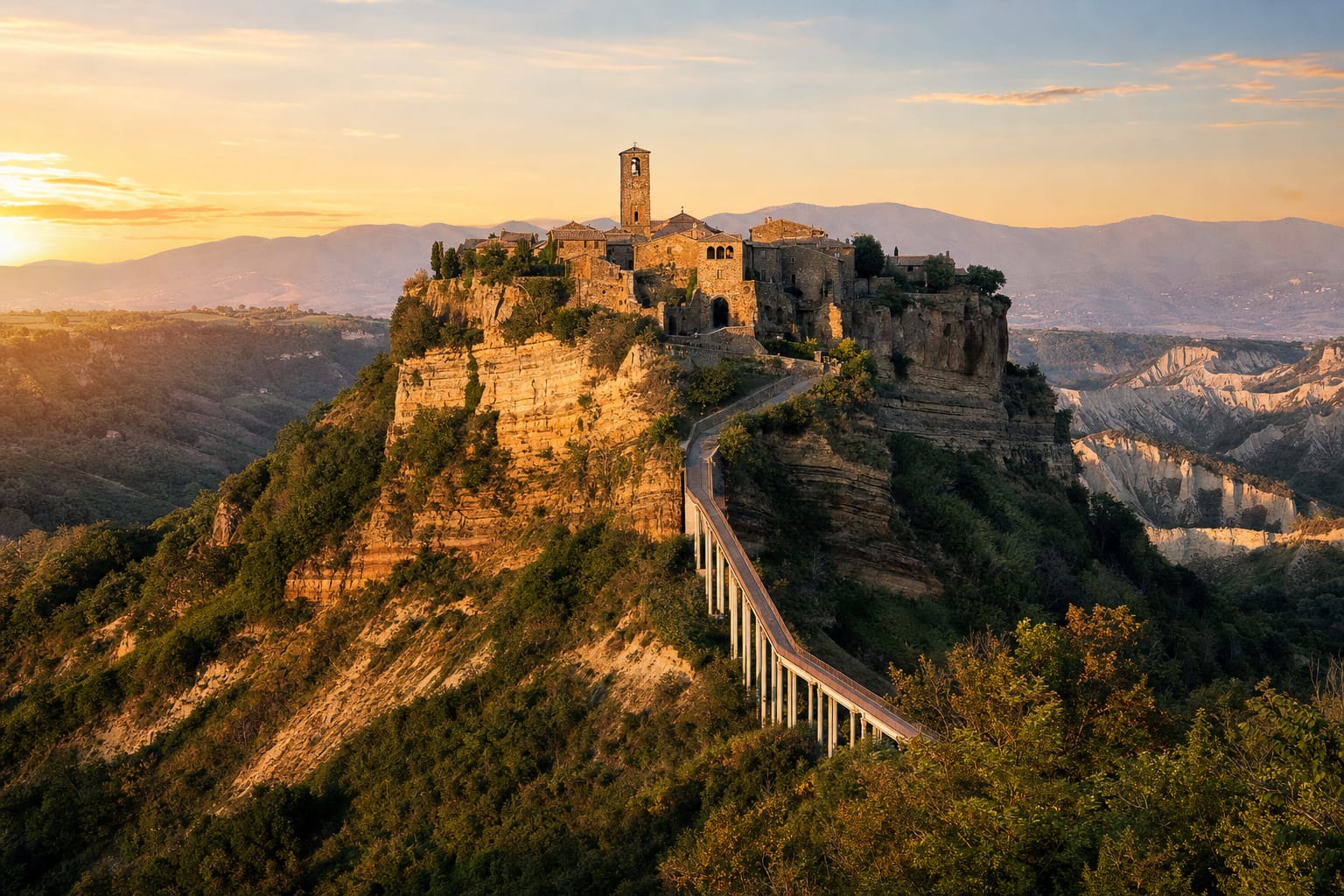 BagnoregioCivita di BagnoregioFootbridge access, crumbling tuff plateau, badlands, the dying townEtruscans laid out Civita on a plateau of soft volcanic tuff more than 2,500 years ago, and the badlands around it have been eroding ever since, earning the village its nickname the dying town. Saint Bonaventure was born here, and after a major earthquake in the seventeenth century the bishop and town government moved to Bagnoregio, leaving Civita’s medieval and Renaissance houses to empty over the following centuries. Today the only way in is a reinforced-concrete footbridge built in 1965, and only a handful of residents remain. Cats sleep in doorways, a few restaurants serve local dishes, and the crumbling drop on either side of the bridge is much of the point of coming.
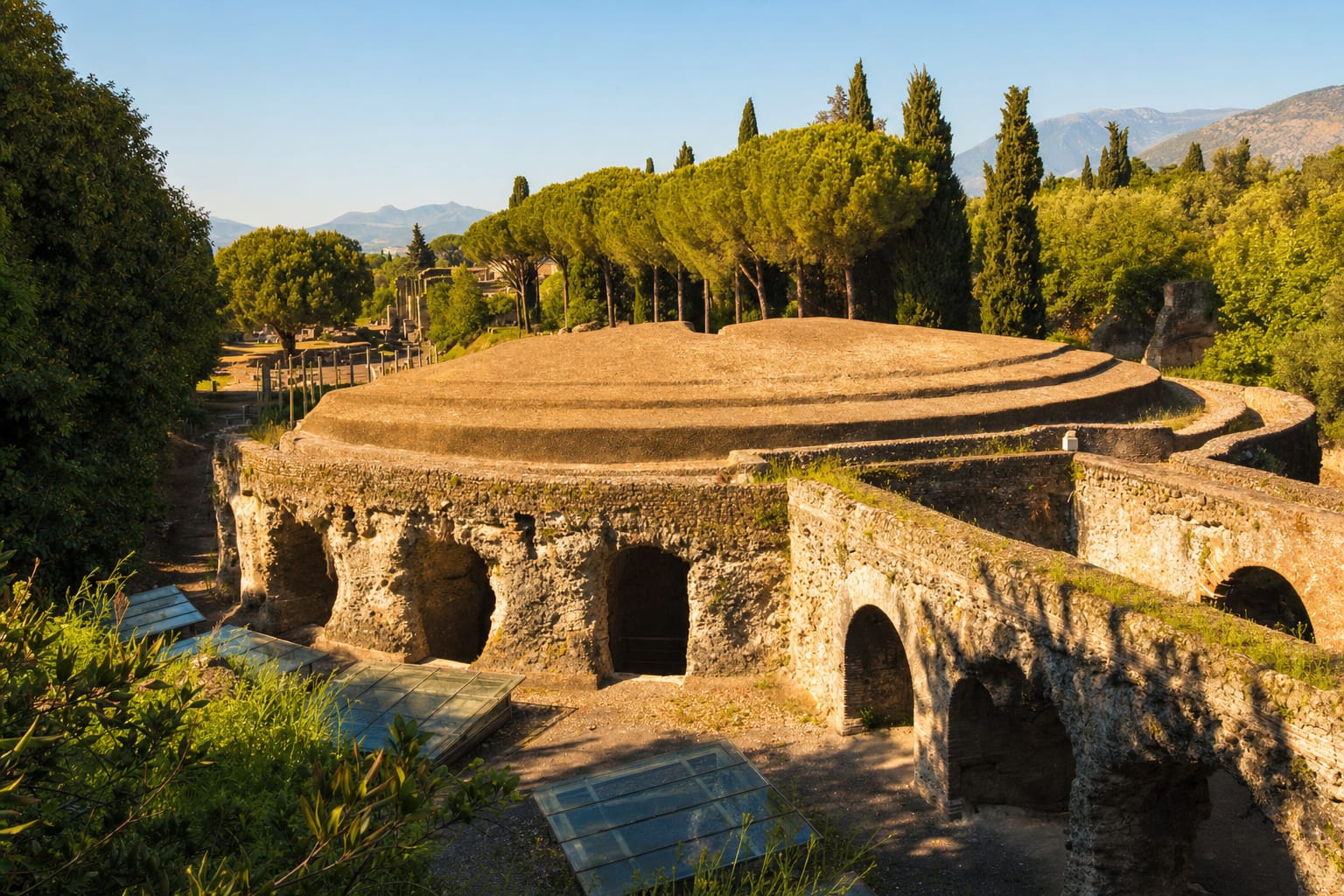 TivoliUNESCOHadrian's VillaCanopus pool, Maritime Theatre, Piazza d'Oro, Poecile, Roman concrete vaultsHadrian began building this villa around 118 and rebuilt in it his favorite places from years of travel across the empire, so a walk through the ruins is a tour of memory rather than a plan: the Canopus, a long reflecting pool lined with caryatids and Egyptian figures, recalls the Nile; the Maritime Theatre is a circular colonnade around a moat and a tiny island villa, where the emperor could withdraw from his own court. More than thirty buildings spread across a site larger than Pompeii, drawn in bold curves that only Roman concrete made possible. UNESCO inscribed it in 1999, and the site is among the most rewarding half days within reach of Rome.
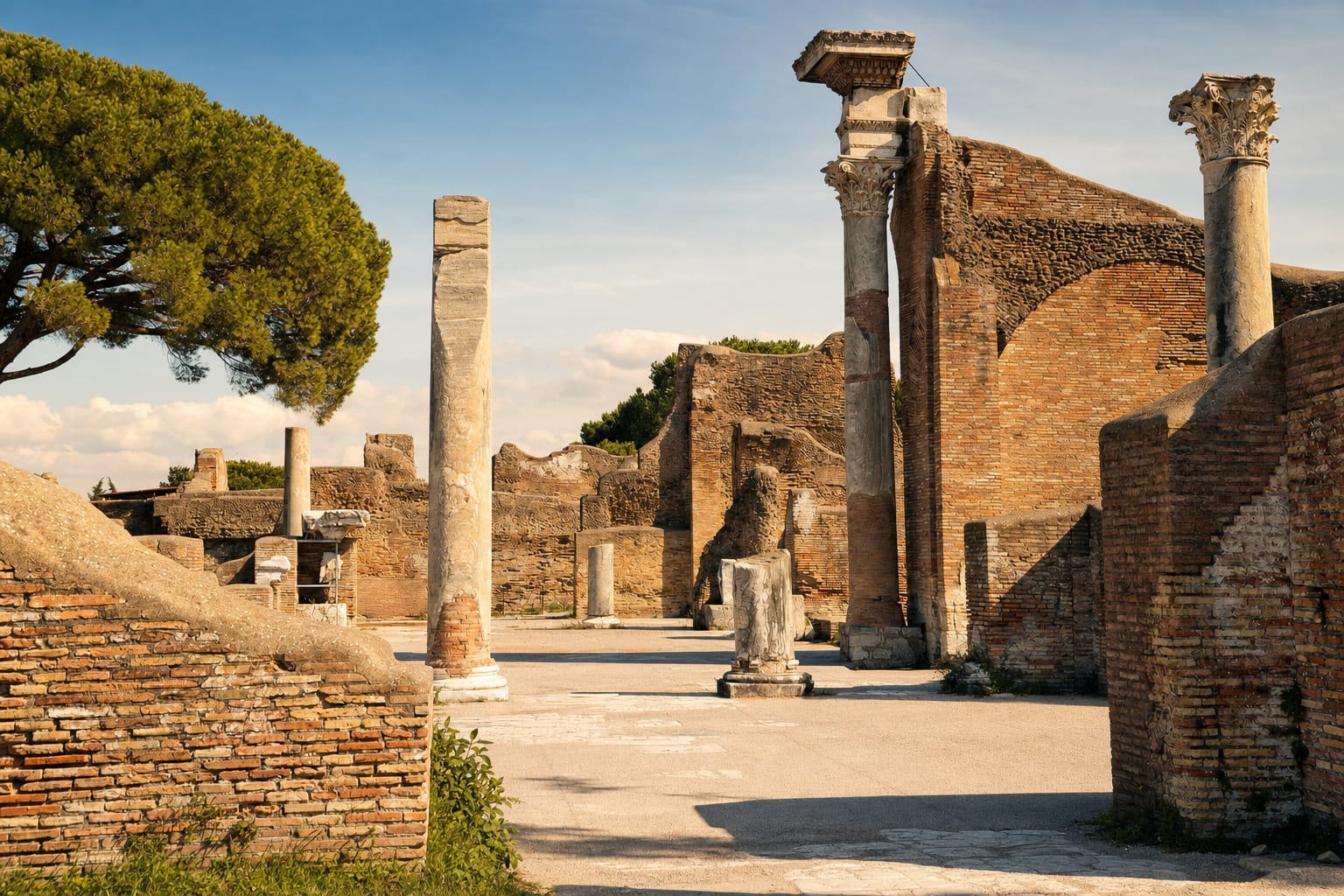 RomeOstia AnticaPiazzale delle Corporazioni mosaics, Roman theatre, thermopolium, everyday Roman life, Museo OstienseOstia was Rome's harbor city, and when the Tiber moved and the sea retreated it was buried and forgotten rather than destroyed, so daily life survives street by street: the bakeries with their millstones, the thermopolium bar with its painted counter, the apartment blocks that look strikingly modern. In the Piazzale delle Corporazioni, black-and-white mosaics outside the offices advertise the shipping firms that worked here, with elephants for Africa and grain measures for the corn trade. A theatre still seats a crowd, and the museum holds the sculpture found on site. Set among pines and wild grass, it is quieter than Pompeii and only a train ride from Rome.
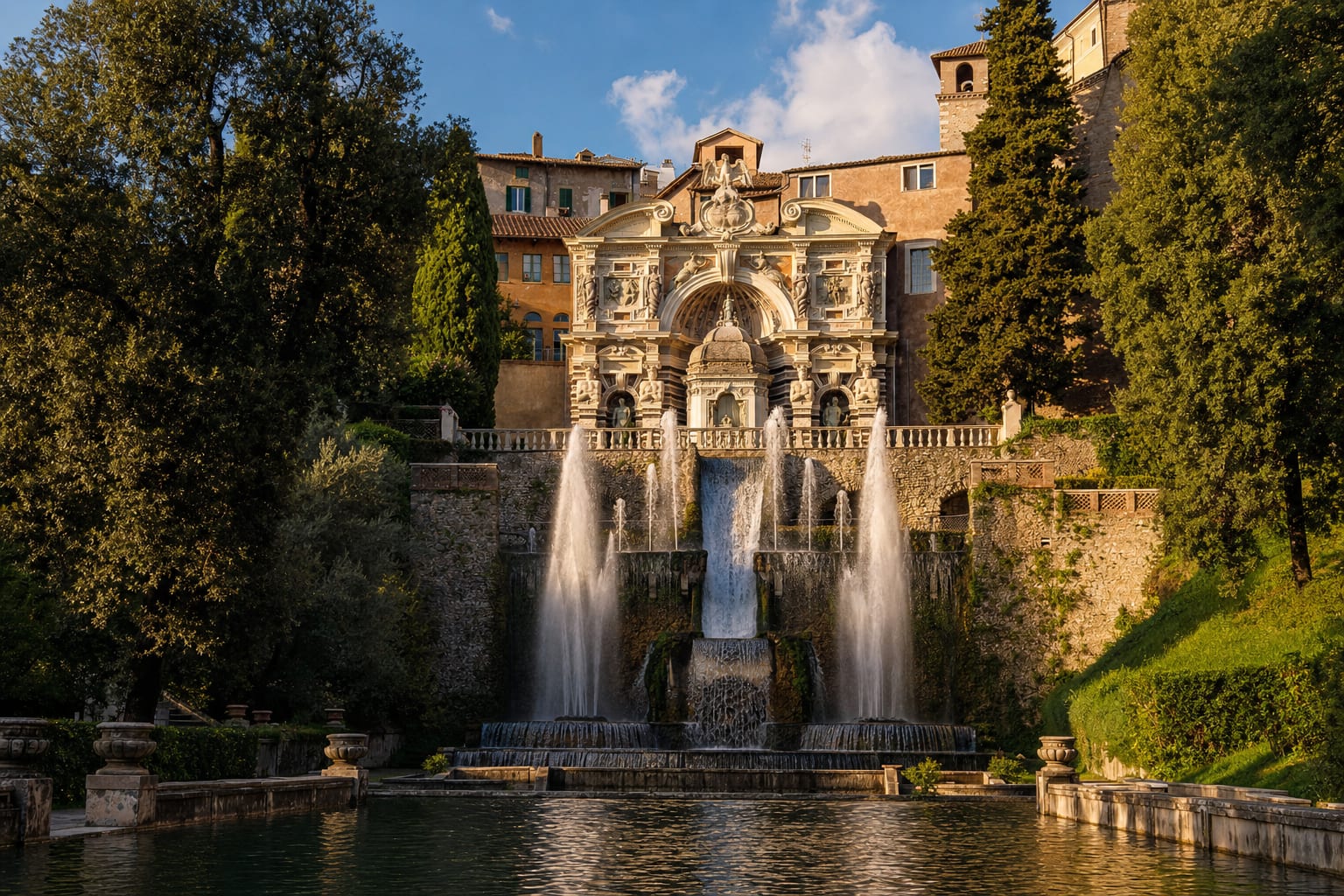 TivoliUNESCOVilla d'EsteAvenue of the Hundred Fountains, Organ Fountain, Oval Fountain, Rometta, Renaissance gardenCardinal Ippolito II d'Este, who twice missed the papacy, consoled himself from 1560 with this hillside villa and a garden that turned Tivoli's river water into theatre. Pirro Ligorio designed it as a sequence of terraces: the long Avenue of the Hundred Fountains, the Oval Fountain, the Rometta with its miniature Rome, and the Organ Fountain, which plays by water pressure alone, as it did for sixteenth-century guests. There are fifty-one fountains and nymphaeums, hundreds of jets and cascades, and no pumps: everything flows by gravity. Inside, the villa's rooms are frescoed with mythology and Este history. UNESCO inscribed it in 2001, and the garden shaped European garden design for two centuries.
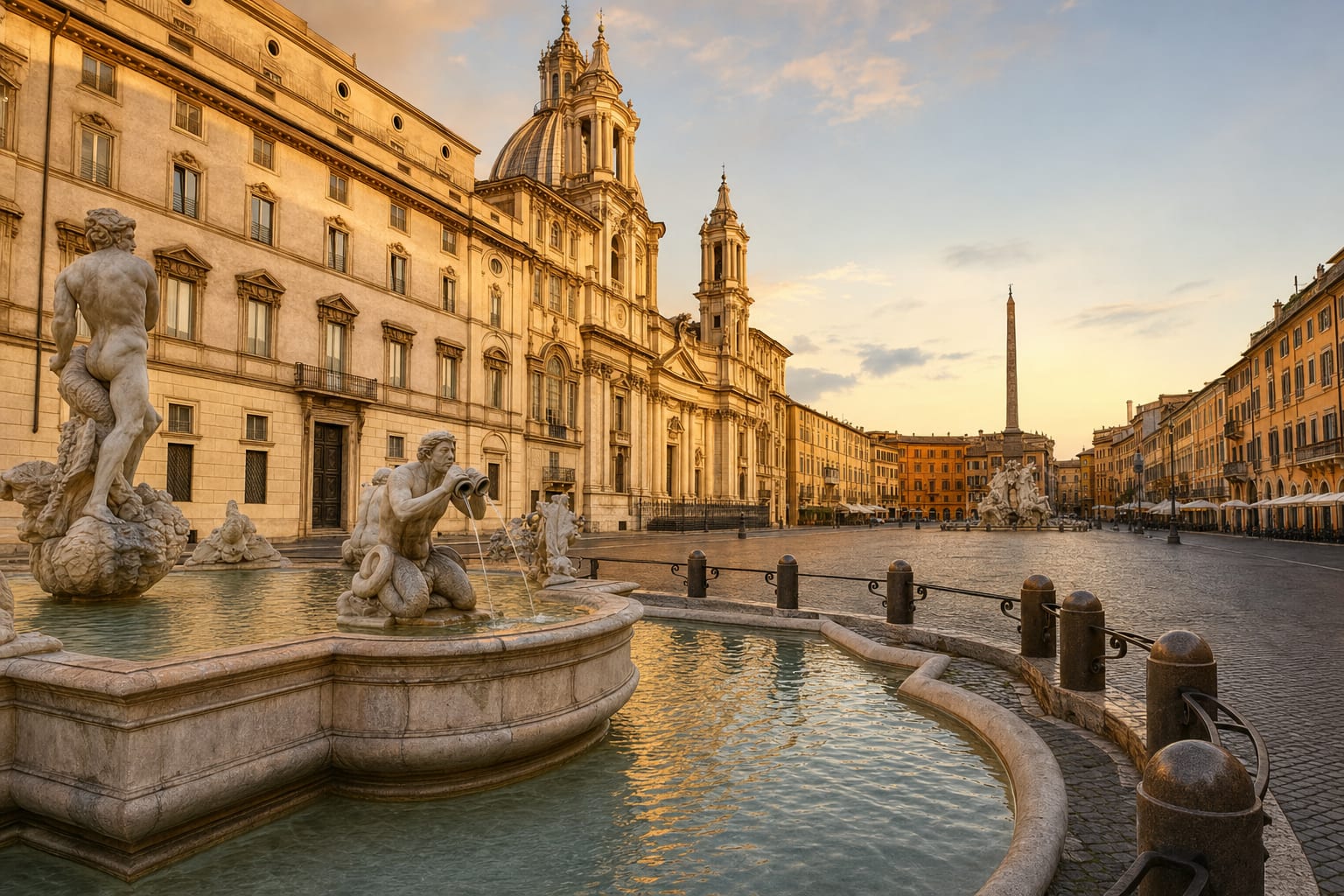 RomePiazza NavonaBernini's Fountain of the Four Rivers, Borromini's Sant'Agnese, Domitian's stadium footprint, Baroque theatre of RomePiazza Navona's long oval shape traces the exact footprint of Domitian's stadium, built in 80 CE for Greek-style athletic contests the Romans called agones, a word that survives in the square's old name, Circus Agonalis. The stadium crumbled after Rome's fall and was quarried for stone, but the space it left stayed open, becoming the city market by the late fifteenth century before Pope Innocent X, whose family palace faces the square, transformed it into a Baroque stage during his reign from 1644 to 1655. At its center, Gian Lorenzo Bernini's 1651 Fountain of the Four Rivers sends four river gods, the Nile, Ganges, Danube and Rio de la Plata, sprawling beneath an ancient Egyptian obelisk, positioned to face the facade of Francesco Borromini's Sant'Agnese in Agone, Bernini's great architectural rival, in what is often told as a piece of professional theater between the two men even if the design predates their direct rivalry on this square.
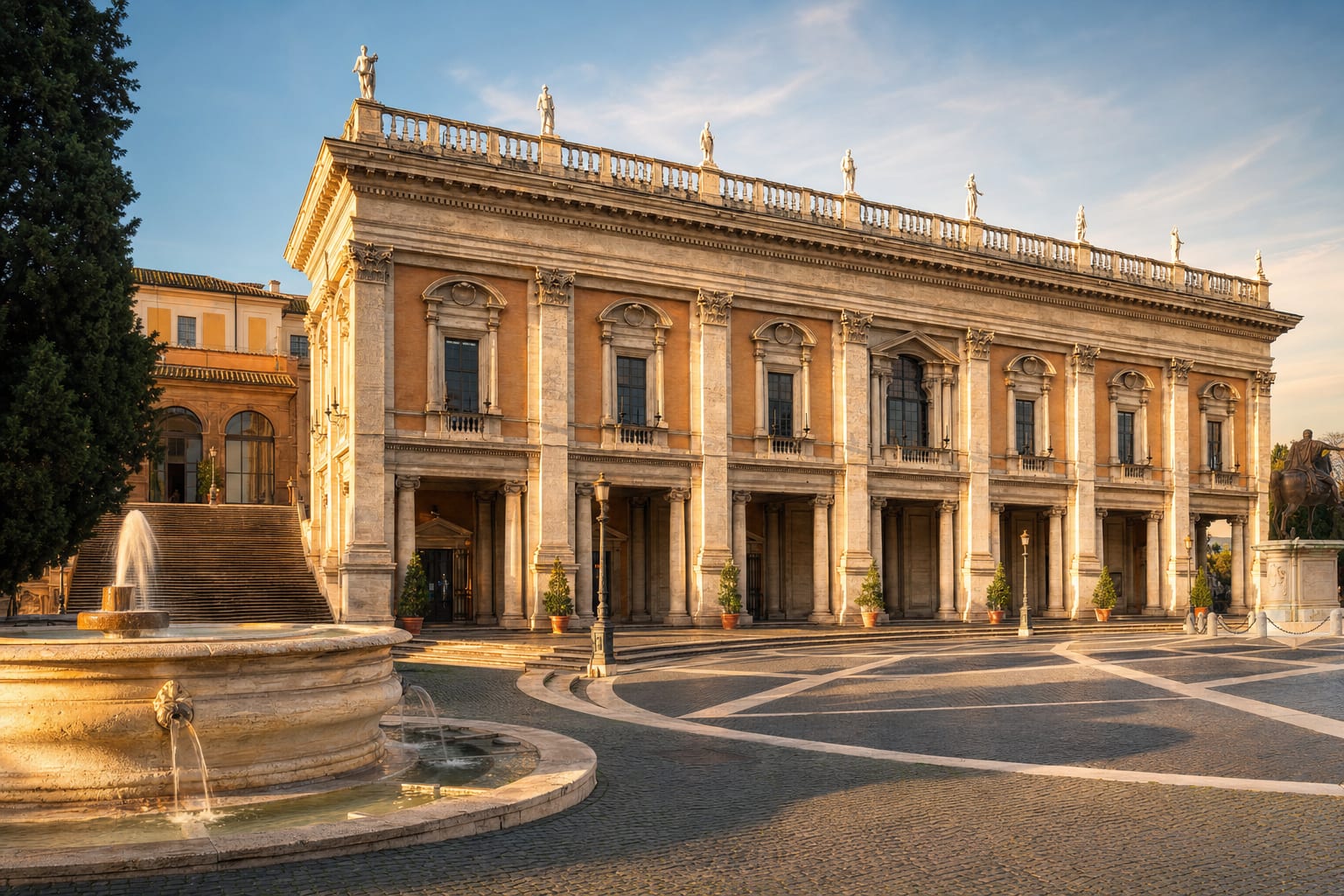 RomeCapitoline MuseumsMichelangelo's piazza, Capitoline Wolf, Marcus Aurelius bronze, oldest public museumIn 1471, Pope Sixtus IV donated a group of ancient bronzes, including the Capitoline Wolf and the Spinario, to the Roman people, an act generally credited as the founding of the world's first public museum, more than three centuries before the Louvre opened its doors. Michelangelo redesigned the piazza and the two palaces flanking it from 1536 onward, laying the star-patterned pavement and the gently rising staircase, or cordonata, that still frames the approach from below. Inside, the original gilded bronze equestrian statue of Marcus Aurelius, moved indoors in the 1980s and replaced outside by a copy, shares the collection with the Capitoline Wolf suckling Romulus and Remus (the wolf itself is ancient, though the twins were added in the Renaissance) and the colossal fragments of a statue of Constantine, a head and hand alone taller than a person. A tunnel beneath the piazza, the Galleria Congiunzione, links the two palace buildings and runs past the foundations of Rome's ancient Tabularium archive.
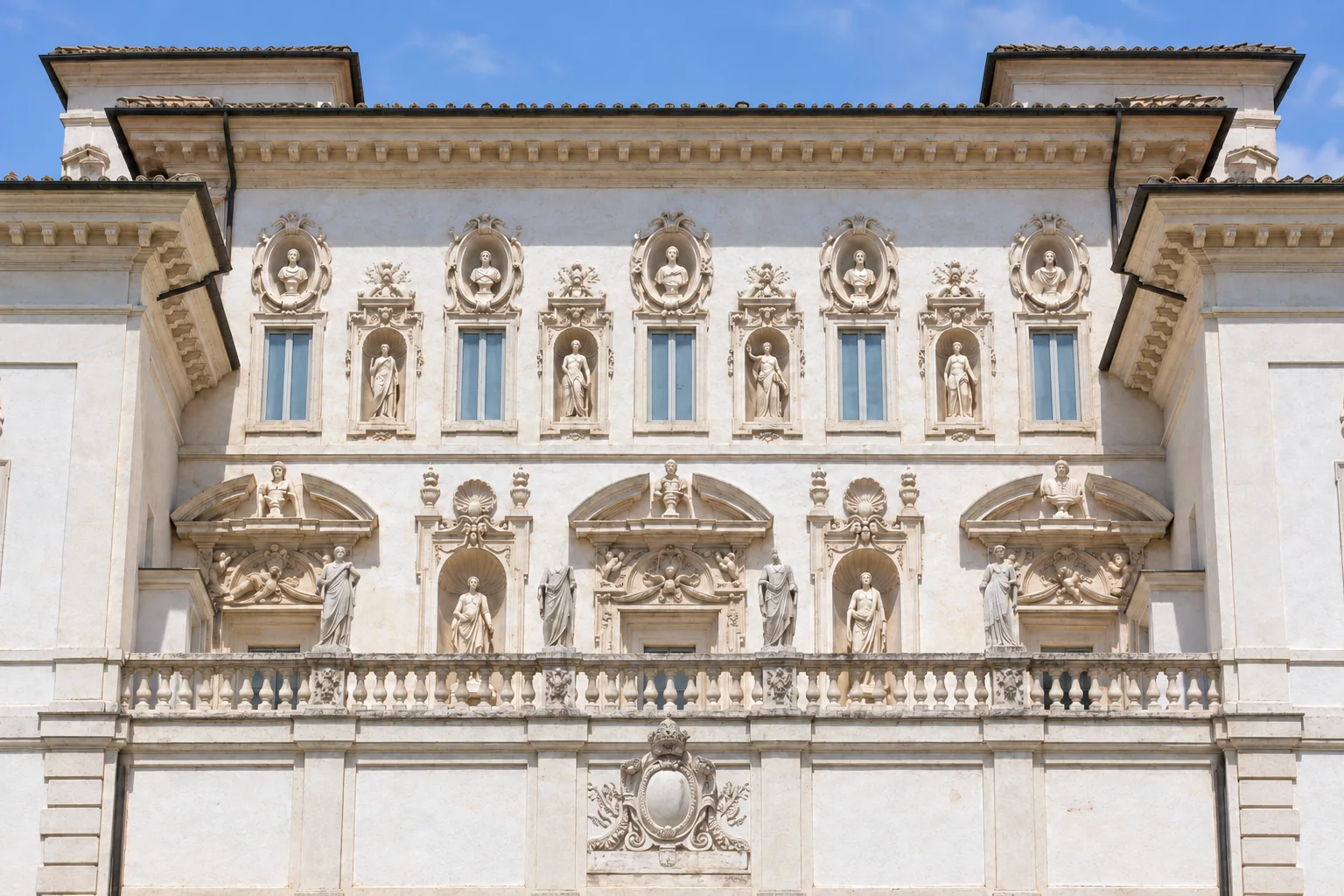 RomeGalleria BorgheseBernini's Apollo and Daphne, a room of six Caravaggios, Canova's Pauline Bonaparte, the cardinal's pleasure villa<p>Cardinal Scipione Borghese commissioned a villa outside Porta Pinciana to house his collection. Construction began in 1607 under Flaminio Ponzio and was completed by Giovanni Vasanzio. The rooms remain part of the encounter with the art: painted ceilings, coloured marbles and sculpture turn the route into a succession of elaborate settings.</p><p>The collection also tells a story of patronage and papal power. In 1607, Pope Paul V ordered paintings seized from the Cavalier d’Arpino and gave them to his nephew Scipione. Room VIII now brings together six Caravaggios, including <em>Boy with a Basket of Fruit</em>, <em>Sick Bacchus</em> and <em>David with the Head of Goliath</em>. Their concentration makes it worth allowing time to look at the paintings together.</p><p>Bernini’s <em>Apollo and Daphne</em> occupies the centre of Room III. Follow the carved change from feet becoming roots to hands and hair becoming laurel; the museum’s object record describes Bernini’s original viewing sequence along the group’s right side, where Apollo’s expression shifts to astonishment. In Room IV, <em>The Rape of Proserpina</em> stands amid mosaics, coloured marbles and imperial busts. Canova’s reclining <em>Pauline Borghese as Venus Victorious</em> in Room I holds the apple awarded in the Judgment of Paris. Upstairs, Titian’s <em>Sacred and Profane Love</em> is in Room XX, the Psyche Room; its marriage-allegory interpretation remains debated.</p><p>A standard visit has a two-hour limit. Choose a few works to study closely, then leave time for the rooms around them. To connect the gallery with the wider city, continue with our <a href="/en/regions/lazio/rome">Rome travel guide</a>.</p>
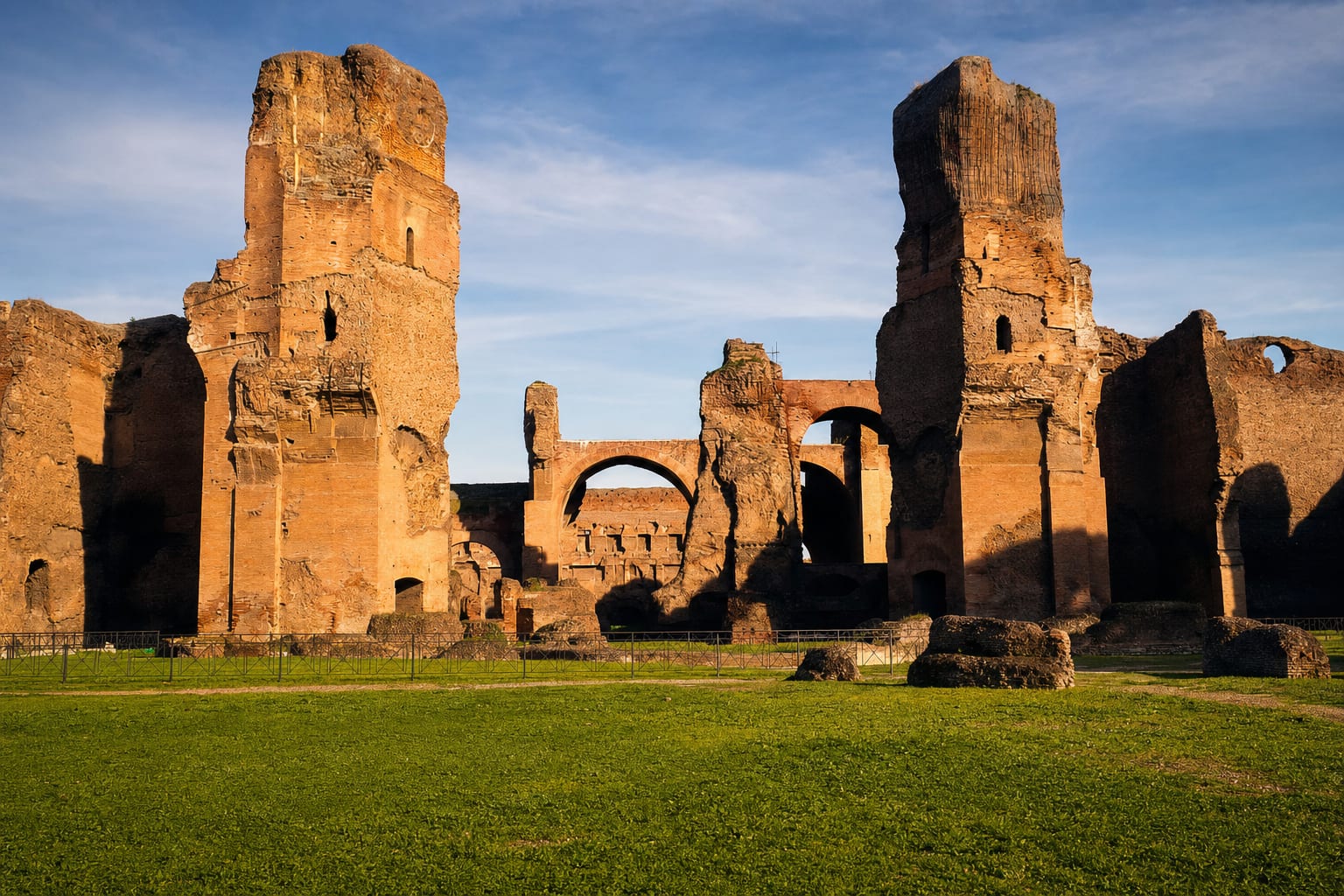 RomeBaths of CaracallaVast imperial baths, underground galleries, Mithraeum, summer opera, Farnese HerculesRome's Baths of Caracalla were inaugurated in 216 CE and could take some sixteen hundred bathers at once. The surviving brick shell is still enormous: the great vaults dwarf everything around them, and beneath the floor runs a network of galleries, some two kilometers of them, where the furnaces, water channels and service tunnels that kept the complex hot are still visible. Down there is also a Mithraeum, among the largest known. Marble, mosaics and statues once filled the rooms; the Farnese Hercules came from here. In summer the ruins become the stage for Rome's open-air opera, with arias rising into the brick skeleton, a fitting use for a building designed for crowds.
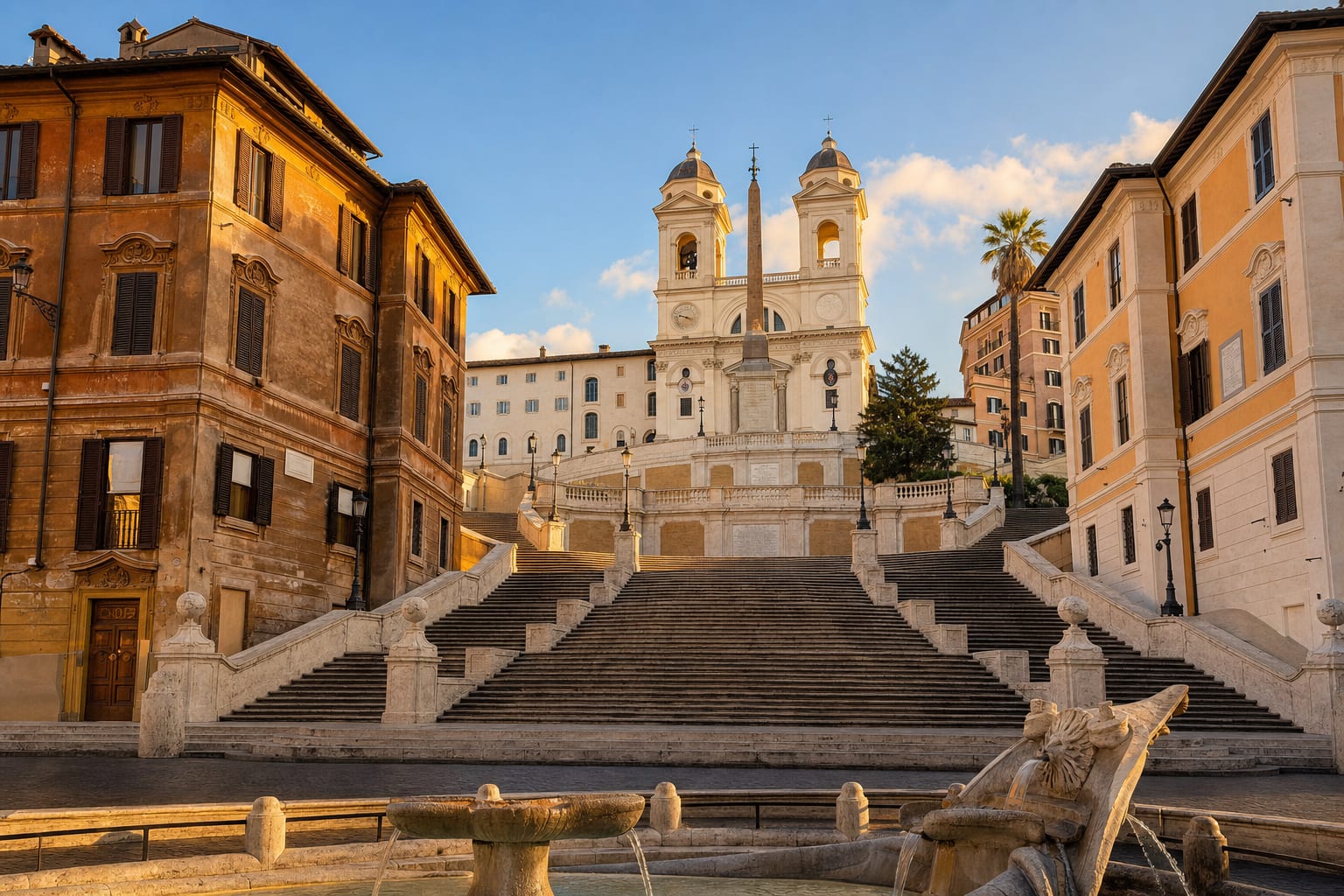 RomeSpanish Steps135-step Baroque cascade, Trinita dei Monti church, Barcaccia fountain, Keats's final homeA French diplomat's bequest funded the idea as early as 1660, but decades of wrangling, including a scrapped plan to crown the steps with an equestrian statue of Louis XIV that scandalized papal Rome, delayed construction until architects Francesco de Sanctis and Alessandro Specchi finally built the 135-step staircase between 1723 and 1725. It climbs the steep Pincian slope from Piazza di Spagna, named for the Spanish embassy to the Holy See at its base, up to the French-patronized church of Trinita dei Monti at the top, a deliberate diplomatic balancing act built into stone between two rival powers. At the foot of the steps, Pietro Bernini's Barcaccia fountain, shaped like a sinking boat, is said to commemorate a flood that once stranded a boat on this exact spot. English poet John Keats died in 1821 in the rose-colored house immediately to the right of the steps, now a small museum, having come to Rome for his health only to succumb to tuberculosis within sound of the fountain outside his window.
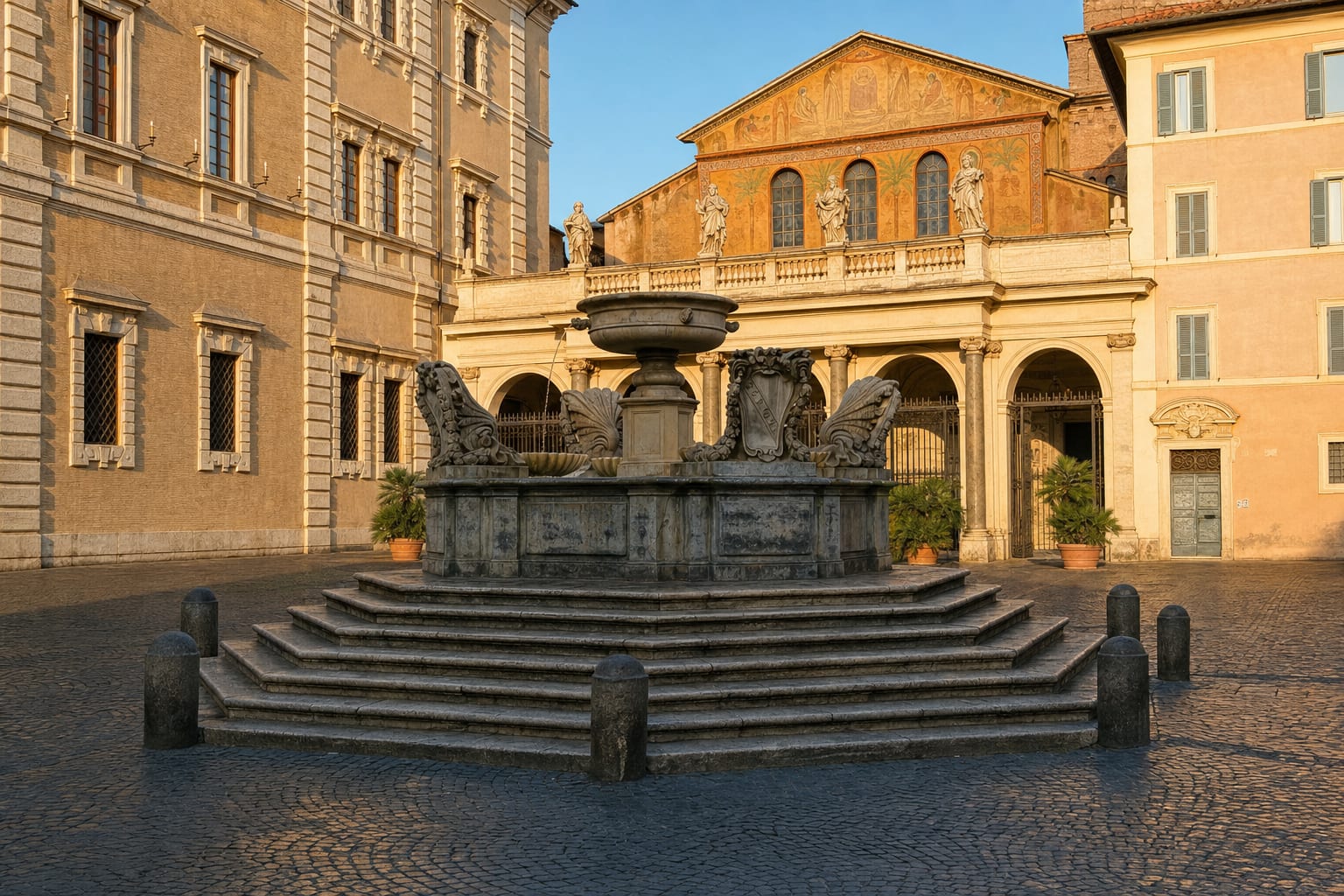 RomeTrastevereCobbled ivy-hung lanes, Santa Maria in Trastevere's gold mosaics, trattoria life, Rome's oldest quarter across the riverThe name simply means "across the Tiber," and the neighborhood has felt like a place apart from Rome since antiquity: Etruscan territory the Romans called Ripa Etrusca before conquering it mainly to control both riverbanks, then a district settled early on by sailors, fishermen and immigrant communities of Syrians and Jews rather than the political elite across the water. Augustus folded it into the city as Regio XIV in his reorganization, but Trastevere kept its own character and, for centuries, hosted Rome's oldest Jewish community. That looser, working-class identity survives in its ochre facades, ivy-draped alleys and irregular street plan, a contrast to the more monumental center across the river. At its heart, the Basilica of Santa Maria in Trastevere, one of Rome's oldest churches, glows with twelfth-and thirteenth-century gold mosaics, and the piazza in front of it fills nightly with a mix of residents, students and visitors settling in for Rome's longest-running dinner scene.
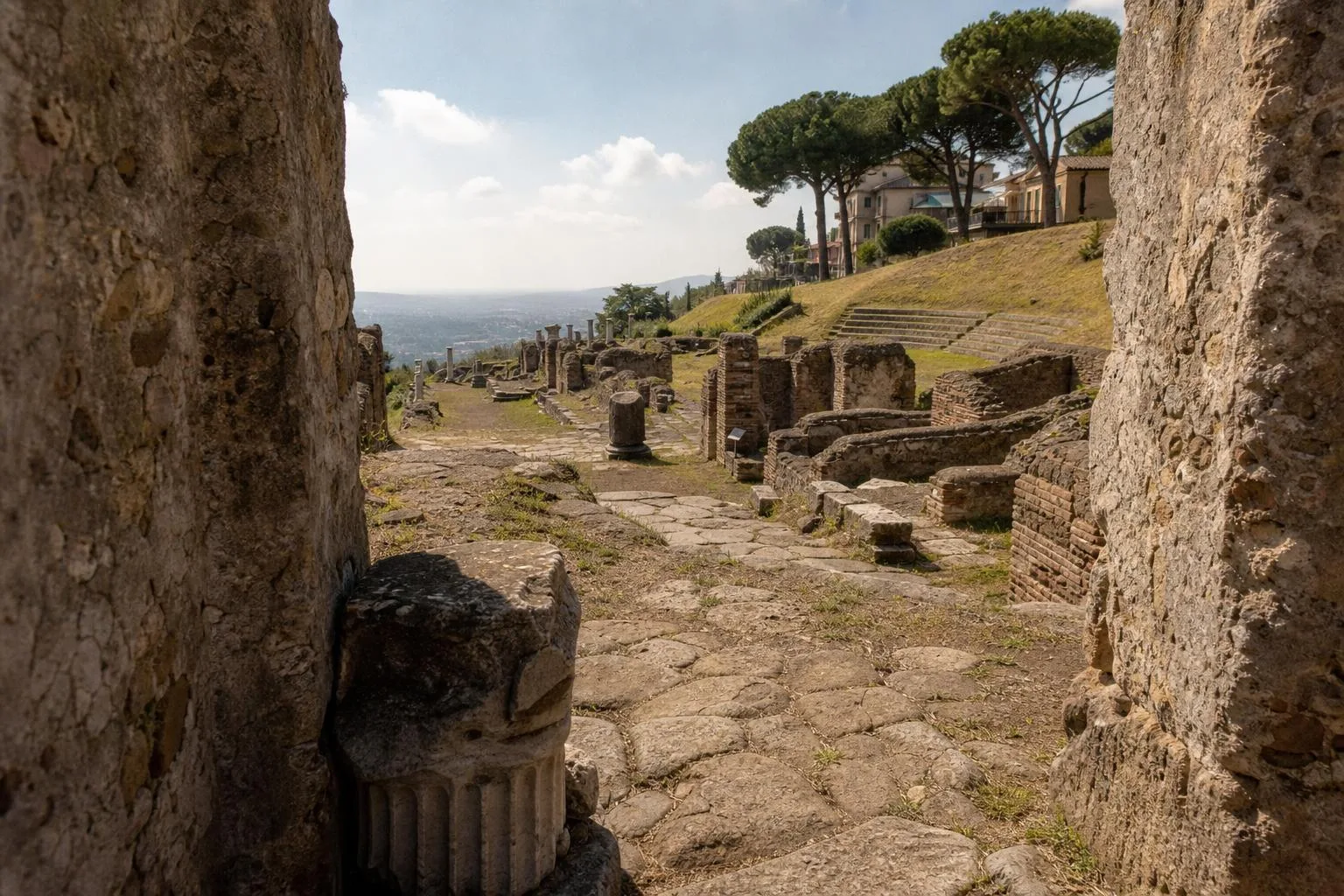 FrascatiHidden GemTusculumRoman theater and amphitheater, birthplace of Cato, Cicero's villa, destroyed in 1191Before Rome existed as anything more than a village, Tusculum was already a hill town of the Latin League, and it stayed prosperous long after, producing Cato the Elder and, centuries later, becoming the country retreat of choice for Cicero, whose villa here he called his Tusculanum. Rome razed the town in 1191, during a feud with the papacy, and it was never rebuilt, which is why the site feels so undisturbed today. Ongoing excavations have uncovered a small Roman theater cut into the hillside, an amphitheater, a forum, and the so-called Villa of Tiberius, and the site is left largely unfenced and unlabeled, a real ruin rather than a curated museum. From the acropolis, the view stretches over the Alban Hills and, on a clear day, all the way to Rome.
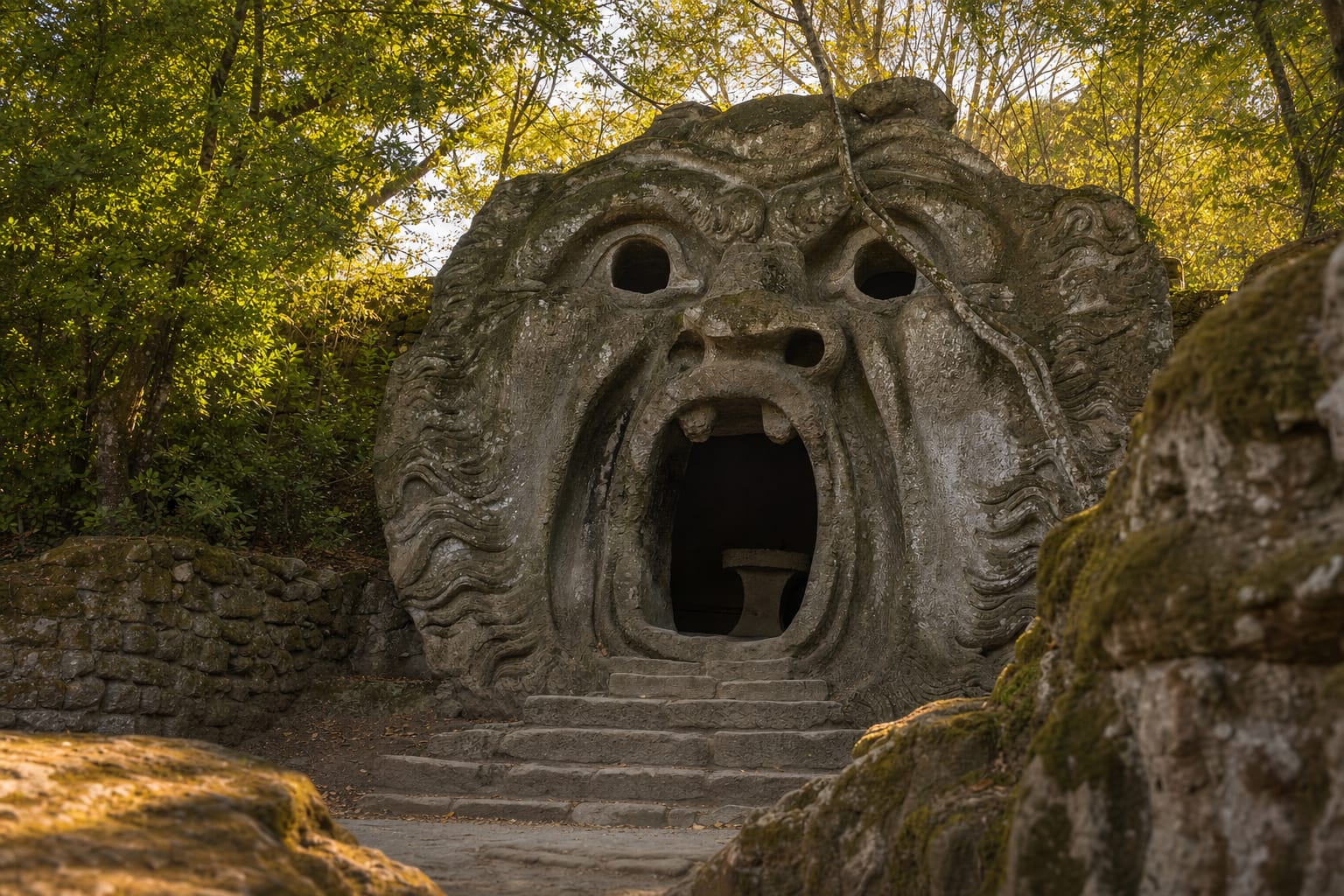 BomarzoSacro Bosco of BomarzoMonster park, Mouth of Hell, leaning house, Mannerist riddles in the woodsIn the mid-sixteenth century Vicino Orsini, a soldier-nobleman, turned a wooded valley below his castle into a garden meant to astonish rather than please. Giant figures rise from the rock, among them a screaming stone mouth carved with the words Ogni pensiero vola, all thoughts fly. Nearby is a house that leans at a dizzying angle. Tradition links the project to the death of his wife, Giulia Farnese, though the symbolism is deliberately hard to read. The grove was forgotten for centuries, then drew Salvador Dalí and, in the 1970s, a restoration by the Bettini family. The park is an easy short trip from Viterbo or Rome.
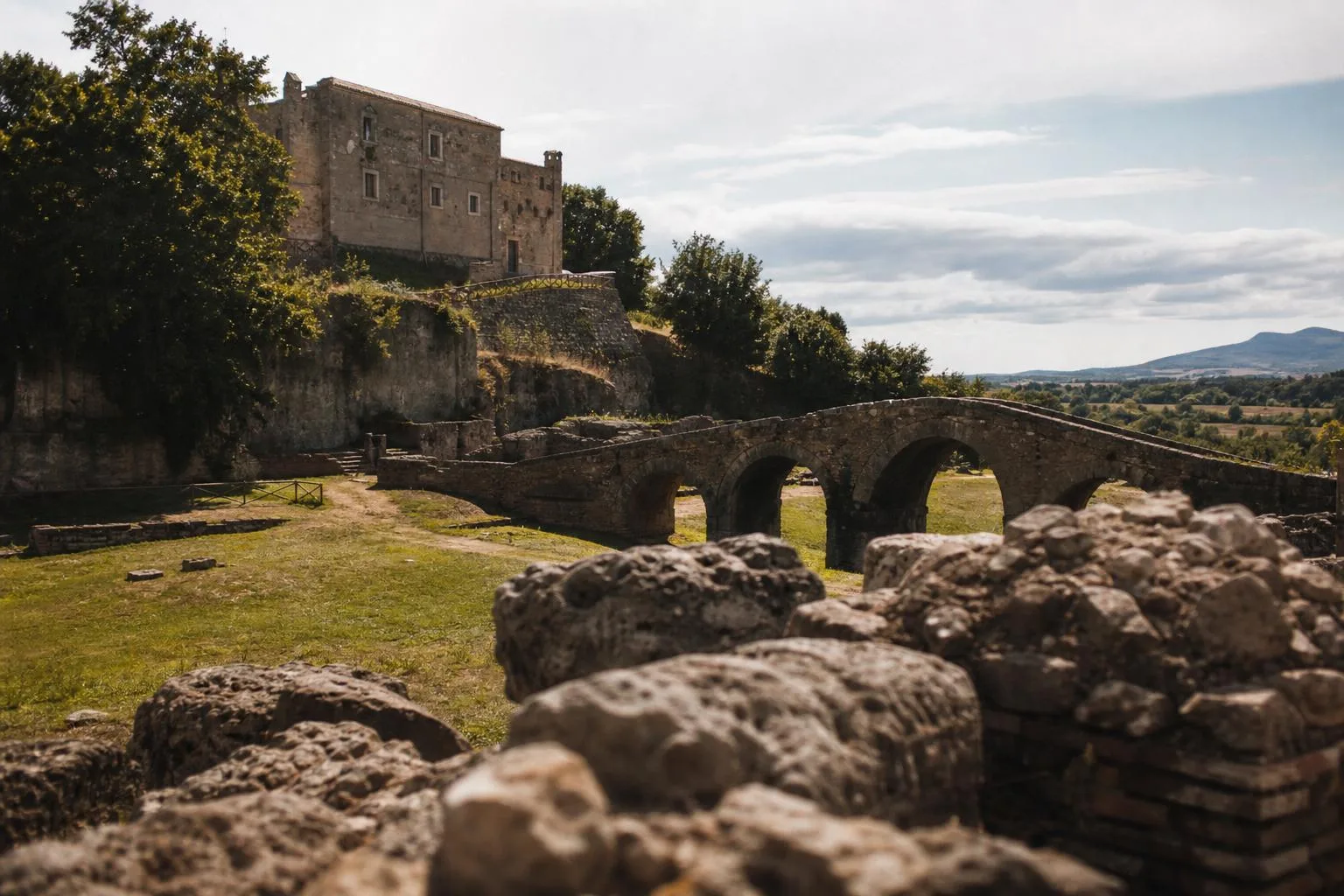 Montalto di CastroHidden GemVulciEtruscan-Roman ruins, Ponte dell'Abbadia (Devil's Bridge), Castello dell'Abbadia museum, wild river parkVulci was one of the twelve city-states of the Etruscan League, ruling over Orbetello, Saturnia, and Sovana at its sixth-century-BC peak before Rome broke its power near Lake Vadimo and forced its submission in 280 BC. More Attic vases have surfaced from Vulci's tombs than from any other ancient site, and treasures like the François Tomb frescoes and the Isis Tomb's contents now sit in Rome and the British Museum. Prince Lucien Bonaparte, who owned the medieval Castello dell'Abbadia here from 1808, dug up much of it himself. Today the ruins form a wild 15-kilometer natural-archaeological park along the Fiora river, crossed by the Ponte dell'Abbadia, an Etruscan-Roman bridge with an aqueduct built into its arches, and anchored by that same castle, now a museum still absorbing new finds from the surrounding tombs.
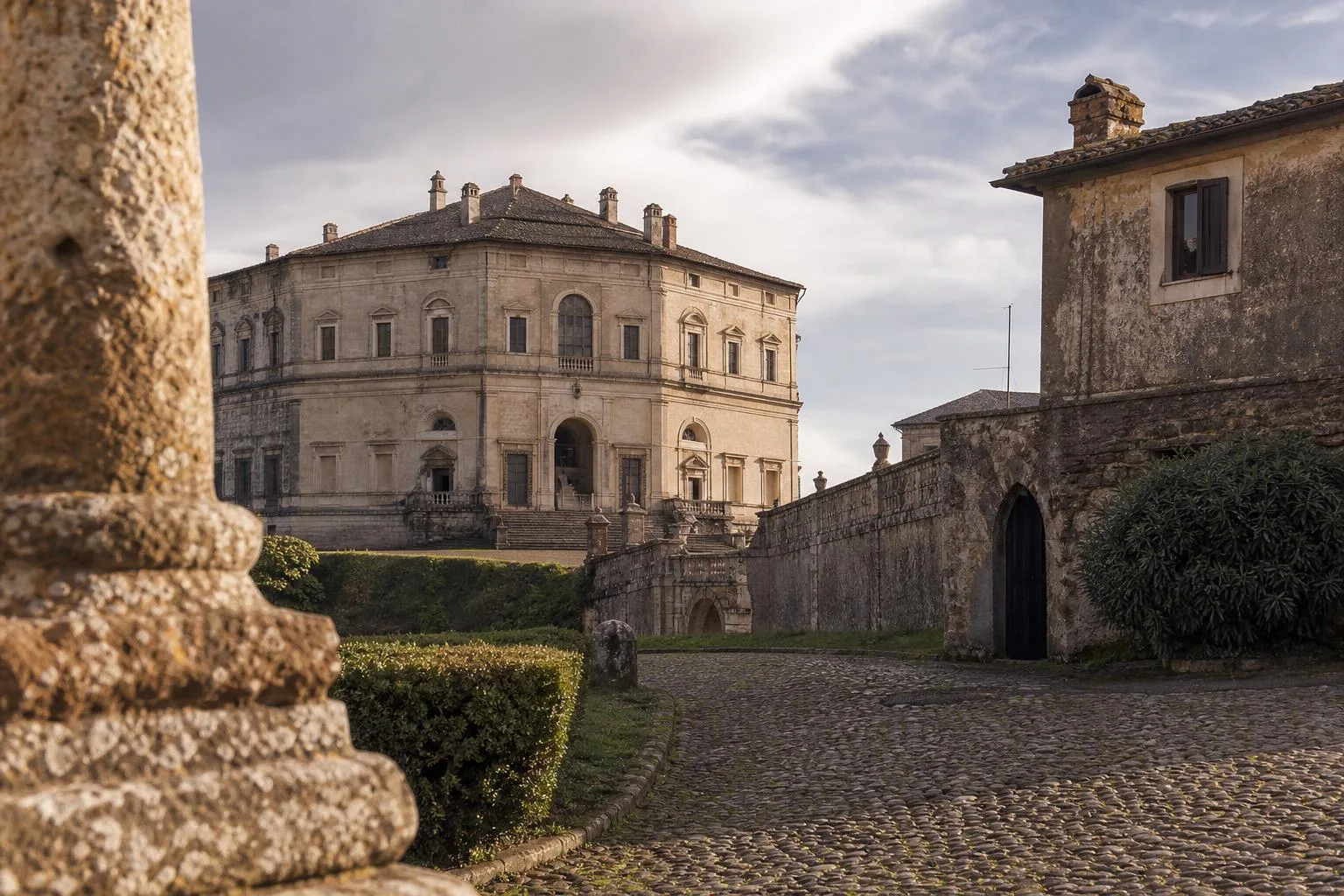 CaprarolaHidden GemVilla FarneseVignola's pentagonal plan, Scala Regia, Zuccari frescoes, Room of the World Map, gardensVilla Farnese in Caprarola is a pentagonal palace that Cardinal Alessandro Farnese asked Vignola to build in 1556 on the foundations of an unfinished Sangallo fortress, so a Renaissance villa rises from a military plan. Around a circular colonnaded courtyard, five floors of rooms are covered in Mannerist frescoes by Taddeo and Federico Zuccari, celebrating the Farnese family. The Scala Regia, a spiral staircase lined with paintings by Antonio Tempesta, sweeps visitors upward in one long turn; the Room of the World Map shows the known world as it was around 1574. Because the villa is owned by the Italian state and the little casino above it is the president's retreat, the crowds here are thin.
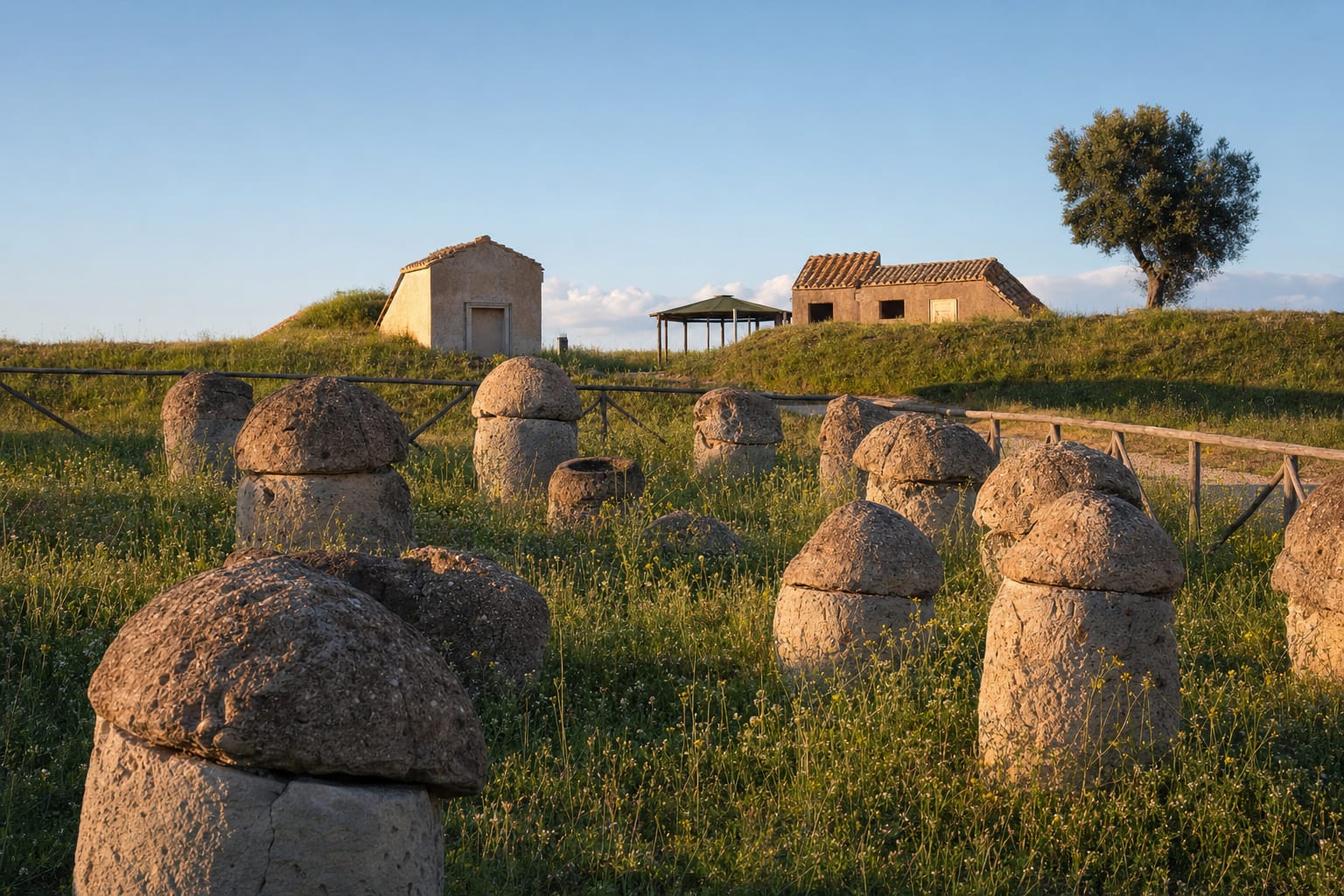 TarquiniaUNESCONecropolis of MonterozziPainted Etruscan tombs, Tomb of the Leopards, dancers and banquets, UNESCO listing with CerveteriBeneath the plateau outside Tarquinia, some 6,000 Etruscan graves spread across a burial ground that opens a rare window on how a vanished people wanted to be remembered. Around 200 chambers, cut from the seventh century BC through Roman times, were painted with banquets, dancers, hunters and mourners in colors still vivid after millennia underground, among them the celebrated Tomb of the Leopards and the Tomb of Hunting and Fishing. UNESCO listed the necropolis alongside Cerveteri's Banditaccia in 2004, judging the frescoes a unique record of Etruscan daily life found nowhere else in such quantity. Many of the finest artifacts unearthed here now sit in the Tarquinia National Museum in town, a natural second stop after the tombs.
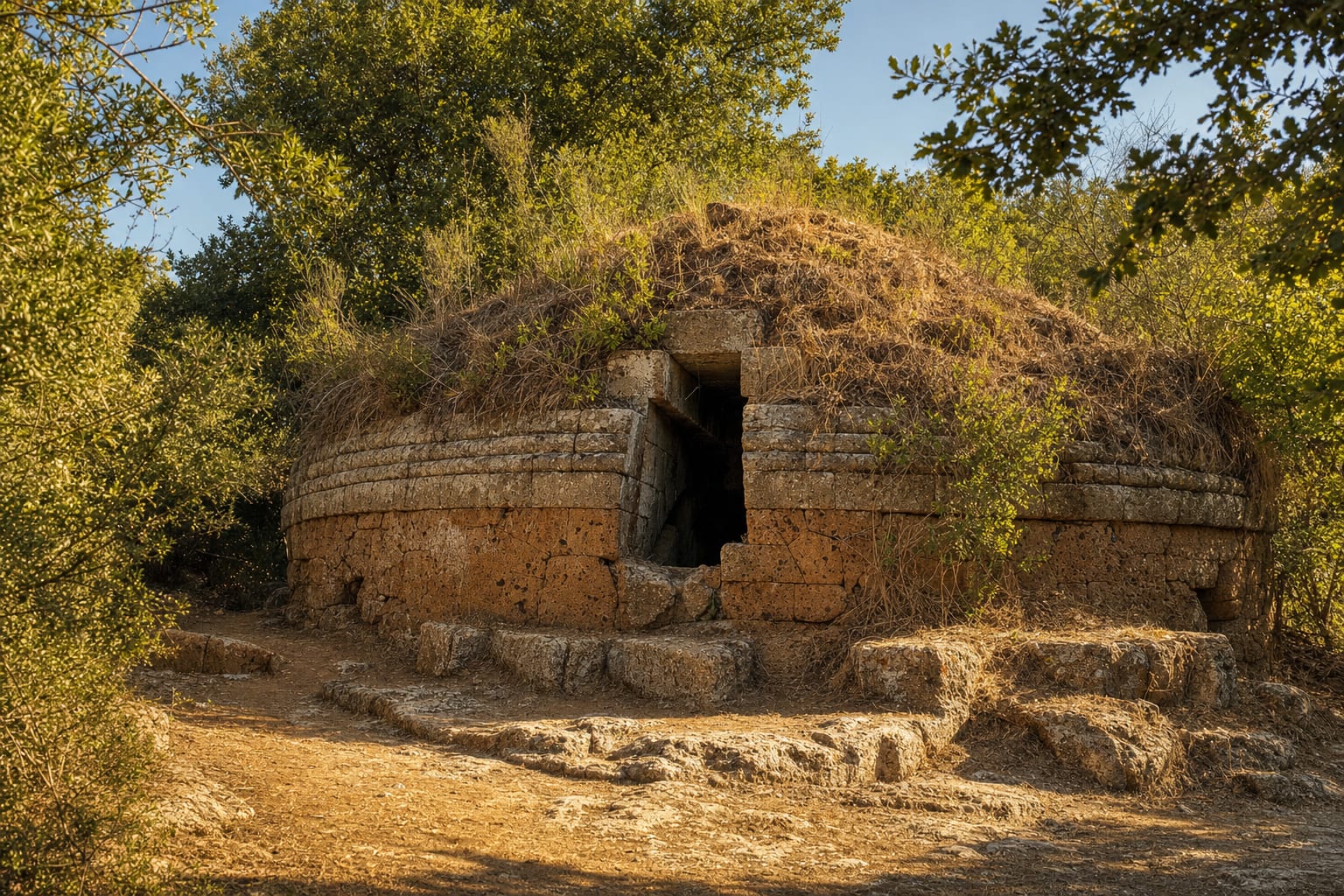 CerveteriUNESCONecropolis of the BanditacciaEtruscan tumulus streets, carved tomb interiors, Tomb of the Reliefs stuccoes, UNESCO listing since 2004The Etruscans gave their dead a real city on this ridge above Cerveteri, with paved streets, small squares, and round tumuli the size of houses cut straight into the tufa bedrock, some dating back to the seventh century BC. Inside, stone beds, carved pillows, and household objects in relief wait as if for sleepers who stepped out for the afternoon. The Tomb of the Reliefs, from the fourth or third century BC, takes the idea furthest: its stuccoed walls sculpt the tools, animals, and utensils of a Matuna family's daily life onto the chamber's stone pillars, visible today through a glass barrier that protects the plaster. UNESCO listed the necropolis, together with Tarquinia's, in 2004, the clearest surviving picture of how the Etruscans imagined the world their dead kept living in.
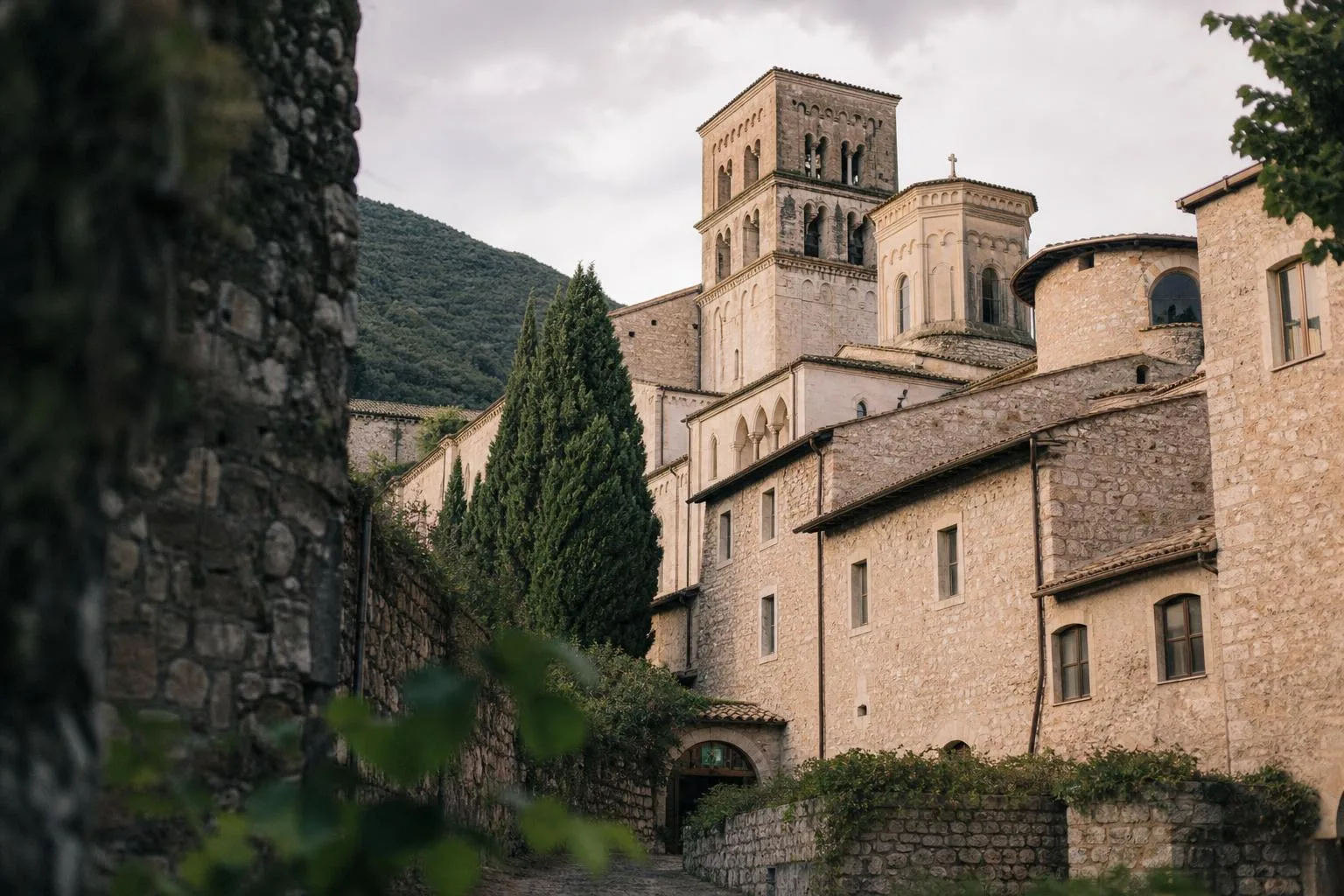 Fara in SabinaHidden GemFarfa AbbeyMedieval monastic power, 1920 Benedictine refoundation, Carolingian bell tower, Barendsz Last Judgment frescoFounded in the late sixth century, Farfa grew into one of medieval Europe’s wealthiest monasteries, its abbots at one point answering to no bishop but the pope himself and controlling, by some counts, over six hundred dependent churches and monasteries and more than a hundred castles across central Italy. Saracen raiders sacked it in the ninth century, and centuries of decline followed before the Benedictines returned in 1920 to re-found the community that still lives and prays here today. The basilica mixes eras candidly: a Carolingian bell-tower base, a Baroque nave, and, overhead, Dirck Barendsz’s 1561 Last Judgment ceiling fresco. An altarpiece by Orazio Gentileschi and a working 1947 organ round out a church that still holds daily Mass for its monks and the handful of villagers who share their borgo.
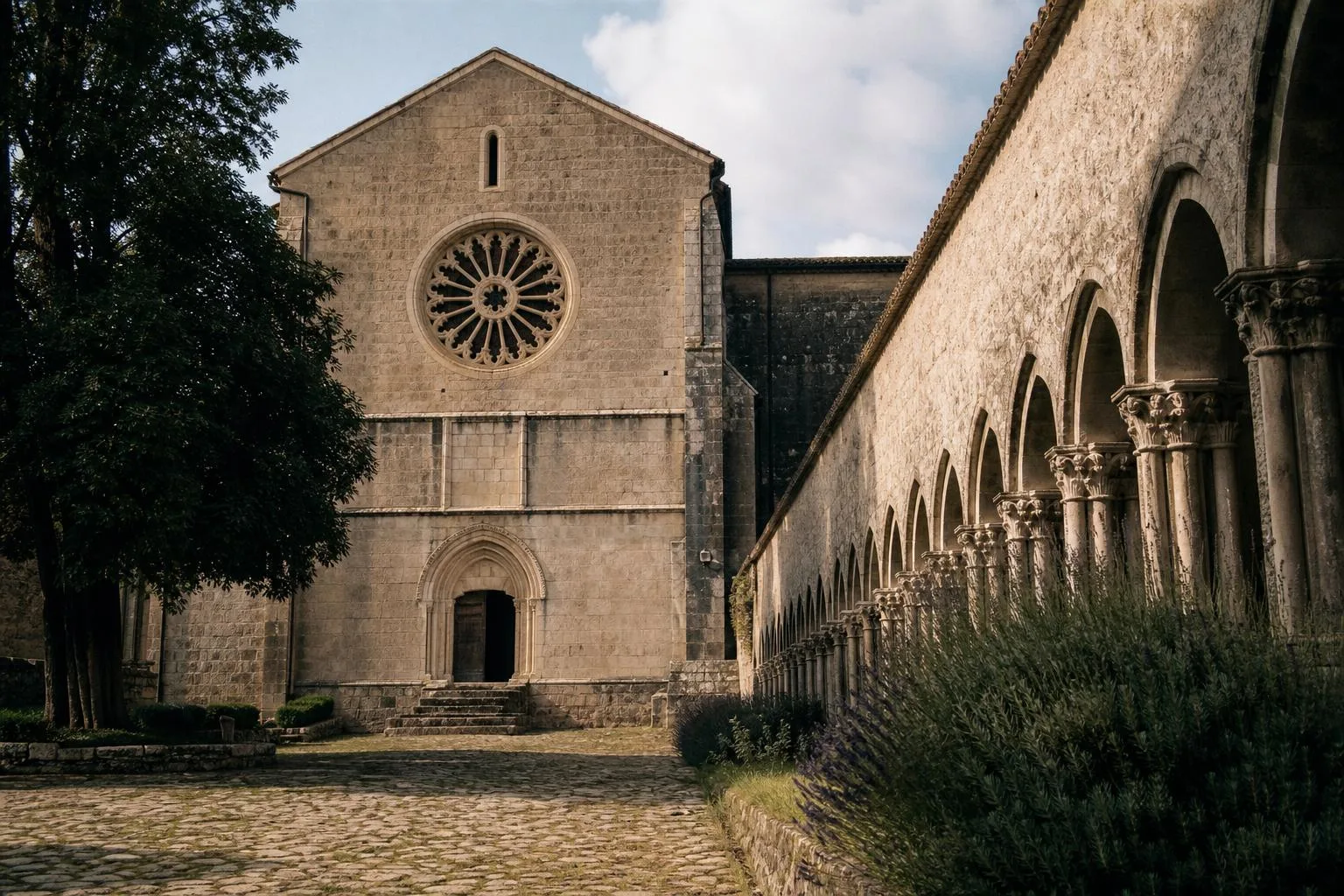 PrivernoHidden GemFossanova AbbeyCistercian Gothic, cloister, rose window, death of Thomas AquinasFossanova is the first great Gothic building in Italy, a Cistercian abbey in the Lepini foothills near Priverno. Monks began work in 1187 on the site of an earlier Benedictine house, and Pope Innocent III dedicated the altar in 1208. The church is austere by design: a three-aisled plan with a transept, a rose window and an octagonal crossing tower, all in pale stone. Around the cloister, which blends Romanesque and Gothic arches, the chapter house and refectory (with its reading pulpit) have survived. Thomas Aquinas died here on 7 March 1274, on his way to the Council of Lyon, and a memorial to him remains. A small medieval museum sits in the village guesthouse.
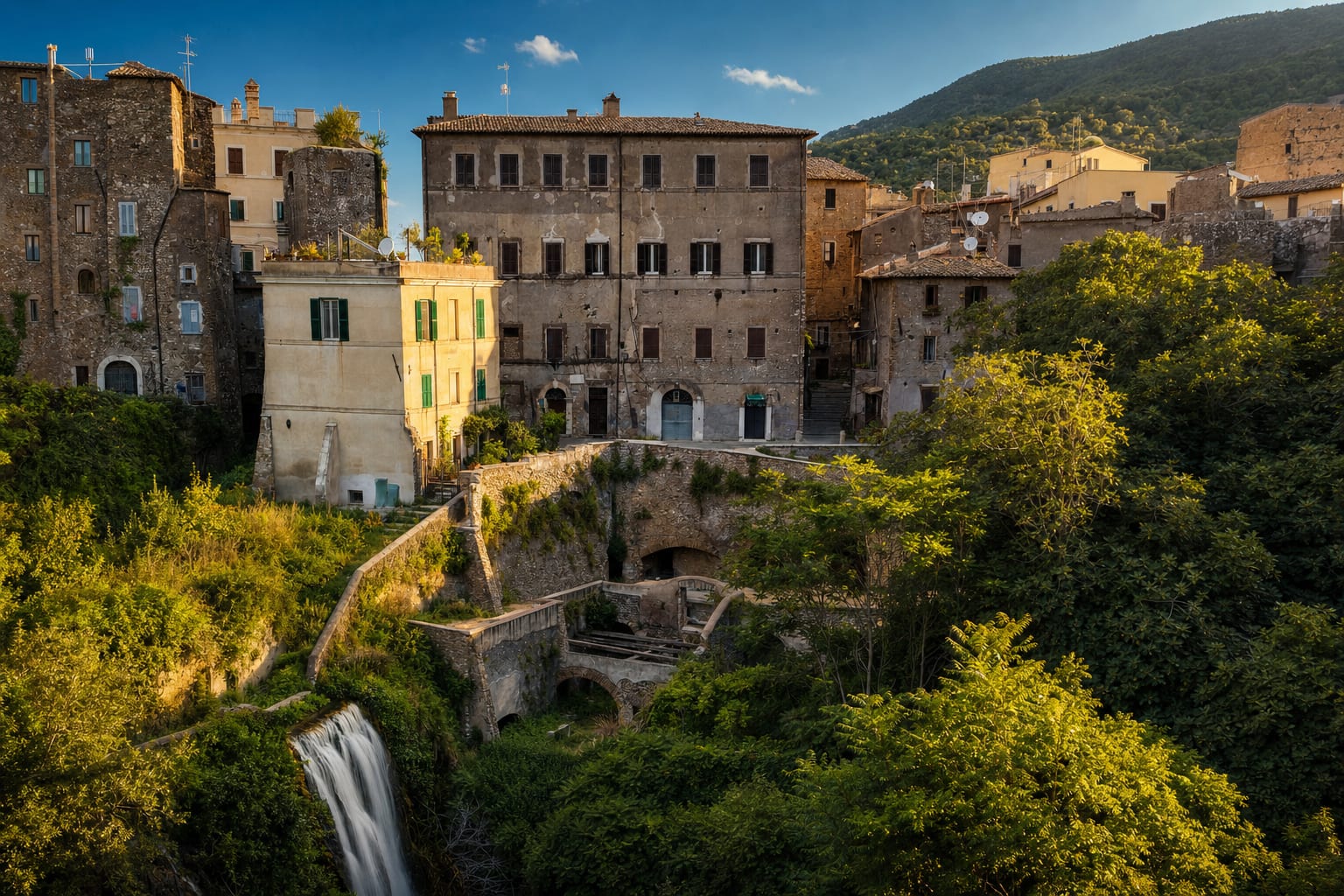 TivoliVilla GregorianaGrande Cascata waterfall, Temple of Vesta and Sibyl, Neptune and Sirens grottoes, Gregorian tunnelsIn November 1826, the Aniene river flooded and nearly destroyed Tivoli, sweeping away buildings along the old riverbed. Pope Gregory XVI's engineers answered by boring two tunnels through Monte Catillo to reroute the water entirely, completing the diversion by 1835, and let the abandoned gorge become a park instead. The diverted river now drops roughly 120 meters as the Grande Cascata, one of Europe's tallest artificial waterfalls, into a ravine planted with romantic-era paths. Walkways switchback down past the Neptune and Sirens grottoes to the valley floor, then climb back up to the Acropolis, where the round Temple of Vesta and the rectangular Temple of the Sibyl, both from the Republican era, look out over the gorge that Grand Tour artists came here to paint. FAI reopened the whole park to visitors in 2005 after a major landscape restoration.
Tours worth booking in Lazio
Compared by our editors, across providers.
Booking through these links may earn Italia Magnifica a commission, at no cost to you.
- Viator
- 2h 30m
- 5.0★ · 30 reviews
from €310Book this tour- Viator
- 4h
- 5.0★ · 98 reviews
from €180Book this tour- Viator
- 2h
- 5.0★ · 32 reviews
from €90Book this tour- Viator
- 8h
- 5.0★ · 107 reviews
from €730Book this tour- Viator
- 3h
- 5.0★ · 36 reviews
from €220Book this tour- Viator
- 3h
- 5.0★ · 40 reviews
from €143Book this tour


