

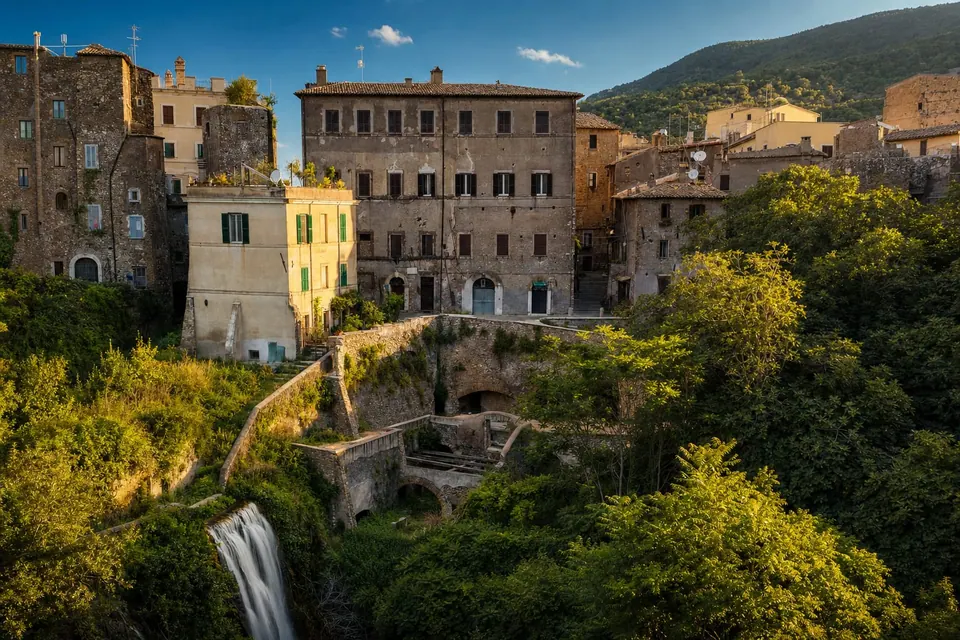
Enter at Largo Sant’Angelo and follow the paths down into the gorge. At the waterfall viewpoint, look for the place where the Aniene emerges high in the rock. A destructive flood in 1826 led to a project to divert the river through two tunnels bored into Monte Catillo. The works under Gregory XVI produced the Great Waterfall, which drops more than 100 metres. The great mass of falling water is part of a nineteenth-century answer to a practical problem.
Climb back toward the temples
Follow the marked route along the lower slopes, where rock, wet surfaces and shade change the character of the walk. The return climb ends by the Roman temples. Take in the round temple conventionally called the Temple of Vesta from the paths and look back down to see how far you have come. The rim gives a very different view of the landscape from the one you had close to the water.
Allow about two hours for the path and stops. There are many steps and about 82 metres of elevation change. The exit by the temples is separate from the entrance, so plan your return from there. Check the FAI visitor page for dates, weather notices and last admission.
Leave time to turn back toward the gorge from the temple precinct. The round temple’s columns and the neighbouring rectangular temple mark the edge of the ancient acropolis. From here, the wooded ravine looks close to the town. Below, the path shows how much rock lies between the two. The nineteenth-century diversion changed the course of the river without erasing the older landscape the temples overlook.


