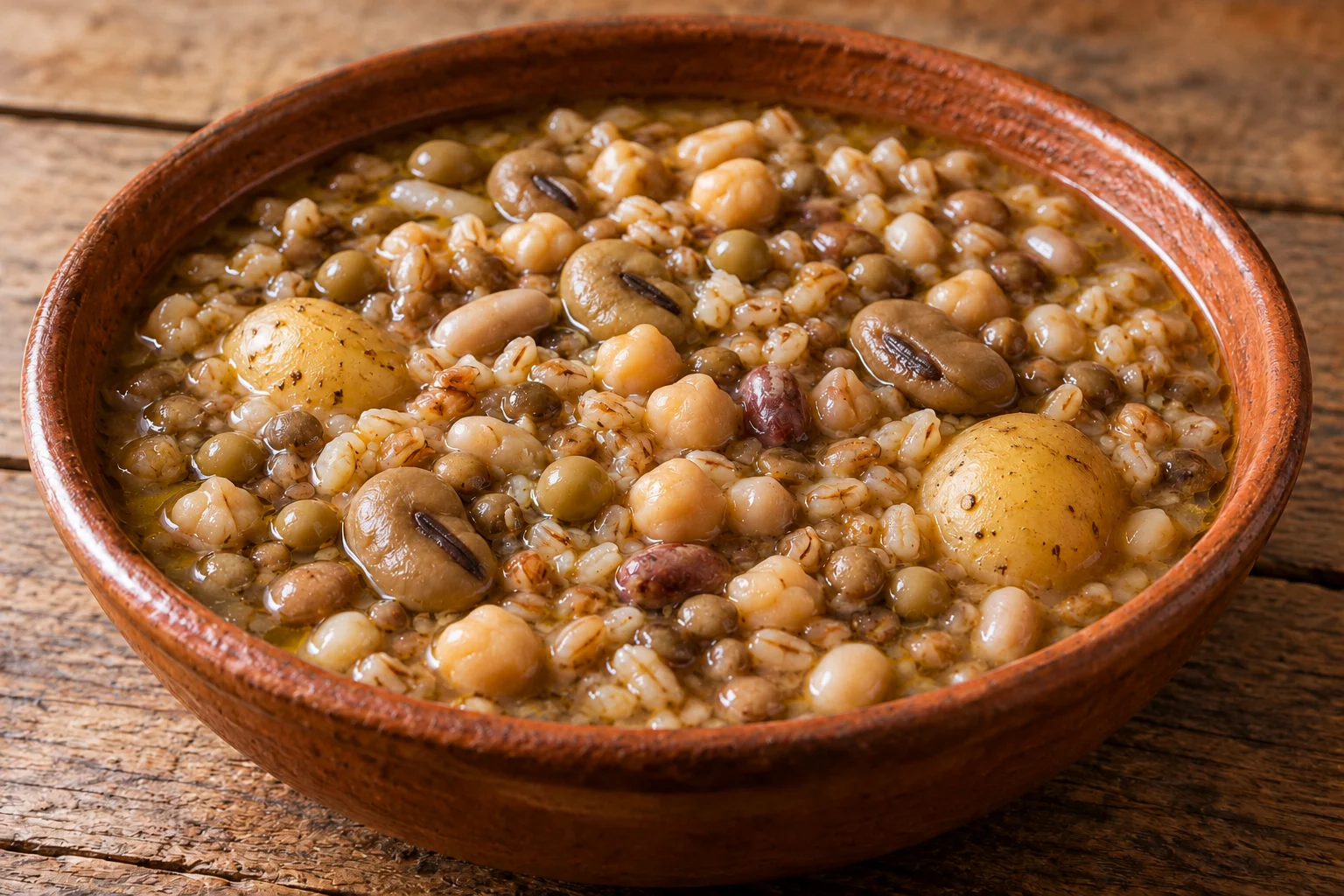
Give the dried legumes a full day to soak. Cook gently until even the largest bean is tender, then add the small potatoes near the end so they keep their shape.
Make ahead Soak the dried legumes the day before. To make the soup ahead, cool it promptly in shallow containers and refrigerate; reheat with enough water to loosen it.
Crapiata materana
Prep 25 min · Cook 2 hr 30 min · Rest 24 hr · Serves 6 · Difficulty Easy
Method
Sort the dried legumes and grains, removing any stones. Rinse the legumes, cover generously with cold water in large bowls and soak for 24 hours in the refrigerator. Follow any longer soaking or preparation directions on the grass-pea package. Keep the wheat and farro separate; rinse them and follow any preliminary soaking directions on their packages.Sort the dried legumes and grains, removing any stones. Rinse the legumes, cover generously with cold water in large bowls and soak for 24 hours in the refrigerator. Follow any longer soaking or preparation directions on the grass-pea package. Keep the wheat and farro separate; rinse them and follow any preliminary soaking directions on their packages.
Drain and rinse. Put the legumes in the pot with 3 liters of fresh water, the carrot, celery, onion, bay leaves and tomatoes. Bring to a full boil, then lower to a steady, gentle simmer.Drain and rinse. Put the legumes in the pot with 12⅔ cups of fresh water, the carrot, celery, onion, bay leaves and tomatoes. Bring to a full boil, then lower to a steady, gentle simmer.
Simmer the legumes partly covered for about 90 minutes, stirring occasionally and adding hot water if the soup thickens too much. Add the drained wheat and farro and cook for another 15 minutes before adding the potatoes; the grains will cook for about 45–50 minutes in total. If their package calls for longer cooking, add them earlier. Check a chickpea and a whole fava bean: both should be nearly tender before the potatoes go in.Simmer the legumes partly covered for about 90 minutes, stirring occasionally and adding hot water if the soup thickens too much. Add the drained wheat and farro and cook for another 15 minutes before adding the potatoes; the grains will cook for about 45–50 minutes in total. If their package calls for longer cooking, add them earlier. Check a chickpea and a whole fava bean: both should be nearly tender before the potatoes go in.
Add the scrubbed whole potatoes and simmer for another 30–35 minutes, until a knife enters them easily and all the legumes and grains are fully tender. Allow longer for older dried legumes, adding water as needed.Add the scrubbed whole potatoes and simmer for another 30–35 minutes, until a knife enters them easily and all the legumes and grains are fully tender. Allow longer for older dried legumes, adding water as needed.
Remove the bay leaves and the large carrot, celery and onion pieces. Season with salt and adjust the broth with a little hot water if needed. Divide among six bowls and finish with the olive oil.Remove the bay leaves and the large carrot, celery and onion pieces. Season with salt and adjust the broth with a little hot water if needed. Divide among six bowls and finish with the olive oil.