

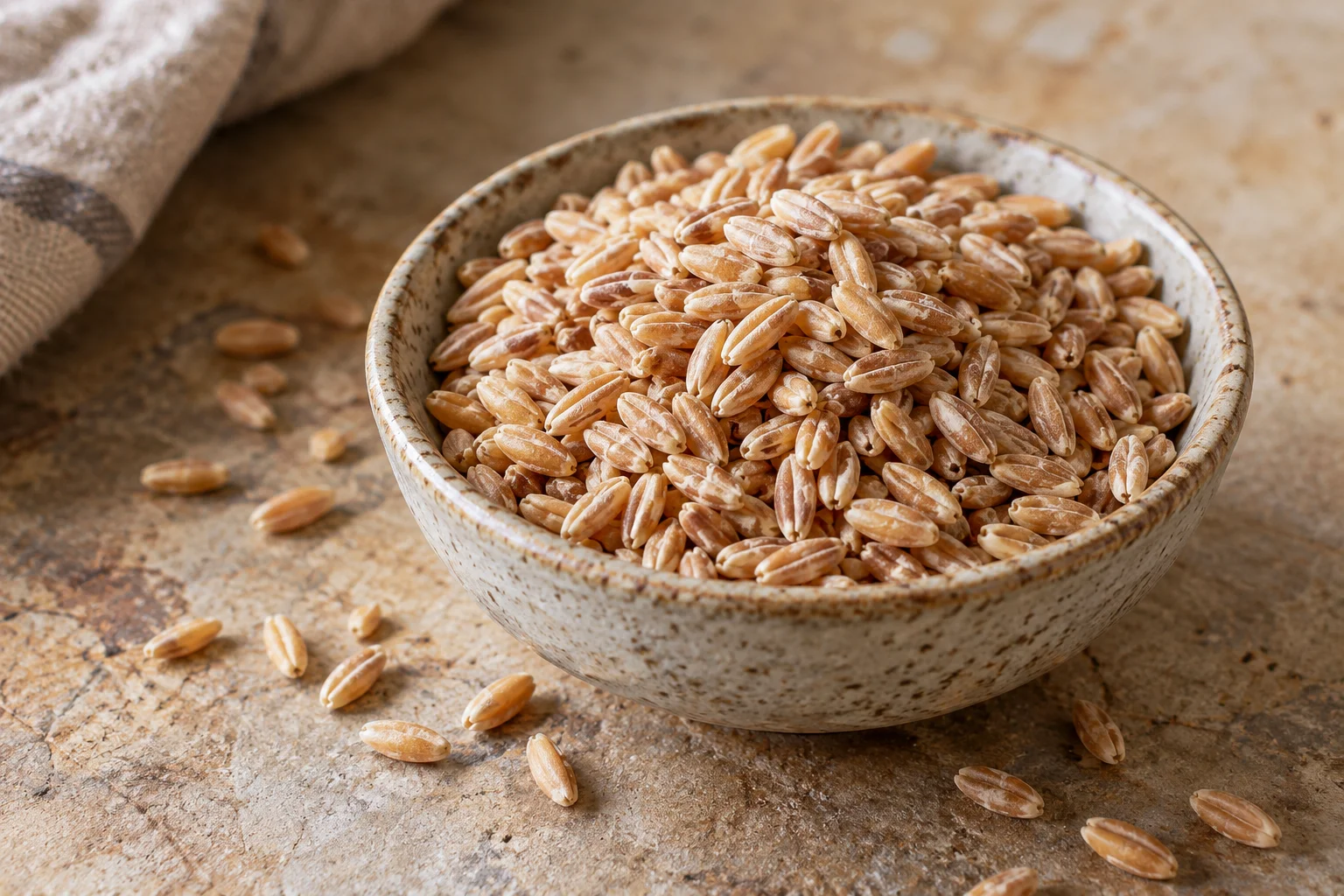
Whole farro
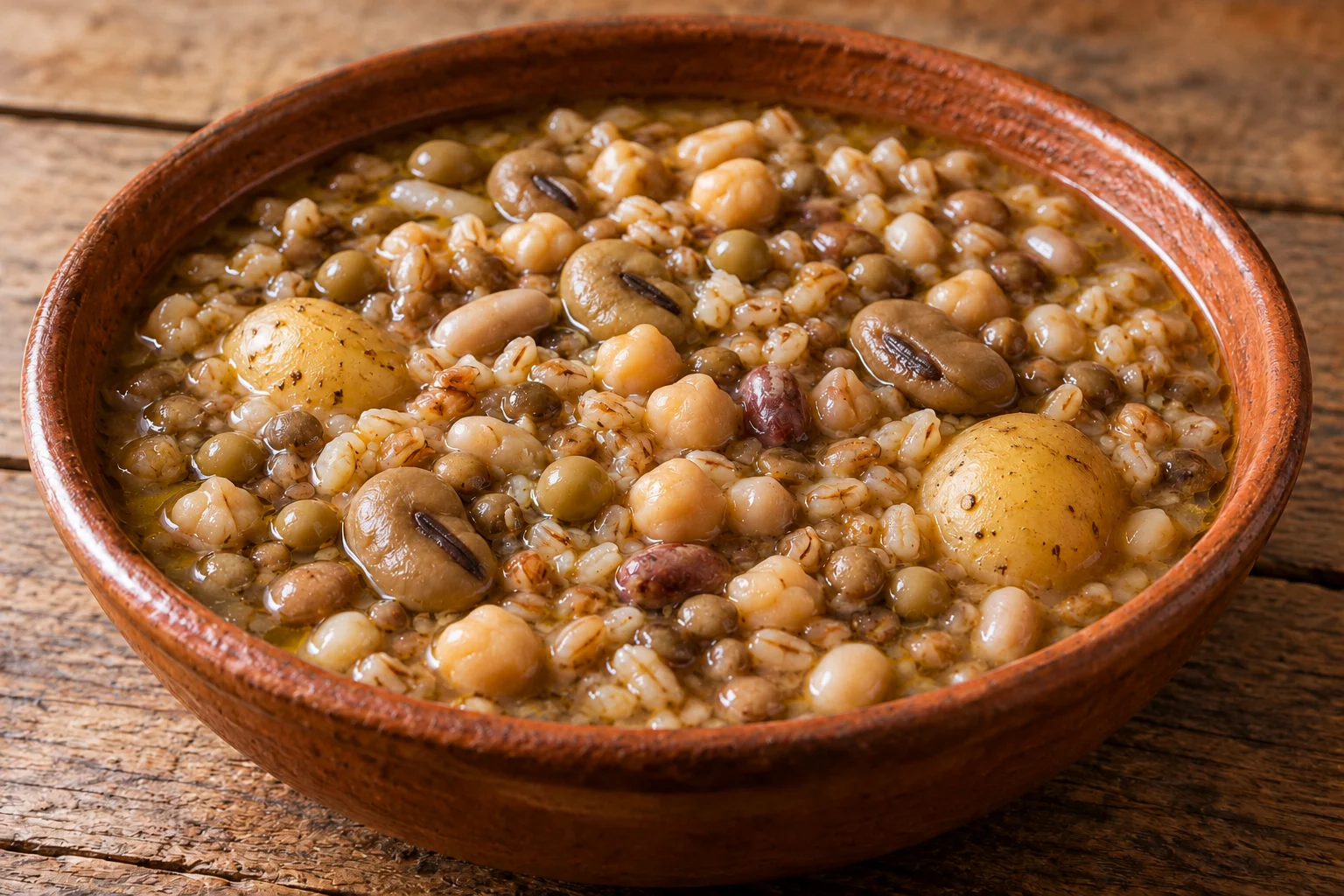
Whole farro is a wheat grain with its outer husk removed and the bran retained. Its intact grains suit soups such as mesciua, where they cook alongside chickpeas and beans.
- The form
- Choose whole, dehulled grains rather than pearled or precooked farro.
- The wheat
- Farro can name different wheats; dicocco is emmer, while spelta is spelt.
Read the grain’s directions
Rinse before cooking. Follow the package and recipe for soaking and cooking, checking the grains for tenderness; processing makes a difference, so whole and pearled farro need not follow the same schedule.
A grain for Italian soups
Farro is used in Italian grain soups and mixed dishes. Whole dicocco, or emmer, is one suitable choice for mesciua; the word farro alone does not identify a single wheat species or processing method.
Keep the grains distinct
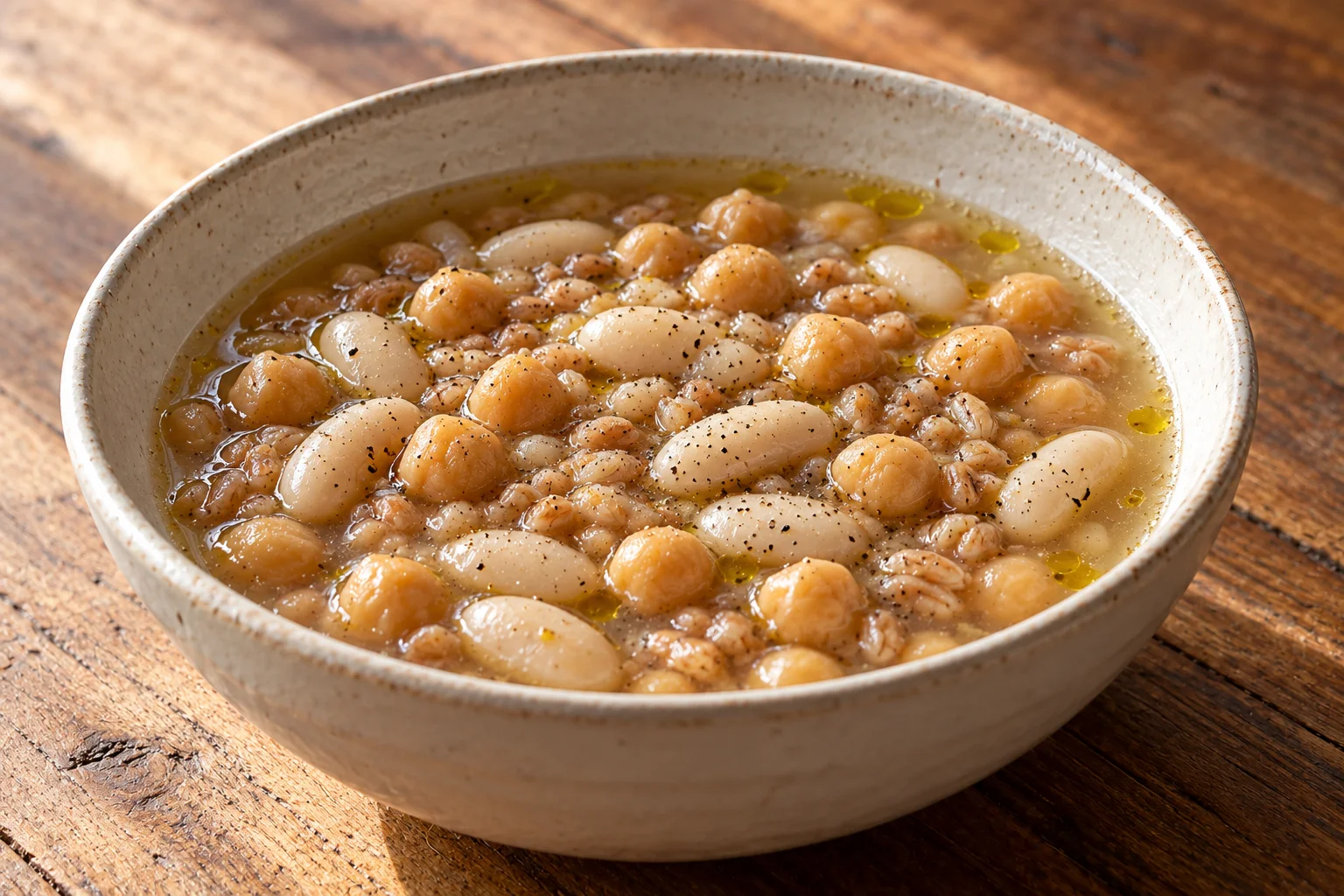
In mesciua, the farro shares a light broth with chickpeas and cannellini beans. Olive oil and black pepper finish the soup without hiding the individual grains and legumes.
Cook with it
Look for integrale or decorticato
Choose intact grains labeled integrale or decorticato and check the species and cooking directions. Perlato means pearled; flour, flakes and rice-shaped pasta are different forms.
Protect the dry grains
Keep the package well closed in a dry place, away from heat and moisture. Follow its storage instructions and date.
