

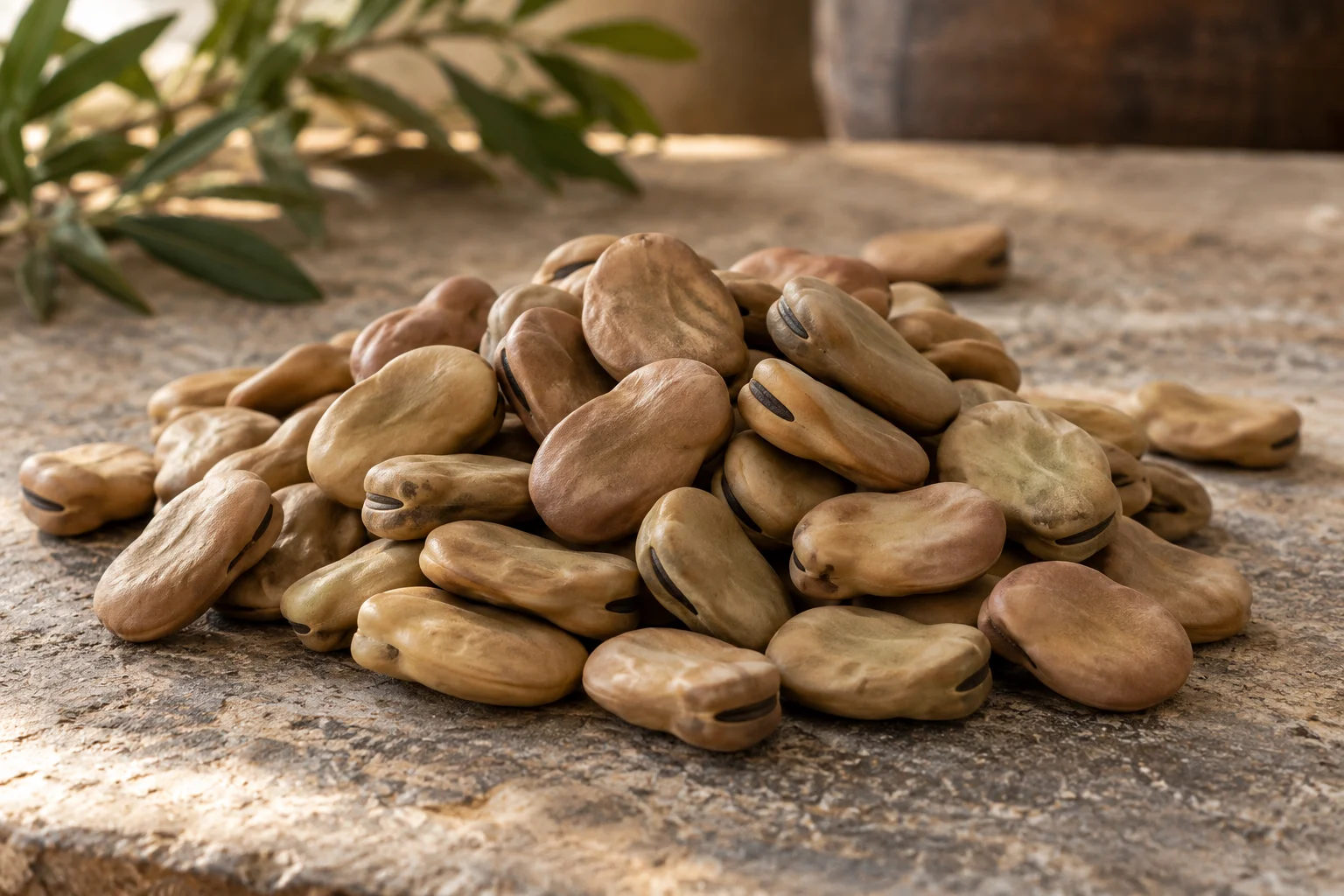
Whole dried fava beans
Whole dried fava beans are broad, flattened seeds with their outer skins still attached. They bring a substantial bean texture to Matera’s mixed-legume crapiata and need different preparation from pale, peeled fava beans.
- Form
- Dried whole seeds with the outer skin retained.
- Appearance
- Broad, flattened beans with a tan skin and a dark seam.
Prepare the beans before the grains
Check the dry beans, rinse them and follow the package’s soaking and cooking directions. Drain after soaking and use fresh cooking water. In crapiata, prepare the grains separately and add them at the stage given in the recipe rather than treating every dry ingredient as if it cooks at the same speed.
Keep the beans covered with liquid during simmering and check their centers for tenderness. Size, age and the product’s preparation affect the time needed; a tender center is more useful than a rigid clock alone.
A whole bean for the soup pot
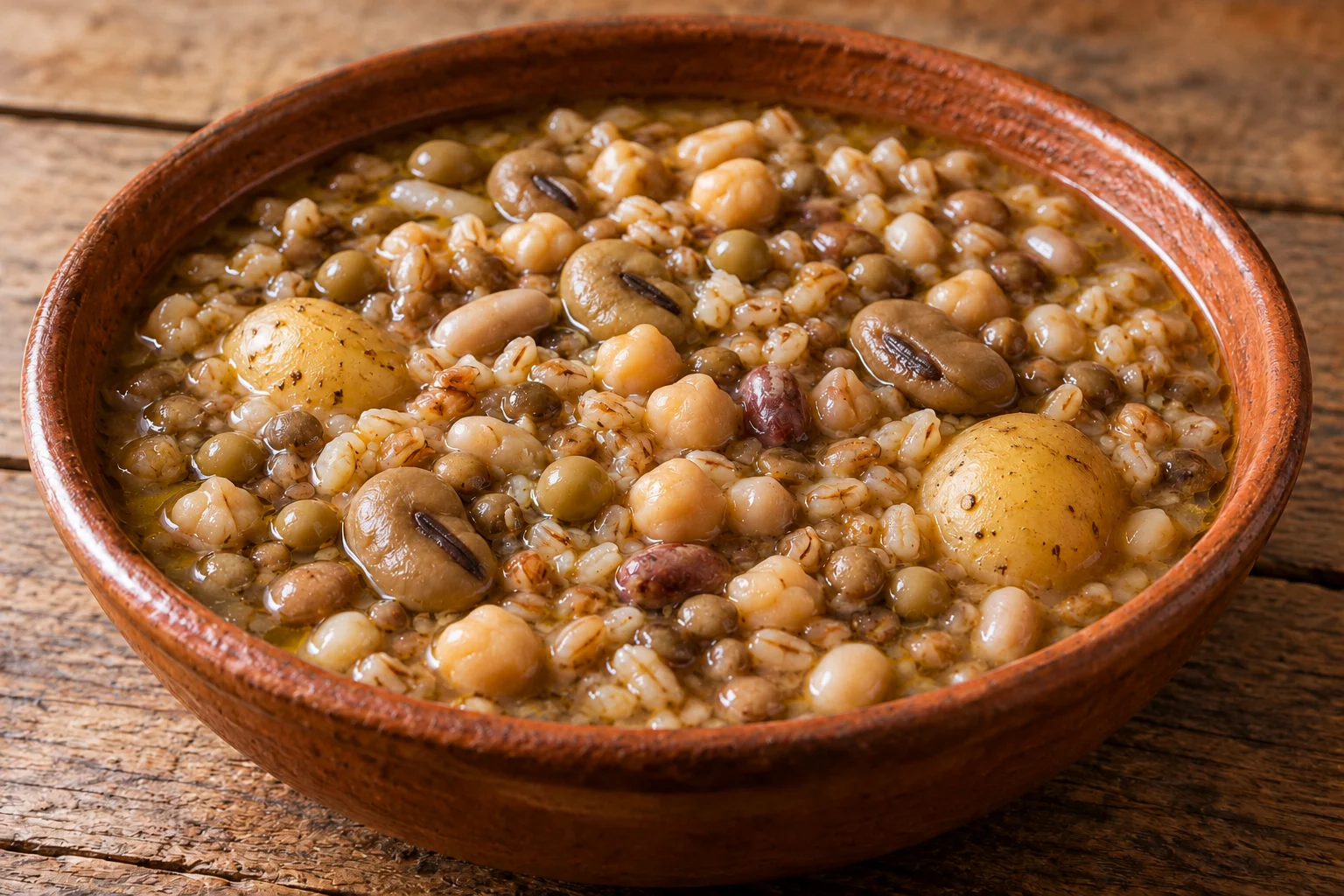
In crapiata, several legumes share the pot with grains and vegetables. Whole dried fava beans are one of those distinct ingredients, alongside grass peas, peas and lentils. Keeping the forms separate matters: a bag of fresh green fava beans and a bag of peeled dried fava beans will not behave like the same ingredient. The outer covering is part of this pantry form. Choose it deliberately when you want whole beans rather than a smooth fava purée.
Keep their place in a mixed soup
Serve crapiata with its beans, grains and vegetables in the same spoonful. The fava beans should be tender enough to eat comfortably, while their broad shape remains distinct among the smaller legumes.
Cook with it
Look for whole and unpeeled
Choose food-grade dried fava beans described as whole and unpeeled or non decorticate. Look for intact dry seeds without visible moisture or damaged packaging. Do not replace them measure for measure with fresh shelled fava beans or with pale hulled splits.
Keep the dry beans dry
Follow the package’s storage directions and date. Close the bag securely or transfer the beans to a clean, labeled, tightly closed container. Keep dry beans separate from soaked or cooked beans; refrigerate prepared beans promptly and follow the recipe’s make-ahead guidance.
