In this article
Santo Stefano, 26 December, is a public holiday in Italy and a second opportunity to gather around the Christmas table. For a lunch cooked from the beginning, this menu brings together bollito misto piemontese, orange salad and ricciarelli. There is one substantial meat platter, a juicy side dish and a small almond sweet, without adding another pasta course.
The planner uses one complete recipe of each: bollito for eight, salad for four and eighteen ricciarelli. Those are different yields, not an automatically scaled menu for one number of guests. If Christmas lunch has already left you with food to use, decide what belongs on the table before shopping. The Christmas Day menu and this lunch are separate cooking plans.
Choose between cooking and using what is ready
A freshly cooked bollito is a generous project. This recipe needs three pots and about four hours and twenty-five minutes, including preparation. It starts with raw meat, prepared cuts from the butcher and a fresh cotechino. It does not begin with yesterday’s cooked beef, and its raw-meat quantities should not be bought again simply because a platter is already waiting in the fridge.
If you intend to use leftovers, check their cooking and storage history first. The UK Food Standards Agency’s guidance is to refrigerate cooked leftovers within two hours, eat them within forty-eight hours or freeze them, and reheat only once until hot and steaming right through. Food left on the table for a long Christmas lunch cannot be treated as though it was chilled promptly. Use the full food-safety guidance for those decisions.
The printed list below is for cooking all three recipes in full. It does not subtract food already cooked, replace the meat method with reheating instructions or calculate the amount of an existing leftover. If you choose a different lunch around what is safely stored, make your own short list for that lunch rather than buying every ingredient shown here.
Give the bollito its three pots
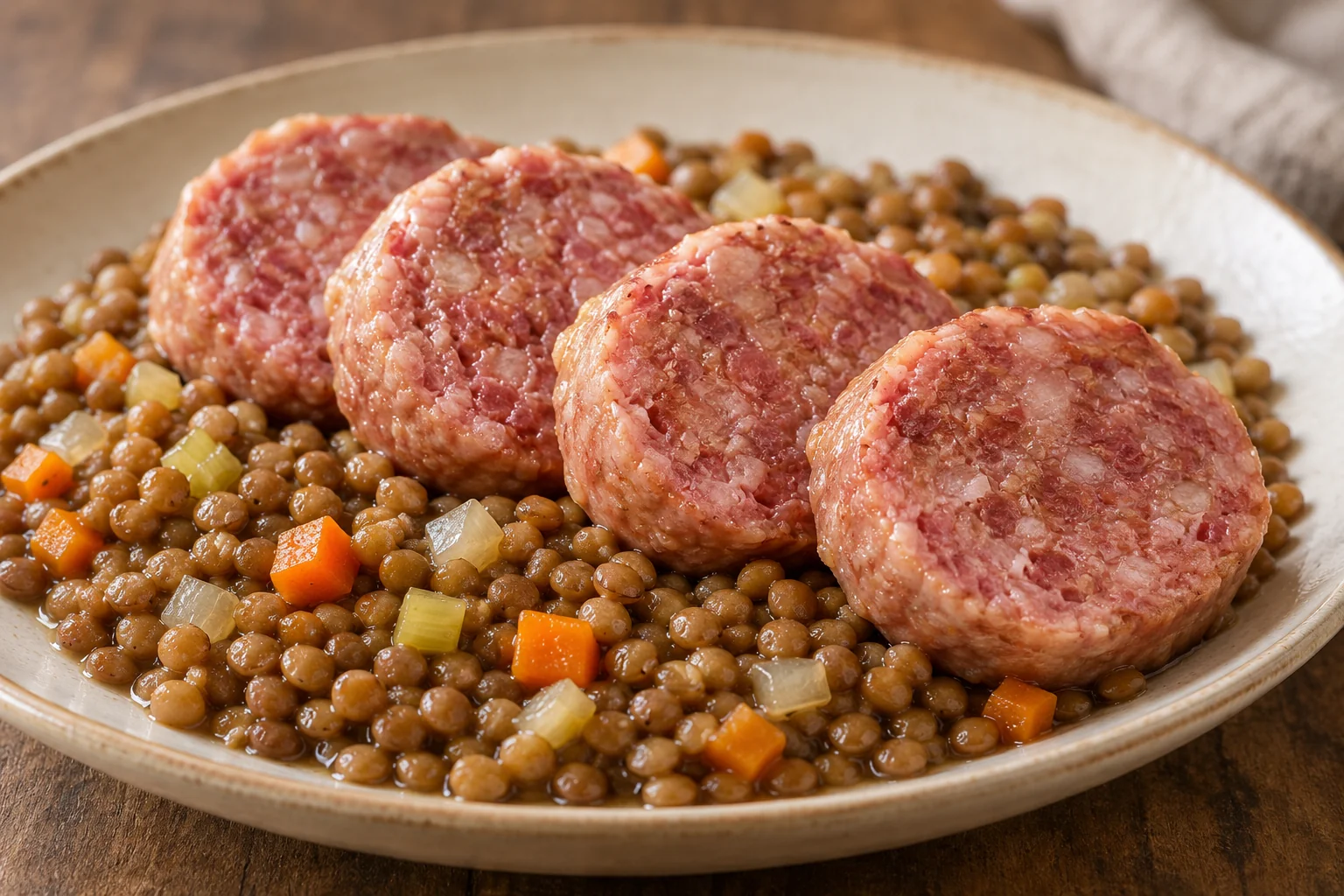
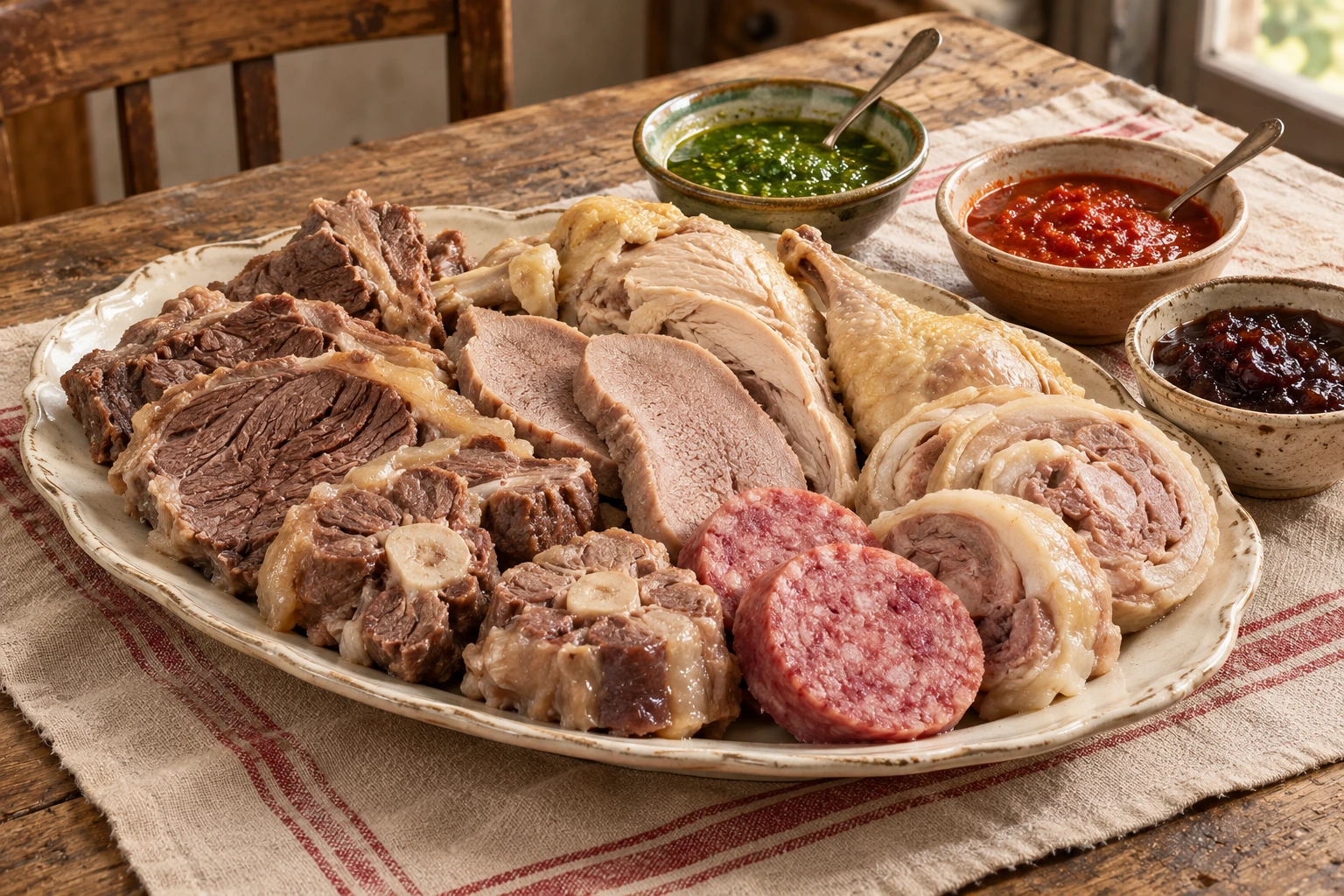
The bollito combines beef tail, tongue, shin and scaramella with butcher-prepared veal head meat, hen and a small fresh cotechino. Ask for the tongue ready cleaned and the head meat boned and rolled. The hen quantity is a bone-in ready weight. Getting those preparations right matters more than arranging a dramatic mountain of meat on the serving platter.
Read the full method before lighting the hob. The main stock takes time to reach the boil; part of it then goes into the separate head-meat pot. The other beef cuts start later, followed by the hen. The cotechino cooks in its own unsalted water. Keep separate timers rather than assuming all seven meats can go into one pot at the same moment.
The recipe includes prepared bagnet ross, bagnet verd and cognà, 120 g of each. They are ready-made accompaniments in this shopping list, not extra sauce recipes hidden in the cooking time. Buy the versions you intend to serve and check their labels for ingredients and dietary needs. Put them in separate small bowls so people can choose alongside the sliced meat.
Start the ricciarelli the night before
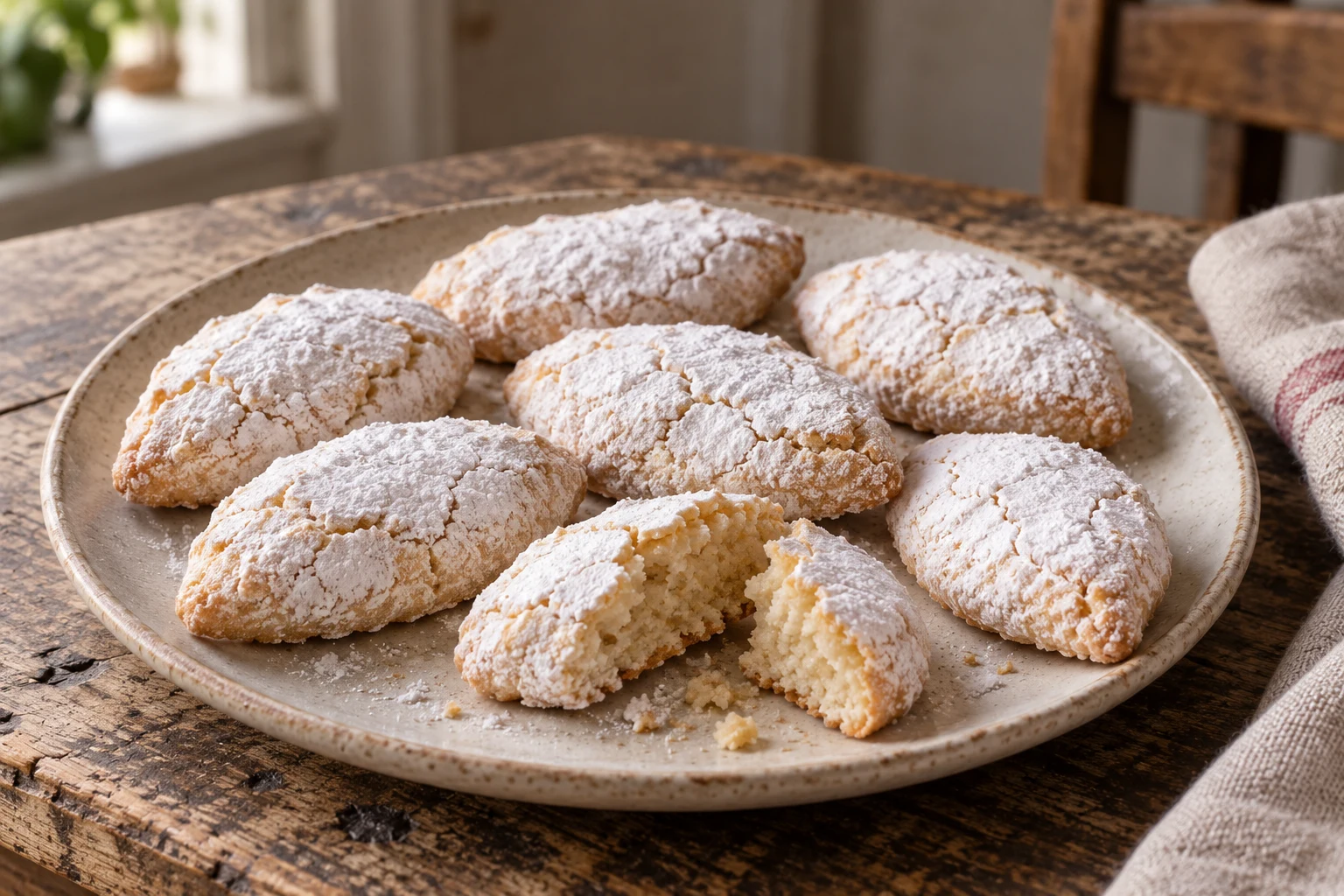
The ricciarelli dough rests in the fridge overnight. Make it before the day of the lunch, following the linked recipe’s egg-white, icing-sugar and almond-flour mixture, with bitter-almond extract, vanilla and orange zest. The full batch makes eighteen biscuits; the menu does not turn that piece count into eighteen dessert portions.
The next day, divide the dough into eighteen ovals about a centimetre thick. The recipe bakes them at 160°C for about eighteen minutes, then lets them cool to their finished texture. Leave that cooling time before you need the tray or plate for serving. The shopping note also keeps the extra cup of icing sugar for dusting; it is additional to the 200 g in the dough.
For a wider sweet table, choose separately from the Christmas cookies and sweets guide. Adding another recipe means adding its own ingredients and work. A small plate of the biscuits already planned here is enough to give this particular lunch its sweet finish.
Make the orange salad near service
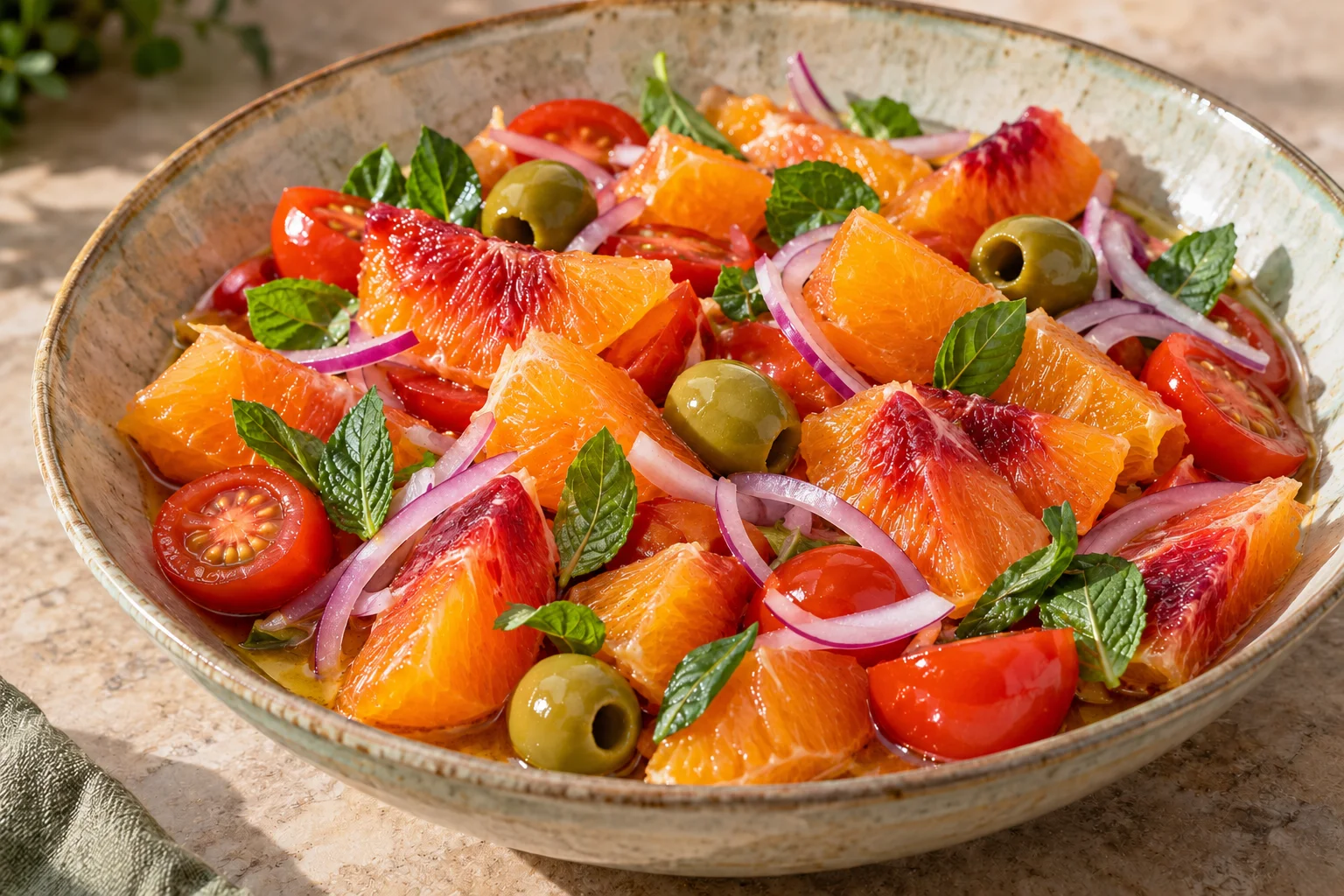
This orange salad uses about 600 g of peeled flesh, with cherry tomatoes, thin red onion, drained green olives, mint and basil. It contains no fennel. Cut away the peel and white pith, remove seeds and catch the juice in the serving bowl. The recipe’s four side portions take about twenty minutes to prepare.
Dress it with its olive oil and salt just before serving, then fold gently so the orange pieces keep their shape. Set the salad beside the meat as a separate dish. Its four-portion yield remains visible: if your group needs more, choose the amount deliberately and revise the list yourself rather than assuming the full eight-portion bollito has enlarged the salad too.
Bring the lunch to the table
Follow the meat recipe’s tenderness checks and its temperature check for the hen; extend cooking for any cut that remains firm. Peel the tongue while warm, remove the hen bones and check the tail carefully. Slice and serve promptly on a warm platter with a little hot broth. Have plates and sauce bowls ready before lifting the meats out.
The Christmas table guide helps give shared dishes and serving tools their own space. Put water within reach and use the festive drinks guide if you want help choosing a bottle. Nothing in this menu requires a different wine for every dish.
After lunch, clear the savoury plates before bringing out the ricciarelli. If people want to stay at the table, the tombola guide explains the game and its winning rows. Keep the afternoon open to the people who are there; another course is optional, and the wider Christmas in Italy guide has the rest of the season.