
In this article
Bring lentils to the centre of a New Year’s Eve dinner with a small escarole-pie starter and almond torrone to finish. This three-dish Capodanno menu uses one complete batch of each recipe: a pie giving about eight portions, cotechino with lentils for four, and one 20 × 20 cm batch of torrone. The shopping list keeps those different yields; it does not turn them into one guest count.
Cotechino and lentils give the meal its New Year connection. The pie and the all-almond home version of torrone are choices for this particular dinner. For the customs around lentils, the countdown and the festive table, read Italian New Year traditions. Decide when you want to eat the main course before working backwards through the cooking.
Choose the right cotechino
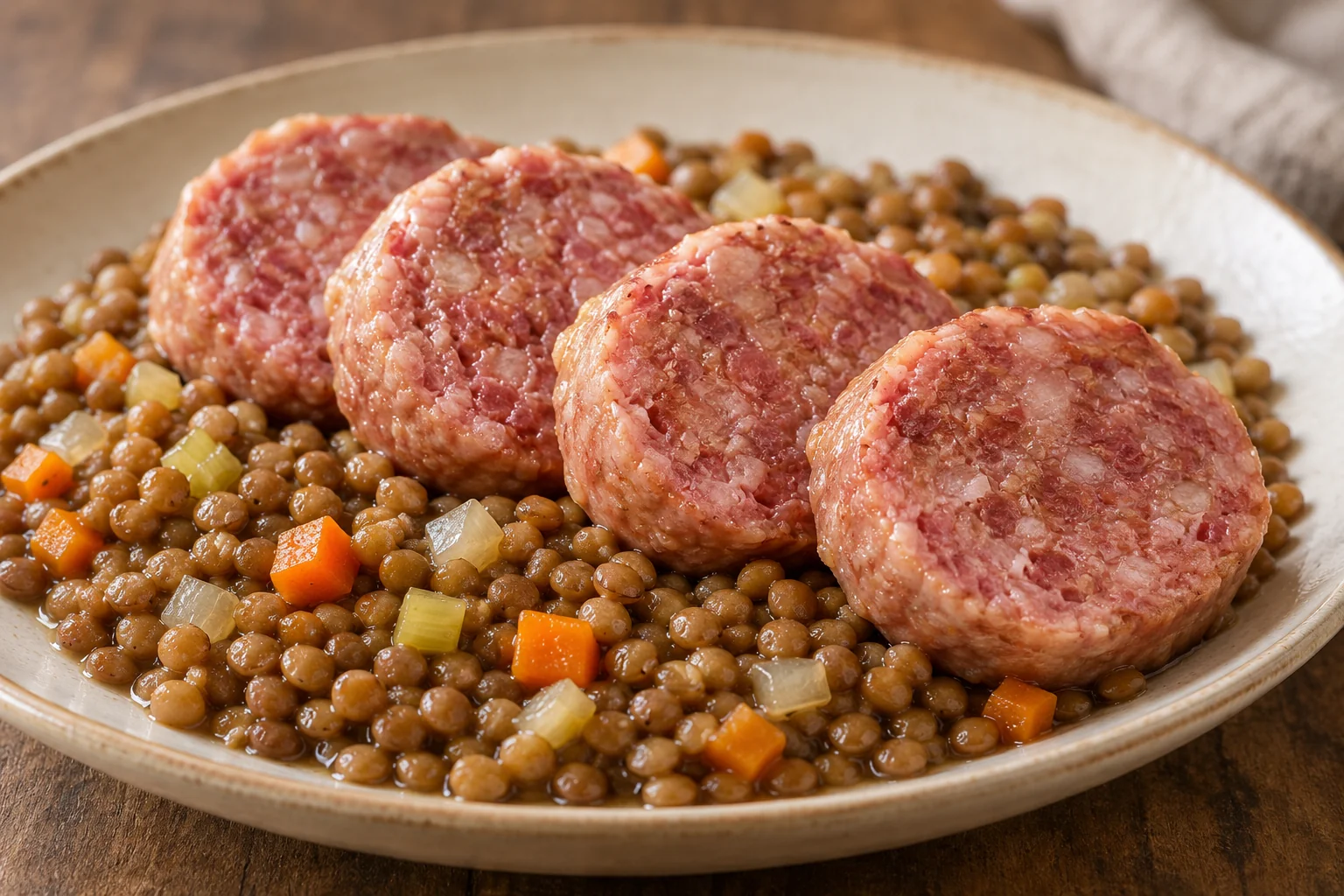
This menu follows the recipe for precooked cotechino in its sealed cooking pouch, with 500 g of sausage and 300 g of dry lentils. Choose a product whose heating instructions fit the method, which uses a pouch requiring about twenty minutes from the boil. Follow the actual packet’s full directions. A raw sausage needing a different preparation is a different cooking project.
The lentils have a two-hour soak before cooking. The recipe then softens celery, carrot and onion, adds herbs and hot vegetable broth, and simmers the lentils until tender while they still hold their shape. Its full planning time is 185 minutes, including the soak. Allow for the actual lentils and package instructions rather than treating the final heating time as the whole recipe.
Make the torrone before the evening’s cooking
The torrone needs a clear period of work with hot syrup and a long cooling period. Gather a stand mixer with a metal bowl, two saucepans, a sugar thermometer and the mould before starting. Use pasteurised egg white suitable for whipping, as the recipe specifies. Two edible wafer sheets go into the finished sweet; the baking paper lines the mould and is removed.
Give this preparation your attention before starting other active cooking. Once the nougat is pressed into its mould, it needs several hours to become completely cold and firm enough to cut. The recipe allows about four hours of cooling for planning, with more time if it is still warm or unset. Starting this sweet early leaves the rest of the day for the pie and main course.
The shopping list includes the whole batch: 350 g of peeled almonds, 217 g of sugar divided between syrup and egg white, 133 g of acacia honey, 17 g of glucose syrup and 33 g of pasteurised egg white, plus the wafer sheets. Keep the recipe open for its water and temperature sequence. The number of pieces depends on how you cut the slab; this menu does not promise four individual desserts from it.
Give the pie its full preparation time
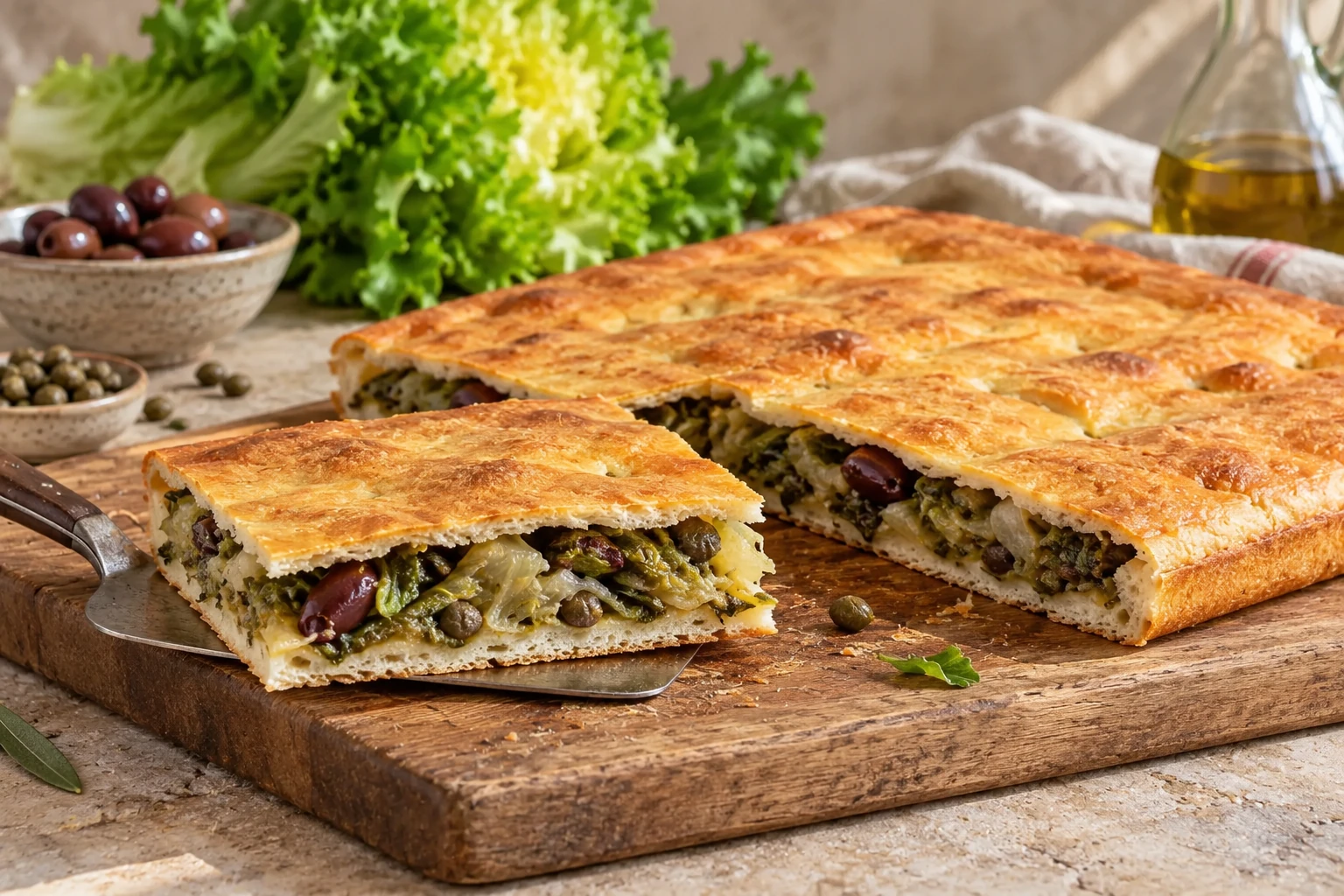
Pizza di scarola takes about five hours and forty-five minutes from starting the dough through its final rest. Its two rises, cooked and completely cooled filling, baking and resting all belong in that allowance. Work backwards from the moment you want to serve the starter, leaving the final rest before cutting rather than trying to rush a hot pie.
The filling contains anchovies as well as greens, olives and capers. It is not a vegetarian starter. Make one pie in the recipe’s 30 × 24 cm internal baking pan and cut smaller pieces for this dinner. The full batch gives about eight portions; serving a little to each person leaves the main course its place without changing the quantities in the shopping list.
If you are choosing between this New Year meal and a seafood evening, the Christmas Eve menu offers a separate four-course plan. Keep the shopping and timeline for the menu you actually intend to cook. Combining both lists would make a different dinner and a different amount of work.
Finish the main course near service
Set aside a wide pot for the cotechino pouch and a saucepan for the lentils. Begin the lentil soak early enough for the full recipe, then coordinate the vegetable base, simmering and package heating. The sausage and lentils are brought together hot and served immediately in the linked method. Choose that serving moment around your gathering rather than planning a long wait after the food is ready.
The pie can provide the opening while the main course reaches its final stage, with another person helping to carry and clear plates if possible. If you want the lentils to mark midnight, work back from that moment through the actual recipe and packet instructions. If dinner comes earlier, the lentils can simply belong to the main course. The Christmas table guide helps arrange the serving dishes and space between courses.
Pour for the people at the table
Put water within reach and decide whether you want wine with the meal. There is no need to assign a new bottle to every dish. The Christmas drinks guide gives starting points for reading sweetness and choosing around the food, including a drink without wine for anyone who wants one.
An evening at home can also be part of a longer festive visit. If you are considering a concert or a city stay as well, use the New Year’s Eve city guide for those separate choices. Keep their travel and event arrangements alongside the meal plan, so the cook is not expected to finish dinner and leave for an event at the same moment.
Before you print the plan
The shopping list combines one full recipe of each dish. It preserves prepared ingredients and buying notes, including precooked cotechino, vegetable broth, pasteurised whipping egg white and edible wafer sheets. Water used in cooking is not a shopping item. Read the individual recipes alongside the combined list, particularly if you change a yield or substitute a product.
This dinner contains pork and anchovies, and its recipes also include wheat, almonds, egg and celery. Check the full ingredients and actual packages for guests’ dietary needs. Print the timeline and list once you have chosen the meal, then return to Christmas in Italy for the rest of the holiday. The plan is there to give the evening a workable order and leave you time to share it.