
In this article
The Befana arrives on the night before 6 January, leaving sweets in stockings as the Christmas season reaches Epiphany. Give the day a meal of its own with this Tuscan lunch of pici all’aglione, arista and cavallucci. The hand-rolled pasta opens the meal, roast pork follows and the spiced walnut biscuits finish it, with some of the batch available for small gift packets.
This is a menu proposal built around three recipes. Their full quantities give four portions of pici, six of arista and about forty small cavallucci. Choose how those batches fit your gathering before buying the ingredients. The planner preserves each recipe’s yield; read the Befana and Epiphany guide for the traditions and places around the day.
Decide what goes on the table and in the stocking
The lunch and the stocking have different jobs. Put the meal’s ingredients on your cooking list, then choose a few sweets or small gifts for the person receiving the calza. Keep bought confectionery in its original wrappers so its ingredients and storage instructions remain available. A note or a small gift can belong in a separate pocket, away from the food.
The cavallucci give this menu a homemade option. Once completely cool, put the biscuits in a clean bag or box intended for food and keep their ingredient list with the packet. A small box beside the stocking also keeps them from being crushed among other gifts. Decide how many biscuits to serve after lunch and how many to set aside before filling either container.
These biscuits contain wheat and walnuts. Both savoury recipes use wine, and the pasta sauce includes chilli. Read the full recipes and the actual ingredient labels when deciding what suits the people at the table or receiving a gift. If their needs call for a different preparation, make that choice before relying on the combined shopping list.
Make the cavallucci before the savoury cooking
Start with the biscuits while you can give the hot sugar syrup your attention. The recipe combines flour, walnuts, candied orange peel, anise and warm spices with syrup cooked to the thread stage. Use its sugar thermometer guidance and a strong spoon or heatproof scraper. Allow the mixture to become safe to handle before shaping it with floured hands.
Bake the small rough ovals at 160°C for about twelve minutes, keeping their surfaces pale. If both trays cannot sit on the same oven level, use separate batches and allow the extra oven time. They are soft when first removed and become firmer as they cool. The full recipe allows about an hour for cooling, extended if the centres remain warm.
Finish this oven work before beginning the roast, which uses a different temperature. The Christmas sweets guide offers other recipes if you want to change the sweet course. Keep that decision separate from this planner: its ingredients and timing belong to the cavallucci already chosen here.
Give the arista its own cooking window
The arista is a lean pork loin rubbed with garlic, fresh rosemary, salt and pepper, tied to hold its shape and roasted with olive oil and Soave. Its recipe uses 200 ml of that wine. Have the roasting pan and kitchen twine ready before starting, and allow the recipe’s full two hours and thirty minutes of preparation and cooking time.
Follow the linked method’s 150°C oven setting and turn the roast during cooking. Check the meat with a clean food probe: the Food Standards Agency gives 75°C for thirty seconds as one valid temperature and time combination. Continue cooking until the meat is cooked through; the approximate hour in the recipe is a planning allowance rather than a substitute for checking the centre.
Plan the pasta’s service around the roast’s progress. Pici are the first course, and the pork comes afterwards, sliced thinly with its pan juices. Have the serving dish ready and let someone else help with clearing or finishing the pasta if that makes the handover easier. The Christmas table guide helps make room for shared dishes and their utensils.
Roll the pici and finish them at the table’s pace
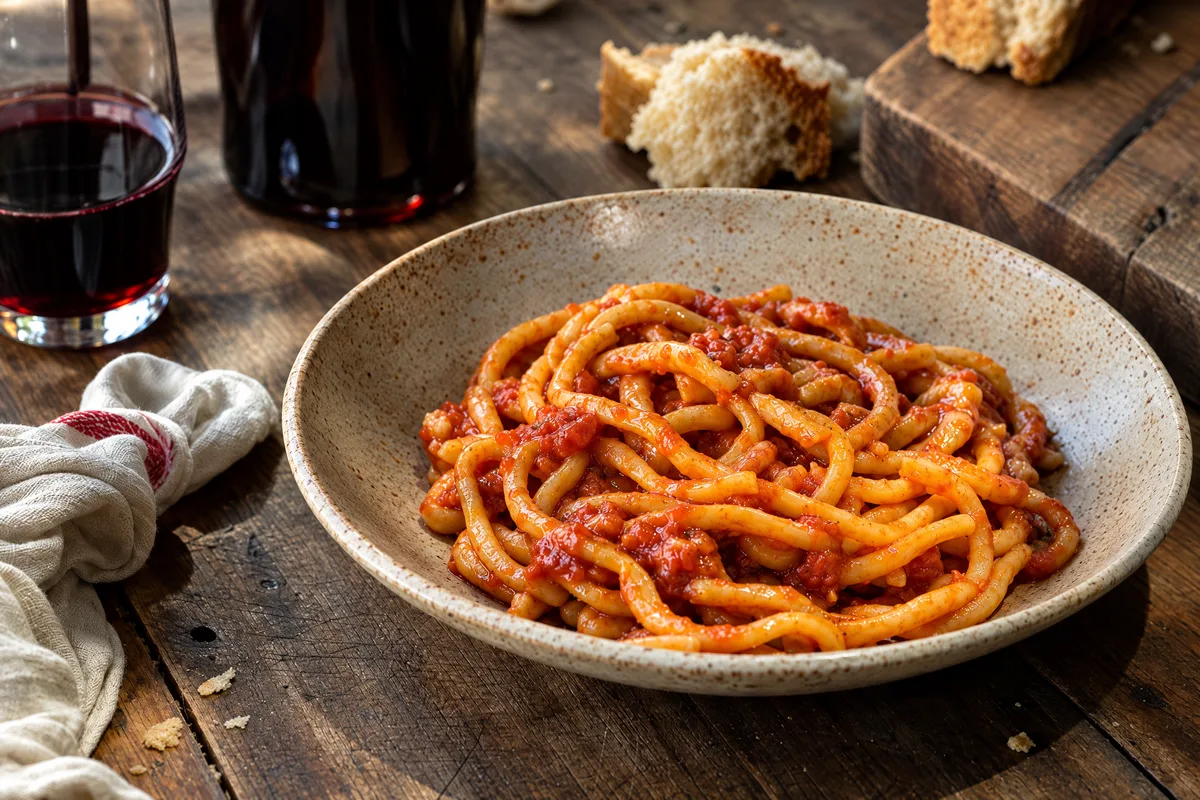
The pici recipe has a thirty-minute dough rest within a full preparation and cooking allowance of one hour and fifty-five minutes. Knead the flour, water, oil and salt into a firm dough, let it rest under a bowl, then roll the strips into long strands. Keep them on their dusting of semolina while you prepare to cook them.
Aglione softens slowly in oil without colouring before tomatoes, chilli and salt turn it into the sauce. The recipe also uses a splash of wine. Give the sauce its own gentle cooking time, then boil the pici according to their thickness and finish them in the sauce with some cooking water. Bring them to the table hot, with the second course’s timing still in view.
For bottles and a drink without wine, use the festive drinks guide. The recipes and any drinks you pour are separate choices. Put water on the table from the beginning and choose around the people sharing the meal, rather than adding bottles simply because there are three courses.
Close the meal with the calza ready
Clear the savoury dishes and bring out the cooled cavallucci. The same batch supplies the dessert plate and any packets you have set aside; choosing their division keeps the gift plan connected to what you actually baked. Keep the remaining ingredient information with the food when it leaves the table.
If everyone wants another round together, the tombola guide gives the rules and winning rows. If you are still planning a different feast, the Christmas Day menu is a separate meal with its own recipes and shopping. Return to Christmas in Italy for the wider season, and let this lunch bring your Epiphany gathering to its own finish.