Prepare the dry ingredients and trays before heating the sugar. A sugar thermometer gives a clear stopping point without touching hot syrup. The stated thread-stage temperature is for sea level; at altitude, use a locally adjusted candy-temperature guide. Shape only when the dough is safe to handle, using flour sparingly so the biscuits retain their characteristic texture.
Make ahead Leave enough time for complete cooling before packing. Place the cold biscuits in a clean, dry tin, separating layers with baking paper. Label a gift with its preparation date and full ingredients, including wheat and walnuts. The cooling allowance is a planning estimate; a warm biscuit should not be enclosed.
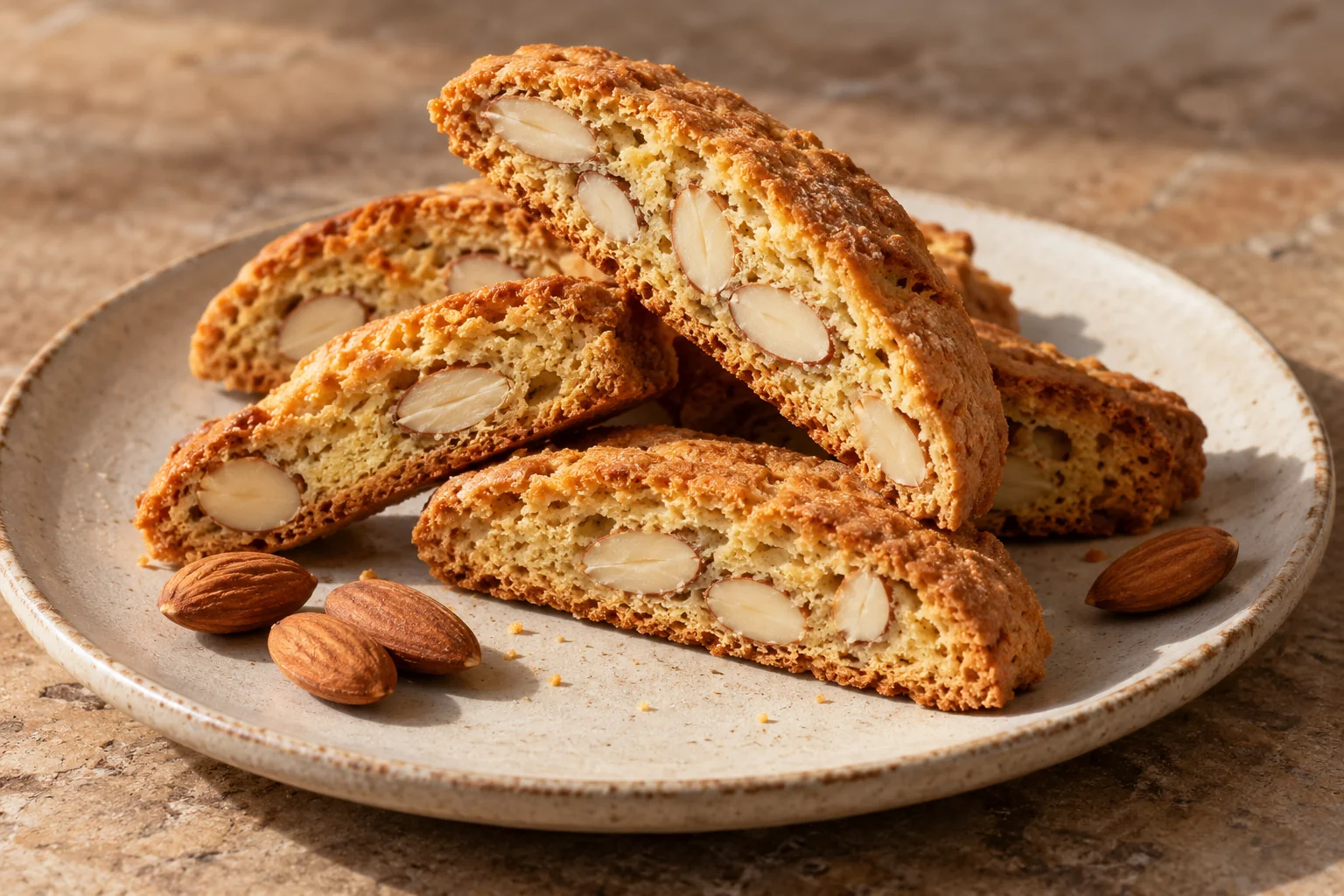
Cavallucci: Sienese Christmas Biscuits
Total 1 hr 42 min · Prep 30 min · Cook 12 min · Yield 40 small cavallucci
Method
Heat the oven to 160°C. Line two baking trays with baking paper and dust lightly with flour. Chop the walnuts and orange peel, then combine them with the flour, baking powder, anise, cinnamon and cloves in a heatproof bowl.Heat the oven to 325°F. Line two baking trays with baking paper and dust lightly with flour. Chop the walnuts and orange peel, then combine them with the flour, baking powder, anise, cinnamon and cloves in a heatproof bowl.
Dissolve the sugar in the water in a saucepan over gentle heat. Bring to the thread stage, about 110–112°C on a sugar thermometer at sea level. Stop before the syrup darkens. Keep the hot syrup away from bare skin; do not test it between your fingers.Dissolve the sugar in the water in a saucepan over gentle heat. Bring to the thread stage, about 230–233.6°F on a sugar thermometer at sea level. Stop before the syrup darkens. Keep the hot syrup away from bare skin; do not test it between your fingers.
Take the pan off the heat. Add the dry mixture and work it together with a strong wooden spoon. Transfer carefully to a lightly floured work surface using the spoon or a heatproof scraper. Leave briefly until safe to handle; the dough will still be sticky.
With floured hands, shape the warm dough into a log. Divide into small, even pieces. Roll gently into small balls, flatten slightly and pinch into rough ovals. Dust lightly with flour and space out on the prepared trays.
Bake for about 12 minutes at 160°C. Keep the surface pale: the outside should form a light crust while the biscuits remain soft when first removed. If the trays cannot sit on the same oven level, bake them in separate batches.Bake for about 12 minutes at 325°F. Keep the surface pale: the outside should form a light crust while the biscuits remain soft when first removed. If the trays cannot sit on the same oven level, bake them in separate batches.
Leave the cavallucci to settle on the trays before moving them to a rack. Let them cool completely: they become firmer as they cool. Allow roughly one hour for cooling, extending it if the centres remain warm.
Equipment
- Sugar thermometer
- Saucepan and strong wooden spoon
- Heatproof bowl and scraper
- Two baking trays and baking paper
- Scale reading 0.1 g
- Cooling rack
Tap anywhere to turn the alarm sound back on.