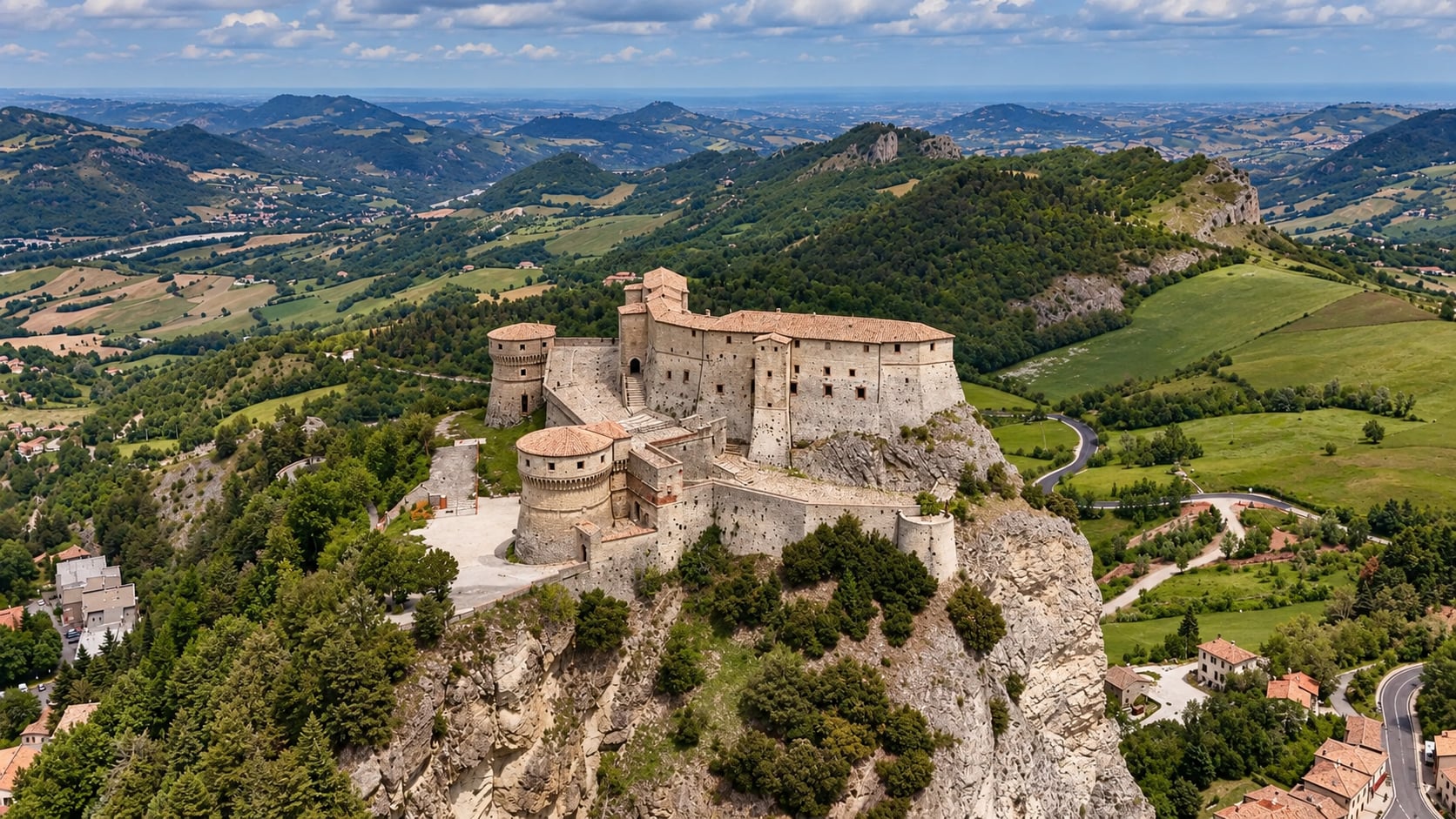
Every city in Emilia-Romagna
From the capital to the smallest borghi.
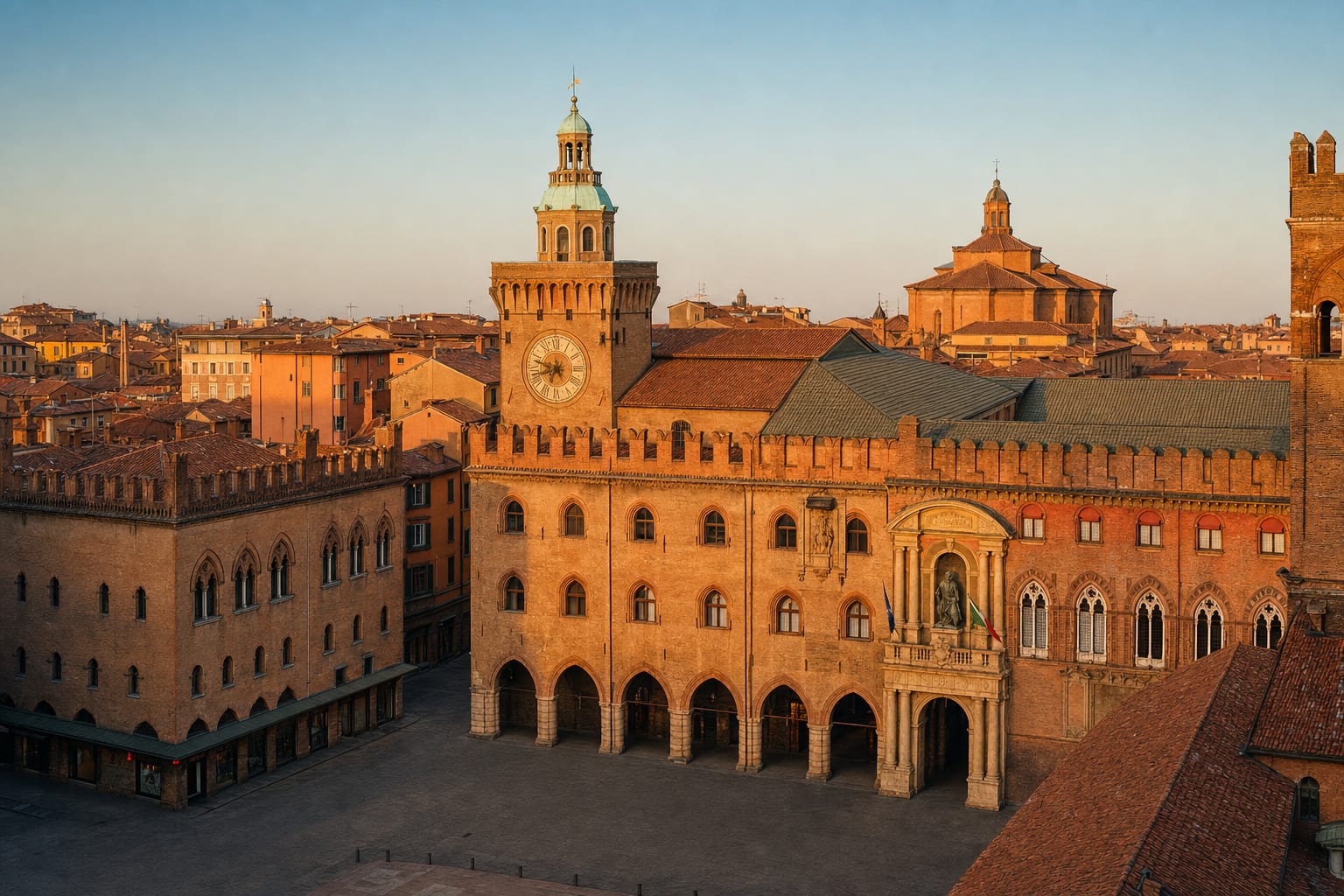
BolognaThe capitalHome to the Western world's oldest university and forty kilometres of porticoes, Bologna gathers around Piazza Maggiore and the leaning Two Towers, Asinelli and Garisenda. The longest portico on earth climbs 666 arches to the sanctuary of San Luca. ArgentaSpread across the reclaimed lowlands south of Ferrara, Argenta sits among the wetlands of the Po Delta, where reed-fringed valleys draw migrating birds. It is a quiet gateway to the marshes and lagoons that define this watery corner of the region.
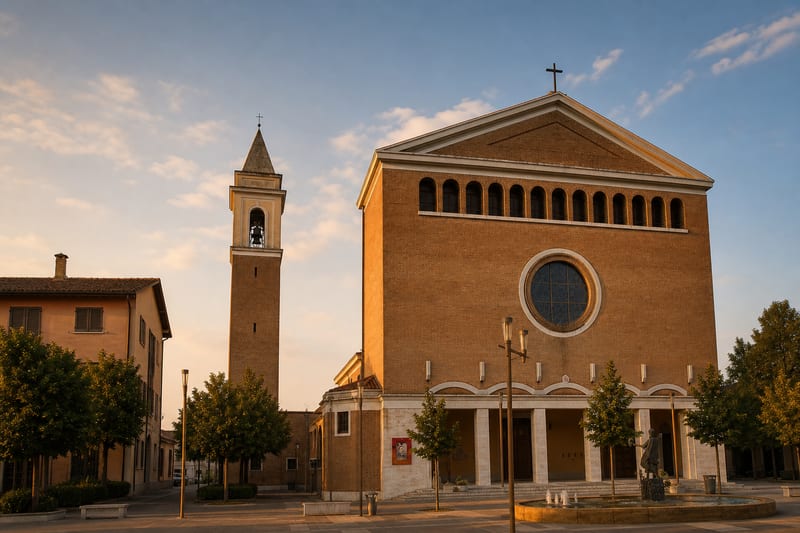
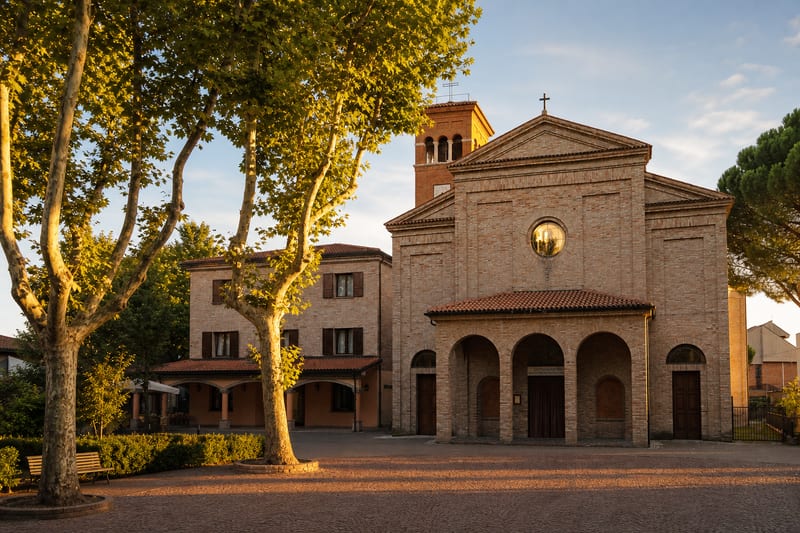
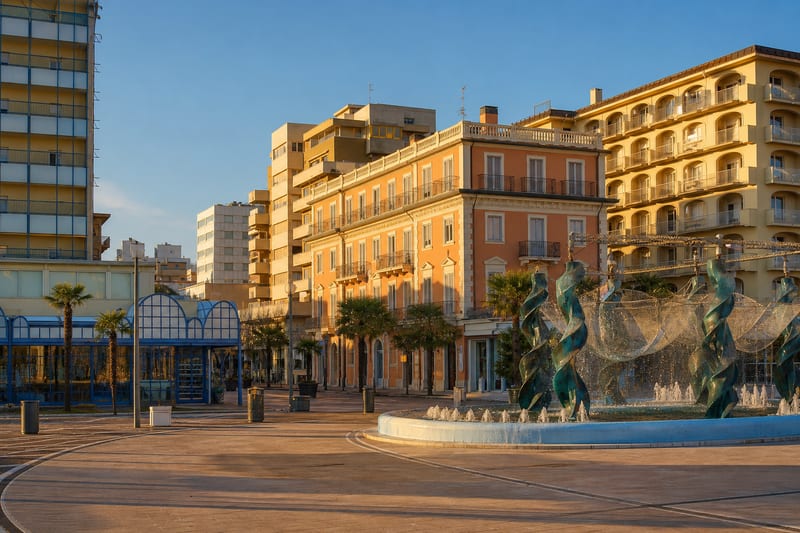
Bellaria-Igea MarinaTwo seaside districts joined as one, Bellaria-Igea Marina spreads its broad family beaches along the Romagna coast north of Rimini. Pine groves and a small fishing canal soften a resort built for long, easy summers by the Adriatic.
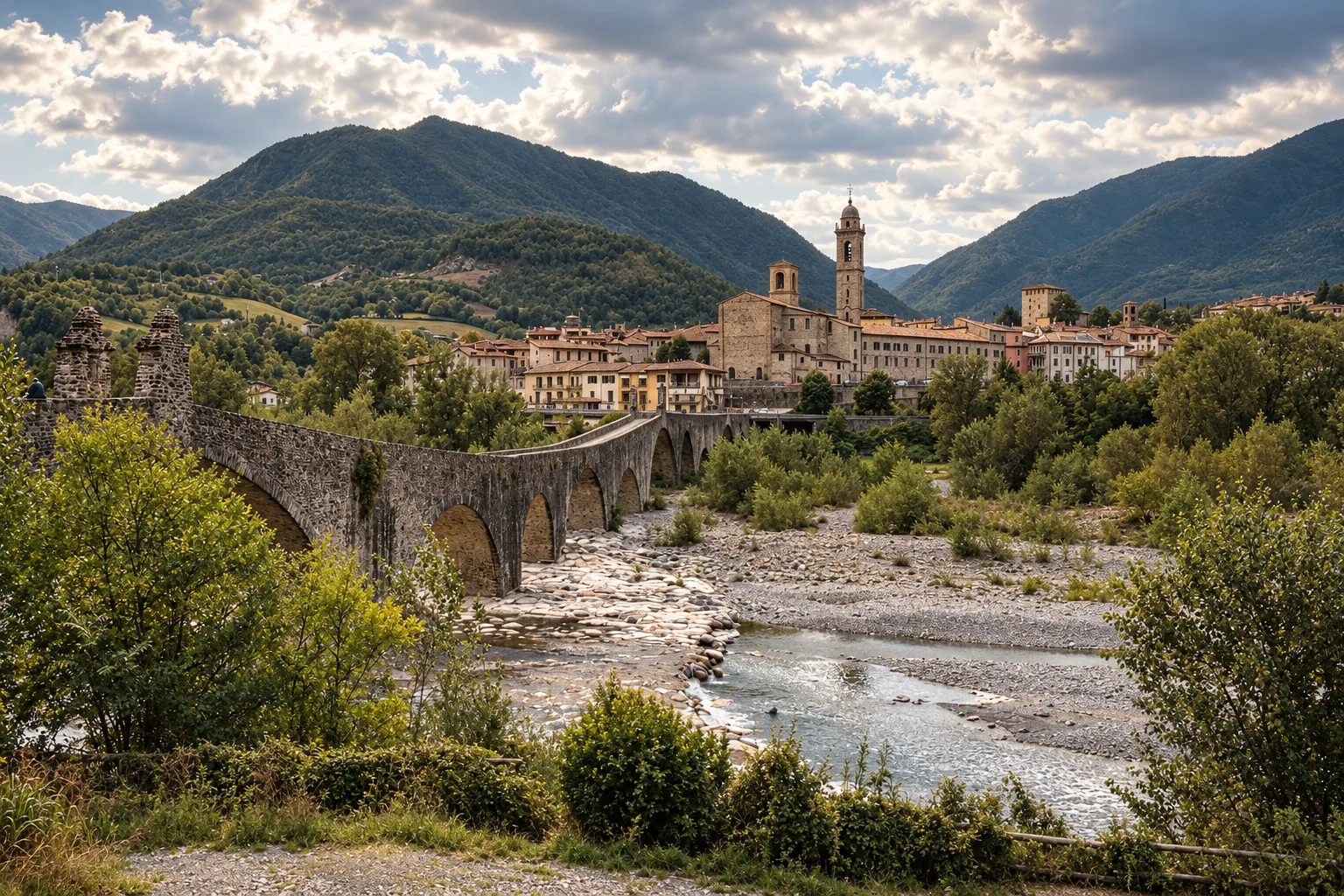
BobbioDeep in the Trebbia valley, Bobbio grew around the abbey founded by the Irish monk Saint Columbanus in 614, once one of Europe's great centres of learning. Below the village, the humpbacked Ponte Gobbo strides across the river on its uneven stone arches.
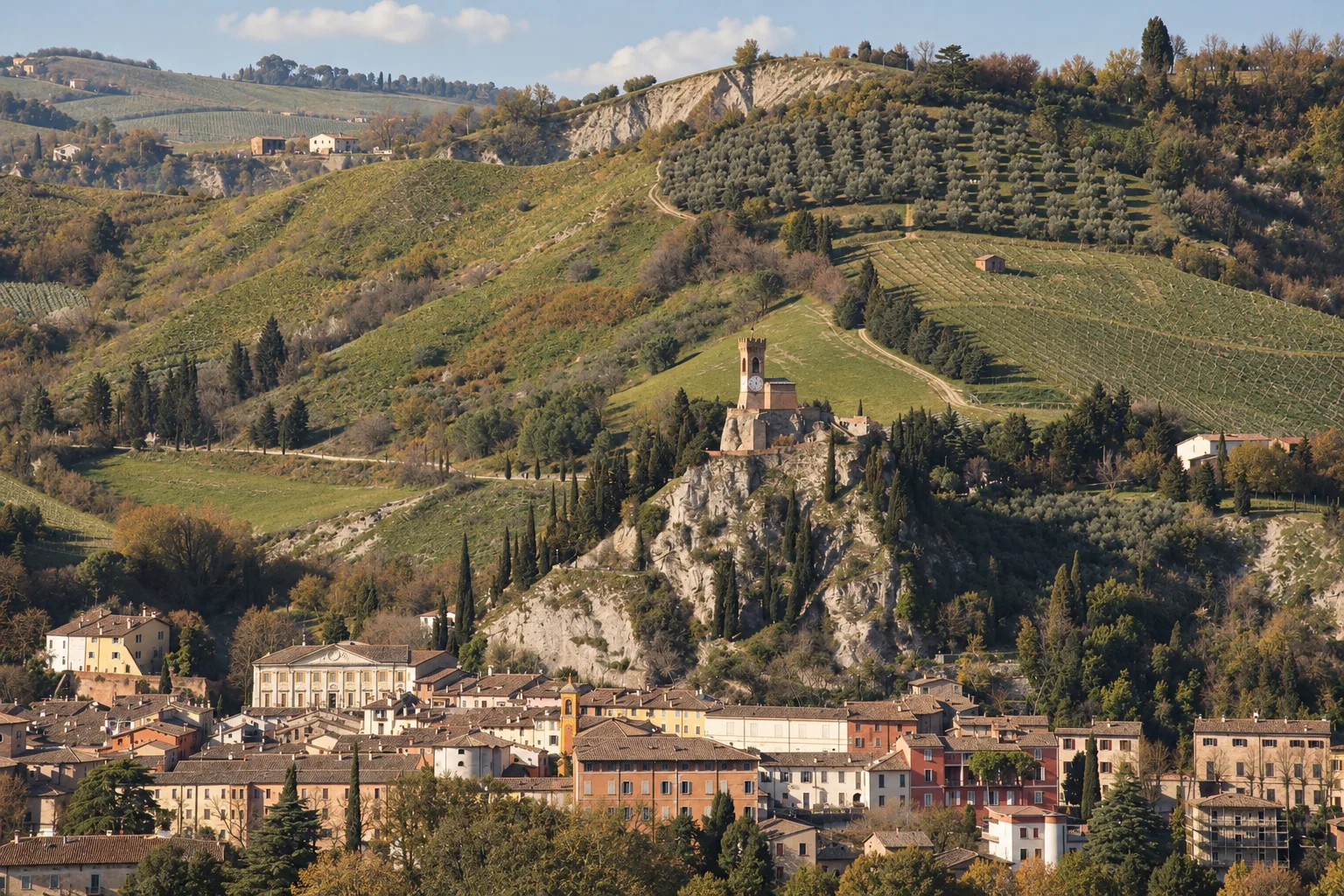
BrisighellaTucked into the Lamone valley, Brisighella is watched over by three hilltops crowned with a fortress, a clock tower, and a sanctuary. The town is known for its raised covered lane, the Via degli Asini, and for a prized DOP extra-virgin olive oil. CarpiNorth of Modena, Carpi grew rich on knitwear and remains a heart of Italian fashion manufacturing. At its centre lies one of the largest squares in the country, the long Piazza dei Martiri, lined with a Renaissance portico and overlooked by a castle of the Pio princes.
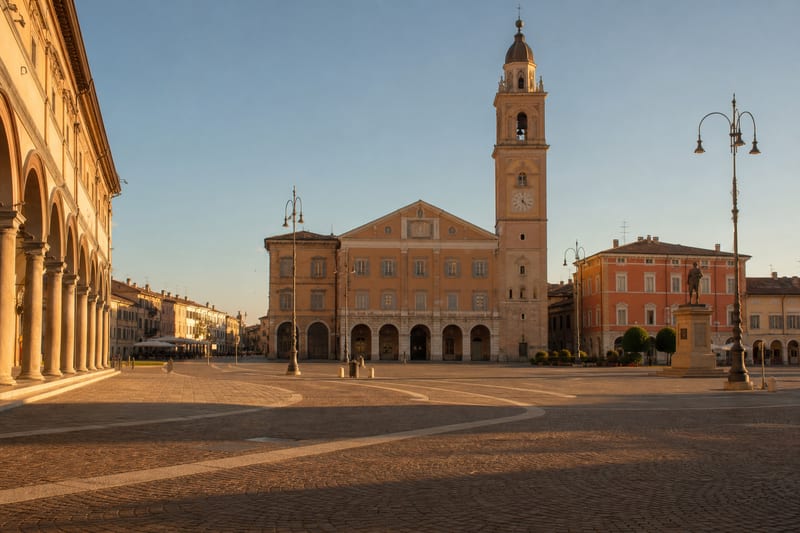
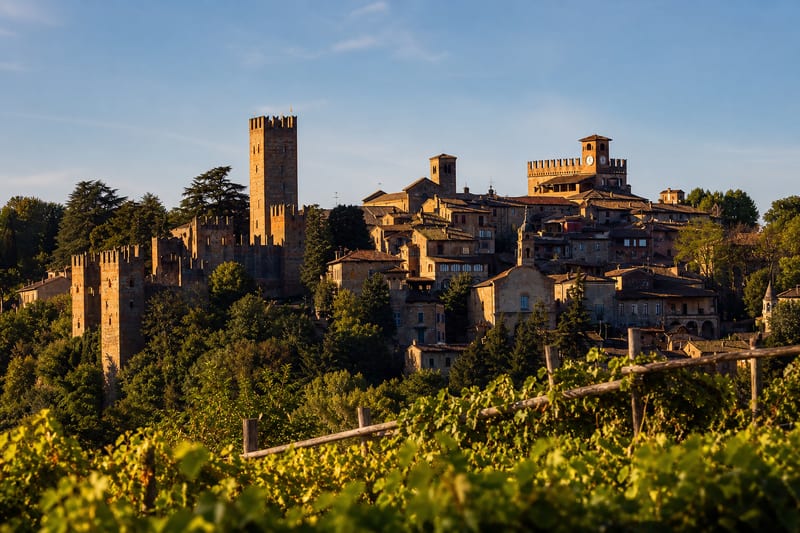
Castell'ArquatoOne of the loveliest medieval villages in the Piacenza hills, Castell'Arquato rises in tiers above the Arda valley, crowned by the Visconti fortress and a Romanesque collegiate church around a single sloping piazza.
CattolicaThe southernmost resort on Emilia-Romagna's coast, Cattolica marks the end of the Adriatic Riviera before the Marche. Known as the queen of the Adriatic, it offers a tidy seafront of beaches, gardens, and a large aquarium set right by the sand.
CentoA brick-built town on the plain between Ferrara and Bologna, Cento is famous for its Carnival, a flamboyant parade of giant papier-mache floats twinned with the Carnival of Rio. It was also the birthplace of the Baroque painter Guercino.
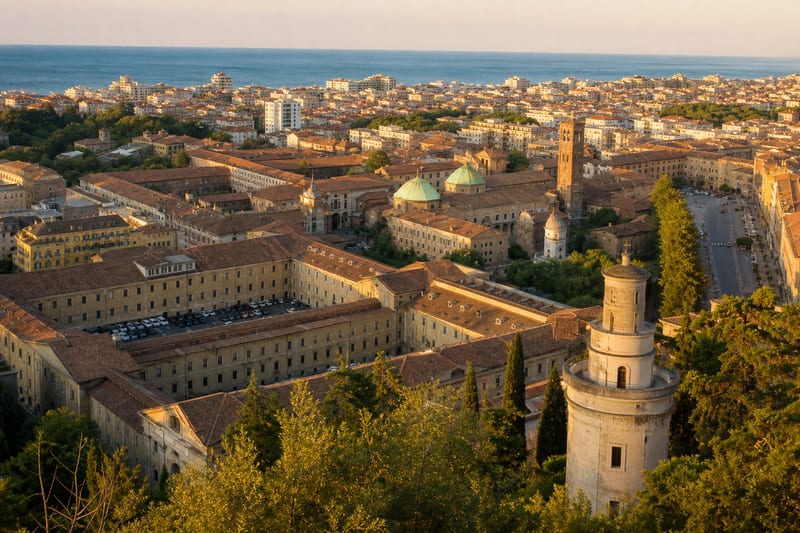
CesenaA Romagna town below the Apennine foothills, Cesena is proud of the Biblioteca Malatestiana, a UNESCO-listed fifteenth-century library that survives complete with its original benches and chained manuscripts. The Malatesta fortress still crowns the hill above.
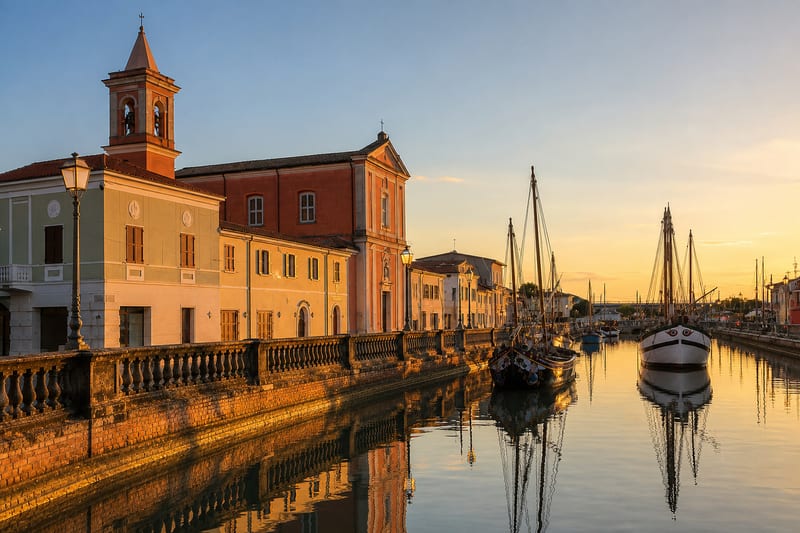
CesenaticoThis Adriatic fishing port is built around a canal harbour designed in part by Leonardo da Vinci in 1502. Historic sailing boats with ochre and rust-red sails ride at its quays as a floating maritime museum, alongside the beaches of the Riviera.
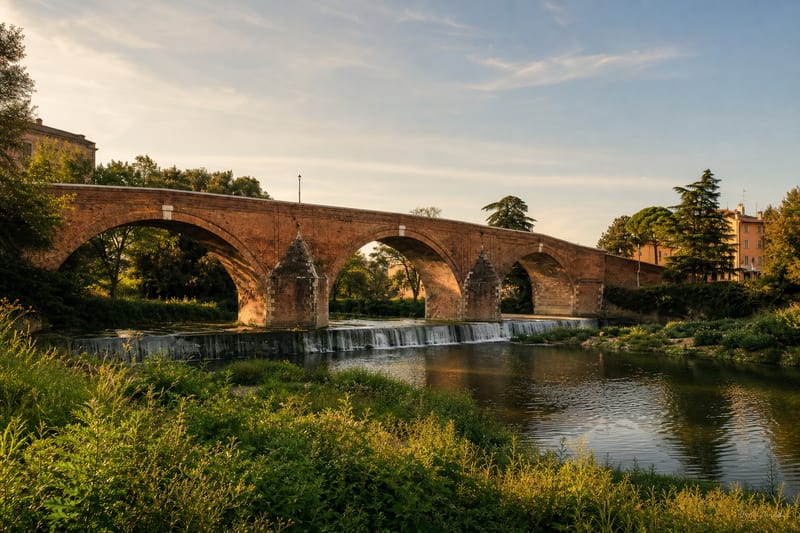
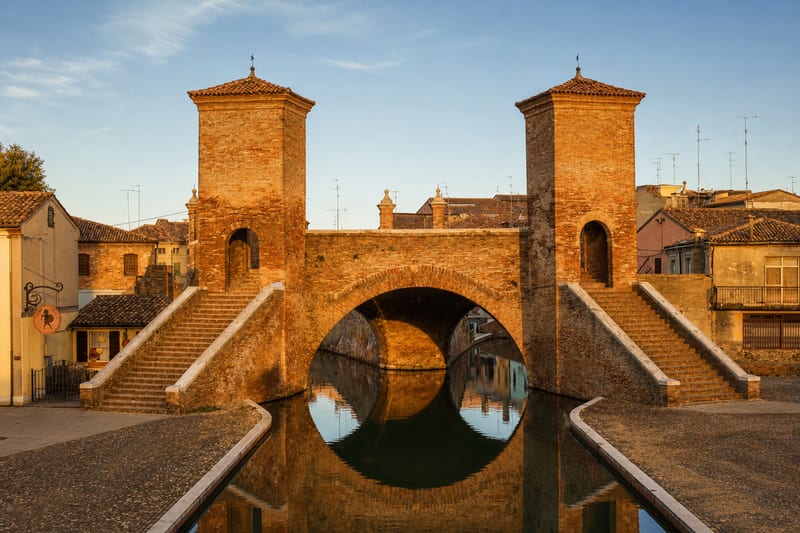
ComacchioThreaded by canals and crossed by the triple-arched Trepponti bridge, this lagoon town in the Po Delta is often called a little Venice. Its fishermen have caught and marinated eels in the surrounding valli for centuries.
CorreggioOn the plain of Reggio Emilia, this elegant little town gave the Renaissance painter Antonio Allegri the name by which the world knows him, Correggio. A graceful arcaded centre and the Renaissance Palazzo dei Principi recall its days as a small Este court.
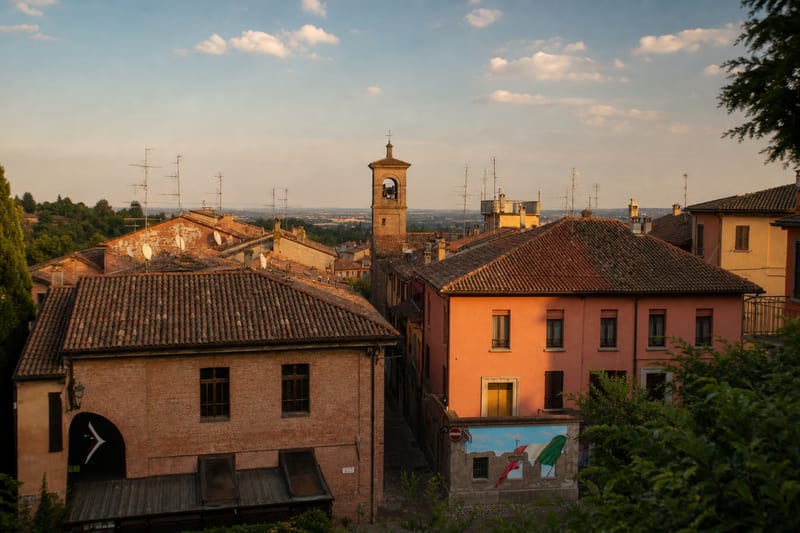
DozzaA small hill borgo in the Imola wine country, Dozza is an open-air gallery: its houses wear murals painted by visiting artists during the biennial Muro Dipinto festival. A Sforza fortress at the top guards the regional wine cellar in its vaults.
FaenzaFaenza gave the world the word faience, the tin-glazed maiolica fired in its kilns for six centuries. Its International Museum of Ceramics traces that history and holds works by Picasso and Chagall alongside the cobalt-and-ochre wares that made the town's name.
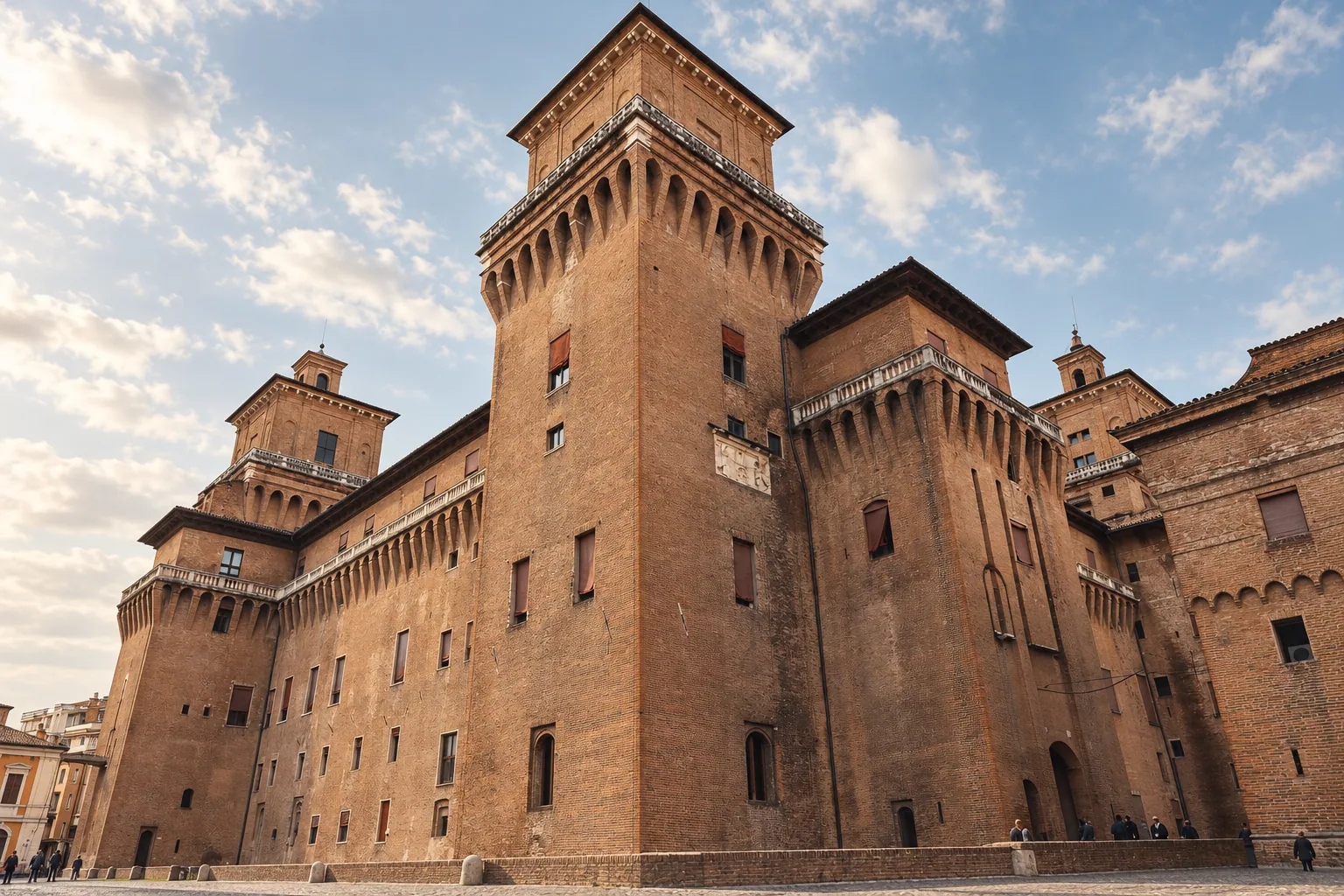
FerraraA model Renaissance capital laid out by the Este dukes, Ferrara is built to a graceful plan of long straight avenues and brick palaces. At its centre stands the moated Estense Castle, its towers mirrored in the water and its history shadowed by the dungeon of Ugo and Parisina. FidenzaA pilgrim stop on the medieval Via Francigena in the Parma plain, Fidenza is graced by a Romanesque cathedral whose facade carries Antelami's carved saints and pilgrims. Today the town is just as known for its sprawling designer outlet village.
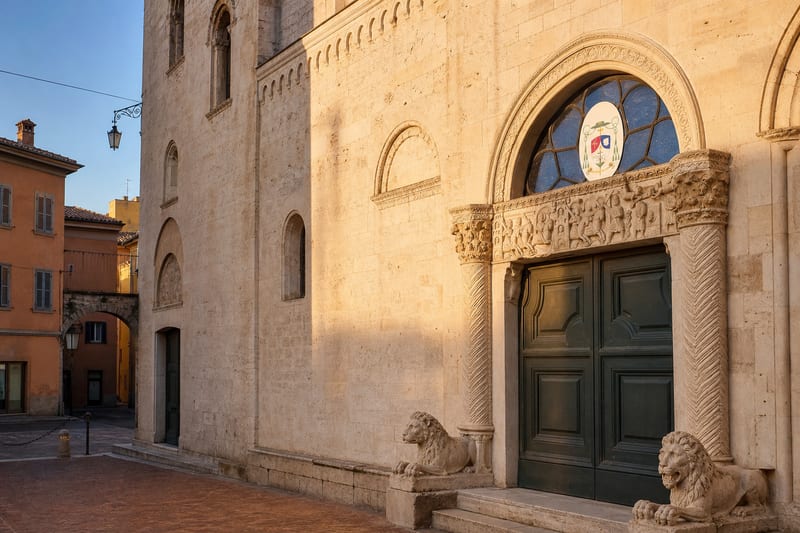
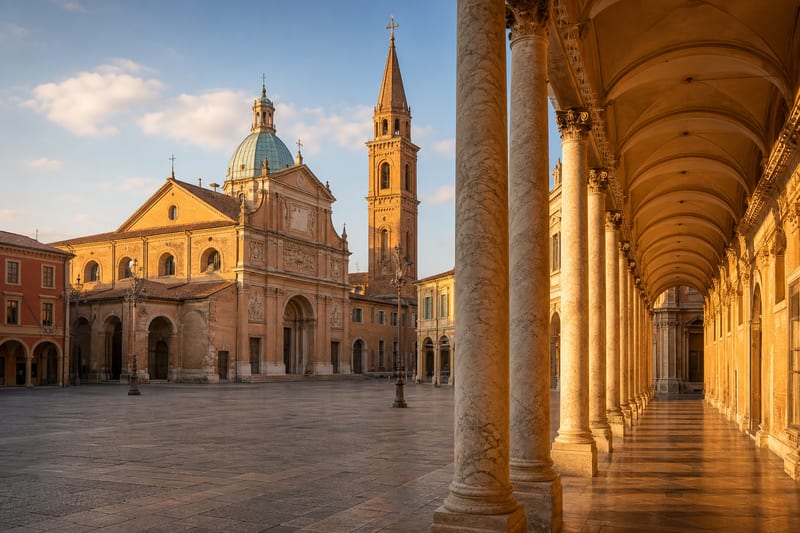
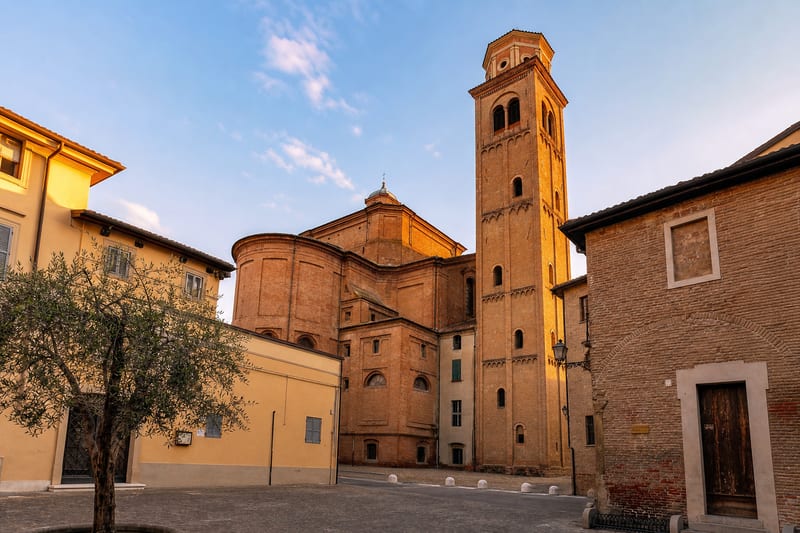
ForlìA provincial capital of Romagna on the Via Emilia, Forli centres on the spacious Piazza Saffi and the Romanesque abbey of San Mercuriale, its tall bell tower a landmark above the plain. The surrounding hills run south toward the Apennines and the Tuscan border.
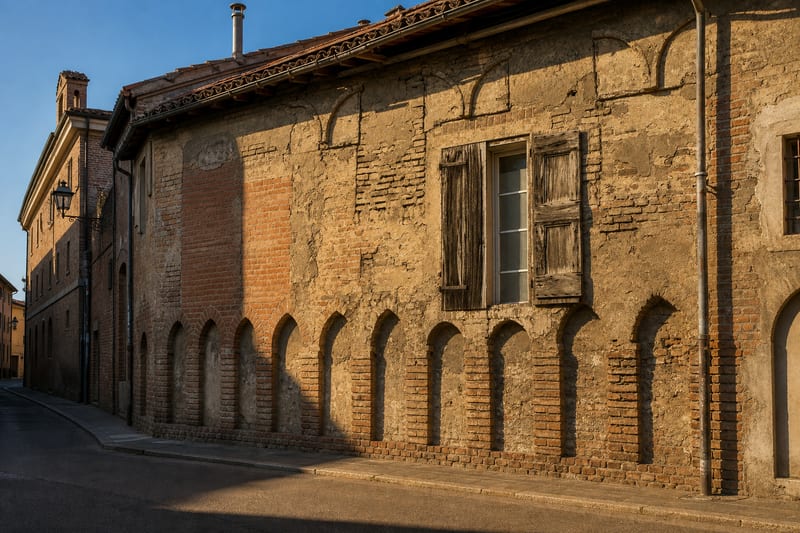
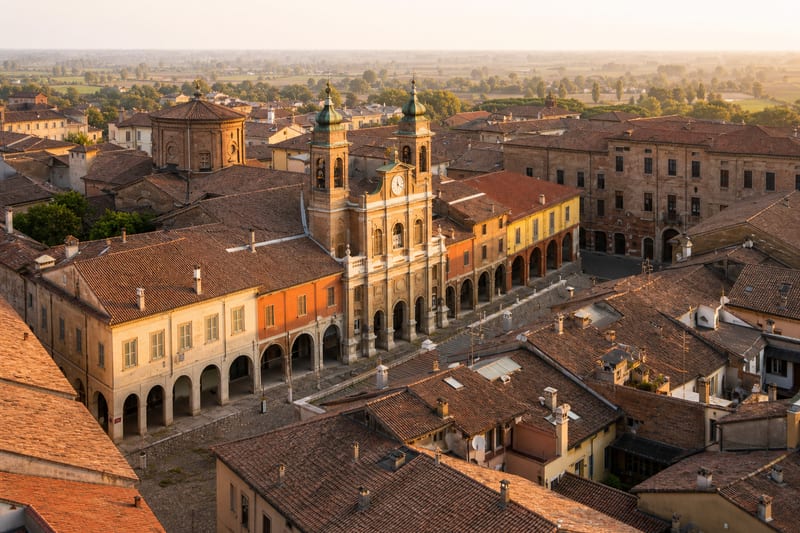
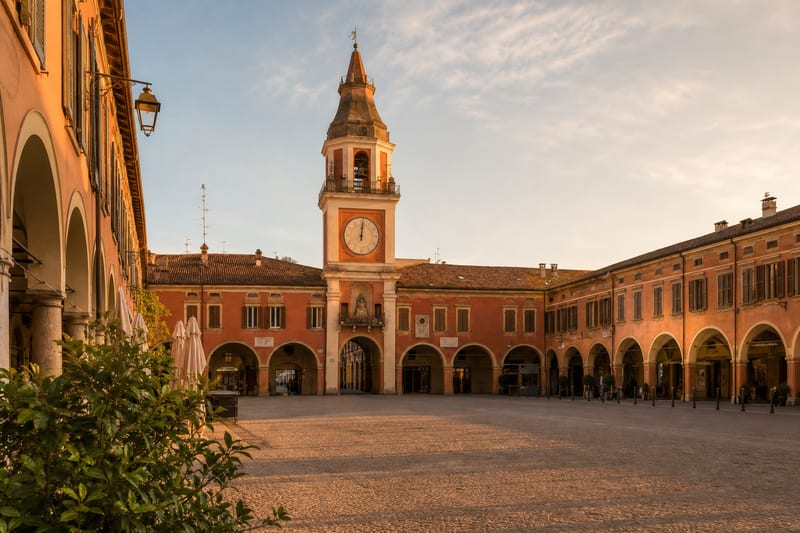
GuastallaOn the right bank of the Po in the far north of Reggio Emilia province, Guastalla was once a small Gonzaga duchy. Its low brick town centres on an arcaded square and a ducal palace, set among the wide, slow river landscapes of the Bassa.
ImolaOn the Via Emilia east of Bologna, Imola is known worldwide for the Autodromo Enzo e Dino Ferrari, the Formula 1 circuit that bends through riverside parkland. The old town keeps a sturdy Sforza fortress and a long ceramics tradition.
LanghiranoTucked in the Parma hills along the Parma river, Langhirano is the capital of prosciutto di Parma. The breezes that climb its valley cure thousands of hams in long-windowed cellars, a craft the town honours each autumn.
LugoSet on the flat Romagna plain between Imola and Ravenna, Lugo is a market town of arcaded streets and a broad Renaissance fortress at its heart. Its weekly market has drawn farmers from the surrounding countryside for generations.
MaranelloA modest Modenese town with a world-famous name, Maranello is the home of Ferrari. Enzo Ferrari moved his works here in 1943, and the Museo Ferrari now displays the rosso corsa icons of the road and the Formula 1 grid where the marque was forged.
Misano AdriaticoA beach town on the Romagna Riviera near Rimini, Misano Adriatico is best known for the Misano World Circuit, the seaside track that hosts the San Marino round of MotoGP. Beyond the grandstands lie quiet family beaches and a low green headland.
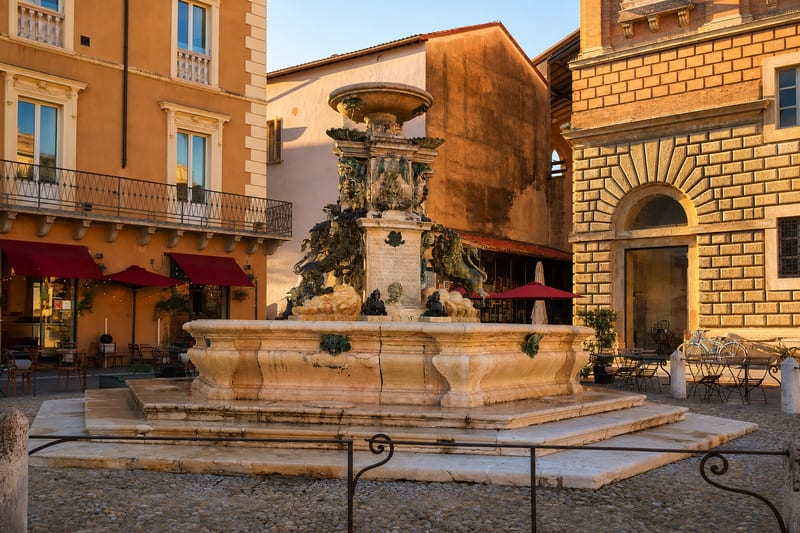
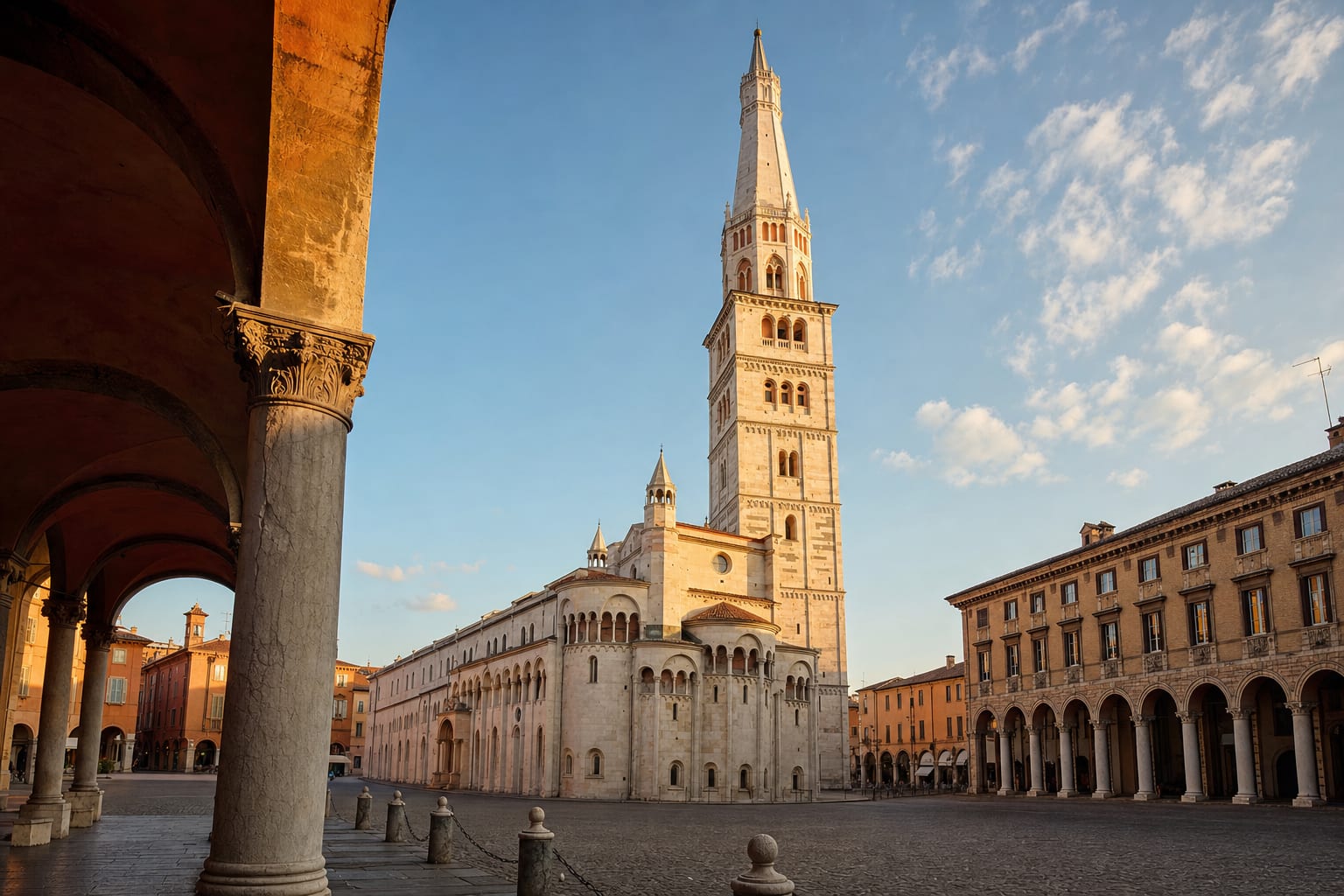
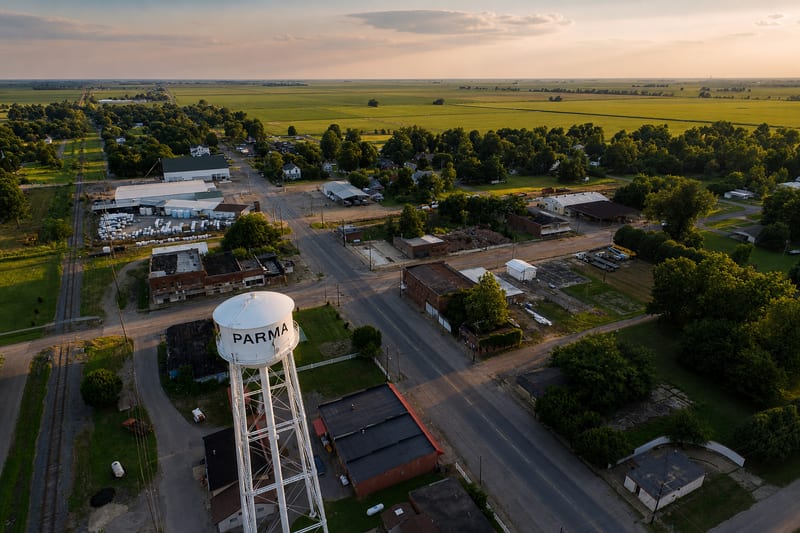
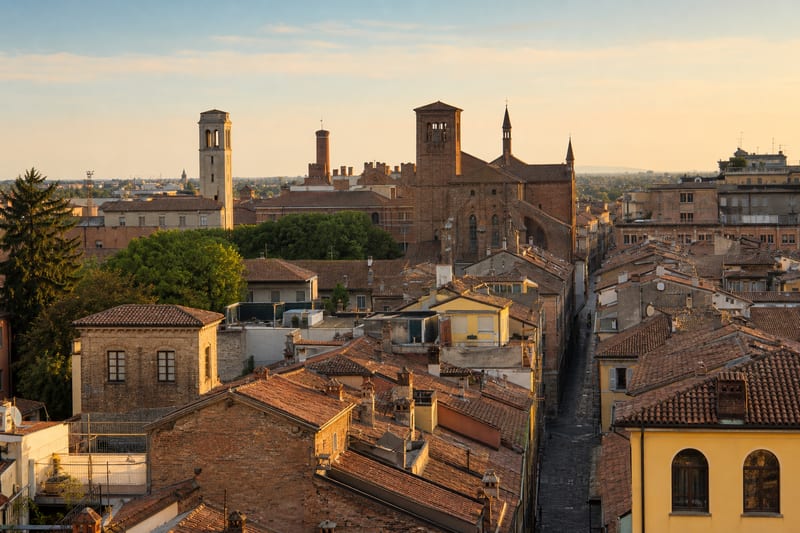
ModenaModena pairs high art with high speed. Its UNESCO-listed Romanesque cathedral, carved by Lanfranco and Wiligelmo, stands beside the leaning Ghirlandina tower on Piazza Grande, while the Museo Enzo Ferrari celebrates the city's racing soul beneath a yellow bonnet-shaped roof. ParmaA city of music and gastronomy, Parma gave its name to Parmigiano-Reggiano and prosciutto, and to a cathedral whose dome Correggio filled with a dizzying Assumption above Antelami's pink marble baptistery. Verdi's operas still ring through its theatres.
PiacenzaThe first city on the Via Emilia coming from the north, Piacenza guards the Po near the Lombard border. Its central Piazza Cavalli takes its name from two dynamic Baroque bronze horsemen, and the Gothic Palazzo Gotico looms over the square in pink marble and brick.
RavennaOnce the capital of the late Roman and Byzantine West, Ravenna holds the finest early Christian mosaics on earth. Gold and emerald light fills the Basilica of San Vitale and the tiny Mausoleum of Galla Placidia, with its indigo, star-strewn vault. Dante lies buried here.
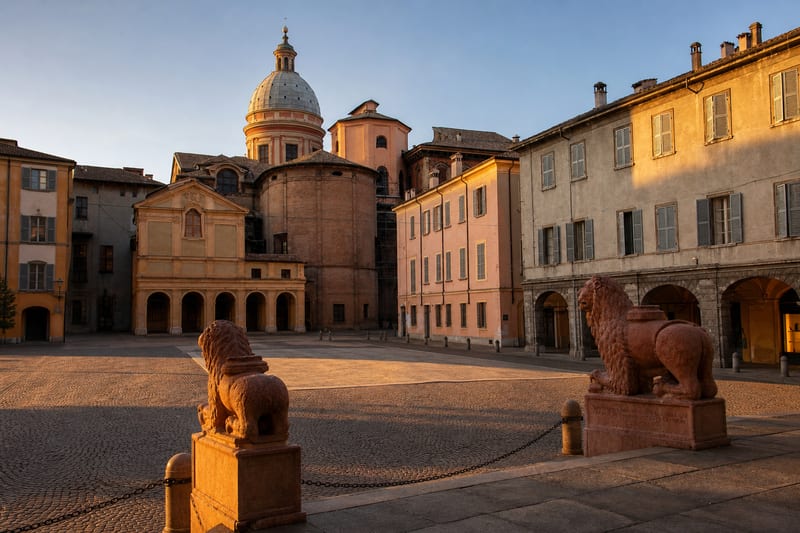
Reggio EmiliaA dignified city on the Via Emilia, Reggio Emilia is where the Italian tricolour was first adopted as a national flag in 1797, an event marked by its Sala del Tricolore. It later gave its name to the Reggio Emilia approach, an influential philosophy of early childhood education.
RiccioneThe polished sister of the Adriatic Riviera, Riccione lines its long sandy beach with rows of umbrellas and the boutiques of Viale Ceccarini. By night it becomes one of the coast's great capitals of clubs and open-air dancing.
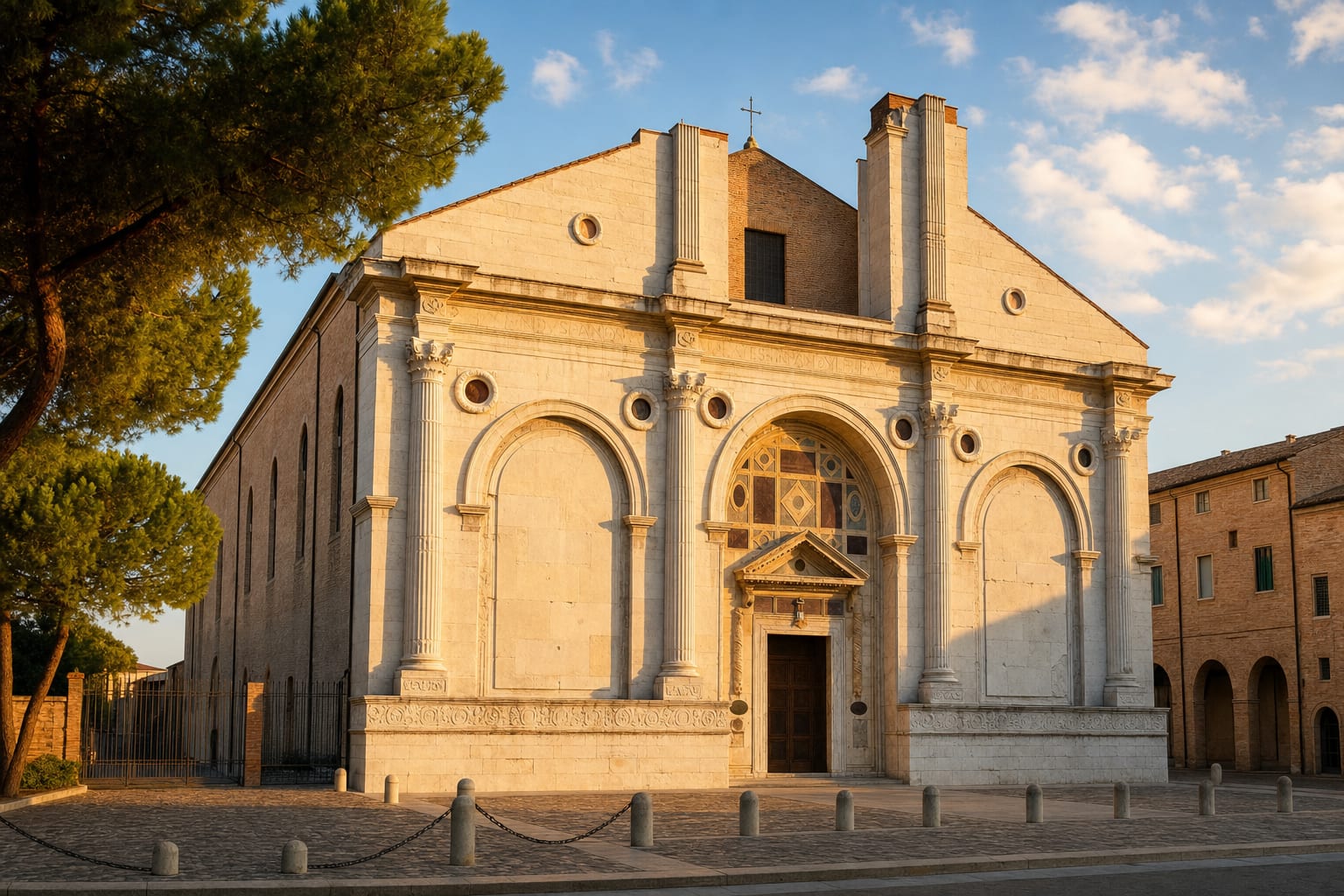
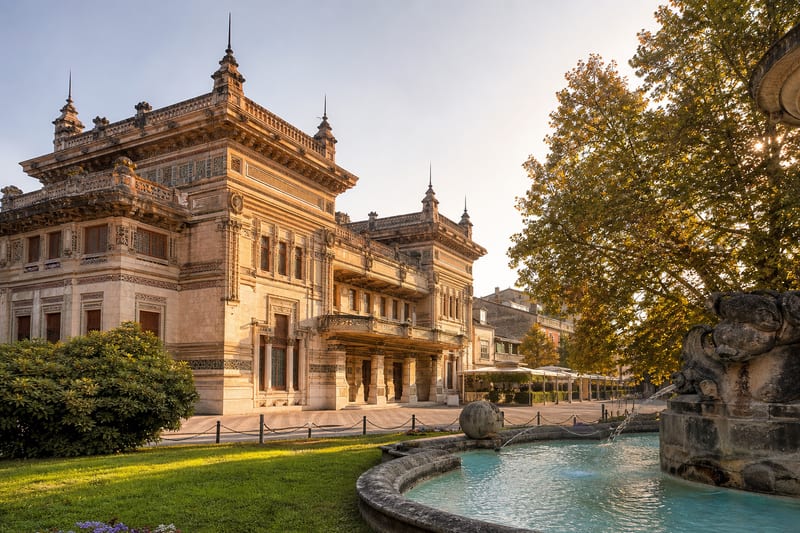
RiminiThe great resort of the Adriatic Riviera, Rimini matches kilometres of sand with a serious Roman and Renaissance past. The Tempio Malatestiano, reclad by Alberti, guards a Piero della Francesca fresco, and the town is forever bound to its native son, Federico Fellini. Salsomaggiore TermeA spa town in the Parma hills, Salsomaggiore Terme grew elegant on its salt-rich thermal waters, lined with grand Liberty-style hotels and the lavish Art Deco Terme Berzieri. For decades it hosted the finals of the Miss Italia pageant.
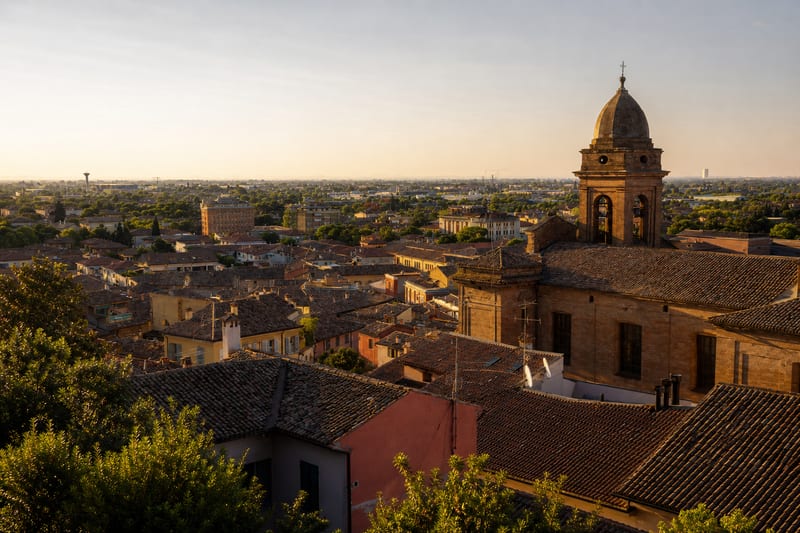
Sant'Arcangelo di RomagnaA handsome hilltop borgo just inland from Rimini, Sant'Arcangelo di Romagna is honeycombed with mysterious man-made tuff caves beneath its streets. Crowned by a Malatesta fortress, it once won the national Borgo dei Borghi title for Italy's loveliest village.
SassuoloOn the edge of the Modenese plain, Sassuolo is the world capital of ceramic tile, its factories supplying floors and facades across the globe. At its heart stands the Palazzo Ducale, a sumptuous Baroque villa built as the Este dukes' summer retreat.
ScandianoIn the Reggio foothills where the plain rises toward the Apennines, Scandiano is Lambrusco country, its slopes given over to vineyards. A handsome Rocca dei Boiardo anchors the town, recalling the family of the Renaissance poet Matteo Maria Boiardo.
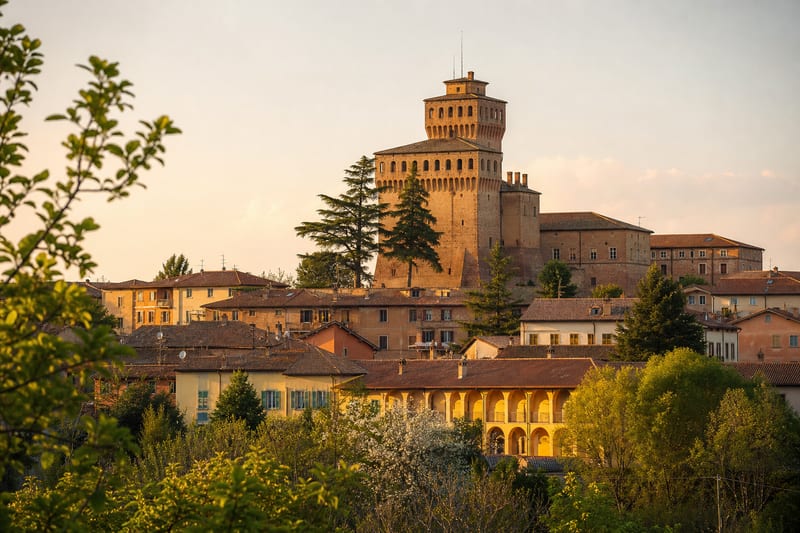
VignolaIn the Modenese foothills, Vignola gives its name to the prized ciliegia di Vignola, the cherry that turns its orchards white with blossom each spring. The town gathers below a tall medieval fortress above the Panaro river.