Use coarse durum wheat semolina for hand-rolling, not instant cous cous or finely remilled semolina. Ask the fishmonger for boneless gurnard fillets and clean heads and frames without gills or innards.
Cous cous alla trapanese
Prep 50 min · Cook 1 hr 40 min · Rest 1 hr 15 min · Serves 4 · Difficulty Medium
Method
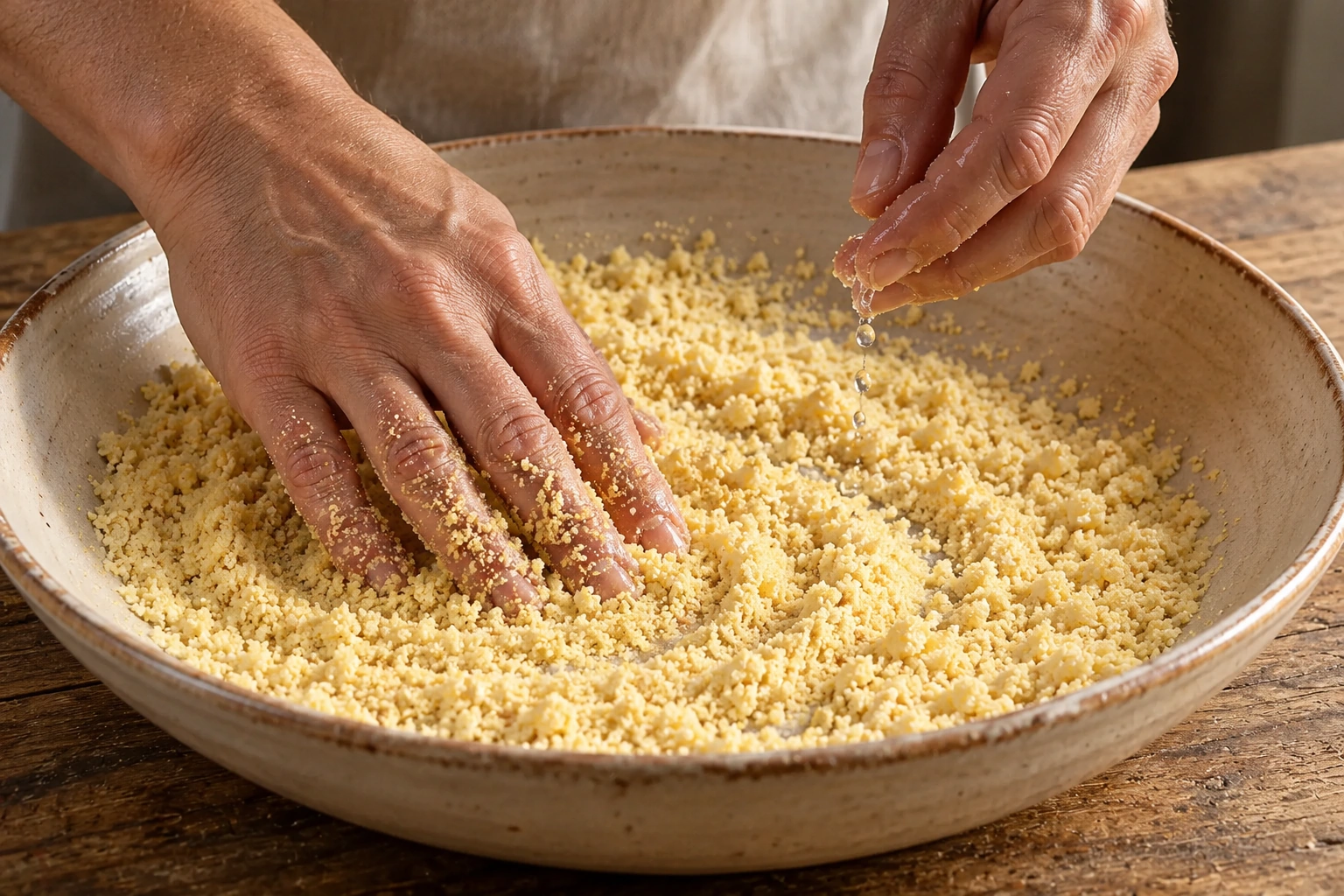
Dissolve 3 g salt in 200 ml water. Put 100 g semolina in the shallow bowl. Sprinkle with a little salted water and circle the fingers of one hand through it, keeping the grains loose. Add the remaining semolina in three batches, moistening gradually until small, separate grains form. Use only as much of the 200 ml water as needed: the mixture must feel granular, not doughy. Allow about 30 minutes.Dissolve 3 g salt in ¾ cup water. Put 3½ oz semolina in the shallow bowl. Sprinkle with a little salted water and circle the fingers of one hand through it, keeping the grains loose. Add the remaining semolina in three batches, moistening gradually until small, separate grains form. Use only as much of the ¾ cup water as needed: the mixture must feel granular, not doughy. Allow about 30 minutes.
Rub the grains gently between your palms to break up larger clumps. Spread on a tray for 15 minutes, then toss with 30 ml oil. Put 2000 ml water, 80 g onion, lemon, bay and whole pepper in the lower pot. Mix the flour with the separate 60 ml water into a firm paste. Fit the steamer above the water, which must not touch its base, and seal the outside joint with the paste.Rub the grains gently between your palms to break up larger clumps. Spread on a tray for 15 minutes, then toss with 2 tbsp oil. Put 8½ cups water, 2¾ oz onion, lemon, bay and whole pepper in the lower pot. Mix the flour with the separate ¼ cup water into a firm paste. Fit the steamer above the water, which must not touch its base, and seal the outside joint with the paste.
Add the grains without pressing them down. Bring the lower water to a steady simmer and steam uncovered for 90 minutes from the first steam emerging through the grains. Check the lower pot every 30 minutes, briefly lifting the steamer with oven gloves; top up from the 1000 ml hot reserve if needed and restore the seal. Keep the water below the steamer. The grains should be tender with a slight bite. Discard the seal after cooking.Add the grains without pressing them down. Bring the lower water to a steady simmer and steam uncovered for 90 minutes from the first steam emerging through the grains. Check the lower pot every 30 minutes, briefly lifting the steamer with oven gloves; top up from the 4¼ cups hot reserve if needed and restore the seal. Keep the water below the steamer. The grains should be tender with a slight bite. Discard the seal after cooking.
During the last 45 minutes of steaming, soften the remaining 100 g chopped onion in 40 ml oil in the stockpot for 8 minutes. Add concentrate and cook for 2 minutes. Add the cleaned fish heads and frames, 1800 ml water, remaining salt and ground pepper. Simmer gently for 25 minutes. Pound almonds and garlic, mix in the parsley and add for the last 5 minutes.During the last 45 minutes of steaming, soften the remaining 3½ oz chopped onion in 2¾ tbsp oil in the stockpot for 8 minutes. Add concentrate and cook for 2 minutes. Add the cleaned fish heads and frames, 7⅔ cups water, remaining salt and ground pepper. Simmer gently for 25 minutes. Pound almonds and garlic, mix in the parsley and add for the last 5 minutes.
Strain the broth through the fine sieve without forcing any bones through; discard the solids. Measure out 600 ml hot broth. Transfer the steamed grains to the heatproof bowl, loosen with a fork and pour over this broth in three additions, folding after each. Cover and rest for 60 minutes. Keep the remaining strained broth covered over very low heat.Strain the broth through the fine sieve without forcing any bones through; discard the solids. Measure out 2½ cups hot broth. Transfer the steamed grains to the heatproof bowl, loosen with a fork and pour over this broth in three additions, folding after each. Cover and rest for 60 minutes. Keep the remaining strained broth covered over very low heat.
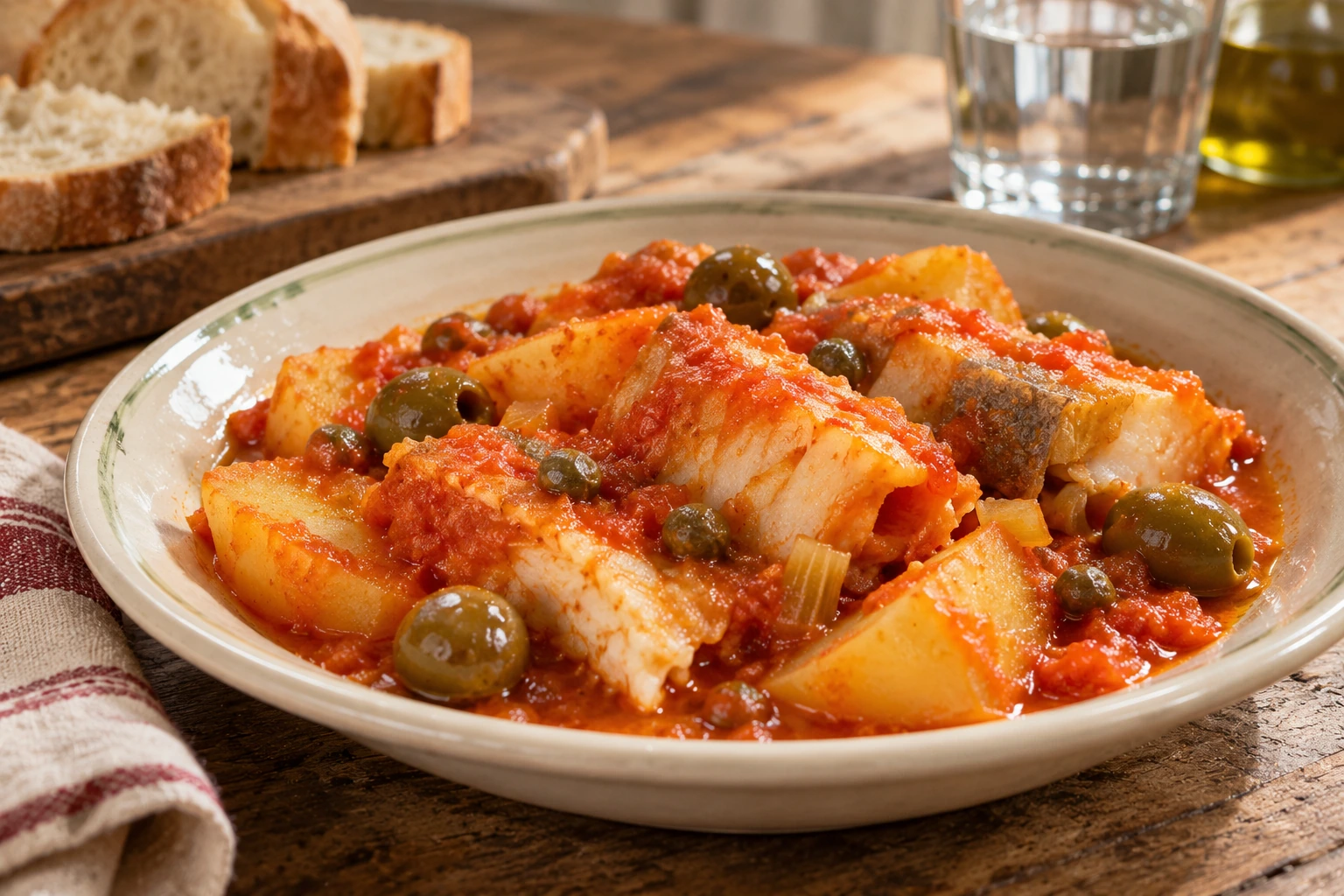
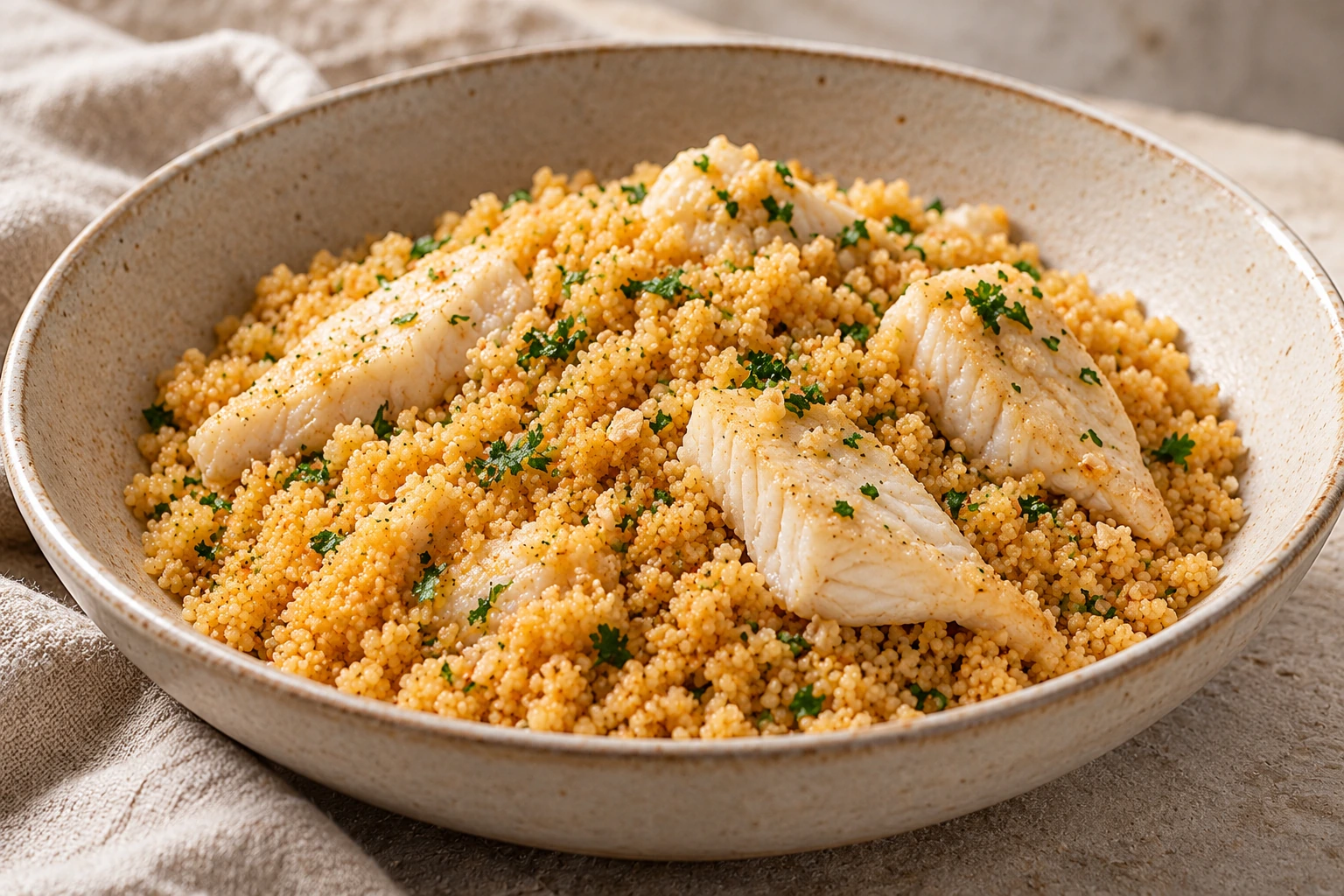
In the last 10 minutes of the grain rest, bring the reserved broth to a gentle simmer and add the chilled gurnard pieces. Poach for 8–10 minutes, until opaque and flaking, without a rolling boil. Lift out the fish. Fluff the cous cous, divide among warm bowls and top with fish. Serve the remaining hot broth separately for each person to add.In the last 10 minutes of the grain rest, bring the reserved broth to a gentle simmer and add the chilled gurnard pieces. Poach for 8–10 minutes, until opaque and flaking, without a rolling boil. Lift out the fish. Fluff the cous cous, divide among warm bowls and top with fish. Serve the remaining hot broth separately for each person to add.