

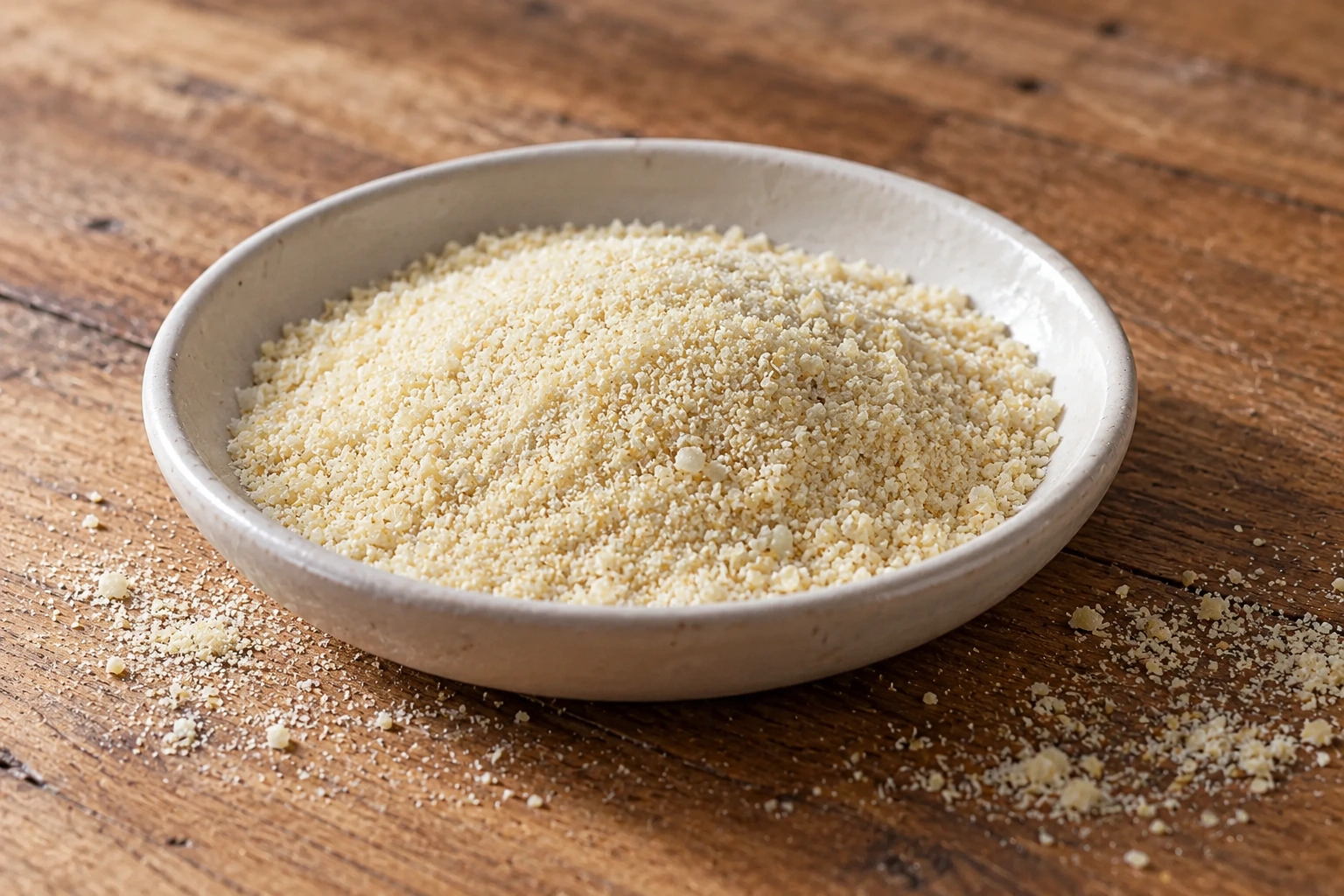
Raw coarse durum-wheat semolina
Coarse raw durum-wheat semolina is the dry, granular starting point for hand-rolled couscous. Choose a grind sold for incocciatura, then moisten, roll and steam it; it is not ready-cooked couscous.
- Grain
- Durum wheat.
- Form
- Coarse raw semolina for hand rolling.
- Preparation
- Incocciatura before steaming.
Moisten gradually
Work with small quantities in a wide bowl. Add the recipe’s salted water gradually while moving the fingers in circles, separating loose grains instead of kneading a dough. Use only the water the semolina takes up within the measured allowance. Steam and finish with broth as directed by the complete couscous recipe.
From milled grain to couscous
In the Trapani couscous method, coarse semolina is worked with small additions of salted water. Circular movements gather it into little grains before it is dried briefly and steamed. The granules in the finished dish are formed during this preparation, not simply poured from an instant-couscous packet. Italian millers also use the name semolone for a very coarse product intended for couscous. The useful purchase detail is its stated purpose and raw preparation, not a claim that every semolina has the same grind.
Leave space for the fish broth
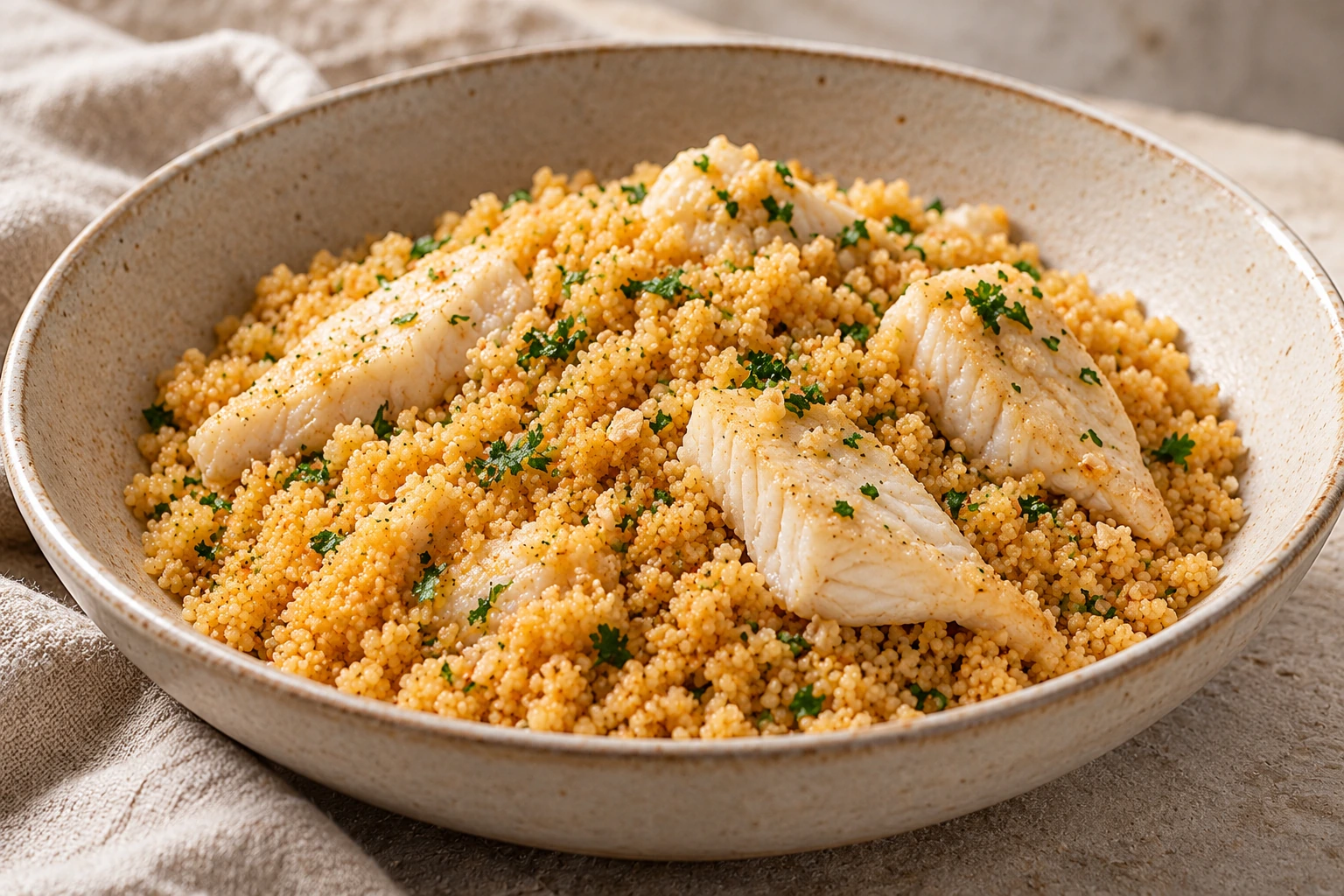
Cous cous alla trapanese receives fish broth after steaming. Keep the grains loose so the measured broth can be distributed through them. Adding all the rolling water at once makes it harder to control clumping; precooked couscous needs a different method.
Cook with it
Read past the name couscous
Ask for semola grossa or semolone di grano duro suitable for incocciatura. Check whether it is raw or already rolled, steamed and dried. Fine semolino for cooked mixtures and semola rimacinata for dough are different purchase forms. Check the actual product instructions before choosing.
Keep the dry grain protected
Close the bag or transfer the semolina to a clean, dry food container. Follow its label for storage conditions and use date, particularly after opening. Measure it with dry utensils and keep it separate from the water used for rolling until preparation begins.
