

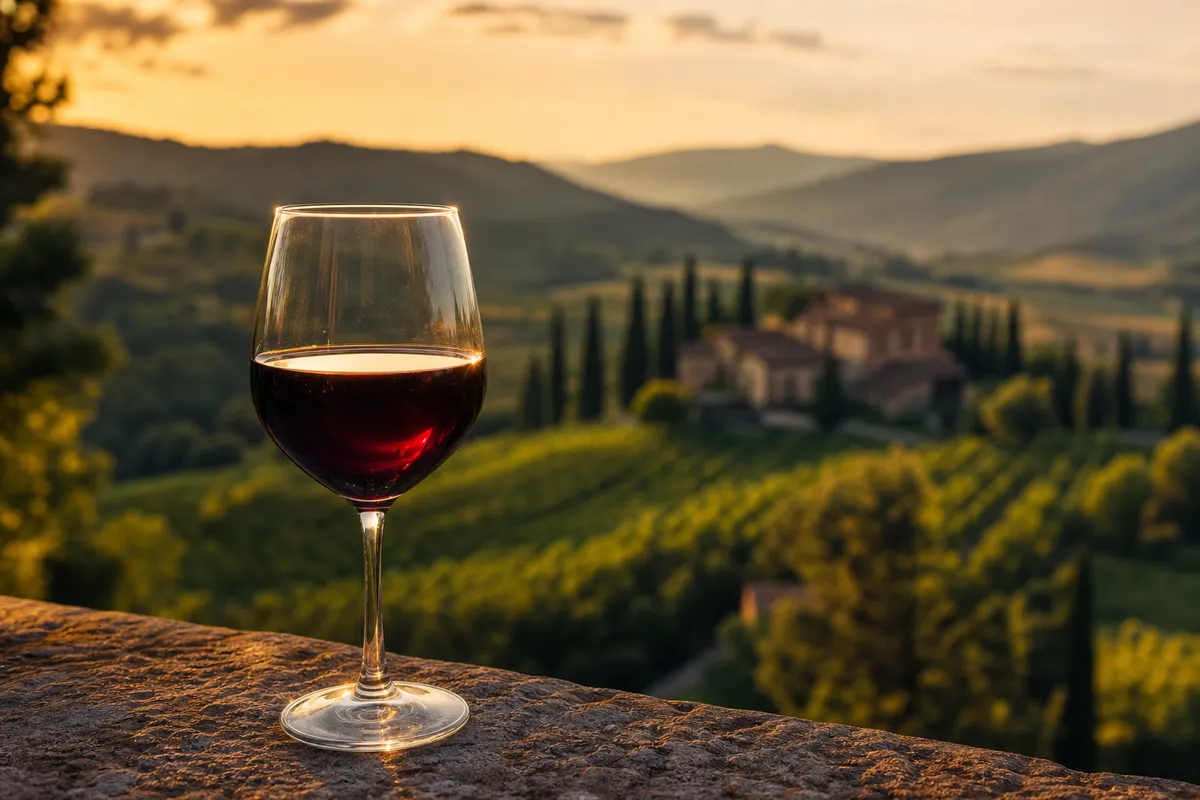
A hill town on the Via Flaminia
Sigillo is a small municipality in the province of Perugia, in the Umbrian Apennines, on the line of the Via Flaminia beneath Monte Cucco. It is a quiet place by design: a compact medieval core, a handful of churches with real artistic weight, a Roman bridge just outside town, and one of Italy's best-known mountain caves within reach. Come for an unhurried day among stone lanes and old frescoes, or use it as the gateway to the high country of the Monte Cucco park.
Sant'Andrea, the parish church
Sant'Andrea is the principal church of Sigillo and a living parish, which is the right way to approach it. Treat it as a place of worship first and a monument second: quiet voices, covered shoulders and a little patience if a service is under way.
Its origins are ancient. It began as a pieve near the old rocca, was rebuilt in the sixteenth century and rebuilt again in 1802, and today has a Neo-Renaissance interior with a broad apse. Inside are a sixteenth-century canvas of the Madonna of the Rosary with the Virgin and Child, a seventeenth-century walnut choir, and an eighteenth-century organ by Gaetano Callido whose case is decorated with singing angels.
The municipality presents it as the town's main religious building and stresses the nineteenth-century rebuilding that gave it its single nave and its Neo-Renaissance character.
Sant'Agostino and the old crypt
A few steps away, Sant'Agostino is the eighteenth-century answer to its neighbour. It was built between 1788 and 1791 to a design by Giacomo Cantoni on the site of the older church of Santa Caterina, and only that church's medieval crypt survives beneath it.
The facade combines brick with white stone, and the interior is unmistakably eighteenth-century, with handsome classical confessionals. In the apse hangs an Annunciation by Ippolito Borghesi, a seventeenth-century painter born in Sigillo and an important figure of Umbrian Mannerism. The park's local history notes that it is the only work he left in his home town, which makes the canvas a small pilgrimage for anyone interested in Umbrian painting.
The medieval crypt was restored by the municipality for cultural use, a nice reminder that in towns like this the oldest layer often hides directly under the newest one.
Villa Scirca and Santa Maria Assunta
The frescoes were the subject of a careful restoration. In August 2021 the diocese presented the restored paintings, five in all, made possible by private donors and the Lions Club of Gualdo Tadino. Two of them, a Saint Anne with Mary and the Christ Child and a Madonna of Mercy, are by Matteo da Gualdo; the other three are by unknown fifteenth- and seventeenth-century painters.
Monte Cucco, a shared regional park
Sigillo shares Monte Cucco with its neighbours. The regional park covers 10,480 hectares across Costacciaro, Fossato di Vico, Scheggia e Pascelupo and Sigillo, and the summit reaches 1,566 metres. That shared geography is worth remembering when you plan: the mountain belongs to all four municipalities, and Sigillo is simply one of the best doors into it.
The park was established in 1995 and its four municipalities line up along the Via Flaminia. The landscape alternates narrow valleys, pinnacles, terraces, gorges and gentle slopes, with old beech woods and holm oaks on limestone crags. The best known woodland is the Madre dei faggi, among the oldest beech woods in Italy, which covers 30 hectares at about 1,000 metres.
The regional register also ties Sigillo to three Natura 2000 sites: the summit of Monte Cucco, Le Gorghe and the Torrente Vetorno. In practice that means careful, low-impact walking, and respect for the habitats that earned the designation.
Underground: the Grotta di Monte Cucco
The visit begins at Pian di Monte, at about 1,197 metres, and the cave itself is entered at about 1,390 metres through the Pozzo Miliani, a 27-metre shaft fitted with a metal ladder. From there the route runs through huge halls, among them the Cattedrale, Sala Margherita, Sala del Becco and Sala delle Fontane, on steel stairs and walkways, and finishes with an eight-metre shaft climbed by marine ladder near the exit.
It is a magnificent place, and an honest one about its demands. The ladders, steps and mountain approach mean it is not suited to everyone, and this is an excursion to arrange with the cave's official guides instead of improvising.
Wind, trails and white water
Mountain weather changes quickly, so check conditions and the official operators before any flight, descent or cave visit. In an emergency in the mountains or in a cave, rescue is requested through the national emergency number by asking for CNSAS, giving your precise location and conditions, and you should never count on mobile coverage underground.
At the table in the Apennines
The Umbria DOP olive-oil specification includes Sigillo in the Colli Assisi-Spoleto geographical mention. That designation belongs to oil that carries the certification, so look for the DOP mark on the label rather than assuming every bottle qualifies.
More of Umbria
A letter from Italy, once a month.
The places, tables and makers we found worth your time. One email, no noise.
One letter a month. Unsubscribe at any time. We never share your address.