

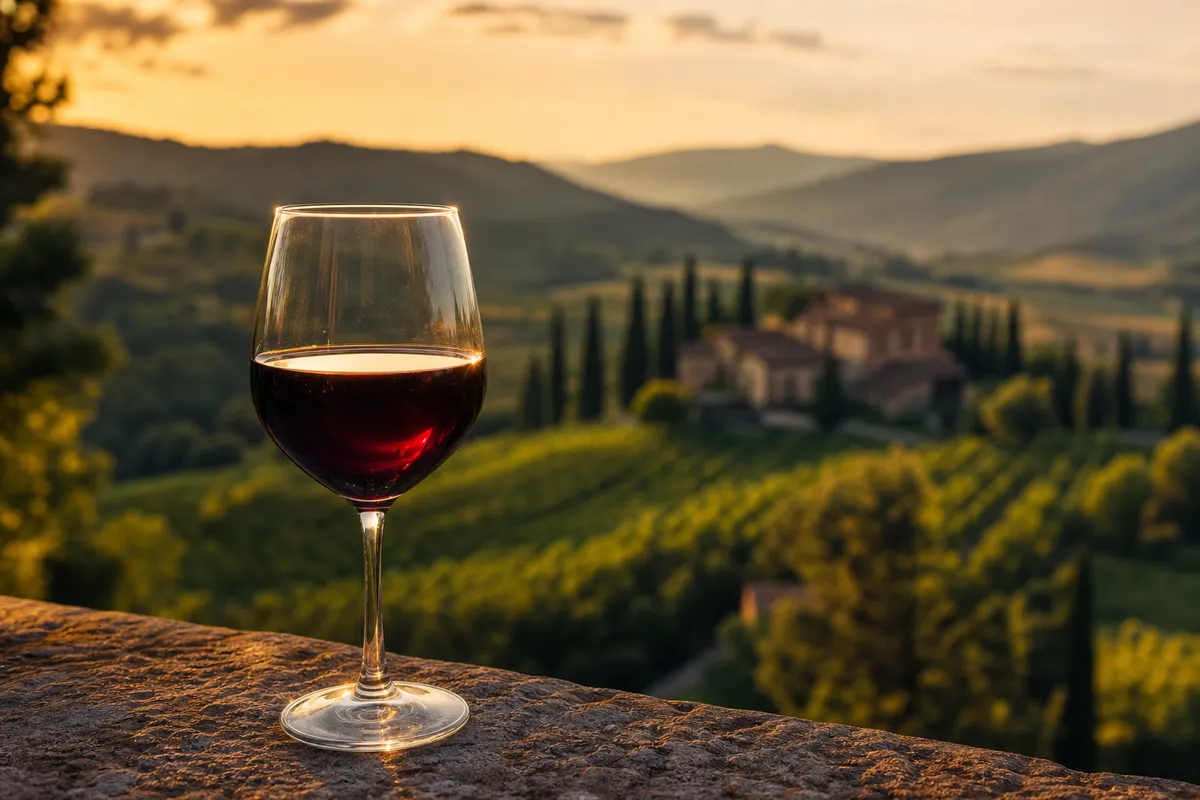
One municipality, many villages
Scheggia e Pascelupo is a mountain comune in the province of Perugia, and the name tells you how it came to be. Scheggia and Pascelupo were united on 8 November 1878, and Pascelupo, which had been a municipality of its own, became a frazione of the new whole.
Scheggia is the seat, and the territory is organised around five frazioni: Scheggia itself, Ponte Calcara, Isola Fossara, Perticano and Pascelupo. Each one gathers smaller hamlets, among them Valdorbia, Montebollo, Campitello and Coldipeccio. It is the last Umbrian municipality on the Via Flaminia as the road runs on toward Fano, and the most extensive one inside the Monte Cucco Regional Park. That shape suits a slow visit. Think of it as a string of villages, abbeys and river valleys rather than a single town, and give each stop its own quiet hour. A natural rhythm is to begin in Scheggia with the tower and the parish church, follow the valley roads toward the abbeys of Congiuntoli and Sitria, and keep the high country of the park for the days when you want trails and mountain air.
The Flaminia and the long road through the Apennines
Long before Rome, this stretch of the Apennines belonged to the Umbri. After the Battle of Sentino in 295 BC the pass took on real military weight, and the ancient station of Ad Ensem stood at Scheggia. Local history places an oracular sanctuary of Jupiter Penninus, later Romanised, probably at the Piaggia dei Bagni near Ponte a Botte. The word "probably" matters: the sanctuary is remembered more than it is seen, and the pleasure here is in standing where the old road squeezed through the mountains.
Ponte a Botte is the bridge everyone notices, with its great circular opening about 22 metres across. It was built in 1806, destroyed during the Second World War and rebuilt in 1946, so it is a story of modern engineering rather than Roman stone, and all the more interesting for standing on such an old corridor.
Scheggia's civic and sacred core
The Torre Civica anchors the old centre. It is the only survivor of four, perhaps six, towers that once stood along the walls of the fortified settlement, and its date is still debated: the eleventh century or the early fourteenth. Over time it served as a prison, a guardhouse and barracks, and after Italian unification it became the town hall. In the atrium you will find classical finds gathered across the municipality, including the stele of Caio Mesio, while column fragments rest on the paving outside.
Beside the tower stands the parish church of Santi Filippo e Giacomo, raised in 1535 by the people of the Castello di Scheggia. Earthquakes damaged it, and it was partly demolished and rebuilt between 1785 and 1790. The terracotta facade is framed by brick pilasters. Inside, a single barrel-vaulted nave opens to the presbytery through a triumphal arch. Look for the eleventh-century stone font that came from the ancient church of San Paterniano, the Renaissance tabernacle set above the main altar during the restorations of 1911-1912, and the two panels of Saints Philip and James attributed to Benedetto Nucci, the late Renaissance Umbrian painter (1515-1596). It is a working parish church, so the right mood is the one you would bring to any village church in Italy: unhurried, quiet and outside services.
Pascelupo, the round walled village
Pascelupo deserves more than the second half of a municipal name. The state archives record a late medieval community and then a municipality, and describe the Castrum Pascelupi as rising on a medieval fortification built by Gubbio. Its long life as an independent comune ended only with the merger of 1878. The village still keeps the circular plan of a walled medieval settlement.
Walk it for the shape rather than for a checklist. Pascelupo is a small place with a clear character, a medieval frontier settlement that rewards an unhurried visit more than a long itinerary.
Congiuntoli, Sitria and the monastic landscape
The valleys below Scheggia hold two of the most atmospheric monastic sites in this part of Umbria. The abbey of Santi Emiliano e Bartolomeo at Congiuntoli takes its name from a confluence, where the Rio Freddo meets the Sentino in a small valley. It was probably founded around 1050 and reworked in the later thirteenth century. The Gothic-Romanesque church has an unusual asymmetrical double nave, with arcades carried on octagonal pillars and a slightly raised presbytery. The last monastic community left at the end of 1596, and most of the complex passed to private owners in 1860. Traces remain on the wall of a fourteenth-century fresco of a nursing Madonna (Virgo Lactans) with saints, from the Rimini school; the painting itself is now in the civic gallery of Fabriano, and hints at what these walls once held.
Santa Maria di Sitria is older in spirit. Saint Romuald, the founder of the Camaldolese, established the abbey at the start of the eleventh century, and Saint Peter Damian, Saint Dominic Loricatus and Blessed Tommaso da Costacciaro are all remembered as guests. The Romanesque church of the twelfth and thirteenth centuries has a single barrel-vaulted nave and a raised presbytery. Below it, a crypt rests on one Roman granite column topped with a Corinthian capital, and beside the crypt is the so-called prison of San Romualdo. The monastery buildings next to the church are now largely ruined.
The archives add the later chapters: the monastery took in San Gaudenzio in 1483, was united with the abbey of Fonte Avellana by papal bull in 1836, and was eventually suppressed under Italian state law, its goods passing to private owners.
High above the Rio Freddo, the hermitage of San Gerolamo is best appreciated as a silhouette. The Romanesque hermitage was built in the eleventh century on a rocky spur, Blessed Tommaso da Costacciaro lived here in the late thirteenth century, and in 1521 it became one of the first hermitages of the Camaldolese of Monte Corona. Camaldolese monks still live there and the regional park states that it is not visitable, because enclosure is in force. Admire it from afar and let the silence stand.
Monte Cucco and its protected valleys
Monte Cucco Regional Park covers 10,480 hectares across four municipalities: Costacciaro, Fossato di Vico, Scheggia e Pascelupo and Sigillo. The summit of Monte Cucco reaches 1,566 metres. The mountain is shared, so think of Scheggia e Pascelupo as one of several doors into it, opening on the northern and eastern landscapes.
The regional register associates the municipality with three special areas of conservation: Gola del Corno di Catria, Valle delle Prigioni and Valle del Rio Freddo. The last two are shared with neighbouring Costacciaro. These are gorges, wooded valleys and cold streams, and they reward visitors who come to look and listen rather than to collect a summit.
Caves, gorges and old mines in this country are serious ground. For any mountain or cave emergency the national alpine and cave rescue service, CNSAS, asks you to call 118 and request CNSAS, or 112 where that service is active, and to give your precise location and the conditions. Mobile coverage cannot be taken for granted, so carry an offline map, tell someone your plan and leave technical descents and underground routes to qualified guides.
Food, feast and the Festa del Maggio
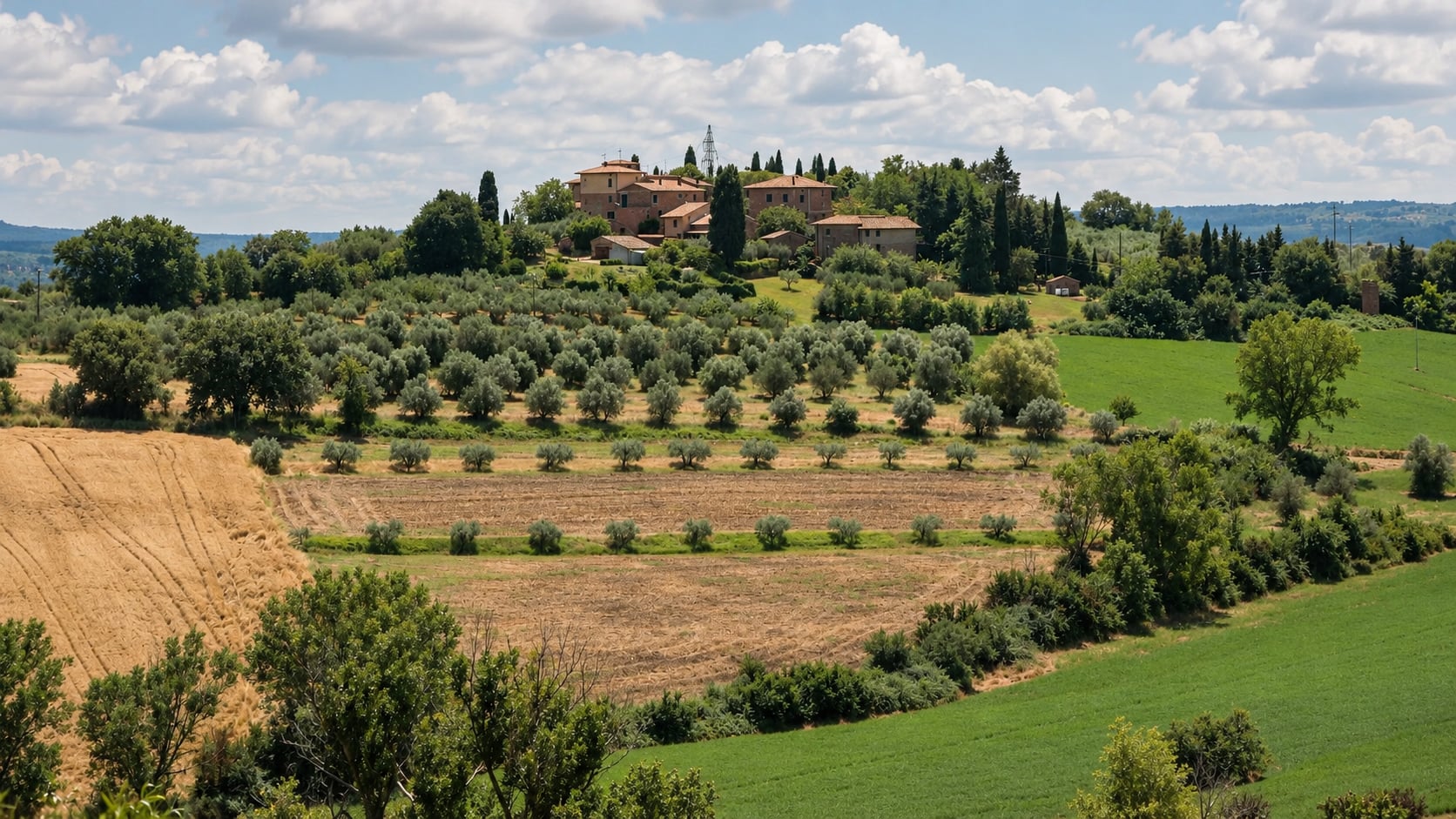
The municipality sits inside the Colli Assisi-Spoleto geographical mention of the Umbria DOP extra virgin olive oil. When you buy olive oil locally, look for bottles that carry the DOP mark.
The festival calendar brings the mountain into the village. The Festa del Maggio of Isola Fossara begins on the last Sunday of May, when villagers climb Monte Catria, fell two large beech trees, bring them up to the Passo del Catria and send them down the slope of some 650 metres to Isola Fossara. It ends on 13 June, the feast of Saint Anthony, when the trunks are raised as a decorated pole of roughly 20 to 22 metres. The timing follows the calendar, so it is worth checking the Comune or the local organisers for the exact programme before you plan around it.
More of Umbria
A letter from Italy, once a month.
The places, tables and makers we found worth your time. One email, no noise.
One letter a month. Unsubscribe at any time. We never share your address.