

A border municipality with several centres
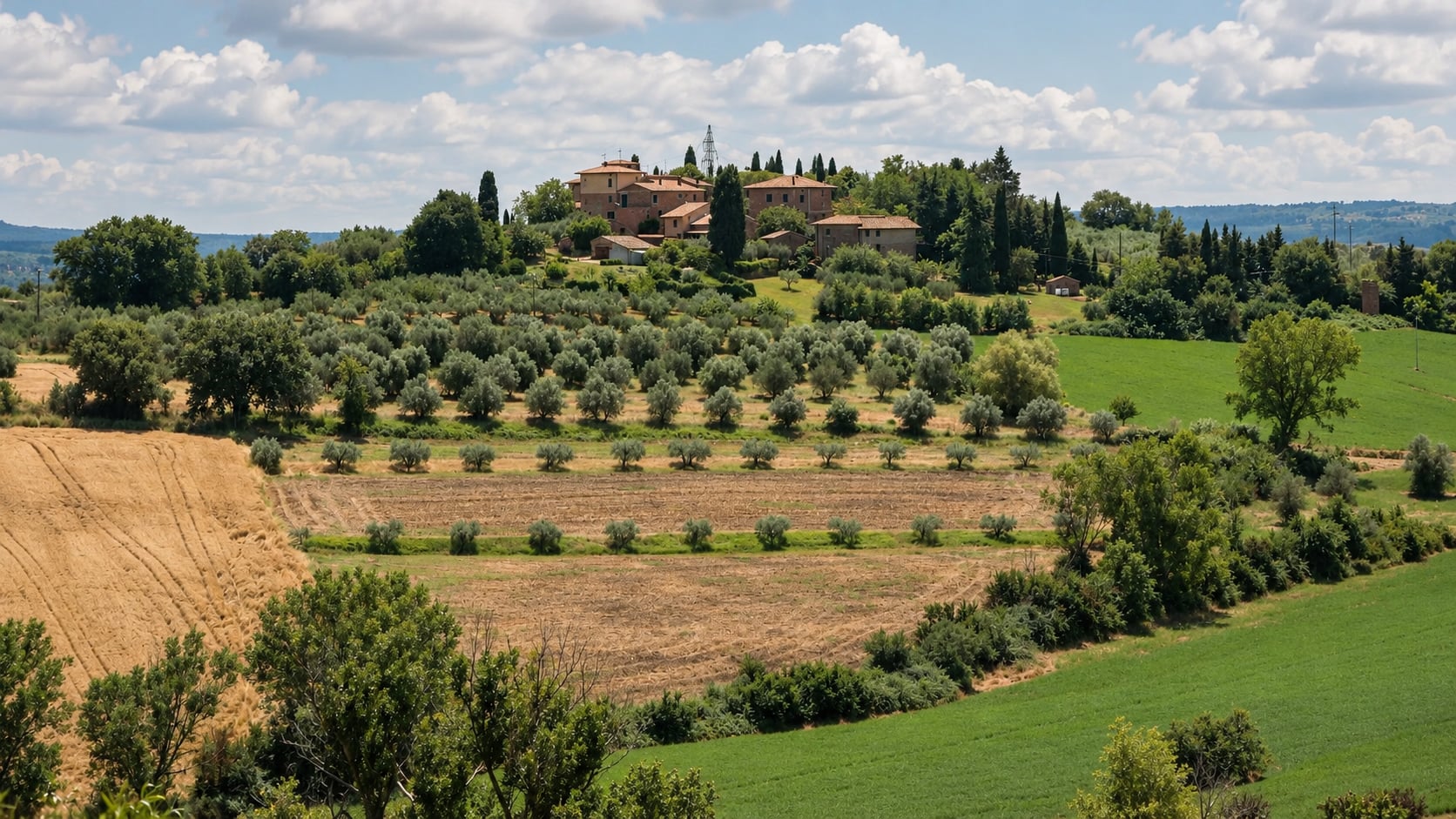
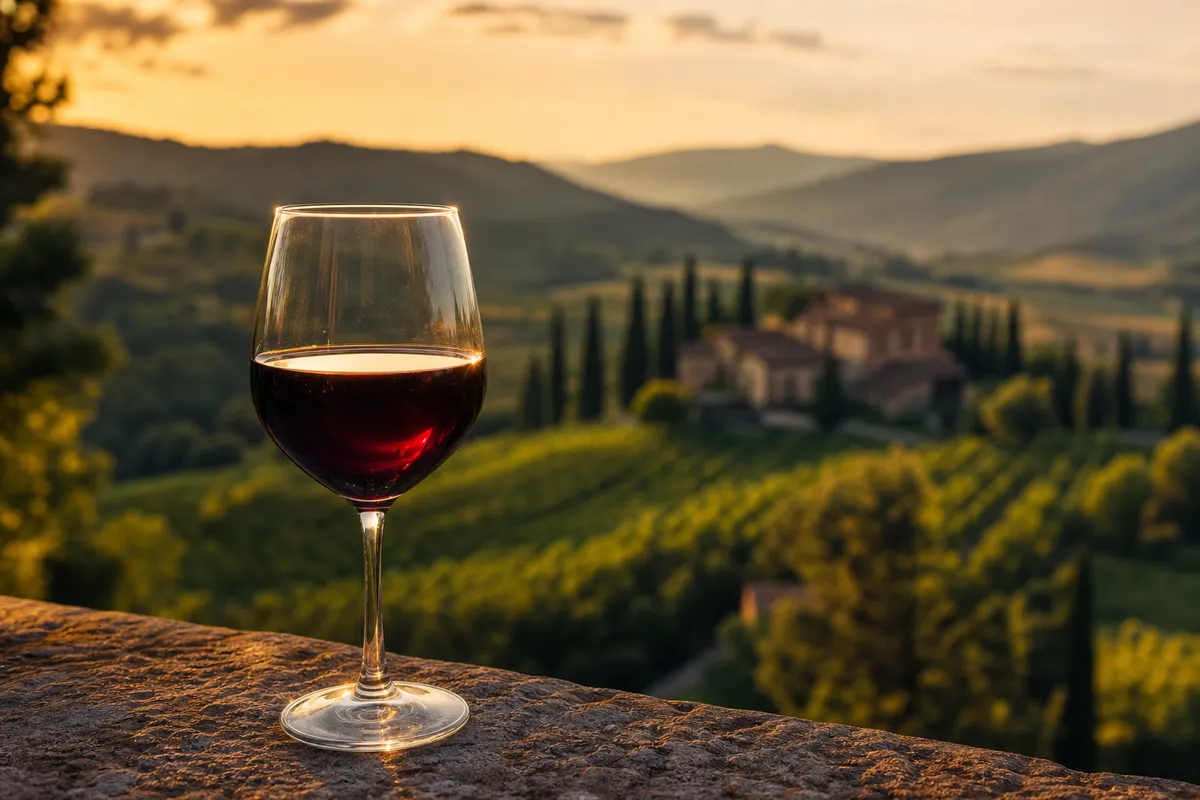
San Giustino is a municipality in the province of Perugia, and it is best enjoyed as a cluster of places rather than a single old town.
San Giustino takes its name from the Christian martyr Justin and is first documented in eleventh-century church records from Arezzo. In the late thirteenth century it was granted as a fief to the Dotti family, and in the fifteenth century it passed to the Bufalini.
Cospaia and its little free territory
Cospaia is the name everyone remembers. The archives trace its neutral zone to a pledge of 1441 and to two streams both called Rio, and its only known written motto is Perpetua et firma libertas. Suppression came with instruments of 1825 and 1826, followed by the status of appodiato, a dependent district, in 1827. It is a wonderful story to carry with you.
Cospaia's economy rested on grain and tobacco, grown there from the sixteenth century. With no taxes or customs duties, the little republic traded freely, and its tobacco was carried into neighbouring states by sturdy smugglers known as spalloni.
The Sentiero del Contrabbandiere, the Smugglers' Trail, gives the landscape a physical scale. It is a 12.5 kilometre circuit that starts at the borgo of Cospaia at 373 metres, crosses Umbria, Tuscany and Marche, climbs through Monte Garrole at 659 metres to its highest point at Poggio Sportino at 861 metres, descends by Cà Fiume and Corposano, and returns to Cospaia by the church of San Lorenzo.
San Lorenzo is a restored church on the historic hill above Cospaia, between the hill and old Apennine routes, in territory that belonged to the independent Republic of Cospaia, whose prosperity came from tobacco. Its paths connect with the ancient routes that linked Monte Giove with Montecasale near Sansepolcro, where Francis of Assisi stayed and preached for a long time, and they were also used by smugglers carrying contraband tobacco across the border. It is a modest church of rustic simplicity. Uselle, a restored church of a former Benedictine monastery, adds a second quiet stop. A wooden Madonna and Child from the fourteenth or fifteenth century, called the Madonna del Parto, came from Uselle and is kept in the diocesan museum at Città di Castello.
Castello Bufalini
Castello Bufalini began as a frontier fortress, a military stronghold of the Ghibelline Dotti family of Sansepolcro, destroyed near the end of the fifteenth century on the order of the Florentine Republic. After it passed to Niccolò di Manno Bufalini in 1487 it was rebuilt to a design by the Roman architect Mariano Savelli, and from the 1530s it was transformed into a nobleman's home, a change the Comune attributes to the Florentine architect Giovanni di Alesso, called Nanni Unghero. In the late seventeenth century the complex was reworked as a country villa with an Italian garden.
The rebuilt castle was a quadrangular fortress with four corner towers and a water-filled moat, planned with the military engineers Giovanni and Camillo Vitelli. Among its painted rooms are those frescoed by Cristofano Gherardi, along with the Stucchi Chamber and the bedroom of Cardinal Giovanni Ottavio Bufalini, with its ornate cradle.
The fortified mass survives, while a monumental entrance, a loggia and rooms around a porticoed courtyard give the interior its Renaissance grace. The State acquired the castle in 1989, and it now operates as a state museum.
The collection is unusually broad, with original furnishings, an archaeological collection, a library and a family archive, along with paintings, majolica table services, crystal and frescoed rooms.
The Bufalini family archive, kept at the castle, spans 1142 to 1979, which makes it a rich resource for scholars.
The garden is a designed historic landscape in its own right. It is organised in seven areas and includes a boxwood labyrinth of roughly 670 square metres, whose layout is documented by a plan of 1706. Two cypresses at the entrance were planted in 1694.
Villa Graziani, Museo Pliniano and Colle Plinio
Villa Magherini Graziani is a municipal building at Celalba, commissioned by Carlo Graziani and designed by Antonio Cantagallina in the early seventeenth century, with a loggia, walled grounds, a garden and the chapel of Santa Maria Lauretana of 1622.
The Museo della Villa di Plinio il Giovane in Tuscis is an archaeological museum hosted inside the villa. It interprets the research at Colle Plinio.
The dig is at Campo di Santa Fiora, on Colle Plinio. The Comune describes the excavated productive part of a Roman villa, with a complete bath installation, a portico, a shrine interpreted as dedicated to Ceres, storage cells and large dolia. Movable finds, including inscription, mosaic and brick fragments and everyday objects, are gathered and displayed at the museum in Villa Graziani.
Tobacco, print and water power
The Museo Storico Scientifico del Tabacco occupies the former tobacco growers consortium complex, with its offices, drying sheds and sorting rooms. It follows cultivation, leaf selection and treatment, manufacturing, labour and the economic emancipation of women, which makes it a thoughtful social-history museum rather than a tribute to smoking.
Tobacco became the main income of the largely agricultural population of the Upper Tiber valley, and the former Republic of Cospaia, which lasted from 1441 to 1826 and is now part of San Giustino, was the first place where it was cultivated and valued before it spread to neighbouring lands. It gave hundreds of women an economic independence they had never known. The Tobacco Growers' Consortium was set up in San Giustino in 1927, and the foundation behind the museum dates from 1997.
A second industrial museum sits inside an operating plant at Selci Lama. The Pliniana print-works museum preserves historic machinery, type, printing blocks and production knowledge.
The works was founded in 1913 by Don Ruggero Fiordelli as a branch of the Leonardo da Vinci typographic company of Città di Castello, and it is named after Pliny the Younger, who owned a villa in the area. It sought formal rigour and elegance in its printing and worked with universities, academies and prestigious publishers.
Water power completes the trio. The Comune describes Mulino Renzetti as a medieval watermill documented from the seventeenth century. Its horizontal ritrecine wheel has sixteen oak paddles and takes its water from the Parnacciano stream.
The mill stands not far from the archaeological site of Pliny the Younger's villa, so it pairs naturally with a morning at Colle Plinio. It was one of 26 watermills in the Upper Tiber at the start of the twentieth century, which gives a sense of how much of the valley once ran on water.
Churches and a small-town theatre
The Archpriest Church of San Giustino is a living church, and worship comes first. Its Greek-cross crypt is built of river stone with four columns, two of African marble whose proposed origin at Colle Plinio is only a scholarly view. A holy-water font beside the crypt entrance is reported to have been made from a pedestal from the lost church of San Pietro in Botina.
The Church of the Santissimo Crocefisso is a late seventeenth-century building. Behind its high altar stands an anonymous wooden crucifix that the Comune dates to the late sixteenth century, set among Marian canvases and Baroque stucco.
At Selci, the early twentieth-century Giabbanelli theatre is tied to a band association founded in 1901.
Olive oil, wine and local specialities
Umbria DOP extra-virgin olive oil includes the territory of San Giustino in its olive-production zone, with the geographical mention Colli del Trasimeno. Look for the Colli del Trasimeno mention on the label if you want to taste oil from this zone.
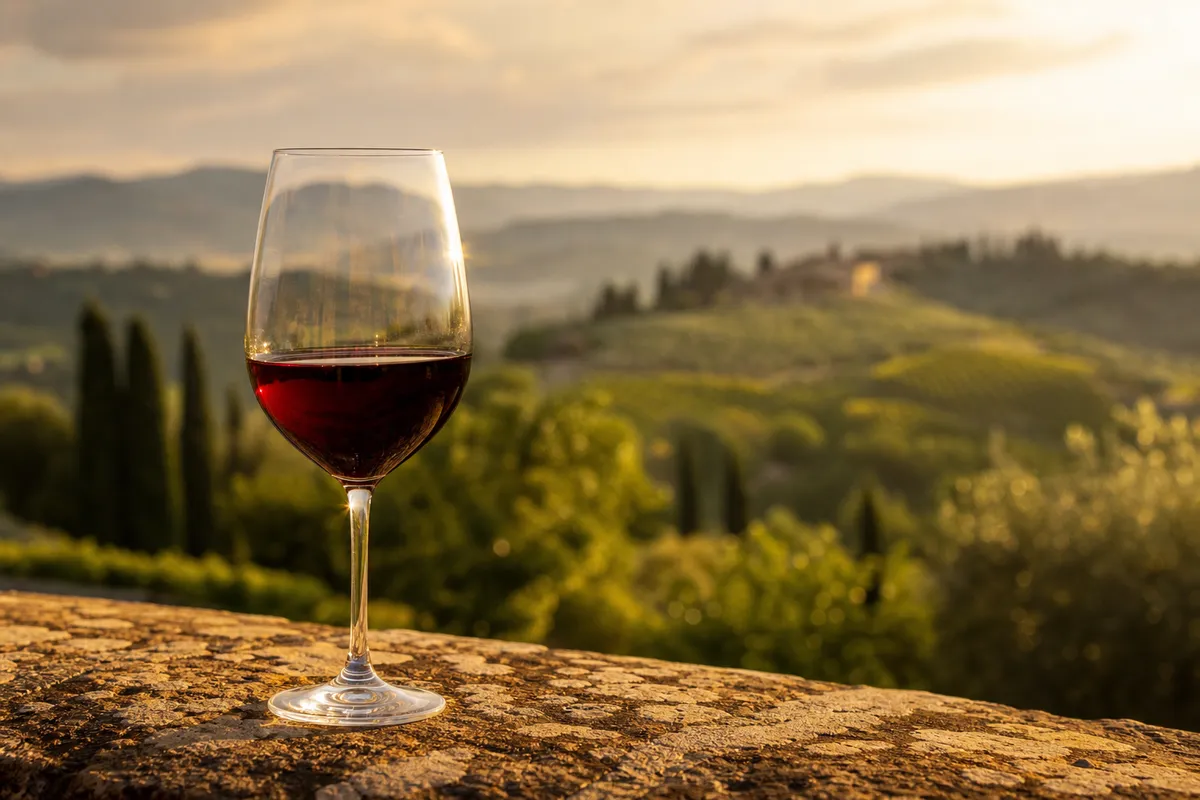
The specification for Colli Altotiberini wine includes suitable lands in all or part of San Giustino, and the denomination is among the Umbria DOC wines. The Vitellone Bianco dell'Appennino Centrale IGP covers the province of Perugia, which contains San Giustino.
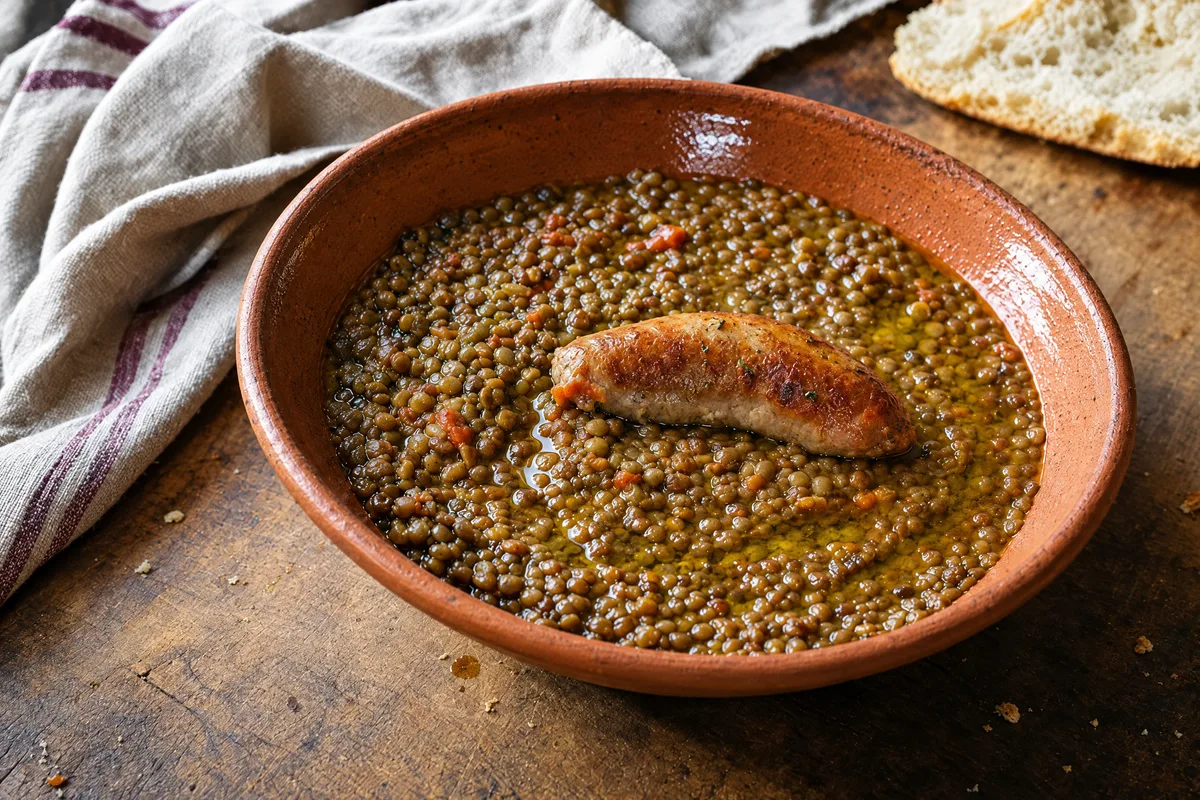
Lama hosts a Festa della Gota. The festival is a pleasant way to meet the local table.
Putting a visit together
Give Castello Bufalini an unhurried morning, and pair it with the villa and the Museo Pliniano for an archaeological afternoon. Save the tobacco and print museums for a day on industrial history, and keep Cospaia and its trail for good weather and a full day. Opening days, bookings and access change, so confirm them with the castle, the Comune or the museum operator before setting out.
More of Umbria
A letter from Italy, once a month.
The places, tables and makers we found worth your time. One email, no noise.
One letter a month. Unsubscribe at any time. We never share your address.