



A municipality of many places
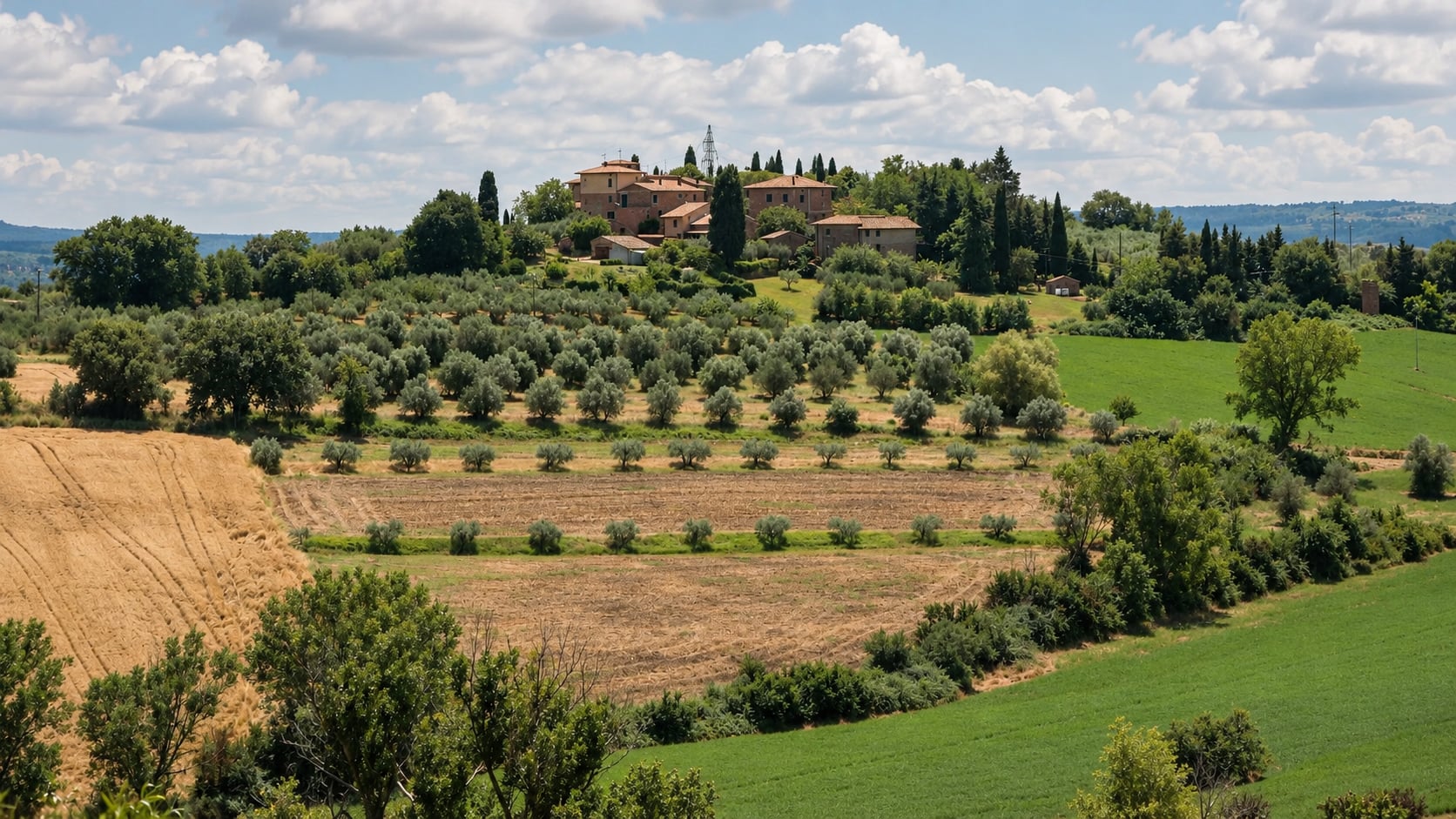
Preci is not one compact destination with a single monument. It is a municipality in Umbria, in the province of Perugia, whose cultural weight is distributed across a hill center, two valleys, a large network of villages, protected landscapes and a celebrated abbey. Come for the pattern: small places, each legible against woods, slopes and cultivated clearings, held together by the mountains.
The municipal statute names Preci and then distinguishes fifteen frazioni from twelve località e centri minori. The frazioni are Abeto, Acquaro, Belforte, Castelvecchio, Collazzoni, Corone, Montaglioni, Montebufo, Piedivalle, Poggio Di Croce, Roccanolfi, Saccovescio, Todiano, Valle and Villa Collescille. The localities and minor centres are Casali Cordella, Casali di Montebufo, Casali di Roccanolfi, Cervara, Fiano di Abeto, Le Cascine, Le Moie, San Gaetano, San Lazzaro, San Vito, Vallecascia and Villa del Guado. A frazione is a village within the municipality rather than a town of its own, which is why the map of Preci reads as a constellation.
That footprint explains why a visit focused only on the capoluogo would miss most of the story. Preci is the orientation point, but Piedivalle contains Sant'Eutizio, Corone sits within the Campiano valley, and Abeto, Todiano, Montaglioni, Roccanolfi, Saccovescio and the other settlements carry their own churches, defensive remains and works of art.
Reading the capoluogo
The historic center is compact and steeply set above the Valle Campiana. Its value lies less in grand interiors than in the relationship between the settlement form, the surrounding valley, the palaces associated with families of historical practitioners and the small sacred buildings embedded in the urban fabric. The municipal inventory names the Madonna della Peschiera and refers to a mill in Borgo Preci.
Look first at the silhouette and the approach, then at the street structure, masonry, thresholds and views toward the valley. The town rewards slow looking over box-ticking.
Preci sits at 596 metres above sea level in the Valle Castoriana, which links the Forca di Ancarano to Ponte Chiusita, in a limestone landscape rich in karst springs. The valley's name is traced either to pagan worship of Castor and Pollux or to a landowner called Castorius, and Pope Gregory the Great called it Vallis Campli.
Borgo Preci belonged to the holdings of the Abbey of Sant'Eutizio and served as a commercial hub for the castle and the surrounding villages, with a mill complex by a mule path. The church of the Madonna della Peschiera, built in 1600, stands beside trout-farming basins in use since the seventeenth century.
According to local tradition, Preci was founded at the end of the fifth century by the Syrian monk Eutizio. A text of Gregory the Great from 594 mentions pre-Benedictine hermitages in the area, and the first settlement probably grew around one of them. In the thirteenth century Preci fell within the territory of Norcia and, after an attempted rebellion, was destroyed; it was rebuilt in 1533 by order of Pope Paul III, but only after a formal act of submission to Norcia. Pope Pius VII later separated it from Norcia and gave it the title of commune, which it kept when Umbria joined unified Italy in 1860.
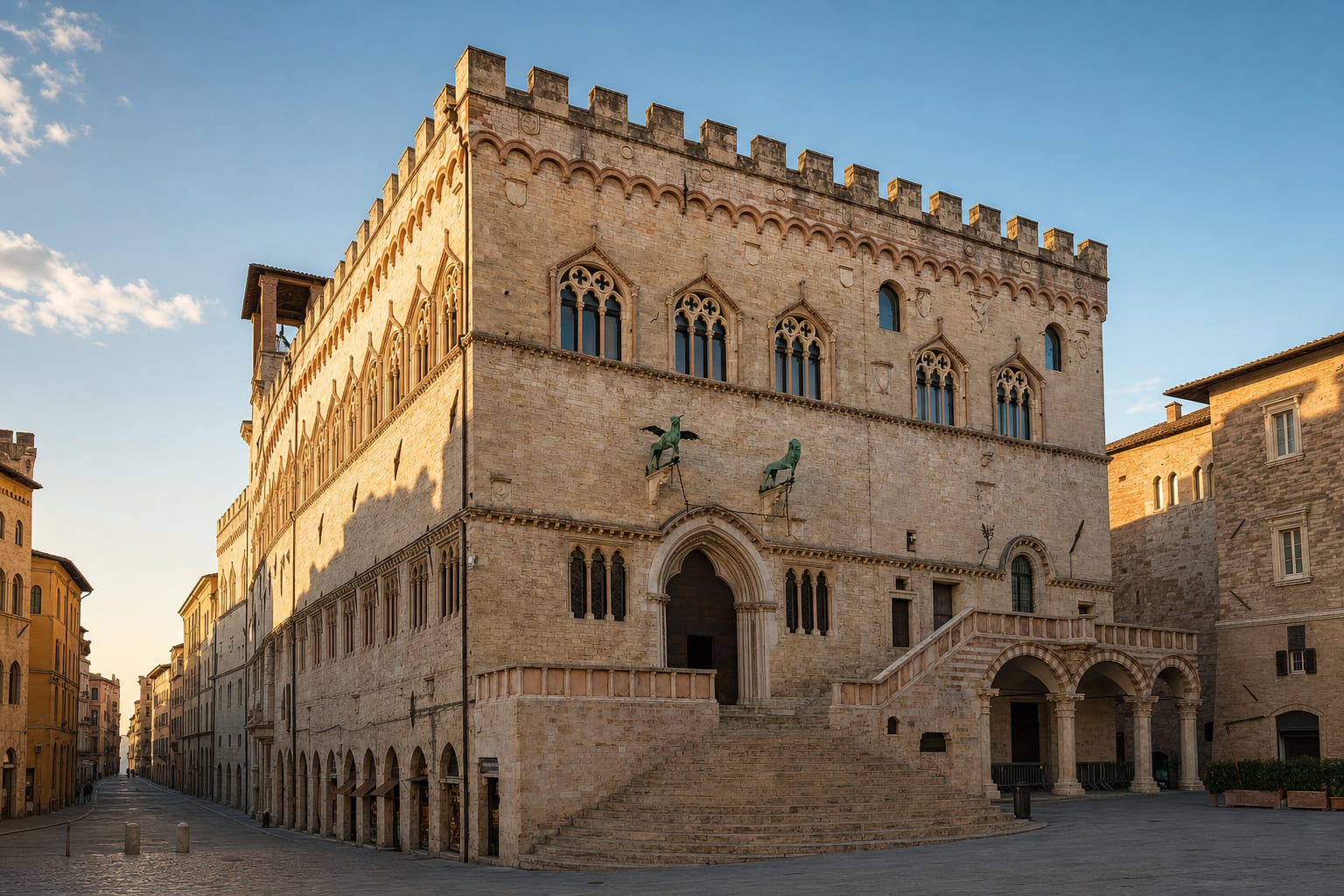
In the historic center the Town Hall stands on the main square. The castle dates from the fourteenth century and was destroyed and rebuilt several times. The Church of Santa Caterina has a fine Gothic portal in a Romanesque facade, and the Church of Santa Maria holds a fifteenth-century Pietà and a sixteenth-century baptismal font.
The villages
Village by village, the heritage thickens. Abeto is associated with a fortified origin and the Church of San Martino, and Fiano di Abeto with rock-cut tombs. Montaglioni is associated with a castle, a gate, walls and the Church of Santa Maria, Roccanolfi a tower and Sant'Andrea, and Saccovescio the churches of San Spes, Santi Pietro e Spes and Santa Maria della Neve. Todiano keeps a fortified gate and stretches of walls, along with the Madonna della Porta.
Regional landscape plans point to archaeological traces across the municipality, at Grotte d'Abeto, Saccovescio, Casaletto Benedetti, Monte San Pietro, Montebufo, Villa Collescille, Castelvecchio, Corone, Roccanolfi, Fiano di Abeto, Sant'Eutizio and Scoglio della Grotta: funerary areas, movable finds, settlements, cult structures and traces of use. Together they show how many layers of human presence this valley holds.
Sant'Eutizio
Sant'Eutizio is the most important place in Preci's cultural story. The church, the parish, the former monastic complex and the abbey museum each have their own story: BeWeB records a parish church and separately the parish at Piedivalle, and the Ministry records the museum as a cultural venue.
The Benedictine Abbey of Sant'Eutizio was built in three successive stages between the tenth and fourteenth centuries, over the tombs of Syrian monks who came to these remote valleys in the fifth century to live as hermits. It became an important monastery, with an oratory, lodgings for pilgrims, a pharmacy, a school of paleography and miniature painting, a scriptorium and a library of illuminated manuscripts.
The 2016 earthquakes gravely damaged the church of Sant'Eutizio. One major component of its recovery has a clear, finished result. On 12 December 2025 the restored rose window was returned to the facade. Its fragments had reached the Santo Chiodo cultural-property depot in 2018, where they were selected, restored and reassembled. Three leather altar frontals taken to the same depot after the earthquake were restored through an Art Bonus project. The rose window is one milestone in the recovery of a wider complex that includes the church, the former monastery and the museum.
The abbey stands beneath a travertine cliff, and the recovery has included a study of an active and capable fault and of the local seismic response of the abbey and the rock face above it.
The abbey museum
The Ministry's description of the Abbey Museum lists rooms devoted to the abbey treasury, Abbot Crescenzi, the Precian surgical tradition, a pharmacy and an alchemical laboratory. The collection spans reliquaries, liturgical furnishings, silver, embroidery, embossed leather and a wooden sculpture of Sant'Eutizio.
An ICCD catalogue entry describes a green silk chasuble dated 1700 to 1725, now localized in Spoleto, whose notes report an origin at the Pieve di Santa Maria di Preci.
The surgical tradition
The Precian surgical tradition is more interesting than the familiar legend. The Ministry's description of the museum documents it from the twelfth through the eighteenth century, with a sixteenth-century high point, and associates its practitioners with inguinal hernia, eye conditions including cataract and urological conditions including calculi. A practitioner named Berardo di Cambio of Poggio Di Croce is recorded as active in 1384.
The surgeons' trade travelled. Rural hardship sent the people of Preci seasonally to Florence and the Tuscan coast and to Rome, where they practised surgery, including stone removal and eye surgery, as well as meat processing.
According to a Regione Umbria project sheet, the documentation center in the former Church of Santa Caterina, set up with original objects and copies, found shelter at the Santo Chiodo depot after the 2016 earthquake.
The park and Natura 2000
Preci belongs in the Monti Sibillini story, but the whole municipality does not lie inside the national park, which spans sixteen municipalities.
The park has no fenced entrance and no general admission ticket. Its trail network separates official routes, which the park manages directly, from historical or wilderness traces that it does not.
Natura 2000 adds further layers. The Valle di Campiano ZSC covers about 54 hectares wholly within Preci, in the Campiano stream valley between the capoluogo and Corone, while the Monti Sibillini site on the Umbrian side involves both Norcia and Preci.
Food and protected products
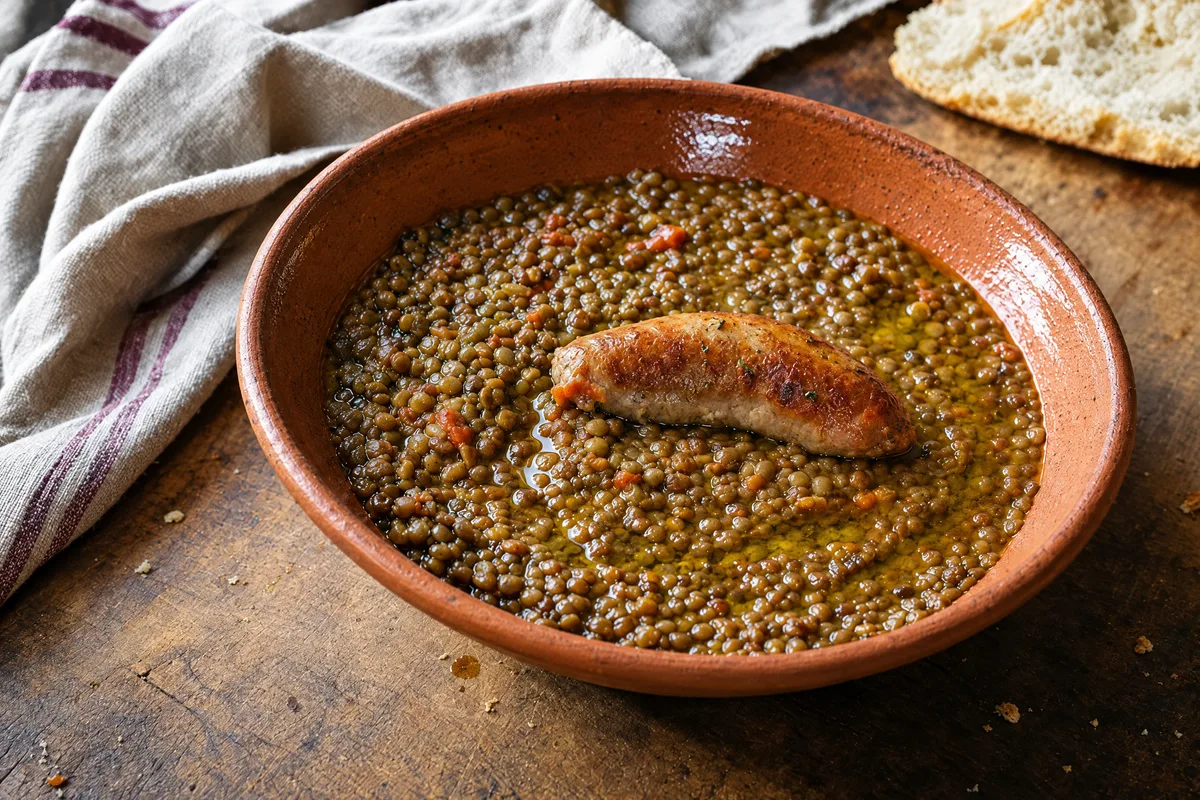
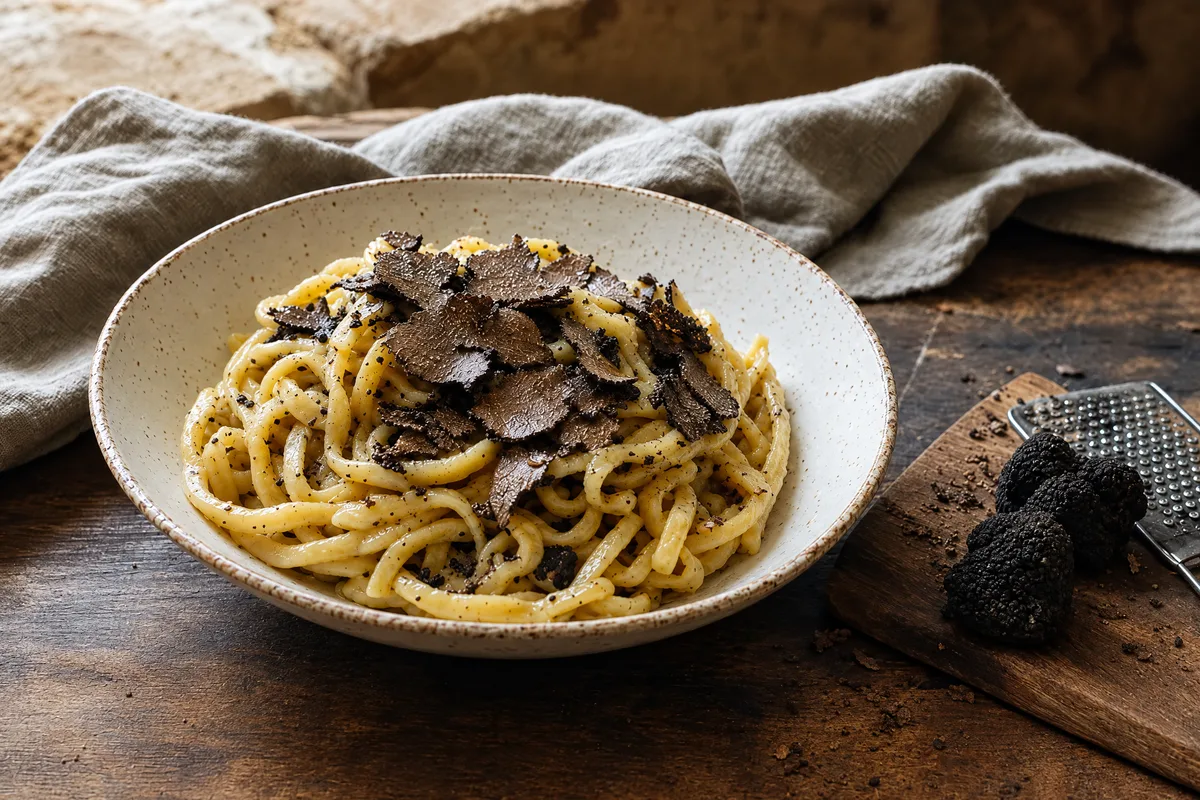
Three protected designations name Preci. The Prosciutto di Norcia IGP specification includes processing in Preci only in territory above 500 metres. The Caciottone di Norcia IGP specification includes Preci's census and administrative boundaries in its production area, and the official Umbria PAT sheet for Tartufo nero pregiato, Tuber melanosporum, names Preci in the traditional production territory.
More of Umbria

A letter from Italy, once a month.
The places, tables and makers we found worth your time. One email, no noise.
One letter a month. Unsubscribe at any time. We never share your address.