

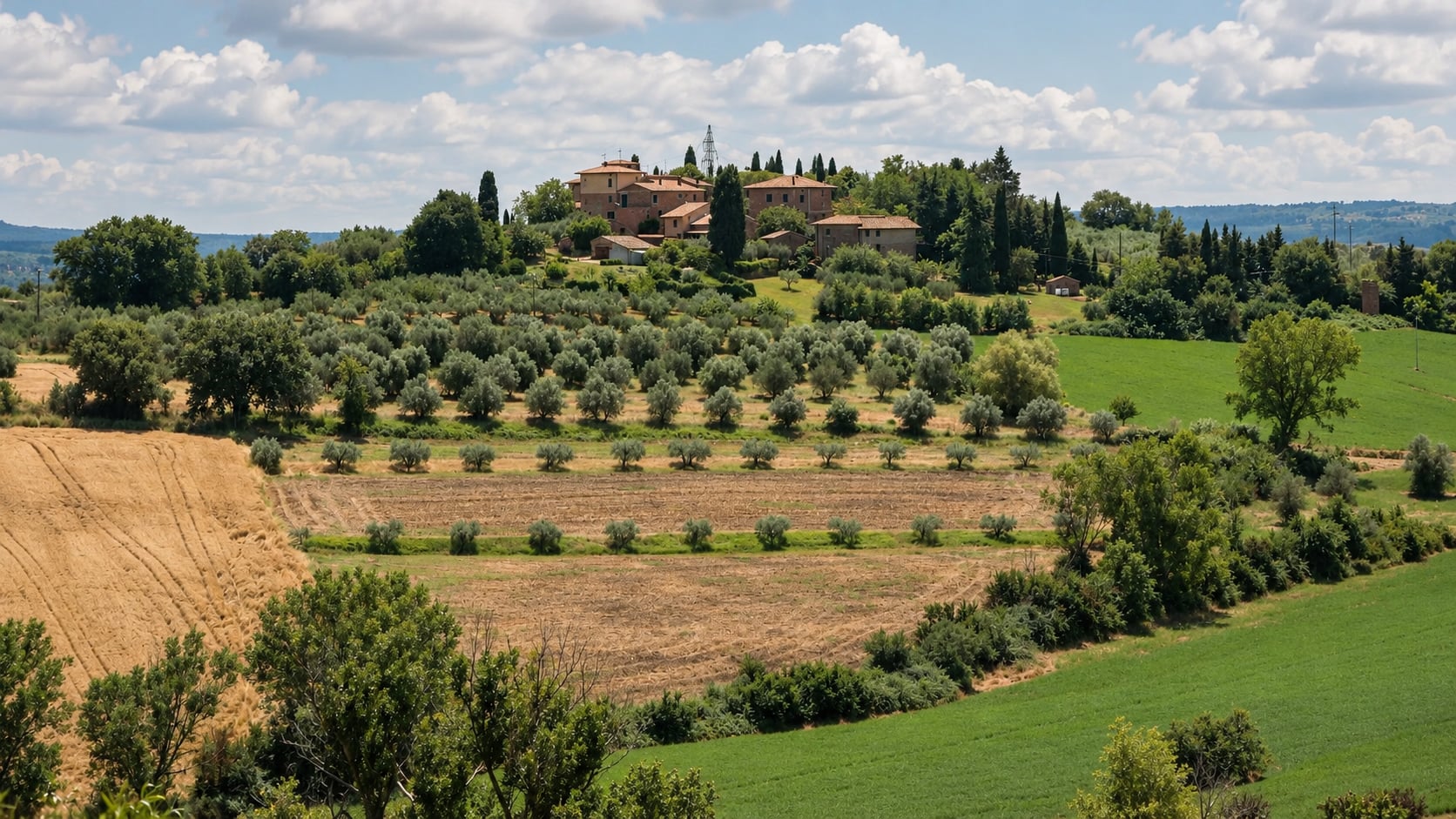

A hill town on the edge of the Volsini
The ancient nucleus of Porano reads as a compact village of lanes, a parish church and small civic spaces, with newer housing and open country beyond. It is a place to wander slowly rather than to tick off.
The Comune also keeps a historical archive of 340 units covering the years from 1517 to 1948, a reminder that this small hill town has been recording its own affairs for five centuries.
San Biagio, the parish church
San Biagio is at once a historic church building and the seat of a living parish. The church is documented from the Middle Ages and was substantially altered in later centuries, so what you see is the work of many centuries rather than one.
San Biagio, bishop and martyr and protector of the throat, is Porano's patron saint and is honoured on 3 February. The traditional Alzata dei Santi is the solemn display of relics behind the main altar, with festive bells and singing that explains the origin of each relic. The relics venerated in Porano include those of San Biagio and of the co-patrons Bernardino and Giacinto, along with relics of the Virgin Mary, Saint Joseph and the Holy Cross.
Castel Rubello and Porano's country estates
It is one of eight historic villas, parks and gardens that a regional survey lists in Porano: Seminario, Il Bottino, Villa Fumi, La Molinella, Villa Cervaiola, Castel Rubello, Villa Paolina (also known as Crognolo) and Piancastello.
Villa Paolina, from monastery to park
Villa Paolina, also known as Villa del Corniolo, was built in 1706 by the marchese Giovan Battista Gualtiero as a summer residence for prelates, on the site of an earlier monastic structure. The Viti Mariani family transformed it from 1874, the Casini family held it afterwards, and the Province of Terni acquired it in the 1980s.
The house has a central block with two side wings, arched windows, nineteenth-century interiors and a gallery decorated with grotesques. The park of about nine hectares follows an orthogonal layout of straight axes and includes a lemon house, a farmhouse and a semicircular exedra. Etruscan tombs of the fourth century BCE were found within the grounds, where layers of history sit one on top of the other.
The villa belongs to the Province of Terni and is the seat of a research institute of the national research council, CNR, devoted to terrestrial ecosystems. It is a working scientific place with a historic park around it, not a museum.
The tomb of the Hescanas
The Hescanas tomb is a painted Etruscan chamber tomb of the Hellenistic period. An inscribed urn names Vel Hescanas, and wall inscriptions name Laris Hescanas, who is shown on a chariot with horses. The scenes describe a journey to the underworld, with winged deities and togate figures playing wind instruments, and they refer to the high office of zilath, a symbol of the family's political standing. Unlike the Golini paintings, these remain in the tomb where they were made.
A regional archaeological survey lists five areas of interest in Porano: Seminario, Belvedere, Molinella or Paterazzo near Castel Rubello, Settecamini and La Torretta. The last three are linked to research on Etruscan tombs and scattered finds.
Landscape and the Orvieto connection
Three regional landscape protections under Article 136 of the heritage code cover parts of Porano: a zone facing Orvieto, the hills around the village, and the village with its surroundings. They are separate designations.
The link with Orvieto runs through all of this. The hills facing the city are protected as landscape and the detached Golini frescoes are kept in its archaeological museum, so the two places are best read together.
Oil, wine and pampepato
Porano's whole territory falls within the Colli Orvietani geographical mention of Umbria DOP olive oil, so the groves around the village belong to a protected oil zone.
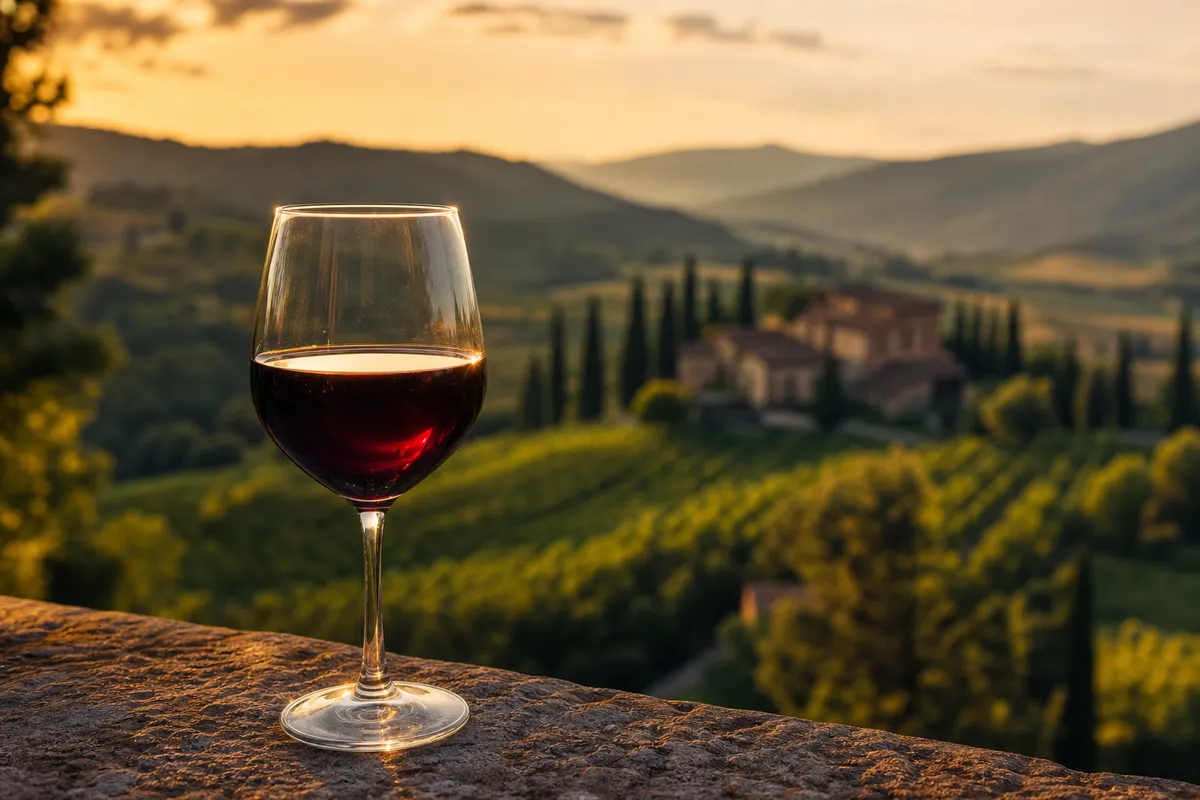
The Orvieto DOC specification lists Porano among the municipalities covered in whole or in part, and it defines the Classico subzone separately. When you choose a bottle of Orvieto, check whether the label says Classico, which refers to a separately defined subzone.
Pampepato di Terni, also written Panpepato di Terni, is a protected baked confection of nuts, chocolate, raisins, candied fruit, cocoa, honey, coffee, spices and flour. Its production area covers the whole province of Terni, which includes Porano.
From village church to Etruscan tombs
The most satisfying way to read Porano moves from the inhabited centre to the quieter places beyond it. San Biagio introduces a community still gathered around its parish church; Villa Paolina brings the cultivated landscape of a historic residence; and Settecamini opens a far older Etruscan horizon through painted funerary chambers. Within a short distance, Porano moves from parish life to villa culture and ancient burial practice without losing the intimacy of a small Umbrian comune.
More of Umbria
A letter from Italy, once a month.
The places, tables and makers we found worth your time. One email, no noise.
One letter a month. Unsubscribe at any time. We never share your address.