

Cradled in the high Sibillini mountains, Norcia is the birthplace of Saint Benedict and the heart of Italy's charcuterie tradition; the word norcineria still means a fine pork butcher.
Its prized lentils and black truffles complete the larder.
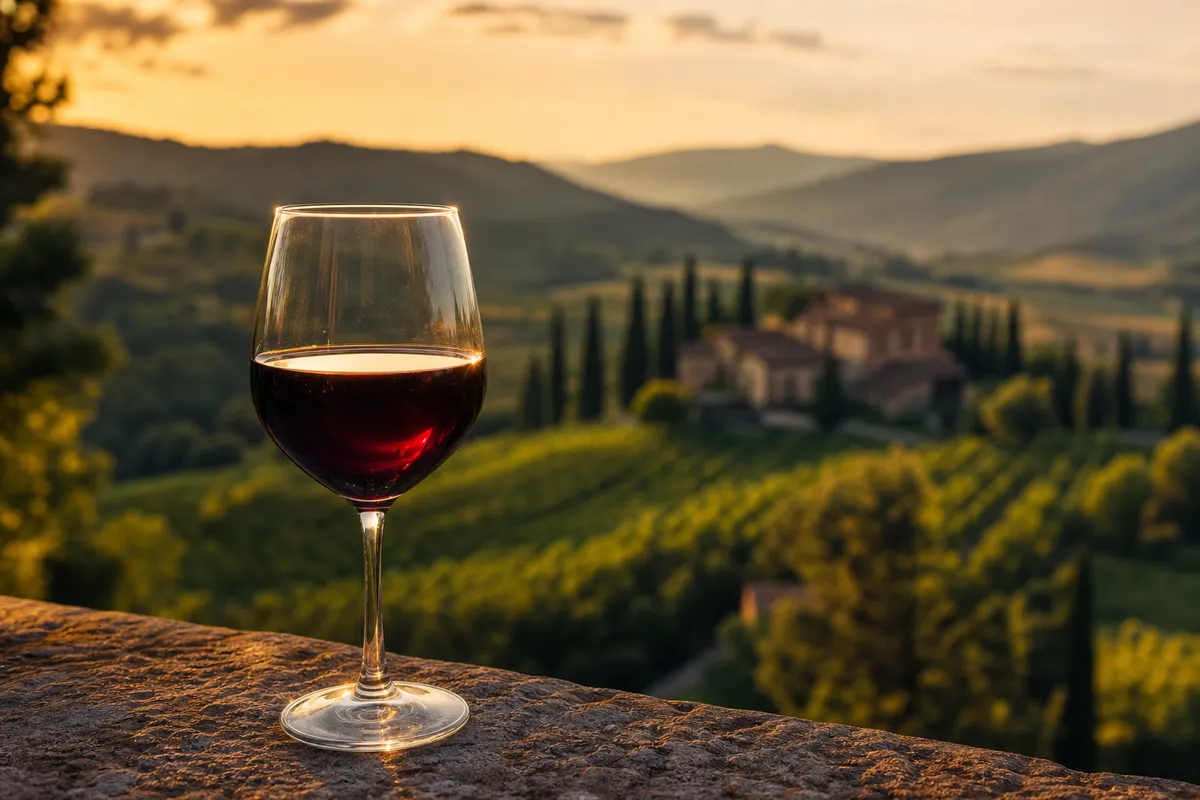
Norcia in a nutshell
Norcia is both a compact walled town and the administrative centre of an unusually large mountain municipality. A first visit starts in and around Piazza San Benedetto, where the reopened Basilica of San Benedetto, the restored Palazzo Comunale, La Castellina, the monument to the saint and the post-earthquake streets make the town's history immediately legible. It should not end there. The municipality reaches across the Piana di Santa Scolastica to 25 frazioni, including Castelluccio and its high plateau, as well as Campi, Ancarano, San Pellegrino, Savelli, Serravalle, Forca Canapine and smaller settlements whose recovery and services differ sharply.
Norcia has rebuilt after earthquakes many times, most recently after those of 2016, and recovery is part of the town's character. The Basilica of San Benedetto, Palazzo Comunale, Porta Romana and Teatro Civico are all back in use, while other buildings, stretches of wall and frazioni are recovering at their own pace.
Nursia: archaeology before legend
Ancient Norcia is conventionally identified as Nursia. Its story begins not with a single legendary founding but with material evidence from the basin and the town: pre-Roman settlement and the remains of Roman public architecture.
After the 2016 earthquakes, movable heritage from Norcia entered a rescue, storage and restoration programme that included the Santo Chiodo repository and the National Archaeological Museum in Spoleto. So a Roman find linked to Norcia may well be shown somewhere else: where an object was found and where it is displayed are two different questions.
Benedict, Scholastica and the basilica
The Holy See places Benedict's birth in Norcia around 480 and honours him as Patron of Europe. His later life, at Subiaco and then Monte Cassino, belongs to those places, but it begins here.
Scholastica is remembered by Church tradition as Benedict's sister. The archdiocese is candid that Gregory the Great's Dialogues, the early source for both saints, are edifying narratives rather than modern critical biography, so the stories are best enjoyed as tradition.
The Basilica of San Benedetto stands over Roman remains in the centre of town. Its crypt is traditionally identified with the birth house of Benedict and Scholastica; the archaeology shows a Roman public building beneath the church, which is not the same as a family home. The difference takes nothing from the basilica's importance. It simply tells you where evidence ends and tradition begins.
The earthquake of 30 October 2016 brought the basilica down almost entirely. Recovered material was catalogued and reused in the reconstruction. The completed work was presented on 30 October 2025, and the church was dedicated and returned to worship on 31 October 2025. As in any working church, Mass and prayer come first, so visit quietly and dress modestly.
The abbey on the hill and the saints' relics
The Basilica of San Benedetto and the Abbey of San Benedetto in Monte are two different institutions in two different places. The abbey occupies the restored Santa Maria della Misericordia complex on the mountainside above the town and became an abbey in 2024. It is a working monastic community, and the enclosed monastery is a place of prayer rather than a sightseeing stop.
The basilica's relics belong to the same devotional story. For the 2025 reopening, the archdiocese announced that the Saint Benedict reliquary would be placed in the presbytery under a protective case and video surveillance, and recorded that a relic of Saint Scholastica was brought to the basilica on 29 October 2025 and set in the right-transept altar.
The civic centre after reconstruction
Piazza San Benedetto is not a frozen medieval set. It is the civic and religious heart of a town that has repeatedly rebuilt. Palazzo Comunale, a building of medieval origins and later transformations, was inaugurated on 19 April 2026 after a restoration that incorporated seismic isolation.
Teatro Civico reopened on 24 May 2026 after structural, architectural, acoustic and functional work, and is again a venue for performances, concerts and civic events. It is a working theatre rather than a museum, so the easiest way in is an evening's programme.
Porta Romana was restored and reopened in 2024 and is one of the clearest completed gateways into the historic centre. Other stretches of the walls, between Porta Romana and Porta Orientale, belong to a later stage of reconstruction, so the circuit is best read section by section.
La Castellina and its collections
La Castellina, the fortress on Piazza San Benedetto, was built in 1554 to a design by Jacopo Barozzi da Vignola for Pope Julius III as a fortified residence for papal governors. It became the seat of the Mountain Prefecture in 1569, housed municipal offices from 1860 and has been a museum since 1967.
It is the historic home of the Museo Civico e Diocesano, whose collections are civic, diocesan, archaeological and the Massenzi holdings. Among the works associated with the museum are the polychrome wooden Saint Giuliana, stone figures attributed to Giovanni Dalmata, Annunciation sculptures attributed to Luca della Robbia, and a group of Roman material including inscriptions, funerary stelae, milestones and honorific bases.
The municipality beyond the walls
Norcia's 25 frazioni are Agriano, Aliena, Ancarano, Biselli, Campi, Casali di Serravalle, Castelluccio, Cortigno, Forca Canapine, Forsivo, Frascaro, Legogne, Nottoria, Ocricchio, Ospedaletto, Paganelli, Pescia, Piediripa, Popoli, San Marco, San Pellegrino, Sant'Andrea, Savelli, Serravalle and Valcaldara. They differ sharply in size, services and pace of recovery.
Regional landscape planning reads the area as several related landscapes rather than one town centre: Norcia and the Piana di Santa Scolastica, Castelluccio and the Sibillini chain, the Campiano valley, and Cascia.
The Piana di Santa Scolastica, with its marcite and their water channels, springs, mills, rivers and farmland, works as a system rather than a single landmark, and it rewards slow exploration. Watch for farm traffic and road crossings, and remember that most of the land is private and best enjoyed from public roads and paths.
Castelluccio and the Piani
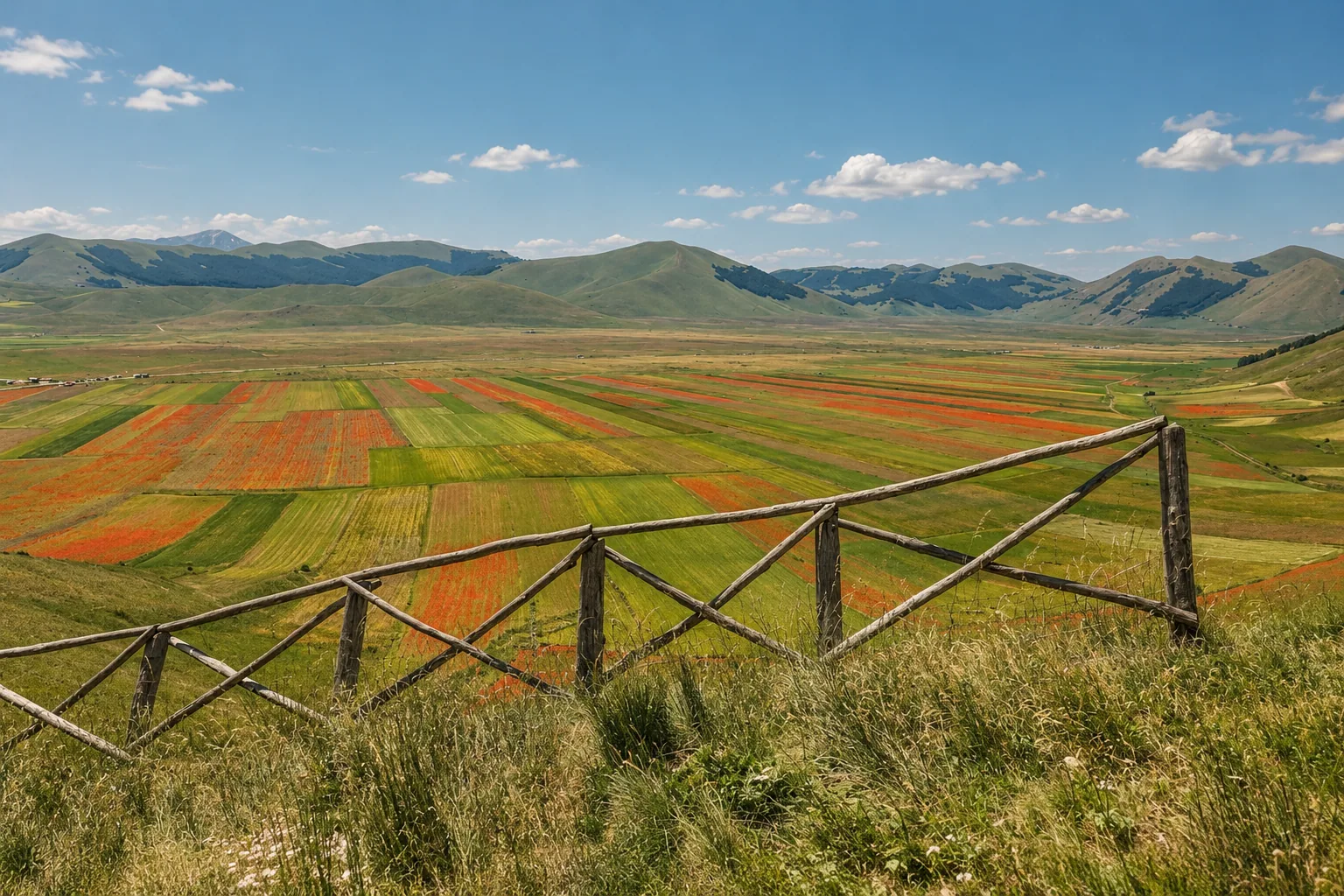
Castelluccio is a village at high altitude. Below it, the Piani di Castelluccio comprise Piano Grande, Pian Piccolo and Pian Perduto. The first two lie in Norcia, while Pian Perduto belongs to Castelsantangelo sul Nera, in Marche; none of the three is the village itself.
The celebrated Fiorita, the flowering of the plateau, follows the weather rather than the calendar. The Park says peak bloom is generally around the last week of June, though weather can shift it by days. Please never walk into crops for photographs, park on meadows, block farm access or fly a drone without authorisation.
Monti Sibillini and mountain responsibility
Monti Sibillini National Park covers about 70,000 hectares across two regions and 16 municipalities. It has no single entrance and no general admission ticket. Norcia opens onto important western sectors, but it is one park municipality among many, and places on the Marche side belong to their own towns.
Routes in the Sibillini are not interchangeable. A valley walk, a plateau road, a cycling climb, a high ridge, a winter outing and the approach to Monte Vettore differ in distance, gain, exposure, surface, snow, water, shade, phone coverage and rescue time. Park rules restrict drones and motor traffic and may limit bicycles to authorised routes.
Before you drive or walk into the high country, check Regione Umbria alerts, the Park's notices and a route-specific forecast, then choose an outing that suits the least experienced person in your group. The town, the Castelluccio plateau and the high Sibillini are three different weather zones: in winter and the shoulder seasons snow, ice, wind and short daylight can turn a familiar summer track into a serious undertaking, and in summer heat, storms and little shade matter.
Norcia sits in the central Apennine seismic landscape. Italy's Civil Protection Department states that the exact time and place of earthquakes cannot be predicted, so the sensible approach is ordinary preparedness: follow official instructions, note the exits of your accommodation and keep clear of fenced or damaged structures.
Norcia's table: lentils, ham, truffle and farro
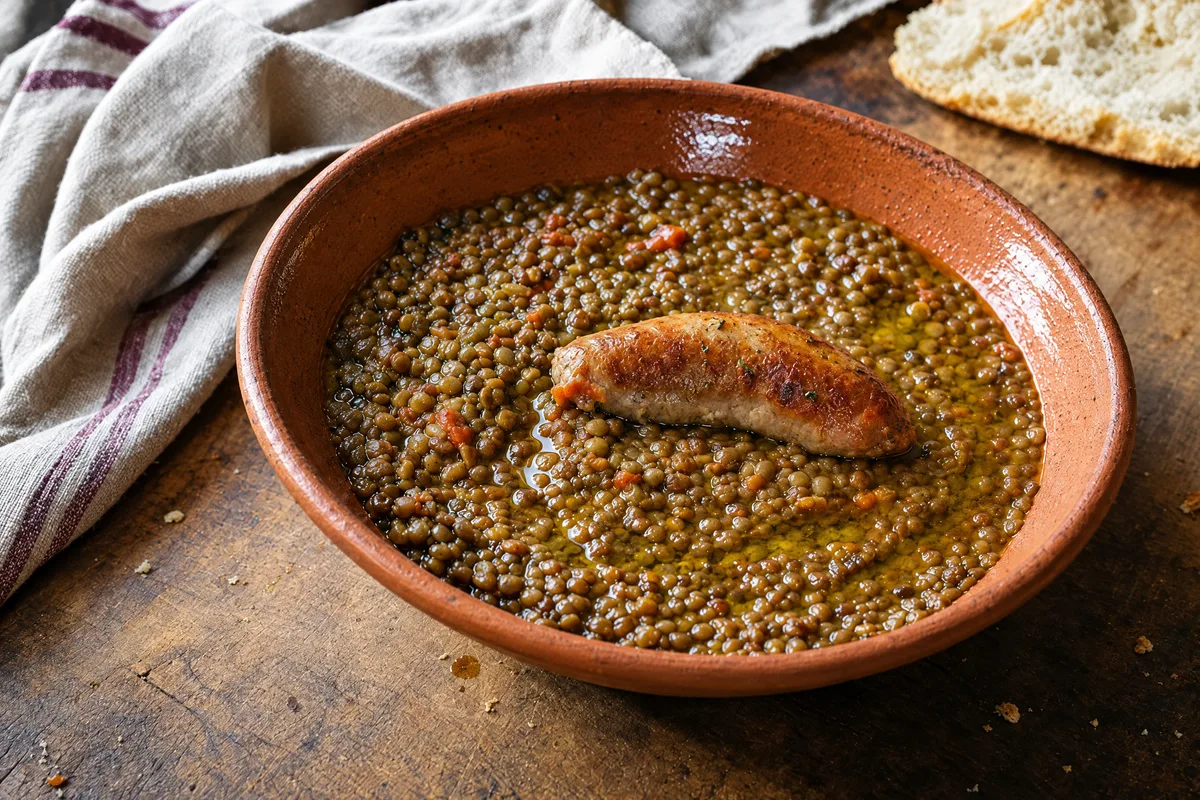
Lenticchia di Castelluccio di Norcia IGP has a precise home: the Castelluccio plateau, about 20 square kilometres at an average elevation of 1,400 metres. Piano Grande and Pian Piccolo lie in Norcia and Pian Perduto in Castelsantangelo sul Nera. The name belongs to lentils from that plateau, not to every lentil grown in Norcia, so it is worth asking for the label or the producer when a menu claims the IGP.
Prosciutto di Norcia IGP protects a different chain. The ham must be processed above 500 metres in qualifying territory of Norcia, Preci, Cascia, Monteleone di Spoleto and Poggiodomo, and the specification sets no geographic limit on where the pigs come from. It means cured in the protected mountain zone, not born and raised in Norcia.
Norcineria is broader than that one ham. It names the craft of pork butchery and cured meats, historically linked to Norcia and the professional norcino. Capocollo, salami, sausages and guanciale can belong to local practice without following the ham's IGP rules, and a butcher's shop in town does not by itself prove local slaughter, protected origin or traditional method.
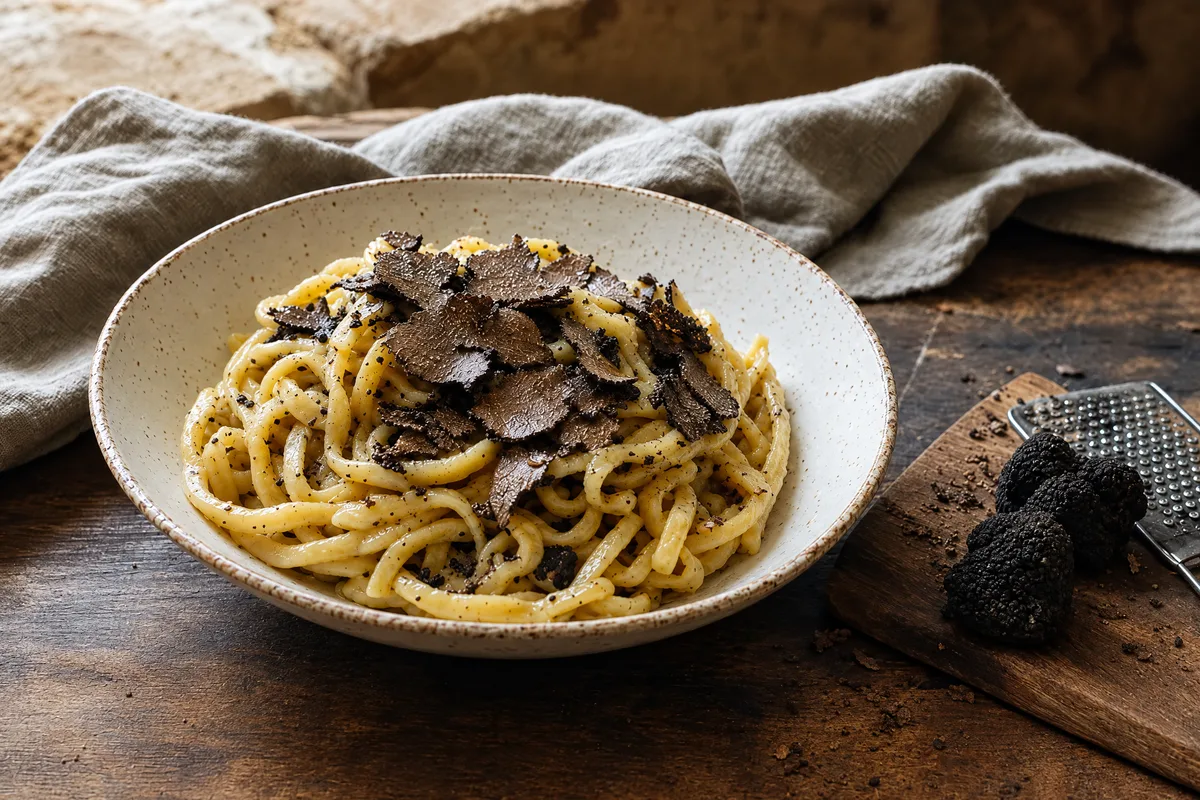
Regione Umbria identifies the prized black truffle as Tuber melanosporum and places Norcia within a wider traditional production territory. It is not a Norcia-exclusive PDO or PGI, and a menu phrase such as "black truffle" does not by itself tell you the species or the place of harvest.
Farro di Monteleone di Spoleto DOP belongs to a separate protected zone: the whole of Monteleone di Spoleto and Poggiodomo, plus parts of Cascia, Sant'Anatolia di Narco, Vallo di Nera and Scheggino at 700 metres or above. Norcia is not in the zone. It is sold and served in Norcia, but it is not a Norcia-grown designation.
Three ways to spend your time
The historic centre is the first. Its scale invites walking, and Piazza San Benedetto is the natural orientation point, because it puts civic government, Benedictine devotion, museum history and reconstruction in a single view.
The Piana di Santa Scolastica is the second. It is more than open countryside outside the walls: regional planning treats the plain, its marcite, channels, springs, mills and settlements as one identity system, and it suits an unhurried drive or cycle with stops in the smaller villages.
Castelluccio and the high country are the third. Distance, elevation, weather, farming and Park rules all shape the day. A sunny morning in Norcia says little about ridge weather, and a beautiful field is still someone's crop.
With one day, choose between the centre with its Benedictine sites, the frazioni, or the high mountains rather than trying for all of them. A longer stay suits three modular days: the centre and its story of reconstruction; the plain, its archaeology and its farmland; and a Castelluccio or mountain day chosen for its own weather.
How Norcia rebuilt
Norcia's recovery is easiest to read in its buildings. At San Benedetto, recovered fabric and new construction share the same walls, and the story runs from surviving facade through collapse, salvage, cataloguing and reconstruction to the dedication of 2025. Palazzo Comunale and Teatro Civico followed in 2026, and Porta Romana in 2024.
The measure that matters most is everyday life. A restored monument can reopen while nearby houses, streets or frazioni are still being rebuilt, and a reopened theatre can host the community before every collection has come home. Recovery here is about schools, shops, worship and the ordinary life of the people who live in Norcia.
More of Umbria
A letter from Italy, once a month.
The places, tables and makers we found worth your time. One email, no noise.
One letter a month. Unsubscribe at any time. We never share your address.