

A municipality of many villages
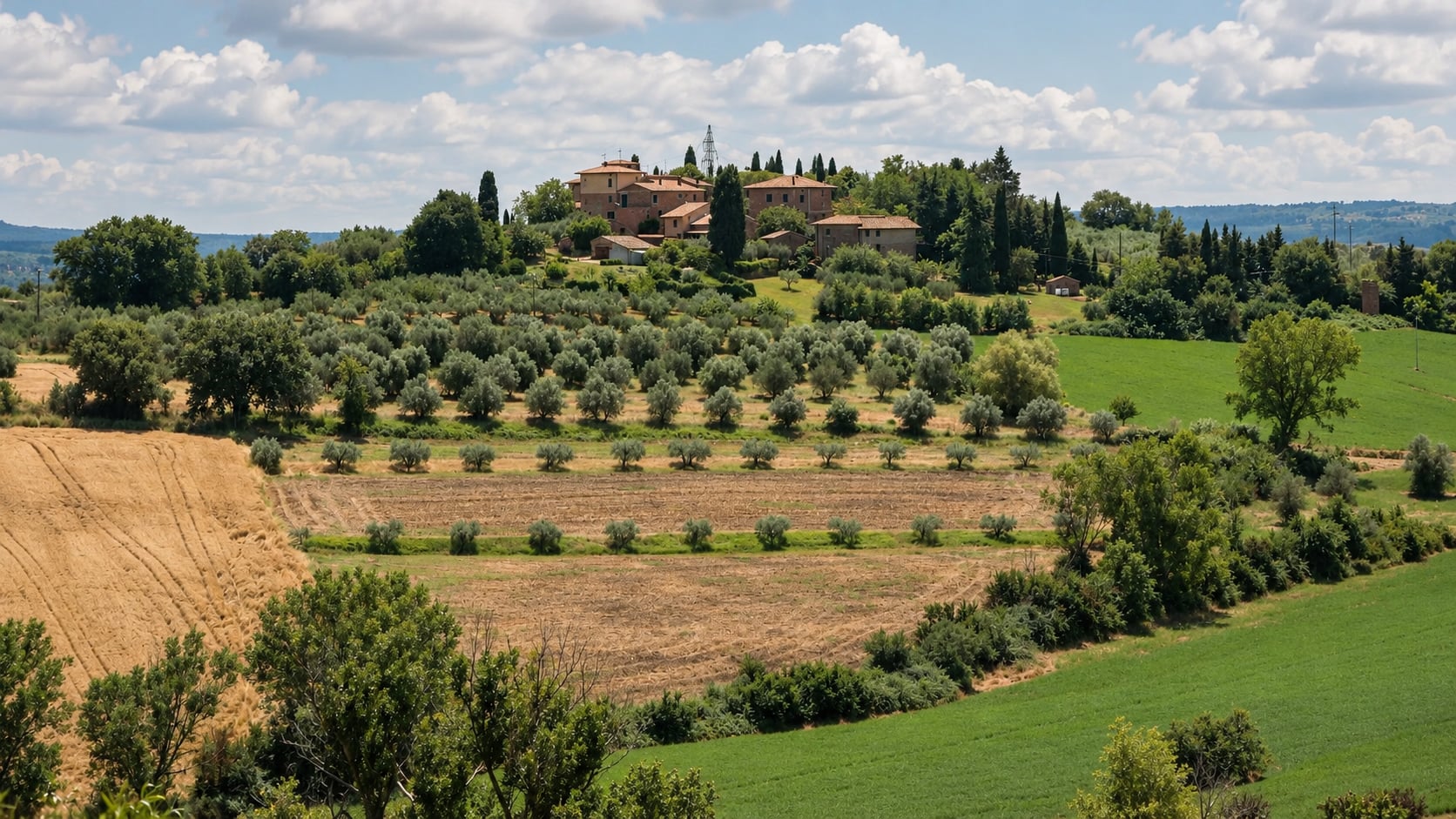
Narni covers nearly 197 square kilometres, and the hill town that gives it its name is only one part of the picture. The municipal statute recognises three historic-centre terzieri, and the territory beyond them is made of separate villages and castles.
Beyond the hilltop the municipality counts eleven castles and the villages of Narni Scalo, Vigne and Stifone, each worth a detour.
From Nequinum to Roman Narnia
Before Rome, an Umbrian settlement known as Nequinum stood here. After the Roman conquest in 299 BCE it became the Latin colony of Narnia, named for the river Nar.
Narnia stood at a crossroads between the Tiber valley towns of Ocriculum and Ameria and inland Umbria, and the Via Flaminia, built around 220 BCE, ran through it towards Carsulae and Interamna. The city gained municipal status after the Social War and was home to a river port and shipyard near present-day Stifone. The emperor Nerva was born in Narnia in AD 30 and reigned from 96 to 98.
The Ponte d'Augusto marks the Flaminia crossing of the Nera. Built of travertine blocks in connection with the work on the Via Flaminia under Augustus, it was conceived with three or perhaps four arches, and its main arch rose about 30 metres for a total length of about 160 metres, until an earthquake in 847 damaged it and a flood in 1053 brought it down. One arch and the remains of two piers still stand.
Ponte Cardona belongs to another Roman system: it is the last of the four bridges of the Formina aqueduct, alongside the Pennina, the Ponte Vecchio and the Ponte Nuovo, built between AD 24 and 33 under the water commissioner Marcus Cocceius Nerva.
Piazza dei Priori and the civic heart
Piazza dei Priori gathers the Palazzo Comunale, the Palazzo dei Priori with its loggia, the public fountain and the surviving medieval bronze cup.
Palazzo Eroli rises beside the church of San Francesco. It was built between 1660 and 1700, stayed with the Eroli family until 1984 and, since its restoration in 2007, has housed the city and territory museum and the municipal library. Its archaeological section runs from prehistory to the Middle Ages, and its picture gallery gathers works from the fourteenth to the eighteenth century.
The best-known works are Domenico Ghirlandaio's Coronation of the Virgin, commissioned in 1486 for the church of San Girolamo, and Benozzo Gozzoli's Annunciation. The museum also shows an Egyptian mummy with a decorated wooden sarcophagus, although a 1993 examination concluded that the remains and the coffin did not originally belong together, along with a bronze cup of 1303 from the Fountain of the Priors.
The Rocca and the underground city
The Rocca Albornoziana was built from 1367 on the commission of Cardinal Egidio Albornoz and completed in 1378. It is a quadrangular fortress with four corner towers, one of them a taller keep, and it served the papal defence of the land between Perugia, Terni and Amelia while watching over the Via Flaminia.
It fell to Pandolfo Malatesta in 1396 and to Braccio da Montone in 1417 before the papacy regained it, and it was damaged in the Sack of Rome in 1527 and again by French forces in 1789. The Italian state acquired it in 1860, a Russian prince owned it from 1906 to 1972, and it now belongs to the Comune.
Late in the fifteenth century Pope Sixtus IV had the wall built that still links the Rocca to the Porta delle Arvolte, or Porta Ternana. Its first castellan, from 1370, was Pietro il Norico, and four coats of arms were placed over its gate: those of Pope Urban V, his successor Gregory XI and the cardinals Anglic de Grimoard and Philippe d'Alençon.
Narni Sotterranea is a guided route through the spaces beneath the former Santa Maria Maggiore complex, later San Domenico. It starts in a twelfth-century church rediscovered in 1979 that holds some of the city's oldest frescoes, and it takes in a large Roman cistern and a chamber that the operator describes as the tribunal of the Inquisition, with a prisoner's cell whose graffiti include a message in a code never fully decoded.
San Giovenale and the sacred landscape
The cathedral honours San Giovenale, the first bishop of Narni in the fourth century, who was buried in a rock cavity outside the walls that became a place of pilgrimage. The present church dates from the late eleventh or early twelfth century, and Pope Eugene III consecrated an oratory of San Giovenale here in 1145, possibly the earlier building over the tomb. It is a basilica with three naves and a transept, with a bell tower raised in the early fifteenth century.
Inside, look for the choir attributed to Il Vecchietta, the monumental pulpits of 1490, Girolamo Troppa's large Apotheosis of San Giovenale and the fifteenth-century frescoes of the seven apsidal chapels. The saint's relics are venerated in a black-marble urn placed in the confession in 1649.
An earlier church on the site had its altar, above the martyr's tomb, decorated with a mosaic of the Maiestas Domini, Christ in majesty, from the turn of the eleventh and twelfth centuries, and substantial traces of it survive. In 878 Adalbert I of Tuscany carried San Giovenale's relics off to Lucca; Pope John VIII excommunicated him until he gave them back in 880.
Narni's sacred map extends beyond the town. The abbey of San Cassiano probably goes back to the sixth century and the Byzantine general Belisarius, founded or handed over to Benedictine monks. Its first documented mention is in the records of Farfa Abbey in 1081, although an inscription found in restorations of the 1970s points to an existence from at least the mid-tenth century. The church has a Greek-cross plan with three naves, and it stands on the slopes of Monte Santa Croce, overlooking the Nera gorge and the ancient route of the Via Flaminia.
The Sacro Speco at Sant'Urbano grew from a natural grotto where hermits built a chapel around the year 1000. Saint Francis arrived in 1213, the chapel of San Silvestro keeps fourteenth-century frescoes, and the Franciscans call it the oldest Franciscan place in the Valnerina.
The Nera gorge
Regional landscape planning treats the gorge, the fortress, the underground city, the Ponte d'Augusto, the olive slopes, the rock and hydraulic features, the mills and the historic villages as one connected landscape.
A regional project has turned a former railway line into a cycle and walking route that begins near the Ponte d'Augusto and follows the gorge towards Lago di San Liberato.
The Corsa all'Anello and the terzieri
Narni's three terzieri divide the historic centre. Mezule, also called Parte de Sopra, runs from just above Piazza Garibaldi up to the Rocca. Fraporta is the central zone, with Piazza dei Priori and the cathedral. Santa Maria occupies the north-west of the city, from the ancient church of Santa Maria Maggiore to Porta Polella.
The Corsa all'Anello is their competition, with costumed processions, medieval performances and jousting, and a panel of experts awards the Bravio, a banner painted each year by a contemporary artist, to the terziere that performs best across the whole pageant.
The roots are old. The city's statutes of 1371 already described the offering of candles and the equestrian joust dedicated to the patron saint, San Giovenale. In the Corsa all'Anello, mounted knights from the three terzieri try to pierce a suspended ring about ten centimetres across with their lances, over three rounds, and the terziere with the most points wins. Religious ceremonies, including processions and the blessing of the knights, remain central.
Wine and pampepato
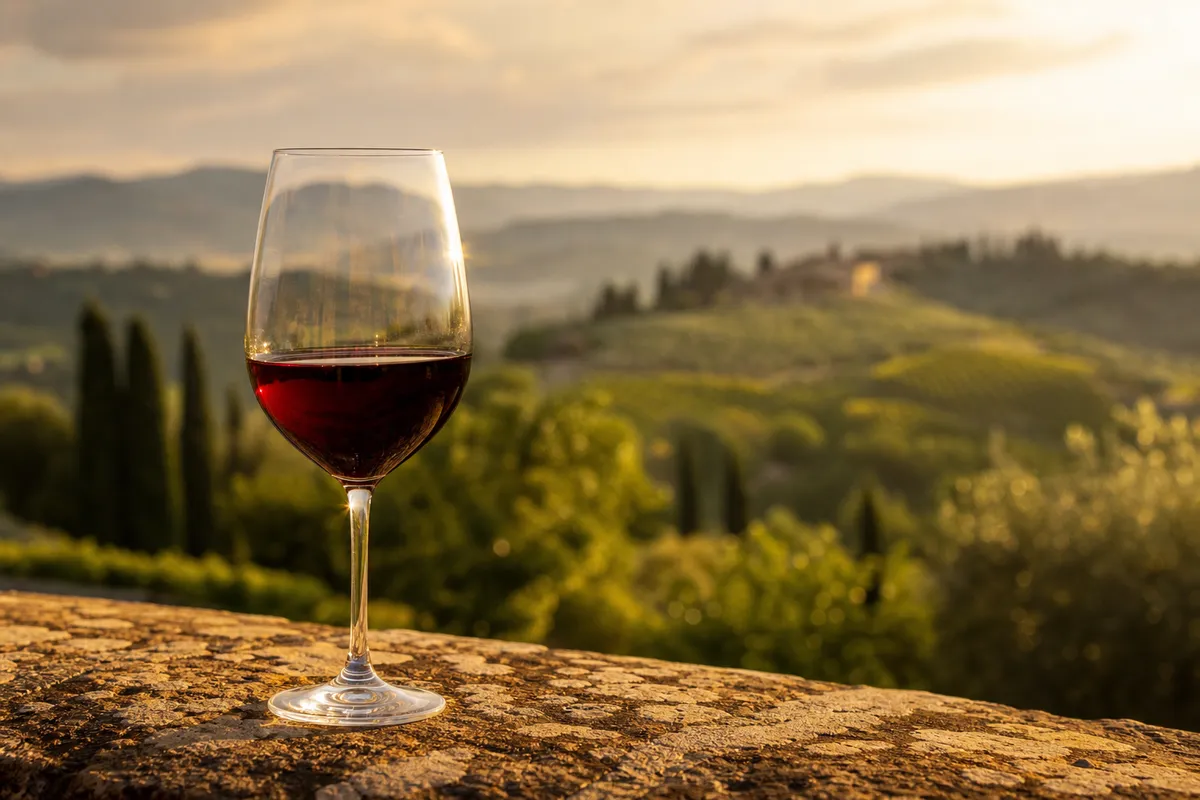
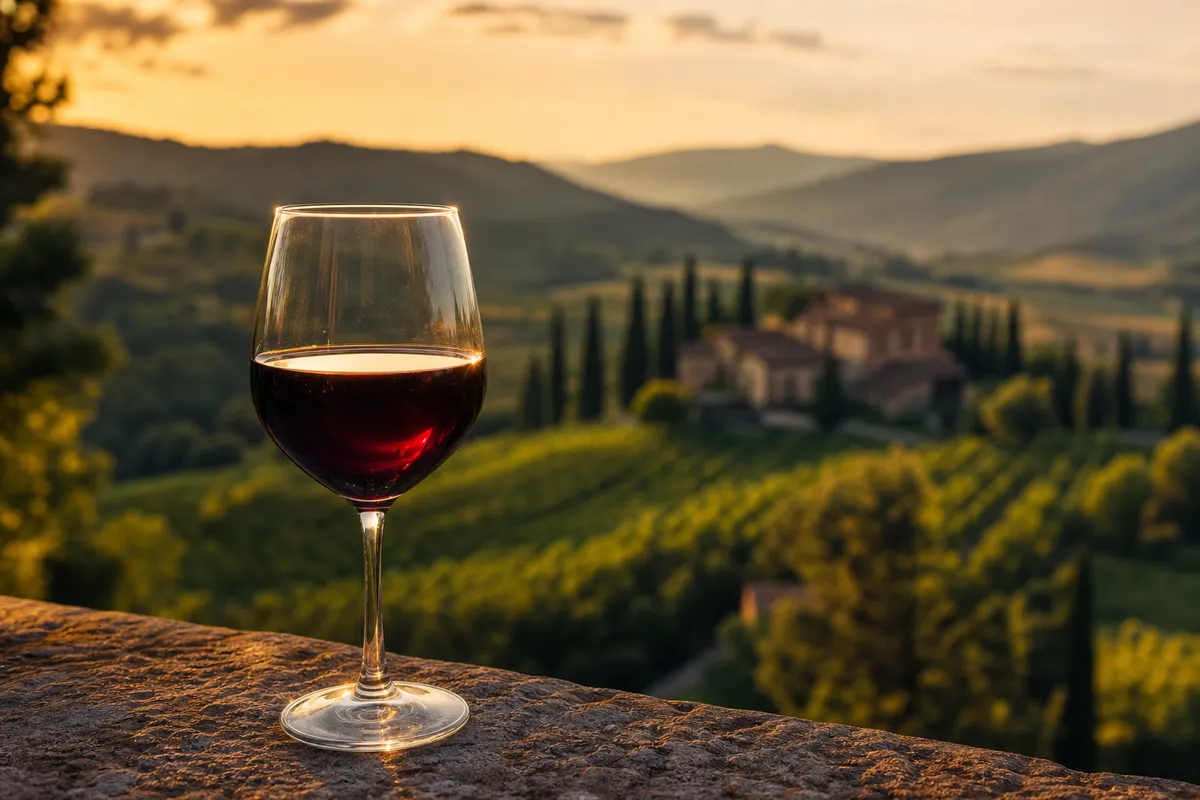
Narni is a registered protected geographical indication for wine, and its production area covers only part of the municipality. Ciliegiolo is a grape variety that the wine rules allow, though it has no denomination of its own here.
Narni lies within the province of Terni, so Pampepato di Terni, also written Panpepato di Terni, a protected baked confection, may be produced here, and the Umbrian list of traditional products places ciriole, a fresh pasta, in the same province.
More of Umbria
A letter from Italy, once a month.
The places, tables and makers we found worth your time. One email, no noise.
One letter a month. Unsubscribe at any time. We never share your address.